Home Blog Page 6313

Mamata Banerjee reinstates ex-cop Rajeev Kumar, accused in Saradha scam, and other 10 IPS officers transferred by EC

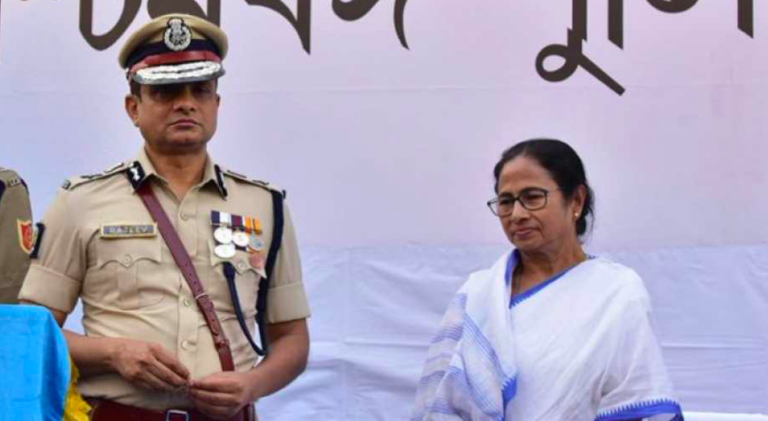
West Bengal Chief Minister Mamata Banerjee’ close aide and Kolkata ex-cop, Rajeev Kumar, for whom the TMC chief had gone beyond the rulebook and sat on a 72 dharna in his defence, has once again been reinstated by her as the additional director general of the state Criminal Investigation Department.

The 10 other IPS officers who were transferred by the Election Commission along with Rajeev Kumar have also been brought back.

The state government took the decision immediately after the Model Code of Conduct ceased to operate in the state. It also reinstated Kolkata Commissioner of Police Anuj Sharma to his post. However, Rajesh Kumar, who the poll panel had appointed to replace Sharma, is yet to be assigned a new post.

Rajeev Kumar was transferred from his post of Kolkata Police chief to take up the charge of ADG CID on February 19. On 15 May, the ECI had removed him from his post and had asked him to report to MHA. Following the incidents of violence and vandalism at Amit Shah’s roadshow, the ECI had taken stern action, removing Kumar and Principal Secretary (Home) Atri Bhattacharya from their posts and, for the first time ever, invoked article 324 to curtail election campaigning in the state.

Moreover, Rajeev Kumar skipped a meeting with the CBI officials on Monday despite being summoned by the agency for questioning in connection with the Saradha chit fund scam, officials said. Kumar, however, sent a letter to the Central Bureau of Investigation (CBI), seeking some more time to appear before its officers in connection with the case.

Recently, the Central Bureau of Investigation (CBI) has issued a lookout notice (LoC) against the ex-Kolkata cop. The notice was issued on Sunday in connection with the multi-crore Saradha chit fund scam case to prevent him from leaving the country.

Rajeev Kumar is accused of shielding some of the accused and destroying evidence in West Bengal’s Saradha Chit Fund scam case. On February 3, a team of CBI officials had arrived at his residence in Kolkata to interrogate him. What followed was an unprecedented political and legal drama. Bengal CM Mamata Banerjee had jumped to his defence, moving the state machinery against the CBI and alleging that the attempt to interrogate Kumar is a ‘conspiracy’ by the central government against her.

CBI officials were also attacked, heckled and detained by the Kolkata police under Mamata’s orders. Mamata’s Dharna had lasted almost 72 hours where she had kept on claiming that PM Modi and Amit Shah are planning to overthrow her government and the interrogation order against Rajeev Kumar was a plot by NSA Ajit Doval.

The dharna drama had ended after the Supreme Court had ordered the interrogation of Rajeev Kumar at a location outside Bengal following which he was interrogated for days in Meghalaya’s Shillong along with some other accused in the case.

The MHA had also taken a strong objection to the serving IPS officers attending the Bengal CM’s dharna. The ministry had ordered the government of West Bengal to initiate a probe against officers who were seen sharing the stage with the CM.

Emergency in Karnataka: Congress ally JD(S) files FIR against journalist Vishweshwar Bhat for publishing a report on Kumaraswamy’s son

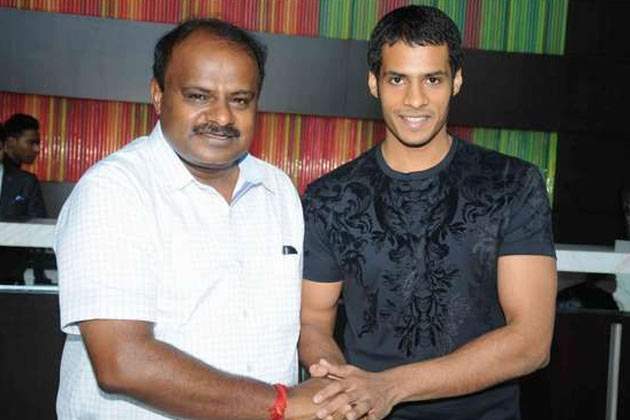
In an Emergency-like situation, Congress ally in Karnataka, Janata Dal (Secular) has filed an FIR against journalist Vishweshwar Bhat for publishing an article on Karnataka Chief Minister H D Kumaraswamy’s son, Nikhil Kumaraswamy. In his Kannada daily Vishwavani, Bhat had published a report which talked about Nikhil Kumaraswamy’s alleged meltdown in a drunken state after losing Mandya Lok Sabha seat ‘to a woman’.

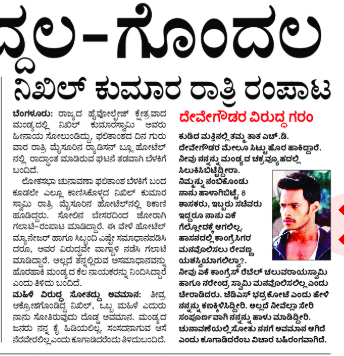
Nikhil Kumaraswamy report from Vishwavani (source: Vishwavani epaper)

The Vishwavani had reported, Nikhil Kumaraswamy after losing the Mandya Lok Sabha polls had created ruckus at the Hotel Radisson Blu in Mysuru on Thursday night. According to the report, Nikhil Kumaraswamy who had allegedly drunk. shouted at the premises of the hotel while making sexist comments that he had faced humiliation after losing out to a woman.

Sumalatha Ambareesh had won the Mandya Lok Sabha seat as an independent candidate.

The report further suggests that Nikhil Kumaraswamy’s anger and frustration was pointed towards his grandfather HD Devegowda. Nikhil Kumaraswamy has reportedly blamed HD Devegowda for his loss as the latter failed to convince Congress party leaders in Mandya.

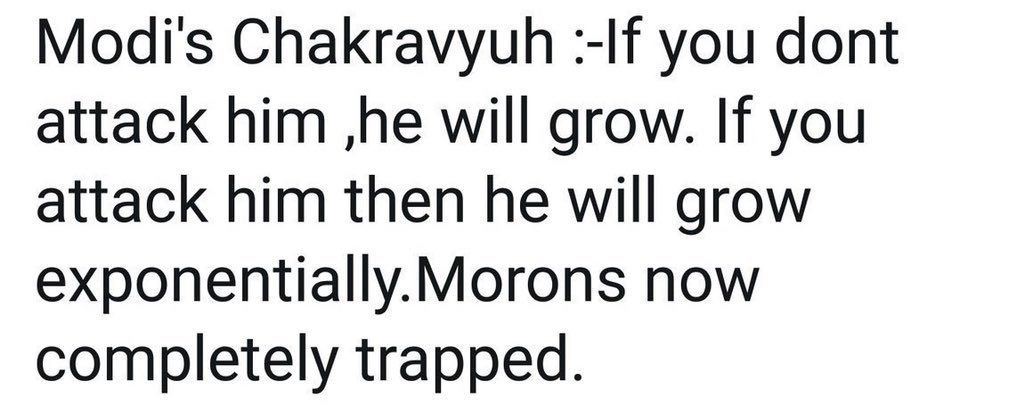
“You (HD Devegowda) left me in a ‘Chakravyuh’. In spite of having eight MLAs, we were not able to win. Didn’t HD Revanna get the support of Congress in Hassan? Why did not we able to garner the support of Congress rebels Cheluvarayaswamy and Narendra Swamy?” reported the article citing that Nikhil had targetted HD Devegowda for his loss.

The report also added that the Nikhil did not tone down his anger despite his friends and hotel staff trying to calm him down.

Reacting to this, Karnataka Chief Minister and his father, HD Kumaraswamy took to Twitter to issue a denial.


He had tweeted that the above news in Vishwavani were false and written with an intention to defame Nikhil. Following his tweet, Vishwavani issued a statement that said that they had published the news only after verifying with the sources.

However, earlier today, Bengaluru Police filed an FIR against Vishweshwar Bhat on the basis of a complaint filed by Pradeep Kumar S.P., JD(S) Legal Cell general secretary on Sunday.

This is not the first time Nikhil has been accused of creating a ruckus in a hotel. In 2006, when his father was a chief minister, in a drunken stupor, he had allegedly smashed beer bottles and created a ruckus in a hotel at 3:30 am after he and his friends were denied a meal at that hour. Then 19, Nikhil and his two friends had allegedly attacked the hotel staff and had threatened to ‘blow up’ the hotel and get it closed as he is the CM’s son.

While Indian ‘liberals’ continue with their old ways, a Bangladeshi publication gets it right about the rise of ‘right wing’ in India

While liberals in India have resorted to aggressive fear-mongering over the 2019 election results, a Muslim from Bangladesh has quite precisely described the reason for the fall of Liberalism. In an article published on the Dhaka Tribune, Shafiqur Rahman writes on ‘The rock that broke liberalism’.

According to Rahman, Islam is the foremost reason for the rise in right-wing populism in major democracies across the world. In his article, he quotes a Pakistani-American writer asking a very pertinent question: “If and when modern humanism and liberalism crashes and burns, will future historians look back and say that Islam was the rock on which it first and decisively broke?”

The writer and Rahman agree that there is a myriad of other very important factors that have contributed to the fall of liberalism but contend that Islam, too, has made a great contribution. He says further about the unnamed writer, “He argued that by obdurate refusal to accept the fundamental assumptions of post-enlightenment worldview, by obstinate resistance to assimilate with the mainstream when in the minority and by dogged persistence in recreating antediluvian theocracies when in majority, Muslims not only undermined the universal validity of the whole liberal project but also sowed deep doubts about the liberal project among its previously most faithful adherents.”

“Muslim recalcitrance has hastened the delivery of the contradictions that the liberal project was pregnant with from the beginning,” says Rahman hinting towards the refusal of Muslim to assimilate with the liberal world order.

Some of Rahman’s opinions resemble that of our resident liberal thought-leaders but that’s understandable as he is a Muslim himself from a country that is quite a fundamentalist in nature. Despite displaying remarkable clarity, Rahman states, “Right-wing majoritarians everywhere are scapegoating Muslims as the principal other,” ignoring his own words previously that the Muslims themselves have refused to assimilate.

The most valuable insight from Rahman in the article comes when he says, “Stubborn defence of group identity by Muslims of the world has made upholding group identity respectable for all groups, majority or minority, powerful or weak.” He adds, “If Muslims can be unabashedly assertive about the sanctity of their religious identity and traditions, other groups can be unapologetic about their respective identities too.”

He offers another great insight when he proclaims, “Muslims cheering the probable demise of liberal world order is the height of folly.” He is correct when he says Muslims ought not to cheer for the destruction of the liberal world order. It’s hard to imagine White Nationalists treating Muslims kindly if they storm to power in wake of the rise of right-wing populism.

In the end, Rahman declares, “Abandoning universalism and embracing identitarianism is hollowing out liberalism from within. Either the principles of liberalism apply for all groups or none at all.”

It’s true that Islam has had a profound impact on the collapse of the liberal world order. While Fukuyama’s prophetic declaration of ‘End of History’ was always destined to reveal itself as infantile delusion, Muslims have precipitated the fall of liberalism greatly.

Liberalism isn’t really conducive for a cohesive social order either. It felicitates chaos while society prefers to orient itself towards order. While liberalism has succeeded in ruining much of the structures of traditional society, Muslims are one community that has refused to embrace it, thus, giving the community a competitive edge wherever they manage to secure their significant numbers.

The perceived threat posed by them has motivated other communities in the country to band together under a larger cohesive identity as well and focus on their traditions, culture and heritage with renewed vigour, consequently, leading to the demise of the liberal world order. Thus, the author is indeed accurate in his assessment of Islam’s contribution to the fall of liberalism. But he is inaccurate in his assessment that right-wing political parties are painting Muslims as the ‘principal other’, its Muslims themselves who prefer to see themselves as a separate community entirely.

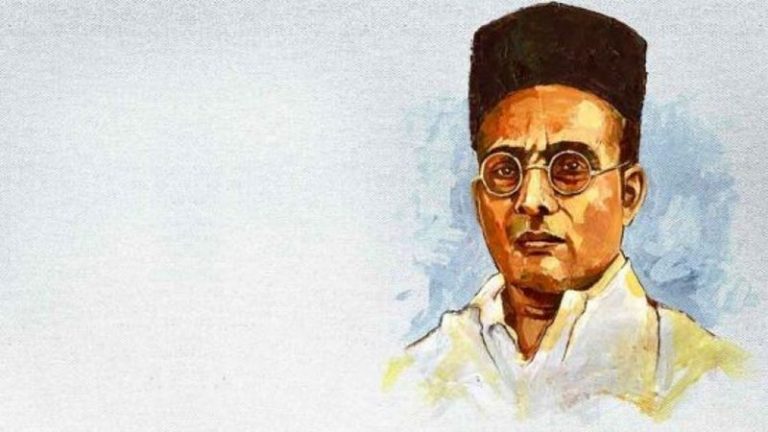
Rahul Gandhi and Congress might insult Veer Savarkar now, but this is what Indira Gandhi had to say about the freedom fighter

The Congress Party, its president Rahul Gandhi and others of the ‘secularist’ school of thought have repeatedly insulted the great revolutionary and freedom fighter Swatantryaveer Savarkar (meaning of it is ‘Hero of Independence’ Savarkar), and called him a ‘traitor’ for his ‘mercy petitions’ to the British while he was in jail in the Andamans, where he was incarcerated from 1911 to 1921. In reality, those petitions were a ‘strategic letter of ploy’ to get out of jail, for which Savarkar should be praised. Congress has a history of harassing Savarkar since 1910 when Jawaharlal Nehru refused to donate for Savarkar, according to an article by Shreerang Godbole in weekly Organiser in 2004. Read to know.

Savarkar was a disciple of Shivaji. In 1666 in Agra in Aurangzeb’s captivity, Shivaji wrote such a letter to Aurangzeb to secure his release. Shivaji made many promises in that letter to Aurangzeb. But when he escaped these promises evaporated into thin air.

Congress should be pin-pointedly asked if it considers Shivaji a ‘traitor’ for writing such a letter to Aurangzeb in 1666. On Twitter, Congress workers were cornered when this writer raised this issue and pin-pointedly asked them why it was a ‘strategic letter of ploy’ when Shivaji did it, and ‘an act of treason and cowardice’ when Savarkar did it.

Of course, those petitions by Savarkar did not have any impact on the British who understood that they were his ploys to get out of jail. Savarkar did not believe in Satyagraha. Once in jail, all means fair and foul were justifiable to get out. If he was caught, he thought it correct to give the undertaking to secure his release, just like Shivaji did. Savarkar himself talked of these letters in his book “My Transporation” (Majhi Janmathepin Marathi) which is mentioned in Samagra Savarkar WangmayaVol 1, pp 448/620, 690. Savarkar wrote what talks he had with Sir Reginald Craddock in 1913, with members of Jail Commission, with the Governor about his release from Jail and what restrictions he would accept for his release from the Jail.

Why judge Savarkar by Gandhian principles? We may, if we want, judge him by Leninist standards. Did not Lenin accept the offer of ‘Sealed Car’ from the Kaiser’s German Government- a capitalist government? He came in that train to lead the Bolshevik Party and to seize power in Russia. Stalin made a pact with his arch-enemy Hitler. But what is laudable in case of Lenin and Stalin becomes condemnable in case of Savarkar. To a jaundiced eye, everything looks yellow.

Swatantryaveer Savarkar died in 1966 and is not alive to refute the charges levelled by Rahul Gandhi and others. Others like A G Noorani have tried to hold Savarkar guilty in the murder of Mahatma Gandhi despite the fact that Savarkar was acquitted ‘honourably and without blemish’ on 10 Feb 1949 and the Nehru Government dared not appeal against the acquittal. Savarkar was, of course, the byword of patriotism and courage, called so by Indira Gandhi herself. He had jumped into the sea from a ship from where he was being transported by the British at Marseilles in 1910 and swam to France braving bullets of the British Police, fighting death all along the way. [Watch this video from time 1:06:25 to 1:11:25]. Such a patriot, whose anti-British patriotic poems are still found very inspiring, motivating and emotional was called a ‘staunch supporter of British colonialism’ by The Wire!

Let us now see how Congress leaders behaved in 2002-03 during the incident of installation of Savarkar’s portrait in Parliament.

On December 5, 2002, when the then Lok Sabha Speaker Manohar Joshi expressed the wish to put up a portrait of Swatantryaveer Savarkar in the Central Hall of Parliament, Congress Deputy Leader in the Lok Sabha Shivraj Patil said, “Normally, no proposal to put up a portrait or a statue is rejected outright, ‘least of all when it is made by the Speaker himself’”.

Neither did CPM’s Somnath Chatterjee protest or refuse. Perhaps it was the donation of his father N.C. Chatterjee’s portrait to Parliament in 1995 that weighed on his mind. N.C. Chatterjee, who succeeded Savarkar as the Hindu Mahasabha president, represented Hoogly in the first Lok Sabha and his portrait was unveiled in the Central Hall by the then vice-president K.R. Narayanan. Also silent were the then Congress chief whip in the Rajya Sabha Pranab Mukherjee and CPI’s J Chittaranjan, two of the members of the joint committee on the installation of portraits/statues of national leaders and parliamentarians in the Parliament House Complex.

Yet, when the time came for unveiling his portrait in Parliament on 26 Feb 2003, not until February 25 when Congress President Sonia Gandhi – persuaded by the CPI(M) and a group of Delhi’s Left historians – wrote to the then President A.P.J. Abdul Kalam to review his decision to unveil Savarkar’s portrait, did she discover that her senior colleagues had agreed to Joshi’s proposal. [Sonia Gandhi herself along with the entire Opposition boycotted the installation of Savarkar’s portrait in Parliament on 26 Feb 2003.]

A peeved Sonia Gandhi then humiliated Shivraj Patil and Pranab Mukherjee at a meeting of the Political Affairs Committee of the Congress in Parliament.

The party’s problems did not end there. The controversy began to take shape as the BJP went about its task of revealing how former Prime Minister and Sonia Gandhi’s mother-in-law Indira Gandhi had extended her patronage to perpetuate Savarkar’s memory.

Sonia Gandhi loyalists winced when informed of Indira Gandhi’s decision to issue a commemorative stamp in Savarkar’s honour in 1970, a private donation of Rs 11,000 to his memorial fund a decade later in 1980, her hailing Savarkar’s “daring defiance of the British government” as having its own “important place in the annals of our freedom movement” and commissioning a Films Division documentary on him.

Indira Gandhi is on record saying as Prime Minister: “Savarkar’s defiance of the British government has its own place in the freedom struggle.”

“Indira Gandhi was not a narrow-minded person,” said former Union Information and Broadcasting Minister and Congress leader Vasant Sathe at that time in 2003. In 1983, he recalled, she personally cleared the Films Division documentary on the freedom fighter. “Savarkar’s contribution to the freedom struggle has to be viewed in totality. You can disagree with his Hindutva, but you cannot ignore the fact that he was a great poet and a rationalist,” he says.

After being cornered on Indira’s praise for Savarkar as a patriot, some people lied that Savarkar’s petitions to the British became public only after Indira Gandhi’s death. In truth, Savarkar’s “My Transportation” was available in English since 1950 in which he himself mentioned these petitions to the British, much before Indira Gandhi became Prime Minister. Savarkar died in Feb 1966, and all his works were published by that time. “My Transportation” [Majhi Janmathep] was published in Marathi much before that, first published in 1927 when Savarkar was under confinement in Ratnagiri.

What kind of life Savarkar had to face in jail in the Andamans from 1911 to 1921? Here are a few notings:

(I) 6 months solitary confinement;
(II) Seven days standing handcuffs
(III) Absolutely refusing to work, ten days crossbar fetters imposed.
(Source material for a history of the freedom movement in India Vol. II,. Bombay Government publication: pp- 478/479)

How many top leaders of the Congress had to suffer such punishments?

How sympathetic were the British to Jawaharlal Nehru? Only a few of the many instances are given here.

Jawaharlal Nehru’s father Motilal died on February 6, 1931, in Lucknow, with Jawaharlal Nehru and Gandhiji at his bedside. How could Gandhi and Nehru be at his bedside? Because “On January 25th [1931] Viceroy, Lord Irwin, ordered the unconditional release of Gandhi and the members of the Congress Working Committee, including Nehru.” [Source: Frank Moraes- Jawaharlal Nehru, p 171]. Nehru’s wife, Kamala, went to Europe for treatment. “On September 4, 1935, Nehru was suddenly discharged from Almora, five and half months before his term was to expire…[On 5 Sept] On the same afternoon he set out by Air for Europe…On the evening of September 9th, he reached Badenweiler” (in Germany). [Source: Frank Moraes wrote Jawaharlal Nehru, p 246. Frank Moraes’ biography of Nehru is considered very authentic.]

No one grudges this sympathetic treatment to Nehru. One only wishes that people should know that the Savarkar brothers met their family members only once in 10 years in the Andamans. And in this meeting, Savarkar’s elder brother Babarao came to know that his wife had died earlier. British also did not even inform for many months either of the Savarkar brothers that their other brother is also in the same jail in Andamans! Neither elder brother Babarao nor Swatantryaveer Savarkar knew for many months that their other brother is also in the same jail! Here are real contrasting approaches.

Nehru was released from jail months before his term was to end, and he was allowed to fly by plane to Europe in 1935 (in those days) to see his ill wife, by the British. But the British did not even inform either of the Savarkar brothers that the elder brother’s wife had died, not to talk of allowing them to visit her when ill, or even allowing a visit on parole after her death! Nehru was kept in a palatial guest house in Almora. But so harsh were the British to Savarkar brothers, that they made them do the work of a bull of taking out oil from jail in Andamans.

Frank Moraes further writes: “Nehru had given the British Government no undertaking when he came out of jail, but he felt it would be improper to engage in political activities during the respite they had allowed him.” (p.238). The British Government was sure that he would not take part in politics and hence did not impose the condition. However, in Savarkar’s case, the Government imposed the condition that he should not engage in political activities. How could it trust a man who jumped the ship at Marseilles into the sea and swam to France in 1910?

Now how was Savarkar treated in jail in the Andamans? The following three excerpts show it:
(I) Bombay Government does not recommend any remission of the sentences passed upon Ganesh Damodar Savarkar [elder brother Babarao] and Vinayak Damodar Savarkar. [p. 467]

(II) ‘Government of India agrees that the Savarkar brothers should not be released under the Royal Amnesty.’
This is dated 8th December 1919. [p. 469]

(III) ‘The Government of Bombay by their letter No. 1106/36, Home Department, dated 29th February 1921, informed the Government of India that the Governor in Council was not in favour of the transfer of the Savarkar brothers from Andamans to a jail in the Bombay Presidency, as that would lead to a recrudescence of agitation in their favour.’ (p.477-478, Source material for a history of the freedom movement in India, Bombay Government publication.)

They showed the Government’s worry and public sympathy for Savarkar, there was absolutely no impact of Savarkar’s petitions on the British, who understood them to be ‘strategic letters of ploy’. Still, Savarkar should be lauded for trying to beguile the British with those ‘ploys’.

In 1937, when all restrictions imposed on Savarkar were removed and Savarkar became free, Subhashchandra Bose, Jawaharlal Nehru and M. N. Roy welcomed him to full freedom.

Congress’ allegation that Savarkar supported the two-nation theory is answered here. Savarkar himself answered this charge in his lifetime and clarified that he always opposed the Partition of India and was for a United India. Those of Italian origin who took 15 years after marriage to Rajiv Gandhi in 1968 to even apply for Indian citizenship have the audacity to insult National Heroes and fiery patriots like Savarkar! To know a little about Savarkar read.

Veer Savarkar has departed from this world in 1966 with his reputation unsullied. No amount of fake research and slander will tarnish it.

[Some part of this article was first published on SatyaVijayi.com. 

11 World Cups, 406 matches, 5 champion nations, 165 hundreds and much more: The World Cups in numbers

“Statistics are like a bikini. What they reveal is suggestive, but what they conceal is vital.” This might be true in some aspects but not in all. With World Cup about to start, let’s talk about the numbers associated with it.

11 World Cups, 406 matches, 5 champion nations, 165 hundreds and numerous other records, so why not look into the numbers game?

Australia – The Greatest Cricket Team in World Cup

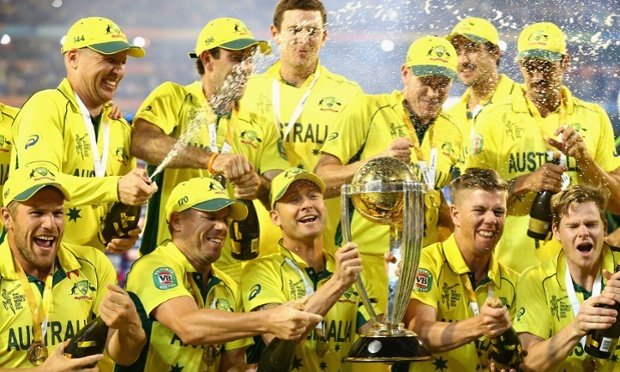
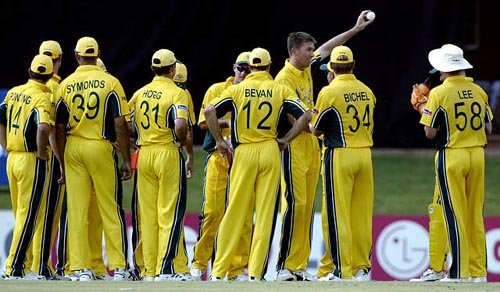
Talking about the champions, the greatest of all, Australia won 5 World Cups in 5 different continents (1987 Asia, 1999 Europe, 2003 Africa, 2007 North America, 2015 Australasia ), the only team to do so. Australia also the first team to win 3 consecutive titles (1999, 2003 & 2007). The first time champions West Indies (1975 & 1979) won it twice so as India (1983 & 2011). Pakistan (1992) and Sri Lanka (1996) are the only other teams to win it.

List of ODI World Cups
Year Matches Winner
1975 15 West Indies
1979 15 West Indies
1983 27 India
1987 27 Australia
1992 39 Pakistan
1996 38 Sri Lanka
1999 42 Australia
2003 54 Australia
2007 51 Australia
2011 49 India
2015 49 Australia


Sachin Tendulkar – 6 World Cups and making most of them

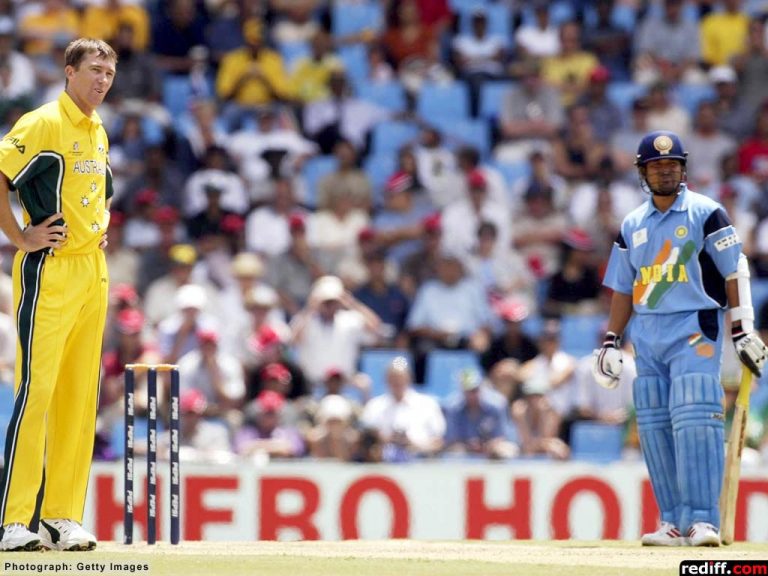
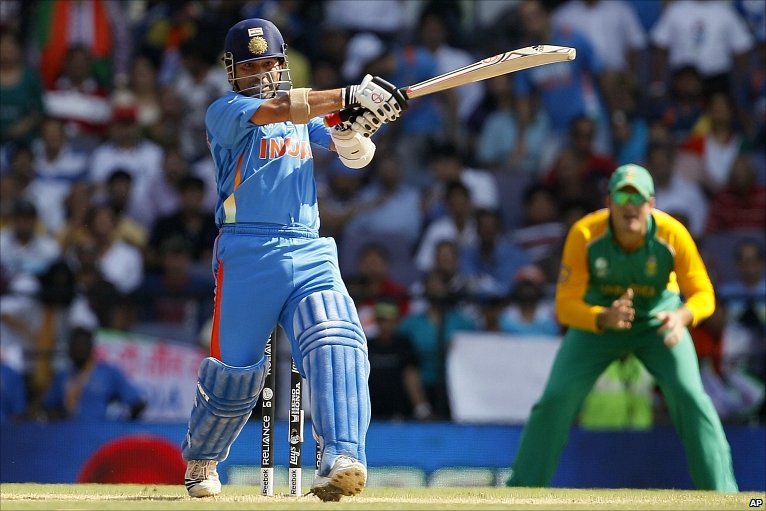
Indian batting legend Sachin Tendulkar dominates the batting records in World Cup. He has scored more runs (2278), most hundreds (6), most fifties (15), most boundaries (268), most runs in a single edition (673 in 2003) and most Man of the Match awards (9). Sangakkara has the most centuries in a single edition (4 in 2015). Kevin O’Brien of Ireland holds the record for the fastest World Cup hundred (off 50 balls against England, 2011). The highest score in an innings is scored by Martin Guptill (237* against West Indies, 2015).

Top 10 batsman with most runs in World Cup

Player Country Mat Inns NO HS Runs 100s 50s Avg S/R
Tendulkar, S R India 45 44 4 152 2278 6 15 56.95 88.98
Ponting, R T Australia 46 42 4 140* 1743 5 6 45.87 79.95
Sangakkara, K C Sri Lanka 37 35 8 124 1532 5 7 56.74 86.55
Lara, B C West Indies 34 33 4 116 1225 2 7 42.24 86.27
de Villiers, A B South Africa 23 22 3 162* 1207 4 6 63.53 117.30
Jayasuriya, S T Sri Lanka 38 37 3 120 1165 3 6 34.26 90.66
Kallis, J H South Africa 36 32 7 128* 1148 1 9 45.92 74.40
Dilshan, T M Sri Lanka 27 25 4 161* 1112 4 4 52.95 92.98
Jayawardene, D P M D Sri Lanka 40 34 3 115* 1100 4 5 35.48 85.94
Gilchrist, A C Australia 31 31 1 149 1085 1 8 36.17 98.01


Glenn McGrath – 7 for 15 against Namibia, 2003

Just like Tendulkar, Australian Legend Glenn McGrath outscores everyone in the bowling department. He has taken most wickets (71), most 5 wickets haul (2) along with Afridi, most wickets in a single edition (26 in 2007) and best bowling performance (7 for 15 against Namibia, 2003).

Top 10 bowlers with most wickets in World Cup

Player Country Matches Overs Mdns Runs Wkts Avg Best 5w
McGrath, G D Australia 39 325.5 42 1292 71 18.20 7/15 2
Muralitharan, M Sri Lanka 40 343.3 15 1335 68 19.63 4/19 0
Wasim Akram Pakistan 38 324.3 17 1311 55 23.84 5/28 1
Vaas, W P U J C Sri Lanka 31 261.4 39 1040 49 21.22 6/25 1
Khan, Z India 23 198.5 12 890 44 20.23 4/42 0
Srinath, J India 34 283.2 21 1224 44 27.82 4/30 0
Malinga, S L Sri Lanka 22 170.4 7 908 43 21.12 6/38 1
Donald, A A South Africa 25 218.5 14 913 38 24.03 4/17 0
Oram, J D P New Zealand 23 182.2 21 768 36 21.33 4/39 0
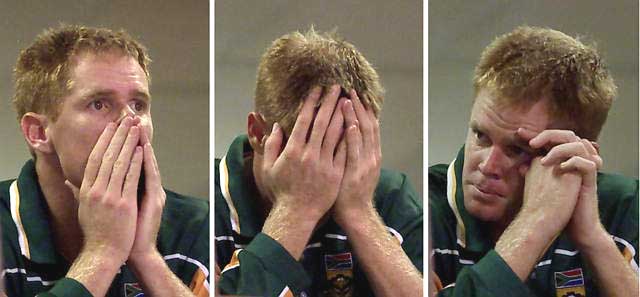
A miscalculation by Shaun Pollock cost South Africa a place in Super Sixes in 2003 World Cup by 1 run

There are only 4 tied matches played in World Cup history. The first and probably the most famous tied match of ODI history was played between Australia and South Africa in World Cup semi-final, 1999 at Edgbaston. The tie eventually helped Australia to reach the finals of the 1999 World Cup and from there Australia’s domination in World Cups started. The second tied game also involved South Africa (against Sri Lanka in 2003) and it was another set back for them as they couldn’t qualify for the Super Six. A miscalculation in Duckworth-Lewis and their hope of winning the World Cup at home was destroyed. The other two tied matches were played in 2007 and 2011 respectively.

Tied Matches
Match Ground
1999 Australia v. South Africa Edgbaston
2003 South Africa v. Sri Lanka Kingsmead
2007 Ireland v. Zimbabwe Sabina Park
2011 India v. England M Chinnaswamy Stadium

Some miscellaneous stats related to the World Cup are as follows.

  • Mohinder Amarnath (1983), Arvinda de Silva (1996) and Shane Warne (1999) are the only players to win the man of the match awards in both semi-final and final of a World Cup.
  • Adam Gilchrist is the only player to score 50+ score in 3 World Cup finals. He scored 54 against Pakistan at Lord’s in 1999, 57 against India at Johannesburg in 2003 and 149 against Sri Lanka at Bridgetown in 2007.
  • Kapil Dev (24) is the youngest captain to lift the World Cup while Imran Khan (39) is the oldest.
  • Sangakkara (54) holds the record for most dismissals in World Cups. Gilchrist (45) has most catches while Sangakkara (13) has most stumpings.
  • Though Tendulkar and Miandad appeared in 6 World Cups, Ponting (46) holds the record of most matches played in World Cups. He also took 28 catches in all World Cups which is the most for any fielder.
  • Only two matches were won by 1 run and both the time Australia and India were involved. Australia first beat India in 1987 by a run and then again in 1992 they beat India by 1 run.
  • World Cup in 1992 is the only edition in which no bowler took 5 fer.
  • Arjuna Ranatunga (969) has scored most runs without scoring a century in World Cups.

Youth Congress workers write letter in blood, asking Rahul Gandhi not to quit after the massive, humiliating 2019 defeat

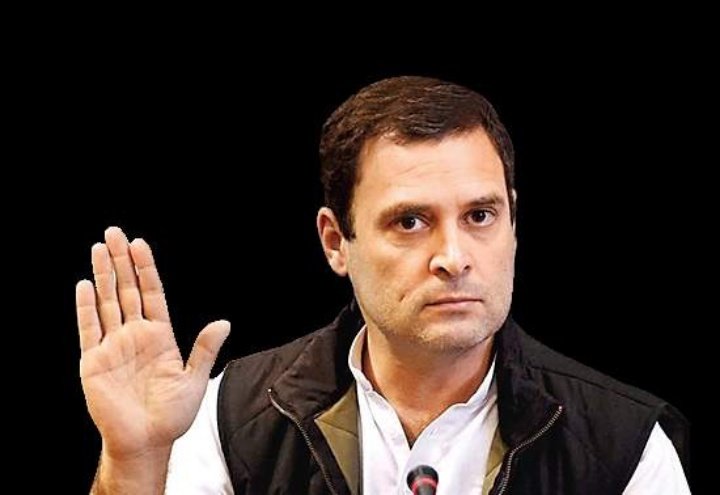
The 2019 verdict is out and Rahul Gandhi led Congress party has been handed a humiliating defeat by the people of India. PM Modi led BJP managed to bag a whopping 303 seats, and winning with an even larger mandate than 2014. Rahul Gandhi, despite his loud rhetoric on the concocted Rafale scam and yelling ‘Chowkidar Chor Hai’ slogans managed to bag only 52 seats.

After a massive defeat like this, one would imagine that the Congress party would understand the underlying message in the mandate and make some changes. However, the Congress Working Committee has “unanimously” decided that Rahul Gandhi will not take any responsibility for the humiliating defeat.

Now, Youth Congress workers have gone a step ahead in their dynasty worship. They have reportedly written letters in their own blood, urging Rahul Gandhi not to quit as the Party president, as he had, decided to do earlier, a decision that was rejected by CWC.


In the letter, they have not only urged Rahul Gandhi not to quit as the party president, but also explained how they can supposedly create a space for the Congress party among the people.

The Congress party has refused to mend its ways and stuck to the Gandhi bhakti despite the loss.

Priyanka Gandhi Vadra had recently blamed the loss on other Congress leaders saying that the party lost because the leaders did not chant ‘chowkidaar chor hai’ along with Rahul Gandhi.

Rahul Gandhi, on his part, other than the drama of resignation, has asserted that there were other leaders of the party who put their sons above the party and hence, the party lost. Interestingly, the irony of this statement was lost on Rahul Gandhi.

Recently, Congress workers from Amethi had written a letter to the Election Commission in blood, urging the institution to take action against PM Modi for his ‘Bhrashtachari remark’.

Supreme Court refuses protection from arrest to rape accused BSP MP Atul Rai

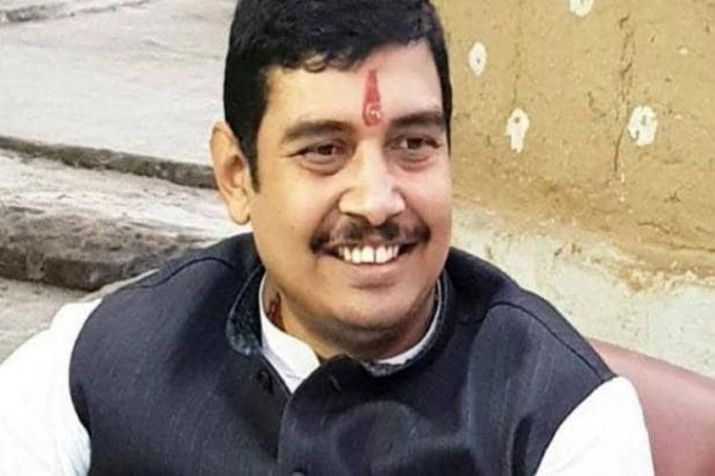
Supreme Court today dismissed the plea of newly elected Lok Sabha MP of Bahujan Samaj Party (BSP) Atul Rai seeking protection from arrest. Rai who won the Lok Sabha election from Ghosi constituency on Uttar Pradesh was accused by a college student from Varanasi of raping her.

Rai had filed a petition in the Supreme Court seeking protection from arrest. A vacation Bench comprising of CJI Ranjan Gogoi and Justice Aniruddha Bose refused to entertain the petition and to quash the FIR filed against Rai. The court, however, allowed Rai to approach a court of competent jurisdiction to apply for bail. Rai’s advocate said that there is no provision of anticipatory bail in Uttar Pradesh and that Rai’s petition seeking protection was dismissed by the Allahabad High Court on May 8. He said that he was afraid that Rai could be arrested in relation to the case.

The FIR was filed against Rai on May 2 by the victim who accused him repeatedly raping her, filming the act and threatening her of making the video public. The victim also said that she was forced to sleep with other BSP leaders as well. Rai has been absconding since his pleas seeking anticipatory bail was rejected by the Allahabad High Court. Rai was not present during his election campaign and still, he managed to win the seat. He dismissed the allegations of rape as false and said that he was avoiding arrest until he was seeking relief from the court. His plea pending before a Varanasi court is scheduled to be heard on May 28.

The quest for Bhartiya Asmita and the war against imperialist narrative

Colonialism doesn’t just happen on land but also on our minds by hijacking our entire mental perspective, history, narrative and identity. Deracination gradually increases the possibility of disunity and chaos. It can also lead to balkanization, states within the state, increasing presence of destructive fifth column and weakening of national identity. A person with healthy self-esteem and a strong sense of self-identity is harder to break or abuse and in a similar vein, one can hypothesize that a nation with a strong national identity is more robust and less vulnerable to external and internal threats.

The imperial narrative and the imperial hegemony are inseparable. For the colonialist hungry for regime changes, it is essential to establish a ‘supremacist’ and ‘saviour’ narrative. Enormous propaganda affecting every sphere of life is done to make people believe that almost all the good things that happen, whether it be science, technology or economy, the mother country (colonizers land) is responsible for it all.

Malcolm Gladwell said “the tallest oak in the forest is the tallest not just because it grew from the hardiest acorn; it is the tallest also because no other trees blocked its sunlight, the soil around it was deep and rich, no rabbit chewed through its bark as a sapling and no lumberjack cut it down before it matured.” However, this truth is of no importance to the imperialists who have only a singular goal of establishing supremacy. Frantz Fannon mentioned in his famous book ‘The Wretched of the Earth’, that “you’re rich because you’re white and you’re white because you’re rich.” For the Imperialists, all achievements happen in their mother country and that’s why they are the supreme and also because they’re the supreme all achievements happen in their country.

The supremacist narrative requires constant depredation of native values and cultures because the idea that other cultures can and also did contribute historically, threatens their supremacist narrative.

Supremacist narratives are absolutist and hence the native is considered to be progressive only to the degree he fits the mould of Western Progressive values, he becomes intellectual when he graduates from the hallowed premises of top-ranking Western universities and his tastes are considered refined based on the extent to which he is Westernized. Modern in the imperialist context almost always means Westernized. At the same time to further the shtick of ‘prized Western ideas of individualism,’ the Westernized native is allowed to indulge in token displays of affection for his country which ‘prove’ that there is no colonialism at work and that he is genuinely a ‘proud native’. However, these masks come off from time to time and it is in these moments that one can see whether it is a native speaking or a colonized native.

All cultures have flaws and truly progressive people will work on finding unique solutions to their own unique cultural problems. The native attacks his culture and presses for unique reforms however the native realizes that the problem is a part of the culture. This is when the masks come off for the colonized natives. For them CULTURE IS THE PROBLEM and apart from hollow tokenisms which serve as quaint reminders of their native past they want nothing to do with it. Their culture is good to the extent it is validated by the imperialist establishment and the rest must all be done away with if the country or individual ever wishes to progress.

People in the west sign petition after petition to stop the Chinese from eating dogs, obviously, eating dogs isn’t part of Western values and thus it must be frowned at. Hilarious that the self-proclaimed guardians of freedom don’t see the irony in their interfering with other people’s food choices. The same people who frown at the Chinese for eating dogs, very condescendingly mock devout Hindus who abstain from eating beef. This I can live with but when I see colonized Indians mocking their own countrymen and patronizing them with terms like “cowbelt Indians” and “cow urine drinkers”, it does strike a raw nerve. Slowly I realize that they’re not the US.

Recently a politician made a jibe stating that vote for us if you wish to send your kids to Oxford and not Ayodhya. A statement like that speaks volumes about the ongoing war of narratives. That an entire camp of people believes that going to Oxford is somehow antithetical to being a devout Hindu shows again that for them the problem isn’t a part of the culture but the culture is the problem. These same hypocrites are the ones who indulge in tokenisms (like writing ‘I’m a temple-going Hindu’ in their Twitter bio — check Ashok Swain) but expect their entire existence to be validated by Western values.

The more I noticed such internalized racism among the “intellectuals” of India, the more I searched to find answers, only to unearth my own hypocrisy in the past. I remember as kids in school we use to make fun of a particular teacher who spoke English incorrectly and with a peculiar thick accent. To mock in jest is harmless but it wasn’t just jest, there were underlying tones of superiority and a marked condescension in our laughter. In our laughter, we were different from them. No one taught us that condescension, it just happened.

Why do some of us mock people for speaking bad English & derisively call those who speak native languages “vernies” or “ghaati”? When I read Frantz Fannon’s work I noticed a conspicuous similarity to the same internalized racism in Africa where some ridicule those who speak Creole. Some people in India are ashamed of their Indian-ness. Fannon’s said “One avoids Creolisms. Some families completely forbid Creole and mothers ridicule their children for speaking it.” As pointed out increasingly by scientists most of our behaviour is habitual and therefore unthinking. The law of inertia in physics also probably applies to our behaviour and thus till I really questioned this I never could’ve changed my behaviour without deliberate introspection.

I wondered if this sort of internalized racism and colonization of mindsets is restricted to India or widespread. Unsurprisingly I discovered the extent to which colonization plagues people globally and found interesting perspectives which enabled me to understand India through a wider lens.

Given below are some quotes by Thomas Sankara who was a former President of Burkina Faso and Pan-Africanist with strong Marxist leanings. Unlike most pseudo-Marxists in India who are actually just imperialists with brown skin, I discovered that some Marxists can actually be really admirable people and Sankara is definitely one among them.

“The greatest difficulty we have faced is the neocolonial spirit that exists in this country. We were colonized by a country, France that left us with certain habits. For us, being successful in life, being happy, meant trying to live as they do in France, like the richest of the French.” I recently used this quote in one of my articles and with it I added “Suffice to say, India will write it’s own destiny, and not the west”, and almost everyone who read my entire article said that it was this line about India writing it’s own destiny that resonated most with them.

“We have to work at decolonizing our mentality and achieving happiness within the limits of sacrifice we should be willing to make. We have to recondition our people to accept themselves as they are, to not be ashamed of their real situation, to be satisfied with it, to glory in it, even.”

“Comrades, there is no true social revolution until the woman is liberated. May my eyes never see a society where half of the people is maintained under silence. I hear the racket of this silence of women, I suspect the roar of their storm, I feel the fury of their revolt. I wait and hope for the fertile irruption of the revolution for which they will translate the force and rigorous righteousness coming from their oppressed bowels.”

This soulful writing is the not only beautiful but also denotes the truly progressive nature of Sankara, who wished to fix the problems in his culture but didn’t see any reason in succumbing to the trite “Western enlightenment values” narrative. He focused on understanding the roots of gender inequality in his country and worked on feasible solutions. Unlike many so-called social activists in India whose only achievement in life consists of coming on TV and crying hoarse about social evils, Sankara focused on solving problems and his initiatives resulted in doubling of school attendance of females in a short span of 2 years.

Interestingly it was during Sankara’s time the country’s name was changed from Upper Volta to Burkina Faso, which means “the land of upright men.”

“Homeland or death, we will triumph!” Unlike pseudo-Marxists intellectuals in India who scoff at patriotic Indians and keep writing about the dangers of non-existent jingoism, Sankara was a truly patriotic man. India has some really messed up pseudo-intellectuals. Patriotism in a developed country can be dangerous because it leads to people unwittingly endorsing regime change wars which benefit only the military-industrial complex. For someone to mock patriotism in a country like India which has a historical no-first-use policy shows only how shackled their thinking is. It seems to me for them the world begins and ends with the west.

“Never be ashamed of being Afrikan” Every time I see people call themselves, ‘Unapologetic Hindu’, ‘nationalist Indian’ etc. I know they understand without knowing, the deep import of this statement.

“When the people stand up Imperialism trembles.” After the Pulwama attack, this was clearly visible, in every part of the country crowds gathered to respect our martyred soldiers. On Delhi airport, a group of army men went past a crowd which cheered and clapped for them and chanted patriotic slogans. And we also saw the trembling pseudo-Indian imperialists complaining about the rising jingoism and the dangers of war.

Very rarely do I come across literature that brings an almost tectonic shift in my mental perspective and reading Frantz Fannon’s work was one such experience. Sharing below some of his quotes which help me see India with an unblinkered vision.

“To speak a language is to take on culture.” Little wonder as to why Macaulay passed an Act to make English compulsory in India. It only makes sense that nationalists in India (including me) love to use the ‘Macaulayite’ jibe for the colonized elite.

“The oppressed will always believe the worst about themselves.” This symptom of internalized racism is unbelievably common amongst colonized Indians who waste no time in reminding us natives that Hinduism is casteist, patriarchal, ritualistic, violent etc but don’t ponder even for one minute as to why Hindus worship goddesses and even female saints like Mirabai but we’ve not yet seen a female Pope or Mullah. Critiquing religion is beneficial but it must be done with utmost sincerity like Christopher Hitchens did, without selective bias and based purely on logic and facts. The same people who criticize Hinduism don’t mention that Vedic culture itself teaches that everything must be evaluated in context and the essence of Dharma is eternal but everything else must be interpreted with intelligence and with respect to time, place, country, culture, context etc. They also fail to mention that some of the greatest anti-casteist forces were Indian Brahmin saints like Narsi Mehta, Tulsidās, Chaitanya Mahaprabhu, Srila Bhaktisiddhanta Thakura, Srila Prabhupada and so many others. They fail to mention the contribution of Naga Sadhus who fought against British rule in India. Only the worst facets of Indian culture are given utmost publicity. Sometimes it seems the entire establishment has but one job and that is to continuously publish atrocity literature which assaults our culture and undermines our identity. The result of this can be summed up by what Fannon said — “the Negro enslaved by his inferiority, the white man enslaved by his superiority alike behave in accordance with a neurotic orientation.”

“The colonized is elevated above his jungle status in proportion to his adoption of the mother country’s cultural standards.” The colonized elite of India must feel a compulsive need to make Hinduphobic slurs and separate themselves from cow belt Indians, lest they become less Western and more heathen.

Fannon’s thoughts on missionaries preaching in countries with a history of colonialism are astoundingly visionary. “I speak of the Christian religion, and no one need be astonished. The Church in the colonies is the white people’s Church, the foreigner’s Church. She does not call the native to God’s ways but to the ways of the white man, of the master, of the oppressor. And as we know, in this matter many are called but few chosen.”

When I see people critiquing America’s multiple regime change wars, Fannon’s words echo is my ears. “Two centuries ago, a former European colony decided to catch up with Europe. It succeeded so well that the United States of America became a monster, in which the taints, the sickness, and the inhumanity of Europe have grown to appalling dimensions.”

Anand Ranganathan said that the left ‘liberal’ ecosystem in India is more scared of @TrueIndology (Twitter handle that posts about India’s history based on facts and with citations of all information sources) than of BJP or Modi he was very right because by distorting history the colonialists destroy national cultural identity. Fannon wrote “The claim to a national culture in the past does not only rehabilitate that nation and serve as a justification for the hope of a future national culture. In the sphere of psycho-affective equilibrium, it is responsible for an important change in the native. Perhaps we haven’t sufficiently demonstrated that colonialism is not satisfied merely with holding a people in its grip and emptying the native’s brain of all form and content. By a kind of perverted logic, it turns to the past of the oppressed people and distorts, disfigures, and destroys it. This work of devaluing pre-colonial history takes on a dialectical significance today.” I learned from @JoeAgneya on Twitter about how a Kerala based school of Mathematics discovered the infinite series some 250 years before Newton. Due to my love for Ayurveda, I found out that Sushruta performed nose surgeries 2500 years ago. But these things are never part of mainstream media’s discourse, busy as it is with imperialist agendas.

Ruchir Sharma recently wrote an article (‘The Hypocrisy Of The Indian Elite And The Reactionary Brutality Behind Their Liberal Veneer’ published in Swarjya) about how thoroughly deracinated Indian elite is, therefore, they identify with a Westernized Idea of India but not India itself. Fannon explains this beautifully. “(Educated blacks) Society refuses to consider them genuine Negroes. The Negro is a savage, whereas the student is civilized. “You’re us,” and if anyone thinks you are a Negro he is mistaken because you merely look like one.”

In the end, I’d like to conclude with my favourite quote by Fannon —

“Imperialism leaves behind germs of rot which we must clinically detect and remove from our land but from our minds as well.” It is precisely these germs that I intend to clinically detect and remove firstly from my mind and then from my country. And when not just I but all of us successfully do so, I am certain that India will write it’s own destiny and not the West.


10 things Narendra Modi needs to do in his second term to reaffirm his support among the electorate

Narendra Modi became the first Indian Prime Minister after Indira Gandhi in 1971 to return to power with an absolute majority in the Parliament for his party for two consecutive terms. As many political commentators have pointed out, it reflects a profound cultural change in the country.

With such a resounding mandate comes great expectations. And there’s a dedicated group of people on the ground who expect definite actions from the party on certain fronts now that it has secured a second term in power with an even greater majority.

While these supporters waited for two years before criticizing Narendra Modi for lack of action on the Hindutva front, they appear to have started a bit early this time around as criticism has started flowing in even before the Narendra Modi has taken oath as Prime Minister. Therefore, it is of paramount importance that the BJP delivers on certain core fronts to prevent disenchantment among the ideological electorate.

Here is a list of 10 things the BJP must deliver on in its second term:

1. Constitutional Protection for Hindu Traditions

In light of the attempted desecration of the Sabarimala with Judicial sanction, the BJP in its manifesto for the 2019 Lok Sabha elections promised to ensure that such traditions are constitutionally protected.

Not just Sabarimala, various Hindu festivals have been curtailed and threatened by the Judiciary as well. Therefore, especially considering the fact that it’s a promise made in their manifesto, the BJP must enact a law to protect Hindus traditions and festivals from attacks through the Judicial route.

2. Judicial Reforms

In recent times, the Judiciary has become a tyrannical institution that is invading territories which ought not to be its concern. As the Parliament was weakened considerably by coalition politics, the Judiciary used the circumstances to expand their own powers. In recent times, they have been running amok, bringing the country on the brink of a Judicial Tyranny.

Thus, now that power appears to be secured for the BJP for a significant period of time, it ought to tame the beast that the Judiciary has turned itself into. The Collegium has become a means for institutionalized corruption that has no constitutional mandate whatsoever apart from the ones created by the Judiciary itself. As a consequence, it has led to dynasties in the institution which must be brought down for constitutional principles to prevail.

Moreover, certain Justices appear to have taken upon themselves the mantle of prophets tasked with the responsibility of deciphering the message of the lord from the pages of the Constitution. Of course, most often, it’s only their own personal ideologies that they project onto the Constitution to bring about social changes which they believe is the mandate of the lord.

The Parliament must remind the Judges that it’s not their job to bring about social reforms and must assert its authority. For far too long, the Parliament has only ceded space as the Judiciary has continued to accumulate more and more power for itself. While the BJP has displayed the willingness to take on the monster in its first term, it must take things to its logical conclusion in the second.

3. Articles 370 and 35A

Repeal of Article 370 has long been a manifesto promise of the BJP. While it could be argued that it did not have the political power necessary to fulfil its promise all these years, the argument now no longer holds.

The settlement of the Kashmir problem, among others, could very well prove to be the lasting legacy of Narendra Modi as Prime Minister. He does have the will of the people behind to force such a move. While much resistance can be expected from the radical elements in Kashmir, Narendra Modi during his first tenure displayed the inclination to overrule such protests.

The return of Kashmiri Pandits to the Valley, too, ought to be coupled with the repeal of Articles 370 and 35A. If Narendra Modi does not deliver in this regard now, it will leave a bitter taste in the mouth of a lot of people.

4. NRC and the Citizenship Amendment Bill

The BJP risked major electoral loss in the North East with its commitment towards the CAB. However, the results have proved that such concerns were misguided. The last time the Bill was tabled, it relapsed in the Rajya Sabha. With the BJP expecting to secure a majority in the Rajya Sabha sometime in 2020, it is of great importance that the Bill, which gives persecuted minorities from neighbouring countries a path to automatic citizenship in the country, is enacted into law.

The NRC, too, has kept the North-Eastern states on a boil for quite some time. It has been a longstanding demand of Assam for the peaceful resolution of the matter. The BJP displayed great commitment towards it in its first term and in it’s second, things must be taken to their logical conclusion.

These are manifesto promises which must be delivered to reaffirm people’s faith in Narendra Modi’s leadership.

5. Deportation of Rohingyas

Throughout its first term, the BJP has maintained that Rohingyas are a security threat to the country. Some of them were even deported from where they came. That has been the official stand of the BJP, that the Rohingyas must be sent back to Myanmar.

India cannot bear the burden of the more demographic shift. It will lead to further chaos and might even spark a civil war in the country. The social stability of our country cannot be sacrificed for radical groups whose members are known to slaughter Hindus. Therefore, in the second term of the NDA government, the process ought to be quickened.

6. Bhavya Ram Mandir at Ayodhya

The Ram Janambhoomi debate has been going on for far too long. It has been on the BJP’s manifesto for far too long as well. With the mandate that Uttar Pradesh has given them in the Assembly Elections and again in the Lok Sabha Elections, it is of paramount importance that the matter is resolved once and for all in the next five years.

For a New India to emerge, it must make peace with the ghosts of its past. Only the construction of the Ram Mandir will see to that. It will also be the final coffin in the nail of secularism in this country.

7. Education Policy

For the entirety of its first term, the NDA government put the matter of new education policy in the back burner. This time around, there are great expectations that the foundations for an India-centric education will be laid. It is no great secret that the education syllabus is still littered with Marxist distortions. New India must do away with the baggage of the current education policy.

Higher Education needs some serious reform as well. Research in STEM fields and advanced technology needs to be given a boost. Social Science subjects need to accommodate Indic principles rather than apply Western philosophies mindlessly to the India context.

There are great expectations regarding the new education policy from the Modi government. And it is of great necessity that he delivers on it in his second term.

8.  ‘Lock Them Up!’

Narendra Modi and other leaders of the BJP have spoken a great deal of the alleged scams perpetrated by senior leaders of the Congress party. There are numerous cases currently ongoing against politicians from the top echelons of the Congress.

The mother-son duo of Sonia Gandhi and Rahul Gandhi are currently out on bail. Chidambaram and his son are accused in multiple cases. Robert Vadra is facing heat from various investigative agencies as well. Ahmed Patel is on the spotlight too.

Thus, there must be closure in at least some of these cases with the guilty party ending up in jail. If the corrupt do end up in prison, it will be a great boost to Narendra Modi’s credibility as a leader.

9. The RTE Act

Much has been spoken of the 93rd Amendment that discriminates against Hindu-run private schools and makes them unable to compete effectively with minority-run institutions. It has led to the closure of a great many Hindu-run schools that has translated into them ceding ground to minorities in this regard.

The inaction on this particular issue riled up a significant section of the BJP support base on social media. While it does not find any space in BJP’s manifesto, the discriminatory needs to be repealed by the BJP in its second term to assuage its own voter-base.

10. Government Control of Hindu Temples

Another issue that has great support among a certain niche of BJP supporters is the matter of government control of Hindu Temples. It is certainly one of the most evocative ones. The continued control of Hindu Temples by the Secular State has led to immense corruption, theft of antique idols and Temple Wealth and the loss of Temple land by illegal occupation.

On certain occasions, the HRCE department has even interfered with the ritual practices of Hindu Temples. There have been instances when non-Hindus have been appointed to the department to manage the affairs of Hindu Temples. It’s a grave insult to the faith of millions and millions of Hindus. There have also been reports of Temple money being used for secular purposes and objectives other than the preservation and propagation of the Hindu Faith.

Moreover, it’s only Hindu religious institutions that are managed by the secular state. A secular state by its very definition has no business running religious institutions. Prime Minister Modi claimed that 2019 Elections marked the end of secularism as we know it. However, secularism can be said to have died for certain only when the numerous discriminatory laws against Hindus have been repealed. Therefore, the Prime Minister is expected to carry through on his own words.

Here are the false, convoluted media narratives that were peddled in 2019 and failed miserably

If one is following mainstream electronic news media, it would be surprising to see many anchors behaving as consultants to the Congress party than journalists. The shock of the mandate to PM Modi is evident in their shows. These liberal news anchors have taken it upon themselves to ensure Rahul Gandhi gets all the advice he can to “come of age”.

This free consultancy is not surprising considering that they tried all they could to ensure Modi does not get a second term. These very journalists were lamenting that the media is being favourable to the incumbent government and the opposition is not being given a fair treatment. Here we try to dismantle this claim. Here is the false narrative the media thrust upon people during the election season.

People unhappy about the “Ujjwala” scheme

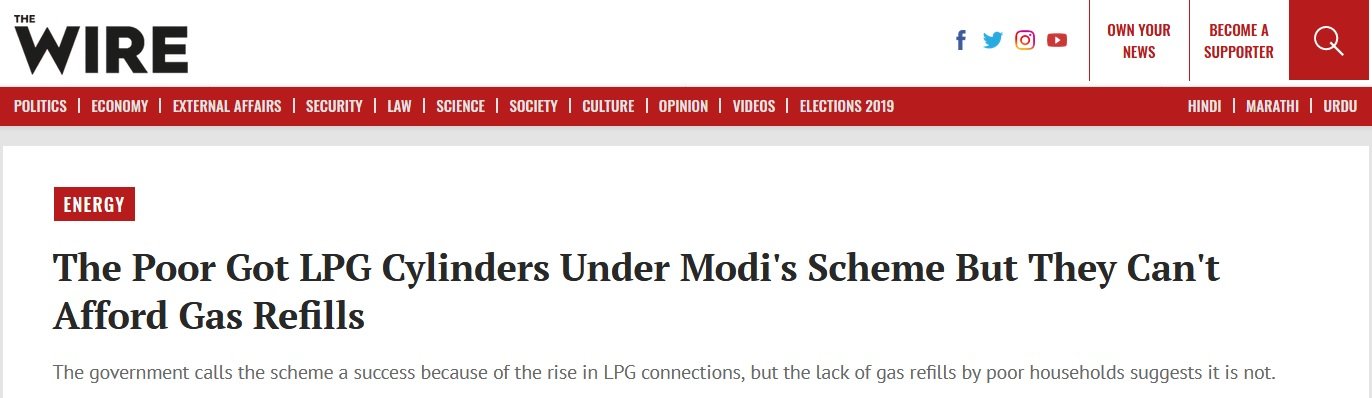
It was evident that the Ujjwala scheme was a key driver in ensuring BJP’s win in UP assembly elections. So, the media tried to discredit this scheme right from the outset. There could have been some logistical issues, which is normal in any scheme. However, to paint the entire scheme as being a failure was beyond the pale. They even cooked up a reason that the cost of the subsidized cylinder itself was so high that women returned to cooking using their traditional ways like wood or kerosene.

The way in which women in general and women in UP, in particular, voted in favour of BJP was a clear indication that these stories were just that – stories.

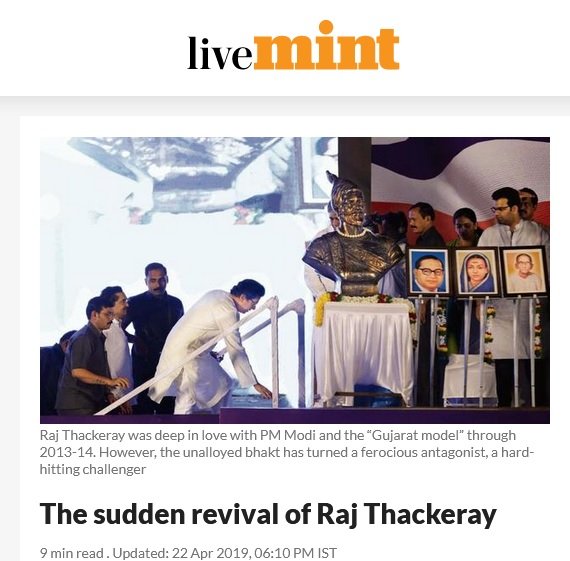
Raj Thackeray will ensure BJP’s decimation in Maharashtra

The liberal intelligentsia even tried to take Raj Thackeray’s refuge in trying to defeat BJP. Apparently, his speeches were so well received that his team found it difficult to accommodate requests for rallies that pour in every day. Marathi channel showed his speeches live – well, entertainment channels also need higher TRPs. There was no basis for their sudden support to the man who, according to them, is instrumental in creating the cultural divide between Maharashtra and UP/Bihar.

This despite Raj Thackeray – not once in his speeches did he ask people to vote for Rahul Gandhi nor did he field any candidate in the state.


UP happy with Modi, but angry with Yogi

During the course of the long election season, some people in media may have realized that there is indeed an undercurrent and this undercurrent is in favour of PM Modi. Now, they had to find a way to ensure that this message does not percolate to the people. So, they came up with a new theory – Modi is still popular in UP, but they are increasingly angry with Yogi”. And what did they blame Yogi for – cattle menace and farmer unrest? Assuming that the election results had some verdict on Yogi’s administration too – this theory also falls flat.

One can safely guess that this theory was primarily floated to ensure Priyanka Gandhi gets a favourable field when she begins her campaign for UP assembly in 2022. After all, she herself has said that her focus is for that election and not the 2019 general elections. This very media is in for another surprise in UP in 2022.

Priyanka Gandhi is the Brahmastra for Congress

The entire media world experienced professional orgasms when it was announced that Priyanka Gandhi was going to join active politics. Many began to write how this could be last missing trick that could ensure Modi and BJP would be decimated in UP. Well…

When the media resorted to comparing Priyanka’s nose to Indira’s – the writing was already on the wall. Even when Priyanka resorts to gimmicks like wearing sarees during the election season, it was not this Priyanka – but another Priyanka’s (Chopra) wardrobe that made more news is a testament to her abysmal failure in this campaign.

Election Commission is in bed with the BJP

All one needs to ask is does M K Stalin agree? Does Capt Amarinder Singh agree? Does Naveen Patnaik agree? Hell…does Rahul Gandhi of Wayanad agree?

They even wrote Editorials that EC is complicit in its silence.

The funniest argument was that EC did not chide PM Modi, despite numerous complaints against him. Do these Editors imply that quantum of complaints is the yardstick for action?

Even the former President Pranab Mukherjee praised the EC for running a perfect election. Post counting, the tallying of VVPAT did not reveal one discrepancy. Enough said.

Chandrababu Naidu meeting leaders to give finishing touches to the coalition

Subtleties are not lost here. He was made the joker run around to give the impression to people, that Mahagathbandhan is indeed winning – to show how much traction the alliance is getting. The results have clearly shown that he may have done his job as a traveller quite well – but, did miserably as the Chief Minister of Andhra Pradesh.

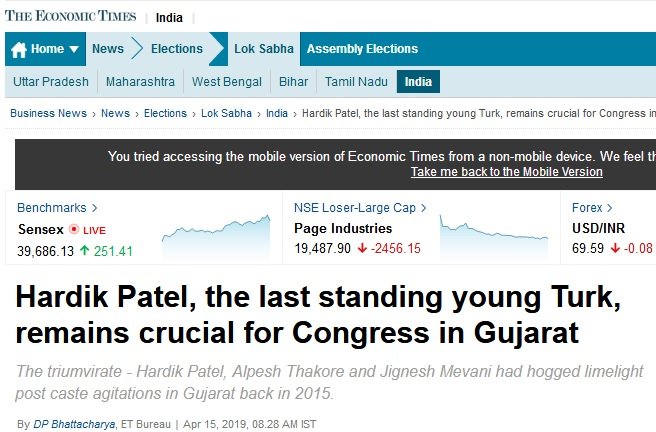
Hardik Patel is the next big thing in Gujarat after Dhokla

For a novice news consumer, Hardik Patel would have been the biggest political export from Gujarat after Mohandas Gandhi, Sardar Patel, Narendra Modi and Amit Shah. His contesting elections was in itself a big question mark. But when has reasoning been the strength of liberal media? Not only did Congress not win a single seat in Gujarat, BJP gained more than 50% votes in the state.

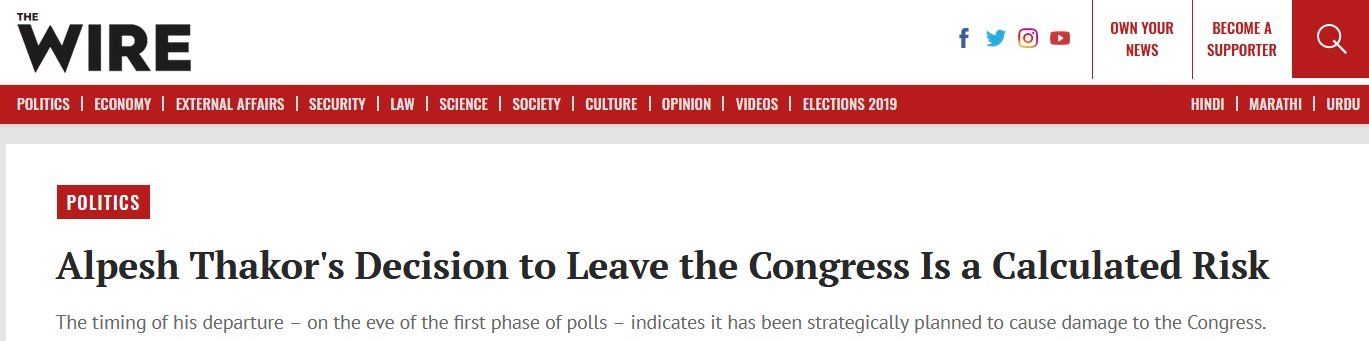
Alpesh Thakor will ensure BJP downfall in Gujarat

Just before the Gujarat assembly elections, we were fed that Hardik Patel, Jignesh Mavani and Alpesh Thakor were the “Trimurtis” to ensure BJP’s downfall. Alpesh Thakor continued to be the liberal darling, till he decided to quit Congress. There were rumours of him joining BJP. But, BJP may have decided that he needs to atone for his sins before he is given a formal entry into the party. Till then, he is a “dhobi ka…”.

Rift in BJP

Yashwant Sinha, Shatrughan Sinha, Arun Shourie were all stale. They had done their acts. Enter a new player – Udit Raj. The advantage was that he is a Dalit too. So, him not given the ticket to contest in Delhi, was the ammunition media needed. Rahul Gandhi has shown his expertise in taking discarded politicians under his wings. No sooner did Udit Raj join Congress, than he started behaving like another BJP discard Navjot Siddhu.

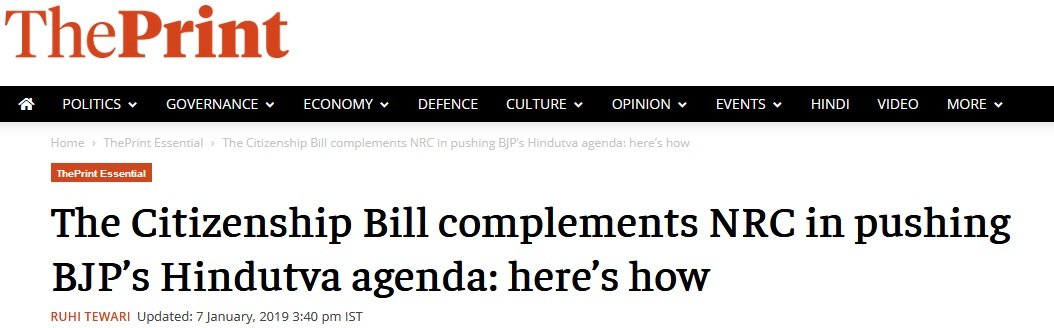
The NRC and the Citizenship Amendment Bill will backfire

Northeast was one of the brightest spots for BJP. However, the media – more than the opposition – would ensure it would not be a cakewalk. The NRC and the Citizenship amendment bill were supposed to be the Waterloo for the NDA in the region. Not only the minorities but even others were also supposedly against its implementation. There may be some truth to this regarding the implementation. However, in many instances before the campaign season, Modi and Rajnath Singh had reassured people, that there would not be any indiscriminate implementation. Thus, the Eastern divide was finally broken by the BJP.

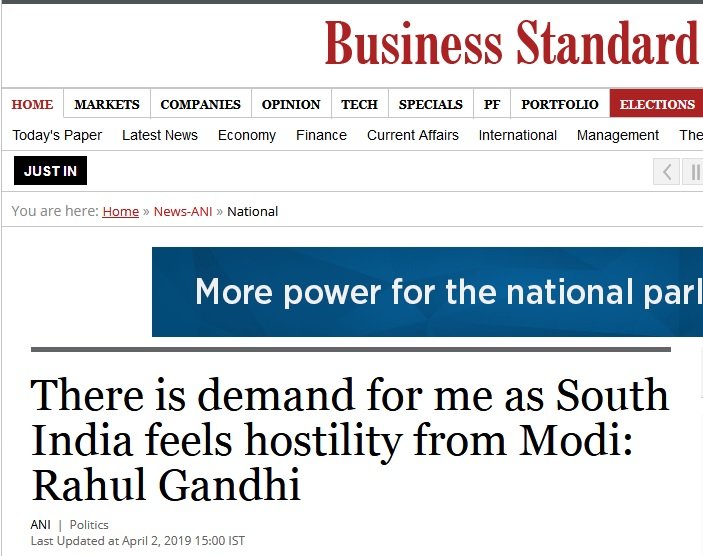
Rahul as PM of South India

Apparently, Rahul decided to contest from Wayanad, because Modi and BJP do not treat South India well – “South feels hostility from Modi”. Media joined the chorus. The loudest in the chorus – Rajdeep Sardesai even claimed that the North-South divide is so deep that Rahul Gandhi has a chance to become the Prime Minister of the Republic of South India. Whether it was said sarcastically or in truth, is anybody’s guess.

But the election results clearly showed that BJP emerged as the largest party with 30 seats in South India – followed by YSRCP, DMK and Congress. So much for BJP’s neglect of South India…!

Kanhaiya/Prakash Raj/AAP

How much coverage does AAP continue to get? Just for contesting in 7 seats in Delhi, where it is ruling. It manages to lose deposits in some of the seats. Yes – we know that Bhagwant Mann won in Punjab. Today he has more leverage in national politics than the darling Arvind Kejriwal.

As mentioned earlier, the media continuously also lamented that BJP was given wider coverage. One needs to just look at the evidence: Kanhaiya contesting from one seat and Prakash Raj contesting from one seat get more national coverage than YSRCP – that swept Andhra Pradesh. It is a different story that both of them lost – with Prakash Raj losing his deposit too. As an intellectual once said: “Kuch Bhi…?!”

It is quite evident that the media needs to introspect its behaviour, especially in its criticism of Modi and his government. Having said that, one tweet always comes back to me (by @dhaval241086):

In 2014, Modi stream rolled the opposition, because they were dead on arrival. He won 282 seats. In 2019, opposition and media had more ammunition to attack him. He wins 303 seats.