Home Blog Page 6330

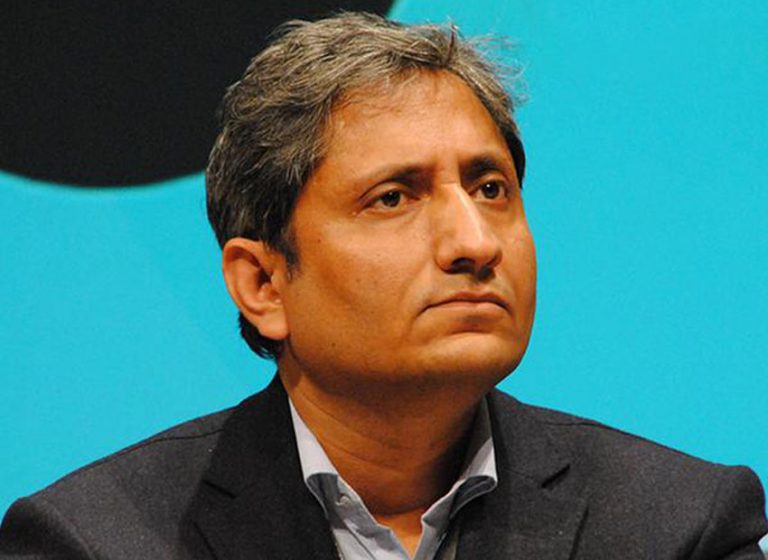
NDTV journalist Ravish Kumar has a prolonged meltdown on his show after the Exit Polls predicted a landslide BJP victory

Last evening as the numbers from various exit polls started to pour in, assorted liberals started having a mental collapse after it became evidently clear that PM Narendra Modi is once again going to preside over as the Prime Minister of the country.

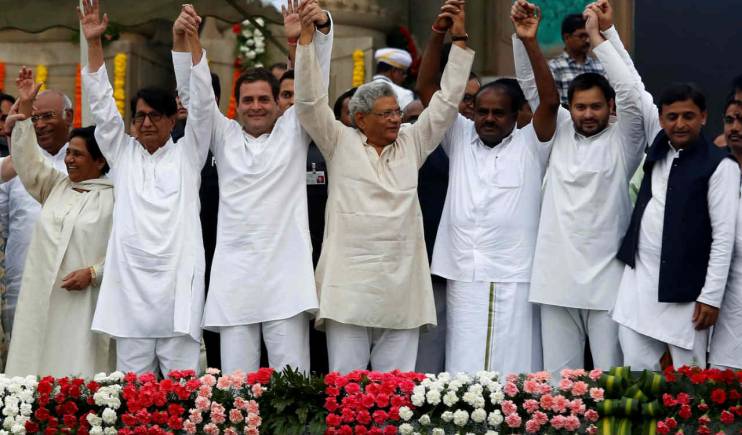
However, one of the prominent self-proclaimed liberalists, Ravish Kumar, who was seen on stage at an SP-BSP rally, had a prolonged meltdown upon the realisation that his efforts to oust the BJP from power have gone in vain as the saffron party is poised to return back at the centre with a thumping majority. Kumar felt the ground slipping under his feet as almost all exit polls predicted a rout for the Congress party.


Unsurprisingly, instead of introspecting what went wrong for the Congress party or which factors helped BJP to secure such an unassailable lead, dejected Ravish was quick to repudiate the data from the exit polls claiming that the media channels have worked hard to market BJP and PM Modi and that some anchors and owners deserve to be inducted in the cabinet for their services. Ravish’s faith in the Election Commission which had cemented during the assembly elections in Rajasthan, Chhattisgarh and Madhya Pradesh a few months back instantly vanished as he insinuated them of being partisan in favour of the BJP.


After trying to discredit the news agencies who conducted the exit polls, Ravish went ahead to demolish the credibility of the elaborate procedures entailing exit polls. One of the panellists, Revati Laul pushed a conjectural theory that the entire process of soliciting information about one’s voted candidate is flawed as people would be naturally worried and anxious to reveal their choice of candidate in order to avoid retribution from the political parties. She postulated that accounting such data would invariably yield skewed results.

This theory is absolutely trash and it doesn’t hold water as the exit polls are not conducted willy-nilly but with a set of specific objectives and with the utmost integrity. The argument that the entire process of seeking information for exit polls is flawed may serve as cold comfort for those whose lives have been completely upended after the exit poll results prophesied an imminent BJP victory.

It is notable to mention that the pliant media which was believing their preferred political leader Rahul Gandhi’s claim that he has dismantled PM Modi and was expecting Congress upsurge in the elections are now holding everyone else accountable and casting smear on other media houses and the Election Commission so that their supreme leader’s incompetence can be concealed. Ravish Kumar has been saying outlandish things for quite some time now. Recently, he had said that media should not be talking about the India-Pakistan conflict because it helps BJP in elections.
Madhya Pradesh: Congress supporter, close to state minister kills 60-year old man for voting in favour of BJP

A Congress supporter from Madhya Pradesh believed to be close to a state minister, killed a 60-year old man after accusing him of voting for the BJP.

According to the Police, Arun Sharma, the accused, also hurled casteist slurs at the victim and accused his entire community of voting for the BJP.

Arun Sharma, on Sunday, picked an argument with salon owner Nemichand Tanwar accusing him of voting for the Bharatiya Janata Party (BJP) soon after he had cast his vote at the polling booth in Palia village in Hatod area around 2 p.m. Later, Sharma visited Tanwar’s house and murdered Tanwar in front of his son with a country-made pistol.

Tanwar, who was critically injured, was rushed to the hospital where he was declared upon arrival, Indore SSP Ruchivardhan Mishra said.

BJP voters and Karyakartas have been attacked throughout the election season for their voting preferences and political inclinations. Most violence was seen in West Bengal where violence was rampant and Hindus were even prevented from exercising their constitutional right.

Trouble brewing for Kamal Nath government: The BJP calls for a special assembly session demanding floor test

Six months after forming the new government in Madhya Pradesh, the Kamal Nath government may be in trouble. The BJP has demanded a special assembly session for a floor test.

The Leader of Opposition in Madhya Pradesh state assembly, Gopal Bhargava has claimed that the Congress government in Madhya Pradesh is in minority. Bhargava said, “It will fall on its own (MP Government), I don’t believe in horse-trading but I feel its time has come and it will have to go soon.”

In the state elections that concluded in December 2018, Congress won 114 seats while the BJP got 109. With external support from Bahujan Samaj Party and Samajwadi Party, the Congress had formed the government.

BJP’s demand comes a day after the exit polls in the general assembly elections predicting that the centre is forming an NDA government with Prime Minister Modi returning for his second term. In fact, a few exit polls have predicted that the BJP may win as many as 24-26 out of 29 seats for Lok Sabha in Madhya Pradesh.

BJP national general secretary Kailash Vijayvargiya has also said that the fall of Kamal Nath government is imminent. Meanwhile, Kamal Nath has hit out on the BJP and adviced them to wait till the election results are out. “Wait till May 23. We have seen so many exit polls going horribly wrong in the past. Don’t be impatient”, he said.

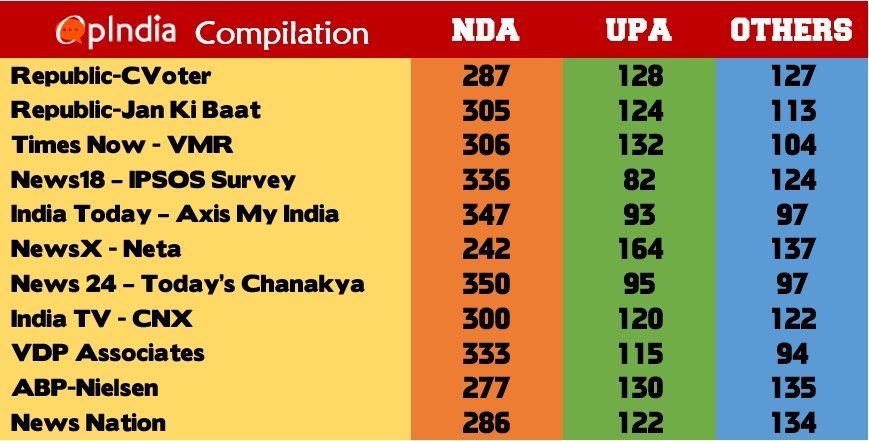
Read this before you believe the ABP-Nielsen Exit Poll that gave NDA only 277 while others gave a thumping majority

The Exit Polls were released yesterday and the general consensus seems to be that PM Modi led NDA is coming back to power with a thumping majority. Amidst the multiple Exit Polls, there was one poll that stood out. The ABP-Nielsen poll was an outlier, giving NDA only 267 seats initially, which was later revised to 277. The prediction basically meant that NDA itself would fall short of a majority and not be able to form the government.

Exit poll results


Several “liberals” depended on the Nielsen Poll to discredit the thumping majority all other polls were giving BJP.

However, now the real reason for such a skewed projection, specific to Nielsen has been revealed. Nielsen simply deleted the pro-BJP responses when they conducted their survey for the Exit Poll. This revelation was made by the Director of Nielsen, Umesh Jha himself.


Jha said that during their survey, they found that ‘many people were doing BJP-BJP’ and hence after they “calibrated” their numbers, they arrived at the 267 number as their projection, and later revised the same to 277.

When the journalist asked him what he meant by “overclaim”, Umesh Jha explained that when he asked people whom they voted for, “more than required people were saying they voted for BJP” and “probably” they did not “vote for BJP in reality”.

Then, Jha proceeds to tie himself up in knots further. He explains further that they ask voters 2 questions – who they voted for now, and who they had voted for last elections. He then says that it is possible that this time, due to “fear factor” people are saying that they voted for BJP when in reality, they did not.

Essentially, the Director of Nielsen survey just admitted to deleting responses that favoured BJP to come to a more “realistic” number according to personal prejudices. There is no basis for simply assuming that the voter is lying and thus, his response must be eliminated.

The director has thus admitted that his numbers are arbitrary and if they had not deleted the responses that favour BJP, the numbers would have been much higher.

Umesh Jha is the “Head Customized Research” at Nielsen according to his LinkedIn page.

While all other polls were giving a thumping majority to BJP and NDA, Nielsen chose to “customise” their survey and simply delete voter responses were overwhelmingly in favour of BJP.

This dishonesty perhaps crosses all limits of public trust as far as Exit Polls are concerned. Nielsen had also found itself in hot water during the Bihar assembly elections when it had supposedly provided incorrect data to 18 channels showing a BJP lead.

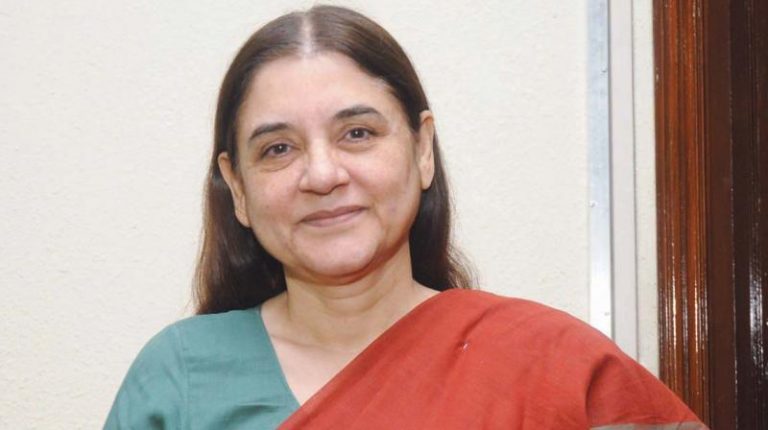
Modi ministers in five years – Maneka Gandhi, Minister for Woman and Child Development

0

In the series on the performance of various ministers in the Modi government, let’s take a look at Maneka Gandhi, Minister for Woman and Child Development.

Maneka Gandhi is the widow of Sanjay Gandhi, elder son of former Prime Minister Indira Gandhi. Sanjay Gandhi died when she was just 23, and her son Varun was just about 100 days old.  After the death of Sanjay Gandhi, she had a fallout with Indira Gandhi, and was eventually forced out of Prime Minister’s residence. She contested 1984 Lok Sabha elections against Rajiv Gandhi, but lost.  After that, she joined VP Singh’s Janata Dal, and contested 1989 Lok Sabha elections from Pilibhit Constituency and won. She joined the government as Minister of State for Environment. Thereafter she has continuously been elected as Lok Sabha member from Pilibhit,  except for 2009 elections, when she won Aonla Constituency, and Pilibhit was represented by her son Varun Gandhi. She joined BJP ahead of 2004 general elections. She contested 1998 and 1999 Lok Sabha elections as an independent candidate, however, supported NDA government and handled various ministerial portfolios. After 2014 elections, she was given Women and Child Development ministry. She is a well-known environment and child rights activist.

Here are her achievements as WCD minister.

Making adoption procedure completely online through CARA – Central Adoption Resource Agency (CARA) is the nodal agency under WCD ministry for adoptions. In her tenure, Maneka Gandhi has completely made the adoption procedure online through CARA. Parents willing to adopt children, have to register themselves on the website of CARA, filling complete personal details. After filling the details, they are given a waitlist number. After registering, social workers associated with the ministry make a personal visit to applicants. They verify and cross-check all the details given by the prospective parents. After their positive report, the status of the parent is logged under verified. Post verification, as waitlist moves ahead with the adoptions, parents are able to adopt the children. This has greatly reduced malpractices happening in adoptions by unscrupulous people and NGOs.

Beti Bachao, Beti Padhao Abhiyan – Alarmed at critical fall in child sex ratio in 2011 census, the government launched Beti Bachao, Beti Padhao Abhiyan to increase the number of girl child. Beti Bachao, Beti Padhao is an umbrella scheme, where the government has undertaken a number of schemes. The overall goal of the Beti Bachao, Beti Padhao scheme is to celebrate the girl child, and enable her education. The objectives of the scheme are to prevent gender-biased sex-selective elimination, ensuring survival, protection and education of the girl child. Under this scheme, there are two major components like mass communication campaign to create awareness, and multi-pronged action in 100 districts with low child sex ratio. Communication campaign aims at ensuring girls are born, nurtured and educated without discrimination to become empowered citizens. The campaign interlinks national, state and district level interventions with community-level action in 100 districts, bringing together different stakeholders for accelerated impact.  Fruits of Beti Bachao, Beti Padhao are clearly seen in the state of Haryana, which was infamous for female feticide and low sex ratio, it now stands improved at 924 girls per 1000 boys as of December 2018 from an abysmal low of 832 in 2012.

Amendment to POCSO act and IPC to make stringent punishments for rape – The government has approved amendments to the POCSO Act, and introduced stringent measures to check the circulation of child pornography, and administration of hormones to children to attain early sexual maturity. It has done so to catch up with the offenders as existing laws were proving futile to stop this menace. Government has also amended the Indian Penal Code to punish child rapist with death, and ensuring speedy trial in cases where the victim is minor in fast track courts. This law is expected to discourage the trend of child sexual abuse by acting as a deterrent, due to strong penal provisions incorporated in the act.

Increase in maternity leave for women – Government amended Maternity Benefit Act in 2017, and increased the maternity leave available to working women from existing 12 weeks to 26 weeks to the much respite of women, for them being able to care for their newly born.


The author is journalism pass out from Indian Institute of Mass Communication, New Delhi. After dangerously flirting with the idea of left during his IIMC days, due to the proximity of the IIMC with JNU, a den of radical leftists, he became firmly aligned to right after realizing the futility of the left. He tweets at @kpophale.

Here are the 5 excuses Congress will use to deflect attention from the Gandhi Parivar’s failure if the Exit Polls hold true

The Congress party, over the years, has shown that it’s incapable of honest self-reflection. Its primary objective, after every election defeat, is not to make attempts to ascertain the real causes of its defeat but to exhaust their resources in trying to absolve the Nehru-Gandhi Parivar of its sins.

Now that the Exit Polls are out and all of them predict the NDA to return to power with Narendra Modi as Prime Minister, it is safe for us to predict that there will be similar reactions from the Congress party this time around as well. The Congress party will deflect attention from the utter failure of the leadership of its party and look for scapegoats to blame.

Let us take a look at the top 5 entities the party will blame to avoid holding Rahul Gandhi accountable for the defeat.

1. Sam Pitroda

Sammy has been wild this election season. From insulting the martyrs of the Pulwama Terror Attack to saying ‘Hua toh Hua‘ about the 1984 Sikh riots, he filled the great void left behind by Mani Shankar Aiyar’s absence in an amazing manner.

He criticized the Balakot Airstrikes as well, carried out in response to the Pulwama Terror Attack. He had said, “Don’t know much about attacks. It happens all the time. The attack happened in Mumbai also, we could have then reacted and just sent our planes but that is not the right approach. According to me, that’s not how you deal with the world.” When criticized for his remarks, he had called it a “trivial matter”. Not merely that, he arrogantly told everyone to move on from the issue of Sikh Genocide.

Things reached a point that even ‘neutral’ journalists were begging Pitroda to refrain from making public statements. Therefore, it’s quite certain that he will be made a scapegoat in the days to come.

2. Mani Shankar Aiyar

One of the great heroes of 2014 General Elections and the Assembly Elections in Gujarat, Aiyar was late to the party this time around. But when he eventually emerged on the scene, he came pretty much with a bang.

First, he justified the ‘Neech’ remark he had made in the run-up to the Gujarat Assembly Elections in 2017. In an article for ThePrint, Aiyar wrote how he is so confident that Modi will be ousted on 23rd May and it will be a ‘fitting end’ to the ‘most foul-mouthed’ prime minister India has ever had. Like a cherry on the cake, he topped it off with saying, “Remember how I described him on 7 December 2017? Was I not prophetic?”

When criticized for justifying his appalling remark, Aiyar played the victim card and blamed the media instead. “A statement has already come from my side. There is an entire article. You are choosing a line from the article and asking me to comment on it. I will not fall into your trap. I may be a fool, but not that big a fool,” Aiyar said.

Then, in a video that went viral on social media, Aiyar could be seen in a not very healthy state of mind as he made mystifying body movements and went on a tirade against a journalist asking him questions. Eventually, he told the journalist to ‘f*ck off’ in what can only be described as perplexing behaviour.

Therefore, when Pitroda is made the scapegoat for the defeat, he won’t suffer for lack of company.

3. EVMs

EVMs have long been blamed for unfairly favouring the BJP. It has become a common ruse for the Opposition parties to blame them for their own failures. Therefore, it would be too much to expect that things won’t be the same this time around as well.

In fact, Rahul Gandhi has himself come out with all guns blazing against EVMs even before the first vote has been counted. AAP supremo Arvind Kejriwal, too, has voiced similar concerns.

Sammy, with wisdom dripping from every strand of his pristine white hair and pitch black beard, too said something was wrong with EVMs. He assured everyone that although he had no idea what was actually wrong with, given enough time, he is confident he will be able to figure it out.

In the first phase of the Lok Sabha elections itself, Congress had ridden the ‘EVM glitch’ bogey. Therefore, it’s extremely unlikely that EVMs won’t be held responsible in the event of Modi’s victory.

4. The Election Commission

The Congress party, along with the rest of the Opposition, has made it a habit of maligning the Election Commission. It’s something they have been doing since a long time. In the run up to the 2019 Lok Sabha Elections and during the polls, the Congress ecosystem has been trying hard to discredit the Indian Elections by attacking the institution itself. All the while as the ECI was actually being overly accommodating of ‘secular’ parties.

After the exit polls were out, the Congress President, too, along with senior leader Chidambaram accused the ECI of capitulating before Narendra Modi. Mamata Banerjee, whose own turf is under serious threat, has been accusing the ECI and central forces of unfairly favouring the BJP, all the while as the goons in her party rank amok in the streets targeting voters and BJP leaders alike.

Thus, the ECI will be seriously attacked by the Opposition come May 23rd.

5. Non-Lutyens Media

In the aftermath of the 2014 Lok Sabha elections as well, Congress propagandists in Lutyens Media had peddled the narrative that the Modi Wave was entirely the creation of the media. This time around as well, the Congress ecosystem has been accusing the media of helping the BJP in their campaign.

While much of the mainstream media resorted to spreading fake news, divisive politics and openly acting as advisers to the Congress party, come May 23rd, the ‘Khan Market Gang’ would still be crediting the media should Modi win.

The Wire, Scroll, NDTV, Ravish Kumar, The Print and numerous other outlets have been openly spreading false propaganda against the BJP. Yet, the Congress party and their sympathizers will still accuse the media of kneeling before Narendra Modi despite the fact that an overwhelming majority of it has been working against the saffron party.

As regional leaders and Rahul Gandhi ready their excuses, 23rd May all set to be a nail-biting Soap Opera

As the final phase of 2019 elections come to an end, it is important to look at the changes that India’s society has undergone over the last couple of years. Exit polls have indicated that BJP led NDA is likely to come back to power with a similar mandate as in 2014 and this suggests that India has indeed witnessed a significant change over the last 5 years as politics of performance became the most important factor in terms of voter preferences.

A resultant change has been that the BJP became the central pole of India’s politics. The critical question now is what will happen on the 23rd of May, and I have decided to avoid making a forecast in this article but by simply agreeing by what all exit polls are suggesting. There is no doubt that election results on 23rd May will require us to look at a few major changes in India’s political landscape as they will shape up the political discourse over the next decade.

The first, and perhaps, the most important is that the Congress which was fighting for its survival may very likely for the first time be unable to form a government at the centre for 10 straight years in a row. Additionally, it may also witness a drop in its vote-share even though it may get more seats than it did in 2014. This doesn’t augur well for the Rahul Gandhi, Priyanka Gandhi Vadra brother-sister duo as their failure to revive the party could result in regional leaders gaining more political power over the central leadership. As is the case, in 2019, regional leaders have had a greater bargaining power than Rahul Gandhi and should this continue then perhaps we may witness further splits within the party or perhaps, a change in the central leadership. It will be difficult for the party to recover from two successive defeats in general elections, and this will have a likely impact in the state elections that are scheduled for later this year or perhaps early in 2020.

The second change is to do with the BJP which has consistently expanded its footprints from 2014. So far, the BJP managed to expand at the Congress and the SP-BSP in UP, but the rest of the regional players managed to hold on to their states. 2019 is likely to alter these dynamics as an aggressive BJP may end up making inroads in West Bengal hurting the Trinamool Congress the most. If Mamata Banerjee’s reaction is any evidence, then we can safely see a sign of frustration which suggests that her political ground is shrinking fast and this will have significant repercussions for her in the subsequent state assembly elections. The BJP has also been aggressive in the North East and Odisha which suggests that it is looking for fresh areas to further expand its support base.

Another interesting interpretation would come from the results of the states that went to polls recently namely, Punjab, Karnataka, Madhya Pradesh, Chhattisgarh and Rajasthan. The Congress made populist promises in the run-up to state elections and it has largely failed at delivering them. Therefore, the performance of Congress in 2019 in these states could be directly linked to the perception about the state governments there. Pollsters seem to suggest that the BJP has an advantage in Karnataka, Madhya Pradesh and Rajasthan while Congress can do well in Punjab and Chhattisgarh. The extent of the performance of Congress and the BJP in these states will determine how close the BJP can get to the halfway mark or how close can the Congress get to a three-digit figure.

Of course, the most interesting results would be of Uttar Pradesh and it is here where most pollsters seem to have divided opinion. Some pollsters believe that the BJP will win 30 seats in UP or that the Mahagathbandhan is working, while most do believe that the BJP will manage at least 50 seats in UP, or that the Mahagathbandhan is not working as well as it was once anticipated. Several analysts have argued that for the Mahagathbandhan to work, it is important that a major proportion of the vote-share gets transferred. Even if 80 per cent of BSP-SP votes get transferred, the BJP will manage a respectable performance in UP. It would be interesting to see how these dynamics played out during the course of the last two and a half months.

The most important feature of the 2019 results would be that the left front may very well for the first time be unable to win in double digits. Therefore, what was once the biggest opposition block to the Congress, seems to have crumbled along with the Congress. Tripura and Kerala were the last two states where the left is relevant, but BJP dislodged the left from Tripura and it is expected that the Congress will gain at the expense of the communists in Kerala after the Sabarimala fiasco.

23rd May will be no less than a soap opera with regional satraps questioning EVMs and every bit of grace that the opposition had will be lost as they will blame everyone but themselves for their losses, but the fact remains that the writing has been on the wall all along.

‘Hope Chandrababu Naidu’s excitement lasts till May 23’, Shiv Sena mocks the Andhra CM’s efforts to unite opposition

Taking a dig at Andhra Pradesh chief minister N Chandrababu Naidu, on Monday Shiv Sena mocked his efforts to form a non-BJP government at the Centre.

In the editorial of party’s mouthpiece ‘Saamana’, Shiv Sena said, “There are at least five contenders for the Prime Minister’s post in Opposition. There are more chances of their disillusionment (mohbhang). Who will form the government? This question has already been answered. Amit Shah said that BJP will win 300 seats and the party reached that target in the fifth phase of the Lok Sabha elections only.”

“Why Chandrababu Naidu is exhausting himself without any reason? Hope his current excitement last till May 23. We wish him luck for the same,” the party added.

In the hope to form the government at the centre, in case the May 23 Lok Sabha poll results see a fractured mandate, Andhra Pradesh’ Cheif Minister Chandrababu Naidu has been running pillar to post aspiring to strengthen an anti-BJP front.

Chandrababu Naidu has been on a meeting spree with the prospective Prime Ministerial candidates of the ‘Mahagathbandhan’ parties. So far, Naidu has met Congress president Rahul Gandhi, NCP chief Sharad Pawar, Samajwadi Party leader Akhilesh Yadav, and BSP supremo Mayawati. He is scheduled to meet Mamata Banerjee today in Kolkata. Interestingly, each one of these leaders secretly harbours the desire to lead the country as the next Prime Minister of India.

The results of the 2019 elections are a few days away, and this is perhaps why Naidu thought it wise to warm up to each one of these leaders in the less likely event of Mahagathbandhan crossing the 272-mark.

The desperation among the opposition ranks to keep the BJP out of power this time, by hook or crook, is evident. Recently the news about 21 opposition parties were planning to write a letter to the President urging him to not call the single largest party to form a government at the centre emerged. The plan, however, was based on the hope that BJP alone won’t be able to conjure up 272 seats to stake a claim at the government.

Similarly, UPA Chairperson Sonia Gandhi, understanding the urgency of a united opposition to take on the BJP surge, had also stepped in to unite opposition parties to form an alliance government.

Realising that the Congress party can’t form a government at the centre on its own or with its current allies, the UPA chairperson reached out to almost all Opposition party leaders to check their availability on May 21, 22 and 23 for a strategy meeting in Delhi.

Desperation to keep BJP out of power has urged Sonia Gandhi to approach parties like the Naveen Patnaik’s Biju Janata Dal (BJD) and K Chandrashekar Rao’ Telangana Rashtra Samithi (TRS). Despite the two going head to head in Andhra Pradesh, YSR Congress of Jaganmohan Reddy and Telugu Desam Party (TDP) have also been invited.

The UPA chairperson is believed to be attempting to convince the parties that it was time to keep petty politics aside and take on BJP unitedly.

Meanwhile, the exit polls have predicted a thumping victory for the BJP government and if one goes by these predictions the efforts the opposition parties are putting in will soon meet a sad ending. The Lok Sabha election results are due to be declared on May 23.

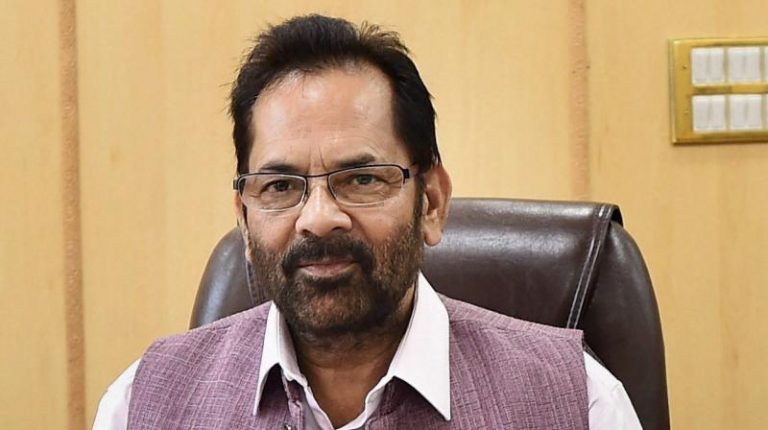
Modi ministers in five years – Mukhtar Abbas Naqvi, Minister of Minority Affairs

In the series on the performance of various ministers in the Modi government, let’s take a look at Mukhtar Abbas Naqvi, Minister of Minority Affairs.

Mukhtar Abbas Naqvi started his political career with Janata Party activities, and was jailed during emergency for participating in Sampoorna Kranti Movement launched by JP Narayan at the age of 17. Naqvi, contested two assembly elections of 1991 and 1993 in Uttar Pradesh, and three Lok Sabha elections 1998, 1999 and 2009 as BJP candidate. He was first elected to the Lok Sabha from Rampur, Uttar Pradesh, in 1998. Naqvi served as Minister of State for Information and Broadcasting and Parliamentary Affairs in Atal Bihari Vajpayee Government. He was then elected to the Rajya Sabha in 2002, 2010 and 2016. After Narendra Modi became Prime Minister in 2014, he was first inducted as Minister of State for Minority Affairs. Later when Cabinet Minister for Minority Affairs Najma Heptullah was appointed as Governor, he was elevated as Cabinet Minister for the same department.

Here is a look at achievements of Ministry of Minority Affairs –

Abolition of Haj Subsidy – Though it was Supreme Court which ordered abolishment of Haj Subsidy gradually in 10 years in 2012, Narendra Modi government ended it in 2018 itself. Instead the government started giving the entire money meant for Haj Subsidy as a subsidy for Muslim girls’ education, as literacy rate amongst Muslims and that too among girls is very low due to appeasement policies of successive Congress governments. Sachhar Committee had exposed Congress’s lip service for minority welfare. Congress policy was to keep Muslims consistently poor and take their votes in the name of secularism and fear-mongering in the name of BJP.

New Haj Policy – Modi government commissioned a new Haj Policy which is more transparent and people friendly. According to the new policy, embarkation points for Haj have been reduced to 9 from earlier 21, making it cheaper for pilgrims to fly to Saudi Arabia. It also allowed women above 45 to undertake Haj without Mehram (Male Guardian), empowering women. Until now women couldn’t travel alone for Haj. The policy also suggests using sea route to go to Saudi Arabia, making Haj even more affordable as travelling by sea is cheaper compared to travelling by air. New Haj Policy is in line with empowerment of minorities without appeasement, unlike Congress which only believed in appeasement of Muslims and never in empowerment.

USTTAD (Upgrading the Skills and Training in Traditional Arts/ Crafts for Development) – USTTAD scheme was launched in May 2015 to preserve the rich heritage of traditional arts/crafts of minorities. The scheme aims at capacity building and updating the traditional skills of master craftsmen/artisans; documentation of identified traditional arts/crafts of minorities; set standards for traditional skills; training of minority youths in various identified traditional arts/crafts through master craftsmen; and develop national and international market linkages. This scheme has helped minority artisans to earn respectable livelihood.

Maulana Azad National Academy for Skills (MANAS) – Government launched MANAS in November 2015 to impart skill development in minority communities.

Hamari Darohar – Hamari Darohar scheme was launched in 2014, which aims at the preservation of rich heritage and culture of minorities, by supporting curation of iconic exhibitions, calligraphy, preservation of old documents, research and development. Under this scheme, an iconic exhibition of Parsis (Zoroastrians) i.e. “The Everlasting Flame” to showcase the civilization and culture of the Parsis (Zoroastrians) was organized during March-May, 2016. This involved curating 3 travelling exhibitions on Parsi Culture namely – ‘The Everlasting Flame’; ‘Threads of Continuity’; and ‘Painted Encounters’, Parsi Traders and Community & No Parsi is an island’, at the National Museum, National Gallery of Modern Art (NGMA) and Indira Gandhi National Centre for Arts (IGNCA) at New Delhi. A project has been allocated to Dairatul Maarifil Osmania (an institution established in 1888 AD) under Osmania University, Telangana, for translation of 240 invaluable documents belonging to medieval period on the subjects of medicines, mathematics, literature, from Arabic to English, digitization and re-printing. Under this scheme, a project called ‘Protection of Parsi Heritage – Navsari’ has also been sanctioned in March 2018.

Nai Manzil scheme was launched in August 2015, to benefit the minority youths in the age group of 17 to 35 years, who are school-dropouts or those educated in the community education institutions like Madrasas, by providing formal education and skill training along with certification.

Garib Nawaz Skill Development Centers were launched in July 2017 with an objective of starting training programs to meet skill development/ skill up-gradation needs of minority communities like Muslims, Christians, Sikhs, Buddhists, Parsis and Jains in the country to achieve government’s goal of “Skilling India” by providing meaningful and sustainable livelihood options, in terms of wage employment/ self-employment opportunities to all minority youths. The objective of the scheme is to enable a large number of minority youths of India, to take-up relevant skill sets which are in demand. All training programs will be covered by real time CCTV footage for the purpose of monitoring, and GPRS enabled bio-metric attendance machines will be used for capturing attendance of trainers and trainees. Government also launched GST facilitator course at Garib Nawaz centres to train minority youths.

Qaumi Waqf Board Taraqqiati Scheme (QWBTS) was launched last year after merging and modifying two ongoing schemes namely, computerization of records of state waqf boards and strengthening of state waqf boards.


The author is journalism pass out from Indian Institute of Mass Communication, New Delhi. After dangerously flirting with the idea of left during his IIMC days, due to the proximity of the IIMC with JNU, a den of radical leftists, he became firmly aligned to right after realizing the futility of the left. He tweets at @kpophale.


The ‘liberal’ world is so crazy right now, Yogendra Yadav is the most tolerable and rational person

The exit poll results show a high probability of Narendra Modi swearing-in as the prime minister for the second time and ‘liberal’ world is in a tizzy and the final results are not even out yet. Psephologist-cum-politician, who usually gets it wrong, Yogendra Yadav has declared that if Congress cannot defeat the BJP it has lost its relevance in the history of India and hence it should die.

While that statement has got the ‘liberal’ crowd up in arms against Yadav, a few reactions from the self-appointed saviours of democracy and secular fabric of India make Yadav appear the sanest amongst the crowd.

Twitter “Economist”, who likes to go after the livelihood of people she doesn’t agree with, Rupa Subramanya, floated a theory that the exit polls are rigged.


Let it sink in for a moment that she accused the exit polls, which are based on a sample survey, and more often than not pretty inaccurate, of being rigged because they showed the BJP winning.

Yet another ‘liberal’ and Congress sympathiser said that those who believe in these exit polls which predict a BJP victory are cow urine drinkers.


He has even cast aspersions on the Election Commissioner and alleged that Modi and Amit Shah have done some ‘setting’ with the election commission so that the EVMs can be manipulated and the result day can reflect the exit polls. Even The Game of Thrones finale was not as badly written as this desperate tweet.


Have bookmarked the tweet to revisit his timeline on 23rd if Modi actually does win to see what he is drinking to drown his sorrow in.

Congress-supporting troll who spread the conspiracy theory that Pulwama terror attack was an insider job, took this opportunity to tell Congress President that RSS should be destroyed.


And then, editorials are already being planned to show how Rahul Gandhi is still the best and all institutions in India are compromised.


Did we tell you about this guest on Ravish Kumar’s NDTV who did not know that exit polls are carried out by a polling agency and not really a news channel which commissions them? And did you see Ravish Kumar nodding at her without correcting her?


Being intelligent is not a prerequisite of being identified in the ‘liberal’ circle as an ‘intellectual’.

Meanwhile, we are waiting for May 23 to see what great chemicals come out when such specimens open their mouths.


Speaking of specimens, Delhi Chief Minister Arvind Kejriwal has not tweeted anything on exit polls yet. He has only retweeted his West Bengal counterpart’s tweet where she referred to exit polls as a ‘gossip‘. As the day progresses, we are hoping more such gems emerge making Yogendra Yadav, who wants Congress to die, come across as the most rational ‘liberal’ around.