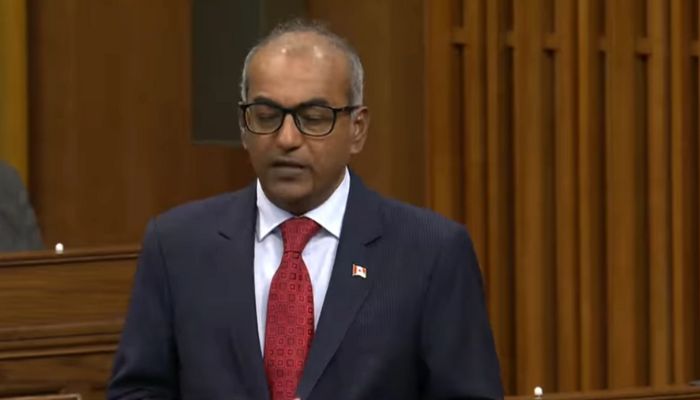
On Monday, September 16, Indian-origin Canadian MP Chandra Arya expressed concern over the ongoing violence against Hindus in Bangladesh. Addressing the Canadian Parliament, the Hindu lawmaker highlighted the plight of religious minorities, including Hindus, Buddhists, and Christians, in Bangladesh. He emphasised that whenever there is instability in Bangladesh, Hindus, and other religious minorities have had to face the brunt of it. He also drew the House of Commons’ attention toward the declining population of religious minorities in Bangladesh ever since it attained independence in 1971.
My statement in parliament today: Madam Speaker, I am deeply concerned by violence targeting religious minorities, including Hindus, Buddhists and Christians in Bangladesh. Every time there is instability in Bangladesh, religious minorities, particularly Hindus, face the brunt.… pic.twitter.com/FOMCVbBB5i
Canadian MP Arya said, “I am deeply concerned by violence targeting religious minorities, including Hindus, Buddhists, and Christians in Bangladesh. Every time there is instability in Bangladesh, religious minorities, particularly Hindus, face the brunt.”
Highlighting the declining population of religious minorities in Bangladesh, he added, “The share of religious minorities in the population of Bangladesh has significantly decreased since it achieved its independence in 1971. From 23.1%, including about 20% Hindus, it has now come down to just about 9.6%, including about 8.5% Hindus.”
He further stated that Canadian Hindus who have family members in Bangladesh are worried about the safety and security of their families, their temples, and properties.
Arya informed the Canadian Parliament that Canadians who have family members in Bangladesh, have planned a rally in front of the Canadian Parliament on 23rd September. He added that families of Canadian Buddhists and Christians who have ties to Bangladesh will also participate in the rally.
Hindu Canadian MP, Chandra Arya is of Indian origin. He originally hails from Tumakuru district in Karnataka. He represents the electoral district of Nepean in Ontario in Canada’s House of Commons. He is known for raising Hindu causes in the Canadian Parliament as well as speaking against the Khalistani radicalism in Canada. He has often faced threats from Khalistani terrorists for condemning attacks on Hindu temples.
Once Khalistani terrorist Gurpatwant Singh Pannun threatened him to leave the country for condemning the attacks on Hindu temples and raising Hindu causes. However, the MP has continued to raise his voice against Khalistani extremism.
Additionally, he once gained attention when his video went viral in which he addressed the Canadian Parliament in his native language, Kannada.
Ongoing religious persecution of Hindus and attacks on their property, livelihood, and temples
There have been at least 205 attacks on Hindu temples, shops, and businesses since the ouster of Sheikh Hasina as Prime Minister of Bangladesh. OpIndia had reported how a Hindu boy named Utsab Mandal was almost lynched by a Muslim mob on accusations of ‘blasphemy’ in the Sonadanga residential area of Khulna city. We previously exposed how Muslim students forced more than 60 Hindu teachers, professors, and government officials to resign from their positions.
Human rights activist and exiled Bangladeshi blogger, Asad Noor, has recently revealed that the minority community is now being coerced into joining ‘Jamaat-e-Islami’. On 6th September, a procession of Hindu devotees carrying the idol of Lord Ganesha came under attack in the Kadam Mubarak area in Chittagong city of Bangladesh.
Furthermore, the Interim Government of Bangladesh recently issued a Talibanised decree in which it asked Hindus to turn off their puja rituals, prayers, and sound systems at least 5 minutes before and during the Namaz and Azan.
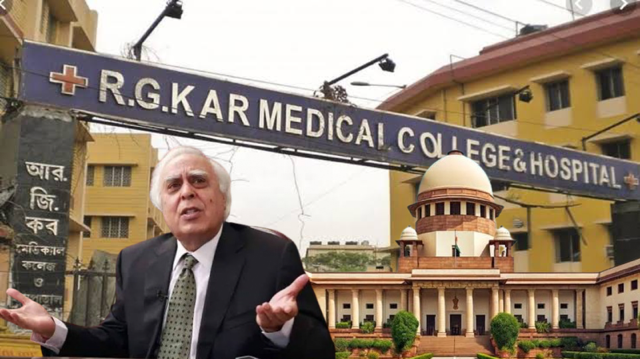
Senior advocate Kapil Sibal, who is representing the West Bengal government, objected to the live streaming of the SC proceedings in the RG Kar Hospital rape and murder case. Sibal claimed reputation built over 5 decades would be destroyed by the live streaming of the case.
Urging the Supreme Court to stop the live feed, Sibal complained that it has tarnished the reputation of lawyers and has resulted in threats to them.
Sibal stated that despite not representing the accused, they are still receiving threats. He informed the court that female lawyers in his chamber have been subjected to rape threats.
“Livestreaming cases with such emotional implications can have serious consequences…we have a 50-year reputation at stake! We are not representing the accused! Where was I laughing? This is unjust! These threats are now affecting the women in my chamber,” Sibal told the court.
In response, the CJI DY Chandrachud-led bench emphasised the public interest aspect, maintaining that the court operates openly. The CJI assured that the court would address any threats but refused to halt the livestreaming of the case.
Earlier, the Supreme Court instructed the Central Bureau of Investigation (CBI) to submit a new report in the Kolkata rape-murder case, as the agency expressed doubts about the forensic report. Today, the CBI provided a confidential update on the investigation’s progress to the Supreme Court. In addition to investigating the rape and murder, the CBI is also probing the former RG Kar principal, Sandip Ghosh, and others regarding the crime and alleged financial irregularities at the hospital during their tenure.
In the previous hearing, Solicitor General Tushar Mehta, representing the CBI, mentioned plans to send samples for further analysis to AIIMS Delhi and other forensic labs, noting that the chain of custody of the samples had become a critical question.
“We have a forensic report, and it’s acknowledged that when the girl was found at 9:30 AM, her jeans and undergarments were removed and lying nearby… she was semi-nude with visible injury marks. Samples were taken and sent to the CFSL in West Bengal, but the results prompted the CBI to send them to AIIMS and another lab,” SG Mehta stated.
The CBI also highlighted the findings of the Central Forensic Science Lab (CFSL) report in Kolkata without revealing many details. In a prior hearing, the Supreme Court questioned the absence of an autopsy challan.
After reviewing the latest CBI report, the court refrained from commenting on the ongoing investigation, stressing that revealing details could hinder the process. The court affirmed that the CBI’s efforts aim to uncover the truth.
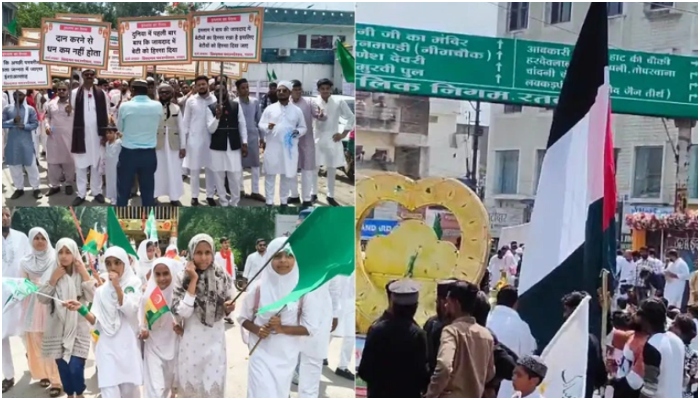
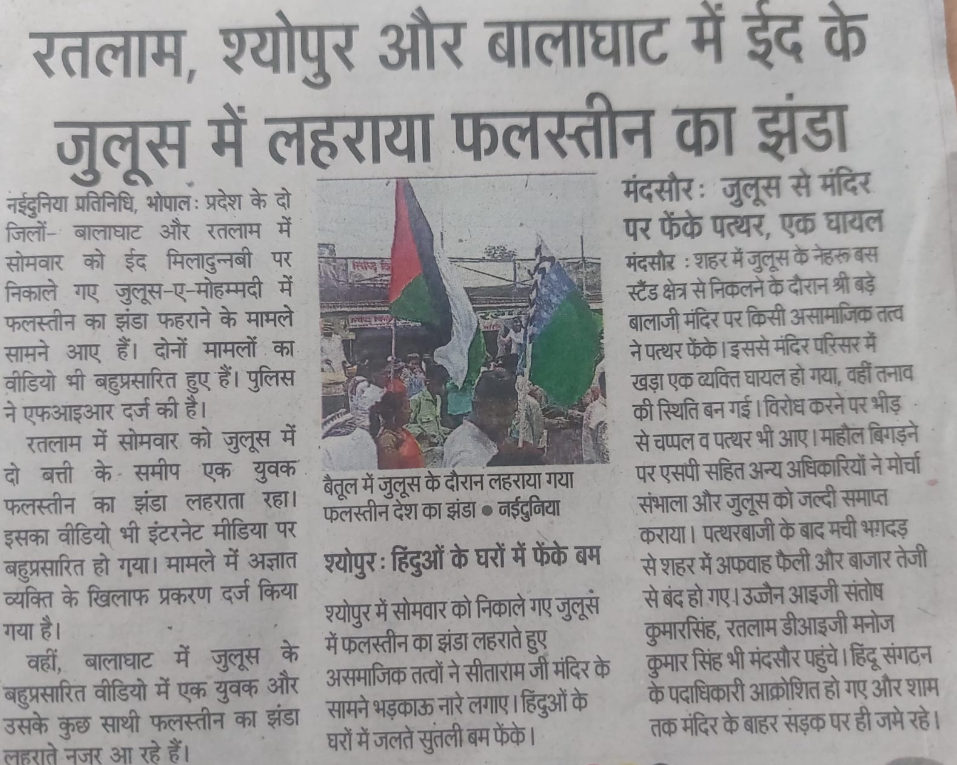
On Monday, 16th September, Madhya Pradesh Police registered 2 FIRs against Islamist miscreants for attacking Hindu temples and homes in several districts on the occasion of Eid-e-Milad processions. As per the local reports, Islamists conducted processions in the districts of Sheopur, Balaghat, Mandsaur, Mandla, and Ratlam.
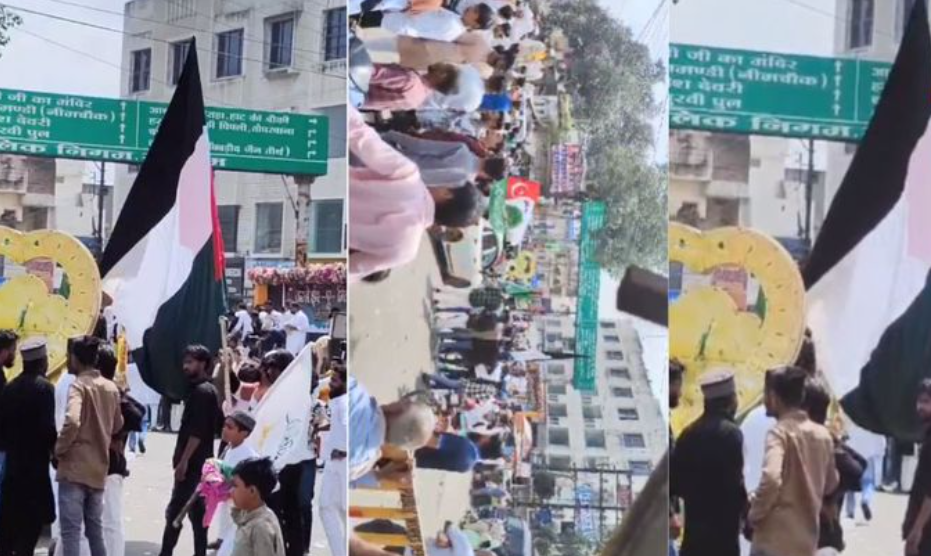
They raised Islamic slogans while the procession passed through the Sitaram Temple in Sheopur and also threw firecrackers into the homes of the Hindu residents. In Mandla, they also waved Palestinian flags.
Mandla Superintendent of Police Rajat Saklecha confirmed that based on the complaints, a youth identified as Fardeen had been arrested for raising Palestine flags. “Based on complaints about waving a flag resembling the Palestine flag, the accused youth has been taken into custody and further legal steps are being taken,” he said.
In Mandsaur, a similar incident took place as the Islamists raised unfavorable slogans while the Eid procession passed through Lord Balaji Temple. They also pelted stones at the temple injuring one of the persons associated with the temple.
The incident caused communal tension in the district resulting in the early shutdown of the busy markets. Several Hindus further gathered on the premises of the temple protesting against the stone-pelting that caused severe injury to one. The police meanwhile took cognizance of the event and tried to control the enraged mob.
Several videos of the incident are making rounds on social media. Meanwhile, in Ratlam and Balaghat, the Islamists also happened to raise Palestine flags. As per the local reports, they yelled Islamic slogans hailed Palestine, and also pelted stones at Hindu temples. The Balaghat police have arrested an individual identified as Shaquib.
#Ratlam :- ईद-मिलादुन्नबी के जुलूस में फहराए फिलिस्तीन के झंडे!
Aditya Mishra, Rajgarh’s Superintendent of Police, admitted receiving a complaint about purported pro-Palestine slogans being raised during an Eid-e-Milad procession. Police examined the CCTV camera footage but found no proof, he said, adding that an investigation is ongoing.
Indian social media users are furious at the Board of Cricket Control in India (BCCI) for allowing a bilateral Test and T20 series with Bangladesh on Indian soil, despite the ongoing anti-Hindu violence in the Islamic country.
The matter reached a crescendo on Sunday (15th September) when the Bangladesh men’s cricket team received a warm welcome at Chennai, ahead of the 1st Test match against India.
Several netizens expressed their frustration over the hospitality meted out to Bangladeshi cricketers when Hindu minorities are being killed. “We are seriously welcoming these Bangladeshi cricketers like honourable guests? Most of these are silent supporters of Hindu genocide in Bangladesh,” tweeted popular X user ‘Mr Sinha’.
What a shameful scene…. We are seriously welcoming these Bangladeshi cricketers like honorable guests?
Hindu spiritual leader Radharamn Das tweeted, “The BCCI has shown utter disregard for protesting Hindus worldwide. Just look at how BCCI and ICC welcomed Bangladeshi cricketers to India today, while Hindus are being ethnically cleansed in Bangladesh. Shame on you.”
The BCCI has shown utter disregard for protesting Hindus worldwide. Just look at how @BCCI and @ICC welcomed Bangladeshi cricketers to India today, while Hindus are being ethnically cleansed in Bangladesh. Shame on you, @BCCIhttps://t.co/ttyurVFjBLpic.twitter.com/znsAyJoswn
Entrepreneur ad author Arun Krishnan informed that he would refrain from watching the India Vs Bangladesh series, given the persecution of Hindus in the Islamic country.
“Shame on you BCCI . I, like millions of self-respecting Hindus will not be watching this series. And shame on our cricketing fraternity that they could take the knee for some BLM but can’t protest for their co-religionists being butchered in Bangladesh!” he tweeted.
Shame on you @BCCI . I, like millions of self-respecting Hindus will not be watching this series.
And shame on our cricketing fraternity that they could take the knee for some BLM but can't protest for their co-religionists being butchered in Bangladesh! https://t.co/7xonzXKee2
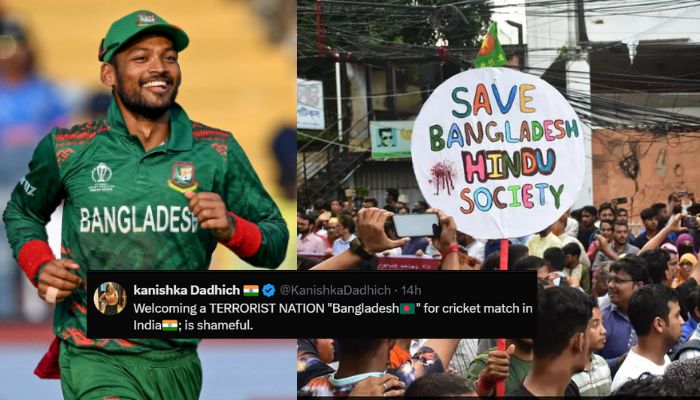
Popular X user Kanishka highlighted the short-term memory of the Hindu community. She wrote, “Welcoming a Terrorist nation “Bangladesh” for a cricket match in India is shameful. We, Hindus had learnt from our history.
Welcoming a TERRORIST NATION "Bangladesh??" for cricket match in India??; is shameful.
Media portal ‘Hindu Post’ said, “Unless Hindus develop a modicum of self-respect and spine, the size of Bharat’s economy is meaningless. We couldn’t cancel a cricket series with #Bangladesh in solidarity with persecuted and suffering Bangladeshi Hindus? Not just that – we roll out the red carpet for the Bangladesh team, to rub more salt in the wounds of Hindus!”
It also called out Indian cricketers over the stoic silence on the anti-Hindu violence in Bangladesh. Hindu Post added, “Why can’t a single Hindu cricketer from Bharat ever speak up for Hindus? In fact, only Danish Kaneria has shown the guts to clearly call for Bharat to not visit Pakistan for next year’s Champions Trophy, in light of Pakistan’s horrific treatment of its Hindu minority!”
Since Bangladeshi team has arrived in India, we know the matches won’t be canceled .. however ..
Again asking … will our cricketers take the knee for Hindus being KiIIed in Bangladesh ?? when Bangladesh tours India next month ? #HinduLivesMatterpic.twitter.com/DJYCunxbJA
Muslim majority Bangladesh after the coup went for Genocide of Hindus in #Bangladesh. V/S Hindu majority India after the start of the Genocide is hosting the cricket team of Bangladesh.
Muslim majority Bangladesh after the coup went for Genocide of Hindus in #Bangladesh.
V/S
Hindu majority India after the start of the Genocide is hosting the cricket team of Bangladesh.
“Shame on Us! Shame on BCCI We are welcoming those to Play Cricket with us, people who are killing our Hindu Brothers and Sisters Daily 50% of these players are supporters of Hindu Genocide in Bharat,” wrote ‘The Jaipur Dialogues.’
Shame on Us! Shame on BCCI
We are welcoming those to Play Cricket with us, people who are killing our Hindu Brothers and Sisters Daily
There have been at least 205 attacks on Hindu temples, shops and businesses since the ouster of Sheikha Hasina as Prime Minister of Bangladesh.
OpIndia had reported how a Hindu boy named Utsab Mandal was almost lynched by a Muslim mob on accusations of ‘blasphemy’ in the Sonadanga residential area of Khulna city.
We previously exposed how Muslim students have forced as many as 60 Hindu teachers, professors and government officials to resign from their positions.
Human rights activist and exiled Bangladeshi blogger, Asad Noor, has recently revealed that the minority community is now being coerced into joining ‘Jamaat-e-Islami’.
On 6th September, a procession of Hindu devotees carrying the idol of Lord Ganesha came under attack in the Kadam Mubarak area in Chittagong city of Bangladesh.
On 16th September (local time), the National Press Club (NPC) of Washington DC issued a statement indicating that the attack on India Today reporter Rohit Sharma might have violated his First Amendment rights. Sharma, who is a member of the NPC, was attacked by Congress supporters after he asked Indian Overseas Congress (IOC) chairperson Sam Pitroda about Rahul Gandhi’s stance on Hindus in Bangladesh.
WASHINGTON | September 16, 2024 — The following is a statement by @emrwilkins, president of the National Press Club, on a reported incident in the Dallas-area that may have violated the First Amendment rights of reporter @DcWalaDesi, a member of the National Press Club.
The NPC, in its statement, raised concerns over the incident in the Dallas area. Emily Wilkins, President of the NPC, stated that the incident occurred when Sharma was conducting an interview with Pitroda, Chair of the IOC, at a hotel near Dallas Airport.
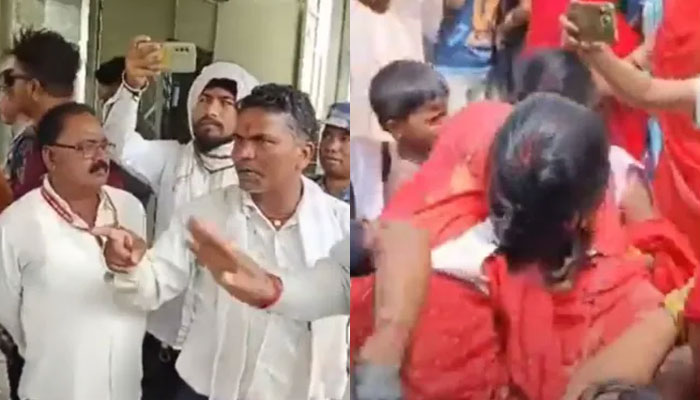
The press release noted that, according to reports from India Today and conversations between Sharma and an NPC Board member, Sharma was awaiting the arrival of Congress leader Rahul Gandhi, who was scheduled to start his U.S. tour. During the interview, several members of the IOC and Gandhi’s advance staff were present. When Sharma posed his last question, some attendees objected and interrupted the interview by shouting at him, pushing him, and seizing his phone. The group, which included members of Rahul Gandhi’s staff, allegedly deleted files from Sharma’s phone before returning it.
Pitroda was escorted to the airport to meet Gandhi but later apologised to Sharma, noting he had no objections to the question posed and was in the process of answering when the disruption occurred. Wilkins emphasised that security staff must recognise that reporters working in the USA are protected by the First Amendment, regardless of the nationalities involved. She stressed that the actions of the security team—including confiscating Sharma’s phone and deleting content—were unauthorised and inappropriate. Interestingly, later in the week, Rahul Gandhi addressed a similar question at a National Press Club Newsmakers event in Washington.
Statement issued by NPC
“According to a recent article in India Today and confirmed in conversations between Mr, Sharma and an NPC Board member, Sharma was at a hotel near the Dallas Airport awaiting the arrival of Rahul Gandhi, the opposition leader in India, who was beginning a U.S. tour. While he waited, Sharma interviewed the Chair of the India Overseas Congress (IOC), Sam Pitroda. The two had met in the past and the interview was done in a professional manner with agreed to recording.
“Several members of the IOC were listening to the interview as well as several members of Mr. Gandhi’s advance staff. On the last question, members of the audience objected to the subject of the question and stopped the interview by shouting at Sharma and pushing him while taking his phone. The group, which included Gandhi’s staff, deleted files from Sharma’s phone and kept it from him.
“Pitroda, who had been whisked to the airport to meet Gandhi, later apologized to Sharma. He had no objection to Sharma’s question and was in the process of answering when the audience erupted. Later in the week, Rahul Gandhi answered a similar question at a Press Club Newsmakers event in Washington.
“Security staff must be aware that reporters working in the U.S. are protected by the First Amendment, regardless of the nationality of the interview subject, reporter or security teams. This was an on-the-record interview with ground rules set between Mr. Sharma and Mr. Pitroda. The security team had no role related to the content or duration of the interview. They had no right or standing to take Sharma’s phone from him or delete content.”
What happened in Dallas, did not stay in Dallas
Last week, journalist Rohit Sharma from India Today was assaulted by Congress workers in Dallas, Texas, during Rahul Gandhi’s US visit. Sharma, covering Gandhi’s trip, asked Sam Pitroda, Chairman of the Indian Overseas Congress, if Gandhi would raise the issue of Hindus killed in Bangladesh by Islamists following the fall of Sheikh Hasina’s government. Before Pitroda could respond, Congress supporters deemed the question ‘controversial,’ assaulted Sharma, and forcibly deleted the interview from his phone. Despite Pitroda suggesting a re-recording, it never happened. The incident highlights Congress’s intolerance towards questioning and the harassment of journalists. The incident that took place in Dallas, did not stay in Dallas and it was reported by Rohit via a report in India Today where he narrated his ordeal. Congress was heavily criticised for attacking a journalist that too on foreign land.
Prime Minister Narendra Modi also took a dig at Congress over the incident. He accused them of “engaging in brutality”. Speaking at an event in election-bound Doda, Kashmir, PM Modi also mocked Rahul Gandhi’s “Mohabbat ki dukaan” slogan, questioning the harsh treatment of the journalist in the US. “They (Congress) claim to be running Mohabbat ki dukaan. But a journalist of our country was subjected to cruelty in the USA by Congress. A son of India was insulted in the USA. Those who claim to be champions of freedom of speech indulged in brutality,” Modi said on Saturday in Doda, Jammu and Kashmir.
Prime Minister Modi stated that how the journalist was treated diminished India’s standing on American soil. He also remarked that the Congress is unfit to use the term “Constitution,” seeking to flip the narrative on the party, which has frequently accused the BJP of undermining the Constitution. Prime Minister Modi emphasised the media’s role as a vital pillar of democracy, questioning whether locking a journalist in a room upholds democratic values. He asked, “Is assaulting an Indian journalist on American soil enhancing India’s reputation?” He added, “The word ‘Constitution’ doesn’t suit you,” directly criticizing the Congress.
Notably, Editors Guild of India, that is famous for issuing “quick” statements to criticise the government, has kept silent over assault of Sharma by Congress goons in the US.
What is the National Press Club?
The National Press Club was founded in 1908. According to its website, it is the world’s leading professional organisation for journalists. The club has 300 members representing nearly every major news organisation. NPC is among the leading voices for press freedom in the United States and worldwide.
On 14th September 2024, activists from the Nepali branches of Vishwa Hindu Parishad and Bajrang Dal, along with local residents, received information that around 100 people from Thuthibari town in Maharajganj were being brought to Nepal for conversion by a Christian group. The Hindu activists swung into action immediately and stopped the convoy of two buses that had been arranged to take them to Nepal.
During the confrontation, locals smeared black paint on the faces of those who came for conversion and beat up the pastor who had organised the conversion.
Reports suggest that the majority of the people taken for conversion were women and children, many of whom were from Dalit and Backward Classes. The accused pastor has been identified as Amos, who invited them to a church in Khairahani, Nepal, for conversion. The buses bearing Nepalese registration were parked at Maheshpur bus stand in Nepal, where the individuals had gathered to board the buses.
However, before they could board, local activists reached the location and protested against the planned conversions. The local residents misbehaved with those who had come from India to get converted and smeared their faces with black paint. Pastor Amos was beaten up by the locals for arranging the conversion programme. Following the protests, those who came from India were driven away and dropped off at the Indian border.
Local police were informed about the incident. The police recorded the names and addresses of the people involved, and they were released after being issued a warning against such programmes. Local administrative officials were also called to the spot. The police and local administration intervened to calm the situation and helped send the Indians back.
In a post on X, the Maharajganj police stated that the incident did not occur within their jurisdiction but in Nepal. The police are in touch with the Nepalese police regarding the matter. They appealed to the public not to spread misinformation that the incident took place in Maharajganj.
‼️कृपया भ्रामक खबर न फैलाएं‼️
चर्च जा रहे लोगों से हिंदू संगठन के द्वारा की गई अभ्रदता के संबंध में जांच की गई तो पाया गया कि-➡️ ‼️उपरोक्त घटना क्रम जनपद महराजगंज से ना होकर नेपाल राष्ट्र से संबंधित है।‼️
Notably, this is not the first time such cases of conversion have come up in this area. On 31st August 2024, two pastors from Kerala were caught in the Nepalese border region where they were attempting to carry out conversions at a local church. They were handed over to the police by the locals.
Missionaries converting Hindus in Nepal at a concerning pace
Christian conversion in Nepal are happening at a concerning pace. In January 2023, OpIndia reported that the Christian population has possibly increased by 68% in Nepal in less than a decade, thanks to Christian missionaries, especially from South Korea. A report by BBC titled ‘Christian missionaries target birthplace of Buddha in Nepal’ explained how South Korea, in particular, has been sending a tsunami of evangelists to Nepal. As per the report, Nepal had 3,76,000 Christians in 2011 (census numbers), which has increased to approx 5,45,000 now, a jump of 68%. As per the latest census, the number stood at 5,12,313 which is fairly close to the estimate.
Vadnagar (Gujarat) [India], September 16 (ANI): Vadnagar, a quaint town nestled in the Mehsana district of Gujarat, has gained global recognition as the birthplace of Prime Minister Narendra Modi. However, its historical significance and cultural richness extend far beyond this association.
This ancient city, once a bustling trading centre, boasts a captivating past with its ancient temples, serene lakes, and historical landmarks that offer a glimpse into India’s diverse heritage.
One of the most prominent landmarks in Vadnagar is Sri Hatkeshwar Mahadev Temple, dedicated to Lord Shiva. This magnificent temple, known for its intricate carvings and architectural beauty, is a testament to the town’s rich cultural heritage. The temple’s peaceful ambience and spiritual significance make it a popular pilgrimage site for devotees.
Shastri Rawal Niranjanbhai, priest at Hatkeshwar Mahadev Temple, said, “The archaeology department has stated that this temple is around 2200 years old. In 2016, Modi put Vadnagar as a tourism area. 19 crores were sanctioned to this temple and it was developed. Development work has been underway in phases since then. Hatak means gold. Hatkeshwar is the one who gives wealth, success and fame.”
A serene oasis amidst the bustling town is the historic Sharmishtha Lake, which offers a tranquil escape. Surrounded by lush greenery, the lake is a perfect spot for visitors.
Just near the lake is a captivating theme park dedicated to Indian musicals that offers a unique experience. The lake’s tranquil waters and the theme park offer a serene atmosphere that is ideal for relaxation.
A visitor said he has witnessed significant development in the town in recent years.
“We are witnessing significant development here. It’s coming into an electrified route and main line. There is also a government proposal to integrate Vadnagar with Taranga Hills, Ambaji and Abu Road. So with that, tourism will surge here,” said Vinay Dixit, a visitor.
Just a few metres away from the lake, a towering triumphal arch, ‘Kirti Toran’, stands as a symbol of Vadnagar’s historical significance and is a must-visit attraction for tourists.
This stunning structure, dating back to the 12th century, was built during the reign of the Chalukya dynasty.
The arch is adorned with intricate carvings depicting Hindu deities, mythological scenes, and royal figures, showcasing the exquisite craftsmanship of its time.
In the early 2000s, the Gujarat state archaeology department unearthed a significant piece of history–the ruins of a Buddhist monastery in Vadnagar. This discovery marked the town as a pivotal centre for Buddhism.
However, the journey to uncover Vadnagar’s Buddhist heritage began in 1992 with the finding of a Bodhisattva idol, subsequently leading to the revelation of a trove of artefacts from both the town and its surroundings.
From deep archaeological excavations at Vadnagar, a consortium of scientists from IIT Kharagpur, the Archaeological Survey of India (ASI) and many other concerned institutions have also found evidence of a human settlement in the town that is as old as 800 BCE.
Presently, work is underway at the site with utmost care to create an experiential museum. Emeritus Professor Anindya Sarkar from IIT Kharagpur said the museum will chronicle the town’s evolution over 2,500 years, exploring seven distinct cultural periods.
“During these excavations, something like seven cultural layers were found and each of these cultural layers was characterised by their different kinds of cultural elements, like for example, potteries, coins. When we joined the excavation in Vadnagar, we wanted to know the chronology of Vadnagar and how old the city is. And the oldest period, which we define as Period One, gives us a date of something like 800 BCE, which means 2800 years old. And that surprised us very much,” Sarkar added.
Going ahead, a charming addition to Vadnagar’s cityscape, the Museum Clock Tower & Art Gallery stands tall as a symbol of the town’s progress. Visitors can explore the museum to learn more about Vadnagar’s past and its significance in the broader context of Indian history.
The museum houses different sections on the religions, rulers and legends associated with Vadnagar, along with a section on Prime Minister Narendra Modi’s childhood.
Payal Prajapati, Museum Guide, said, “In this art gallery, it has been depicted that all religions existed here–Jainism, Buddhism and Vaishnav traditions. There was also the rule of the Solanki dynasty. There were several invasions as well, and it led to seven layers. It has all been put on display here. The ‘symbolic’ Malhar Raag music of legendary Tana-Riri is also played here. There are two projectors here to tell the history of Vadnagar and also on PM Modi’s childhood.”
Hence, beyond its association with PM Modi, Vadnagar is a treasure trove of historical and cultural significance.
Whether you are a history buff, a culture enthusiast, or simply seeking a peaceful getaway, Vadnagar is a destination that will leave a lasting impression.
(This news report is published from a syndicated feed. Except for the headline, the content has not been written or edited by OpIndia staff)
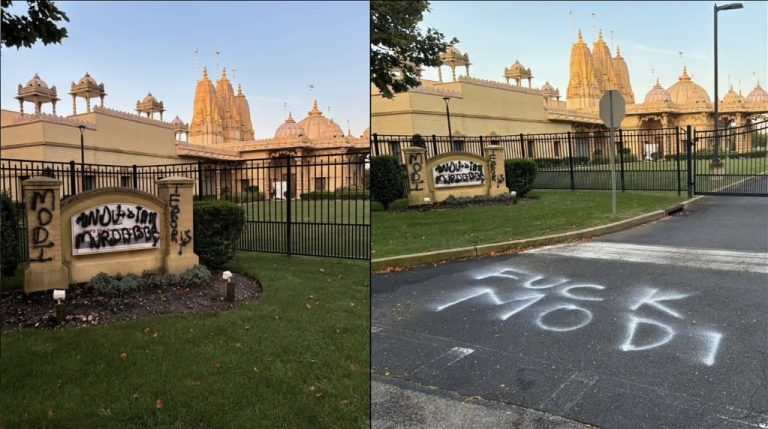
The BAPS Shri Swaminarayan Mandir located in Melville hamlet in the New York State of the United States was vandalised by extremists on Monday (16th September) night.
In visuals that have surfaced on social media, it could be seen that the sacred Hindu temple was desecrated with disturbing slogans of ‘Fuck Modi’, ‘Modi is Terrorist’ and ‘Hindustan Murdabad.’
A noticeable gap was maintained between the words ‘Hindu’ and ‘stan’, thereby implying the ‘breasts of the Hindu’. In a statement, the BAPS Swaminarayan Sanstha condemned the attack on the Hindu place of worship.
Yet another Hindu temple has been vandalized in US with a video released by a coordinated bot network.
The temple is the BAPS Swaminarayan Temple in Melville NY
Sukhpal Singh was arrested for the last temple vandalization in NY state in Queens. pic.twitter.com/ionj3X8YzS
“We also offer our deepest prayers for those who perpetrated this crime to be released of their hatred and to see our common humanity,” it said.
The temple authority further informed, “Upon learning of the hateful vandalism, the local authorities were called, and BAPS is working fully with the authorities to support their investigation into this hate crime.”
The Consulate General of India in New York also issued a statement, condemning the targeting of the BAPS Shri Swaminarayan Mandir.
The vandalism of the BAPS Swaminarayan Temple in Melville, New York, is unacceptable ; The Consulate @IndiainNewYork is in touch with the community and has raised the matter with U.S. law enforcement authorities for prompt action against the perpetrators of this heinous act.…
“The vandalism of the BAPS Swaminarayan Temple in Melville, New York, is unacceptable; The Consulate is in touch with the community and has raised the matter with U.S. law enforcement authorities for prompt action against the perpetrators of this heinous act,” read a tweet by the official ‘India in New York’ X handle.
Attacks on Hindu Mandirs in US
In January this year, the Vijay’s Sherawali Temple in Hayward city in California state of the United States was desecrated with pro-Khalistani slogans. The temple was spray-painted with slogans such as ‘Khalistan Zindabad’ and ‘Modi is terrorist.’
In a statement, the temple administration said, “Jai Mata Di Bhakto’s. With deep regret, we would like to inform you (that) the Temple has been vandalized last week. We have informed the police and they have classified it as a hate crime.
“A few other Hindu Temple’s in the area have also been vandalized (most likely by the same culprits). We pray for those who wish harm and hatred on others that Mata Rani cleans their souls and gives them happiness and eradicates hate from their hearts,” it added.
On 22nd December 2023, the Swaminarayan Mandir Vasana Sanstha in Newark city of California, was defaced with pro-Khalistan, anti-Modi and anti-India slogans. The outer wall of the temple was defaced with slogans such as “Khalistan”, “Shaheed [Martyr] Bhindrawale”, “F$%k Modi Jindabad” and “Modi Is Terrorist”.
Similar attacks have taken place in the past, both in the United States and its neighbouring Canada, wherein Hindu temples have been attacked, vandalised and defaced with derogatory graffiti.
India has already voiced alarm over the increasing activities of Khalistani terrorists and has asked countries to cracked down on groups and people attempting to incite separatism in India.
Srivijaya Puram—the new name of Port Blair has an interesting history. Discontinuing the British colonial legacy and reconnecting the capital city of Andaman and Nicobar Islands to India’s ancient maritime roots, the Modi government announced last week the renaming of this city. Years before this, the Modi government had renamed three islands of the Andaman and Nicobar archipelago as a tribute to Netaji Subhas Chandra Bose.
While the nation welcomed the decision, the usual suspects including the brown sepoys denounced the renaming of Port Blair as some sort of “cartographic majoritarianism” and suggested that the new name does not resonate with the local people, some even argued that the naming of the archipelago after Lieutenant Archibald Blair, a British naval officer from the 18th century was correct. However, they have forgotten that long before the British even became an empire, back when the British Isles were struggling in the dark ages, the Chola empire in India was not only ruling over majestic cities in the Indian mainland, it operated a naval base in the very same archipelago, and ran a formidable maritime trade network through the Indian Ocean Region.
The Chola empire influenced, and even controlled the trade routes and to some extent, the geopolitics of the entire Southeast Asia.
The Cholas used the Andaman and Nicobar Islands as a vital naval base to launch attacks against the Srivijaya Empire [now in Indonesia] in the 11th century. In the words of Union Home Minister Amit Shah, “The island territory that once served as the naval base of the Chola Empire is today poised to be the critical base for our strategic and development aspirations.”
Before immersing into the history of the erstwhile Sri Vijaya Empire, it would be interesting to discuss how Port Blair got its name. Port Blair was named after Archibald Blair, a British naval surveyor who arrived in the late 18th century. In 1789, he created a penal colony in the area under the authority of the British East India Company. The settlement was formerly known as Port Cornwallis before being renamed Port Blair in honour of Archibald Blair, who played a key role in its founding. The city gained historical significance as the site of the notorious Cellular Jail, which was used by the British to hold Indian freedom fighters like Veer Savarkar among others.
The Srivijaya Empire of Sumatra
The name Srivijaya is derived from the Sanskrit words “sri” and “vijaya”. “Sri” is a superlative that generally signifies “fortunate” or “glorious” and is another name for the Hindu goddess Lakshmi. It is also often used as a name for people or places, such as Sri Lanka. The word “vijaya” means “victory”.
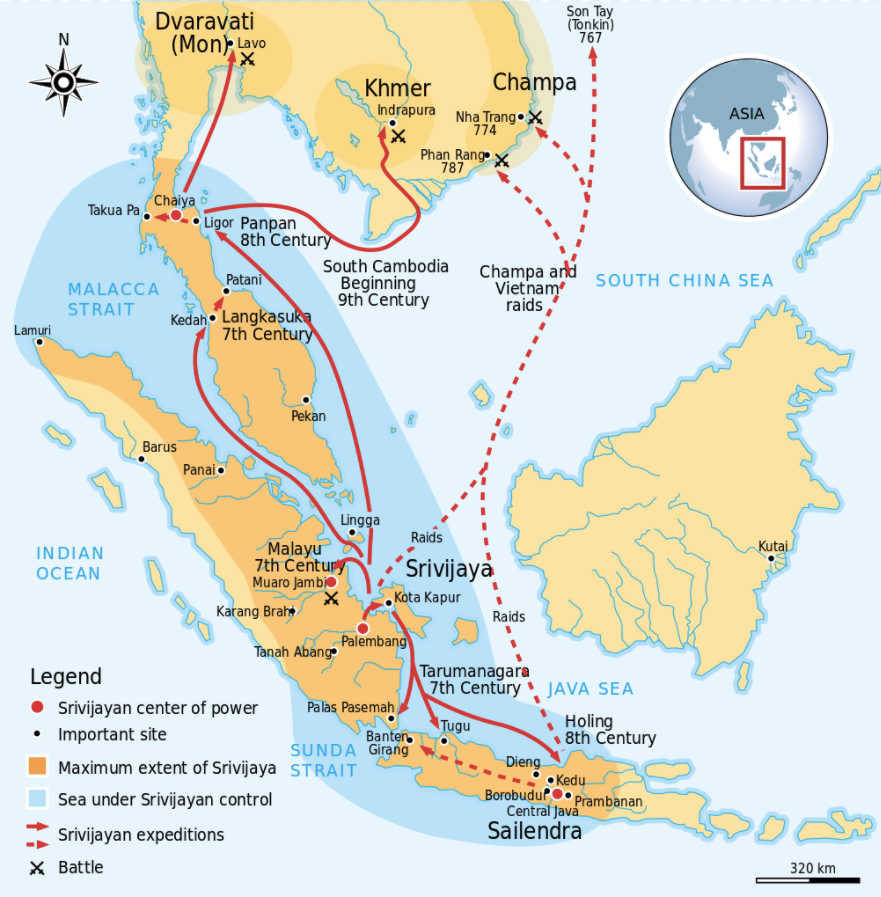
The Srivijaya Empire’s history begins in the 7th century in Sumatra, Indonesia. This empire founded by Dapunta Hyang Sri Jayanasa, Srivijaya evolved into a formidable thalassocratic (based on maritime power) empire that dominated maritime trade routes between China and India. At its peak, Srivijaya governed Sumatra, Java, and the Malay Peninsula. It served as a focal point for the spread of Buddhism throughout Southeast Asia.
Map of Srivijaya Empire (Source: Wikipedia)
Its prosperity sprang from its monopoly over the Malacca and Sunda Straits, which made it a hub for trade and culture. The empire had close relations with China and promoted the spread of Buddhism, attracting academics from all around Asia. The Srivijaya Empire evolved into a major centre of Mahayana Buddhist learning. Nalanda University, an esteemed Hindu and Buddhist educational centre in India’s Bihar has close ties to Srivijaya forming a lesser-known “knowledge route” as compared to the Silk Route and other historical trails. With its capital being Palembang, the Srivijaya Empire thrived as a major centre of art, culture and literature. Although Sanskrit is an ancient Indian language, researchers say that it was taught in Srivijaya while a Sanskrit-influence Old Malay was the official language. The Borobudur temple dedicated to Buddha in Java is one of the legacies symbolising its religious and cultural grandeur.
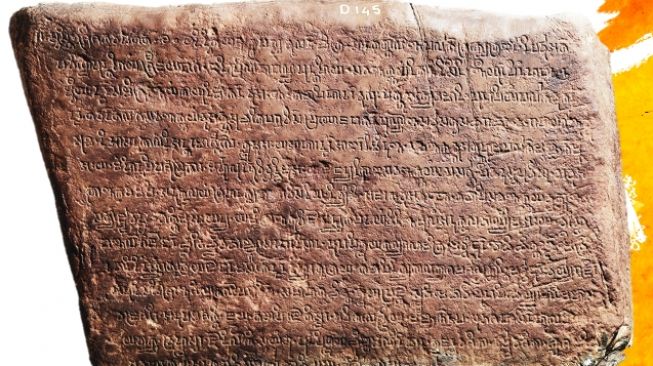
The famous Kedukan Bukit inscription, which is considered to be the oldest inscription related to Srivijaya, describes the “glorious Srivijaya” and states that it was founded by Dapunta Hyang Sri Jayanasa. This inscription in the Pallav script records Sri Jayanasa’s “Siddhayatra”, a military expedition which resulted in the establishment of the Srivjiaya Empire.
Kedukan Bukit inscription (Source: Wikimedia)
Similarly, an Old Malay inscription from Talang Tuwo, west of Palembang, records the foundation by order of King Sri Jayanasa in A.D. 684 of a park named Srikgetra, dedicated to Buddhist principles.
Talang Tuwo inscription (Source: Suarasumsel)
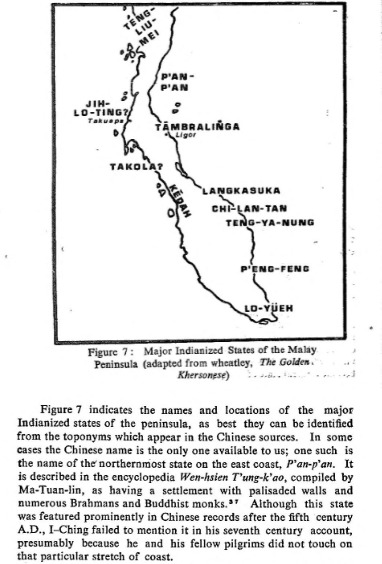
In his 1983 book The Politics of Expansion: The Chola Conquest of Sri Lanka and Sri Vijaya, George W Spencer mentioned about certain “Indianised” states of the Malay peninsula.
Source: The Politics of Expansion: The Chola Conquest of Sri Lanka and Sri Vijaya
The Chola invasion of Srivijaya Empire
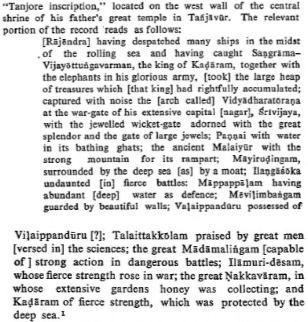
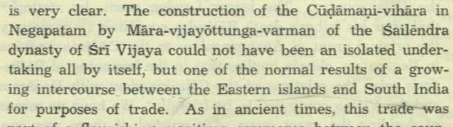
The Shailendra [also called Syalendra] dynasty ruled Srivijaya during Rajaraja and Rajendra Chola’s reign. Historical accounts suggest that the ties between the Cholas and the Shailendra monarchs were not always strained; in 1006, during Rajaraja Chola’s reign, King Maravijayattungavarman of Srivijaya built the Chudamani Vihara in Nagapattinam. The famous Tanjore Inscription of 1030 or 1031 mentions the Srivijaya empire, alongside other locations raided by a fleet sent by King Rajendra Chola I, the successor of Rajaraja Chola. The inscription mentions Sriwijaya (Palembang). In addition, the inscription also names Srivijaya ruler Sangrama Vijayatunggavarman who was captured by the Chola Navy during the invasion. The other places mentioned in the inscription are: Pannai, Malaiyur, Mayirudingan, Ilangasokam, Mapappalam, Mevilimbangam, Valaippanduru, Talaittakkolam, Madamalingam, Ilamuridesam, and Manakkavaram.
Translation of Tanjore Inscription in Sri Vijaya as mentioned in The Politics of Expansion: The Chola Conquest of Sri Lanka and Sri Vijaya by George W Spencer
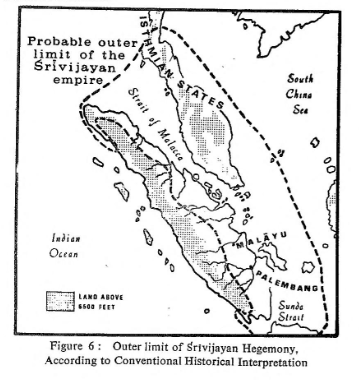
By the 11th century, Srivijaya’s authority was under threat as in 1025, the mighty Chola Empire led by Raja Raja Chola I and later his son Rajendra Chola I, embarked on an extensive naval campaign.
The probable outer limit of the Srivijaya Empire (Source: The Politics of Expansion: The Chola Conquest of Sri Lanka and Sri Vijaya by George W Spencer)
Rajendra Chola’s naval invasion of Srivijaya empire
With an unforeseen strategy to catch the Srivijayan forces off guard, the Chola Navy started the war in 1025 CE by sailing eastward. Ships coming from India to Srivijaya usually docked in the Malay Peninsula ports of Lamuri or Keday before crossing the Strait of Malacca. However, the Srivijayan defences were designed with this type of attack in view.
To serve a shock to the Srivijayan defence, the Chola navy rapidly arrived on Sumatra’s west coast and docked at Barus, a port owned by Tamil traders at the time. The Chola Navy refreshed its supplies in friendly territory before sailing south along Sumatra’s west coast into the Sunda Strait. Rajendra Chola’s decision to attack from the south threw the Srivijayan troops, who had been positioned near the Strait of Malacca and expected an invasion from the northwest, completely off guard.
The Chola forces first laid siege to the Srivijaya Empire’s capital Palembang. The Cholas took over the city and looted the Kadatuan royal palace. Alongside capturing King Sangrama Vijayatungavarman during the attack, Rajendra Chola gained possession of a vast bounty of treasure, including the bejeweled war-gate Vidhyadara Torana. Without giving any chance to the Srivijayan forces to hit back, the Chola forces raided port after port.
After Palembang’s fall, the Cholas conquered Pannai, Malaiyur, Mayirudingan, Ilangasokam, Mapappalam, Mevilimbangam, Valaippanduru, Talaittakkolam, Madamalingam, Ilamuridesam, and Manakkavaram.
Securing a decisive triumph, over modern-day Malaysia, the Andaman and Nicobar Isles and southern Thailand, Rajendra Chola became one of the greatest conquerors in history.
Rajendra Chola’s armies attacked Srivijaya’s domains, acquiring its wealth, capturing its king, and greatly undermining its power. The Cholas, however, had no desire to rule the region directly, they just wanted control and influence over the trade routes. Despite surviving the invasion, Srivijaya’s prestige and its power dwindled.
In the course of time, the Srivijaya Empire’s influence over trade routes deteriorated, and by the 14th century, it had been eclipsed by the emergence of the Hindu-Buddhist Majapahit Empire and Islamic sultanates like Demak in the region. Srivijaya Empire subsequently vanished from history, leaving a cultural legacy that included the expansion of Mahayana Buddhism and the establishment of Southeast Asian trade networks.
The causes of the Chola invasion of the Srivijaya Empire
Interestingly, in 1017 CE, King Rajendra had sent a fleet to Malacca Strait during his Sri Lanka campaign, however, the fleet was repulsed by the Srivijayan navy. Srivijaya’s authority stemmed chiefly from its control over sea passages and port cities, which allowed it to charge taxes on passing traders. In 1019 CE, Srivijaya placed hefty tariffs on traders when the rival Hindu-Buddhist kingdom of Medang [also known as Mataram] collapsed in Sumatra, crippling Tamil and foreign traders.
Examining the causes behind Chola king Rajendra’s invasion of Srivijaya, noted historian Nilakanta Sastri in his book Colas writes that there is ample material to believe that initially not only Rajaraja Chola but his son Rajendra also had friendly ties with Srivijaya. However, either an attempt by Srivijaya to obstruct the Chola trade with the East or King Rajendra’s ambition to conquer countries across the sea may have inspired his naval campaign even if the Cholas did not attempt to rule these places as provinces of their empire.
Excerpt from ‘Colas’ by Nilkanta Sastri
“We have to assume either some attempt on the part of Sn Vijaya to throw obstacles in the way of the Cola trade with the East, or more probably, a simple desire on the part of Rajendra to extend his digvijaya to the countries across the sea so well-known to his subjects at home, and thereby add lustre to his crown,” Sastri writes.
Similarly, RC Majumdar also opined that establishing commercial supremacy might have inspired the Chola invasion of Srivijaya.
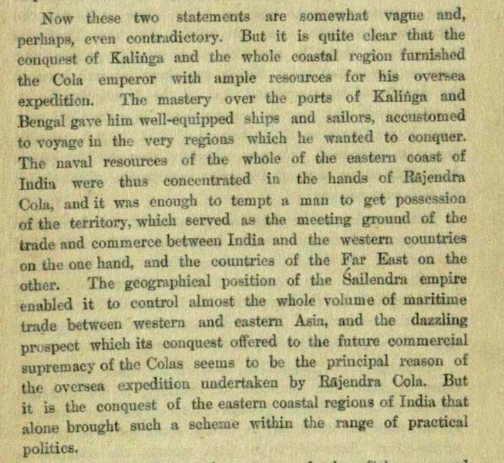
“The geographical position of the Satiendra empire enabled it to control almost the whole volume of maritime trade between western and eastern Asia, and the dazzling prospect which its conquest offered to the future commercial supremacy of the Colas seems to be the principal reason of the oversea expedition undertaken by Rfijeudra Cola. But it is the conquest of the eastern coastal regions of India that alone brought such a scheme within the range of practical politics,” Majumdar writes in his book Ancient Indian Colonies in the Far East vol.2.
Excerpt from Ancient Indian Colonies in the Far East vol.2. by RC Majumdar
In his book Nagapattinam to Suvarnadwipa, Tansen Sen suggests the gaining prominence of Chinese markets in the international trading system as traders from every region of Asia gathered there to procure Chinese porcelain, silk and sell foreign goods including horses and spices etc.
It is also said that the Khmer [modern-day Cambodia] king Suryavarman I sought Rajendra Chola’s assistance in his dispute with the Tambralinga kingdom [modern-day Thailand]. Consequently, the Tambralingas sought the backing of Srivijayan ruler Sangrama Vijayatungavarman, sparking a confrontation between the Cholas and Srivijaya.
In a nutshell, the Cholas invaded Srivijaya largely for economic and geopolitical purposes. Srivijaya controlled key maritime trade routes in Southeast Asia, particularly the Malacca Strait, which was critical for Indian traders doing business with China and Southeast Asia. The Chola Empire led by Rajendra Chola, keen to expand its power along these trade routes, saw Srivijaya as both a barrier and an advantageous target. Rajendra Chola I attacked Srivijaya in 1025, hoping to undercut its control over regional commerce and establish Chola’s dominance in Southeast Asian trade networks. This campaign also demonstrated the Chola Empire’s naval capabilities.
Conclusion
Renaming Port Blair Srivijaya Puram honours India’s rich maritime heritage, particularly the absolute maritime supremacy of the ancient Chola empire, which played an important role in trading networks across the Indian Ocean, as well as the Chola legacy of its conquest. This statute recognises India’s maritime past, which has traditionally connected the subcontinent to Southeast Asia, East Africa, and beyond. The Modi government’s decision to rename Port Blair as Srivijaya Puram also recognises the Indian Ocean Region (IOR)’s enduring relevance as a binding force for economic, cultural, and strategic linkages, similar to the traditional trade routes that promoted cultural exchanges and commerce. In addition to emphasising India’s historical ties with Southeast Asia, it also reaffirms the country’s ambition of becoming an influential player in the IOR today. The renaming honours the tradition of Indian kingdoms that inspired Southeast Asian civilisations while also serving as a reminder of India’s indispensable impact on regional connectivity and diplomacy. In a way, it is also a silent and humble obeisance to the great emperor Rajendra Chola, whose vision and bravery spanned not just the South of mainland India but the larger Indian Ocean Region of SE Asia, explaining how ancient Indians used the Monsoon winds and maritime routes to become a global power.
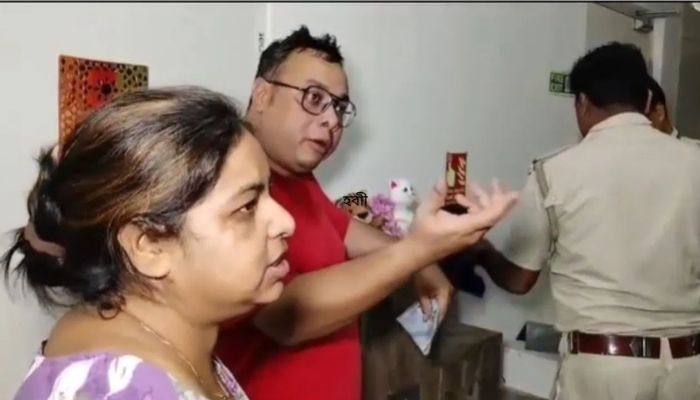
On Sunday (15th September), Police raided the house of a Nationalist Youtuber named Suddhashil Ghosh who has been making videos to hold the Mamata Banerjee government accountable in the RG Kar rape and murder case. While the Youtuber, his wife, and a section of netizens have dubbed the Police action an attempt to “muzzle” critical voices, the Police have claimed that they have acted against him for making insulting remarks on the Supreme Court.
As per reports, on Sunday, a large police team went to the house of Suddhashil Ghosh who is a resident of Sonarpur which comes under the jurisdiction of Narendrapur police station. It is being said that the Police barged into his house after trying to break down his house door using a drill machine and hammer. However, Police sources have claimed that the door of the flat was not opened at first and when the police attempted to break down the door, it was opened.
West Bengal police raided house of youtuber Suddhasil.
Police tried to break the house door using drill machine and hammer.
Police took away every electronic gadget, including his wife's phone and CCTV recordings. and didnt even give proper seizure list.
West Bengal police raided house of youtuber Suddhasil!
Police tried to break the house door with drill machine and hammer!
Police took away every electronic gadget, including his wife's phone and CCTV recordings. and didnt even give proper seizure list! pic.twitter.com/ZtyMRWOhbj
The Police search continued at his house for several hours. According to the police and local sources, they have seized 4 laptops, 4 mobiles, 2 hard disks, and electronic gadgets including microphones from his house.
According to police sources, a complaint was filed against Suddhashil Ghosh at Kalna police station for making insulting comments about the Supreme Court. Consequently, the police personnel from Kalna police station came to his house with a search warrant from the court. They added that the search was conducted with the assistance of Narendrapur Police Station.
What did the Journalist say in the YouTube video on the Supreme Court?
Suddhashil Ghosh is a YouTuber who uploads videos on his Channel named, ‘Priyo Bandhu Media’ (which translates to Dear Friends Media). He has made several videos on RG Kar’s rape and murder case in which he asked for accountability from the TMC government led by CM Mamata Banerjee.
As per a report in Anand Bazaar Patrika, in his YouTube video, Ghosh said that the Supreme Court has taken suo motu cognizance in several cases including the RG Kar rape and murder case. He said that about 10 such cases have been filed in the Supreme Court in the last year. But statistics show that earlier the Supreme Court took suo moto cognizance only in one or two cases on average per year.
A pan-India newspaper recently reported on the sudden increase in the number of such cases. Ghosh claims he made the YouTube video based on that report. However, he has been charged in several Police Stations across West Bengal for making that video on the Supreme Court.
Suddhashil Ghosh said that not only in Kalna police station, but several police stations including Siliguri have filed a complaint in this regard.
He added that he had already received a summons from Siliguri police station. Accordingly, he had planned to appear before the Siliguri Police Station today but the officers from Kalna Police Station raided his house.
Shuddsheel said, “Everyone has seen the police’s inaction on our sister’s death.” It is the police who are showing hyperactivity in this case. He said that this step was to silence his voice. Their aim is to stop the voices of the protesters.
Suddhashil Ghosh further stated that the Police have seized his multiple laptops, mobiles, and all electronic devices including microphones used to make videos.
His wife, Manideepa Ghosh said, “This harassment was done because of (RG Kar) protest.” She said that the police are doing this mental torture to shut them up.
As per reports, YouTuber Ghosh had undergone Police interrogation once in the past as well in connection with his YouTube video.