Home Blog Page 43

From CyberTip to courtroom: How India tracks CSEAM suspects, identifies victims and where investigations fall short

0

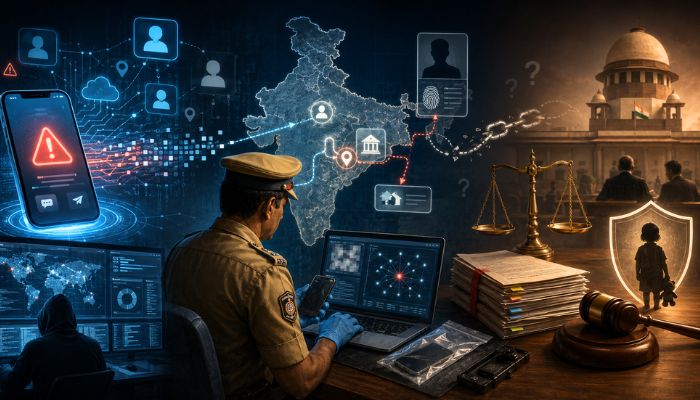
Cross-border child sexual exploitation and abuse material investigations often begin far from the country where suspects or victims are eventually found. In September 2022, the CBI searched around 59 locations across 21 States and Union Territories under Operation Megh Chakra after information from New Zealand Police reached India through INTERPOL. The case demonstrated how foreign intelligence can be developed into an Indian investigation.

The CBI plays two different roles in such cases. It can directly investigate CSEAM offences through its specialised Online Sexual Abuse and Exploitation unit, and it also functions as India’s National Central Bureau for INTERPOL, helping Indian and foreign law-enforcement agencies exchange information and seek international assistance. INTERPOL itself does not conduct raids or arrests in India, and a Red Notice is not an international arrest warrant.

Another important tool is INTERPOL’s International Child Sexual Exploitation database, or ICSE. India joined the system through the CBI in 2022. The database allows specialised investigators to compare images, videos and clues across countries, potentially connecting material found in India to an already identified victim, offender, location or investigation elsewhere. A 2023 CBI case in Thanjavur showed how ICSE material and digital forensics could lead investigators from online imagery to a physical location and suspects.

Large operations have shown how widely these networks can spread. Under Operation Carbon in 2021, the CBI registered 23 cases against 83 accused. Megh Chakra later showed how foreign intelligence could trigger simultaneous action across India. In 2025, cases in Hisar and Aizawl demonstrated another model, with Google-generated CyberTipline reports, ICSE data and Indian cyberforensics converging during the same investigations. In Aizawl, the CBI said the process helped identify and rescue a minor victim.

India has also created BHARATPOL, launched in January 2025, to give Indian law-enforcement agencies a digital route to NCB-New Delhi and international cooperation mechanisms. By February, 51 agencies and more than 500 unit offices had been connected to the system.

Foreign intelligence, however, is only a lead. Indian investigators must still connect accounts and devices to people, authenticate electronic evidence, preserve chain of custody and build a case capable of surviving in court. India now has stronger infrastructure for cross-border investigations, but public data on how many such operations ultimately produce chargesheets, convictions and identified victims remains limited.

Read the full article on Chapter One Magazine.

Radcliffe burnt his papers after Partition: What did the man who drew the India-Pakistan border take to his grave?

On 15 August 1947, India celebrated freedom, and Pakistan celebrated the birth of a new country. But the man entrusted with deciding where one country would end and the other would begin was already preparing to leave India.

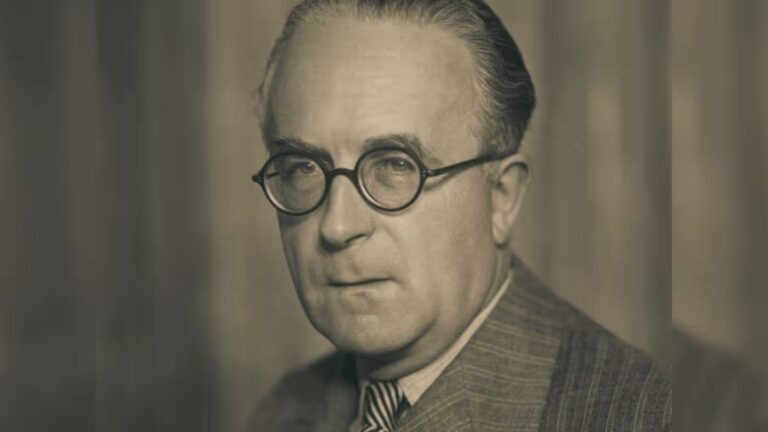
Cyril John Radcliffe had arrived in India only on 8 July 1947. A British barrister with no previous experience of the country, he was given less than six weeks to chair the Boundary Commissions and draw the borders of Punjab and Bengal. The UK National Archives’ account of Partition records that Radcliffe was asked to draw the border lines of the two new nations within six weeks.

The line he produced would divide villages, districts, railway networks, irrigation systems and communities. It would help trigger one of the largest and bloodiest forced migrations in modern history.

And then Radcliffe destroyed most of the papers relating to his private deliberations.

That raises a question that cannot be fully answered today: what exactly did the man who drew the India-Pakistan border think, consider, and decide before putting his final line on the map?

Some of the evidence survives. Much does not.

And the missing evidence is not a minor archival curiosity. It concerns the reasoning behind one of the most consequential territorial decisions of the twentieth century.

A British outsider was given extraordinary power.

Radcliffe was not an Indian administrator who had spent decades studying Punjab and Bengal. He was not a cartographer who had surveyed their terrain. He was not an Indian Civil Service officer familiar with their villages, canals and communities.

He was a barrister.

His lack of prior involvement in Indian politics was considered an advantage, as it could allow him to appear impartial. But there was an obvious downside: the man being asked to divide India did not know India.

He arrived in the subcontinent for the first time on 8 July. Within weeks, he was expected to decide the fate of territory inhabited by tens of millions of people. A recent scholarly study of the Boundary Commission describes the timetable as one in which Radcliffe arrived less than six weeks before the British withdrawal deadline.

This was not merely a cartographic exercise.

The official Punjab Boundary Commission award required consideration of contiguous Muslim and non-Muslim majority areas, but also allowed “other factors” to be considered. Those other factors included administrative boundaries and, in practice, infrastructure such as railways, roads, canals, canal headworks and ports. Radcliffe’s own award explicitly discussed the disruption of railway communications, water systems, canal irrigation and electric power transmission.

The problem was that these systems had been constructed for an undivided province. They did not care about the religious boundary that politicians were demanding.

A canal could begin in one country and irrigate fields in another. A railway could cross the proposed frontier repeatedly. A village could have one religious majority while its economic links lay elsewhere.

Radcliffe was expected to turn this tangled reality into a single international boundary in a matter of weeks.

The Boundary Commission was divided

Radcliffe did not work alone. The commissions included judges nominated by the Congress and the Muslim League. But the Indian and Pakistani members were deeply divided.

That deadlock left Radcliffe with the decisive responsibility.

This is where the conventional image of Radcliffe needs to be examined carefully. He did not simply sit alone with a map and invent a border according to personal whim. He received extensive submissions from both sides, examined census data and considered competing claims. Recent scholarship shows that Congress, Sikh and Muslim League representatives submitted radically different maps and arguments for Punjab.

But the fact that Radcliffe had a difficult assignment does not remove the central problem: the final decision was his, and the time available to make it was extraordinarily short.

The Bengal Commission provides an especially stark example. Radcliffe did not attend its public sittings in person because the Punjab and Bengal proceedings overlapped. Instead, he examined the papers submitted by the parties. Lucy Chester’s 2026 study of the Boundary Commission records that Radcliffe arrived less than six weeks before the withdrawal deadline and examines the extraordinary haste of the process.

That should trouble anyone studying the process, regardless of political affiliation.

A border that was not announced on Independence Day

The Punjab Award was dated 12 August 1947. Yet the boundary awards were not publicly announced until 17 August, after India and Pakistan had already become independent. The National Archives’ Partition material records the enormous displacement and violence that followed the division.

Millions therefore entered Independence Day without knowing precisely where the new international border would run.

By then, communal violence and migration were already underway.

When the line was finally announced, the consequences were immediate. A village assumed to be in India could suddenly find itself in Pakistan. A railway line, canal or market could be cut by an international frontier. Families could discover that their ancestral homes now lay on the other side of a border they had never imagined would exist.

The Radcliffe Line was therefore not simply a line on a map. For millions, it became a decision about whether to stay, flee or risk being trapped on the wrong side.

The British National Archives records the scale of the resulting catastrophe in stark terms, describing mass migration, communal violence, deaths, sexual violence and the destruction of property.

And then Radcliffe destroyed his papers

This is the part of the story that makes the Radcliffe legacy particularly difficult to examine.

Radcliffe destroyed papers relating to his private deliberations after completing his work. Contemporary and later accounts describe the destruction of the Boundary Commission papers in his possession before he left India; a detailed historical account published by The News International records that he left on 16 August after destroying the papers in his possession.

The disappearance of those records does not mean that the entire documentary record of Partition disappeared. The official awards survived. Other officials kept correspondence and papers. Archives still contain material relating to the Boundary Commissions.

But the private trail of Radcliffe’s own reasoning was severely diminished.

That distinction matters.

We can study the final boundary. We can study the census figures. We can read the submissions made by Congress, the Muslim League and other parties. We can examine the official terms of reference.

But we cannot fully reconstruct the private conversation inside Radcliffe’s head as he moved from one possible line to another.

The missing papers therefore created a historical black box.

And it is precisely because the consequences of his decisions were so enormous that the disappearance of that evidence matters.

What was destroyed, and what was not?

It is important not to exaggerate the archival mystery.

It would be wrong to suggest that Radcliffe destroyed every document connected with Partition or that no evidence survives concerning how the Boundary Commission operated. The surviving official record is substantial.

What was lost was the private record of his deliberations.

That means historians can establish many of the factors that shaped the award without being able to answer every question about how Radcliffe personally weighed them.

The distinction also prevents a more serious historical error: treating the missing papers as proof of a conspiracy.

There have long been allegations that political pressure influenced particular territorial decisions, especially in Punjab. The British Library catalogue, for instance, contains statements made decades later by Herbert Christopher Beaumont, Radcliffe’s private secretary, alleging that Lord Mountbatten intervened over the allocation of Ferozepur. Other historical accounts also discuss the reported provisional Ferozepur boundary and the later instruction to “Eliminate Salient”.

That is an important historical allegation.

But it remains an allegation. The existence of Beaumont’s later statement does not by itself establish that Mountbatten dictated the decision, nor does it prove that Radcliffe’s destroyed papers contained evidence of such an intervention.

The proper conclusion is more uncomfortable: we know there were controversies, but the destruction of Radcliffe’s private papers makes it harder to settle some of them conclusively.

Did Radcliffe believe he had done a good job?

There is another revealing aspect of Radcliffe’s later life.

When journalist Kuldip Nayar interviewed him years later and asked whether he was satisfied with the boundary he had drawn, Radcliffe did not claim that it was perfect. Nayar’s published account records Radcliffe’s reflections on the limited time available to him and his subsequent explanation of the decisions.

He said that he had no alternative because the time available was too short to do a better job. Given the same period, he said, he would do the same thing. But if he had been given two or three years, he believed he might have improved upon the result.

This statement can be read in two ways.

It can be understood as a defence: Radcliffe believed he had done the best possible under the circumstances.

But it can also be read as an extraordinary indictment of the circumstances in which the British government had ordered Partition to be carried out.

If two or three years could have produced a better boundary, why was the man deciding the fate of millions given only weeks?

That question leads beyond Radcliffe himself, to the manner in which Britain accelerated the transfer of power and left behind a territorial problem of staggering complexity.

Radcliffe was not responsible for creating Partition, but he was responsible for the line

It would be historically lazy to blame Radcliffe for everything that happened in 1947.

He did not invent the demand for Pakistan. He did not create the communal tensions that preceded Partition. He did not decide, by himself, that British India should be divided. He did not unleash the political and social forces that produced the violence.

But avoiding simplistic blame should not become an excuse for absolving him of responsibility.

Radcliffe accepted the assignment. He chaired the commissions. He examined the evidence. He rejected some claims and accepted others.

And he drew the final line.

His lack of time explains the circumstances. It does not erase the consequences.

The border he produced divided communities and economic systems. Some of its consequences became permanent features of South Asian geopolitics.

The fairest historical assessment is therefore neither to portray Radcliffe as an omnipotent mastermind nor as a helpless clerk who merely followed orders.

He was the British official given an extraordinary responsibility under extraordinary constraints—and the person whose decisions ultimately put the boundary on the map.

What did Radcliffe take to his grave?

Perhaps the most important question is not whether Radcliffe secretly favoured India or Pakistan.

It is what his missing papers might have told us about the process itself.

What did he think when the competing demographic claims pointed one way and irrigation or railway considerations pointed another?

How did he decide between competing maps?

How much weight did he give to political representations?

What did he make of the pressure surrounding the Boundary Commission?

And, most importantly, did he believe the final line was defensible, or merely the least impossible line he could produce before the deadline?

We cannot answer all these questions because much of the private record is gone.

Radcliffe returned to Britain after completing his work and never became a central public figure in the decades that followed. He died in 1977.

But the border he drew survived him.

It survived wars, diplomatic crises, the creation of Bangladesh and generations of India-Pakistan hostility.

The British Empire disappeared. Radcliffe disappeared from public life. The line remained.

That is the enduring irony of his legacy.

The man who spent only weeks deciding where India would end, and Pakistan would begin, left behind a boundary that has shaped South Asian history for nearly eight decades.

And he also left behind a historical mystery of his own making.

The maps survived. The awards survived. The competing claims survived. The memories of those who crossed the border survived.

But much of the private reasoning of the man who drew the line did not.

Perhaps that is why the question remains so compelling.

What did Cyril Radcliffe know, what did he decide, and what did he take with him when he left India?

Some answers remain in the archives. Some remain matters of historical debate.

And some may have disappeared forever, burnt with the papers of the man who drew the border that changed the subcontinent.


Drain of wealth 2.0: Return of ‘Lagaan’ and India’s need for another Swaraj

Is India’s digital boom quietly repeating a 19th century pattern? Part Two of this series takes Dadabhai Naoroji’s old question, who creates the value, who owns it, and where does it end up, and applies it to today’s economy.

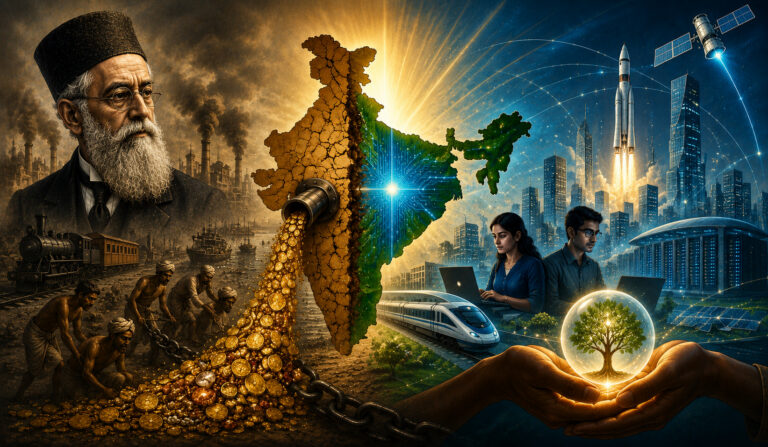
Naoroji’s ‘Home Charges’ had five parts, and this piece maps each one onto a modern equivalent. Interest on colonial debt now looks like royalty payments Indian companies send abroad for foreign patents and software licenses, these have grown roughly 4.5 times in a decade, hitting over $15 billion in 2024-25. It’s not forced, but it’s a one way, recurring outflow, and there’s even an OECD term for the broader mechanism, Base Erosion and Profit Shifting, which costs governments worldwide up to $240 billion a year in lost tax revenue.

Guaranteed returns to British railway investors have a gentler modern cousin: foreign venture capital that structures for large ownership stakes and exits, with many top Indian startups historically incorporated in Singapore or Delaware rather than India. The old rule forcing India to buy British made stores shows up now as India’s electronics trade gap, $116 billion imported against just $48 billion exported in the last fiscal year, mostly because India assembles smartphones brilliantly but still imports most of the chips inside them. And the colonial official’s pension has flipped entirely, Global Capability Centres now employ two million Indians and generate $70 billion a year for multinational owners, the salary stays in India, but the equity and IP don’t.

There’s also a new category colonialism never had: land itself, reimagined as data centres. India generates nearly a fifth of the world’s data but holds only 3-4% of global data centre capacity, meaning most of the infrastructure storing Indian data belongs to shareholders elsewhere.

The numbers aren’t all bleak, India’s services exports hit a record $421 billion last year, making it the world’s seventh largest services exporter. But the article’s key distinction is that this is mostly labor income (payment for work done), not ownership income (a share of what the platform becomes worth). When India tried taxing platform value directly through its 2016 ‘Google Tax’, it was withdrawn by 2025 under trade pressure. Crucially, the article is careful not to call this exploitation, every transaction is voluntary, and foreign platforms deliver real value. The argument instead is narrower and sharper: India creates enormous value but captures a smaller share of it than its scale should allow, and that’s a gap in ownership and bargaining power, not villainy.

The full article is available on Chapter One Mag.

The forgotten Northeast of Partition: How Sylhet, Chittagong and the Radcliffe Line changed Assam forever

History is not merely a chronology of kings, governments, treaties, or political events. It is the collective memory of a civilisation, its achievements, its struggles, its victories, and its deepest wounds. Some chapters of history are celebrated because they mark the triumph of human courage and freedom. Others are remembered because they remind humanity of the devastating consequences of hatred, division, and shortsighted political decisions. The Partition of India in 1947 belongs to the latter.

Every year, India celebrates 15th August as the day of Independence, a day that symbolises freedom from nearly two centuries of colonial rule. Yet, hidden beneath the joy of freedom lies another story, one that remained largely unspoken for decades. While India became politically independent, millions of Indians experienced not celebration but unimaginable grief. Their homes disappeared overnight, their families were torn apart, and their identities were forever altered.

Recognising this forgotten chapter of history, the Government of India, in 2021, declared 14th August as Partition Horrors Remembrance Day (Vibhajan Vibhishika Smriti Diwas). The objective is neither to reopen old wounds nor to encourage bitterness. Instead, it seeks to honour the countless men, women and children who endured one of the greatest human tragedies of the twentieth century and to ensure that future generations understand the immense cost of division. Partition was not merely the drawing of political boundaries on a map. It represented the violent rupture of an ancient civilisation that had evolved over thousands of years through shared traditions, commerce, culture, languages and coexistence. The consequences of those few lines drawn across the map continue to influence South Asia’s politics, economy, security and society even today.

When historians discuss Partition, they often focus on constitutional negotiations, the Mountbatten Plan, or the Radcliffe Line. These are undoubtedly important. Yet, for ordinary Indians, Partition was never about constitutional documents or political agreements. It was about survival. Imagine waking up one morning to discover that your home, where generations of your family had lived, was no longer part of your country. Your neighbours had become strangers. Your school, your fields, your place of worship, your marketplace and even the graves of your ancestors were suddenly beyond an international border. 

That was the reality for millions. Families who had peacefully lived together for centuries found themselves trapped in an atmosphere of fear and uncertainty. They abandoned homes built over generations with little more than the clothes they wore and a few personal belongings. Businesses painstakingly established over decades vanished overnight. Livelihoods disappeared. Communities that had shared festivals, languages and customs for centuries were permanently divided. The Partition did not simply create new nations; it dismantled old lives.

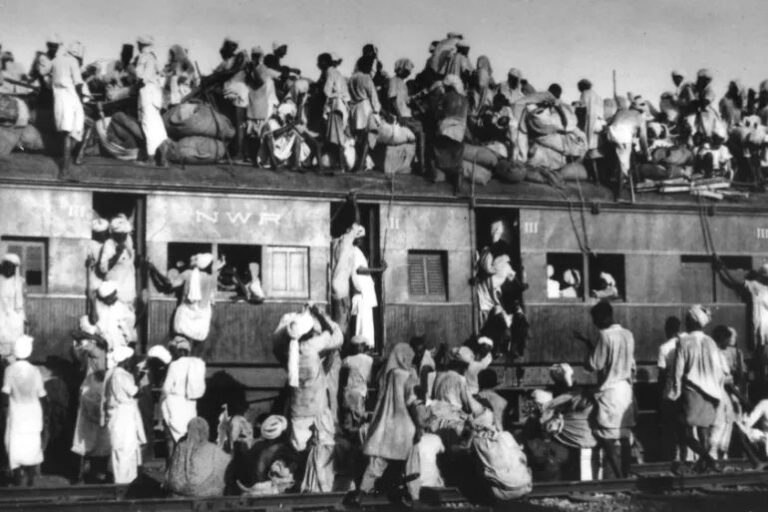
Perhaps the greatest tragedy of Partition was not the division of land but the uprooting of people. Entire populations were forced to leave everything behind in search of safety. The migration that followed became one of the largest forced human migrations in recorded history. Millions travelled on foot, by bullock carts, overcrowded trains and makeshift caravans without knowing whether they would ever reach their destination. 

The journey itself became a nightmare. Many never completed it. 

Stories from survivors describe roads filled with endless columns of refugees carrying infants, elderly parents and whatever little possessions they could save. Food was scarce. Water was unavailable. Disease spread rapidly. Families became separated amidst panic and confusion, often never to reunite. The trains that were once symbols of movement and progress became symbols of horror. Some reached their destinations carrying not living passengers but lifeless bodies. Villages disappeared. Entire communities vanished from regions where they had lived for centuries. 

One of Partition’s most enduring consequences was the transformation of identity. Millions who had always considered themselves at home suddenly became refugees. People who had never crossed an international border were compelled to migrate into newly created nations. Children who once identified themselves simply by their village or town grew up carrying labels such as “refugee” or “displaced.” For many, identity became inseparable from memory. Grandparents spoke of homes they could never revisit. Parents rebuilt lives in unfamiliar surroundings while carrying emotional scars that often remained unspoken. Children inherited stories of places that existed only in family conversations and fading photographs. Partition thus created not merely geographical refugees but emotional refugees whose memories continued to shape family histories for generations.

Perhaps the greatest tragedy of Partition lies in its invisible wounds. 

Buildings can be rebuilt. Roads can be reconstructed. Economies can recover. But psychological trauma often travels silently across generations. Many survivors rarely discussed what they witnessed. Some never spoke about it again. Others recounted stories only late in life, when memories became impossible to suppress. Children and grandchildren inherited fragments of these painful experiences through family conversations, photographs, inherited objects and traditions. The trauma became intergenerational. Even today, many families across India, Pakistan and Bangladesh continue to preserve memories of ancestral homes, lost relatives and interrupted lives. Partition therefore did not end in August 1947. Its emotional consequences continue to live within countless households.

Partition did not merely divide territory; it fractured a civilisation. For thousands of years, the Indian subcontinent functioned as an interconnected cultural, economic and spiritual landscape. Rivers connected regions. Trade routes linked distant communities. Pilgrimage sites welcomed devotees from every corner of the land. Markets flourished across provincial boundaries. Families lived across regions without considering themselves foreigners. The Partition abruptly severed these natural connections. Ancient routes of commerce became international borders. Cultural centres that had once been integral to India’s civilisational landscape suddenly became inaccessible. Economic networks painstakingly built over centuries collapsed almost overnight. The loss extended far beyond geography. Languages, literature, cuisine, music, architecture and shared traditions that had evolved together became separated by political boundaries. A civilisation that had grown organically over millennia was fragmented within a matter of weeks.

The Forgotten Story of Assam and the Northeast

For Assam and the Northeast, Partition carried consequences that extended far beyond migration and violence. The region experienced one of the most profound geopolitical transformations in modern Indian history. The partition of Bengal and the Sylhet referendum altered Assam’s geography, economy and connectivity. Colonial provincial boundaries became international borders, fundamentally changing the region’s relationship with the rest of India. 

Perhaps the most enduring consequence was the loss of Assam’s natural access to the sea through the port of Chittagong. River routes, railway networks and road links that had connected the Northeast to global trade were disrupted. Economic centres were lost, and traditional trade networks weakened. The region became connected to mainland India primarily through the narrow Siliguri Corridor, popularly known as the Chicken’s Neck, that even today faces threat from across the border for another partition. 

The social impact was equally profound. Communities with longstanding ties across what became the India–East Pakistan border found themselves divided, and demographic shifts continued to influence the region for decades. These experiences make Assam and the Northeast an essential part of the national story of Partition, yet they have often received less attention than events in Punjab and Bengal.

Remembering Partition is not about preserving anger. Nor is it about assigning inherited blame to later generations. Its purpose is far more meaningful. It reminds us that communal hatred, political extremism and reckless decisions carry consequences that ordinary people bear for generations. It teaches us the importance of constitutional democracy, peaceful coexistence, social harmony and national unity. It encourages historical honesty rather than historical amnesia. Most importantly, it honours those whose suffering has often remained absent from textbooks and public memory. A nation that remembers only its victories risks developing pride without wisdom. A nation that also remembers its tragedies develops resilience, compassion and vigilance.

Partition Horrors Remembrance Day is therefore not merely about looking backwards. It is about looking forward with greater understanding, with a solemn commitment that the human cost of hatred, division and violence must never again be allowed to define the future of India. It remembers those who lost everything yet found the courage to rebuild their lives with dignity and hope. Their resilience helped shape modern India. Their memories deserve preservation. Their suffering deserves acknowledgement. And their story reminds us that the unity of a nation is never guaranteed; it must be nurtured, protected and strengthened by every generation. 

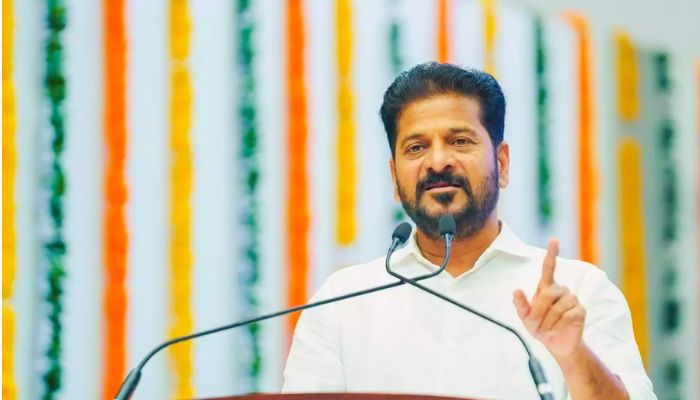
Telangana CM Revanth Reddy boasts that Muslims are biggest beneficiaries of free electricity: Congress continues to justify appeasement as ‘secularism’

“Hindus and Muslims are like my two eyes”. These are words of Telangana Chief Minister Revanth Reddy. The CM and Congress leader has said this on many occasions to emphasise his ‘secular’ credentials and justify Muslim appeasement. Speaking at a public event on 13th August, CM Revanth Reddy boasted that Muslims are “biggest” beneficiaries of the 200-unit free electricity his government provides.

‘Muslims are biggest beneficiaries of free electricity scheme’: Telangana CM Revanth Reddy justifies Muslim appeasement as ‘secularism’

Addressing the Minorities Excellence Summit, Telangana CM Revanth Reddy said he is proud that while people used to say that residents of Old City do not pay electricity bills or steal power, Muslim minorities are now the biggest beneficiaries of the Congress government’s Gruha Jyothi social welfare scheme under which 200-unit free electricity is provided.

“People say citizens in the [Hyderabad] Old City steal electricity and don’t pay bills. I can proudly say minorities have benefited the most from our 200 units free electricity scheme…For me, Hindus and Muslims are not different. Hindus and Muslims are like my two eyes. Our government is working to ensure that the Muslims get what Hindus are getting,” CM Reddy said.

Interestingly, Hyderabad’s Old City has a Muslim majority, with 65% Muslims and 30% Hindus, alongside small populations of Christians, Sikhs, and Jains.

CM Reddy’s mention of Hyderabad’s Old City and boastful admission that people there were not paying electricity bills is significant.

Back in 2014, it was reported that around 50% of electricity supplied to the Old City is unaccounted for, with power pilferage being the main reason. The Central Power Distribution Company Limited (CPDCL) admitted that it suffered losses of Rs 69 lakh daily, and yet refrained from acting against power thieves due to interference from Muslim-appeasing political parties.

The CPDCL officials back then had lamented that whenever their teams went to register cases against those involved in power pilferage, political representatives would intervene and stop them from doing their duty.

In the Muslim-dominated Old City, the residents doing power pilferage would deliberately install meters inside the house, in violation of rules, and when CPDCL officials would visit for meter inspection, they would raise objections about ‘other men’ entering their houses.

Due to Muslim appeasement-driven political interventions in actions against meter tampering, hooking or pilferage, and non-payment of bills, the CPDCL has recorded massive Aggregate Technical and Commercial (ATC) losses in Old City.

In fact, CM Revanth Reddy had lamented in 2018 that households and shops in the Muslim-majority Old City do not pay electricity bills.

In 2023, it was reported that more than 20 lakh units of electricity are stolen per day in the Old City, incurring annual losses of around Rs 511 crore.

Congress government rewarded power pilferage by Old City Muslims with free electricity

While the losses to the state’s power corporation, the Telangana State Southern Power Distribution Corporation Limited (TSSPDCL), continued to rise, the Revanth Reddy-Congress government came up with its tried and tested ‘freebies’ solution.

In February 2024, the Congress government launched the Gruha Jyothi Scheme to provide free electricity up to 200 units for eligible low-income and white ration card holders.

While the scheme was not exclusively for Muslims, Chief Minister Revanth Reddy’s own boastful admission that “people complained about Old City Muslims don’t pay power bills, but now Muslims are the biggest beneficiaries of this free electricity scheme indicates the Congress government has essentially rewarded pilferage and violation of rules by Muslims.

CM Reddy audaciously acknowledged power pilferage by Muslims in the same breath as celebrating free supply to boast how secular he and his government are, converting a chronic revenue leak into political credit. Reddy did not explain how the menace of non-payment of power bills by Muslims could be “solved” by making them the biggest beneficiaries of free electricity.

This is the Congress model of secularism: reward pilferage and blatant violations of rules, and tolerate annual losses to the tune of hundreds of crores, to appease Muslims and secure their votes.

Such is the situation in Telangana that one after the other Muslim-appeasing parties are coming to power and openly boasting that the biggest beneficiaries of their welfare schemes are Muslims.

Basically, CM Reddy told Muslim attendees of the ‘minorities excellence’ program that “We know you steal power and don’t pay bills, and you deliberately install meters inside houses to get an excuse to prevent officials from checking meters, but it’s ok, we will give you free power, and legitimise your power theft.”

Revanth Reddy calls securing 4% Muslim reservation biggest demonstration of Congress’s action for ‘secularism’

To further burnish his government’s secular character, Chief Minister Revanth Reddy said that “Congress means secular”, and how they went beyond rhetoric and secured 4% reservation for Muslims.

“One must recall the time when Dr Y.S. Rajasekhara Reddy (then Chief Minister of Andhra Pradesh), Mohammed Ali Shabbir (a minister at the time), and Azad Sahab (who came from Delhi) assessed the condition of minorities and sought to make the youth stakeholders in the government. The Congress party stands for secularism; it views Hindus and Muslims as its two eyes. Moving beyond mere rhetoric to concrete action, and under the leadership of Sonia Gandhi, a 4% reservation was secured for minority brothers and sisters in this state.”

Reddy further reminded the attendees of the Minorities Excellence Summit held on Thursday, when Union Home Minister Amit Shah had said that his party, the BJP, would oppose Muslim reservation in Telangana; Congress had declared that it would fight the BJP from “sadak to sansad” and to keep secularism alive.

Such is Congress’s desperation to appease Muslims that Reddy proudly said that even though his party’s Muslim candidates did not win state assembly elections, he inducted Mohammad Azharuddin as Minorities Affairs Minister to ensure Muslim representation.

Notably, back in 2004, the Congress government led by YS Rajasekhara Reddy issued an executive order for the implementation of 5% reservation for Muslims by deeming them as OBCs and creating a fifth category (OBC-E). The order was dismissed by the Andhra Pradesh High Court citing a 50% ceiling dictated by the Supreme Court in the Indra Sawhney vs Union of India judgment.

The judgment upheld the ceiling of 50% quota for states and prescribed 11 indicators to establish backwardness and establish the concept of qualitative exclusion, such as “creamy layer”. The Congress government then reduced the quota to 4%. The Congress government received strong criticism, and formed the Andhra Pradesh Commission for Backwards Classes.

In October 2005, an ordinance providing 5% reservation to Muslims in educational institutes and government jobs in Andhra Pradesh was issued and later made the Andhra Pradesh Reservation of Seats in the Educational Institutions and of Appointments or Posts in the Public Services under the State to Muslim Community Act, 2005.

The 5-judge bench of AP HC led by then Chief Justice Bilal Nazki struck down the Act, declaring it unconstitutional. The HC had found fault with the procedure adopted by the Andhra Pradesh Commission for Backward Classes in recommending the inclusion of Muslims in the list of notified backward classes.

Citing significant grounds for its verdict, the court found that the material placed before the Commission was insufficient to conclude that the Muslim community can be called a backward class and deserves a reservation.

The Congress party did not abandon its pursuit to secure Muslim reservation, and it formed an ordinance in 2007 and then passed the legislation titled the Andhra Pradesh Reservation for Socially and Educationally Backward Classes of Muslims Act. The Act provided 4% reservation to 15 categories of Muslims within the 50% limit. The court in February 2010 struck this down, saying that the methodology the Commission used to identify the beneficiaries was unsustainable.

However, the YSR-led Congress government moved a special leave petition in the Supreme Court to challenge the HC verdict. In March 2010, the SC upheld the validity of 4% reservation to Muslims in state education and jobs and passed the ruling in an interim order.

CM Revanth Reddy’s speech at the Thursday event came across as a presentation of his government’s report card before the Muslim community, of pro-Muslim actions, including implementation of 4% reservation, taken.

It must be recalled that in July 2025, it was reported that the Telangana Congress government led by CM Revanth Reddy was working on bringing increase Backward Classes quota to 42% in the state to accommodate more Muslims. Muslims make up about 12.58% of the state’s population. Out of this, about 10.08% are listed as BC Muslims while around 2.5% fall under the OC (Other Castes) category. The Congress party has been seeking to exceed the Muslim quota to 12%.

The Congress party openly glorifies its Muslim appeasement and passes it off as ‘secularism’. Revanth Reddy says that Hindus and Muslims are like his two eyes. However, expressing pride over how his policies are majorly benefiting rule-violating Muslims, and how they advocate more and more reservations for Muslims, indicates that Reddy holds his ‘Muslim eye’ dearer.

JPSC scam and the national disease called ‘Sarkari Naukri’

Results of the 14th JPSC prelims in July 2026 triggered massive protests over irregularities and corruption. On 21 July, CID and Ranchi Police raided Jharkhand Public Service Commission headquarters and TSR Data Processing Private Limited (TDPL). Many senior officials of JPSC were arrested. A state government officer named Abhay Tiwari alias Manoj Tiwari was arrested, and JPSC chairman L. Khiangte resigned on the next day. Students demanded a CBI probe even after the state offered to cancel the exam.

The article explains the entire fiasco of the JPSC scam and how one firm, TDPL, had captured the entire examination process. The most astonishing aspect of the case was that TDPL was given end-to-end control of the JPSC exam, registration, biometrics, papers, OMR scanning, marking and results by nomination, without any tender. 

The firm had already been blacklisted in Uttar Pradesh after arrests in a 2018–19 VDO recruitment case, and the Jharkhand Staff Selection Commission had blacklisted it in 2025 for CGL exam misconduct. JPSC hired it anyway. Reports put the nomination price at about ₹2 crore plus a 20% cut from candidates. 

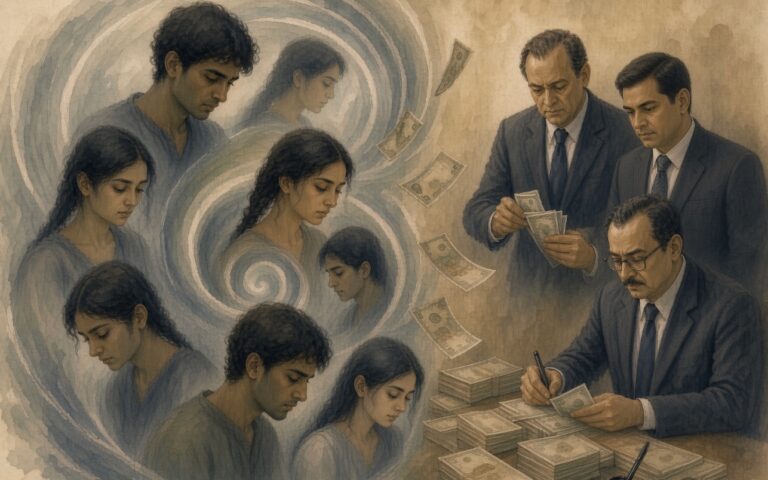
The network ran in three layers. At prelims, some candidates left OMR sheets blank; TDPL staff later filled in answers. Fees were ₹5–6 lakh (general) and ₹2–3 lakh (reserved). At mains, paying candidates wrote in rented flats while out-of-state “experts” dictated answers; Forest Range Officer and Assistant Conservator of Forests slots cost around ₹40 lakh. At interview, names were steered to friendly boards for about ₹55 lakh. A full package of guaranteed selection was sold at about ₹70 lakh. Tiwari allegedly collected ₹5.8 crore from about 20 FRO/ACF aspirants. About 20 people have been arrested, including the former chairman, TDPL directors and JPSC staff. 

The article reflects on why such examination scams have become a regular story in India. Millions of graduates in arts and social sciences have few private-sector options and treat a sarkari naukri as the only secure prize. That demand feeds coaching mafias, middlemen and captured exam bodies. A corrupt system encourages opening useless colleges that distribute useless degrees, and politics keeps reservation alive. Lack of employment and the social status attached to government jobs, with the added benefit of immunity and dreams of high earnings through the same corrupt system, have created a toxic loop that keeps swallowing millions of young men and women every year.

The details of the JPSC scam machinery and how the national craze for government jobs has created a toxic quagmire for India’s young men and women can be read in full in Chapter One Mag.

‘Did you hug me thinking I’m Meloni?’ Sandeep Dikshit and Rahul Gandhi’s sexist banter exposes the party’s deep-rooted misogyny

During the Rachnatmak Congress National Convention in New Delhi today, Congress leaders Rahul Gandhi and Sandeep Dikshit made extremely derogatory remarks about Prime Minister Narendra Modi and Italian Prime Minister Giorgia Meloni. Speaking at the Convention, Gandhi was mocking PM Modi and India’s foreign policy in his usual baffoonish manner.

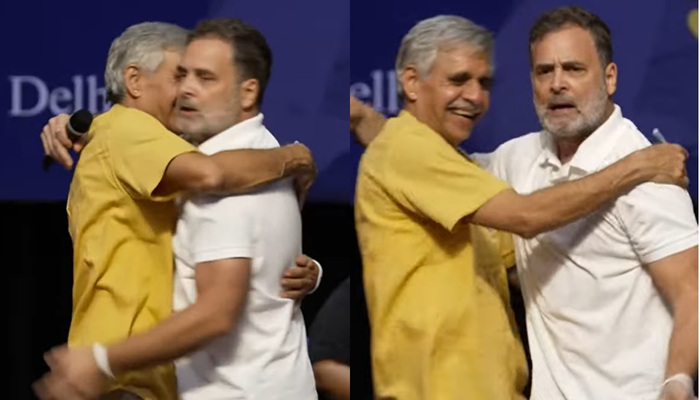
Suddenly, Gandhi got into an overly performative mode and called out to Sandeep Dikshit, who was present on the stage, spreading his arms, gesturing to him for a hug. As soon as Dikshit turned back, Gandhi quickly jumped towards him and hugged him in an awkward manner. Gandhi was trying to mimic PM Modi, who is often welcomed with hugs by the heads of countries he visits on his foreign trips.

Looking at Gandhi’s theatrics, the audience burst into laughter. Gandhi further mocked PM Modi, saying that foreign policy for him only means hugging people. Meanwhile, Dikshit interrupted him and made a sly and sexist remark, “Did you hug me thinking I am Meloni?” Both Dikshit and Gandhi wickedly laughed out loud following the distasteful remark.

The Congress leaders reduced the warm and cordial equation shared by India and Italy, which is reflected in the interactions of PM Modi and Italian PM Meloni, to demeaning, sexist banter.

Supriya Shrinate laughs along despite her own record of sexist remarks

The behaviour displayed by the Congress politicians on the stage was an exhibit of the deep-rooted sexism within the Congress party. Sitting in the audience was Congress spokesperson Supriya Shrinate, who was convulsing with laughter at her leader’s derogatory gesture towards a woman.

However, this was no surprise coming from Shrinate, who herself made sexist slurs at BJP MP Kangana Ranaut. In a post on Instagram, which was later deleted, Congress National Spokesperson Supriya Shrinate asked, “Kya bhav chal raha hai Mandi me koi batayega? (Will someone tell me what the rate system in Mandi is?)” with a particularly racy picture of Kangana Ranaut.

After facing huge backlash for the reprehensible post from her verified social media handles, Shrinate later issued a clarification to defend herself. In her clarification video, she claimed that ‘someone who had access to her account’ posted it, adding that the person responsible for making the post will be held accountable.

Shrinate was not the only one to display the utterly sexist and disrespectful behaviour towards a political rival woman; Congress functionary HS Ahir had also abused Ranaut by referring to her candidature from Mandi as “Mandi se R*ndi.”

Congress functionaries have also targeted women within the party

The unchecked sexism within the Congress Party is not unleashed only on women outside the party; women within the party have also been victims of this. Former Congress spokesperson Priyanka Chaturvedi, who had a long association with the party and was a strong voice of the party, also fell victim to the sexism within the Congress.

Some Congress functionaries misbehaved with Chaturvedi during a press conference in Mathura in September 2018. The workers were initially suspended by the party but later reinstated in April 2019. Disappointed with her party’s stance, Chaturvedi tendered her resignation in 2019, stating that her services in the organisation were not valued and that staying in the party would come at the cost of her dignity and self-respect.

The episode involving Priyanka Chaturvedi also highlighted how concerns over women’s dignity can become secondary to political expediency within the Congress ecosystem. The fact that the workers who allegedly misbehaved with her were initially suspended but later reinstated only deepened the sense that disciplinary action could be compromised when party interests were involved. Chaturvedi eventually left the Congress, citing the erosion of her dignity and self-respect.

A pattern of sexist behaviour and silence from Congress leadership

Interestingly, the top leadership of the Congress Party, including Rahul Gandhi, did not even condemn the sexist and anti-women activities within the party, let alone adopt a tough stance against such elements.

The pattern is therefore difficult to dismiss as a one-off incident or an isolated lapse by an individual leader. From Rahul Gandhi and Sandeep Dikshit’s crude public exchange to the past remarks and conduct involving women political opponents and even Congress leaders, the recurring episodes raise uncomfortable questions about the party’s attitude towards women.

More importantly, the absence of a consistently forceful response from its top leadership risks normalising precisely the kind of behaviour that political parties routinely claim they oppose.

The latest episode involving Rahul Gandhi, Sandeep Dikshit and Giorgia Meloni therefore raises a larger question: why does political opposition to PM Modi so often descend into personal, sexist and demeaning commentary about women?

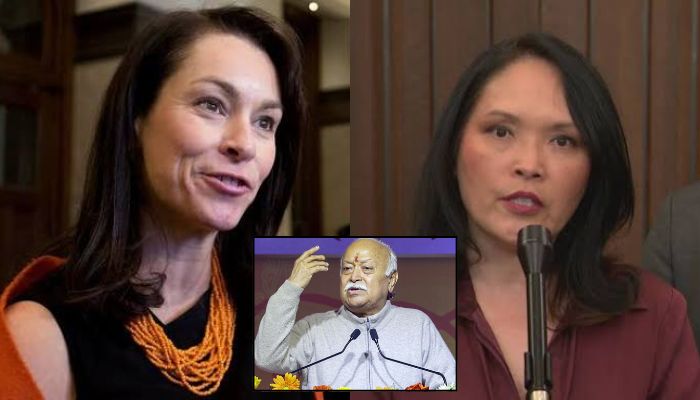
Who are Heather McPherson and Jenny Kwan? The pro-Khalistani Canadian MPs seeking a ban on RSS and Mohan Bhagwat 

Two Canadian Members of Parliament recently urged the federal government to ban the Rashtriya Swayamsevak Sangh (RSS) and prevent its chief, Mohan Bhagwat, from visiting Canada. The MPs claimed that his presence could “lead to social disorder”. Bhagwat is scheduled to travel to Canada from 31st August to 1st September as part of a global outreach tour. 

In a letter addressed to Canada’s ministers for public safety, immigration and foreign affairs, the MPs asked the government to declare Bhagwat inadmissible to Canada. They alleged that he has a history of “hate speech, advocacy of violence against religious minorities, targeted intimidation of critics in India and in Canada” and alleged associations with criminal and terrorist organisations. The MPs also called for the RSS to be banned, arguing that its influence in Canada could threaten minority communities and public order.

“We ask you to declare Mr Bhagwat inadmissible to Canada,” the letter said, adding that “Mr Bhagwat’s presence in Canada would be a danger to Canadians. He is not welcome here.”

McPherson and Kwan stated that there is “considerable evidence” of the RSS’s sphere of influence in Canada, adding that “Muslim, Sikh, Dalit and other minorities in India have been targeted with intimidation and violent threats.” 

They also noted that United Nations human rights experts have called on Canada to ensure that members of the Sikh community are “protected from violent threats” by Hindutva extremist groups, including the RSS. Concluding their letter, the NDP lawmakers stated: “Let us be clear: Mr Bhagwat’s presence in Canada would be a danger to Canadians. He is not welcome here.”

The MPs who authored this letter belong to the left-liberal political spectrum. Their public stances, actions, and key political associations unequivocally suggest that they act in close alignment with pro-Khalistani supporters and regional separatist interests, using their official platforms to echo agendas targeted against India.

Who is Heather McPherson: Supporter of Khalistani terrorists

Sympathy for radical preacher Amritpal Singh

Heather McPherson’s track record highlights consistent support for radical figures. In 2023, she openly backed the radical preacher and pro-Khalistani operative Amritpal Singh following police action in Punjab. Sharing a post on her X (formerly Twitter) account, Heather wrote: “The arrest of Sikh activists, restriction on public gathering, & shutdown of internet services in #punjab is extremely worrying. I will join @theJagmeetSingh in expressing my deep concerns and in urging the Canadian govt to use diplomatic pressure to protect human rights”.

Singh was later detained under India’s National Security Act and remains imprisoned. He has been associated with the separatist Khalistan movement. 

Alignment with Islamist Groups

Highlighting her strong alignment with Muslim advocacy groups, a common trait for left-liberal politicians, McPherson was pictured alongside the launch of a “Combatting Islamophobia” policy handbook released by the Canadian Muslim Public Affairs Council. 

The group called for the introduction of “anti-Islamophobia education” into school curricula, at least $40 million in federal funding for anti-Islamophobia programs, an additional Islamophobia funding stream worth around $20 million, and initiatives designed to counter what it describes as online misinformation.

Pro-Palestinian groups and radical extremism

McPherson’s involvement also extends to supporting pro-Palestinian advocacy. During an incident where NDP Leader Jagmeet Singh claimed he didn’t know about the takeover of a Parliament building when asked by reporter Chris Dacey, at least three members of Jagmeet’s caucus- Matthew Green, Heather McPherson, and Leah Gazan- were seen supporting the pro-Palestinian group.

High-profile NDP MPs, including McPherson, have consistently shown prominent support for Palestinian advocacy initiatives, particularly when multiple caucus members formally endorsed the Vote Palestine Campaign platform and pushed for sweeping changes to Canadian foreign policy regarding the Israel-Palestine conflict. Furthermore, according to journalist Daniel Bordman, McPherson and her party, the NDP, have even shown sympathy toward radical groups like the Houthis.

Targeting Canadian Jewish veterans

Heather McPherson from the NDP has gone so far as to push for measures calling for the imprisonment of Canadian Jews who served in the Israel Defence Forces (IDF) defending Israel from Hamas terrorists.

She sponsored a petition directed at the Minister of Justice, alleging that there is “credible evidence of serious violations of international law by the IDF in the Middle East” that suggests the involvement of Canadian citizens or residents. The petition calls upon the Canadian government to “direct the Canada Border Services Agency to screen Canadian citizens/residents returning from Israel for foreign military service,” issue “warnings that Canadians serving/volunteering with the IDF may face criminal liability under Canadian law,” and create a website “to collect information from Gaza/West Bank war crime victims/witnesses.”

In November, McPherson also condemned Canadian universities for “platforming” IDF soldiers, stating she would raise “concerns with the Canadian government that IDF soldiers are freely touring Canadian universities while the genocide continues.”

Amir Epstein, CEO of the Jewish advocacy group Tafsik, called the petition a “transparent attempt to appease radical ideologues by targeting law-abiding Canadian citizens,” while Richard Marceau, Senior Vice President at CIJA, urged McPherson to stop “rhetoric that demonises Jewish Canadians” and “pander to extremists.”

Opposition to Jewish Figures

Heather McPherson bows to radical Islamist pressure while attempting to silence Jewish voices, feeding antisemitism while hiding behind anti-Islamophobia narratives. While violent crime, inflation, and the fentanyl crisis spiral out of control, McPherson has focused efforts on banning Jewish comedian Michael Rapaport from entering Canada, doing the bidding of groups like the National Council of Canadian Muslims (NCCM).

On 27th February, 2025, she posted a statement on her X account calling on the Canadian government to deny entry to Rapaport: “Statement calling on Canadian government to deny entry to Michael Rapaport – February 27. New Democrats are alarmed that American personality Michael Rapaport is scheduled to perform in Canada. Rapaport, who has a significant criminal history, also has a long history of racist and Islamophobic speech, and of inciting violence and supporting terrorism. We are witnessing an alarming increase in Islamophobia in Canada and globally.”

Who is Jenny Kwan?

Jenny Kwan has similarly used her platform to amplify pro-Khalistani and anti-India narratives. Sharing the letter demanding a ban on Mohan Bhagwat on her X account, she wrote, “Serious concerns: extremist networks linked to intimidation, hatred, violence, foreign interference targeting minority communities/critics. Govt must put public safety and rights of Canadians ahead of political interests. Anti-Sikh/Islamophobic hate speech has no place in Canada”

Reflecting her left-liberal stance on Middle Eastern politics, NDP MP Jenny Kwan has actively demanded that the Liberal government accelerate the entry of people from Gaza into Canada. While the government promised to bring 5,000 individuals, with over 850 having officially arrived, Kwan continues to push for faster and broader processing.

Jenny Kwan belongs to Canada’s New Democratic Party (NDP). The NDP is an active member of the Progressive Alliance, an international cartel of left-leaning political parties.

Within this global alliance, the Indian National Congress (INC) serves as its sister organisation, establishing an indirect political link between Canada’s NDP leadership and Indian opposition networks.

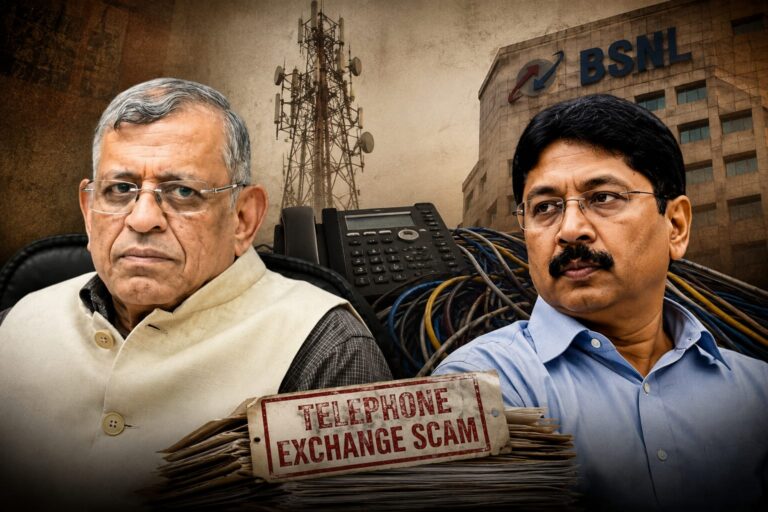
The Telephone Exchange expose by S Gurumurthy, Dayanidhi Maran and a battle that continues today, even after a decade

One could perhaps comfortably say that the history of Indian politics reads like a necrology of scams – of buried skeletons rotting just beneath the surface of the earth – forgotten, as if they never existed. In India, most corruption cases are so elaborate and intricate that good men who once believed they would get the perpetrators to pay for their sins get tired of swimming against the tide and give up. What’s the point, one may wonder. The cases would go on for decades, and with fading public memory, if the case ever reaches its conclusion, and if the perpetrator ever gets punished, it would certainly mean very little. The media, which is supposed to hold power, real power, accountable, moves on either because the news cycle has long changed or because their affiliations don’t allow them to pursue pesky cases that their political overlords want erased from public memory. 

 But there are some cases of corruption that have lived on because the ones fighting for accountability refused to give up. 

The alleged illegal telephone exchange involving former Union Telecom Minister Dayanidhi Maran became one of S. Gurumurthy’s longest investigative pursuits. What began with his 2011 exposé in The New Indian Express developed into an institutional battle involving the CBI, BSNL, the government and ultimately the judiciary.

The investigation alleged that while Maran was Telecom Minister, hundreds of high-capacity BSNL lines were installed at his Chennai residences and that the network was connected through underground optical fibre to Sun TV, controlled by his brother Kalanithi Maran.

His original exposé, published under the print headline “Minister Steals a Telephone Exchange, Loots BSNL”, focused on 323 high-speed ISDN lines installed at Maran’s Boat Club Road residence. These were not ordinary residential connections but facilities capable of carrying large volumes of voice, data and video.

According to CBI material, the lines were connected through approximately 3.4 kilometres of underground cable to Sun TV. More significantly, the connections stood not in Maran’s name but in the official name of the Chief General Manager, Chennai Telephones.

This was central to the alleged fraud: private use had apparently been given the colour of legitimate official use.

More than 400 additional connections were associated with the Gopalapuram residence, taking the total to approximately 764 lines. Gurumurthy repeatedly asked the obvious question: why would any minister require 764 high-speed lines?

The Case Began Under UPA

Like all other scams, the ones who fleeced public money cried political vendetta when the investigation began. 

In 2015, only a year after the Modi government assumed power, Maran claimed that the investigation was politically motivated and the CBI was trying to “please somebody”. And it wasn’t just Maran. Political compulsions forced several others to cry vendetta – the last refuge of the corrupt.  

The charge can be easily disproved by delving into the chronology of the case. 

Maran was Telecom Minister between 2004 and 2007. According to Gurumurthy, the CBI had already examined the telephone exchange issue and communicated with the Telecom Ministry seeking action in September 2007.

Yet effective prosecution did not follow.

It was alleged that after the Marans reconciled politically with DMK patriarch M. Karunanidhi, the matter went into cold storage. By the time The New Indian Express exposed it in June 2011, the investigative trail was already nearly four years old.

This undermined the later vendetta argument. The case did not originate after the NDA came to power; it had originated under the UPA itself.

Maran denied the allegations. Gurumurthy continued publishing documentary material, approached the CBI and, when the investigation still failed to progress, moved the Supreme Court in 2013. The Court sought responses from the CBI and BSNL, and the CBI subsequently registered its case.

For Gurumurthy, the sequence—CBI inquiry in 2007, public exposure in 2011 and FIR only after judicial intervention—demonstrated institutional delay, not investigative haste.

₹1.2 Crore or Hundreds of Crores?

The most important dispute concerned the alleged loss to BSNL. During subsequent proceedings, approximately ₹1.2 crore came to be treated as the loss. Gurumurthy argued that this fundamentally understated the case because it represented essentially BSNL’s cost of laying the infrastructure, not the commercial value of hundreds of high-capacity lines allegedly used without normal billing.

He argued that rental alone on 764 lines could exceed ₹200 crore, without counting actual user charges.

More strikingly, the September 2007 CBI communication cited by him stated that in just one line and one month more than 48 lakh units of calls had emanated, indicating, in his interpretation, massive multimedia usage.

If that was the traffic on one line for one month, what was the value of hundreds of lines over several years?

The CBI case was subsequently reported as involving an alleged loss of around ₹440 crore.

Gurumurthy’s distinction was fundamental: the cost of creating the facility was not the same as the value of the facility used. Moreover, if the lines had deliberately been kept outside the billing and monitoring system, the absence of ordinary billing records itself could not establish absence of loss.

August 2015: Gurumurthy Takes On the Supreme Court

The defining moment came in August 2015. The Supreme Court stayed Maran’s arrest. Media reports quoted the Court asking: “Why did you not arrest him for all this time?”

The Court was also reported as observing: “Your assessment of the loss is ₹1.2 crore. Maran is ready to pay that money to BSNL. We are not saying that there is no misuse of power. But it is not that kind of corruption which requires arrest.”

The Court stayed Maran’s arrest till September 14 and directed the CBI to file an affidavit detailing its investigation.

Gurumurthy responded with “Maran Fraud: Political Vendetta? Just Misuse?”

This was where he directly challenged the apparent judicial framing of the case.

The ₹1.2 crore Maran was reportedly prepared to pay, Gurumurthy argued, was only the cash cost incurred by BSNL for laying the infrastructure. He asked:

“Will the CBI tell the court that the loss is minimum ₹200 crore, not counting the immeasurable user charges?”

But the larger question concerned intent.

Why were 764 high-speed lines required? Why were they installed in the official name of the Chief General Manager? Why were they connected to Sun TV? Why were they outside the normal monitoring and billing system?

Gurumurthy suggested that the Attorney General should ask the Court:

“Is this just misuse of power, my lord? Or is it a deeper and highly meditated conspiracy and fraud?”

That question was the core of his intervention. A few excessive official telephone connections might constitute misuse. But hundreds of concealed, unbilled high-capacity lines connected to a private commercial network raised questions of design, beneficiary and conspiracy.

Vendetta and National Security

Gurumurthy also challenged the suggestion of political vendetta through chronology. The alleged lines were installed during Maran’s tenure; the CBI examined the issue in 2007; the matter stagnated; the media exposed it in 2011; Gurumurthy approached the Supreme Court in 2013; and only thereafter did effective prosecution begin.

His question was straightforward: if a later government investigates what the previous government failed to pursue, does that make the investigation vendetta?

He also raised a national-security dimension. Gurumurthy cited a 2003 meeting chaired by the Telecom Secretary and a 2010 TDSAT ruling which stated:

“Operation of clandestine/illegal telecommunications facilities has serious implications from national security point of view.”

His point was not that a particular security breach through the alleged Maran network had been established. It was that hundreds of high-capacity lines allegedly operating outside normal monitoring demanded investigation from a national-security perspective.

Challenging Judicial Indulgence

Gurumurthy then directly questioned the manner in which preliminary judicial observations were being made and reported.

He wrote: “Freewheeling observations of a judge without the other side filing its affidavit have no value in law.”

Yet, he complained, the media carried those observations almost as if Maran had been acquitted. He added:

“That is why wise judges resist the temptation to make casual observations.”

The criticism was significant. Gurumurthy was not challenging a final acquittal; none had occurred. He was arguing that oral observations made before the complete investigative record was before the Court risked virtually prejudging the public understanding of the case.

He sharpened the argument by citing a Supreme Court case involving a public servant convicted for accepting a ₹265 bribe. Despite the small amount, the age of the accused and the decades that had elapsed, punishment followed.

His question was one of principle: why should anti-corruption law appear harsh towards a petty official but considerate towards a powerful former minister merely because ₹1.2 crore could be repaid?

Gurumurthy’s principle was: “The higher the official, the stricter should be the rule.”

A minister takes a constitutional oath to act according to the Constitution and law. Therefore, if a Telecom Minister used the machinery of his own ministry to create a fraudulent exchange, Gurumurthy argued, it constituted not merely an offence but a “fraud on his constitutional oath.”

The Battle Continued

In 2018, a Special CBI Court discharged the accused. Gurumurthy attacked the CBI for failing to establish the actual user charges and properly present the security dimension, calling it a “prosecution launched to lose the case.”

The discharge was subsequently overturned by the Madras High Court, which found “error, illegality and perversity” in the lower court order.

By 2022, Gurumurthy was still pursuing the matter, focusing on further investigation, the attempt to bring Sun TV—the alleged beneficiary—within the prosecution, and judicial delay.

Conclusion

The Maran telephone exchange exposé ultimately became much larger than an allegation about telephone lines. It became a test of political influence, investigative independence, judicial scrutiny and constitutional accountability.

Its defining episode was August 2015, when Gurumurthy refused to allow the case to be reduced to ₹1.2 crore, ordinary “misuse of power” or “political vendetta”.

In 2015, Maran questioned the CBI for inadequately presenting the alleged loss; the Attorney General for not sufficiently addressing the purpose of 764 lines, the Sun TV connection and the security implications; the media for treating interim observations almost as exoneration; and, most unusually, the Supreme Court’s apparent preliminary approach to the case. In 2015, it was Mukul Rohatgi who was representing the CBI on the Telecom scam case. 

In 2026, Maran, represented by Mukul Rohatgi, who was advising the CBI in the same case 10 years ago, is in the Supreme Court. Maran wants to summon the Union Telecom Secretary as a court witness in the telecom misuse case against him. While the sessions court rejected the petition, the Madras High Court overturned the judgment and allowed the telecom secretary to be summoned. The CBI has now approached the Supreme Court challenging the HC order. 

If the allegations are eventually established, this was not simply a case of a consumer owing money to BSNL. It concerned a Telecom Minister allegedly using the machinery under his own control to create a concealed telecommunications network benefiting private interests.

His argument ultimately rests on one principle: The greater the public power, the greater the accountability.

Punjab and Haryana High Court stays Pharmacy Officers and State Rural Livelihoods Mission recruitments over irregularities and cheating: AAP, CJP silent

Under the Aam Aadmi Party (AAP) government, Punjab is grappling with a multifaceted crisis. On one hand, the state’s economy is in deep trouble, and the drugs menace continues to fester; on the other, key recruitment processes have been marred by irregularities. Recently, the Punjab and Haryana High Court has stayed the recruitment of Pharmacy Officers and a selection process under the Punjab State Rural Livelihoods Mission (PSRLM).

Punjab and Haryana High Court stays selection process for 41 Block Programme Managers and 44 Cluster Coordinators under PSRLM

In January 2026, the Punjab State Rural Livelihoods Mission (PSRLM) under the Department of Rural Development and Panchayats issued a recruitment notification for posts of 41 Block Programme Managers and 44 Cluster Coordinators.

The advertised exam process contemplated 100 marks, including 70 for the written exam and 30 apportioned among interview, educational qualifications, and experience.

However, the process triggered outrage over allegations of non-disclosure of head-wise marks and failure to award marks for experience and educational qualifications, as stated in the advertisement.

The process was then challenged in the Punjab and Haryana High Court. The petitioners alleged that the results of the exam for posts of 41 Block Programme Managers and 44 Cluster Coordinators under PSRLM showed only aggregate or limited heads, 70 for written + 10 for interview, without contemporaneous record for the other components.

In fact, it has been alleged that even the selection notice itself lacked proper authentication, including signature or seal.

Hearing the matter in late July, Justice Sandeep Moudgil had noted that the respondents failed to produce before the court any contemporaneous record indicating that marks under the heads of the educational qualification and experience had been awarded.

The High Court ordered an independent, court-monitored scrutiny of the entire exam process. The original recruitment records were taken into custody, and a committee with amicus curiae was formed after finding the omissions went “to the very root of the recruitment process”.

The court raised serious concerns over the PSRLM recruitment process’s fairness, transparency, and legality.

“Prima facie, this court had noticed that although the advertisement contemplated evaluation under separate heads, namely, written examination, interview, educational qualification and experience, the result declared by the respondents did not disclose the marks awarded under the latter components,” Justice Moudgil said during the July hearing of the matter.

“This court had also noticed that the result/selection notice was not duly authenticated by any competent authority by way of signature or official seal. Consequently, the respondents were directed to produce the complete original recruitment record before this court,” he added.

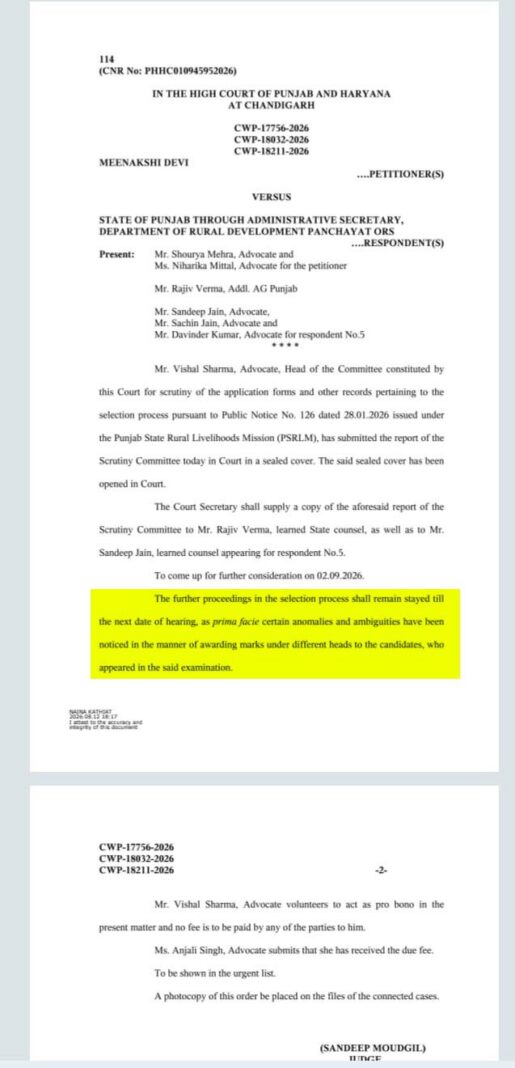
Now, after the committee’s report was submitted and perused on or around 12-13 August, the Punjab and Haryana High Court stayed the selection process of 41 Block Programme Managers and 44 Cluster Coordinators under PSRLM.

“The further proceedings in the selection process shall remain stayed till the next date of hearing as prima facie certain anomalies and ambiguities have been noticed in the manner of awarding marks under different heads to the candidates…” Justice Moudgil said.

This is the second major state recruitment process in Punjab to have been stayed by the Punjab and Haryana Court this year over alleged irregularities.

The AAP government led by Chief Minister Bhagwant Mann has failed to prevent cheating and anomalies in recruitment processes in Punjab, while the AAP claims to champion students’ rights.

Punjab HC stays Pharmacy Officer recruitment

In June 2026, the Baba Farid University of Health Sciences (BFUHS) in Faridkot issued an advertisement for 454 Group-C Pharmacist or Pharmacy Officer posts under the Punjab government’s Department of Health and Family Welfare. On 19th July, the written examination was held, wherein around 7,000 candidates appeared across 25 centres.

As reported earlier, the cheating incident during the examination came to light after the university’s flying squads detected candidates using sophisticated electronic devices at several examination centres. The candidates were caught and handed over to the police. 

Subsequently, an FIR was registered under relevant BNS sections. The Police then arrested 7 conspirators and 28 candidates. The cheating racket was led by Gurmeet Singh, an employee of Sant Kabir Polytechnic College in Fazilka. The gang was charging candidates Rs 3.5 lakh to Rs 13 lakh for ‘guaranteed success’.

Soon after, one Keshav Kamboj and others approached the Punjab and Haryana High Court seeking cancellation of the 19th July written examination as well as all consequential steps, including evaluation, result and appointments.

The petitioners contended that the entire Pharmacy Officers recruitment process was vitiated, violating Articles 14 and 16 (equality and equal opportunity in public employment) of the Indian Constitution.

In response to the plea, the High Court issued a notice on 28th July and directed that the further selection process would be subject to the outcome of this petition. The AAP government in Punjab had sought time to reply.

In view of these developments, on 10th August, the High Court ordered that the appointment process “shall remain stayed till the next date of hearing.”

The next hearing will take place on 17th September.

AAP-CJP hyperactive against BJP government over NEET paper leak, slip into selective hibernation over anomalies in recruitment processes in Punjab

Just a few weeks back, the country’s national capital, New Delhi, witnessed a massive protest that also turned violent. The protest, though steeped in anti-BJP politics, led by the Cockroach Janta Party, was described as a ‘student protest’ and apolitical in nature.

The CJP claimed that it stands with students and demands accountability from the authorities. The protest had received the backing of major anti-BJP parties, including the Aam Aadmi Party.

OpIndia reported earlier how former Delhi Chief Minister Arvind Kejriwal and other AAP leaders shared the stage with CJP founder and former AAP functionary Abhijeet Dipke, portraying himself as the biggest well-wisher of students and job seekers; however, the reality of his concerns reflects in the state of affairs in the state his party rules.

One after the other, irregularities have been reported in major recruitment exams in Punjab. However, the AAP has either spoken up only to deflect attention by claiming that there was no ‘paper leak’ in pharmacy officers’ recruitment, or has remained silent.

Even as the Punjab government faces criticism for dodging accountability, the Cockroach Janta Party has largely remained silent. Apparently, their outrage to advocate rights for students and youth, and demand accountability are reserved for cases wherein they get to target the BJP governments.

Their silence, however, is not surprising given that the CJP demonstrated its double standards during the ongoing Jharkhand Student Protests. In Jharkhand, students have been protesting against the JMM-Congress alliance government over paper leaks and systemic irregularities.

The CJP maintained convenient silence over the Jharkhand protest given it is not a BJP-ruled state. The CJP leaders spoke up only after widespread criticism. However, their ‘support’ to the Jharkhand student protestors is performative. For Jharkhand, the CJP leaders are at least dropping social media posts; however, in the case of Punjab, they have, so far, turned a blind eye. No wonder the CJP is often called the B-Team of the Aam Aadmi Party.