Home Blog Page 89

Supreme Court upholds ECI’s Special Intensive Revision exercise: A detailed look at what the verdict said on electoral roll purity, citizenship verification and constitutional powers

The Supreme Court on Wednesday, 27th May, upheld the Election Commission of India’s decision to conduct a Special Intensive Revision (SIR) of electoral rolls and said the exercise was aimed at strengthening free and fair elections in the country. The judgment came in response to a batch of petitions challenging the Election Commission’s decision to conduct the SIR process in Bihar last year.

A bench comprising Chief Justice Surya Kant and Justice Joymalya Bagchi held that the Election Commission has the constitutional authority to carry out such a revision under Article 324 of the Constitution, along with powers granted under the Representation of the People Act, 1950, and the rules framed under it.

The Court said the Special Intensive Revision was directly connected to ensuring the “integrity, accuracy and purity” of electoral rolls, which form the foundation of the democratic process.

The Supreme Court framed four key questions

Delivering its verdict [pdf] on a batch of pleas questioning the legality of the SIR exercise, the apex court identified four key questions for consideration:

  1. Does the Election Commission of India have the power to conduct the Impugned Special Intensive Revision?
  2. Whether the Impugned Special Intensive Revision is founded on a legitimate purpose, and if so, whether the measures adopted by the Election Commission of India are proportionate to the object sought to be achieved?
  3. Whether the procedure adopted by the Election Commission of India in conducting the Impugned Special Intensive Revision is contrary to, or in violation of, the provisions of the Representation of the People Act, 1950 and the Registration of Electors Rules, 1960?
  4. Whether, in the exercise of its constitutional mandate of preparation and maintenance of electoral rolls, and in furtherance of the statutory conditions governing such registration, the Election Commission of India is empowered to scrutinise the citizenship status of persons seeking inclusion or continuation in the electoral roll?

Court says ECI has constitutional power to conduct SIR

Addressing the first issue, the Supreme Court clearly ruled that the Election Commission was fully empowered to conduct the Special Intensive Revision.

The Court observed that the SIR process was authorised under Section 21(3) of the Representation of the People Act, along with Article 324 of the Constitution. It rejected arguments that the exercise violated existing election laws.

“The impugned SIR does not supplant the RP Act or the 1960 Rules. It rather breathes life into the constitutional mandate of Article 324,” the Court said.
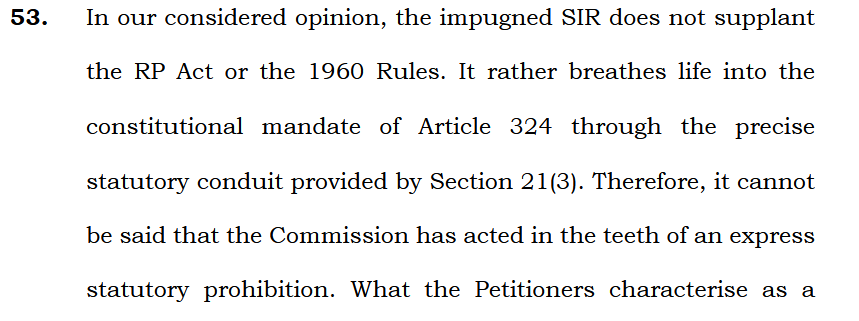
An excerpt from the judgment

The bench further clarified that the Election Commission was allowed to adopt a different procedure from ordinary revisions if circumstances required it.

“So long as the Commission acts within the bounds of the statute, records reasons for recourse to the special power, and does not transgress any express prohibition contained in the Act or the Rules, the exercise cannot be struck down merely because it adopts a procedure different from that applicable to an ordinary revision,” the judgment stated.

The Court also linked the SIR directly with the constitutional requirement of free and fair elections.

“Free and fair elections do not rest merely upon the mechanics of polling. They equally depend upon the integrity, accuracy and purity of the electoral roll,” the bench observed.

The judges noted that more than two decades had passed since the last intensive revision and that rapid urbanisation, migration and large-scale additions and deletions in voter rolls justified the fresh verification exercise.

The court says SIR has a legitimate purpose

Addressing the second question, the Supreme Court held that the objective behind the SIR exercise was both legitimate and constitutionally necessary.

“The objective sought to be achieved by the Commission, namely, the restoration of accuracy, completeness, and integrity of the electoral roll, is not only legitimate but is integral to the constitutional mandate entrusted to it,” the Court said.

The Court rejected the argument that the SIR lacked a proper purpose or was politically motivated. It held that the reasons given by the Election Commission had a “direct and rational nexus” with maintaining a credible electoral process.
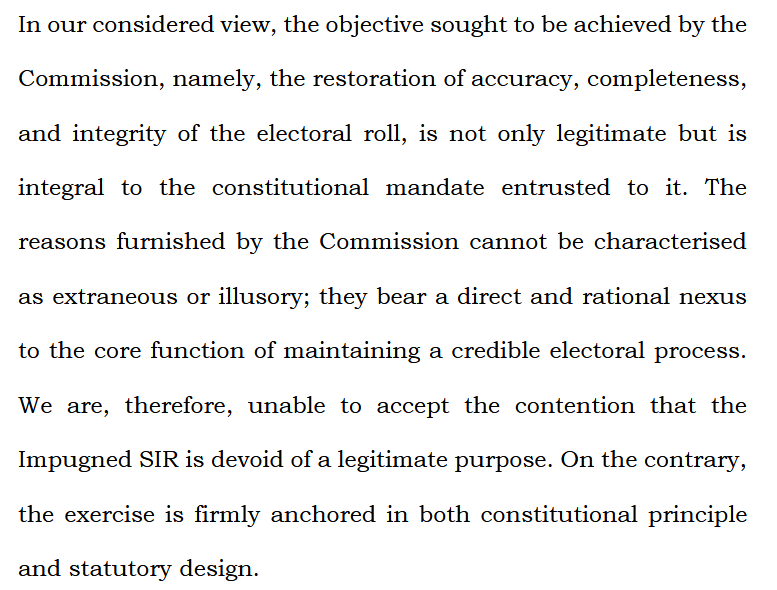
An excerpt from the judgment

The bench also examined whether the methods used during the SIR exercise were proportionate to the objective. The Court found that the measures adopted by the Election Commission, including house-to-house verification and collection of updated forms, were reasonable.

“These measures are not only logically connected to the stated objective but are, in fact, intrinsically designed to achieve it,” the Court observed.

The Court noted that physical verification helped identify outdated or duplicate entries, while standardised forms ensured uniform scrutiny across constituencies.

The judgment also highlighted that procedural safeguards existed within the process, including scrutiny by officers, notices in doubtful cases, hearings and appellate remedies.

“These procedural safeguards reinforce the rational connection between the means adopted and the objective sought to be achieved,” the Court said.

Concluding this issue, the Court ruled, “We are satisfied that the impugned SIR bears a direct and proximate nexus to ensure the purity and accuracy of the electoral roll.”

Court rejects challenge to SIR procedure

While examining the third issue, the Supreme Court rejected claims that the SIR process violated Rule 21A of the Registration of Electors Rules, 1960.

The petitioners had argued that the exercise allowed deletion of names without adequate safeguards. However, the Court said that safeguards such as notice, inquiry, hearing and reasoned determination were still available within the SIR framework.
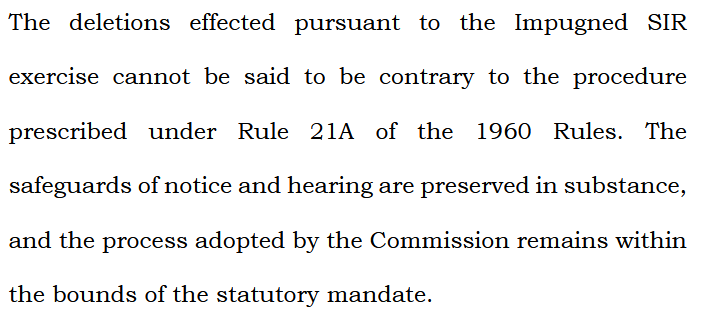
An excerpt from the judgment

The Court clarified that these safeguards were spread across different stages of the process, including enumeration, draft publication and claims-and-objections proceedings.

“The statutory framework does not mandate a rigid or singular procedural format but instead requires fairness in action,” the Court said.

The Court also upheld the Election Commission’s decision to prescribe a documentary verification system.

According to the bench, the documentation requirement was aimed at ensuring “administrative consistency and evidentiary reliability.”

The petitioners had objected to the exclusion of documents like ration cards and voter ID cards from the accepted list. However, the Court refused to interfere with the Election Commission’s discretion in deciding which documents should be accepted.

“The choice of proposed documents for verification of electoral rolls and their evidentiary standards necessarily fall within the discretionary domain of the Commission,” the Court observed.

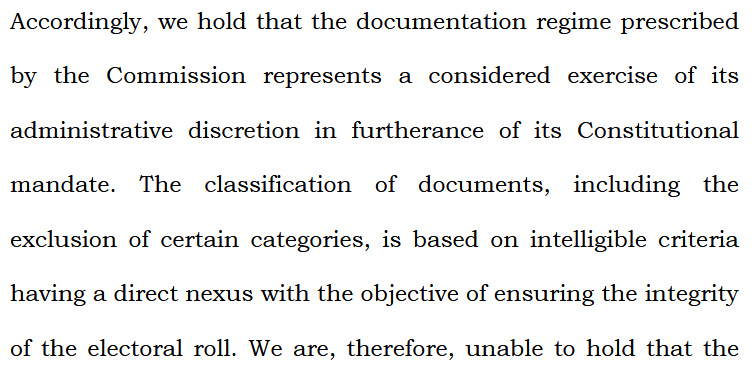
The Court finally held that the documentation framework was neither arbitrary nor illegal.

“We hold that the documentation regime prescribed by the Commission represents a considered exercise of its administrative discretion in furtherance of its Constitutional mandate,” the bench stated.
An excerpt from the judgment

ECI can examine citizenship for voter rolls, says SC

The fourth issue dealt with whether the Election Commission had the authority to examine questions related to citizenship while preparing electoral rolls. 

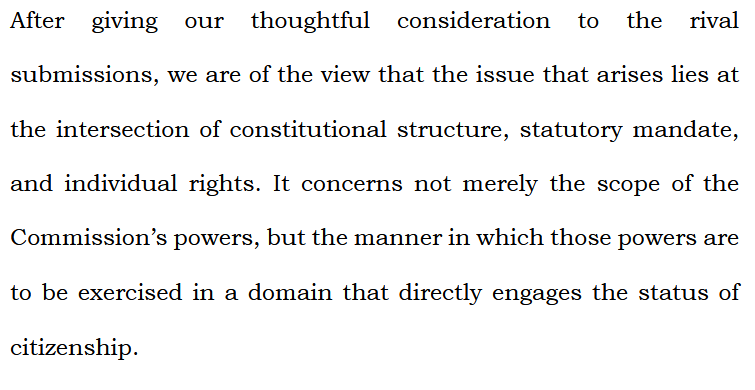
The Supreme Court ruled that the Election Commission does have the power to examine citizenship-related questions for the limited purpose of deciding eligibility for inclusion in electoral rolls.

However, the Court also made it clear that the Election Commission’s findings would not amount to a final declaration on someone’s citizenship status. “It concerns not merely the scope of the Commission’s powers, but the manner in which those powers are to be exercised in a domain that directly engages the status of citizenship,” the Court observed.
An excerpt from the judgment

The Court accepted the Election Commission’s argument that Articles 325 and 326 of the Constitution, along with Section 16 of the Representation of the People Act, empower it to verify whether a person fulfils the conditions required for voter registration.

At the same time, the bench stressed that citizenship is a serious constitutional issue and cannot be conclusively decided by the Election Commission alone.

The judges clarified that if the Commission finds doubts regarding someone’s citizenship, it must refer the matter to the competent authority under the Citizenship Act for final adjudication.

Court’s concluding directions

The Supreme Court later clarified several questions and laid down clear safeguards regarding cases involving doubtful citizenship and rumoured claims. 

“In cases where the Commission is not satisfied that a person meets the statutory conditions for inclusion in the electoral roll, it would be incumbent upon it to refer such an individual to the competent authority within the Central Government for adjudication in accordance with law,” the Court said.

The bench added that the Election Commission’s findings would remain limited only to electoral purposes and would not finally determine citizenship.

The Court also directed the Election Commission to refer, within four weeks, all cases where names had been deleted from the 2003 electoral rolls on citizenship-related grounds.

The competent authority under the Citizenship Act was asked to decide such cases after giving proper notice and hearing to affected individuals. The Court further clarified that if any deleted individuals are later found to be Indian citizens, their names must be restored to the electoral rolls.

Background of the case

The controversy began last year when the Election Commission ordered a Special Intensive Revision of electoral rolls in Bihar ahead of the Assembly elections. Multiple organisations, including the Association for Democratic Reforms (ADR) and the National Federation for Indian Women (NFIW), challenged the process before the Supreme Court.

The petitioners argued that the SIR exercise could lead to the arbitrary deletion of voters and might disenfranchise lakhs of genuine citizens.

However, the Election Commission defended the move, saying the revision was necessary to remove duplicate, inaccurate and ineligible entries from voter rolls.

Initially, around 65 lakh names were removed from Bihar’s draft electoral rolls published on 1st August. Later, after appeals and corrections, the number came down to around 47 lakh.

As the hearings continued over months, the Supreme Court stepped in to add balanced safeguards. The Court directed the ECI to issue a formal notice explicitly stating that Aadhaar would be accepted as a valid identity proof document for the inclusion of voters in the revised lists being prepared under the SIR. The SIR exercise in Bihar was completed on 30th September.

According to official figures, Bihar had 7.89 crore voters before the revision process began, while 7.42 crore voters remained on the revised list after completion of the exercise.

The Election Commission later extended the SIR process to other states as well and issued a notification on 27th October to conduct it in West Bengal, Kerala and Tamil Nadu, which led to further legal challenges and eventually resulted in the Supreme Court’s final verdict upholding the exercise.
Anti-Hindu hate, disdain for feminine representation in Sanatan and more: Why do Muslims want to slaughter only the cow despite not being mandatory in Islam

India is home to diverse religions and cultures. Constitutionally secular, India, that is Bharat, is rooted in the Hindu Sanatan consciousness. Our country has long covered up confrontations emerging from contradictions in religious beliefs with ‘secularism’ and ‘tolerance’. Cow slaughter exemplifies confrontation.

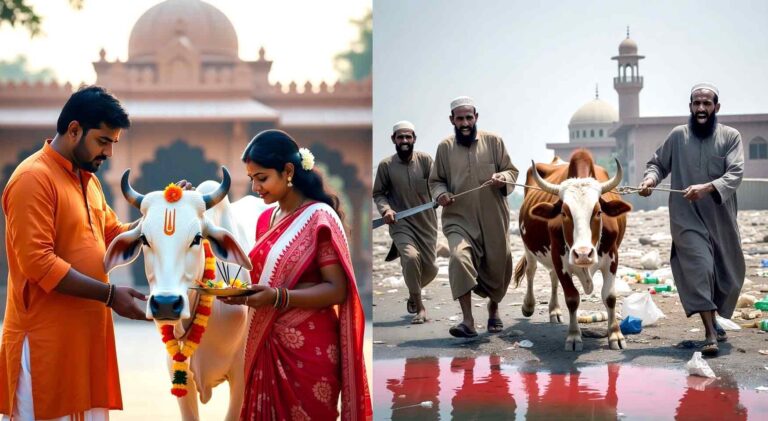
Muslims in India ‘celebrate’ Eid by slaughtering certain animals, mainly goats, on this occasion. However, there have been incidents of this ‘minority’ slaughtering cows and even reaching courts to seek permission for the same, despite knowing that cows are sacred for Hindus.

Recently, the Calcutta High Court dismissed a batch of petitions, including the petitions filed by ‘secular’ political parties, Trinamool Congress and the CPIM, challenging the notification issued by the Suvendu Adhikari government, which prohibited Qurbani of cows and bulls on Eid-ul-Adha or Bakrid.

The High Court upheld the notification issued by the BJP government in West Bengal and stated that the sacrifice of a cow was neither a part of the festival of Eid-ul-Adha nor was it a requirement under Islam. A similar ruling was also delivered by the Madras High Court on 27th May.

Constitution on cow protection and landmark court rulings

Under Article 48, a Directive Principle of State Policy (DPSP), the Constitution of India mandates the State to endeavour to prohibit the slaughter of cows, calves, and other milch and draught cattle. Although as a DPSP, Article 48 is non-binding, it is fundamentally meant to guide the government in policymaking and legislation.

While several states have enacted cow protection laws, Kerala, some northeastern states, and West Bengal (until now) do not enforce a blanket ban on cow slaughter.

In the Mohammad Hanif Quareshi & Ors. Vs. State of Bihar (1975) case, a five-judge constitution bench of the Supreme Court decided on the challenge to a ban on cow slaughter in Uttar Pradesh, Bihar and Madhya Pradesh. The challenge was put forth on the grounds of a violation of fundamental rights. The Supreme Court held that since cow slaughter is not an essential practice in Islam, there is no question of a conflict with the right to religious freedom under Article 25.

In the 2005 State of Gujarat v. Mirzapur Moti Kureshi Kassab Jamat case, a seven-judge Supreme Court bench ruled that the Bombay Animal Preservation (Gujarat Amendment) Act, 1994, which imposed a complete ban on the slaughter of cows and bulls, was constitutionally valid.

Constitution and courts believe cows should be protected from slaughter, but Muslims don’t

Eid al-Adha commemorates the Islamic prophet Ibrahim’s supposed willingness to slaughter his son Ismail, as an act of submission to Allah. While Ibrahim performed Qurbani of his son, Muslims don’t follow his example exactly. As per the Quran, Muslims can slaughter goats, sheep, cows, buffaloes, and camels for Eid al-Adha. However, there is no Quranic mandate requiring cow slaughter specifically for Qurbani, although cow meat consumption is considered ‘Halal’ (permissible).

While the Constitution’s DPSP and court state that cow slaughter should be prohibited, a significant section of Muslims take delight is disregarding what the Constitution, which they brandish when convenient, and slaughter cows to deliberately hurt Hindu sentiments.

What is Aghnya for Hindus is ‘Halal’ for Muslims

In the Hindu Sanatan Dharma, the cow is revered as Gau Mata, symbolising motherhood, nourishment, purity, non-violence, and a life-giver. Vedas describe cows as “Aghnya” or “not to be harmed or killed”. In the Hindu scriptures, particularly the Rig Ved and the Atharv Ved, cows are directly equated with abundance, purity, divinity, and sustenance. Cow milk and other derivative products are essential to Vedic yajnas and other rituals.

The Rig Ved 1.164.27 hymn, “Aghnyeyam sā vardhatām mahate saubhagāya” says he aghnya cow (not to be killed) brings us health and prosperity. The Vedic texts even mandate punishments, including banishment or execution, for those who slaughter cows.

However, after centuries of Islamic invasions, British colonialism, and decades of Congress rule, Hindu beliefs, traditions, and pride have all been suppressed to appease Muslims for political gains, emboldening the otherwise ‘oppressed’ ‘minority’ to slaughter cows, consume cow meat, and even approach court seeking reversal of cow slaughter bans in the name of ‘religious freedom’.

The Islamist demeaning of feminine representation in Sanatan

In November 2023, the Amreli Sessions Court sentenced three Muslim men, Kasim Haji Solanki, Sattar Ismail Solanki and Akram Haji Solanki to life imprisonment for slaughtering cows. During a raid by the Amreli Sessions Court, a house in the Motakhatkiwad area of Baharpara village was raided following a tip-off. The police recovered 40 kg of animal meat from the residence of the three named Muslim men.

In March 2025, a police team found the remains of a calf in a field in a village in Uttar Pradesh’s Shamli district. A man named Sameer was sentenced to life imprisonment under the National Security Act, for killing two calves and a cow in the forest during last year’s Holi season. 

In February this year, a Muslim mob attacked Hindu gau rakshaks and police with sharp weapons during an operation to stop cow slaughter in Gujarat’s Surat. The Muslim butchers wanted to slaughter cows during the Islamic month of Ramzan despite the fact that cow slaughter is strictly banned in the state.

On 27th February, the Allahabad High Court upheld the detention of Sikandar, Saiyyaj Ali, and Hasnen for slaughtering cows during the Hindu festival of Navratri in Uttar Pradesh’s Jalaun. The accused trio was arrested on 31st March after the police seized approximately two to 3 quintals of beef, knives, and other materials. 

There have been numerous such cases wherein remains of cows have been found dumped in drains and in secluded areas, eventually leading to Muslims who butchered cows.

In fact, in recent years, there have been incidents wherein Muslims have deliberately slaughtered cows and thrown their remains inside Hindu temples to mock and provoke Hindus.

Over the years, there has been a significant increase in incidents of throwing meat pieces in front of temples, with Muslims being the culprits in most cases. In Assam’s Muslim-dominate Dhubri a cow head was found near a Hanuman temple on Bakrid in 2025.

Similarly, a cow was slaughtered near a Hindu temple located in a Hindu-majority area in Assam’s Sribhumi district on Bakrid or Eid-ul-Adha. In Goalpara, Hazrat Ali and 4 others dumped the severed head of a cow near Kali Mandir. In June 2025, 7 Muslim men were arrested after cow skulls were recovered near a prayer hall in Assam’s Lakhimpur. In October 2024, Islamists hurled meat pieces at Hindus during a Navratri procession. In 2021, 4 cows were slaughtered in Delhi’s Kalindi Kunj and their remains were thrown near the temple

OpIndia documented similar incidents from Uttar Pradesh, Jharkhand, and other states in recent years, wherein cow meat, severed heads, and other remains have been thrown inside Hindu temples, in a clear act of mocking Hindus and their religious beliefs.

Besides slaughtering cows on Eid and throwing cow remains inside Hindu temples, there have been cases wherein Muslims were caught selling samosas stuffed with cow meat to unsuspecting Hindus. In April 2024, Gujarat Police raided a Vadodara-based samosa shop, ‘Huseni Samosa center’, and arrested six persons, including eatery owners Imran Yusuf Qureshi and Naeem Sheikh, for selling samosas stuffed with beef (cow meat).

In April 2023, an eatery run by Ahmad Mohammad and Chacha Ajim Bhai in Gujarat’s Navasi was found to be selling cow meat-stuffed samosas, calling them chicken and mutton samosas.

Over the years, there have been thousands of reported cases of love jihad, wherein Muslim men would lure Hindu women by feigning love and sometimes faking religious identity, establish sexual relations on a marriage pretext, blackmail, impose Islamic dressing like Hijab or Burqa, and eventually force them into converting to Islam and marrying them. A common practice found in most such cases is the force-feeding of cow meat to Hindu women.

Be it cow slaughter or the force-feeding of cow meat of Hindu women, these acts by Islamists are essentially meant to mock and humiliate Hindus and violate the sanctity of Hindu femininity.

From Durga Puja, Navratri, and Chhath to the worship of holy rivers like Ganga, Yamuna, and Saraswati, among others, as deities or Devi, Hindu Dharma places special significance on divine feminine representation. In Islamic tradition, on the contrary, women are treated as second-class subjects, whose identities revolve around their male ‘protectors’.

Islamic texts prescribe that Muslim women fully cover their bodies, perform namaz at home, go out only when accompanied by a male Mehram, and men are allowed to take four wives and even lay down the procedure of wife-beating.

While Muslim men are mandated to protect and almost hide their women, Islamic texts allow Kafir women as spoils of war or Maal-e-ghanimat. In fact, many contemporary Islamic scholars have also commented on how Islam allows Muslims to take women as sex slaves and rape them as acts of humiliation during Jihad against Kafirs or infidels, essentially, non-Muslims.

This reminds one of how Pakistani Islamists sat on podcasts and national television in May last year, to discuss how they would take Hindu women, particularly, specific Bollywood actresses as ‘Maal-e-Ghanimat’ after ‘defeating’ India in the war.

This perverted mindset that kafir women are tools of humiliating kafir men and their religion is shared by fundamentalist Muslims across the world. From individual rape jihad cases, Muslim rape gangs in India targeting Hindu women, to Pakistani Muslim grooming gangs in the UK, Islamists use weaponised rape as a means of religious conquest and supremacy establishment.

The love jihad cases in Kerala, and the recent TCS Nashik conversion jihad case, show how even Muslim women sometimes aid their male coreligionists in targeting Hindu women for rape jihad and conversion to Islam.

Slaughtering cows or raping Kafir women, Islamists consider it a religious duty to insult non-Muslims, especially the idol-worshipping Hindus, since idol-worship is described as the worst of sins in the Quran.

On social media, Muslim men have created highly derogatory hashtags wherein they publish their rape fantasies involving Hindu women in India and non-Muslim women across the world.

These are some contemporary examples of how fourth and fifth-generation descendants of the Hindu victims of Islamic invaders exhibit their hatred for Hindus. In fact, even during the medieval era, when Islamic barbarians invaded India, they would often place cows before their armies as a war tactic, knowing that Hindus revere cows and won’t attack them.

Pakistan based Shahzad Bhatti, ISI proxy and gangster, emerges as mastermind behind Tehreek-e-Taliban Hindustan: What is TTH, its propaganda, targeted killings and terror modules in India

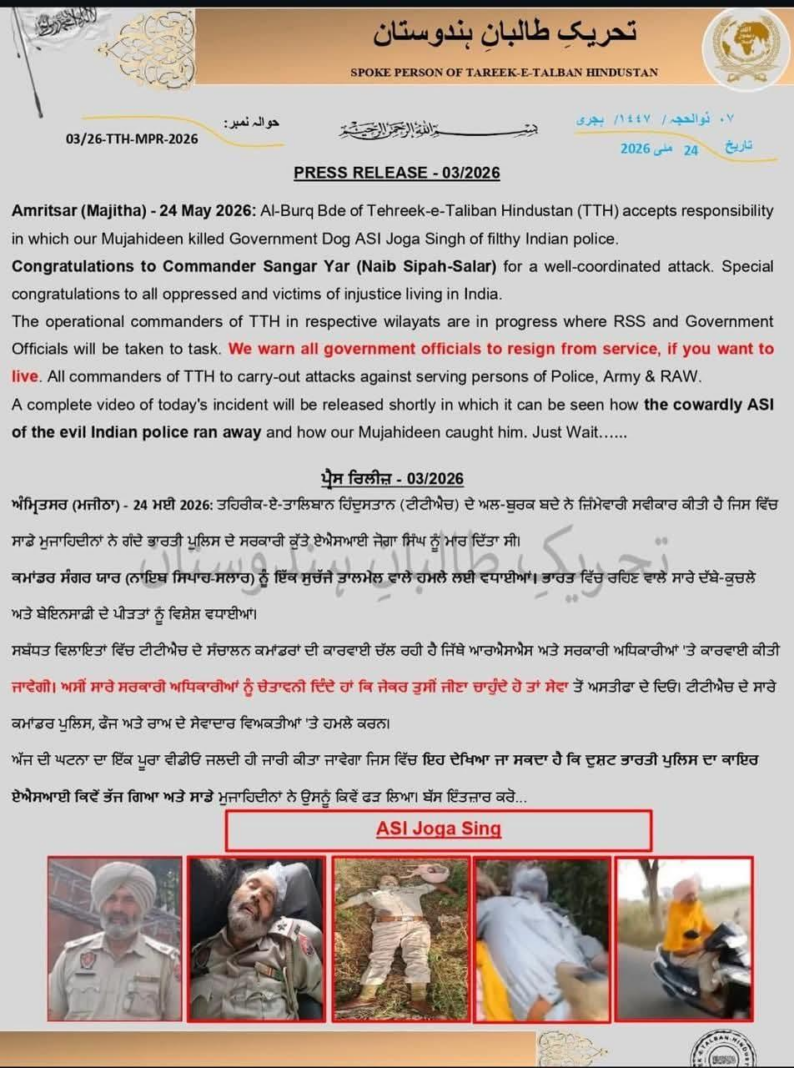
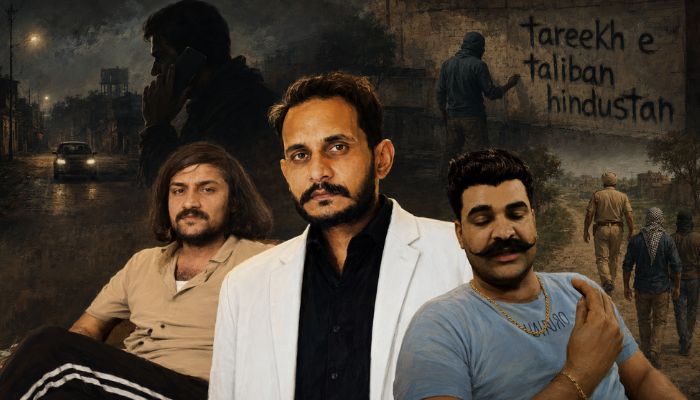
A new terrorist organisation, Tehreek-e-Taliban Hindustan (TTH), has come under the scanner of Indian security agencies after it claimed responsibility for the killing of three police personnel in Punjab, two in February and one in May. In its latest poster, in which it claimed responsibility for the murder of Punjab Police ASI Joga Singh in Majitha, Amritsar, the organisation issued threats to police, army, RAW officials and government employees.

It is now being examined as a Pakistan backed proxy. According to the latest reports, Shahzad Bhatti, a gangster-turned-terrorist from Pakistan who has links to the ISI, is the mastermind behind TTH.

TTH claims responsibility for ASI Joga Singh’s killing

The most recent claim by TTH surfaced on 24th May 2026, when the terror outfit released a post claiming responsibility for the murder of ASI Joga Singh in Amritsar, Punjab. The poster, written in English and Punjabi, claimed that the “Al Burq Bde” of TTH had carried out the attack. TTH congratulated one “Commander Sangar Yar”, described as “Naib Sipah Salar”, for the “coordinated attack”.

Source: PTC News

Furthermore, the poster also issued open threats to government officials and warned them to resign from service if they wanted to live. It further called upon TTH commanders to carry out attacks against serving personnel of police, army and RAW. TTH added that it would release a video of the murder, which, according to The Indian Express, was later released.

The poster included images showing ASI Joga Singh in uniform, visuals purportedly from the attack, and a photograph appearing to show him riding a motorcycle. The authenticity of the poster is yet to be verified, and Punjab Police stated that the outfit might not even exist. However, security agencies are still looking into it, considering Shahzad Bhatti’s name has appeared as the mastermind behind it.

Video of the killing and pattern seen in earlier attacks

Two days after the attack, TTH reportedly released the video showing the attack on social media. According to media reports, the footage showed the officer travelling on his motorbike before being shot at close range. The attackers then allegedly filmed his body from close range.

The pattern followed by TTH in this case is significant because a similar public claim was made by TTH after the murder of two police personnel at the Dorangla police outpost in Gurdaspur district in February 2026. In that case too, a video was reportedly transmitted to Pakistan based handlers and later circulated online.

Punjab Police is probing whether TTH exists as an independent outfit or whether the name is being used as a proxy identity by Pakistan based handlers to create fear, claim terror attacks and maintain plausible deniability for the ISI.

What is Tehreek-e-Taliban Hindustan

Tehreek-e-Taliban Hindustan, or TTH, has appeared in recent months as a name attached to terror claims, graffiti, recruitment attempts, and threats against Indian security personnel. Investigation agencies quoted in multiple reports have described it not as a well established terror organisation with a conventional structure, but as a propaganda driven proxy identity allegedly backed by Pakistan’s ISI.

The name appears to echo Tehreek-e-Taliban Pakistan, which has repeatedly attacked Pakistani security forces. According to intelligence officials quoted in media reports, Pakistan’s larger plan appears to be to create a narrative that a Taliban style outfit exists inside India, and then link this imagined or manufactured ecosystem to the TTP.

This helps Pakistan in three ways. First, it gives Pakistan a deniability layer for attacks on Indian soil. Second, it helps Islamabad float the claim that India is somehow connected to the TTP, which has become a major internal security headache for Pakistan. Third, it allows Pakistan’s handlers to recruit disposable foot soldiers in India without publicly exposing the Pakistani command structure behind the operations.

The man behind TTH, Shahzad Bhatti

Shahzad Bhatti’s name appears repeatedly in investigations linked to TTH. Indian investigation agencies and police sources have described him as a Pakistan based gangster, terrorist operative and ISI proxy. He is believed to be a resident of Lahore and is suspected to be operating from Dubai while moving between Pakistan, Dubai and other Middle Eastern countries.

Bhatti has been named as a key figure in several investigations linked to terrorism, organised crime, narco terror financing, illegal arms movement, online radicalisation and target killings. Jammu and Kashmir Police DGP Nalin Prabhat directly named him while warning Pakistan sponsored narco terror networks. He called him an ISI associate involved in pumping narcotics into India.

According to Indian security officials, Bhatti functions as a bridge between criminal syndicates and extremist operatives. His network is suspected to use social media platforms, encrypted messaging apps and local criminal elements to identify vulnerable youth, assign small tasks, and then gradually push them towards violent operations.

Graffiti as the first step of terror branding

One of the early projects assigned by TTH to an Indian operative was graffiti. According to media reports, Delhi Police Special Cell arrested a man named Sohail from Delhi. He reportedly had a prior criminal record. During the investigation, it was found that Bhatti had assigned him the task of painting “TTH” across prominent walls and locations in Delhi and Faridabad.

Reportedly, he was instructed to paint the letter “S” below the TTH acronym, which was meant to act as Bhatti’s personal signature. Agencies also found that money was sent to him from Pakistan for this “test task”.

This graffiti strategy was not limited to Delhi and Faridabad. In separate investigations, accused persons linked to Bhatti were allegedly asked to paint TTH graffiti in Punjab, Uttarakhand and other places.

Recruitment of Indian youth through social media

Investigators have found that handlers allegedly scan social media profiles to identify unemployed or vulnerable youth, lure them with money, and begin with small assignments.

The initial tasks assigned to them reportedly included painting graffiti, filming police stations, conducting reconnaissance of public places, recording videos with firearms, or tracking security personnel. Once the recruit is trapped inside the network, the tasks become more serious, including firing at clubs, throwing grenades, targeting police personnel, and filming terror acts.

Delhi Special Cell arrests and failed attempt to shoot a policeman

Recently, Delhi Police Special Cell arrested three youths who were reportedly in direct contact with Bhatti, Adib Jatt and Ajmal Gujjar. Reports suggest that they were ordered by Bhatti to record videos displaying firearms and film themselves shooting a policeman. Bhatti had promised them large sums of money on completion of the task.

The accused reportedly tracked a police personnel from Uttar Pradesh and filmed the pursuit. They attempted to open fire. However, the country made pistol got jammed at the last moment. When the policeman turned around, the suspects fled. They were later tracked down and arrested by the Special Cell.

A senior officer told the media that the two connected cases helped police conclude that TTH was being used as a front by Bhatti, with alleged strategic backing from the ISI.

Sirsa women police station grenade attack and NIA chargesheet

In November 2025, a grenade attack took place on the Sirsa Women Police Station in Haryana. The incident is being investigated by the National Investigation Agency (NIA), which linked it to Shahzad Bhatti. On 26th May 2026, NIA said it had filed a chargesheet against nine accused, including two Pakistani nationals, in connection with the case.

The chargesheet named Pakistani nationals and handlers Shahzad Bhatti and Sohail Ahmad alias Sohail Baloch. The arrested Indian nationals named were Dheeraj alias Dhiru, Vikas alias Vikky, Sandeep alias Daimar, Vikas, Sushil alias Sillu, Mohammad Sijaan alias Sijaan alias Ghazi, and Gurjant Singh.

NIA said in a press release that the accused were charged under relevant sections of the UAPA, BNS and the Explosive Substances Act. The agency said the attack was part of a conspiracy orchestrated by Pakistani gangster and terrorist Shahzad Bhatti to create terror by targeting police establishments and personnel in India.

NIA said Bhatti and Sohail Baloch recruited and radicalised Indian accused through social media platforms and encrypted communication channels. Operational modules were established in India, local operatives were assigned to carry out grenade attacks, and Dheeraj was identified as the principal India based operative responsible for coordinating attacks with local modules.

After reconnaissance, the accused chose the women police station in Sirsa as the target. They travelled to Amritsar to procure the grenade from Gurjant Singh. The attack was carried out on 25th November 2025, and it was also recorded on a mobile phone for dissemination and publicity.

The NIA said its investigation established a chain of recruitment, financing, operational coordination, procurement of explosives and execution of the terror act under directions from Pakistan based handlers.

Delhi NCR terror plot and the Bhatti module

In April 2026, Delhi Police Special Cell uncovered another plot involving shootings, grenade attacks and planned murders in Delhi NCR. Two men, Rajveer and Vivek Banjara from Madhya Pradesh, were arrested.

Police said both were working at the behest of Shahzad Bhatti, described as a Pakistan based gangster and ISI proxy. The Special Cell had received inputs that Bhatti and his men were planning major criminal acts in Delhi NCR. A case was registered on 31st March, after which the police tracked the accused through technical and human intelligence.

Vivek Banjara was arrested on 16th April from Dabra in Gwalior, while Rajveer was arrested on 18th April from Sarai Kale Khan in Delhi. A pistol and six live cartridges were recovered from Rajveer. Their phones reportedly contained incriminating videos and voice notes exposing the network.

In a statement, police said that Rajveer was preparing to target a major hotel in Delhi NCR. He was receiving instructions from Pakistan. Reportedly, he was inducted through social media by “Rana Bhai”, believed to be a close associate of Bhatti. Later, Rajveer recruited Vivek.

In March, Bhatti instructed Rajveer to procure weapons from Ahmedabad, but the delivery failed. On 9th April, both accused travelled to Amritsar, where they were given a pistol, around 20 cartridges and Rs 20,000 in cash. They were told to open fire at a club in Zirakpur that was already receiving threats from Bhatti. On 11th April, Rajveer attempted the shooting, but the pistol malfunctioned. Vivek recorded the attempt, apparently to send it to the handler.

Later, Rajveer hid the weapon and sent its location to the Pakistani handlers. He went to Faridkot, received another pistol and cartridges, and returned to Delhi with the intention of targeting a major hotel before being arrested.

Dehradun sleeper cell and TTH graffiti

The Bhatti network has also been probed in Uttarakhand. In April this year, Uttarakhand STF and Dehradun Police arrested a man named Vikrant Kashyap from the Jhajhra area under Premnagar police station limits during “Operation Prahar”.

Media reports suggest that Kashyap was in contact with Bhatti and his associates through Instagram and WhatsApp. Security agencies recovered a .32 bore pistol, seven live cartridges, a spray paint can and a mobile phone from him.

Investigators reportedly found that Kashyap had conducted reconnaissance of sensitive and important places in Dehradun, including the police headquarters and ISBT. He was also involved in painting Tehreek-e-Taliban Hindustan graffiti in different parts of Dehradun to create fear and confusion. He was reportedly promised a Dubai visa via Nepal after completing the assigned tasks.

Reports further said that he had been asked to throw grenades at a lawyer known for making anti Muslim speeches, while another operative named Gurjar was supposed to supply bombs to him.

Punjab and Gurdaspur killings

TTH first came into the public glare in February 2026 when it claimed responsibility for an attack on a police post in Gurdaspur, close to the international border. ASI Gurnam Singh and Home Guard jawan Ashok Kumar were killed in that attack.

Hours after the attack, a social media statement attributed to TTH claimed responsibility. Soon after, Pakistani gangster and ISI operative Shahzad Bhatti issued a video, with a purported voiceover, showing the two police personnel being shot from close range.

Punjab Police sources have reportedly said there is enough evidence to show that the Gurdaspur attack was carried out on the direct instructions of Pakistani intelligence operatives across the border. At the same time, they have also cautioned that there is no conclusive evidence that TTH exists as an independent structured outfit. The more likely scenario, according to security sources, is that the name is being used as an ISI proxy brand.

Jammu resident arrested for links with Shahzad Bhatti

Ahead of Republic Day celebrations on 26th January, Punjab Police arrested a Jammu resident, Raman Kumar alias Golu, for his links with Pakistan based terrorist Shahzad Bhatti. The arrest was made by the State Special Operation Cell, SAS Nagar. Punjab DGP Gaurav Yadav confirmed the development in a post on X and said that a .30 bore pistol was recovered from the accused.

According to the police, Raman Kumar was a key associate of Shahzad Bhatti and was in direct contact with the Pakistan based gangster through Instagram and WhatsApp. DGP Yadav said Raman was also involved in the Ambala Police Station blast case and had provided financial support to the perpetrators. His arrest further strengthens the pattern of Bhatti using social media and local operatives in India to build modules, arrange logistics and support terror linked activities.

Why Pakistan may be pushing the TTH narrative

The creation or projection of TTH appears to have a strategic narrative purpose for Pakistan. The ISI has long attempted to run terror operations in India through proxy names, local modules and criminal networks.

According to intelligence officials, Pakistan wants to link TTH with TTP to build a false narrative that India and Afghanistan are nurturing terror groups targeting Pakistani security forces. This comes at a time when relations between Pakistan and the Afghan Taliban have worsened, while India has reopened diplomatic engagement with the Taliban regime in Afghanistan.

Pakistan has accused the Afghan Taliban of sheltering or enabling TTP. By projecting TTH as a supposedly India based offshoot or ideological cousin of TTP, Islamabad may be attempting to claim that India is also involved in sustaining the TTP ecosystem. This would allow Pakistan to deflect attention from its own long history of using jihadist and criminal proxies for strategic goals.

The apparent aim is to keep the cost low and the fear high, with Indian recruits carrying out attacks while Pakistan based handlers remain hidden.

Shahzad Bhatti’s wider criminal and terror network

Bhatti’s name has appeared in several cases beyond TTH. In March 2024, he was reportedly involved in orchestrating a grenade attack near the residence of YouTuber Rozer Sandhu in Jalandhar. He has also been linked in reports to the murder case of NCP leader Baba Siddique in Mumbai, with allegations that he helped key conspirator Zeeshan Akhtar flee India.

Over the last few months, more than a dozen FIRs have reportedly been registered against Bhatti in Delhi, Uttar Pradesh, Punjab, Haryana, Rajasthan and Uttarakhand for recruiting youth to carry out terror activities. The NIA has also reportedly registered two FIRs against him. Many of these cases include BNS Section 152, dealing with acts endangering the sovereignty, unity and integrity of India.

Investigators suspect that Bhatti has never visited India and is not an Indian citizen. This makes extradition and prosecution dependent on diplomatic coordination with countries where he may be operating, including Dubai and Pakistan.

Security agencies have also been trying to take down his social media accounts and accounts linked to him. However, officials say new accounts keep appearing, continuing the cycle of propaganda and recruitment.

Social media as weapon and recruitment pipeline

Bhatti’s alleged network seems to depend heavily on social media. Reports say he claims to have a gang of 200 to 300 youths spread across 16 to 17 countries. Whether this claim is true or propaganda, it serves the purpose of projecting power. The videos, posters, graffiti tasks and attack recordings appear designed to create visibility and fear.

The same pattern was seen in the Sirsa grenade attack, which NIA said was recorded for dissemination and publicity. It was also seen in the Gurdaspur and Amritsar cases, where videos of attacks were allegedly circulated after the killings.

Links to narco terror, arms and foreign networks

Jammu and Kashmir Police have accused Bhatti of being part of Pakistan sponsored narco terrorism aimed at reviving terrorism in J&K and other parts of India. Agencies have alleged that he is linked to narcotics smuggling and arms trafficking networks connected to Pakistan’s ISI, with operational links extending to Pakistan and Dubai.

Security officials also claim Bhatti has been involved in criminal activities such as bomb making and the supply of illegal arms and ammunition to India, Dubai, the US and Canada. His alleged links with Rawalpindi based politician and businessman Farukh Khokhar have also come under scrutiny.

A purported video from 2024 showed Lawrence Bishnoi speaking to Bhatti on Eid. However, reports suggest that the relationship later soured after the Pahalgam terror attack, with Bhatti reportedly daring Lawrence and his gang to come to Pakistan. In February, Bishnoi’s gang claimed an attack on Bhatti in Portugal.

The emerging picture

From the cases reported so far, TTH looks less like a conventional outfit and more like a name being used for propaganda, fear and deniability. Shahzad Bhatti appears to be the man operating the machinery from Pakistan and Dubai. Indian recruits are being lured through social media, given money, weapons and instructions, and then pushed towards attacks on police personnel, public places and security targets.

Graffiti is used to create visibility. Videos are used to create fear. Small crimes are used as recruitment tests. Bigger attacks are assigned once handlers establish control. Police personnel are being deliberately targeted because such attacks generate panic, challenge the state and provide propaganda value.

From Sirsa to Gurdaspur, from Delhi to Dehradun, from Amritsar to Zirakpur, the same name has repeatedly surfaced, Shahzad Bhatti. Tehreek-e-Taliban Hindustan may or may not exist as a conventional terror organisation, but the network operating under its name is now a major counter terrorism concern for Indian agencies.

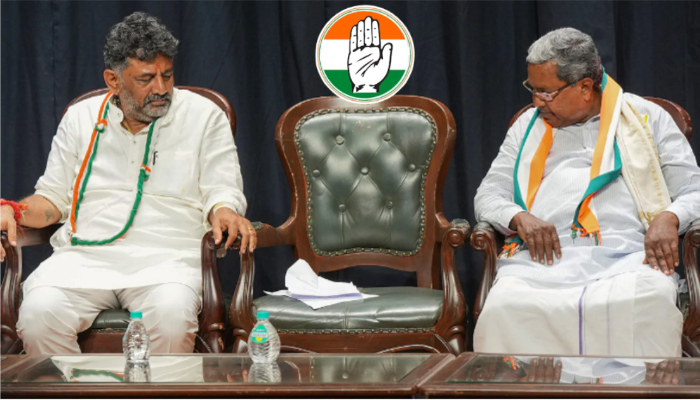
Siddaramaiah forced out as CM to make way for DK Shivakumar: Inside Congress’s bitter Karnataka power tussle

A new chapter unfolded in the ongoing “Game of Thrones” in Karnataka, as Chief Minister Siddaramaiah submitted his resignation to R Prabhushankar, special secretary of Governor Thawar Chand Gehlot, on 28th May (Thursday). The move aimed to allow his deputy, DK Shivakumar, to take over following intense pressure from the Indian National Congress high command. Rahul Gandhi is reported to be the catalyst for the decision, which took place after significant reluctance and resistance from Siddaramaiah.

The unresolved dispute was once again put in the spotlight after both Kannadiga leaders landed in Delhi for separate meetings with senior Congress leaders, including All India Congress Committee (AICC) President Mallikarjun Kharge and Rae Bareli MP Rahul Gandhi. The political buzz escalated as rumours about a possible change in leadership flew, and it now seems to be taking shape.

However, the party has consistently denied any such conflict, claiming, “There is only speculation, no reality at all,” despite repeated reports of the power tussle that erupted as soon as it returned to power in the state in May 2023.

Speaking to the media after resigning, Siddaramaiah said, “I have submitted my resignation today after the high command told me earlier to resign. I am fully confident that the Governor will accept it when he comes because it has to be done according to the Constitution…We are in the absolute majority. Therefore, it is constitutional that the Chief Minister should be allowed (to form govt)…I would like to express my immense gratitude to Sonia Gandhi, Rahul Gandhi and Mallikarjun Kharge, who have provided this opportunity.”

The battle for the top role commenced between Siddaramaiah and Shivakumar after the assembly election results were announced. Siddaramaiah was considered a mass leader and administrative symbol, while the latter was credited for reviving the party’s organisation in the state and a major force behind its victory.

The newly elected lawmakers were consulted. However, the top brass of Congress had to intervene to overcome the impasse. Several days of negotiations happened in the national capital. An agreement was eventually reached after which Siddaramaiah was appointed as the chief minister, and Shivakumar was declared as the deputy chief minister. A power-sharing formula was also introduced to placate both leaders.

It was reported that Siddaramaiah would serve as the chief minister for first 2.5 years and the position will be held by Shivakumar for the remaining equal period. This arrangement was never formally recognised by Congress. The peace which resulted from this compromise was both fragile and temporary.

Instability rears its head as peace shatters within a few months

The government was beset by the problem since its first year in office. The hostilities surfaced for the first time in November when some MLAs indicated that Shivakumar would be the chief minister after a period of 2.5 years. Over the following two years, Congress leaders picked sides as two camps rose within the party and the internal split deepened.

Shivakumar’s supporters openly voiced their desire to see him as the chief minister, displeasing the senior leaders. Vokkaliga seer Kumara Chandrashekaranatha Swami also requested Siddaramaiah to relinquish his seat for Shivakumar in June 2024.

According to reports, the two sides, which included ministers and MLAs, were asked to refrain from discussing the leadership issue in public by July 2025. Shivakumar also communicated his dissatisfaction and responded, “What alternatives do I possess? I have to stand by him and provide my support.”

Nevertheless, these statements continued to transpire and show cause notices were also issued for the same, but Congress remained firm in its rejection of any rebellion and contended that no leadership modification was in the works as the issue deteriorated.

Furthermore, Siddaramaiah’s son and Congress MLC Yathindra exacerbated the matter by remarking that the post could be awarded to Public Works Minister Satish Jarkiholi, who is a member of the scheduled caste community in October.

In November, Siddaramaiah’s followers had a breakfast event while Shivakumar loyalists congregated at a different location to show their political might within the legislature party, aggravating the situation. Shivakumar’s faction even rushed to Delhi at the conclusion of the first half of the government’s five-year term in that month to exert pressure on the central leadership to honour their part of the commitment and designate him as the chief minister for the remainder of the duration.

“Siddaramaiah has made a promise. He will keep his word,” emphasised former Lok Sabha MP DK Suresh, brother of Shivakumar. The latter also uploaded a cryptic message, “Word power is world power,” on social media in an indirect attack on Siddaramaiah. “Keeping one’s word is the greatest power in the world,” he wrote.

Will complete the term: Siddaramaiah asserts to be in charge

On the other hand, Siddaramaiah’s supporters convened meetings and demanded that he carry out his entire five-year tenure. He also met with Kharge over the issue and stressed, “There is no kranti (revolution) or bhranti (confusion). People have given us five years. We will sincerely work to fulfill the five guarantees,” he insisted at the time. He alleged that there was no need for any conversations about modification in leadership.

Siddaramaiah argued that the discussion on power-sharing could have started when he had previously informed the senior leaders that a cabinet reorganisation might be taken into consideration upon the government’s end of the first half of its five-year mandate. Interestingly, he even dismissed the “superstition” that visitors to Chamarajanagar lose their power mid-way, reacting, “I will continue to remain strong.”

Breakfast meetings were scheduled between Siddaramaiah and Shivakumar to present a united front in the next month. DK Suresh also returned from Delhi after meeting Congress leaders and mentioned, “It was a personal visit. I cannot reveal everything. Things are moving smoothly. Breakfast meetings are taking place. There is another breakfast meeting tomorrow. Everything will reach its conclusion in due course.”

Siddaramaiah maintained that he is both the present and future chief minister, pledging to fulfill the five-year term in the Legislative Assembly. Home Minister Dr G Parameshwara’s name was also floated in February but purportedly refused to lobby for the chair whereas 30 MLAs backing Shivakumar attended a dinner party at a private hotel to advocate for his candidacy. He also travelled to Delhi in April to address the concern with Kharge and AICC General Secretary KC Venugopal.

“Is there any vacancy for chief ministership? I am very much here before you. I am the chief minister of Karnataka. There is no 50-50 formula,” Siddaramaiah continually countered earlier, rebuffing any such discussions. Shivakumar asserted to have made the sacrifice for the part and stated, “Whatever decision is taken by the high command, both of us will follow. We will obey it.”

Notably, the high-profile power struggle has often encountered violence from the supporters of these leaders at different instances including the confrontations at Delhi’s Karnataka Bhavan involving a shoe-attack on an official of Shivakumar’s camp by Siddaramaiah’s aides, altercations at the Karnataka Pradesh Congress Committee (KPCC) office and recent try to breach the convoy of Shivakumar.

However, the face-off seemingly came to a standstill as Siddaramaiah was compelled to vacate his seat in a likely exchange for a Rajya Sabha position. He disclosed the decision to his cabinet colleagues and now Shivakumar will be sworn in as the state’s chief minister, providing a brief respite for the people from the political drama. Congress also wants to avoid a factional crisis similar to the trouble that occurred in Rajasthan, contributing to Bharatiya Janata Party’s triumph in 2023 assembly election.

However, protests have already been launched by Siddaramaiah’s sympathisers while Shivakumar’s supporters are bursting crackers and distributing sweets, highlighting the uncertainty in both life and politics. A Congress Rajya Sabha MP already hit out at the Gandhi scion and raised objections in relation to the ouster of the sole Other Backward Class (OBC) chief minister of the party. It now remains to be seen how long this tenuous truce can be sustained before the cracks begin to reappear.

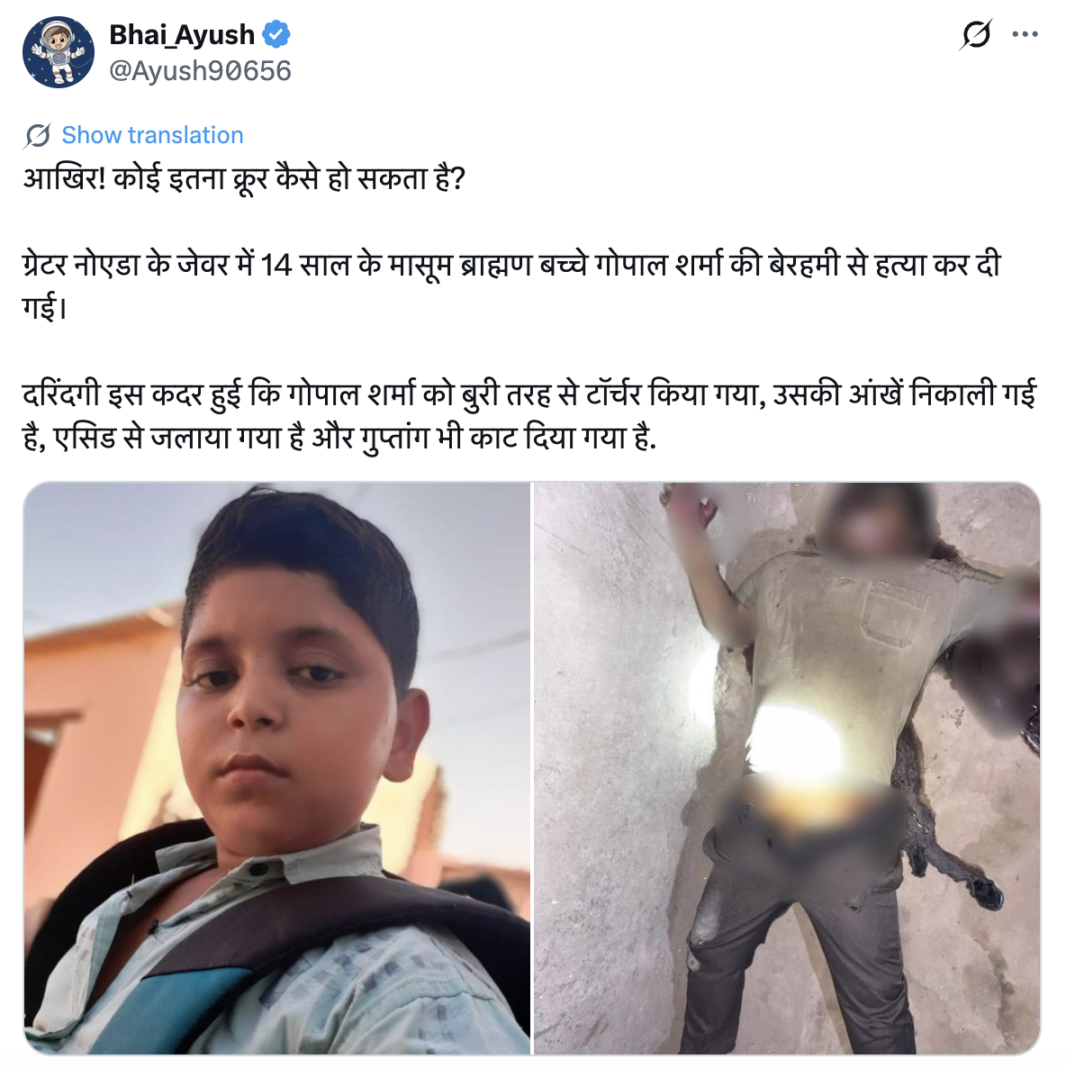
“If my son had been shot, I would have felt less pain”: Why Gopal Sharma’s father said this and what happened to the 15-year-old in Greater Noida?

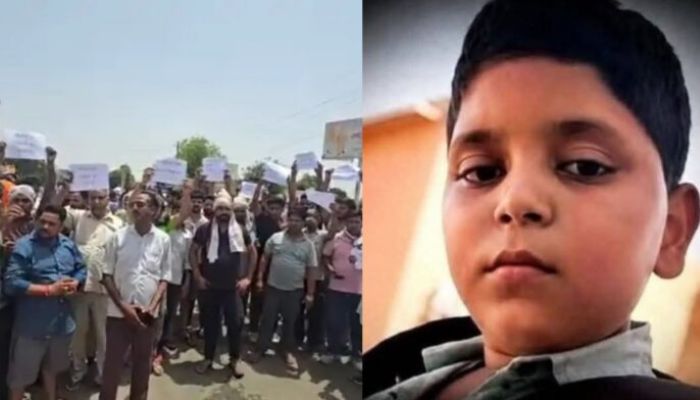
In Uttar Pradesh’s Greater Noida, people are protesting after the murder of a 15-year-old boy, Gopal Sharma. The deceased victim’s family has alleged that the ninth-grade student was brutally murdered, and the police have yet to arrest the killers. The police, however, offer a completely different account. Several Brahmin organisations have taken to the streets, demanding the immediate arrest of those behind Gopal’s killing.

Gopal Sharma had been missing since May 21. Know the details of the first FIR

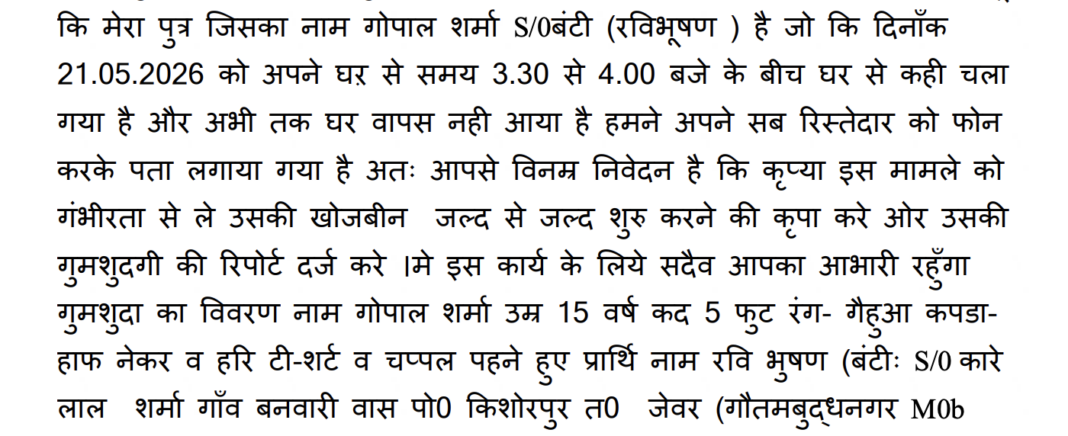
Gopal, son of Ravi Bhushan alias Bunty, a resident of Banwari Bans village in the Jewar Kotwali area, had been missing since 21st May 2026. The family searched for him but found no clues and filed a missing person’s FIR at the Jewar Kotwali on 22nd May.

According to the FIR copy accessed by OpIndia, Gopal’s father wrote in the complaint, “My son, Gopal Sharma, left his home between 3:30 and 4:00 pm on May 21, 2026, and has not returned yet. We have called all our relatives to find out. We request you to take this matter seriously and initiate a search for him as soon as possible.”

Upon receiving the complaint, the police registered an FIR and launched an investigation. On Saturday, 23rd May, Gopal Sharma’s body was recovered from a room in an abandoned house in Rohi village, four kilometres from his village. A Dainik Bhaskar report says that the teenager had severe head injuries and a large amount of blood was spilt in the room. Following this, the family suspected murder. Following this, the police detained several people and began questioning them.

Eyes gouged out, burnt with acid: Claims of brutality against the minor

In this case, claims of brutality have been made against Gopal Sharma. Gopal’s father, Bunty, told Zee News that the girl’s body was in such a horrible condition that it was unbearable to even look at it. The deceased child’s eyes were bulging, acid had been hurled over his body, and his tongue was cut. Gopal’s mother, Saroj Sharma, said that the condition of Gopal’s corpse was so bad that she couldn’t even look at it. Gopal’s grandmother said that something had been stuffed into Gopal’s mouth, and his eyes were bulging out.

Speaking to another news channel, complainant Bunty claimed that he had found the body himself. He added that the police have said they have arrested six people, but no one is telling him what happened to his son. He said, “I want an encounter [of the accused], I want a bulldozer.”

He said, “My son’s private parts were cut off, and he was subjected to such cruelty. If my son had been shot, I wouldn’t have felt as much pain as I do after hearing these things. Nails were driven into his hands, acid was poured on him, and he was urinated on.”

“My son’s private parts were cut off, and he was subjected to such cruelty. If my son had been shot, I wouldn’t have felt as much pain as I do after hearing these things. Nails were driven into his hands, acid was poured on him, and he was urinated on,” he added.

Major breakthrough: Three accused arrested after encounter

The investigation has now taken a significant turn. In a major operation, the Greater Noida police arrested three accused in connection with Gopal Sharma’s murder after an encounter.

The Greater Noida DCP announced on X that the case had been successfully solved and said three accused involved in the murder of the 15-year-old had been apprehended in an injured condition following a police encounter.

The arrests come after days of public outrage, protests and mounting pressure on authorities to identify and apprehend those responsible.

What the Greater Noida Police said about the claims of brutalities inflicted on Gopal Sharma

While the claims of brutalities against the 15-year-old boy dominated media headlines, the police have refuted such reports. Speaking to OpIndia, DCP Praveen Ranjan Singh said that the child’s body was post-mortemed and videographed, and that no evidence of brutality was found; it was merely a rumour. The DCP also addressed the viral photo of the child’s body.

Regarding the viral photo and the gruesomeness seen in it, DCP Praveen Ranjan explained that the body appears this way due to decomposition, and that no other body parts were mutilated. Regarding the eyes visible in the photo, he said, “The body was decomposing, it was hot, and the room was as hot as a furnace.” He also dismissed claims on social media that the child had been raped.

Regarding the cause of death, the DCP stated that the post-mortem report indicated a head injury, but the exact cause of death is not yet known. He also ruled out a homicide.

The Greater Noida DCP wrote on X, “A case was registered at the Jewar police station by the plaintiff regarding the uninformed departure of his son, Gopal, aged approximately 15 years. Upon receiving the information, the Jewar police, along with the family, began searching for Gopal. Meanwhile, local police received information that the boy’s body was in an empty house in Rohi village.”

The DCP further wrote, “Acting promptly on the information received, the police force immediately reached the spot and called the field unit/forensic team to inspect the scene. A post-mortem examination of the deceased’s body has been conducted after filling out a Panchnama. According to the post-mortem report, the alleged allegations of cutting of private parts and acid attack on the eyes are completely false and misleading. Four police teams have been formed to investigate the incident; important clues have been found. A successful investigation will be carried out soon.”

Strict action will be taken against Gopal Sharma’s killers: BJP MLA

Shalabh Mani Tripathi, BJP MLA from Deoria Sadar, stated that he has spoken to the Uttar Pradesh Director General of Police (DGP) regarding the incident. Shalabh Mani wrote on X, “My heart is deeply saddened by the brutal murder of innocent boy Gopal Sharma in Greater Noida. Those who carried out this crime cannot be called human; they are brutes and will be treated as brutes.”

He further wrote, “Yogi Adityanath’s government is taking swift action on this matter. I have also spoken to Uttar Pradesh DGP Rajiv Krishna and STF Chief Amitabh Yash about this incident and have urged them to take the strongest possible action against the perpetrators. Our condolences are with the victim’s family; the incident will be revealed soon.”

The anger of those upset by the police action is growing, and several social organisations have now reached out to the victim’s family. Members of the Rashtriya Brahmin Ekta Manch met with the victim’s family and warned of a major protest if action is not taken. Local Brahmin groups are also outraged, while the police have vowed to resolve the matter as soon as possible.

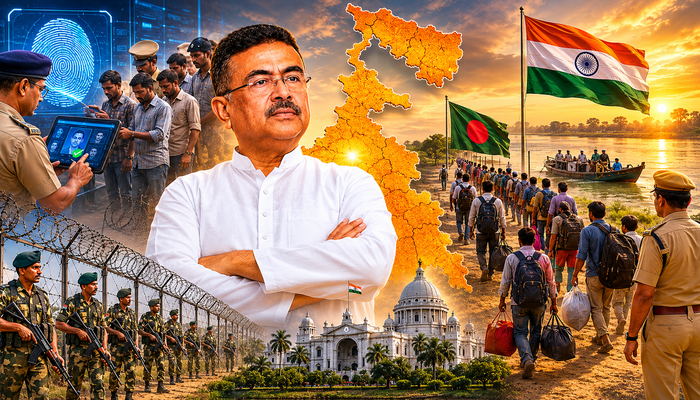
Detect–Delete–Deport explained: As Bangladeshi infiltrators queue up at BSF posts on border, read how the Suvendu Adhikari govt plans to enforce the immigration laws to remove illegal immigrants

Visuals of large numbers of illegal Bangladeshi immigrants queued up before Border Security Force (BSF) checkposts are emerging in West Bengal. Bangladeshi infiltrators are turning up at the checkposts, accompanied by their families, willing to return to their country as they see the political landscape in the state is no longer conducive to their illegal and unwanted stay.

These Bangladeshi nationals entered India illegally and have been living here comfortably like citizens. Some of them have been residing here for decades, earning a living and, in many cases, availing of the benefits of welfare schemes by forging documents. They settled and mushroomed in the state owing to the wilful negligence of the previous governments, which found a vote bank among them.

However, the situation has now changed with the long-anticipated change in political power in the state following the 2026 Assembly elections. The scale of the ‘reverse migration’ is unprecedented and is a direct result of the newly elected Chief Minister Suvendu Adhikari’s directive to the state officials to immediately commence the deportation proceedings against Bangladeshi infiltrators.

Earlier, such scenes appeared in the state during the Special Intensive Revision (SIR) exercise conducted in the state by the Election Commission of India (ECI) ahead of the assembly elections. During the SIR, the ECI revised the electoral roll in the state to conduct free and fair elections by eliminating bogus and invalid voters. This led to illegal Bangladeshi immigrants, who had been living here without or with forged documents, fleeing to their home country.

The BJP government in West Bengal is fulfilling its election promise

Illegal immigration, border security and demographic change were some of the key issues in the BJP election campaigns in the state. The resounding victory of the BJP in the West Bengal assembly elections proves that the issues raised by the party in its election campaign resonated with the people of the state.

Soon after swearing in, Adhikari, who led the BJP to a sweeping victory in the state, clamped down on illegal immigration, which has plagued the state for decades. In one of the first decisions that Adhikari made as the Chief Minister, he announced the policy of ‘Detect, Delete and Deport’ to uproot the long-standing menace of illegal immigration.

The policy was operationalised this week with the district authorities setting up ‘holding centres’ for undocumented immigrants ahead of deportation as directed by the Chief Minister. Reiterating his government’s zero-tolerance policy towards illegal immigration after an event in Kalyani, CM Adhikari told the illegal immigrants living in West Bengal to leave as soon as possible, warning them of stringent action.

“They should leave. They are Bangladeshis. Their government should accept them. We have instructed the police that they shouldn’t be sent to jails. Are they our in-laws that the country would have to pay for their food, clothes and medicines? Leave at the earliest. Else the government would do what needs to be done,” Adhikari stated in clear terms, addressing the media in Nadia district.

The previous TMC government harboured Bangladeshi infiltrators

The illegal cross-border migration of Bangladeshi nationals into India has been a long-standing challenge in West Bengal. Illegal immigrants not only strained the already scarce resources in the state but also posed a threat to law and order and national security. For several decades, illegal immigration in the state has been associated with communal tensions, resource allocation debates, and national security discussions and has also been an influential factor in the electoral politics.

Over the year, the security agencies raised concerns about illegal immigrants being involved in human trafficking networks, cattle smuggling, criminal syndicates, and even terror activities. Unchecked illegal immigration in West Bengal has altered demographics in several bordering districts, strained public infrastructure, and weakened internal security. However, the state agencies have been unable to effectively deal with the problem due to a lack of political will on the part of the previous Mamata Banerjee government.

The previous TMC government’s unwillingness to put a curb on illegal immigration, despite its direct impact on the people of West Bengal, exposes how the government chose electoral politics over national security and the interests of its own people. While the TMC did not take any independent measures to address illegal immigration, it also failed to cooperate with the central government on the issue. The TMC government’s intent with respect to the issue of illegal immigration became evident when it did not implement the guidelines issued by the Union Ministry of Home Affairs in 2025 to accelerate the verification process of Bangladeshi and Rohingya infiltrators. The number of illegal immigrants grew unchecked under the political patronage of the TMC regime, amplifying the challenge for the security agencies.

However, with a changed political approach regarding illegal immigration, the West Bengal government is finally enforcing long-neglected laws and intensifying verification drives and stricter scrutiny of identity documents. As the vision of the governments at the centre and the state regarding the issue of illegal immigration has aligned, the security agencies are now backed by the necessary political will to take action against the problem.

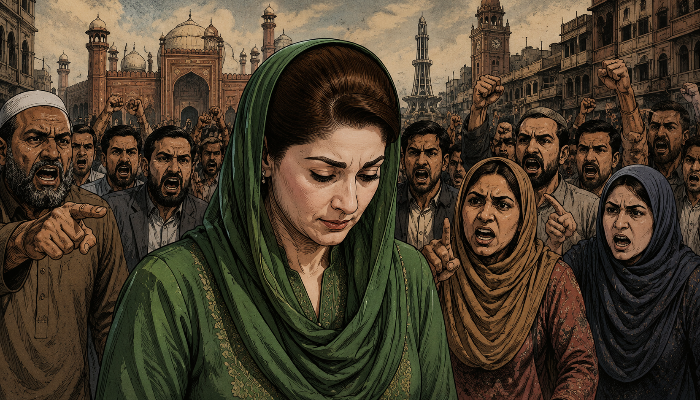
Pakistan’s Lahore name restoration plan hits Islamist wall: How radical backlash forced Maryam Nawaz govt to retreat and exposed Islamabad’s ‘inclusive’ image facade

The provincial government of Punjab in Pakistan has deferred its decision to restore historical Hindu and Sikh (pre-partition) names of several roads and neighbourhoods in Lahore due to opposition from Islamists and social media vloggers. In March, Chief Minister Maryam Nawaz-led Punjab government suggested that these landmarks should be returned to their original identities.

The campaign was a feature of the Lahore Authority for Heritage Revival (LAHR), a large-scale urban restoration project that was initiated in 2025. It was presided over by former Prime Minister and Pakistan Muslim League-Nawaz (PML-N) supremo Nawaz Sharif and endorsed by Maryam.

The program was estimated to cost close to 50 billion Pakistani rupees and intended to redevelop Lahore’s old buildings, markets, roads, gardens and other sites. Its goal was to preserve the architectural and cultural heritage of the city. Over the past two months, at least 9 locations in Lahore have formally resumed their former names.

However, Muslim radicals and vloggers were outraged as they gave communal colour to the decision and attacked Maryam, after which the officials in Lahore turned defensive. Lahore Deputy Commissioner Captain (Retired) Muhammad Ali Ijaz claimed, “No such decision has been taken as yet,” while talking to Dawn. He insisted that the recommendation continued to be “under discussion” when told that Nawaz Sharif and Maryam had previously given permission.

An official source also confirmed that the government had to hold back its decision in response to the criticism from extremist elements and social media vloggers who contended that a plan was underway to reinstate “Hindu and Sikh” names, reported PTI.

The LHAR invited scholars, historians, architects, urban planners and influential citizens to provide feedback on a proposal to revert to the original historical names of highways, streets and communities around Lahore. The committee conveyed that they talked about the “cultural, historical and civic significance” of resurrecting the old nomenclature as part of measures to protect the city’s legacy and identity.

These individuals agreed that the area’s historic character was an invaluable asset that should be preserved with care for the next generations. According to the statement, “The meeting concluded with a consensus that Lahore’s historic identity constitutes an invaluable legacy, deserving of thoughtful preservation for future generations.” An attendee likewise informed Dawn, “Most of the participants spoke in favour of restoring the historical names of the roads and streets of Lahore.”

According to the plan, Fatima Jinnah Road was to be redesignated as Queen’s Road and Allama Iqbal Road as Jail Road. Furthermore, Maulana Zafar Ali Khan Chowk was to be renamed as Lakshmi Chowk and Islampura as Krishan Nagar. Mustafaabad was again going to be called Dharampura, Hameed Nizami Road as Temple Street, and Babri Masjid Chowk as Jain Mandir Road, among the other intended reversions.

Nawaz Sharif reportedly personally advocated for the restoration of Lahore’s original names and identity. Churches, temples, gurdwaras and Sikh-era structures connected to Maharaja Ranjit Singh’s empire were also included in the larger revival effort. The Kharak Singh Haveli’s restoration, a painting of Princess Bamba Sutherland at Lahore Fort and conservation attempts at gurdwaras close to the Badshahi Mosque were among the crucial targets. He also advocated for reconstructing old cricket grounds and a classic wrestling arena at Minto Park, alias Greater Iqbal Park.

The real motivation for the name change

Countries have an inherent right to celebrate their historical identity, reclaim their past and overcome colonial legacies. It is a widely held sentiment that has promoted movements for educational reform, cultural restoration and the preservation of indigenous histories.

However, Pakistan is a strange exception, desperate to distance itself from its Hindu past, boasting about its manufactured lineage from Islamic marauders such as Muhammad Ghori, Mahmud Ghaznavi and Muhammad bin Qasim. It is only natural for suspicions to arise when such a country seeks to reclaim its non-Muslim past.

On the surface, the move appears to be a noble endeavour to tie places with their authentic roots and backgrounds. It is also regarded as a method to attract more tourism and investment in Punjab by promoting an inclusive and vibrant image, which could merely exist as a facade, one that might only deceive the gullible or unaware.

Unsurprisingly, the truth could not be further from reality, which is marred by the persistent suffering and oppression of the true representatives of pluralism, diversity and multiculturalism — Pakistani minorities, especially Hindus, whose population is declining rapidly with each passing day.

“Historian” Yaqoob Khan Bangash alleged, “The PMLN is not very ideologically driven. They are a more business-oriented party. And the fact remains that Pakistan reacts to what India does. When India was projecting a secular image, Pakistan was more determinedly Islamic. Now that India is taking a communal turn, Pakistan is becoming a more inclusive democracy,” reported The Indian Express.

Nonetheless, as the proverb states, “the proof of the pudding is in the eating,” the lived experiences and situation of the minority groups in the Islamic Republic directly counter the grand assertions and unveil the hidden purpose of the ambitious “name change” venture.

Pakistan grapples with a profound identity crisis and an inferiority complex, leading to an obsession with positioning itself alongside India. It is aware that there can never be any equality or competition between a giant and a flea, as evidenced by numerous factors ranging from the economies of the respective nations to the wars fought between them.

However, Islamabad harbours a secret fascination for its “traditional adversary.” It often engages in these self-styled contests to paint itself as at least somewhat similar to New Delhi, if not better, despite repeated embarrassments and failures. The latest step was likewise oriented before the jihadists burst the “secularism” bubble created to deceive the global community.

India has been drawing upon the historical legacy of multiple places from north to south. The names of different buildings, locations and regions have been modified to reflect their fundamental status. Thus, Pakistan considered it a prime moment to depict its neighbour as a religiously zealous entity while appearing as a tolerant society that accommodates multiculturalism.

Furthermore, the terror state does not have to show itself in direct contrast with India, which it fundamentally is, particularly in relation to religious extremism that has continuously been a main factor guiding both private and public life. Thus, it is very convenient for the nation to invoke secularism by changing names when there are hardly any Hindus left, which is its genuine indicator.

Pakistan was founded, ruled and made up of hardliners, and, of course, the government yielded to their demand, which thwarted the plan to cast India in a poor light via the name restoration project, for ironically, adopting the same stance on its side of the border. It also inadvertently reinforced the fact that the structures and localities in these nations were primarily associated with Hindu, Sikh or Indic religions, whose names were altered by Muslim and white invaders with ulterior goals.

What’s in a name: Why such decisions are significant

India’s ongoing journey to shed foreign subjugation is also a multifaceted process, and restoring the original names of places is a vital part of this mission. The official renaming of locations in the country started after independence to reclaim their historical, linguistic and cultural backgrounds and eliminate the remnants of the British Empire.

However, numerous places continued to carry the baggage of brutal Islamic rule. The Modi government assumed office in 2014 and accelerated initiatives to restore their historical identities and also altered the names of those previously venerating anti-Hindu genocidal maniacs like Aurangzeb to honour prominent Indian personalities such as Dr APJ Abdul Kalam.

Similar decisions had been made in Uttar Pradesh under the Yogi Adityanath government, where the revered Hindu destination earlier known as Allahabad (the abode of Allah) during Akbar’s regime was reverted to its real name, Prayagraj. These actions were taken in multiple parts of the country, especially by the Bharatiya Janata Party governments, to restore the deliberately severed ties of these places with their origin.

This also aimed to obliterate the perverse practice of glorifying invaders who had a deep-seated hatred for Hindus, committed rapes and massacres against them, destroyed temples and looted their treasures. The BJP governments encountered resistance from “secular” parties dependent on the Muslim vote bank, but decisively moved forward without hesitation.

Meanwhile, a proposal had been handed over to the Bihar government for final approval, after the Bakhtiyarpur Municipal Council’s official resolution to rename the town to “Magadh Dwar” to delineate it from Bakhtiyar Khilji. The Turkic general destroyed the world-renowned universities of Nalanda and Vikramshila. He was also notorious for committing major atrocities against Hindus.

Notably, these decisions are not confined to “Hindutvadi” governments, as even the Left Democratic Front (LDF)-led Kerala, the name was popularised by the British, transitioned into Keralam to accurately reflect the authentic pronunciation in Malayalam and to underscore the state’s historical and cultural significance.

Bangalore also reverted to Bengaluru under the Indian National Congress government in Karnataka in November 2014. The centre had cleared these submissions, paving the way for the new names. Similar events unfolded in many regions of the country where the Indian civilisation once again held its head high and reclaimed its past, which had been fading in the shadows of foreign occupation.

The exaltation of those who actively took part in enslaving, murdering, and severely abusing its people is intolerable for any proud and independent civilisation with thousands of years of history, and India is certainly no exception.

On the other hand, Pakistan, which enthusiastically commemorates its colonial history instead of respecting the real character of its land, will obviously have issues if India tries to embrace and celebrate its past. However, only that country could be so clever yet so ridiculous as to attempt to shame the latter by taking the same course, amusingly, only to retreat when faced with pressure and disclosing the agenda.

It scarcely needs to be highlighted that the term “radical elements” is irrelevant in a country where, from the highest military ranks to average citizens, want to wage jihad against India. The entire country stands united and acts as a singular front on this point, and any opposing claims are lies and fabrications.

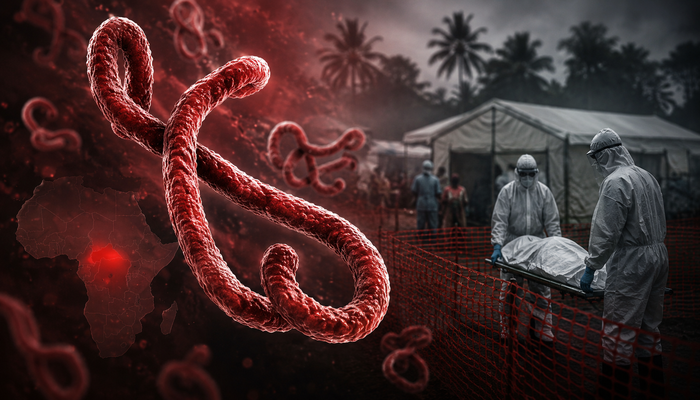
Bengaluru woman tests negative for Ebola as India steps up vigil against the deadly virus gripping African countries: Here is what the disease is and how it spreads

A health alert was triggered in Bengaluru, Karnataka, after a woman, who travelled through from an Ebola-affected region, developed mild symptoms, including body ache. The 28-year-old woman was shifted from a hotel to the State-run Epidemic Diseases Hospital on Tuesday (May 26, 2026). However, in a major relief, her tests for Ebola infection have turned out to be negative.

As per reports, the woman had landed at Kempegowda International Airport on May 23, 2026, after travelling from Uganda through Ahmedabad. She went through the screening at the airport but displayed no symptoms at that time. However, the health authorities continued to monitor her as she had a travel history in an Ebola-affected region.

Her samples were sent to the National Institute of Virology (NIV), Pune, for testing. Pending her test results, the woman was placed in isolation as a precautionary measure. With her test results coming out negative, the number of Ebola cases in India remains zero. Bengaluru District Surgeon and Medical Superintendent of the hospital, Dr Anil Kumar Banagar, said that a repeat test will be conducted after 48 hours of observation as an additional precautionary measure. She will be discharged only after testing negative twice.

India prepares to deal with the Ebola outbreak

The World Health Organisation has declared the Ebola outbreak in Uganda and the Democratic Republic of Congo as a “Public Health Emergency of International Concern” (PHEIC). The Africa Centres for Disease Control and Prevention has also designated the outbreak as a “Public Health Emergency of Continental Security” (PHECS). Responding to the global health situation, the Union Health Ministry has asked all States and Union Territories to boost surveillance, hospital preparedness, and rapid response systems to handle suspected Ebola cases. “The Government of India is closely monitoring the evolving Ebola Virus Disease situation in view of recent outbreaks reported in parts of Africa,” the ministry said in a statement.

The government issued an advisory advising all citizens to avoid unnecessary travel to the Democratic Republic of Congo, Uganda, and South Sudan, where more than 220 suspected deaths due to Ebola have been reported. The authorities have advised returning from Ebola-affected countries to monitor their health and self-observe for 21 days. Besides, Rapid Response Teams (RRTs) have been formed for surveillance and contact monitoring activities.

To assess India’s readiness amid the Ebola outbreak, Union Health Minister JP Nadda held a high-level review meeting with senior officials. During the meeting, Nadda directed the authorities to ensure that Ebola screening arrangements at all airports, seaports and land border crossings are “fully vigilant and robust”.

The Union Minister directed the Indian Council of Medical Research (ICMR) and the National Centre for Disease Control (NCDC) to remain prepared for “tracking, testing, and surveillance” in case of any suspected infections. Following the review meeting chaired by Nadda, the Union Health Secretary chaired a joint review meeting involving multiple ministries and concerned agencies to strengthen coordination and response mechanisms.

In Bengaluru, Rajiv Gandhi Institute of Chest Diseases has been identified as the isolation centre, while Epidemic Diseases Hospital, where the woman was admitted, has been designated as the quarantine and treatment facility.

What is the Ebola virus, and how does it spread?

Ebola is a rare but deadly disease caused by a group of viruses belonging to the genus Orthoebolavirus. Six species from the Orthoebolavirus group have been identified, and three of them, namely, the Ebola virus, the Sudan virus and the Bundibugyo virus, are known to have caused the large Ebola outbreaks. According to the WHO, the fatality rate in Ebola disease cases is 50%. During the past Ebola outbreaks, the fatality rates varied from 25–90%.

The first occurrence of Ebola disease was reported in 1976 in two simultaneous outbreaks. One outbreak was caused by the Sudan virus in Nzara (now South Sudan), and the other outbreak was caused by the Ebola virus in Yambuku village (now the Democratic Republic of the Congo). Multiple outbreaks of the virus have since been reported in Central and West Africa, with the largest outbreaks happening in 2014 and 2016 in Guinea, Liberia, and Sierra Leone, resulting in over 11,000 deaths.

The disease affects humans and some animals, such as fruit bats, and its outbreaks have largely been reported in Africa. The transmission of the virus into humans happens when they eat or come in contact with an animal carrying the virus. It does not spread through the air and only spreads through direct contact with the body fluids of the infected animal or human. This puts healthcare givers and family members of infected people at higher risk of catching the infection in the absence of protective equipment. A person who has not yet developed the symptoms cannot transmit the disease. However, he will remain infectious as long as the virus is present in his blood.

What are its symptoms?

The incubation period, from the infection to the onset of symptoms, ranges from 2 to 21 days. The symptoms can be sudden, and include fever, fatigue, malaise, muscle pain, headache and sore throat. These are followed by vomiting, diarrhoea, abdominal pain, rash, and symptoms of impaired kidney and liver functions. In some cases, internal bleeding can also occur, but that is rare.

The disease impacts the central nervous system in humans, which can result in confusion, irritability and aggression. The chances of survival can be increased through early intensive supportive care, through rehydration and the treatment of symptoms.

Why the current Ebola outbreak is more lethal

The current Ebola outbreak in Uganda and the Democratic Republic of Congo is more dangerous as it is caused by the virus for which no vaccine has yet been developed. The rare Bundibugyo species of Ebola is behind the present outbreak, and no vaccine currently exists for it. The virus is named after a district in Uganda where it was first detected. Previously, the virus caused two outbreaks: one in 2007 and the other in 2012. According to a study, Bundibugyo killed one-third of those infected, which sounds alarming, but is less deadly when compared to the more common Zaire and Sudan species, whose fatality rates were recorded at 66.6% and 48.5%, respectively.

Byju Raveendran’s legal troubles deepen as Singapore court sentences him to six months in jail: Inside the court order and global cases against him

In a fresh trouble for Byju Raveendran, the founder of edtech firm Byju’s, a Singapore court has sentenced him to six months in jail for contempt of court. The Singaporean court has also imposed a fine of S$90,000 (₹67.2 lakh approx.). Byju Raveendran has been ordered by the Singapore Court to surrender and submit documents proving ownership of several entities, including Beeaar Investco Pte.

The court verdict came in the wake of persistent disobedience of its orders since April 2024. These orders pertained to assert disclosure in a case regarding a defaulted loan and a $235 million arbitral award won by a Qatar Investment Authority subsidiary named Qatar Holdings. This loan was personally guaranteed by Byju Raveendran for a stake in test-preparatory coaching giant Aakash Institute.

Location unknown, future uncertain: Byju Raveendran facing contempt and non-compliance verdicts across jurisdictions

Byju Raveendran’s latest whereabouts remain unclear, though some media reports speculate that he is currently residing in Dubai. It is also unlikely that he will arrive in Singapore and surrender before the court.

It is notable that the Singapore court verdict is not the first court sentencing against Byju Raveendran.

In 2025, a Delaware Bankruptcy Court in the US held Raveendran in civil contempt over failure to appear, produce documents, and comply with discovery orders in the Byju’s Alpha, the US financing arm, Chapter 11 case. Raveendra faced $10,000 sanctions daily.

Later, in November 2025, a default judgment of more than $1.07 billion was entered against him personally for alleged fraudulent transfers and concealment of $533 million in funds.

In December 2025, the court overturned the monetary damages portion after Byju Raveendran’s motion. The court ruled that damages were never properly assessed. The default finding of which liability on non-compliance stood; however, the court did not fix a payout.

From January 2026 onwards, fresh proceedings commenced and briefs were filed. As of present, Byju Raveendran is reported to be planning counter-claims and submitting evidence backing his claim that funds were legitimately reinvested in India as per local laws.

Besides the US, there have been legal proceedings against Byju Raveendran in the United Arab Emirates as well. This case forms a part of the global creditor pursuit linked to the $1.2 billion Term Loan B default, in addition to the disputed $533 million in ‘missing’ Alpha Funds.

The UAE against Byju Raveendran was filed in 2025 in the Dubai International Financial Centre (DIFC) Courts. In this case, Byju’s Alpha, the US financing arm in Chapter 11, is the claimant. Alpha seeks to hold Raveendran and his wife, Divya Gokulnath, personally liable through asset freezing, information disclosure, and other related remedies.

In May 2025, interim injunction orders were obtained ex parte, attaching assets and banning the disposal or transfer of up to $540.6 million. On 11th June 2025, the DIFC Court imposed a temporary travel ban on Byju Raveendran and a separate travel ban on Divya Gokulnath and Riju Raveendran. This travel ban was linked to the $540 million security requirement and circulated to the UAE’s border points. As per the court, this ban would be lifted only upon depositing the amount or providing a bank guarantee. During the issuance of this order, Raveendran claimed not to be present in the UAE.

Between June and July 2025, hearings took place on the continuation of injunctions, discharge applications by Raveendra and others, in addition to adjournment pleas. The injunction continued.

Interestingly, Byju Raveendran claimed that he was not in the UAE when the DIFC court delivered its rulings against him in 2025 but cited these Dubai hearings as the main reason for his non-attendance in the US proceedings.

By October 2025, the DIFC Court ordered Raveendran and his wife to pay S51,736.67 in respect of costs of and incidental to the Adjournment Application, in addition to $143,835.68 in respect of costs thrown away due to the adjournment.

Byju Raveendran claims that lender settlement talks are near the end as the Singapore court sentences him to six months’ jail

As the Singapore Court sentenced Byju Raveendran to six months’ jail over contempt of court, the former CEO of Byju’s published a statement on X. He said that settlement discussions with lenders and investors pursuing lawsuits against him are nearing an end.

“For months, the lenders (including GLAS Trust and QIA), other stakeholders and us (the founders) have been in advanced settlement discussions. A settlement has been agreed in principle, with only minor residual issues left between certain parties – none involving me. As part of those discussions, the parties have acknowledged there is no wrongdoing on my part or by the other founders,” Raveendran wrote.

“All parties – the lenders and the founders – had in principle agreed not to actively pursue cases against each other, and have effectively been at a standstill for the last three months while working towards a comprehensive resolution. I chose resolution over confrontation. Against that backdrop, QIA’s decision to press this matter now appears to be an unnecessary pressure tactic at a sensitive stage,” he added.

Raveendran further claimed that he has always acted in “good faith – for BYJU’S, its employees, its students, and everyone who built this with us. After and giving everything back, I remain committed to seeing this through to a constructive resolution. The truth doesn’t change with a headline.”

The meteoric rise and the failure saga of Byju Raveendran of Byju’s

Byju’s Think & Learn Pvt Ltd was founded in 2011 by former teacher Byju Raveendran and his wife Dviya Gokulnath as an offline tutoring service that soon expanded into an online learning application.

Byju’s swiftly rose to become India’s most valuable startup, achieving a peak valuation of $22 billion in 2022 during Covid pandemic, when the nation observed lockdowns and education witnessed a shift to online classes. Raveendran’s brainchild disrupted the education sector with its innovative learning application, catering for elementary school to MBA students. Byju’s proceeded with aggressive acquisitions, involving Aakash, WhiteHat Jr., signed Shah Rukh Khan and Lionel Messi for endorsements, and rapid international expansion. Byju’s also entered a Rs 160 crore jersey sponsorship deal with the Board of Control for Cricket in India (BCCI) in 2019.

However, financial disclosures in recent years, court cases across several countries and mounting controversies have severely impacted the company’s prosperity.

The downfall of Byju’s began after 2022, when Raveendran went ahead with over-expansion and acquisitions without proper integration and focus on profitability. When the Covid pandemic tailwind ended, and edtech demand cooled with the reopening of educational institutions, Byju’s suffered a high burn rate, losses, and accounting issues.

The crisis soon spiralled into debt defaults, layoffs as massive as tens of thousands, investor disputes, public anger in India, and lawsuits abroad.

In 2024, insolvency proceedings were initiated in India. In no time, Byju’s $22 billion valuation dropped to zero. Meanwhile, Byju’s Alpha, the US arm, filed for Chapter 11. Raveendran’s company faced allegations of $533 million fund diversion. The edtech’s creditors, including lenders through GLAS Trust and OIA, moved court, with personal liability claims against Byju Raveendran.

Not to forget, the rapid success of Byju’s was accompanied by an exploitative work environment. Unachievable targets were given to sales representatives; they were trained to execute fraudulent tactics to guilt-trap parents, especially poor and illiterate ones, into buying Byju’s expensive coaching programs.

In September 2021, it was revealed that Byju’s sales representatives were trapping parents just to meet their targets. Parents were pressured to take loans from private firms without verifying their ability to repay, especially at a time when the majority of the workforce was without work.

Besides, Byju’s also laid a loan trap, offering loans through two partners. It was alleged that Byju’s would deliberately not inform the parents that the EMI option they are taking would be via a loan that would be taken in the name of the parents. A failure of EMI payment meant that the loan company would directly threaten parents, as Byju’s already got its money and the liability of repaying the loan is on the parents.

The now-dismantled edtech firm was also issued a notice in December 2022 by the apex child rights body, the National Commission for Protection of Child Rights (NCPCR). The NCPCR summoned Raveendran over accusations that Byju’s was indulging in malpractices to lure parents and children to buy their courses.

In January 2024, major stakeholders of the company voted to remove Byju Raveendran from his position as Chief Executive Officer (CEO) and stripped him of his authority. In February 2024, the Enforcement Directorate’s Bengaluru unit, which was probing possible violations of the Foreign Exchange Management Act (FEMA), concluded that Raveendran needed an LOC to prohibit him from leaving the nation. 

By March 2024, Byju’s vacated all its offices except the Bengaluru headquarters, reducing the number of employees from around 20,000 to just 1,000.

At present, Byju’s has perished into oblivion, and what remains of it is lawsuits, insolvency, and a massive caveat for startup founders against how to handle a meteoric rise. Although Byju Raveendran has earlier talked about a ‘Byju’s 3.0’ reboot focusing on India and Artificial Intelligence. However, not much has moved in terms of operations.

Pertinently, both Byju Raveendran and his Byju’s have lost public trust and creditor confidence. The court rulings against Raveendran and his failure to properly address them are only adding to his reputational loss.

Did India snub US Secretary of State Marco Rubio? The protocol debate and the larger message New Delhi sent to Washington

The US Secretary of State Marco Rubio made his first official four-day visit to India starting on 23rd May 2026. After months of US President Donald Trump’s asinine policy and rhetorical attacks on India, Rubio’s visit turned out to be more of a stabiliser than a breakthrough spectacle. Ever since Marco Rubio landed in Kolkata, there has been an online chatter that the top US official was “royally ignored” and received a “cold welcome” from the Modi government.

Upon his initial Kolkata arrival, US Ambassador to India Sergio Gor was present; however, from the Indian side, no senior minister arrived to welcome Rubio. Even during low-key stops in Agra and Jaipur, the US Secretary of State was accompanied by minimal local officials, including police SHO, administrative officials and standard security. India is known for its warm and lavish welcomes; Rubio, being deprived of one, is being seen as a snub.

So much so that even the hostile neighbour Pakistan is discussing how they lay a red carpet and the entire top Pakistani government and military leadership rushes to the airport to accord a grand welcome, while India does not make a big deal out of such visits.

Before delving into whether Trump’s trusted official was snubbed or not, let’s take a look at how the Indian side of social media reacted to Marco Rubio’s ‘cold welcome’ in India.

One X user wrote, “I suspect that something has happened between India & USA that is not widely known. Otherwise, Marco Rubio would not have got such a bad reception. Even Asim Munir would get a better welcome than this, were he to come.”

Another one had a rather hilarious take as he wrote that whoever planned Rubio itinerary wanted to punish him by exposing him to India’s peak summer. “Bare minimum protocol continues, no extra courtesies. Rubio is additionally being punished in 45 degrees, like who planned Agra at 11.30 am and Jaipur at 2.45 PM? Unless someone wanted Rubio to be punished,” the X user posted.

One “Panther” dropped a short and sarcastic, “Secretary of State- USA Zabardast Swagat Hota hua (receiving ‘grand’ welcome)”, remark.

Highlighting how Rubio was sent off from Rajasthan’s Jaipur by local police and administrative officials, one X user called it “one of the coldest receptions ever for a US Administrator.”

A popular OSINT handle “Osint TV” lauded the Central government for demonstrating professional diplomacy and correct handling of protocol. The X user posted, “This is India, this is how professional diplomacy works. No PM, no CDS, no EAM and no unnecessary top-level political presence just to send off U.S. Secretary of State Marco Rubio as he departed Jaipur for Delhi to attend the QUAD meetings. Protocol was handled correctly by the appropriate ranking diplomatic and local officials, strictly adhering to standard international practice. India relies on institutional protocol, not theatrical over-hospitality or performative drama like our paijaans doing.”

Meanwhile, former DGP of Jammu and Kashmir, Shesh Paul Vaid deemed the supposed snub by the Modi government to US administration’s third most powerful person, a response to Trump’s recent amplification of the “India is hellhole” remark.

“Modi government brought down the level of Secretary of State of USA, the number three most powerful man of only Super Power of the world to the level of SHO. Atleast I have not seen such a shabby treatment to the USA’s External Affairs Minister. What a response to Trump’s Shithole comment!” Vaid posted.

Congress MP Abhishek Manu Singhvi also dubbed Rubio’s reception in India as “relatively lower-key protocol” and wrote, “If the US chooses pressure tactics against India, it should not expect red-carpet diplomacy in return. The relatively lower-key protocol for Marco Rubio is a reminder that respect in international relations must be mutual. India engages as an equal, not as a client state.”

Even during Rubio’s departure from India, it was again local police and some government officials, alongside US Ambassador to India, Sergio Gor.

Was Marco Rubio accorded a low-key welcome? The protocol reality and the snub

The US Secretary of State Marco Rubio’s visit to India centred on the agenda of trade, energy, critical minerals, Quad cooperation against Chinese assertiveness, and the prevailing West Asia crisis. Rubio called the trip “phenomenal” and even conveyed President Trump’s White House invitation to Prime Minister Narendra Modi. Phenomenal or not, the timing of Rubio’s visit to India indicated Trump’s interest in mending ties with India, especially when the R-I-C, Russia, India and China are coming closer, though not without cautious optimism. The timing is also of particular significance, given that Trump’s recent visit to China did not yield any apparent positives for the US.

The US has given India many reasons in the past few months to be upset and give its visiting officials a cold shoulder; however, for a Secretary of State on a multi-city trip, minimum protocol is not absolutely surprising. Rubio was met with a respectful welcome, as is expected from a powerful nation like India.

The ‘snub’ speculations, however, gain credence from the fact that back in 2023, when then US Secretary of State under Biden administration, Antony Blinken, arrived in New Delhi, he was received by top officials from the External Affairs Ministry.

Marco Rubio was given a mature welcome warranted in a transactional relationship between two countries. He was received by the head of the American mission in India, which is technically the right protocol.

It must also not be forgotten that meting out any special protocol treatment to Rubio would mean that India give equivalent treatment to the visiting Japanese and Australian Foreign Ministers for the Quad meeting, as noted by former Foreign Secretary Kanwal Sibal.

“That Rubio was not received at appropriate level on arrival is not correct. He was received by the head of the Americas division, which is the right protocol. Any special protocol treatment to Rubio, even if considered exceptionally, would also have to be given to the visiting Japanese and Australian FMs for the Quad meeting,” Sibal said.

Counterarguments to this, however, have also come up with many saying that India has good relations with Japan and Australia, and the Indian government would have had no reservations about giving them a ‘grand’ welcome as well, if the Centre decided to pull off a spectacular show for Rubio.

Rubio caught off guard by Indian media on racism in the US against Indians

Moving ahead, Rubio also faced some tough questions from the Indian media, particularly about the growing racism against Indians and Indian Americans in the US.

US Secretary of State Marco Rubio was seen visibly uncomfortable while responding to a question about racism targeting Indians and Indian-Americans in the United States during a joint media interaction in New Delhi alongside External Affairs Minister S. Jaishankar on 24th May.

During the press briefing, Rubio appeared momentarily uncomfortable when journalist Sidhant Sibal asked about racist comments and hostility faced by Indians and Indian-origin communities in the United States. At first, he seemed to pretend he had not fully understood the question and briefly paused before responding cautiously.

He then gave a defensive reply, saying such comments come from “stupid people” and should not be seen as representative of the United States as a whole.

Although the Indian journalist did not explicitly name Donald Trump, the question was mainly in the backdrop of Trump’s Truth Social post amplifying a racist podcaster’s remarks calling India a “hellhole”.

The US State Department published an X post sharing the video of the press conference exchange between Rubio and Sibal. However, after a realisation perhaps that it was not a win, they thought it is, the US State Department deleted the post.

Even foreign media also questioned Rubio on the racism issue. Rubio’s responses, however, clearly indicated that he was not expecting such blunt questions from Indian media.

Rubio was also questioned about America’s sudden tilt towards Pakistan. Though Rubio could not compensate for the trust deficit, he assured that US-Pakistan tactical ties will not undermine the India-US partnership.

‘India will buy oil from whoever it wants’: EAM Jaishankar’s unapologetic “India First” statement right in front of Marco Rubio

For the past few weeks, a narrative was being pushed by a section of media in India and abroad that somehow New Delhi was seeking permission from Washington to purchase Russian oil amidst supply chain disruptions caused by America’s war on Iran. There have been attempts to portray India as ‘weak’ and that it has abandoned Russian oil imports to please Trump, even as India never really stopped buying Russian oil.

In fact, while India not giving Trump a false credit for ending the India-Pakistan conflict last May, the entire tariff tirade was meant to dissuade India from buying Russian oil.

However, during a joint press conference in Delhi with the United States Secretary of State, Marco Rubio, India’s Minister of External Affairs, S Jaishankar, clearly stated that India will continue to diversify its energy sources to fulfil its energy needs. Answering a question relating to energy sources in the context of the ongoing energy crisis caused by the war in the Middle East, Jaishankar said that India has to fulfil its energy requirements, and for that, it will keep multiple cheaper and dependable options to source energy.

“Where the energy issues are concerned… I want to say, for our energy security, it is important that we have multiple sources, large sources, dependable sources, cheap sources… so we will continue to diversify and maintain multiple sources of supply at the most reasonable cost because at the end of the day we have an obligation to our people to provide them energy at affordable and accessible uh rates. Now, what we don’t want to see we don’t want to see energy markets distorted. We don’t want to see energy markets constricted because it has a cost implication…,” Jaishankar said.

Jaishankar’s blunt “Trump administration has been very forthright… America First. We have a view of India First”, statement, right in front of Rubio, holds immense significance. India has been among the few countries which did not surrender to Trump’s intransigence. EAM Jaishankar’s straight talk sent a message to Rubio, to the Trump administration and the world, that strategic autonomy, for India, is not a mere fancy term but a non-negotiable policy.  

Even earlier this month, the Modi government reiterated that it is going to keep procuring crude oil from Russia, irrespective of any exemption from the United States. 

Overall, Rubio had a decent trip to India; talks happened, he met PM Modi, Quad advanced, amid speculations that it is losing importance, talks advanced on trade. India did not accord a maximal welcome to the US, obviously, because the relationship between India and the US is not as warm as it was prior to Trump’s tantrums. New Delhi asserted agency without alienation. This is peak diplomacy, wherein those who have drifted apart are welcome but not subjected to India’s hallmark grand welcome.