Home Blog Page 1682

‘Stand with Justice and fairness’: China refuses to explicitly condemn Hamas terrorist attack on Israel as it uses a diplomatic phrase

On 9th October (Monday), the Chinese Foreign Ministry announced that it wouldn’t condemn Palestine despite certain voices ‘pressurising’ it to do so following the Hamas terrorist attacks on Israel killing more than 700 Israeli citizens. Responding to queries over the Israel-Hamas war, the spokesperson of the Chinese Foreign Ministry declined to explicitly call out Hamas terrorists or Islamist outfits in Gaza for launching a surprise attack on Israeli citizens in the early hours of 7th October.   

Chinese FM spokesperson Mao Ning downplayed the terrorist attacks and ground invasion by Hamas inside Israeli territories and claimed that China condemns any “behaviour” that is “harmful” to civilians. Stating that it is “highly concerned” about the Israel-Hamas war, Mao Ning added that China opposes the escalation of the situation.

Chinese FM Spokesperson Mao added that the way out of conflict is to resume peace talks, implement the two-state solution, and push for a political solution to the Palestine question. He also said that China is willing to work with the international community to find adequate solutions.

Further, Mao warned Chinese nationals adding that they should refrain from traveling to Palestine and Israel for the time being. 

Regarding the reports that the US is sending weapons and warships to Israel, the Chinese FM said that China believes dialogues and negotiations are the fundamental way out of conflicts. It urged all parties to reach a ceasefire to avoid an escalation of the situation.

On the issue of whether China would condemn Palestine or not after the terror attacks, the Chinese FM spokesperson said China always stands with “justice and fairness”. He added that China is a friend of both Palestine and Israel and sincerely wishes the two sides can co-exist peacefully.

Notably, US Senate Majority Leader Chuck Schumer is on a visit to China, putting pressure on China to condemn the Hamas attacks on Israel. 

Chinese Foreign Ministry added, “China condemns all violence and attacks on civilians, we believe the most urgent task now is to reach a ceasefire and restore peace; we also hope the international community will jointly help calm down the tension.” 

It is important to note that despite the gory details of attacks, several countries have declined to unequivocally condemn terrorist acts giving it a larger geopolitical spin as it is believed that condemning Hamas could earn the ire of Islamic world. 

Meanwhile, the Israel-Hamas war has entered into its third day. Reports from Israeli local media suggest that around 700 people were killed across the country in the Hamas terror attack. The number continued to rise as more bodies were being recovered. Israel has officially declared war in the wake of the terror attacks. 

Startling details of the attack have come to the fore revealing that more than 260 civilians were killed in cold blood in one incident alone. 

Apparently, one of the first locations that the Hamas terrorists attacked was the Supernova music festival that was taking place close to the Gaza Strip. The survivors narrated the terrifying ordeal that included the rape of women, abduction, and merciless murders at the hands of Hamas terrorists. Reports say that over 260 dead bodies have already been recovered at the festival site. 

Blood, Islam, and oil: The Saud family’s history of bloody battles with Ottomans, desert warlords, and partnership with the USA to become a global power

On 9th September 2023, a groundbreaking agreement was unveiled during the G20 Summit in New Delhi with the announcement of a rail and shipping corridor from India to Europe via the Middle East. The project – ‘India-Middle East-Europe Shipping and Railway Connectivity Corridor’ (IMEE EC) is being hailed as the new spice route in the new world order. 

As part of the IMEE EC project, ‘moderate’ Saudi Arabia and ‘Jewish-majority’ Israel have come closer than ever to normalise their diplomatic ties. Reportedly, Saudi Arabia is engaged in negotiations with the United States to sign a defense pact in exchange for establishing diplomatic relations with Israel, a nation that was considered a pariah in the Islamic world. However, reports suggest that Saudi Arabia will not obstruct a deal even if Israel does not grant significant concessions to the Palestinians in their quest for statehood. Apparently, these changing geopolitical happenings are being attributed as one of the motives behind the recent terrorist attacks by Hamas on Israel

Although the Hamas-initiated attacks could derail or delay the deal, back-channel diplomacy continues to bridge gaps and bring the Saudi-US deal closer to finalisation. Against this backdrop, the Middle Eastern region is potentially at the cusp of marking an end to the dominance of Wahhabi ideology which was deeply rooted in a puritanical interpretation of Islam, in the Middle East and its spheres of influence.  

Remarkably, the Wahhabi ideology has exerted its dominance and molded the course of events across the Middle East for the better part of three centuries. It also played a pivotal role in the formation of the modern Middle East, notably Saudi Arabia as it stands today, and the consolidation of power by the Al Saud, the ruling monarchy of Saudi Arabia. The power dynamics in the region are an outcome of alliances both matrimonial (blood pact), religious pacts, and regional partnerships that were born out of inter-imperial battles between the Ottoman and British Empires.    

Emergence of Wahhabism in the Middle East

In the 18th century, Muhammad ibn Saud from the Al Saud (Al being referred to as family) was a Chieftan of a small oasis town of Diriyah on the outskirts of modern-day Riyadh. During his reign, an Islamic fundamentalist theologian, Sheikh Muhammad ibn Abdul Wahhab sought refuge in Diriyah as he was thrown out of Hejaz, the region that housed both the holy sites of Islam – Mecca and Medina. Wahhab’s extremist interpretation of Islam had irked the Hashmites who had been Sharifs of these holy sites for several centuries. These Sharifs who hailed from the Hashmites tribe of Hejaz owed allegiance to the Ottoman Empire. 

The Islamic Empire had limited or nominal direct interest in the affairs of the Middle Eastern region primarily because of the lack of resources in the Middle East in general, the Najd region in particular, and its unfavorable desert climate. However, it maintained a significant interest in the religious pilgrimage routes and at the holy sites of Islam.

Meanwhile, Chieftan Mohd ibn Saud not only gave refuge to Wahhab but also signed a pact with him in 1744 marking the beginning of the First Saudi state. Under the pact which is often dubbed as “Wahhabi-Saudi Pact”, Mohd ibn Saud remained as the Emir while Wahhab assumed the title of ‘Imam’. To strengthen the pact, Ibn Saud’s eldest son married al-Wahhab’s daughter. Al Saud publicly embraced Wahhabism. 

As a theologian, Wahhab also went on to lay the foundation of “Wahhabism” in the region. The aim of this pact was to bring purity to the faith and establish a puritanical form of Islam. Soon, Wahhabism became the official Saudi religious doctrine. Under this extreme form, religious innovation (bidaa) was vehemently rejected and it advocated for eliminating practices such as Sufi rites and veneration of saints. During their conquest outside Najd, they destroyed shrines of the Shia minority. The Wahabis used the slur ‘Rafida’ (rejecters) to refer to Shia, which still continues in the 21st century. 

On the other hand, the Emir of Diryiah Mohd ibn Saud started expanding control over various tribal regions in Najd (the central part of current-day Saudi Arabia) and parts of the Arabian Peninsula. He had gained religious certification from Imam Abdul Wahhab. Subsequently, brainwashed ‘Wahhabist’ tribes like Ikhwan joined his religious conquest of the Arabian Peninsula, under the Al Saud banner.

(Representational Divisional Map of erstwhile regions of Middle East, Al Saud emerged from Najd region, Hejaz houses both the holy sites of Islam, Mecca and Medina. Image Source – Facebook)

The Emir also formed alliances with tribal leaders and groups in Najd, including the Ajman and Otaiba tribes. These alliances were mostly based on a mix of military cooperation and shared religious ideals, particularly Wahhabi Islam.

However, the battle of consolidation included fierce battles against the rival Al Rashid (Rashidi family) and the Hashemite Sharif of Mecca, who had support from Egypt, the vassalage of the Ottoman Empire. In 1765, the Emir of Diriyah, Muhammad bin Saud passed away but by then the Wahhabis had controlled Najd and expanded in all directions, including Mecca and Medina. He was succeeded by his son Abdullah bin Muhammad bin Saud Al Saud as the new Emir of Diriyah.

Ottoman-Al Saudi War (1811-1818): The battle for real Islam

The period between 1811-1818 saw battles which are also known as the Egyptian-Wahhabi War as it was fought by the Egyptian representative of Ottoman and Wahhabists from Diriyah under the Al Saud banner. During the religiously zealous conquest, when the Egyptian subjects of Ottomans attempted to invade al-Hasa’ which lies in eastern Arabia, the Wahhabis seized the holy city of Karbala’ in Turkish Iraq (1801). It was followed by capturing Mecca itself in 1802. 

By the year 1805, the Wahhabis controlled Mecca and Medina. They had also attacked Karbala and the Imam Husayn Shrine which directly challenged the Ottoman Empire and their vassalage, Egyptians and Hashmite Sharifs of Mecca. 

Furthermore, under the leadership of Emir Abdullah bin Muhammad bin Saud, the Wahhabis targeted Ottoman trade routes, badly impacting the finances of the Ottoman Empire. The Emir of Diryiah also openly denounced and questioned the Ottoman Sultan Mustafa IV, challenging his legitimacy as the Caliph and protectorate of the faithful and holy sites in Hejaz.

Following that, in 1811, the Ottoman Sultan Mahmoud II ordered Muhammad Ali Pasha, who was considered the Wāli in Egypt, to check the expansionist spree of the Emir of Diryiah. Ali then assigned his son, Tusun Pasha, to lead a force of 10,000 soldiers. However, in 1812, the Emir of Diriyah, Abdullah defeated Tusun Pasha at Al-Safra. But with a reinforcement of 10,000 men, Pasha recaptured Mecca and Medina. 

On account of poor health, Tusun tried to forge a treaty with the Emir in which Hejaz was to be surrendered & vassalage offered. However, neither Ali nor the Sultan ratified the treaty with the House of Saud. In 1816 Tusun Pasha died and with mutual distrust abound, the war resumed with Ali’s other son, Ibrahim Pasha assumed leadership and led an expedition, driving the Saudi Emir and his “Wahhabis” (more properly Salafis) into the desert of Najd.

Subsequently, in 1818 Ibrahim marched across the desert and brought his forces to the gates of Diriyah. They ruthlessly massacred the male population of the rebel force. Diriyah was razed to the ground and all Wahhabi theologians found were executed. The captured Emir of Diriyah Abdullah bin Muhammad bin Saud was brought to Istanbul where he was publicly beheaded and his head was thrown into the Bosphorus. Additionally, the Wahhabis were compelled to listen to music, an act strictly prohibited in Wahhabism.

This marked the ending of the first Saudi state (1744-1818) which had begun with the Saudi-Wahhabi pact. 

Second Saudi State (1824-1891)

Two years after causing disruption in Najd, Ottoman forces withdrew from the region. Over the ensuing eighty years, the Al Saud made several attempts to regain control of the Arabian Peninsula, but their efforts failed courtesy of the Ottoman-Al Rashidi alliance

Son of Former Emir of Diriyah, Turki bin Abdullah bin Muhammad Al Saud and a few others had managed to escape the Ottoman carnage and soon after the Ottoman’s withdrawal, they started to regain their lost territories.  

By 1824, the Al-Saud family had regained political control of central Arabia. With Diryiah in ruins, the Saudi ruler Turki bin Abdullah Al-Saud transferred his capital to Riyadh which was some 20 miles south of Diriyah. With this, he established the Second Saudi State. In his 11 years of reign, Turki recaptured most of the lands lost to the Ottoman Empire. 

The Second Saudi State, under the leadership of Turki and his son Faisal, came to an end when the Al-Rashid family of Hail, with the backing of the Ottomans, successfully overthrew the Saudi State. This occurred during the Ottoman Empire’s renewed campaign in 1865 to expand its influence in the Middle East. Ottoman armies had captured parts of the Saudi State, which was ruled at the time by Faisal’s son, Abdulrahman. 

(Representational Map of the Middle East in the year 1880. Image Source – PBS.org)

After repeated defeats by a much larger and better-equipped army, Abdulrahman bin Faisal Al-Saud abandoned the struggle in 1891 marking the end of the Second Saudi state. 

During the exile, he sought refuge with the Bedouin tribes in the vast sand desert of eastern Arabia known as the Rub’ Al-Khali, or ‘Empty Quarter.’ From there, Abdulrahman and his family traveled to Kuwait, where they stayed until 1902. His young son Abdulaziz became the head of secular and military matters while he was in exile. Over the course of time, he launched raids and terrorised the tribes loyal to the Al Rashidis with an aim to regain Al Saud territories from Rashidis, the vassalage of Ottomans. 

Modern Saudi state (1902-present day Saudi Arabia)

On 15th January 1902, Abdulaziz, a direct descendent of Muhammad ibn Saud, accompanied by only 40 followers – mostly his blood relatives, half-brothers, cousins, and Kingsmen launched a daring night mission. They scaled the walls of Riyadh’s citadel to capture the city garrison, known as the Masmak Fortress. The Rashidi governor and his loyal man were slaughtered in cold blood. 

Reviving the emirate of Najd, with Abdulaziz as Emir and Abdul Rahman as Imam, this raid marked the beginning of the establishment of the third Saudi estate which continues to this present day and is known as the modern Saudi state.

Meanwhile, during World War 1 (1914-1919), the Al Saud aligned with the British Empire against their common foe, the Ottoman Turks, and their Arabian allies. He signed the Treaty of Darin with the British in 1915 which recognised his authority over much of Najd and established a formal alliance.

Around the same time, Britishers lured Hejaz into its own orbit and pulled it away from the Ottomans which later proved to be a great betrayal for the Hashimites. 

Evidently, during the ‘Arab Revolt’ (1916-1918), the Hejaz area (Mecca and Medina) broke free from the Ottomans. This was led by Shareef Hussein, the founder of the Hashemite dynasty and he declared himself king of the Arab countries as well as later, the new Caliph. However, in reality, he was only the king of Hejaz. Hussein was originally the Sharif of Mecca. In the present-day context, the descendants of Hashemite dynasties are now the monarchs of Jordan. 

Notably, the British and French had an agreement called the Sykes-Picot Agreement to divide some territories of the Middle East. Palestine, Jordan, and Iraq were actually controlled by the British. At the same time, Syria was controlled by the French. 

After capturing Riyadh, Al Saud wanted to expand further and consolidate the tribal areas once and for all. Apart from allying with Britishers, Abdulaziz also allied with the fierce nomadic warrior tribe of Bedouins, Ikhwan, or Muslim brothers. The Ikhwan had been brainwashed in Wahhabi ideology during the reign of Abdulaziz’s forefathers. 

(Image Source – X user jadaliyya)

Together they crushed all rebels including Ottoman’s effort to intervene. They captured Mecca in 1924 and Medina in 1925 which were ruled by Hashimites who had been pulled away from Ottomans by the British, yet British ally Al Saud ended 700 years of rule of Hashmities as Sharif of the Holy cities of Islam (barring a few years in between).   

Consequently, Abdulaziz became the ruler of the Two Holy Cities of Islam. However, afterward, Al Saud crushed Ikhwan in 1929, their Muslim warriors as they had an uncontrollable urge to spread Wahhabism beyond Arabia despite Abd al-Aziz imposing restrictions on them. The Ikhwan had started considering them corrupt due to their enormous wealth and Western allies. 

After conquering Hejaz in 1925, Al Saud officially incorporated the title ‘King of Najd and Hejaz’. In 1932, the two merged together to give birth to the Kingdom of Saudi Arabia – named after Abdulaziz’s family (Al Saud).

Matrimonial alliances and pact with the US

In order to forge unity in his newly established kingdom, Abd al-Aziz entered into marital alliances by marrying daughters from every powerful tribe in the region and influential clerical families, he had around twenty wives, however, not more than four wives at a time, in accordance with Quranic principles. 

With these unions, he had 45 legitimate sons and an undisclosed number of daughters (with daughters typically not being counted). His half-brothers and cousins assisted him in conquering the peninsula. However, he started consolidating power in favor of his own sons. Since then, every Saudi king has been a son of Abd al-Aziz ibn Saud with Crown Prince Mohammad bin Salman aka MBS is his only grandson who has risen to power. 

Despite having an alliance with the British, Saudi Arabia was wary of its imperial ambitions, and moving forward it found an ally in the United States. Consequently, Saudi Arabia and the U.S. established diplomatic relations. 

Subsequently, in 1933, the initial foreign oil explorers made their way to the kingdom. The Americans, in a significant transaction, paid $170,000 in gold for land concessions that, as it turned out, held the world’s largest oil reserves. Despite facing criticism that the invitation of foreigners into the kingdom contradicted Islamic principles and citing precedent from the Quran, King Abd al-Aziz extended an invitation to U.S. oil companies to help develop Saudi Arabia’s oil resources. 

Collaboratively, the oil companies and the Saudi government established a joint venture, which later evolved into the Arabian American Oil Company (Aramco), with shareholders that included America’s four largest oil corporations.

While the kingdom maintained a stance of neutrality during World War II, it leaned towards the Allies. Towards the war’s conclusion, King Abd al-Aziz held meetings with both UK Prime Minister Winston Churchill and US President Franklin D. Roosevelt (FDR). In 1945, despite health concerns for both leaders, King Abd al-Aziz and FDR met for three days aboard the U.S.S. Quincy, which was docked in the Suez Canal. 

(The 1945 meeting between US President Franklin D Roosevelt and Saudi King Abdulaziz al Saud, marking the beginning of US-Saudi cooperation on defence and oil, changing the course of history. Image Credit – FDR Presidential Library & Museum/Flickr.)

The Quincy Agreement laid the groundwork for Saudi-American cooperation in matters related to oil and defense. Additionally, the two leaders solidified a confidential pact: King Abd al-Aziz pledged to grant the US secure access to Saudi oil, while in return, the US committed to providing military assistance, training, and the construction of the Dhahran military base in Saudi Arabia.

Since then, barring a few instances of power struggles within the Royal family, the House of Saud has been a stable power in the Middle East and the country leading the oil powers in the region. 

Did you know? Israel disengaged from Gaza and evicted all Jews in 2005 to attain peace, but Hamas turned the strip into a terror factory in response

In the early hours of October 7 (Saturday) morning, while the rest of the world was still sleeping and Israel was celebrating Simchat Torah, the day when Jews finish the yearly cycle of reading the Torah scroll, Palestine’s Islamist terrorist outfit Hamas struck Israel in multiple locations and by a number of different means, completely taking it by surprise.

The Hamas terrorists infiltrated the Israeli territory from the Gaza Strip. Additionally, Palestinian terrorists also launched massive rocket barrages at southern and central Israel from the Gaza Strip prompting it to declare a ‘state of war’. 

In the dastardly attack, which was completely unprovoked, hundreds of innocent Israeli civilians and defence personnel have been brutally massacred while several have been left severely injured. Umpteen have been taken hostage by the Hamas terrorists and driven off back into the Gaza Strip.

Social media is replete with videos of Hamas terrorists parading what appeared to be stolen Israeli military vehicles, including a tank, through the streets and at least one dead Israeli soldier within Gaza being dragged and trampled by an angry crowd of Palestinians. In some videos doing rounds on the internet, uniformed Hamas terrorists are seen capturing and torturing Israeli citizens and defence personnel while in others the terrorists in vehicles are seen parading naked bodies of Israeli citizens on the streets while shouting provocative slogans.

As Israeli forces continue to counterattack and battle to retake regions that the Hamas terrorists have taken over and the situation in the war-torn nation remains serious, here is an interesting piece of trivia about the Gaza Strip from where the Hamas terrorists launched the recent attacks against Israel.

Did you know that the Gaza Strip, which Palestine’s Islamist terrorist group Hamas has turned into a centre of terrorism, was once under Israeli control? Ariel Sharon, the Israeli prime minister at the time, made the decision to unilaterally withdraw from the region and give it to the Palestinians as a gesture of peace. But rather than promoting peace, Hamas transformed it into a hub for terrorism.

Gaza Strip is a 41km-long and 6-12 km-wide territory between Israel, Egypt, and the Mediterranean Sea. It has one of the highest population densities in the world with a population of about 2.3 million people. In the current scenario, Israel exercises control over the airspace above Gaza and its coastline, regulating the entry and exit of people and goods through its border crossings. Likewise, Egypt governs the passage of individuals into and out of Gaza through its border. However, things were different earlier.

Israel had full control over the Gaza Strip and the West Bank since it won the territory during the 1967 Arab-Israeli War, also known as the Six-Day War. However, in 2005, as a gesture of peace, Israel withdrew from the territory, gifting it to the Palestinians.

In the year 2005, a disengagement plan was put forward by then-Prime Minister Ariel Sharon. The purpose of the plan was to improve Israel’s security and international status in the absence of peace negotiations with the Palestinians. Sharon hoped that the plan would reduce friction with the growing Palestinian population in the Strip.

PM Ariel Sharon discussing plans for temporary housing of settlers being ‘evacuated’ from the Gaza Strip (Source: The News Arab)

To secure peace for the Palestinians, the Israel Defense Forces evicted Israeli citizens, demolished Israeli-owned buildings and evacuated security personnel. Thousands of Jewish settlers from dozens of settlements in the Gaza Strip were relocated. According to figures available on the internet, approximately 8,500 civilians from 21 settlements in the Gaza Strip, and 500 more from four small settlements in the northern part of the West Bank – about 2% of the total number of Israeli settlers in the Palestinian territories were evicted.

By September 12, 2005, the last Jew had left the Gaza Strip and the eviction of the four settlements in Samaria was completed.

Jews evacuating the homeland Gaza

Immediately following Israel’s withdrawal, Palestinian crowds entered the settlements waving Hamas flags, firing gunshots into the air, ransacking homes, desecrating, looting and destroying a few remaining synagogues.

Palestinian Authority security forces refused to intervene. The remaining settlements’ greenhouses, which would have been vital in agricultural developments, were looted. Banners proclaimed: “Four years of resistance beat ten years of negotiations.”

Palestinian authorities fired their first round of rockets at Israel on September 23, 2005. In 2007, the rocket attacks persisted. When bombs were dropped on its citizens, Israel reacted as any other country would and launched defensive airstrikes.

In June 2007 Hamas took over the Gaza Strip from the Palestinian Authority. Since the takeover, the Hamas terrorists also carried out several unprecedented and unprovoked attacks on innocent Israelis by land, sea, and air. Thousands of rockets and mortar shells have been fired from the Gaza Strip onto southern Israeli towns and villages, terrorizing and destabilizing the lives of hundreds of thousands of Israeli citizens.

In 2005, Israel took a bold step to evacuate its own people to secure peace with the Palestinians. Several anti-disengagement protesters, mainly jews, took to the streets to protest against the Israeli government’s plan to withdraw from the Gaza Strip and part of the West Bank, however, for the sake of peace, the Israeli government went ahead with its plan to pullout from the territory and gift it to the Palestines. But sadly, the Palestine-backed Islamist terrorists have since then converted the entire Gaza Strip into a hub of terrorism.

How Gaza is used as a terror launch pad against Israel

Although the most recent attack on Israel is thought to be the worst by Hamas in the past 50 years, the Islamist terrorists have been using the Gaza Strip, which Israel gave them as a gift as a gesture of peace, to launch thousands of rocket and mortar attacks on Israel. After the takeover, the region was reduced to a terrorist hub that the Palestinian terrorists have been utilizing as a launching pad for attacks against Israel. There has been a lingering fear of the next war left behind from each Hamas attack in 2008–2009, 2012, 2014, and 2021.

One of the most infamous incidents occurred in 2006 when they kidnapped Israeli soldier Gilad Shalit. In exchange for Shalit’s release, Israel released more than a thousand Palestinian prisoners, including Sinwar.

In 2008, the Palestianian Islamist terrorists launched an unprovoked attack on Israel from the Gaza Strip. The Gaza War, also known as Operation Cast Lead was a three-week armed conflict between Gaza Strip Palestinian paramilitary groups and the Israel Defense Forces (IDF) that began on 27 December 2008 and ended on 18 January 2009 with a unilateral ceasefire. In 2008, a total of 3,107 rockets and mortars were fired at Israel.

Similarly in 2014, Hamas kidnapped and killed three Israeli teenagers, prompting the Israel Defense Forces (IDF) to initiate Operation Brother’s Keeper, in which some 350 Palestinians, including nearly all of the active Hamas terrorists in the West Bank, were arrested. Hamas subsequently fired a greater number of rockets into Israel from the Gaza Strip, triggering a seven-week-long conflict between the two sides. It was one of the deadliest outbreaks of open conflict between Israel and the Palestinians in decades. The combination of Palestinian rocket attacks and Israeli airstrikes resulted in thousands of casualties.

The same year on March 5, the Israeli Navy intercepted a ship containing dozens of long-range rockets being smuggled from Iran to the Gaza Strip. On 10 March, Hamas, the Palestinian Islamist terrorists unveiled a monument to its rocket attacks on Israeli cities and towns, a life-sized model of an M-75 rocket in Gaza City. On 8 July, Operation Protective Edge commenced in response to rocket fire from the Gaza Strip, ending on 26 August. In this time period, between 2500 and 3000 rockets were launched.

Again, hundreds of rockets were fired at Israel during the Gaza-Israel clashes of November 2018.

Similarly, on the evening between 23 and 24 April 2021 36 rockets were fired towards Israel from Gaza, six of which were intercepted by the Israel Defense Forces’ Iron Dome defense system. Although there were no injuries, property was damaged in several communities in Israel. The Israeli military responded with military strikes in Gaza. On 10 May 2021 Hamas took credit for firing 7 rockets at Jerusalem and Beit Shemesh from Gaza, in what Hamas said was a response to injuries of over 300 Arabs in clashes with Israeli police outside al Aqsa mosque.

Last year, an estimated 1,100 rockets were launched from Gaza by the Palestinian Islamist terrorists. At least 200 malfunctioned and exploded within the Gaza Strip, and the Iron Dome intercepted 380.

In may this year, the IDF reported that 1,468 rockets were launched into Israel during Operation Shield and Arrow; 291 fell in Gaza; and 437 were intercepted by Iron Dome. Two rockets aimed at Tel Aviv were shot down by David’s Sling, and most of the rest landed in open areas without causing damage. One Israeli was killed when a rocket hit an apartment in Rehovot. A Palestinian laborer from Gaza working in Israel also died in a rocket strike.

Hamas carries out recurrent terror attacks on Israel

Hamas has been firing a spree of rockets and mortars into Israel after it took over Gaza. Iranian security officials admitted that Tehran provided some of these weapons. However, after getting training from Iran’s Islamic Revolutionary Guard Corps (IRGC) and proxies, Hamas has been building its own missiles as well. 

Additionally, Hamas has been dropping hundreds of balloons laden with inflammatory substances and explosives, along with rockets on Israeli territories causing indiscriminate death and destruction to civilians. Israel has responded fiercely and unsparingly against the continued provocation, with persistent airstrikes and tank fires on locations described by it as Gaza’s military infrastructure installations.

Hamas terrorist attack in Israel: Kerala nurse injured while she was on video call with her husband in India, condition stable

0

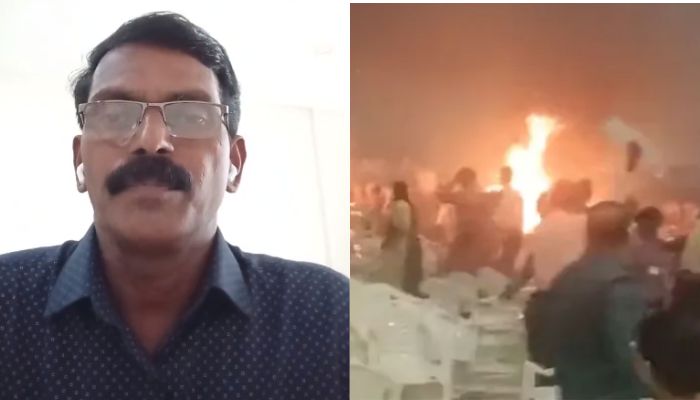
A Kerala nurse was injured in the terrorist attack by Hamas in Israel while she was on a video call with her husband. Sheeja Anand, 41, was reportedly injured when Hamas launched a surprise terrorist attack on Israel on Saturday (7th October).

Sheeja was on a call with her family back in India to inform them that she was safe when a missile launched by Hamas hit her. Her family called her back immediately but could not get through.

Sheeja has sustained injuries on her hands, legs, and stomach. Her relatives reportedly said that she had undergone an emergency surgery and was undergoing treatment at a hospital in Tel Aviv.

Sheeja is a native of Valakkai in Sreekandapuram in Kannur district of Kerala while her husband works in Pune.

Sheeja has been working as a caretaker nurse in Ashkelon for the past seven years. The members of the family with whom Sheeja works also sustained injuries in the attack.

Her mother reportedly said, “I saw her on video call for a few seconds. She just mumbled Amma. Now we are told that she had a spinal injury as well. We are worried.”

A report by Onmanorama has said that Sheeja has spoken to her mother Sarojini and sister Shiji in Kannur from the hospital. Meanwhile, she is reportedly stable.

Over 200 people from Kerala are reportedly stranded in a hotel in Bethlehem and are safe. The group has been asked to stay back at the hotel. They were reportedly scheduled to leave for Egypt on Monday (9th October).

Moreover, another 45 people from Kochi are stranded in a hotel in Palestine. The group is safe and has reportedly received permission to cross the border.

Pakistani ICC World Cup presenter Zainab Abbas leaves India after her hateful, Hinduphobic, anti-India tweets trigger cybercrime complaint

On 9th October, Pakistani ICC World Cup presenter Zainab Abbas exited from India. As per Samaa TV, she “exited India over safety concerns”. The media house added that she went to Dubai after leaving India. Her old tweets surfaced when she announced that she would be a presenter at the Cricket World Cup 2023 that India is hosting.

On 2nd October, Abbas posted on X (formerly Twitter) that she was excited to be a presenter at the ICC World Cup. However, X user YearOfTheKraken objected to the selection and posted screenshots of her old anti-Hindu and anti-India posts. In one of these old tweets, she ranted, “This 120 crore population can’t produce one fast bowler. Eat some f*c*ing meat u shud shakaharis.”

She used the cow piss jibe in another tweet to target Indians, particularly Hindus. She wrote, “..true it does Man went Delhi, and it smells of cow piss. Oops, that’s their maa Kaali maa.” The posts were deleted, and she had changed her handle years ago, but as it is said, ‘once it is on the internet, it is there forever’ the posts came back to bite her before her stint at ICC Men’s Cricket World Cup 2023.

On 6th October, Supreme Court lawyer Vineet Jindal filed a complaint against her over her old posts. In his complaint dated 4th October, Jindal stated that Zainab Abbas had made anti-India and Hinduphobic statements. Taking to X, advocate Vineet Jindal informed about the complaint filed with the Cyber Cell of Delhi Police. He requested that an FIR be filed against Zainab Abbas under sections 153A, 295, 506, 121 IPC and sec 67 IT Act for disparaging remarks about Hinduism and anti-India statements. Moreover, the advocate demanded that the Pakistani presenter be removed from the list of presenters for the ongoing ICC Men’s World Cup.

Pakistani fans fumed at Zainab Abbas’s exit

The reports of Zainab leaving India led to outrage among Pakistani cricket fans, who then spewed venom against India. They accused India of being “intolerant”.

X user Shehryar said, “After looking at Zainab Abbas’ case, I’ve actually developed sympathy for Irfan Pathan…He does all this for him and his family’s safety…India is so intolerant, insecure and is highly influenced by hindutva terr*rist outfit i.e RSS.”

X user JahanZaib wrote, “The incident of deporting Zainab Abbas by India is very sad, now we are worried about our team, may Allah protect them.” It appears he knows what kind of anti-Hindu venom Pakistani cricketers spew regularly.

Sports journalist of Samaa TV Qadir Khawaja called India a “coward” for “deporting” Zainab. In a post in Urdu, he claimed Zainab was a “guest”, but she was deported after a lawyer filed a complaint against her.

X user Rubab said, “Zainab Abbas has departed from India. (Samaa TV). Shame On you India. You can’t Deserve to Host Worldcup. India has to be worst host in worldcup history. Pathetic from neighbors.”

It is notable here that Zainab was not “deported”. She went back on her own accord, possibly after her old tweets triggered police complaints against her. Samaa TV corrected its earlier post that said she was ‘deported’, and later shared another post saying she has ‘safely exited India’ over safety concerns.

As Hamas desecrates Shani Louk’s naked body, old tweet of Leicester violence provocateur Mohammed Hijab viral, had called for enslavement of Non-Muslims

Two days after Hamas terrorists stripped and paraded the dead body of German national Shani Louk, an old tweet of a radical Islamic preacher named Mohammed Hijab went viral on social media on Monday (9th October).

The tweet, shared by Youtuber David Wood on the micro-blogging platform, showed Mohammed Hijab calling for the enslavement of non-Muslims. The Islamist preacher suggested that non-Muslim women somehow loved to be taken as ‘sex slaves’ by the Islamic captors.

“I believe certain anti-muslim women would wish they lived in the medieval period. A period where if a war was won by the opposing side it was conventional that people could be taken as booty. Some historical accounts actually say some women would dress up for the captor,” his tweet read.

While reacting to the disturbing tweet by Mohammed Hijab, David Wood emphasised, “When you read about Hamas jihadis raping their Jewish captives, remember that their da’ees, such as Mohammed Hijab, teach them that women and girls WANT to be captured and raped.”

The tweet by Mohammed Hijab, calling for the enslavement of Muslim women, was posted around July 2022. There is a video of Mikhaila Peterson (the daughter of renowned Canadian psychologist Jordan Peterson) and Ridvan Aydemir (who runs the channel ‘The Apostate Prophet) on Youtube, reacting strongly to the tweet by the Islamic preacher on July 29, 2022.

The controversial tweet by Mohammed Hijab went viral at a time when Hamas terrorists were leaving no stone unturned to desecrate the bodies of female Israelis.

Among one such disturbing visual was the naked and battered dead body of German tourist named Shani Louk, paraded by the Hamas terrorists in a pickup truck. 

One of the first locations that the Hamas terrorists attacked was the Supernova Music Festival, located close to the Gaza Strip. Reportedly, the terrorists raped the women irrespective of their nationality.

Some of the victims of the attack were either executed or taken to Gaza, which has been confirmed by the videos and photos available on social media. Tablet Magazine reported some survivor accounts, mentioning that women were raped at the festival site itself near the dead bodies of their friends. Several rape victims were then executed by the Hamas terrorists.

Similar fate of ISIS sex slaves

Earlier in March 2023, a former Yazidi sex slave (identified as Dila), who lived under ISIS captivity, revealed that she was kidnapped at 13. She was then sold as a slave in the Iraqi city of Mosul before being abducted and taken to Syria’s Raqqa.

The victim was then raped, and abused by ISIS terrorists for over 7 years.The terror outfit has so far killed over 5,000 Yazidis, whom they consider ‘devil worshippers’.

More than 10,000 Yazidis were kidnapped and over 5 lakh people were forced to leave their homes. Women and children were sold, raped, and forcibly converted to Islam. While Dila was able to escape, about 2,700 Yazidi children and women are still believed to be in captivity by ISIS.

Quranic verses calling for sex slavery

Certain verses of the Quran appear to justify sex slavery by Islamic captors. For instance, Chapter 33 (Al-Ahzab) Verse 50 of the Quran states

O Prophet! We have made lawful for you your wives to whom you have paid their ˹full˺ dowries as well as those ˹bondwomen˺ in your possession, whom Allah has granted you.1 And ˹you are allowed to marry˺ the daughters of your paternal uncles and aunts, and the daughters of your maternal uncles and aunts, who have emigrated like you. Also ˹allowed for marriage is˺ a believing woman who offers herself to the Prophet ˹without dowry˺ if he is interested in marrying her—˹this is˺ exclusively for you, not for the rest of the believers.2 We know well what ˹rulings˺ We have ordained for the believers in relation to their wives and those ˹bondwomen˺ in their possession. As such, there would be no blame on you. And Allah is All-Forgiving, Most Merciful

Chapter 4 (An-Nisa) of the Quran states

Also ˹forbidden are˺ married women—except ˹female˺ captives in your possession.1 This is Allah’s commandment to you. Lawful to you are all beyond these—as long as you seek them with your wealth in a legal marriage, not in fornication. Give those you have consummated marriage with their due dowries. It is permissible to be mutually gracious regarding the set dowry. Surely Allah is All-Knowing, All-Wise.

Chapter 23 (Al-Mu’minum) Verses 5-6 of the Quran states

Successful indeed are the believers: those who guard their chastity (private parts) except with their wives or those ˹bondwomen˺ in their possession,1 for then they are free from blame.

A similar diktat appears in Chapter 70 (Al- Ma’arij) Verses 29-30 of the Quran.

Leicester violence: Mohammed Hijab incited Muslims to attack Hindus

On September 19 last year, Islamist scholar Mohammed Hijab was seen mocking Hinduism and inciting Muslims to attack the Hindus. In a video that surfaced on social media, he was seen interacting with mask-clad Muslim men and encouraging them to teach the local Hindu population ‘a lesson’.

“When I was on social media, I saw these people (Hindus) getting brave. How come today it is like pin-drop silence?” the British Egyptian ‘scholar’ was heard as saying. He claimed that no Hindus were in sight after realising that Muslim mobs were coming at them in hordes.

“Cause they (Hindus) fear us when they are near us”, responded an Islamist from the crowd. Pumped by the support of the like-minded people in the crowd, Hijab said, “Deep down, they know we got the truth. If you want respect, then, learn to respect.”

“If they (Hindus) believe in reincarnation, what a humiliation of them to be reincarnated into some pathetic, weak, cowardly people like that,” the Islamist went on an anti-Hindu tirade.

“Hindutva (Hindus), you are trying to act like gangsters…Don’t ever come out like that again (referring to the protests by Hindus in Leicester). Do you understand? Are they going to come out again?” he continued his threats.

Amidst the war cry of Allah hu Akbar, Mohammed Hijab cautioned that he and his supporters would be there if Hindus ‘dared’ to protest against the violence, committed by his co-religionists.

In an Instagram post dated September 18, 2022, Hijab was seen leading a frenzied mob of Islamists, with their faces covered in masks. “Muslim patrol in Leicester,” he wrote in his post.

Mohammed Hijab also worked alongside hate preacher and fugitive, Zakir Naik, during the fundraising for the construction of a grand mosque and Dawah (proselytism) centre in Oslo, Norway.

Radicalised with ‘Kafirs must not be spared’ belief, arrested ISIS terrorist reveals Hindu temples, RSS premises were on target to carry out 26/11-like attack: Report

0

The ISIS operative known as Shehnawaz, apprehended by the Delhi Police, disclosed to investigators that Hindu temples in Mumbai, and RSS premises in citoes across the country were on target of his terror module. He said that he had conducted trial explosions at five different sites in India—Nuh, Mewat, Delhi, Lucknow, and Rudraprayag—with the intent to initiate a terror attack akin to the events of 26/11, an exclusive report by CNN News 18 said. However, authorities thwarted their nefarious plan before the rest of his team could carry it out.

According to credible intelligence sources as reported by CNN-News18, Shehnawaz confirmed during interrogations that he had conducted a reconnaissance of 15 locations associated with Hindu-affiliated organizations, including RSS, in Ahmedabad, Surat, and Baroda. His intention was to target Right-wing establishments and leaders.

The ISIS terrorist originally hails from Delhi and pursued his engineering degree at NIT Nagpur. He often visited the capital, and his father held a teaching position in Hazaribagh.

Shehnawaz routinely participated in Dars gatherings, where he underwent a gradual process of radicalization. It was during these gatherings that he crossed paths with Rizwan.

Around 2019-20, he began acquiring knowledge on preparing IEDs and established contact with a foreign handler. This handler assisted in the learning of IED production for both Rizwan and Shehnawaz through online instructional sessions.

According to sources, the pair not only conducted trial detonations to test explosives but also started identifying potential hideouts and targets. Subsequently, their handler instructed Shehnawaz to relocate to Pune, where two individuals arrested in Chittorgarh were currently based.

Both factions resided in separate locations within Chittorgarh but maintained regular meetings. They consistently engaged in learning the craft of IED and explosive manufacturing. However, following the apprehension of the group in Pune, the duo fled to Delhi.

As per reliable sources, Shehnawaz served as the connecting factor between the ISIS modules in Delhi and Pune.

“Shahnawaz is an experienced extremist. In recent months, he conducted reconnaissance activities across northern India. His mission was to identify suitable sites for establishing training camps within India. The recruitment process was to be overseen by his handlers,” stated the sources.

According to informed sources, he had conducted multiple reconnaissance missions to identify targets intended for attack during the upcoming festive season. He possessed expertise in crafting improvised explosive devices (IEDs). In his residence, authorities recovered incriminating documents and the liquid chemicals utilized in IED production.

Motivated by perceived injustices against Muslims, the group held the belief that “Kafirs must not be spared.” Additionally, they maintained communication with Indian Mujahideen and harboured intentions to target Hindu leaders and Jews in public locations.

There’s a possibility that the group was influenced by handlers based in Pakistan, although this connection is currently under investigation.

The investigation into the Pune ISIS case, as reported by CNN-News18, has unveiled a fusion of SIMI-Indian Mujahideen and ISIS elements, where historical terror groups like Indian Mujahideen and SIMI have converged with ISIS operatives.

According to intelligence agencies, there are clear connections emerging among Hazaribagh, UP, and Maharashtra, with Shahnawaz being identified as a pivotal link in the overall terror strategy thus far.

According to sources, had the terror plot not been uncovered, the amalgamated groups could have caused significant harm. All members are highly skilled terrorists, proficient in IT, cyber warfare, and the production of explosives and IEDs.

Furthermore, the merging of ideologies among these terror organizations signifies their collective intent to reinitiate their activities.

A crucial aspect of the ongoing investigation is understanding the role of the foreign handler situated in Iraq or Syria. Another key aspect is the financing pattern, resembling the style of funding seen in ISIS operations.

Sources emphasize that it is evident that all these terror groups are regrouping and consolidating under a unified umbrella.

According to sources, the ISIS Pune module had intentions to perpetrate a larger-scale attack surpassing the magnitude of 26/11. This was unveiled during interrogations, revealing their objective to target areas not only to maximize casualties but also for dramatic visual impact.

In Mumbai, the scouted locations for potential attacks included Chabad House and the Naval Helipad near the Colaba slum area. Their plan encompassed striking major temples in Mumbai, where foot traffic is substantial, and hydraulic projects crucial for the nation’s development and progress.

Indian cricket has improved after they started eating meat: Former Pakistan captain Shahid Afridi

In a TV appearance, motormouth Pakistani cricketer and Former Captain of their cricket team Shahid Afridi has claimed that Indian cricketers have started eating meat which is the reason behind their improved performance as it gives them strength. 

It was a local sports show in Pakistan where Afridi (claimed to be 43 years old) was asked about the transformation in Indian cricket. The query was focused on the reformation of Indian cricket from being renowned for producing exceptional batters to also emerging as a source of outstanding bowlers.

To which, Afridi made the observation. He said, “India has a huge 1.4 billion population, and the quality of cricket has changed [over the years]. Back then we used to say that they were producing great batters while Pakistan was creating good bowlers, but that was not the case as we were generating both bowlers and batters.”

He said, “However, their bowlers have now started eating meat, so they have gained strength,” and he chuckled after making the observation. Notably, Pakistan has been notorious for using such slurs asking Indians to eat meat as they consider Indians as meek Hindus who are afraid of their ‘martial race’.

Recently, screenshots of old anti-India and anti-Hindu tweets of Pakistani presenter Zainab Abbas also surfaced online when she was on a visit to India to host the World Cup as a presenter for the ICC Men’s World Cup 2023. In her old tweets, she had written deplorable things mocking India and Hindus telling them to eat meat and using phrases like ‘stinking cow piss’ to describe India’s capital Delhi.

Meanwhile, on the sports show, Afridi tried to cover his brazen bigotry by attributing other factors like IPL, captains like Sourav Ganguly and MS Dhoni, and improvement in domestic cricket behind India’s better performance.  

He added, “First Sourav Ganguly made so many changes during his captaincy and then the way MS Dhoni carried all the seniors with him. They [BCCI] invested in the right place. They improved their grassroots level cricket by giving the entire domestic system to a player like Rahul Dravid, who knows what the kids [domestic players] need to reach the top. They worked hard, and now they keep on producing talents. If India wants, they can create two teams now.” 

It is pertinent to note that the current cricketing legend and among the Greatest of all times (GOAT), Virat Kohli had in September 2019 asserted that he has never felt better in his life since he turned vegetarian. Back then, he also praised a documentary that celebrates plant-based eating. Since then, he has maintained that he is vegetarian

During a question-and-answer session, Kohli talked about his diet and revealed that his diet mainly comprises “lots of vegetables, some eggs, 2 cups of coffee, dal, quinoa, lots of spinach, and dosa”.

With arduous efforts over the course of several years, India has built a battery of world-class fast bowlers in the likes of Jasprit Bumrah, Mohd Shami, Mohd Siraj, Ishant Sharma, Umesh Yadav, and newcomers like Arshdeep Singh and Prasidh Krishna among others. Interestingly, a multitude of Indian cricketers adhere to a vegetarian diet and have outperformed Pakistani cricketers.

However, Afridi’s comment is not an isolated incidence as the Pakistani cricketing squad is notorious for exploiting the wider reach of cricket as a sport to further their agenda of promoting Islam and proselytisation.  

SGPC objects to Tavleen Singh saying Guru Govind Singh was a Hindu: How both parties are trying to whitewash the Khalistani threat in their own ways

On 6th October, the Shiromani Gurdwara Parbandhak Committee (SGPC) raised objections to an op-ed written by Tavleen Singh titled “India’s Canadian problem,” published in The Sunday Express, dated 24th September 2023. SGPC raised several objections, mainly revolving around two insinuations that Tavleen made. The first was about Shri Guru Gobind Singh Ji, and the second was Khalistani terrorist Jarnail Singh Bhindranwale.

SGPC claimed that Tavleen’s op-ed had inaccuracies and misrepresentations about Sikhism. The first issue that SGPC raised was the assertion that Shri Guru Gobind Singh Ji founded Khalsa to fight the repression of the Mughal Emperor, and he was a ‘Hindu’. SGPC emphasised that Shri Guru Gobind Singh ji created the Khalsa Panth as an embodiment of the Saint-Soldier spirit devoted to Akal Purakh (The Timeless One) and that he was not associated with any particular religion. Guru Gobind Singh’s teachings emphasised that he was neither Hindu nor Muslim.

Furthermore, they objected to the characterisation of Jarnail Singh Bhindranwale, particularly to the point where she said that he ran a reign of terror and had an efficient network of spies that punished those who disagreed with him. SGPC contends that Bhindranwale’s struggle primarily addressed Punjab’s political, economic, and water-related issues. They argue that such characterisations of Bhindranwale are not supported by the historical facts and references available.

SGPC called for an apology from Singh, claiming that her op-ed was malicious and portrayed the Sikh community negatively. They also asked the newspaper to provide space to present facts in their letter as a refutation to the “misrepresentations” made by Tavleen in her article.

Refuting the claims of SGPC that Shri Guru Gobind Singh Ji did not raise Khalsa to save Hindus, Sikh history expert Puneet Sahani pointed out that what Tavleen Singh stated were facts. He quoted Guru Gobind Singh Ji’s composition Ugradanti, which explicitly pleads to Durga to help his army destroy the Turks and Mughal forces and for the resurgence of the Vedas & Dharma of Hindus. The Punjabi version of Ugradanti can be seen here. For those who are unaware, Ugardanti is a composition that is part of Dasam Granth, one of the Holy Books of Sikhism.

Tavleen Singh’s op-ed called the Khalistan movement a ‘myth’

While SGPC has its own problems with the op-ed written by Tavleen Singh, it is essential to point out that Tavleen categorically called the Khalistan movement and the threats it poses to India’s sovereignty a ‘myth’. In her op-ed, she discussed that in the context of the Canadian Sikhs, the revival of Khalistan was a myth in India. She questioned the Indian government on its focus on the secessionist movement of Khalistan. She expressed “concerns” over the panic in Delhi’s political circles when Canadian Sikhs raise Khalistan flags or engage in pro-Khalistani protests in other countries, particularly Canada.

Tavleen insinuated that there is no significant support for Khalistan among Sikhs in India. She highlights the historical background of the Punjab region, emphasising that Shri Guru Govind Singh created the Khalsa to fight repression and that it included both Hindus and Sikhs. The author points out that even during the reign of Jarnail Singh Bhindranwale, there was no widespread support for secession among Sikhs in India. SGPC raised objections to this part. 

While acknowledging the existence of Khalistan supporters among Canadian Sikhs and the possibility of financial support from Pakistan’s military rulers, Tavleen Singh argues that if India were to use its intelligence agencies to create trouble on foreign soil, it should be done in neighbouring countries, not in faraway places like Canada.

Furthermore, she asks for a clear definition of terrorism and the need for addressing so-called issues of “injustice and unrest” within minority communities in India, particularly among Muslims and Sikhs. She suggested that the Indian government should focus on addressing the grievances of these communities rather than “overreacting” to the perceived revival of the Khalistan myth.

Replying to SGPC, Tavleen wrote, “May I respectfully suggest that the SGPC read some Sikh history books. As for apologies it is the SGPC that must apologise to the Sikh community for allowing the Durbar Sahib to be turned into a refuge for killers. I know. I was there.”

SGPC and Tavleen Singh whitewashed the Khalistani movement in their own ways

It is interesting to witness how two sections, while appearing to oppose each other, conveniently whitewashed the uprising of the Khalistan movement and the threats it poses to India’s sovereignty and security. Tavleen claimed that she witnessed the Khalistani movement since the 80s and has a deep knowledge of the movement. She further claimed that there was no or minimal support for the Khalistani movement during the Bhindranwale period and after. According to Tavleen, it was because of the deep-rooted spy network of Bhindranwale that he managed to “suppress the voices against the Khalistani movement within the Sikh community”.

While Tavleen has the full right to have her own views, it is strange that she forgot how Hindus were brutally murdered for decades by the Khalistani terrorists. It took the Indian government almost 30 years to wipe out the Khalistani movement from Punjab, during which thousands of Hindus were murdered. There were bomb blasts, mass shootings, murders of journalists and whatnot. We lost one Prime Minister and one Chief Minister to the Khalistani movement. In the aftermath of the murder of then-PM Indira Gandhi, thousands of innocent Sikhs were also killed in the political riots in Delhi in 1984.

Tavleen Singh claimed that the current Indian government revived the Khalistani “myth” and said there is no support for the Khalistani movement in India. By observing what has happened in the state for the last 8-10 years, it is fair to suggest that Tavleen needs to come out of the bubble and smell the coffee. The Khalistani movement is not a myth, and it has significant support in the state. In fact, the support remained consistent even though the movement was suppressed in the 90s.

Without support, the posters of Bhindranwale, the rise of Amritpal Singh, consistent brainwashing of young Punjabis through music and support to Khalistani terrorist organisation Sikhs For Justice would not have been possible. Tavleen might have missed the point that Amritpal Singh reportedly was raising a militia to fight against the state in the guise of a de-addiction centre. Was it not the Khalistani uprising, or it should be swept under the rug in the name of “myth”?

SGPC has a history of whitewashing the Khalistani movement

It is well known that SGPC has a soft corner for the Khalistani movement and pro-Khalistani elements. They do not even try to hide it. They are well known for supporting pro-Khalistani elements and putting up posters of Khalistani terrorists inside Gurudwara premises claiming they were martyrs. Even after Canada accused India of killing Khalistani terrorist Hardeep Singh Nijjar on Canadian soil, which India has categorically denied, SGPC decided to side with Canada.

SGPC and Tavleen both whitewashed the Khalistani movement and the threats it poses, for which both ideas should be condemned. Pro-Khalistani elements have found enough support in countries like Canada, the UK, Australia and the USA. Pakistan’s funding is helping pro-Khalistani elements to flourish exponentially. Amid such time, insinuations that Khalistan movement is just a myth is not only problematic but dangerously misleading.

‘If we come to your area and chant Nara-e-takbeer..’: Muslim mob threatens a bus full of Hindu pilgrims in Ahmedabad, stop them from chanting ‘Jai Shri Ram’

A video from Ahmedabad went viral on social media early Monday morning (9th October) in which an extremist Muslim mob could be seen surrounding and threatening a bus carrying Hindu pilgrims. This video is from Ahmedabad’s Chandola area.

Initially, this video was attributed to Jamalpur, but an investigation by OpIndia has revealed that this video is from the Chandola area of Danilimda.

The Bajrang Dal had organized a Shaurya Yatra on the Ahmedabad riverfront on Sunday (8th October). Following the final segment of the program, all Hindu activists boarded buses travelling back to their home districts.

One of the buses in which the activists were chanting Jai Shri Ram slogans and absorbed in Ram bhajans was stopped by the Islamists. The Hindu activists were returning to Vadodara and were threatened by the Islamists near Chandola.

It may be noted that Chandola is a ‘Muslim majority’ area. As soon as Muslim youths stopped the bus, a prominent Muslim crowd gathered at the spot and threatened the Hindus saying how could they chant Lord Rama’s name in ‘their’ area. “Why are you raising slogans (of Jai Shri Ram) in our area? If you want to raise slogans, go to your locality,” the Islamists threatened.

In the same video, the Muslims are further heard threatening, “What if we chant Nara-e-takbir and Allahu Akbar in your area?” The Muslim crowd could also be seen shaking hands with the police personnel present at the spot. And the policemen could be seen standing helplessly against this fundamentalist mob.

VHP says – Another Godhra kand attempt

OpIndia spoke to Gujarat Vishwa Hindu Parishad (VHP) spokesperson Hitendrasinh Rajput on this matter. Rajput said, “This is a regrettable incident. Is chanting Jai Shri Ram by Hindus now banned in Gujarat? What was the motive behind this bus of Hindu pilgrims being surrounded and stopped by Muslim fanatics in Chandola?”

Hitendra Singh meanwhile recalled the massacre of Hindus by stopping the Sabarmati Express full of Hindu pilgrims in Godhra and burning an entire coach, saying, “What is the meaning of stopping a bus carrying Hindu pilgrims like this? Isn’t there some conspiracy behind this? Did these people aim to commit another Godhra scandal?”

“The World Hindu Parishad requests the Gujarat Home Minister Harsh Sanghvi and the DGP of Gujarat Police to investigate the matter thoroughly. Based on viral videos, the Islamic extremists appearing in them should be identified and traced. And action should be taken against them so that no one dares to do so again,” he added further.

It is noteworthy that no complaint has been registered in this regard yet.

It also highlights the ominous usurping of public places, with a section of society, after establishing their dominance in a region uses threats and intimidations to prevent members of other communities from following their religious rituals and celebrations.