Home Blog Page 1791

PM Modi holds bilateral talks with US President Joe Biden ahead of G20 Summit, to hold around 15 bilateral meetings in 3 days

0

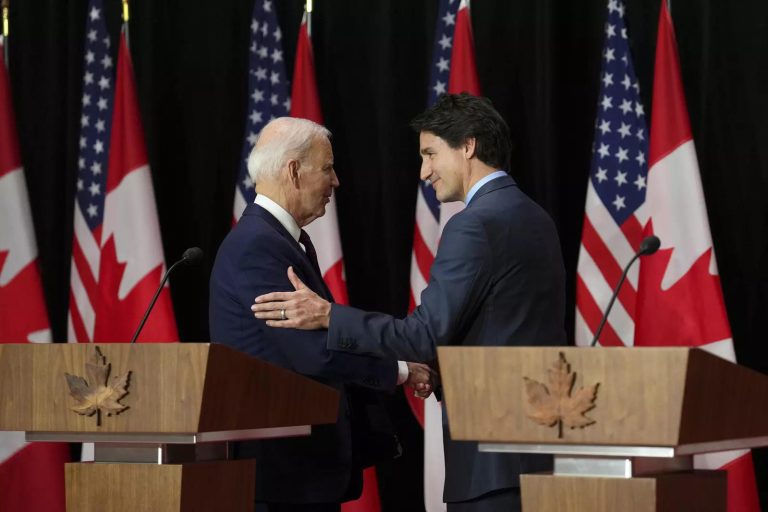
Leaders of G20 member nations along with heads of several other countries and international bodies arrived in Delhi to attend the G20 Summit on 9 and 10 September. US President Joe Biden’s Air Force One also landed in Delhi today for his 3-day India visit.

The US President headed to 7, Lok Kalyan Marga, the official residence of the Indian Prime Minister, on Friday evening for a bilateral talk with PM Modi soon after arriving. US Treasury Secretary Janet Yellen, Secretary of State Anthony Blinken and US NSA Jake Sullivan were also present in the meeting. The Indian delegation included External Affairs Minister S Jaishankar and NSA Ajit Doval.

PM Modi tweeted about the meeting after it was concluded, saying that they were able to discuss numerous topics.

“Happy to have welcomed @POTUS @JoeBiden to 7, Lok Kalyan Marg. Our meeting was very productive. We were able to discuss numerous topics which will further economic and people-to-people linkages between India and USA. The friendship between our nations will continue to play a great role in furthering global good,” PM Modi tweeted.

He also posted several photographs of the meeting.

Before meeting the US president, PM Modi also held bilateral talks with Bangladesh Prime Minister Sheikh Hasina. “The progress in India-Bangladesh relations in the last 9 years has been very gladdening. Our talks covered areas like connectivity, commercial linkage and more,” he said after the meeting.

The PM also met Mauritius Prime Minister Pravind Jugnauth, where they discussed cooperation in sectors like infrastructure, FinTech, culture and many other subjects.

Prime Minister Narendra Modi will hold around 15 bilateral meetings with world leaders on the sidelines of the G20 Summit, and therefore 12 more bilateral meetings will take place in the next 2 days. On Saturday, PM Modi will hold bilateral meetings with leaders of the UK, Japan, Germany and Italy besides attending the G20 events. He will have a working lunch meeting with French President Emmanuel Macron on Sunday.

Earlier in the day, he had posted on X that he would be holding bilateral meetings with several leaders and Heads of Delegation to further deepen the bonds of friendship and cooperation. “I am confident that our guests will enjoy the warmth of the Indian hospitality,” he added.

The PM said that G20 Leaders will share their collective vision for a sustainable and equitable ‘One Future’, together like ‘One Family’, for a healthier ‘One Earth’ at the closing ceremony on Sunday.

Heads of all G20 member nations except China and Russia are arriving in India for the Summit Meeting. Apart from them, heads of several other nations like Bangladesh, UAE, Egypt, Mauritius, Singapore etc have also arrived to take part in the talks. Apart from them, heads of international organisations like World Bank, IMF etc will also be attending the summit.

ThePrint ‘journalist’ Jyoti Malhotra claims people in non-BJP states can walk and talk freely vis à vis a BJP-ruled state: Here is how she’s lying blatantly

0

With the 2024 Lok Sabha elections nearing, the entire secular-liberal ecosystem has started working overtime to demonise the Modi government. In their eagerness to do so, they regularly end up stating things that are devoid of the slightest of truth. In fact, this elite gang of leftist intelligentsia skillfully concocts lies and twists facts to peddle the fake narrative of how India has been suffering under Modi’s ‘fascist’ regime.

Similar is the case with Jyoti Malhotra, a senior journalist with Shekhar Gupta’s ThePrint. The ‘journalist’ recently spoke to the French media outlet France 24. During her chat, she lamented how in non-BJP-ruled states a person can walk and talk freely vis à vis a BJP-governed state in India. Jyoti Malhotra was basically repeating the same myth that this cabal has been peddling since PM Modi took office in 2014, namely that freedom of expression and speech is under threat in Modi’s India.

In a snippet of the interview doing the rounds on social media, the columnist with the ultra-leftist portal ThePrint is heard saying, “I agree that the freedom of speech and dissent is being clamped down because the fear that you have in the streets of Delhi and elsewhere in the country, by the way in BJP ruled states. If you’re in a non-BJP-ruled state you can really speak much more freely, walk about the streets much more freely.

Jyoti Malhotra basically implied that the BJP is hell-bent on weakening the fourth pillar of democracy. As proven by several incidences recorded from various states, incidentally which are not under BJP, over the previous few years, the allegation made by ThePrint columnist was nothing more than a vile attempt to disparage the Modi government.

Jyoti Malhotra, however, is a speck in the huge ocean of this secular-leftist cabal, which has frequently peddled the lie about the lack of press freedom in Modi’s regime. Despite their wailing and crying, the truth is that several non-BJP-ruled states are at the top of the list when it comes to restricting free speech and dissenting voices.

Here is a list of non-BJP states where the administration has rarely allowed for dissent and has acted with an iron grip against the press whenever they have raised fingers against its transgressions. Please keep in mind that this is only an indicative list; the actual number of instances in which ordinary citizens and members of the media in these states have been harassed and chastised for expressing their opposition to the state establishment is undoubtedly higher.

West Bengal: Kolkata-based journalist arrested for shedding light on anti-Hindu violence

In October 2022, a Kolkata-based Manab Guha was arrested and framed in non-bailable sections for sharing the ground reality of the anti-Hindu Mominpur Violence. The photojournalist’s alleged “crime” was that he dared to post footage and images of anti-Hindu violence on social media.

The West Bengal police justified the arbitrary action by claiming that such recordings could have generated additional hostility in society.

In another case of ‘witch hunt’ against media voices, the Kolkata Police, on 9 January, registered an FIR against 10 journalists and BJP state president Dr Sukanta Majumdar for allegedly ‘misreporting’ the stone pelting incidents on the Vande Bharat Express.

They were booked under specific sections of the Information Technology Act for giving the state a ‘bad name’. The arbitrary action was a follow-up of Mamata Banerjee’s earlier threat to media outlets that legal action would be taken against journalists for spreading ‘fake news’ about the stone pelting incident on Vande Bharat Express trains in West Bengal.

In 2019, Mamata Banerjee, who is known to be unsparing towards dissenting opinions, once again got a 28-year-old youth arrested for allegedly posting a derogatory remark against her on social media. Chandan Bhattacharya was arrested on the basis of a complaint lodged by Trinamool Youth Congress district president Shantanu Banerjee.

Similarly, Priyanka Sharma, BJP youth leader had been arrested for posting a meme mocking Banerjee on her Facebook Timeline on May 9. The MET Gala 2019-themed meme superimposed Mamata’s face on Priyanka Chopra’s body. She was arrested and produced in Howrah Court.

OpIndia targeted by West Bengal government

Earlier, in 2021, the West Bengal government had singled out OpIndia and filed as many as four cases for reports – highlighting the Covid handling in Bengal; Azan being played in Durga Pandal – the video of it had gone viral back then and was widely reported by many media houses. However, in a major relief to media freedom and free speech, in December 2021, the Supreme Court quashed all these FIRs. 

The apex court raised concerns about how journalists are having to bear the repercussions of publicly available information.

The bench had observed, “State force should never be used to either browbeat a political opinion or the journalists suffer the consequences of what is already in the public domain.” 

Chhattisgarh: How dissenting voices are stifled in a state where Congress is at the helm of affairs

In March 2022, the Chhattisgarh Police arrested Raipur-based journalist Nilesh Sharma who is an Editor of the web portal indiawriters.co.in and print magazine ‘India Writers’. He was accused of spreading ‘fake news’ against the ruling Congress leaders in the state of Chattisgarh. According to reports, Sharma runs a popular series based on political satire, ‘Ghurva Ke Mati’.

The series uses fictional characters resonating with the Congress leaders and Chattisgarh MLAs. 

Karnataka: How state machinery has been misused to silence dissenting voices under Congress regime

On 24 July, a coordinated campaign was launched to intimidate popular Hindu Human Rights activist and Former Oxford Student Union President Rashmi Samant. Several social media handles which were spearheaded by Alt News Co-founder Muhammad Zubair, engaged her in a Twitter spate and hurled accusations, and name-calling. Zubair also issued a veiled threat of legal action under the pretext of spreading false information. 

After Alt News’ Zubair ‘flagged’ her tweet for allegedly spreading false information, Karnataka’s Udupi police also launched a campaign to locate Samant. 

Tamil Nadu

Earlier this year, on 18 March, the Police arrested YouTuber Manish Kashyap aka Tripurari Kumar Tiwari from Bihar in connection with the alleged attacks on migrant workers in Tamil Nadu. A special team of the Tamil Nadu police brought him to the southern state on transit remand after the Madurai Crime Branch police registered a case against him.

Later, the Tamil Nadu police slapped stringent NSA on him. He has been in jail since then despite moving bail petitions multiple times. 

Similarly, many more journalists were also booked for sharing the concerns of the migrant workers from Bihar, which, however, were reportedly found to have relied on some fake videos. In connection with this ‘fake news’ of Bihar migrant workers assaulted in Tamil Nadu, the state police had also filed FIRs against OpIndia CEO Rahul Roushan and Editor-in-Chief Nupur Sharma, for publishing articles based on claims made in a Bhaskar report – which also explicitly and prominently added the police version.

Additionally, Tamil Nadu BJP president K Annamalai, the Twitter handle of the BJP’s Bihar unit – BJP4Bihar, BJP spokesperson Prashant Umrao and Dainik Bhaskar newspaper’s editor, Mohammed Tanveer, were also booked for sharing the news of the ordeal Bihar migrant workers.

Actor Ketaki Chitale arrested for sharing Facebook post criticising Sharad Pawar

Another example of stifling dissent and free speech was the case of Marathi actor Ketaki Chitale. She was booked and arrested for sharing a Facebook post that was alleged to be directed at Sharad Pawar even though there was no explicit reference to the NCP patriarch. She was merely arrested for sharing a critical post written by Advocate Nitin Bhave. Yet, she was booked under sections 500, 501, 505 (2), and 153 A of the Indian Penal Code. 

Above are only a few of the many incidents that were reported from non-BJP states like Bengal, Bihar, Tamil Nadu, and Karnataka where administrations have been inclined to use state machinery with an iron fist and cage dissenting voices so that it has a “chilling effect” on journalists and common people and discourages them from raising voices on stories that are either brushed under the carpet or grotesquely misrepresented. Despite the information being readily available on public platforms the likes of ‘journalist’ Jyoti Malhotra have the audacity to say that free speech and dissent are being curbed in states where BJP is at the helm of affairs.

Who is Jyoti Malhotra

Jyoti Malhotra, as per her bio on ThePrint website, is the National and Strategic Affairs Editor. She has been a journalist for more than three decades covering foreign affairs, politics and national affairs at some of the top publications in the country.

The ‘senior’ journalist who appeared all informed and scholarly in the interview with the French media outlet is the same ‘senior’ journalist who had recently advised the Indian External Affairs Minister S Jaishankar to watch Pathaan, the Bollywood movie with Shah Rukh Khan in the lead, to navigate the complexities of geopolitics and managing relationships with neighbours known for harbouring chronic ill-will towards India and for unabashedly sponsoring terror attacks in the country. 

Ms Malhotra had gone on to explain that ‘Pathaan’ had been an AfPak movie, an abbreviation for Afghanistan and Pakistan. She went into raptures about the movie, emphasising how Afghans helped SRK, the good guy, in his mission to defeat the bad ones. She also gushed over the role of Deepika Padukone, who played the character of an ISI agent who shifted her loyalty at the right time to join Pathaan aka SRK. 

Did Elon Musk prevent a nuclear war? Claims CNN report on new Musk biography, read what SpaceX chief himself says about Starlink in Russia-Ukraine warzone

0

On Friday, September 8, Elon Musk revealed that Starlink satellite communications network was never activated last year near the Crimean coast and that if it had agreed to an emergency request from the Ukrainian government, it would have been ‘complicit in a major act of war and conflict escalation’.

Starlink is a satellite internet network provided by SpaceX, the aerospace company headed by Elon Musk. The network comprises around 5000 satellites in low earth orbit and internet connections are provided through small antennas, similar to how satellite TV works.

The saga began as one of the Twitter users, Mario Nawful posted on Twitter (X) that during a major Ukrainian offensive, Elon Musk secretly instructed his engineers to deactivate Starlink’s satellite communications network. He added that the said step was taken to deliberately block a surprise attack by Ukraine against the Russian naval fleet, to prevent a retaliatory nuclear attack by Russia. 

“Elon Musk covertly instructed his engineers to deactivate Starlink’s satellite communications network during a MAJOR Ukrainian offensive. This action was taken to intentionally thwart a surprise attack by Ukraine against the Russian naval fleet. The Ukrainian submarine drones, armed with explosives, mysteriously lost connectivity as they advanced toward the Russian warships. Now we know that Musk intentionally deactivated Starlink. Ukrainian officials pleaded for the reactivation of the satellites, however, Musk was concerned the attack could trigger a nuclear response from Russia,” the user wrote on Twitter (X).

However, responding to the assertion, Elon Musk said that “Starlink regions in question were never activated. SpaceX did not deactivate anything.”

Musk meanwhile added that the government authorities from Ukraine had made an emergency request to activate Starlink all the way to Sevastopol. The intention was to sink most of the Russian fleet at anchor. “If I had agreed to their request, then SpaceX would be explicitly complicit in a major act of war and conflict escalation,” Musk said.

Screenshot from Twitter

The user later revealed that the post was made with reference to a new feature article posted exclusively by CNN News. To this Musk responded by saying that the Ukraine govt had asked to activate Starlink up to Sevastopol, which was refused by the company. He said that the obvious intent was to sink most of the Russian fleet at anchor.

“If I had agreed to their request, then SpaceX would be explicitly complicit in a major act of war and conflict escalation,” he added.

Musk clarified that the company didn’t deactivate any Starlink service, but refused to activate it in the conflict zone, where it could be actively used in war. Had the service was activated, Ukraine would have used to attack the Russian naval fleet, which could have resulted in a major retaliation by Russia, including a nuclear strike.

Mario Nawfal replied to Musk asking if his decision prevented a potential nuclear conflict or at least significant escalation. However Elon Musk didn’t reply to the question.

CNN News referred to the excerpts from the writer Walter Isaacson’s new biography named ‘Elon Musk’. The article titled ‘‘How am I in this war?’: New Musk biography offers fresh details about the billionaire’s Ukraine dilemma’ stated that in order to prevent a Ukrainian sneak attack on the Russian naval fleet, Elon Musk covertly instructed his engineers to shut down his company’s Starlink satellite communications network close to the Crimean coast last year.

Drones from a Ukrainian submarine carrying explosives approached the Russian fleet but “lost connectivity and washed ashore harmlessly,” Isaacson wrote in the book.

According to Isaacson, whose new book is scheduled to be released by Simon & Schuster on September 12, Musk’s decision, which left Ukrainian officials pleading with him to turn the satellites back on, was motivated by an intense fear that Russia would respond to a Ukrainian attack on Crimea with nuclear weapons.

The article claimed that Musk had become a power broker that US officials couldn’t ignore amid the Russia-Ukraine war. Further, as per the book written by Isaacson, Musk agreed to give Ukraine millions of dollars worth of Starlink satellite terminals built by SpaceX when Russia interfered with Ukraine’s communications networks soon before its full-scale invasion in February 2022. These terminals were essential to Ukraine’s military operations. The Starlink terminals allowed Ukraine to fight while maintaining communication despite the fact that the cell phone and internet networks had been devastated.

Screenshot from CNN News article

Musk began to regret that choice, though, as Ukraine started employing Starlink terminals in its offensive attacks against Russia, claims the book.

“How am I in this war?” Isaacson was allegedly questioned by Musk. Starlink was not intended to take part in conflicts. Instead of drone strikes, it was so that people might watch Netflix, unwind, use the internet for study, and carry out good deeds, he said. 

Isaacson as quoted by CNN then wrote, “Musk was soon on the phone with President Joe Biden’s national security adviser, Jake Sullivan, the chairman of the joint chiefs, Gen. Mark Milley, and the Russian ambassador to the US to address anxieties from Washington, DC, to Moscow.”

Musk however has said that the report by CNN is misleading and that the Starlink service was not activated in the regions in question, and therefore there was no question of deactivating anything. “SpaceX did not deactivate anything,” he tweeted.

He also meanwhile advocated for both Russia and Ukraine to resolve the issue peacefully. “Every day that passes, more Ukrainian and Russian youth die to gain and lose small pieces of land, with borders barely changing. This is not worth their lives,” he said.

Screenshot from Twitter

Notably, the use of the Starlink service during the Russian invasion of Ukraine is noteworthy, as Russian strikes severely damaged the Ukrainian communications network. The service was activated in Kyv and then in other regions of the country soon after the Russian invasion. However,

Notably, the use of the Starlink service during the Russian invasion of Ukraine is noteworthy, as Russian strikes severely damaged the Ukrainian communications network. The service was activated in Kyv and then in other regions of the country soon after the Russian invasion. The military and government of Ukraine quickly became reliant on Starlink as it replaced Internet services that had been lost during the war.

However, Sevastopol is a city in Crimea, a former Ukrainian region now under Russian control, therefore it is unlikely that Starlink was ever activated there, as claimed by the book, which Musk has already denied. Sevastopol has a major port and naval base, and availability of satellite internet service in the area would have helped Ukraine in attacking the Russian naval fleet, greatly escalating the tension.

‘I’m a proud Hindu, that’s how I was raised, that’s how I am’: UK PM Rishi Sunak after he arrives for G20 Leaders’ Summit in Delhi

0

Rishi Sunak, Prime Minister of the United Kingdom who arrived in Delhi on 8 September to participate in the G20 Leaders’ Summit has talked about his religious identity and his plans to visit the Akshardham temple in the national capital along with his spouse Akshata Murthy who has accompanied him on this crucial visit to India.

He stated, “I’m a proud Hindu, and that’s how I was raised. That’s how I am. Hopefully, I can visit a Mandir while I’m here for the next couple of days. We just had Raksha Bandhan, so from my sister and my cousins, I have all my rakhis, and I didn’t have time to celebrate Janmashtami properly the other day. But hopefully, I said, I can make up for that if we visit a Mandir this time.”

He added that his faith holds a significant position in his life and has proved to be a great source of help. “But it’s something that is important to me. I think faith is something that helps everybody who has faith in their lives, particularly when you have these stressful jobs like I do. Having faith to give you resilience, to give you strength, is important.”

Notably, PM Rishi Sunak has never been shy of expressing his faith openly in public. He recently attended a Ram Katha recital by spiritual Guru Morari Bapu at Jesus College, University of Cambridge on 15 August. He chanted “Jai Siya Ram” and offered flowers to the Vyas Peeth of Morari Bapu. He highlighted that during the auspicious period of Diwali, he lit diyas at his official address in Downing Street in London, England.

He asserted, “It is truly an honour and pleasure to be here today at Morari Bapu’s Ram Katha at the University of Cambridge on Indian Independence Day. Bapu, I am here today not as a prime minister but as a Hindu. For me, faith is very personal. It guides me in every aspect of my life.”

He further proclaimed, “Being Prime Minister is a great honour, but it is not an easy job. There are difficult decisions to make, hard choices to confront and our faith gives me courage, strength, and resilience to do the best that I can for our country.”

He is a devout Hindu and has taken oath at the House of Commons on Shrimad Bhagavad Gita since 2017 and is regularly seen at religious events as well as temples.

The prime minister accompanied by the First Lady of the United Kingdom was welcomed by Minister of State for Consumer Affairs, Ashwini Kumar Choubey at the Palam airport and greeted them with “Jai Siya Ram.” He was also presented Rudraksh, a copy of the Shrimad Bhagavad Gita and Hanuman Chalisa by the Union Minister.

The leader of the Conservative Party (UK) lauded India and termed the G20 as a “huge success” for the country and remarked that “India is the right country at the right time to be hosting this.”

The 43-year-old British Indian leader also responded on the critical matter of Khalistan and the violent extremism of separatists in his country. “It’s a really important question and let me just say unequivocally that no form of extremism or violence like that is acceptable in the UK. And that’s why we are working very closely with the Indian government to particularly tackle ‘PKE’ Pro-Khalistan Extremism.”

He assured that such elements won’t be tolerated in the UK. “I don’t think it’s right. Our security Minister recently was just in India talking to his counterparts. We have working groups together to share intelligence and information so that we can root out this kind of violent extremism. It’s not right and I won’t tolerate it in the UK.”

The first British Asian PM talked about his love and close connection to India. “It is personally incredibly special for me to be back in India. It’s a country I love dearly, a country where my family are from. But I have come here in this role to represent the UK, to find ways to forge closer links with India and play a part in making sure that India has an incredibly successful G20.”

PM Rishi Sunak spoke of their bond and how hard he and Prime Minister Narendra Modi are working to secure a trade agreement between their two countries. “I have enormous respect for Modi Ji, and he’s been personally very warm and kind to me. And we’re working very hard, as I said, on our shared ambition of concluding an ambitious and comprehensive trade deal between India and the UK, because both of us think that would be a good thing and both of us need to make sure it works for our two countries.”

He reaffirmed his support to Prime Minister Narendra Modi for the “enormous success” of the G20 summit. “And at forums like this, I’m very keen to support Prime Minister Modi in making sure that this G 20 is an enormous success for India, which I know it will be.”

The prime minister remarked he was thrilled to be returning to India, “a country that is very near and dear to me,” as he conversed with the media during his flight to New Delhi. He voiced, “It’s obviously special. I saw somewhere that I was referred to as India’s son-in-law, which I hope was meant affectionately.” 

He is married to 43-year-old Akshata Narayana Murty who is the daughter of Indian billionaire and co-founder of Infosys N. R. Narayana Murthy and his wife Sudha Murthy who is an Indian educator, author and philanthropist as well as chairperson of the Infosys Foundation.

The G20 Summit is scheduled to take place in New Delhi on September 9 and 10 and is set to be held in the innovative Bharat Mandapam in Pragati Maidan. This significant gathering of world leaders is expected to address various global issues and foster international cooperation. Many world leaders including US President Joe Biden and UK PM Rishi Sunak would also be part of bilateral talks with Prime Minister Narendra Modi.

‘To determine creditworthiness of shareholders’: IT dept responds to Ashneer Grover’s questions over notices to startups

0

The Income Tax department on Friday took cognisance of Ashneer Grover’s questions over notices being issued to startups for documents related to their investors and shareholders.

On Friday, September 8, Ashneer Grover, best known for his time as a shark on Shark Tank and for co-founding the fintech platform BharatPe before losing his job, requested that the finance ministry investigate the list of papers and proofs requested by the Income Tax Department under Section 142(1) of the Income Tax Act 1961.

Section 142(1) of the I-T Act authorizes the I-T department to publish a notice to seek additional clarification or details about the returns, as well as their filing in the prescribed way.

“In the last 1 month, a number of start-ups (a few in my portfolio as well) have received Income Tax notices asking to furnish information about shareholders,” Grover said attaching the requirements of furnishing 3 years of ITR from all shareholders.

“How and why will companies have ITR of shareholders? Why would a shareholder/individual share their ITR with a private company? The reason mentioned here is to establish the creditworthiness of shareholders. Why? Companies are not giving loans to shareholders. Instead, shareholders only are investing their equity in the company. Finance Ministry please look into it,” he tweeted.

Further, he also questioned the IT department saying that why can’t it pull ITR from its own system by punching in PAN?

The Income Tax department took cognizance of the event and responded to Grover saying, “Section 68 of Income-tax Act, 1961 (the Act) under which the Assessing Officer (AO) has made the inquiry about the creditworthiness of the shareholder/investor, places the initial onus on the assessee-company to prove identity, the creditworthiness of the investor and genuineness of the transaction.”

According to the Finance Act of 2012, the nature and source of any sum credited as share capital, share premium, etc., in the books of a closely held company (excluding a Venture Capital Fund or a Venture Capital Company registered with SEBI) shall be treated as explained u/s 68 only if the source of funds from a resident shareholder is also explained by the investor.

“In the given case,” as said by the IT department, “it appears that the AO has sought to examine the genuineness of the transaction and source of investment by the shareholder-investor, to verify if the amount invested is commensurate with the income shown in the ITRs of the investors.”

The document that he furnished requests the standard documents, such as the shareholders’ name, address, and PAN card, as well as the number and shares allocated to the shareholders, the total value of the shares allotted to the shareholders, and the payment received from each shareholder throughout the financial year in question.

Ashneer Grover, the co-founder of BharatPe, who was also one of the investors on the TV program Shark Tank, resigned from the fintech firm on February 28 last year amid a probe that was underway to investigate financial fraud at the company. Ashneer’s resignation came a week after the firm sacked his wife, Madhuri Jain, who was the company’s head of controls, for alleged financial irregularities including creating bogus invoices and billing the company for personal beauty treatments and vacations overseas.

Princeton professor Ashoka Mody uses his opinion on GDP calculation mythology to claim that India’s growth story is fake: Read details

India’s GDP growth rate for the first quarter of the current fiscal (2023-24) rose to 7.8%, up from 6.1% growth in the previous quarter. While this is a solid indicator of the Indian growth story, left-liberals like always are trying to discredit the number released by the National Statistical Office under the Union Ministry of Statistics and Programme Implementation.

While most of the previous GDP growth numbers released during the Narendra Modi government have been criticised by opposition and left-liberals calling the methodology faulty, this time Princeton University’s visiting professor Ashoka Mody has gone ahead and called it fake, in an article titled “India’s Fake Growth Story” published on Prohect-Syndicate.

Ashoka Mody claims that the GDP number is just a “branding and beautification” exercise ahead of the G20 Summit in Delhi, and there is no growth in the Indian economy despite encouraging GDP numbers. He called the GDP numbers faulty because of ‘discrepancies’ between income and expenditure numbers and argued that an average of both should be used instead of using only income, which is the practice followed by NSO.

Ashok Mody claims that if the discrepancy number used to match expenditure with income is removed, the GDP growth rate for the period April-June in 2023 will be just 1.4%, not 7.8%. He wrote that this is not correct practice, and cites the example of Australia, Germany and the UK which adjust their GDP based on both numbers and the US which uses only expenditure numbers.

Before going ahead with showing how Ashok Mody’s argument is not correct, let’s see how he arrived at the figure of a 1.4% growth rate.

For this, he used the “Quarterly Estimates of Expenditure Components of GDP for Q1 (April-June) 2023-24” table in the NSO report, which contains the discrepancy number, which is basically the difference between income and expenditure for that period. It shows that the GDP change under expenditure is 7.8%, the same as the change in the Gross Value Added (income) table.

As we can see, the expenditure table has a discrepancy row, and a note below the table says that it is the gap between GDP (Production/Income Approach) and GDP (Expenditure Approach).

Now, the discrepancy was negative in the first quarters of 2021-22 and 2022-23, but it is positive in 2023-24. This means expenditure was more than income in the previous two April-June quarters, but this year it was less than income.

Ashok Mody has taken the actual total of the expenditures of last year and this year, arriving at a 1.4% change in the expenditure table. The reason for this massive drop is the fact that last year’s discrepancy was negative and this year it is positive, therefore the number was bigger for last year but smaller for this year. But, Mody chooses to omit that if this method is to be adopted, the growth rate for April-June 2022 will be 14.8%, more than the reported 13.1%.

The calculation committing the discrepancy number is given below.

Therefore, what he has calculated is correct, but the issue is, he is presenting it as proof that the govt is using the wrong method to calculate GDP numbers.

But the fact is that the Modi government has not started using this method, this is the method India using for a long time. There is no change in the method, as suggested by Ashoka Mody. Moreover, as already seen in just 3 year’s data, numbers can fluctuate both ways when the expenditure is not adjusted to match income, in some years it can be more than the calculated GDP under income and in other years it can be less.

Therefore, if the expenditure number, or an average of both income and expenditure is taken, it will have to be done for previous years too to present an even picture of the economy over the years. In some years the number will dip while in others it will go up.

Therefore, the claim that the GDP number is fake is a completely false and baseless allegation. It is only his opinion that India should change the way the GDP is calculated, and does not show any manipulation in numbers, as suggested by using the word ‘fake growth’.

The claim that the use of the discrepancy number is covering up something is also wrong and baseless. It does not hide anything, as Ashoka Mody proved himself by calculating the GDP change rate for the net expenditure numbers.

The discrepancy number is used because India calculates GDP using two approaches, income approach and expenditure approach. But often both the numbers don’t match, and therefore it is used to match expenditure with income. It is notable that although NSO collects a massive amount of data, they are never 100% accurate, and based on estimates. As a result, there is always some difference between income and expenditure numbers, and the difference is transparently shown in GDP reports.

There can be a valid debate on the use of this method, and suggestions can be made to change the method to use average instead of pushing the expenditure number up or down to match the income. But this in no way means any manipulations in the numbers as suggested by Mody. The same method has been used by NSO in earlier reports. Ashoka Mody has been completely dishonest by suggesting that there is something wrong with the reported number and that India’s growth story is fake.

He claims Indian authorities are using the 7.8% figure to parade seemingly flattering images and headline figures ahead of the G20 summit. The fact again remains that the Indian govt has used the same method used earlier, and there is no change. Moreover, if his suggestion is accepted, while this year’s GDP number will go down, it will go up for the previous years when expenditure was more than income. Therefore, the claim that the govt is using discrepancy to boost the GDP number is completely wrong.

Coming to the use of methods used by other countries like the method by U.S. Bureau of Economic Analysis (BEA), this is purely a policy decision, and not using a particular methodology cannot mean that the current method is wrong. India is not the only country to use the income approach to calculate Gross Domestic Product, a large number of other countries also do the same.

This was not the only article by Ashoka Mody calling India’s economic growth fake, he has written a number of articles making similar claims on the platform. Some headlines of his other articles are “India’s Boom Is a Dangerous Myth”, “Unlike China, India Cannot Be an Economic Superpower”, “India’s Broken State”, “India’s Law-of-the-Jungle Raj” etc. All these are recently published articles and indicate that the author is working with a clear agenda, to defame India on a global platform.

Project Syndicate and George Soros

Having dealt with the arguments made by the author, it also important to have a look at the platform where the article was published, the Project Syndicate. Its About page says that “Project Syndicate produces and delivers original, high-quality commentaries to a global audience”. According to it, it has received fundings from several organisations, including several left-liberal groups.

The most prominent among them is Open Society Foundation of George Soros, who has launched a mission to remove nationalist governments all over the world. It is also supported by Bill & Melinda Gates Foundation, European Climate Foundation and many others.

In fact, George Soros is also listed as an author on the portal, who has penned several articles for it. Congress leader Shashi Tharoor and Congress supporter Kaushik Basu are also contributors to Project Syndicate. Another Indian contributor is Brahma Chellane, Professor of Strategic Studies at the New Delhi-based Center for Policy Research and Fellow at the Robert Bosch Academy in Berlin.

“Five decade journey in six years”: World Bank lauds India’s Digital Payment Infrastructure

0

On Friday, September 8, the World Bank heaped praises on India’s Digital Payments Infrastructure (DPI) in view of its transformative impact on India under the Narendra Modi government. According to the World Bank, India has reached incredible milestones in just six years, which would normally take nearly five decades to achieve.

The World Bank underlined in its G20 Global Partnership for Financial Inclusion (GPFI) document how India has built a robust digital public goods infrastructure through initiatives such as Unified Payments Interface), Jan Dhan, Aadhar, ONDC, and CoWin.

The GPFI document, prepared in anticipation of the G20 Summit hosted by India, noted the significant steps taken by the Narendra Modi-led government and the pivotal role of government policies and regulations in shaping the DPI landscape.

World Bank lauds the “JAM Trinity”

The World Bank underscores the significance of the “JAM Trinity” (Jan Dhan, Aadhar, Mobile), which combines universal bank account access, Aadhaar identification, and mobile connectivity. “India’s financial inclusion strategy relies on the JAM trinity of Jan-Dhan, Aadhaar, and mobile and integrates digital ID for more efficient account-opening and payment applications for access to financial services,” the document read.

“While DPIs’ role in this leapfrogging is undoubtable, other ecosystem variables and policies that build on the availability of DPIs were critical. These included interventions to create a more enabling legal and regulatory framework, national policies to expand account ownership, and leveraging Aadhaar for identity verification,” the World Bank document stated.

The World Bank document lauds India’s DPI approach, noting that India has accomplished in six years what would have taken five decades. JAM Trinity has increased financial inclusion from 25% in 2008 to over 80% of adults in the previous six years, a process that has been shortened by up to 47 years because of DPIs.

From its inception, the number of Pradhan Mantri Jan Dhan Yojana accounts opened has nearly tripled, rising from 147.2 million in March 2015 to 462 million by June 2022; women own 56% of these accounts, totalling over 260 million.

The Jan Dhan Plus programme encourages low-income women to save, resulting in over 12 million women customers (as of April 2023) and a 50% increase in average balances in just five months, as against the entire portfolio in the same time period. It is estimated that by engaging 100 million low-income women in savings activities, public sector banks in India can attract approximately Rs 25,000 crore ($3.1 billion) in deposits.

Excerpt from World Bank’s G20 GFPI document (Image via World Bank)

UPI- India’s popular retail digital payment option

Moreover, the document stated that the Unified Payments Interface (UPI) is India’s mobile-based quick payment system that allows users to make round-the-clock payments instantly by utilising a Virtual Payment Address (VPA) that they create. According to the World Bank, the UPI payment system has proven to be extremely popular for retail digital payments in India, and its usage is rapidly expanding. In May 2023 alone, more than 9.41 billion transactions worth over Rs 14.89 trillion were carried out. The total value of UPI transactions in fiscal year 2022-23 was nearly half of India’s nominal GDP.

The DPI has also improved efficiency for private organisations by lowering the complexity, cost, and time required for commercial activities. Several Non-Banking Financial Corporations have also enabled an 8% increase in SME lending conversion rates, a 65% reduction in depreciation expenses, and a 66% reduction in fraud detection costs.

Notably, industry estimates indicate that the usage of DPI reduced banks’ costs of onboarding consumers in India from $23 to $0.1.

Cost savings with digitised KYCs

Furthermore, India Stack has digitised and simplified KYC procedures, resulting in cost savings. Banks that implement e-KYC reduced their compliance costs from $0.12 to $0.06. The cost reduction made lower-income clients more appealing to service and generated profits to develop new products.

UPI-PayNow and the cross-border payments

The UPI-PayNow interconnection between India and Singapore, which is scheduled to go live in February 2023, corresponds with the G20’s priorities pertaining to financial inclusion and enables faster, cheaper, and more transparent cross-border payments.

Account Aggregator Framework and the Data Empowerment and Protection Architecture

The Account Aggregator Framework in India intends to boost the country’s data infrastructure by allowing consumers and businesses to share data only with their consent via an electronic consent framework controlled by the Reserve Bank of India. A staggering 1.13 billion cumulative accounts are enabled for data sharing, with a total of 13.46 million consents acquired by June 2023.

Individuals have sovereignty over their data under India’s Data Empowerment and Protection Architecture, allowing them to exchange information among providers. DEPA fosters innovation and competition by promoting customised product and service access without requiring new entrants to invest considerably in pre-existing client relationships.

PM Modi hails World Bank’s G20 GPFI document as a “testament of India’s rapid progress and innovation”

Taking to X, Prime Minister Narendra Modi in response to the World Bank’s report posted, “India’s leap in financial inclusion, powered by Digital Public Infrastructure! A G20 document prepared by the @WorldBank shared a very interest point on India’s growth. India has achieved financial inclusion targets in just 6 years which would otherwise have taken at least 47 long years. Compliments to our robust digital payment infrastructure and the spirit of our people. It is equally a testament to rapid progress and innovation.”

G20 meeting in New Delhi

The New Delhi G20 Summit, which will bring an end to a series of meetings over the course of the year, is going to be held in New Delhi on 9-10 September this year. The 43 Heads of Delegations- the largest ever in G20-will be participating in the final G20 Summit. The G20 Summit is a forum for international economic cooperation and represents 85 per cent of the global GDP, over 75 per cent of the global trade and two-thirds of the global population.

Bombay HC dismisses Shiv Sena (UBT) MLA’s plea challenging BMC order stopping construction of a 5-star hotel

0

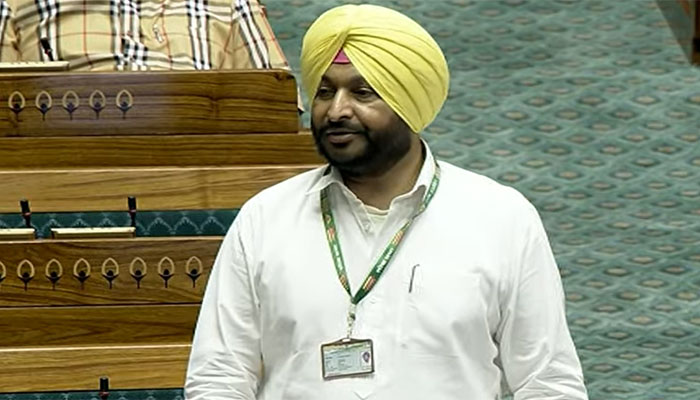
In a big setback to Shiv Sena UBT MLA Ravindra Waikar, the Bombay High Court has dismissed his petition which had challenged the civic body’s cancellation of the permission granted to him to construct a luxury hotel in Mumbai’s Jogeshwari. A division bench of Justices Sunil Shukre and Rajesh Patil said, “There is no merit in the petition, and is accordingly dismissed.”

Waiker along with four others had filed a petition alleging that the permission was canceled by the Brihanmumbai Municipal Corporation (BMC) without giving them a show cause notice or a hearing. However, the BMC said that a showcase notice was issued on 8th February this year.

The BMC alleged that the petitioners obtained the permission to construct the hotel in January 2021 and the commencement certificate on 26 February 2021 by suppressing the facts that the reservation/designation on the plot as per the 1991 Development Plan had already been implemented as per policy.

The bench had earlier questioned the civic body why it granted permission to construct the hotel if the MLA had suppressed information as the BMC alleged. Waikar’s lawyers, senior advocate Aspi Chenoy and advocate Joel Carlos, contended that the BMC order was “arbitrary, illegal, and malafide”. As per the petition, the BMC had made up excuse of the commencement certificate (CC) having lapsed, since a CC does not require a renewal.

The BMC said that the Development Plan 2034 only showed the existing position of the project and it was not open for the petitioner to claim and develop the reservation/designation as if it was put up for the first time. The municipal corporation on 15th June canceled the permission for the station that earlier development permissions were not disclosed and that the CC had lapsed.

Waikar has been granted interim relief from coercive action for four weeks to be able to challenge the HC order before the Supreme Court. “At the request of the petitioner’s advocate, interim relief granted by this court is extended for four weeks to enable the petitioner to challenge the order in the Supreme Court,” the bench said.

Meanwhile BJP leader Kirit Somaiya has taken a dig at the Shiv Sena UBT MLA. He said, “₹500 Crore, illegal 5 Star Hotel of Ravindra Waikar will be demolished . Highcourt rejected Waikar petition. Hisab to lekar rahenge (we will assure accountability).”

Earlier in April, BJP leader Kirit Somaiya filed a complaint against Waiker leading to an investigation by the Economic Offences Wing (EOW). According to Somaiya, the MLA was involved in a Rs 500 scam. The BJP alleged that Waikar illegally obtained the approval for the construction of the 5-star hotel on a plot reserved for a garden.

BJP alleged that Waiker used political ties to get the approval and caused huge losses to the BMC. Waikar denied the charges. EOW sources reportedly had said that top BMC officials would be quizzed in the matter.

Did you know in 2011, when Congress was in power, 2 lakh people were displaced from Delhi during the Commonwealth Games: Read details

India is hosting the G20 conference this year in which top leaders, diplomats and businessmen of 20 major economies of the world are scheduled to stay in Delhi during the period. The face of the entire national capital has been modified. It took several months to prepare for the momentous occasion.

Since the opposition parties have criticised the government and Congress leaders have also negatively commented on the G20 arrangements, it becomes necessary to recall how over 2 lakh people in Delhi slums were evicted before the Commonwealth Games 2010 were held in Delhi during the UPA-2 regime.

It is notable that the encroachments razed by the bulldozer action are in strict accordance with the instructions issued by the Supreme Court. Also, the areas where this demolition drive is taking place are nowhere in the vicinity of the Pragati Maidan which is the venue of the G20 summit. Press Information Bureau has also debunked fake news peddled by media outlets like CNN in this regard claiming that ten thousand odd people are relocated in this drive. The vicious agenda of blaming the Modi government, however, does not cover the fact that more than 2 lakh slum dwellers were evicted ahead of the CWG 2010.

The Commonwealth Games 2010 were held in Delhi. In 2010, there was a different government in the country. Dr Manmohan Singh was the Prime Minister and the Congress-led United Progressive Alliance, known as UPA (which has now abandoned the name and formed a new alliance called I.N.D.I.A.) was in power at that time.

An NGO’s study revealed that approximately 200,000 people were subjected to “forced” eviction from their homes in the capital city during the six-year period from 2004 to 2010. This mass displacement was carried out in the name of infrastructure development for the Commonwealth Games (CWG), and it occurred without any provisions for rehabilitation.

As outlined in the report titled “Planned Dispossession: Forced Evictions and the 2010 Commonwealth Games,” forced evictions were executed in 19 locations throughout Delhi in preparation for the sporting event. The report asserts that at none of these sites were residents consulted or involved in the decision-making procedures regarding the demolition of their residences. Furthermore, the report alleges that authorities failed to conduct any public hearings regarding the planned evictions.

The study report said, “Based on field works and research, we found out that at least 2,00,000 people in Delhi have been forcibly evicted as a result of CWG. The city, however, witnessed many more demolitions and evictions in the run-up to the Games.”

It added, “The CWG-related evictions were carried out in extreme weather conditions, during festivals and prior to school examinations. Authorities demolished many homes across the city when residents were not present; several demolitions took place when people were at work or travelling out of the city.”

During the release of the report, former Delhi High Court Chief Justice A P Shah emphasised that the right to shelter and livelihood has been duly acknowledged by the Supreme Court in its rulings. He said, “In total violation of all human rights recognised by the Supreme Court and international laws, these slum dwellers were removed. Several poor people were without prior notice forcefully evicted from their so-called slums, without being rehabilitated.”

In fact, the situation was so appalling that the then chief minister of Delhi Sheela Dixit acknowledged in April 2010 – which is six months prior to the CWG 2010 – that there would be 3 million homeless people in Delhi post this event. She said, “We will have about 30 lakh homeless in the city after the Games.”

During the leadership of former Congress president Sonia Gandhi, who also served as the Rae Bareli MP, India had a golden opportunity to showcase its global prowess. With six years in governance, the Congress-led government had ample time to achieve significant milestones. One such occasion was the hosting of the 2010 Commonwealth Games, where 4,352 athletes from 71 nations gathered.

Unfortunately, this opportunity was squandered, and India’s reputation suffered a blow due to the scandals that emerged. These scandals not only tarnished India’s image but also raised doubts about its ability to successfully host international events and promote its rich culture.

Although India had previously organised the Asian Games in 1951 and 1982, the 2010 Commonwealth Games were the largest sporting event held in Delhi at that time. The corruption scandals associated with these games became the most costly among a series of severe corruption cases witnessed during the UPA government’s tenure. Adding to these corruption scandals, which affect the lives of the poor indirectly, these direct impacts of evicting the poor from the slum were more serious and had grave impacts on the lives of lakhs of people in Delhi.

India is efficiently hosting the G20 summit without any corruption scandals, and it’s actively promoting tourism during the event. The Delhi Metro even offers special passes for international visitors to explore the city’s significant landmarks.

Unlike the 2010 Commonwealth Games, where allegations of corruption and mistreatment of labourers surfaced, there have been no accusations of wrongdoing in the construction of the G20 summit complex, which cost Rs 2700 crore. Prime Minister Modi acknowledged and honoured the labourers, demonstrating a positive change in the government’s approach to such major events.

While the Congress-led UPA government was often involved in corruption during big event organisation, the Modi government sees the G20 summit as an opportunity to showcase India’s capabilities to the global audience.

Badruddin Ajmal goes on a rant again, claims Hindus and not Muslims believe in polygamy, had earlier made bizarre claims about UCC: Details

0

All India United Democratic Fund (AIUDF) chief Badruddin Ajmal, who has been caught making multiple outlandish remarks in the past, is back in the spotlight for yet another ludicrous remark. At a time when the Himanta Biswa Sarma-led Assam government is mulling to outlaw polygamy in the state, Badruddin Ajmal, the chairman of the All India United Democratic Front, has claimed that Muslims generally believe in monogamy and it is the Hindus who are polygamous.

Ajmal told reporters here on Friday, “The BJP and Assam Chief Minister have snatched everything from the Muslim people residing in the state. They do not have jobs or money and moreover, Himanta Biswa Sarma is not allowing the Muslim people to sell vegetables in the streets for their living. Thus, Muslims even if they want to, cannot marry more than once.”

The Dhubri Lok Sabha MP lamented that Muslims in Assam cannot marry more than once even if they want to as they are jobless. He added that nowadays Hindus often have multiple wives.

Here, the AIUDF chief should be reminded that as per Sharia or Muslim personal law, a Muslim man can remarry without divorcing his first wife and is allowed to have four wives in polygam though a Muslim woman does not have that right. Meanwhile, under Hindu law, which applies to Hindus, Sikhs, Jains, and Buddhists, the practice of polygamy is prohibited. In fact, individuals governed by Hindu law can face criminal proceedings under Sections 494 and 495 of the Indian Penal Code.

Last year BJP leader and lawyer Ashwini Upadhyay and some Muslim women, including, Naisa Hasan, Shabnam, Farzana, Samina Begum, and Mohsin Kathiri, filed petitions challenging the constitutional validity of polygamy and nikah halala.

All these petitions have sought that these practices of Muslim society should be declared unconstitutional and illegal. The petitioners contended that practices such as polygamy and nikah halala violate the fundamental rights of Muslim women.

When AIMPLB batted for Nikah Halala and Polygamy

In fact, when the plea was heard in the Supreme Court, the All India Muslim Personal Law Board batted in favour of Polygamy and the terribly oppressive practice of Nikah Halala. The AIMPLB emphasized that ‘Mohammedan Law is based on Holy Quran and Hadith’ and that such practices can’t be tested on the basis of fundamental rights.

Despite the fact that all of these details are public knowledge, the AIUDF chief’s remark comes as no surprise given his history of making such outrageous statements. In fact in July this year, the AIUDF chief suggested that polygamy is a non-issue within the Muslim community. He said, “According to them, all Muslims have 4 wives and they want to stop it. I have put forth this challenge – If 1 lakh Muslims gather together, then maybe 1, 2 or 3 of them have 4 wives”

“Here people are unable to raise 1 or 2 kids. Are they mentally unstable to keep 4 wives? Whoever has the financial means, let them do… But who has multiple wives? Rickshaw pullers, cart pullers, fruit vendors and illiterate people,” the Lok Sabha MP further alleged.

AIUDF chief Badruddin Ajmal claimed under UCC both men and women will have to wear sarees

Badruddin Ajmal’s aforementioned remark had come amidst the debate surrounding the Uniform Civil Code. The All India United Democratic Front (AIUDF) leader Badruddin Ajmal had then mistook the proposed law for uniformity in food and dress.

While speaking about the matter on Friday (July 14) in the Dhubri district of Assam, he claimed, “A debate has been sparked off over Uniform Civil Code (UCC). The bill will be tabled before the Parliament soon…After UCC is implemented, we will start wearing saree and you also do the same…”

“Men and women both need to wear a saree. When UCC comes into force, everyone will have to wear a saree. We will maintain a long beard for a year and you too do the same for a year. Uniformity, right?” he brazened it out.

Assam Govt mulls to ban polygamy

Badruddin Ajmal’s bizarre claim that Hindus and not Muslims believe in polygamy came as a reaction to Assam Chief Minister Himanta Biswa Sarma’s assertion that there is strong public support favouring the ban on polygamy in the state.

Informing that the draft of a law to ban polygamy in the state will be ready within the next 45 days, the Assam CM had said on September 2 that the state government has received as many as 149 proposals in response to a public notice that asked for input on the proposed law that would prohibit the practice of being married to more than one person at a time.

Out of these, 146 recommendations are in favour of the legislation which demonstrated a substantial amount of support from the people. Three organisations, however, responded that they opposed it. This shows that almost 98% of the responses support the move, while only 2% oppose it.

Polygamy is permissible and legal exclusively for Muslims in nations such as India, Singapore, as well as Malaysia. Polygamy is still recognised and practised in several Islamic nations such as Afghanistan, Pakistan, UAE, Algeria, Egypt, Iran, Nigeria and Cameroon. These are the only areas in the world where polygamy is still legal.

Though India has seen a decline in instances of polygamy across religions and demographies, the practice is still prevalent in the Muslim community. For example last year, a 28-year-old Muslim woman petitioned a court, seeking to prevent her husband from taking another wife without her written consent. Describing his action as “unconstitutional, anti-sharia, illegal, arbitrary, harsh, inhuman and barbaric”, she had said in court that “this practice (polygamy) needs to be regulated to curb the plight of Muslim women”.