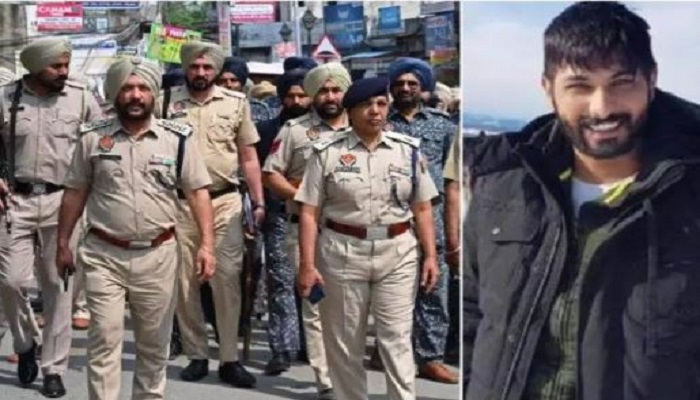
On Monday (September 25), Punjab Police carried out raids at multiple locations at places linked to Khalistani terrorist Lakhbir Singh Landa and his associates. Landa is an operative of the banned Khalistani terror outfit Babbar Khalsa International (BKI).
As part of an ongoing crackdown against Khalistani elements, the Police conducted raids at 48 locations in Firozpur and nearby areas. Many suspects have also been detained in these raids.
As per the police officials, Firozpur Police conducted raids on the premises of associates of Babbar Khalsa International (BKI) operative Lakhbir Singh Sandhu alias ‘Landa’ and his associates on Monday.
#WATCH | Punjab: Firozpur Police conducts raid on the premises of associates of Lakhbir Singh alias Landa.
Raids have been conducted at 48 places in the entire district and many people have also been detained. pic.twitter.com/n5gFzlMg8x
Regarding the raids, Firozpur SP, D Randhir Kumar said, “Firozpur police today took a major action and raided the premises of Lakhbir Singh alias Landa’s associates. Raids have been conducted at 48 places in the entire district and many people have also been detained.”
Punjab | Firozpur police today took a major action and raided the premises of Lakhbir Singh alias Landa's associates. Raids have been conducted at 48 places in the entire district and many people have also been detained: D Randhir Kumar, SP, Firozpur pic.twitter.com/hABfTzhu2Q
Earlier this month, Punjab police had raided 297 hideouts of Khalistani terrorist Lakhbir Singh Landa’s close aides and seized several incriminating materials. The raid came after NIA had seized land belonging to Landa in Tarn Taran last month
The agency had announced a cash reward of Rs 10 lakh each for giving information regarding Landa and Rinda while a Rs 5 lakh reward was announced for others like Parminder Singh Kaira alias Pattu, Satnam Singh alias Satbir Singh alias Satta, and Yadvinder Singh alias Yadda.
The BKI operative Landa and his associates are wanted in an NIA case pertaining to terrorist activities that are aimed at “disturbing India’s peace and communal harmony and spreading terror in Punjab.”
They are under NIA radar in multiple cases including committing terror acts, raising funds for banned Khalistani outfit BKI and smuggling of arms and narcotics into Punjab, and carrying out targeted killings in the state.
Last week, an NIA spokesperson said, “The wanted terrorists are accused of committing terror acts and engaging in activities such as raising funds for the BKI, a banned terror outfit, through smuggling terrorist hardware and narcotics into Punjab, as well as extensive extortion from businessmen and other prominent individuals.”
The spokesperson added, “They are also wanted in cases relating to commissioning of targeted killings as well as targeting of law enforcement agencies in order to create an environment of terror in the state of Punjab.”
As per the officials, investigations have revealed that the five terrorists have been engaged in recruiting new members of the BKI by promising them monetary benefits.
Originally a resident of Maharashtra, Rinda, is currently a Pakistan-based “listed individual terrorist” and member of the BKI whereas Landa, Khaira, Satnam, and Yadvinder are residents of Punjab.
As part of a crackdown on Khalistani terror infrastructure, the NIA recently released two lists of 54 individuals. The list includes details like the photographs of individual Khalistani terrorists or gangsters who are wanted in the investigation of two cases, registered last year.
One of the lists included the names of 11 persons while the other had the names of 43 most wanted criminals including Khalistani terrorists based in Canada or elsewhere.
The list included several wanted gangsters, including Goldy Brar, Lawrence Bishnoi, Anmol Bishnoi, and Arshdeep Singh Gill.
Additionally, media reports have revealed that NIA has decided to confiscate the properties of 19 Khalistani terrorists to dismantle the Khalistani network. The report also added that the government has asked agencies to cancel their Overseas Citizenship of India (OCI) to bar their entry into India.
This development comes after NIA already confiscated the properties of SFJ spokesperson and individual terrorist Gurpatwant Singh Pannun in Chandigarh on 23 September, and a court notice was issued to confiscate the property of slain Khalistatni Hardeep Singh Nijjar in Jalandhar.
A case of human rights abuse and physical assault on a pilgrim who had gone to the Dargah of Khwaja Moinuddin Chishti in Ajmer, Rajasthan to pay ziarat, media reported on Monday (25 September). The victim, Sarwar Hussain, has alleged that the Dargah’s Khadim physically assaulted him and subjected him to inhumane treatment.
According to the victim, the Khadims at the Dargah shaved his head and trimmed half of his moustache for not paying money for ziarat. The victim, Sarwar Hussain, added that the Khadims also looted all his money. Following the incident, the police informed that they had arrested 3 Khadim in this case. The incident reportedly took place on Saturday (23 September 2023).
According to media reports, Sarwar Hussain, a resident of Burhanpur in Madhya Pradesh, filed a police complaint about the incident.
In his complaint, he stated that on 23 September, he visited the Ajmer Sharif Dargah with his friends Manish and Asif to pay homage. When they reached there, one of the Khadim at the Dargah named Syed Rahmat Ali demanded money for Ziarat from all of them.
But when Sarwar Hussain refused, Khadim and his supporters present there started beating him. After beating Sarwar, the accused forcibly took him to another part of the Dargah.
In the complaint, Sarwar added that the accused got his hair shaved and trimmed a part of his moustache. Additionally, they also stole all the money kept in his pocket.
The media reports have identified Khadim Rehmat Ali’s associates as Qasim and Mohammad Faiz Salmani.
In his complaint to the local police, Sarwar Hussain also stated that three women were among those who had beaten and abused him. However, on the contrary, the accused started calling Sarwar a thief and a pickpocket.
Following his complaint, police arrested Khadim Syed Rehmat Ali along with his associates Qasim Shaikh and Faiz Salmani.
While speaking to the media, police station in-charge Jagdish Meena confirmed the action and said that the search for the remaining accused was ongoing.
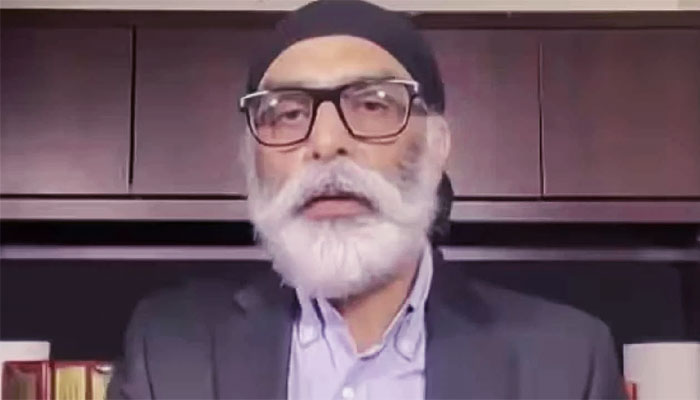
On September 23, National Investigation Agency (NIA) confiscated the properties of Khalistani terrorist Gurpatwant Singh Pannun in Sector 15 C Chandigarh. As per reports, the investigation agency has issued a new dossier on the Khalistani terrorist that will be shared with the investigation agencies in other countries. As per the new dossier, Pannun wants to create Khalistan and divide India into multiple parts. There are 16 cases registered against him in different states.
From Khalistan to Urdustan
As per the dossier, Pannun wants to create Khalistan by cutting Punjab and parts of Himachal and other states. Furthermore, he wants to create Urduistan. The dossier noted that Pannun “has challenged the unity and integrity of India by audio messages” and “wants to create a separate country for people of Kashmir… and create a Muslim country”. It added, “wants to seduce the Muslims (and) create a Muslim country that he wants to name as ‘Democratic Republic of Urdustan’, and that he is radicalising people in Jammu and Kashmir to enable the latter’s separation from the Indian Union.”
The concept of Urduistan or Urdustan was floated ahead of Independence Day in 2020. An audio message was received by several media persons in Lucknow and other states in which a male’s voice urged people to protest against the Ram Mandir being constructed in Ayodhya. The person in the message said it was the Modi government’s first step to build Hindu Rastra. He added the temple is being constructed by demolishing the disputed structure, and thus, PM Modi should not be allowed to unfurl the National Flag on Independence Day. The message further supported the demand for Khalistan by Sikhs and demanded Urdustan, a separate nation for Indian Muslims. it appears SFJ made the calls.
“In 1992, they destroyed Babri masjid, and Muslims remained quiet. And then, there were Gujarat killings of Muslims and Muslims remained quiet. They took over Kashmir, and Muslims remained quiet. You cannot keep quiet when somebody is challenging your religious beliefs,” Pannu said.
He insinuated that Khalistan is the birthright of Sikhs and Urduistan is the birthright of Muslims. At that time, he created a website that was blocked in India but still running in other countries. Pannu even showed a map of the proposed ‘Urduistan’. The imaginary country includes Rajasthan, Haryana, Delhi, UP, Bihar and West Bengal.
Cases registered aginst Pannun
As per the NIA dossier, there are 16 cases registered against him in different states, including Punjab, Himachal Pradesh, Haryana and Uttarakhand.
The dossier noted that Pannun was born in February 1967. His family had migrated from Pakistan to Amritsar in Khankot village in 1947. He is an attorney at law in the US and runs a firm. His organisation, Sikhs For Justice, is a secessionist group that supports the secession of Punjab from India as Khalistan. Pannun was declared a terrorist under UAPA in July 2020.
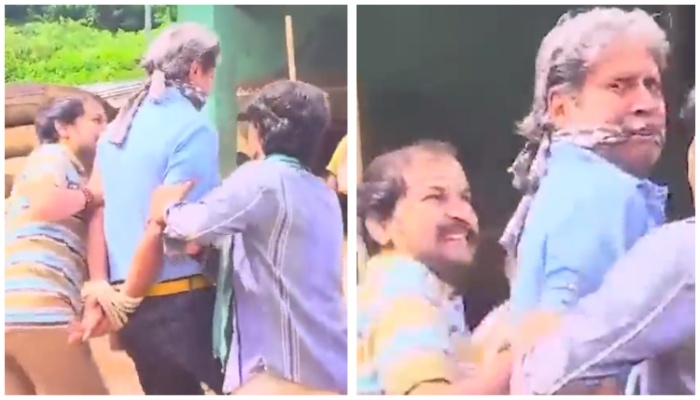
On Monday, September 25, a 0.07-second video clip took the internet by storm. The video which quickly went viral showed a person resembling cricket legend Kapil Dev, who had his hands tied and mouth strapped being manhandled and taken away by two goons.
Cricketer turned politician Gautam Gambhir shared the clip on X, formally Twitter as he enquired about the World Cup-winning captain’s well-being. However, as soon as the video went viral, netizens started flooding Gautam Gambhir’s timeline hoping that it was a promotional stunt similar to what happened last year with cricket pundit Harsha Bhogle.
Sharing the video Gautam Gambhir wrote, “Anyone else received this clip, too? Hope it’s not actually @therealkapildev and that Kapil Paaji is fine!” along with a fingers-crossed emoji.
In the 0.07-second clip, a man in a light blue t-shirt and checkered trousers is seen being carried away by two goons. The man, who resembles Kapil Dev, has his wrists tied behind him and his mouth strapped with a piece of cloth. The man turns around for a fraction of a second, revealing his face. He offers a helpless look as the two men drag him inside a dingy house.
While no official statement has been issued regarding the viral video, numerous followers on social media have claimed that it is nothing more than a promotional gimmick.
Seeing Kapil Dev kidnapped in a viral clip is worrying every cricket fan. Hoping it's fictional, not real crime. If just an attention-grabbing ad, the creators should apologize for causing such distress irresponsibly.#KapilDev#ResponsibleMarketinghttps://t.co/WwmRLauk1p
Some were quick to recall a video from last year that showed cricket commentator Harsha Bhogle abruptly disappearing while speaking to a sports portal via video link. Just as it was eventually revealed that Harsha Bhogle’s video was a promotional gimmick, many Netizens were convinced that this was a re-run of last year’s act.
Harsha Bhogle disappears from live Instagram interview leading to netizens worry about him, later reveals it was a promotional stunt
A similar video that had left Netizens worrying, had emerged in March 2022, wherein cricket commentator Harsha Bhogle suddenly disappeared while talking to a sports portal via video link. Harsha Bhogle was talking to cricketsportwalkin on an Instagram live session on March 24, 2022, when suddenly he disappeared from the screen after the camera apparently fell to the ground with a blurry image. However, later it was revealed that it was a promotional stunt that went wrong, as people started genuinely worrying about him.
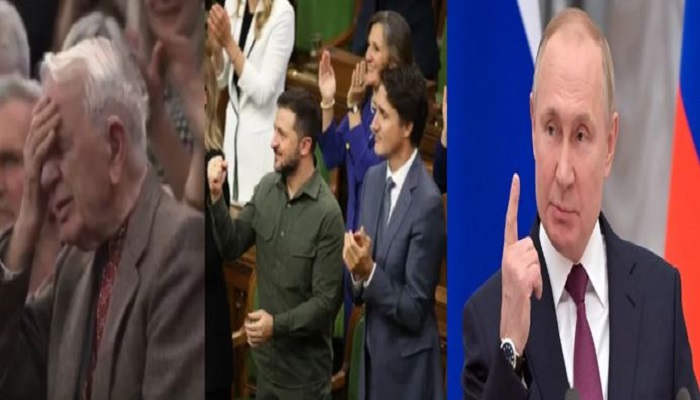
On Monday (September 25), Russia launched a scathing attack on Canada for honouring a Nazi soldier, Yaroslav Hunka, in their Parliament and asserted that Canada has been, and remains a safe haven for Nazis. Notably, the Russian Embassy in Canada has announced that they will send a note to the Canadian Foreign Ministry and the office of Canadian Prime Minister Justin Trudeau for honouring a Ukrainian Nazi who served in the SS division “Galicia” in their parliament, Russian news agency TASS reported on Monday (September 25).
Regarding the development, Russian Ambassador to Canada Oleg Stepanov stated that the embassy will seek clarification over this episode.
He said, “The embassy is sending a note to the Canadian Foreign Ministry and the Prime Minister’s office demanding clarification. The SS is recognised as a criminal organization by the decisions of the Nuremberg Tribunal, which are an integral part of international law. By honoring a member of this criminal community, the Canadian cabinet and members of parliament violated not only moral but also legal norms.”
Additionally, the Russian Ambassador to India, Denis Alipov emphasised that the act of giving a standing ovation to a Nazi soldier highlights that Ottawa still remains a safe haven for Nazis. The Russian ambassador also castigated Ukrainian President Zelenskyy regarding the Nazi row.
Taking to X, he wrote, “Canada has been and remains a safe haven for Ukrainian Nazis and not only them. Apologies for ignorance are ridiculous while a standing ovation tells it all. Thank God Zelensky’s grandfather does not see what his grandchild has become. Disgusting!”
Canada has been and remains a safe heaven for Ukrainian Nazis and not only them. Apologies for ignorance are ridiculous while standing ovation tells it all. Thank God Zelensky’s grandfather does not see what his grandchild has become. Disgusting!? pic.twitter.com/eqO5EM4jgk
Earlier in the day (25 September), the Polish ambassador to Canada Witold Dzielski demanded an apology from the Justin Trudeau-led-government for honouring a Nazi soldier.
In a tweet, Dzielski wrote, “09/22 Canada and Ukrainian leadership at House of Commons cheered a member of Waffen-SS Galizien, notorious UA military formation of World War 2 responsible for murdering thousands of Poles and Jews.”
09/22 ??&?? leadership at @OurCommons cheered a member of Waffen-SS Galizien, notorious #UA military formation of #WW2 responsible for murdering thousands of Poles & Jews.
?? best ally ?? has, will never agree on whitewashing such villains! As ?? Amb. to ?? I expect an apology. pic.twitter.com/j6EkVWGg1d
He added, “Poland who is best ally of Ukraine, will never agree on whitewashing such villains. As Ambassador to Canada, I expect an apology.”
Notably, on 22nd September, the Canadian House of Commons gave a standing ovation to 98-year-old Yaroslav Hunka, a World War II Nazi soldier. It was done in the presence of Ukrainian President Volodymyr Zelenskyy and Canadian Prime Minister Justin Trudeau.
Interestingly, Yaroslav Hunka was a member of a SS unit established in 1943 by a high-ranking Nazi SS official. He fought for the First Ukrainian Division, originally named the 14th Waffen-Grenadier Division der SS (Ukrainische Nr 1), also known as the “Galicia” Division.
As per documented WW2 history, the 14th SS-Volunteer Division “Galicia” was a World War II Nazi Germany military formation made up predominantly of military volunteers with a Ukrainian ethnic background from the area of Galicia.
It is notable that SS was the main paramilitary group under Adolf Hitler and the Nazi Party in Nazi Germany, and was primarily responsible for running Holocaust operations. 14th SS-Volunteer Division Galicia was made up of volunteers, which means that Yaroslav Hunka joined the unit on his own will, and was not conscripted.
Resultantly, the act of the Canadian Parliament honouring a Nazi collaborator has infuriated Jewish people, and their organisations, all across the world, who have come out openly to condemn this development and sought an apology from the Canadian Parliament, their Speaker, and their government.
We are deeply troubled & disturbed that a Ukrainian veteran of the infamous 14th Waffen Grenadier Division of the Nazi SS – which actively participated in the genocide of Jews – was celebrated with a standing ovation in the Canadian Parliament. #Canada's Jewish community stands…
In the wake of widespread outrage, the Canadian Parliament speaker apologised for celebrating a Nazi who killed Jews during WWII.
I just canceled my trip to Canada. I just can’t… It’s beyond the pale. Trudeau’s tyranny against peaceful trucker protesters seems insignificant to this despicable and outrageous act of honoring of one of ADOLF HITLER’S NAZI SS Soldiers by the Canadian Parliament. No words… https://t.co/ZEVwZjOPse
Meanwhile, comedian and Hollywood actor Rob Schneider took to X, to announce that he has canceled his trip to Canada because of this “deplorable” and “outrageous” development.
On Saturday night in Mosimpur village of Bihar’s Patna district, a 30-year-old Mahadalit woman was subjected to a horrific assault, including stripping and force-feeding of urine into her mouth, a Times of India report said.
The brutal attack stemmed from her alleged inability to repay a Rs 1,500 loan from a local strongman, according to police reports on Sunday.
A 45-year-old Mahadalit woman was brutally assaulted, stripped and urinated on her mouth for purportedly failing to repay additional interest on a loan amounting to Rs 1,500, which she had borrowed from a local strongman in Mosimpur village of Patna district.
The victim has named Pramod Singh and his son Anshu Kumar, along with four others, her assailants. Despite the loan and interest being reportedly repaid according to her family, the accused allegedly pressured her to pay an extra amount as interest. Upon her refusal, the father-son duo subjected her to physical assault and humiliation.
Patna SSP Rajiv Kumar Mishra confirmed the filing of an FIR and stated that the accused, along with their family members, were currently evading arrest. “Their residence is sealed, and we are actively pursuing raids to apprehend them,” Mishra stated. Ashok Das, the older brother of the victim’s husband, Subodh Das, mentioned that Pramod and his group had approached her about four days ago, insisting that an outstanding interest amount was due.
Upon reporting to the police, Pramod seemed further infuriated. On that fateful Saturday night, Pramod, accompanied by his son and four others, forcibly abducted the woman, as relayed by Das. “We embarked on a search and discovered her rushing home without any clothing. We quickly covered her and brought her home,” Das recounted. “She disclosed that she had been stripped, and Pramod’s son had subjected her to a degrading act of urination. Additionally, she bore a head injury and visible beating marks on her thighs,” he continued. Das highlighted that the accused belonged to a dominant caste in the village, while Mahadalit households were scarce. “We live in fear and contemplate relocating temporarily,” he expressed.
INDI Alliance’s lip service to uplifting the downtrodden and reserved sections of society
The incident, which took place in Bihar, governed by INDI alliance partners RJD and JDU, raises questions about the alliance’s commitment to the welfare of the marginalised and vulnerable section of the population. Rahul Gandhi, a senior leader of Congress and another member of the opposition INDI Alliance, has been trotting out the lack of representation of reserved classes within the Civil Services—a part of an attempt to chip away at the BJP’s consolidation of OBC votaries.
However, he remains dishonest in his allegations, as highlighted by JP Nadda, who pointed out that the current batch of Secretaries has a cutoff date of 1992, while the inclusion of reserved classes within the Civil Services took place in 1995-1996. Despite being informed about the facts, the Gandhi scion has continued to repeat his tropes to attack the Centre.
The INDI Alliance members have been vociferous in their demands from the central government to release the caste census data. But incidents like the Patna shocker betrays that their lofty claims of fighting for the marginalised are all but sham aimed at extracting political mileage and not rooted in genuine concern for the reserved classes.
Recently, BSP MP Danish Ali was in the eye of a raging storm after BJP MP Ramesh Bidhuri made unsavoury remarks against him in the parliament. It was later reported that Ali had provoked the BJP lawmaker by allegedly making a deplorably casteist remark against the Prime Minister. “Neech ko Neech nahin toh kya bolege,” Ali had reportedly said that led to the angry outburst of the BJP MP. The casteist remark, ironically by a BSP leader, demonstrates the opposition’s disregard for the cause of the reserved classes and their insincerity in stamping out discrimination meted out on them.
In August this year, a Dalit man in Rajasthan’s Jaipur district alleged that Congress MLA Gopal Meena and Jamwa Ramgarh Deputy Superintendent of Police Shivkumar Bharadwaj urinated on him, forced him to lick their shoes, assaulted and hurled casteist abuses on him, once again bringing to the fore Congress party’s hollow promises of working for the welfare of the Dalits and other reserved classes.
Even as Rahul Gandhi and other INDI Alliance members wax eloquent about their commitment to helping the marginalised sections of society, the Patna incident underscores how Dalits and other reserved classes continue to face discrimination, abuse, and indignity in the opposition-ruled states.
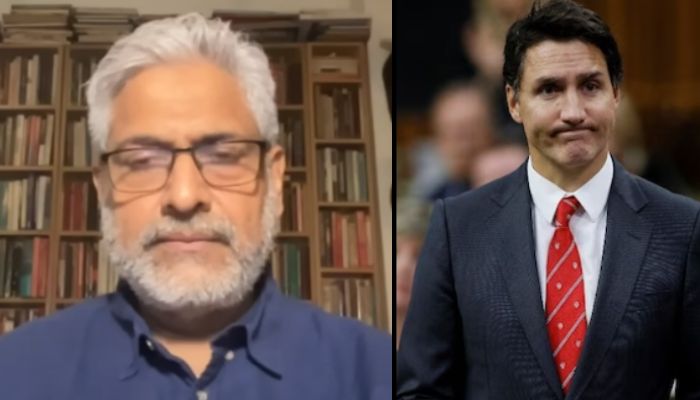
On Wednesday (September 20), the Founding Editor of The Wire, Siddharth Vardarajan, courted controversy after he tried to rationalise anti-India Khalistani activities in Canada as ‘free speech’ and lent credence to the unfounded accusations by Canadian Prime Minister Justin Trudeau against the Indian government.
While speaking to the Senior Editor of the leftist propaganda outlet, Arfa Khanum Sherwani, he claimed that the Canadian government displayed a high level of sensitivity by alleging India’s involvement in the murder of Khalistani terrorist Hardeep Singh Nijjar on Canadian soil.
At about 6 minutes 30 seconds into the programme, Vardarajan remarked, “Canadian Prime Minister has made serious allegations against India and shared the evidence with US President Joe Biden and the leaders of Australia, Britain and France…The Canadian government has raised the issue with a lot of sensitivity.”
He further added, “We have to understand that Canada is raising the issue with utmost sensitivity, seriousness and a sense of responsibility. We cannot dismiss this as a casual remark. This was well-thought-out (move by Canada).”
At the very onset, it became clear that Siddharth Vardarajan was hell-bent on legitimising the accusations made by Canadian Prime Minister Justin Trudeau against the Modi government. This was despite the fact that the Canadian government did not provide any credible evidence so far to back its claims.
In fact, British Columbia Premier David Eby has gone on record to say that briefings provided to him by CSIS (Canadian Intelligence Agency) about the killing of Hardeep Singh Nijjar were ‘open source’ and based on material available on the internet.
This did not stop Justin Trudeau from jeopardising bilateral relations and kicking off a diplomatic standoff by brazenly accusing the Indian government of carrying out murders on its soil. Interestingly, The Wire’s Founding Editor found this very move by the Canadian Prime Minister as ‘sensitive and responsible.’
Arfa Khanum Sherwani also claimed that it was a responsible decision on the part of the Canadian government. “Justin Trudeau wanted to treat the issue seriously. This is why he displayed a sense of responsibility by raising the matter in the Parliament,” she emphasised.
Siddharth Vardarajan attempts to rationalise Justin Trudeau’s diplomatic blunder
At about 9 minutes into the programme, Vardarajan attempted to rationalise the decision of Justin Trudeau to create a spectacle in public. On September 19, the Canadian Prime Minister addressed the House of Commons and accused the Indian government of killing Hardeep Singh Nijjar.
“Over the past number of weeks, Canadian security agencies have been actively pursuing credible allegations of a potential link between agents of the government of India and the killing of a Canadian citizen, Hardeep Singh Nijjar,” he had said.
In his speech, Trudeau mentioned that the basis of his accusations against the Indian government was ‘credible allegations’ and not concrete proof. To add to it, he downplayed the criminal background of the slain Khalistani terrorist by labelling him as a mere ‘Canadian citizen.’
Interestingly, Hardeep Singh Nijjar was granted Canadian citizenship in 2007 despite his involvement in immigration fraud and open allegiance to the cause of secession and terrorism.
NOW – Canada's Trudeau is accusing the government of India of being behind a fatal shooting on Canadian soil — CNC pic.twitter.com/rp1PRyKHwz
Nonetheless, Siddharth Vardarajan came to the rescue of Justin Trudeau by claiming that he first flagged the matter to the Indian government behind closed doors. “Instead of making a public spectacle, Trudeau first tried to raise the matter privately,” he alleged.
The Founding Editor of The Wire insinuated that the Modi government did not cooperate with the Canadian government, which somehow forced Justin Trudeau to take the drastic step of raising the issue in the House of Commons.
“The most possible reason behind Trudeau raising this issue is because he did not get assistance from the government that he wanted…” he was heard saying.
It must be mentioned that the Canadian government has so far not provided any specific proof, which could remotely point fingers at India’s role in the killing of Hardeep Singh Nijjar.
In fact, Justin Trudeau is now facing the heat from Canadian media, which has been insisting the government to share evidence in the public domain. But, Vardarajan conveniently ignored the facts of the matter to justify the diplomatic blunder of the ‘liberal’ Canadian Prime Minister.
Founding Editor of The Wire backs Canada’s claims of foreign interference by India
Siddharth Vardarajan also suggested that Canada was somehow shoved into a corner by the Indian government, which forced it to make unfounded allegations against India in public.
While dubbing it as an issue of national security for the North American nation, he claimed, “If someone comes to your country and targets your citizen, then, you cannot tolerate it. Even India does not tolerate it.”
“This is why Trudeau felt compelled to raise the issue and make Canadians aware of the situation. As such, the matter has now come to light and the media is reporting on it,” he added.
The Founding Editor of The Wire also said that India has become increasingly important to the West and as such, countries such as the US and UK won’t push the country on the issue of Canada.
“This will give space for India to shrug off the allegations,” Vardarajan said, insinuating that there might be some truth in the claims of Justin Trudeau about India’s supposed involvement in the murder of Nijjar.
In fact, the only political leader who has been actively interfering in India’s internal affairs and policy-making is Justin Trudeau. In December 2020, he came out in support of anti-farm law protests in India, despite it being the domestic issue of the Indian government.
“I would be remiss if I didn’t start also by recognizing the news coming out of India about the protests by farmers. The situation is concerning. And we all are very worried about family and friends; I know that’s a reality for many of you,” Trudeau had said back then.
“Let me remind you, Canada will always be ready to defend the right to peaceful protest. We believe in the importance of dialogue and that’s why we reached out to multiple means directly to Indian authorities to highlight our concerns,” he had remarked.
Siddharth Vardarajan dismisses Khalistani appeasement by Justin Trudeau
The propaganda artist also dismissed the role of internal politics of Justin Trudeau in raking up the issue of the death of Khalistani terrorist Hardeep Singh Nijjar.
“If we talk about internal politics, the general elections in Canada took place in 2021. Trudeau is in his second term as a PM. His government will run till 2026. To say that Trudeau raised this issue in 2023 due to internal politics has no weight,” he claimed.
While it is true that Canada’s federal election took place in 2021, it must be mentioned that the Modi government snubbed Trudeau during his visit to India in 2018 (about 3 years before the election). The diplomatic ‘snub’ was the manifestation of his long-standing appeasement of anti-India Khalistani elements.
Faced with tough competition from New Democratic Party leader Jagmeet Singh, a pro-Khalistani politician, Trudeau doubled down on his appeasement of Khalistanis in Canada. Although the next federal election is slated for 2025, his continued pandering to such anti-India forces for vote bank politics could not be ignored.
For Siddharth Vardarajan to suggest otherwise and discount the internal politics of Canada in Trudeau’s latest diplomatic blunder is a well-thought attempt to distance the Canadian Prime Minister and the growing menace of anti-India, Khalistani forces under his watch.
Founding Editor of The Wire makes a bizarre case for Canadian Khalistanis citing ‘free speech’
The Wire’s Founding Editor was seen justifying the inaction of the Canadian government against Khalistani separatists, residing in the country.
At about 13 minutes into the programme, he was heard saying, “There is a political understanding in Canada regarding freedom of speech and human rights. It is different in India. The understanding of the Indian government is different. ”
“This is the political culture of Canada…If the Indian government is telling Canada to silence pro-Khalistani elements or stop their activities, how can the Canadian government agree to it? Canada cannot act against them as per their internal policies” he brazened it out.
In order to substantiate his claims, Siddharth Vardarajan alleged that anyone could demand the secession of Quebec province from Canada and that the individual would not be booked/ prosecuted for sedition or anti-national activities.
He presented Canada as a land of ‘absolute’ free speech, where demands to break apart the country are neither condemned nor punished. Vardarajan pointed out how it was not the same in a country such as India.
As a matter of fact, the separatists in Quebec were crushed with an iron fist by the Canadian government in 1970s. The then Prime Minister Pierre Elliott Trudeau, who happens to be the father of Justin Trudeau, had even invoked wartime emergency powers to mitigate the threats of separatism.
Those demanding and fighting for the independence of Quebec were dubbed ‘nationalist terrorists’ and promptly arrested by the government. Unlike the wild assertions made by Siddharth Vardarajan about ‘free speech’, separatist activities and attempts at undermining sovereignty received no leniency in Canada.
Justin Trudeau, who extended his support for anti-farm law protests in India, was quick to curb the protest by truckers against the ‘undemocratic’ Covid-19 policies of Justin Trudeau. As such, there is no absolute freedom of speech in Canada, as alleged by The Wire’s Founding Editor.
So far, hundreds of RCMP officers have been mobilized to support the Ottawa Police Services. We’re also working with municipal partners to further strengthen our response, and we’ll continue to be there with whatever resources are needed to get the situation under control.
The Founding Editor of The Wire claimed that the Canadian government could only act against Khalistanis, if they were involved in crime.”Yes, if these individuals are involved in criminal activity such as terrorism, then, the Indian government can expect Canada to act against them” he said.
He claimed that the Indian government had only highlighted non-criminal activities such as anti-India statements and activities. There is nothing further from the truth.
The government also flagged security concerns after Khalistani extremists in Canada threatened to assassinate Indian diplomats. Despite this, the Canadian government took no action against such elements.
Justin Trudeau even went as far as downplaying the criminal record of Hardeep Singh Nijjar by presenting him as just a random Canadian citizen. In fact, that is a legacy that he inherited from his father Pierre Trudeau, who had unabashedly shielded ‘Kanishka bombing’ mastermindTalwinder Parmar.
As such, the claim by Siddharth Vardarajan that the Canadian government will act only if Khalistanis are involved in criminal behaviour is untrue. India has apprised Canada of the criminal antecedents of Khalistanis but to no avail.
It is for the Canadian government to now decide whether they want to maintain good ties with the world’s 5th largest economy. Justin Trudeau cannot be an alliance partner of India if he continues supporting anti-India forces for vote bank politics in Canada.
Siddharth Vardarajan downplays the menace of Khalistani extremism in India and Canada
Towards the end of the programme, Siddharth Vardarajan was seen downplaying the menace of growing Khalistani extremism, both in India and Canada.
He even went on to suggest that Canadian Sikhs organising a referendum for the secession of the State of Punjab from the Union of India was not a big deal.
The senior Editor of The Wire, Arfa Khanum Sherwani, also claimed that the Indian government was somehow exaggerating the situation and creating a big fuss out of it.
She also alleged that there is ‘no issue’ of Khalistan in India, while conveniently forgetting the anti-Hindu attacks in the State of Punjab and the mass mobilisation of the supporters of now-arrested Amritpal Singh.
Not to forget the pro-Khalistani slogans raised at Harmandir Sahib (Golden Temple) in Amritsar on the 38th anniversary of Operation Blue Star. Vardarajan also ignored all of it and claimed that there was no resurgence of the Khalistani movement in India for the past 10-15 years.
“Calling Khalistanis terrorists and pressuring the Canadian government to extradite them to India won’t work,” the propaganda artist was heard saying.
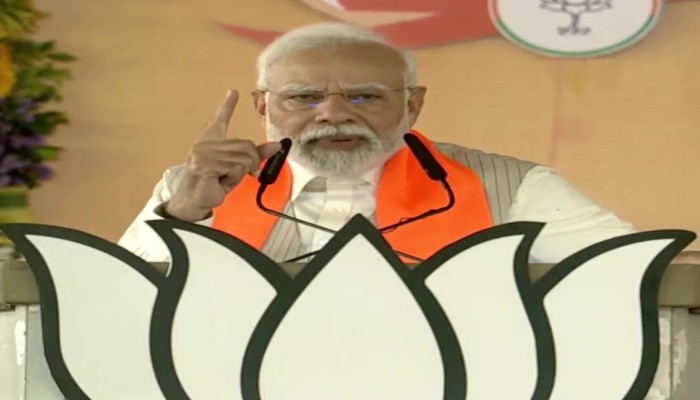
Prime Minister Narendra Modi today addressed a massive gathering of BJP workers in poll-bound Madhya Pradesh on the occasion of the birth anniversary of the co-founder of Jana Sangh Pandit Deendayal Upadhyaya.
The ‘Karyakarta Mahakumbh’ was organised by the Bharatiya Janata Party (BJP) at Jamboree Maidan in Bhopal to mark the culmination of its ‘Jan Ashirwad Yatra’.
The Prime Minister was welcomed amid loud cheers and pomp by a massive crowd of 10 lakh people at the mega event. PM began his address with the chant “Deendayal Upadhyaya amar rahein”.
Reaching out to party workers and voters, PM said that the youth who will cast their votes for the first time in the state have seen only the good governance of the BJP government.
“The youth of Madhya Pradesh have not seen the corruption, the bad roads, the cities without electricity under the previous Congress government. The youth of Madhya Pradesh have only seen BJP’s sushasan (good governance),” the PM said.
While going all guns blazing on the Congress, the Prime Minister said that he has lived a life with fewer resources but that he will not let the nation face the same. “Modi ka mijaaz bhi alag hai, mehnat bhi alag hai aur mission bhi alag hai’. For me, nothing is above the country and the people of the country… Main abhawon mein raha hu par desh ko nahi rehne dunga.”
#WATCH | 'Modi ka mijaaz bhi alag hai, mehnat bhi alag hai aur mission bhi alag hai'. For me, nothing is above the country and the people of the country… Main abhawon mein raha hu par desh ko nahi rehne dunga…: PM Modi in Bhopal pic.twitter.com/yDaBb8aCr3
“If dynasty parties like the Congress, parties who do vote-bank appeasement like Congress comes to power, MP will suffer,” the PM said as he encouraged voters and BJP workers to not let Congress come to power.
PM said that Madhya Pradesh cannot be allowed to make a “Bimaru” (sick) state again, adding that the future of MP’s youth cannot be allowed to be destroyed.
Underlining the Congress’ growing irrelevance in the country, the PM said that Congress is like that iron which gets rusted and destroyed after being kept under the rain.
Modi said, “Congress has been busy glorifying only one family. Congress has been busy nourishing the corrupt system in India. Congress is like rusty iron, which gets corroded if kept in the rain. Now Congress neither has the ability to see nor understand the national interest.”
Madhya Pradesh | Congress has been busy glorifying only one family. Congress has been busy nourishing the corrupt system in India. Congress is like rusty iron, which gets corroded if kept in the rain. Now Congress neither has the ability to see nor understand the national… pic.twitter.com/ngEL9MxM2Q
He further lambasted the Congress for “criticising every project linked to the development of India”. “Congress has opposed digital India too. Today UPI is known worldwide, and record transactions are being done. But Congress doesn’t like this too. BJP is bringing in Vande Bharat, rebuilding railway stations, but Congress can’t digest this too Congress also criticises the bullet train which BJP has brought,” PM said.
Speaking about the new Parliament, PM said that the BJP government made the new Parliament and the entire nation appreciated it but Congress has been opposing since day one. “Even now they are spreading negativity. Anything new Bharat does, any achievement Bharat makes, Congress does not like it.”
He said, “These (Congress) are the same people who tried their best to stop the country’s first tribal woman President Droupadi Murmu from becoming the President. These are the same people who have repeatedly tried to humiliate her. These people are the same people who had stopped the entry of daughters in the front lines of the country’s armed forces.”
Madhya Pradesh | These (Congress) are the same people who tried their best to stop the country's first tribal woman President Droupadi Murmu from becoming the President. These are the same people who have repeatedly tried to humiliate her. These people are the same people who had… pic.twitter.com/bmCFi6uJ6f
PM Modi said that the Congress is working in cohorts with Urban Naxals. He said that the Congress has lost its willpower and that its grassroots workers have been sitting quietly. “First, Congress was ruined, then they became bankrupt and now they have given their contract to someone else. The party is no longer being run by its leaders. Now it is outsourcing everything, from slogans to policies, and this contract is with some urban Naxalites.”
#WATCH | Madhya Pradesh: Congress has lost all its willpower. The grassroots leaders of Congress have been sitting quietly with their mouths locked… First, Congress was ruined, then they became bankrupt and now they have given their contract to someone else. The party is no… pic.twitter.com/jhsyBjwK7v
Taking a jibe at dynasty politics, PM said, “Poor man’s life doesn’t matter for their (Congress) leaders, born with silver spoons in their mouth… For them, poor’s life is adventure tourism… For Congress leaders poor persons’ colonies has become location for video shootings… They have done this in the past too… BJP government is showing the developed and grand face of the country to the world.”
#WATCH | …Poor's life doesn't matter for their (Congress) leaders, born with silver spoons in their mouth… For them, poor's life is adventure tourism… For Congress leaders poor persons' colonies has become location for video shootings… They have done this in the past… pic.twitter.com/GU6FgGOrKw
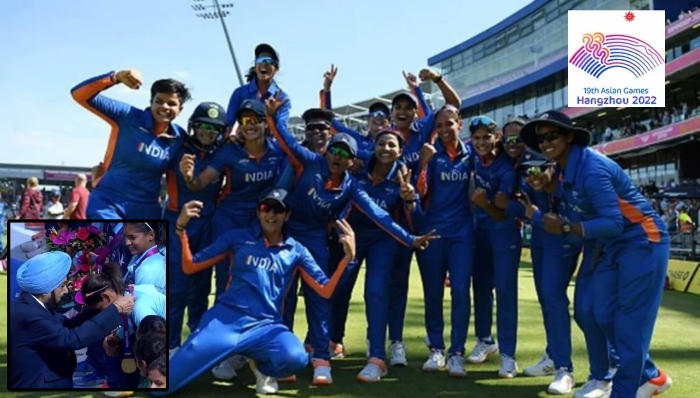
On Monday, September 25, the Indian women’s cricket team etched their names in history, as the Women in Blue defeated Sri Lanka by 19 runs to earn the first-ever Cricket Gold medal at the Asian Games. This is the second gold India clinched in the ongoing 2023 Asian Games so far. The first gold was secured by India’s shooters Rudrankksh, Aishwary and Divyansh in the Men’s 10m Air Rifle Team event.
The women’s cricket team accomplished this extraordinary victory by defending 116 runs to defeat Sri Lanka by 19 runs at the Pingfeng Cricket Field in Hangzhou, China, where the games are being held this year.
Hangzhou Asian Games: India women's cricket team beat Sri Lanka by 19 runs to win gold medal. This is India's second gold in this edition of the Games pic.twitter.com/xBpVxSX3lT
Harmanpreet Kaur, India’s captain, won the toss and chose to bat first in the final. Shafali Varma was the first wicket to go, with Sugandika Kumari taking her first of the day. After that, Smriti Mandhana and Jemimah Rodrigues put on an important 73-run stand to put India back in the game.
Mandhana, on the other hand, fell short of her 23rd T20I half-century, being dismissed by Inoka Ranaweera after scoring 46 runs off 45 balls, smacking five boundaries and a single six.
India managed to post 116 for 7 on the scoreboard after 20 overs.
— 19th Asian Games Hangzhou 2022 Official (@19thAGofficial) September 25, 2023
India got off to a fast start in the second innings, taking three early wickets. Titas Sadhu struck with the new ball, dismissing both openers Chamari Athapaththu and Anushka Sanjeewani, as well as Vishmi Gunaratne, to reduce Sri Lanka to 14 for 3 in 4.2 overs.
Sri Lanka finished their innings with 97 for 8 after 20 overs, falling 19 runs short.
Sadhu was India’s best bowler, taking three wickets and allowing six runs in four overs. With this, the Women in Blue managed to get India its second gold medal at the ongoing Asian Games 2023.
With this remarkable victory, India has until now won 11 medals at Hangzhou 2023, two gold, three silvers and six bronze.
In fact, on day 1 of the 2023 Asian Games itself, India had secured two silver medals; one in Women’s 10m air rifle shooting and the other in Men’s lightweight double sculls rowing.
India is being represented by a 655-member strong contingent in Hangzhou. The 19th edition of the multi-sport event, which was opened on September 23 and extends until October 8, was initially slated for 2022 but was postponed by a year due to the COVID-19 pandemic.
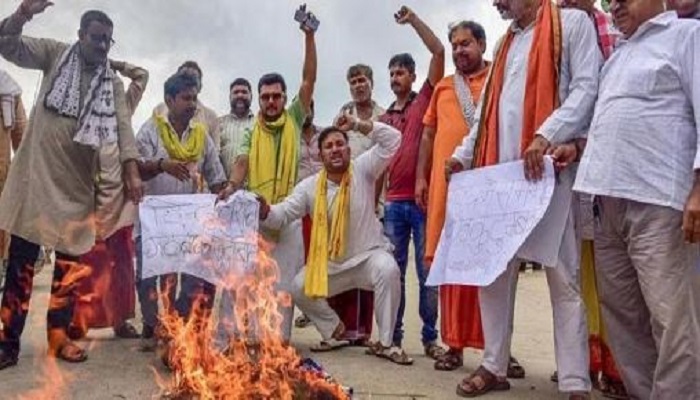
On Monday (25 September), Hindu priests in large numbers gathered in New Delhi to stage a protest demanding action against the leaders of the I.N.D.I. alliance who have given hate speeches against Sanatan Dharma in the past few months. Several Hindu organisations, including the VHP, were part of this ongoing protest.
Around 300 to 400 prominent saints and mahants from various Hindu groups gathered in New Delhi to register their protest against the repeated attacks and calls for the eradication of Sanatan Dharma by leaders of the I.N.D.I. alliance. The protesters brought posters with ‘Jai Sanatan Dharma’ inscribed on them and raised slogans in support of Sanatan Dharma.
Initially, the protesters gathered at the Sarojini Nagar bus depot. From there on, they began their march towards the Tamil Nadu Bhawan in the National Capital to call out the anti-Sanatan stance of the DMK-led Tamil Nadu government.
The protesters also brought effigies having pictures of several leaders of the I.N.D.I. alliance who gave hate speeches against Sanatan Dharma including Bihar Education Minister Chandra Shekhar and the son of Tamil Nadu CM, Udhayanidhi Stalin pasted on them. The angry protesters burnt these effigies and asserted that they wouldn’t tolerate insult or disrespect of Sanatan Dharma.
However, according to initial media reports, police have stated that they have not given permission to the protesters to ‘gherao’ Tamil Nadu Bhawan. Additionally, they have taken precautionary measures to stop the march from reaching its designated protest site.
President of Delhi Sant Mahamandal, Narayan Giri Maharaj, asserted that it was surprising that state governments were silent over the issue.
Maharaj said, “Even the Supreme Court has taken cognisance of the hate speech of politicians against Sanatan Dharma. The language used by politicians against Sanatan Dharma creates animosity among communities and strict action should be taken against such political leaders.”
Significantly, this development comes a week after several saints organised a Dharma Sansad in Ayodhya on 18th of September. At the Dharma Sansad, the saints unanimously condemned recurrent hate speeches and attacks by leaders of the I.N.D.I. alliance against Sanatan Dharma and gave a one-week ultimatum to Tamil Nadu Minister Udhayanidhi Stalin to apologise for giving hate speech and calling for the eradication of Sanatan Dharma.
They announced that if Stalin Jr. didn’t apologise, then all the saints and religious leaders of the country would march to Tamil Nadu and stage a protest there.
Additionally, the Dharma Sansad also demanded that the National Security Act (NSA) should be imposed on all those who have made inflammatory and hateful remarks against Sanatana Dharma, compared it with diseases, and called for its eradication including the son of Tamil Nadu Chief Minister, Udhayanidhi Stalin.
The Dharma Sansad and today’s protest come in the wake of repeated attacks and hate speeches against Sanatan Dharma by the leaders of the I.N.D.I. alliance. Tamil Nadu Chief Minister’s son Udhayanidhi Stalin equated Sanatan Dharma with diseases like Malaria and Corona and blatantly asserted that it should not be opposed rather it should be eradicated.
The DMK leader said, “Mosquitoes, dengue, flu, malaria, corona – we should not oppose these things. They’ve to be eradicated completely. The same is the case with Santanam. Our first work should be to abolish/eradicate Sanatanam instead of opposing it,” from the dais of ‘Eradicate Sanatan Conference’.
In the long list of anti-Sanatan remarks, DMK leader A Raja argued that Sanatan Dharma should have been compared with HIV, leprosy and Udayanidhi Stalin was soft in comparing it with dengue or malaria.