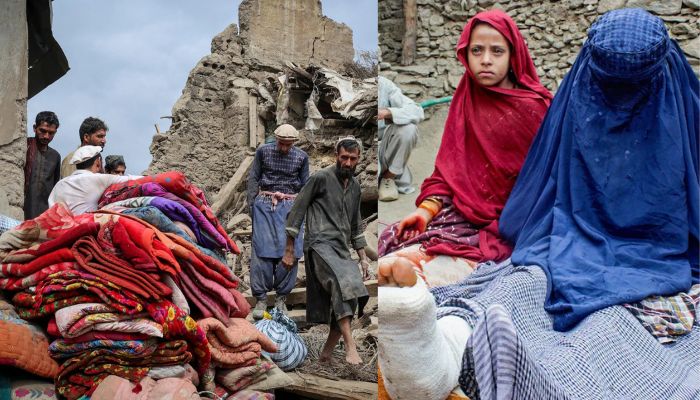
Afghanistan suffered third earthquake in a week, which killed more than 2,200 people and injured thousands, has revealed not only the destruction of homes and villages but also the deep human tragedy faced by women under Taliban rule. According to the reports, many women were left to die under rubble because male rescuers were forbidden from touching them.
As per the strict Taliban-enforced Islamic rule, ‘no skin contact with unrelated males’, only a woman’s close male relatives, her father, husband, brother, or son, are allowed to touch her.
This has made rescue efforts nearly impossible in communities where female rescue workers are almost absent, since women have been barred from medical education and most public roles for years.
Women trapped beneath collapsed buildings were often ignored, while men and children were pulled out first. Some female victims were left waiting until women from nearby areas could arrive to help. In other cases, bodies of women were dragged out by their clothes to avoid physical contact.
“They gathered us in one corner and forgot about us,” said Bibi Aysha, a survivor from Kunar Province, recalling how rescue teams arrived after more than 36 hours but offered no direct help to injured women.
A male volunteer, Tahzeebullah Muhazeb, told media that women appeared “invisible” during rescue operations. He described how male rescuers hesitated to pull out trapped women, fearing cultural backlash. “It felt like women were just invisible for the rescue teams,” he said.
Shortage of female medical staff left many women untreated
Reports from quake-hit areas show a clear pattern: men and boys received immediate medical attention, while women sat apart, untreated and in pain. Hospitals in some provinces were overwhelmed, with few or no female doctors available because of Taliban restrictions on women’s education and employment in healthcare.
United Nations officials have warned that women and girls will bear the worst consequences of this disaster. Susan Ferguson, UN Women’s representative in Afghanistan, stressed: “Their needs must be at the heart of the response and recovery.” Yet, in reality, women remain at the margins of both rescue and aid efforts.
The Taliban-run Ministry of Health acknowledged the lack of female medical staff but insisted women were serving in hospitals across affected provinces. However, the accounts of survivors indicate otherwise, pointing to a shortage that left many female victims untreated.
The deadly earthquake has only highlighted a much broader reality: Afghan women are suffering under some of the harshest gender restrictions in the world. For the past four years, the Taliban have enforced a rigid interpretation of Sharia law that has stripped women of education, work, and freedom of movement.
Girls are prohibited from attending secondary schools and universities. Women cannot work in most professions, including NGOs and international organisations. They cannot travel long distances without a male guardian. Even public spaces like parks and gyms have been shut to them.
This extreme environment meant that when disaster struck, women had no safety net, no female rescue workers, no female doctors, and no rights to demand equal treatment.
Taliban’s Sharia law has erased Afghan women
What happened during the earthquake rescue efforts is not an accident, it is the direct outcome of four years of Taliban’s brutal system of control. Their version of Sharia law has one goal: to make women invisible.
Since 2021, when the Taliban seized power, Afghan women have been pushed out of schools, jobs, and public life. The regime’s bans have closed classrooms to girls beyond the sixth grade, barred women from universities, and forced female employees out of offices.
Humanitarian organisations, which once relied on Afghan women to reach vulnerable communities, have been crippled because women staff are no longer allowed to work.
Officials have reportedly shut down beauty salons run by women in their homes and women’s radio stations in various provinces, UNAMA said.
In the province of Kandahar, de facto inspectors asked shopkeepers in a market to report women unaccompanied by a guardian (mahram) and deny them entry into their shops.
At one hospital, authorities ordered staff not to provide care to unaccompanied female patients.
The Taliban claim to rule by “Islamic law,” but this is their own narrow and violent interpretation. Across Islamic history, Sharia has been debated, interpreted, and practised with compassion in many traditions. The Taliban’s version is neither universal nor inevitable, it is a political tool of oppression.
And the results are brutal. Afghan women today are prisoners in their own country. They cannot travel freely, they cannot study freely, and they cannot even be rescued if they are dying under rubble.
Increasing number of forced conversion
Taliban authorities have also increased enforcement of repressive restrictions on media outlets, ramped up corporal punishment, and the clampdown on religious freedom and re-education.
Between 17th January and 3rd February, in Badakhshan province in northeastern Afghanistan, at least 50 Ismaili men were taken from their homes at night and forced to convert to Sunni Islam under the threat of violence, the report says.
More than 180 people, including women and girls, have been flogged for the offences of adultery and practicing homosexuality during the reporting period, in public venues attended by Taliban officials.
Public punishments and fear
The Taliban’s so-called Sharia has also revived violent punishments. Public floggings, amputations, and even executions have returned. During their first rule from 1996 to 2001, such punishments created a climate of fear. The same pattern is emerging again.
Women are told they must remain silent and hidden. Men are told to enforce these rules on their mothers, sisters, and wives. In every way possible, women are treated as property of men, not as independent human beings.
And when women resist, by trying to protest or demand rights, the Taliban’s morality police crack down with arrests, threats, and violence. Even Afghan women working with the UN have faced escalating harassment, forcing agencies to ask them to stay home.
Country’s economy can’t recover without women contribution
The earthquake was a tragedy of nature. But the deaths of women who were left buried under rubble because men “could not touch them” were a human-made disaster. This is what happens when ideology trumps humanity.
Afghan women are not invisible. They are not burdens. They are human beings worthy of the same dignity, the same rights, and the same opportunity to survive as men.
Until the Taliban see this, or until the world puts enough pressure on them to make them change, women in Afghanistan will keep dying, not just from earthquakes or starvation, but from the suffocating brutality of laws intended to wipe them out.
The security situation in the country has also deteriorated since the group’s takeover in 2021, with the nation growing increasingly isolated and impoverished.
Afghanistan is suffering under the burden of this Islamic oppression. Almost half of the country is starving. Families are living off a single meal per day. With women excluded from work and education, the economy has no chance to recover. Aid is harder to deliver, because half the workforce, Afghan women, is banned from helping. Essentially, the enforcement of Sharia has put women in a lose-lose position. Since women are barred from getting an education and joining the work force, there are no women doctors or caregivers in Afghanistan. And since there are no women in the work force, women, crushed under the debris, are doomed to die because Islam does not permit equal rights for women.
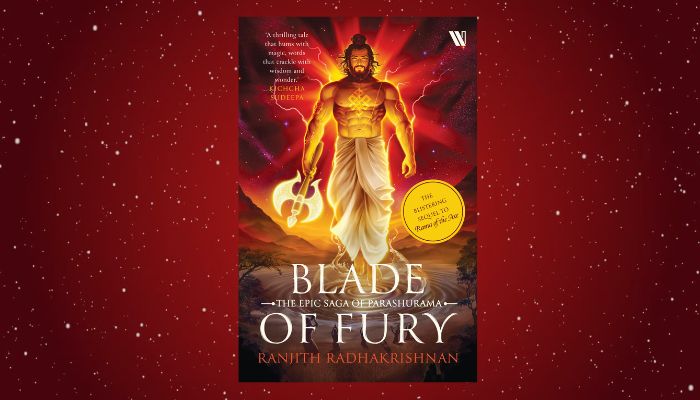
Blade of Fury is the second in the Parashurama trilogy that Ranjith Radhakrishnan has embarked upon and it does give centre stage to this avatara of Maha Vishnu who is not much celebrated and talked about as some of the others.
I would start with Ranjith’s ‘Author’s Note’ which comes at the end of the novel. He tries to explain how he has gone about writing what I consider to be quite a magnum opus regarding one of our ancient superheroes if you will. Ranjith says that he was asked by many people after his first book Rama of the Axe as to whether the story that he had trail blazed in that first book was exactly as it happened as per our puranas. It would be good to quote some of his lines so that the reader gets a heads up on what to expect in this the second tome.
Ranjith says, “The tone of both the books is one of deep devotion. At the very start, I was clear that I do not intend to write Parashurama as a mere mortal who later came to be considered an avatara”.
Regarding the Chinnamasta manifestation in book 1, Rama of the Axe, he says, “Some incidents aren’t in the Brahmanda Purana—Renuka manifesting the Mahavidya Chinnamasta, for example. That comes from folklore and legends connected to the Yellama Temple in Saundatti, Karnataka”.
He also says that the consistent reaction that he got from people who had read book 1 was that they always had the impression that “Parashurama is an arrogant and violent man”. Ranjith’s devotion and deep immersion into Sanatana Dharma and its tenets have ensured that this sixth avatara of Vishnu gets the attention he deserves and that his life and exploits are portrayed with utmost reverence while also not sacrificing modern story telling sensibilities. So, if readers found book 1 to showcase an ‘arrogant’ and ‘violent’ side of him, book 2 would uncover more facets to this fascinating personality. A deeply reflective and contemplative side of Parashurama dominates book 2.
So, before I give my impression of the second book Blade of Fury, I would advise readers, that ideally they should have read book, Rama of the Axe, before embarking on this tome. While this book can be read as a standalone book, it is definitely connected to the first one and therefore, it makes sense to have read and digested book 1 before starting this one. I have also reviewed book 1 here.
Readers of book 1 who were enthralled by all the adrenaline packed action might find book 2 dense but the depth of ideas in book 2 is sublime. Do visit the trailer of Blade of Furyhere. The writer Ranjith expands beautifully in this book and while retaining his skill at hair-raising and thrilling action in this tome, he also packs a deep and solid punch with his knowledge of Hindu metaphysics. Hardcore action lovers might just feel a tad disappointed at the drastic reduction in action in this book but if they would just keep an open mind, they will be transported into a deep and sublime world of Hindu philosophy and metaphysics in the way Ranjith handles the evolution of the character of Parashurama here.
In this book, Parashurama discovers his true nature chakra by chakra and in essence the book is a revelation of the character of Parashurama as he grasps the beeja mantra of each chakra through his experience of them. It is an enthralling journey that a seeking reader undertakes along with Parashurama, reflecting, despairing, thrilling and understanding along with him as he unravels the mystery. There is a chapter called Trikona Prashna in which Parashurama is subjected to a Q and A session with three of the Saptarishis. Ranjith excels in creating this exchange and does justice to the gravity that such an exchange deserves. Here’s a sample of the exchange.
When one the Saptarishis asks, “What is dharma”, Parashurama answers, “That which is true to Rta and Satya. Dharma is the anvil of the world. What is forged in it sustains and nourishes. What breaks on it never would sustain and nourish”.
Then the rishi asks, “If dharma is the anvil, what is the hammer”, and Parashurama answers, “Karma is the hammer. If correct, the result will be upheld; if not, it will collapse. Mind the correctness of karma, not the result. That will take care of itself”.
I just provided a small glimpse of the richness of dialogue in the exchange between the Saptarishis and Parashurama. This, I hope will whet the appetite of a curious reader.
Parashurama emerges out of each of his tests and experiences as a more evolved being and we readers journey along with him living his experience too. It is the skill of the writer that he is able to draw the reader into the world of the protagonist and live the emotions and feelings of the character that is emerging from the pages. Ranjith is able to draw the reader poignantly into the life and soul of Parashurama and one is almost living that character. The other skill of Ranjith is that his writing is so visual that one can conjure the image of the scene he is painting with words in the mind’s eye.
The book is replete with ideas that are deep and profound and therefore it is not a work for those interested only in the superficial nature of existence itself. It is a deep dive into metaphysics told with an intensity and bhakti which is unlike the usual spiritual texts that we are used to. From book 1 to book 2, the shift to a higher plane is very evident and Ranjith gives some insight into this in his Author’s Note.
He says, “A good story is like the five koshas of Hindu yogic philosophy. The plot is the Annamaya kosha, and the emotional energy of the story is the Pranamaya kosha. The character arc and character motivations are the Manomaya kosha, the theme and insights, form the Vijnanamaya kosha. Finally, the joy of connection with the divine, the transcendence a story evokes, is the Anandamaya kosha”.
This book does have all five but definitely more in the Pranamaya, Manomaya and VijnanamayaKosha. As I mentioned in my review of book 1 too, Ranjith has used extremely profound tenets of Hindu dharma to write his story and he has achieved the near impossible task of making it also contemporary. And to achieve this through a tale that is eons old is not an ordinary skill.
Ranjith is definitely an author to look out for in the coming years and as a reader, I look forward to the third book of this trilogy to see what further realms is going to be opened to us in it. And Parashurama is emerging as an extremely poignant avatara, given to extraordinarily human emotions like anger, pain, joy, suffering and compassion while also revealing his evolved state through the feats he can achieve through his intense tapasya and dhyana. After this trilogy, I guess the personage of Parashurama would have altered in a Hindu’s consciousness for the better and that in itself is justice to this much misunderstood avatara of Maha Vishnu.
The book can be purchased in all leading bookstores and also online here.
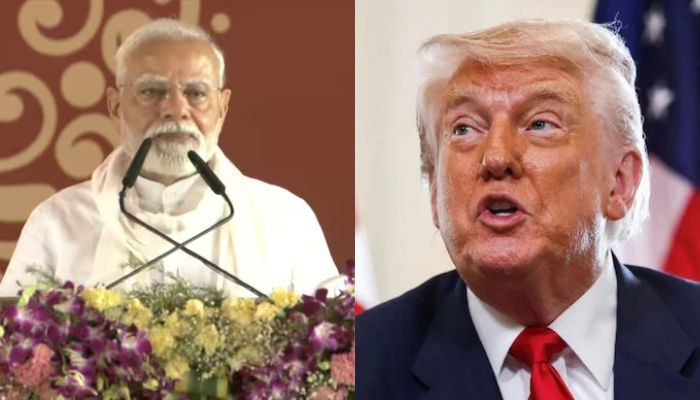
Indian Prime Minister Narendra Modi has stated that he deeply appreciate and fully reciprocate President Trump’s sentiments and positive assessment of India-US ties.
“India and the US have a very positive and forward-looking Comprehensive and Global Strategic Partnership”, PM Modi added.
The Prime Minister posted on X, “Deeply appreciate and fully reciprocate President Trump’s sentiments and positive assessment of our ties. India and the US have a very positive and forward-looking Comprehensive and Global Strategic Partnership.”
Deeply appreciate and fully reciprocate President Trump's sentiments and positive assessment of our ties.
Earlier, US President Donald Trump said, “I will always be friends with Modi, he is a great Prime Minister. India and the United States have a special relationship. There is nothing to worry about.”
At the White House, US President Donald Trump made the following significant statements on the India-US relationship:
"I will always be friends with Modi, he is a great Prime Minister”
"India and the United States have a special relationship. There is nothing to worry about"… pic.twitter.com/lwoU4R9BcO
The U.S. labour market continued its downward trajectory in August, adding just 22,000 jobs, as per the report published by the Bureau of Labor Statistics (BLS). It is well below forecasts of around 75,000 to 80,000 jobs, and a sharp drop from the 79,000 jobs added in July.
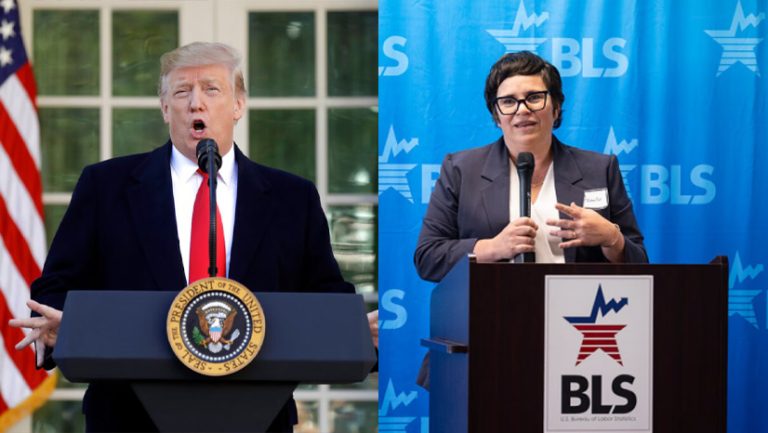
The report also stated that the unemployment rate ticked up to 4.3%. This comes on the heels of President Donald Trump’s abrupt firing of former BLS Commissioner Erika McEntarfer last month, following the release of disappointing July figures.
The August report, the first under interim BLS leadership, underscores a broader decline in hiring that economists attribute to factors including high interest rates, effects of recent tariffs, and reduced federal spending. Some analysts predict that the US labor market is “dangerously close to stalling.”
BLS also made revisions to data of prior months, which show an even bleaker picture. June’s job numbers were adjusted downward by 27,000 to a net loss of 13,000, while July’s numbers were revised upward slightly from 73,000 to 79,000, resulting in a net downward revision of 21,000 jobs for the two months combined.
The three-month average job growth ending in August now stands at a mere 29,000, a sharp decline from the robust 196,000 monthly average seen earlier in the year.
The slowdown follows a turbulent July report, released on August 1, which initially showed nonfarm payrolls rising by just 73,000, well below forecasts. That report triggered an immediate backlash from the White House. President Trump accused BLS Commissioner Erika McEntarfer of “rigging” the figures to make his administration look bad. He announced her firing on social media hours after the release of the report.
However, now August job numbers are much worse compared to July, showing that Trump’s firing of McEntarfer was illogical and arbitrary.
the August data aligns with other indicators of labour market weakness, including a drop in job openings to 7.2 million in July.
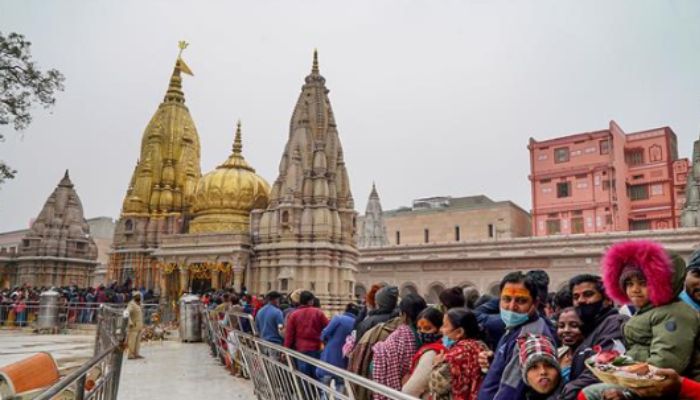
The Kashi Vishwanath Temple Trust has given a green signal to new rules under which, the trust employees will get the status of state government employees. With change in status, the salaries of temple employees and priests will increase three times.
This decision was taken in the 108th meeting of the Shri Kashi Vishwanath Temple Trust Council on 4th September 2025.
In the meeting held in the Commissioner’s Auditorium under the chairmanship of Divisional Commissioner S. Rajalingam, about two dozen proposals including the Employee Service Manual were approved. The Divisional Commissioner stated that till now Rs 30,000 were given to the priests, however, now their salaries would be around Rs 80,000 to 90,000.
According to the officials, after the implementation of the manual, along with the increase in salary, allowance, promotion, leave and other facilities will also be provided. According to sources, four categories have been fixed in the proposed manual for the appointment of priests, employees and Sevadars. Like state employees, priests will be given grade and matrix.
The budget of the last financial year was approved in the meeting of Shri Kashi Vishwanath Vishisht Kshetra Vikas Parishad and Executive Committee. The honorarium of various categories of employees posted under the Parishad will be increased by 30 percent. The dearness allowance (DA) of full-time employees will increase like last year. A state-of-the-art digital museum will be established in the Dham.
To speed up business activities, a new rent rate will be fixed for the operation of other properties including the Emporium. The Parishad will appoint a new consultancy, which will suggest new options for increasing income.
Notably, the Shri Kashi Vishwanath Temple was acquired by the state government in 1983. Since then, the service manual could not be prepared. Many attempts were made regarding this, but the matter did not reach any conclusion. Kashi Vishwanath Temple Act was implemented on 13th October 1983 under Article 201 of the Constitution.
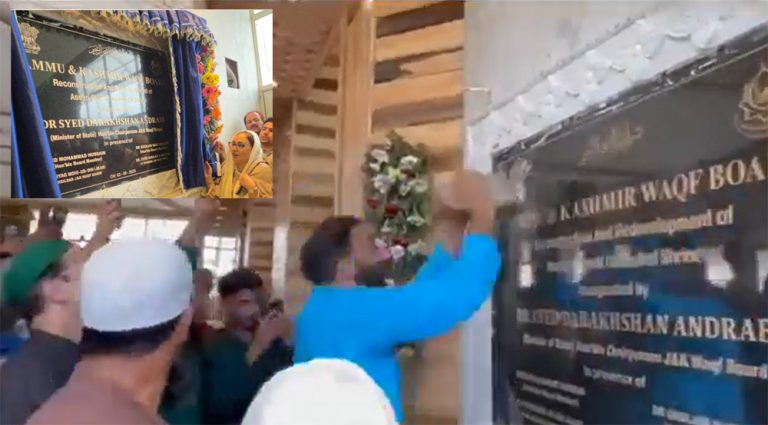
An Islamic mob on Friday vandalised the recently installed plaque at Hazratbal Dargah in Srinagar. The mob smashed the Ashoka Emblem carved on the marble plaque marking the foundation stone of a new structure within the shrine, calling it anti-Islam.
Watch: On Friday, people dismantled an Ashoka Emblem carved on marble at the revered Hazratbal Dargah, citing that sculpting figures goes against Islamic ethos. The marble stone had been recently installed as part of the shrine’s makeover. pic.twitter.com/mdhNREsXkp
Islamists claimed that carving of the national emblem on the foundation stone is a blatant disregard for Islamic traditions. National Conference leader Tanvir Sadiq claimed that it goes against the fundamental Islamic belief of Tawheed, saying that that idol worship is strictly forbidden in Islam.
Im not a religious scholar but in In Islam, idol worship is strictly forbidden—the gravest of sins. The foundation of our faith is Tawheed.
Placing a sculpted figure, at the revered Hazratbal Dargah goes against this very belief. Sacred spaces must reflect only the purity of…
In a post on X, he said, “Sacred spaces must reflect only the purity of Tawheed, nothing else.”
On the other hand, BJP leader and Jammu and Kashmir Waqf Board Chairperson Dr Darakhshan Andrabi condemned the attack, calling it a terrorist attack. She urged the Prime Minister and the union Home minister to order their immediate arrest of those responsible for the vandalism.
Andrabi alleged that political elements were behind the incident, accusing them of attempting to damage both the dignity of the Dargah and the sanctity of Kashmir.
#WATCH | Srinagar, J&K | On the viral video of a mob tarnishing the national emblem on the foundation stone of the Hazratbal Shrine, BJP leader and Chairperson of J&K Waqf Board, Dr Darakshan Andrabi says, "This incident is very unfortunate. Tarnishing the national emblem is a… pic.twitter.com/Cq1hONZSZJ
Without naming him directly, Andrabi hit out at NC MLA Tanveer Sadiq, who had objected to the emblem’s placement at the shrine. “A leader tweeted about it. I don’t think he deserves to be called a leader. These people don’t even know what religion is—they fed militants in their homes,” she alleged. She also alleged that goons of the ruling party in Jammu and Kashmir did the attack.
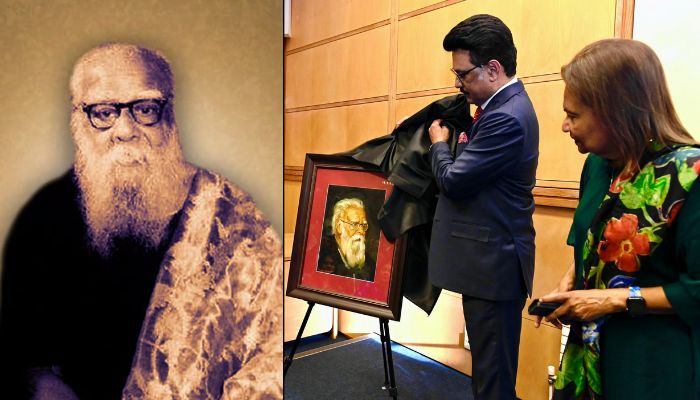
On Thursday (4th September), Tamil Nadu Chief Minister MK Stalin unveiled the portrait of anti-Hindu activist Periyar at the campus of the University of Oxford in the United Kingdom.
During the event, Stalin was heard saying, “Periyar’s thoughts should reach every part of the world. All existing forms of oppression should be removed. From collective rights to individuals rights, all rights must be protected.”
While Periyar is revered by the likes of Stalin’s Dravida Munnetra Kazagham (DMK), the genocidal views of the anti-Hindu activist forced even a ‘liberal’ PM Jawaharlal Nehru to brand him a ‘lunatic’ and a ‘criminal with a perverted mind.’
#SelfRespectMovement – A revolution that redefined freedom! Chains fell, dignity rose!
Thanthai Periyar’s Self-Respect Movement shattered fundamentalisms, awakened dignity, nurtured scientific temper, and made us a guiding light of social transformation.
In a letter [pdf] to Madras Chief Minister Kumaraswami Kamaraj on November 5, 1957, PM Nehru stated, “I am much distressed by the anti-Brahmin campaign continuously carried on by E.V. Ramaswami Naicker.’ I wrote to you I think about this some time ago, and I was told that this matter was under consideration.”
“I find that Ramaswami Naicker is going on saying the same thing again and calling upon people at the right time to start stabbing and killing. What he says can only be said by a criminal or a lunatic,” he pointed out.
PM Nehru told the Madras Chief Minister, “I do not know him adequately to be able to decide what he is, but one thing is clear to me that this kind of thing has a very demoralizing effect on the country. All the anti-social and criminal elements imagine that they can act in this way also.”
The first Prime Minister of India was of the view that anti-Brahmin ‘activists’ such as Periyar should be placed in a mental asylum, meant for treatment of ‘perveted minds.’
Letter of PM Nehru to Kamaraj
He had reiterated, “I suggest, therefore, to you that there should be no delay in dealing with this matter. Let him be put in a lunatic asylum and his perverted mind treated there. I do not understand anyone telling me that the law does not allow us to take action unless actual killing takes place.”
“The law is often very foolish but it is not quite so foolish as to permit a campaign of incitement to murder,” PM Nehru said in his letter dated November 5, 1957.
He had written the letter to the Madras CM after Periyar organised a convention in Tanjavur to demand removal of constitutional provisions that guranteed Right to Freedom of Religion.
The Dravida Kazagham, under Periyar’s leadership, had called for the killing of Brahmins and the destruction of their residential properties on November 3, 1957.
Periyar and his hate for Hindus
Periyar was a vehement advocate of anti-Hinduism, anti-Brahminism and a pro-British. Many EVR apologists today indulge in the propaganda that EVR never advocated racial hatred against Brahmins. However, EVR was explicit in his agenda.
The magazine Periyar edited published articles praising the ascendancy of Adolf Hitler and warned Brahmins in Tamil Nadu that they should learn from the plight of Jews in Nazi Germany and opt for course correction.
Periyar’s dislike for Brahmins was so deep-rooted in him that he was almost blinded by his intense hatred and anger directed at Brahmins. He reportedly used to tell his followers that if they ever encountered a Brahmin and a snake on the road, they should kill the Brahmin first.
He has, in his lifetime, spread numerous canards about the Ramayana. All his lies were directed towards slandering the God who is considered Maryada Purshottam by Hindus. His lies ranged from accusing Shri Rama of being casteist to claiming that he killed and mutilated women.
Periyar not only claimed that no ‘North Indian Brahmin’ died in the war against Ravana but further propagated that Lord Rama had married women other than Sita for his sexual pleasure. He had also claimed that Lankan King Ravana was, in fact, a Dravidian King from South India.
Periyar had also burnt pictures of Lord Rama, who is one of the most revered Hindu gods. This is not all, Periyar is notorious for organizing a procession in Salem in Tamil Nadu with big cutouts of “Ram”, “Sita” and “Hanuman” garlanded with slippers.
Apart from his hatred for Lord Rama, Periyar also broke statues of Lord Ganesha. In fact, all his deeds reflected the virtual hatred that he harboured towards Hindus and Brahmins.
The event on ‘Periyar’ at Oxford University
While the DMK ecosystem has left no stone unturned to browbeat about the event held at Oxford University in ‘honour’ of Periyar, the reality is starkly different.
The event titled ‘The Self-Respect Movement and Its Legacies’ was not an official event of the esteemed varsity.
It was a small-time conference, organised within a department of one of the 39 autonomous colleges under the University of Oxford.
While the event was a ‘departmental seminar’ at best, it was propagated by the DMK ecosystem as Oxford University ‘honouring’ anti-Hindu activist Periyar.
The overarching objective of the event is to lend credence to the ideology of Periyar and grant legitimacy to the divisive, Dravidian politics of MK Stalin.
ब्राह्मणों और यहूदियों की तुलना कीड़े-पतंगे और मच्छरों से करने के साथ-साथ उनके नरसंहार की बात करने वाले पेरियार की फोटो का अनावरण तमिलनाडु के CM स्टालिन ने ऑक्सफ़ोर्ड में किया है। @pandeypuraan बता रहे हैं गाँधी विरोधियों के जमघट का पूरा मामला pic.twitter.com/yYUJSiUOGg
OpIndia found that the seminar on Periyar and the non-permanent unveiling of his portrait at the University of Oxford campus was organised by one Faisal Devji.
The so-called ‘historian’ has published derogatory material targeting MK Gandhi. In his book ‘The Impossible Indian’, Faisal Devji compared MK Gandhi to dictators Joseph Stalin, Adolf Hitler and Mao Zedong.
“For in many ways, Gandhi belongs in the same group as his contemporaries, Lenin, Hitler and Mao, and should not be seen as a moralist detached from the mainstream of twentieth-century politics,” he discredited the champion of non-violence movement.
Faisal, whose ideology is as vicious as that of Periyar, has written several articles (here, here and here), painting a doomsday picture about the state of democracy in India under the Narendra Modi government.
Besides MK Stalin, the so-called ‘historian’ also hosted another speaker for a departmental seminar titled ‘Dravidian Geography and the History of Respect.’ The speaker was a ‘anthropologist’ by the name of Arjun Appadurai.
In 2021, Arjun compared ‘nationalism’ in India under PM Modi to ‘genocidalism.’ In one paper, he tried to pass off abrogation of Article 370 in the erstwhile State of Jammu and Kashmir as anti-Muslim policy-making.
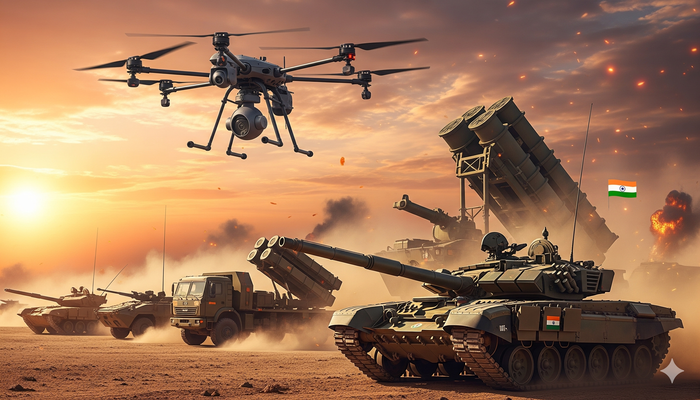
In a significant leap towards boosting India’s defence capabilities, the Ministry of Defence has rolled out a vision document to be implemented over the next 15 years. The document called ‘The Technology Vision and Capability Roadmap’ lays down a roadmap for the transformation of the Indian military, and is expected to involve expenditure of billions of dollars. The roadmap focuses on cutting-edge technologies such as nuclear propulsion for naval vessels, hypersonic missiles, artificial intelligence (AI), stealth unmanned systems, and space-based warfare capabilities.
As per reports, the MoD has chalked out the 15-year blueprint to equip the armed forces with advanced weapons and technology to enable them to deal with the evolving military challenges and prepare them for the next-generation warfare. “As the nation stands on the threshold of embracing greater challenges and responsibilities in the coming decades, it is imperative that the Services be equipped accordingly,” the MoD stated in the document.
The initiative comes amid escalating regional tensions, including recent incidents like the Operation Sindoor, underscoring the need for enhanced military capabilities to address 21st-century threats. The roadmap provides a blueprint for over 200 weapon systems and technologies, guiding the defence industry on research and development priorities to foster indigenous innovation and self-reliance.
Defence Ministry’s plan emphasizes adapting to the evolving nature of warfare, with a strong push toward multi-domain operations spanning land, sea, air, space, and cyber realms. Prime Minister Narendra Modi has also highlighted the ‘Sudarshan Chakra’ mission within the plan, targeting the development of an indigenous aerial defence system by 2035.
In the blueprint, the Ministry of Defence underscored the requirement to keep up with evolving defence technology in a rapidly changing world. “Technology has always been employed to develop improved tools of warfare. Today, we are witnessing an unprecedented revolution in technologies. These advancements have ushered in the era of offensive cyber operations, autonomous unmanned systems, information dominance, space warfare, and other developments that have culminated in Effect-Based Operations (EBOs),” the Defence Ministry said in the document. “Rapid advances and convergence in fields such as robotics, artificial intelligence, and information technology will continue to have a revolutionary impact on the battlefield of the future,” it added. The plan includes the integration of indigenous next-generation battle tanks, hypersonic missiles, nuclear-powered warships, space-based warfare technology, stealth bomber drones, and AI-powered weapons into the country’s weaponry.
Here are the roadmaps planed for different armed forces:
Army: Modernizing Ground Forces for High-Altitude and Networked Warfare
The Indian Army stands to gain significantly from the roadmap, with plans to phase out ageing equipment and induct advanced systems tailored for diverse terrains, including mountainous borders like Ladakh. Key acquisitions include:
Nearly 1,800 next-generation main battle tanks to replace the T-72 fleet, integrated with advanced electronic warfare systems, drones, and loitering munitions.
At least 400 light tanks with enhanced network and intelligence-gathering capabilities for mountain operations.
Over 700 robotic counter-improvised explosive device (IED) systems.
600,000 artillery rounds and multiple unmanned aerial systems (UAS) for precision strikes and rapid maneuver.
These upgrades aim to create networked and automated ground forces capable of precision operations in challenging environments.
Navy: Bolstering Maritime Power with Nuclear and Electromagnetic Advancements
The Indian Navy’s component of the plan focuses on expanding blue-water capabilities, with a strong emphasis on nuclear propulsion and carrier-based operations. Highlights include:
Nuclear propulsion for at least 10 future surface combatants, including frontline warships.
A new indigenous aircraft carrier equipped with Electromagnetic Aircraft Launch Systems (EMALS) to operate heavier aircraft.
10 next-generation frigates or destroyers and 7 advanced corvettes.
4 amphibious landing dock platforms and more than 10 landing platform docks.
Advanced helicopters to support naval operations.
This expansion is designed to strengthen India’s maritime security and power projection in the Indo-Pacific region.
Air Force: Embracing Stealth, Drones, and Space Integration
The Indian Air Force (IAF) will undergo a profound transformation, prioritizing unmanned and space-based assets to achieve superiority in surveillance, electronic warfare, and precision strikes. Notable elements include:
Approximately 150 stealth unmanned combat aerial vehicles (UCAVs) capable of supersonic speeds, internal weapon carriage, and operations at altitudes over 15 km.
Over 100 remotely piloted aircraft, including high-altitude long-endurance (HALE), vertical takeoff and landing (VTOL), and ship-borne drones.
75 high-altitude pseudo-satellites for continuous surveillance and communication relay.
350 multi-mission drones, medium-altitude long-endurance drones operating at 30,000 ft with over 24 hours endurance, and hundreds of precision-guided munitions.
Advanced systems like stratospheric airships, multiband programmable RF sensor satellites, anti-swarm drone systems, and air-to-surface missiles for UAVs with 12–20 km range.
The IAF’s focus on space integration includes satellite-based surveillance, signal intelligence, and AI command grids for secure communications and battle management.
Emerging Technologies: AI, Hypersonics, and Directed Energy Weapons
Central to the roadmap is the integration of disruptive technologies to ensure tactical superiority. Key areas include:
At least 500 hypersonic missiles for high-speed strikes, along with detection systems for incoming hypersonic weapons.
AI-powered weapons, autonomy in unmanned systems, and AI-based battle management systems.
Directed energy weapons, including tactical high-energy laser systems for anti-satellite operations and high-power electromagnetic weapons to disrupt electronics, radars, missiles, and drones.
Space capabilities such as onboard cyber defence for satellites, satellite servicing, on-orbit refuelling, modular sensors, multi-constellation GNSS receivers, and reconnaissance satellites.
Cyber hardening of satellite communications, electronic denial bubbles, and anti-swarm drone systems.
Implications and Path Forward
This roadmap is a path-breaking leap for India’s defence sector, signaling a shift toward indigenous technology integration and multi-domain superiority. The plan aligns with India’s push for self-reliance in defence manufacturing. Implementation will require close collaboration between the MoD, armed forces, and the industry.
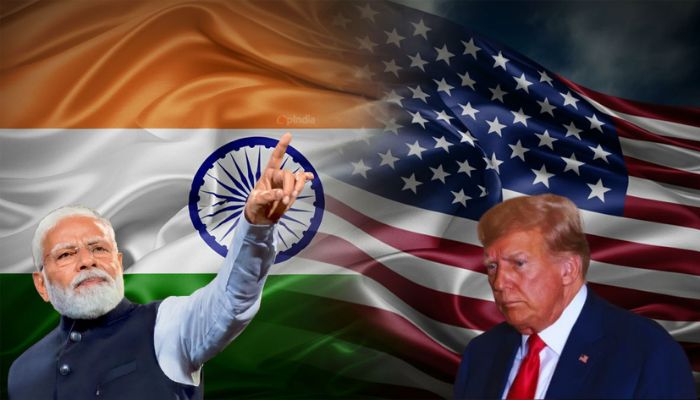
The US President Donald Trump has single-handedly damaged the India-US relationship-built brick by brick over the last two decades. His mindless quest for a Nobel Peace Prize, Pakistan pandering, and hypocritical desire to ‘punish’ India for buying Russian oil have not only irked India but also triggered sharp backlash domestically.
In this vein, former US National Security Adviser (NSA), John Bolton, said that once-strong personal relationship between Prime Minister Narendra Modi and President Trump has faded now. Bolton opined that Trump’s mistreatment of India has undermined years of bipartisan US efforts to deepen cooperation between New Delhi and Washington against China. He said that Trump has pushed PM Modi closer to Russia and China.
“Trump had a very good relationship personally with Modi. I think that’s gone now. It’s a lesson to everybody, and a good personal relationship may help at times, but it won’t protect you from the worst. The White House has set U.S.-India relations back decades, pushing Modi closer to Russia and China. Beijing has cast itself as an alternative to the U.S. and Donald Trump,” Bolton said, adding that Trump’s tariff imposition on India for its Russian oil imports amounts to an “unforced error”.
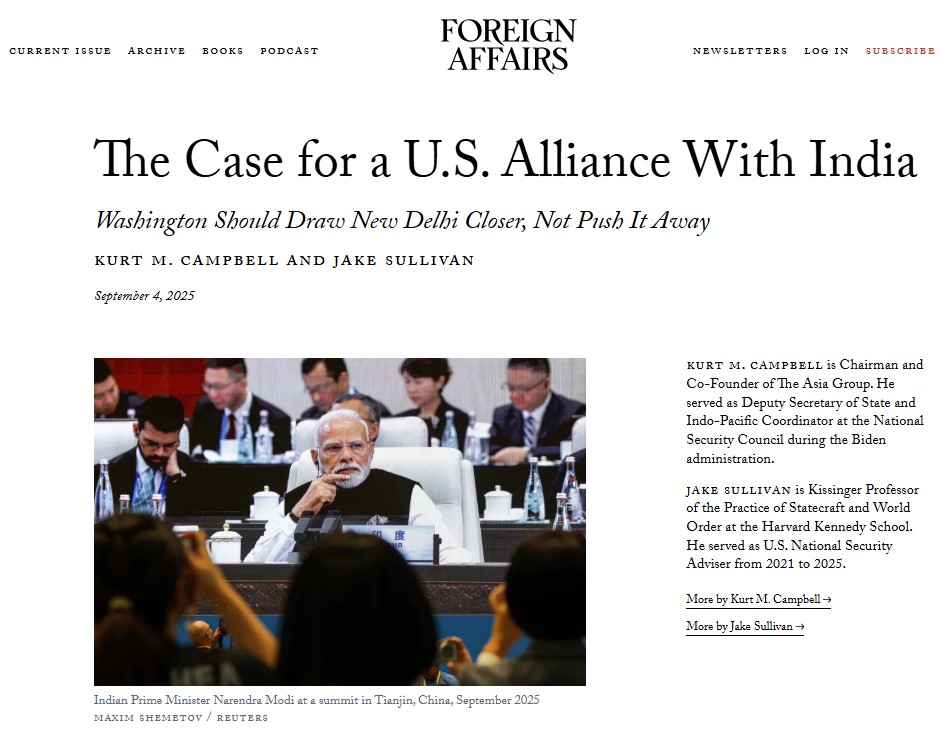
Meanwhile, former National Security Advisor Jake Sullivan and ex-deputy secretary of state Kurt Campbell have criticised the Trump administration for hyphenating India and Pakistan. In a joint op-ed published in Foreign Affairs magazine on 4th September 2025, Sullivan and Campbell contended that India’s status as the world’s largest democracy, technological dynamism, and its desire for a free and open Indo-Pacific “has led to a strategic alignment with the United States that has effectively disincentivised reckless Chinese adventurism.”
The former US officials asserted that it is imperative for US partners to “impress on their Indian interlocutors that US President Donald Trump’s theatrics are often the prelude to dealmaking.”
Sullivan and Campbell’s op-ed critiquing Trump and his reckless approach against India comes at a time when Trump’s 50 percent tariffs, coupled with the disrespectful rhetoric unleashed by his attack dogs Peter Navarro and Scott Bessent, have angered India. Prioritising its strategic autonomy, India has maintained good relations with US and Russia, however, the recent bonhomie seen between PM Modi and Chinese President Xi Jinping during the Shanghai Cooperation Organisation (SCO) summit has alarmed those in the US who have either actively contributed in bringing India and US closer or attach importance to India’s role in terms of countering a communist China.
Regarding the chemistry seen between the R.I.C. leaders, Sullivan and Campbell wrote, “As [Prime Minister Narendra] Modi’s chummy appearance over the weekend with Chinese President Xi Jinping and Russian President Vladimir Putin made clear, the United States could end up driving India directly into its adversaries’ arms.”
Interestingly, Jake Sullivan and Kurt Campbell addressed a key concern that most in the US, particularly in the Trump administration, do not care to ponder over—the outrageous hyphenation of India and Pakistan. However, they too could not help but assert that Pakistan is important in combating terrorism. The delusion that Pakistan, a country whose military leadership essentially harbours and funds Islamic terrorists, who attack the US’s much more important ‘ally’ India, can help the US combat terrorism has passed on from the Biden administration to the Trump administration.
“The United States has enduring interests in Pakistan in combating terrorism and limiting nuclear and missile proliferation, but these pale in significance to Washington’s multifaceted and consequential interests regarding India’s future,” they said.
Sullivan and Campbell’s opinion piece came in the backdrop of Donald Trump claiming credit for the ceasefire understanding between India and Pakistan in May after India pounded Pakistan during Operation Sindoor, forcing the Pakistani DGMO to beg ceasefire with his Indian counterpart. While Pakistan decided to bend over backwards to please Trump, thanked him a million times for his imaginary role in brokering the Indo-Pak ceasefire, and even nominated him for the Nobel Peace Prize, which Trump desperately seeks, India did not indulge in any such sycophancy. India denied Trump’s role and his claim that the US President used trade as leverage to make India agree to end the conflict. India also refused to open up its agriculture and dairy market for the US, leaving the profit-sucking Trump irked.
What followed was the manifestation of Trump’s bruised ego. While India got 25 percent reciprocal tariffs, additional 25 percent tariffs for buying Russian oil, blame for Russia-Ukraine war, needless vilification, Pakistan got rewarded with a trade deal, a crypto deal with US company having its large ownership with Trump’s relatives, reduced tariff, commitment of developing oil reserves in Pakistan and Trump’s new-found admiration for a Madarsa-bred anti-India and anti-Hindu Islamist Asim Munir, the self-appointed Field Marshal-cum-de-facto ruler of Pakistan.
Interestingly, a few days ago, Jake Sullivan gave an interview wherein he alleged that he had “thrown away” ties with India over Pakistan’s willingness to do business with Trump’s family.
“US has worked to build a relationship with India, a country that we should be aligned with on technology, talent, economics, and so many issues. And align with dealing with strategic threats from China. Now. I think because of Pakistan’s willingness to do business with the Trump family, Trump has thrown away India’s relationship on the side. Germany or Japan will look at that (India) and say that could be us tomorrow. America’s friends will think that they can’t rely on us in any way.” Jake Sullivan told MeidasTouch.
Nikki Haley, the former US Ambassador to the United Nations under Trump (in his first term), has also been vocal about Trump’s tariff policies on India. She has described the alienation of India as a “strategic disaster” at a time of China’s rising assertiveness. Haley said that decades of US administrations, from George Bush to Barack Obama cultivated India as a counterbalance to China, however, Trump’s quest for transactional gains risks the Indo-US ties, which would have detrimental costs for the US.
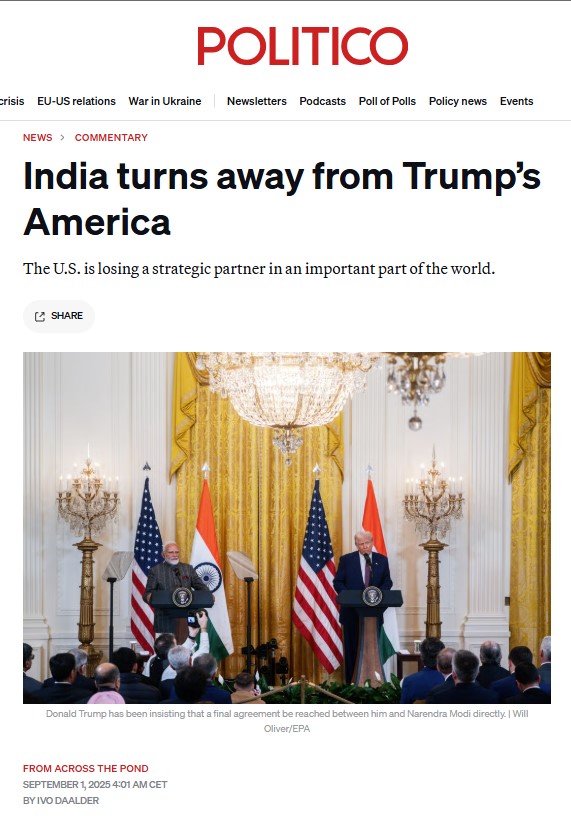
Ivo Daalder, the former US Ambassador to NATO, wrote an op-ed in The Politico on 1st September 2025, wherein he observed the unprecedented shift in US-India relations, saying that Trump’s actions, including the reciprocal tariff on Indian imports and subsequent increases, have led to a “stunning public rupture” between the two countries. Daalder highlighted the optimism in India during Trump’s early second term and contrasted it with the rapid deterioration. Daalder asserted that “the U.S. is losing a strategic partner in an important part of the world.”
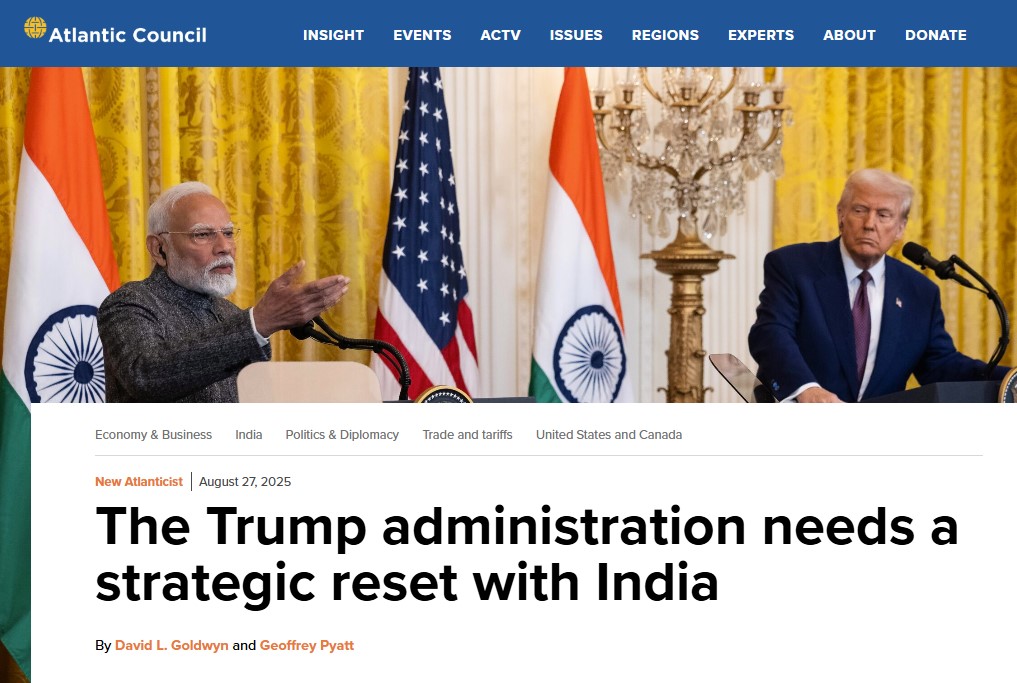
On 27th August, former Assistant Secretary of State for Energy and Natural Resources, Former Ambassador to Ukraine and Greece, Geofrey Pyatt and former Special Envoy for International Energy Affairs, Former Assistant Secretary of Energy for International Affairs, David L. Goldwyn, co-authored a opinion piece for Atlantic Council, warned Trump administration that its punitive approach towards India, especially, the secondary tariffs on India’s Russian oil purchases, is “unsustainable”. They argued that targeting India with tariffs while exempting China, which is the biggest buyer of Russian oil, undermines the US’s sanctions policy credibility. They noted that such actions against India would only push New Delhi closer to an informal alignment with China, Russia and the BRICS bloc. This geopolitical reset would harm the US’s strategic interests in the Indo-Pacific. They also recommended suspending tariffs against India and reviving bilateral trade talks.
Ahead of the Shanghai Cooperation Summit, former US Trade Representative, Michael Fronman, appeared on CNBC TV’s show Squawk Box’ and discussed how and why India is drifting away from China. When asked by the anchor about how the US has, for decades, been trying to keep India away from China, but Trump’s 50 percent tariffs have brought India and China closer, Fronman said that since the Clinton administration, the US has “changed” the nature of Indo-US ties.
“The recent actions on tariffs have very much struck India by surprise to be among the highest tariff countries in the world… This is Modi’s first trip to China in seven years, and it’s a direct reaction to the fact that the Us imposed these tariffs. They don’t feel they can rely on the United States as a strategic partner going forward, and they’re exploring their other options with China and the other members of the Shanghai Cooperation Organisation… India’s been wondering why it’s facing a 25 percent tariff because of the oil it is buying from Russia, where China, which buys more oil from Russia, faces no such tariff,” Fronman said.
Donald Trump is hell bent on destroying India-US relations, all because India did not behave like Pakistan
What began with Trump’s social media post claiming credit for brokering a ceasefire between India and Pakistan and India’s outright denial of Trump’s fictional claim, even as Trump repeated the claim over 40 times now like a broken record playing the same song, has now snowballed into a raging one-sided blame game. For years since the Russia-Ukraine war broke out in 2022, India bought Russian oil for discounted rates, held a portion of it for domestic needs, and sold its own finished petroleum products to Europe, the US and other countries.
In fact, the very intent behind the G7’s $60-per-barrel price cap was to keep Russian oil flowing while cutting Moscow’s windfall revenues. No one had a problem all this while; rather, the US encouraged, and former US Ambassador to India, Eric Garcetti, even praised India for its role in ensuring stability in the global energy market by purchasing Russian oil and selling petroleum products.
Even Trump raised no objection over India’s Russian oil purchase between January and April this year. It was only after India refuted Trump’s ‘I stopped the war’ claims and ignored his subtle hints to New Delhi to nominate him for Nobel Prize that Trump turned hostile. Clearly, it was never about Russia-Ukraine war, but about Trump’s frustration over India not bowing down before him.
Since then, Trump has called Indian economy ‘dead’ even as it is thriving, levelled 50 percent tariffs, discontinued trade deal talks as India added to his chagrin by refusing to open its agricultural and dairy market for the US, his officials have blamed India for deaths of Ukrainians, labelled Russia-Ukraine war as ‘Modi’s war’ and accused India of profiteering from the ongoing war.
Beyond the false narrative Trump officials have been peddling, the US has been the biggest profiteer of the Russia-Ukraine war. During his meeting with the US President in Alaska on 16th August, Russian President Vladimir Putin revealed that US-Russia bilateral trade had expanded by over 20 per cent in the past few months, exposing Trump’s persistent claims that the US has been pressuring Moscow to end its war in Ukraine.
American oil companies have made record profits since the Russia-Ukraine war broke out in 2022. From liquified natural gas (LNG) exports, arms sales, and several other war-driven opportunities, the US is apparently the biggest profiteer of the Russia-Ukraine war.
The US sold its cheap LNG to Europe at monumentally higher prices, often four times the US domestic rate citing ‘war-induced disruptions, benefiting from Europe’s urgent need for alternatives. In 2022, US oil and gas companies like Chevron and ExxonMobil registered record profits with a massive 125% jump from pre-war 2021.
Beyond energy, the US also benefited from the Russia-Ukraine war through its defence exports. Donald Trump is selling his weapons to Ukraine through European nations at a 10% premium, essentially to fill America’s coffers while people from both Russia and Ukraine continue to lose their lives. Trump has even put a cost to US involvement in providing security guarantees to Ukraine.
The US profiteered from the Russia-Ukraine war, and now, even in peace talks, Trump is pursuing profits, but the Trump administration wants the world to believe that India fuelled Russia’s ‘war machine’.
Besides profiteering from the Russia-Ukraine war, America has also continued its trade relations with Moscow. From non-ferrous metals, fertilisers, inorganic chemicals, to nuclear reactors and machinery, prepared animal feed, iron and steel, and oil seeds, etc, the US imports from Russia have been consistent and, in some cases, have increased. This is while the West has imposed numerous sanctions on Russia and claims to have intentions of crippling the Russian economy.
Other than Indo-Russian trade, the Trump administration now has a problem with India and China mutually agreeing to resolve disputes and expand cooperation. Peter Navarro has been talking about how India is a democracy and it should not be ‘cosying up’ to autocratic powers like China and Russia, rather, it should align with the world’s oldest democracy, America. He said that India should not forget its border disputes with China.
India remembers all the wounds inflicted by China. India remembers China’s mindless border aggression and illegal claims over Indian territories. India remembers Aksai Chin, Pakistan-occupied Jammu and Kashmir. India remembers China’s military and policy support to the Islamic terrorist state of Pakistan. India also remembers China’s defence support and vow to protect Pakistan against India during Operation Sindoor.
But India has also not forgotten the US’s constant backing of Pakistan, even as the latter gave 9/11 to America and squeezed dollars out of America in the name of fighting terrorism in Afghanistan. If Trump can forget 9/11 and how Pakistan hid Al-Qaeda terrorist Osama Bin Laden for years in Abbottabad, and go on to sign trade deals and mollycoddle its jihadist military chief, why can’t India sit across the negotiating table with China and resolve disputes? India has not forgotten that the US, which has a disproportionately high voting share in the International Monetary Fund (IMF), chose not to block the IMF’s bailout package worth $ 1 billion to Pakistan even after India confirmed that the Pakistani terrorist outfit and its jihadis were behind the Pahalgam terror attack.
The hypocrisy is glaring. For years, the US wanted India on its side to counter a communist and autocratic China because India is the world’s largest democracy, and its values align significantly with those of the US. However, the same ‘champion of democracy’ has no qualms about mollycoddling an Islamic jihadist Pakistani military regime, which hides behind the veneer of its puppet ‘democratic’ government.
As the former US officials have been pointing out, Trump’s mindless quest for the Nobel Peace Prize, one-sidedly lucrative trade deals, insulting rhetoric, and unacceptable hyphenation of a failed Islamic state of Pakistan with a thriving democracy and the world’s fourth-largest economy, India, have collectively damaged the painstakingly built India-US relations. India will never forget what it sees as nothing less than a betrayal by Trump. While India’s presence in both BRICS and QUAD indicates that it has never been interested in joining the anti-West bloc or the anti-Russia bloc but in maintaining equal, respectful and mutually beneficial relationships with all countries (except for the state sponsor of anti-India terrorism), New Delhi will proceed with more caution while engaging with Washington in the future.
After facing huge backlash, the developer of a ‘Halal Lifestyle Township’, which is being developed in Karjat, near Mumbai, has reportedly removed the video advertisement for the township from social media platforms. The promotional video of the township named ‘Sukoon Empire’ attracted widespread criticism on social media for marketing the real estate project as being exclusively for Muslims.
Apart from the promotional video, huge banners of the township were put up at various locations in Mumbai by the developer of the township. These banners have now been covered with black sheets. The developers of the township tendered an apology after being accused of trying to create a communal divide by reserving the township for a certain community.
The township, located around 100 km from Mumbai, stirred a storm after its video advertisement went viral on social media. The advertisement showed a burqa clad woman promoting the real estate project where “like-minded families sharing similar” values could live and their kids could grow in a “safe and Halal” environment”.
NHRC issued notice to Maharashtra government
On September 1, 2025, Priyank Kanoogo, a member of the National Human Rights Commission (NHRC), shared the video on X, describing the township as a ‘Nation within the Nation’. He said that a notice was served on the Maharashtra government regarding the township.
यह विज्ञापन नहीं विष व्यापन है। मुंबई के पास करजत इलाके में केवल मुसलमान मज़हब वालों के लिए हलाल लाइफ़ स्टाइल वाली टाउनशिप बनाई जा रही है। यह Nation Within The Nation है,महाराष्ट्र सरकार को नोटिस किया जा रहा है। pic.twitter.com/zYtW4PN4Qt
— प्रियंक कानूनगो Priyank Kanoongo (@KanoongoPriyank) September 1, 2025
Shiv Sena (Eknath Shinde faction) spokesperson Krishna Hegde questioned the motive of the developers behind the advertisement. Demanding the removal of the advertisement, he urged the Maharashtra government to investigate the project.
Slamming the developers of the real estate project, BJP spokesperson Ajit Chavan described that township as a step towards “Ghazwa-e-Hind” (an Islamic concept of the complete takeover of India by Islam).
Chavan said that such projects had no place in Mumbai or Maharashtra. He added that the project violated the Constitution and called for stringent action against the developers.