Home Blog Page 2768

Mission Prarambh: India’s first-ever private rocket Vikram-S launched by ISRO

0

On Friday morning Indian Space Research Organisation (ISRO) scripted history as it launched Vikram-S (VKS), India’s first-ever privately developed rocket from the Sriharikota space station under the Mission Prarambh.

The launch of Vikram-S, named after the father of India’s space program, Vikram Sarabhai, by four-year-old Hyderabad-based startup Skyroot Aerospace, is the first launch since the space segment was opened to private entities in 2020.

The first Vikram-S rocket took off at 11.30 a.m. from the Satish Dhawan Space Centre at Sriharikota.

Announcing the success of Mission Prarambh, ISRO tweeted, “Mission Prarambh is successfully accomplished. Congratulations @SkyrootA, Congratulations India! @INSPACeIND.”

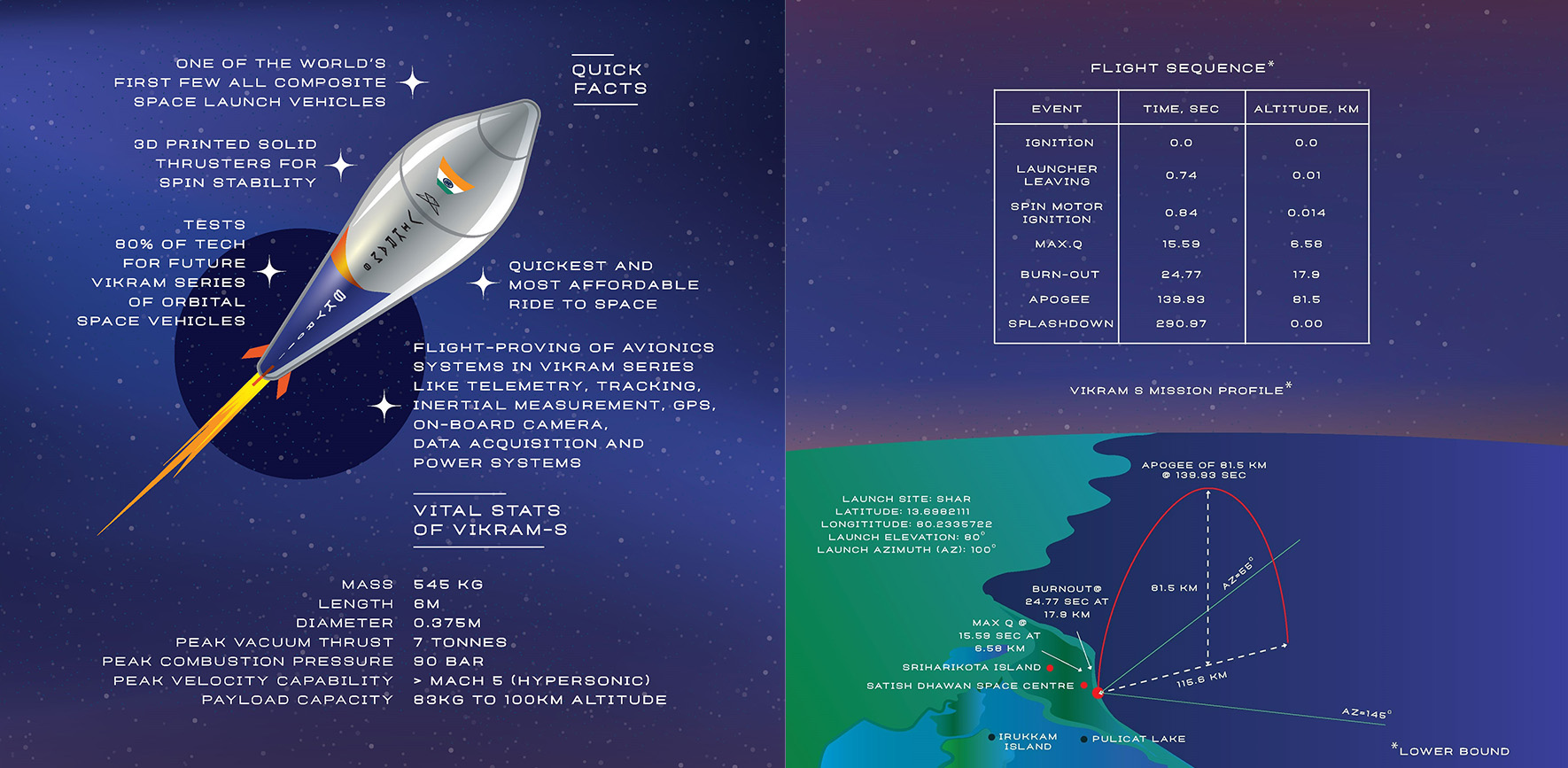
The 6-meter-tall rocket, which took off from Satish Dhawan Space Centre, reached a maximum altitude of 89.5 kilometers before beginning its descent. It is one of the world’s first all-composite rockets with 3-D printed solid thrusters for launch vehicle spin stability.

Infographic tweeted by Skyroot (@/skyrootA)

Union Minister of Science and Technology, Dr Jitendra Singh, who was present at the liftoff stated, “It is a new beginning, a new dawn, and a new prarambh in India’s space program’s journey. It is a significant step forward for India in developing its own rockets, as well as a watershed moment in India’s startup movement. Well done, Skyroot.”

Taking to Twitter Dr Singh wrote, “Congratulations India! A historic landmark under PM @narendramodi! A turning point for Indian #StartUps! A new beginning for #ISRO! The first-ever private Rocket “Vikram-S” is in Space.”

The ‘Prarambh’ (the beginning) Mission is carrying three payloads for two domestic customers and one foreign client. IN-SPACe, India’s space regulator, approved the launch of Skyroot’s Vikram-S suborbital vehicle on Wednesday.

The rocket launch is expected to demonstrate the flight testing of avionics systems in the Vikram series such as telemetry, tracking, inertial measurement, GPS, an onboard camera, data acquisition, and power systems.

With the historic launch of Vikram S, the private sector makes a grand entry into the Indian space program, following in the footsteps of the United States, Europe, and China.

Notably, Skyroot developed the rocket, and ISRO provided expertise and testing facilities for the systems and technological advancements.

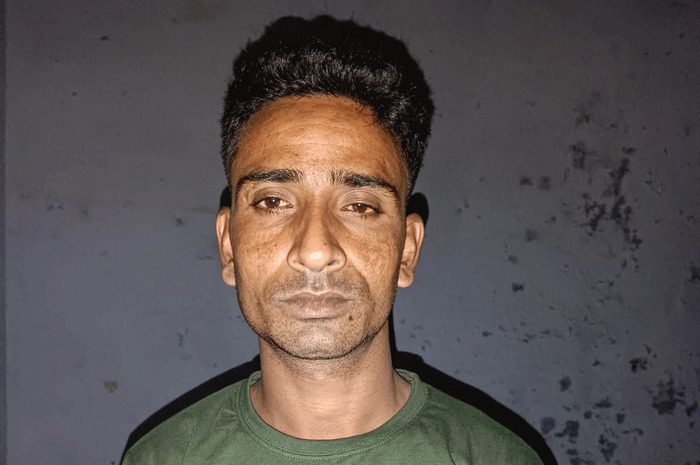
Mehmood Khan posed as Raunak Chaurasiya to trap a Hindu girl, forcibly converted her to Islam and performed Nikah, arrested: Details

0

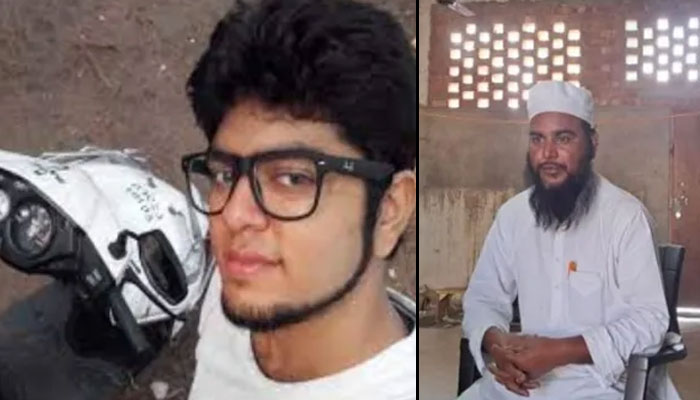
Yet another shocking case of love jihad and forced religious conversion has been reported in Uttar Pradesh’s Baharaich. Mehmood Khan, posing as Raunak Chaurasia, lured a Hindu girl. Following that, he sexually abused the girl for two years, recorded her private video, and blackmailed her.

The accused is a resident of Risiya Gudni Basai in Baharaich. Upon knowing the real identity of Mehmood Khan, the victim confronted the accused. Mehmood Khan threatened to make the victim’s private video viral and forcefully converted the Hindu girl to Islam and had Nikah rituals performed.

Mehmood used to assault the victim repeatedly. Eventually, the victim reached Alambagh Police Station and lodged a complaint against the accused.

Acting upon the victim’s complaint, Alambagh police arrested Mehmood Khan. Police informed that Mehmood Khan lived in Manaknagar for the past 7 years and was doing a private job.

In her statement, the victim stated that Mehmood Khan entrapped her in his ‘love’ by pretending to be a Hindu, with a fake name Raunak Chaurasia and established sexual relations with her. The victim further said that Mehmood chopped her hair, assaulted her, and threw her out of the house. He also threatened to kill the victim if she dares to file a police complaint.

As per a TimesNow Navbharat report, the accused was already married and has two children from his first wife. Mehmood Khan created two fake Facebook profiles. On one profile he posted the victim’s picture and abused her.

Shivshankar Mahadevan, the inspector in charge of Alambagh, stated that “the victim girl had a dispute with Mehmood many times before.” A panchayat meeting was also held to resolve the matter. They had both married and had been living together for two years. A case has been registered under relevant sections based on the girl’s complaint. The accused has been arrested and is being questioned.

Uttar Pradesh: Court issues non-bailable warrant against Samajwadi Party MLA Irfan Solanki for arson and rioting

0

A local court has issued a non-bailable warrant (NBW) against Samajwadi Party MLA Irfan Solanki and his younger brother Rizwan, who are wanted on suspicion of setting fire to a woman’s home in order to take possession of the property.

Anand Prakash Tiwari, Joint Commissioner of Police (Law and Order), stated that the NBW was granted by a special MP-MLA court on Wednesday following the filing of a complaint against them at Jajmau police station.

Since the duo has been missing for ten days, the search is on to find them. The MLA and his brother’s alleged hiding spots are being raided by a number of police teams. According to intelligence reports, they may have sought refuge in neighbouring districts or the state capital.

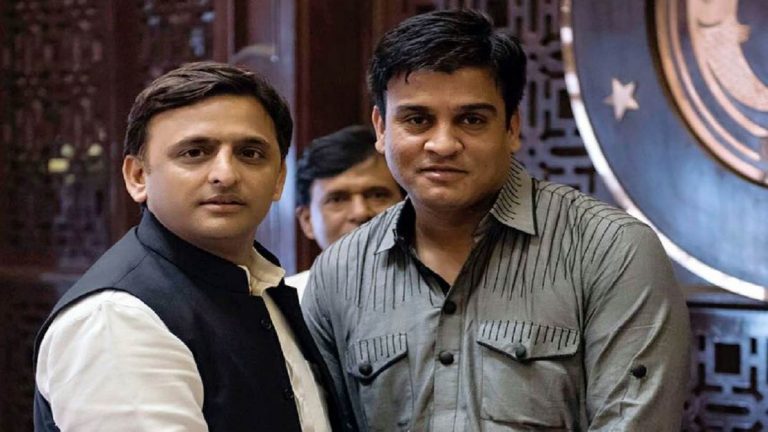
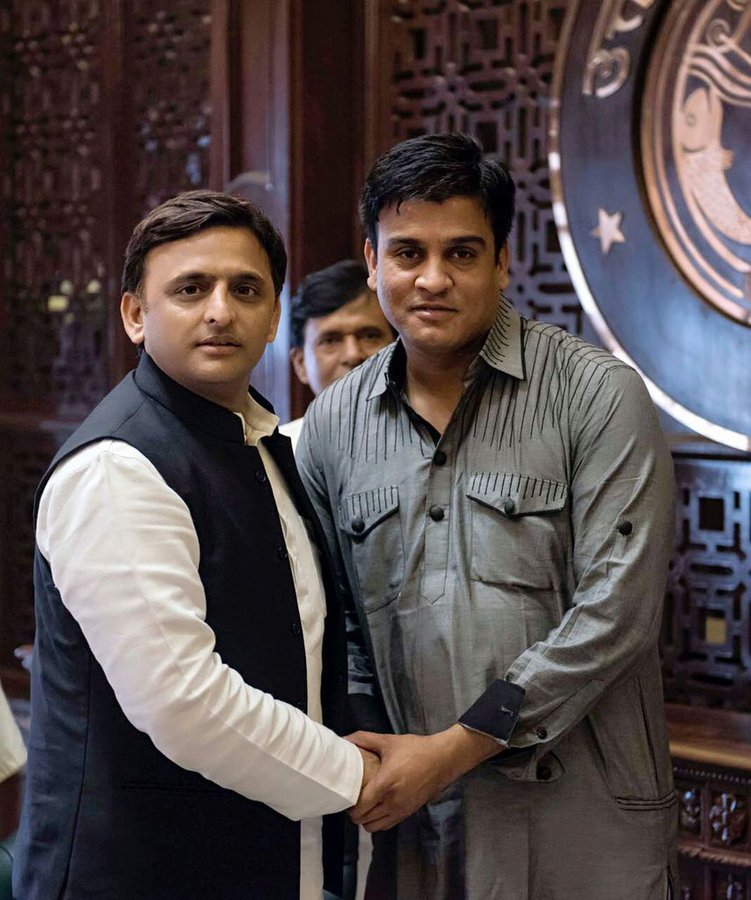
Irfan Solanki with Akhilesh Yadav.

A woman named Nazir Fatima said that on November 7 the MLA and his brother set fire to her home in an effort to take her land. She said that due to a wedding, the family was away. The aforementioned property is next to the MLA’s residence.

Nazir stated she owned a 535-square-yard property in the affluent Defence Colony where she had been living since 1986, but the MLA and his family were attempting to seize it in whatever way they could. To preserve the property, the entire family was residing in a thatched hut there. They had already grabbed about 200 square yards of her land, she claimed.

The police investigated her allegation and charged Irfan Solanki and Rizwan with arson, intimidation, and assault on November 7. Police commissioner BP Jogdand had ordered a forensic assessment of the scene because the MLA alleged he was being framed and the fire was caused by crackers.

Praveen Srivastava, in command of the forensic team, delivered his findings to the Jajmau police, with whom the case was lodged, on Thursday. According to a report by HT, an inflammable chemical was used to set fire to the property, which refutes the firecracker explanation.

On Thursday, the police acquired a non-bailable warrant from the court based on the forensics findings. If the MLA and his brother do not surrender, police authorities said the process of attaching their properties would begin soon. Abhishek Shukla, Station House Officer of Jajmau Police Station, was suspended for failing to take action against the SP MLA and refusing to listen to the woman’s allegation.

SP MLA Irfan Solanki and his brother have been charged with IPC Sections 147 (rioting), 327 (voluntarily causing harm to extort property), 427 (mischief causing damage), 386 (extortion by putting a person in fear of death or grievous harm), 436 (mischief by fire or explosive substance with intent to destroy house), 504 (intentional insult), 506 (criminal intimidation), and 120B. (criminal conspiracy). Irfan is an MLA from Sisamau in Kanpur, Uttar Pradesh.

West Bengal: 9-year-old girl dies after crude bomb kept in house explodes, uncle and alleged TMC worker Abdul Hossain arrested

0

On Thursday, November 17, a 9-year-old girl died in a crude bomb explosion in West Bengal’s North 24 Parganas district. The blast reportedly occurred in her maternal uncle’s house in Bakchora village in the Minakhan area on Wednesday evening, a police officer privy to the case told the media. The uncle, Abdul Hossain, who the locals allege is a Trinamool Congress cadre, has been arrested.

Minakhan Sub-division Police Officer (SDPO) Aminul Islam said that the deceased has been identified as Sohana Khatun alias Jhuma, a class 3 student who hails from the Basanti area of South 24 Parganas district. Her friends Rahima Parveen and Anisha Khatoon, who were playing with her, were injured in the blast.

According to the police, the crude bomb was kept on the loft beside a carrom board in Jhuma’s maternal uncle Abdul Hossain’s house, which the 9-year-old deceased came to visit two days before the incident. When the girl noticed a ball-like object on the loft, out of curiosity, she attempted to bring it down, but the crude bomb fell on the ground and exploded.

“The girl thought that coconuts were kept in the loft of the house. She went to pick it up but it fell on the ground and exploded.” a police officer said.

She was rushed to Minakhan Rural Hospital, where she succumbed to her injuries, the officer said.

After the incident, all the occupants fled the residence, said the police, adding that Hossain was arrested from a nearby area on Thursday morning. The police said that they also recovered 7 crude bombs from Hossain’s house. The police booked Hossain under the relevant sections of the IPC and Explosive Substance Act. He will be produced before a court in Basirhat, where police will seek his custody. Later police arrested Abdul Hossain’s brother Abul Sattar.

Abdul Hossain works as a construction worker and also runs a grocery store, said the police. The locals confirmed that Hossain, who has a past criminal record, is also associated with the ruling Trinamool Congress party, a claim that the party has denied.

“The party has no relation with Abu Hussain Gayen. Let the police find out the truth,” said TMC regional president Azizul Ghazi.

‘While We Watched’: Read how a documentary film on NDTV anchor Ravish Kumar has connections to George Soros and Ford Foundation

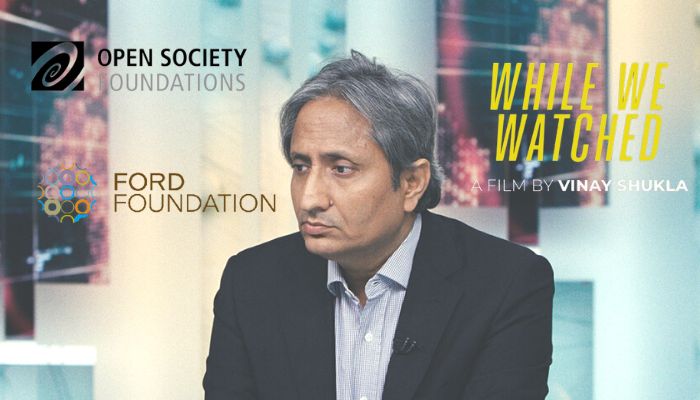
A documentary film, titled ‘While we Watched’ has come under the scanner over its ties to the controversial Ford Foundation and George Soros’ Open Society Foundations. This was first revealed by a digital media startup, The Pamphlet. The said documentary, directed by Vinay Shukla, features NDTV news anchor Ravish Kumar and chronicles his journey in the newsroom as a ‘broadcast journalist’. Shukla had earlier co-directed a documentary titled ‘An Insignificant Man’ in 2016 on the political journey of AAP supremo, Arvind Kejriwal.

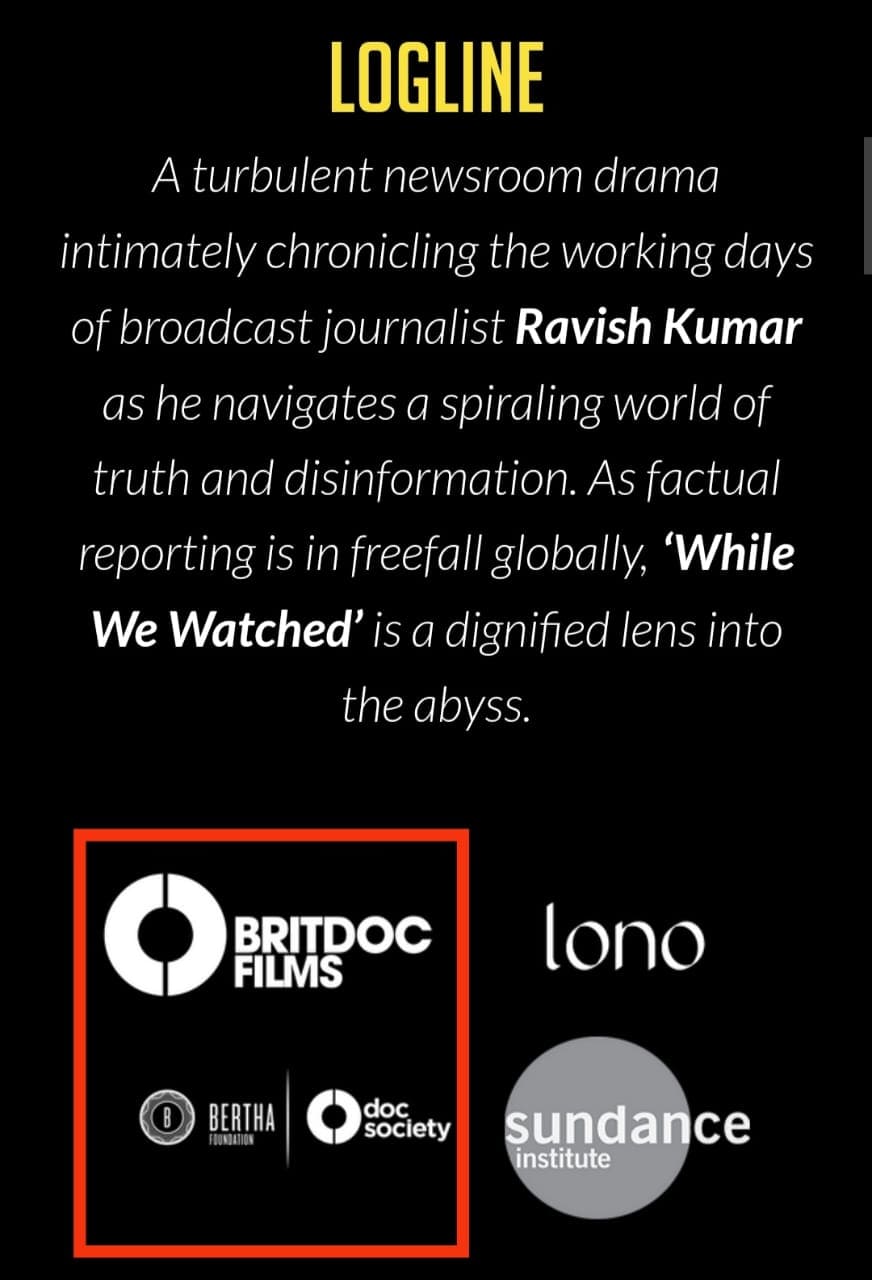
A cursory glance at the website of ‘While we Watched’ reveals that the film has been funded by the ‘Brit Doc Films’, which has now been renamed to ‘Doc Society.’

Screengrab of the website of ‘While We Watched.’

The logline of the documentary claimed, “A turbulent newsroom drama intimately chronicling the working days of broadcast journalist Ravish Kumar as he navigates a spiralling world of truth and disinformation. As factual reporting is in freefall globally, ‘While We Watched’ is a dignified lens into the abyss.”

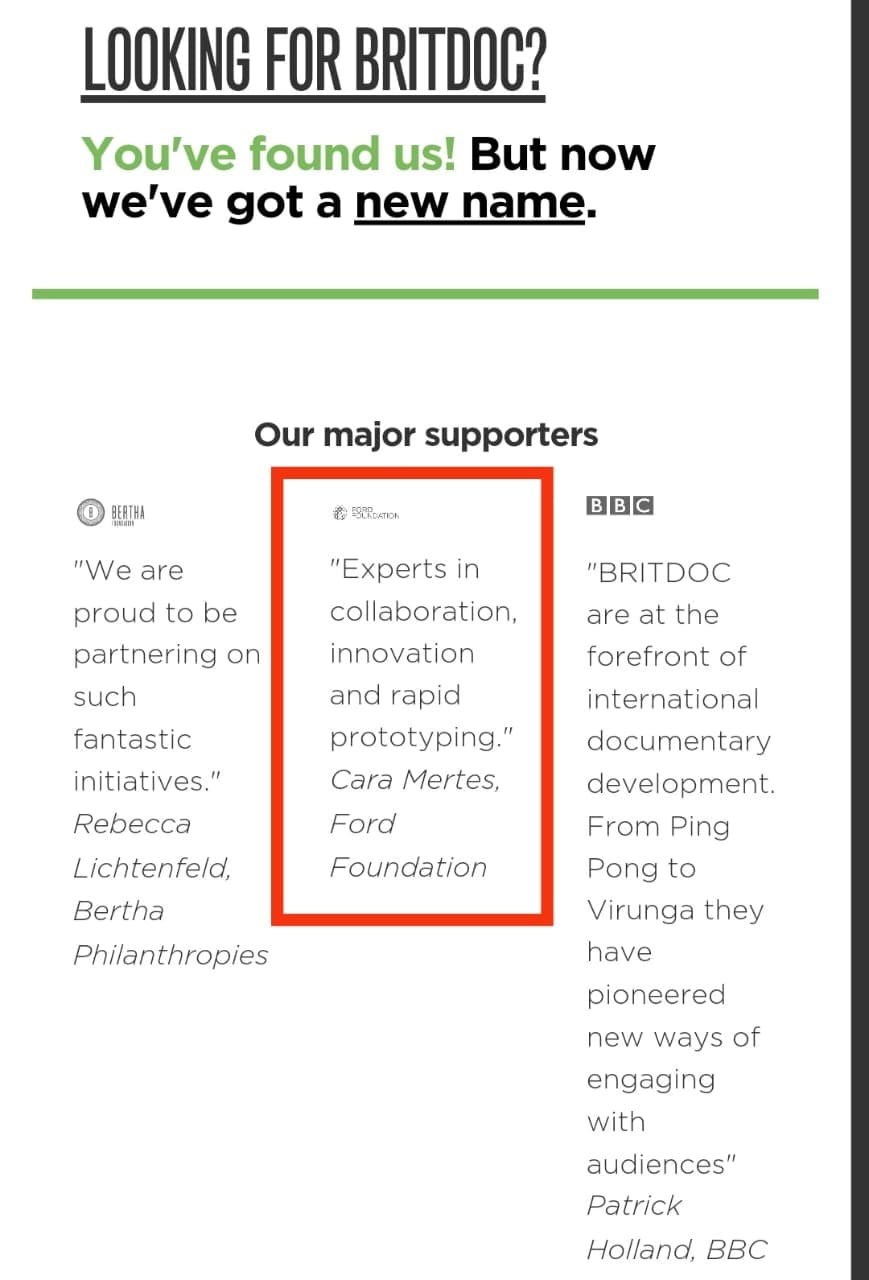
On visiting the website of ‘Doc Society,’ Opindia found that the controversial American private foundation, Ford, has been listed as the major partner of the non-profit organisation. Online portal The Pamphlet had also revealed these links earlier.

The site also included a quote from the ex-director of Ford Foundation’s ‘JustFilms initiative’, wherein she heaped praise on the Doc Society. “Experts in collaboration, innovation and rapid prototyping,” Cara Mertes was quoted as saying.

Screengrab of the website of ‘Doc Society’

On scrolling down further, Opindia stumbled upon a section of the website where the Ford Foundation is again listed as the major partner. “We can only do what we do because of organisations and individuals who fund our work,” a message by the ‘Doc Society’ read.

Ford Foundation listed as the major partner of Doc Society

Ford Foundation and its vicious role in anti-India activities

In 2015, the Government of Gujarat, while investigating Teesta Setalvad’s embezzlement case, came across funding by Ford Foundation to her entities. It was found that her trust had violated FCRA norms. 

Sabrang Communication and Publishing Pvt Limited, with which Teesta is associated, received $ 2.9 lakh from Ford Foundation as a grant to “address communalism, caste-based discrimination in India, including media strategies”. 

Later, a letter was issued by the Gujarat Police, following which the Ministry of Home Affairs (MHA) expressed its intention of probing the activities of the Ford Foundation. This probably set off a chain of events, most of which happened in the background and were later revealed by Wikileaks.

Ford Foundation claimed that it was embroiled in a controversy over its funding to Sabrang Trusts managed by Teesta Setalvad. The letter titled Ford Foundation in India: Notes to John Podesta dated May 26, 2015, also mentioned their funding to Arvind Kejriwal’s NGO before he got into politics as a possible reason for Government’s action.

This was confirmed by none other than one of the leading luminaries of the Indian left-wing firmament, Ms Arundhati Roy. In an interview with Sagarika Ghose, Roy talked about one of the articles that she wrote for The Hindu in which she alleged that the NGOs of Kejriwal and Sisodia had received over $400,000 from the Ford Foundation in three years of time.

Roy claimed that the group of ten people who were the top ‘management’ of the movement had well-funded NGOs. She said that three core members of the team had won Magsaysay Award which is also funded by Ford Foundation.

As interesting as it might sound, NDTV news anchor Ravish Kumar also coincidentally received the Ramon Magsaysay Award in 2019. Last year, whistle-blower emails quoted by Christopher Brunet on his Substack ‘KarlStack’ revealed that The Ford Foundation is a cesspool of intolerant and bigoted left-wing extremists.

Doc Society and its association with George Soros

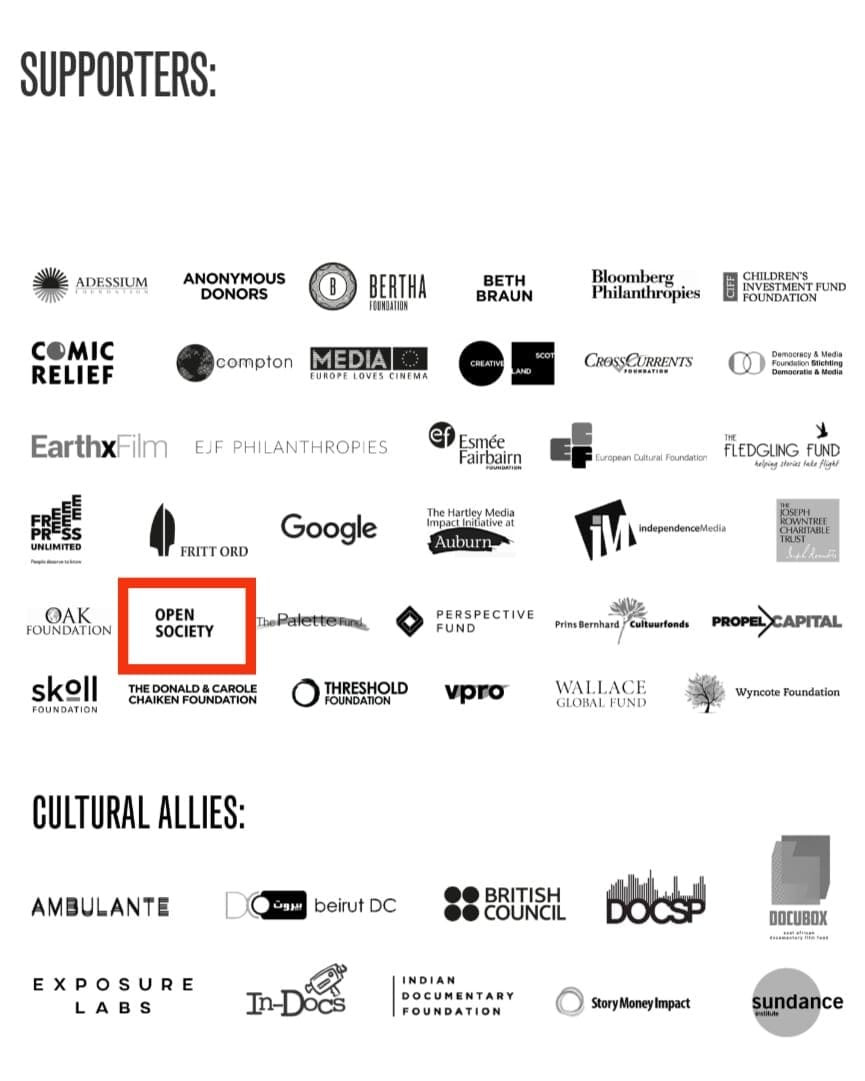
Amongst the several dozen ‘supporters’ of Doc Society, the Open Society Foundations of American billionaire George Soros stands out as one of the prominent organisations funding the non-profit company.

Notably, George Soros has been fueling a dangerous anti-India narrative using media and ‘civil society. The self-proclaimed philanthropist had vowed to ‘fight nationalists’ and conservative governments worldwide, which he often refers to as ‘authoritarian’ governments.

During the course of his life, if there is one thing George Soros has hated the most, it is India and its nationalist government led by Prime Minister Modi.

Open Society Foundations is listed as a supporter of ‘Doc Society’ on the latter’s website.

In 2008, the Soros Economic Development Fund (SEDF) had joined hands with Omidyar Network, Indian School of Business (ISB) and Google.org to launch their 17 million SONG fund to boost investment.

Together with other networks, Soros has provided extensive grants to the media running into millions to manipulate political narratives. Currently, the Indian beneficiaries listed on the MDIF site are the far-left website Scroll and another website named Graam Vaani. 

Besides funding media, the Open Society Foundation has also been a benefactor to left-leaning intellectuals who have constantly put out fake narratives against the current government.

There are also some prominent names with extensive links to George Soros, but it is extremely unlikely that these connections will surprise anyone. Some of the most prominent among them are Harsh Mander, Pratap Bhanu Mehta, Indira Jaising and Amartya Sen.

Open Society Foundations has extended support to the likes of ‘journalist’ Rana Ayyub over a withheld tweet. Doc Society, supported by George Soros, has now funded the documentary film on NDTV News anchor Ravish Kumar.

NDTV news anchor throws his weight behind the documentary

The self-declared messiah of the Indian press is currently in the United States, promoting the film ‘While We Watched’ along with Director Vinay Shukla. The film has so far won 4 awards, including the ‘Amplify Voices Award’ at the Toronto International Film Festival.

Reportedly, the film has received standing ovations from the audience and Ravish Kumar has been greeted by his admirers, both during and after the screening of the documentary. In all, the Ford Foundation and George Soros’ Open Society Foundations have put their money to good use.

Shraddha Walkar was brutally abused by her live-in partner Aftab, was hospitalized in 2020 with severe back pain and bruises on her face

0

Facts and revelations of the poisonous relationship between Shraddha Walkar and Aftab Amin Poonawala and the horrific murder continue to emerge shocking the nation on a daily basis. On Friday, the Police revealed that Shraddha, who was strangled to death and chopped into 35 pieces by her live-in partner Aftab, was hospitalized in 2020 with severe back pain in Vasai, Maharashtra.

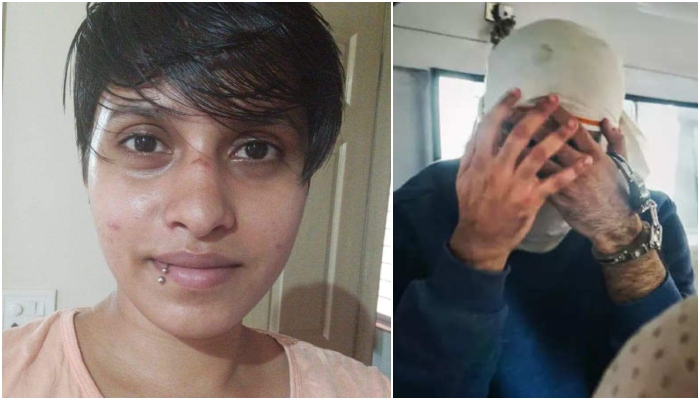
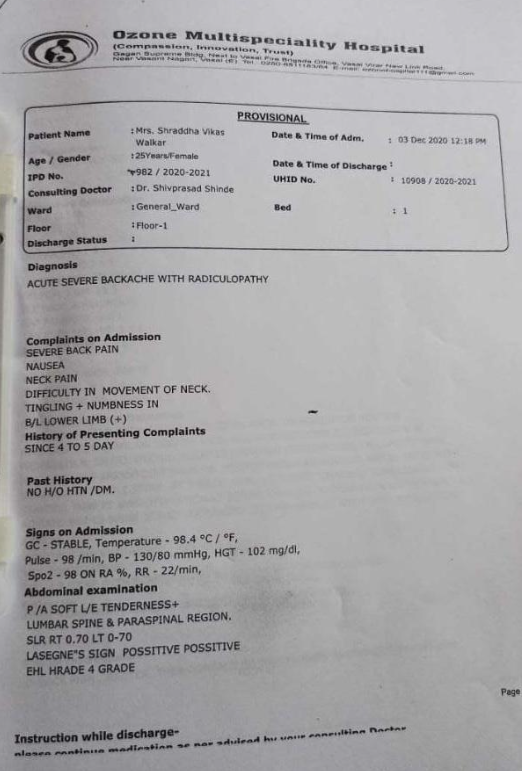
Shraddha was admitted to Ozone Multispeciality Hospital in Vasai on December 3, 2020, with acute pain in her back and spine. It is suspected that she was assaulted by Aftab, which prompted the back discomfort that necessitated her to be hospitalized. Shraddha’s medical reports and also her picture from 2020 are going viral over social media platforms.

The woman in the image can be seen having bruises on her face with an injury mark highlighted on her nose. The medical reports also reveal that she had been suffering from severe pain for 4 to 5 days before she was admitted to the hospital. Earlier, it was reported that Shraddha was in an abusive relationship with Aftab.

Aftab and Shraddha used to fight over petty issues and he had physically assaulted Shraddha several times in the past. After the murder, many of Shraddha’s friends came up and confirmed to the police that she was not happy with Aftab and wanted to desperately break her relationship with the accused.

Medical reports of Shraddha Walkar from 2020

“Once she contacted me on WhatsApp and asked me to rescue her from her residence. She said that if she stayed with him (Aaftab) that night, he would kill her,” one of her friends Laxman Nadar had said. Also on November 15, Shraddha’s friend Rajat Shukla recalled how Shraddha’s personality changed after she started living with Aftab.

“We use to study, do theatre and act together. Shraddha was very active and there was a lot of spark in her personality. However, as 2018 approached we started noticing a lot of changes in her personality. It is often expected that a person would change for the better, but in Shraddha’s case, she started withering. Probably this was the time when Aftab entered her life,” said Shraddha’s close friend.

He added that she was ‘living in hell’ and was frightened that her partner Aftab would ‘kill her.’ The couple’s neighbours and friends also reported that they used to fight frequently, and Walkar was afraid for her life. The Delhi Police later revealed that Aftab showed no remorse for murdering Shraddha. He murdered Shraddha on May 18 after they fought over managing household expenses.

Delhi Police gets permission for Narco test on Aftab Amin

The Delhi Police in the meanwhile has attained permission of conducting a narco test on the accused from a Delhi court. The court also extended Aftab’s police custody by five days. The Police will now take him to several locations in Himachal Pradesh and Uttarakhand for investigating the case further.

Aftab and Shraddha had been in a relationship since 2018 after they met on the dating platform Bumble. Notably, on this platform, men can’t approach women, only women can make the first move. Later they also joined a call centre job together in Mumbai. They decided to leave the city after Shraddha’s father disapproved of her relationship with Aftab.

The duo had issues in their relationship so they had decided to spend some quality time together. They first went to Himachal Pradesh and Uttarakhand and then shifted to a rented apartment in Delhi on May 15.

Shraddha Walkar murder case

On November 14, the Delhi Police solved the six-month-old murder case of Shraddha Walkar and arrested Aftab Poonawala for murdering her, and then chopping her into 35 small pieces. Aftab executed the murder on May 18 and stored her body parts in a refrigerator he had recently purchased. He then disposed of the body pieces in Delhi’s Mehrauli forest during the next 18 days.

The accused was arrested based on the complaint filed by Shraddha’s father on November 10. He stated in the complaint that the accused and the deceased had rented an apartment in Delhi and were staying in an unhealthy live-in relationship. He said that he had always opposed their relationship as Aftab used to physically assault Shraddha. The disappearance of Shraddha came to light only after her friends noticed that her social media accounts have gone inactive. As her father was not happy with her relation with Aftab, she was not in touch with him. But she was in contact with her friends through social media.

After killing her, Aftab had kept her Instagram profile active for a month. But after he stopped that, her friends noticed it and informed her father. The father lodged a complaint with Mumbai police, and after finding out that she was in Delhi, Mumbai police transferred the case to Delhi police.

The girl, a resident of Palghar was adamant about continuing her relationship with accused Aftab and shifted to Delhi with him. Three days after they shifted to Delhi, they engaged in a quarrel and Aftab happened to kill Shraddha. He confessed his crime on November 14 and stated that they used to fight a lot. He said that he murdered Shraddha on May 18 as she was forcing him to get married to her.

The accused has been arrested and a case under IPC section 302 (murder) and 201 (causing disappearance of evidence of an offence committed) have been registered. Further investigations into the case are underway.

UK reiterates its support for India’s permanent representation at United Nations Security Council

0

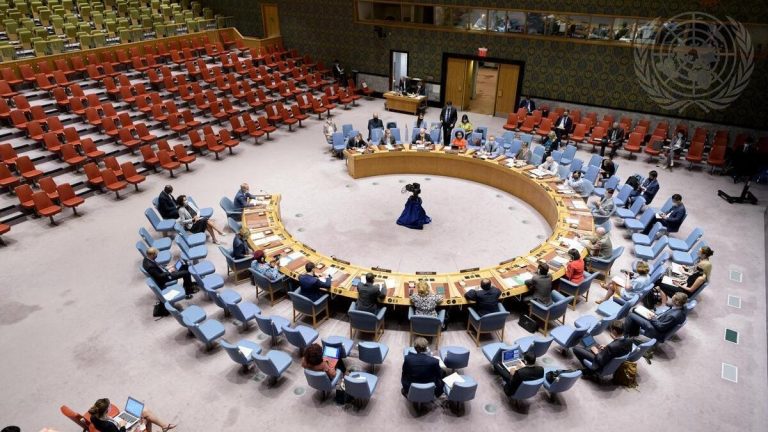
The United Kingdom has reaffirmed its support for the creation of new permanent seats in the United Nations Security Council (UNSC) for India, Germany, Japan and Brazil and also called for the expansion of the council in both permanent and non-permanent categories.

On Thursday, at the UN Security Council’s annual discussion on Security Council reform, UK Ambassador to the UN Barbara Woodward remarked that the UK also supports an extension of the non-permanent category of membership, bringing the Security Council’s overall membership to somewhere in the mid-20s.

She said, “Our position is well known. The United Kingdom has long called for the expansion of the Security Council in both the permanent and non-permanent categories.” “We support the creation of new permanent seats for India, Germany, Japan and Brazil, as well as permanent African representation on the Council,” she further added.

The General Assembly began its annual discussion with speakers reaffirming their calls for the 15-member institution to be expanded and its working processes updated to make it more transparent, inclusive, representative, responsible, and effective in a world plagued by a series of interconnected challenges.

Ambassador Ruchira Kamboj, India’s Permanent Representative to the United Nations, spoke on behalf of the G4 countries, which included Brazil, Germany, and Japan. She expressed her disappointment at the absence of real progress following four decades of equitable representation. She stated that representation is an unavoidable requirement for legitimacy and efficacy and that the longer Council reform is delayed, the greater the Council’s lack of inclusion.

“The longer the Security Council reform is stalled, the greater its deficit in representation. And representation is an inescapable precondition for its legitimacy and effectiveness,” she stated.

The Permanent Representative of India emphasised that the Security Council must now fulfil its Charter-mandated duty to uphold the integrity of all of its members. According to Ambassador Kamboj, the G4 has consistently called for a single, unified text as well as new working processes, such as webcasting, record-keeping, and the application of the General Assembly’s rules of procedure, to ensure a free, open, and transparent process.

The G4 nations support the need for robust Security Council reform, including the expansion of seats in both categories of membership, fair and equal regional representation, more open and inclusive working procedures, and better relations with other UN bodies, including the General Assembly, according to India’s senior diplomat in affirming the G4’s position.

Foreign Minister S Jaishankar reiterates India’s demand to expand UNSC

Recently, External Affairs Minister Dr S Jaishankar underlined India’s stance and said that reforms are a hard nut to crack, but hard nuts can be cracked. EAM Jaishankar was speaking in an interview at the Lowy Institute in Australia.

With 15 members, the United Nations Security Council (UNSC) is one of the UN’s six main bodies. The other 10 members alternate every two years, with China, Russia, the United States, France, and the United Kingdom serving as permanent members. The non-permanent status of India in the United Nations Security Council began in 2020 and will terminate in the current year’s December.

The additional permanent and non-permanent members of the UN Security Council will result from the proposed changes. However, there hasn’t been much advancement in terms of development because of the enormous authority held by the permanent members, who may veto reform initiatives.

“When I look back and think, well, this one is too difficult, I won’t be doing too much in my life. Life has been a set of challenges particularly for a country like India. I would not let the difficulties of the challenge discourage me. I’d put it the other way around,” Jaishankar said.

The United States Security Council has not successfully helped some countries deal with their problems, the foreign minister added. He said that the UN’s reputation is being harmed since certain African and Latin American nations feel that the organisation does nothing for them.

To note, on September 24, External Affairs Minister S Jaishankar made a push for United Nations Security Council (UNSC) reform after recognizing the weaknesses of the current multilateral institutions in dealing with global challenges. He also had hosted a meeting of two separate groupings, G-4 and L-69 in New York on the sidelines of the UN General Assembly and had discussed how global challenges have brought to the forefront the ‘urgency of reforming the United Nations and updating its main decision-making bodies.’

India and Brazil are the front-runners for a permanent seat on the United Nations Security Council, according to Russian Foreign Minister Sergei Lavrov. Germany and Japan are reportedly also competing for a permanent seat. Jaishankar believes that India enjoys the backing of several nations due to its commitment to the greater benefit of humanity.

Two years of Uttar Pradesh anti-conversion law: Yogi Govt registers 291 cases of illegal conversion and love jihad, arrests 597 perpetrators thus far

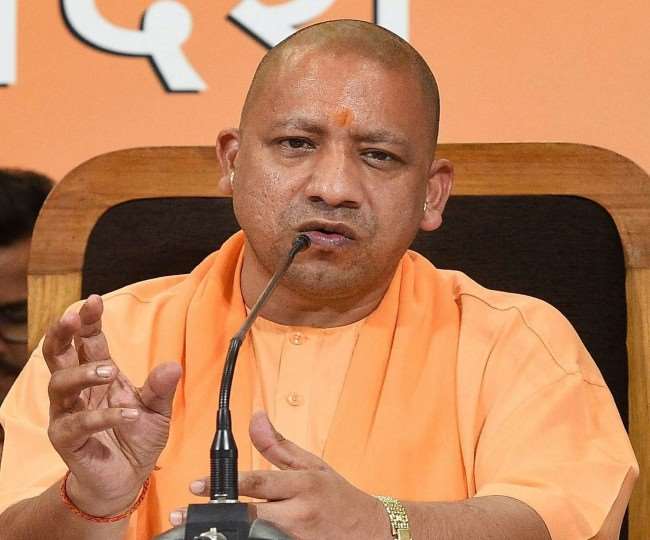
Two years since the Uttar Pradesh Cabinet, led by Chief Minister Yogi Adityanath, passed an ordinance prohibiting forced conversions, the administration has been working tirelessly to combat the rising threat of Muslim men impersonating Hindus in order to entice Hindu girls into relationships, a phenomenon known as ‘love jihad.’ According to media reports, a state government official has confirmed that over 507 accused have been detained and 291 cases have been registered under this Act in the last two years.

As per the available information, as many as 59 of the total 291 cases are concerned with the forced conversion of minors. The victims in 150 of a total of 291 cases in their statements have informed the court that they had been forced to convert.

Though the exact number was not known, the state official further informed that the majority of cases filed under this Act have been recorded in the Bareilly district.

The official also stated that a racket of the forceful conversion of disabled children was also exposed in the state.

It may be recalled that the Uttar Pradesh Cabinet headed by Chief Minister Yogi Adityanath had in November 2020 cleared the ordinance against forced conversions, which the Yogi Adityanath government has been mulling ever since the cases of the purported crime had been gaining its foothold in the state.

First conviction under UP’s anti-conversion law

The first case of conviction under the anti-conversion law of Uttar Pradesh was reported in September 2022, when a district court in Amroha sentenced a 26-year-old man named Afzal to 5 years imprisonment for the abduction of a 16-year-old girl. Besides the jail sentence, a fine of Rs 40000 had been imposed on the accused. 

Uttar Pradesh anti-conversion law

The anti-conversion law, which went into effect in Uttar Pradesh on November 27, 2020, provides for up to ten years in prison for anyone found guilty under the Illegal Conversion Act, depending on the gravity of the offence. Furthermore, the guilty may face fines ranging from Rs 15,000 to Rs 50,000.

The conversion of minors and women from the SC/ST community is punishable by three to ten years in prison under the Act. Besides, there is a provision for imprisonment of one to five years with a minimum fine of Rs 15,000 for forced conversion.

The Act also includes a provision for imprisonment for 3 to 10 years and a fine of Rs 50000 for forced mass conversion.

Under this Act, any couple intending to marry inter-faith must notify the district magistrate two months in advance.

Georgetown research which claims Muslims are in the 8th stage of genocide in India is written by a Pakistani researcher, funded by Saudi Arabia

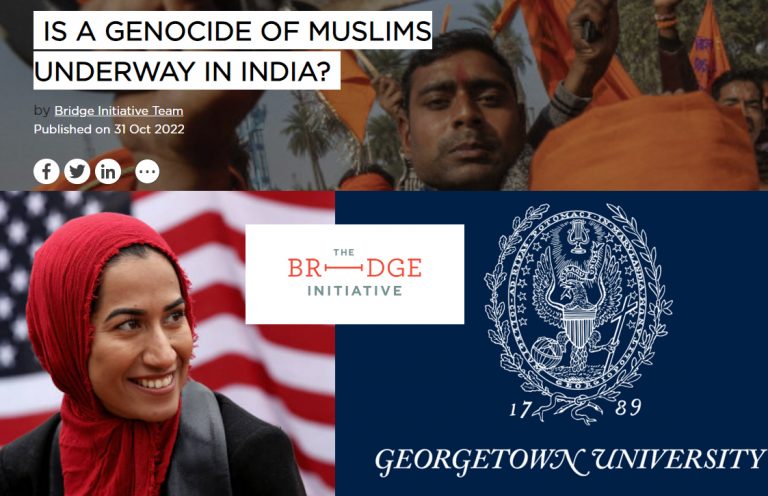
In October this month, The Bridge Initiative under Georgetown University in the US published a report claiming that Muslims are in the 8th stage of genocide in India. Echoing the claims of Islamists and left-liberals alleging persecution of Muslims in India, the report titled “Is a Genocide of Muslims underway in India?” concludes that “the process of genocide of Muslims is underway in India”.

“Islamophobia is central to this process, which is occurring at both a top-down and bottom-up level, as Hindu nationalists across the country have been emboldened by the right-wing BJP-led government— both share the same goals of remaking India as a homeland exclusively for Hindus,” the report claims.

The 40-page report alleges that India has experienced a dangerous rise in Islamophobia over the past decade. “The rise in this bigotry has largely come into being with the election of Prime Minister Narendra Modi and his Bharatiya Janata Party (BJP), a right-wing Hindu nationalist party,” it says.

The report says that it has examined the situation in India using “Gregory Stanton’s 10 stages of genocide, and finds that examples of the first 8 stages of genocide are present in India.” It claims that the first 8 stages are prevalent, and the ninth stage has started to emerge.

The entire report is based on such baseless and frivolous arguments to claim that India is seeing serious genocide of Muslims, which is allegedly on the 8th stage in a 10-stage scale. According to Gregory Stanton’s 10 stages of genocide, the eighth stage includes expropriation, forced displacement, ghettos, and concentration camps. The 9th stage is mass killing, so the report claims India is entering the stage of mass killing of Muslims, which is a dangerous lie designed to trigger anti-India feelings among Muslims across the world.

Initiative run by Islamists

While anti-India reports targeting the Modi government published by left-liberal think tanks in the west is nothing new, this report by the Georgetown University groups has a particular aspect, a direct link with Pakistan and Islamists. This report seems to be authored by Pakistani and Islamist elements, not by typical left-liberals.

The Bridge Initiative is described as a “multi-year research project on Islamophobia”, and it functions under the Prince Alwaleed Bin Talal Center for Muslim-Christian Understanding (ACMCU) at Georgetown University in Washington DC. The ACMCU was set up with a donation of $20 million by Saudi Arabian billionaire businessman Alwaleed bin Talal Al Saud in 2005.

Alwaleed has been a controversial businessman and was arrested on corruption charges.

The Bridge Initiative focuses exclusively on alleged Islamophobia and has published reports alleging that anti-Muslim hatred is on the rise in various countries. After Donald Trump became the US president, the group published several similar reports, alleging that anti-Muslim views were mainstreamed by the Trump campaign and administration. The Initiative had also hosted a panel discussion about “Islamophobia” in the Trump era.

Now coming to the report on India, the lead researcher mentioned in the report is Mobashra Tazamal, a Pakistan-origin researcher who has done her Master’s degree in Islamic Societies & Cultures. Her profile on the Georgetown University website states that “her current research centers on global Islamophobia with a particular focus on China’s campaign targeting Uighur Muslims and its use of surveillance technology, the rise of ethno-nationalism, and the financial and trans-Atlantic connections of the Islamophobia ‘industry’.” She is the associate director at the Initiative.

Other prominent members of The Bridge Initiative include Arsalan Iftikhar, another Pakistan-origin researcher. Arsalan Iftikhar is infamous for his racist comments against American politician Bobby Jindal, when Jindal was Louisiana’s governor. Appearing on MSNBC, Iftikhar had said about Jindal, “He might be trying to, you know, scrub some of the brown off his skin as he runs to the right in a Republican presidential exploratory bid.” This remark had triggered massive outrage, and MSNBC had announced that Iftikhar won’t be appearing on the channel again.

Another member of the Initiative is Farid Hafez, who was investigated by Austria for suspected terror funding and association with Muslim Brotherhood. The Austrian authorities raided his Vienna house in 2020 and questioned him after monitoring him for years under Operation Luxor.

John L. Esposito, the director of Bridge Initiate, although a Christian, has written extensively on Islam. In his books and articles, he keeps claiming that anti-Islam sentiment is rising in the world.

Another member of the group, Susan L. Douglass, is an American Muslim, who did MA in Arab Studies. Jordan Denari Duffner is the other member of the Initiative, who is “a leading Catholic voice on Muslim-Christian relations.”

The Bridge Initiative of Georgetown University is not a neutral group, it is a group of Islamists who accuse the world of Islamophobia. Among the 6 members of the initiative including the director, four are Muslims, two of them from Pakistan.

Therefore, there is no wonder that they have authored a completely Hinduphobic report accusing Hindus in India of being Islamophobic.

Baseless allegations

Moreover, the report is filled with baseless allegations against India, repeating the familiar false arguments already made by Islamists and left-liberals against the Modi government. It cites the CAA as an anti-Muslim policy of the Modi government, where the fact is that the CAA only accelerates granting citizenship to persecuted minorities in neighbouring countries. CAA does not deny citizenship to Muslims, it just does not accelerate the process for them, but foreign Muslims can become Indian citizens under normal procedure.

The report also cites NRC in Assam as another anti-Muslim step, whereas the fact is that every country has right to identify and deport illegal immigrants. In fact, the NRC of 1951 was updated in Assam on the orders of the Supreme Court.

Using another familiar anti-Hindu and anti-BJP argument, the report says the ban on hijab in schools in Karnataka is anti-Muslim. The government’s decision has been accepted by the High Court, and neither the government nor the court bans Muslim women from wearing hijabs or even Burkha. The rule is only applicable to schools where uniforms are mandatory. Only a handful of Muslim girls are fighting to break the Uniform rule, and the Georgetown University group thinks enforcing uniforms in schools, a globally accepted practice, is Islamophobic.

The report cites the Ram Janmabhoomi judgement, the ongoing case over Gyanvyapi, and other such cases as anti-Muslim. They fail to mention that it is well known that these Islamic structures were constructed after demolishing ancient Hindu temples, and Hindus are fighting to restore those heritage temples.


‘Aftab should have loved Shraddha like his sister’, ‘Islam does not allow Muslims to marry non-Muslims’: Jamiat Ulema-e-Hind cleric Maulana Qasmi

Maulana Vakil Ahmed Qasmi of Darul Uloom Rahmania Madrasa located in Laharpur town of Sitapur, UP and district general secretary of Jamiat-ul-Hind said that Aftab Poonawala should have loved Shraddha Walkar like his sister and expressed disapproval against the duo’s relationship, and added that Islam forbids the same-sex relationship.

Opposing the relationship between Aftab and Shraddha, Maulana Qasmi said that Islam does not permit Muslims to marry non-Muslims.

It has been reported that Aftab made overtures to Shraddha and lured her into a relationship in the name of marriage. Shraddha left her parents and ignored the red flags raised by them. Furthermore, it has come to light that Aftab was a supporter of LGBT rights, something which is anathema in Islam and attracts harsh punishment.

Speaking about Aftab being an LGBTQ supporter, Qasmi said, “Islam has laws codified, and whatever goes against them, Islam does not allow it to be spoken or done. We cannot punish any person doing anything outside the Islamic law, but Allah punishes that person after death.”

He said that the world knows it is necessary to have a man and a woman in a marriage. “No religion in this world can justify a boy marrying a boy or a girl marrying a girl. God has created separate gender for men and women. A person can attain peace only when the system created for marriage is achieved. This [homosexual relationship] is a disgusting thing, even in terms of humanity,” he said.

“Where will children come from if a man marries a man and a woman marries a woman?”, asks Maulana Qasmi

He added, “What will a boy do by going to a boy? Two things happen after marriage. One is that the husband and wife live together and love each other. They spend the night, and as a result, children are born. However, where will the children come from if a man marries a man and a woman marries a woman?”

While describing Aftab’s acts as a shame to humanity, Qasmi said such things do not come in the religious system. “No one should do this. Furthermore, live-in relationships are also in violation of Islam, and no Muslim should indulge in it,” he added.

Regarding the live-in relationship between Aftab and Shraddha, Qasmi said, “Islamic law does not allow live-in relationships. It is not allowed for a person to get into a relationship without marriage. The foundation of friendship is different, but without marriage, if someone gets into a relationship equal to a relationship between husband and wife, it is called ‘Jeena’. Aftab has committed a crime.”

Qasmi further denied the love jihad angle in the matter. He called it propaganda to name love between two persons as love jihad.

He emphasised the fact that a Muslim should marry only a Muslim. He said, “If he had fallen in love with a non-Muslim, he should have loved her as a sister. There are many girls in the Muslim community for marriage. It is wrong to use the religious system for marriage.”

Shraddha Murder Case

On May 18, Aftab Amin Poonawala murdered his girlfriend and live-in partner, Shraddha. He chopped her body into 35 pieces and disposed of them in different areas over 18 days. The incident came to light after Shraddha’s father filed a missing report and Delhi Police interrogated Aftab. During interrogation, he broke down and confessed to the crime. The investigation into the matter is underway.