Home Blog Page 316

Yashwant Sinha says ‘Operation Sindoor, Pulwama, Uri, everything is for elections’, goes on with Kapil Sibal to make more unhinged, bizarre claims

During an interview with Senior Advocate and veteran Congressman Kapil Sibal, former union minister Yashwant Sinha accused the Modi government of orchestrating India’s military response to Pakistan in the aftermath of the Pahalgam terror attack as an election gimmick ahead of upcoming Bihar Assembly elections. Absolving Pakistan, Sinha, an Ex-Foreign Minister and former BJP leader, linked the timing of Pakistan-sponsored terrorists attacks in the country with elections.

He said that the Pulwama terrorist attack was followed by 2019 general elections and now after the Pahalgam terror attack, the Bihar assembly elections are approaching.

Sinha, a former bureaucrat who joined TMC after leaving BJP in 2018, accused the Modi government of using national security issues for electoral gains, and said that PM Modi sought votes in the name of the Pulwama and Uri terrorist attacks. He said that the government lacks accountability as it did not answer any questions relating to the Pulwama and Uri terrorist attacks. “No details regarding the Pulwama terrorist attack were disclosed and, similarly, the details of Pahalgam terror attack will not be disclosed,” Sinha claimed. Attacking PM Modi, Sinha said that PM Modi cannot handle a press conference. He said that PM Modi never addresses a press conference because he cannot speak without the help of a teleprompter.

People do not understand the meaning of ‘trillion’: Sinha

Sinha lashed out at the Modi government ridiculing its vision of making India a $5 trillion economy by saying that people in his old constituency do not even understand the meaning of the word ‘trillion’. Nodding in agreement with Sinha, Sibal also rejected the idea of a $5 trillion economy saying it made no sense without an increase in per capita income of the country which the government has failed to achieve. “They (Modi government) are experts at showing people false dreams,” said Sinha.

Current Foreign Minister is “a glorified foreign secretary”: Sinha

Sinha, an Ex-Foreign Minister, launched a scathing attack on Modi govenment regarding India’s foreign policy. Alleging that PM Modi has personalised the foreign policy,Sinha termed Minister of Foreign Affairs, Dr S Jaishankar, “a glorified foreign secretary”. “Modiji has taken the control of foreign policy entirely in his hands,” Sinha alleged.

Taking a dig at PM Modi’s foreign trips, Sinha termed them futile. Don’t know how many countires he (PM Modi) has been to. I think except Timbaktoo, he has travelled to every country in the world. This has cost so much money and yielded no results,” said, Sinha pointing out that no country joined India in abstaining from voting on Pakistan loan request at the International Monetary Fund (IMF). Notably, member countries at the IMF do not have one vote each, and the voting powers reflect the economic size of each member. Thus, countries like the US, which has historically leaned towards Pakistan, enjoy a disproportionately high voting share. Further mocking India’s foreign policy, both Sinha and Sibal laughingly said that only Tiwan,Taliban and Israel have supported India.

Sibal credited Sinha for taking forward US-India strategic partnership during his tenure as the Foreign Minister and said that this ultimately resulted in the removal of the US sanctions on India’s nuclear program. Sinha, who left the BJP in 2018, also drew a comparison between the old and the new BJP saying that the old BJP was not communal while the new BJP divides and rules.

Statehood of Kashmir should be restored: Sinha

Speaking on the issue of Kashmir, Sinha held the Modi government responsible for alienating the people of Kashmir and said that the statehood of Kashmir should be restored by reintroducing Article 370. It is the to be noted that the abrogation of Article 370 of the Constitution was uphled by a Consitution bench of the Supreme Court of India.

INSV Kaundinya, the revived stitched ship, joins Indian Navy: Read how the vessel and the person it is named after, both symbolise India’s glorious maritime past

On 21st May, in a landmark event at Karwar’s INS Kadamba naval base, the Indian Navy formally inducted the traditional sailing vessel INSV Kaundinya into its fleet. The vessel symbolises India’s ancient maritime legacy and is a tribute to the country’s seafaring traditions and cultural exchange with Southeast Asia.

Union Culture Minister Gajendra Singh Shekhawat signalled the green flag for Kaundinya’s induction. Vice Admiral Rajaram Swaminathan and Rear Admiral K.M. Ramakrishnan, Flag Officer Commanding Karnataka Naval Area, were present at the event.

In a post on X, Shekhawat wrote, “A historic moment for Bharat and our civilisational pride. Presided over the induction ceremony of the Ancient Stitched Ship INSV Kaundinya at Karwar Naval Base today—an extraordinary recreation of a 5th-century vessel, inspired by Ajanta murals and handcrafted by Kerala’s traditional artisans using age-old techniques. This is not just the launch of a vessel—it is the launch of heritage. A symbolic act that echoes across centuries, marking the resurgence of India’s maritime legacy and reaffirming our deep and enduring ties with the Indian Ocean world. As envisioned by Hon’ble PM Shri Narendra Modi ji, this initiative reflects the spirit of Vikas bhi, Virasat bhi—where development walks hand in hand with civilisational resurgence, and tradition becomes a cornerstone of transformation. Honoured to witness this proud confluence of legacy, craftsmanship, and nationhood.

Inspired by Ajanta, stitched with coir

INSV Kaundinya is a unique vessel crafted using age-old techniques. It is stitched with coir and planks instead of modern rivets. The vessel draws inspiration from the 5th-century murals of the Ajanta caves, blending ancient craftsmanship with modern scientific inputs to recreate a vessel from India’s maritime past.

The vessel has been named after the legendary Indian sailor and sage Kaundinya. It is believed that he sailed to Southeast Asia. According to Sanjeev Sanyal, the legends say he married a local Naga princess and founded the kingdom of Funan, the first historically attested Indianised kingdom, in what is now Cambodia/South Vietnam. The ship symbolises India’s ancient naval prowess and its historic oceanic trade routes. The name also evokes India’s soft power and spiritual presence in Asia long before the term existed.

Built through a unique collaboration

The vessel was constructed as part of a tripartite collaboration between the Ministry of Culture, the Indian Navy, and Goa-based shipbuilding firm M/s Hodi Innovations. Master shipwright Babu Shankaran used traditional coir-stitching techniques to handcraft the ship. It was completed in February 2025.

The Indian Navy, along with IIT Madras, contributed to making the design sea-worthy for long-distance voyages. The result is a vessel that not only reflects traditional aesthetics but also meets modern performance standards.

Ancient look, modern purpose

The vessel has distinctive features such as the Gandabherunda (two-headed eagle) and a lion-headed prow. INSV Kaundinya also carries a Harappan-style anchor, which reinforces the connection with the civilisational depth and historical shipbuilding knowledge of India.

The ship is scheduled to embark on its maiden voyage along ancient trade routes, reviving interest in India’s maritime culture and reaffirming the country’s historical outreach to the wider world.

INSV Kaundinya is a floating chronicle of India’s forgotten sea traditions, which have now been restored and are ready to sail again.

Hindus migrating from Shanichari-Shukrawari of Sagar city in Madhya Pradesh: Girls trapped in love jihad by Muslim men, pieces of meat thrown outside houses

A sensational report from Dainik Bhaskar says that Hindu families are relocating in significant numbers from the Shanichari and Shukrawari regions of Sagar city in Madhya Pradesh. Over the past decade, the Hindu demographic in this area has diminished by 4.88 per cent, raising serious concerns.

According to the report, over the past five years, 41 Hindu families have sold their houses and left these regions. All these properties have been acquired by individuals from the Muslim community. Over the past ten years, a total of 228 people from 63 Hindu families have departed from the area and numerous houses continue to display “for sale” signs.

The sensitive report was also shared by Priyank Kanoongo, Member of National Human Rights Commission and former chairman of National Commission for Protection of Child Rights (NCPCR).

The team from Dainik Bhaskar interviewed several families compelled to vacate their ancestral residences. According to Umashankar Sharma, members of the Muslim community gathered around his 150-year-old family residence and began to intimidate him. At the time, only women were present in the house. Consequently, he was pressured to sell his property, valued at Rs 18 lakh for a mere Rs 5.30 lakh.

Rajpal Singh disclosed that pieces of meat and eggshells were discarded near his house, creating an unpleasant living environment. His 625 square foot home remained unsold for two years, ultimately forcing him to sell it at a reduced price. A man conveyed that his daughter was trapped in a love affair with a Muslim youth, forcing him to marry her to the young man. She endured abuse at his hands, prompting him to sell their house.

Santosh Kumar Sahu stated that only one or two Hindu families remained in the vicinity. Due to the predominance of Muslim households, his children faced difficulties in finding partners. The prevailing environment hindered marriage proposals. Hence, he had to sell his house, worth Rs. 30 lakhs for Rs. 22 lakhs.

A Hindu woman residing in the Shanichari Chaugana region expressed her concerns regarding the safety of her two daughters in her husband’s absence. After an altercation with members of the Muslim community, she sold her property appraised at Rs 22 lakh for a mere Rs 14 lakh.

According to Ajay Dubey who is the district president of the Vishva Hindu Parishad (VHP), the declining situation in the area is causing Hindu families to sell their properties and move away. He has called on the administration to take decisive action to end the migration and indicated that his organization is willing to support the families in distress.

Modi govt unveils plans to become Atmanirbhar in oil shipping: 112 made-in-India oil tankers to be purchased for $10 billion

In a major boost to the ‘Make in India’ initiative, India is likely to invest $10 billion ($850 million) by 2040 to purchase around 112 crude oil tankers to be made in India. Being the third-largest importer of crude oil, India aims to curb its dependence on foreign-owned vessels by building a domestic fleet. With this move, India seeks to bolster its energy security.

Currently, government-owned oil companies lease an ageing fleet from international companies. However, the petroleum and shipping ministries want to discontinue this practice and come up with a fleet of “built-in-India” oil tankers.

In the first phase, India will purchase 79 tankers, of which 30 will be medium-range vessels, Bloomberg reported, citing official sources.

The report says that the purchase order for the first 10 crude oil tankers will be out this month end. For this, only locally built ships or those built in collaboration with foreign companies would be taken into consideration for purchase.

Besides, India is also focusing on enhancing its crude oil refining capacity from 250 to 450 million tonnes annually by 2030, driven by rising local and global demand for oil products. Building an indigenous shipping capacity will help India ensure an uninterrupted energy trade flow, since India is significantly dependent on imported crude.  

%India is working towards increasing the share of locally built crude tankers from 5 per cent to 7 per cent by the year 2030 and to 69% by 2047, the year by which India aims to achieve the status of a “developed nation”.

It must be noted that India spends around $75 billion annually on leasing ships but controls only 2 per cent of the world’s total tonnage in shipping.

Modi government’s boost to India’s shipbuilding industry

In a massive boost to India’s shipbuilding industry, the Modi government has accorded the coveted ‘infrastructure’ status for large ships. Finance Minister Nirmala Sitharaman announced in her speech for the budget 2025-26 on 1st February said that the ships above a specified size would be included in the harmonised master list (HML) for infrastructure, making them eligible for financial incentives. This will attract private investment in the shipbuilding industry and enhance fleet modernisation.

The Modi government announced the allocation of a Maritime Development Fund (MDF) with a corpus of Rs 25,000 crore. This fund would be utilised for long-term financing to support the country’s maritime industry, particularly ship acquisition. Up to 49% of the corpus will be contributed by the Central government, while the rest of it will be mobilised from port authorities, other government entities, Central PSEs, Financial Institutions and the private sector.

The global shipbuilding market was estimated at $207.15 billion in 2023, rising at a 6.5% CAGR to $220.52 billion by 2024. India’s market was valued at $90 million in 2022 and is expected to grow to $8,120 million by 2033, representing a staggering 60% CAGR.

The global maritime landscape is dominated by China, Japan and South Korea, with the three of them contributing 50%, 15% and 28% respectively to global shipbuilding. India, however, is collaborating with China’s direct competitor, South Korea, to expand its shipbuilding capacity. South Korea’s HD Hyundai Heavy Industries Co. is negotiating with India’s state-owned Cochin Shipyard Ltd. for a new facility in the coastal city of Kochi.

While India currently ranks 22nd in the global shipbuilding industry, India aims to enter the top 10 global rank by 2030 and become one of the top 5 countries by 2047. This ambition is a part of the Modi government’s broader visions, including the Maritime India Vision 2030 and Amrit Kaal Vision 2047, intended to capture a massive share of the global shipbuilding and ship repair markets.

In May this year, the Maharashtra government approved the Shipbuilding, Ship Repair and Ship Recycling Policy, 2025. The decision comes as a major leap towards enhancing India’s maritime capabilities, an area which was prioritised by the central government in this year’s budget. In ship repair, India ranks 20th globally, while in ship recycling, the country stands in second place with a share of 32.6%. Maharashtra accounts for 11 per cent of India’s shipbuilding capacity and 21 per cent of production. The policy is an effort to make use of India’s untapped potential in the maritime sector.

Atmanirbhar Bharat, stronger Bharat

Besides potential foreign collaboration with key international players, India, by prioritising domestically built ships, aims to bolster its maritime and naval capabilities, curb vulnerability to geopolitical disruptions like blockades or wars. In the longer run, India seeks to strategically decouple from reliance on foreign powers for critical energy transport services. Focus on domestically constructed fleet is vital for securing India’s energy supply chain, especially because India is the third-largest oil importer. With crude oil refining capacity expected to grow from 250 million tons to 450 million tons by 2030, India will be able to fare better in terms of meeting domestic and international demands.

Domestic shipbuilding would not only create thousands of jobs for Indians, boost economic growth through indigenous manufacturing but also enhance India’s strategic autonomy in energy logistics, thus positioning the country better to navigate the volatility that comes along the global energy market as well as sanctions-related challenges as seen in the case of Russian oil shipments.

Pakistan’s old playbook finds a new corridor: Why India must recalibrate its approach to Kartarpur and thwart ISI’s nefarious agenda

The Kartarpur Corridor was opened as a symbol of hope. It is a narrow but significant bridge between India and its hostile neighbour, Pakistan. Kartarpur Corridor is a spiritual lifeline that connects Indian Sikh devotees to one of their holiest sites, Kartarpur Sahib Gurdwara, where Guru Nanak Dev Ji spent the final 18 years of his life. As the Gurdwara is now in Pakistan after the partition, the corridor was opened as a goodwill gesture for the Sikh community living in India.

However, in less than five years since its inauguration in 2019, reports have emerged that Pakistan has been misusing it. Earlier, there were reports that Pakistan used the site to spread propaganda that India tried to attack the Gurdwara during the 1971 war. Furthermore, other reports suggested that Pakistani authorities approached Sikh devotees for business propositions without India’s permission.

As if that was not enough for Pakistan, the enemy nation started using the corridor to lure Indians to spy for Pakistan in exchange for money etc. The recent arrest of Devendra Singh Dhillon, a 25-year-old Masters student from Patiala’s Khalsa College, should serve as an eye-opener for the authorities on the Indian side. The arrest has emerged as a festering concern that New Delhi can no longer afford to ignore.

Apart from Dhillon, other influencers have also been arrested for spying against India and sending sensitive information to Pakistan. Such incidents have thrown light on how Pakistan may be using the corridor not for faith, but for fuelling anti-India operations, including Khalistani propaganda and espionage recruitment.

A corridor of devotion, or deception?

Devendra’s arrest is not an isolated case but part of a troubling pattern. He was picked by the police on 12th May from Kaithal, Haryana for uploading firearm photos on Facebook. Initially, police thought he was just another misled youth flexing for social media clout. However, the details that emerged during questioning shook the investigating officers.

Media reports suggest that in November last year, Dhillon had travelled to Pakistan via the Kartarpur Corridor. It was meant to be a religious pilgrimage but it allegedly became the entry point for deeper, more sinister interactions. He reportedly came in contact with Pakistan’s notorious Inter-Services Intelligence (ISI) agency’s officers. They lured him into sharing sensitive information with them, including images of the Patiala military cantonment.

If a political science postgraduate student could be roped into such a high-stakes espionage network, imagine how dangerous this trend can, or might have already, become. It cannot be treated as an isolated case.

According to Kaithal SP Aastha Modi, Pakistan’s handlers had spent considerable money on Dhillon. His phone was confiscated by the police and bank accounts are under probe to trace the money trail. The implications are clear. The Kartarpur Corridor has become a soft entry point for ISI recruitments and subversive activities under the garb of faith tourism.

Faith without vigilance is a national risk

When the Kartarpur Corridor was opened in 2019, India showed magnanimity. Despite the fact that Pakistan has a history of sponsoring cross-border terrorism and has been persistent with the anti-India rhetoric, New Delhi allowed thousands of its citizens to access the holy site of Guru Nanak Dev Ji’s final resting place in Narowal district. The decision was made in good faith, literally and figuratively.

However, that very faith is now being exploited. The Pakistani establishment has long played host to Khalistani terrorists. Notorious Khalistani terrorists Gopal Singh Chawla, Jagtar Singh Tara, Gajinder Singh and many others have found asylum in Pakistan. Pakistan supported Sikh insurgency in Indian Punjab during the 1980s and often glorifies Khalistani terrorist Jarnail Singh Bhindranwale. Furthermore, Khalistani terrorist Hardeep Singh Nijjar had also gone to Pakistan to meet Tara.

It is evident that Pakistan sees Sikhs as soft targets. Now, the suspicion is that their new approach involves subtle indoctrination, honey-trapping, and direct ISI contact during Kartarpur visits. These attempts don’t rely on coercion. They rely on emotional manipulation, religious sentiments, and targeted selection of vulnerable visitors.

Is New Delhi doing enough?

It is high time that the Government of India asks itself if the security protocols surrounding Kartarpur visits are stringent enough. Are background checks thorough? Are returning pilgrims being adequately monitored for potential contact with foreign handlers? Are we tracking their financial footprints post-visit? More importantly, has there been any dialogue with the Pakistani side regarding rising misuse?

There are so many questions we must ask and Prime Minister Narendra Modi-led Government of India must answer.

Faith is personal, espionage is not

The case of Devendra Singh Dhillon and Jyoti Malhotra, among others, is a chilling reminder that Pakistan is not looking for trained spies. It is looking for malleable minds. The Kartarpur Corridor, with its sacred aura, provides a near-perfect cover. And while the spiritual ties must not be broken, India cannot afford to be naïve.

It is time for the Central government to rethink the framework around Kartarpur travel. Biometric profiling, stricter pilgrim guidelines, and post-return debriefings are not just prudent, they are necessary. Post-pilgrimage monitoring for a specific time must be added to the list as well. It is evident that behind a faithful visitor, there may be someone being quietly cultivated to serve another nation’s dark ambitions.

Kartarpur Corridor is a necessity but that does not mean we leave our doors unmanned.

What is Golden Dome: Donald Trump’s proposed $175 Billion Missile Defense System for US with weapons to be placed in Space

On 20th May, President Donald Trump announced his intention to start construction of a new and advanced missile defence shield named “Golden Dome”, that would be able to intercept threats from space. He estimated the project would cost about $175 billion and be operational in three years. He vowed that the ambitious venture would be accomplished by 2029, the conclusion of his second tenure.

The system is intended to destroy “hypersonic missiles, ballistic missiles, and advanced cruise missiles,” and he claimed to have “officially selected an architecture” for the same. It will integrate new technologies with current defence infrastructure to protect the United States from foreign missile threats, including those launched from space.

Trump initially launched the program in January with the goal of thwarting Russian and Chinese threats. Its goal is to establish a network of satellites, perhaps hundreds, that can follow, identify and intercept incoming missiles.

During a White House press conference, he announced that US Space Force General Michael Guetlein is going to serve as the principal program manager for what is considered to be the cornerstone of his military strategy. The president informed that $25 billion will be allocated in the budget for the following year to start construction.

President Trump said, “Once fully constructed, Golden Dome will be capable of intercepting missiles even if they are launched from other sides of the world and even if they are launched from space, and we will have the best system ever built.” The initiative, he maintained, is the realisation of his long-standing campaign promise to create a cutting-edge shield that can intercept missiles at any stage of flight.

Trump announced that Golden Dome will “protect our homeland.” He added that Canada indicated its intention to be involved in it. He even referred to former President Ronald Reagan’s space-based missile defense system nicknamed as “Star Wars,” which the latter had suggested many years ago.

On the campaign trail, Trump started advocating for a US missile defense system modeled after Israel’s Iron Dome a year ago after witnessing the country deflect over 300 missiles and drones during Iran’s attacks, during the 2024 spring. He emphasised that the project is “very important for the success and even survival” of the United States.

Golden Dome and its significance

There will be both space-based and ground-based components in the Golden Dome. The system will be built to combat threats at four critical stages: early-stage interception, midcourse engagement, pre-launch detection and destruction as well as final-phase interception as missiles approach their targets. This implies that it will be able to track, destroy and intercept missiles from space or the ground as soon as they are launched.

Notably, hypersonic missiles are hard to track with traditional radar systems due to their great speed and low altitude during the glide phase, making them challenging to intercept from the ground or the sea. These challenges are better met by space-based tracking and interception systems, which provide benefits in detection and targeting, especially during the boost phase when the trajectory of hypersonic missiles is more predictable.

The Golden Dome’s design will work with current ground-based defense capabilities, according to Pentagon chied Pete Hegseth, and will shield “the homeland from cruise missiles, ballistic missiles, hypersonic missiles, drones, whether they’re conventional or nuclear.”

Pentagon planners have been developing various versions of the program for several months. These include “medium,” “high” and “extra high” in terms of cost and involve space-based interceptors. The cost and capability of these also vary on the quantity of sensors and satellites. A US planning official reportedly detailed persisting discussions around procurement requirements and system complexity.

Space-based interceptors would be bought for the first time, reported the Associated Press. This month, the Congressional Budget Office projected that the Golden Dome’s space-based elements alone might cost up to $542 billion over the course of the next 20 years. Trump’s proposed tax relief bill seeks an initial $25 billion for the program. It is currently pending in Congress.

The Pentagon has long warned that new countermeasures are required because Chinese and Russian missiles have become exceedingly sophisticated. Those innovative missiles would be stopped early or mid-flight by Golden Dome’s added satellites and interceptors which account for the majority of the program’s expenditure.

US Space Force Chief General Chance Saltzman told lawmakers that the space-based weapons planned for Golden Dome “represent new and growing requirements for missions that have never before been accomplished by military space organizations.” Russia and China have launched offensive weapons into space, including satellites that can take down vital American satellites, leaving the United States open to assault.

Golden Dome’s requirements continue to be developed by the Pentagon. According to the US official, the Pentagon and US Northern Command are currently working on what is referred to as an initial capabilities document. Northern Command which is in charge of homeland defense, determines what it needs the system to achieve.

Trump promised that all of the Golden Dome’s manufacturing will take place in the United States, with important sites located in Georgia, Alaska, Florida and Indiana. He pointed out that the US version would be much enlarged to protect against long-range missile threats from enemies like China, Russia, Iran and North Korea, drawing inspiration from Israel’s Iron Dome.

The Iron Dome air defense system began operating in 2011 and has already intercepted thousands of short-range rockets and other projectiles launched by Hamas and other adversaries of the Jewish state.

He stressed that the complete system would be produced indigenously. Potential candidates for important positions include large contractors like Raytheon, L3Harris Technologies and Lockheed Martin. It is anticipated that the Pentagon would start testing a number of elements, including satellites, sensors and interceptors. These technologies will be purchased for the larger Golden Dome network after they have been verified.

Weaponised satellites in space

Putting missile-sensing and missile-destroying satellites in orbit above the planet is a major component of the Trump proposal. Thousands of tiny satellites that might strike a missile just seconds after it departs from its submarine or silo would be part of the system. A few years ago, such a huge satellite network would have been unimaginable but now it appears to be at least theoretically feasible.

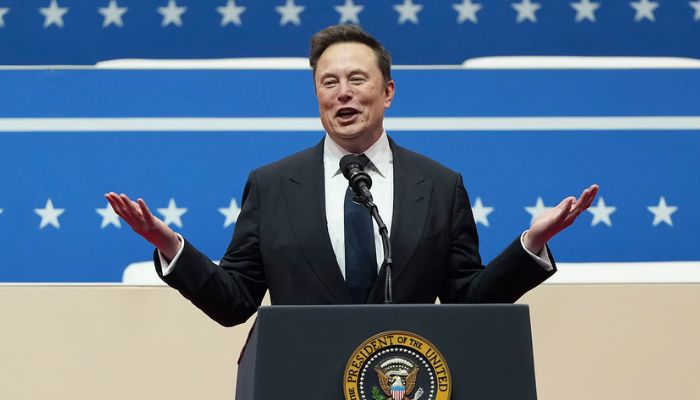
SpaceX of Elon Musk has begun deploying a network of internet-transmitting satellites called Starlink using inexpensive rockets. According to SpaceX, the Starlink system presently consists of about 7,000 satellites in orbit, which is similar to most estimates of the number of satellites needed for a limited space-based missile defense capacity.

Interestingly, the billionaire is the head of the newly formed United States Department of Government Efficiency (DOGE) and has an advisory role in the Trump administration. He is known for having a close relationship with the president as well. Alongside Palantir and Anduril, SpaceX has become a leading contender to construct important components of the system.

Tom Karako, director of the missile defense project at the Center for Strategic and International Studies highlighted, “The entire Golden Dome effort is long overdue.” He acknowledged that intercepting incoming missiles from space is a very diffcult task. Nevertheless, he asserted that the next major conflict will probably take place in part above Earth’s atmosphere.

He believes that Golden Dome’s capabilities will give the United States a strong defense that might be used for anti-satellite warfare if necessary. He added, “There’s a need to contend with a whole lot of things that are in space and going through space.”

Golden Dome and Ronald Reagan’s Star Wars

For many years, US politicians have dreamed of space-based missile defense. Plans for a system to intercept missiles from the Soviet Union were announced by President Ronald Reagan in 1983. The Strategic Defense Initiative (SDI), a bold attempt to defend the United States against nuclear assault with space-based lasers and interceptors was revealed by him.

The idea of a defensive shield that could identify and eliminate incoming missiles at every stage of flight seemed clear even though the technology was not yet available. “I know this is a formidable task, one that may not be accomplished before the end of this century. It will take years, probably decades of effort on many fronts,” Reagan declared at the time.

Its detractors called it “Star Wars,” claiming it was more science fiction than practical defense. However, it impacted US-Soviet armament negotiations and defined the strategic discussion of the 1980s. During the 1980s, the estimated cost of SDI varied between $60 billion and $100 billion. Ultimately, the Soviet Union fell apart before the vision could come to pass. Trump’s Golden Dome now reflects that same goal.

According to reports, Reagan’s determination on preserving SDI caused important weapons talks with Soviet leader Mikhail Gorbachev to stall. Golden Dome and SDI both represent crucial moments when American presidents put out ambitious military technology plans that went beyond what was feasible at the time. If it ever takes off, Golden Dome, like Star Wars before it, has the potential to change American perceptions of global arms control, military space policy and nuclear deterrence.

“Ronald Reagan (40th US President) wanted it many years ago, but they didn’t have the technology. It’s something we’re going to have. We’re going to have it at the highest level. We will truly be completing the job President Reagan started 40 years ago,” Trump boasted. He asserted that the technology of the system is “about as close to perfect as you can have,” despite the fact that some of its parts have not been tested.

Trump’s long-aspired dream

Trump supported the establishment of the US Space Force during his first term in office. On 20th December 2019, this new branch of the military was formally created. The Space Force was intended as a reaction to China and Russia’s expanding space military prowess.

Now, Golden Dome will be the first US defence system to be deployed in space. “I promised the American people that I would build a cutting-edge missile defence shield to protect our homeland from the threat of foreign missile attack,” Trump outlined.

Military officials stated last year that they had not indicated a need for such a shield to protect the United States as they cited already-existing missile defense systems. However, Trump’s remarks about constructing “the greatest dome of them all” were well received by the audience at his rallies. Afterward, Republicans made the development of a missile shield part of their party platform in advance of the 2024 elections.

Trump issued an executive order in January urging US secretary of defense, Peter Hegseth to fulfill it and wrote, “The threat of attack by ballistic, hypersonic, and cruise missiles, and other advanced aerial attacks, remains the most catastrophic threat facing the United States,” on the 27th Januray order.

Sean Parnell, chief Pentagon spokesman and Hegseth’s senior adviser mentioned, “The Defense Department has gathered the brightest minds and best technical talent available to review a full range of options that considers current US missile defense technology and cutting-edge innovation to rapidly develop and field a dependable umbrella of protection for our homeland.”

Notably, the true test of the system will be whether its futuristic promises can withstand political scrutiny and technological reality, much like SDI did in the 1980s.

Allahabad HC says mass religious conversions threaten public order and police have power to file criminal proceedings, refuses to quash FIR in Jaunpur case

A bench of Justice Vinod Diwakar of Allahabad High Court recently refused to quash an FIR against four people accused under the Uttar Pradesh Prohibition of Unlawful Religious Conversion Act, 2021. As per the complaint filed against the accused, they tried to convert people to Christianity by offering money and free medical care. The HC rejected the plea seeking quashing of the FIR citing that the charges were serious and valid enough for police investigation.

Accused were proselytising in a church

A case was filed against the four accused including a woman in 2023 at the Kerakat Police Station in Jaunpur, UP under Uttar Pradesh Prohibition of Unlawful Religious Conversion Act, 2021, read with Sections 419, 420, 508 of the Indian Penal Code. Police detained the accused after they were caught proselytising a group of villagers at a church in Vikrampur village. When the police entered the church, they saw that a man speaking on a mincrophone was trying to convince the people gathered there to adopt the religion of Jesus Christ.

On seeing the police, the people along with the organisers of the event began to flee. The police seized material relating to religious conversion from the church, including several copies of the Bible, hundreds of pamphlets, envelopes and some musical instruments.

Presuming spiritual superiority of one religion over another goes against secularism: HC

In its order dated May 7, 2025, the High Court observed that presuming moral and spiritual superiority of one religion over another goes against the idea of secularism.

Exerpt from the order of the High Court

Explaining the intent behind the enactment of the Uttar Pradesh Prohibition of Unlawful Religious Conversion Act, 2021, the Court noted that the object of the legislation is to prevent the religious conversion carried out by adopting infair means. It added that the law sought to prevent exploitation and manipulation that could destabilise social harmony.

Excerpt from the order of the High Court

The state cannot be a silent spectator says the HC

The High Court justified State intervention in cases of involuntary religious conversions stating that the State cannot be a silent spectator when weaker sections of the society are being targeted for religious conversion. “…unlawful conversion is not only an offence against an individual and their relatives, but also the State- particularly in cases of mass conversion of socially and economically deprived section of the society- when such conversions are carried out through misrepresentation, force, undue influence, coercion, allurement, fraudulent means, the threat to the societal fabric individuals or communal well-being becomes even more grave. In such circumstances, the State cannot remain a silent spectator,” the court said.

The Expression “aggrieved person” not limited to victim

In this case, the FIR was filed by the Station House Officer (SHO) against the accused. The main issue before the High Court was whether the registration of impuged FIR was the SHO rendered the entire criminal proceedings void ab initio in the light of the use of the words “any aggrieved person” under section 4 of the Act. Addressing the issue, the High Court adopted a broad interpretation for the epression “any aggrieved person” saying that interpreting the words broadly serves the purpose of the Act by expanding the category of individuals who can initiate legal action.

“Applying the principle of purposive interpretation, the undefined term “any aggrieved person” under the unamended Section 4 of the Act, 2021 cannot be interpreted in isolation. Given the statutory context and intent of the enactment, the expression must be construed broadly to include the Station House Officer (S.H.O.), who is legally mandated to maintain public order and is competent under Section 173 of BNSS, 2023 to register FIR for cognizable offences,” the court said.

Religious belief and expression should be volunatry: HC

The High Court emphasised that the right to profess, practise, and propagate religion granted under the Constitution is guided by the word “freely” which underscored the volunatry nature of the religious belief. “The court also held, “India’s constitutional framework guarantees the right to religious freedom under Article 25 of the Constitution of India. This Article confers upon every person the fundamental right to freely profess, practise, and propagate religion, subject to public order, morality, and health. The use of the word “freely” in Article 25 underscores the voluntary nature of religious belief and expression,” the High Court explained.

Dismissing the plea, the High Court said that if the applicant did not cooperate with the trial, then the trial court may proceed as per law.

Chhattisgarh HC revokes maintenance granted to woman, says ex-husband need not pay maintenance if divorce granted on grounds of wife’s adultery

In a recent ruling, the Chhattisgarh High Court stated that a wife living with a man after leaving her husband is not entitled to maintenance from the husband. The court said this while dismissing a review petition filed by a woman seeking higher maintenance from her ex-husband. The high court on 9th May, not only denied the petitioner’s demand for higher maintenance but also quashed the one previously granted by the family court.

The decision came on review petitions filed by a computer operator from Raipur and his wife who in their respective pleas challenged a family court order passed in 2024, which stated that the ex-husband will provide Rs 4,000 monthly maintenance to his ex-wife.

However, the man challenged the court order arguing that his now-divorced wife was found doing adultery with his younger brother and the same was proven before the lower court. The man thus argued that a wife living in adultery cannot claim maintenance. He also told the court that his financial condition was not taken into consideration while pronouncing the verdict in ex-wife’s favour.

Meanwhile, the woman in her plea sought to increase the maintenance amount to Rs 20,000 per month.

The duo got married in July 2019, however, the woman claimed that soon after their marriage, the husband began inflicting mental torture and questioned her character. She further alleged that her in-laws used to torment her for not providing meals for the family on time.

Meanwhile, the man accused his wife of lying about his income as the woman claimed that her ex-husband earns Rs 1 lakh a month from various sources, Rs 25,000 from his job, Rs 35,000 in rent, and Rs 40,000 from farming. However, the man told the court that he only earns Rs 17,131 and had no other source of income.

The woman’s counsel argued that there is a difference between “living in adultery” and “once lived in adultery” or “Once established physical relation with someone twice or thrice”. The woman also contended that having an extra-marital affair and living an adulterous life are two different things.

However, the man argued that in 2023, the family court granted divorce to the duo under the Hindu Marriage Act on the grounds of adultery. The man’s counsel argued that under Section 125(4) of the Code of Criminal Procedure, a woman is not entitled to receive interim maintenance from her husband if she was living in adultery, refuses to live with her husband without a sufficient reason, or if they are living separately by mutual consent.

After hearing the arguments of both sides, Justice Arvind Kumar Verma set aside the family court order and said: “The decree for divorce granted by the family court in favour of the husband is sufficient proof that the wife was living in adultery. Once such a decree is in force, it is not possible for this court to take a different view contrary to the decree granted by the civil court.”

“Therefore, this court is of the considered view that the decree granted by the family court clearly goes to prove that the wife is living in adultery and thus, the wife suffers from the disqualification to claim maintenance from the petitioner (husband),” the court added.

Earlier Karnataka HC denied maintenance to wife as she stayed in adultery

Back in October 2023, the Karnataka High Court heard a similar case wherein a wife had challenged the order of the Sessions Judge which had set aside order of granting maintenance to the wife under section 12 of the Protection of Women from Domestic Violence Act, 2005. The bench of Justice Rajendra Badamikar rejected the wife’s petition stating that when a wife is living in adultery, the question of maintenance claims does not arise.

The woman had challenged an earlier the court order wherein she was granted Rs 1500 maintenance and Rs 5,000 compensation. However, the husband challenged this order and the sessions judge eventually set aside the magistrate’s order.

It must be recalled that back in 2018, a five-judge bench of Supreme Court of India declared section 497 of the Indian Penal Code unconstitutional, calling it “manifestly arbitrary”. Section 497 was widely considered a lopsided law, as it is gender biased. Under this law, on one hand, only married men can be prosecuted for adultery, not a married woman. On the other hand, this section applies only if a man has sex with a married woman without the consent of that woman’s husband. This implies that the husband has ownership over his woman who can permit her to have a physical relationship with another man.

Court has clarified that adultery will be a valid ground for divorce.

MP High Court said that living in adultery does not disentitle wife from claiming maintenance

In April 2024, the Madhya Pradesh High Court while hearing a plea seeking reduction of maintenance award on grounds of adultery after divorce, said that “a stray act of adultery on the part of the wife does not amount to adultery” and therefore does not disentitle a wife from claiming maintenance from her husband.

“The expression “living in adultery” connotes a course of adulterous conduct more or less continuous and not occasional,” Justice Prem Narayan Singh had said.

Haryana: Police detains 29 illegal Bangladeshis including 8 children, families were working as labourers in a brick kiln

In the aftermath of Operation Sindoor, Indian authorities have intensified action against illegal immigrants living in the country.

In a recent action against illegal immigrants, the Haryana police detained 29 Bangladeshi nationals, including women and children residing illegally in India. As per reports, Bangladeshi nationals have been working at the Kharkiya brick kiln in Kalanaur, Rohtak.

Noor Islam entered India 22 years ago, has a wife and three children

One Bangladeshi national, Noor Islam, revealed during interrogation that he has been living illegally in India for 22 years. He said that he paid ₹15,000 to the contractor who helped him cross the border and enter India. He worked at brick kilns in Ghaziabad, Sonipat, and Noida. He later brought his wife Hunnara Begum along with him. He had three children, one of whom lives in Bangladesh.

Another Bangladeshi national Musharraf said that last year he paid ₹25,000 to an agent to enter India illegally. Hafizul, one of the Bangladeshi nationals said that he enterd India through Balaghat border area at night.

Investigation revealed that the contractors made fake Aadhar cards for the arrested Bangladeshi. They made groups of 5 to 10 Bangladeshi nationals and facilitated their entry via West Bengal.

Bhiwani police and CID have been conducting a major search operation for the last four days to trace the infiltrators. 
Kalanaur police station in-charge Satpal said that the 29 arrested people will be sent to Rohtak Civil Lines.

‘Doctor Death’: Serial killer who fed victims to crocodiles arrested again, was granted parole in 2023 despite violating and absconding in 2020

On 20th May, Delhi Police’s Crime Branch arrested serial killer Devendra Kumar Sharma, infamously known as Doctor Death, from an ashram in Rajasthan’s Dausa district. Sharma, who has been accused of killing over 100 men, primarily taxi drivers, used to dump the bodies of his victims into crocodile-infested canals. He was also accused of running an illegal kidney transplant racket. When Delhi Police arrested him, he was living under a false identity, dressed as a spiritual guru. The arrest concluded an almost year-long manhunt that spanned cities including Delhi, Aligarh, Jaipur, Agra, and Prayagraj.

Sharma, once a certified Bachelor of Ayurvedic Medicine and Surgery (BAMS), became the infamous ‘Doctor Death’ after it was revealed that he murdered dozens of taxi drivers and threw their bodies for crocodiles to feast on. After years of legal battles, which are still going on, he has been, so far, sentenced to life in seven different murder cases and received the death penalty in one. His criminal saga has another grotesque turn, absconding under parole, twice. The recent arrest of Sharma is the second time of jumping parole.

Sharma’s arrest was publicly confirmed on Tuesday by Deputy Commissioner of Police (Crime Branch) Aditya Gautam.

From failed gas agency to blood-soaked crimes

67-year-old Sharma hails from Pureni village in Aligarh, Uttar Pradesh. He completed his Ayurvedic studies in Bihar in 1984, following which he set up a small clinic in Dausa, Rajasthan under the name of ‘Janata Clinic’ and practised medicine for over a decade. During that period, he lost ₹11 lakh, leading to a financial debacle after he became a victim of a gas dealership fraud. Being a victim reportedly changed his life.

By 1995, Sharma had turned to crime. He was also accused of running a gruesome kidney transplant racket. Between 1998 and 2004, he collaborated with a doctor named Amit to conduct more than 125 illegal kidney transplants, mainly exploiting poor individuals from Bihar, Bengal, and Nepal. Reportedly, he lured them in with promises of cash. However, for Sharma, it was not enough.

A murderous modus operandi

Around the late 1990s, Sharma formed a gang and evolved into a full-fledged serial killer. His modus operandi can send chills down the spine. He and his associates would pose as passengers and hire taxis for outstation trips. Once en route or at the destination, they would direct the unsuspecting driver to a secluded area where he would be brutally beaten to death. The vehicle would then be sold in the grey market, while the victim’s body would be dumped into the Hazara Canal in Kasganj, a waterway infested with crocodiles. The canal became the dumping ground as the crocodiles would erase, or eat, all the evidence.

By his confession to the police, he stopped counting after 50 murders. The total toll, according to the investigators, could be well over 100. One senior officer remarked, “He enjoyed the bloodshed,” explaining the remorseless nature of the crimes he had committed.

Arrested, sentenced… and released on parole

Sharma was first arrested in 2004 for his role in the kidney racket and the serial killings. He was sentenced to life imprisonment in seven different murder cases across Delhi, Rajasthan, and Haryana. In 2008, a Gurugram court sentenced him to death for the brutal murder of a taxi driver named Naresh Verma. In another case, he was awarded the death sentence for the murder of taxi driver Kamal Singh, who was killed in 2002. Despite such a horrific criminal record, Sharma was granted parole not once, but twice.

In 2020, he was released on a 20-day parole but failed to return. He remained on the run for seven months before being tracked down in Delhi. Not learning from the past experience, in June 2023, authorities granted him another two-month parole in a separate case registered at Sarita Vihar police station. He was scheduled to surrender on 3rd August 2023, but once again, he vanished.

A manhunt across states, a fugitive disguised as baba

After Sharma went underground for the second time, Delhi Police’s Crime Branch launched an elaborate manhunt. Teams were dispatched to Aligarh, Jaipur, Agra, Delhi, and Prayagraj to trace his movements. After six months of combing records, talking to contacts, and monitoring suspicious locations, police finally received a lead that pointed them to Dausa, Rajasthan.

Sharma was found living under a new identity. He had turned into a “spiritual guru”, drawing no suspicion from the locals. After confirming his identity, the police arrested him and brought him back to Delhi. This was the second time in just three years that the police had to spend months locating and arresting a man who had already been convicted of multiple murders and awarded the death penalty.

Acquitted in two cases over lack of admissible evidence

While Sharma remains convicted in several murders, he has also managed to walk free in two separate high-profile cases owing to technical lapses and lack of conclusive evidence.

In the 2012 judgment related to the murder of Kamal Singh, the Punjab and Haryana High Court acquitted Sharma, ruling that there was no dead body, no forensic link, and no conclusive circumstantial chain. The case rested heavily on disclosure statements and recoveries, which the Court found unreliable and contradicted by the brother of the deceased, who had turned hostile.

In another 2012 case involving the murder of Bhagirath alias Lala, the same court found that the vehicle recovered could not be linked to the original stolen vehicle. No independent witnesses were present during the alleged recovery of the deceased’s personal items. Again, the Court ruled that circumstantial evidence did not form a complete chain, and acquitted Sharma and two others.

Both judgements serve as a grim reminder of how India’s legal system, when burdened by investigative lapses and uncorroborated statements, can fail to uphold even the most straightforward cases against a known serial killer.