Home Blog Page 4079

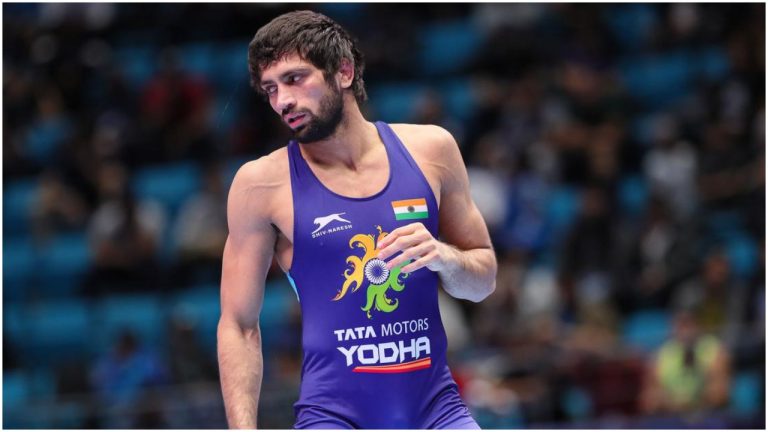
Tokyo Olympics: Indian wrestler Ravi Kumar Dahiya wins silver medal in the 57 Kg freestyle wrestling category

In a historic feat, Indian wrestler Ravi Kumar Dahiya wins the silver medal in the 57kg freestyle category of the Tokyo Olympics.

On Thursday, Ravi Dahiya lost his bout against Russian wrestler Zaur Uguev in the final by a score of 7-4 to win the silver medal in the 57kg freestyle category of the Tokyo Olympic. His medal in the Olympics is the second-ever individual silver medal in the wrestling event at the Olympics.

Ravi was the second Indian wrestler ever to reach the Olympic final, after double medallist Sushil Kumar. Ravi Kumar has become the fifth Indian wrestler to win an Olympic medal after KD Jadhav (1952 Helsinki Games), Sushil Kumar (2008 Beijing Olympics, 2012 London Games), Yogeshwar Dutt (2012 London Olympics) and Sakshi Malik (2016 Rio Olympics).

Ravi Dahiya had defeated Colombia Oscar Eduardo and Georgi Valentinov of Bulgaria by technical superiority. In the semifinals, he was up against the Nurislam Sanayev of Kazakhstan. Ravi Dahiya came back from a 2-9 down point to pin his opponent Nurislam Sanayev of Kazakhstan in the semifinals of the 57kg freestyle wrestling category to enter the finals.

Earlier, the Indian men’s hockey team rewrote history after they won an Olympic medal after 41 years, defeating a plucky Germany 5-4 to win the bronze.

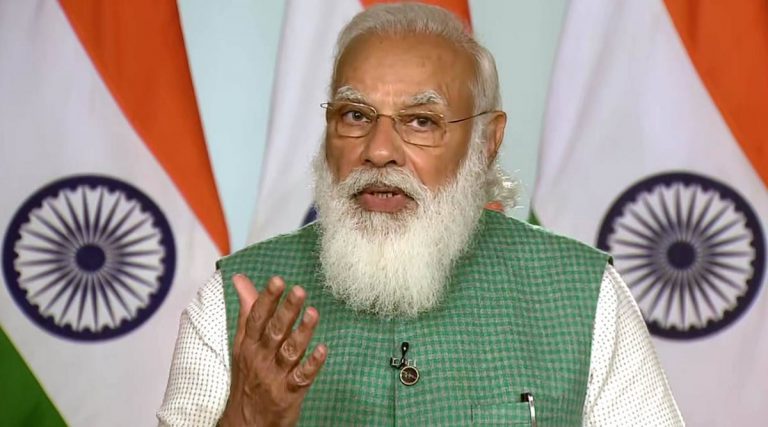
‘While the country celebrates Hockey goals, some are busy scoring self-goals’: PM Modi on opposition

Team India’s men in blue won the bronze today at Tokyo Olympics. PM Modi had congratulated the team on Twitter and had later spoken to the players to praise them for the glory achieved after a 41-year-draught.  

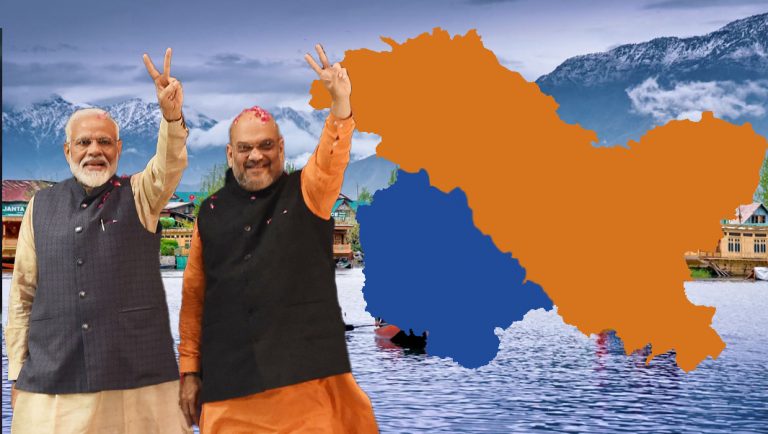
August 5 is also a significant day because on this day 2 years ago, the Modi government had abrogated Article 370 and had bifurcated the erstwhile state of Jammu and Kashmir into two Union Territories, fulfilling the long-standing demand of Ladakh residents and putting an end to secessionist politics that was in play in Kashmir.

PM Modi, in his address on the occasion, had mentioned the phenomenal achievement of the hockey team. He also drew a parallel at the current political scenario where the opposition has been stalling the functioning of the parliament over trivial issues like the Pegasus claims.

“At one hand, when the country is celebrating goals in Hockey, here in the country, few people are busy scoring self-goals. They are doing everything to stop the progress of this country. They are trying to stop Parliament, but people will not tolerate this,” PM Modi said.

India will keep moving forward, negative people cannot stop the country’s growth PM Modi

He said that India is moving “forward despite all roadblocks” and that the “negative people” cannot stop the country’s growth”.

“It has been proved that one’s progress is decided by hard work, not family. Indian youth is moving forward, it’s progressing,” Modi added, taking a dig at the Congress.

“The country is moving forward despite roadblocks. They must see the country’s growth trajectory – vaccination to touch 50 crore-figure and see our GST collection in the month of July. This is showing how the economy is moving in a positive direction. In Agri-exports and FDI, we have made phenomenal growth. INS Vikrant trial is another aspect of Made in India concept. The first motorable road is operational in Ladakh,” PM Modi said, adding that few negative elements cannot hinder the country’s growth.

The statement by the Prime Minister came a day after six Trinamool Congress MPs were suspended for creating ruckus in the Upper House.

TMC MPs suspended for creating ruckus in Parliament

OpIndia had reported on August 4 on how six Trinamool Congress MPs, namely Dola Sen, Md. Nadimul Haque, Abir Ranjan Biswas, Shanta Chhetri, Arpita Ghosh, and Mausam Noor, had been asked to withdraw for the day after they created a ruckus in the Rajya Sabha.

They had entered the well of the House and displayed placards, disobeyed Chairman M Venkaiah Naidu, and exhibited gross disorderly conduct in the House.

The Pegasus row

Moreover, the opposition has also been casting aspersions on the central government over the Pegasus controversy without any evidence to back their claims. The controversy emerged after foreign media in collaboration with the leftist propagandist website The Wire made a series of allegations against the Indian Government without any shred of evidence.

In fact, Home Minister Amit Shah had also slammed the opposition over the Pegasus Snoopgate in a blog posted on his website. 

PM Modi congratulates India’s men hockey team after their ‘historic’ win at Tokyo Olympics

Meanwhile, PM Modi has taken to Twitter to laud India’s me hockey team for making the country proud at the Tokyo Olympics 2020. “Historic! A day that will be etched in the memory of every Indian,” PM Modi wrote.

Indian Men’s Hockey Team won the historic bronze medal in the Hockey event of the Tokyo Olympics on Thursday after defeating Germany 5-4 in the Bronze medal play-off.

The Indian men’s hockey team secured their first Olympics medal in 41 years. The Indian Hockey team had won the last Olympic medal in the 1980 Moscow Olympics.

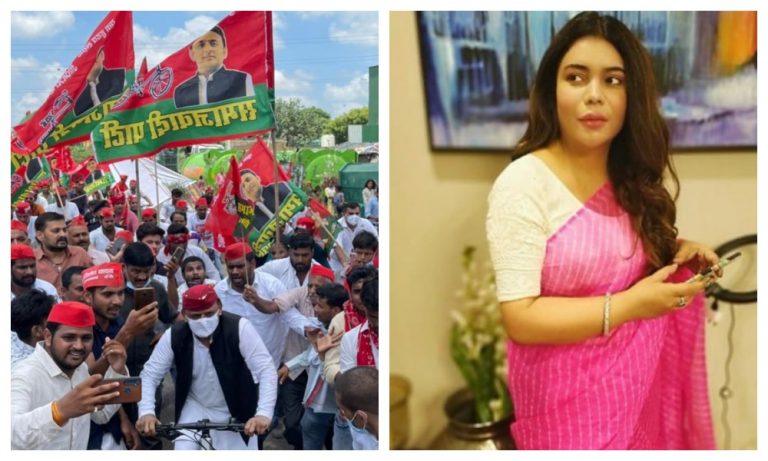
Akhilesh Yadav carries out massive rally, friendly journalist questions ‘Noida channels’ for not noticing

Samajwadi Party carried out a massive rally in Uttar Pradesh flouting all COVID protocols. While the party’s official Twitter handle shared videos and photographs as show of strength, friendly journalist Rohini Singh of The Wire, questioned ‘Noida channels’ for not giving enough airtime to the party led by Akhilesh Yadav.

She wondered why the news channels based in Noida were ‘refusing’ to see the opposition ‘whenever it is on the streets’ and shared the video of the massive rally which violated all COVID-related protocols.

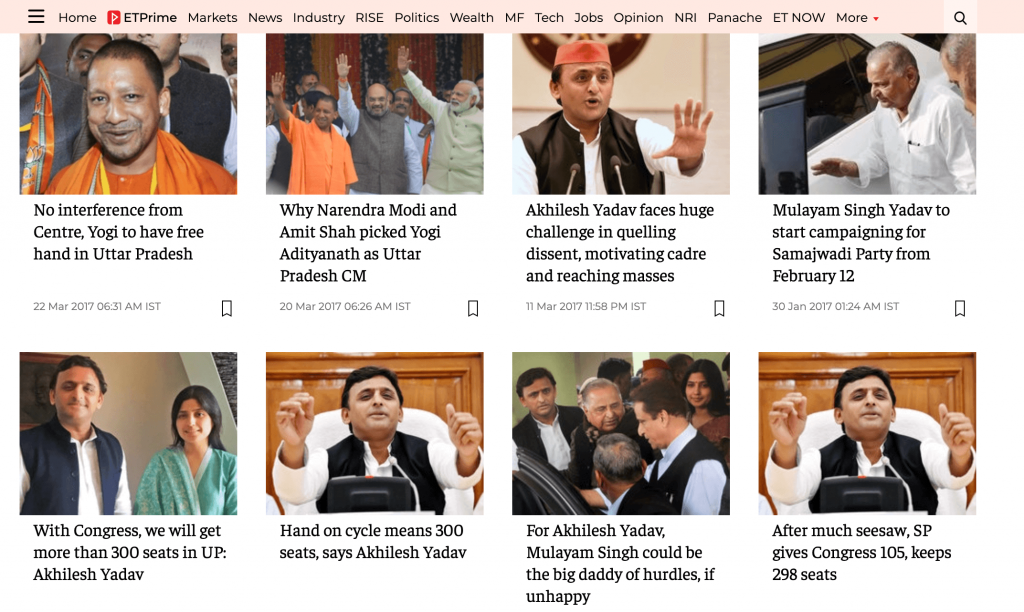
It must be noted that during the 2017 Uttar Pradesh Assembly elections, when The Wire journalist was associated with Economic Times, she had come under fire from the netizens for having quite a pro-Samajwadi Party coverage and creating an atmosphere that the BJP will lose elections.

Rohini Singh’s page on Economic Times, just before she quit the newspaper.

It must also be noted that Singh’s name had appeared in the infamous Niira Radia audio tapes where the current founding Editor of The Wire MK Venu had allegedly asked the lobbyist to connect Singh to some influential people since she has just joined Economic Times. These tapes were released in 2010. Singh quit ET to join The Wire run by Venu as one of the founding editors.

Interestingly, Singh had earlier condemned the political rallies in West Bengal ahead of assembly elections.

Her tweets from earlier this year show how she was upset over rallies being conducted by the BJP. However, the massive rally by Samajwadi Party seems to be a welcome sight to her.

Amusingly, Singh had earlier condemned the Kumbh Mela in Uttarakhand and called it a ‘super spreader event’.

The most populous state of India, Uttar Pradesh, goes to polls early next year.

Supreme Court asks why nobody filed a complaint in the Pegasus snooping allegations, catches lie by N Ram: Details of the hearing

Hearing a petition on the alleged snooping of phones using the Israeli spyware Pegasus, the Supreme Court of India today asked why no FIR was filed when the issue is known for two years. A supreme court bench comprising of Chief Justice N V Ramana and Justice Surya Kant today started hearing as many as nine petitions filed in the case.

The court noted that if the media reports are correct, the allegations of snooping are serious. However, the court showed its displeasure over the two-year delay in filing a plea and asked what is new in the allegations. The court also noted that none of the petitioners had filed an FIR before filing a case in the court.

The alleged snooping was reported in 2019

The petitions were filed by the Editors Guild of India and journalists N Ram and Shashi Kumar, among several others. Congress leader and senior counsel Kapil Sibal appeared for the three of the petitioners. CJI N V Ramana said that the snooping came to light in 2019, and he was not sure if any efforts were made to get more information on the case. He further added that he did not want to say that it was an impediment.

CJI said, “You all know that there is a prima facie material as well as the credibility of reports where we can order an enquiry etc. unfortunately what I read from writs, in may 2019 this came to light I don’t know there was no serious concern about this issue.” The court further noted that there should have been more hard words to put more material in the petitions.

Advocate CU Singh responded that although the allegations of snooping using Pegasus had emerged in 2019, the names of the persons targeted were not known at that time. He said that the names were known only after the list was published by the media houses recently.

No one cared to file a complaint

The court noted that though the petitioners have said that their phones were hacked using Pegasus, there was no effort from their side to file a criminal complaint. CJI Ramanna said, “They have not made efforts to file a criminal complaint. My question is if you know the phone is hacked then why wasn’t an FIR lodged. That is the only question.” However, the court added that the allegations made by the petitioners are serious.

The CJI also said that the petitions are based on only newspaper reports and the petitioners could have put in more effort to collect verifiable materials, as most of them are knowledgeable and resourceful journalists and activists.

Advocate Meenakshi Arora appearing for RS MP John Brittas said, “We haven’t slept for two yrs. IT Minister was asked a question in Nov’19 in the parliament & the minister said there was no unauthorized interception being done.” To which CJI asked if they knew their phone was hacked, they should have filed an FIR. “Was your phone tapped or not?” CJI asked. Advocate Arora replied, “I’m a RS MP. No, my phone wasn’t tapped.”

Advocate Shyam Divan appearing for Jagdeep Chhokar, who alleged that his phone was compromised, said that they did not file FIR as they believe there should be an independent probe by a fact-finding committee. “It has to be a highest level bureaucrat who replies to this, preferably the cabinet secretary,” he said.

The court said that there are too many petitions, some are PILs while the others are by allegedly affected persons. Therefore, the court said that it can’t proceed further without hearing the central govt.

Therefore, the court did not issue any notice to the central govt, but asked the petitioners to serve the copy of their petitions to the central govt. It noted that without the Central government present in the hearing, the bench cannot proceed as of now. When the court asked the petitioners if they have served the petition copy to the Center, some of them replied they had, but the majority of the petitioners did not do so. The court has asked them to serve the petition copy to the Centre and posted the matter for further hearing on August 10.

Government means state government also: CJI

As Pegasus maker NSO has said that the software is sold only to governments and various agencies under the governments, all the petitioners are trying to alleges that the Modi govt in the centre is using the software. But while discussing the issue, CJI Ramana made an interesting observation, as he said that the software could have been sold to the state governments as well. To this Kapil Sibal said that the govt of India should clarify on that as the petitioners don’t have the requisite information.

N Ram misquotes California Court

Journalist N Ram, one of the petitioners, had mentioned in his plea that a California Court had said that some Indian journalists were targeted using the spyware. But when CJI asked advocate Kapil Sibal where the names were mentioned as the court could not find any such thing in the said judgement, Sibal agreed that the statement made in the affidavit in N Ram was incorrect, and no Indian journalist was named by California Court.

The court further said that Sibal has not answered why the petitions were filed two years late. To this Sibal responded that they have come to know about the intensity of it only now.

The whole nation is dancing: What PM Modi said on his surprise call to the Hockey Team after they won an Olympic medal

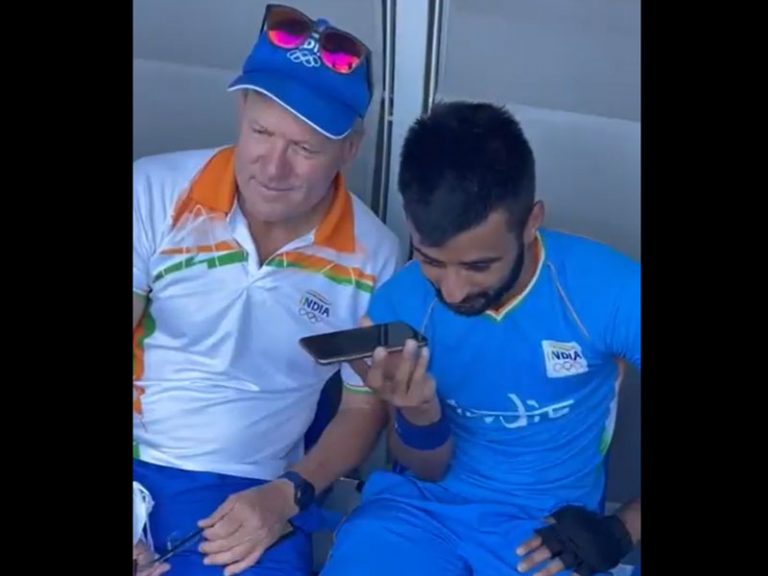
On August 5, Prime Minister Narendra Modi made a surprise call to Manpreet Singh, Captain of the Indian Hockey team, after they won Bronze Medal in Olympics. The Indian men’s hockey team secured their first Olympics medal in 41 years. The Indian Hockey team had won the last Olympic medal in the 1980 Moscow Olympics. While sharing a video of the phone call, Hockey India wrote, “Thank you for your wishes, Prime Minister Shri Narendra Modi Ji. Your words truly inspired us.”

In his message, PM Modi firstly congratulated the team for the win. He said, “You have done amazing. The whole nation is dancing over the victory. When Manpreet said that PM’s motivation helped them a lot, he replied, “You all have a lot of hard work to reach there. Give my best wishes to all the players in the team.”

PM Modi also talked to coach Graham during the conversation and congratulated him personally. He said, “You have made us proud.” The coach thanked him for the inspirational talk after the semi-finals to which PM said, “Your hard work and team spirit have given this result.” Prime Minister Modi will be meeting the winners on August 15.

Indian has won as many as eight gold medals in the Olympics, besides a silver medal and three bronze medals in the Olympics. This is India’s 12th medal in the category, the latest being the bronze medal in the Tokyo Olympics 2020. On Friday, the Indian women’s team will clash against Great Britain in a face-off for a Bronze medal play-off.

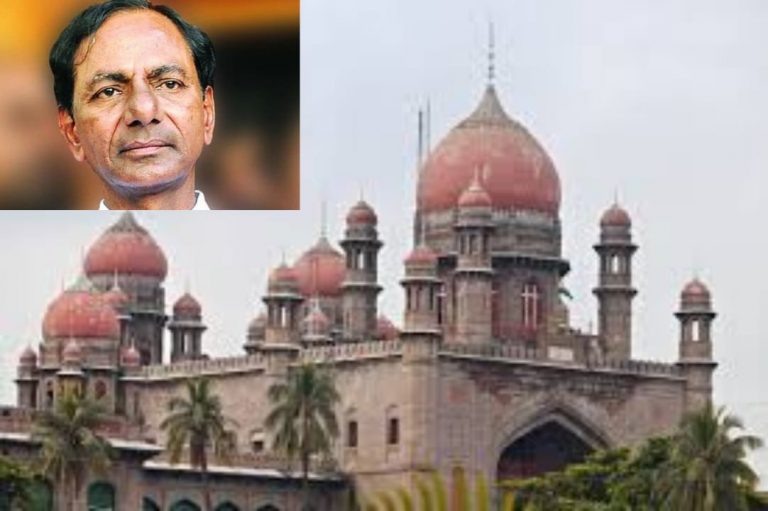
Telangana HC ‘surprised’ by state govt’s decision to earmark Rs 60 crores to fight contempt cases against bureaucrats, orders not to release funds

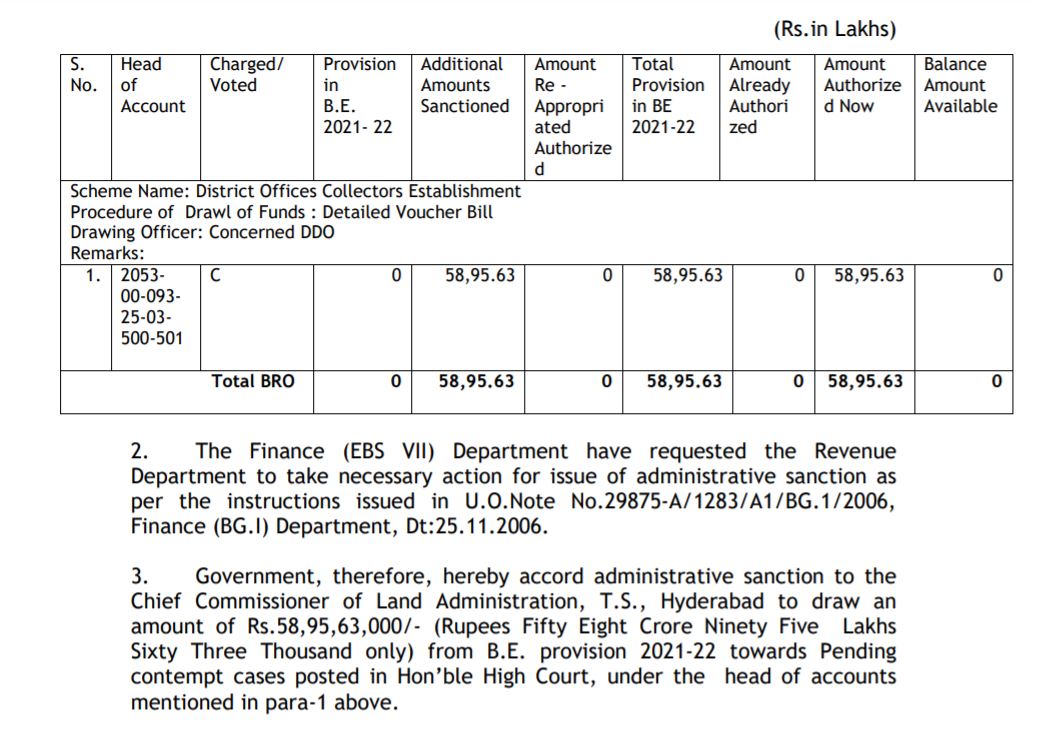
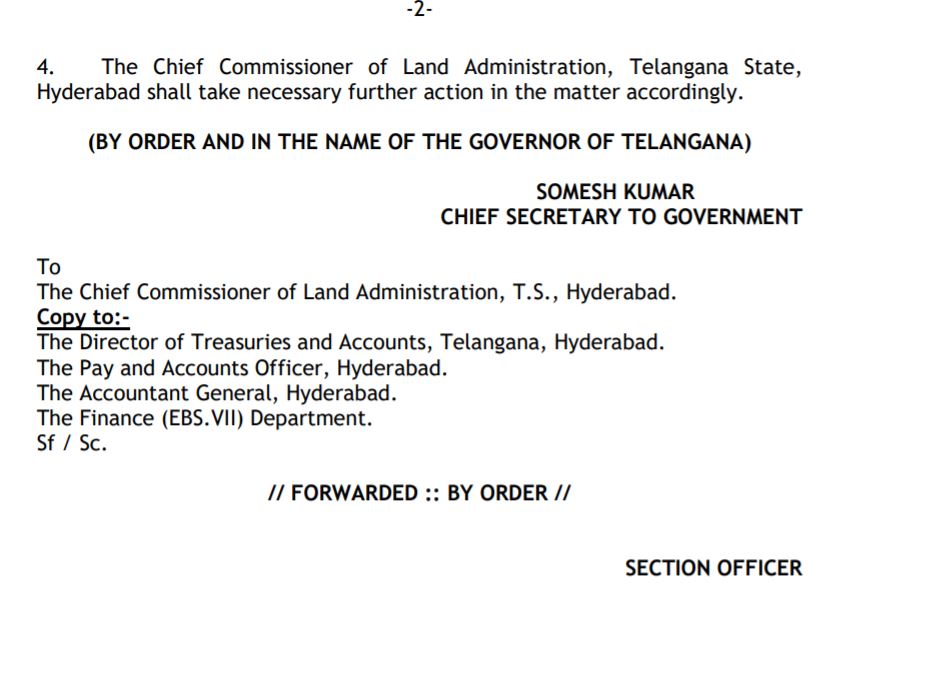
The Telangana High Court has come down heavily on the state government for its decision to earmark almost Rs 60 crore towards fighting contempt of court cases pending against state government bureaucrats in the high court. Expressing ‘surprise’ at the use of public money towards contempt of court cases, the two-judge division bench of Chief Justice Hima Kohli and Justice B Vijaysen Reddy passed an interim order, directing the government not to release the said amount.

A notice was served by the HC on August 4, 2021, to the Chief Secretary Somesh Kumar in his individual capacity and other officials namely the Secretaries of Revenue and Finance, Chief Commissioner – Land Administration and the Director of Treasuries, asking them to explain the guidelines for spending the taxpayer’s money. The court also wanted the govt to apprise the judges with treasury norms and if such financial assistance is allowed under the treasury rules.

The issue was brought to the fore by a lecturer, who in PIL said that the Telangana government had, on June 7, decided to provide financial assistance to bureaucrats for fighting contempt of court cases.

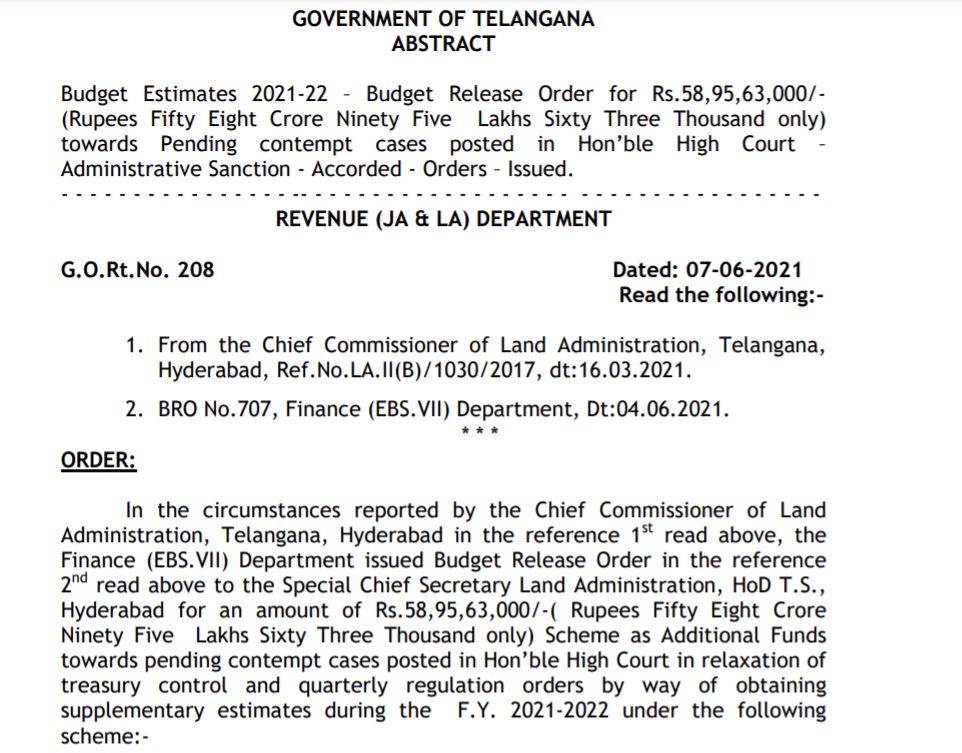
Screengrab of the order passed by the Telangana Government (Source: The Wire)

The state government had agreed to sanction Rs 58,95,63,000 for contempt cases pending in the high court, in an order dated June 7. There are approximately 250 contempt cases against state bureaucrats, according to estimates.

The members of the state Congress Party, meanwhile, have slammed the Telangana government for its “spend-thrift attitude” and demanded that Chief Minister K Chandrasekhar Rao should immediately oust Somesh Kumar as the Chief Secretary.

“The High Court judgment on the GO 208 is a slap in the face of the government as well as the bureaucrats toeing the lines of TRS regime,” said Congress leader and AICC spokesperson Dasoju Sravan Kumar. He criticised the State government for issuing the GO allowing the CS to spend 58.95 crores to exclusively fight contempt cases filed predominantly against him.

Another video of ‘Lucknow traffic girl’ goes viral, seen threatening neighbours over wall colour and International drones: Watch

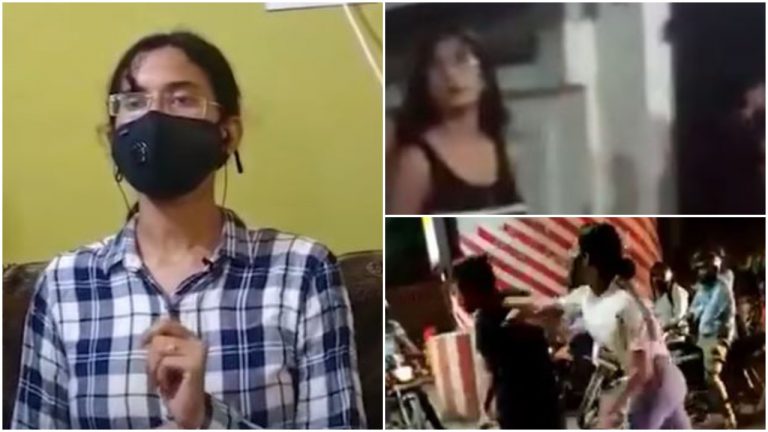
The video footage of the Lucknow road rage saga that appeared on August 2, catapulted the ‘Lucknow traffic girl’ into fame overnight. Before one could know it, Priyadarshini Narayan Yadav started trending on Twitter and other social media platforms, with Netizens trending #ArrestLucknowGirl and demanding her arrest in the matter. Today, social media platforms are awash with yet another video of the same girl in which she is seen picking up a fight with her neighbours.

In the video, Priyadarshini Narayan Yadav is seen shouting at her neighbour for painting the wall of their house black. She is heard urging a police official, to order the neighbour to re-paint the wall ‘anti-black’, since it attracts International drones which, in turn, are a threat to the lives of the people like her living in the colony.

She is heard telling the officer that she stays close by and the black paint on the wall would invite “international drones” in the area. “Inhe bolyen ki yeh wall ko anti-black karae, kyon, kyonki inki wajah see yahan international drones ghoomte hain, aur poori colony ki jaan khatre mein hain” (ask them to get the wall painted anti-black, why, because it is due to them that international drones keep flying in the area, causing threat to the lives of the people of the colony), said Priyadarshini Narayan Yadav.

They have abused me, called me daughter of Barack Hussein Obama: Lucknow girl

The lady at this point gets irked, because, while she raises her ‘serious concerns’, someone is heard laughing in the background. “And then they are laughing”, protested the lady.

Priyadarshini, in all seriousness, further added that her neighbour had abused her and called her the daughter of Barack Hussein Obama. “Can he talk like this…can he talk like this”, screamed that lady.

She added that when she protested against the ‘black walls, her neighbour threatened to hit her. “He asked all neighbours to gather with sticks to hit me”, lamented the ‘Lucknow cab girl’, adding: “This man says he is above the Prime Minister of India”.

The Lucknow road rage incident

Priyadarshini Yadav is the same girl who was seen deliberately walking into the traffic and assaulting a cab driver who applied sudden brakes to avoid hitting her. After the video of the incident went viral, netizens started trending #ArrestLucknowGirl and demanded her arrest in the matter, following which an FIR was filed against the girl.

Many media reports have emerged ever since. Some have carried the cab driver’s version of the incident while some have brought Priyadarshini Narayan Yadav’s take on the incident, to the fore.

Mob of 100 people dragged me for nearly 300 meters: Lucknow girl

While speaking to Zee News, this Lucknow lady, claimed that as many as 100 people, who were with the cab driver that evening, had assaulted her. Despite, the CCTV footage showing that the cab driver was alone, Priyadarshani claimed that the mob dragged her for nearly 300 meters. Continuing her bizarre claims, the Lucknow lady said that they broke her bones and gave her serious bruises. She also claimed that she is being harassed and beaten black and blue by these people for the last two years.

When the anchor asked Priyadarshani who are those 100 people who have been harassing her for the last two years, the lady showed her medical reports and claimed that she is suffering from various illnesses, because of which she needs to ‘run’. While she used to go out for her runs, these boys reportedly eve-teased and abused her. They threatened her with bats and sticks. Because of these incidents she lived in constant fear and that evening when the cab halted right next to her, nearly knocking her down, she thrashed the driver in self-defence, claimed Priyadarshani.

The 28-year-old woman was quoted by India Today as saying: “There was a red light that night when the car touched me, after which I broke his phone and hit him.”

She claimed that the police and people who were there were merely watching the spectacle.

“Should the girl not even protect herself when the rest of the people have become mute spectators?” Priyadarshini questioned.

Lucknow cab driver who was thrashed threatens of committing suicide

Meanwhile, the cab driver, Saadat Ali, who broke down while recounting the incident has threatened to commit suicide if the woman was not arrested.

Narrating what transpired on the night of July 30, Saadat Ali said that the woman came in front of his car, even though the traffic light was green. Ali claimed that he immediately hit the brakes. However, the woman started pushing against the car. She then opened the door of the cab, took his mobile and broke it. After that, the woman, as seen in the viral video, had started hitting and harassing the cab driver.

“I thought she was a policewoman in casual clothes. I started apologising without any fault. But she slapped me more than 20 times without stopping,” Saadat Ali said, adding that she damaged his car and also took his 600 rupees which were kept in the dashboard of the car.

“Now it’s about my self-esteem. If that woman is not arrested, I will commit suicide today,” Saadat Ali said while recalling the harassment that ensued from the incident.

Saadat Ali’s statement is corroborated by the 2.15-minute-long video of the incident, which went viral on Twitter on August 2.

‘Anguthachhaap Adivasi’: Chhattisgarh Congress MLA makes derogatory remarks against tribals, loses cool on journalists asking questions

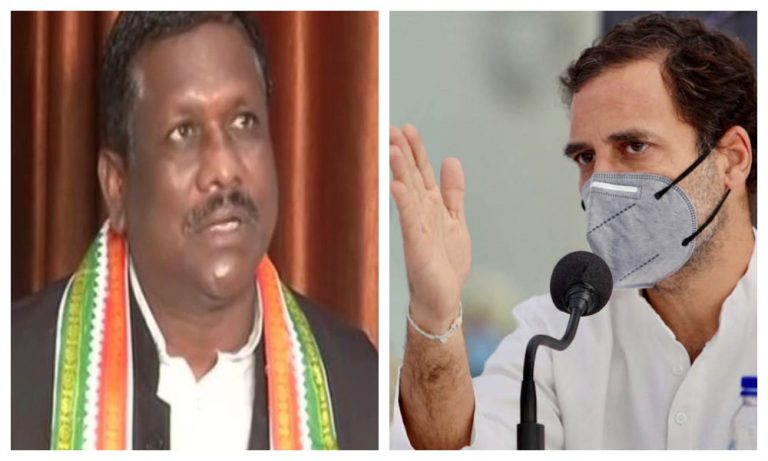
On Tuesday, Congress MLA Brihaspati Singh made a controversial and derogatory remark against tribals when he called them ‘illiterate’.

Chhattisgarh Congress MLA Brihaspati Singh addressed media persons at his residence on Tuesday to clarify the allegations he had put out against state health minister TS Deo and his relatives over assaulting and planning to kill him.

As journalists asked him specific questions, the Congress MLA lost his cool. He launched an attack on the journalists, saying that they were educated and should not ask questions like “Anguthachhaap Adivasi” (illiterate tribals).

“You are journalists, you are educated. It’s not right to ask questions like ‘Anguthachap Adivasis’. Set your mental state right and then ask,” the Chhattisgarh Cong MLA Brihaspati Singh said as journalists asked whether he would apologize for making sensational murder allegations against Health Minister TS Singh Deo.

Earlier in July, the Congress MLA Brihaspati Singh had made a sensational claim saying he is facing a threat to his life from Health Minister TS Singh Deo. The allegations had rocked the assembly last week, and the journalists were asking him questions on the same.

Tribal associations demand an apology from Congress MLA

Meanwhile, tribals associations in Chattisgarh are outraged against the statements put out by the Congress MLA Singh. Members of Chhattisgarh Sarva Adiwasi Samaj (SAS) protested over the MLA’s statements and gave an ultimatum to the Congress leader.

SAS Sarguja Divisional President said that Congress MLA Brihaspati Singh has been given an ultimatum to apologise over the remarks otherwise a censure motion would be passed against him across the Sarguja division on International Tribal Day.

The major opposition Bharatiya Janata Party also condemned the anti-tribal remarks made by the Sarguja MLA and burnt his effigy. BJP leader and Rajya Sabha MP Ramvichar Netam attacked the statement of the MLA and said that it was the tribal community that had voted Singh into power and Singh making such statements against the community is a display of his own mental status.

Chhattisgarh’s Congress MLA accuses TS Deo of planning to kill him  

On July 26, Congress MLA Brihaspati Singh had accused the state health minister TS Deo and his relatives of assaulting him and planning to kill him. The sensational claims made by Brihaspati against Deo’s kin had turned into a massive political furore and intensified the infighting within the political party.

The Congress MLA had said that while he was on his way to Ambikapur for an event, a relative of TS Deo chased his convoy and snatched keys from the driver of one of the cars before vandalising it. Brihaspati claimed the man kept asking for him, but he had already left. 

Following the incident, a case was filed by the police under the Scheduled Caste and Scheduled Tribe Prevention of Atrocities Act and sections of the Indian Penal Code. Three people have been taken into custody in the case.

Following the alleged attacks, Brihaspati Singh had alleged that the attacks were carried out because his remarks on the procedure to elect the chief minister of the state did not sit well with the Health minister. He added that Deo was secretly harbouring the desire to become the next chief minister and was unhappy with his comment that the party high command will decide the state chief minister. 

The second anniversary of abrogation of Article 370: Key changes made in Jammu and Kashmir in the last 2 years

India is celebrating the second anniversary of the abrogation of Article 370 today (5 August 2021). On this day in 2019, the Government of India, in one fell swoop, invalidated the separate status, or autonomy, granted under Article 370 of the Indian Constitution to Jammu and Kashmir and liberated the state from decades-long Nehruvian blunder.

Besides the abrogation of Article 370, the Modi government also created two new Union Territories by bifurcating the state of Jammu and Kashmir:- Jammu and Kashmir (with Legislature) and Ladakh (without Legislature).

With Article 370’s abolition, Article 35A was also made null and void. Article 370 had been enabling legislation allowing the existence of Article 35A and bolstering its effectiveness.

For years now, Article 370 and Article 35A held the erstwhile state from achieving its true potential. The statehood provided enough incentives for the local politicians to continue to deprive the population of growth and development, making it one of the lowest contributors to the country’s GDP.

However, things began to improve following the annulment of Article 370 and the formation of two new union territories. On the second anniversary of the seminal move that paved the way for greater integration of Jammu and Kashmir with the Indian union, here’s a look at the radical changes the decision brought in its wake.

Steep decline in Terrorism

Terrorism was one of the greatest banes afflicting the former state of Jammu and Kashmir. Pakistani terrorists, with the help of radical Kashmiris and separatist politicians, intruded into Jammu and Kashmir, and from there to the rest of the country to carry out their nefarious activities. But after the abrogation of Article 370, there has been a marked decline in the number of terror-related incidents in the newly carved union territories.

The central government in March 2021 said in the parliament that the terrorist violence in Jammu and Kashmir had reduced significantly in 2020 as compared to 2019. The Ministry of Home Affairs in April 2021 said there had been 60 per cent fewer terror incidents post abrogation of Article 370.

The sharp plunge in terrorism in Jammu and Kashmir can also be attributed to the arrest of separatists and pro-Pakistan leaders in the aftermath of the abrogation of Article 370. Some of these politicians were known for bankrolling terrorism and the radicalisation of youth in Kashmir. It was no surprise then that after the detention of usual suspects, there were hardly any incidents of anti-India protests and stone-pelting reported in the valley.

Simultaneously, the NIA crackdown into the terror funding cases also served a death knell for terrorism in Jammu and Kashmir. Though terror incidents continue to take place in the valley, their frequency and intensity have taken a veritable hit after the double whammy of the NIA probe and the detention of separatist leaders and other politicians.

The investigation carried out by the premier agency brought to light the unholy nexus that existed between the local political parties and Pakistani terrorists. It showed how politicians who were pontificating on upholding India’s constitution, in reality, studiously worked to undermine it. In its charge sheet in the terror funding case, NIA said PDP chief Mehbooba Mufti’s close aide Waheed Ur Rehman Para ran a stone-pelting racket in Kashmir and arranged weapons for terrorists.

The arrest of political leaders in Jammu and Kashmir that funded and inflamed chaos in the former state resulted in fewer people turning to terrorism. A report published in July 2020, 11 months after the revocation of Article 370, said Kashmiri youths joining terror ranks reduced by more than 40 per cent. The number is expected to be even higher for this year as the Centre focused its efforts on enabling growth and development to the state.

Local Jammu and Kashmir politicians lose their political capital

The Muftis, the Abdullahs, the Hurriyat leaders and other separatists once held sway in Jammu and Kashmir’s fractious politics. They derived political mileage out of keeping the state perpetually on tenterhooks. They allowed Jammu and Kashmir to continue to remain a festering issue so that their political interests were served.

But the abrogation of Article 370 threw spanner in the works for these leaders who had come to consider Jammu and Kashmir as their personal fiefdom. Shortly after Article 370 was repealed, these political leaders were arrested and kept under detention, lest they stir up public opinion against the move.

Months later, they were released from detention but not before being plunged into the abyss of political oblivion. The residents of the former state realised the benefits of having Centre’s oversight as against being governed by cynical state leaders. With the marked reduction in terror incidents, protests and instances of stone-pelting, the politics of hate that had hitherto come to symbolise J&K’s politics had no takers whatsoever.

Fearing that their depleting political capital will be eroded permanently, disparate local politicians, in a desperate move, joined hands to forge an unlikely coalition called People’s Alliance for Gupkar Declaration (PAGD), popularly known as the Gupkar alliance. The alliance saw coming together of ideological opponents such as PDP’s Mehbooba Mufti and National Conference’s Omar Abdullah. In December last year, District Development Council elections took place. Out of 280 seats in contention, the Gupkar alliance managed to bag 110 seats and could get control of only 5 of the 20 district councils. The results were a stark indicator of the deteriorating political clout of the former leaders.

Growth and development

To bolster economic growth and development, the Jammu and Kashmir administration has so far signed more than 168 MoUs worth Rs 13,600 crores for investments. Additionally, 6,000 acres of government land has been acquired for setting up industries in the state.

Earlier, some constraints discouraged industrialists and large organisations from investing in Jammu and Kashmir. But after the abolition of Article 370, all the obstacles that came into the path of development were removed as the government placed its focus on providing an impetus to business and the economy. The J&K Infrastructure Development Finance Corporation has been set up to provide financial support to various projects that were commissioned years ago but were yet to be completed.

In adherence with PM Modi’s infrastructure development vision, several new projects were approved and bottlenecks that marred the completion of existing projects were removed. The outlay under the Prime Minister’s Development Programme increased from 27 per cent to 54 per cent. The swift pace at which the projects are being completed can be gauged from the completion of the Rambagh flyover in Srinagar, which was pending for over five years.

Rapid road construction has been one of the hallmarks of the Modi government. In Jammu and Kashmir, road infrastructure development is of critical importance, owing to its strategic location—nestled between two perpetually hostile neighbours—Pakistan on the west and China on the east.

The Centre has hit the ground running on a plethora of road construction projects, including the Jammu-Akhnoor Road, Chenani-Sudhmahadev Road and many others. More than 30 per cent of the Jammu Ring Road has been completed. Projects worth Rs 5,979 crores have been sanctioned, and 506 projects have already been completed.

In addition to this, hydro projects that were in a state of abeyance for more than 5 decades such as Ujh and Shahpur Kandi have been expedited. Emphasis has been placed on the development of 14 sectors for investments, which includes tourism, hydropower, electricity, education, health.

In a bid to bring about ease of doing business, more than 130 administrative reforms have been undertaken by the central government. The education sector was another focus area for the administration. 7 new medical colleges have been initiated, 4 of which have already started functioning. The medical seats have also increased from 500 to 955 in colleges, and 25,000 seats have been added in regular degree colleges.

The world’s highest railway bridge over river Chenab in Jammu and Kashmir was completed in April this year. It is expected to connect the Valley with the rest of India by train for the first time by 2022. The bridge, which has a central span of 467 metres, is built at a height of 359 metres from the bed level.

Domicile rule and Central laws now extend to Jammu and Kashmir

Article 370 ensured that excluding Articles 1 and 370, no other provision of the Indian Constitution applied to the erstwhile state of Jammu and Kashmir unless specifically made applicable by a constitutional order issued with the concurrence of the state government. Laws such as the Right to Education, Prevention of Child Marriage, Untouchability Act and many others could be not be applied to Jammu and Kashmir because of the existence of Article 370.

But after its abrogation, all the central laws have been extended to Jammu and Kashmir, and Ladakh. A new Domicile rule was implemented, which allowed all those persons and their children who have resided in the former state for 15 years or studied here for seven years and completed their 10th or 12th examination in an educational institution in the J&K to apply for domicile.

Marginalised Hindu communities that were earlier denied citizenship, perhaps because the Kashmiri leadership feared “demographic shift” in the Muslim-dominated state, were among those granted domicile status. The Scheduled Caste Valmiki community; refugees from West Pakistan, several of whom are members of Scheduled Castes; and Gorkhas, brought by the Dogra kings to serve the princely state’s army, were few of the many communities that benefitted from the new domicile law.

In March 2021, the Centre cited J&K govt information to assert that a total of 35,44,938 applications for the issue of Domicile Certificate were received till December 31, 2020, out of which 32,31,353 applicants were issued Domicile Certificates.

Property rights of women restored, their non-resident spouses made eligible for domicile

Women have been amongst the most disadvantaged sections of the former state. Not only were they constitutionally denied rights, but their existing rights were also gradually eroded. Women who married men from outside Jammu and Kashmir were deprived of property rights. But that changed, after the abrogation of Article 370.

Women in Jammu and Kashmir are now able to buy real estate and transfer property to children, even if they get married to a non-resident. Furthermore, another provision was recently added to the domicile laws, wherein the spouse/husband of a native woman, who is a domicile holder in the UT, was made eligible to get a domicile status. Earlier, the spouses of J&K women from outside the Union Territory were ineligible for applying for a domicile certificate.

Rehabilitation of Kashmiri Pandits

The central government is taking every possible step to right the historical wrong of the Kashmiri Pandit exodus. As a part of its initiative to rehabilitate Kashmiri Pandits in the Valley, the Centre announced special jobs for the community members under the PM package.

In March 2021, the central government announced that a total of 3,800 migrant candidates have returned to Kashmir for taking up the jobs that have been provided to them under the rehabilitation package, out of which 520 had returned after the abrogation of Article 370.

The Jammu and Kashmir Lieutenant Governor’s administration is expediting work on 6,000 transit accommodations in Kashmir and registering Kashmiri Pandits in an attempt to provide a stimulus to the migrant community’s return to the Valley from different parts of the country.

Lt. Governor Manoj Sinha recently chaired a meeting of the Disaster Management, Relief, Rehabilitation and Reconstruction (DMRR&R) Department on Saturday, directing the officials “to take proactive steps to facilitate the return of Kashmiri Pandits community”.

Job reservation for locals in Jammu and Kashmir

The month after the Modi government at the Centre announced the abrogation of Article 370, revoking the special status accorded to the erstwhile state, the government in April 2020 issued a key order announcing that all government jobs in the Union Territory of Jammu and Kashmir will be reserved for domiciles.

Provisions in Article 370 and Article 35A provided the J&K Legislature the powers to decide “permanent residents”, and ensured job reservation for its residents. For decades, marginalised communities such as Valmikis were denied domicile and thereby reservations in government sectors.

After years of neglect, Ladakh gets its due recognition

For decades, Ladakh endured the ignominy of being neglected and ignored by the political leadership in Jammu and Kashmir. As Kashmir took the center stage, Ladakh continued to live under J&K’s shadow, despite being significantly larger in size than the former.

However, that markedly changed with the abrogation of Article 370 and the subsequent bifurcation of the former state into two Union Territories. A Union Territory status for Ladakh had been a long-standing demand by the residents. That demand was fulfilled on 5 August 2019.

Since then, the Union Territory has seen rapid development, with new tunnels and roads being carved out in the toughest terrains of the Himalayan region, Saudi Gazette reported. The standoff with China in Eastern Ladakh has also contributed to the government’s efforts to rapidly building critical infrastructure.

Construction projects of roads and tunnels have gained momentum. So has the efforts to improve the telephone and fiber internet connectivity of border villages. Key development projects, including the Alusteng-Drass-Kargil–Leh transmission system, has been kick-started by the central government. The move has helped Ladakh to be connected to the national grid, allowing an uninterrupted reliable, quality power supply to the region.

Rs 60 billion has been earmarked for the development of Ladakh for the fiscal year 2020-21. Projects worth Rs 214 billion have been transferred to the Union Territory of Ladakh.

Plans are underway to scale a 23,000 MW grid connecting the mega solar project in Ladakh with a 7,500 MW package forming the first part of a larger project.

On the lines of reservations announced in Jammu and Kashmir, Ladakh too formulated rules under which jobs have been reserved exclusively for locals. Ladakh also recently got its first central university and a Centre on Buddhist studies helping over 10,000 Ladakhi students.

The administration of Ladakh has made “Culture Tourism” one of its key development plans that includes homestay at monasteries along with eco-tourism and ecological activities like bird watching, wildlife safaris.

Overall tourist arrival in Ladakh in 2020 was significantly lower than in 2019 but that was because of coronavirus induced lockdowns in the country. Defence minister Rajnath Singh has assured that Siachen Glacier will be thrown open for tourism, along with opening up of some more border villages for tourists, construction of strategic roads, development of border villages, and movements of Nomads for grazing in the areas located close to the Line of Actual Control (LAC) in Ladakh, the Saudi Gazette said.

Furthermore, a hill station, more mesmerising than the world-famous Davos in Switzerland, is being planned in the picturesque landscape between the 18-km stretch of Zojila tunnel in Ladakh and Z-Morh tunnel in Jammu & Kashmir.


As men’s Hockey team wins Bronze at Olympics, here is how only 10 years ago, they did not even have shoes to play due to political negligence

As we cheer the Indian men’s hockey team’s win in Tokyo Olympics today, there was a time when our players faced the brunt of political negligence leaving them with no shoes or food supplements. 

In an embarrassing anecdote from just a decade ago, the Indian men’s hockey players had no shoes to wear before the finals with Pakistan in Asian Champions Trophy.

In an interview with Times of India back in 2011, Arjuna awardee Rajpal Singh had talked about the apathy towards hockey players from Hockey India federation as well as the then government of India.

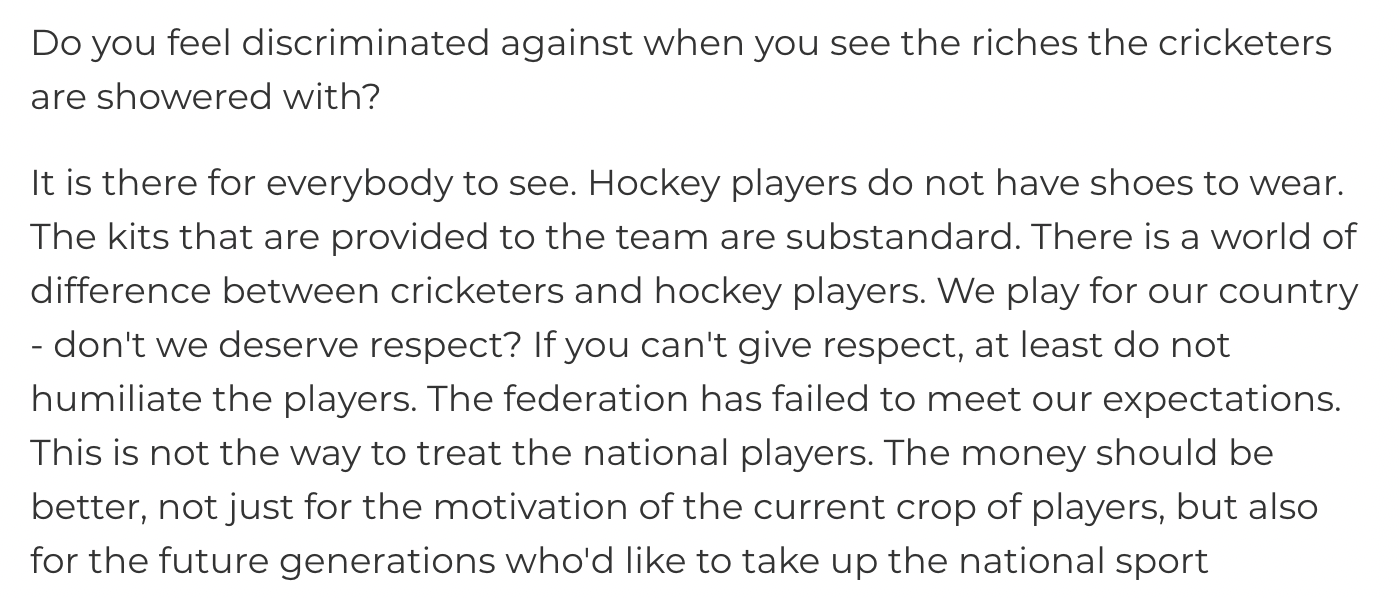
Excerpt of 2011 interview

The interview was given right after Indian hockey team defeated the Pakistan team at Asian Champions Trophy where he revealed that the Indian team players did not even have proper shoes and had substandard kits to play the team with. This was just 3 years before the Modi government came to power. He mentioned that the attitude was one of the major concerns of hockey players as the Federation did not even show respect to the athletes.

“Players should be paid match fee”

Former Hockey team captain Dhanraj Pillay had also given a call in 2011 to pay players match fees. “The hockey players should be paid Rs 25,000 per international match. We used to subsist on a meagre allowance of USD 20 when we played for the country. We could not even invite our friends for a cup of coffee at the top hotels we stayed in or else go out of pocket,” said Pillay. 

Pillay recently applauded Prime Minister Narendra Modi for his support for sports and hockey.  

M.M. Somaya the three-time Olympian had said, “They play many internationals in a year and they should be financially secure. India’s international hockey players cannot be equated with those playing for college teams.”

“There’s a lot of pride in playing for the country. If the officials in the national federation cannot raise money, they don’t deserve to be there. If the federation has credibility, Corporate India will support hockey in a big way,” he added. 

Indian hockey players were underweight

In another news from a decade ago, physiologist David John who had been with the Indian hockey team had remarked that the Indian players were underweight. John had said that the average weight of the Indian hockey team was 63 kg and wanted the players to add bulk as it would help in improving their fitness.

Inspiring journeys

Fighting all the odds, several Indian players outshone in the ongoing Tokyo Olympics. Rani Rampal, the 26-year-old player who leads the Indian hockey team at the Tokyo Olympics, also shared her inspiring journey.

From barely having two square meals to practicing with a broken hockey stick to mixing milk with water, Rampal with her inspiring journey has done every Indian proud. 

Meanwhile, the current government has introduced several initiatives and programs for not just the current sports players but also the youth who wish to groom themselves in sports.