Home Blog Page 4414

Designated Islamist terrorist in Syria seeks acceptance in the USA, cites common interest with the West in toppling Assad regime

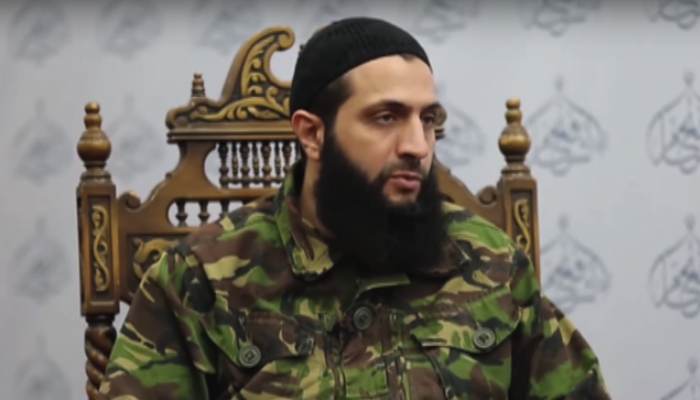
Abu Muhammad al-Julani, the leader of the Islamist militant group Tahrir-al-Sham operating in Northwestern Syria, recently gave an interview to the American investigative documentary program, Frontline. In this interview, al-Julani clearly states that his group, Tahrir-al-Sham, poses no threat at all to either the West or the United States and that their only goal is to fight Bashar al-Assad’s Syrian forces and ISIS.

“First and foremost, this region does not represent a threat to the security of Europe and America,” al-Julani told the interviewer. “This region is not a staging ground for executing foreign jihad.”

Abu Muhammad al-Julani has been one of the most notorious Islamist terrorists in Syria, with the U.S. designating al-Julani as a “Specially Designated Global Terrorist” in May 2013, offering a $10 million reward for information leading to al-Julani’s capture. Abu al-Julani was one of the founders and the Emir (leader) of the Islamist terror group Al-Nusrah Front, designated as a Foreign Terrorist organization by the USA in December 2012. In 2013, Al-Nusrah Front became the official branch of Al-Qaeda in Syria.

The US State Department had cited the group’s “violent, sectarian vision” and said al-Julani’s “ultimate goal is the overthrow of the Syrian regime and the institution of Islamist sharia law throughout the country,” adding that suicide attacks carried out by his group “killed innocent Syrian civilians.”

Al-Julani was a part of Al Qaeda

Prior to Al-Nusrah Front’s formation, al-Julani was a part of Islamist Jihadist organizations like Al Qaeda in Iraq and Islamic State in Iraq. In his past, Abu al-Julani fought American troops in Iraq, before taking on the current role of commanding an Islamist militant rebel group against the Syrian Government of Bashar al-Assad.

Tahrir-al-Sham, the organization Abu al-Julani presently commands, was formed in 2017 after a merger of five Syrian Islamist militant rebel groups, including the Al-Nusrah Front. This new Islamist rebel group, Tahrir-al-Sham, was designated a terrorist organization by the U.S. in May 2017. Turkey and Canada also consider Tahrir-al-Sham a terrorist organization.

However, in the interview, al-Julani has challenged his terrorist designation, terming it as “unfair” and “political”.

“We didn’t say we want to fight,” al-Julani told the interviewer. Speaking on his connection to Al Qaeda, al-Julani says it “has ended”. Abu al-Julani stresses that his only focus is Syria and that his group is “against carrying out operations outside of Syria.”

The interview was recorded in the early weeks of February in the Idlib Province of Syria, which is under the control of the Syrian Salvation Government, a de facto alternative government of the Syrian Opposition forces in the Idlib province. Idlib province is one of the last Syrian rebel strongholds against the Syrian Government of Bashar al-Assad and is home to almost 3 million people.

Over the past two years, Idlib has come under attack from the Syrian Government coalition of Syrian, Iranian and Russian forces as Bashar al-Assad seeks to restore his country by wiping out the last strongholds of the Syrian rebels. Tahrir-al-Sham is the strongest Islamist Syrian rebel militia in Idlib.

Former U.S. ambassador James Jeffery, who served as Special Representative for Syria Engagement and Special Envoy for the Global Coalition to Defeat ISIS, said that al-Julani’s organization is an “asset” to America in Idlib.

“They are the least bad option of the various options on Idlib, and Idlib is one of the most important places in Syria, which is one of the most important places right now in the Middle East,” Jeffrey said in an interview on March 8.

Many Human Rights Organizations have documented multiple human rights violations by Tahrir-al-Sham, including indiscriminate attacks on civilian areas. These attacks led to scores of civilian casualties and may have amounted to war crimes, according to the Independent International Commission of Inquiry on Syria (COI).

In the interview, al-Julani said he would grant access to International Human Rights Organizations to Idlib’s prisons.

“Human rights organizations could come and inspect the prisons or take a tour,” al-Julani said. “Our institutions are open to anyone. Organizations are welcome. Or people who are interested in this matter can visit and assess the situation. Are things being done properly or not?”

The Syrian civil war

The Syrian Civil War has been raging on for almost 10 years now. The civil war is seemingly in its twilight, with the Syrian Government of Bashar al-Assad controlling more than 65% of the country as of the present date. The only major Syrian rebel stronghold is in the Idlib province, where the designated terrorist militia, Tahrir-al-Sham, is the most powerful.

If Assad successfully manages to take Idlib, it will be a defeat for the Americans, who have backed Islamists and other Syrian rebel groups against the Assad government. Therefore, this interview of Abu al-Julani, sort of like an introduction to American audiences, can be viewed as an attempt to soften or improve al-Julani’s image in America. However, this is just speculation till the USA officially removes the terrorist designation from Abu al-Julani and Tahrir-al-Sham.
Congress-led states contributed around 63% of active Covid-19 cases on the 5th of April: Details

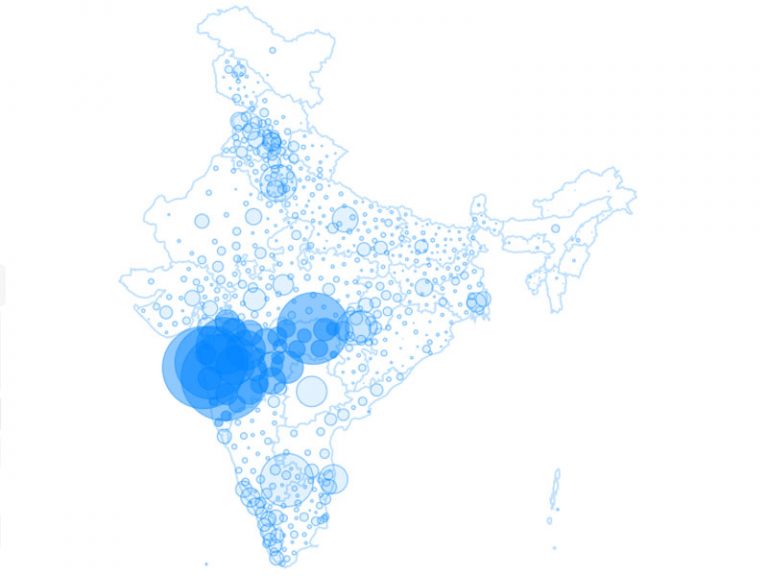
India is currently experiencing the second wave of Covid-19, and the number of cases is rising exponentially from the last few weeks. Just a month ago, on March 7, India had reported 18,000+ cases in contrast to April 4, where over one lakh new cases were reported in a single day. In just a month, the cases saw a 5-times jump.

Congress-led states among the top contributors

Currently, Congress is in power in five legislative assemblies – Punjab, Rajasthan, Chhattisgarh, Maharashtra and Jharkhand. While in the first three states, Congress is in the absolute majority, in the latter two states, it is part of an alliance. In Maharashtra, it has formed a government with Shiv Sena and NCP under Maha Vikas Aghadi or MVA, and in Jharkhand, it formed the government as a part of Mahagathbandhan or MGB.

Maharashtra is the top contributor

Maharashtra has been the top contributor of Covid-19 cases in India. The uncontrolled rise of coronavirus cases in the state has pushed Chief Minister Uddhav Thackeray to impose lockdown in the state. It is pertinent to note that the central government had advised the Maharashtra government to not impose a lockdown but focus on effective containment. The central government had said that at this point in time, lockdowns would not help curb the case. However, Maharashtra has gone against that advice and imposed a lockdown in certain parts and weekend lockdown in other areas anyway.

For example, in Pune, it is reported that all shops are supposed to be shut till 30th April. Maharashtra has now announced a full lockdown over the weekends and several restrictions to be imposed through the month of April.

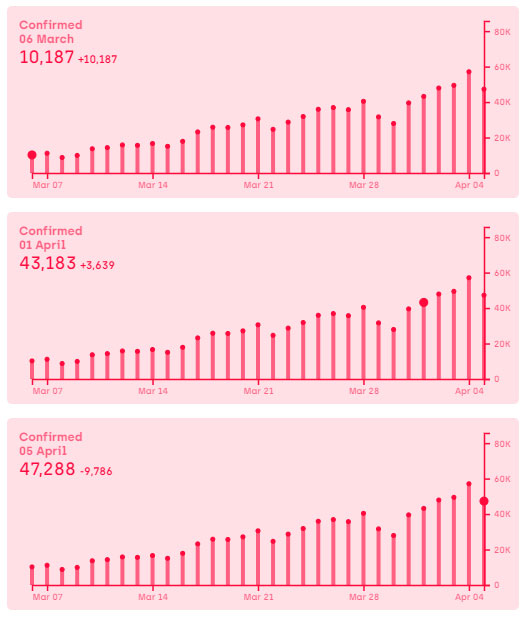
The state has been consistently reporting 45,000+ cases from the last six days. On April 4, it broke all records and reported 57,000+ cases in a single day.

Maharashtra is the worst performer in handling Covid-19 cases (Data from Covid19India.org)

Rajasthan is looking at rising numbers

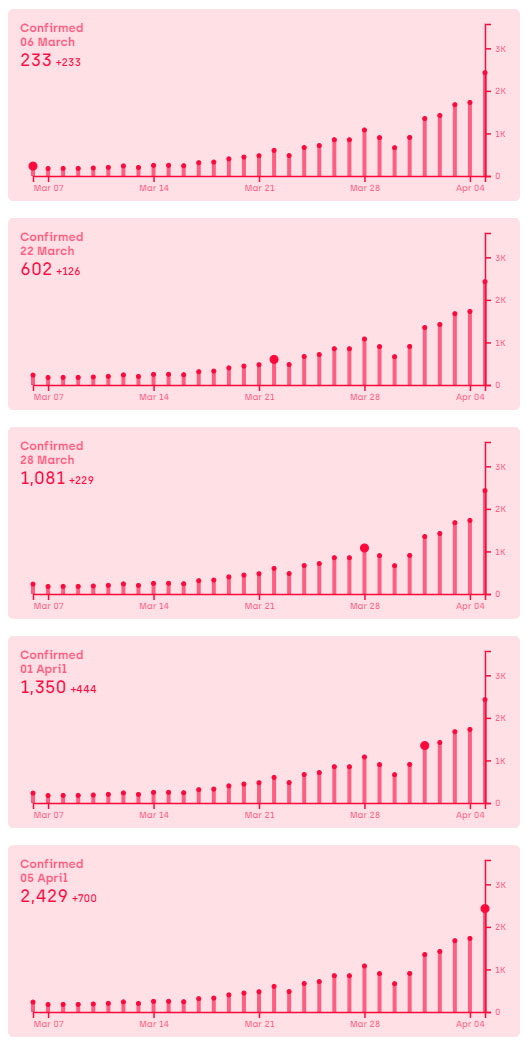
The state of Rajasthan was reporting less than 500 cases a day just a month ago. The situation started to change on March 22 when it reported 602 cases. On March 28, the state reported over 1000 cases. Since April 3, Rajasthan has been reporting 1500+ cases, and on April 5, it reported over 2,400 cases.

Rajasthan saw a sudden spike in last week of March (Data from Covid19India.org)

Chhattisgarh walking on the same line as Rajasthan

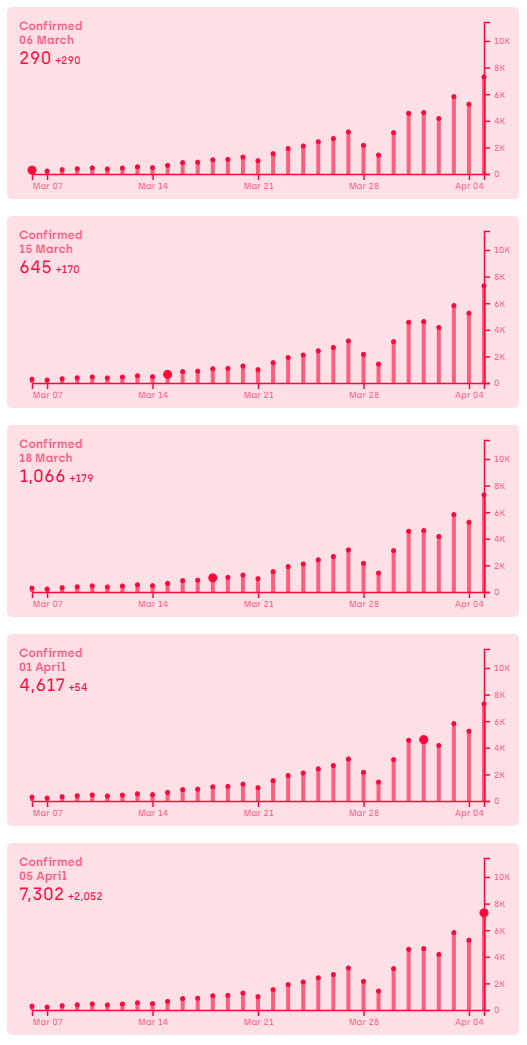
Just a month ago, Chhattisgarh was reporting less than 500 cases. The situation started to get worse on March 15, when it reported 500+ cases. By March 18, the state was reporting 1000+ cases. On April 1, it reported 4,617+ cases which further rose to 7,300+ on April 5.

The cases started to rise around mid-March in Chhattisgarh (Data from Covid19India.org)

Jharkhand rose from 40+ cases to 1000+ in one month

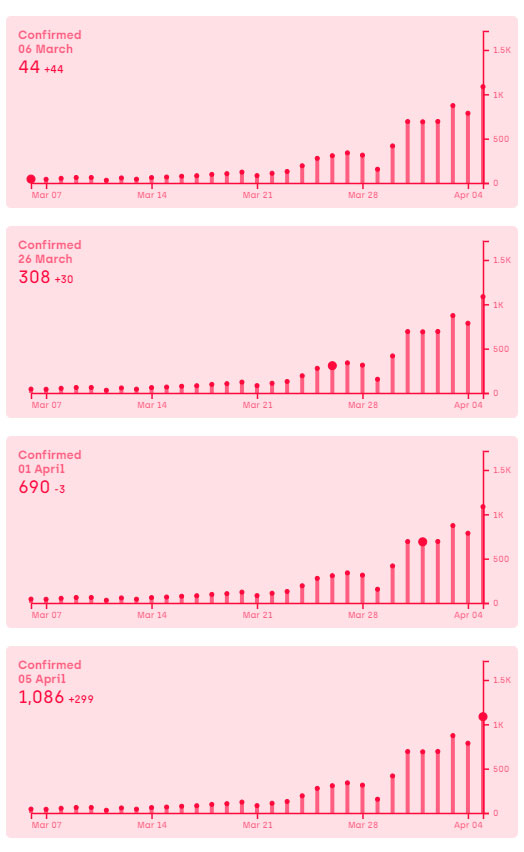
In just a month, the state of Jharkhand went from 40+ cases to 1000+ cases in a day. On March 6, the state reported only 44 new cases. The situation started to go out of hands-on on March 26 when the number of cases rose beyond the 250+ mark. By April 1, it crossed the 600+ mark, and on April 5, the state reported over 1,000 cases in a single day.

Jharkhand saw a spike in third week of March (Data from Covid19India.org)

Punjab is on the path to see the worse situation

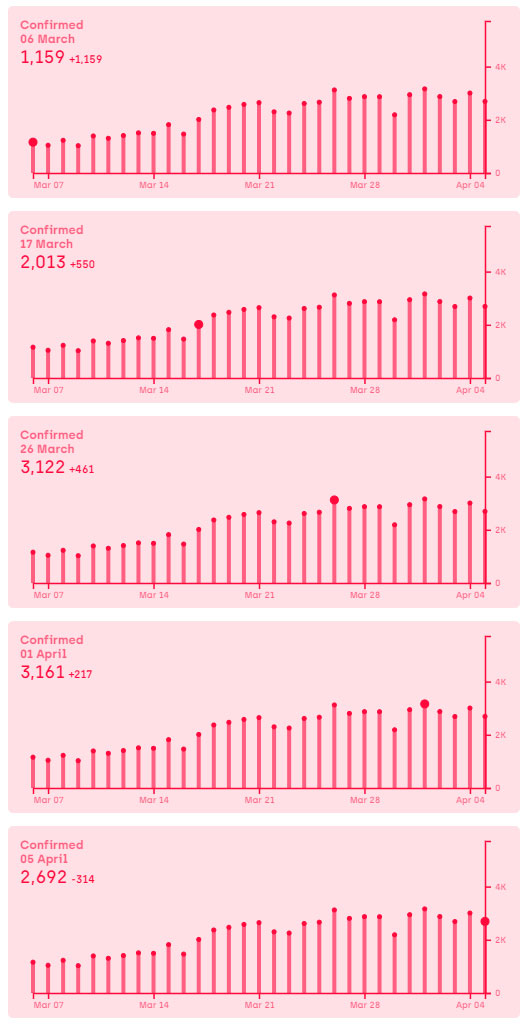
A month ago, the situation in Punjab was already on the decline as it was reporting over 1,000 cases. By March 17, the number rose above 2,000 cases in a single day. Since March 26, the number of new cases per day has been consistently jumping between 2,750 and 3,100.

Punjab has been consistent in increasing its contribution to the national Covid-19 tally (Data from Covid19India.org)

Approx 63% of new cases came from Congress-ruled states

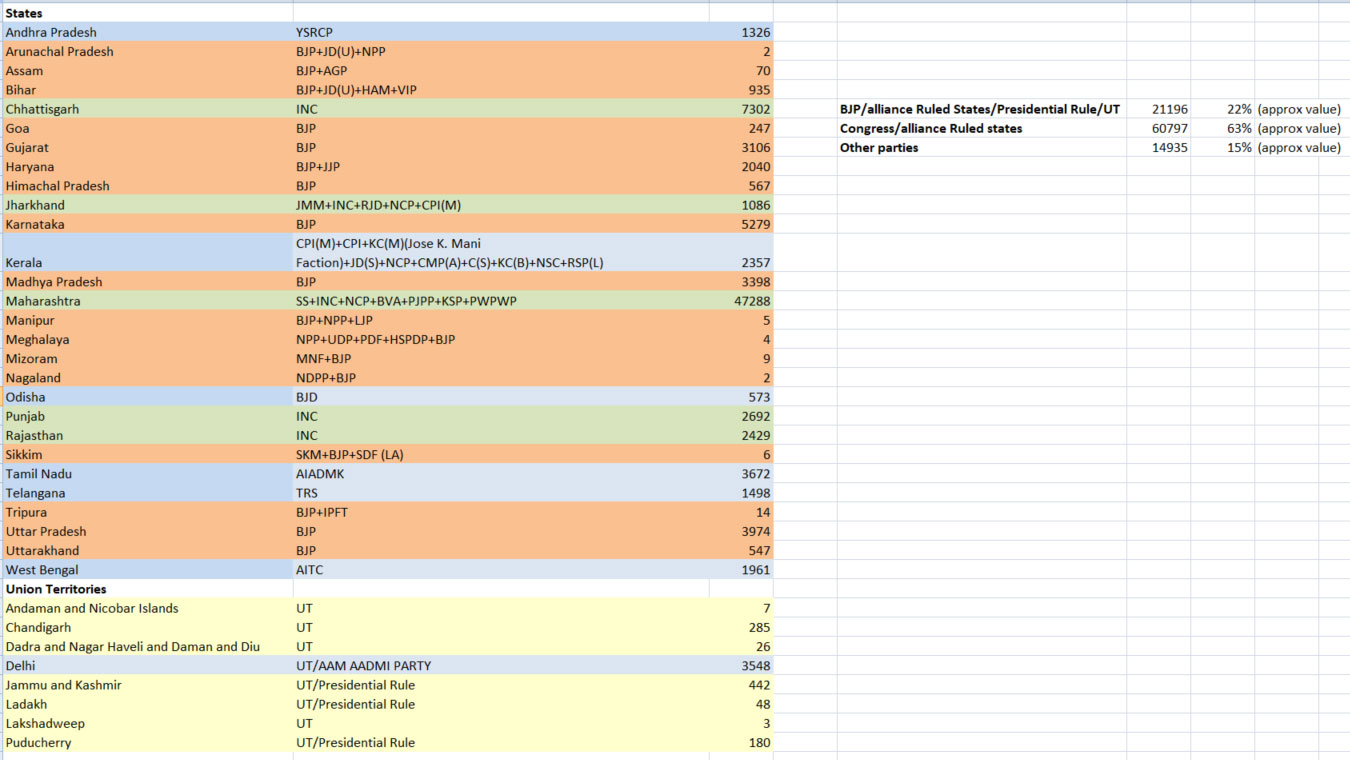
On April 5, Congress-led states Maharashtra (47,288), Chhattisgarh (7,302), Punjab (2,692), Rajasthan (2,429) and Jharkhand (1,086) reported 60,797 out of 96,982 total cases reported in India, making these five states contributing approx 63% in the total tally.

Green: Congress-ruled states, Saffron: BJP ruled states, Yellow: UT/President Rule, Blue: Other parties. Data for April 5 collected from https://www.covid19india.org/, Arogya Setu app and MoHFW

Other Non-BJP states contributed 15% (approx) of cases

Other non-BJP ruled states, that are Delhi (3,548), Andhra Pradesh (1,326), Kerala (2,357), Tamil Nadu (3,672), West Bengal (1,961), and Telangana (1,498), contributed approx 15% of new cases on April 5.

BJP-ruled states contributed close to 22% (approx) of cases

The states that are under BJP rule individually (eight states) or in alliance (nine states) or under centre’s or president rule contributed approx 22% new cases on April 5. These states are Arunachal Pradesh (2), Assam (70), Bihar (935), Goa (247), Gujarat (3,106), Haryana (2,040), Himachal Pradesh (567), Karnataka (5,279), Madhya Pradesh (3,398), Manipur (5), Meghalaya (4), Mizoram (9), Nagaland (2), Sikkim (6), Tripura (14), Uttar pradesh (3,974), Uttarakhand (547), Andaman and Nicobar Islands (7), Chandigarh (285), Dadra and Nagar Haveli and Daman and Diu (26), Jammu and Kashmir (442), Ladakh (48), Lakshadweep (3), and Puducherry (180).

Covid-19 cases in India

According to the Ministry of Health and Family Welfare, so far India has reported a total of 1,26,86,049 Covid-19 cases out of which 1,17,32,279 have recovered. There are 7,88,223 active cases in the country and 1,65,547 have lost their lives. On April 5, India reported 96,982 new cases.

Kerala: Christian man attacked by Islamists for selling non-Halal meat, forcefully fed raw meat, delivery truck burnt down

In an appalling incident in Kerala, Islamists have allegedly attacked a Christian farmer named Shaji for the apparent crime of selling non-Halal meat in Meenangadi, located in Rahul Gandhi’s Wayanad District. Reportedly, Shaji was force-fed the raw meat by Islamists in a horrifying act. The Islamists also burnt down the delivery trucks carrying the non-Halal meat.

The incident allegedly occurred when Shaji had gone to the area with 150 kg of fresh meat (beef and pork) in a three-wheeler, some members of Kisan Mitra claim.

As per reports, a farmer’s collective called Kisan Mitra, which has about 6,000 members in Kerala, had initiated the sale of fresh non-Halal meat on the occasion of Easter Sunday. This initiative is what irked the Islamic fundamentalists, as the low quality of Halal meat in Kerala is an open secret. This low quality is the reason why Kisan Mitra decided to supply fresh, good quality meat.

The Non-Halal meat has received quite a positive response from the general public in Kerala, as per reports. Fearing the end of Halal meat dominance as people prefer non-Halal is allegedly the primary reason behind the attack.

After being attacked brutally by Islamists, Shaji can be seen on video, stating that he cannot figure out the cause of the attack.

 “I can’t figure out what is their problem? Those who want to smoke, let them smoke. Those who want to eat buffalo meat, let them eat. Those who like pork, let them eat. Those who do not like it, why are they indulging in physical attacks on us,” said Shaji.

The main coordinator behind Kisan Mitra, Manoj Cherian, has received death threats from Islamists. Islamists have threatened to hack him to pieces if Cherian sells pork, which according to the Islamists is “haram”.

According to reports, an investigation has been launched into the incident.

West Bengal: TMC goons attack BJP worker, tears the earlobe of his mother when she tried to protect her son from attack

On Monday (April 5), a BJP worker and his mother were brutally assaulted by Trinamool Congress (TMC) workers in Tarakeswar in the Hooghly district of West Bengal. The gruesome incident took place prior to the 3rd phase of Vidhan Sabha elections in the State.

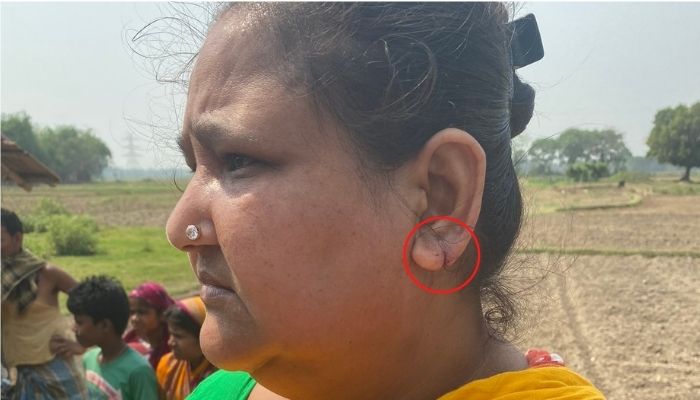
India Today journalist Poulomi Saha reported that the victim has been identified as one Srabani Chowdhury. She was attacked by TMC party workers and her earlobe was torn. This occurred when Chowdhury, a BJP worker, tried to protect her son from the hands of the TMC goons.

In a disturbing image shared by the journalist, it can be seen that the victim’s ear lobe is torn. The goons forcibly removed her earring, leading to profuse bleeding. Swapan Das Gupta, the BJP candidate from Tarakeswar Vidhan Sabha constituency, slammed the ruling dispensation for their atrocities against his party workers.

While speaking about the matter, he said, “You can see a shop behind you that is completely smashed and another one in front of you. A lady had her earlobes badly hit because her earring was taken out. This was because her son is a BJP worker. Despite this, the brave lady went to vote because she said that she has overcome fear now. But, this is the reality. Poor people are losing their livelihood because of the vandalism by the TMC.”

BJP agents stopped from entering polling booths in Tarakeswar

A BJP agent was also stopped from entering the booth in the Tarakeswar Vidhan Sabha constituency in Hooghly district. When the candidate from the said constituency Swapan Das Gupta reached the Jamdara Sree Bharati Vidyapeeth school, he found that the BJP agent was not inside the booth. According to News 18 Bangla, the BJP worker confided to Gupta that he was being intimidated for over a week. He also complained about receiving death threats.

Following this, Swapan Das Gupta held the agent’s hand and took him inside the booth. While speaking about the matter, the former Rajya Sabha MP said, “Amader agent ke dhukta dai ni. Amader agent kunu karona dhukta para ni. Setai ami dekhchi (Our agent was stopped from getting inside the booth. Our agent could not reach the booth for some reason. I am looking into it).” 

‘Can’t make fun of customs of a community’: Mumbai court orders probe against actor Payal Rohatgi for Tweet against anti-Hindu riot accused Safoora Zargar

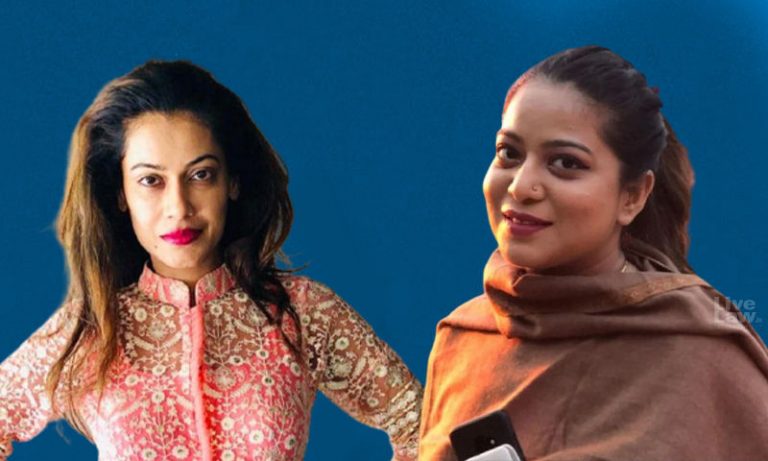
Actress Payal Rohatgi, who is known for her uncensored remarks on social media, has been embroiled in legal trouble for her last year’s Tweet against riot accused Safoora Zargar. Recently, an Andheri magistrate court ordered a police inquiry against actor Payal Rohatgi for her June 2020 Tweet against Jamia Millia Islamia student Safoora Zargar. It has ordered Mumbai police to find if there is sufficient material to proceed against actor Payal Rohatgi in a complaint filed by a city-based advocate, Ali Kaashif Khan Deshmukh, against her for her alleged communal tweets.

Metropolitan Magistrate Bhagawat T. Zirape, while ordering the probe, opined that prima facie the tweets show disregard for Muslim women and the community. The court said in his order that every community has the right to profess its religion and that no individual has the right to make fun of the customs or rites of another community. 

It, however, noted that the complainant had not submitted a certificate as required under the Indian Evidence Act to decide the admissibility of electronic records. Magistrate Zirape said that technical investigation about the tweets is necessary to proceed against the accused and such investigation can be conducted only by the police and went on to order an inquiry.

The complainant, advocate Ali Kaashif Khan Deshmukh had approached the magistrate in end-December last year and said that the Amboli police station had failed to take action against Rohatgi for her tweet in June last year.

In June 2020, Ali Kaashif Khan Deshmukh had filed a police complaint at Amboli police station in Mumbai against the actor for her abusive tweets on Twitter against Safoora Zargar, the out on bail accused in the Delhi Anti-Hindu Riots. He had stated in his complaint that her tweet was ‘exceedingly derogatory’ to the people of the community and further that her post defamed its women.

Payal Rohatgi keeps landing herself in legal trouble for her statements on social media platforms

The same month, Twitter also suspended Payal Rohatgi’s account on the pretext of posting an abusive tweet.

In the last few years, Rohatgi had always landed herself in legal trouble for her controversial statements on social media platforms. Her activities on social media mainly revolve around current affairs. After actor Sushant Singh Rajput’s death, she had shifted her concentration towards the nepotism debate in the film industry and slammed several A-listers in Bollywood after Shushant Singh Rajput ended his life in June.

Safoora Zargar – one of the masterminds of Anti-Hindu Delhi riots, according to Delhi Police

Jamia Millia Islamia student Safoora Zargar was arrested under the Unlawful Activities Prevention Act (UAPA) for her involvement in the Anti-Hindu Delhi riots. She was reportedly the general secretary of the Congress-backed NSUI’s Jamia unit.

According to the reports, Zargar was among the first two coordinators of the Jamia Coordination Committee, which was set up in December last year to protest against the Citizenship Amendment Act. The sociology student from Kashmir was an active member in Congress and its student wing National Students Union of India (NSUI).

Zargar was arrested by the Delhi Police in the month of April for allegedly leading the anti-CAA protests at the Jaffrabad metro station of Delhi in February 2020. After being denied bail on two previous occasions, the Delhi High Court had granted her bail in June this year based on humanitarian grounds.

The Delhi Police had claimed that she was part of the conspiracy to “destroy, destabilize and disintegrate the Government of India in order to compel to withdraw the Citizenship Amendment Act (CAA) and the alleged National Register of Citizens”.

‘Free the Temples’ movement: A comparison of contesting ideas regarding management of Hindu Temples after freeing them of state control

The movement for freeing Hindu Temples from government control has received a major boost in recent weeks after Sadhguru Jaggi Vasudev vouched for the same. Not too long after, retired IPS officer M. Nageswara Rao joined the ‘Free the Temples’ movement as well.

However, there are divergent visions regarding how Temples ought to be managed after freeing them from government control. Such visions are often in conflict with each other but there is agreement among the proponents that state management of Hindu Temples is not feasible. Here, we shall discuss three visions that have manifested as a consequence of the anguish over Temple management.

District management of Hindu Temples

There is a category of proposals that can be broadly classified under ‘community management’ of Hindu Temples. The earliest reference to this we are aware of was made by Rangesh Sridhar and Amar Govindarajan in an article on Swarajya Mag in July 2020. But their proposal is unique for the emphasis of Temple administration at the District level.

Sridhar and Govindarajan proposed a three-step mechanism for the management of Hindu Temples after they have been freed from Government control. First, they propose, the exclusive mandate of a Temple ought to be the propagation of the Hindu faith.

Second, the leadership of the Temple administration ought to be elected by Hindus in the district. However, they state that traditional custodians of the Temples would continue to preside over the religious affairs of the Temple.

“The point is not to show off egalitarian views but to ensure that leadership of temples is contested for, opening up space for discussion about how best to use temple resources and producing Hindu leaders who have the interests of the Hindus and temples at heart,” the authors said of the reason for elected leadership.

Third, the second tier leadership of the Temple would involve the major castes in the district. At the core of this proposal is the idea that “every Hindu in a district must be made a stakeholder in the temple.” The rest follows from that premise.

Community management of Hindu Temples

M. Nageswara Rao, who has been advocating for ‘inclusive management’ of Temples, appears to endorse the premise proposed by Sridhar and Govindarajan. Nageswarao Rao said in a statement following a controversy over a ‘private fiefdom of cliques’ comment, “If the entire Hindu demography of all castes is not included in this collective fight, how do we hope to achieve the purpose of freeing the Temples from Govt control to protect Dharma?”

The former interim-director of the CBI continued, “We have to realise that times have changed. There are myriad existential threats to our civilisation. It is the responsibility of all Hindus to protect and propagate Hinduism, which requires all sections of Hindus become equal partners. Exclusion of any class of Hindus would be self-destructive.”

“When India gained political independence, we did not return the country or its parts to the respective erstwhile rulers namely the Marathas, the Rajas and the Nawabs from whom the British seized it. Did we? So if it was unacceptable then, would the same logic not apply against handing over public Temples to trustees/people who managed them before Govt take them over? What is sauce for goose should be sauce for gander too!” Rao added.

Local management of Temples

A contesting vision for the management of Hindu Temples proposes devolving power from the state to village committees. Proponents of this category of thought include Sadhguru and Indic Collective.

TR Ramesh, president of Indic Collective and president of Temple Worshippers Society, said recently, “Till 1951, there were less than 1,000 temples which were under the control of the government.  But since then, over a period, the State government has taken over around 44,000 temples during the past five to six decades. All those temples which have less than Rs. Two lakh income per annum can be handed over to the village level committees with representatives from all castes and communities.”

Sadhguru, too, argues that Temples must be freed from government control due to the rampant corruption and mismanagement that has contributed towards debilitating circumstances in Temples. His proposal is to turn over the Temples to devotees. It is evident that it would involve greater participation of the local communities.

This category of proposals includes divergent visions that could be seen in conflict with each other. However, there appears to be consensus that the government would be relegated to the position of only a regulating authority and would not be involved in the management of the Temples themselves.

Under this idea, Sampradayas can be seen to have the primary authority to manage and administer Temples.

A Board of Saints and Scholars

The Tamil Nadu unit of the BJP promised in its manifesto, “The administration of Hindu temples will be handed over to a separate board comprising Hindu scholars and saints.” But that has not found as much support as they party would have hoped.

TR Ramesh said, “The BJP is trying to appeal to the sentiments of the people. In reality, the BJP does not want to give up temple administration. So, they are trying to put the wine in the new bottle. That’s all.”

“Government having control over the temples is a wrong proposition. It should not continue. But promising that the temples would be handed over to a board of scholars and saints is an act of cheating as such a move is illegal. The Constitution has ensured the religious rights of individuals as well as denominations.  For example, a protestant church and a pentecost church cannot be merged. So also, temples of different Sampradayas cannot be brought under a single board,” he added.

R Jagannathan of Swarajya Mag, while acknowledging that it was a step in the right direction, argued that it is not good enough. He said that the proposal leaves room for governments to pack such boards with scholars and saints of their own choice. He argued for legislation to enable government to move out of the business of administering Temples.

Convergence and Divergence between different proposals

There are really only three broad visions for the management of Hindu Temples that we have highlighted here as a state appointed board of Saints and Scholars does not really fall under the purview of ‘Free the Temples’ movement. Thus, we will point out in short where the three proposals converge and where they diverge.

The ideas converge on the proposition that all castes should be represented in the management of Hindu Temples. However, that is arguably where the convergence ends.

The proposal by Sridhar and Govindarajan envisages management of Temples at the District level while the local management proposal lays emphasis on management by village committees and other localised entities. Furthermore, the former also proposes elected leadership in the management of Temples, an idea that is worthy of note due to its uniqueness itself. Nageswara Rao’s vision leans towards the former but does not advocate elected leadership.

One could argue that both models could work simultaneously. While the Sridhar-Govindarajan vision could be made applicable for large Temples, the other could be used to manage small Temples with less than Rs. Two lakh per annum income.

However, despite the divergence of opinion, there is convergence among all sides that state administration of Temples is causing great harm to the welfare of Hindu Temples.

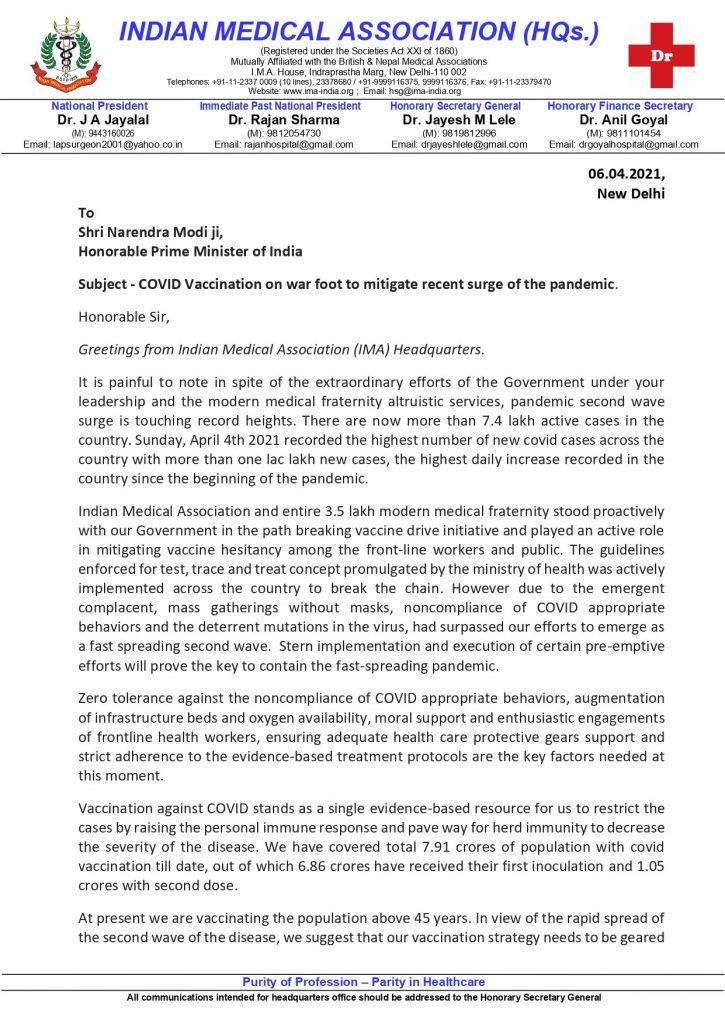
Indian Medical Association writes to PM Modi, urges him to include all age groups above 18 for Covid vaccination

As India grapples with the second wave of coronavirus surpassing past records, the Indian Medical Association has written to Prime Minister Narendra Modi urging the government to include all age groups above 18 in the Covid vaccination drive.

Lauding the efforts of the government, the association at the same time expressed its concerns over the inability to curb the second wave due to the public’s noncompliance of Covid-19 appropriate behavior and rapid mutation of the virus.

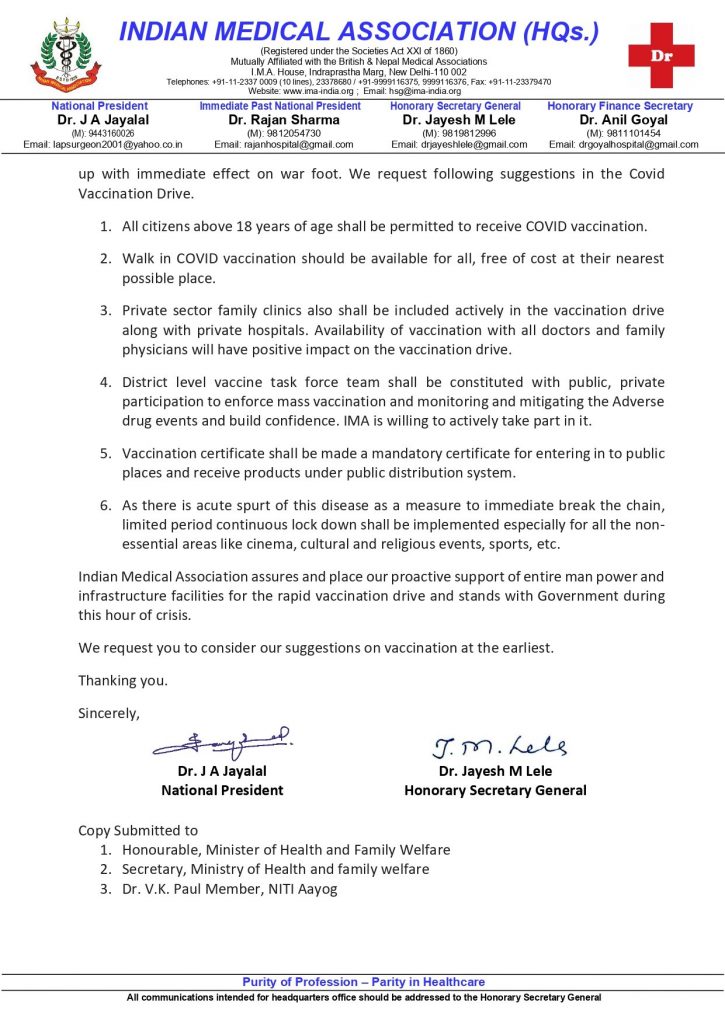
Suggesting vaccine as the single evidence-based resource to restrict the virus, IMA in its letter stated, “At present, we are vaccinating the population above 45 years. In view of the rapid spread of the second wave of the disease, we suggest that our vaccination strategy needs to be geared up with immediate effect on a war footing. We request the following suggestions in the Covid Vaccination Drive. All citizens above 18 years of age shall be permitted to receive Covid vaccination.”

IMA submits 6-point proposal

Summarising the recommendations in 6 points, the IMA, apart from requesting for vaccination for all, mentioned: 

  1. Covid vaccination should be available for all and free of cost
  2. Private sector family clinics, along with private hospitals should also be included actively in the vaccination drive along with private hospitals
  3. District level vaccine task force teams shall be constituted with the public, private participation, to enforce mass vaccination
  4. A vaccination certificate shall be made a mandatory certificate for entering into public places
Indian Medical Association’s letter to Prime Minister Narendra Modi

The letter also proposed a limited period continuous lockdown of non-essential areas such as cinema, cultural and religious events, sports, etc.

Emphasizing on the need for a robust infrastructure, IMA added, “Zero tolerance against the non-compliance of Covid appropriate behaviours, augmentation of infrastructure beds and oxygen availability, moral support and enthusiastic engagements of frontline health workers, ensuring adequate health care protective gears support and strict adherence to the evidence-based treatment protocols are the key factors needed at this moment.”

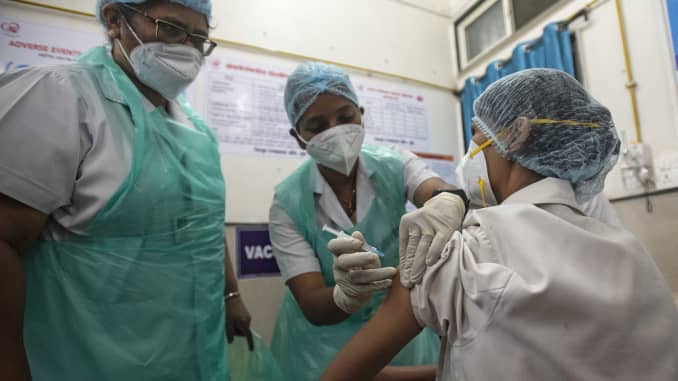
More than 7.91 crore beneficiaries in India have been vaccinated for COVID-19 so far. On 04 April- 15,40,676 beneficiaries were given the first shot, while 97,788 people received their second doses as per the latest report released by the Union Health Ministry.

Prime Minister Narendra Modi had launched a nationwide vaccination drive early this year on January 16, with healthcare workers at the frontline of India’s COVID-19 battle getting their first dose.

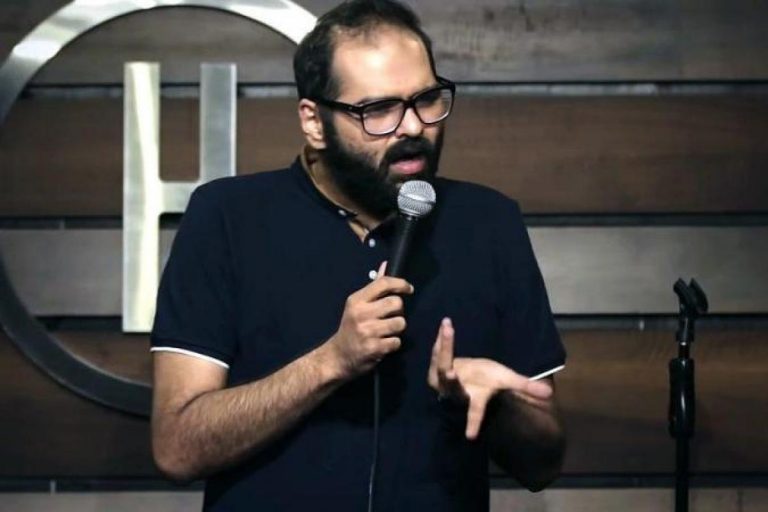
Kunal Kamra, who showed middle finger to frontline workers, tests positive for Chinese Coronavirus

A year after mocking frontline workers, ‘comedian’ Kunal Kamra announced on Tuesday (April 6) that he and his parents have been diagnosed with the Wuhan Coronavirus infection.

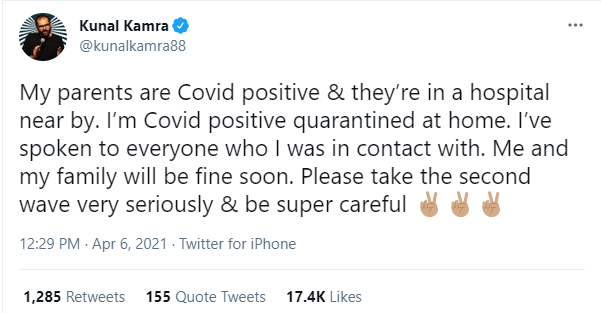
In a tweet, Kamra wrote, “My parents are Covid positive & they’re in a hospital nearby. I’m Covid positive quarantined at home. I’ve spoken to everyone who I was in contact with. Me and my family will be fine soon.” He further emphasised, “Please take the second wave very seriously & be super careful.”

Screengrab of the tweet by Kunal Kamra

It must be mentioned that the stand-up comedian had earlier mocked India’s frontline workers (FLWs) during the onset of the pandemic in March last year. In his address to the nation last year, PM Narendra Modi called for a ‘Janta Curfew’ (public curfew) on March 22, 2020, from 7 am to 9 pm. He emphasised that it would mean a curfew imposed by the people on themselves in order to prevent the spread of the disease.

Young and old, rich and poor, people from all sections of society came out on to their balcony and verandahs to clap and ring bells and blow the conches in appreciation for those at the frontline battling the pandemic. However, that did not go down well with some as they riled against the people as the nation came together as one.

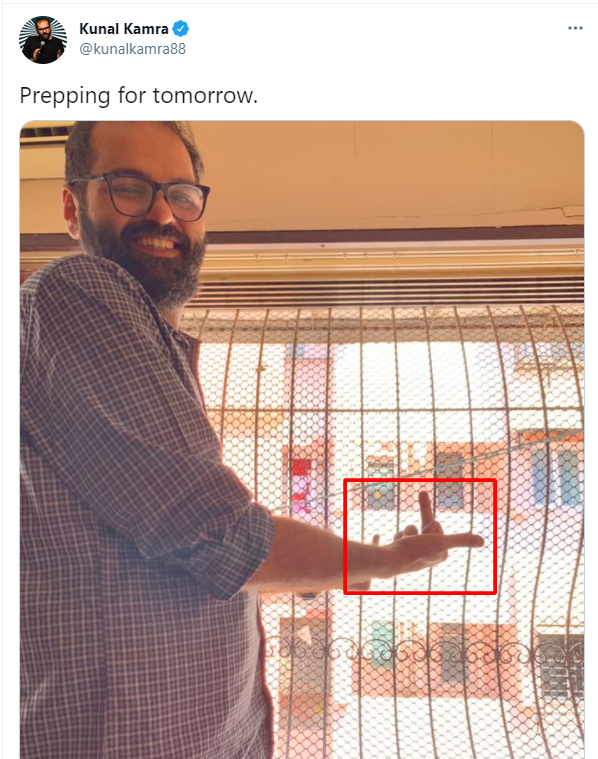
Screengrab of the tweet

Although his innate hatred for PM Narendra Modi is well-known, Kunal Kamra sought to humiliate the frontline workers to take potshots at the BJP. In a Twitter post, he wrote, “Preparing for tomorrow” and stuck out his middle finger to mock the front-line workers.

‘Farmers’ protest spearheaded by BKU chief Rakesh Tikait dying its natural death, only 100 or so people attend his Gujarat events

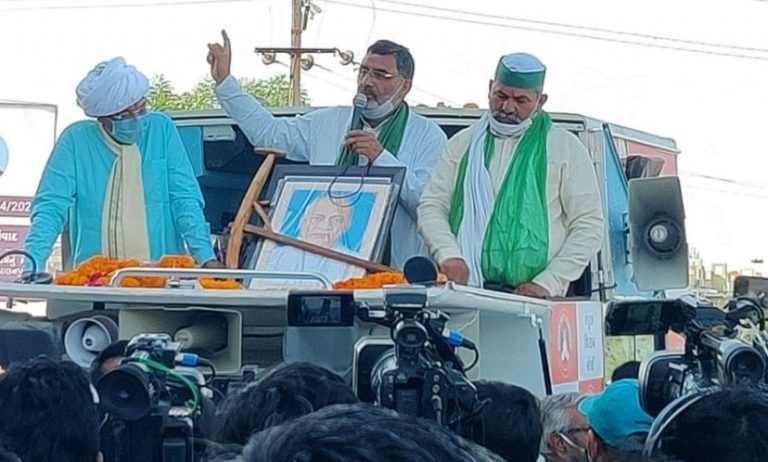
The months-long protest against the central government’s three farm laws spearheaded by Bhartiya Kisan Union (BKU) chief Rakesh Tikait seems to be dying its natural death. His latest two-day visit to Gujarat on April 4 and 5 received an extremely tepid response with only a handful of people attending his two days scheduled program, reports DeshGujarat.

The new report says that on the first day of his scheduled visit to Ambaji and Palanpur, only 100 odd people were present during the event and that too mostly onlookers.

Attempts to gain public attention failed

Apart from this, Tikait was also left embarrassed when his other farce also did not work in his favour. Ahead of his entry in Gujarat, the BKU leader had made a major hue and cry, claiming that the BJP government in Gujarat would not allow him to enter the state. Before embarking on his journey, Tikait had reportedly shown his passport to the media persons and claimed that despite being an Indian citizen, the BJP government would impede his entry into the state.

However, this drama also backfired. DeshGujarat reported that the BJP government in the state was so disinterested and nonchalant about his scheduled visit that he was allowed smooth entry through the interstate check post of Abu Road, Ambaji. In fact, the state government also arranged police piloting for his convoy.

During the visit, the Bhartiya Kisan Union (BKU) leader threatened to start a farmers’ tractor agitation in Gujarat and said the time has come to gherao the state capital Gandhinagar and also break barricades if needed. Tikait claimed farmers in Gujarat were unhappy and suffering.

Tikait’s visit to Gujarat was announced in a press conference on March 26 this year in Ahmedabad called by various farmers’ rights organisation of the state.

Rakesh Tikait has been the face of the ongoing farmer’s agitation. He has been trying his best to milk the protest to kick start his political career. For the uninitiated, the FIR filed by Delhi police to probe a larger conspiracy and criminal design behind the violent tractor rally on January 26 in Delhi, mentioned Bharatiya Kisan Union(BKU) leader Rakesh Tikait for spearheading and inciting the mob that wreaked havoc in Delhi.

A video of Tikait asking protesters to carry sticks, flags during the tractor rally had gone viral on the internet. But as the tractor rally carried out by protesters devolved into chaos and disarray, with protesters resorting to violence and vandalism, Tikait refused to shoulder the responsibility of the violence and pushed the blame on the Centre and the Delhi Police for the Republic Day disruption.

In an interview on the Hindi news channel Aaj Tak in February 2021, the BKU leader had inadvertently admitted to his global links. Tikait confirmed that the organisation he is associated with has its branches in 73 countries and he has an alliance with the Indian branch. 

Media spreads fake news again, falsely accuses BJP of attacking TMC candidate: Here is what really happened according to their own video

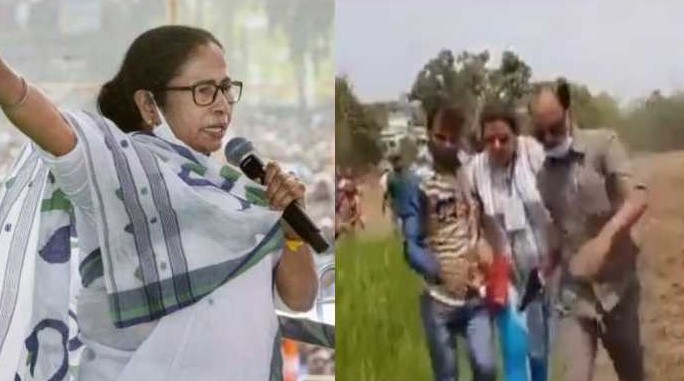
The Hindu appears to have discovered a rather unique way of spreading misinformation on the internet. The caption it has shared on its Twitter account tells a completely different story than the video the caption is for. The video is related to an incident involving Trinamool Congress (TMC) candidate from Arambagh Sujata Mondal Khan.

The caption says, “TMC candidate from Arambagh Sujata Mondal Khan was attacked by BJP supporters, and her security officer sustained injuries.” However, the video paints a completely different picture.

In the video, the reporter can be heard speaking in Bengali, saying that the TMC leader and her workers are accused of attacking villagers after entering their houses and injuring the hand of one of them. The reporter says the villagers have accused the TMC workers of breaking the hand of one of their own. And therefore, villagers came out in large numbers against the political leader.

The villagers can be seen chasing the Trinamool gang with sticks in their hands. The Hindu, instead, presents a completely different picture accusing the BJP of attacking the TMC candidate. One reason appears to be that the reporter speaks in Bengali. Therefore, those who do not understand the language would be easily misled by the caption. It is one of the factors that appears to have played a part in the manner in which the video was captioned.

Incidentally, it is not only The Hindu which has engaged in such mischief. Poulomi Saha, India Today journalist, shared the same video and failed to note the accusations against Sujata Mondal Khan.

There appears to be a motivated campaign to trivialize the persistent political violence in West Bengal, committed by TMC goons against opposition workers and candidates. Multiple BJP candidates have been attacked during the course of these elections. The media, now, appears to downplay the toxic political violence by insinuating that the BJP is also engaging in it.