Home Blog Page 4815

AAP sits on dharna outside Kejriwal’s house, because he could not join farmers due to imaginary house arrest

As borders along Delhi remain sealed and the residents are held hostage to the ongoing farmers’ protests, similar on the lines of the Shaheen Bagh demonstrations that took place earlier this year, the Aam Aadmi Party has decided that this time around they would not repeat their past mistake and take the edge off Delhi’s inhabitants’ restiveness by providing them with a good dose of entertainment.

In this pursuit, AAP and its leaders earlier today ludicrously alleged that their leader Arvind Kejriwal was under house arrest. As it turned out, it was just a figment of their imagination, ruined by a prompt clarification by the Delhi Police which said that Kejriwal was not held under house arrest and the forces were just a part of a general deployment to avoid clashes between AAP and other political parties.

However, so invested were AAP leaders in their self-created fiction of Kejriwal’s house arrest that they refused to accept Delhi Police’s clarification and instead launched a sit-in protest outside the Delhi chief minister’s residence, alleging that the AAP supremo Arvind Kejriwal was held under house arrest.

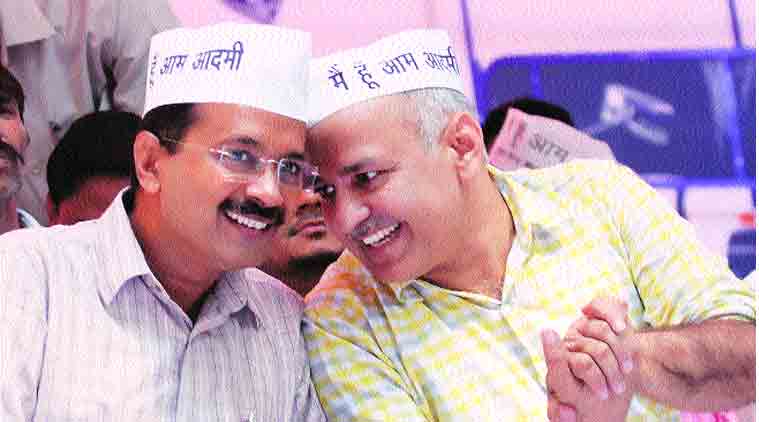
Manish Sisodia and AAP leaders sit on a dharna outside Kejriwal’s residence

A huge ruckus ensued outside the Delhi CM’s house, with Deputy Chief Minister Manish Sisodia and a group of AAP workers trying to barge into the CM’s residence.

While the police stated that only a small group of people including Sisodia could meet the AAP chief, the Deputy Chief Minister was resolutely bent on getting everyone who had gathered on the road inside Kejriwal’s residence.

Speaking to the media, Sisodia alleged vendetta from Delhi Police, alleging that the action was initiated because Kejriwal had refused to convert the stadiums into temporary jails to detain the farmers.

Subsequently, AAP leaders and supporters started raising slogans against the Delhi Police, in a bid to exert pressure on the police personnel manning Kejriwal’s residence and force them to remove the barricades. Thereafter, Sisodia and other leaders sat on a dharna in protest.

AAPians float the rumours of Kejriwal’s house arrest

Earlier today, as the Kejriwal backed Bharat Bandh spectacularly failed in Delhi, AAP supporters and sympathisers rushed in the defence of their leader and his government. Pinning the blame of the failure of Bandh on the Centre and PM Modi, AAPians alleged that the Modi government is afraid of Kejriwal and has therefore house arrested the Delhi CM for extending his support for the farmers.

The official Twitter account of Aam Aadmi Party tweeted that Delhi CM Arvind Kejriwal has been put under house arrest. Soon after the tweet, scores of AAP supporters descended on social media websites, furiously tweeting in support of the Kejriwal government and accusing the central government of being so afraid of the AAP chief that they had to put him under house arrest.

However, Delhi Police rubbished the rumours of house arrest floated by AAP supporters. Police said that the security has been increased around CM’s house to avoid a clash between AAP and other party workers. As quoted by ANI, DCP North Delhi Anto Alphonse said that the CM has not been put under house arrest. In a tweet, DCP North Delhi shared an image from outside Kejriwal’s house and said that he continues to exercise his right to free movement within the law of the land. The DCP North Delhi reiterated that AAP’s claim of Kejriwal being put under house arrest is incorrect.

Hours after the Delhi Police rubbished fake claims of house arrest of Arvind Kejriwal, a CCTV footage surfaced online that further debunked the outlandish allegations of Aam Aadmi Party (AAP).

Zee News journalist Jitender Sharma had shared the video wherein Arvind Kejriwal was seen visiting a wedding venue at 9:25 pm on Monday night. Kejriwal was escorted by his staff members, while one of them carried two bouquets of flowers.

Kejriwal and his supporters have a history of indulging in attention-seeking stunts

Aam Aadmi Party chief Arvind Kejriwal and his supporters have often displayed such kind of an inflated sense of self-importance. On several occasions in the past, AAP supporters have pulled off such attention-seeking stunts to hog limelight and remain in news.

In December 2018, AAP had alleged that a man had hurled chilli powder on Arvind Kejriwal. The Delhi chief minister and his supporters instantly painted the aggressor as BJP man and accused the BJP of attacking him. However, several reports in the aftermath of the incident claimed that the accused, Anil Sharma, who had flung chilli powder on Kejriwal, had confessed that the attack was orchestrated by AAP leaders as a publicity stunt.

Indonesia: Highest Muslim body to provide Covid vaccine with halal certificate, expected to boost immunization process in the Muslim-majority country

0

The highest Muslim body in Indonesia is expected to issue a halal certificate for the experimental Coronavirus vaccine developed by China based Sinovac Biotech. The Indonesian Ulema Council Halal Product Guarantee Agency and Institute for the Assessment of Food, Drugs and Cosmetics has completed its study and a fatwa and halal certification is expected soon, Human Development and Culture Minister Muhadjir Effendy told the media.

“The government will provide a vaccine that is proven safe and passes clinical trials under World Health Organization recommendations,” said Minister of Health of Indonesia Putranto. The Halal certification for the experimental COVID-19 vaccine, should its usage be approved, would prove to be crucial in strengthening the immunization process in Indonesia, which is the world’s most populous Muslim majority country.

Around 1.2 million doses of the experimental Coronavirus vaccine developed by Sinovac Biotech arrived in Indonesia on Sunday but Hermawan Saputra of the Indonesian Public Health Expert Association said that it will be enough for only 600,000 people as each person requires two doses. “It does not really have significant meaning. The government should guarantee that there will be enough to for distribution to the entire country,” he said.

According to Saputra, if the experimental Coronavirus vaccine passes the third phase of the clinical trials, then the immunisation process could begin by the middle of next year.

Islamic opposition to vaccines

Islamic fundamentalists have regularly opposed vaccines which has hurt the immunization process with respect to various other significant ailments. Most significantly, immunization against Polio has suffered greatly due to opposition from Islamic fundamentalists. Not only in India and the Indian subcontinent, but the same phenomenon has been observed in African countries as well.

Most recently, a Pakistani ‘expert’ has claimed that Coronavirus vaccines are part of a nefarious agenda of Bill Gates and the World economic Forum to turn humans into slaves and feed them lab made meat.

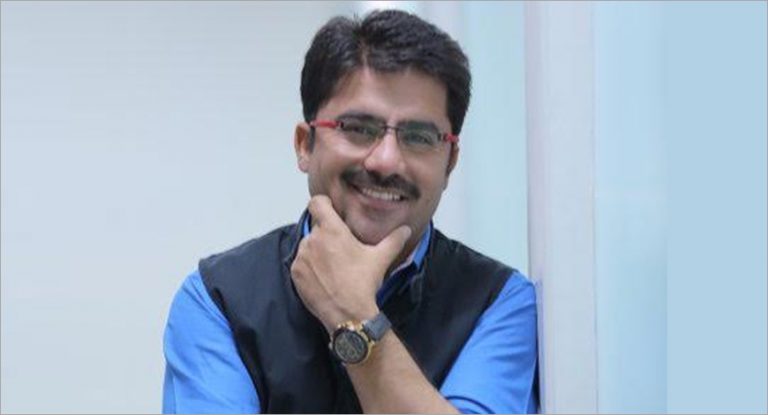
Watch: Rohit Sardana offers hilarious analogy to explain what ‘Godi Media’ means

0

There is a term that is greatly in vogue among detractors of nationalist media channels and journalists. The term ‘Godi Media’ is often used by politicians from opposition parties and their supporters to suggest that media channels and journalists that do not peddle the narrative they want them to peddle are the lapdogs of the NDA government at center and the BJP.

Rohit Sardana, who is very often accused of being part of ‘Godi Media’ was asked recently by one of his viewers what the term means. He provided a rather hilariously accurate answer to that question. Quite exasperated with the term, Rohit Sardana appears to have decided that he has had it with the usage of the term.

Rohit Sardana said, ‘Let me tell you what Godi Media is. Everyone is surely aware of lumpen elements that lurk in every neighbourhood. You will notice that they have their eyes on the girls of the area. If they like some girl, they will tell friends that she is their Bhabhi (sister-in-law). But if the girl does not reciprocate the sentiments, then they will attempt to malign her character.’

‘The situation is similar now. The political parties on whose lap we are not sitting, they will go around calling us ‘Godi Media’. Their threat is that we should sit on their laps or they will call us Godi Media. Now, what can we say to that? Only you (viewers) can deal with such people,’ he added. He said, ‘When we report something that suits them, they shower praises on us. When we report something they do not like, they say Godi Media. Their pain is similar to those lumpen elements who malign the character of girls.’

The term is widely used by pro-Congress media persons and opposition leaders against journalists and media houses who don’t toe the Congress line. Opposition party supporters have called almost every journalist that by now, from Anjana Om Kashyap to NDTV.

Not just stubble burning, Punjab tops India in depleting ground reserves level: Read the research

Every year, as winter descends on Northern India, the plummeting mercury brings with it a marked deterioration in the air quality. One of the principal reasons for this worsening of pollution levels is the practice of stubble burning observed by farmers mainly in Punjab and Haryana.

Since the last few years, the stubble burning has become an annual ritual for the farmers in Punjab and Haryana, who burn an estimated 35 million tons of crop waste from their paddy fields after harvesting as a low-cost straw-disposal practice to reduce the turnaround time between harvesting and sowing for the second (winter) crop.

Punjab the top state with the highest number of stubble burning incidents

While several northern states contribute towards the pollution caused by stubble burning, the contribution of Punjab is particularly stark. It recorded highest number of incidents of stubble burning this year among the northern states. The incidents of crop burning in Haryana and Uttar Pradesh have drastically come down but Punjab has seen a marked increase in the number of stubble burning incidents that contributed to the exacerbating pollution in the Delhi-NCR region.

Even though the Supreme Court had rapped the state governments on the growing number of stubble incidents, advising them to incentivise the farmers to give up burning the residual, the Congress government in the state has conspicuously failed in stopping the farmers from doing the same.

As per data released by the Punjab Remote Sensing Centre, the State witnessed 73,883 incidents of stubble burning between September 21 and November 14, which is the highest since 2016. In 2019, Punjab had reported 51,048 cases of stubble burning and 46,559 such incidents in 2018.

Depleting groundwater a menace of equal proportion as stubble burning

Not just stubble burning, Punjab is also racked by the menace of depleting water reserves. The groundwater resources of Punjab paints an alarming picture as agriculture experts in the state have expressed shock and worry over the diminishing water indices from the state. As a per report published in January 2020, the state will have a net groundwater availability of -14.58 billion cubic metre (BCM) within the next 25 years and even the domestic and industrial water supply will reduce by 1.22 BCM.

An eminent agriculture expert Sucha Singh Gill of IIM, Ahmedabad, said that while Punjab had a net ground water availability of only 21.58 BCM, it was consuming at much higher levels of 36 BCM. A latest government report on Punjab’s groundwater resources observes that the groundwater pumpage has increased from 149% (of naturally available recharge) in 2013 to 165% in 2018. It also holds the distinction of being the state with the maximum percentage of wells showing groundwater depletion among all states in India.

A report tabled in Rajya Sabha a couple of months ago by the Department of Water Resources, River Development and Ganga Rejuvenation stated that 79 per cent of the assessment units showed the annual groundwater extraction in Punjab was more than the assessed annual extractable groundwater resource. In 2019, it was 76 per cent.

Injudicious use of water, power subsidies exacerbated the groundwater reserves of Punjab

Agriculture experts believe that the genesis of the crisis could be attributed to the power subsidies extended by the government to the farmers that allowed them to withdraw water 24/7 without bearing any individual consequences. They contend that 95 per cent of the Punjab’s total water consumption goes to agriculture and a major part of it is wasted.

According to Sushil Gupta, Regional Director of the Central Ground Water Board, injudicious surface water irrigation policies, indiscriminate groundwater extraction due to free electricity, along with irrational irrigation and agricultural practices have led to a situation where the fresh ground water reserves in the state have depleted at an alarming rate. He has also claimed that the south-western part of Punjab is facing severe water logging issues, which is the cause for excessive wastage of water.

Punjab stares at a dystopian future as groundwater reserves shrink at an alarming rate

Given its current rate of extraction of water, its already depleting groundwater reserves and a lack of overarching government policies to address the issue of shrinking water resources, experts believe that a dystopian future lies ahead as Punjab would soon turn into a desert.

Heeding to the grievous situation in Punjab, the government had suggested the farmers in the state to diversify their crop produce and reduce their dependence on water-guzzling crops. Through crop diversification and the Direct Seeding of Rice(DSR) technique introduced this year, Punjab has made reasonable progress in saving its water reserves. However, experts believe that such efforts are far from sufficient, and only sustained, comprehensive and concerted efforts over longer durations of time would help Punjab reach sustainability level groundwater.

Mount Everest’s new official height is 8,848.86m, China and Nepal issue joint statement

0

The world’s highest mountain, Mount Everest, is officially 8,848.86 meters or 29.032 feet. Nepal and China have issued a joint statement about the update in height. China had previously measured the mountain at 8,844.43 meters, which is four meters lesser than what Nepal has calculated. As the mountain stands at the border between Nepal and China, the mountaineers climb from both sides, and it is an important natural structure for both countries.

According to reports, the experts from both nations worked together to agree on the new height. When Chinese President Xi Jinping visited Nepal last year, the two nations decided to announce the new measurement of Everest’s height together.

The difference in official height of Mount Everest

Nepalese authorities argued that the snow on the top of Mount Everest must be added to the official measurement. On the other hand, Chinese authorities said that only the rock height should be measured. In 2005, Chinese surveyors calculated the height of Mount Everest. At that time, Nepal refused to accept the new height. Till now, the official height of Mount Everest was measured according to the survey done by India in 1954.

In 2012, Nepal’s government officials said that China was pressurizing Nepal to accept the measurement according to the Chinese surveyors. Nepal instead decided to do a fresh measurement on its own. The surveyors from Nepal spent two years to train for the mission. Damodar Dhakal, a spokesman at Nepal’s department of the survey, had said in his interview to BBC in 2012, “Before this, we had never done the measurement ourselves.” He had further added that as Nepal had the required technical team to do the measurement, they had decided to go ahead with it.

Effect of climate and calamities on Everest’s height

Some geologists believed that the 2015 earthquake might have changed Everest’s height. Also, it might have caused shrinkage in the snow cap of the mountain. Climate change that resulted in ice caps to shrink could have also added up to the change in the actual height of the mountain. Some experts, on the other hand, had argued that due to the shifting of the tectonic plates, the height of Mount Everest could have increased.

The process of measuring Mount Everest

The height of mountains is based on the measurement with the mean sea level at the base. The starting point or the bottom is more crucial to the calculation that the top of the mountain. While Nepal used the Bay of Bengal as its sea level, China had used the Yellow Sea in the eastern province of Shandong as the sea-level base. Using the trigonometry formulas to calculate the height, the surveyors from both sides came up with the exact height by multiplying its base with its angles.

To complete the measurement process, someone has to be at the top of the mountain. Last year, surveyors from Nepal went up to the summit, and this year in May, Chinese surveyors went there. The Chinese team was the only team to be able to reach the top of the mountain as Nepal had suspended expeditions amid the Covid-19 pandemic.

Both China and Nepal used 12 lower peaks for their calculations to ensure precise results. China Daily quoted Jiang Tao, associate researcher at the Chinese Academy of surveying and mapping saying, “Once the surveyor’s beacon had been placed on the summit, surveyors at stations around the summit measured the distance from the six points to the beacon, which meant at least six triangles could be calculated to determine the mountain’s height.”

While Nepal used GPS for its calculations, China used its own BeiDou navigation satellite system. Dhakal said, “We processed this data using internationally accepted methodology to determine the height of Mount Everest.”

Grooming Jihad: Saiji Abbas told widow that he was Arjun, raped her and performed nikaah, forced her to abort pregnancy twice

0

In a case of grooming jihad that took place in Lucknow, a woman from Madiyagaon has filed a complaint against one Saiji Abbas, a resident of Vazirganj, and his family for alleged molestation after holding hostage, assault, torture, exploitation and abortion. The woman has alleged that after her husband died, Saiji Abbas befriended her pretending to be Arjun. He later said that he was Manoj.

Abbas raped the victim who was a widow

According to Amar Ujala, the victim is a native of Sitapur. She lives with her minor son in a rented accommodation and works as a domestic help. In 2014, Abbas obtained her phone number from somewhere and contacted her. He used to stalk the victim on his bike and would ask her to meet him. One day he allegedly took the victim to his friend’s house and raped her. When the victim started crying, he applied sindoor on her head and promised to live with her forever.

The accused began to visit the victim’s house frequently and the victim’s son started calling him father. She kept insisting on marriage. The victim came to know that he was a Muslim when few months later, Abbas came to her house with a Maulvi and some Burqa-clad women. When the victim refused to perform Nikaah with him, the women in his family threatened to defame her. The victim had to perform nikaah. However, the nikaahnama was not signed. After nikaah, Abbas started physically assaulting her for trivial reasons.

He forced her to abort her pregnancy twice

The victim alleged she conceived twice but the accused forced her to undergo abortion. His sisters used to stay with the victim following her abortions. A couple months ago, Abbas’ mother told the victim that she would get her son’s second marriage performed and asked her not to call again. The victim then contacted police and filed an FIR against Abbas, his father, his sisters and brother-in-law. The victim has alleged that the accused exploited her for six years and performed nikaah with someone else.

Victim doubted him when she heard ‘salam’ on phone

The victim said that whenever the accused used to make a call, the person on the other side would often greet him with ‘salam’. This used to confuse her. When she asked Abbas as to why he was greeted with a ‘salam’ and whether he was a Muslim, he would deny. He used to say that many people visit his workplace and asked her not to notice the his phone calls.

From ‘protestors’ harassing commoners to Congress, AAP leaders being chased away with chants of ‘Modi’: Scenes from ‘farmers’ Bharat bandh’

On Tuesday, farm unions, with the support of a dozen political parties, called for a nationwide strike (Bharat bandh) as a mark of ‘protest’ against the historic farm laws enacted by the Centre. With the supply of essential commodities taking a hit and aggravating the life of the common men, ‘goons’ under the garb of peaceful protestors, began harassing and intimidating people on the streets.

The miscreants, who were supposedly fighting for farmer rights, were seen forcibly shutting down shops and threatening small business owners. While the ‘organic’ farmer agitation had been causing inconvenience to the public, their problems increased on the day of Bharat bandh.

ANI journalist Mukesh Singh shared a video from Muzaffarpur in Bihar, where anti-farm law ‘protestors’ stopped the car of a newly-wed bridegroom and began bullying him. With the mob surrounding the car from all sides and refusing to clear the path, the car remain stuck in one place. The miscreants began teasing the bridegroom with lewd songs and gestures while he helplessly waited in his car. Despite honking for over a minute, they refused to move and began shamelessly dancing and mocking him.

In another video, an aged woman narrated how protestors forced her to shut shop in the name of Bharat Bandh. “They ordered us to close our shops and take care of the farmers. If poor people like us don’t earn, then how will we survive?” the woman asked.

In a video shared by BJP leader Priti Gandhi, thugs took the streets of Mumbai to shut down small shops, which have been operating on ‘Bharat Bandh’. “Aree Bhai baand karo (Close your shop now)”, a man threatened. It is pertinent to remember that Congress, which is a part of the Maharashtra government, has extender their full-support to the agitation.

Priti Gandhi stated, “See for yourself the appaling brazenness!! In Mumbai, Maharashtra, where the Congress is in power, their goons are threatening people to shut shops and forcibly observe the bandh. It is obvious that this Bharat Bandh is politically motivated.”

Public refuses to bow down to the intimidation of goons

According to BJP spokesperson Tajinder Pal Singh Bagga, when party workers from the Congress and Aam Aadmi party went to Khyala village in Tilak Nagar, they were up for a surprise. While they had planned to shut down the market, they were chased away by the public with loud chants of ‘Modi Modi’.

Similarly, when Congress tried to shut down the shop of a woman in Maharashtra, they were faced with threats of police action. The woman stood her ground and made it clear that she would not close her shop under any circumstances.

“My shop won’t be closed. If you try to show your hooliganism to me, then, remember your faces are captured in the camera.” After being caught red-handed, one of the goons apologised to her with folded hands. When they began to go away, she called them back. However, they seemed to scared to even go back and interact with the woman.

Common men suffers as water tankers stop delivery

On Monday, ABP News also reported that owing to farm agitation, people are deprived of potable drinking water near Tikri border. The Delhiites, who would depend on free water supply from tankers, had to suffer as tanker services were disrupted due to intensified protests and border closure.

As such, people in the area are now forced to buy water amidst economic distress. It is important to mention that the tap water is non-drinkable and cannot be used for cooking. Despite the economic hardship, the local residents are now forced to spend ₹20-₹30 per day on drinking water.

Providing information and photographs of vital installations to ISI amounts to waging war against the country: J-K HC

0

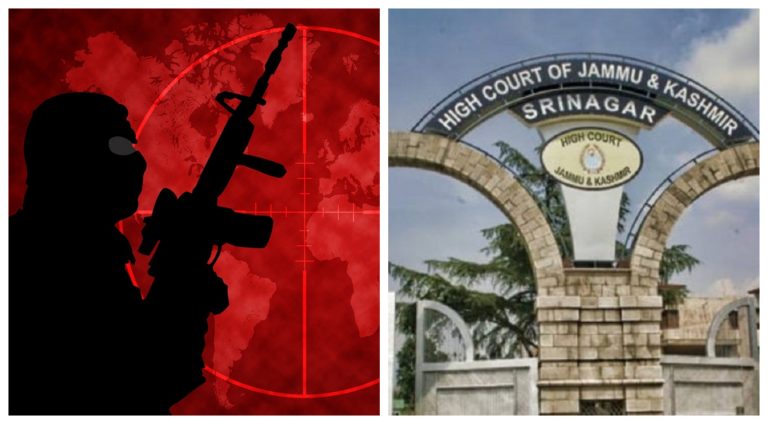
While hearing a bail application, the Jammu and Kashmir High Court observed that the “Union Territory of J&K is facing an onslaught of terrorist activities from the neighbouring country, which is orchestrated by ISI of Pakistan”. According to Live Law, the High Court denied bail to the person named Pankaj Sharma who is accused of consorting with Pakistan’s Intelligence Agency ISI and sharing the pictures of vital installations and movements of troops with them.

In the order dated December 2, 2020, a Bench of Justice Sanjay Dhar noted, “Providing vital information, to my mind, is nothing but waging war against the country and it also falls squarely within the definition of an offence punishable under of Enemy Agents Ordinance”. As per the order, the petitioner was alleged to have passed on photographs of Samba City, Bari Brahmana, Ujh Bridge, Vijaypur Market, Bahi Nallah, Bari Brahmana Railway Station, Ghagwal Bridge, Pagwal Nallah. He also allegedly sent pictures of trains boarded with army personnel at Railway Station, Bari Brahmana before the Balakote strike.

Petitioner sent pictures of vital instalments and received money

It was reportedly disclosed by the petitioner during the investigation that he was introduced by his neighbour to one person claiming to be ‘Captain Jyoti Sharma’ on Facebook. Captain Jyoti Sharma told the petitioner that she was on a peace mission in Sudan. She introduced him to her senior ‘Major Amit Sharma’ on Facebook who offered a part-time job to petitioner of sending pictures of vital installations and developmental projects in India. He was offered money for this. The petitioner reportedly sent pictures of Tagore Bridge at National Highway, AIIMS construction site and information with regard to the distance of said places from Jammu Airport. An amount of Rs 6,000 was transferred in petitioner’s SBI account as the first instalment. The petitioner kept on sending pictures in exchange for money.

The petitioner’s counsel had said that merely taking photographs of some installations and sending it to some persons in Sudan did not amount to waging war against the government of India. He said that even if it was assumed that the petitioner was sending photographs to persons linked with the ISI, no offence was made out against him as all the images were available on the internet.

However, the court noted that though the petitioner was initially unaware that the persons he kept sending messages to belonged to the ISI, he did come to know it later, and still kept sending them the images and information. He was also deleting the images from his own devices fearing detection. The Court also noted that not just the petitioner, but his mother and a friend named Ashwini Kumar were also receiving money for the photographs in their bank accounts.

Bail plea rejected

The court noted in the order that the charge sheet filed in the case, the documents attached, bank statements and the statements of witnesses prima facie show that the accusations against the petitioner were true. The co-accused in the case who belong to Dubai, Abu Dhabi and Maharashtra are still to be arrested. The court rejected the bail plea of the petitioner saying that considering petitioner’s connections with agents in Dubai and Abu Dhabi, the possibility of him fleeing could not be ruled out.

Labour And Dravidianism: History of Buckingham and Carnatic Mills Strike, the first major industrial unrest in South India

One of the major reasons for the success of the Dravidian movement is its co-option of the working class. Like the Shiv Sena in the 1960s and the 1970s, the Dravidian movement successfully gained popularity among the working classes. This largely drew popular support away from the Communists. The Communist strategy of building up a class struggle was overwhelmed by the Dravidian mobilization along caste angles.

Since the early leaders of the Dravidian movement were agrarian landlords, they were insufficiently cognizant of the mobilization potential of industrial unions. However, the subsequent generation of middle-class Mudaliars, Naidus and Pillais that made up the DMK were fully able to capitalize on the anti-Brahmin sentiment to co-opt the working class. It also helped their cause that several Communists in the 60s were drawn from middle-class Brahmin backgrounds.

Let us look back at the very first instance of industrial unrest in Madras Presidency and the dramatis personae.

The Buckingham and Carnatic Mills

The 19th Century was a period of dramatic de-industrialization and de-urbanization. Native weaving, cloth production industries were completely destroyed. 

By 1878, the textile mills of Manchester could no longer keep up with the burgeoning demand for cloth. To take advantage of vastly cheap labour and the seemingly endless supply of raw material, the Madras business group Ms Binny &Co, started the Buckingham Mills. Given the extraction of tax revenue and export of raw material over 100 years left the English businessmen with a large capital surplus. The over-investment in railways in India had created high capacities in freight haul capability. Being situated near one of the largest ports of the British Empire, Madras was an ideal location for the textile industry;

The Carnatic Mills, started in 1881, were taken over by Binny in 1920.

Madras Labour Union

Mr B P Wadia, a Theosophist and collaborator of Annie Besant, and Thiru Vi Kalyanasundaram Mudaliar, a Congressman, jointly founded the Madras Labour Union in 1918. He had earlier founded the Madras Textile Workers Union in 1909.

Labour Strike

In 1921, the workers of the Buckingham and Carnatic Mills struck work, demanding a pay raise. This was the first in a series of strikes that continued for 6 months.

The Indian National Congress was firmly in favour of the workers in this strike. The Justice Party leaders initially supported the strike.

However, as the days passed and the strike progressed, the striking workers began to be split along caste lines.

The management had secured the support of Christians among the workers due to the affinity they had with the British. Soon, the Christians were able to convince the Scheduled Caste workers to not participate in the strike and negotiate independently with the management, instead. Interestingly, at the same time, a prominent Chettiar business man Somasundaram Chettiar and his son Sathappa Chettiar had started the Kaleeswarar Cotton Mills in Coimbatore in 1907. This was among the first challenges to the British owned Buckingham and Carnatic Mills. They were promoted by the Zamindar of Devakottai, Arunachalam Chettiar, whose ancestor had acquired the zamindari in lieu of loans advanced to the Sethupathy of Ramnad.

The then Chief Minister, the Raja of Panagal Sir Ramarayaningar and O. Thanikachalam Chettiar, criticized the behaviour of the Dalit workers in refusing to join the strike.

In June 1921, the caste Hindu workers went to remonstrate with the Scheduled Caste workers, who lived in a separate colony at Pulianthope, Madras. The argument broke out into a clash in which many Dalit homes were burnt. The Party mouthpiece, Justice, blamed the riots on the Government’s pampering of the Dalit workers, while Dalit Justice Party Leader, M C Rajah, placed blame on the striking workers and accused the other leaders of shedding crocodile tears.

Eventually, the Home Ministry, which was under the Governor in the dyarchy system of Madras Presidency, decided to subdue the strike through harsh measures. Tragedy struck on 29 August 1921, when police fired upon workers and killed six men.

The leader, Sir Natesa Mudaliar, stepped in and negotiated a mutual truce. Sir P. Theagaroya Chettiar, the Justice Party leader, recommended that the Scheduled Caste leaders by re-settled outside Madras City and advised the remaining workers to return to work.

However, most of the striking workers were not re-admitted by the management.

Epilogue

Within a few years of this incident, the tallest Scheduled Caste leader of the time, MC Rajah, left the Justice Party. Even though he and Rettaimalai Srinivasan represented Depressed Classes later in the 1930 and 1931 Round Table Conferences at London, they were not able to build a mass movement for Dalits.

The labour movement underwent a long period of meandering before it was consolidated in the 1960s.

Dalit RTI activist ‘accidentally’ shot dead by minor girl, family alleges his associate Kasim killed him

A Dalit RTI activist, Pankaj Lamba, who played a vital role in unearthing the multi-crore SC/ST scholarship distribution scam in Uttarakhand in 2013, was accidentally shot dead by his own pistol, allegedly by a minor girl. However, the family has alleged that his associates—Kasim and other unknown people—were behind killing the activist. 

Lamba’s associates claim he was accidentally shot dead by a teenage girl

According to the reports, Lamba was at a party at the girl’s residence on Friday night, where he gave his pistol to the teenager to have a look at. The activist had reportedly assumed his gun to be empty but a bullet was left in the chamber which got hit on his neck when the girl fired. He was rushed to a nearby hospital where the doctors declared him brought dead. 

The police say that they are investigating the assertions made by the associates who had accompanied Lamba. They had reportedly told the police that the minor girl, who lived along with her three other siblings, had pulled the trigger that killed Lamba. The reports have also claimed that the minor girl had admitted to the firing. 

RTI activist’s family accuse his associate Kasim and others

The activist’s family, on the other hand, has refuted the associates’ account, stating that Lamba’s death was not an accident. They have alleged that the RTI activist was murdered and it was made to look like an accident. An FIR was filed by the police on Sunday after the family alleged foul play in Lamba’s death. 

The slain RTI activist’s wife, Jyoti, rubbished the claims of accidental firing and mentioned in her complaint that her husband was home when Kasim and another person came around at 11:30 pm. Jyoti added that the duo insisted Lamba to accompany them for a site inspection where construction material was being purloined. 

Somewhere between 2 AM to 3 AM, a person who identified himself as Ajay Maurya informed her that her husband has taken a bullet injury. She has alleged that Kasim and others conspired to bump off her husband.

Lamba’s sister also echoed similar sentiments, alleging that her brother was murdered and an attempt was made to malign his image. “The police’s claim that he was killed by an accidental fire by a teenage girl and recovery of liquor bottles is an attempt to defame him. I believe he was killed at some other place and his body was placed at another spot,” she said. 

Police investigating all possible angles into Lamba’s death

After the family filed an FIR in the case, the police are now investigating all the possible angles to ascertain if Lamba had died of an accidental shot by a minor girl or he was murdered through a well-thought-out conspiracy by his associates and others involved in the case.