Home Blog Page 5290

China has blocked the official website of Narendra Modi using the Great Firewall, but has allowed Rahul Gandhi’s website

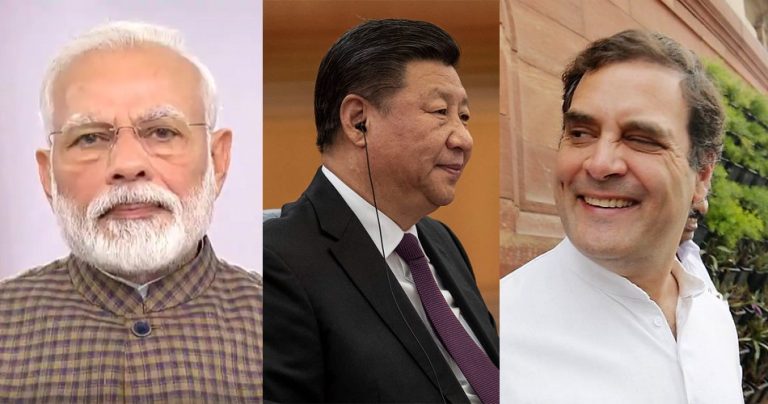
China appears to have blocked the official website of Prime Minister Narendra Modi even though it allows the official website of Congress leader Rahul Gandhi to be accessed in all its major provinces.

China is known to heavily regulate and censor domestic internet usage and actively blocks any websites or links that are seen as going against the narrative of the communist party or perceived interest of the nation. The combination of all such regulatory or technological censorship is often termed The Great Firewall of China.

It is one of the most successful internet censorship programs in the world, which restricts the access to internet sites in the People’s Republic of China. A large number of foreign websites, predominantly media and social media portals, and search engines, are blocked in China using various tools and protocols used by the censorship program run by the Communist Party government.

There are publicly available tools on the internet that tells if a particular website or URL is blocked in China or not. They are popularly known as the great Chinese firewall tests. Amid the increased tension between India and China following the aggression by China at the Galwan Valley in Ladakh, we conducted this test on the official websites of Narendra Modi and Rahul Gandhi, and found that while Rahul Gandhi’s website was ‘passed’ by the Great Firewall of China, Narendra Modi’s website was shown blocked.

This can be confirmed by the website chinafirewalltest, a tool that informs whether a website is blocked by China or not. While testing the narendramodi.in site, it informs that “No servers were able to reach your site. This means that your site is most likely NOT accessible from within mainland China.”

China firewall test for Narendra Modi’s website

But when the URL for Rahul Gandhi’s website, rahulgandhi.in is entered into the field to test, it is shown as accessible from all servers in China. It may be noted that both websites have .in as top level domains.

China firewall test for Rahul Gandhi’s website

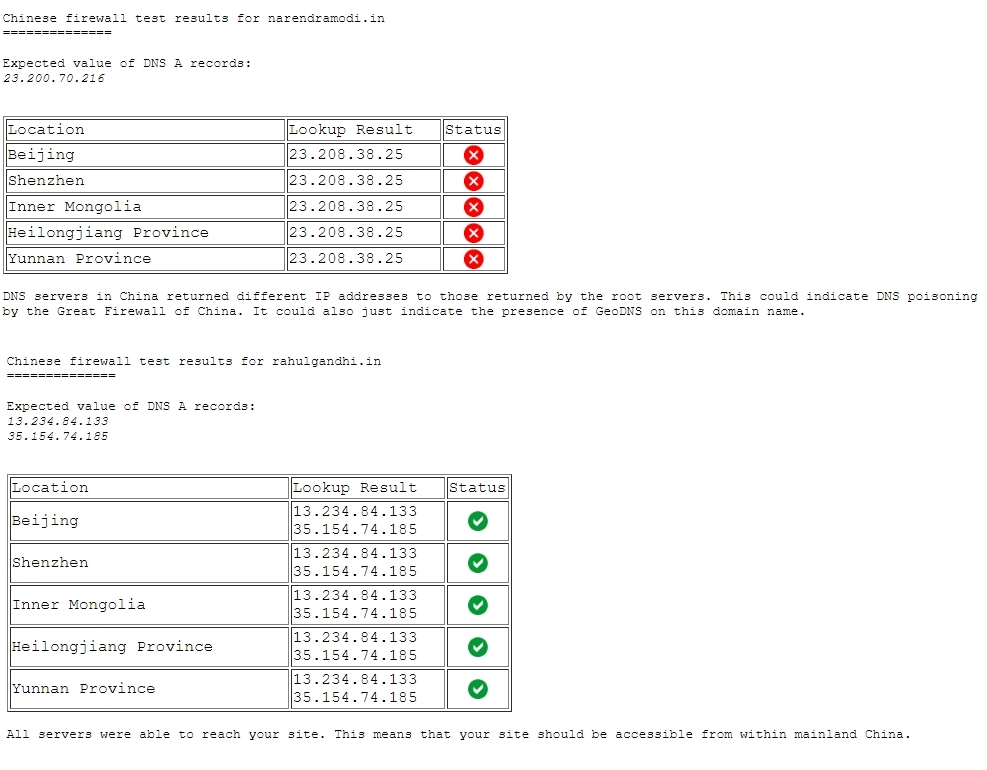
Another online tool used to check Chinese censorship on internet sites also returns the same result. The Chinese Firewall Test tool available on the viewdns.info website shows that the narendramodi.in can’t be accessed from China. “This could indicate DNS poisoning by the Great Firewall of China”, the tool informs. DNS poisoning a common method used by the Chinese government to block access to websites.

Test results in the firewall check took on viewdns

When the same test is repeated for Rahul Gandhi’s website, this tool also informs that all servers were able to reach the site, and this means that the site should be accessible from within mainland China.

These two popular tools confirm that while the personal website of Indian PM Narendra Modi has been blocked by China using its censorship tool, no such action has been taken against the site of Lok Sabha MP Rahul Gandhi.

The Great Firewall of China targets not only foreign websites, but also Chinese sites and platforms that are allowed to operate in the country. Contents and keywords considered unacceptable by the govt are routinely blocked from websites and social media platforms. For example, all references to the Tiananmen Square massacre are effectively blocked and removed by the censorship tools.

And these tools have now seemed to have blocked India’s versions on the LAC conflict too. According to reports, Indian embassy officials in Beijing have informed that PM Modi’s speech to chief ministers on June 18, and the comments by the spokesperson of the External Affairs Ministry have been deleted from accounts of the Embassy on Chinese social media platforms, including Weibo. Weibo is a microblogging platform in China similar to Twitter, which is banned in the country. The content was removed from the embassy’s account on WeChat also.

It is noteworthy that the Congress party maintains a close association with the ruling Communist Party in China. In in 2008, the Congress party and the Communist Party of China (CPC) had signed a deal in Beijing for exchanging high-level information and co-operation between them. The memorandum of understanding (MoU) also provided the two parties with the “opportunity to consult each other on important bilateral, regional and international developments”.

Interestingly, the MoU was signed by the then Congress general secretary Rahul Gandhi and on the Chinese side, it was signed by none other than Xi Jinping himself, who was then the Chinese vice-president and standing committee member of the CPC’s politburo. The MoU was signed in the presence of his mother and party president Sonia Gandhi.

Moreover, during the Indo-China standoff on the Doklam issue, Rahul Gandhi had met Chinese officials multiple times. His meeting with Chinese officials during his Kailash Mansarovar visit in 2018 was kept secret, but later he had revealed it accidentally during a speech in 2019.

Government of Nepal urges India and China to resolve border disputes through ‘peaceful means’

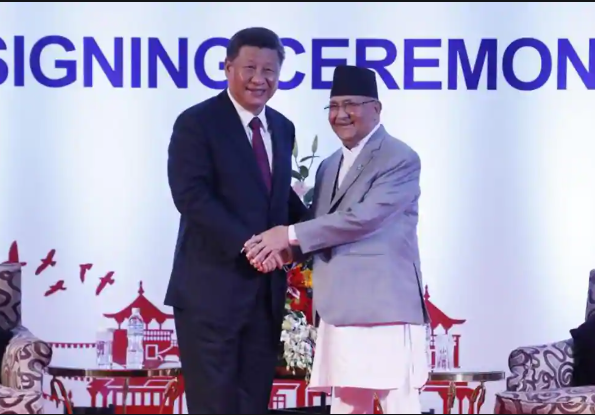
Amidst the border standoff and escalated tension between India and China, the Foreign Ministry of Nepal had issued a statement on Saturday, urging both the countries to resolve disputes bilaterally through peaceful means. The landlocked country had reiterated that it stood firmly for regional and world peace. Referring to both India and China as ‘friendly neighbours,’ Nepal expressed confidence that the dispute would be resolved in the spirit of good neighbourliness.

The statement by the Foreign Ministry also emphasised on the need to mitigate mutual differences between the two nuclear power nations via peaceful means for the sake of bilateral, regional, and world peace and stability. Earlier, Nepal had amended the country’s map to include Indian areas of Limpiyadhura, Lipulekh, and Kalapani in the constitution of the country, thus leading to a conflict between the two countries

India-China Standoff

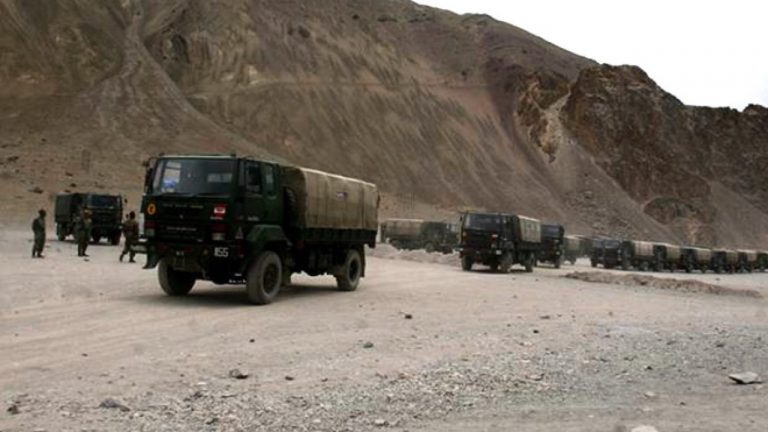
The current stand-off between India and China began on May 5-6 over China’s incursions into the India side at Pangong Tso in Ladakh. The movement of troops and heavy machinery along and across the LAC has been objected to by India. As per the ANI report, Indian forces have also been airlifted from other high altitude areas to the Eastern Ladakh sector. On Monday night, 20 Indian soldiers, including a Colonel were killed when Chinese troops had attacked with stones, batons, and barbed wires. In fierce combat that took place on extremely hostile terrain, 20 Indian soldiers had lost their lives to injuries and exposure. China is believed to have suffered 43 casualties but the communist state, as usual, has been obscure about information.

China’s claims over LAC untenable and unacceptable, contradicts earlier stand, says MEA. Read full statement

The Ministry of External Affairs (MEA) today reiterated that the attempts made by the Chinese side to now advance are exaggerated and untenable claims with regard to LAC there aren’t acceptable.

In a press briefing, the MEA said that the Indian troops are familiar with the alignment of LAC in all sectors of the border areas of India and China including the Galwan valley in Ladakh. The MEA was reacting to Chinese spokesperson’s June 19 statement on the events in the Galwan Valley area. The MEA further clarified that the Indian troops have never undertaken any actions across the LAC and all the infrastructure built by India is on the Indian side of LAC only.

Chinese Foreign Ministry spokesperson Lijian Zhao had earlier today tweeted and claimed that in May, the Indian troops had trespassed the LAC.

The MEA, however, has refuted the claims.

The MEA stated that it was the Chinese side which had hindered India’s patrolling pattern in the area since May this year. This resulted in a face-off which was addressed by the ground commanders as per the provisions of the bilateral agreements and protocols.

The MEA again reiterated that India does not accept the contention that India was unilaterally changing the status quo. “On the contrary, we were maintaining it,” MEA said.

The full text of the MEA statement is below:

“The position with regard to the Galwan Valley area has been historically clear. Attempts by the Chinese side to now advance exaggerated and untenable claims with regard to Line of Actual Control there are not acceptable. They are not in accordance with China’s own position in the past.

Indian troops are fully familiar with the alignment of the LAC in all sectors of the India-China border areas, including in the Galwan Valley. They abide by it scrupulously here, as they do elsewhere. The Indian side has never undertaken any actions across the LAC. In fact, they have been patrolling this area for a long time without any incident. All infrastructure built by the Indian side is naturally on its own side of the LAC.

Since early May 2020, the Chinese side has been hindering India’s normal, traditional patrolling pattern in this area. This had resulted in a face-off which was addressed by the ground commanders as per the provisions of the bilateral agreements and protocols. We do not accept the contention that India was unilaterally changing the status quo. On the contrary, we were maintaining it.

Subsequently in mid-May, the Chinese side attempted to transgress the LAC in other areas of the Western Sector of the India-China border areas. These attempts were invariably met with an appropriate response from us. Thereafter, the two sides were engaged in discussions through established diplomatic and military channels to address the situation arising out of Chinese activities on the LAC.

The Senior Commanders met on 6 June 2020 and agreed on a process for de-escalation and disengagement along the LAC that involved reciprocal actions. Both sides had agreed to respect and abide by the LAC and not undertake any activity to alter the status quo. However, the Chinese side departed from these understandings in respect of the LAC in the Galwan Valley area and sought to erect structures just across the LAC. When this attempt was foiled, Chinese troops took violent actions on 15 June 2020 that directly resulted in casualties.

External Affairs Minister (EAM) and the Foreign Minister of China, H.E. Mr. Wang Yi, had a conversation on 17 June 2020 wherein EAM conveyed our protest in the strongest terms on the events leading up to and on the violent face-off on 15 June 2020. He firmly rejected the unfounded allegations made by the Chinese side and the misrepresentation of the understandings reached between the Senior Commanders. He also underlined that it was for China to reassess its actions and take corrective steps.

The two Ministers also agreed that the overall situation would be handled in a responsible manner, and that both sides would implement the disengagement understanding of 6 June sincerely. The two sides are in regular touch and early meetings of military and diplomatic mechanisms are currently being discussed.

We expect that the Chinese side will sincerely follow the understanding reached between the Foreign Ministers to ensure peace and tranquility in the border areas, which is so essential for the overall development of our bilateral relations.”

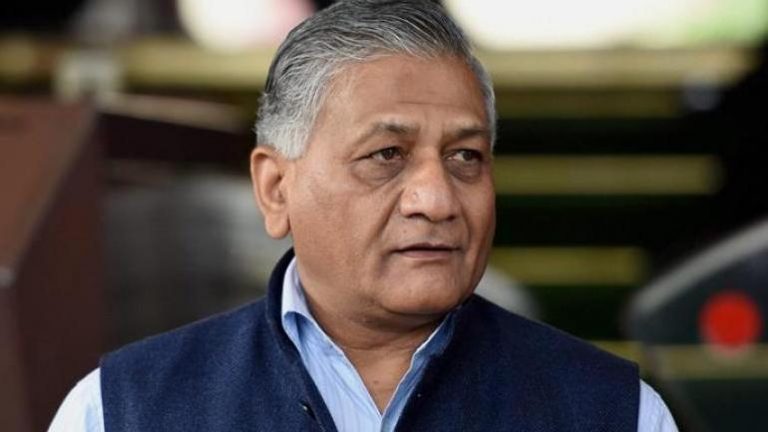
‘If 20 Indian soldiers were martyred, China lost at least double that number’: Union Minister General VK Singh

Union Minister General VK Singh made a significant statement regarding the India-China conflict in Ladakh. During an intrview with News24, he said that Indian soldiers had eliminated over 40 Chinese soldiers during the recent conflict where 20 Army men were martyred. The Retired General said that India had suffered the loss of 20 soldiers but at the same time, China had suffered at least more than double the number.

The Union Minister of State for Road Transport and Highways also said that India had also captured some soldiers of the People’s Liberation Army (PLA) of China. And they were returned later on. He said that such things are not spoken of because they do not mean anything.

General VK Singh also said that some parts of the Galwan Valley have been under the control of China since 1962. Therefore, they continue to occupy those position even now. But he emphasised that parts of the Galwan Valley that are under the control of India are still in our control.

The specific number that General VK Singh has provided of the number of deceased in the PLA have not yet been stated in public by the Ministry of External Affairs or others in the government. However, the Prime Minister in his address to the nation has asserted that the martyred soldiers went down fighting and official statement by the Indian Army had asserted that there had been casualties on the Chinese side too.

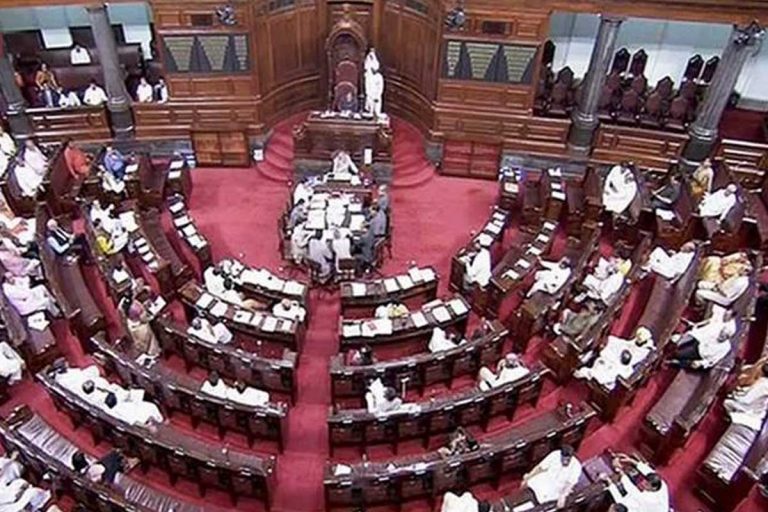
NDA gains a crucial ground in the upper house after winning majority of the seats in the Rajya Sabha elections

The voting for the Rajya Sabha elections was held on 19 June 2020 in 19 seats in 8 states. BJP leader Jyotiraditya Scindia, Digvijay Singh, and Shibu Soren are some of the personalities who won the race for the Rajya Sabha seats. A high-voltage drama was seen in Manipur and Gujarat at the same time that led to the delay in counting of votes. BJP succeeded in bagging three seats in Gujarat while Congress won only one seat.

The EC had announced Rajya Sabha elections for 61 seats, 55 of which were scheduled to be held on March 26 but delayed due to the pandemic. 42 of the these had been won unopposed, and the elections for the remaining 19 seats took place this week after relaxations in lockdown norms.

Of the 19 seats that went to poll, BJP won 8 seats, Congress and YSR Congress won 4 each and the rest 3 went to others. The BJP has won two seats in Madhya Pradesh, one each in Rajasthan, Jharkhand, Manipur while Congress succeeded in gaining two seats in Rajasthan and one in Madhya Pradesh.

In the total 61 seats, BJP won 17, Congress won 9, JDU 3, BJD and the TMC 4 each, AIADMK and DMK 3 each, NCP, RJD and the TRS 2 each, and others won the rest.

The Congress in Rajasthan won two out of three Rajya Sabha seats. KC Venugopal and Neeraj Dangi were declared elected, BJP’s Rajendra Gehlot won comfortably while Onkar Singh Lakhawat couldn’t get to a Rajya Sabha seat. With this, the total number of Rajya Sabha MPs from BJP is 7 now and Congress has increased its strength to 3 in Rajasthan.

The National Democratic Alliance led by BJP had 90 members in the Upper house of Parliament, and now it has increased to 101 in the 245 members upper house. The majority mark in the upper house in 123. For the first time, the number of NDA members have crossed 100 in the upper house.

Now the Bharatiya Janata Party alone has 86 seats in the house while the Congress has 41 seats. As the NDA govt has received from other parties like AIADMK, BJD, YSR Congress in several bills in Rajya Sabha, the govt should be in a more comfortable position in the upper to get legislations passed.

The voting for the Rajya Sabha seats was held amid all the precautionary measures in light of the Coronavirus pandemic. Two legislators from Rajasthan and Madhya Pradesh respectively went to vote in PPE gear. Madhya Pradesh Congress MLA Kunal Chaudhary came in a PPE suit to vote as he has tested positive for Coronavirus. In Rajasthan, Congress MLA Wajib Ali came wearing PPE kit as he had returned to India a day before and is under quarantine as per guidelines.

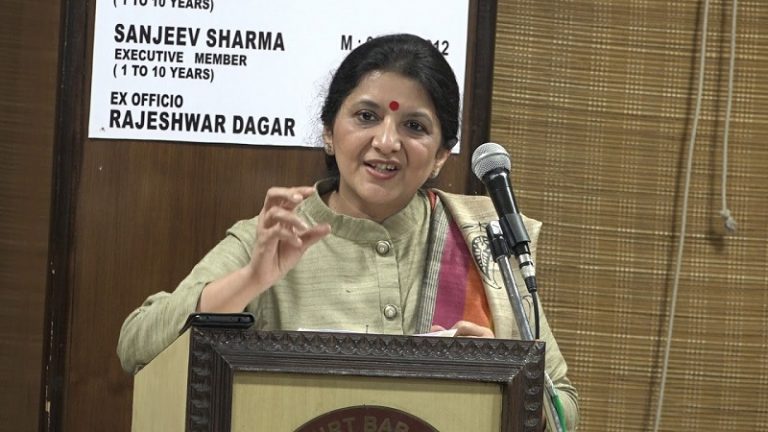
Plans for Delhi Riots began in December, four stages preceded the communal violence in February: SC Advocate Monika Arora in conversation with OpIndia

The Delhi Police has filed several charge-sheets in connection with the riots that occurred in Delhi in February over the enactment of the Citizenship Amendment Act. The riots caused immense damage to life and property and during the investigation, a deep rooted conspiracy has emerged to disrupt communal harmony in the country. OpIndia recently had a conversation with Supreme Court advocate Monika Arora in connection with the matter.

Monika Arora told us that the riots occurred in February, but the planning for it has started in December 2019 itself. She told us that it was a well planned conspiracy. She said that there was nothing anti-Muslim in the law but fake news was spread about it and hate speeches were delivered and people were urged to take to the streets.

According to Monika Arora, the Delhi riots were a consequences of the hatred that was incited from December to February. She hinted towards Shaheen Bagh and the inflammatory language children could be seen using in some of the videos that went viral on social media. The Supreme Court advocate told us that the riots were a consequence of four distinct phases.

In the first stage, right after the passage of the CAA, hate speeches were delivered and university students after teaming up with outsiders hurled petrol bombs, vandalised property, and engaged in acts of arson. There clashed with the Police but later, they went to Courts and claimed that the Police was attacking them.

In the second stage, it was decided that they would occupy some important road in an area where Hindus and Muslims are roughly equal in number. Tents were put up, microphones were installed, and the constitution and the Tricolour were placed as well. However, the intention was always to incite communal violence. She also told us that anti-Hindu and anti-India slogans were also raised there.

In the third stage, mobs started gathering in large numbers in markets. On particular mob comprised of women in Burkhas raised slogans of ‘Azaadi’ in front of a Shiv Mandir. The Police were injured as well but due to the presence of a huge number of women, the Police could not do anything.

In the fourth and final stage, a road in Jafrabad was blocked by a mob of women where Safoora Zargar was present. Another road in Chand Bagh was also blocked.

Advocate Monika Arora was also not impressed with people using the pregnancy of Safoora Zargar to score victimhood points. She recalled the incident of Yamuna Vihar’s Priti Garg who was forced to throw her children off balcony in order to save their lives. The children were caught by their neighbours. Arora asked whether they were not children, whether Priti Garg was not a mother.

Th advocate said, “I am not hopeful but confident that it will be the last experiment of the ‘Dharne se dange tak’ model. Shaheen Bagh 2, Khilafat 2, Jinnah Wali Azadi, no one will be able to raise such slogans and hatch such conspiracies. No Priti Garg will have to throw her children from rooftops again. No Vinod Kashyap will be stoned to death again. We should make an effort to ensure that such an India rises before us. This is our effort as well as yours.”

Amazon, Bigbasket to start online liquor delivery in West Bengal

The e-commerce giant Amazon has managed to secure clearance to deliver alcohol in the state of West Bengal. According to reports, West Bengal State Beverages Corporation, which is responsible to carry out online retail of liquor trade in the state, said Amazon and a few other companies are eligible for registration with authorities.

In a notice issued on Friday, the West Bengal authorities informed that Alibaba-backed grocery venture BigBasket has also won approval to deliver alcohol in the state.

Barely a month after it entered the food delivery market in India, Amazon has been invited by the West Bengal State Beverages Corporation to sign a memorandum of understanding with the state.

Last month, West Bengal had invited companies to express interest for “handling electronic ordering, purchase, sale and home delivery of alcoholic liquors from licensed retail outlets” to eligible legal-age consumers in the state.

According to IWSR Drinks Market Analysis, Amazon’s is making inroads into West Bengal, which has a market that is worth $27.2 billion.

Earlier in March, the government had restricted the sale of alcohol as it had announced a nationwide lockdown due to the coronavirus pandemic. Later, the relaxation was announced in May, after which people queued up at liquor stores to buy alchohol leading to violation of social distancing norms.

Since then, the liquor industry has been lobbying with many states to allow online deliveries. Every state has its own sets of alcohol sales policy.

India’s spirit sector – which includes whiskey, brandy, rum and vodka, is reportedly estimated to expand 25% and touch $41 billion by 2022, according to Euromonitor International.

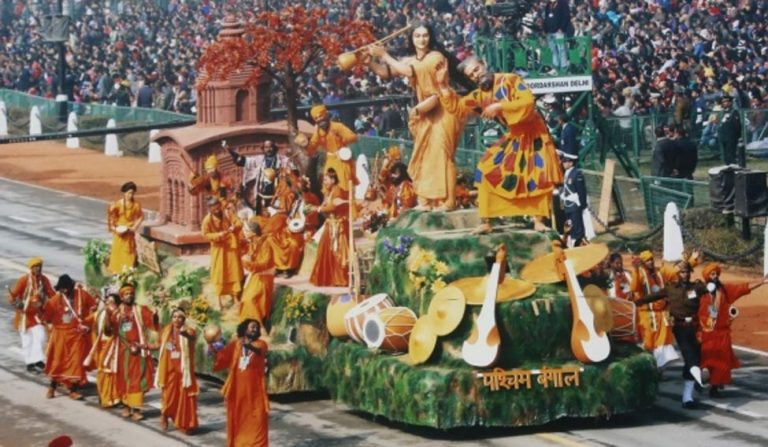
West Bengal- The Israel for Hindu Bengalis? Its time to redeem the pledge on the day Bengal was partitioned

“As I mentioned before, exposure to true information does not matter anymore. A person who is demoralised is unable to assess true information. The facts tell him nothing, even if I shower him with information, with authentic proof, with documents and pictures….he will refuse to believe it… That’s the tragedy of the situation of demoralisation.”
–Yuri Bezmenov [1983]

Twins of Destiny

Providence seem to have played out an uncannily similar script for two disparate communities, namely the Jews and the Bengali Hindus, divided by geography but united in tragedy. Both communities boast of illustrious citizens, great thinkers, scientists, philosophers and poets, great minds who made a difference to the world. Both have also suffered a fair share of genocide and ethnic cleansing. While the Jews have suffered ages of religious persecution culminating in the “Final Solution“ by the Nazi, the Bengali Hindus have endured the likes of Great Calcutta Killing, Noakhali Genocide and the 1971 pogrom, orchestrated by genocidal Islamists like Hussain Sohrawardy, Yahya Khan and others of their ilk.

Yet there is a third similarity in the terms of the concept of “The Promised Land”, bestowed upon Abraham and his descendants, which if extrapolated to modern times would translate to “Homeland For the Jewish People”. The concept of the Promised Land is the central tenet of Zionism whose discourse fortify the legitimacy of the state of Israel.

The promised land and a forgotten messiah

On 20 June 1947, legislators from predominantly Hindu western part of Bengal at the Bengal Legislative Assembly voted against the inclusion of western Bengal in Pakistan and for the Partition of Bengal to create West Bengal, the “Promised Land” for the Bengali Hindus and include it in the Indian Union marking the culmination of the Hindu Homeland movement at the backdrop of gruesome genocide during the Partition.

The Messiah was none other than Dr Shyama Prasad Mukherjee, whose superhuman efforts in the face of insurmountable odd, ensured that India retained a third of Bengal, a sanctuary for Bengali Hindus to live with dignity and honor, safe from the unspeakable atrocities of the Muslim league, corroborated by the terrible fate suffered by their co-religionists unfortunate enough to be trapped in the Eastern part of Pakistan. 20th June, the birthday of West Bengal, is fondly remembered as a symbol of victory of Hindu Bengal against Islamist Tyranny. It is proudly remembered that “while Jinnah divided India, Shyama divided Pakistan” – a ‘moth-eaten Pakistan’ by Jinnah’s own admission.

A curious case of selective amnesia

The similarity between the Hindu Bengalis and the Jews ends right here. The Jews have remembered and documented every single atrocity committed on their people in the form of literature, art, sculpture and movies since they have realized that those who forget history, are condemned to repeat it. The Holocaust have been immortalised in Oscar winning ‘Schindler’s List’, scripted by the Jewish Filmmaker Steven Spielberg. The Jews have fought and kept the surrounding malevolent Arabs at bay, with the resolve ‘Next Year in Jerusalem’.

The case with the Bengali Hindus on the other hand is that of selective amnesia coupled with a liberal dose of Stockholm Syndrome. West Bengal boasts of a plethora of Intellectuals, authors, poets, and filmmakers who have scripted an abundance of tearjerkers on the plight of the refugees but have never bothered to elaborate the root cause for their misery, not even in whispers lest it ruffle liberal feathers. This self-imposed censorship spawned generations of zombies oblivious of their past, clueless about the present and defenseless about the clear and present danger which stares them in the eye.

This business of whitewashing stooped down to such a ridiculous level that a prominent Bengali daily photoshopped the picture of a Bangladeshi Hindu riot victim to remove her vermillion mark, lest it disturb the fragile religious equilibrium by betraying her religious identity. While the progenies of these refugees proudly flash their ‘Bangladeshi’ ancestry in matrimonial advertisements and boast of huge landed ancestral property in Bangladesh, it is often mentioned in a lighter vein that if all these forgone lands as claimed by the refugees are added up, might actually overshoot the boundary of Bangladesh itself. However the topic never discussed is the raison d’etre of their mass migration, often in rags leaving their treasured lands. Or the topic is trivialized to the extent that the refugee crisis looks like a tourist immigration procedure. The fanatical football fans never ask the loaded question as to why East Bengal Club is in West Bengal but not where the name is suggestive of. Expectation of a spirited exaltation like ‘Next Year in Dhaka or Faridpur or Barisal’ seem like only a pipe dream.

A swarm of Red Locusts in the horizon

The decadence of West Bengal commenced after the demise of its founder Dr Shyama Prasad Mukherjee when the treacherous communists stepped in to fill in the void. The refugee movement was hijacked and their tyrannical reign set off the Bengali Hindu homeland in self-destruction mode. The rot that set in, continues to fester till date, prompting ridicule of the promised land as ‘Waste’ Bengal.

Demography Is destiny

The first onslaught of the Left front was on the basic premise of the creation of West Bengal, it’s demography favouring a Hindu majority. The farcical Liaquat–Nehru Pact ensured that population exchange never took place in West Bengal, as it happened for Punjab. The Muslim minority of India stayed put and prospered, whereas the Hindu Minority of East Pakistan was hounded out wave after wave. The left front encouraged Muslim infiltration from Bangladesh and created a captive vote bank for themselves after legitimizing their locus standi with fake documents, which was one of the trade secrets of their 34-year mammoth tenure in West Bengal.

This policy of legitimizing the Muslim infiltration drastically altered the demography of bordering districts resulting in the mass migration of Hindus to other regions, given the lack of safety and security from these unchecked infiltrations. The circumstances of their migration can be summed from a jeer popular among Bangladeshi criminals ‘Taka rakhbi Banke, Goru rakhbi campe, Bou rakhbi kothay’. Meaning you can keep your money secure in banks, your cattle in BSF camps, but how will you ensure the security of your wives?

During the Communist satrap Jyoti Basu’s iron curtain rule from 1981 to 1991, West Bengal’s percentage of Population growth exceeded that of India. Curiously while the Hindu population growth percentage declined, Muslim population growth increased from 29.55% to 36.89%. The demographic calamity that should have been defused with alacrity, was quietly kept in the back burner and allowed to fester where the sun never shines. India’s first Communist Home Minister Indrajit Gupta estimated the number of infiltrators to be around 1 crore on 6th May 1990. If the figure is extrapolated to the current date, alarm bells should be ringing at the highest quarters.

As per the census of 2011, the Muslim population in West Bengal is 27.2%, a jump of eight percentage points from the population of 19% in 1950. Another terrifying factor, is the demographic distribution of children between 0-6years. While the Muslim population was 25.2% in 1991, their children were 33.17%.This is a harbinger of the future of the demography of West Bengal, the very foundation of its being. To reap the fruits of the demographic dividend, the number of Bidhan Sabha seats declined in Hindu dominated areas and increased in Muslim dominated border areas like Murshidabad, Malda and Dinajpur. No political party worth its salt can ignore this trend. This altered demography is at the root of the howling in unison when CAA was formalised in parliament.

Breaking West Bengal brick by brick

During their tyrannical rule, the ruling left tried every trick in the book to break the back of the Bengali Hindus, from massacring Hindu refugees in Marichjhapi, to trivializing the rape of Hindu women as a routine affair. ’Orkom to kotoi hoi’ (It is just another one of the routine crimes) remarked Jyoti Basu with characteristic nonchalance on the infamous Bantala Rape and murder case. The cycle of communal violence during the left reign was majorly censored owing to their stranglehold over the local press and administration and absence of the electronic media.

The present Trinamool Congress regime has turned Communal riots into some sort of a cottage industry but owing to the abundance of social media, such occurrences can no longer be hidden from public discourse. Hence different localities of West Bengal, like Baduria, Kaliachak, Dhulagarh and the latest Telenipara pop up on the national radar for the wrong reasons, betraying the ticking time bomb that West Bengal really is.

Another nail in the coffin of West Bengal was implanted by left front was in the form of 10% reservation for Muslims in government jobs and education even though it is downright unconstitutional. The present incumbent has improved upon the act by including 97% of the Muslims in OBC A category, paving the way for future dominance of Muslims in the administrative machinery. Another well-known legacy of the Left Front is the destruction of West Bengal’s industry. The former ‘Sheffield of the East’ is now only a shadow of its former self thanks to the militant trade unionism of the left front. The disgruntled unemployed population, dependent on party doles, was easy picks for the ruling party to bolster their ranks and deployed as muscle during the state election.

A laboratory of Cultural Marxism

The final and the deadliest assault were at the soul of Hindu Bengali consciousness, their traditions and culture. When the socialist revolution failed to materialise beyond the Soviet Union, Marxist thinkers like Antonio Gramsci and Georg Lukacs tried a root cause analysis. Their answer was that culture and religion blunted the proletariat’s revolutionary fervour, and the solution was that Marxists should carry out a “long march through the institutions” – universities and schools, government bureaucracies and the media – so that cultural values could be progressively altered to suit their purpose.

West Bengal was a text book case of a vision of Cultural Marxism in action.

The left front through its stranglehold over administration, media,intellectuals, and elite university campuses controlled the narrative in West Bengal. Age old traditions, religious beliefs, notions of nationalism were ridiculed to be replaced by their own versions of atheism and the utopia of classless society. There was a written circular for the deletion of the mention of Islamic atrocities from text books. Nationalism was dirty world in the lexicon of the left and imported Communist icons like Lenin, Marx and Stalin adorned the walls of many Bengali households. Ridiculing Hindu symbolism was hailed as progressive while turning a blind eye to similar dogma practiced by Islamists was an established norm.

A notorious case in point is a piece of pornographic poetry called ‘Mahayan’ carefully spread and popularised by radical atheist cabals which directed blasphemous sexual slurs at Hindu Gods, like Ram, Sita and Hanuman, ignoring Bengal’s age-old reverence to these deities. There was another furor, when Left Front Strongman Subhash Chakraborty visited the famous Tarapith temple and claimed his identity as a Hindu and a Brahmin. Consequently, his stakes dropped rapidly in the corridors of power and was swiftly banished from Marxist paradise by the all-pervasive Politburo. While liberals of Kolkata exploded in protest at the slightest pretext on topics as diverse as the atrocities in Vietnam to the plight of the potato farmers in Limpopo, or the vanishing penguins in Antarctica, their acute myopia and apathy with respect to unspeakable beast-like treatment ironically against their co-religionists in their own backyard, namely Islamic Republic Of Bangladesh is a case study in itself.

The ‘progressive’ intellectuals of the left front stable, spawned truckloads of literature, films and plays glorifying interfaith romance, only when the man is a Muslim and the woman is a Hindu but never ever the other way round as a sort of unwritten convention. They understood that the threat to life and limb exists from the Islamists, unlike from the brainwashed zombified Bengali Hindus. A popular example being Sunil Gangopadhyay’s novel ‘Dhulibasan’ where an elite married woman with a married NRI daughter settles down with a Muslim Rif-raff in rural Sundarbans who attempted to rape her previously. These ‘supari’ literature and motion pictures aimed at societal behaviour modification were celebrated as highest forms of Literature in leftist circles, promoted by the state machinery and rewarded in cash and kind.

The tradition of cultural aggression continues till date under the present regime. Some prominent examples being selective distortion of school syllabus, changing the Bengali word for rainbow Ramdhanu to Rangdhanu in keeping with pseudo-secular conventions. Some other equally ridiculous examples being “Ram came from the word roaming”, and the latest gem, Hussain Shah depicted as the avatar of Krishna. However lacking the subtlety of the crafty left, their brazen attempts at social re-engineering have almost always resulted in social media outrage and grabbed media headlines,only to be left with egg on their face.

Another subtle attempt is to rename West Bengal as ‘Bangla’, so that a curious teenager in the future would never ask the loaded question, where is East Bengal? Effectively burying the brutal history of partition. The aim is the ultimate Dhimmification of the Bengali Hindus, for easy assimilation into Greater Bangladesh, just like a boa constrictor softens its prey before swallowing it.

Winds of Change

We must understand that West Bengal is not merely a landmass, but a concept. It was a statement of defiance against the Islamists who wanted Calcutta to be the capital of Pakistan. With the digital revolution and the social media phenomenon and the blatant Muslim appeasement of the present regime, the youth of Bengal are longer susceptible to the narratives that leftist cabals dish out to them. They are now asking uncomfortable questions beyond comprehension of the apologists. The panic reaction of the administration has been brutal state repression and stoking fires of Bengali sub nationalism through splinter groups.

These fringe elements are working overtime to drive a wedge between Bengali Hindus and rest of India with their vitriol in National media. With the stellar performance of Nationalist elements in the last Lok Sabha elections, these fringe elements have been temporarily relegated to the sidelines along with their mentors but are by no means dead and looking for the opportune moment to strike.

The Future beckons

Rest of India has strong role to play for the consolidation of nationalism in Bengal. They must understand that to stop Ghazwa-e-Hind in its tracks, India’s Eastern flank must be protected. It should not be forgotten that the British domination of India started with the battle of Plassey in Bengal. The difference in threat perceptions from the eastern and western flanks must be analysed and acted upon. To drive home a Medical analogy, the security threat from Pakistan is like malaria, predictable and easily detectable through its symptoms and cured by medicine. On the other hand, the threat from Islamic Bangladesh is like Diabetes, not easily detected until at a fatal stage. The nationalists of Bengal need to be distinguished supported and not stereotyped as Communists by the rest of India.

For the Bengali Hindus, West Bengal is our last stand and need to be protected at all costs or be permanently stateless like the Sindhis and Kashmiri Pandits.

The future is uncertain but certainly not hopeless. Such a vision in indeed possible in the future where the bloodlines of Khudiram Bose, Surya Sen, Rashbehari Bose and Bagha Jatin will meet under the ruins of a Lenin statue over a steaming earthen cup of tea and greet with ‘Next Year In Dhaka’.


Author: Abhishek Sen

Abhishek Sen is a West Bengal based Business Consultant for consumer goods sector, political analyst and blogger. A travel enthusiast with an avid interest in the stock market.  

Delhi LG rolls back compulsory 5-days institutional quarantine after Delhi govt opposes the same due to scarcity of beds

Delhi LG Anil Baijal on Saturday rolled back the 5-days mandatory institutional quarantine for all who have tested positive for coronavirus.

In a tweet he informed that only those coronavirus positive patients who do not require hospitalisation for clinical treatment and do not have adequate facility for home isolation will be required to undergo institutional quarantine.

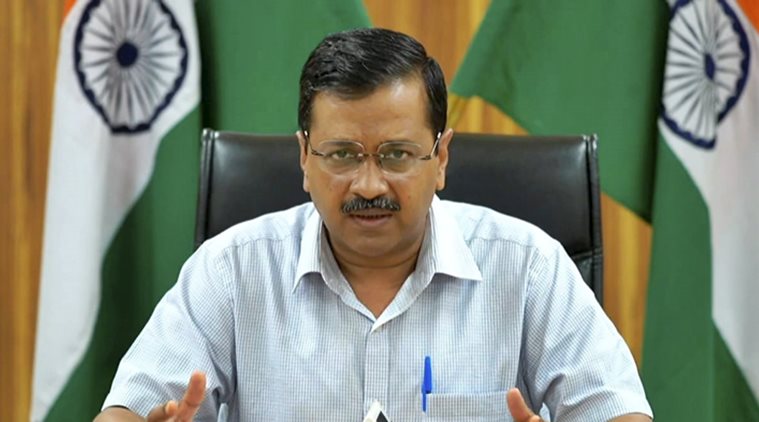
The chief minister of Delhi Arvind Kejriwal on Saturday opposed the idea of admission of asymptomatic cases of coronavirus in institutional quarantine. Arvind Kejriwal said that the mandatory hospitalization for even the asymptomatic cases will create chaos in the national capital. He added that such steps will scare people who will be coming out for testing as they will have to face five days of institutional quarantine away from their family.

As per reports, the Lieutenant Governor of Delhi Anil Baijal chaired a meeting in State Disaster Management Authority(SDMA) where Arvind Kejriwal strongly opposed his order that mandated the admission of even the asymptomatic cases in institutional quarantine for five days nullifying the Delhi government’s previous order that did not allow hospitalization of mild and asymptomatic COVID-19 cases.

Delhi Deputy Chief Minister Manish Sisodia was quoted by news agency ANI as saying that there are only 6,000 beds at quarantine centres and over 10,000 people are on home quarantine in Delhi. If all need to be institutionalised, Delhi does not have enough beds.

As per reports, the LG and CM had a heated face-off during the meeting. The CM suggested that the focus of the government should be on patients with serious symptoms. The Chief Minister cited the shortage of doctors and beds at hospitals and overburdened health workers. Other AAP leaders too expressed concerns that if institutional quarantine is made compulsory, people will hesitate to get themselves tested and lead to further spread of pandemic.

Earlier notice stated that mild and asymptomatic cases do not need hospitalization

The June 6 notice of the Delhi health department stated that Coronavirus patients with mild symptoms and those who are asymptomatic do not need any hospitalization.

The notice issued by the Health and Family welfare department of NCT Delhi had stated, “It has come to notice that many Asymptomatic patients and mild symptoms patients have been admitted in the hospital facilities. Attention is invited to the guidelines issued by the Ministry of Health and Family Welfare, Government of India as well as this department which clearly states that Asymptomatic and mild symptom cases do not need hospitalization and are either recommended to be kept under self-isolation.

Note: The report has been updated with latest information.

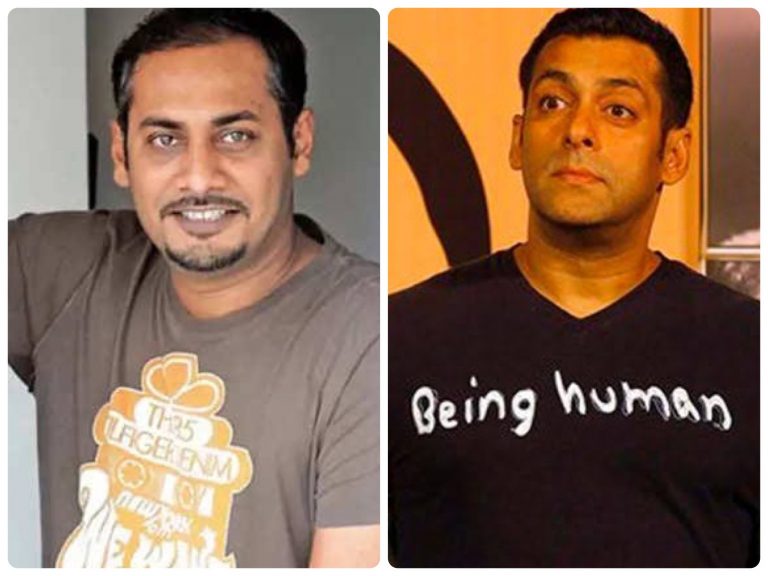
‘He sells jeans of Rs 500 for Rs 5000’: Dabangg director Abhinav Kashyap alleges Salman Khan’s ‘Being Human’ is a money-laundering hub

In a shocking revelation, film director Abhinav Kashyap has alleged that behind the facade of charity, Salman Khan’s Being Human Foundation is involved in illicit activities pertaining to money-laundering. In a Facebook post, Kashyap has asserted Salman Khan owned Being Human of being a hub of money-laundering and asked the government to launch an investigation against the organisation.

“Salim Khan’s biggest idea is Being Human. The charitable initiatives carried out by Being Human is just a show-off. During the shoot of Dabangg, Salman distributed 5 cycles in front of my eyes…but the next day, newspapers published that the actor distributed 500 cycles to poor. This was an attempt by the goons employed by Salman Khan to improve their master’s image and paint a favourable portrayal of him in the media so as to extract concessions from judges in the criminal cases he was involved in. Being Human today sells jeans worth Rs 500 for Rs 5000…and one doesn’t know in how many different ways money laundering is going on under the pretext of charity,” the post uploaded by Abhinav Kashyap on Facebook read.

The Dabangg director also added that Salman Khan and Being Human are pulling the wool over unsuspecting people’s eyes and making money off them. “The government should launch a probe into the Being Human organisation. I will fully extend my cooperation with the government,” he said.

Abhinav Kashyap accuses Salman Khan and his family of sabotaging his career

The staunch criticism of the Being Human organisation, which is founded by actor Salman Khan, came on the heels of allegations levelled by Abhinav Kashyap against the Dabangg actor earlier this week. A few days ago, Abhinav Kashyap had accused Salman Khan and his family of being the bullies in the Bollywood and being responsible for sabotaging his career.

Elaborating about his experience during his directorial debut Dabangg, Kashyap said, “The reason I moved out of making Dabangg 2 ten years ago was because of Arbaaz Khan, in connivance with Sohail Khan and family was trying to take control of my career by bullying me. Arbaaz Khan sabotaged my second project with Shree Ashtavinayak Films that I was signed up with by personally calling their head Mr Raj Mehta and threatening him with dire consequences if they made a film with me,” he writes. Kashyap says he returned the signing money to Shree Ashtavinayak Films and joined Viacom Pictures and alleged that Arbaz Khan and Salman Khan’s brother Sohail Khan intimidated the then Viacom CEO Vikram Malhotra to boot.