Home Blog Page 5289

Nepal proposes to amend Citizenship Act that applies to all foreigners, Indian media claims it applies only to Indians and misquotes Indian law

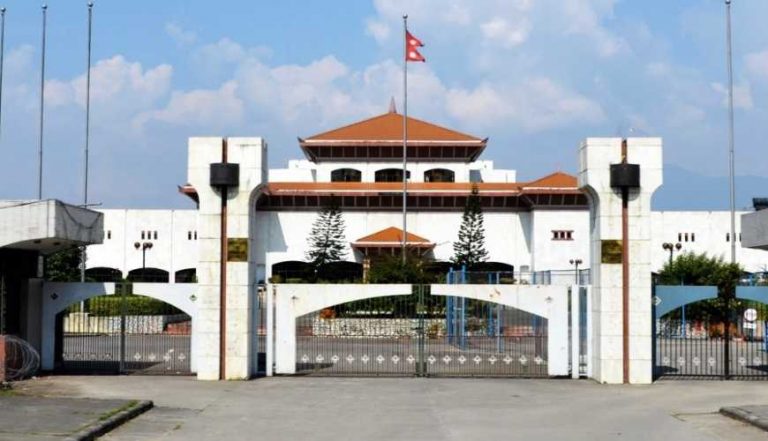
Nepal’s ruling party Nepal Communist Party has decided to amend the country’s citizenship law to allow naturalisation of foreign women married to Nepali men only after a waiting period of seven years. The party’s secretariat took the decision after a meeting, and a bill to amend the Citizenship Act will be sent to the Parliament for approval.

“Today’s Secretariat meeting has concluded that foreign women marrying to Nepali men should be given naturalized citizenship after seven years upon showing the proof of renouncement of previous citizenship or a similar document,” party spokesperson Narayan Kaji Shrestha said after the meeting. The matter of waiting period for foreign women married to Nepali men has been discussed in the country for two years now. The matter has been discussed in the federal parliament several times in the last two years, and the State Affairs and Good Governance Committee of Parliament has held over 140 meetings over it since the bill was first registered.

The committee has also proposed to issue a national identity card to such women after the marriage so that they are not deprived of social, economic and cultural rights until they are able to obtain Nepali citizenship.

While the ruling communist party is pushing for the 7 year waiting period, the main opposition party Nepali Congress favours continuing the existing period as per the Citizenship Act 2063, according to which foreign women can acquire Nepali citizenship after they denounce their previous citizenship. On Thursday, an all-party meeting was held to arrive at a consensus, but it could not be achieved as Nepali Congress stuck to its position. After that, the Communist Party decided to go ahead with the bill without consensus. The other two opposition parties, Samajbadi Party Nepal and Rastriya Janata Party have also supported the stance of the Nepali Congress on the issue.

While justifying the amendment, Nepal Home Minister Ram Bahadur Thapa had told media that India’s citizenship rules also have similar provisions. Section 5(1)(c) of the Indian Citizenship Act says that a foreigner who is married to an Indian citizen can apply for Indian citizenship after living in in India for seven years.

Misreporting by Indian media

While the reports by the Nepali media on the issue make it clear that Nepal is amending their citizenship rule for all foreign women, Indian media decided to give it a spin by reporting that the new law applies only to Indian citizens. India Today reported it with the headline “Indian women marrying Nepalese citizens will now get citizenship after 7 years of marriage”. They also mentioned in the report that the seven-year clause in the Indian law does not apply to Nepal. The report said that the minister “did not mention that this clause of India’s citizenship law does not apply to Nepal.” Times Now report said “Nepal amends citizenship law for Indians, cites Indian laws to justify change”.

Several other reports by Indian media made the same claim, and mentioned that Indian women married to Nepali men will have to wait seven years before acquiring citizenship. But this is blatantly fake news, as the proposed amendment applies to all foreign women, and it is not specific to only Indian women as Indian media houses are trying to convey. This seems an attempt by media to further deteriorate the Indo-Nepal relationship which is already at a low point after Nepal changed its map to include certain Indian territories.
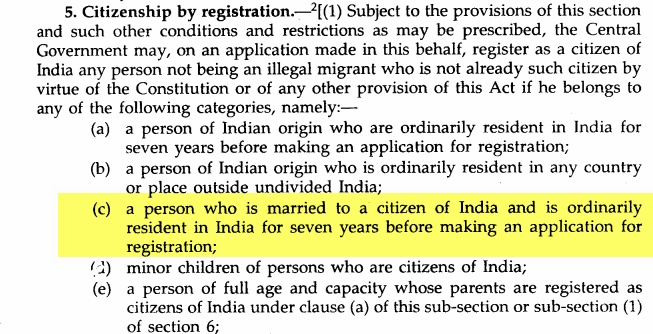
Section of Indian Citizenship Act on obtaining citizenship by marriage

The claim that Nepali citizens are exempted from the seven-year waiting period is also not correct, as no such provision is mentioned in the citizenship act. Nepali citizens are allowed to visit India without a visa and without any restrictions, and they can work here without obtaining any work permit. But that does not mean that there is any relaxation in the seven-year criteria for Nepali citizens wanting to acquire Indian citizenship. Neither the Citizenship Act nor the Indian govt website giving information on obtaining Indian citizenship mention such a provision.

Therefore, while the ruling party in Nepal has proposed to amend the citizenship law of the country, the amendment will apply to all foreigners and not only Indians as Indian media has reported. Moreover, Nepal is right in saying that a similar provision exists in India also. The claim that Nepali citizens are exempted from this provision India is also not correct.

Broadening issues between India and Nepal

In recent times, the relationship between India and Nepal has gone sore for multiple reasons. Nepal made changes in its political map in a legislative amendment and laid claim on Indian territories Kalapani, Limpiyadhura, and Lipulekh a few days back. Also, Nepalese security forces recently killed an Indian national and injured four in unprovoked firing.
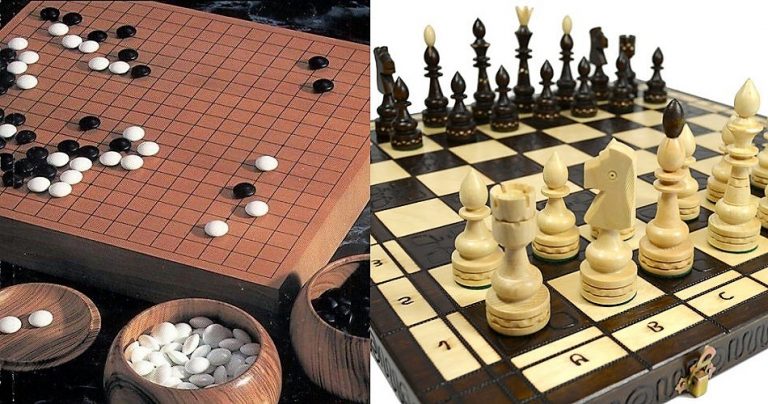
China has Weiqi, India has Chess – Read how these board games also shape respective battle strategies

There is a common notion that the Chinese Army is invincible even though they have not won any wars recently. Welcome to the Chinese Art of War.

China has mastered the art of unconventional warfare in which the opponent gets psyched out even before the first bullet is fired. The art cannot be explained, it can be only be experienced through a board game.

The Chinese board game called wéiqí or ɦʉi gi 圍棋 or Go which is known as the game of encirclement, the core philosophy of Chinese military tactics. In wéiqí, the goal is to surround and capture the enemy and dominate the board through a series of complex, deceptive moves stretching out often for an entire day. 

Chinese strategy

In Wéiqí or Go, the two players take turns to place white or black stones on a square grid with 19 intersecting points along each axis.

It is said the Sun Tzu (writer of The Art of War) perfected the game of Go in a real-war situation and defeated Kingdom of Chu, with a numerically inferior army. The same tactics were adopted by the Vietnamese Congs in 1960’s and 70’s against the US forces.

In the Art of War, Tsu shows how in Go you have to bring alacrity, surprise, deception and swift moves to create opportunities to secure political motives just like Chinese military strategy.

Indian strategy

In India and much of the western world, the military strategy is guided by another ancient popular board game – Chess. Chess is a popular Indian board game which originated in the Gupta empire and was popularised in the west via Persia. It has roots in the ancient Indian dice game of chausar.

Chess is a zero-sum game where the player has to kill or get killed. In conventional war the prevailing dictum is that brute force can only win the battle. Therefore, the best approach is to neutralise the opposition through a frontal attack attained within a limited time. 

The objective of chess is to deliver a quick, killer blow by capturing or forcing the surrender of the King by eliminating its pieces. The Western civilization had always based their strategy on such an objective. On the other hand, Go doesn’t generate a quick, straightforward winner. The player who ends up with the most territories at the end is considered the winner.

Psychological warfare

As per wéiqí, the best approach is to psyche out the opponent into believing that you are invincible. The idea is that the opponent will start giving in once encircled and there will be no need for a full-blown frontal attack.

China invested heavily to acquire companies or supply chains across the world. In the 1990s, the Chinese also started to use its global clout to buy out or steal industrial and technological properties of other countries. All of this was controlled by the state even when it was fronted by private companies or individual investors.

 Balance of Power

Chess is focused on positioning while Go prioritizes net balance calculations as players always lose something to gain something. In selecting where to play in Go you have to look at the balance between attack and defence, playing close or loose, territory or influence. Like in Go, Chinese military have the capacity to plan long term territorial expansion often a century in advance.

The Chinese have strategically placed their stones in Asia, Africa, America and Europe. The four continents represent the four quadrants of China’s modern wéiqí strategy. The strategic stone placement over the past 50 years has helped China secure political clout, access to markets and raw materials, public support and the notion of invincibility.

Tibet

The number of legal board positions in Go has been calculated to be approximately 2 × 10170, (“Combinatorics of Go”, Tromp and Farneback) greater than the number of atoms in the universe. Compared to that chess has finite moves. In chess, there are 20 possible opening moves compared to 361 for Go. Chess prioritizes mobility and relative strength while Go values territory and positional influence.

The Chinese strategy on Tibet is exemplified by the long drawn, calculated moves in Go. The plan is to legitimize the forceful annexation of Tibet by swaying international opinion in its favour. China has long pressurised the US administration and dissuaded them from taking any unilateral action that alters the perceived status quo. It has skilfully used its economic, military and diplomatic levers to curb any possible dissension or freedom movement in Tibet.

The international position in Tibet is that China should not use too much force to curb dissent. This is a Chinese victory as this is a tacit acceptance that Tibet is a part of China.

Last but not the least, wéiqí embodies China’s top down, ruthless communist dictatorship. Chess has different pieces with different capabilities while in Go all the stones are of equal value. This is similar to the assumed “equality” espoused by the Communist Party of China (CCP). In Go, some equals have to die to give power to other equals, which is how the modern day CCP conducts itself.

Note: Article co-authored by Saptorshee Kanto Chakraborty.

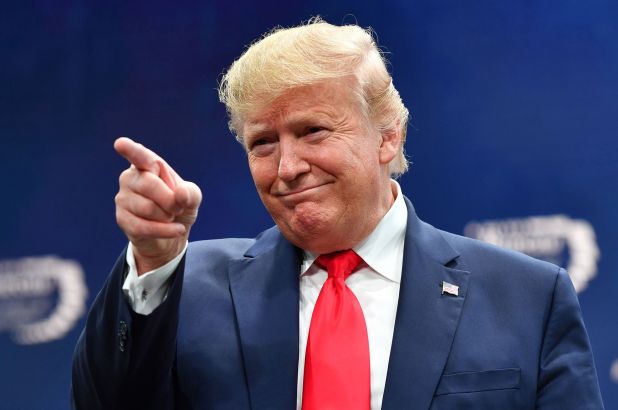
US President Donald Trump again blames China for coronavirus, terms it as ‘Kung Flu’

Months after holding China responsible for the deadly outbreak of the coronavirus pandemic by calling it ‘China virus’, United States President Donald Trump has once again slammed the Communist country for inflicting the world with the pandemic, terming the disease as “Kung flu”.

Addressing his first election rally on Saturday in Tulsa, Oklahoma, Donald Trump blamed China for the coronavirus pandemic which originated in the central Chinese city of Wuhan in December last year. He has accused Beijing of suppressing the details of the contagion, that has killed over 450,000 people and infected more than 8.5 million people.

Speaking at the rally, the US President said that the COVID-19 is a disease and has more names than any disease in history.

“I can name – Kung flu. I can name 19 different versions of names. Many call it a virus, which it is. Many calls it a flu. What difference. I think we have 19 or 20 versions of the name,” Trump said.

The Trump administration had earlier referred coronavirus as ‘Wuhan virus’ and ‘Chinese virus’ due to its origin. The coronavirus outbreak has affected 2.3 million people in the USA and has killed at least 119,000 Americans.

President Donald Trump has been consistent in his attempts to call out China for its irresponsible conduct as far as the coronavirus pandemic is concerned.

President Trump had earlier said that the government is examining all scientific evidence to determine the origins of Novel coronavirus. He had gone further to state that he had seen information and has ‘high degree of confidence’ that the coronavirus originated in a Wuhan lab

United States’ diplmotic war with China

China has been facing severe criticism from various other countries, more intensely from Washington over the way it handled the pandemic.

Earlier, Trump had triggered a diplomatic war with China by repeatedly referring the Novel Coronavirus as Chinese Virus. Several leaders in the United States have been highly critical of both China and WHO of their handling of the situation, accusing them of hiding vital information and underplaying the crisis at the beginning.

US President Trump had also expressed doubt over the accuracy of Chinese statistics for cases and deaths. He had also said that he has ‘high degree of confidence’ that Coronavirus originated in Wuhan Institute of Virology, China.

Day after Congress creates controversy over PM’s statement over Ladakh standoff, opposition party leaders voice their support for PM Modi

While Congress is trying to create unrest against PM Modi over the recent India-China stand-off in Galwan Valley, other parties have shown support irrespective of political differences. After PM’s address over India-China face-off, there were efforts to take political advantage of the situation by creating controversy around it. The wrong interpretations of the address made it look like that Prime Minister Modi is accepting that Indian troops were killed on the Chinese side. PMO released another statement to counter the misinterpretations to ensure the nation knows the truth.

Support from party leaders

It is crucial that the central government gets support from all parties in situations where the country’s security is at stake. Despite the political differences, Chief Ministers raised voice in support of PM, stating they were satisfied with the PM’s address.

Telangana Chief Minister’s office tweeted from the official twitter handle that it is not the time to do politics. There might be differences in the political lines, but everyone is united by patriotism. “Prime Minister spoke on our behalf when he paid tribute to armed forced & assured India’s interests will always be protected,” tweet CMO Telangana.

Andhra Pradesh Chief Minister YS Jagan Mohan Reddy tweeted from his official handle in which he said that he is concerned by the manufactured controversy surrounding All Party meeting. It is not the time to find faults and point fingers. Everyone should come together to show unity and solidarity towards armed forces. “Hon’ble PM and other Ministers gave very convincing answers at the APM. [The] Nation is and should be united on this subject. Unity brings strength and division exhibits weakness,” he added.

Chief Minister of Sikkim, Prem Singh Tamang, said in a tweet that PM Modi’s remarks in the all-party meeting were crystal clear. “It was reassuring to hear that the government won’t compromise on India’s interests. Everybody also had great faith in our forces to vanquish any evil design,” he added.

Meghalaya Chief Minister Conrad Sangma showed his support for PM Modi. He said, “His answers clearly reflected India’s strong stand when it comes to safeguarding our sovereignty. All other “commentary” may be best ignored. It’s not factual or desired.”

What happened in Galwan Valley?

Twenty soldiers, including Commanding Officer, were martyred during a violent face-off between Indian and Chinese troops on Monday night. The incident took place during the de-escalation process in Galwan Valley. Reports suggest that the Chinese side has also suffered casualties, including a Commanding officer. Still, there is no confirmation from the Chinese side as they have decided to keep the number of causalities a “secret in the national interest.”

However, while most opposition party leaders extended their support to PM Modi over Ladakh standoff and said that India needs to be united at this juncture, Congress has indulged in petty politics.

Congress leaders went to pressurise the father of injured soldier after he asked Rahul Gandhi to not play politics over Ladakh standoff: Report

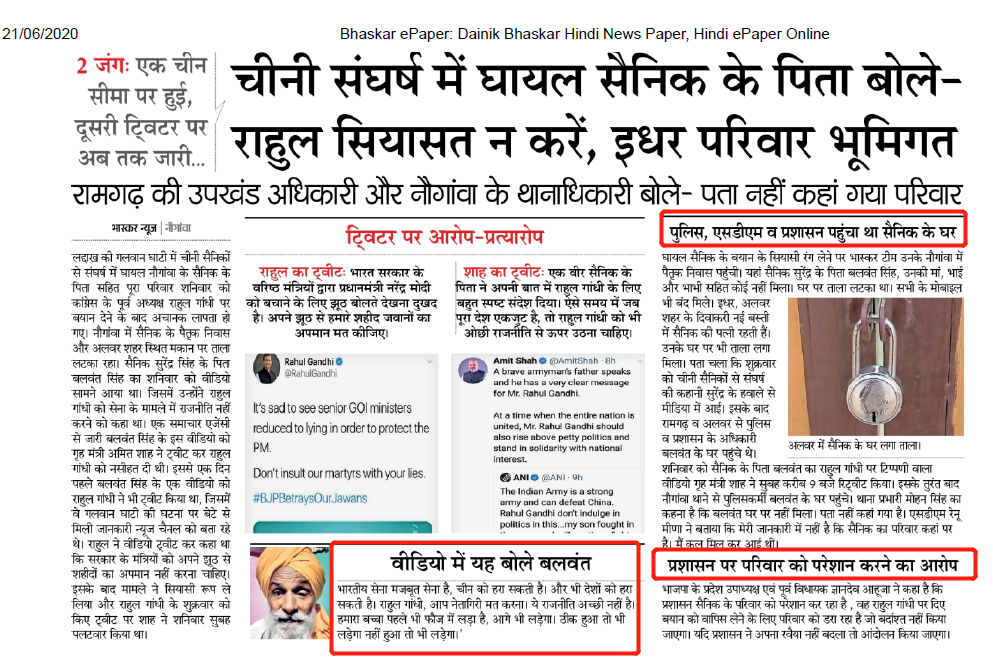
As per a report by Dainik Bhaskar, State Secretary of BJP (Rajasthan) Gyan Dev Ahuja had alleged that the Rajasthan administration was troubling the family of Balwant Singh, father of the injured soldier who urged Rahul Gandhi to not play politics over the Ladakh standoff. He said that the Congress-run administration was coercing the father of the injured soldier into taking back his comments against Rahul Gandhi. “If the administration does not change its attitude, then, we will protest against it”, Ahuja cautioned.

Screenshot of Bhaskar report

Whereabouts of Balwant Singh unknown

Bhaskar reports that when a team of reporters reached the house of Singh, it was found to be locked. The cell phones of the family were also switched off. The house of Surendra Singh’s wife was also locked. Reportedly, a team of police from Ramgarh and Alwar had landed at the house of Balwant Singh on Friday. Following his viral video urging Rahul Gandhi from politicising the border scuffle, another team of police officials from Naugaon landed at his house, only to find him missing. According to ASDM Renu Meena, she had met the family on Friday but conceded that she was unaware of their current whereabouts.

Balwant Singh rebukes Rahul Gandhi

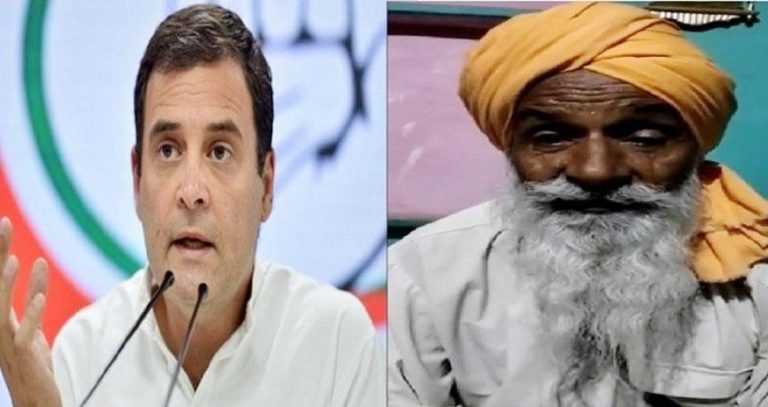
In a video that had gone viral on social media, the father of an injured soldier could be heard appealing to Rahul Gandhi to not politicise the recent violent clash between the Indian security forces and the Chinese army. “The Indian army is strong and can defeat China…My son fought in the army and will continue to fight in the army,” he emphasised. His comments came at the backdrop of a tweet by Rahul Gandhi wherein the latter accused the Union Ministers of lying to protect the image of Prime Minister Narendra Modi. “Don’t insult our martyrs with your lies,” Rahul wrote.

AAP leader shares morphed images of PM Modi bowing down to Chinese President Xi Jinping, complaint filed

A complaint has been filed against a member of Aam Aadmi Party for sharing morphed images of Prime Minister Narendra Modi to defame him. The complainant, BJP leader Suresh Nakhua, also accused the AAP leader for maligning Indian Armed forces and Hindutva ideologue Veer Savarkar.

Image Source: Suresh Nakhua

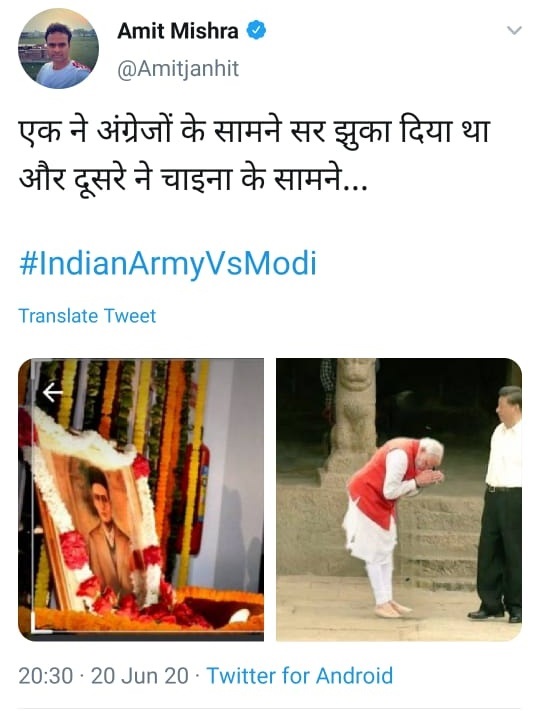
AAP leader Amit Mishra on Saturday shared an image which showed PM Modi bowing down to Chinese President Xi Jinping claiming that PM Modi has surrendered to the Chinese. However, the image is fake.

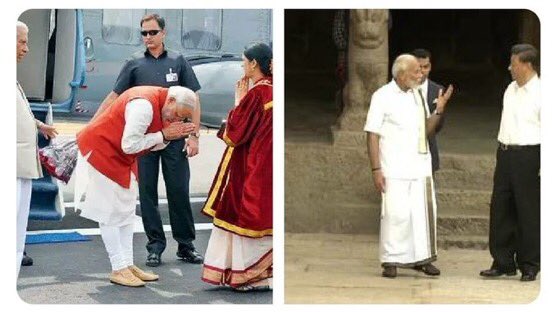
The actual two images

The AAP leader had morphed two different images and posted on social media to belittle PM Modi against Chinese President XI Jinping, especially at a time when China has gone rogue against India. The AAP leader wrote, “One leader bowed down to the British and other in front of China”.

The complainant alleged that the morphed images by Mishra had highlighted the sacrifices of Indian Armed Forces in bad intent and also hurt the sentiments of followers of Veer Savarkar.

In his complaint, Nakhua alleged that the misleading images showcased that the PM Modi was bowing to an aggressive neighbour which is not an original image but a photoshopped image. He alleged that such images have hurt the sentiments of people of India who support Indian Army.

The complainant has also alleged that the morphed images shows India in bad light and is liable for treason and origin of false alarms.

Congress ecosystem comes together to propagate fake claims that China had 0 casualties and it ‘saved’ 10 injured Indian troops with oxygen therapy

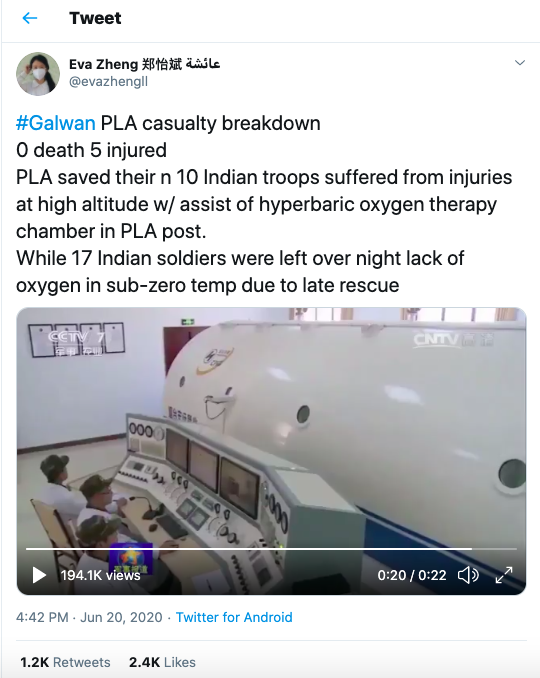
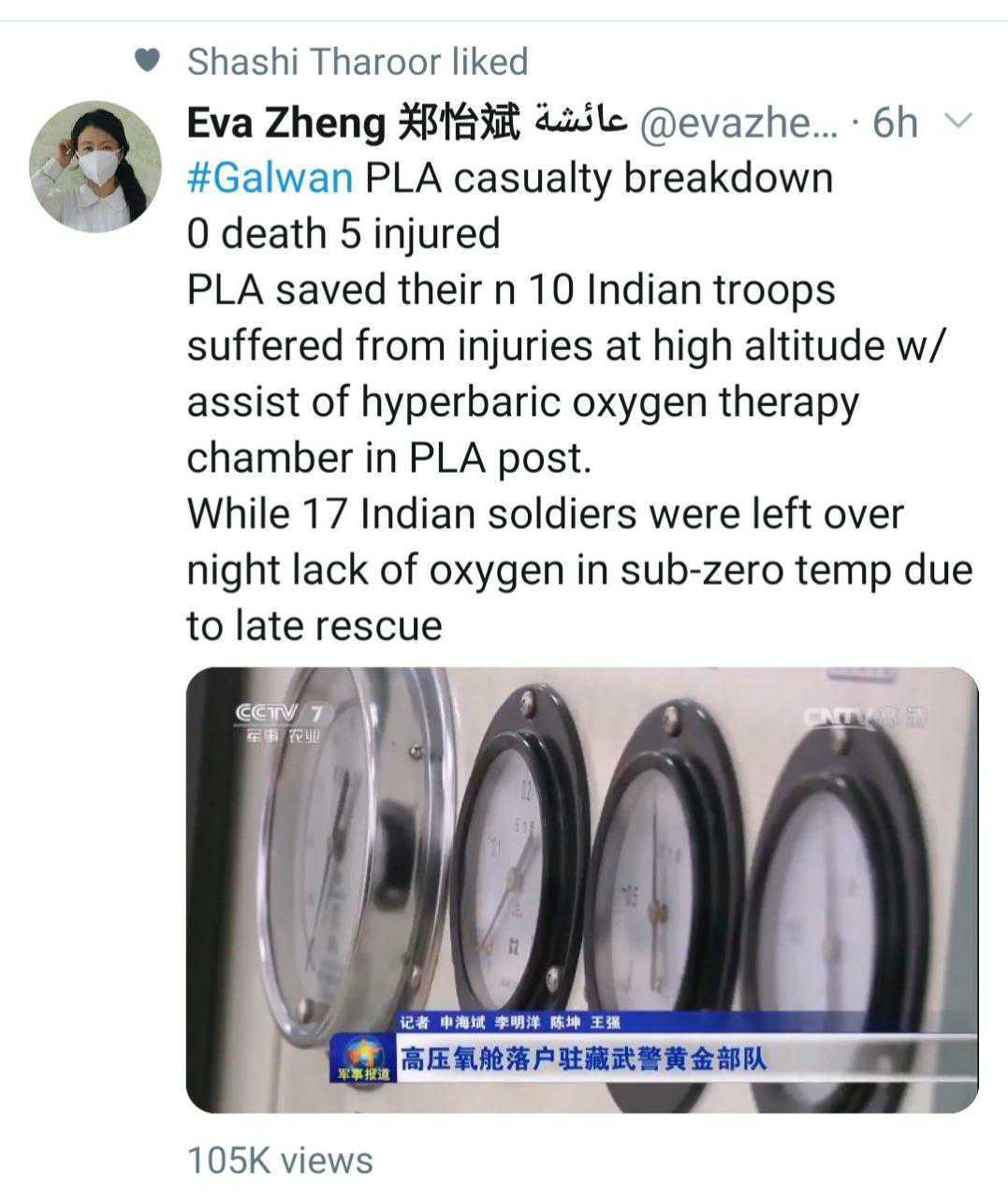
On Saturday, a Twitter account by the name of Eva Zheng claiming to be from China (where Twitter is officially blocked), tweeted a video with claims that in the Galwan Valley standoff between Indian troops and the Chinese PLA, the casualty breakdown of PLA stood at 0 deaths and 5 injured.

The tweet, which now stands deleted, claimed that 10 Indian troops who were injured in the standoff were ‘assisted’ by the PLA and administered hyperbaric oxygen therapy at a PLA post.

The now deleted Chinese propaganda tweet.

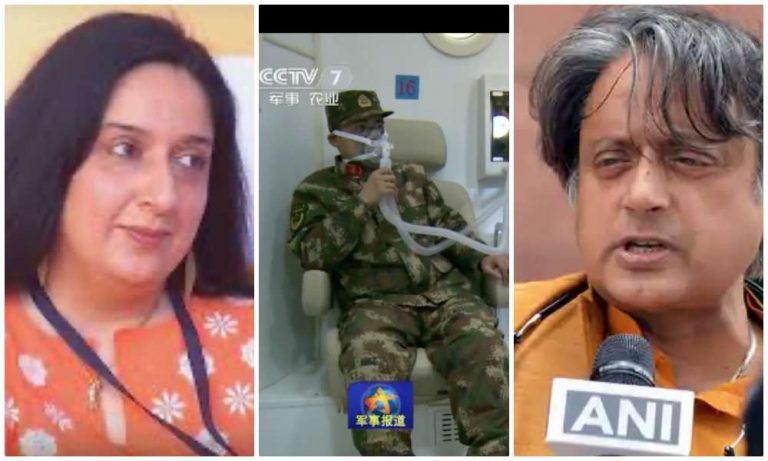
This tweet was ‘liked’ by senior Congress leader Shashi Tharoor. It was accompanied by a dubious video where one can see oxygen being supplied to some men in uniform.

Tweet ‘liked’ by Shashi Tharoor

Along with Shashi Tharoor, Congress-friendly ecosystem also came together to propagate this video.

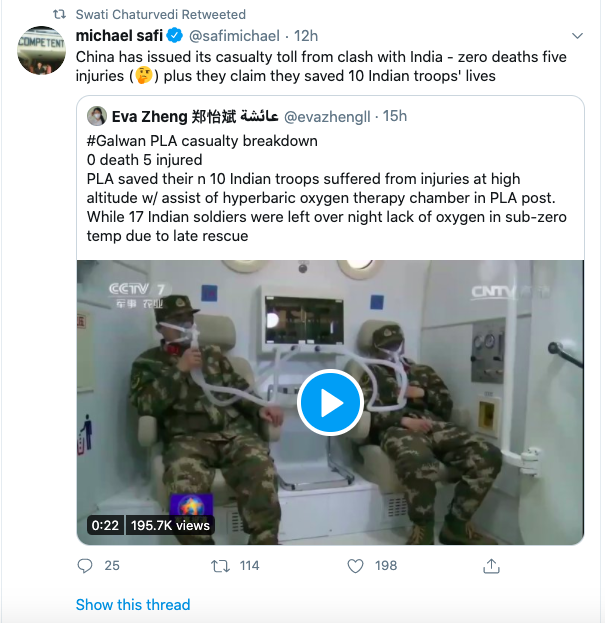
The tweet of ‘Eva Zhang’ was spread as official Chinese casualty breakdown by abusive troll masquerading as a journalist, Swati Chaturvedi. Chaturvedi even retweeted a tweet by fellow employee with Guardian who had also shared the dubious tweet and video.

Swati Chaturvedi’s retweet

‘Professor’ Ashok Swain, too joined in in propagating this news.

Recently, Swain had said that he wants ‘Muslim Lives Matter’ protests in India along the lines of violent protests in the USA following the death of an African American man George Floyd.

However, the information as well as the video of ‘Indian soldiers being administered oxygen by Chinese PLA’ is fake.

Fake video of PLA administering oxygen to Indian soldiers

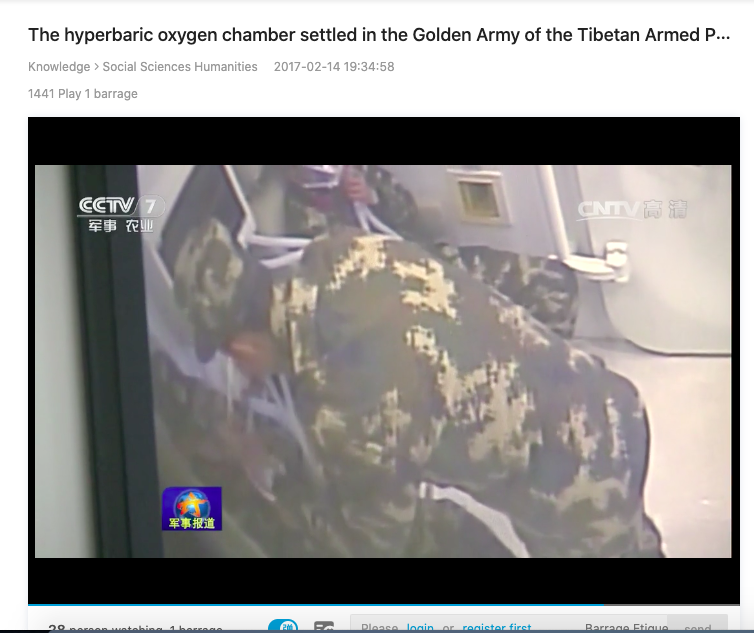
The video attached with the tweet which claimed that the Chinese Peoples Liberation Army (PLA) soldiers were administering oxygen to injured Indian soldiers is also fake.

Fake video propagated as PLA administering oxygen therapy on injured Indian soldiers

The video was uploaded on a website called bilibili.com which, as per Google Translation, showed video of hyperbaric oxygen chamber in the Golden Army of Tibetan Armed Police. The above video was uploaded on 14th February 2017.

Chinese casualties at Galwan Valley

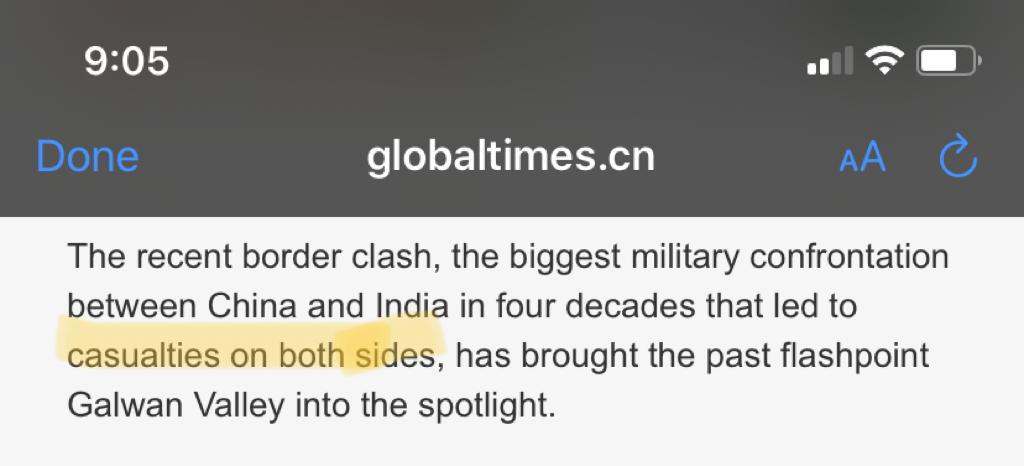
Chinese state media Global Times in an article published on 18th June had claimed that the Galwan Valley standoff is one of the biggest military confrontation between India and China in four decades which has led to casualties on both the sides. Evidently, since it is one of the biggest confrontation, it is quite obvious that the figure of 5 casualties on Chinese side is grossly understated. Moreover, Indian sources have indicated that the casualties figure on the Chinese side is upward of 40 at least.

Chinese state media on Galwan Valley casualties

And while the Chinese themselves, without disclosing the real figure, have accepted that there has been casualties on their side as well, some Indians are desperate to show that the Chinese are good samaritan helping injured Indian soldiers after inflicting the injury and that they don’t have any damages in the violent standoff.

Muslim ‘blogger’ threatens to murder ex-Muslim’s pet dog and slaughter him and his family live on TV for ‘criticizing Islam’

An Ex-Muslim atheist has urged people on social media to help authorities trace a Muslim blogger in the United Kingdom after the latter threatened him and his family in one of his blogs. The blogger took offence at Harris Sultan for allegedly criticising Islam. Harris Sultan has authored a book, ‘The Curse of God: Why I left Islam’.

In the video shared by Sultan, the Muslim blogger says, “So, Harris, tell me, you are speaking about women’s rights, basically you want them to run around naked, sure that’s your opinion but when you target Islam, it becomes personal for us and we have to reply to you. Get it?” He continued, “To us, they are our family, they live in our hearts. Anyone who targets my prophet or Allah, I will go after his family.”

The blogger then went on to say that he has stalked Sultan’s family on Instagram and Facebook. He says that he has stalked the Facebook profiles of Sultan’s mother, his sister and his ‘white’ wife. The blogger says that all the information has been downloaded and everything is on file. The blogger further says, “Now I will slaughter them live on TV, in front of everyone.”

The blogger also speaks of killing Sultan’s pet dog. he also said that he had been given Sultan’s address by some Australian boy and it seemed to him that it was accurate. He also speaks of handing over Sultan’s personal details to Melbourne’s Islamic Committee.

The blogger’s primary grudge appears to be Harris Sultan’s criticism of Islam and appears motivated enough to hurt him and his family physically for it. As we have seen with Kamlesh Tiwari and Charlie Hebdo, such threats cannot be taken lightly as Jihadists are known to go out of their way to attack and kill those who criticise Islam.

Police stop ten kids running on the road near Aligarh, kids say they are going to fight against China to avenge death of Indian soldiers

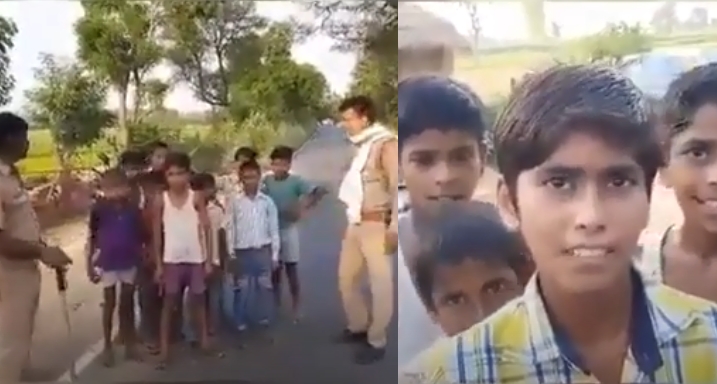
A group of ten children aged between 7 to 10 was stopped by the police of Thana Gabhana of Aligarh who was running on the road. When policemen on duty stopped them and asked where are they the going, the reply by the kids surprised the policemen, as the children innocently said that they were going to China to avenge the death of 20 Indian soldiers.

Policemen posted at Thana Ghabana feared something wrong must have happened when they saw ten children running on the road. When the policeman stopped them and asked the reason, they innocently said, “Chin se badla lene jaa rahe hai, usne hamare jawano ko maar dia hai” (we are going to take revenge on China, they have killed our soldiers). After this, the policeman told them affectionately that they do not need to fight the enemy until they have grown up and eligible for a job. The policeman also told them, ‘as long as we exist you don’t need to fight, you stay at home and concentrate on studies.’

On the night of 15 June, China’s People Liberation Army resorted to attacking the Indian army personnel that took a violent turn which led to casualties on both sides along the LAC at the Galwan valley in Ladakh. While India has confirmed 20 casualties, the Chinese authorities have not given official figures. However, it is believed that the casualties of Chinese troops would be above 40.

It was reported that the Chinese troops had attacked unarmed Indian soldiers with barbed wire, stones, and batons studded with nails. Many of the soldiers had succumbed to the harsh environment following injuries and after falling down into the river during the bloody skirmish.

Sacked ‘deserter’ army officer nabbed in Ahmednagar for roaming around in army uniforms and using fake army Identity cards and car plates

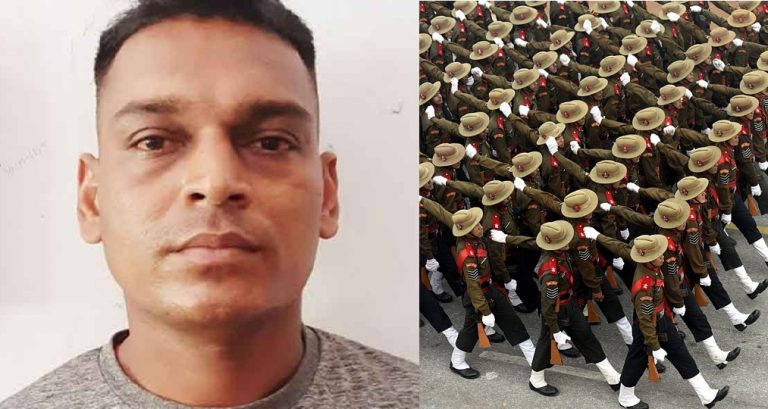
A former army officer has been arrested by the Jammu and Kashmir military intelligence and Ahmednagar crime branch for moving around in army uniform carrying fake army identity cards. The agencies claimed that the accused used to enter several military stations on the basis of fake identity cards and documents.

He had been declared as ‘deserter’ earlier, and was subsequently sacked from service on disciplinary grounds. As per reports, Jammu and Kashmir’s military intelligence in a joint operation with the Ahmednagar crime branch held the fake army officer.

Reportedly, the deserter has been identified as Prashant Patil alias Parasram Patil who was earlier posted in Assam Rifles 46 Regiment. Even during his posting in the army, he had an image of criminal type and was a regular violator of norms. In 2014, he went on leave but never returned to join duty. He was issued a show-cause notice, and subsequently, he was declared a deserter. Later on, Patil was finally sacked from the Army. He is a resident of Khanapur in Belgaum district of Karnataka.

The agencies alleged that the accused Patil had forged several army identity cards and made a dependent card in the name of his mother and wife and on the basis of these fake identity cards he entered many defence facilities. He was nabbed from Hoshing MIDC area in Ahmednagar.

The accused was nabbed by the agencies on Saturday and two Army Officer uniforms, fake identity cards, CSD cards, five phones including Indian Army stamp and five SIM cards were recovered from him. A Bolero car with fake registration number but fitted with “On Army Duty” board was also seized from him.

Following his arrest, his house was also raided, where an insignia with “Office of Commandant of 9, Para Regt (SF)”‘ written on it, a nameplate, pension cards, ATM cards of five banks, cheque books of seven banks and 14 bank passbooks in his and wife’s names were recovered.

The accused is being interrogated and cases of fraud have been registered against him in Pune’s Bundgarden and Wakad police stations.