Home Blog Page 5505

No new Wuhan Coronavirus cases reported in Delhi in the last 40 hours, CM Arvind Kejriwal announces Rs 5,000 each to all construction workers

0

Delhi Chief Minister Arvind Kejriwal on Tuesday said no new Wuhan Coronavirus cases have been reported in Delhi in the last 40 hours and the biggest challenge now is to not let the situation go out of control. He said that the state needs to be vigilant and careful.

The chief minister also said that the Delhi government has constituted a 5-member team to suggest a plan to deal with the situation if Delhi reaches stage 3 of coronavirus pandemic.

“In the last 40 hours, no new patient has been tested positive for COVID-19 in Delhi. Of the 30 patients, some patients have gone home. There are only 23 patients now,” Kejriwal said. However, the chief minister added: “This is good news but we shouldn’t be happy as the fight is still on. The numbers might spike anytime. We should remain alert.” 

Kejriwal also appealed to all landlords to allow some concession to tenants. “There are many daily wage earners in Delhi who stay at rented homes. If some tenants are not in a condition to pay their rents to landlords, they can be given some concession for 2-3 months.”

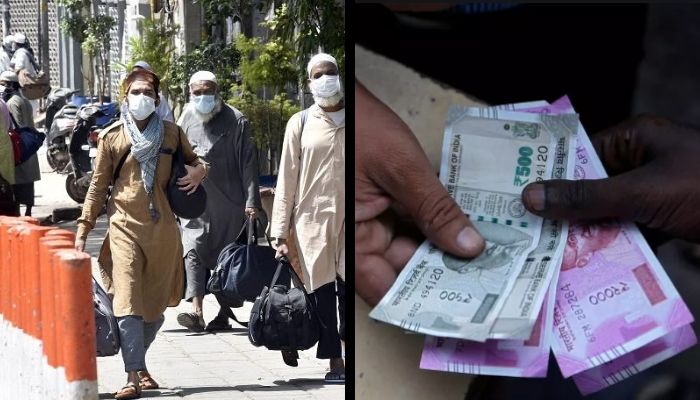
The chief minister also announced Rs 5,000 each to all construction workers “as their livelihood has been affected”. We are also increasing the number of night shelters in the city, he said.

Earlier in the day, it was reported that no new case of Covid-19 has been reported in the National Capital on March 23, Monday. Delhi had reported about 30 positive cases thus far with one patient succumbing to the novel virus.

As of today, 6 of the 30 patients admitted in hospitals across Delhi were shifted outside the state and one has migrated outside the country. Of the 6 who were transferred outside the state, 1 patient each was shifted to Rajasthan, Andhra Pradesh, Punjab and Jammu while 2 of the remaining were moved to Kolkata. Besides, 1067 patients are under government quarantine facilities in Delhi.

While only Delhi saw no new cases, India saw the highest jump in the number of new cases on 23 March. 99 new cases were reported from the country, with Maharashtra at the top with 23 new cases. The state now has 97 cases, with Kerala at a close second at 95 cases.

In the wake of coronavirus pandemic, all the international flights from March 23 till March 29 were suspended. In addition, the Delhi government has announced a slew of measures to counter the spread of the contagion. The government has declared complete lockdown of state until the midnight of March 31. No public transport services including private buses, rickshaws, autos will be allowed to ply the roads in National Capital. However, 25 per cent of the total fleet of DTC buses were allowed to ply on roads for those who are involved to dispense the essential services.

Coronavirus lockdown: Muslims in Meerut create ruckus after being stopped from offering namaz in mosques during Sunday’s Janta curfew

0

As the menace of coronavirus prompted several states across the country, including Uttar Pradesh, to impose blanket restrictions against the movement and congregation of people to blunt the spread of the virus, Muslim Namazis in Meerut were particularly incensed as they created a ruckus over being stopped from offering namaz in the mosques by the city police, says a report by Amar Ujala.

The incident reportedly pertains to Sunday, March 22, 2020, when scores of Muslims hit the streets at around 5:30 PM in Meerut following the 5-minute celebration of gratitude expressed towards doctors, policemen, Armed Forces, healthcare workers, bankers and others who were involved in discharging their duties in the wake of coronavirus outbreak. They were proceeding towards different mosques in the town- Sisiganj, Safety Tank, Rajbandh Market, Kotwali, Lisadi Gate and Nauchandin, to offer the evening prayers.

Defying the strictures barring assembly of people enforced in Meerut, the Muslim crowds came out in large numbers advancing towards the different mosques in the town. The police tried to prevent the crowds from reaching the mosques by cautioning them against the breach of curfew and requesting them to co-operate with the law enforcement officials and return to their houses. The police appealed to people against the violation of lockdown orders.

Despite repeated attempts by the police to dissuade Muslims from marching towards the mosques, many people ignored police’s appeals and continued walking towards the mosques for offering evening prayers. Instead, Muslims on road started creating ruckus after police tried to impede them from assembling at mosques in the view of the surging coronavirus cases in the country. It was only after the police started video-taping that some of the people who had come out on streets retreated.

Top officials of the police administration were alerted about the gathering of people in mosques and religious places. Senior officials including SSP reached several mosques in the city and made an appeal to the Muslim clerics in mosques to stop hosting community namaz amidst the scare of coronavirus. The SSP reportedly stated that no one was allowed to gather and pray in the mosques, claiming that the decision was taken keeping in view the safety of people. Following this incident, police personnel were deployed in mosques in many places.

SSP Ajay Sahni said that the residents of the town are expected to follow the restrictive government orders that are aimed to curb the spread of the contagion. He added that religious places are not exempted from the lockdown order and people are not allowed to congregate for any religious activities, appealing people to stay at home and refrain from venturing out in public places.

Coronavirus: 11,108 people quarantined in Gujarat, 21 FIRs lodged against those who are not cooperating even as state registers 33 confirmed cases

0

The State government of Gujarat said on Tuesday that 11,108 people in Gujarat are under observation for 14 days out of which 224 are quarantined in government facilities, 10850 are home quarantined and 34 are being treated at private hospitals.

21 FIRs have been lodged so far against those who have tried to hide their travel history or have been unwilling for quarantine.

Principal Health Secretary Jayanthi Ravi revealed that two more positive cases of coronavirus have been found in the state of Gujarat on Tuesday, 24 March, taking the total number of positive coronavirus cases in Gujarat to 33. She said, “Two more persons have been tested positive for coronavirus in Gujarat.”

Jayanthi Ravi claimed that an additional 27000 people are being surveyed as they have a recent travel history from abroad. Four senior officials have been appointed for the Surat region, Ahmedabad region, Rajkot region and Vadodara region to look after the COVID-19 cases on Tuesday, Jayanthi Ravi added further.

Around 2424 calls have been received on the government generated helpline number 104 in view of coronavirus scare.

A complete lockdown has been imposed in Gujarat from 12 am-midnight on 24 March till March 31 in view of rapidly expanding the novel coronavirus epidemic, announced DGP Shivanand Jha on Monday.

The State government is preparing further to handle more coronavirus cases swiftly and efficiently.

In India, the number of total positive cases has now crossed 500. most states and Union Territories have initiated a lockdown.

Coronavirus: Shekhar Gupta’s ThePrint republishes five-days old article claiming that Singapore has recorded zero Covid-19 deaths

The Wuhan coronavirus outbreak that originated in China has spread to almost all parts of the world including Singapore. Singapore’s health ministry on Monday (March 23) reported 54 new cases of the Covid-19 outbreak, taking the total count to 509, with two fatalities.

The Conversation, a network of not-for-profit media outlets that publish news stories written by academics and researchers, publishes an article on March 18, titled: ‘Why Singapore’s coronavirus response worked – and what we can all learn’, which claimed that as on the date that report was published Singapore had recorded zero deaths. Which stood true as Singapore reported its first two confirmed deaths related to the COVID-19 outbreak on March 21 (Saturday).

Description: https://www.opindia.com/wp-content/uploads/2020/03/Capture-15-1024x432.jpg
Screenshot of the article published by The Conversation on March 18

This article by The Conversation was picked up by Shekhar Gupta’s propaganda website ThePrint and republished verbatim on March 23 with a different headline: ‘Why Singapore isn’t in a coronavirus lockdown — as told by a doctor of the country’.

Description: https://www.opindia.com/wp-content/uploads/2020/03/Capture1-2-1024x428.jpg
Screenshot of the report published by ThePrint on March 23

While republishing the article, ThePrint probably forgot to recheck the latest statistics. Incidentally, Singapore reported both the deaths on March 21 and Shekhar Gupta propaganda portal foolishly, without checking the latest data, maintained in its report that Singapore reported zero Coronavirus deaths. There were no editorial remarks that would reflect that two days before ThePrint republished the 18 March report, two people in Singapore have lost their lives.

As if this blunder was not enough that ThePrint chief and Editors Guild of India’s head Shekhar Gupta, took to Twitter to share the article with captioning it as: “Singapore has had 266 COVID cases with zero deaths, its infection rate is much slower than the rest of the world… And it hasn’t had a lock-down… This is how we did it, writes Dale Fisher, Chair, Infection Control, National University of Singapore”.

Description: https://www.opindia.com/wp-content/uploads/2020/03/Capture-16.jpg
Shekhar Gupta’s Tweet dated March 23, 2020

Earlier in the day, we reported how Shekhar Gupta and other honorary members of the leftist brigade, who cannot resist their temptation when it comes to defaming Modi, had retweeted a tweet from a fake account, thereby spreading misinformation to millions amidst the Wuhan Coronavirus outbreak.

Coronavirus: ICMR study finds that social distancing can reduce cases up to 62%, one Indian capable of infecting 4 others

0

In a study conducted by the Indian Council of Medical Research (ICMR), it has been found that cases of Wuhan Coronavirus can be reduced as much as 62%, provided people strictly adhere to the guidelines of quarantine and social distancing. The paper titled, “Prudent public health intervention strategies to control the coronavirus disease 2019 transmission in India: A mathematical model-based approach” was written in February 2020, before the COVID-19 had turned into a pandemic.

The study said, “Strictly implemented social distancing measures such as home quarantine of symptomatic (those showing symptoms) and suspected cases will reduce the overall expected number of Covid-19 cases by 62 per cent (in India), thus flattening the curve and providing more opportunities for interventions.”

The authors of the paper used an epidemiological characteristic, also known as the reproduction number (R0), to find the pace at which infection can spread in a given population. A value above 2 implies that the infection is difficult to contain without strict measures. It was found that an infected Indian can at best affect 1.5 people and at worst infect 4 other people.

The study was done in February when the numbers were not very high; our aim was not to look at how many cases would occur but what methods would work. And lockdown and thermal screening works are what our study shows,” Dr Raman Gangakhedkar, the Epidemiology Head at ICMR, was quoted as saying.

The paper also found that the coronavirus “epidemic” in India was inevitable and effective airport screening would have delayed India’s first 1,000 cases by 45 days at the maximum. The authors noted, “Our results suggest that it may be possible to interrupt the transmission of COVID-19 in India, but only in the most optimistic scenarios… symptomatic quarantine can still achieve meaningful reductions in peak prevalence… However, such measures would have very little effect on the overall epidemic size. The actual numerical impact will be highly sensitive to the natural history of COVID-19, the parameters for which are very uncertain at present.”

Earlier, the ICMR had released a revised strategy to battle the spread of the contagion that has paralysed many countries across the world. All the asymptomatic individuals who had undertaken international travel in the last 14 days were mandated to stay home quarantine for 14 days. The new strategy includes testing of all symptomatic contacts of laboratory-confirmed cases as well as of symptomatic health-care workers. All hospitalised patients with Severe Acute Respiratory Illnesses, including cough and fever and/or shortness of breath, will be tested for the contagion.

Indian Navy keeps warships mission deployed, tracking movements of Pakistani and Chinese vessels while land facilities help battle coronavirus

0

Amidst the coronavirus crisis that has ensnared the country, the Indian Navy is not only aiding the government in halting its spread in the country but also maintaining a vigilant eye, tracking the movements of Pakistani and Chinese Naval vessels separately.

According to a report published in the ANI, the Indian Navy’s mission deployed warships are continuing their extrusive surveillance of suspicious movements of Pakistani and Chinese Navies from the Red Sea to Malacca Strait.

“In this surveillance exercise, the newly commissioned Pakistan Navy ship PNS Yarmook which traversed from Romania through the Red Sea to Karachi was continuously tracked by the Indian Navy,” an official representing Indian Navy said.

The Pakistani Navy warship was continuously monitored by the Indian Navy vessels which were deployed in Operation Sankalp near the Gulf of Aden and the Persian Gulf for anti-piracy operations.

Along with observing movements of Pakistani Navy warships, the Indian Navy ships deployed in the Indian Ocean region also kept a close watch on the Chinese Navy Y901 class warship, which is a tanker. The Navy sources claim that the Chinese tanker was kept under surveillance as soon as it entered the area through the Malacca Straits. The Indian Navy routinely positions its warships and maritime surveillance aircraft such as the P-8I anti-submarine warfare aircraft to monitor the movements of Chinese Naval ships, including its nuclear or conventional submarines, warships and tankers, which regularly pass through the Indian waters in the name of carrying out anti-piracy patrols.

The Indian Navy, on the other hand, has set up quarantine facilities on land, supporting the Indian government’s measures to tackle the menace of coronavirus that has so far affected about 300,00 worldwide, including 520+ in India. It had set up quarantine facilities in many places and evacuees from Iran were quarantined at its established facility in Mumbai.

Chinese man’s death by Hantavirus causes furore. Here is all you need to know

Even as the world is struggling to curb the spread of the Wuhan Coronavirus, another virus has surfaced in China. The Communist regime’s English newspaper, Global Times, reported that a person from Yunnan Province in Southwestern China died on his way to Shandong Province for work on a chartered bus. The person has tested positive for the Hantavirus. The other passengers on the bus have been tested for the same.

The Hantavirus is named for the Hantan River in South Korea, where an early outbreak was observed. Hantaviruses are a family of viruses spread mainly by rodents and can cause varied disease syndromes in people worldwide. There are two syndromes that the virus can cause in humans. One is the hantavirus pulmonary syndrome (HPS) and the other is the hemorrhagic fever with renal syndrome (HFRS). The former is typical in the Americas and is said to be caused by “New World” hantaviruses and the latter is typical of Europe and Asia and is said to be caused by “Old World” hantaviruses.

According to The Centers for Disease Control and Prevention (CDC) in the USA, “Hantavirus is spread from wild rodents to people. The virus, which is found in rodent urine, saliva, and feces, can be easily aerosolized in confined spaces when disturbed by rodents or human activities like sweeping or vacuuming. Breathing in the virus is the most common way of becoming infected; however, you can also become infected by touching the mouth or nose after handling contaminated materials. A rodent’s bite can also spread the virus.”

The CDC further states, “Hantavirus is not spread from person to person. You cannot become infected by being near a person who has Hantavirus Pulmonary Syndrome. The virus, which is able to survive in the environment for a few hours or days (for example, in dirt and dust in the shade or in rodent nests), can be killed by most household disinfectants, such as bleach, detergents or alcohol. Exposure to the sun’s UV rays can also kill the virus.” The Andes Virus is the only known Hantavirus that can spread from person to person. It is primarily found in South America.

Hantavirus Pulmonary Syndrome (HPS)

The HPS is a severe, sometimes fatal, respiratory disease caused by infection with hantaviruses. Early symptoms include fatigue, fever and muscle aches, especially in thighs, hips, back, and sometimes shoulders. Headaches, dizziness, chills, and abdominal problems, such as nausea, vomiting, diarrhea, and abdominal pain are also observed. These symptoms are observed in almost half of all HPS patients. A common way for people to develop HPS is that the person breathes in the hantavirus from the air.

Late symptoms of HPS include coughing and shortness of breath as the lungs fill with fluid. The late symptoms appear four to ten days after the initial phase of the illness. HPS has a mortality rate of 38%. The incubation period of the virus is not known due to the rarity of the disease. However, it is believed on the basis of the limited information that symptoms may develop between one and eight weeks since the exposure to an infected host.

Hemorrhagic Fever with Renal Syndrome (HFRS)

HFRS is a group of clinically similar illnesses caused by hantaviruses from the family Bunyaviridae. HFRS includes diseases such as Korean hemorrhagic fever, epidemic hemorrhagic fever, and nephropathia epidemica. The viruses that cause HFRS include Hantaan, Dobrava, Saaremaa, Seoul, and Puumala. The hantaviruses that cause it is widely distributed across eastern Asia, especially in China, Russia and Korea. Puumala virus is found in Scandinavia, western Europe, and western Russia. Dobrava virus is found primarily in the Balkans, and Seoul virus is found worldwide. Saaremaa is found in central Europe and Scandinavia.

Symptoms of HFRS typically develop between one to two weeks but in rare cases, the symptoms may take up to eight weeks to develop since exposure to the infected host. Intense headaches, back and abdominal pain, fever, chills, nausea, and blurred vision are the initial symptoms of the disease that begin suddenly. Patients may experience flushing of the face, inflammation or redness of the eyes, or a rash. Later symptoms can include low blood pressure, acute shock, vascular leakage, and acute kidney failure, which can cause severe fluid overload. Symptoms can be severe or moderate depending on the virus that causes HFRS. A full recovery can take weeks or months. The mortality rate ranges from less than 1% to 15% depending on the virus that causes the disease.

Source of Hantavirus table: CDC

General Information

Hantaviruses are enveloped within a genome that consists of three single-stranded RNA segments designated S (small), M (medium), and L (large). All hantaviral genes are encoded in the negative (genome complementary) sense. Rodents are the main reservoir of the virus. Other mammal species may get infected with the virus but they are not known to transmit the virus. The description of the Hantavirus diseases can be traced back to 1951 where an HFRS disease was detected in North and South Korea. The most recent major event in the history of hantaviruses was the discovery of HPS in the southwestern United States, caused by the hantavirus strain Sin Nombre.

Not much is known of the factors that lead to a greater risk of infection. Traveling to areas where Hantavirus infection has been reported is not regarded as a risk factor for infection with the virus. No specific treatment or cure exists for the HPS. Ribavirin has shown to reduce case-fatality in patients infected with HFRS, however, no such benefit has been demonstrated for HPS.

Finance Minister Nirmala Sitharaman holds a press conference, announces a number of economic measures amidst coronavirus scare

In a press conference on Tuesday, Finance Minister Nirmala Sitharaman made key announcements amidst coronavirus crisis that has wrought havoc on the economic mood of the country. Here are the key highlights:

Income Tax Returns

In a big relief to direct taxpayers, the Finance Minister extended the last date for filing personal income tax for FY 2018-2019 to June 30, 2020. Moreover, the interest rate levied on delayed payments have also been reduced to 9% from 12%.

Aadhar-Pan Linking

The deadline for linking Aadhar and Pan Card has also been extended from March 31, 2020, to June 30, 2020.

GST Deadline and Penalties

The Central Government has extended the deadline for filing Goods and Services Tax (GST) returns for March, April and May 2020 to 30 June 2020. For companies with annual turnover less than ₹5 crores, no interest/late fee/penalty will be charged. For businesses with higher turnover than 5 crores, only the interest amount will be charged. Late fee and penalty have been waived.

Insolvency and Bankruptcy Code (IBC)

The default limit for Insolvency & Bankruptcy Code has been enhanced from Rs 1 lakh to Rs 1 crore. If the situation continues beyond April, the government will protect companies from being forced into insolvency by suspending IBC Sections 7, 9 and 10 for 6 months.

TDS Relief

The delayed deposit of Tax deducted at Source (TDS) will now incur interest of 9% instead of 18%.

Boosting Import-Exports

In a bid to provide relief to the importers and exporters, customs clearance has now been deemed as an essential service that will continue its operations 24/7 until June 30, 2020.

Banking Sector

The Minimum Balance that needs to be maintained in bank accounts to avoid fees has been waived. Debit cardholders can now withdraw cash from any ATM, free of charge for a period of 3 months.

Effect on the Stock Market

The market has shown positive response following the key announcements made by Nirmala Sitharaman to provide relief to India’s distressed economy. The Sensex has soared 1183.74 points to 27,164.98 while Nifty has climbed 314.55 points to 7,924.80 points.

Apart from these, the finance minister also stated that the government is readying an economic package to revive the situation and an announcement in this regard will be made soon.

At a time when the coronavirus pandemic has infected about 500 people in India and 3.8 lacs worldwide, the global economy has been under immense pressure. The story of India is no different. Lockdown in almost all states of India to contain the outbreak of COVID-19 has led to a broken supply chain and reduced economic activities. These slew of measures are expected to boost the economic morale in such challenging times.

WHO hails India, says the country has a tremendous capacity to combat the coronavirus

0

The World Health Organization has praised India for its prompt actions against the COVID-19 novel coronavirus pandemic which has claimed over 17,000 lives worldwide.

The Executive Director of the World Health Organization, Micheal J Ryan said on Tuesday that as India has experience of eradicating two pandemics namely smallpox and polio, India comprises the tremendous capacity to deal with Coronavirus outbreak situation.

“There is a need in the number of labs where a surge is seen. India is a very populous country and the future of this virus will be considered in a very highly and densely populated country. India led the world in eradicating two pandemics, smallpox ,and polio, so India has a tremendous capacity”, said MJ Ryan.

The WHO Executive Director said that while there are no easy answers to combat he pandemic, “it is exceptionally important for countries like India show to the world as they have done before.”

WHO Chief Tedros Adhanom Ghebreyesus said that the pandemic accelerating. It took 67 days from the first reported case to reach the first 100,000 cases, 11 days for the second 100,000 cases and four days for the third 100,000 cases.

India has taken many strict measures including shutting down educational institutions, gyms, offices, open markets, etc. in order to avoid expansion of the epidemic. Curfew has been imposed after in the major parts of the country and transportation has been suspended to avoid the people from leaving their homes until the further notice. India has noted near 500 positive cases of COVID-19 and 10 deaths on Tuesday.

Pune: 87 people sent into quarantine after coming in contact with a COVID-19 patient

0

Soon after an Anganwadi worker was tested positive for the novel coronavirus and admitted at Bharati Hospital on Pune-Satara Road on March 20, as many as 87 people who came in contact with the patient were traced and identified by and home quarantined in Pune district, a health official said.

After developing the symptoms for COVID-19, the 41-year-old Anganwadi worker, who is currently on ventilator support following her respiratory failure, had visited the district of Velha, some 40-odd KMs away from Pune in her capacity as Anganwadi sevika posted there for work.

As her symptoms exacerbated, she was admitted to the Bharati Hospital and her throat swabs were sent to the National Institute of Virology to check for the possibility of swine flu (H1N1).

According to the official, besides herself, her 5 close relatives, her son, husband, sister, sister’s husband and their daughter, were also tested positive for coronavirus on Sunday.

A senior official from the district administration said that she had attended a meeting of Anganwadi workers in Velha on March 7 and 8. However, shortly afterwards, she approached a doctor with a complaint of cough and other symptoms, following which she was admitted to the Bharti Hospital.

Read: Coronavirus: Read how this Saudi-returned woman may have set off a chain of infections including anti-CAA protests in Delhi

These Anganwadi workers worked in different villages. Teams of health officials were formed and as many as 12 surrounding villages where the Anganwadi workers worked were thoroughly scanned for signs of contracting COVID-19. “Several of the women Anganwadi workers who sat adjacent to the COVID-19 patient were checked and sent to quarantine,” the official said.

At least 87 people, including small children, their parents and Anganwadi workers, along with others who were suspicious of bearing the virus after coming in contact with the COVID-19 patient were quarantined at their respective homes in different villages in Velha tehsil as a precautionary measure, he added.

Maharashtra is currently India’s worst affected state, grappling with over 100 positive cases of the deadly infection.