Home Blog Page 5767

After ignoring China on Uyghur issue, Organisation of Islamic Cooperation expresses ‘concern’ over CAA, SC judgement on Ram Mandir

On Sunday, the Organisation of Islamic Cooperation (OIC) said it was “closely” watching the recent developments in India, including Parliament passing the Citizenship Amendment Act (CAA) and the verdict in the Ayodhya case.


According to the statement issued by OIC, the Islamic body expressed its concern over the recent developments pertaining to both the issue of citizenship rights and the Babri Masjid case. In a historical verdict, the Supreme Court on 9th November handed over the Ram Janmabhoomi site to the Hindus while giving an alternate piece of land to the Sunni Waqf Board for the mosque.

“The General Secretariat of the Organisation of Islamic Cooperation has been closely following recent developments affecting Muslim minority in India,” the OIC said in a brief statement.

The OIC also urged the Indian government to ensure the safety of the Muslim minority and the protection of their religious sites. It “reaffirms the crucial importance of upholding the principles and obligations enshrined in the Charter of the United Nations and relevant international covenants that guarantee the rights of minorities without any discrimination,” the statement said.

Read: Demolition of mosques, ban on Arabic language, Islamic schools : China’s new war to confront Radical Islam

It also cautioned that “any action, contrary to these principles and obligations, may lead to further tensions and may have serious implications on peace and security across the region.”

The OIC is a 57-member grouping of Muslim majority nations, including Pakistan. The body has usually been supportive of Pakistan and often sided with the terror-state in its disputes with India. In September, following the abrogation of Article 370, the OIC had asked India to “rescind” its actions in Kashmir and abide by the relevant UN Security Council resolutions.

It is ironical that OIC is concerned about on minority rights in India when most of its members are accused of persecuting religious, ethnic minorities in their own country. Addition to this, the Islamic organisation is very much silent on human rights violation in China over the issue of Uyghur Muslims. Instead, the OIC had praised China in its the Abu Dhabi Declaration, stating, “We commend the efforts of the People’s Republic of China in providing care to its Muslim citizens”.

The OIC is also silent on the persecution of Hindus, Balochis, Pashtuns, Sikhs who are fighting for their freedom from the Sunni Punjabi Muslim-dominated Pakistan.

The Citizenship Amendment Bill was passed by the Parliament and signed into law by the President this month.

According to the Citizenship Amendment Act (CAA), members of Hindu, Sikh, Buddhist, Jain, Parsi and Christian communities who have come from Pakistan, Bangladesh and Afghanistan till December 31, 2014, following religious persecution there will get Indian citizenship. The Muslims of these three countries could apply for citizenship for India under the current laws.

Gross NPA declines for the first time in seven years, thanks to Insolvency and Bankruptcy Code, says RBI report

The efforts of the Narendra Modi government to clean up country’s banking system from the Non-Performing Assets (NPA) mess seems to be yielding results as the gross non-performing loans of banks improved to 9.1% as of end-September 2019, compared to 11.2% in the fiscal year 2018.

Reportedly, the non-performing assets reported by banks have shown a decline for the first time in last seven years because of the conducive policy environment and reforms like Insolvency and Bankruptcy Code (IBC), the Reserve Bank of India (RBI) said in its report.

“The gross NPA ratio of all banks declined in FY19 after rising for seven consecutive years, as recognition of bad loans neared completion,” the RBI said in its report on Trend and Progress of Banking 2018-19. The report noted that the gross NPAs has declined to 9.1% in March 2019 from 11.2% in March 2018 as recognition of bad loans neared completion.

“Decline in the slippage ratio, as well as a reduction in outstanding GNPAs, helped in improving the GNPA ratio. While a part of the write-offs was due to ageing of loans, recovery efforts received a boost from the IBC. The restructured standard advances to gross advances ratio began declining after the asset quality review (AQR) in 2015 and reached 0.55% at end-March 2019,” the report said.

Read: Why Modi government deserves huge applause for the Insolvency and Bankruptcy code

Further, the report stated that there was a decline in both gross NPA and in the net NPA ratios. However, the deteriorating asset quality of private banks in terms of the GNPA ratio was due to the reclassification of IDBI Bank as a private bank effective January 21, 2019. The GNPA ratio of these banks showed a decline if IDBI Bank is excluded as a private bank, the report stated.

The recovery of stressed assets improved during 2018-19 mainly because of resolutions under the IBC, which contributed more than half of the total amount recovered. However, recovery rates yielded by major resolution mechanisms declined in 2018-19, especially through the SARFAESI mechanism.

“Cases referred for recovery under various mechanisms grew over 27% in volume and tripled in value during the year, leading to a pile-up of bankruptcy proceedings. This highlights the need to strengthen and expand the supportive infrastructure,” the report said.

“NPR is the first step to NRC”: Congress, not Home Minister Amit Shah, said it first back in 2011

As the Union Cabinet on Tuesday approved the updating of the National Population Register (NPR), a campaign to discredit the process by indulging in fear-mongering and half-truths have already been started by opposition parties and its ecosystem. Home Minister Amit Shah had specified that the NPR has nothing to do with the NRC (National Register for Citizens) which is not even drafted yet.

However, Congress took to the social media in a bid to mock Home Minister and show that he ‘lied’. In a post, Congress shared a screenshot of the annual report of the home ministry which mentioned that the NPR is just one step short of NRC.


Despite Union Home Minister Amit Shah reiterating that there are no links between the NPR and NRC, the Congress party indulged in peddling half-truths on social media. The party questioned the BJP by stating a 2018-19 Annual Report of the Union Home Ministry, which stated ‘NPR was the first step to NRC’.

In a hurry to discredit the NDA government, the Congress party faced an embarrassment after it was exposed that it was the Congress party that had introduced the NPR and linked it to the process of NRIC and not the present BJP government. According to FAQs published during 2011 census, the Congress party had itself announced in 2011 that the NPR was the first step towards the preparation of NRIC.

FAQs during 2011 Census

Further, the National Population Register (NPR), an idea is to create a comprehensive identity database of every usual resident in the country was first mooted by the Congress party in 2009 by the Congress party itself during Manmohan Singh government.

Similar misinformation was spread by the usual suspects.


AIMIM’s Asaduddin Owaisi even accused the Home Minister of trying to mislead the country.


Congress leaders also seem to be suffering from some sort of amnesia.


And how can any criticism about the current government be complete without the Nazi analogy.


It is pertinent to note that it was the idea of the then UPA government to use the data collected in the process of NPR to implement a nation-wide NRC.

Interestingly, the then President Pratibha Patil had backed the NPR proposal and was the first citizen to enrol in the population register. She had even urged every citizen to register with the NPR, a flagship initiative of the UPA government.

In 2009, the scam-accused Chidambaram, who was the then Home Minister had also spoken high of the NPR initiative. In fact, the whole idea of NPR actually was put in motion by the then Home Minister P Chidambaram in 2009.

Speaking at the Rashtrapati Bhavan in 2010, Chidambaram had said that “for the first time in human history an exercise of this kind of beginning to identify, count, enumerate, record and eventually issue an ID card to 120 crore people” was being undertaken. He was heard saying that NPR was “an exercise of this kind has not been attempted anywhere else in the world.”


It is rather interesting to see why the Congress party has now decided to discredit the idea of the National Population Registry, which was once a brainchild of the UPA government in 2010.

What is the National Population Registry?

The National Population Register (NPR) is a register of the ‘usual’ residents of the country. A usual resident is defined as a person who has resided in a local area for the past six months or more or a person who intends to reside in that area for the next 6 months or more.

The database under the NPR will be maintained by the Registrar General of India and Census Commissioner of India, Ministry of Home Affairs. The NPR is prepared at the local, sub-District, District, State and National level, under provisions of the Citizenship Act 1955 and the Citizenship (Registration of Citizens and Issue of National Identity Cards) Rules, 2003.

Most importantly, the NPR will be mandatory for every usual resident of India to register in the NPR. The exercise will be carried out during the house-listing phase of Census 2021, during April to September 2020, in all the states and union territories, except Assam, where a National Register of Citizens was recently released.

Kamlesh Tiwari murder: Lucknow Police files chargesheet against 13, Ashfaq and Moinuddin charged with murder

Lucknow Police has filed a chargesheet against 13 accused in the Kamlesh Tiwari murder case. Of these, Ashfaq and Moinuddin, who shot him and then slit his throat at Tiwari’s Lucknow residence on October 18, 2019, were charged with murder. Some reports have identified Ashfaq as Ashraf in the past.

As per reports, the chargesheet has been filed at a local court in Lucknow. Out of 13 named in the chargesheet, 11 are currently in jail while one Kaifi Ali is out on bail. Maulana Kaifi Ali Rizvi from Bareilly was arrested by the ATS on 21st October. His bail was arranged for by the people from the dargah where he is associated. According to investigation agencies, the last known location of Ashfaq and Moinuddin was Bareilly and it was reported that the duo had visited Maulana Kaifi Ali Rizvi in Bareilly after killing Tiwari.

Read: All you need to know about the Kamlesh Tiwari murder investigation so far: Jihad, a well-hatched plan and plain brutality

Another person Tanveer, a Nepal resident who had allegedly given shelter to the killers is currently absconding.

On 18th October, Hindu activist and leader of the Hindu Samaj Party, Kamlesh Tiwari, was brutally murdered by Jihadis at his residence in Lucknow. He was shot and his throat was slit by the murderers. Since then, the investigation has seen numerous developments and various people have been arrested for their involvement in the murder.

IIT Bombay students march in support of CAA, rue misinformation against the act and politicisation of educational campuses

IIT Bombay students on Tuesday took out a march in support of the Citizenship Amendment Act.

IIT Bombay march in support of Citizenship Amendment Act

The students at the premier institute welcomed the persecuted religious minorities from Pakistan, Afghanistan and Bangladesh. “IITB students stand against the violence and politicisation of educational campuses for fuelling protests mainly in JMI and AMU. IIT B Students stand against spread of misinformation on CAA,” the banners held by IIT Bombay students read.

IIT Bombay students also urged the protestors to go and read the Act to form an opinion. As quoted by Mumbai Mirror, one student, Narayana Eeti said that the CAA is not discriminatory and does not go against Indian ethos as it pertains to only three neighbouring Islamic countries.

Read: Aligarh Police releases CCTV footage showing rioting students breaking AMU gate from inside, pelting stones on police

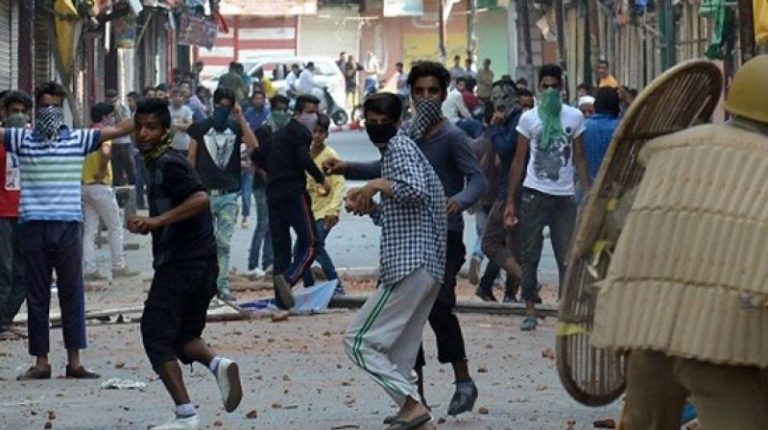
Following the passage of Citizenship Amendment Act, a deluge of misinformation had led to nation-wide protests which quickly turned violent especially in educational institutes like Delhi’s Jamia Millia Islamia and Uttar Pradesh’s Aligarh Muslim University. The protesting mob took to violence and also pelted stones at police force and other security agencies. The police had to use force to control the mob including lathicharge and teargas.

‘When UPA does the NPR, it is okay. When we do it, we are questioned. What is this?’ Amit Shah to ANI

The Union Cabinet, earlier today, had approved the updating of the National Population Register. Following the announcement, usual suspects had started indulging in fearmongering and claimed that it was the first step towards the NRC. Now, in an interview with ANI, Home Minister Amit Shah has completely denied any links between the NPR and NRC.


The Home Minister again reiterated that there was no need for a debate around the NRC as there is no discussion on it in the Cabinet or the Parliament. Amit Shah also requested the Chief Minister of Kerala and West Bengal to not stop the initiative. He said, “It will include the poor people who would then get benefits from the Central Govt. They should not take away the benefits extended to the poor.”


Amit Shah clarified that no one’s citizenship will be revoked if their name is not included in the NPR. He said it is completely different from the NRC. He also iterated that NPR and NRC derive themselves from completely different laws. Shah said that there’s no proof needed for NPR, no documentation is needed from people and it is only for making a register of information.


Issuing further clarification on the NPR, the Home Minister said, “NPR takes away no one’s citizenship. It is a decadal exercise. It maps people who have shifted to new states. It registers new children and removes people who’re dead. Nothing new is being done. Everything has been done in the past.”

Assuaging the concerns of the minorities, Amit Shah said, “It is a Constitutional provision to conduct Census every 10 years. No one should think that it will be used for NRC. Minorities, especially, should not fear this. These are two different practices.” The Home Minister also said that the NPR and Census were being done together as the processes involved were similar.

The Home Minister stated further, “The constitutional provision of census of the country is to be done in 10 years. The last census was done in 2011, so the next one is to be in 2021. The census process will begin in April 2020. Then the mapping of the houses will begin. Complete census and NPR will be in 2021.”

Amit Shah also said that the NPR was first devised during the UPA regime and it was in 2010 that the exercise was first conducted. Appearing a bit exasperated, Shah remarked, “Why wasn’t it questioned then? When we do the same thing, we are questioned. What kind of questioning is this?” He also pointed out that now that the protests around the CAA are dying down, attempts are being made to fan a fresh political debate, involving the NPR and the NRC.

Aligarh Police releases CCTV footage showing rioting students breaking AMU gate from inside, pelting stones on police

Amidst the anti-CAA violence that gripped several parts of north India, especially left-leaning universities, there were allegations raised against the police of barging into the University by breaking down the college gate. However, the UP Police denied those allegations saying they did not break the University’s gate.

Now, the UP Police have released a video that vindicates their stance. In the video, it can be seen that the gate of Aligarh University was broken down by the agitating students from the inside.


Students by thousands rhythmically pushed at the gate of the University in an attempt to break loose the gate while the police officials outside the University feverishly tried to barricade the gate. The gate eventually broke down and many rioters forcibly came out charging at the police personnel deployed outside the University.

The UP police had earlier shared a video in which they are seen appealing to the protestors for maintaining order and warning them against the unlawful gathering. Some policeman were injured from stone-pelting by the violent protestors after which the police had to resort to firing tear gas shells to bring the situation under control.

The video shows that a mob of frenzied protestors broke the AMU gate and charged at the police officials after which the UP Police initiated its action against the protesting hoodlums.

In fact, yesterday the AMU students shamelessly demanded compensation from UP CM Yogi Adityanath for property loss due to police action against them when in the video released by the UP police it can be clearly seen that it was the students who had caused damage to the college property and forced the UP police to take action against them.

A campaign to malign the Aligarh police was diligently put into motion as allegations of them using stun grenade against students also started floating. However, putting an end to such unfounded rumours, the Aligarh police refuted of having used stun grenades against the anti-CAA rioters in AMU.

Kerala: Police file charge sheet against ‘Kiss of love’ organisers under POCSO in connection with online sex trafficking case

0

The crime branch of Kerala police on December 23 (Monday) filed a charge sheet at the POCSO Special Court in Thiruvananthpuram against the model-cum-activist Reshmi R Nair and her husband Rahul Pashupalann in connection with an online sex trafficking case.

Reports alleged that the husband-wife duo was helping a gang that supplied children to paedophiles.

Inspector General (IG) of the crime branch S Sreejith filed the chargesheet. Sreejith had also headed the month-long undercover operation, code-named ‘Operation Big Daddy’ that busted the racket which was indulging in the trafficking of women and minor girls and using them for prostitution, The duo was arrested from Nedumbasserry in 2015.

According to reports, Resmi has been named in the chargesheet for allegedly ‘pairing off’ underage girls with wealthy clients looking for paid sex. Rahul was accused of being aware of the racket, and co-operating with it. The chargesheet has been filed, four years after the First Information Report was registered in 2015.

The chargesheet says that the duo, who were part of the ‘Kiss of Love’ campaign, had trafficked minor girls from Bengaluru to Kerala and used them for prostitution. Out of the 11 detained in 2015, the crime branch had finally arrested the husband-wife duo, along with four other people for their alleged involvement in the sex racket.

Kerala police’s cyber wing stumbled upon the alleged sex racket while investigating a complaint on a Facebook paedophile page called ‘Kochu Sundarikal’.

“We had filed an FIR in the ‘Kochu Sundarikal’ case and decided to pursue more links. This is when we stumbled on the sex racket, though it had nothing to do with the Facebook page. First, we followed the leads of one particular woman who was used for sex work and supplied to clients. Then we tracked down two minors who had been brought in from Bengaluru,” a senior police officer said following the arrest of the accused in the ‘Kiss of Love’ racket in 2015.

Unaware of the fact that the police were probing the activities of a sex racket in which he and his wife were a part, Rahul Pashupalann was closely monitoring the progress of the probe into the Facebook page Kochu Sandarikal in the garb of a morally-right social activist. Ironically, the police cracked both cases simultaneously and his arrest too was recorded on the same day the perpetrators behind the offending Facebook page were arrested.

Both the cases were probed by the same team led by crime branch IG S Sreejith, who launched ‘Operation Big Daddy’ to curb the online prostitution and escorting activities that were found thriving in the state.

Modi govt announces major Railways reforms to break a 150-year-old legacy: Railway Board restructured, cadres to be merged

The Modi government has taken a momentous decision approving the restructuring of the Indian Railways. In the revamped structure passed by the PM Modi-led cabinet, the Railway Board will now have Members for Infrastructure, Rolling Stock and Traction, Finance, Operations and Business Development. A statement issued by the Indian Railways said that the government has taken a bold and historic decision of restructuring the Railways organisation to break a 150-year-old legacy.

Besides, the cabinet has also given its nod to the merger of railway cadres. The eight Group A services of the Indian Railway will now be unified into a central service called Indian Railway Management Services (IRMS). The existing service of the Indian Railway Medical Services(IRMS) will be rebranded as Indian Railway Health Services(IRHS).

Source: Indian Railway officials

The creation of the IRMS will be done in consultation with DoPT and UPSC to facilitate recruitment in the next year. The modalities and unification of the services will be worked out by the Ministry of Railways in consultation with DoPT with the approval of Alternative Mechanism to be appointed by Cabinet in order to ensure fairness and transparency. The process shall be completed within a year.

Read- Tejas Express is the REAL reform: Indian Railways on road to privatisation

Railway Board will no longer be organised on departmental lines, & replaced with a
leaner structure organised on functional lines. It will have a Chairman, who will act as ‘Chief Executive Officer (CEO)’ along with 4 Members responsible for Infrastructure, Operations & Business Development, Rolling Stock and Finance respectively. The Chairman shall be the cadre controlling officer responsible for Human resources (HR) with assistance from a DG (HR). The Board will have distinguished professionals with experience and 30 years of experience as Independent Members.

Putting an end to the “Departmentalism” of the Indian Railway that has long hobbled its progress, the move to amalgamate the disparate services by the Modi government is aimed to break the 150-year-old legacy of the Indian Railways and will put an end to the culture of working in ‘silos’ and expedite decision making and enabling coherent vision for the organisation.

These reforms were long overdue as the Indian Railway, unlike the Railway organisations across the world, is not corporatised but managed by the government of India. There are various departments such as Traffic, Civil, Mechanical, Electrical, Signal and Telecom, etc. The departments are vertically divided and each department is headed by a Secretary level officer in the Railway Board. As a result, such an arrangement engendered the culture of working in silos.

With these reforms, the government will not only achieve unification of diverse services but it will also succeed in improving efficiency and fixing accountability for the lapses, that so far eluded Indian Railway. The reorganisation will provide the officers with the ownership of the projects their service may have previously opposed. Promotion of such officers will be based on their performances in these projects.

Read- Indian Railways: The old and creaky behemoth is undergoing large-scale transformation at rapid pace

The reorganisation will also save cost to the Indian Railway as duplication of the efforts, which hitherto happened, will be stopped. The faster implementation of the projects will ensure that the cost overruns are kept in check. The entire array of services will be thrown open for the Railway staff to learn which will train them to be a multitasker and acquaint them with newer skills that will expand their horizons of job specialisation.

According to the Modi government, the reforms that have been initiated today are in line with the recommendations suggested by various committees in the last 25 years. This reorganisation includes recommendations from Prakash Tandon report(1994), Rakesh Mohan Committee(2001), Sam Pitroda Committee(2012) and Bibek Debroy Committee(2015).

The reforms were undertaken with an overwhelming support of the Railway officers during the two-day conference”Parivartan Sangoshthi” held in New Delhi on 7th and 8th December 2019.

Amruta Fadnavis vs Shiv Sena: Wife of Former Maharashtra CM slams the party for crass demonstration

The war between Amruta Fadnavis, wife of former Maharashtra CM Devendra Fadnavis, and the Shiv Sena has escalated. On Tuesday Fadnavis slammed the Shiv Sena for a distasteful demonstration where female workers of the former BJP ally slapped a portrait of her with slippers and shoes.


Quoting a rhyme, Amruta Fadnavis said that pelting stones and showing slippers were old hobbies of the Shiv Sena and that she will emerge from it stronger. The crass demonstration by Shiv Sena was presumably in response to a tweet where she had said that “One cannot be a ‘Thackeray’ also by just putting ‘Thackrey’ surname after his name ! One needs to be true, principled & should think for betterment of people & party members above his own family & power dynamics !” She had proceeded to tag the Shiv Sena and current Maharashtra CM in the same tweet.


The Shiv Sena appears to be on a spree of crass behaviour. On Sunday, a mob led by Shiv Sena functionaries Samadhan Jukdeo and Prakash Hasbe thrashed a man and tonsured his head outside his residence in Shanti Nagar area for making comments on Uddhav Thackeray on Facebook. Today, instead of condemning the behaviour of the party workers, MLA Aaditya Thackeray went ahead and called the victim a nasty, low-life troll.