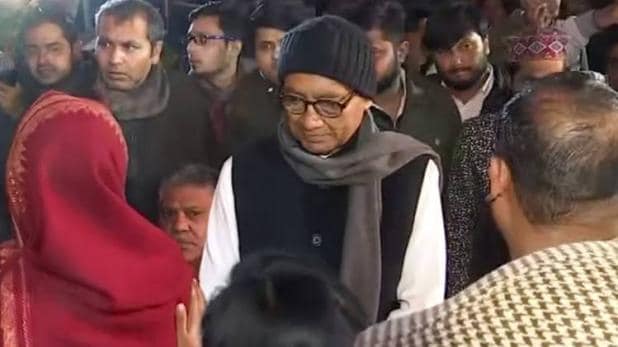
Senior Congress leader Digvijaya Singh was snubbed by the ‘protestors’ at Shaheen Bagh in national capital late on Monday night when he had gone there to express solidarity over CAA and NRC. Singh was reportedly not allowed by the protestors to go on the stage to deliver a speech despite the fact that other Congress leaders like Mani Shankar Aiyar and Shashi Tharoor used the platform.
The ‘protestors’ at Shaheen Bagh insisted that the stage was not political. However, Digvijaya Singh later said that while he was requested to deliver a speech at Shaheen Bagh, it was actually he who did not want to politicise the stage.
Following the embarrassment, Singh today took to Twitter to announce that he also won’t show his documents by tweeting ‘kaagaz nahin dikhayenge’.
However, he was later mocked by netizens where they showed pictures of Singh showing his documents in full glory from the time he filed his nomination for elections.
BJP leader Sambit Patra too mocked Singh over the asinine comment.
चुनाव हारने के डर से @INCIndia ने दिल्ली में दिया walkover?
“कागज़ नहीं दिखाएँगे” तो दिल्ली में कोंग्रेस के candidates Nomination कैसे भरेंगे?
Election Commission आप बिना कागज़ के भी नामांकन लेते है क्या? https://t.co/8yuU28roTi
The self-proclaimed ‘liberals’ seem to be clueless on how to break the Modi juggernaut. From asinine lies that get busted within minutes to even supporting rampaging mobs rioting on the roads, the ‘liberals’ have tried everything. Every time the anti-Modi gang has tried to go hammer and tongs against this government, the narrative has often gone against them.
Right after 2014 Lok Sabha elections, that was termed as a TsuNaMo, the narrative that a humble ‘chaiwallah’ had risen to the rank of the democratically elected and beloved Prime Minister of India was at its peak. From a ‘chaiwallah’ to a man who won a thumping mandate from the people of India was no mean feat. One can understand how that narrative had hurt the Congress party from the fact that Mani Shankar Aiyer, right before the 2014 elections had lashed out at the Prime Minister by saying that he could sell tea at the Congress HQ but will not become the Prime Minister.
To decimate the narrative of the humble chaiwallah becoming the PM of the country, Congress did something that can only be considered a stupid stunt by a desperate party. In 2015, they filed an RTI with the government to check if there was any record of the Prime Minister being a tea-seller earlier.
Back then, Congress supporter Tehseen Poonawalla had filed an RTI application to find out if PM Modi had ever sold tea in his lifetime. Even to a layperson, the RTI was ridiculous considering that is not information the government might have. For example, even if today a man sells tea in the trains, it is unfathomable that he would actually be registered with the government as someone selling tea at a railway station.
The RTI was then taken and the usual suspects had claimed that PM Modi was lying about his humble background. Nobody bought into the charade, but the Congress and its friends in the media did try their best to put an end to the conversation about PM Modi’s humble beginnings by this RTI.
Today, a narrative that is hurting not just the Congress but its ideological allies who are standing by rioting mobs is that of the ‘Tukde Tukde Gang’. Tukde Tukde Gang came to be a colloquial term used to refer to those who have often stood with elements who want to see India break up, or those who have actively worked towards it. One recalls the JNU event that was meant to commemorate terrorist Afzal Guru where ‘Bharat tere tukde honge, Inshallah Inshallah’ slogans were raised. Those ‘tukde tukde’ slogans came to be the identity of the ‘tukde tukde gang’.
The term itself, the ‘Tukde Tukde Gang’ hurt Congress and its ideological allies. Every time someone was seen with Kanhaiya Kumar, he was called a part of the ‘Tukde Tukde Gang’. Every time Rahul Gandhi pulled a stunt supporting the Naxals, the rioting mobs, the Left goons, he was called as the facilitator of the ‘Tukde Tukde Gang’.
Essentially, people found a phrase to define the people they despised for decades.
To counter that, an RTI was filed with the Ministry of Home Affairs. A less-known individual who fancies himself as an activist and threatens people at random with no concrete result filed an RTI with the MHA to find out if a “Tukde Tukde Gang” actually existed.
PEOPLE – IT’S OFFICIAL
The Home Ministry has responded to my RTI saying:
“Ministry of Home Affairs has no information concerning tukde-tukde gang.”
Maanyavar is a liar.
The “tukde tukde gang” does not officially exist & is merely a figment of Amit Shah’s imagination. pic.twitter.com/yaUGjrqI4f
The response to the RTI, obviously said that the MHA had no information on any ‘Tukde Tukde Gang’ considering it is not a ministry’s job to keep track of colloquial phrases. The asininity of this exercise did not stop Congress party workers, that include several self-proclaimed journalists from branding HM Amit Shah a ‘liar’ because he had used the term in the past.
“Home Ministry has no information concerning Tukde Tukde Gang”
This is the official RTI Response. It proves that Tukde Tukde gang is an imaginary creation only meant for political benefits. Credits: @SaketGokhalepic.twitter.com/UwmBBx33Dq
And it’s official . Home Ministry says it has no knowledge of the existence of a “Tukde tukde gang” in response to an RTI query. What about the ‘Khan Market gang?’ ? pic.twitter.com/GOEADESFYC
It’s official. In response to an RTI application, the union Home ministry says there’s nothing as “Tukde Tukde Gang”. The union Home Minister had just invented it as a political tool. His ministry had to clarify pic.twitter.com/rhJUrsAHji
The ‘Liberals’ have been supporting rampaging Muslim mobs and deeply anti-Hindu rhetoric during the anti-CAA protests in the hopes that they would be successful in painting the Prime Minister, yet again, as anti-Muslim. However, with the slogans like ‘Hinduon se Azadi’ and ‘Jinnah wali Azadi’ slogans being raised, that attempt has also fallen flat.
Whenever they deeply divisive agenda fails, the last resort of the ‘liberals’ seems to be to file an asinine RTI and hope that their agenda sticks.
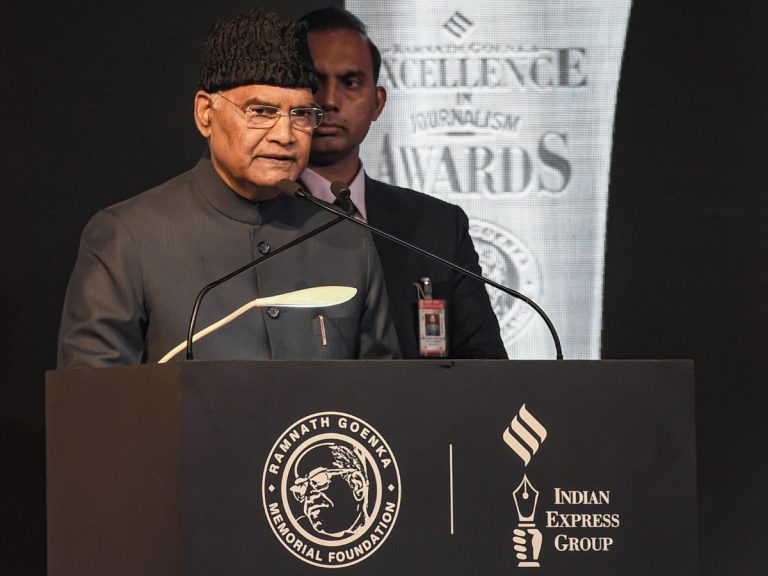
Addressing a gathering at the Ramnath Goenka Excellence in Journalism awards ceremony in Delhi, President Ramnath Kovind said that the fundamental principle of restraint and responsibility has been undermined substantially in the din of the breaking news syndrome. He further said that the “din of the breaking news syndrome” has consumed the media and asserted that fake news has emerged as a new menace whose purveyors proclaim themselves as journalists and taint the noble profession.
“Old-timers would recall the magical touchstone, the five Ws and H (what, when, why, where, who and how), whose answers were essential for a story to qualify as a news report. In the din of the “breaking news” syndrome, that has consumed the media now, this fundamental principle of restraint and responsibility has been undermined substantially. Fake news has emerged as a new menace, whose purveyors proclaim themselves as journalists and taint this noble profession,” the President of India added.
He said that technology has given rise to a new breed of journalism, which stands in contrast to traditional journalism. This development has revived the old debates about the status of facts and opinions, about credibility and authenticity, he said.
“What is desirable is objectivity, which allows journalists to be open to facts, and present all sides of a picture. Fidelity to facts, digging for the truth and keeping one’s lens clean and sharp is imperative.”
“I am aware that journalists tend to wear many hats in the line of their duty. These days, they often assume the role of an investigator, a prosecutor and a judge — all rolled into one. It requires a great deal of inner strength and incredible passion for journalists to play so many roles at a time to arrive at the truth. Their versatility is praiseworthy,” President Kovind noted while delivering his keynote address.
However, he also sought accountability from journalists for their unbridled power. He asked, “But that prompts me to ask if such a sweeping exercise of power is accompanied by genuine accountability?”
Remembering veteran journalist Ramnath Goenka, in whose honour the controversial Ramnath Goenka Awards for Excellence in Journalism is distributed annually, President said, “Ponder for a moment as to what Goenka Ji would have done, had he encountered a crisis of credibility on account of paid news or fake news. He would never have allowed the situation to go adrift and initiated measures for course correction for the whole media fraternity. There is no doubt that journalism has been passing through a critical phase.”
Advising the journalists President Kovind said that the quest for truth is, of course, difficult and easier said than done, however, it must be pursued.
“A democracy like ours deeply relies on the uncovering of facts and a willingness to debate them. Democracy is meaningful only when the citizen is well informed. In that sense, excellence in journalism grants full meaning to democracy.”
“If journalism has to remain relevant, it has to retain its sense of mission, it has to reclaim its values of honesty and fairness. It has to, 24 by 7, reinforce its compact with citizens: That it will not bend, that it will always fight for the truth no matter what the consequence, and that it will remain committed to finding the truth without fear or favour.”
This year’s Ramnath Goenka awards ceremony yet again stoked controversy after two journalists from a far-left fake news website – the Quint with questionable integrity was honoured with awards. Meghnad Bose, who was accused of sexual harassment at the height of the MeToo movement won an award for his propaganda documentary ‘Lynchistan’, while Poonam Agarwal who was booked in a case of abetment to suicide in the matter of an Army Jawan’s death due to a piece of ‘sting’ journalism also won an award for her reports on electoral bonds.
Two women from Delhi’s Shaheen Bagh have sent a legal notice to BJP’s IT cell chief Amit Malaviya for sharing a viral video where a man had claimed that the women ‘protesting’ there are being paid Rs 500 every day to protest.
As per reports, the two women, Nafisa Bano and Shahzad Fatma have sent a defamation notice to Amit Malviya, for sharing the video on social media. The notice mentions that the women are seeking Rs 1 crore for ‘damages’ and an apology from the BJP official claiming that Malviya’s actions ‘constitute the offence of defamation’.
As per reports, the notice has been sent via the office of one Mehmood Pacha, the ‘legal adviser’ of the protestors. The notice reportedly states that Malviya’s actions constitute defamation. The women have alleged that since Amit Malviya is a member of the ruling BJP, therefore has a “vested interest in defaming the mass of protesters”.
They have claimed that the video shared by Malviya was a ‘fraud on the general public’ and an attempt to ‘bring disrepute to the protesters who are bringing the attention of a large number of people on the issues being pressed by this extraordinary exercise of Constitutional freedom’.
As per a report in India Today, the notice stated, “A video posted and endorsed by you on social media site Twitter, which has been played across several media platforms, had alleged that the protesters are taking Rs 500-700 in order to be a part of the protests. Such statements are not only false but also have an effect of defaming the protestors in the national and international community,”
The video mentioned here is the viral video shared by Malviya where a shopkeeper in Shaheen bagh area was seen claiming that the protests are not spontaneous but are being professionally ‘organised’. He had claimed that women there are being paid Rs 500-700 per day to sit and ‘protest’. He had also stated that free food is being provided and ‘protestors’ are being brought on a shift basis to make the venue appear crowded all the time.
Malviya had also claimed that the Shaheen Bagh ‘protests’ are political gameplay of the Congress party.
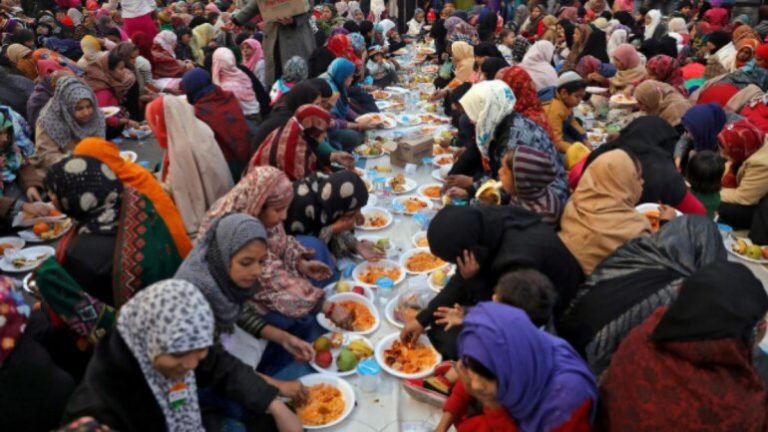
It is notable here that after violent riots, arson, vandalism and violence in Jamia Nagar, Seelampur, UP, West Bengal and several other places by Muslim mobs, Muslims in the Shaheen Bagh area have been ‘protesting’ against the CAA and the proposed NRC for over a month.
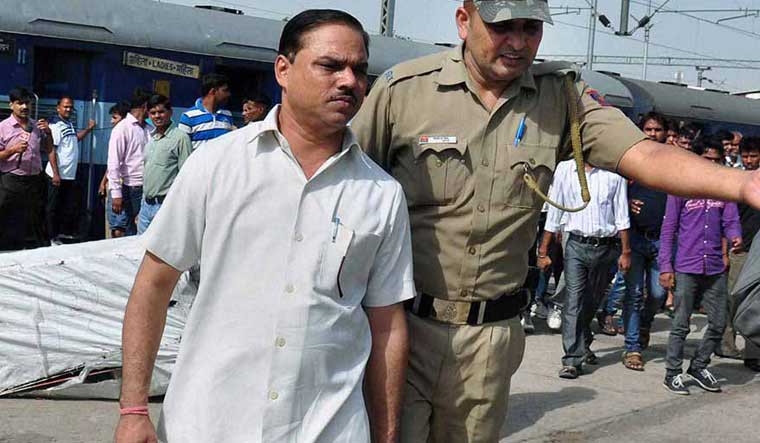
Aam Aadmi Party (AAP) has dropped former Law Minister Jitender Singh Tomar, who was declared as candidate from Tri Nagar constituency and will now field his wife Preeti Tomar instead. The Delhi High Court had cancelled his election for giving false information in his affidavit.
The BJP last week attacked the Aam Aadmi Party for giving ticket to Tomar despite the fact that the Delhi High Court had cancelled his election to the legislative assembly in 2015 polls over his fake degree.
फर्जी डिग्री के बावजूद केजरीवाल ने दिया जितेन्द्र तोमर को टिकट
Earlier this month, the Delhi High Court set aside the election of ex-Delhi Law Minister Jitendra Singh Tomar for providing a false declaration regarding his educational qualifications in his nomination papers for the 2015 assembly elections in Delhi. Tomar was sacked from his post of law minister from the Arvind Kejriwal led AAP govt in Delhi after he was arrested by Delhi police for procuring fake degrees.
Jitender Singh Tomar fake degree case
Jitendra Singh Tomar, who had been the Law Minister in Delhi government, had to resign from the post after allegations of furnishing fake degree surfaced against him. In 2017, the TM Bhagalpur University in Bihar had cancelled the law degree awarded to him. It was found that Tomar had fraudulently obtained the degree with the connivance of some employees of the university. The University had taken the decision after a Delhi police probe had found that Tomar’s law and BSc degrees were fake. Police had found that he had not appeared any exam to get the degrees. Along with Tomar, 16 other people involved in issuing the fake certificates. A former principal and several staffs of the university were named in the case.
AAP leader Jitendra Singh Tomar contested from Tri Nagar seat in 2013 and 2015. In 2013, he lost by around 2800 votes, while in 2015 he won by about 22 thousand votes. Tomar was made Law Minister in the Delhi government in 2015. But in July 2015, he was arrested by Delhi Police in the fake degree case. However, he subsequently managed to secure bail.
Delhi is set to go to polls on 8th February and the results will be declared on 11th February.
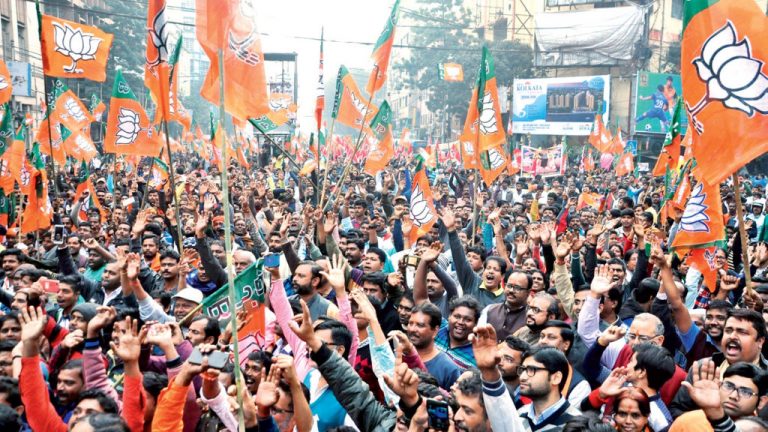
On Tuesday, Bharatiya Janata Party released its second and final list of candidates for the upcoming Delhi Assembly elections.
Bharatiya Janata Party (BJP) releases another list of 10 candidates for the #DelhiElections2020. Tajinder Pal Bagga to contest from Hari Nagar constituency. pic.twitter.com/I61TvNuBzu
BJP’s youth wing leader Sunil Yadav will contest against the incumbent Delhi CM, Arvind Kejriwal, from the New Delhi constituency. Yadav is also the President of Delhi’s BJP Yuva Morcha. Tajinder Bagga, the spokesperson of BJP’s Delhi unit, has been fielded from Hari Nagar against Aam Aadmi Party’s Princess Dhillon.
Meanwhile, BJP alliance partner Shiromani Akali Dal (SAD) has decided not to contest these elections as they had some differences with the BJP over Citizenship Amendment Act. SAD leader Sukhbir Badal had insisted that CAA should also include Muslims and hence, instead of changing their stand, they chose not to contest the elections. Moreover, SAD also believes that the National Register for Citizens should not be implemented.
The first list was released on 17th January by Delhi BJP chief Manoj Tiwari and Union Minister Prakash Javedkar. It featured a total of 57 candidates, including four women. Rebel Aam Aadmi Party (AAP) MLAs such as Anil Bajpai and Kapil Mishra have also been allotted seats. The list also included OP Sharma, Jagdish Pradhan, and Vijender Gupta.
The polls are scheduled for 8th February and the results will be declared on the 11th of the same month.
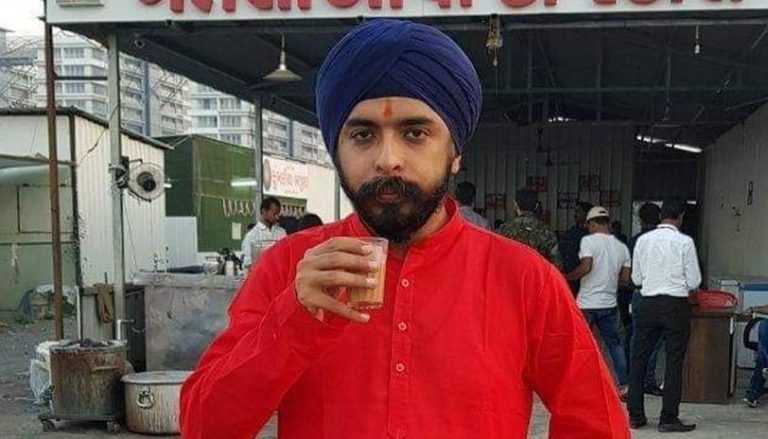
Days after BJP Delhi spokesperson Tajinder Pal Bagga was trolled online for not making it to first of candidates contesting the upcoming Delhi Assembly elections, the second and final list released by the party shows him contesting from New Delhi’s Hari Nagar constituency. When the first list of candidates was announced and Bagga’s name was missing, he was relentlessly trolled for not making it.
Bagga will face Aam Aadmi Party candidate, Princess Dhillon who is also known as ‘Rajkumari Dhillon’. She has assets worth Rs 51 crore as per her election affidavit. She is the second richest AAP candidate after RK Puram candidate Parmila Tokas who declared assets worth Rs 80 crore.
Delhi assembly elections for the 70 seats will be held on 8th February and the results will be declared on 11th February. 21st January, today, is the last date for filing nominations.
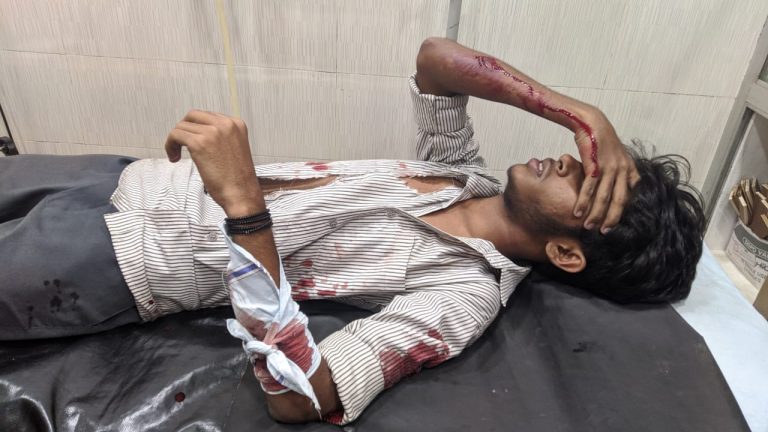
Members of the Students’ Federation of India (SFI), a Communist outfit, attacked Karyakartas of the Akhil Bharatiya Vidyarthi Parishad (ABVP) at the SVR NSS College Vazhoor at Kottayam in Kerala on Monday, the ABVP claimed. The saffron students’ organization posted images of its injured karyakartas on social media that showed a grievously injured student.
The ABVP claims that the SFI has been trying to create unrest inside the campus for a while seeing the saffron organization’s growing popularity. The attack comes after the ABVP held a conference at the campus last Thursday which is said to have attracted significant participation.
SFl goons of vazhoor NSS College, Kerala has unleashed a brutal violence against ABVP Karyakarthas.. SFI unit has been trying to create problems in Campuses, soon after they witnessed a massive participation of students in ABVP’ s Unit conference.. #redterrorism#leftattackpic.twitter.com/R7j74vsQcI
The ABVP’s allegations against the SFI comes at a time when tensions are still simmering between the left and saffron student organizations at the Jawaharlal Nehru University (JNU) in Delhi. At JNU, the Left is accused of initiating the cycle of violence that culminated in a massive brawl on the 5th of January. The chain of events on the 5th is still unclear as of this moment.
Kerala, of course, has witnessed a lot of violence between the Left and Saffron. The persecution of alternate political ideologies when the Left assumes power is a worldwide phenomenon and Kerala is certainly not at odds with the trend.
Jeff Bezos, the founder of Amazon Inc and the owner of Washington Post visited India for a tour even as several small traders are planning to stage protests against the retail giant for distorting the local market. India’s antitrust chief Ashok Kumar Gupta told Reuters on Tuesday that big e-commerce companies in India should not offer deep discounts which can potentially hurt and small-scale brick and mortar retailers in India.
Amidst the ruckus, Union Minister Piyush Goyal had decided not to meet the WaPo owner Jeff Bezos during his three-day India visit. Following that, Prime Minister Modi too did not meet Jeff Bezos personally. Under such circumstances, the government has issued a detailed clarification of its views over the matter.
What are the main issues with Amazon and Flipkart operations in India?
As pointed out in the recent Competition Commission of India (CCI) order of Jan 13, 2020, the four main concerns regarding Amazon and Flipkart operations in India are deep discounting, preferred sellers on the marketplaces, preferential listing/promotion of private labels and exclusive launch of mobile phones.
Let us take these issues one by one. How do Amazon and Flipkart engage in deep discounting and how is it anti-competitive?
Both Flipkart and Amazon continue to make losses. Flipkart India Pvt Ltd had a turnover of Rs. 30,931 Cr and loss of Rs 3,835 Cr in the fiscal year ended 2019. This shows Flipkart is burning cash through deep discounts. It is subsidizing prices for their multiple seller entities. At Amazon, seller services losses are to the tune of 5,685 Cr. It is observed that there is deep discounting and it is used for subsidizing vendors.
Also, as mentioned in the CCI order, communications sent by Flipkart and Amazon to their sellers reveal that they are incurring a part of the discounts offered during the big sale events like the Big Billion Days (BBD) of Flipkart and the Great Indian Festival of Amazon. Certain smartphone brands/models are available at significantly discounted prices on these platforms and are sold largely through the sellers identified, as the platforms’ ‘preferred sellers’. This hurts competition in a negative way as retailers in phone business are not able to compete with the heavy discounts offered by these marketplaces due to their access to global funds.
What does ‘Preferred sellers on the marketplace’ mean and how does it hurt competition?
Both Amazon and Flipkart have their own set of preferred sellers and these preferred sellers have nexus with the e-commerce platforms either by way of direct or indirect ownership or some understanding. It can be seen that there appears to be an exclusive partnership between smartphone manufacturers and e-commerce platforms for the exclusive launch of smartphone brands. This means that certain sellers are given benefits which may restrict actual competition on the platform. This hurts competition as it does not allow other sellers to be listed similarly.
Is there a Preferential listing/promotion of private labels on Flipkart and Amazon?
Flipkart lends the word “Assured Seller” to the products sold by its preferred sellers such as Vision Star, Flashstar Commerce and Flashtech Retail and allegedly creates a bias in favour of preferred sellers to the detriment of other sellers. Amazon lends the word “Fulfilled” to the products sold by preferred sellers and further allegedly creates search bias by listing its preferred sellers in the first few pages of the search results. The products sold by Cloudtail India and Appario Retail allegedly dominate the first few pages of search results. This clearly indicates that there is a Preferential listing/promotion of private labels on Flipkart and Amazon.
What does the Exclusive launch of mobile phones mean and how does it impact Indian businesses?
Mobile manufacturing companies like One Plus, OPPO, and Samsung have exclusively launched several of their models on Amazon. Similarly, Vivo, Realme, Xiaomi etc., have exclusively launched several of their models on Flipkart. In 2018, Flipkart launched 67 mobile phones and Amazon launched 45 mobile phones exclusively on its platform. This has the potential to negatively impact small retail shops selling mobile phones.
How is the Government Plugging the loopholes and are the practices in violation of Indian Law?
These seem to be prima facie a matter of violation of competition law and therefore the Director-General of Competition Commission of India has ordered an investigation into the same in its order of Jan 13, 2020. Also, the Ministry of Commerce and Industry is looking at the FDI aspect of the matter.
The FDI Policy is clear on the matter and from 2000 has stated that FDI up to 100% is permitted for e-commerce activities but such companies would engage only in business to business (B2B) e-commerce and not in retail trading. In fact in 2019 January, too, the Government had issued a clarification on its press note 2 of 2018, which clarified that B2C e-commerce, which is multi-brand retail through the inventory-based model, has all along remained prohibited for FDI. Along with this, the Government is engaged in taking to these marketplaces to ensure proper compliance with Indian law in both letter and spirit.
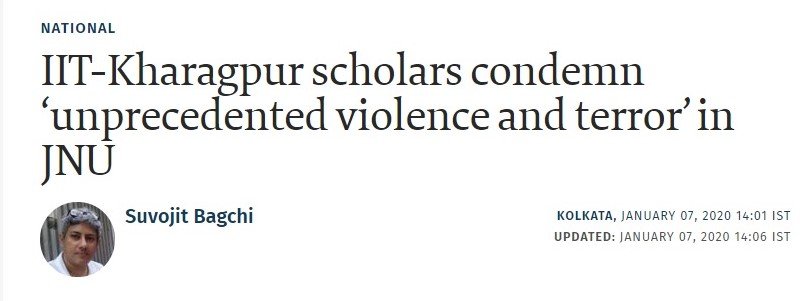
On the 7th of January, The Hindu published a report that claimed that ‘scholars’ at IIT-Kharagpur had issued a statement in solidarity with the students of JNU. However, as it turns out, it was a gross violation of journalistic principles on part of the mainstream media. In the report, the ‘scholars’ were, as expected, against the government and the Delhi Police and it was a unique opportunity for the media to run its conventional anti-BJP campaign.
The headline of The Hindu report
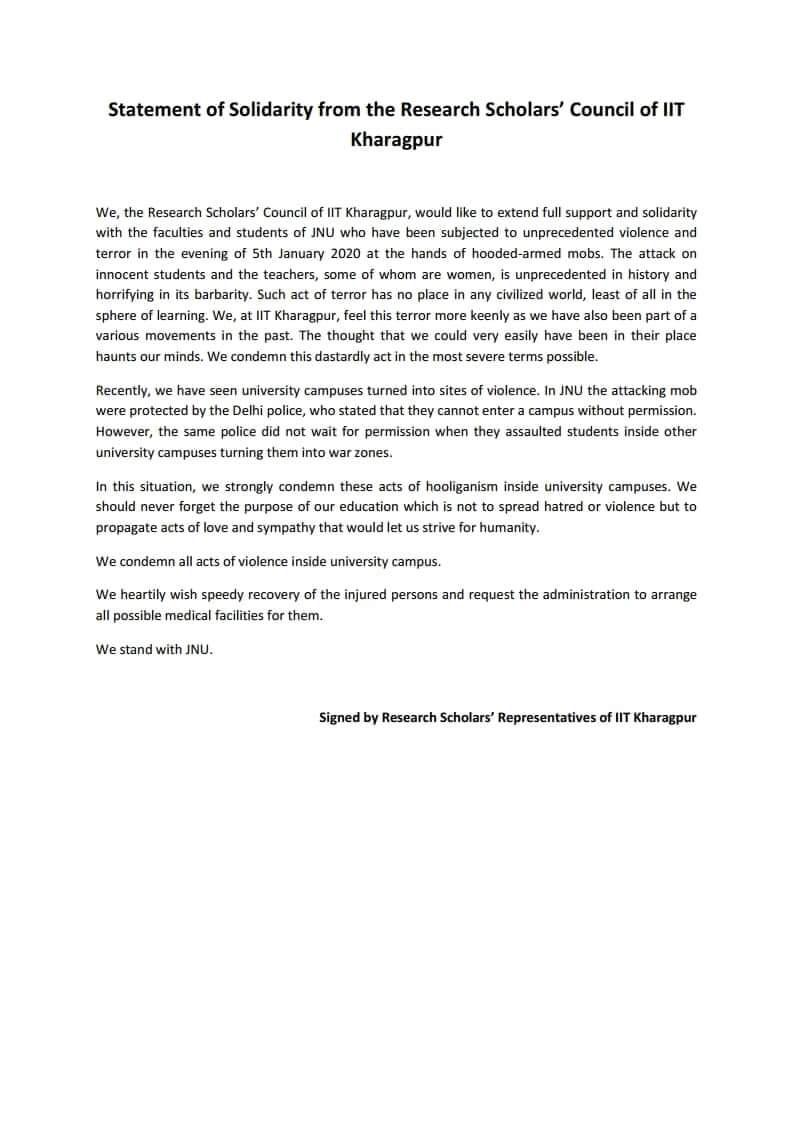
The entire report published by The Hindu is based on a statement that was not issued by any official organisation within the institution. We were told by sources that the statement was most definitely not issued by the Research Scholars Council as it claims.
In fact, several members of the Council, we are told, came to know of it long after it was issued. It condemned the “unprecedented violence and terror” in the JNU campus led by “hooded-armed mobs.”
The statement said, “Such act of terror has no place in any civilised world, least of all in the sphere of learning. We, at IIT Kharagpur, feel this terror more keenly as we have also been part of various movements in the past.” It added, “In JNU, the attacking mob were protected by the Delhi Police who stated that they cannot enter the campus without permission. However, the same police did not wait for permission when they assaulted students inside other university campuses, turning them into war zones.”
The unauthorized statement which claimed to be from Research Scholars Council
If one notices, interestingly, the so-called statement that The Hindu published had no signature or any official stamp. Essentially, any media house would be expected to confirm whether the statement was, in fact, issued by the appropriate authorities.
If the Research Scholar’s Council of IIT-KGP had indeed issued this statement, the council would have to take approval at multiple levels to ensure that the statement, with the official signature, can be released to the press. We have learnt that no such approval was taken and this was unilaterally released to the press by a handful of Left students from the University. It was thus gross malpractice for The Hindu to trust and unverified, unsigned statement as authentic and paint it as the voice of the entire Research Council.
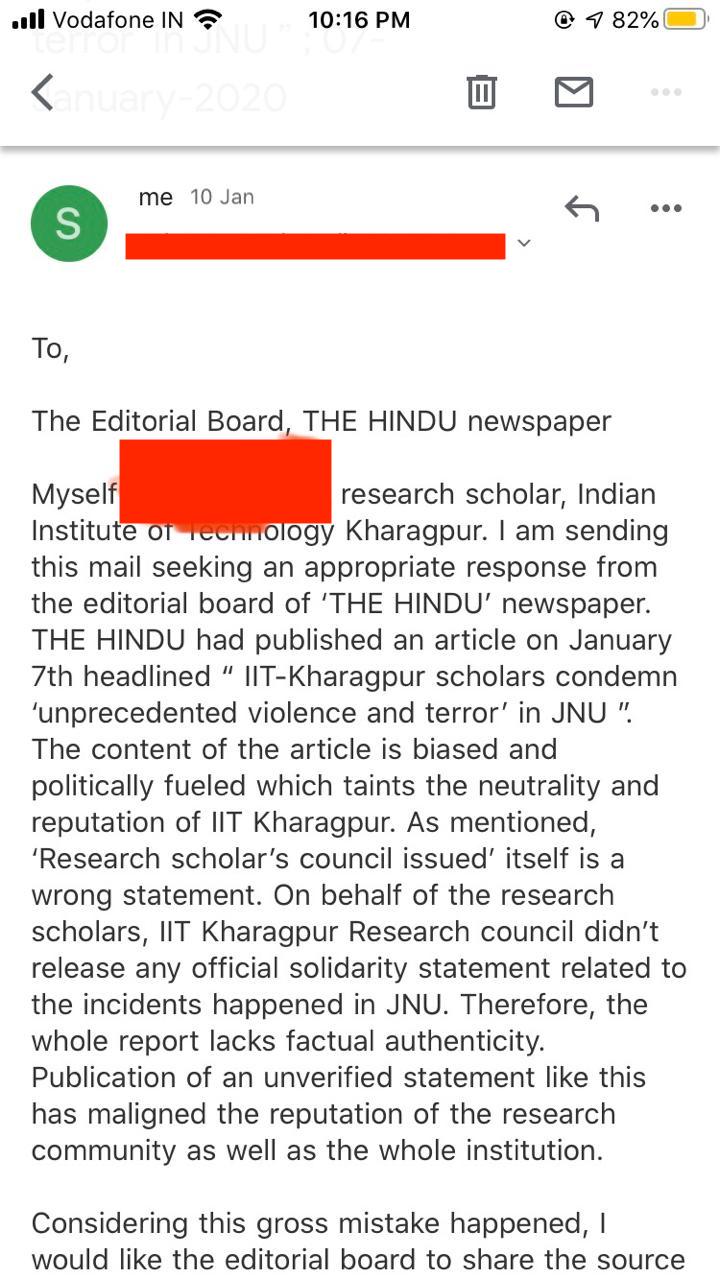
Emails were also written by a research scholar of the institution to the Editorial Board of The Hindu demanding an answer for the factual inaccuracies in the report. These emails have been accessed by OpIndia. The first email was sent on the 10th of January. It said, “On behalf of the research scholars, IIT Kharagpur Research Council didn’t release any official solidarity statement related to incidents happened in JNU. Therefore, the whole report lacks factual authenticity.” It adds, “Publication of an unverified statement like this has maligned the reputation of the research community as well as the whole institution.”
The email sent on the 10th of January
The email demanded that the report be withdrawn and sought an immediate response over the matter. Five days passed but still, there was no response from the editorial board of The Hindu.
The second email sent on the 15th of January, again requested the newspaper to correct its mistake. It said, “Further silence on this matter will only lead to the confirmation that this was a politically motivated by The Hindu which lacked authenticity.” Five days have passed since the second letter and ten days since the first letter was sent and yet, The Hindu hasn’t bothered to correct its obvious bit of fake news.
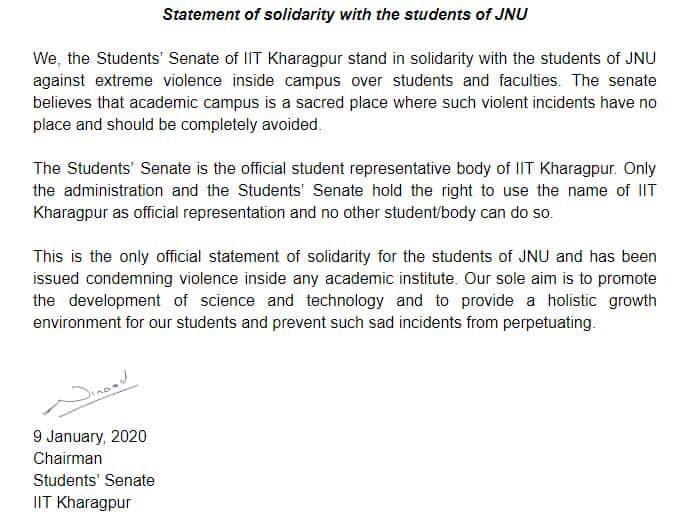
We can confirm that a statement was issued on the 9th of January by the Students’ Senate, the official student representative body of IIT-Kharagpur. The statement, which is clearly in response to the earlier unverified statement peddled by The Hindu, is completely politically neutral unlike the previous statement and makes it clear that the Students’ Senate is the only official body authorized to make a statement on behalf of the students of IIT-Kharagpur.
Statement by the Students’ Senate, IIT-Kharagpur
The statement by the Students’ Senate condemns the violence but neatly avoids any blame game over the matter like the unauthorized statement engaged in. It reiterates that this was the only statement issued by the students of IIT-Kharagpur over the JNU Saga.
One must note that The Hindu had published a report attributing the wildly strong and sweeping to the Research Scholar’s Council. The unverified statement, which was found to have been not released by the Council even went on to blame sweepingly blame the police for it. The actual statement, which was issued only to dispel the fake news spread by The Hindu has been released by the much larger Student’s Senate and has taken requisite approval from the various authorities in IIT-KGP. The statement of the Student’s Senate is also extremely neutral in nature and does not assign blame, only condemned violence in generic terms.
The shoddy reporting by The Hindu is further evidence of the fact that it is the mainstream media that is more interested in the ‘student movement’ against the CAA and NRC and the JNU saga than the students themselves. We have documented extensively the manner in which the mainstream media has struggled hard to build the narrative of a ‘student movement’ against the government despite the fact that no such movement existed on the ground. In the current instance, The Hindu used an unauthorized unverified statement by motivated individuals within IIT-Kharagpur to build the narrative that the entirety of IIT-Kharagpur was against the government over the violence at JNU.