Home Blog Page 5777

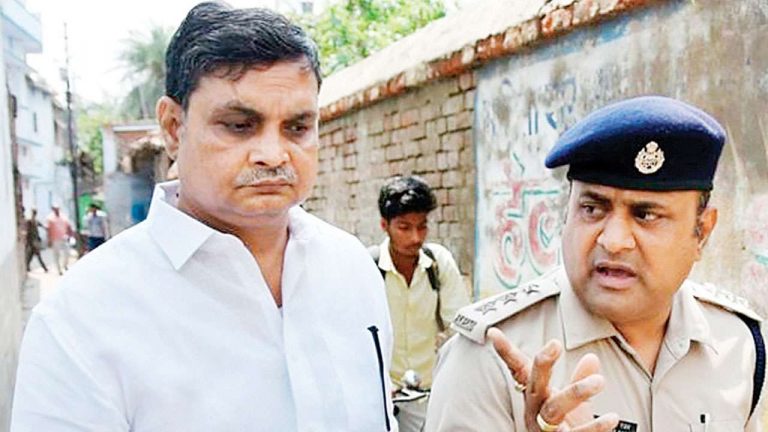
Muzaffarpur shelter home case: Delhi’s POCSO court convicts Brijesh Thakur, 18 others for rape and exploitation of minor girls

South Delhi’s Saket court on Monday convicted 19 people, including NGO owner Brajesh Thakur in the Muzaffarpur shelter home sexual assault case. The court convicted Thakur for aggravated sexual assault under the POCSO Act and gang rape while one accused Mohammad Sahil alias Vicky was acquitted for lack of evidence.

Additional Sessions Judge Saurabh Kulshreshtha convicted the former Bihar People’s Party (BPP) MLA Brajesh Thakur for aggravated sexual assault under POCSO Act and gang-rape.

The offences entail a maximum punishment of life imprisonment. The quantum of punishment will be announced by the court on January 28, 2020.

Last week, Justice Kulshreshtha rejected the plea filed by Thakur seeking witness testimonies to be dismissed on grounds of unreliability. Thakur claimed in his plea that the prosecution witnesses in shelter home sexual assault case were not to be trusted as investigations into the allegations of murder were based on their statements. However, rejecting the plea, the Justice said the case related to the sexual assault is different from that of the murder of some.

Other convicts in the case include Indu Kumari (Principal), Meenu Devi (house mother), Manju Devi (counsellor), Chanda Devi (house mother), Neha Kumari (nurse), Kiran Kumari (helper), Hema Masih (PO), Ravi Roshan (Child Protection Officer), Vikas Kumar (CWC), Roji Rani, Vijay Tiwari (Brijesh’ driver), Guddu Kumar (shelter home staff), Krishna Kumar (shelter home staff), Ramanuj Thakur (shelter home staff), Shajista Parveen (Brijesh’ associate), Ashwini Kumar (a doctor), Dilip Kumar (CWC chairman) and Ramashankar Singh.

Another accused Premila is still absconding. Shajista’s nephew Vikki alias Mohammad Sahil was acquitted for lack of evidence.

The shocking incident of Muzaffarpur shelter home came to light in June 2018 when the Tata Institute of Social Sciences (TISS) submitted a report, based on conversations with several girls at the home.

The shelter home was housing the girls between the ages of 7 to 17 and many of the girls were suffering from speech-impairment. It was reported that they were given sedatives in the dinner and raped during the night and the inmates were brutally beaten regularly by the shelter home staff, including women and compelled the girls to have sex with the visitors.

Read: Muzaffarpur sexual abuse case: CBI takes over the investigation, case registered against officers and employees

Over 42 girls were allegedly raped and sexually abused at a shelter home named Balika Grih in Muzaffarpur, run by Brajesh Thakur, the chief of a state-funded NGO called Seva Sankalp Evam Vikash Samiti.

An FIR was lodged against 11 people, including Thakur, on May 31. The probe was later taken over by the Central Bureau of Investigation (CBI). It also revealed that ex-minister Manju Verma’s husband had links with accused Brajesh Thakur.

If you believe Google Trends, BJP has an advantage over AAP in Delhi: Here is how

In the middle of the Lok Sabha elections, I had written an article looking at Google Trends, which showed the BJP miles ahead of the Congress and the rest of the opposition. On a personality basis, Narendra Modi was even further ahead and Rahul was simply nowhere. And now, it is time to analyse the Delhi elections according to Google Trends.

The election turned out exactly the same way.

Here is what the map looked like in the 30 days before April 24, 2019.

Untitled
Map in the 30 days before April 24, 2019

Blue for the BJP and red for the Congress. On April 24, 2019, Google Trends said India was an ocean of blue. How was the Congress going to win when nobody even cared about what they had to say?

I had also pointed out how Google Trends appears to have accurately captured the Congress surge in the three Hindi heartland states in Dec 2018. Just look at the Google Trends map for the period Sept 1, 2018, to Dec 1, 2018.

Untitled
Google Trends map for the period Sept 1, 2018, to Dec 1, 2018.

See how the BJP seems ahead almost all across the Hindi heartland except for Rajasthan, Madhya Pradesh and Chhattisgarh, the three election-bound states.

If Google’s wisdom seems so profound in states with huge rural populations, surely it should be taken even more seriously in Delhi. A purely urban electorate saturated with media and the internet.

So what does the BJP vs AAP comparison look like in the last 30 days in Delhi?

Untitled
BJP vs AAP comparison

First of all, take a moment to admire just how accurately Google Trends picks up what is going on in the minds of the public. What is that sharp red spike for AAP?

It’s from Jan 14, 2020.

And when did AAP announce its candidates? On Jan 14, 2020, of course! You don’t even have to look that up. Google Trends knows everything.

Read: Google Trends data shows that Indians hardly have any interest in Rahul Gandhi

But other than that, the BJP (blue) dominates over AAP (red) almost uniformly. And you can see that interest in BJP is peaking, rising almost in hockey-stick fashion.

This is bad news for AAP.

Wait! There is an obvious objection and one must address it here. The BJP is a national party, while AAP is not. Perhaps BJP is getting more interest simply because people think about BJP in the context of a much wider range of issues, while AAP only matters in local politics?

So let us see the related searches for BJP in Delhi, according to Google trends.

Untitled
Related searches for BJP in Delhi, according to Google trends.

It is evident that all these searches are related to the state election and not national issues.

So we know two things for sure. First, BJP is getting much more interest in Delhi than AAP is. Second, the interest in BJP is driven primarily by local issues and not national issues.

Now I know there are some opinion poll agencies (with absolutely pathetic track records, I must add) which have projected the Delhi election as some kind of one way victory for AAP. I don’t trust them. I’d rather look at Google Trends data.

Read: Business Standard withdraws article after OpIndia fact-check, when will others show the same ethics?

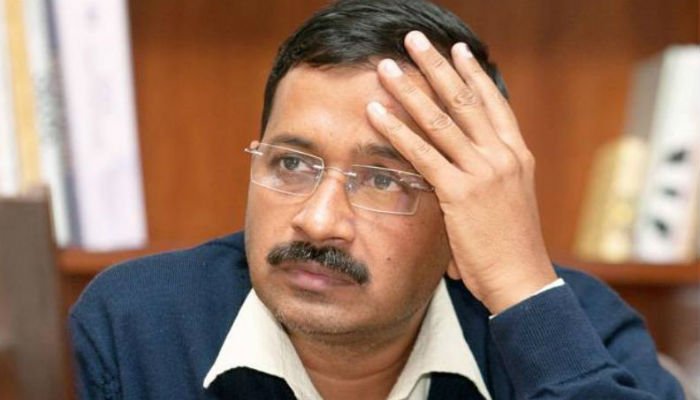
By now, everyone has noticed that Kejriwal has maintained a safe distance from the CAA issue. He’s stayed away from Shaheen Bagh. In fact, in recent days, top liberals have also been begging with Shaheen Bagh protesters to temporarily withdraw their movement for strategic reasons.

Is Kejriwal confident? I doubt this.

Again, keep in mind that Delhi is a 100% urban environment where media and internet matters a lot. And AAP is media savvy, known to have an extensive online presence. Despite this, Google Trends shows interest in BJP clearly ahead of AAP.

One last thing. AAP is synonymous with Kejriwal. How about we compare BJP vs Arvind Kejriwal?

Untitled
BJP vs Arvind Kejriwal

Again, pretty big and uniform lead for BJP and the gap only widening in the last few days. If you ask me, that’s the classic surge that the winner gets towards the end.

Watch: RJD MP Ashfaque Karim continues anti-CAA speech even while his trousers fall down

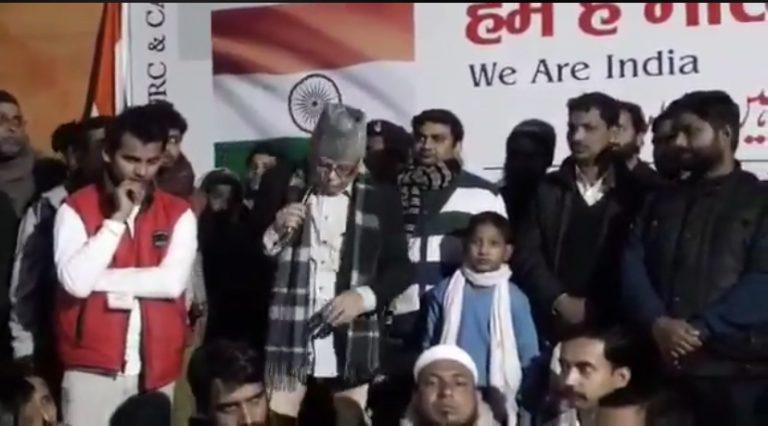
Addressing an audience in Bihar’s Araria, RJD Rajya Sabha MP Ashfaque Karim had an embarrassing moment while addressing the audience about the alleged cons of the Citizenship Amendment Act. While criticising the citizenship law as discriminatory against Muslims, Karim’s pants accidentally fell off, sending the audience into fits of laughter.


As can be seen in the video attached in the above tweet, Karim’s pants slip down as he asserts that everyone except Muslims who has come to India prior to December 31, 2014, will be granted citizenship. Despite the embarrassment, Karim continues his speech against the law unfazed.

“Everybody knows that the law pertains to people who came to India prior to December 31, 2014, except Muslims. The government, through this law, will grant citizenship to everyone except Muslims from Pakistan, Afghanistan and Bangladesh,” Karim said.

Citizenship Amendment Act was passed by the parliament in December to grant citizenship to the persecuted minorities of Pakistan, Afghanistan and Bangladesh who have fled to India on or before December 31, 2014.

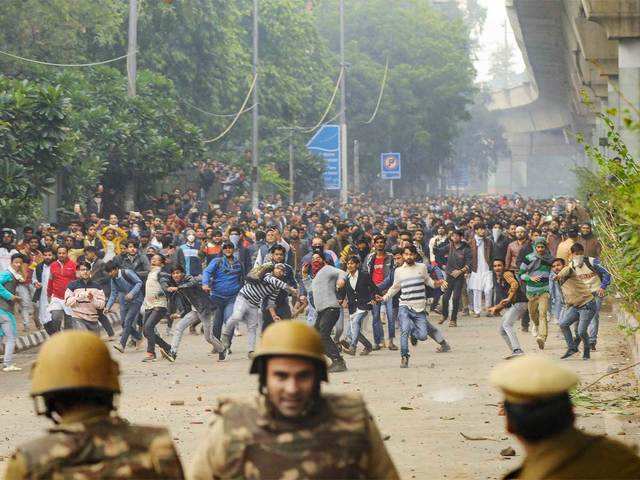
The passage of the Act had sparked off protests across some parts of the country, especially leftist bastions such as JNU, Jamia Millia University and Aligarh Muslim University. RJD too had joined in the anti-CAA protests by calling out a bandh in Bihar on December 21, 2019. However, during the Bandh, armed RJD workers and supporters were seen running amok on the streets of cities of Bihar and vandalising auto-rickshaws and private vehicles.

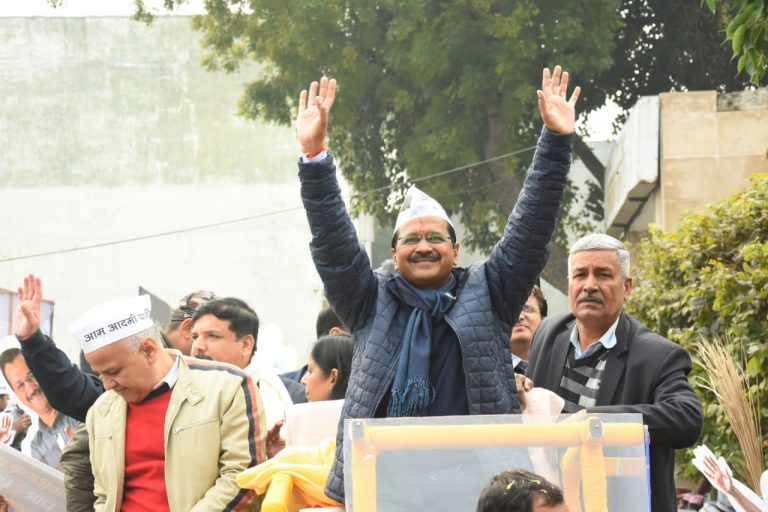
Delhi: AAP celebrates Kejriwal’s nomination as fire in transport dept burns all documents, BJP leader Kapil Mishra alleges bigger conspiracy

A fire in New Delhi’s Transport department today has gutted all documents related to the Delhi Transport Department.


As per news agency ANI, Deputy Chief Fire Officer Sunil Chaudhary has said that an investigation has been launched regarding the same.

However, BJP leader Kapil Mishra has alleged a bigger conspiracy in the fire in Delhi’s transport department.


Taking to Twitter, Mishra said that since Aam Aadmi Party is losing the upcoming Delhi elections, the ruling party got the documents relating to scams destroyed. “It is the most corrupt department of Kejriwal,” Mishra alleged. BJP leader Harish Khurana too raised suspicion on the timing of fire in transport department.


In June 2016, AAP leader Gopal Rai had become the third Transport Minister in Delhi government to resign in less than three years. Controversial AAP leader Jitender Singh Tomar was embroiled in a fake degree scam in which Kejriwal backed him to the hilt. Kejriwal tried to defend Tomar till the very last moment, but when multiple investigations and proofs began coming out in public, Tomar was finally forced to resign, after he was arrested on charges of fraud and cheating by the Delhi Police. AAP leader Asim Ahmed Khan was sacked by AAP supremo Kejriwal allegedly over graft charges, although Khan himself blamed “AAP’s internal politics”. The minister wasn’t given any notice of this move and was sacked in a dramatic fashion, in an apparent bid to show-case a zero-tolerance-to-corruption attitude.

Read: Resignation of AAP transport minister Gopal Rai: Health reasons or something more to it?

Gopal Rai, however, quit as transport minister over ‘health reasons’. Even then Delhi’s transport department had been embroiled in allegations of corruption. Current Transport Minister of Delhi, Kailash Gahlot, has also been allegedly involved in corruption. In October 2018, Income Tax Department raided 16 locations of Gahlot over alleged tax evasion case.

Meanwhile, neither Aam Aadmi Party official Twitter account nor Delhi CM Arvind Kejriwal, who is busy filing his nomination today, have tweeted on the fire at transport department. In fact, all official Twitter handles are tweeting celebrations over AAP supremo Arvind Kejriwal’s nomination from New Delhi constituency ahead of Delhi Assembly elections.

Union Budget 2020: All you need to know about the customary ‘Halwa Ceremony’ preceding the budget

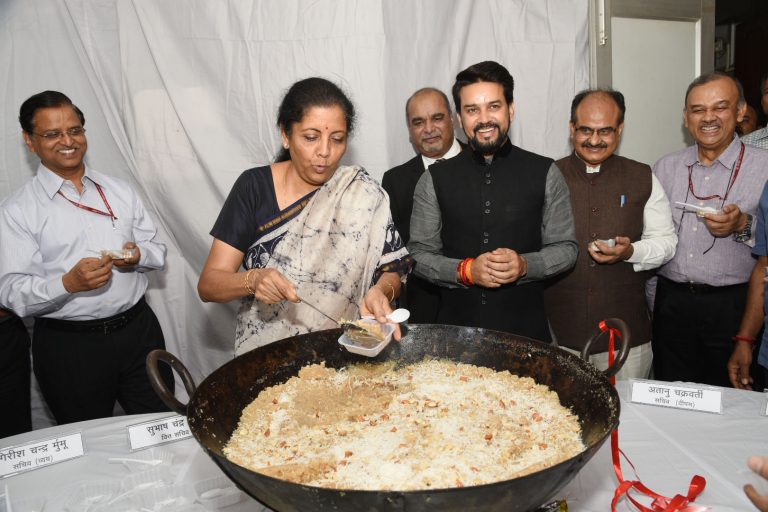
Union Minister of Finance Nirmala Sitharaman today presided over the customary ‘Halwa Ceremony’ that is observed every year by the current finance minister to mark the beginning of the process of printing the documents related to the budget. Sitharaman, along with colleagues, observed the symbolic ritual at the North block.


However, many people, including NDTV journalist Nidhi Razdan chose to take a swipe at the government ahead of the traditional ‘Halwa Ceremony’ preceding the yearly Budget without caring to know about its genesis and the significance attached to it.


In what appeared as a jibe against the government, Nidhi quoted a tweet informing about the commencing of the ‘Halwa Ceremony’ by saying “Just leaving this here”. However, when one Twitter user schooled Nidhi on how the ceremony has been a decades-old tradition at the ministry and has been followed by many of Sitharaman’s predecessors, Nidhi went on the defensive, claiming she was only being sarcastic.


The ‘Halwa Ceremony’ is an age-old practice, followed by successive Union governments a few days before the presentation of the budget in the parliament. During the ceremony, halwa is prepared in a large container and served to the finance ministry officials after which they move to the basement of the North Block to prepare and print the budget documents.

The staff at the ministry of finance work in total secrecy at the basement, ensuring there is no leakage of the budget details. The Halwa ceremony is held to appreciate the staff and officials for their hard work and to hail their efforts in the coming days as they remain locked in the North Block basement.

They remained cut-off from their families until the budget is presented by the finance minister. Communications and travel are restricted until the budget is presented in the parliament by the Finance Minister.

The Union Budget 2020 is expected to be announced by the Finance Minister on February 1, 2020. This is the seventh annual budget to be presented under the PM Modi government at the centre.

Commerce Ministry recommends lowering limits on import of duty-free alcohol and tobacco, is it contrary to global norms?: Here are the facts

The Commerce Ministry has recommended a restriction on the purchase of tax-free alcohol at duty-free shops to one bottle, according to reports. The measure has reportedly been recommended with an eye to reducing the import of non-essential goods into the country. The current limit is 2 litres of alcohol at such shops.


The recommendations also include the prohibition of the purchase of cigarette cartons at these shops. These recommendations are reportedly part of proposals made by the Commerce Ministry for the upcoming budget which is set to be unveiled on the 1st of February bu Finance Minister Nirmala Sitharaman.

People on social media were not too pleased with the reports and took to Twitter to voice their disenchantment.


However, as it turns out, the recommendations made by the Commerce Ministry are not entirely radical or in contravention of existing global norms. For instance, the United States of America permits individuals to bring one litre of alcohol into the country duty-free. The limit goes up to five litres if the alcohol is brought from U.S. insular possession such as the U.S. Virgin Islands or Samoa.

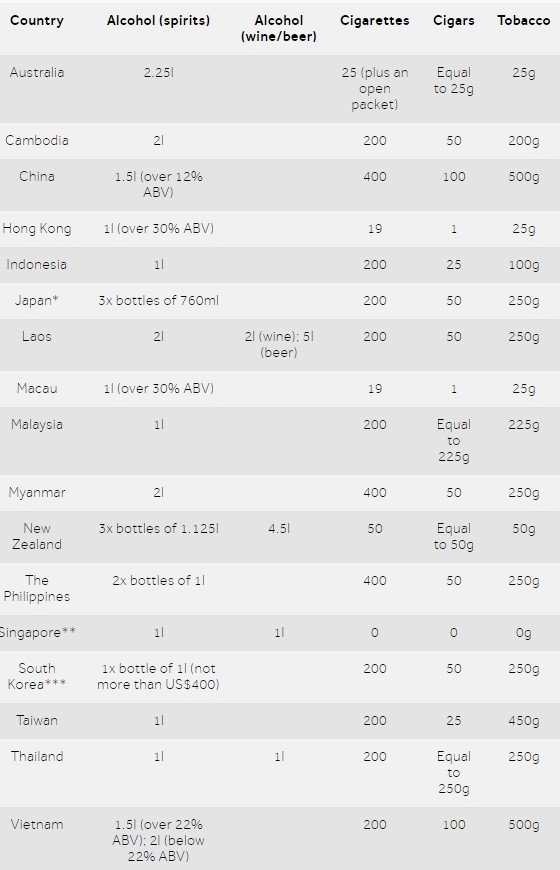
As of 2017, countries like Japan, Thailand and Singapore have such restrictions as well. Japan restricts it to three bottles of 760 ml each while Thailand limits it to one litre. Singapore has the same limit as Thailand. China has it at 1.5 litres while Australia limits it at 2.25 litre and Cambodia at 2 litres. Macau and Taiwan have it at 1 litre. Thus, India should it decide to limit the purchase of alcohol at duty-free shops to 1 litre will not be as drastic or radical as some Indians are believing it to be.

Source: Business Traveller

When it comes to restrictions on cigarettes and tobacco, India has the limit at 100 cigarettes and 25 cigars or 125 gm of tobacco per passenger. This is, again, not radically different from other countries as can be seen from the table which shows data from 2017. Australia limits the number of cigarettes and cigars to 25 and equal to 25 gm respectively, the same for Hong Kong is 19 and 1. Singapore has it at 0. However, admittedly, the other countries have set the bar much higher at either 200 cigarettes and a couple at even 400.

Thus, if India decides to bring the limits down a notch, it will neither be without precedent nor it would something drastic as most would like to believe. However, it is imperative that the Finance Minister ensures these are not part of the budget’s core plans to boost economic growth. By default, these measures cannot be the go-to method for economic revival. It can be said with a relative amount of certainty that when the budget is declared, restriction on duty-free tobacco and alcohol will not be the first thing that people will look out for on the 1st of February.

Union Minister of Railways, who announced the interim budget in 2019, confirming the recommendations, told TOI, “It’s not a question of large or small (quantities). Even under GST, while alcohol is not included, tobacco is a sin good. As a nation, we are not encouraging the import of alcohol.” “All that we have done is highlighted that these are global best practices. I am not sure if India can afford to be so liberal, particularly when it relates to liquor and cigarettes,” he added.

Lies, deception and misinformation of anti-CAA protests: How University campuses have wrongly become a battleground

It is manifestly clear from an earnest reading of the Constitution of India, Article 14 in particular, that the Citizenship Amendment Act (CAA) is neither anti-Muslim nor it violates Article 14 and 15 of the Indian Constitution. One of the arguments put forward by the individuals, mostly those studying in universities and law schools, who are opposing it is that CAA fails on the touchstone of Article 14 of the Constitution of India.

The principal test of Article 14 as per the constitution is reasonable classification, which should be based on intelligible differentia. The classification must be in nexus with the object of the act which is sought to be achieved. The object of the act is to deal with the discrimination of religious minorities who have been persecuted in three neighbouring countries i.e. Afghanistan, Pakistan and Bangladesh. Based on such object, the classification is reasonable because it acknowledges the unequal nature of persecuted minorities vis-à-vis Muslim majorities of those specific countries which is justified in making such differentiation and should be considered valid as per the Constitution. Secondly, Article 15 of the constitution applies to only citizens and it will not be applicable to persons as defined under Article 14 of the Constitution.

Read: Fact check: Does Citizenship Amendment Act violate Article 14 of the Indian Constitution

But unfortunately, there is a lot of misinformation which is being spread about the Amendment Act across various parts of India, especially in the educational institutions. Protests are being organised in the country by individuals and students who are not aware about the exact contents of the Act and such people are engaging in vandalism and disruption across country. Apart from vandalism, the fear mongering which is being done by some leaders is very worrisome. The act is being portrayed as Anti-Muslims and a false perception of all Muslims citizens being disenfranchised is being created.

The CAA is very limited in its scope, which allows only 6 communities from 3 of our neighbouring countries to apply for citizenship. Another requirement, as mentioned earlier is that communities which are exempted from trial under a foreign tribunal must have resided in India before 31st December 2014. Therefore, even if NRC leaves a few people out (as being apprehended, for which there is no rule yet), the presumption that non-Muslims will automatically be protected by the Act is founded on misinformation. Any hysteria and fear-mongering based on such distorted facts which are far from reality only go on to prove that these are politically motivated. Sadly, students across various universities and law schools are falling prey to such political propaganda.

Read: Journalists use Nankana Sahib attack to claim CAA does not help persecuted minorities entering India after 2014, here is how they are wrong

Students in some universities are protesting, one of the universities which is at the forefront of the opposing the CAA is Jamia Milia Islamia, the protest which was organised by the students is claimed to be peaceful under Article 19 of the Indian Constitution. The Constitution recognises the right of students (or anyone) to protest peacefully but at the same time if any unlawful act is committed which disturbs the public order then it would allow police to exercise their power to stop such disruption and restore public order in such disturbed area.

Several news reports and videos that surfaced showed that the miscreants were pelting stones from inside, or were running inside the university campus after throwing stones, apart from causing destruction to several buses and motor-vehicles around the university area.

Read: Anti-CAA riots: UP police books 12 rioters under Goonda act for violence in AMU, name of students’ union president included in FIR

There are various reports to suggest that students were hiding inside the universities after causing arson and attacking the police by pelting stones. Generally, police resist from entering the university campuses but that must be decided by them based on the assessment of the situation which gives them some much-needed discretion for restoring public order. Unlawful protest, which was very active in this case, allows the police to perform their duty which they are legally bound to perform.

If the police get any information about any unlawful act, they are bound by law to restore public order within the ambit of law. Also, if there are any rules framed by the university which prevents police to enter the campus without any permission, then also the law under Criminal Procedure Code (CrPC) will prevail over such rule. As per Section 41 of the CrPC police can make arrests even with or without a warrant from the magistrate. Similarly, Section 47 and 48 of the CrPC give police officers power to pursue such miscreant if the officers have a reason to believe that person has entered or hiding in an area. Force can also be applied by the police in case the miscreants try to resist police action through force (Section 46 CrPC). The action of the police was within the ambit of law and there is no law in place which prevents police to enter the university campus.

Read: Jamia students joined rioters, former Congress MLA Asif Khan named: Read details of FIR filed in Jamia anti-CAA riot case

Other aspect of such protest is fear mongering that is being incited in the country, the same is very harmful for the peaceful fabric of our nation. Few students across country are organising protests in support of Jamia and the action of police is being condemned by them without having concrete information about the nature and extent of protest which ultimately compelled the police to act and make arrests by using force to counter the force used by the students while making arrests. Students across National Law Universities, who are expected to uphold the constitutional values and spirit of democracy, are releasing statements of solidarity against alleged police brutality by Delhi Police for ensuring public order.

Vandalism by students across Jamia and AMU is being legitimised through such statements of solidarity released by a handful of students from these top law universities. In the name of solidarity few students who are generally very vocal in their universities have ganged up by creating Anti-Citizenship Amendment Act groups.

Read: Idols will be removed, thrones will vanish, only Allah’s name will remain: Complaint against IIT-K’s Jamia solidarity event

Such dominant but uninformed view against the act has been imposed by them on the neutral students who do not agree with them, but these neutral and pro-CAA voices are not able to put forward their opinion because of the fear of getting labelled or being ostracised. Students across these universities are being mocked, bullied and mentally harassed for having a different but informed opinion. This imposition of views by few goes against the spirit of democracy and does not allow other people to present their opinion. Suppression of majority of dissent voices that are in support of CAA across National Law Universities is very prevalent and it has happened to a lot of students across country.

Without being emotive about this issue if one just considers the constitutionality of this law then it would pass the test. But it is being completely ignored by few students of top educational institutions in the country who are opposing it for propagating false beliefs about the CAA and its implementation.

(This article has been co-authored by Akshat Kaushik, who is a law student at the West Bengal National University of Juridical Sciences, Kolkata)

ED arrests CC Thampi, through whom not just Robert Vadra but even Rahul Gandhi had a connection with arms dealer Sanjay Bhandari: Read details

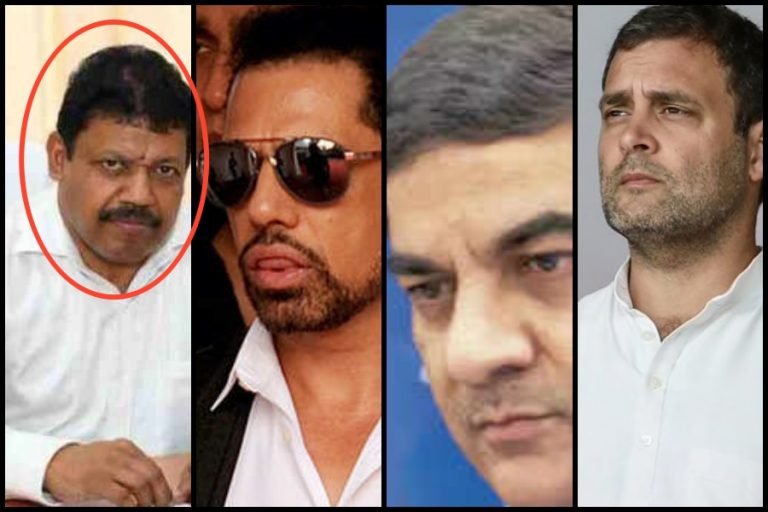
In a massive breakthrough, the Enforcement Directorate (ED) has arrested NRI businessman CC Thampi, who is a close aide of Robert Vadra, Rahul Gandhi’s brother-in-law and Priyanka Gandhi Vadra’s husband.

In February 2019, Robert Vadra was grilled for over 5 hours for his alleged links to CC Thampi. The Enforcement Directorate suspects kickbacks for a petroleum deal in 2009 were routed through the Sharjah-based company, allegedly controlled by a UAE-based NRI businessman, CC Thampi. Vadra was also questioned about owning Benami property in London along with CC Thampi and Sanjay Bhandari. Thampi has a company in UAE called Sky Light and in India, Skylight Hospitality Private Limited is allegedly linked to Vadra and is under the ED scanner for suspect land deals in Bikaner, Rajasthan.

CC Thampi is being probed by Indian authorities over violations of the Foreign Exchange Management Act worth several hundreds of crores of rupees. ED had served him a show-cause notice last year for violation of laws in the acquisition of agricultural and other lands in and around Delhi-NCR in deals amounting to over Rs 288 crore. CC Thampi, Robert Vadra and Sanjay Bhandari are ‘close friends’.

It is in this regards that ED will be grilling CC Thampi post-arrest.

However, there is another angle that OpIndia had exclusively investigated back in March 2019. It is through CC Thampi that the links between Rahul Gandhi and the arms dealer Sanjay Bhandari had also emerged.

The fulcrum of the expose by OpIndia.com was a land deal between Rahul Gandhi and one HL Pahwa. Rahul Gandhi had bought land from Pahwa, who also regularly deals with Robert Vadra and Priyanka Gandhi Vadra. As discovered by OpIndia, Robert Vadra and Priyanka Gandhi Vadra had bought several lands from HL Pahwa only to later sell them back to Pahwa at a much-inflated price. At the time of this transaction, Enforcement Directorate files recovered during their raid on HL Pahwa has confirmed that Pahwa did not have the cash reserves for the high-value purchase of lands. To make good on that payment, HL Pahwa was financed by CC Thampi who has several financial transactions with arms dealer Sanjay Bhandari. Sanjay Bhandari and CC Thampi are also inextricably linked to Robert Vadra through the Benami properties bought for Vadra by Thampi and Bhandari acting as the conduit.

Read: As Rahul Gandhi continues Rafale lies, his own link with an arms dealer could spoil his pitch

OpIndia.com had released 3 property documents that linked Rahul Gandhi, Robert Vadra and Priyanka Gandhi Vadra to HL Pahwa. After the initial expose, OpIndia had released two more property papers that linked the Vadra-Gandhi family to HL Pahwa who is inextricably linked to CC Thampi and Sanjay Bhandari.

The facts that had emerged from the OpIndia expose were these:

1. Rahul Gandhi purchased land from HL Pahwa at allegedly, a reduced price.

2. The land was also purchased from HL Pahwa by Robert Vadra and Priyanka Gandhi Vadra. In several cases, the land was bought back by HL Pahwa at an inflated price even though his cash balance was negative.

3. To make good on the purchase, HL Pahwa took money from CC Thampi

4. CC Thampi and Sanjay Bhandari are close friends. As demonstrated, they had several financial transactions amongst themselves.

5.  Sanjay Bhandari is an arms dealer and close friend of Robert Vadra. He had received kickbacks in Defence deal and in Petroleum deal.

6. It is through this kickback that Sanjay Bhandari purchased benami properties from Robert Vadra, even paid for the renovation.

7. The property was them sold to CC Thampi, and the proceeds syphoned off.

8. The ED is currently probing proximity of Robert Vadra with Thampi.

9. All of these deals happened during the Congress government.

10. Sanjay Bhandari is an armed dealer. From 2012 to 2015, Sanjay Bhandari was lobbying to become the offset partner in the Rafale deal and Dassault had refused to indulge him

11. File related to the purchase of 126 Rafale jets had gone missing from the defence ministry and it was later found on the road. It is alleged that Bhandari had stolen the file. It is alleged that Bhandari used to photocopy crucial files and passed on to defence contractors that he had links with.

12. Arun Jaitley had alleged that while Rafale was being finalised during the Congress government, there were backroom talks about the Eurofighter.

13. There are rumours that Rahul Gandhi had met Eurofighter representatives in Germany.

Read: As more property papers emerge linking Vadra-Gandhi family to HL Pahwa, here are questions Rahul Gandhi can’t escape

From these points, it is safe to draw the conclusion that Rahul Gandhi, just like Robert Vadra, is inextricably linked to Sanjay Bhandari, an arms dealer who is not only close to the Gandhi family but was also rebuked by Dassault in the Rafale deal. Sanjay Bhandari is also said to have received kickbacks in defence and petroleum deals during the Congress regime.

After the OpIndia expose, it was reported by India Today that ED was to question HL Pahwa about the dubious land deals he had with Rahul Gandhi, Priyanka Gandhi Vadra and Robert Vadra. At that time, ED had summoned HL Pahwa as well as CC Thampi for questioning. While Pahwa had evaded the summons, Thampi had alleged that he is in the USA undergoing treatment.

Read: Congress admits to Rahul Gandhi’s land deals, but keeps mum on HL Pahwa and Sanjay Bhandari link

With the nexus between CC Thampi, HL Pahwa, arms dealer Sanjay Bhandari, Robert Vadra and the Gandhi duo Rahul and Priyanka becoming clearer and with the ED now arresting CC Thampi, the trouble could mount not only for Robert Vadra but also for Rahul Gandhi and Priyanka Gandhi Vadra.


Kolkata: 11-year-old girl dies after being stabbed and mutilated by 13-year-old stalker

0

In a shocking incident, an 11-year-old girl was allegedly attacked, stabbed and mutilated by her stalker, a boy in her neighbourhood who is just 13. The incident happened on January 7, in Sonarpur, an area 20-km away from Kolkata.

As per a report in Hindustan Times, the little girl, brutally injured in the knife attack, finally succumbed to her injuries on Sunday, 19 January.

The accused minor boy was a student of class 9. On January 7, the victim had left her home for school on a bicycle. Her family was informed later that she was lying in the road in a serious condition. When the family rushed to the spot, they reportedly found the child lying after being stabbed. The perpetrator had also mutilated her face.

The alleged perpetrator happens to live in the same neighbourhood as the victim. The police have now detained him. The accused’s alleged accomplice happens to be a 22-year-old man.

The girl, a student of class 6 in a school in Sonarpur, had been admitted to the SSKM hospital in a critical condition in the CCU.

A senior police officer from Sonarpur had confirmed that the accomplice had been arrested, following a complaint by the victim’s family. The family also alleged that the accused had been stalking the girl for a long time and was allegedly angry after his ‘proposal’ was turned down.

However, the said incident had also triggered an angry mob to vandalise the accused’s house. The agitated protestors blocked a road for alleged police inaction. No police statement could be recorded by the victim as she succumbed to her injuries on January 19.

As the victim and the main accused are both minors, their names have not been released by the police.

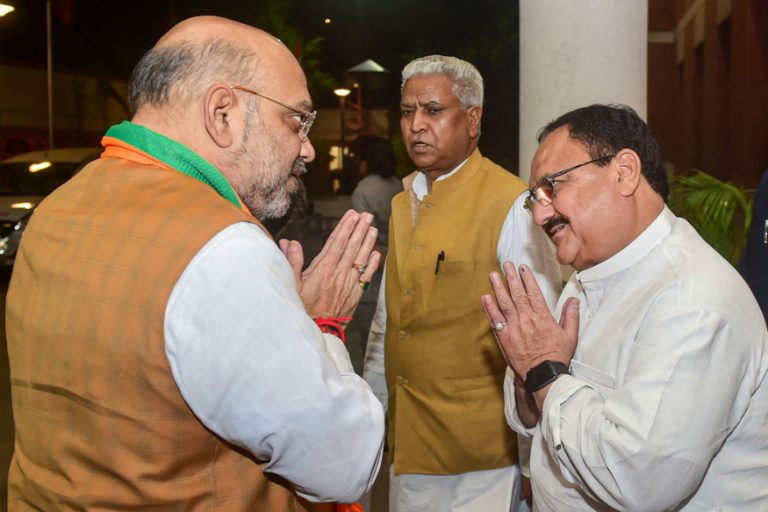
J. P. Nadda elected new BJP chief, PM Modi will felicitate him later today at party headquarters

Senior BJP leader J. P. Nadda, who was the working president of the BJP will now take over reins from Home Minister Amit Shah as he has been elected the new party chief. Prime Minister Narendra Modi will felicitate him later today at the BJP headquarters in New Delhi.

Nadda filed his nomination at 10:30 am today. With single nomination for the party top post, Nadda was elected the party chief unopposed. Had there been more than one nomination, there would have been an election process tomorrow, following which a new party head would have been elected.

Read: Modi ministers in five years – Jagat Prakash Nadda, Union Minister of Health and Family Welfare

Senior BJP leader Radha Mohan Singh, who is in charge of electoral process within the BJP had announced the schedule after the party had concluded internal polls in 21 out of 36 state and union territories units of the BJP. As per the BJP constitution, national president elections can be held after at least 50% of total state units have concluded organisational election exercise.

Nadda is a former health minister in Modi 1.0 government and has also served as BJP Yuva Morcha chief. Having started out as ABVP worker in Patna, Nadda has also served on the BJP’s Parliamentary Board, the highest decision-making body of the BJP. He has also worked very closely with PM Modi and HM Shah.