The Ministry of External Affairs (MEA) on Tuesday firmly dismissed claims circulating online that Kerala nurse Nimisha Priya’s death sentence in Yemen had been officially overturned.
“Information being shared by certain individuals on the Nimisha Priya case is inaccurate,” MEA sources told India Today, adding that there has been no official confirmation from the Yemeni authorities regarding a full cancellation of her sentence.
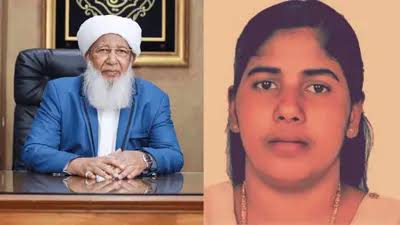
The rebuttal came hours after the Grand Mufti of India, Kanthapuram A.P. Abubakar Musliyar, issued a statement suggesting that a “high-level meeting in Sanaa” had resolved to fully cancel Nimisha’s death sentence, originally suspended earlier this month. However, even the Mufti’s office clarified that no formal written communication had been received from Yemen yet.
Earlier, the government had rejected claims that Grand Mufti played any role in postponing the death sentence of Nimisha Priya.
Nimisha’s execution, originally scheduled for July 16, was halted at the last moment after a direct clemency appeal from the Grand Mufti to Yemeni authorities.
Why was Nimisha Priya sentenced to death?
Nimisha Priya, 38, from Kerala’s Palakkad district, moved to Yemen in 2008 for better job prospects. A trained nurse, she later entered a business partnership with a Yemeni man, Talal Abdo Mahdi. Things soured when Mahdi allegedly harassed her, seized her passport, and falsely claimed to be her husband, trapping her in Yemen.
In a desperate bid to recover her documents, Nimisha reportedly tried to sedate Mahdi in 2017. The attempt backfired when he died of a suspected drug overdose. She was arrested, convicted of murder in 2018, and sentenced to death in 2020.
The case has drawn global attention amid appeals for mercy and diplomatic efforts from both the Indian government and religious leaders.
Bihar has now become the focal point of political discussion in the country. The Election Commission’s Special Intensive Revision (SIR) campaign to update and verify the voter list before the assembly elections has the Opposition spooked and rattled, as if they suspect losing their voter banks if the ECI merely does its constitutionally mandated job.
EC’s aim is to purge the voter list of illegitimate voters and it seems to be proving effective as substantial discrepancies have been identified by the officials. However, the I.N.D.I. Alliance or Mahagathbandhan in the state led by Tejashwi Yadav, former deputy chief minister and the current leader of the opposition in the legislative assembly, is particularly outraged by the action, alleging voter fraud, ‘an attack on democracy’ and even threatening to boycott the election.
They contend that the government is ‘disenfranchising’ voters. The opposition is understandably upset, as many of these individuals are their supporters.
Notwithstanding the outrageous political accusations, the fact remains that the election commission has acted solely to correct a long-standing issue and update the voter list to maintain the sanctity of the elections. Notably, a research paper by professors from the prestigious institutions also cautioned about the same and indicated that there are more than 70 lakh bogus voters in Bihar.
Election Commission’s shocking revelations
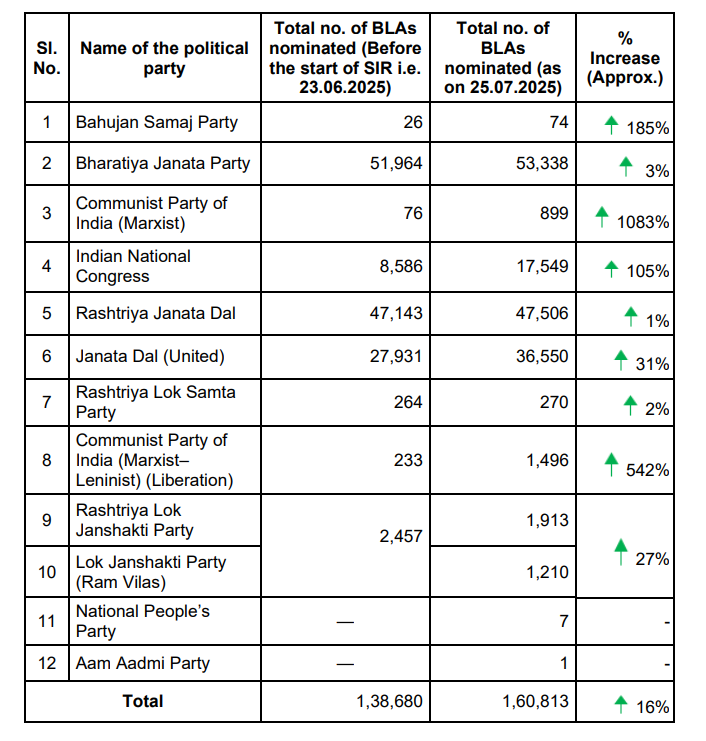
On 25th July, the Bihar Election Commission declared that 99.8% of the state’s voters were included in the ongoing process. Over 77,000 Booth Level Officers (BLOs), almost 3,000 assistant officers and more than 1.6 lakh Booth Level Agents (BLAs) representing all main parties are assisting in this extensive revision.
Election Commission of India says, "7.23 crore Bihar electors express full faith in SIR process with active participation. 99.8% Bihar electors have been covered so far. Forms of 7.23 crore electors have been received and digitised." pic.twitter.com/7F3OwKV1bf
The chief electoral officer (CEO) informed that over 7.23 crore voter forms have been received and converted to digital format and their names will be made public on 1st August. It is also anticipated that the BLOs would be able to complete the rest of the forms and reports by that date.
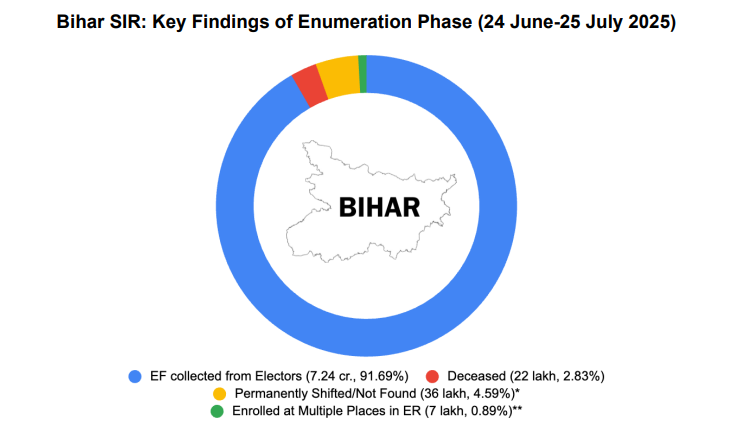
The drive disclosed that 35 lakh people were either untraceable or had permanently relocated, 22 lakhs were labeled as deceased and 7 lakh voters were enrolled in multiple locations while about 1.2 lakh forms are pending.
On 20th July Bharatiya Janata Party (BJP), Congress, Rashtriya Janata Dal (RJD), Janata Dal (United), Aam Aadmi Party (AAP) and Communist Party of India (Marxist) were among the 12 political parties who were given access to a list of voters who had either passed away, moved or failed to submit their forms. The was done to review and voice any concerns prior to the finalisation of the Draft Roll.
How the transparent process is carried out smoothly to ensure every single voter is counted
The Election Commission announced that more than 7.24 crore of the 7.89 crore voters as of 24th June, turned in their enumeration forms, demonstrating a resounding turnout.
Phase 1 of SIR data (Source: Election Commission)
The CEO (Chief Electoral Officer) of Bihar, DEOs (District Election Officers) from all 38 districts, 243 EROs (Electoral Registration Officers), 2,976 AEROs (Assistant Electoral Registration Officers), BLOs stationed at 77,895 polling places, lakhs of volunteers have been working alongside field representatives from all 12 major political parties including their District Presidents and up to 1.60 lakh BLAs appointed by them.
Total number of BLAs increased 16%+ during SIR period. (Source: Election Commission)
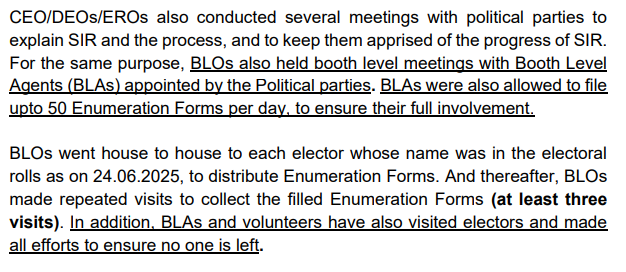
All 5.7 crore recorded cellphone numbers of electors who had submitted their numbers received SMSs outlining the procedure. CEOs, DEOs and EROs initiated multiple efforts to educate voters about SIR during the enumeration period. Furthermore, CEOs, DEOs and EROs met with political parties on multiple occasions to inform them of the progress and explain the procedure.
BLAs who were chosen by the political parties met with BLOs at the booth level for the same reason. Additionally, the former were also permitted to submit 50 Enumeration Forms daily to confirm their comprehensive engagement.
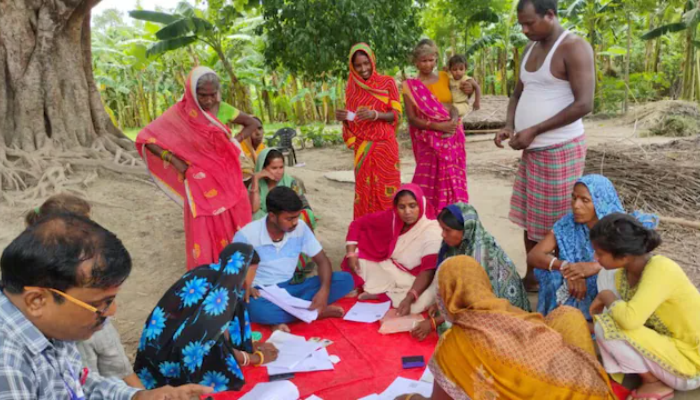
BLOs visited every house to distribute Enumeration Forms and approached every voter whose name was on the electoral records as of 24th June. Afterward, they made at least three trips to pick up the completed forms. Similalrly, volunteers and BLAs also talked to voters and followed the due process to make sure nobody is left out.
Image via Election Commission
Research paper by IIM alumni, professors also exposed the truth
The SIR operation is successfully eliminating the fraudulent or ineligible voters. However, as mentioned earlier, a research paper authored by Dr. Milan Kumar from IIM Calcutta, working as Assistant Professor at the Indian Institute of Management Visakhapatnam and Dr. Vidhu Shekhar, Assistant Professor at S P Jain Institute of Management & Research, an alumnus of IIT Kharagpur and IIM Calcutta, has also unveiled that Bihar contains a significant number of fake voters.
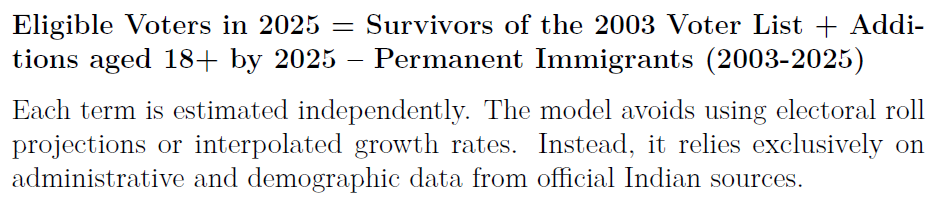
The study was released in July of this year and titled, “Estimating Legitimate Voter Numbers in Bihar (2025): A Demographic and Migration-Based Reconstruction. It used a demographic accounting identity to simulate the eligible voter base in Bihar for 2025.
Estimating Legitimate Voter Numbers in Bihar (2025): A Demographic and Migration-Based Reconstruction
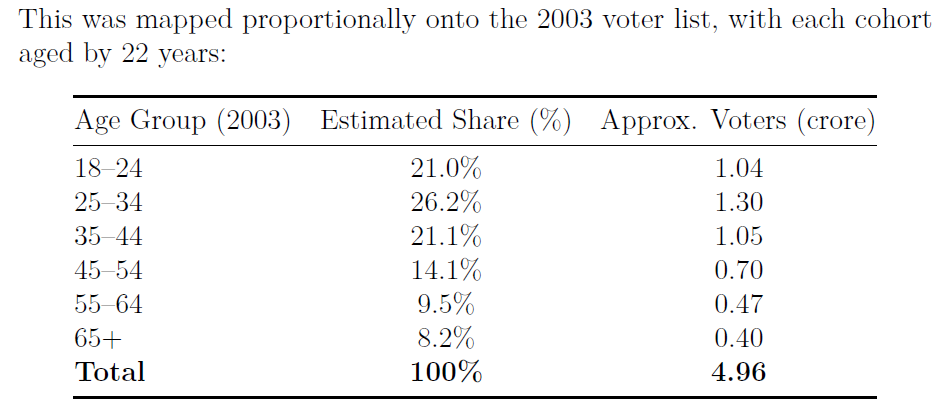
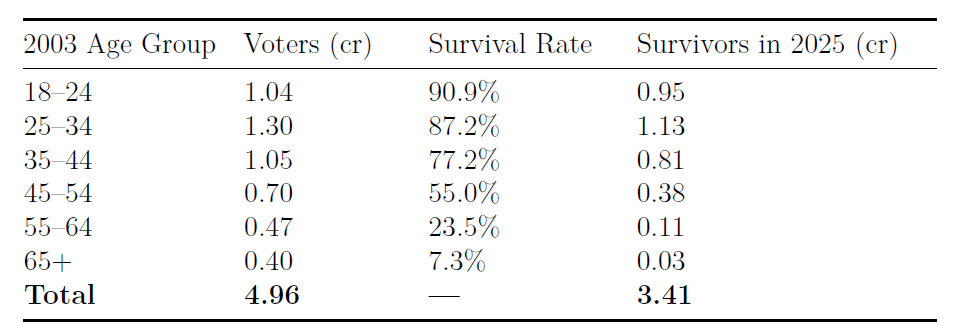
The number of people from Bihar’s 2003 voter list who were probably still living in 2025 was calculated in order to create a “demographically sound adjustment to the historical voter base, accounting for natural attrition (removal) over a 22-year period.” This served as the first essential component for calculating the actual number of eligible voters in Bihar in 2025, regardless of roll inflation or enumeration errors.
The adult age distribution from the 2001 Census was utilized as the electoral roll is not age-coded. According to the EC, there were 4.96 crore registered voters in Bihar in 2003.
Estimating Legitimate Voter Numbers in Bihar (2025): A Demographic and Migration-Based Reconstruction
The methodology
The paper underlined, “All estimates are derived from official sources, including Census data, SRS Abridged Life Tables and validated demographic literature. The modeling framework applies a deliberately conservative bias to avoid overstating the discrepancy.”
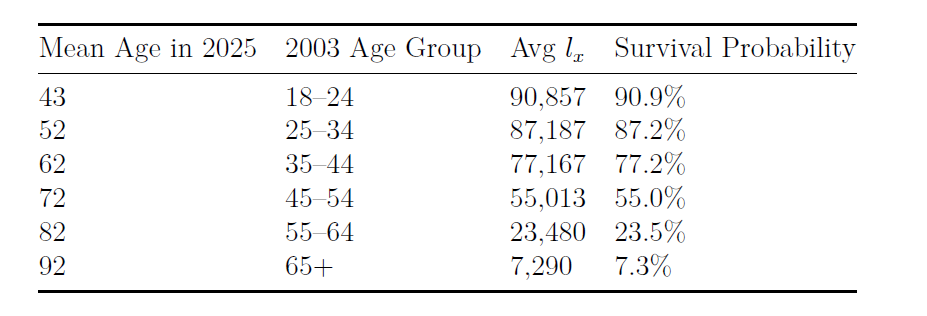
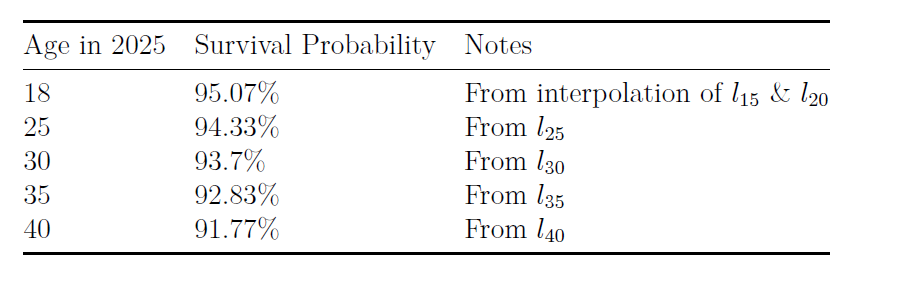
The Registrar General of India’s 2011-2015 and 2018-2022 SRS Abridged Life Tables were utilised which gives “lx values, that is, survivors out of a synthetic cohort of 100,000 births to a given age.” Afterward, “the values for the ages of interest were extracted and averaged” followed by “linear interpolation.”
Estimating Legitimate Voter Numbers in Bihar (2025): A Demographic and Migration-Based Reconstruction
Survivors cohort (group of people who are around the same age) = Cohort Size x Survival Probability was the formula used to figure out how many voters survived in each group.
Estimating Legitimate Voter Numbers in Bihar (2025): A Demographic and Migration-Based Reconstruction
After computations, it was determined that 3.41 crore people from Bihar’s 2003 voter list were eligible, anticipating no migration. It served as a reliable starting point for calculating the number of eligible voters. “This estimate had been based on: Disaggregated voter list using Census-based age structure, state-specific mortality data from Sample Registration System (SRS) and linear interpolation where necessary,” the paper highlighted.
The paper pointed out that therefore, this component (data) represented a baseline adjustment to the historical voter list and is both demographically rigorous as well as policy-relevant.
New voters who were born between 1985 to 2007
Individuals who “were born between 1985 and 2007 ” and “thus turned 18 years of age between 2003 and 2025” as well as were “still alive in 2025” were quantified by the researchers. A two-step demographic approach was used for the estimation: annual birth cohort sizes were calculated and then age-specific survival probabilities obtained from life tables were applied to identify “the number of survivors alive in 2025.”
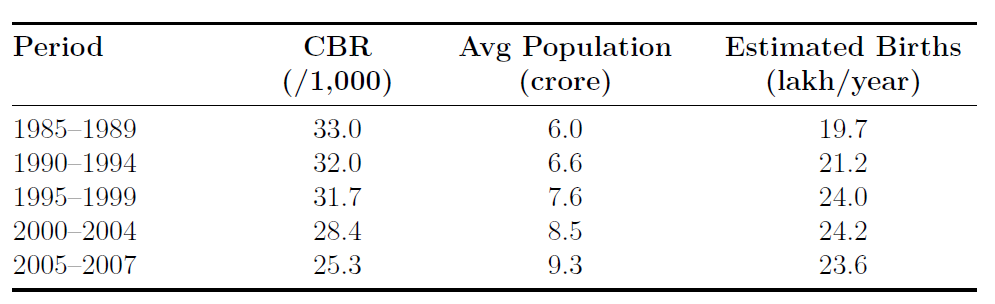
The formula Births year = (CBR year/1000) ∗ Population year was used to assess the number of people born in each year. According to the paper the “CBR is the Crude Birth Rate (births per 1,000 people) and population is the estimated total population of Bihar in that year.”
The Ministry of Health Family Welfare’s Central Bureau of Health Intelligence (CBHI) supplied the estimated CBR values. The estimations for pre-1991 years (1985-2000) were derived using backcasting from Census and National Family Health Survey (NFHS) information.
Estimating Legitimate Voter Numbers in Bihar (2025): A Demographic and Migration-Based Reconstruction
Survival probabilities were calculated once annual birth cohort sizes were determined to find the number of people who were expected to survive in 2025. The formula “Survivors (year) = Births (year) x Survival Probability (age) where: age = 2025 – birth year” was applied. The research paper noted, “Hybrid average of lx values from the sources: SRS Abridged Life Tables 2011-2015 and SRS Abridged Life Tables 2018-2022” were used.
It further mentioned the reason and noted, “This hybridization is methodologically justified because the SRS 2011-2015 data reflect survival conditions relevant for mid-life and older cohorts who were born in the 1980s and early 1990s. The SRS 2018-2022 data captures more recent improvements or distortions in survival, especially for younger age groups. Averaging these periods offers a balanced estimate, smoothing over any year-specific anomalies.”
Estimating Legitimate Voter Numbers in Bihar (2025): A Demographic and Migration-Based Reconstruction
For every birth year between 1985 and 2007, the relevant survival probability (based on age in 2025) was multiplied by the predicted cohort size (based on CBR and population). This was executed for 23 cohorts annually. “The final output yielded the number of individuals from each cohort alive and eligible to vote in 2025,” the paper outlined.
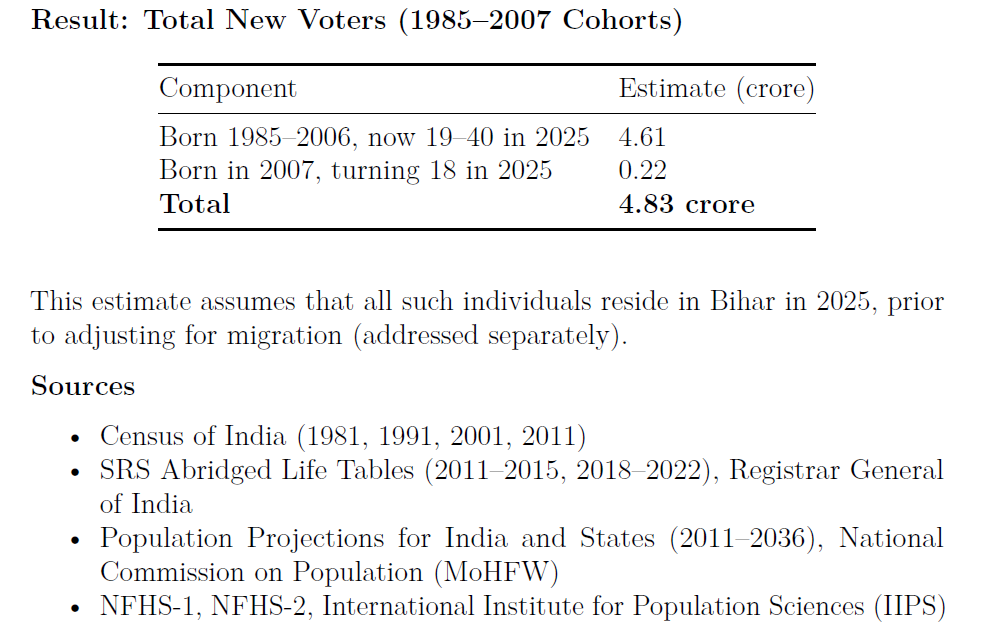
The stated that the population of individuals born between 1985 and 2006, aged 19 to 40 in 2025, is 4.61 crore. Likewise, 0.22 crore were born in 2007 and would be 18 years old in 2025, which raised the total to 4.83 crore.
Estimating Legitimate Voter Numbers in Bihar (2025): A Demographic and Migration-Based Reconstruction
The paper underscored, “This cohort-based methodology, grounded in official demographic data, provides a robust and transparent estimate of the number of new legal voters added to the Bihar electorate between 2003 and 2025.”
Permanent net outmigration between 2003-2025
The study then concentrated on a “conservative estimate” of Bihar’s “permanent outmigration” from 2003 to 2025, presuming that the annual permanent migration rate had not increased following the 2001-2011 decade. It added, “This scenario is useful as a lower-bound benchmark for adjusting Bihar’s 2025 projected voter base.”
Individuals who have resided outside of Bihar for a year or more (ideally more than or equal to five years) are considered permanent outmigrants. Their reasons included marriage, work or moving with family. The paper clarified that the assessment did not include transitory migrants, such as students, seasonal workers or those on short-term contracts.
73 lakh people moved from Bihar to other Indian states for work, marriage and family relocation, according to the 2011 Census. Employment, marriage and shifting locations by family were the main migratory factors linked to long-term relocation. The primary criteria for identifying permanent migrants were duration of residence (greater than or equal to) 1 year which is a standard threshold for permanent migration in Census reporting.
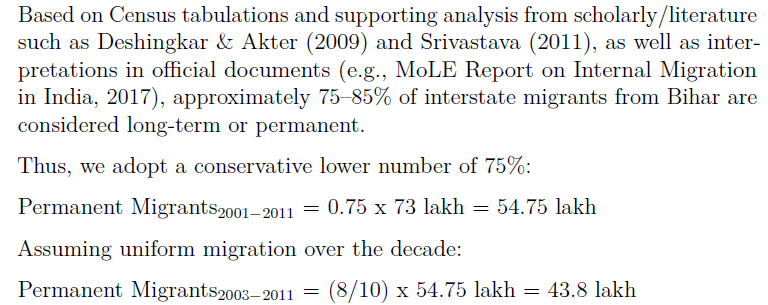
The paper then conveyed that “based on Census tabulations and supporting analysis from scholarly/literature, approximately 75-85% of interstate migrants from Bihar are considered long-term or permanent.” A conservative lower estimate of 75% was used to ascertain that there were 54.75 lakh permanent migrants between 2001 and 2011. The number of permanent migrants from 2003 to 2011 was then found to be 43.8 lakh, assuming consistent migration over the ten-year period.
Estimating Legitimate Voter Numbers in Bihar (2025): A Demographic and Migration-Based Reconstruction
The researchers then made estimates for the 14-year period from 2011 to 2025, assuming that the annual permanent migration rate from 2001 to 2011 would remain constant. “This is a conservative estimate as research indicates that outmigration from Bihar has been an increasing trend,” the paper stated. Thus, the number of permanent migrants (2011–2025) came out to be 76.65 lakh and the annual rate was shown to be 5.475 lakh.
Estimating Legitimate Voter Numbers in Bihar (2025): A Demographic and Migration-Based Reconstruction
The paper highlighted, “The inward migration to Bihar is very low and hence has not been accounted for. As a rough indicator, from the 2011 Census, the total population of Bihar is estimated at 103,804,637. On this, we have inward inter-state migrant workers per 20-11 census of 7,06,557, which gives an inward migration rate of 0.68% for Bihar.”
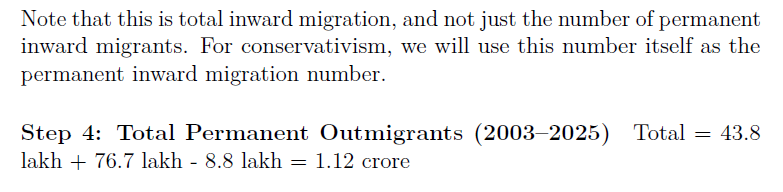
The inward migration statistic was 8.8 lakh, based on the same rate as the most recent non-census estimate of Bihar’s population of 13 crore from the 2023 caste census. The paper emphassied that Ii was a total inbound migration, not just the number of permanent inward migrants. The number served as the permanent inward migration figure to calculate the 1.12 crore permanent outmigrants from 2003 to 2025.
Estimating Legitimate Voter Numbers in Bihar (2025): A Demographic and Migration-Based Reconstruction
Despite improvements in labour market conditions, education and infrastructure, the estimated projected no rise in interstate migration pressure . It provided a purposeful undercount of permanent migrants to guarantee conservative voter base adjustment in Bihar. The approach was in line with demographic modelling procedures, which aim to limit uncertainty from both the top and the bottom.
The researchers articulated, “Using a fixed migration rate from the 2001-2011 period, the estimated number of permanent net outmigrants from Bihar between 2003 and 2025 is: 1.12 crore. This figure ensures conservatism in voter base adjustments while maintaining demographic credibility.”
The startling conclusion
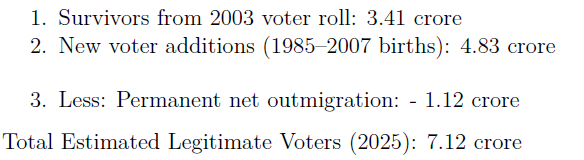
This thorough analysis uses demographic reconstruction procedures to produce a methodologically sound estimate of Bihar’s legitimate voter population in 2025. There were 3.41 crore voters who survived the 2003 election. 4.83 crore new voters were born between 1985 and 2007, 1.12 crore people left the state permanently and 7.12 crore people were calculated to be eligible voters in 2025.
Estimating Legitimate Voter Numbers in Bihar (2025): A Demographic and Migration-Based Reconstruction
The paper then pointed out, “Compared to the official electoral roll of 7.89 crore, this suggests a potential inflation of 77 Lakh voters (9.7%). This analysis employs conservative assumptions throughout to avoid overstating discrepancies, making it a credible baseline for policy discussions regarding electoral roll integrity in Bihar.” Additionally, it identified the reasons behind the significant disparity.
“Non-removal of migrants: Voters who migrate out do not file Form 8 to deregister, leaving them on both origin and destination lists.
Duplicate entries: The absence of a unified electoral roll allows individuals to remain registered in multiple states.
Inclusion of undocumented residents: Urban slums and border districts are particularly vulnerable to informal or fraudulent registration.”
The paper also mentioned that the Election Commission of India has started a Special Intensive Review (SIR), pointing to these considerations as potential causes of problems that could exist in the Bihar electoral roll. Additionally, it stated that this kind of inflation creates grave issues about duplication, incorrect inclusions and the failure to purge ineligible people.
“The paper demonstrates the value of demographic accounting in electoral administration and provides a framework that could be applied to other states facing similar challenges with voter roll maintenance and migration-related adjustments,” it added.
According to the paper, the shocking result provides strong support for Bihar’s electoral record to undergo Special Intensive Revision (SIR). The main problems noted in this demographic analysis would be resolved by a SIR which would allow thorough voter eligibility verification, duplicate entry removal, the elimination of deceased and migrated voters and systematic field verification.
It further asserted, “The magnitude of potential roll inflation documented here provides strong empirical justification for such an intensive administrative intervention.”
Political theatrics attempt overshadow the integrity of the democratic process
Not only the Election Commission but also a prominent research paper has concluded that there are fraudulent voters on the electoral list that must be eliminated to ensure a fair election. However, the opposition, which was kept informed and participated in the entire initiative, is now making accusations solely for political gain.
The officials are available at every stage to address grievances and rectify the problems identified by individuals or political parties. Nevertheless, the Mahagathbandhan and its ecosystems, instead of raising the genuine concerns of the populace, are determined to turn this important measure into a contentious issue.
Chief election commissioner (CEC) Gyanesh Kumar rightly responded, “Should we be swayed by these attacks and allow bogus votes to be cast in the name of deceased, permanently shifted, enrolled at two or more places or illegal foreign immigrants? First in the state and then across the country?”
While the opposition can continue to cry foul and partake in political games, the pressing issue remains that the fake voters needed to be flushed out in the interest of the democracy and the rightful voters to guarantee that the entire electoral process is just and honest.
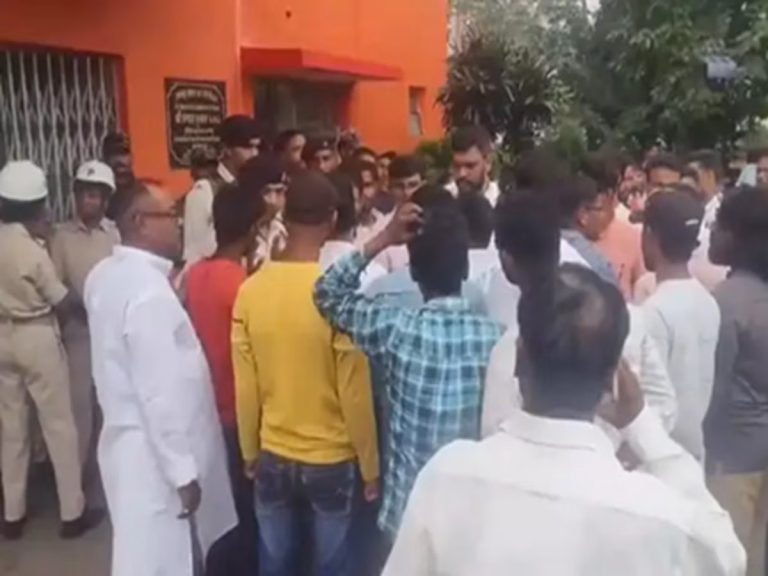
A day after an audio clip went viral purportedly capturing RJD MLA Bhai Virendra threatening a government official, an FIR has been registered against him in Patna. The complaint was filed under sections of SC/ST Act by Sandeep Kumar, the panchayat secretary of Baluwa in Maner, who accused the legislator of hurling casteist slurs and issuing serious threats.
The audio went viral on the internet, where the MLA was heard scolding the government official for failing to recognize him by name. The event was followed by the RJD MLA of Maner, who called the Panchayat secretary to enquire about the death certificate of the husband of a woman named Rinki Devi. As the secretary failed to recognise him, the conversation heated up.
Virendra said, “You don’t know Bhai Virendra? You want me to introduce myself? The whole country knows me. For a moment, the secretary remained silent and then said that if he talked to him respectfully, he would do the same; if he did not maintain his behaviour, he would not spare him either. This angered the MLA and attacked his ego, which he revered, “Joote se maarunga (I will hit you with a shoe), and you can file a case if you want. You don’t follow protocol. You dare to say who is Bhai Virendra?”
The panchayat secretary was identified as Panchayat Secretary Sandeep Kumar, who has maintained decency throughout the call. After the incident, Kumar was seen filing an FIR against the RJD MLA in the SC/ST police station.
The MLA lost his cool when I failed to recognise him by name, and threatened to beat me with shoes. When I protested and told him that he should get me transferred instead of behaving badly, he said I would meet a worse fate,” Kumar told reporters.
Kumar said, “I raised the matter with my higher-ups, including the block development officer, and upon their advice lodged a police complaint.”
The clash between RJD MLA Bhai Virendra and the panchayat secretary has drawn uncanny parallels to the web series Panchayat, where the power struggle between the village MLA, the pradhan, and the secretary forms the crux of the drama.
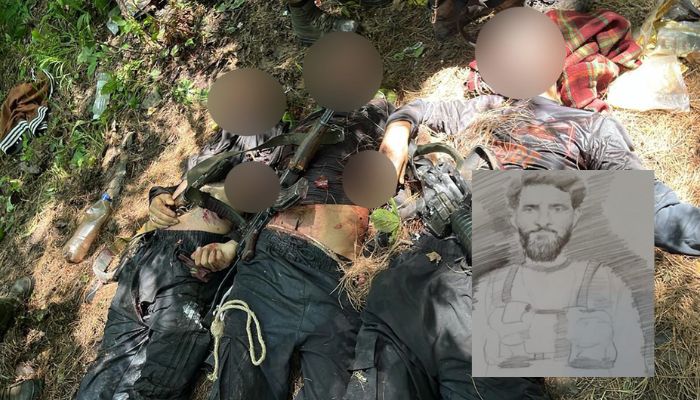
On 28th July, in a major breakthrough for Indian security forces, the mastermind of the brutal Pahalgam terrorist attack was neutralised along with two other terrorists during a joint anti-terror operation codenamed Operation Mahadev in Jammu and Kashmir. The operation was led by the Chinar Corps of the Indian Army with support from the Jammu and Kashmir Police and Central Reserve Police Force (CRPF).
One of the slain terrorists has been identified as Hashim Musa alias Abu Suleman. He was a top Lashkar-e-Taiba (LeT) operative and key conspirator in the Pahalgam terrorist attack that claimed the lives of 26 innocent Hindus in April this year.
Tracked and hunted in the forest
According to a report in India Today, the terrorists were part of a joint LeT and Jaish-e-Mohammed module. It was under surveillance by security forces for the past 14 days. Security agencies pointed out that there were 5-7 members in the group.
Sources revealed that the terrorists were caught off gaurd. The encounter was unplanned and occurred after personnel from 4 PARA and 24 Rashtriya Rifles spotted the terrorists napping in a tented hideout beneath dense forest cover. An official speaking to India Today said, “They were lying down inside a makeshift trench, concealed under trees. The 4 PARA team acted instantly and neutralised them.”
Drone visuals captured at 12:37 PM confirmed three bodies in the vicinity, confirming swift elimination. The engagement had started barely an hour earlier in the general area of Lidwas, deep inside the Dachigam forest region.
Local inputs and intercepted chatter played a key role
Operation Mahadev was commenced two days prior to the encounter after suspicious communication, suspected to be from a terrorist handset, was picked up from the Dachigam area. Intelligence agencies believe the signal originated from a Chinese satellite phone activated in Baisaran on 11th July.
Search parties were deployed across the forest terrain to follow the lead. Crucially, local nomads familiar with the area provided valuable inputs that helped in pinpointing movement patterns of the suspected terrorists.
Unnamed sources told India Today, “The terrorists were part of a joint LeT–Jaish-e-Mohammed module and had been under surveillance for over 14 days. The group is estimated to have 5 to 7 members.” The three neutralised terrorists were likely a splinter cell that had broken away from the main group earlier that morning.
Prime suspect of Pahalgam massacre
Hashim Musa had been on the radar as the chief executor of the Pahalgam terrorist attack. In that incident, 26 innocent Hindu tourists were mercilessly gunned down in the Baisaran Valley. Security agencies noted that Musa appeared extremely thin, likely an attempt to alter his physical appearance to avoid detection.
Agencies believe that the other two neutralised terrorists were Yasir and Hamza, also known by the alias Harris. Final confirmation of identities is pending, and a forensic match is underway to establish their exact role in the Pahalgam terrorist attack.
Operation Mahadev is ongoing
Chinar Corps confirmed that the larger operation remains in progress. The remaining members of the terror module are suspected to be hiding in the larger Dachigam forest region. Combing operations are being carried out to flush them out.
— Chinar Corps? – Indian Army (@ChinarcorpsIA) July 28, 2025
The elimination of Hashim Musa is considered one of the most significant successes since the launch of Operation Sindoor, the retaliatory response to the Pahalgam terrorist attack. In the cross-border offensive, India destroyed nine terror camps in Pakistan and Pakistan-occupied Jammu and Kashmir. Over 100 terrorists were eliminated.
Despite the massive blow delivered by Operation Sindoor, the hunt for the masterminds behind the massacre continued, until now.
Operation Mahadev has struck at the core of that plot. But officials say, “the mission will only be considered complete once all members of the module are tracked down and neutralised.”
In Ramgarh, Jharkhand, Aftab Ansari sexually exploited a married Tribal woman after enticing her with a job offer. He called her to a shop called Arshi Garments and sexually exploited her. He was subsequently arrested after he raped the tribal woman at the backside of the shop.
How many more Jamai Tolas until this stops, @HemantSorenJMM Ji?
Aftab Ansari trapped a married tribal woman under the pretense of offering her a decent job. He called her to a shop named Arshi Garments; however, when she arrived, he asked her to come to a place behind the store,… pic.twitter.com/ApJy6MkzBZ
Ansari was beaten up by Hindu activists belonging to an organisation called the ‘Hindu Tiger Force’ and then handed over to the police for his heinous act on July 23. However, Ansari escaped police custody later and jumped into the Damodar river to escape the authorities. CCTV footage shows Ansari escaping from the prison.
Later, Aftab Ansari’s dead body was found in the same river on July 26. However, his death has created a lot of tension in the area with his family members alleging that he was killed in custody by the police.
Local Muslim community has also come out in support and has alleged that Aftab was killed by the police.
After the death of Aftab Ansari, the local police has registered a case against 12 members of the Hindu organisation ‘Hindu Tiger Force’ and arrested a member Rajesh Sinha. He has apparently been arrested for posting a video online that disturbed communal harmony.
Meanwhile, BJP’s MP from Hazaribagh, Manish Jaiswal has condemned his arrest, saying that the victim woman had approached Sinha for help after police failed to initiate any action despite filing a written complaint.
Further, on Sunday, July 27, under the leadership of BJP MLA from Barkagaon, Roshan Lal Chaudhary, Hindu organizations staged a dharna for about one and a half hours against the miscarriage of justice.
IGP (Bokaro Range) Kranti Kumar Garideshi has also suspended Ramgarh police station’s Officer-in-Charge Pramod Kumar Singh, and three constables for dereliction of duty following the incident.
Meanwhile, Congress delegation, led by the party’s state working president Shahzada Anwar, met Ramgarh SP Ajay Kumar and demanded the immediate arrest of those responsible for Ansari’s death.
The local authorities have said that the situation is under control now.
One of India’s key oil refining and marketing companies with Russian ownership, Nayara Energy, has filed a petition in the Delhi High Court against tech giant Microsoft. The company, in its petition, has accused Microsoft of abruptly suspending access to essential digital services, including email, without any prior notice. The company has said that Microsoft’s actions have jeopardised operations across its India network.
Sanctions fallout and operational impact
The development came in the wake of recent European Union sanctions on Nayara for having links with Russian oil giant Rosneft. Although Microsoft is based in the United States, Nayara argues that the company is under no obligation to enforce EU sanctions under US or Indian law.
Following the sanctions, at least two ships reportedly skipped loading refined products from Nayara’s Vadinar refinery, while one tanker carrying Russian Urals crude was diverted. Amid the turmoil, Nayara’s CEO resigned and has since been replaced by Sergey Denisov.
Nayara seeks urgent court relief
The petition seeks an interim injunction and immediate restoration of services. According to Nayara, Microsoft’s move was executed “unilaterally, without prior notice, consultation or recourse”, and under the “guise of compliance”. Notably, the company has emphasised that the suspended services were acquired under “fully paid-up licences”, which made the disruption even more unjustified.
The company stated that Microsoft’s actions have resulted in restriction of access to Nayara’s own data, proprietary tools and products. The disruption has had a direct operational impact since last Tuesday.
Strategic importance in India’s fuel economy
In its petition, the company has underlined its crucial contribution to India’s energy infrastructure. The company accounts for around 8% of India’s refining capacity and runs 7% of the country’s petrol pumps. It is also building around 8% of India’s polypropylene capacity.
Despite the current issues faced by the company, Nayara has reaffirmed its commitment to uninterrupted fuel supply across the country. It has stated that the company will continue to operate with full compliance under Indian regulations.
Earlier this month, the European Union imposed sanctions on Nayara’s Vadinar refinery as part of the 18th package of sanctions against Russia, which included asset freezes, shipping and insurance curbs, and a reduction in the price cap on Russian crude. The Government of India has categorically refused to recognise unilateral sanctions.
Following the sanctions, the company called EU’s move unjustified and illegal. The company said, “Recently, Nayara Energy has come under international scrutiny, facing political pressures and the imposition of sanctions by the European Union which have no legal basis. We categorically state that this unilateral move by the European Union is founded on baseless assertions, representing an undue extension of authority that ignores both international law and the sovereignty of India. It is to be noted that while many European countries continue to import Russian energy through various sources, they take a high moral ground by chastising and sanctioning an Indian asset for processing Russian crude largely used by its domestic population of 1.4 billion Indians and businesses.”
The Delhi High Court is expected to hear the matter shortly. Microsoft has not issued any official comment on the matter.
Big Tech as a geopolitical weapon in the West’s sanctions playbook
After Russia-Ukraine war broke in 2022, several major Western corporations suspended or froze operations in Russia. They cited compliance with international sanctions and geopolitical considerations. Global financial giants like Visa and Mastercard stopped their operations involving Russian banks which severely impacted cross-border payments. Tech companies including Google restricted access to various services, advertisements and monetisation channels.
Companies like McDonalds also pulled from Russia but their businesses were soon taken over by local brands. These actions formed part of a broader corporate exodus from Russia, with companies reassessing legal, ethical and reputational risks in the wake of the conflict and coordinated sanctions by the West.
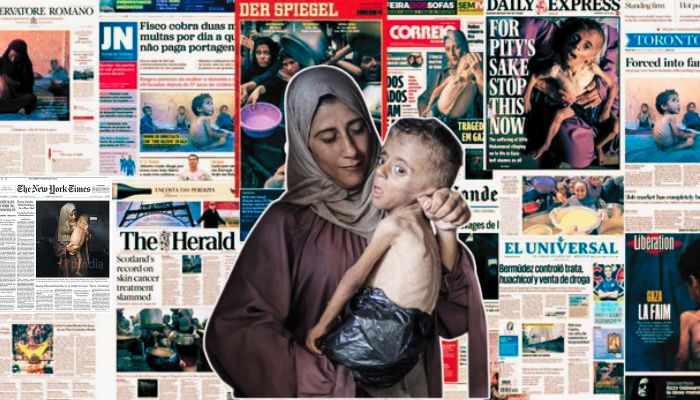
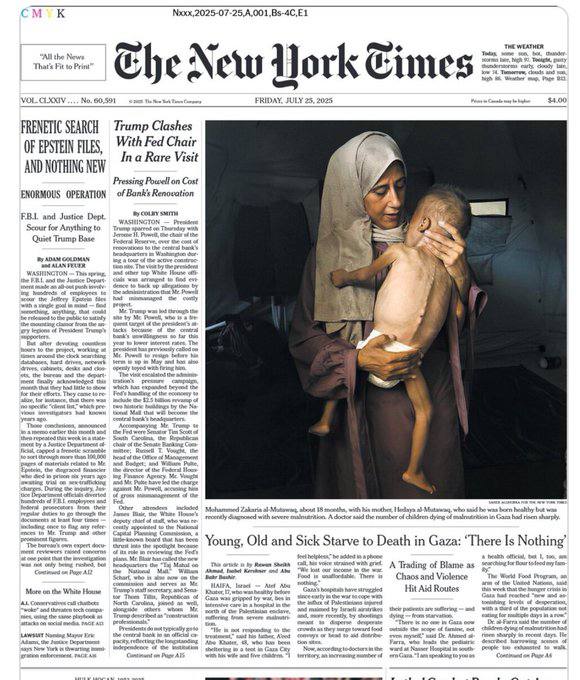
‘Gaza is starving’, ‘Netanyahu is committing genocide in Palestine’, ‘Gazan children dying of starvation’. This is what the Hamas-sympathising Western media wants the world to believe, even as the reality differs monumentally. After peddling pro-Hamas narratives and projecting the Islamic terrorists as some sort of ‘freedom fighters’, Islamo-leftists media have now resorted to using images of genetically deformed children to peddle that Gaza residents are being starved due to Israel.
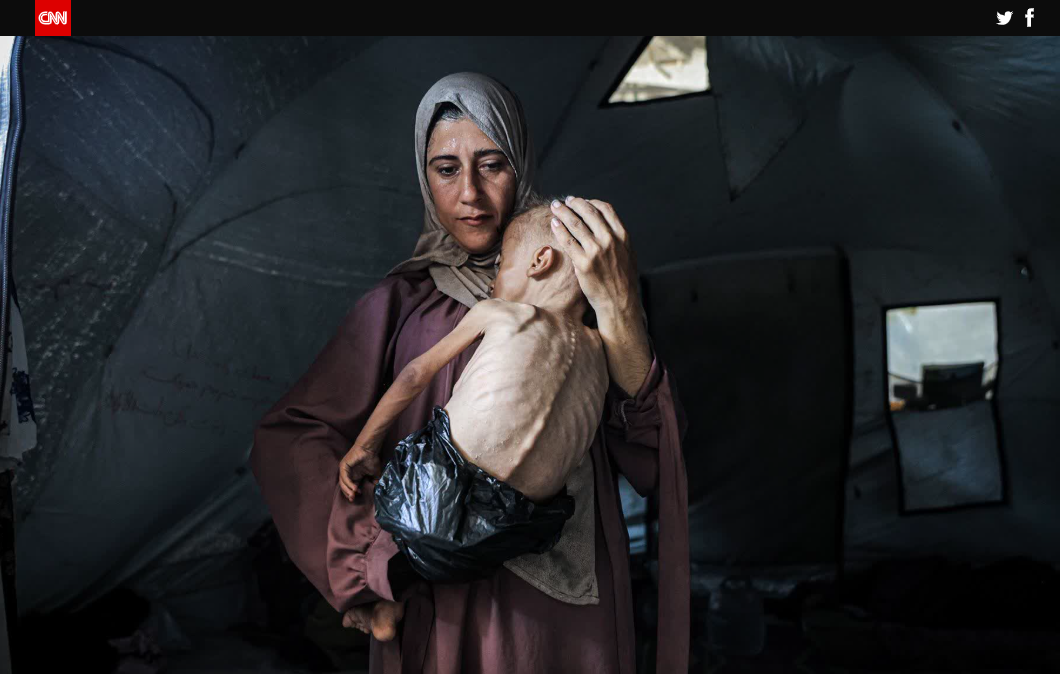
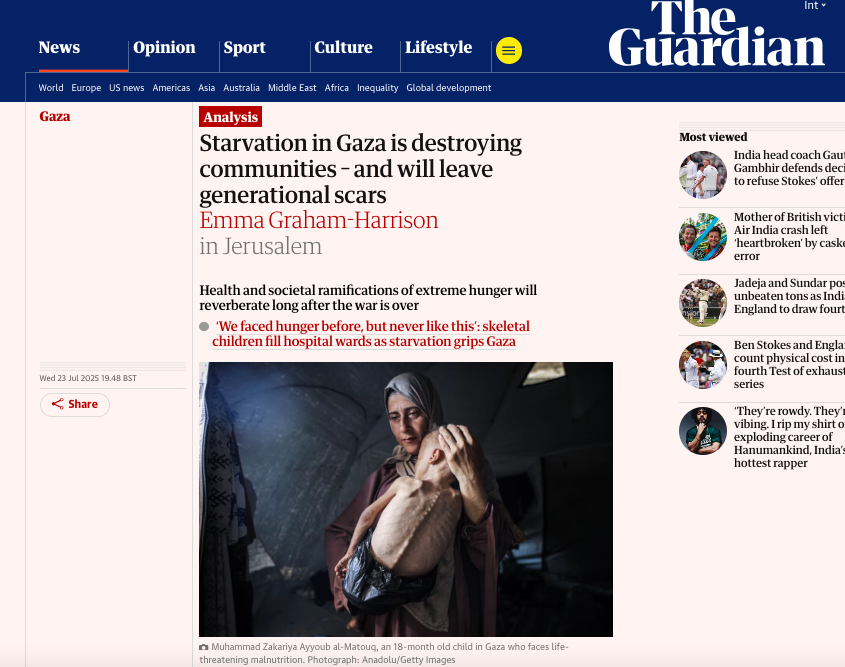
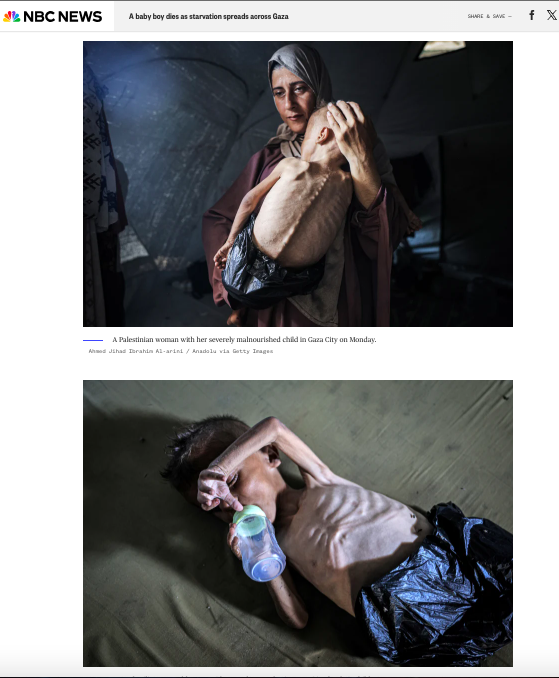
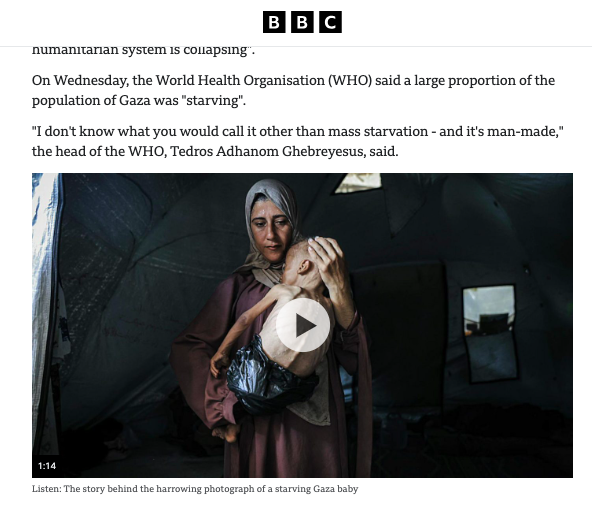
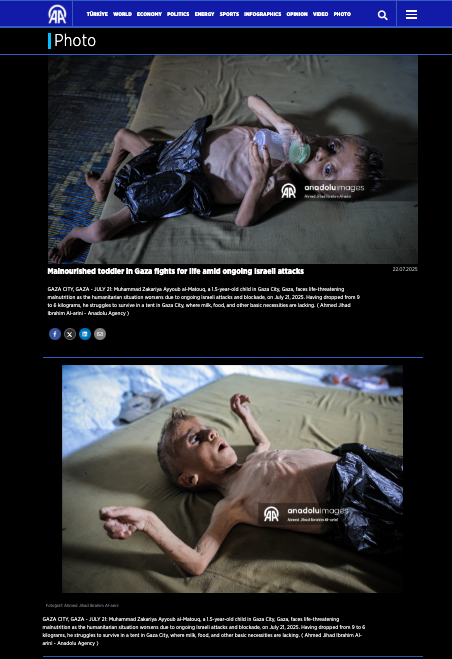
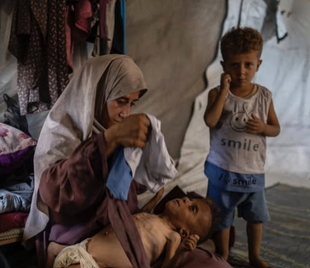
In their recent reportage on the Gaza crisis, several Hamas-sympathising Western media outlets like The New York Times, NBC News, CNN, The Guardian, BBC, Daily Express, Daily Mail, Seattle Times, The Age (Australia), Osservatore Romano (official paper of the Vatican) among others used pictures of emaciated Palestinian boy Muhammad Zakariya Ayyoub al-Matouq, cradled in his mother’s arms, passing the images off as a face of Israel-inflicted starvation in Gaza.
“Gazans Are Dying of Starvation. After 21 months of devastating conflict with Israel, Gaza’s most vulnerable civilians — the young, the old and the sick — are facing what aid groups say is impending famine,” NYT reported.
Meanwhile, The Guardian published an article headlined, “Starvation in Gaza is destroying communities – and will leave generational scars”. The Guardian piece published on 23rd July 2025, used the image of the Palestinian boy and his mother to emphasise the severity of the starvation and human rights crisis in war-torn Gaza.
Similarly, NBC News used the images of the same mother-son duo in its report titled, “A baby boy dies as starvation spreads across Gaza.”
Daily Express went a step ahead a published a propaganda piece titled, “The suffering of little Muhammad clinging on to life in Gaza hell shames us all.” Express, however, did not care to delve into whether the suffering of the ‘little Muhammad’ was caused by Israel, the ongoing war, the food crisis or something else. The newspaper passed off the misery of a severely malnourished Muhammad Zakariya Ayyoub al-Matouq as the one caused by the aid blockades imposed by Israel.
BBC, in its recent report headlined: “One in five children in Gaza City is malnourished, UN aid agency says”, also used the pictures of Matouq with his mother and linked his medical condition to the Gaza crisis.
Though moving, the Palestinian boy’s suffering has little to do with the food crisis in Gaza. The pictures widely used by the pro-Hamas media outlets were taken by Ahmed Jihad Ibrahim Al-arini for Turkish news outlet Anadolu Agency.
Anadolu Agency, notorious for peddling pro-Hamas Islamist propaganda several photographs of Muhammad Zakariya Ayyoub al-Matouq, a 1.5-year-old child in Gaza and claimed that he is facing life-threatening malnutrition “as the humanitarian situation worsens due to ongoing Israeli attacks and blockade.”
“Having dropped from 9 to 6 kilograms, he struggles to survive in a tent in Gaza City, where milk, food, and other basic necessities are lacking,” Anadolu Agency claimed.
While the media outlets picked Muhammad Zakariya Ayyoub al-Matouq’s pictures with his mother, which aligned with their narrative, in one of the pictures, Muhammad Matouq’s older brother can be seen standing. In the picture, the other boy looks well-nourished, healthy and mentally sound.
None of the propaganda outlets that used Matouq and his mother’s pictures used the picture featuring the other boy, reported to be Matouq’s brother, since the picture would have punctured their lies.
Moreover, speaking to CNN, Matouq’s mother herself revealed that Matouq suffers from a rare muscle disorder. She added that her son receives specialised nutrition and physical therapy for his condition.
The medical reports and other details that have surfaced about the malnourished boy Matouq, whom the pro-Hamas media made the face of Gaza starvation and a proof of Israel’s supposed cruelty, suffers from cerebral palsy, has hypoxemia, and was born with a serious genetic disorder.
Turns out, the iconic picture of the Palestinian boy being the victim of the ‘great Gaza crisis’, is an ironic lie, presented in a much more sophisticated and emotion-provoking manner than the entire Pallywood could ever pull off.
Looks like the Western legacy media has upped its efforts in the narrative warfare and resorted to exploiting a disabled child to fuel anti-Israel sentiment, amounting to nothing less than a modern blood libel aimed at inciting global outrage and hatred against Israel and Jews. Apparently, the Hamas cheerleaders think that why bother verifying when you can vilify.
While many people on social media are demanding accountability from these pro-Hamas propaganda machines, they won’t get any since this was not a case of sloppy journalism but a calculated manipulation. The boy’s protruding spine, his skeletal body and his misery naturally evoke sympathy; thus, despite his condition having not been caused by Israel or the aid blockades, Anadolu Agency, NYT, and others turned him into a poster boy for a famine, using his heart-wrenching pictures to peddle an anti-Israel narrative.
Even as the Hamas-sympathising propaganda outlets are relying on unrelated images to concoct sob stories about Gazan residents, the crisis is real, and the shortage of food and essential supplies is real. However, all of it is mindlessly blamed on Israel while the real culprit, the catalyst of the ongoing chaos—Hamas, which still refuses to release the remaining Israeli hostages, gets a free pass.
This grotesque distortion by the Western media outlets is not surprising, given that they have a history of peddling pro-Hamas falsehoods; in fact, this is only a new low they have stooped to.
When NYT defended rehiring Hitler-praising and pro-Hamas ‘journalist’ from Gaza for Israel-Hamas war, and admitted to having relied on Hamas claims to accuse Israel of bombing a hospital
Just weeks after Palestinian Islamic terror group Hamas massacred innocent Israeli civilians on 7th October 2023, the New York Times rehired Soliman Hijjy, a Gazan journalist, who had a notorious track record of praising Hitler‑the, the 20th-century genocidaire of the Jews in Nazi Germany, and taking a pro-Hamas stand.
Maintaining ‘high standards’ of journalism, the NYT issued a statement defending its decision to rehire Soliman Hijjy. It claimed that after a review of his “problematic” social media posts, which came to light in 2022, they took various actions following which Hijjy adhered to their standards of journalism. Notably, the NYT platformed Hijjy to peddle pro-Hamas propaganda. In his reports published in the NYT, Hijjy carried out Hamas propaganda regarding the attack on Al-Ahli Hospital in Gaza and falsely accused Israel of the attack. Hijjy had a contribution in the NYT’s reportage on the Hospital attack, which later turned out to be false. Later, NYT issued a half-hearted’ clarification but admitted that it relied heavily on Hamas claims on the hospital explosion.
BBC used the son of a Hamas leader as narrator in its documentary to peddle the Jihadist group’s anti-Israel propaganda
In July 2025, the British Broadcasting Corporation (BBC) admitted that its documentary titled “Gaza: How to Survive a Warzone” was propaganda. The broadcast claimed that it breached editorial guidelines as it failed to disclose a critical conflict of interest. The child who narrated the documentary was the son of an official linked to the Palestinian terrorist outfit Hamas. The documentary was produced by an independent company named Hoyo Films. It was removed from iPlayer in February this year after concerns emerged about the boy’s background. While the makers of the propaganda documentary were aware that the narrator was the son of a Hamas terrorist, the BBC did not care to conduct a basic editorial check and allowed usage of its platform for Hamas propaganda.
This was the second documentary aired by the BBC to be taken down over impartiality concerns. As reported earlier, the BBC ran a documentary titled “Gaza: Doctors Under Attack,” which sparked outrage because a journalist, Ramita Navai, displayed problematic social media activity.
On 4th July, Ramita had said on BBC Radio 4’s Today programme that Israel is “a rogue state that’s committing war crimes and ethnic cleansing, and mass-murdering Palestinians”.
Earlier, the BBC has been under fire for refusing to name Hamas as a terrorist organisation, even though it is marked as such by the UK, the US, the EU, and Israel. Earlier, the BBC had defended its stand on not calling Hamas a terrorist organisation, saying that calling someone a terrorist would mean taking sides.
It is, thus, unsurprising that the BBC, NYT and their likes manipulated a child’s suffering to inflame anti-Israel outrage. With their vast resources and self-proclaimed commitment to ‘accuracy’, they discarded journalistic integrity and banked on emotional imagery to vilify Israel. Considering the past record of backtracking after outrage, these propaganda outlets may put up a ‘clarification’; however, the damage is done. The Western media has become the extended branch of Pallywood, wherein the characters and the setting may be real, but the story is partially or fully imaginary.
Muslims organisations from Bangladesh are actively working to change the religious demographics in Nepal, which is the only Hindu-majority country other than India in the entire South Asia.
Nepal is home to 2.36 crores Hindus, which make up roughly 81% of the landlocked nation (as per 2021 census data). Muslims, on the other hand, constitute about 5% of the country’s population.
However, a concerted attempt is now underway to artificially change the religious demographics and culture in the country. And this is being done shrewdly in the garb of ‘humanitarian activities.’
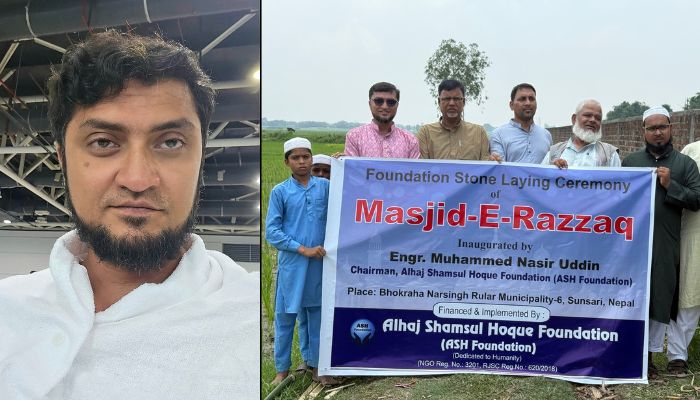
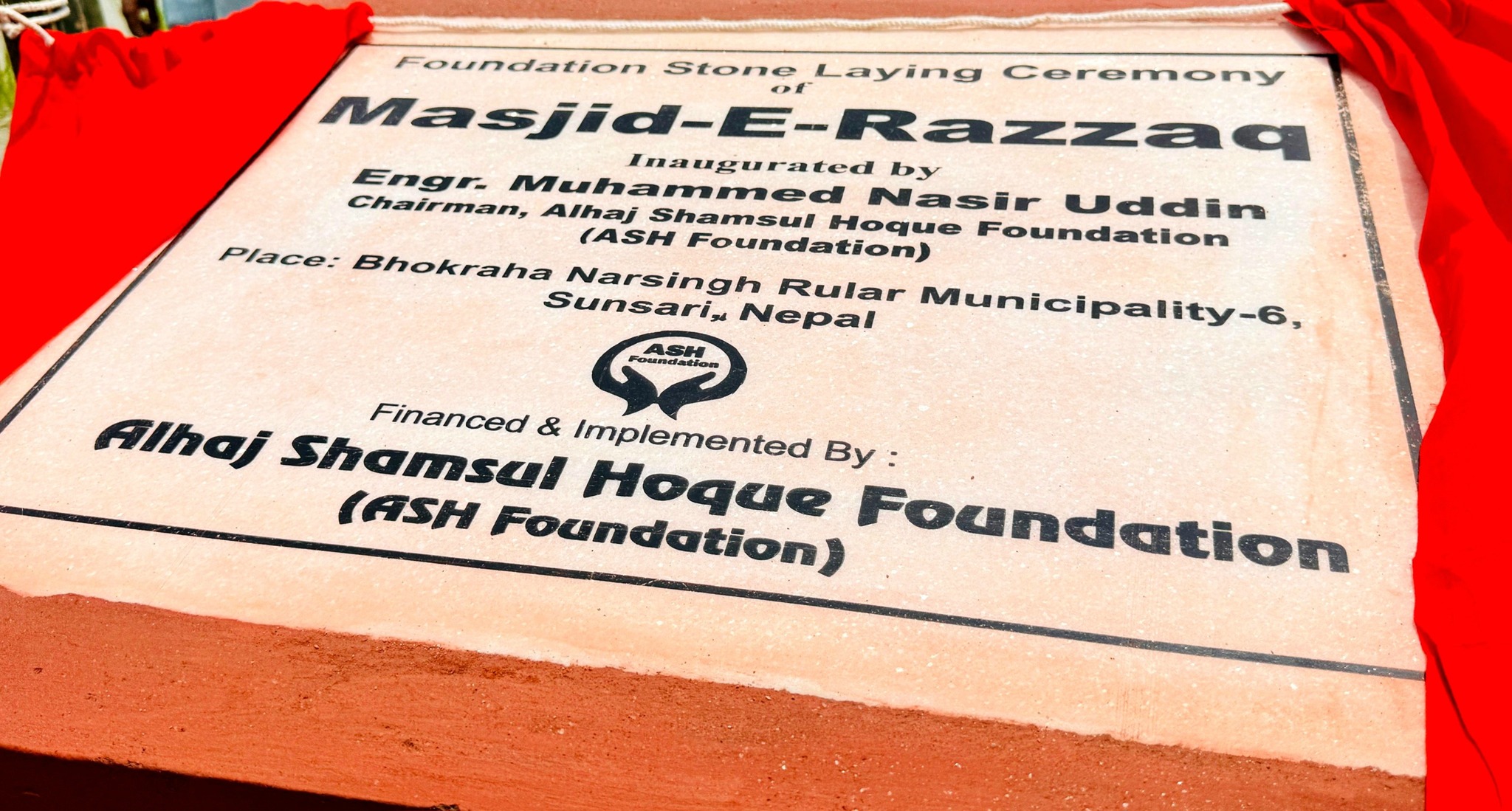
ASH Foundation laying the foundation stone of Masjid-e-Razaaq
A Bangladeshi organisation named ‘Alhaj Shamsul Hoque Foundation (ASH Foundation)’ is working on this goal with a mission-mode.
Founded by one Muhammed Nasir Uddin, ASH Foundation is operational in Bangladesh, the United States, the United Kingdom and even Egypt. The so-called NGO is headquartered in Chittagong.
“ASHF has the vision of achieving a hunger free, poverty free, healthy community to ensure the peace and prosperity for all regardless to any race, religion, caste and gender,” it claims to be its objective.
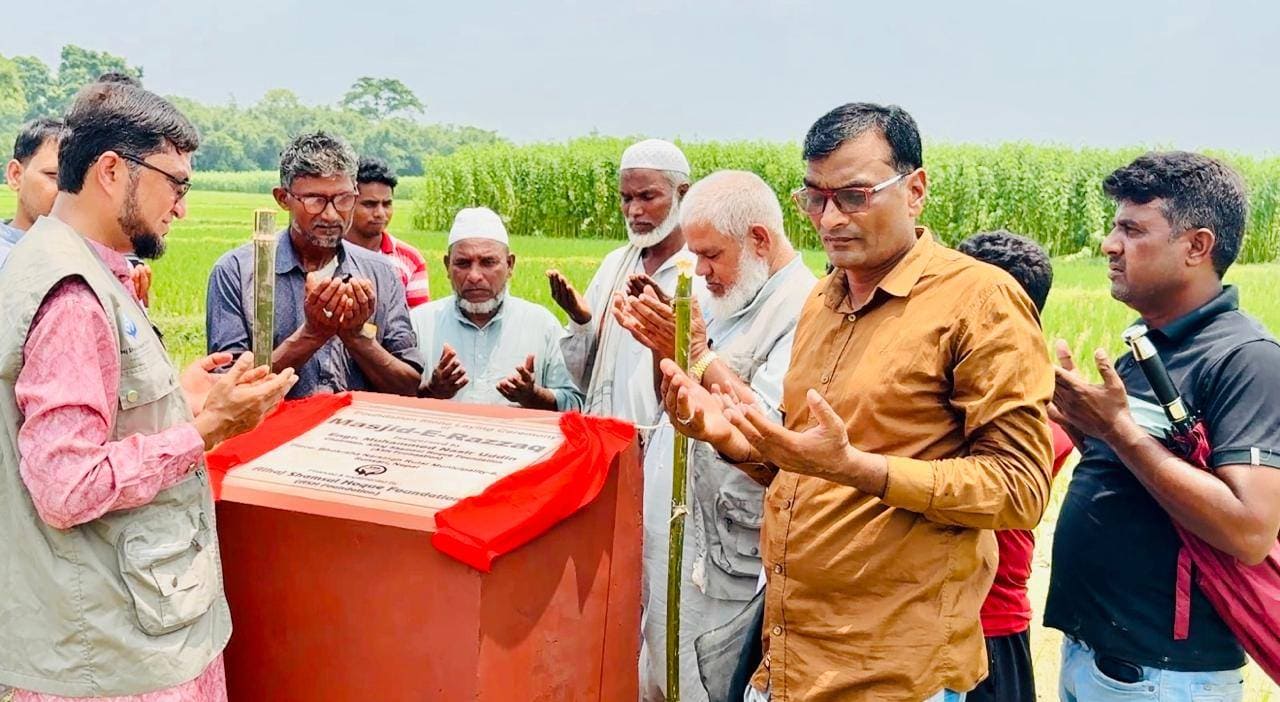
Plaque of Masjid-e-Razaaq
However, the activities of ‘Alhaj Shamsul Hoque Foundation (ASH Foundation)’ are clearly aligned towards Tabligh (propagation of Islam) and Daʿwah (Islamic proselytism).
Contrary to the organisation’s mission statement, its founder, Muhammed Nasir Uddin, used funds to lay the foundation stone of ‘Masjid-e-Razaaq’ in Sunsari district of Nepal.
“There are only 5% Muslims in Nepal. There is an opportunity of Daʿwah (Islamic proselytism),” he declared in a viral video posted on Facebook on Friday (25th July).
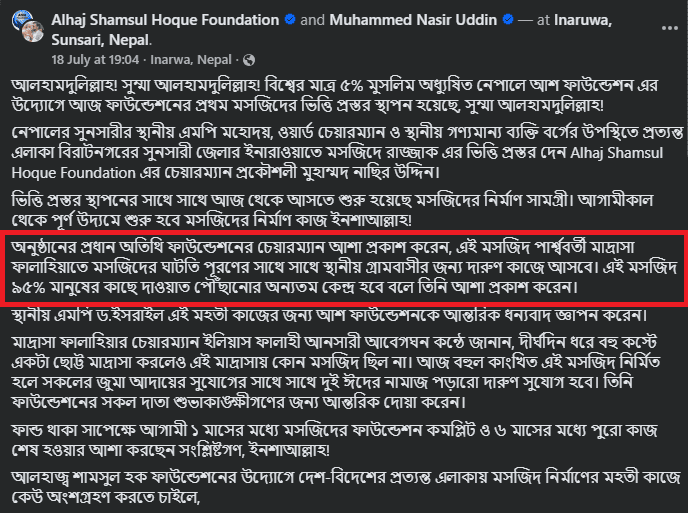
In a Facebook post on 18th July, the ASH Foundation conceded that the mosque will serve as a centre to spread the message of Islam to at least 15% of the population.
It also put out bank account details, seeking donations from Bangladeshis to contribute and support their mission to build more mosques in the Hindu-majority country and convert the native population.
Screengrab of the Facebook post by ASH Foundatio
“One of the biggest Hindu Rashtras in the world is Nepal. It is thus extremely important to carry out Daʿwah. One of the biggest tenets of our religion is to invite people on the path of Allah, ” ASH founder Muhammed Nasir Uddin spelt out his nefarious agenda during a conversation with local Muslims.
One of the fascinating aspects about the ASH Foundation is its modus operandi.
Praise the Hindu community for ensuring religious coexistence
Seek funds from Bangladeshi Muslims to help facilitate the spread of Islam
Use the same financial assistance to convert vulnerable Hindus, induce an alien Islamic culture and foster a demographic change in Nepal.
Attempts to alert law enforcement authorities and government officials by Hindu organisations have so far ended in vain.
Growing Islamism in Hindu-majority Nepal
OpIndia has reported multiple instances of the growing animosity of the Muslim community towards the native Hindus in Nepal.
In April 2025, a violent Muslim mobs attacked a Hanuman Jayanti procession in Birgunj city in Parsa district of Nepal.
In July 2024, Muslims stopped road construction work, resorted to stone pelting and attacked homes of Dalit Hindus in Nepal’s Sarlahi district.
A month earlier, the Hindu-majority country was in the news after Muslims renamed a village to ‘Islam Nagar’ and ‘Brahma Sthan’ to ‘Madrasa Chowk’ in Rautahat district.
Brahma Sthan has become Madrasa Chowk. (Source: OpIndia Hindi)
OpIndia also reported on a land jihad case, where Muslims attempted to occupy government land by offering Namaz at the site and illegally constructing a wall. The incident occured in Janakpur city of Nepal.
With the growing presence of Bangladeshi Muslim outfits such as ASH Foundation in Nepal, the work of proselytism and aggression towards the Hindu community is likely to increase.
On Monday (28th July), Madras High Court judge GR Swaminathan rebuked advocate Vanchinathan after the lawyer accused him of caste and communal bias. Justice Swaminathan called the lawyer a “comedy piece” and accused of orchestrating a campaign aimed at maligning the judiciary.
During a hearing by a bench comprising Justice GR Swaminathan and K Rajsekar, Justice Swaminathan said, “You are a comedy piece. I don’t know who called you all revolutionary. You are all comedy pieces.”
This came after advocate Vanchinathan refused to respond to Justice Swaminathan’s queries orally and urged the Court to pass a written order.
It all started with advocate Vanchinathan accusing Justice Swaminathan of acting with communal and caste prejudice in judicial decisions. The lawyer cited several social media posts and video interviews to back is accusations.
Following this, Justice Swaminathan summoned Vanchinathan to clarify whether the lawyer stood by these remarks or wished to retract them. It was during the hearing on this matter that the High Court judge called advocate Vanchinathan a “comedy piece”.
Justice Swaminathan asserted that while criticism of judgments is legitimate and acceptable, allegations of caste-based bias cross the line.
“Mr. Vanchinathan, I 100 per cent respect your right to brutally criticise my judgments. But when you are alleging caste bias, things take a different turn,” Justice Swaminathan said.
The bench also mentioned one of advocate Vanchinathan’s interviews wherein he reportedly claimed that the Court had targeted a senior lawyer since he was a Dalit, while not giving similar treatment to another senior lawyer as he was a Brahmin.
“For four years, you have been slandering me. I have not taken any action against you. We are also conscious of the rules of procedure. We are not fools. We will place the case before the Chief Justice or an appropriate bench. The whole ecosystem has ganged up—we are aware. We will not be intimidated or cowed down. Judicial independence is supreme,” Justice Swaminathan said.
“We fail to understand on what basis such allegations have been made against this Court…We clarify once again that the proceedings against him have nothing to do with that complaint,” the court order reads.
“You have assumed two things that have no basis. First, this has nothing to do with the complaint you sent to the Hon’ble Chief Justice of India. Second, we have not initiated any contempt action till Friday. We only want to clarify your stance—whether you continue to allege caste and communal bias,” the Court added.
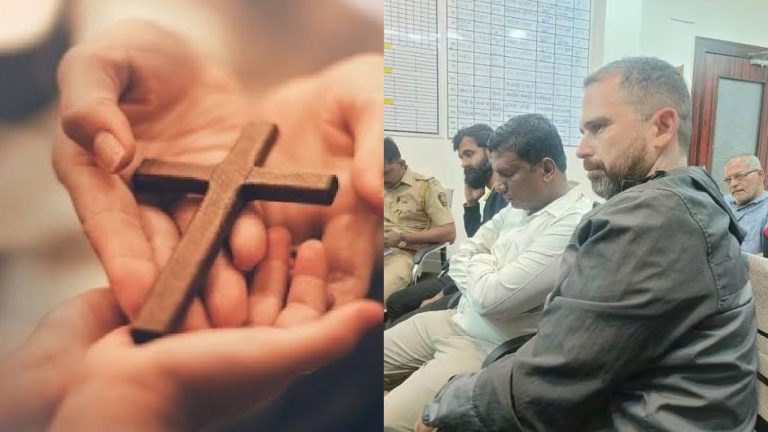
In a significant case that has sparked fresh debate over foreign-funded religious conversions in India, the Pimpri-Chinchwad Police have arrested an American national and his Indian associate for allegedly attempting to convert locals to Christianity by offering financial inducements. A minor has also been detained in connection with the case.
Accused identified: Foreign national linked to conversion bid
According to police officials, the accused have been identified as Schaefer Javin Jacob (41), a resident of California, USA, and Steven Vijay Kadam (46), a resident of Raisoni Society, Pimpri. Jacob had been staying in a rented flat near Mukai Chowk, Pimpri-Chinchwad.
Investigations revealed that Jacob had been visiting India since 2016 on tourist and business visas, raising concerns about the potential misuse of visa provisions to carry out religious propagation under the guise of legitimate travel.
FIR details: Alleged attempt to lure Hindu man with money and promises
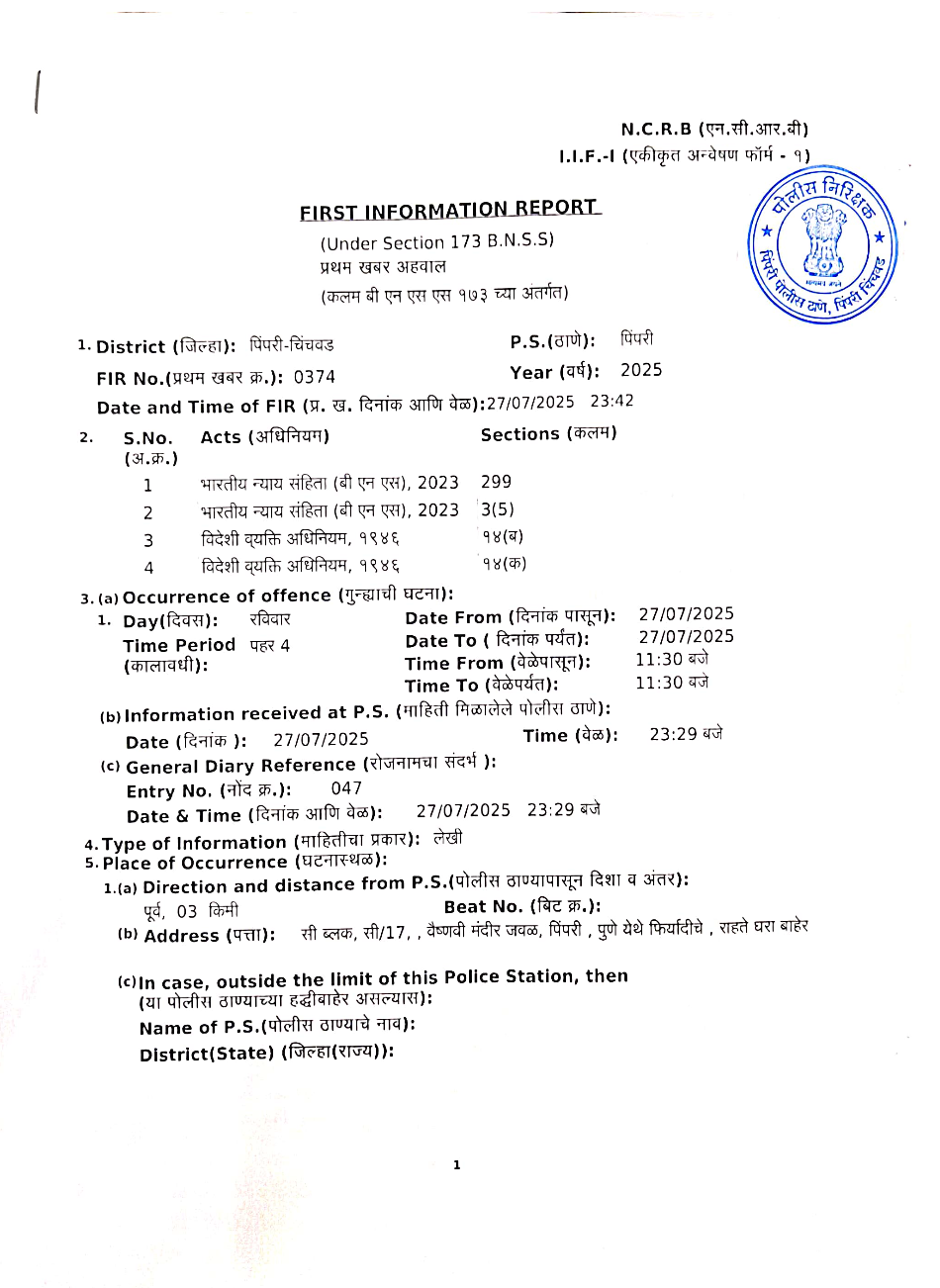
The First Information Report (FIR), filed by Sunny Dhanani (27), a Hindu-Sindhi resident of Pimpri, describes in detail how the accused visited his home around 11:30 AM on Sunday, July 27. As per the complaint, Jacob and Kadam allegedly urged him to embrace Christianity, promising him and his family peace, wealth, mental well-being, and financial support in return.
A copy of FIR in the case
The FIR further states that the accused attempted to present themselves as religiously well-versed individuals, quoting from Hindu scriptures and presenting Christianity as a superior path to salvation. When Dhanani became suspicious, he promptly reported the matter to the Pimpri Police Station, leading to their arrest.
“They told me that if I accepted Christianity, I would be happy, mentally peaceful, and financially stable. They also promised help from foreign sources,” Dhanani stated in the FIR.
Digital trail and systematic outreach suspected
Police believe that Jacob and Kadam may have been involved in a broader effort to influence and convert individuals, potentially using WhatsApp, mobile calls, and face-to-face interactions to reach out to local families. The FIR also notes the use of emotional manipulation and selective interpretation of religious texts to push their agenda.
Police have seized electronic devices and literature that may have been used for religious indoctrination. Forensic analysis and financial trail investigations are currently underway.
Minor detained; role under investigation
Authorities have also taken a minor boy into custody, whose role in the case remains unclear. It is suspected that he may have been used to gain the trust of families or assist in meetings and outreach.
Legal action under the BNS and the foreigners act
The Pimpri-Chinchwad Police have registered a case against the accused under multiple provisions of the Bharatiya Nyaya Sanhita (BNS) and the Foreigners Act. They have been charged under Section 299 of the BNS, which pertains to deliberate and malicious acts intended to outrage religious feelings, and Section 3(5) for attempting to convert individuals through inducement. In addition, Sections 14(b) and 14(c) of the Foreigners Act have been invoked against the American national for allegedly engaging in activities that violate the terms and conditions of his visa.
A senior officer from Pimpri-Chinchwad Police stated:
“We are taking this matter seriously. Misuse of a tourist visa for religious propagation is a violation of national security norms and will be dealt with strictly.”
Rising Concerns Over Religious Conversions
This case has added to growing concerns over organised foreign-funded religious conversions in India, particularly in urban and semi-urban areas. Several social organisations have demanded a wider investigation into Jacob’s visits since 2016 and his connections within India.
It is believed that the accused had built a network of contacts in Pimpri-Chinchwad and may have attempted similar activities with other vulnerable individuals or families.
The American national is currently in judicial custody, and immigration authorities have been notified. He may face deportation, and his visa may be revoked permanently.
Meanwhile, investigations continue into the source of funds, the network supporting such activities, and whether other foreign nationals may be involved.