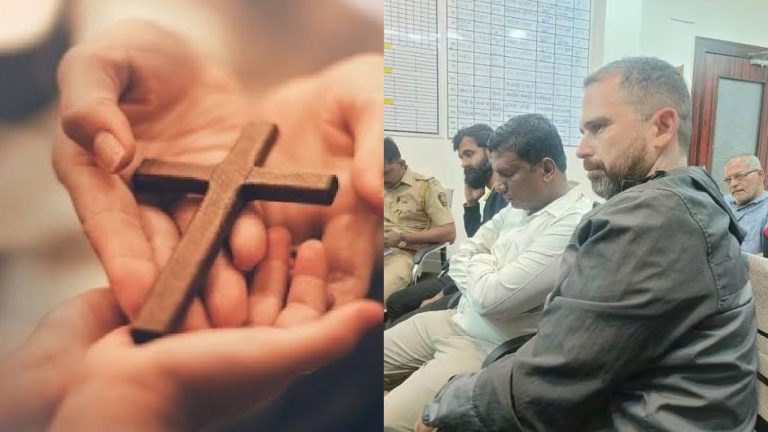
In a significant case that has sparked fresh debate over foreign-funded religious conversions in India, the Pimpri-Chinchwad Police have arrested an American national and his Indian associate for allegedly attempting to convert locals to Christianity by offering financial inducements. A minor has also been detained in connection with the case.
Accused identified: Foreign national linked to conversion bid
According to police officials, the accused have been identified as Schaefer Javin Jacob (41), a resident of California, USA, and Steven Vijay Kadam (46), a resident of Raisoni Society, Pimpri. Jacob had been staying in a rented flat near Mukai Chowk, Pimpri-Chinchwad.
Investigations revealed that Jacob had been visiting India since 2016 on tourist and business visas, raising concerns about the potential misuse of visa provisions to carry out religious propagation under the guise of legitimate travel.
FIR details: Alleged attempt to lure Hindu man with money and promises
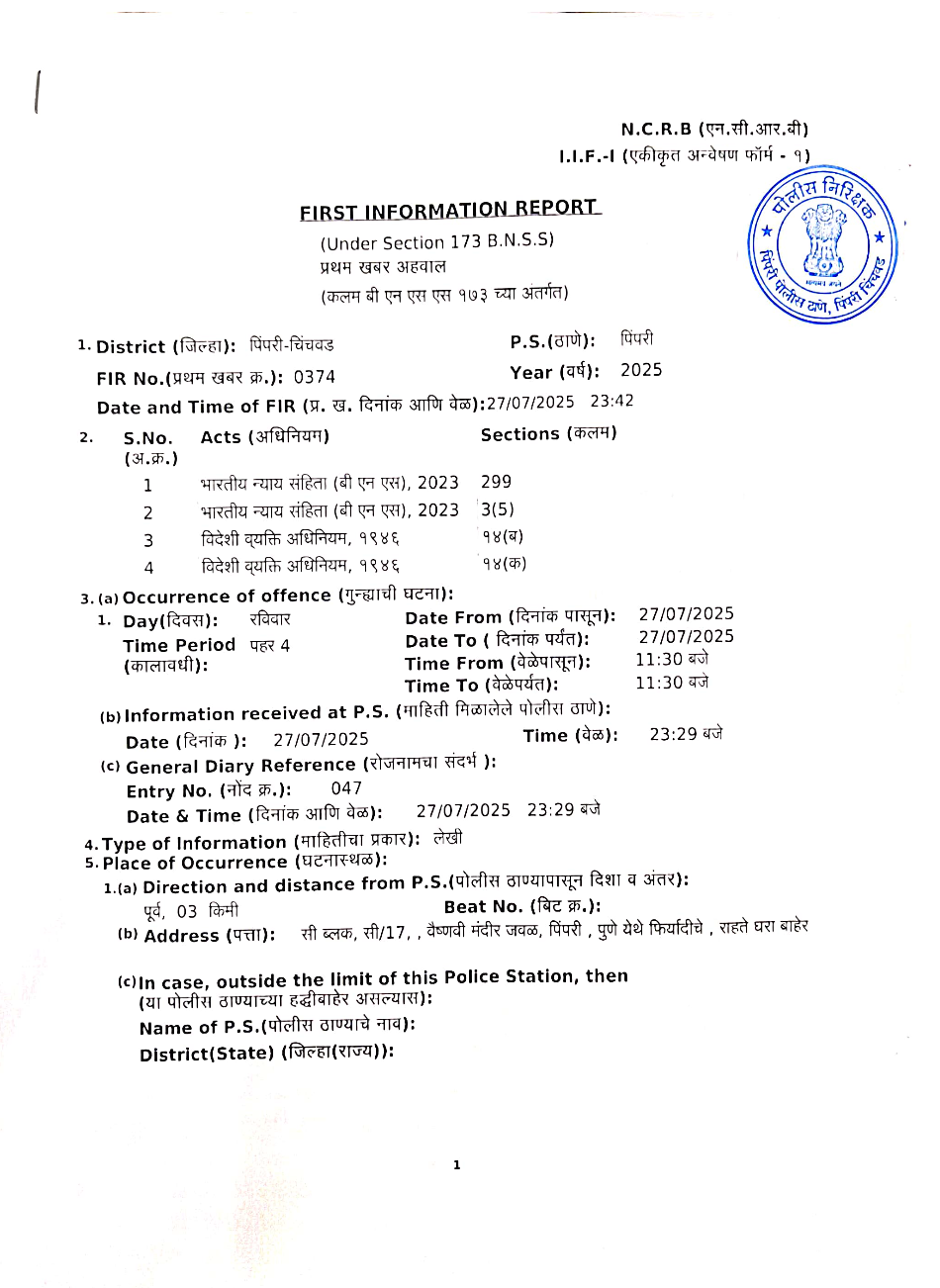
The First Information Report (FIR), filed by Sunny Dhanani (27), a Hindu-Sindhi resident of Pimpri, describes in detail how the accused visited his home around 11:30 AM on Sunday, July 27. As per the complaint, Jacob and Kadam allegedly urged him to embrace Christianity, promising him and his family peace, wealth, mental well-being, and financial support in return.
A copy of FIR in the case
The FIR further states that the accused attempted to present themselves as religiously well-versed individuals, quoting from Hindu scriptures and presenting Christianity as a superior path to salvation. When Dhanani became suspicious, he promptly reported the matter to the Pimpri Police Station, leading to their arrest.
“They told me that if I accepted Christianity, I would be happy, mentally peaceful, and financially stable. They also promised help from foreign sources,” Dhanani stated in the FIR.
Digital trail and systematic outreach suspected
Police believe that Jacob and Kadam may have been involved in a broader effort to influence and convert individuals, potentially using WhatsApp, mobile calls, and face-to-face interactions to reach out to local families. The FIR also notes the use of emotional manipulation and selective interpretation of religious texts to push their agenda.
Police have seized electronic devices and literature that may have been used for religious indoctrination. Forensic analysis and financial trail investigations are currently underway.
Minor detained; role under investigation
Authorities have also taken a minor boy into custody, whose role in the case remains unclear. It is suspected that he may have been used to gain the trust of families or assist in meetings and outreach.
Legal action under the BNS and the foreigners act
The Pimpri-Chinchwad Police have registered a case against the accused under multiple provisions of the Bharatiya Nyaya Sanhita (BNS) and the Foreigners Act. They have been charged under Section 299 of the BNS, which pertains to deliberate and malicious acts intended to outrage religious feelings, and Section 3(5) for attempting to convert individuals through inducement. In addition, Sections 14(b) and 14(c) of the Foreigners Act have been invoked against the American national for allegedly engaging in activities that violate the terms and conditions of his visa.
A senior officer from Pimpri-Chinchwad Police stated:
“We are taking this matter seriously. Misuse of a tourist visa for religious propagation is a violation of national security norms and will be dealt with strictly.”
Rising Concerns Over Religious Conversions
This case has added to growing concerns over organised foreign-funded religious conversions in India, particularly in urban and semi-urban areas. Several social organisations have demanded a wider investigation into Jacob’s visits since 2016 and his connections within India.
It is believed that the accused had built a network of contacts in Pimpri-Chinchwad and may have attempted similar activities with other vulnerable individuals or families.
The American national is currently in judicial custody, and immigration authorities have been notified. He may face deportation, and his visa may be revoked permanently.
Meanwhile, investigations continue into the source of funds, the network supporting such activities, and whether other foreign nationals may be involved.
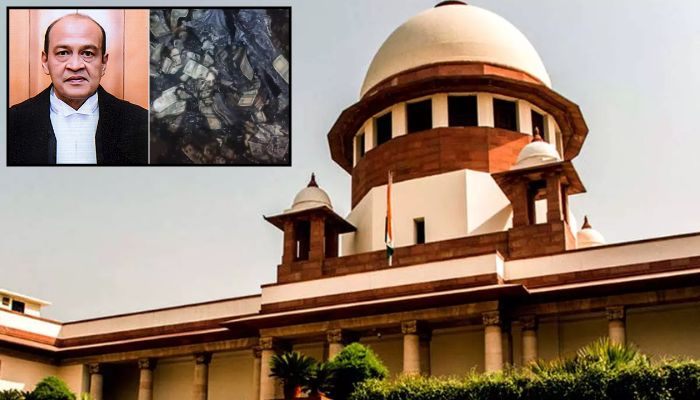
The Supreme Court on Monday, 28th July, asked some tough questions to Justice Yashwant Varma, who is challenging the findings of an in-house inquiry report that went against him. The case relates to a huge pile of cash that was found inside a storeroom at his government residence in Delhi, after a fire broke out there in March this year.
The apex court asked why Justice Varma had participated in the internal inquiry process if he didn’t believe the committee had the authority to investigate him in the first place. The bench, consisting of Justices Dipankar Datta and A.G. Masih, also questioned the timing of the petition, asking why was it filed only after the inquiry report was submitted.
“Why did you appear before the committee if you thought it had no power to investigate? You are a constitutional authority; you can’t now say that you didn’t know,” Justice Datta asked.
Senior Advocate Kapil Sibal, appearing for Justice Varma, said that the judge’s removal must follow a proper constitutional process. He argued that the internal committee had no legal authority to recommend action and that its findings were being used to create public outrage before any official move to impeach the judge.
Sibal pointed to Article 124 of the Constitution, which lays down how judges can be removed only through a formal motion in Parliament. He said the public release of the inquiry report and videos from the fire from the Judge’s own house had damaged his client’s image unfairly.
He also claimed that the Chief Justice of India had no power to send the report directly to the President or the Prime Minister and that this went against the rules.
What did the Supreme Court say
Justice Datta responded that even impeachment is a political process. He asked why Justice Varma didn’t approach the court earlier when the committee was formed, or when the tapes were made public. “Why wait until the report was out?” he asked.
Sibal answered that they believed the committee might uncover the real truth, like who the money belonged to. But Justice Datta was not convinced. He noted that while Sibal said the money wasn’t Justice Varma’s, he hadn’t denied that the cash was found on the property. “If the cash was there, it has to be explained,” the judge said.
Sibal insisted that there was no proof of misbehaviour by the judge. “Where is the link between the cash and the judge himself?” he asked while talking about the pile of cash found at the Judge’s residence. He also argued that the internal committee’s report was just an initial opinion, not proper evidence as defined under the Judges’ Inquiry Act.
But the court pointed out that this was not just about technicalities; it was about the public trust in the judiciary.
The bench eventually decided to adjourn the hearing till Wednesday. It asked Sibal to place a copy of the internal report on record.
Justice Varma also hides his identity
Justice Varma has also concealed his identity in his petition in the Supreme Court challenging the findings of an inquiry panel that recommended his removal.
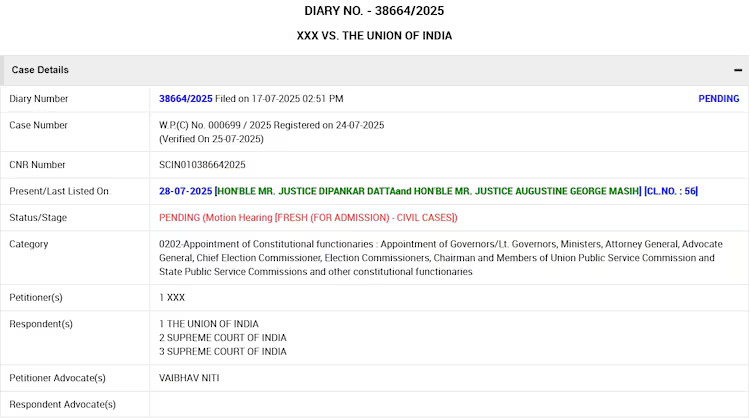
The Supreme Court cause list for Monday, 28th July, mentions the case as “XXX vs The Union of India”. Here, XXX refers to Justice Varma, who has urged the Supreme Court to grant permission for non-disclosure of his identity in his petition.
While the usage of ‘XXX’ to hide the identity of petitioners is not uncommon, it is generally used by victims of sexual assault or rape survivors. It is also used in cases involving juveniles and minors to prevent revealing their identity.
Background of the case
In March this year, firefighters on their way to douse a fire at Justice Varma’s home discovered piles of cash stashed in a storeroom. The findings quickly made headlines, leading to public outrage. Justice Varma was then a judge of the Delhi High Court.
Following the discovery, then Chief Justice of India Sanjiv Khanna formed a three-judge internal committee to look into the matter. Justice Varma was moved back to the Allahabad High Court, and his judicial work was suspended during the inquiry.
The committee, which examined 55 witnesses, including Varma and his daughter, and reviewed photos and videos from the fire brigade, concluded that the cash was found in a part of the house under Justice Varma’s or his family’s control. Since he could not give a convincing explanation about the money, the panel said that action should be taken against him.
Justice Varma is now facing an impeachment motion in Parliament. Last week, a group of MPs from both the Lok Sabha and Rajya Sabha submitted a notice for his removal. This comes after the in-house committee submitted its findings to the Chief Justice of India, who then forwarded it to the President and Prime Minister.
Justice Varma had earlier refused to resign when advised to do so by the CJI.
With the issue now turning into a constitutional debate over the powers of the judiciary, Parliament, and the role of the media, the Supreme Court’s final word in this case will likely set an important precedent.
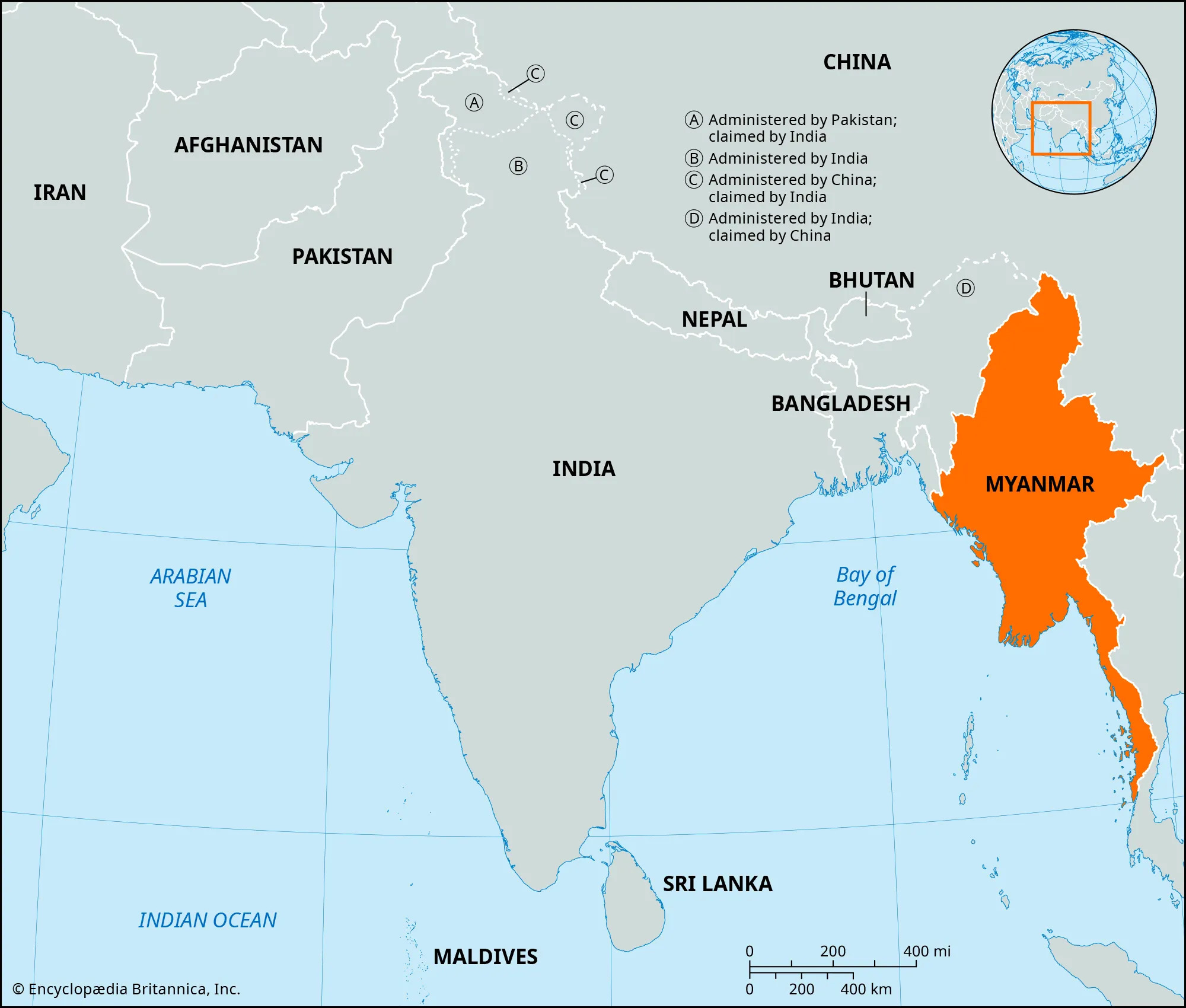
Myanmar has lately been grabbing headlines for its civil war, military coups and narco terrorism, as well as for Chinese-operated call centres that are filled with kidnapped tourists and trapped job seekers from India and other countries. Unfortunately, these dramatic events have overshadowed the magnificent history of the Buddhist-majority nation, popularly known as the “Golden Land” due to its abundance of golden temples and pagodas.
Image via Britannica
It was a thriving civilization that possessed a vibrant culture, beautiful natural landscapes and enchanting scenery which is now tainted by relentless political turmoil and rampant violence. The nation has also experienced the ascension and decline of many kingdoms including the the Ava Kingdom, the Hanthawaddy Kingdom and the Toungoo Empire, among others, over its long and fascinating past which have profoundly impacted and richly contributed its legacy and history.
Bagan kingdom takes root
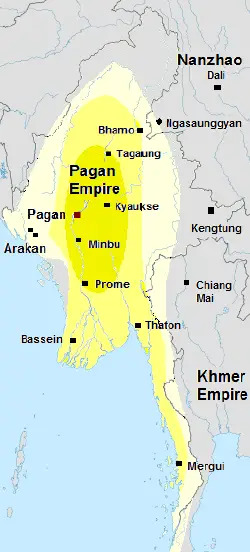
The Bagan (mentioned as Pagan in some texts) dynasty was one such kingdom which became the first to unify the areas that would eventually form present-day Myanmar, the country which was previously known as Burma. Interestingly, Mranma or the Burman people are credited as the source of both these names.
Pagan or Bagan Kingdom (Source: newworldencyclopedia.org)
The historians stated that the Burman were originally from the areas that border Tibet and western China. A military crisis had gripped the Pyu kigdom when they seized the opportunity. Burman annexed their cultural territory in the middle of the 9th century AD and made Bagan their capital in 849 AD. Nevertheless, the take over was not absolute as the culture and traditions of the Pyu had a crucial impact on the new arrivals.
The latter did not resort to plundering but tried to adapt to the already established way of life of the Pyu people. Indian cultural and economic ties had influenced the Pyu. They were Buddhists and the new conquerors also followed suit. The Pyu wet-rice cultivation which is still practised in the Irrawaddy Delta, was another fresh lesson for the Burman who were accustomed to the temperature and terrain of far higher altitudes.
Modern historians consider Pyinbya to be one of the earliest monarchs of Bagan which would eventually occupy modern-day central Myanmar over the next two centuries. However, the country’s chronicles name him as the 33rd king of the dynasty.
A short video on temples of Bagan, Myanmar There are more than 2000 temples in Bagan spread over an area of 40 miles². Bagan was mainly founded in 849 during the reign of king Pyinbya, known as 'AriMardanaPura'/TambaDipa(TamraDweep). Video: Milosh Kitchovitch pic.twitter.com/d8OoHL5NWC
— भारतीय वास्तुकला(Wonderful Indian Architecture) (@wiavastukala) July 19, 2018
Anawrahta ascends the throne
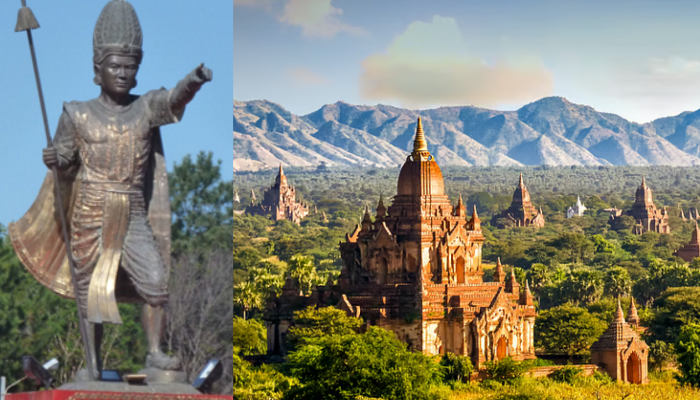
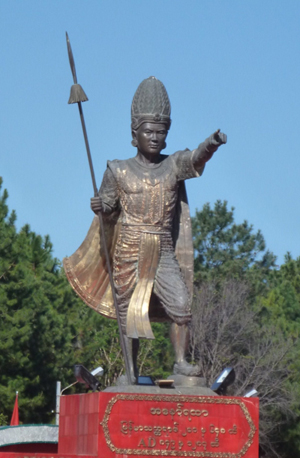
Bagan was modest kingdom until King Anawrahta whose original name was Aniruddha, its greatest ruler came to power in 1044. He was the great-grandson of Pyinbya. His debut brought a substantial change in the fortunes of his kingdom and the entire region and altered their destiny. The new ruler made Bagan a leading producer of rice by enhancing the irrigation infrastructure throughout his realm.
Statue of King Anawrahta (Source: gomyanmartours.com)
Furthermore, Anawrahta launched bold military plans. He took control of Thaton which was the capital of the prosperous and elegant Mon kingdom to the south, in 1057. The first Burmese empire swiftly rose to prominence when Anawrahta brought the entire Irrawaddy area under Bagan sovereignty. The important development pushed neighbouring Mon princes to yield to Burman authority.
Nathlaung Kyaung Temple is a Hindu temple dedicated to Vishnu. It is located inside the city walls of old Bagan, Burma & is the only remaining Hindu temple in Bagan. It is one of the oldest temples in Bagan, and was built in the 11th century, during the reign of King Anawratha. pic.twitter.com/3YySFS1o1G
The king’s accomplishment involved both military triumphs and cultural interchange. Similar to his forebears, he was moulded by the Mon school of Theravada Buddhism which he propagated throughout the Bagan state because he perceived it as a beneficial unifying force.
Expansion of Bagan Empire and Indian influence
The Mon culture which was heavily influenced by Indian culture, was also valued greatly by Anawrahta. He was able to hire Mon engineers, goldsmiths, woodworkers and artists to adorn Bagan as a result of the wealth acquired by the capture of the Mon ports. River transportation was controlled by this remarkable civilisation which broadened their sphere of dominance.
Meanwhile, the king ordered the construction of countless temples, pagodas and stupas. Every structure appeared to be more expansive and impressive than the one before it. Notably, the sacred tale of Ramayana was popularized in Burma from his time.
It was known as Rama Zatdaw in Burmese and was recorded in Ava by the end of the 13th century and was passed down orally from generation to generation until the 16th century. Buddhist monks viewed it as a great story in the 18th century. Based on Old Bagan oral traditions, the historical epic was written down in prose, verse and dramatized between the sixteenth and eighteenth centuries.
Bagan’s golden period continued even after Anawrahta’s passing in 1077 as the flourishing commerce funded the rapidly growing temple complex. The ancient city was their political, economic and cultural hub from around 1044 and 1287 CE.
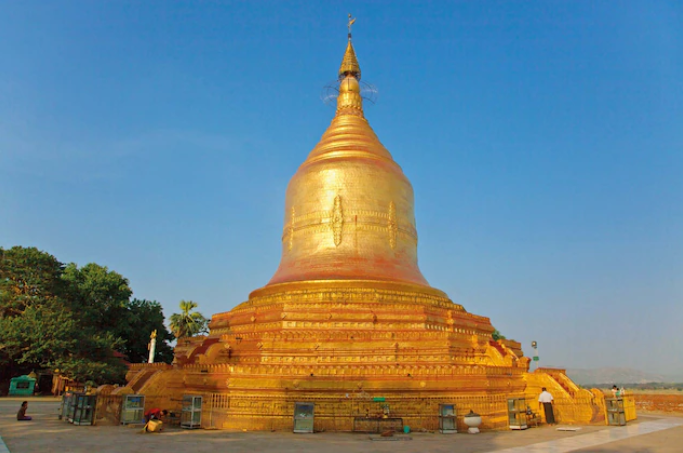
The Lawkananda Pagoda, commissioned by King Anawrahta, dates from AD 1059. It is home to a sacred relic believed to be one of the Buddha’s teeth. (Source: National Geographic)
However, just as all great things, including formidable empires, are destined to come to an end, the mighty Bagan too had to submit to the brutality of the same rite with the onset of the Mongols. It was engulfed, like a number of other city-states in the central region of Myanmar after falling as a result of various political and economic issues starting in the late 1200s.
The power of Bagan, akin to so many other nations, was ultimately overrun by Mongol invasions. King Narathihapate, emboldened by the victories initially, avoided communication with Mongol monarch Kublai Khan. Bagan’s fortunes fluctuated and its decline began in 1277 with an unexpected defeat at the Battle of Ngasaunggyan. Bagan fell ten years later.
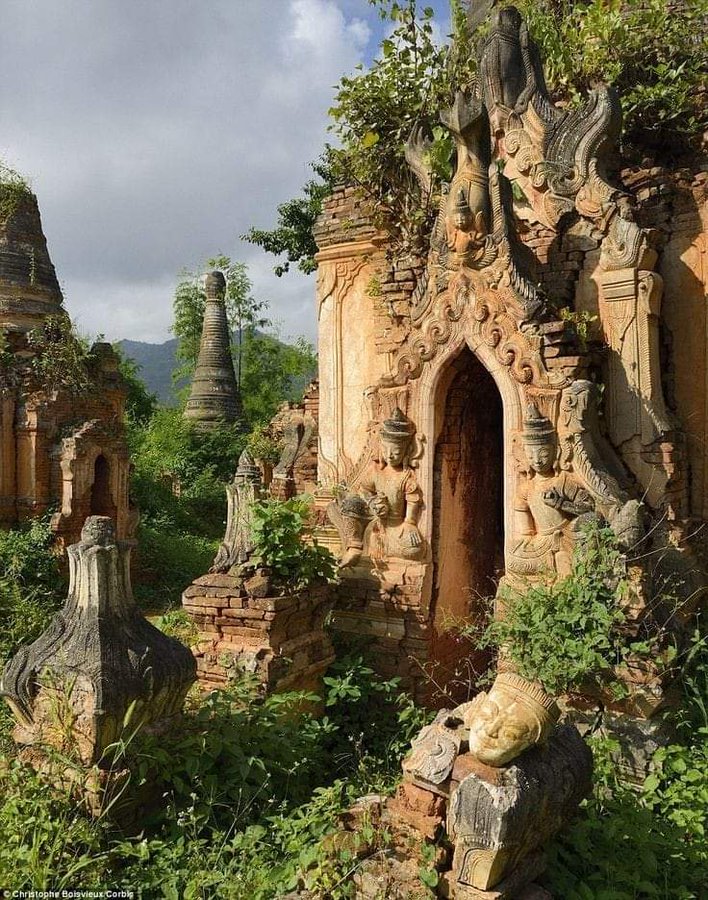
Many of the temples and pagodas were abandoned in the centuries that followed. Nevertheless, the original culture of the region persisted and the 15th century witnessed Bagan reclaim its status as a destination for Buddhist pilgrims. It remained a place of worship and underwent a resurgence of construction in the 1700s.
Temples, monasteries, and stupas, buildings that store Buddhist treasures and are formed like mounds, bell-like domes or cones are among the thousands of monuments that remain standing to this day. Nearly all of these revered structures are composed of brick with stucco.
Bagan make its way into UNESCO World Heritage site
The sacred landscape of Bagan is home to an extraordinary collection of Buddhist art and architecture as well as centuries of the Theravada Buddhist practice of merit making (Kammatic Buddhism). It also offers striking evidence of the Bagan Period (11th-13th centuries) during which redistributional Buddhism evolved into a political control mechanism with the king serving as the primary donor.
Temple construction increased rapidly as a result of the merit-making customs, reaching a pinnacle in the 13th century. The area is divided into eight serial components (parts) which are situated on a bend in the Irrawaddy River. One component is on one side of the river while seven are on the other.
Bagan: The land of ten thousand temples (Source: @histories_arch/X)
The complex’s intangible qualities are represented in farming, traditional cultural customs, Buddhist worship and merit-making endeavours. The 3,595 documented monuments there are comprised of stupas, temples, and other Buddhist spiritual practice structures. They also include extensive archaeological resources as well as numerous inscriptions, murals and sculptures.
Bagan is truly a multi-layered, intricate cultural ensemble of modern cities and residential neighbourhoods which was named a United Nations Educational, Scientific and Cultural Organization (UNESCO) World Heritage site in 2019.
Melting pot of culture and religion
Over 5,000 religious monuments were built on the Bagan plains which covered an area of roughly 65 square kilometres under the supervision of its rulers. The Bagan Archaeological Zone contains more than 2,000 of the original structures that have survived to this day in various repair states.
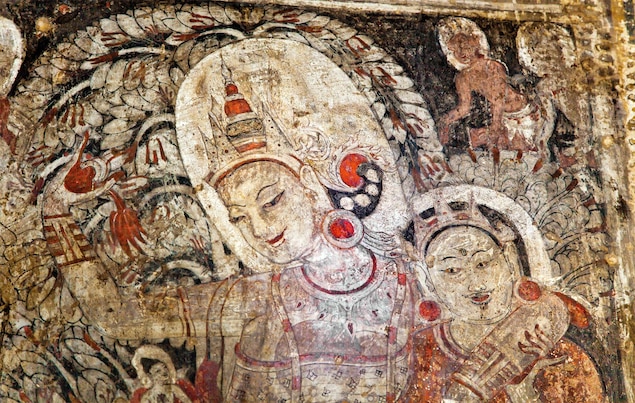
Images illustrating the lives of the Buddha and earlier Buddhas adorn the monuments. Bagan excelled during its more than 250-year golden age under the empire and had an incredible 10,000 religious monuments dispersed over a 40-square-mile area, according to other reports.
A fresco detail from the Law Kahtikepan Temple complex in Bagan. (Source: National Geography)
Several sites stand out among the thousands of buildings ranging from vast temples to modest, one-room monasteries. The Lawkananda Pagoda, constructed by Anawrahta, dazzles tourists with its shining dome which is crowned with an umbrella-shaped finial. A relic considered to be one of the Buddha’s teeth is housed in this pagoda which was acquired in Sri Lanka by the ruler.
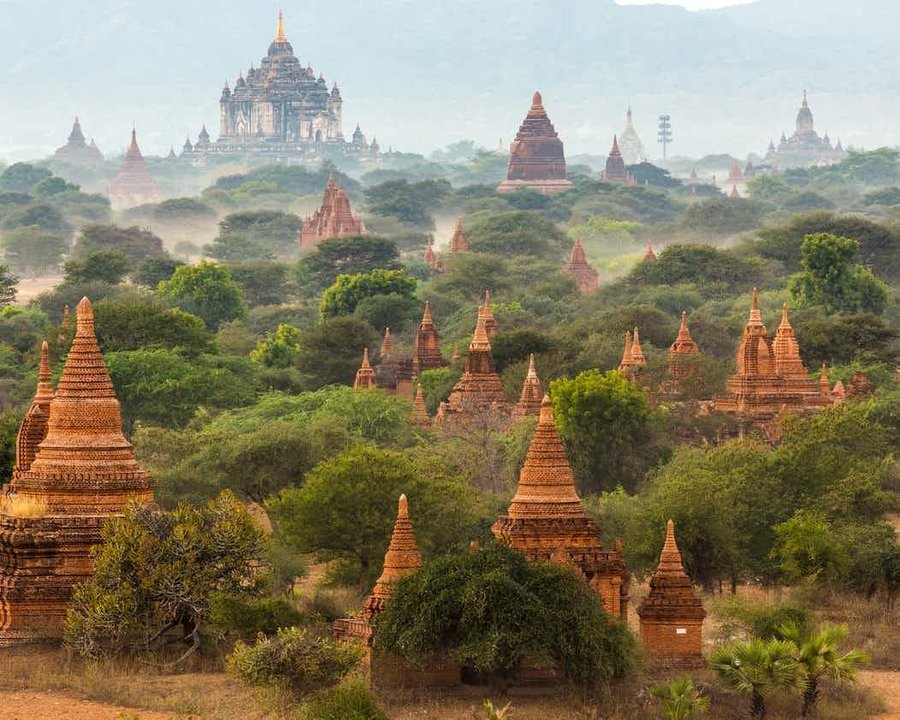
Likewise, many rose-colored pagodas and temples soared above crimson soil and lush greenery, which have been a sight to behold for tourists along the bend of the Irrawaddy River in central Myanmar.
One of the greatest concentrations of Buddhist temples in the world can be found in this expansive sacred area which is a testament to the intricate connection between culture and religion. Scholars have examined how this relationship shaped the formation of Burmese identity in the early 1900s.
What is next for Bagan
The Burmese people had long prized Bagan. However, the Maha Yazawin from the 18th century and the Hmannan Yazawin from the 19th century provided the basis for its history. Moreover, Burmese researchers looked for fresh evidence in the early 1900s to give more reliable historical details about the same. These included Gordon Luce, a British scholar and U Pe Maung Tin, a Burmese scholar.
Crumbling pagodas of Bagan (Source: @histories_arch/X)
Bagan which is located in an area that is prone to earthquakes, has experienced multiple seismic events that have seriously damaged its religious and archaeological attractions. Several buildings were destroyed by two earthquakes in 1975 and 2016. In the 1990s, over 2,229 temples and monuments were preserved as a consequence of massive restoration initiatives run by the military administration.
However, archaeologists criticised the military government’s restoration of the site. The World Heritage award, according to Bagan history researchers, should encourage collaboration between experts and the Myanmar government to protect Bagan’s holy sites for many years to come.
Bagan is frequently referred to as an archaeological marvel. However, it is also a living historical monument with functional temples that are essential to the local, national and international Buddhist communities. Notably, the Archaeological Survey of India (ASI) has also played an important role in the restoration of this crucial cultural and historical heritage.
Bagan: Amalgamation of Indic religion and culture
Bagan is as an active reminder of the influence of India and a religion that was born in in the country, which then spread to the rest of the world, including Myanmar. This reflects the unparalleled popularity and impact of India and its religions, showcasing the extraordinary imprint on culture, traditions, societies and civilizations for centuries with evidence that stands to this day.
Bagan also affirms that Burmans were conquerors who seized kingdoms to form their dominance and authority. Nevertheless, they embraced the local heritage as their own and integrated rather than trying to replace or uproot it. They were deeply influenced by the Indian culture and an Indic religion that was already prominent in the area, which they not only adopted but also propagated further, erecting monuments to celebrate and commemorate it.
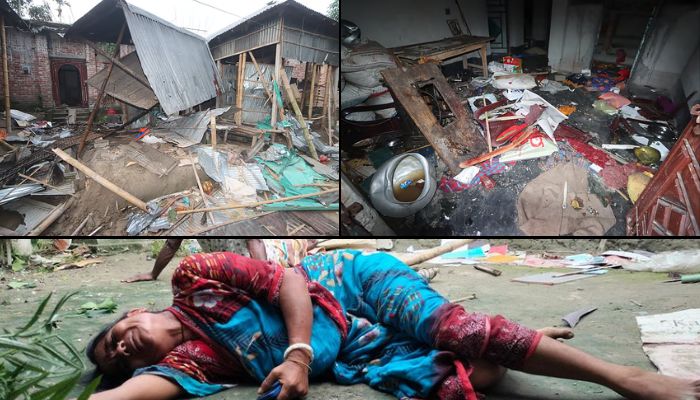
On Sunday (27th July), a strong mob of 500-600 Muslims attacked over 15 Hindu homes and carried out looting and vandalism under the pretext of ‘blasphemy.’ The incident occurred in the Betgari Union in Gangachara upazila in Rangpur district of Bangladesh.
According to reports, the attack was carried out at about 4:30 pm on Sunday. The violent Muslim mob selectively targeted Hindu homes and looted their belongings.
Fearing for their safety and security, at least 50 Hindu families have fled the area. The carnage, however, began on Saturday (26th July) when Muslims attacked the home of a Hindu man with sticks and weapons.
Last night in Gangachara, Rangpur, more than 30 Hindu homes were attacked under the pretext of alleged blasphemy. The attackers were radical Islamists affiliated with Jamaat-e-Islami and the NCP. Notably, the military was also present at the time.??
— Voice of Bangladeshi Hindus ?? (@VHindus71) July 27, 2025
Again on Sunday (28th evening), a violent Muslim mob laid siege to the homes of Hindu families, carried out vandalism and looting. They were armed with sticks and country-made weapons.
A Hindu woman lamented, “How will we survive now? We have been rendered penniless. They (Muslims) have taken away everything.”
A young Hindu girl told Ajker Patrika that the police were present when the attackers came to vandalise their homes. The cops initially resisted the marauding mob but later fled, leaving the helpless Hindus to their impending fate.
News: "In Gangachara, Rangpur, a 17-year-old boy has been arrested by the police on charges of making derogatory remarks about the Prophet Muhammad. Following this, enraged mobs attacked and vandalized the boy’s house as well as 15 houses belonging to members of the Sanatan… pic.twitter.com/bzOIwhW998
“Why were the homes of innocent people like us vandalised and looted?” the Hindu girl asked, unaware of the ‘collective punishment’ doctrine of violent Muslim mobs.
Gangachara Police OC Al Emran conceded that he allowed the mob of 500-600 Muslims to gather, mistaking it to be a ‘peaceful march.’ He added, “However, they suddenly launched an attack. One cop was seriously injured.”
He further added that the Muslim mob carried out the attack, following the conclusion of afternoon Namaz.
Local Hindu resident Pramod Mahant told Prothom Alo how Muslims were supposed to stage a protest in the market area but soon began shouting slogans and attacking Hindu homes.
The grim situation was later brought under control by the police and the army. The attackers managed to flee the crime scene. Sources told OpIndia that not a single arrest has been made in connection with the destruction of Hindu homes.
A similar template of violence and arson attack was used by Muslim mobs in May this year to punish the Hindu community in Jessore district of Bangladesh.
The Background of the Incident
On Saturday (26th July), an 18-year-old Hindu boy named Ronjon Roy was arrested in Gangachara over unproven charges of ‘blasphemy’.
According to reports, the victim was accused of insulting Islam and making derogatory posts on Facebook about Prophet Muhammad. It was claimed that he uploaded the said posts from the ID ‘Ronjon Roy Lrm’ over a span of 5 days.
Journalist and fact checker Sohan RSB highlighted how a duplicate account of the Hindu victim existed on Facebook, and the alleged blasphemous posts were made from the new account.
He pointed out how the new account had shared pictures from Ronjon’s old account with derogatory captions about the latter’s family.
Without verifying the facts of the matter, a frenzied Muslim mob took to the streets of Gangachara demanding action against the Hindu boy.
The police soon gave in to their diktat and arrested the 18-year-old without confirming whether Ronjon Roy even has access to the new Facebook handle that posted the ‘blasphemous content.’
A group of Muslims allegedly conspired to frame a minority Hindu boy by creating a fake ID and posting offensive remarks about Islam within just 15 days. 1/3 pic.twitter.com/bLYE5l9O11
Police Officer-in-Charge (OC) Al Emran acknowledged, “When the locals got angry, we quickly conducted a raid to arrest him and bring the law and order situation under control. He is being interrogated.”
This nonetheless became an excuse for Muslims in the area to carry out vandalism and looting at Hindu homes, effectively destroying their shelter, livelihoods and means of survival.
OpIndia had previously highlighted 13 cases where Hindus were attacked, tortured and persecuted by Muslim mobs under the pretext of ‘blasphemy.’
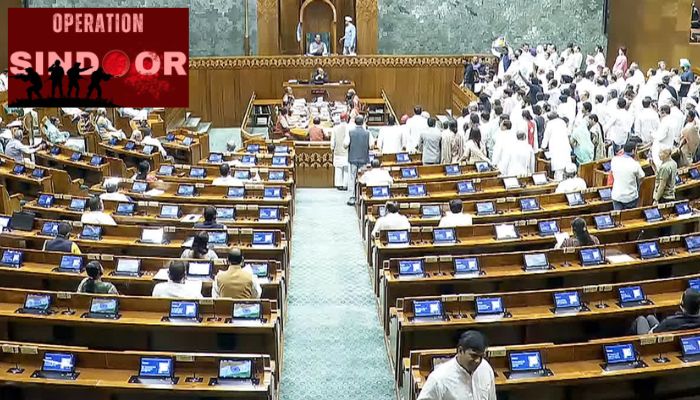
The Monsoon Session of Parliament is expected to heat up today as both Houses prepare for a detailed discussion on the recent Pahalgam terror attack and the Indian military’s response under ‘Operation Sindoor’. A major highlight of today’s proceedings will be the debate over former US President Donald Trump’s claim that he helped mediate a ceasefire between India and Pakistan after the operation.
The Rajya Sabha will begin its discussion on Tuesday, 29th July. A 16-hour debate has been scheduled in both Houses. According to sources, Defence Minister Rajnath Singh, Home Minister Amit Shah, and External Affairs Minister S. Jaishankar will address the issue, while Prime Minister Narendra Modi is also expected to speak.
The BJP-led NDA will likely be represented by MPs from the seven delegations that had travelled to over 30 countries to present India’s stand on the terror attack and subsequent military action. But it’s still to be seen if Congress MP Shashi Tharoor can be permitted to address the gathering. Tharoor had appreciated the Modi government’s response to the issue while he was on a visit to the US, something that did not go down well with his party leadership.
Out of the total 16 hours allocated for discussion on Operation Sindoor in Rajya Sabha, Congress has been allotted an approximate time of two hours, during which Rajya Sabha LoP Mallikarjun Kharge will open the debate in the House.
While this, Union Parliamentary Affairs Minister Kiren Rijiju has asked the Opposition not to resort to language that is in line with Pakistan’s narrative. He said, “We must maintain the dignity of our armed forces. I request the Opposition, especially the Congress, not to harm India’s interests.”
#WATCH | Delhi: On Operation Sindoor discussion in Lok Sabha today, Union Parliamentary Affairs Minister, Kiren Rijiju says, "…It was the wish of the people of India, that the PM decided to launch Operation Sindoor through the Indian Army. Today, the Lok Sabha will take up the… pic.twitter.com/Rh2hp99Pba
Opposition raises questions, spreads doubts over Operation Sindoor
The debate occurs at a time when the Opposition, particularly Congress, has been questioning the success and motives of Operation Sindoor. There have been criticisms of the codename, the objectives of the operation, and even the success of the mission to see if anything worthwhile was achieved.
Kothur Manjunath, the MLA from Kolar City in Karnataka, asserted that the action has proven ineffective and failed to deliver justice to the family of the victims of the Pahalgam terror attack. “If terrorists can enter our country, kill our people, and escape unscathed, isn’t that a glaring security failure? What was our army doing at the border? Did they have any plan at all?” he asked.
?"Operation Sindoor was a show-off; nothing was done."
Karnataka Congress MLA Kothur Manjunath questioned the effectiveness of Operation Sindoor and the government's claims.
Congress veteran Prithviraj Chavan accused the government of using the name ‘Sindoor’ for emotional or religious gain. Congress leader Udit Raj also levelled similar allegations and accused, “During discussions with intellectuals, it was pointed out that Sindoor is associated with a specific religion, and it would have been better if a different name was chosen.”
Delhi: When asked about the name "Operation Sindoor" for the operation targeting terrorists
Congress leader Udit Raj says, "During discussions with intellectuals, it was pointed out that Sindoor is associated with a specific religion, and it would have been better if a different… pic.twitter.com/ef58ZH3mph
However, he tried to claw himself out of the hole he had dug by saying, “What matters is that Pakistan has been taught a lesson.”
Jharkhand Mukti Morcha MP Mahua Maji also criticised the name, saying it seemed politically motivated. The name could be something neutral. Meanwhile, senior Congress leader Rashid Alvi stated, “Much better reply needs to be given; this is bare minimum. Our forces did what the government of India told them to do, but the question again arises. Was every single terrorist killed? Will there won’t be another Pahalgam?”
Controversial Congress MP Imran Masood went even further, suggesting that the results of the operation should be made public. He referred back to the Balakot air strike, saying, “The world mocked us. People said we only killed three crows.” His comments aimed to downplay India’s earlier efforts against cross-border terrorism and added fuel to the ongoing debate.
Centre rejects allegations of Foreign Pressure
Responding to a question in Parliament, Union Minister of State for External Affairs Kirti Vardhan Singh denied that Operation Sindoor was carried out under pressure from foreign countries. He clarified that the operation was a direct response to the “barbaric” Pahalgam terror attack and was aimed at dismantling terrorist camps and neutralising those who were planning to cross into India.
He added that India’s response was “focused, measured, and non-escalatory.” When Pakistan tried to retaliate by targeting Indian civilian and military areas, the Indian armed forces responded strongly, inflicting heavy damage on the Pakistani military.
The Minister also informed the House that Pakistan later requested India to stop military action. On 10th May, 2025, the Director General of Military Operations of Pakistan contacted his Indian counterpart to request a ceasefire, which India agreed to the same day.
Parliament session so far: High tension and political showdown
Protests over the Special Intensive Revision (SIR) of the voter list in Bihar continued in both Lok Sabha and Rajya Sabha on Day 5 of the Monsoon Session, with Opposition MPs demanding that the Election Commission of India halt the exercise. The first four days of the session were marked by repeated adjournments, as Opposition members chanted slogans and carried placards on the floor, disrupting House proceedings. Congress Parliamentary Party Chairperson and MP, Sonia Gandhi, joins the Opposition’s protest against Bihar SIR in the Parliament premises.
#WATCH | Delhi | Congress Parliamentary Party Chairperson and MP, Sonia Gandhi, joins the Opposition's protest against Bihar SIR pic.twitter.com/LJnfSnBQz1
Since the Monsoon Session began on 21st July, Parliament has seen multiple disruptions. The Opposition has been demanding discussions on several important issues, especially the Pahalgam terror attack and the Election Commission’s ongoing SIR (Systematic Investigation of Roll) exercise in Bihar ahead of the Assembly elections.
The Opposition has also been vocal about President Trump’s remarks that he helped broker peace between India and Pakistan after Operation Sindoor. They are demanding that PM Modi give a direct response to these claims on the floor of Parliament.
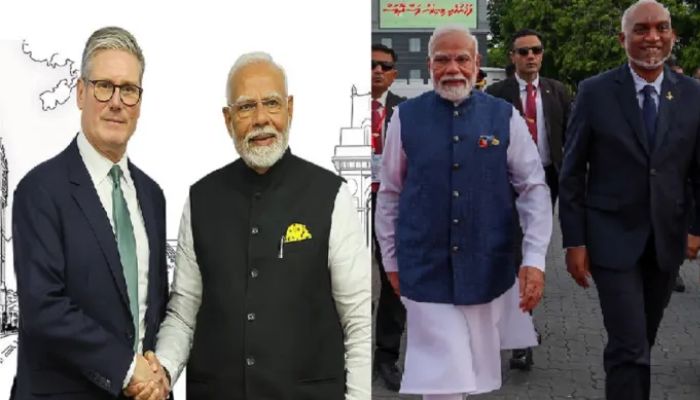
Prime Minister Narendra Modi’s visit to England and Maldives has propelled India a newer height on the global stage. The historic agreements signed with these two countries have further strengthened India’s economic, strategic and cultural influence. This visit is a great example of India’s ‘Neighbourhood First’ as well as ‘SAGAR’ (Security and Growth for All in the Region) policy.
As PM Modi’s UK and Maldives visit garner global attention, let’s look at what agreements were signed and what impact they will have on India’s future.
CETA agreement during PM Modi’s visit to England
India and the United Kingdom (UK) signed the Comprehensive Economic and Trade Agreement (CETA) during PM Narendra Modi’s visit to England on July 24, 2025. The agreement is the result of three years of hard work and 14 rounds of complex negotiations. It was signed by Commerce and Industry Minister Piyush Goyal on behalf of India and Business and Trade Secretary Jonathan Reynolds on behalf of the UK.
PM Modi, UK Prime Minister Keir Starmer, External Affairs Minister S. Jaishankar, and UK Chancellor Rachel Reeves were also present on this historic occasion. This agreement is going to give India a new position in global trade.
Key highlights of the CETA
CETA was launched in 2022, when the UK was looking for new trading partners after Brexit. India also wanted to accelerate its mission of ‘Atmanirbhar Bharat’ and ‘Make in India’ at the time. The three-year negotiations covered many difficult issues, such as tariff reduction, visa rules, intellectual property rights (IPR) and protection of sensitive sectors. On 6th May 2025, the two countries agreed in principle on the agreement, and on 22nd July 2025, the Union Cabinet of India approved it. Finally, the agreement was signed on 24th July 2025 in the presence of Prime Minister Modi and his UK counterpart Keir Starmer.
This agreement holds special value as it not confined to just trade but also covers goods, services, investment, intellectual property, and professional mobility. This is a big step for India towards economic growth, job creation, and global leadership.
Benefits of CETA to India
Zero tariff on 99% of exports
99% of goods going from India to the UK will now be free of tariffs. This will give a huge boost to exports in sectors such as textiles, leather, footwear, gems and jewellery, toys, and marine products.
Benefits to farmers and fishermen: Zero tariff on 95% of agricultural produce will give Indian tea, coffee, turmeric, pepper, pulses, mangoes, oranges, jackfruit, and organic millets easier access to the UK’s $375 billion agricultural market. Zero tariff on 99% of marine produce will give fishermen a 20-30% increase in income.
Protection of sensitive sectors: India excluded sectors such as dairy, apples, and edible oils from the agreement, so as not to harm local farmers and industries.
Projected Growth: Exports from these sectors are expected to grow at 10-15% annually, creating lakhs of jobs in textile and leather hubs like Tirupur, Kanpur, and Kolkata.
Employment generation and promotion of MSMEs
The agreement will create millions of jobs in India, especially in labour-intensive sectors like textiles, leather and jewellery.
Small and medium enterprises (MSMEs), artisans and weavers will get a place in the global market. Intellectual property and geographical indicator (GI tag) protection will give global recognition to Indian products.
For example, the textile industry of Tirupur and the leather industry of Kanpur will get new markets, providing new employment opportunities to local artisans and women.
Cheap imported products
Whiskey, cars (like Jaguar, Land Rover), chocolates, cosmetics, and medical equipment like ECG and X-ray machines coming from the UK to India will be cheaper. Tariffs on whiskey will drop from 150% to 75% and to 40% over the next 10 years. Tariffs on cars will drop from 100% to 10%. This will provide Indian consumers with affordable and high-quality products, and give UK companies an opportunity to increase their share in a large market like India.
New opportunities in the service sector
This is the first time that the UK has made such huge commitments. Indian IT/ITES, financial services, education, telecom, architecture and engineering companies will get easy access to the UK market.
Double Contribution Convention (DCC): 75,000 Indian employees will get exemption from social security payments in the UK for 3 years. This will increase their salaries and reduce costs for companies by 20-30%.
There will be no ‘economic needs test’ required in 36 service sectors and Indian professionals will be able to work without a local office for up to 24 months in 35 UK sectors.
More than 1,800 Indian chefs, yoga instructors and musicians will be able to work in the UK every year.
Revolution in education sector
Five renowned UK universities Southampton, Liverpool, York, Aberdeen and Bristol will open campuses in India. Southampton has already opened a campus in Gurugram and the rest will open in Bengaluru and Mumbai.
This will enable Indian students to get world-class education at home and save the cost of going abroad. This will bring a big change in the education sector of India.
Investments and Startups
Investment worth 6 billion pounds (about Rs 65,000 crore) from the UK will come to India, which will boost manufacturing, pharmaceuticals and startups. Indian startups will get access to UK investors and innovation hubs, helping in global expansion.
Economic Growth and Global Leadership
Currently, India-UK bilateral trade is worth $56 billion (about Rs 4.7 lakh crore). CETA aims to take it to $120 billion (Rs 10 lakh crore) by 2030.
There will be additional trade worth Rs 2.8 lakh crore by 2040, which will add 0.5-1% to India’s GDP. This agreement will accelerate India’s ‘Make in India’ mission and make India a leader in global trade.
Features of CETA
Goods and Services Trade: The agreement covers goods, services, investments and intellectual property.
Sustainable development: emphasis on environment, innovation, and reduction of non-tariff barriers.
Provisions for women and MSMEs: Special facilities for trade finance and global partnerships.
Professional Mobility: Easier visa rules for Indian professionals to work in the UK.
Calling the India-UK Free Trade Agreement ‘historic’, Commerce Minister Piyush Goyal said, “This agreement will open new doors for India’s farmers, artisans and small businessmen. It will take India towards becoming a global economic power.”
Maldives visit: From an unprecedented low to a new era in India-Maldives relations
On 25th July 2025, PM Narendra Modi attended the 60th Independence Day celebrations of Maldives as the chief guest . This visit, at the invitation of Maldives President Mohammed Muizzu, gave new strength to the relations between the two countries after a tense period. This visit symbolised a positive change after the outrageous ‘India Out’ campaign and the ruling Maldivian government’s inclination towards China.
Background of relations with Maldives
India and Maldives have long-standing cultural, trade and strategic ties. India was the first country to establish diplomatic relations with Maldives after its independence in 1965. India helped Maldives during Operation Cactus in 1988, the 2004 tsunami and the 2014 water crisis. India also provided vaccines and economic assistance during the Covid-19 pandemic.
However, after President Muizzu came to power in 2023, the ‘India Out’ campaign soured the relationship. Muizzu called India’s military presence as a ‘threat’ to Maldives’s sovereignty and tried to get closer to China. But India’s economic and strategic assistance and its rising global influence made the Maldives understand the importance of India. The visit of Maldives’ foreign and defense ministers to India in 2024 and India’s $400 million currency swap facility improved the relationship.
Agreements made during Maldives visit and benefits to India
Economic aid and debt relief
India extended a Line of Credit (LoC) of Rs 4,850 crore to Maldives that will help in infrastructure, housing and community development projects.
Maldives’ annual debt repayment obligations were reduced, providing relief to their economy.
Currency swap facility of $400 million (Rs 3,320 crore) and treasury bills of $50 million (Rs 415 crore) were extended.
Grant assistance promised of $69 million (Rs 572.7 crore).
Benefit: India will emerge as the most reliable economic partner of Maldives. It will increase India’s influence in the Indian Ocean and balance China’s influence.
Free Trade Agreement (IMFTA)
Negotiations on the India-Maldives Free Trade Agreement (IMFTA) began. It will boost trade in sectors such as fisheries, aquaculture, and tourism.
Benefit: Indian fishermen and traders will get a new market in Maldives. Maldives will get Indian products at cheaper rates, which will increase trade between the two countries.
Housing and infrastructure
Transfer of 3,300 social housing units in Hulhumale. Inauguration of road and drainage system project in Addu town. 6 high impact community development projects initiated, such as water supply and sewerage facilities.
Benefit: With India’s help, the standard of living in Maldives will improve. This will increase India’s soft power and create a positive image of India in Maldives.
Defence and Security Cooperation
Inauguration of Defence Ministry building in Male. Transfer of 72 heavy vehicles and two Bhishma Health Cube Sets.
Grant of $4 million (Rs 33.2 crore) to the Maldives National Defence Force (MNDF).
Benefit: Increasing the defense capability of Maldives will strengthen maritime security in the Indian Ocean, which is strategically important for India. India-Maldives cooperation at the Colombo Security Summit will enhance regional stability.
Digital and Technological Cooperation
Introduction of UPI and Rupay payment systems, which will boost tourism and retail trade in Maldives.
Agreement between the Indian Institute of Tropical Meteorology and the Maldives Meteorological Service.
Agreement to share digital solutions at population level for digital transformation.
Benefit: Indian digital companies will get a new market in Maldives. Transactions will become easier for Indian tourists in Maldives, which will increase tourism.
Health and fisheries
Maldives recognises Indian Pharmacopoeia (IP), making Indian medicines easily available in Maldives.
Agreement for cooperation in fisheries and aquaculture.
Benefit: Indian pharma companies will get market in Maldives. Fishermen will get increased business opportunities in Maldives.
Cultural and diplomatic reinforcement
Joint postage stamp released on the 60th anniversary of India-Maldives diplomatic relations.
PM Modi and President Muizzu planted saplings under the ‘One Tree in the Name of Mother’ campaign.
Benefit: Cultural and people-to-people ties will be strengthened. India’s image in the Maldives as a trusted friend will be further strengthened.
Improving relations with Maldives
In the last two years, the ‘India Out’ campaign in Maldives had created an atmosphere against India. President Muizzu initially distanced himself from India and showed inclination towards China. But India’s economic and strategic help made Maldives understand the importance of India.
Financial assistance in 2024: $400 million currency swap facility and water supply and sewerage projects on 28 islands.
Additional support in 2025: $69 million in grant assistance and $50 million in Treasury bills.
High-level visits: Visits by Maldives Foreign Minister Abdullah Khaleel and Defence Minister Ghassan Maumoon to India gave a new dimension to the relationship.
President Muizzu said during PM Modi’s visit, “India is our closest and most valued partner. IMFTA will further strengthen our economic partnership.” This shows that Maldives is now prioritizing cooperation with India.
Strategic and economic importance to India
Influence in the Indian Ocean: Maldives is on an important shipping route in the Indian Ocean. With India’s help, Maldives’ defence and economic position will be strengthened, India’s regional influence will increase.
Balancing China’s influence: China’s growing influence in Maldives was a challenge. India’s economic and defence assistance brought Maldives closer to India.
Tourism and trade: Digital payment systems like UPI and Rupay will make it easier for Indian tourists to travel to Maldives. This will increase tourism and trade.
Soft Power: India’s assistance in housing, health, and infrastructure strengthened India’s image in the Maldives as a trusted friend.
Shared benefits for both countries
England
The UK will gain access to a huge market like India . Their whisky, cars, and medical equipment will be cheaper in India, and the share of their companies will increase.
Tariff cuts in India on 90% of British products will deliver £6 billion in investment and export benefits to the UK.
Thousands of jobs in the UK would be protected, particularly in the whisky, automobile and financial services sectors.
Maldives
India’s economic help will strengthen Maldives’ economy. Loan assistance of Rs 4,850 crore and relief in loan repayment will improve Maldives’ financial situation. Housing, roads and defence projects will improve the lives of the people of Maldives.
Agreements like UPI and IMFTA will boost tourism and trade of Maldives.
India
Increasing trade and investment with both the countries will strengthen India’s economy.
India’s strategic influence in the Indian Ocean will increase, and ‘Make in India’ will get new impetus.
Farmers, artisans, youth and MSMEs will get new opportunities, which will increase the social and economic prosperity of India.
PM Narendra Modi’s visit to England and Maldives has further strengthened India on the global stage. The CETA agreement with the UK has opened new doors for trade, employment and education for India. The agreements with the Maldives have strengthened India’s soft power and strategic position in the Indian Ocean. Both these visits are massive steps toward regional stability and prosperity under India’s ‘Neighbour First’ and ‘SAGAR’ policy.
These are not just trade and strategic agreements, but a new story of India’s progress. Farmers will get new markets, youth will get jobs and MSMEs will get global recognition. PM Modi’s leadership and his visionary policies are rapidly taking India on the path of becoming a global economic power.
In a shocking accident in the Barabanki district of Uttar Pradesh, two individuals lost their lives, and several were injured early Monday (28th July).
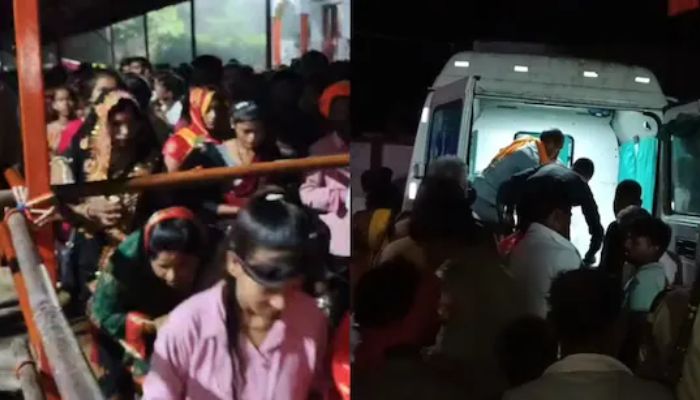
The incident occurred during the ‘jalabhishek’ ritual at the Awsaneshwar temple in the Haidergarh area, when a live wire collapsed onto a tin shed outside the Temple. The surprise electric shock created panic among people and resulted in a stampede.
Lakhs of devotees had visited the temple for darshan on the third Monday of the sacred Sawan month. As per individuals present on the spot, the accident occurred around 3 am, when a monkey climbed onto an overhead electric line.
The wire broke and came crashing down onto the tin roof adjacent to the temple gateway. As the shed was of metal, the electric current travelled fast, and chaos ensued.
One of the deceased was identified as 22-year-old Prashant from Mubarakpura village under the Lonikatra police station area. The other person, whose identity is still not known, also died during treatment at the nearby Trivediganj Community Health Centre.
A total of 19 people were injured in the incident, and 5 of them are in critical condition. They are currently being treated, news agency PTI reported.
District Magistrate Shashank Tripathi also confirmed that the electric current was sourced from an aged wire, which was weakened, presumably by monkeys jumping on it. He added, “Some monkeys jumped onto the overhead wires, which fell on the tin shed. About 19 people received electric shocks, but the situation is now under control.”
Police personnel were already on the temple site and are now probing how the wire was destroyed and what the safety failures were. Chief Minister Yogi Adityanath has meanwhile condoled the tragedy and ordered officials to ensure the injured receive proper medical assistance.
This is the second temple stampede within two days. On Sunday, 27th July, eight people died and more than 30 were injured at the renowned Mansa Devi temple in Haridwar. That stampede was initiated after people panicked and fled following reports of an electric shock on the stairs.
Because the Sawan month has an abundance of pilgrims visiting temples, the two incidents have raised grave issues regarding crowd control and tighter safety measures at religious places.
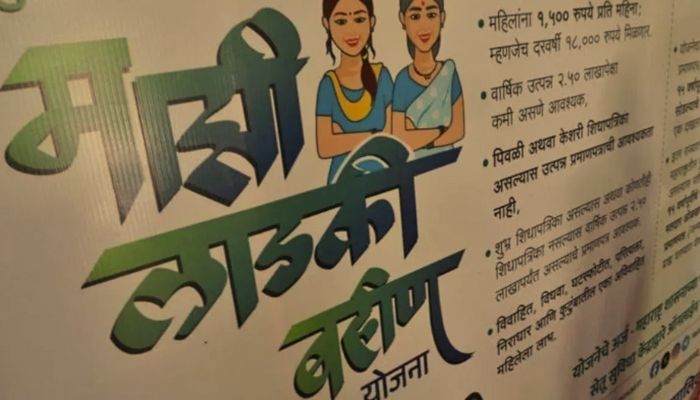
In Maharashtra, a fraud has been reported in the Mukhyamantri Majhi Ladki Bahin Yojana, wherein over 14,000 people fraudulently received financial benefits originally intended for poor women in the state.
Reports say that 14, 298 men employed fraudulent means to receive direct cash benefit for 10 months caused a loss of Rs 21.44 crore to the state exchequer.
Taking to X on Saturday (26th July), Maharashtra’s Women and Child Development Minister Aditi Tatkare informed that data from the Information Technology Department showed that approximately 26.34 lakh beneficiaries who were ineligible have been receiving benefits under the Majhi Ladki Bahin Yojana.
“Under the Chief Minister’s Ladki Bahin Yojana, the Department of Women and Child Development had sought information from all government departments to verify the eligibility of all applications. Accordingly, the Information and Technology Department reported that approximately 26.34 lakh beneficiaries, despite being ineligible, were availing benefits of the Majhi Ladki Bahin Yojana.
मुख्यमंत्री माझी लाडकी बहीण योजनेअंतर्गत पात्र ठरलेल्या सर्व अर्जांची ओळख पटवण्यासाठी महिला व बालविकास विभागाने शासनाच्या सर्व विभागांकडून माहिती मागवली होती. यानुसार माहिती व तंत्रज्ञान विभागाने सुमारे २६.३४ लाख लाभार्थी अपात्र असताना देखील लाडकी बहीण योजनेचा लाभ घेत असल्याची…
“It has been found that some beneficiaries were availing benefits of multiple schemes, some families had more than two beneficiaries, and in some cases, men had applied for the scheme. Based on this information, starting from June 2025, the benefits for these 26.34 lakh applicants have been temporarily suspended. Additionally, approximately 2.25 crore eligible beneficiaries of the Ladki Bahin Scheme have been disbursed the honorarium for the month of June 2025,” she added.
“The information of the 26.34 lakh beneficiaries whose benefits have been temporarily suspended will be verified by the respective District Collectors, and the benefits for those found eligible will be resumed by the government,” the minister’s post reads.
The minister further stated that suitable decision in this matter will be taken after discussions with Chief Minister Devendra Fadnavis, and deputy CMs Eknath Shinde and Ajit Pawar.
Notably, even as the scheme permits only two women per household to enroll, women who were the third member of their family to sign up for the Ladki Bahin scheme also received the monthly payout. Over the course of the previous year, the department discovered almost 7.97 lakh of these bogus cases, costing Rs 1,196 crore.
Meanwhile, Maharashtra Deputy CM Ajit Pawar said that the fraudsters will face strict action and the government will recover the money from the 14,298 men who siphoned funds meant for needy women.
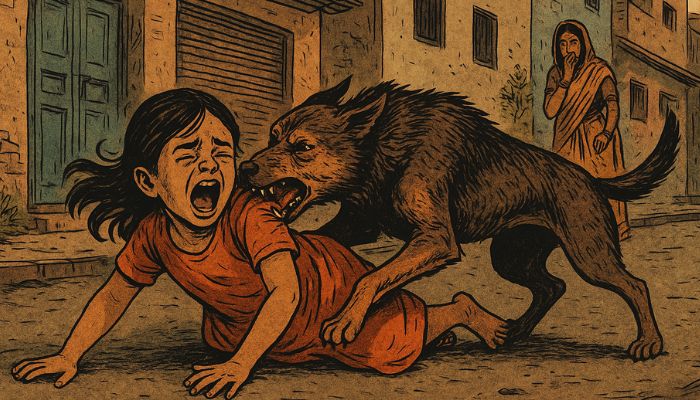
On 25th July, a six-year-old girl named Chhavi Sharma died of rabies infection after battling for her life for almost 25 days following a brutal stray dog attack in Pooth Kalan village of Sultanpuri police station area in Delhi. The child originally hailed from Kanpur. She had been staying with her uncle and aunt to pursue her education at a nearby government school.
Bitten while on her way to visit a relative
According to the family, on 30th June, when Chhavi was heading to a relative’s house in a nearby lane, a stray dog attacked her without any provocation. She was bitten severely by the dog. Hearing her cries, locals intervened and managed to rescue her. She was rushed to Dr B R Ambedkar Hospital where her rabies treatment began.
Doctors administered the first anti-rabies injection and scheduled the remaining three doses for 3rd July, 7th July and 28th July. However, Chhavi died of rabies infection on 25th July, days before she could receive the final dose.
Family alleges delay and hospital run-around
The relatives of the child have accused the medical system and the Municipal Corporation of Delhi (MCD) of gross negligence. Her aunt Krishna Devi said, “We had to take her from Ambedkar to Ram Manohar Lohia, then Lady Hardinge and other hospitals. Despite our efforts, her condition kept deteriorating. Eventually, we admitted her to a private hospital, where she passed away.”
The family alleged that they had previously approached the police as well. However, their complaints were ignored. She added, “If there had been fewer stray dogs in the area and if timely treatment was provided, our Chhavi would be alive today.”
Motherless child lived with relatives in Delhi
Chhavi had lost her mother during the COVID-19 pandemic. Her father continues to live in Uttar Pradesh. She had moved to Delhi to live with her uncle and aunt to study. The family has now filed a formal complaint at Sultanpuri police station and is demanding strict action against the MCD for failing to control the stray dog menace.
OpIndia is doing a series on stray dog menace that can be checked here.
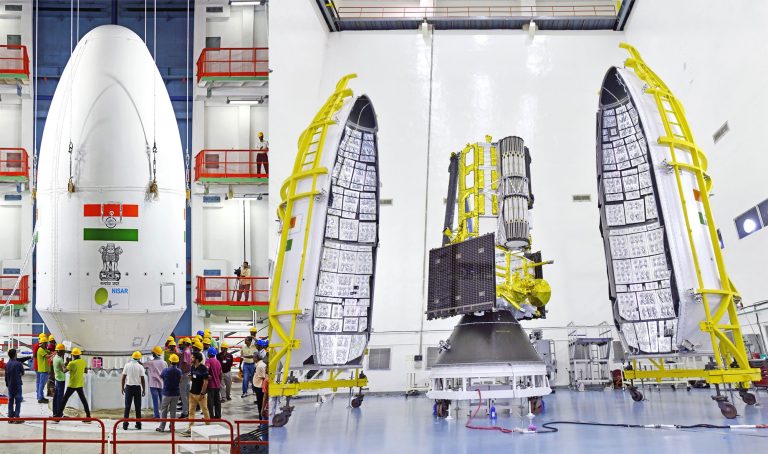
The Indian Space Research Organisation (ISRO) on Sunday stated that the upcoming launch of NISAR, the first joint Earth observation satellite by ISRO and NASA, will mark a key milestone in Earth observation technology.
NISAR will be launched from the Satish Dhawan Space Centre in Sriharikota, Andhra Pradesh, on July 30 at 17:40 IST.
NISAR is the first mission of its kind, jointly developed by ISRO and NASA. It is an L- and S-band, global, microwave imaging mission, with the capability to acquire fully polarimetric and interferometric data, as per an official statement from ISRO.
The unique dual-band Synthetic Aperture Radar of NISAR employs the advanced, novel SweepSAR technique, which provides high-resolution and large-swath imagery. NISAR will image the global land and ice-covered surfaces, including islands, sea-ice and selected oceans, every 12 days.
The NISAR mission’s primary objectives are to study land & ice deformation, land ecosystems, and oceanic regions in areas of common interest to the US and Indian science communities.
The joint mission will accomplish multiple tasks, including measuring the woody biomass and its changes, tracking changes in the extent of active crops, understanding the changes in wetlands’ extent, and mapping Greenland & Antarctica’s ice sheets and the dynamics of sea ice and mountain glaciers.
As per the statement, it will also help characterise land surface deformation related to seismicity, volcanism, landslides, and subsidence & uplift associated with changes in subsurface aquifers, hydrocarbon reservoirs, etc.
“One mission to watch Earth. #ISRO #NASA builds, Earth benefits. This marks a key milestone in Earth observation technology. Stay tuned as we bring you closer to the mission that watches our world,” ISRO sais in a post on X.
“The Spacecraft is built around ISRO’s I-3K Structure. It carries two major Payloads viz., L & S- Band Synthetic Aperture Radar (SAR). The S-band Radar system, data handling & high-speed downlink system, the spacecraft and the launch system are developed by ISRO. The L-band Radar system, the high-speed downlink system, the Solid-State Recorder, the GPS receiver, and the 9 m Boom hoisting the 12m reflector are delivered by NASA. Further, ISRO takes care of the satellite commanding and operations; NASA will provide the orbit manoeuvre plan and RADAR operations plan. NISAR mission will be aided with ground station support from both ISRO and NASA for downloading of the acquired images, which, after the necessary processing, will be disseminated to the user community,” the statement added.
The data acquired through S-band and L-band SAR from a single platform will help scientists understand the changes happening to Planet Earth.
The complex payloads and mainframe systems have been designed, developed, qualified and realised over a period of 8 to 10 years.
“The S- Band SAR and L- Band SAR were independently developed, integrated and tested at ISRO and JPL/NASA respectively. The Integrated Radar Instrument Structure (IRIS), consisting of S – Band and L – Band SAR and other payload elements were intergrated and tested at JPL/NASA and delivered to ISRO,” it stated.
Mainframe satellite elements and payloads were assembled, integrated and tested at URSC/ISRO.
The mission phases can be broadly classified into: Launch phase, Deployment Phase, Commissioning Phase and Science Phase.
NISAR will be launched onboard the GSLV-F16 launch vehicle on July 30, 2025 from ISRO’s Satish Dhawan Space Centre (SDSC), also referred to as Sriharikota High Altitude Range (SHAR), located in Sriharikota on the southeast coast of the Indian peninsula.
It hosts a 12m dia large reflector which shall be deployed in-orbit 9m away from the satellite by a complex multistage deployable boom designed and developed by JPL/NASA.
The first 90 days after launch will be dedicated to commissioning, or In-Orbit Checkout (IOC), the objective of which is to prepare the observatory for science operations. Commissioning is divided into sub-phases of initial checks and calibrations of mainframe elements followed by JPL engineering payload and instrument checkout.
The science operations phase begins at the end of commissioning and extends till end of mission life. During this phase, the science orbit will be maintained via regular maneuvers, scheduled to avoid or minimize conflicts with science observations. Extensive calibration and validation (CalVal) activities will take place. The observation plan for both L and S-band instruments, along with engineering activities (e.g., maneuvers, parameter updates, etc.), will be generated pre-launch via frequent coordination between JPL and ISRO, the statement added.
(This news report is published from a syndicated feed. Except for the headline, the content has not been written or edited by OpIndia staff)