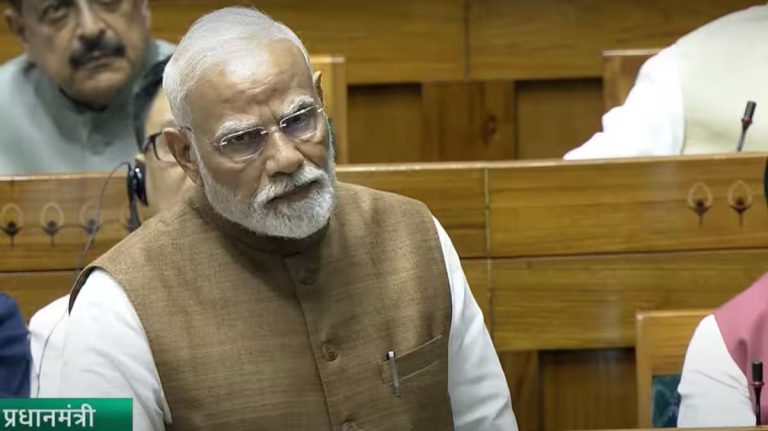
In a charged Lok Sabha session during the ongoing debate on the Pahalgam attack and Operation Sindoor, Prime Minister Narendra Modi delivered a compelling and confrontational speech that not only laid bare Pakistan’s culpability but also shredded the Congress party’s decades-long policy failures on national security.
Here are the seven major highlights from his address:
1. “Pakistan pleaded for ceasefire, no one stopped India”
Setting the record straight, PM Modi asserted that the May 10 ceasefire with Pakistan was not the result of international pressure, as the opposition has tried to insinuate, but a direct consequence of Pakistan’s desperation.
“No leader in the world asked India to stop Operation Sindoor,” the Prime Minister said, dismissing the claim that US President Donald Trump mediated the ceasefire.
PM Modi recalled a late-night call from US Vice President JD Vance, who conveyed intelligence about a possible large-scale Pakistani retaliation. At that moment, Modi was in a meeting with Indian military commanders.
“He said Pakistan was planning a big attack. I told him clearly—‘If that’s their intention, it will cost them dearly. Goli ka jawab gola se denge’,” Modi thundered in the House, reaffirming India’s deterrent posture.
3. “Pahalgam attack targeted Hindus”
Modi spoke at length about the Pahalgam terror attack, which killed 26 civilians, pointing out that the victims were targeted based on religion.
“This was not just an act of terror; it was an attempt to ignite communal flames by killing Hindu pilgrims. The world saw the true face of Pakistan.”
4. “World supported us, Congress did not”
A visibly angry Prime Minister condemned the Congress party’s refusal to support Operation Sindoor, despite India receiving backing from 190 out of 193 UN countries.
“Everyone in the world supported our action during Operation Sindoor. But within our own country, the Congress doubted our soldiers and questioned our action.”
5. Indus Waters Treaty: “Nehru’s blunder”
Turning the spotlight on Jawaharlal Nehru, PM Modi called the Indus Waters Treaty (IWT) a historic mistake.
“Nehru signed away our rivers without ensuring India’s water security. Worse, he even gave money to Pakistan to build dams,” Modi alleged, attacking the Congress’ diplomatic naivety.
6. MFN status to Pakistan even after Mumbai 26/11 attack
Modi lambasted the UPA era for its lenient treatment of Pakistan, revealing that India continued to give ‘Most Favoured Nation’ (MFN) status to Pakistan even as terror attacks on Indian soil escalated.
“What kind of national interest is this, where trade status is gifted to a country that kills our citizens?” he asked rhetorically.
7. “Not one Pakistani diplomat expelled after 26/11”
In one of the speech’s most stinging lines, Modi said:
“After the 26/11 Mumbai attacks, when 170 innocent Indians were killed by Pakistani terrorists, not one Pakistani diplomat was expelled. That was the Congress’ idea of national security.”
PM Modi’s address in Parliament was more than just a political rebuttal; it was a declaration of India’s evolved national security doctrine. From military retaliation to diplomatic boldness, Modi emphasized that India will no longer be restrained by outdated doctrines of appeasement.
With Operation Sindoor, India has not just avenged Pahalgam but has also sent a clear message to the world and to its own political class: India’s patience is not weakness, and its silence is not surrender.
A number of improvements have been made to the Unified Payment Interface (UPI) ecosystem by the National Payments Corporation of India (NPCI) in an effort to enhance UPI transaction performance which are set to take effect from August 1.
Millions of Indians rely on UPI transactions for their everyday financial activities and these revisions aim to improve the speed, security and dependability of this crucial service.
The modifications are intended to promote a more balanced digital payments ecosystem while addressing operational issues like strain on the infrastructure and security flaws. The new rules would have a direct effect on UPI apps like Google Pay, PhonePe and Paytm, the popular systems that handle billions of transactions every month.
Limit on balance inquiries
The implementation of a daily cap on balance queries is one of the primary adjustments made by the NPCI. The amount of balance-related requests executed by the system is set to be limited as users will only be able to check their account balance 50 times per day per UPI app to lessen pressure on the Application Programming Interfaces (API) system. Any attempt to check after this point will be blocked.
The excessive balance checks that slow down payment processing and annoy users during peak hours have resulted in infrastructure stress, prompting this measure. NPCI hopes to decrease needless system load and enhance overall transaction speed along with reliability by lowering balance queries. Furthermore, following each successful UPI transaction, issuer banks must provide the available account balance in the confirmation message.
Time restrictions on auto-payment
Auto-pay transactions including subscriptions, bills, Equated Monthly Installments (EMIs) and Systematic Investment Plans (SIPs) are also subject to limits imposed by the NPCI. Now, they will only be performed during non-peak hours before 10 am, between 1 pm and 5 pm and after 9:30 pm. These recurring payments could be completed at any time, earlier.
The goal of these time boundaries is to ease traffic at peak transaction times, facilitating the processing of other crucial real-time payments. Additionally, officials emphasised that this action would protect client interests by reducing the possibility of auto-pay functions being exploited during busy periods.
Status of transaction updates
NPCI is also working to improve how swiftly users obtain notifications on the status of their transactions. Users and merchants will be able to confirm payments sooner with faster feedback on UPI transaction status which will reduce waiting times and confusion during busy times. NPCI has reaffirmed their dedication to providing millions of Indians with a safe and easy digital payment experience.
Cap on balance check requests
Information on the user’s bank accounts connected to the mobile number can also be retrieved only 25 times per day. The customer must choose their bank in the UPI app before making these requests. Retries must only be made with the customer’s permission if the account list does not load to prevent needless system load.
Further alterations to benefit the user
Users can only check the status of unsuccessful or pending transactions three times in total with a minimum of ninety seconds gap after first first try to reduce server load. This indicates that a single mandate could be carried out up to four times. All Autopay executions should be planned during off-peak times exclusively to further mitigate congestion.
It is necessary to display the recipient’s name before to each transaction to improve security and avoid mistakes.
Only API usage and behaviour patterns are limited as daily payment amounts and transaction restrictions have not been impacted.
With certain transaction limits, UPI will enable the connection of pre-approved credit lines backed by assets such as gold, shares, loans, peroperties or fixed deposits starting on 31st August. These services have daily restrictions of Rs 1 lakh for payments, Rs 10,000 for cash withdrawals and a daily ceiling of 20 peer-to-peer (P2P) transfers.
Banks and payment service providers need to keep an eye on the volume of API requests and restrict non-customer-initiated API calls during peak hours to preserve system reliability.
Payment Service Providers (PSPs) have been instructed by the NPCI to make the necessary system modifications by 31st July. On 21st May, NPCI’s press release conveyed, “Members are requested to take note of this compliance requirement and communicate it to relevant stakeholders and their respective partners for implementation by 31st July 2025.”
It warned, “In the event of non-compliance to the above guidelines, NPCI may take necessary action including UPI API restrictions, penalties, suspension of new customer on-boarding or any other measures deemed appropriate.”
Future plans
The requirement for a PIN for UPI transactions in the country might soon come to an end. Instead, payments could be verified through biometric methods such as fingerprint recognition, facial identification and iris scanning. The NPCI is currently developing this innovative technology, which could be made available to the general public in the future.
This stage will prove to be especially helpful for individuals who have difficulty remembering their UPI PIN or possess limited educational backgrounds. Moreover, the implementation of biometric payment methods can greatly mitigate fraud, given that this system is founded on distinct biological data. The payment procedure may proceed as follows:
After the QR code is scanned, a biometric verification option will be displayed instead of the PIN.
Once verification is completed using the fingerprint scanner or the phone’s Face ID, the payment will be confirmed automatically.
The direct link between Aadhaar and NPCI will enable this process, maintaining both security and ease of transaction.
The biometric payment system is regarded as secure since the user’s personal information, including fingerprints and facial features, is directly associated with the UPI transaction. This linkage renders it nearly impossible for unauthorized individuals to execute the payment.
Nevertheless, certain cybersecurity experts caution that the risk of biometric data breaches must be considered seriously. Hence, the government and NPCI are actively developing essential security protocols. All biometric details will be stored in an encrypted format, ensuring that access is granted only with the user’s consent.
This innovative feature is particularly beneficial for rural residents or older individuals who find it challenging to operate a smartphone or remember a PIN. They simply need to place their thumb or present it in front of the phone’s camera, and the transaction will be completed. In markets, stores or villages where digital payment accessibility remains limited, biometric UPI payments can significantly improve the situation.
Motive behind the new announcement
The existing UPI payment limit remains unchanged. The transaction limitations stay the same and in most situations, they are up to Rs 1 lakh while in some categories, such as healthcare or education, they are up to Rs 5 lakh.
The new changes are applicable to all users on all platforms, regardless of how frequently they use UPI. However, the difference is not noticeable if the payment status is not continuously checked or the amount is not constantly reviewed several times. The primary target for these updates is frequent users who inadvertently overload the system with requests.
The NPCI has already taken action to strengthen security, but this set of moves is among the most extensive to date, for the purpose of consumer protection and system efficiency. Furthermore, the changes are an aspect of its larger plan to guarantee fair competition across digital payment providers.
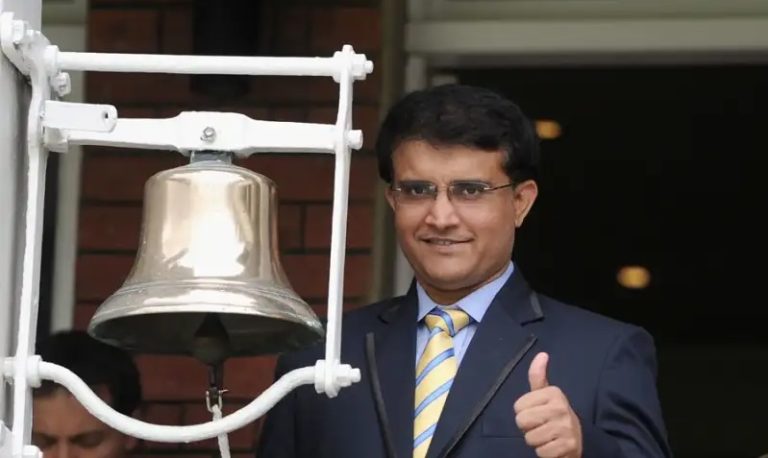
For Sourav Ganguly, the meaning of “returning the favour” is to take off his shirt and wave it around in celebration. This was his response to a question on his iconic shit-waving in 2002. “Flintoff had taken off his shirt in Mumbai. I just returned the favour, with interest!,” Ganguly said during a media interaction in 2010. On the flipside, this is what is at stake for the Indian Forces when they prepare to return the favour. Operation Sindoor targeted 9 terrorist headquarters in Pakistan in response to the deadly Pahalgam terror attack sponsored by Pakistan where at least 26 innocents – majority of whom were Hindus – were murdered point blank. Mind you, their trigger is not a shirt-wave.
Today, Ganguly supports BCCI’s decision for India to play Pakistan in the Asia Cup on September 14. “I am okay. The sport must go on. At the same time Pahalgam should not happen, but the sport must go on. Terrorism must not happen; it needs to be stopped. India took a strong stance towards terrorism… Sport needs to be played,”.
No Mr. Ganguly, sports does not “need to be played”. You don’t die if you don’t play bat ball. You might die if you play with Pakistan though for you never know when they might explode if that means taking down the Men in Blue with them, if you know what I mean. But what do you care about such a country, such a people. After all, you NEED it. Surely, there are many who must be protruding to Ganguly’s token disapproval of Pahalgam terror attacks and terrorism at large. Even this tokenism of a statement from Ganguly seemed laborious when compared to his famous shirt-wave.
Will national integrity pay the price for sportsmanship?
The embarrassing lack of national pride amongst those batting for cricket with Pakistan, including the BCCI, shows how the significance of cricket in India has been forgotten. But then, what can you really say about a game that decades of gambling have turned into a spectacle? Cricket was India’s response to its former colonisers in their own language. Cricket is how we asserted the Indian identity and reclaimed our dignity. It was not about sportsmanship.
It was about showing the English that we are better than them at their own game and can beat them black and blue at their own game without touching them. It was a healing process against 200 years of slavery, slaughter and economic and cultural occupation. It was showing the world what it means to be Indian. That was a different time that warranted a time-relevant and situation-specific approach. Today, the tables have turned. The expectation of a growing India is that we are not puppets with strings attached to the interests of the West. The expectation is that India matters, its neighbourhood matters and more so if foreign institutions, including those that indulge in sports diplomacy, use the playing field for geopolitical posturing.
Moreover, a response serving in self-interest to Pakistan’s policy of terror is the bare minimum that all Indian institutions, government or not, can give to the nation. To overlook the murders sponsored by Pakistan on your own soil is not sportsmanship. To say that Operation Sindoor is still ongoing and play cricket or any other game for that matter with Pakistan is not sportsmanship. As the world’s largest democracy, to live in the fear of global isolation is not sportsmanship, it’s bending the knee.
When countries prioritized ‘principles’ over sports
When 11 Israeli athletes and coaches were kidnapped and killed by Palestinian terrorists in the 1972 Munich Olympic, Israel withdrew for the remainder of the games; after Russia was barred from several tournaments for its war with Ukraine in 2022, many Russian athletes withdrew their names from such games where they were being stripped of their national identity and being told to participate under neutral flags; 25 African nations withdrew from the 1976 Summer Olympics after New Zealand’s rugby team toured South Africa, which was seen as a support for a racist, apartheid regime.
The Kenyan foreign minister James Osogo famously said, “principles are more precious than medals”; Sweden withdrew from Euro 2024 Qualifier after Brussels Terror Attack after 2 Swedish nationals were shot dead by an Abdesalem Lassoued during a UEFA Euro 2024 qualifying match between Belgium and Sweden in October 2023 in Brussels. The Swedish players skipped the game out of respect for the victims. These withdrawals, boycotts in sports have happened because the above-mentioned countries know that they do not “NEED” to play sports for their country to survive. They have been clear about their identity, of their pride and practice their respective sovereign right to self-determination.
BCCI: Lacking sports diplomacy and an internal political mess
Then there’s also this argument that cricket is being politicised. Well, in the real world, that is what sports diplomacy is. It’s soft power. That’s how high the stakes are for any Indian player when they carry their national identity with them. And speaking of “politicisation of cricket”, what’s BCCI? Presidents may change, but Rajeev Shukla is the one constant in BCCI politics — a quota all by himself. Politicians and bureaucrats have historically dominated the BCCI. This very fact ends the politicisation argument being made by several voices on social media. Corruption has also been rampant in the BCCI. Cases of match fixing, conflict of interest and internal misconducts have made as many headlines as have the victories earned by the Indian cricket.
The BCCI has gone too far
But this time, when in the aftermath of Operation Sindoor we are seeing the Pakistan-China-U.S axis stroke each other’s egos, India is standing alone in its fight against Pakistan-sponsored terrorism and its many bids to cause internal security threat. Lashkar proxy, The Resistance Front has been designated as a terror organisation by the U.S but this does not take away the fact that a bailout package was awarded to Pakistan while India was still combating the terror state in Operation Sindoor. All of these circumstances warrant a strong, united, self-determining India; not one where institutions act on their own whims while the government looks the other way. This ‘to each their own’ attitude of India’s cricket body was displayed on the 26th Kargil Vijay Diwas no less.
On the 26th Kargil Vijay Diwas when the Chief of Army Staff General Upendra Dwivedi sent out a warning to Pakistan reminding them of Operation Sindoor, the BCCI decided that India will play Pakistan in the Asia Cup in UAE on September 14. We surely live in two Indias.
After the battle of Baghpat, fought in 2021 over Chaat, the Battle of Mathura has come into the spotlight in July 2025 over lassi. In a shocking video, two groups of lassi shop owners clashed in the temple town over wooing customers to their shops.
The incident represents a similar incident to 2021, when in Baghpat, a fight happened between chat stalls to draw customers. The argument soon escalated into a street fight. The history repeated itself when in Mathura, an altercation over drawing customers triggered a full-scale war. The fight happened with sticks in Baghpat, while in Mathura, the ‘fighters’ targeted each other with Kulhads, which are used to serve lassi.
A woman and a teenage girl were seen in the video. The head of the woman was covered with a veil, who threw Kulhads at the rival, while the girl appears to be confused about how to react. Before she can make any decision, a flying kulhad hits her on the head. She screams and immediately falls to the ground.
According to reports, the battle broke out on the road leading to Ladli Mandir in Barsana.
Police have taken note of the viral video. “There is a Sudama chowk in Barsana. This fight took place between two lassi shops trying to draw in customers. Kulhads were used during the fight. A woman was injured, and we got her medically checked. We are gathering more information. Strict action will be taken against the guilty,” Superintendent of Police, Rural, Suresh Chandra Rawat has said.
As soon as the parents were tested for DNA at the forensic centre, no genetic link was found between the baby and the parents. This is how the case of a fake surrogacy racket came to light in Hyderabad.
In a shocking case, a fake surrogacy bait was running involving a fertility clinic in Secunderabad. The police probe revealed that the baby was allegedly brought from a poor family and handed over to the couple who sought IVF treatment in 2024.
The clinic has outlined a plan very precisely. According to the plan, they suggested that the couple opt for surrogacy and assured that the baby would be biologically theirs. For the whole process, they charged Rs 35 lakh to the couple.
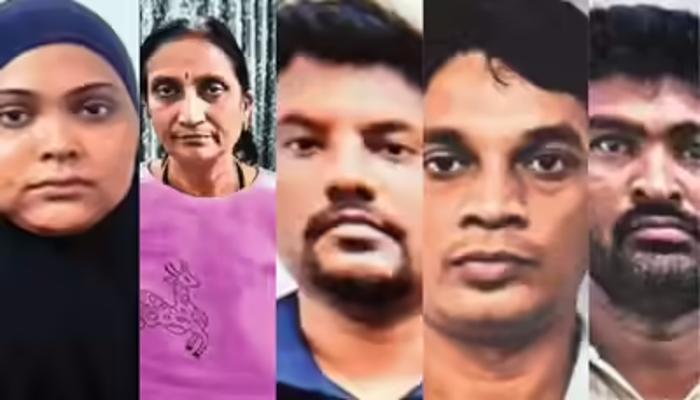
On Sunday, July 27, Hyderabad police arrested eight people, including prime accused Dr Athaluri Namratha (64) of Universal Srushti Fertility Centre, Dr Nargula Sadanandam (41), an anesthetist from the state-run Gandhi Hospital, and agents and technicians.
All the accused were booked on charges of cheating clients in the name of surrogacy procedure and running a baby-selling racket. Further, it was also revealed that the licence had been cancelled in 2021, but Dr Narmatha was running it illegally. It was revealed that she had three more centres in Kondapur (Hyderabad), Vijayawada, and Visakhapatnam. All of them were raided on Sunday.
In a shocking revelation, it was found that Dr Namratha came under scrutiny twice, in 2016 and 2020. In the first case, her license was suspended for five years by the Telangana Medical Council after an NRI couple from the US alleged that the newborn given to them, allegedly through surrogacy, was not biologically related to them. Then, in 2020, Vizag police arrested Dr Namratha and five others for allegedly trafficking newborns. Police claimed that more than 10 cases were previously registered against the accused doctor and her clinic at three places, Visakhapatnam, Hyderabad, and Guntur.
How did this incident come to light?
On July 26, the city-based couple approached the Gopalapuram police alleging that the baby given to them by the clinic known as Srushti Test Tube Baby Centre has no biological connection with the father. They had followed the complete commercial surrogacy procedure and had paid an amount of Rs 35 Lakh. The police clearly stated that after the interrogation, it was clear that no surrogacy treatment was running. Dr. Namratha and her employees were selling infants to childless couples bought from poor pregnant women who were lured with money.
The biological parents of the baby have been arrested, who belong to Hyderabad. They were given Rs 90,000, and the mother was sent to Vishakhapatnam for delivery.
The baby boy was just two days old when he was sold to the complainant couple under the terms that they would be his biological parents.
Those who were arrested are Dr Namratha’s son, P Jayanth Krishna (25), a practising advocate who used to manage his mother’s funds, two employees of the clinic C Kalyani Atchayyamma (40) and G Chenna Rao (37), and an agent, Dhanasri Santoshi (38). The biological parents of the infant have been identified as Mohammed Ali Adik (38) and Nasreen Begum (25).
Timeline of the event
Seven of the accused have been sent to Chanchalguda jail under 14-day judicial remand, while C Kalyani, a staff member from the Visakhapatnam branch, is being brought to Hyderabad.
According to the DCP, besides involvement in an illegal trade, the accused were also engaged in commercial surrogacy, which is prohibited in India. Only altruistic surrogacy is legally permitted.
Senior police officials stated that the complainants, a couple from Rajasthan, first approached the fertility centre in August 2024 for IVF consultation. During the visit, Dr Namratha conducted fertility tests and recommended surrogacy. The couple was then referred to the clinic’s Visakhapatnam branch for further procedures. They were promised that a surrogate mother would be arranged and their embryo would be implanted.
Over the next nine months, the couple made several payments covering consultation fees, medical treatment, and surrogate care. The clinic regularly assured them that the pregnancy was progressing well.
In June 2025, the couple was informed that a baby boy had been delivered via C-section in Visakhapatnam. Before receiving the child, they were asked to pay an additional Rs 2 lakh as a delivery fee. The clinic claimed that the biological father of the baby was demanding more money. Upon arrival in Vizag, the baby was handed over with documents, including a fake birth certificate, falsely showing the couple as the biological parents.
When the couple requested the DNA report, they discovered that no test had been conducted before registering the baby in their name. Despite this, clinic representatives continued to assure them that the baby was theirs.
Doubts led the couple to undergo a DNA test for all three individuals at a forensic lab in Vasant Kunj, Delhi, which revealed no biological relation between them and the child. When they sought answers from the clinic, Dr Namratha first blocked their contact and later threatened them, refusing to provide any documents.
Frustrated, the couple approached Gopalapuram police a week ago and filed a complaint. “Dr Namratha, with clear intent to deceive, did not allow the couple to meet the surrogate mother, whom they believed to be the biological parent,” said the DCP.
Following the complaint, police along with health department officials raided and sealed the Gopalapuram fertility centre. Authorities found unlicensed medical equipment, live embryos, and evidence of unauthorized IVF and medical procedures, confirming the clinic’s illegal activities.
The police alleged that they might get more information by questioning the accused in police custody, as they need to dig deeper into the case and find out how the accused arranged women for surrogacy treatment.
The State Human Rights Commission has taken suo motu cognizance of reports published in the media on alleged illegal and unethical surrogacy practices at Universal Srushti Fertility Centre in Secunderabad and its associated clinics in Hyderabad, Vijayawada, and Visakhapatnam.
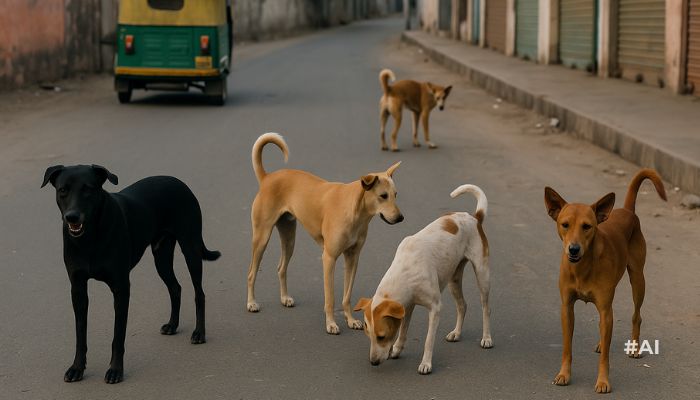
India is witnessing a troubling surge in stray dog attacks. It has raised urgent questions about public safety. According to official data shared by the Government of India, dog bite incidents have skyrocketed across the country. In multiple replies to questions raised by MPs in the Lok Sabha, the Government of India has noted that there were 37,17,336 (over 37 lakh) dog bite cases in the country in 2024 alone. The numbers have spiked from over 30 lakh cases in 2023 and over 21 lakh cases in 2022. According to available data, in 2024 alone, over 5.2 lakh dog bite cases involved children under 15.
The carnage is not merely statistical. The increasing number of deaths and serious injuries reported daily overpowers the notion that, because the number of dog-mediated rabies cases is declining, the Animal Birth Control (ABC) Rules are working. In one of the recent cases, a 6-year-old girl died in Delhi after contracting rabies 20 days following a dog attack. In another case, a 3-year-old boy was attacked by a dog outside his house in Bareilly, UP, leaving serious injuries on his face.
Similar tragedies have unfolded across the country. Recently, the Supreme Court of India took suo motu cognisance of the stray dog menace in the national capital based on a report in the Times of India. While the government, judiciary and experts have finally started to wake up to the menace, the road to dog-free streets safe for children, the elderly, the disabled and other vulnerable individuals is far from reality.
Amid this growing menace, India’s primary policy response has been the Animal Birth Control (ABC) programme governed by the Animal Birth Control (Dogs) Rules, 2001, and now the updated ABC Rules, 2023. These rules, rooted in an ethos of animal welfare, mandate that stray dogs be captured, sterilised, vaccinated, and then released back to the same location, rather than removed or culled. Even if a dog has a history of attacking humans, these rules will be followed, leading to consistent conflict between humans and stray dogs.
The ABC Rules were supposed to be a humane solution to control the stray dog population and rabies. However, after over two decades, cases of dog bites and rabies continue to plague communities across the country. In this article, we will critically examine the ABC Rules and argue that they have failed to curb the stray dog menace. Furthermore, these rules have created legal hurdles that jeopardise public safety.
Genesis of ABC Rules – A questionable origin
Before going ahead, it has to be put on record that the Government of India, in a recent statement in Lok Sabha, categorically said, “The Government has not conducted a formal assessment of the Animal Birth Control (ABC) Program’s effectiveness in controlling the stray dog population”. However, the programme remains “the primary mechanism for managing the issue”.
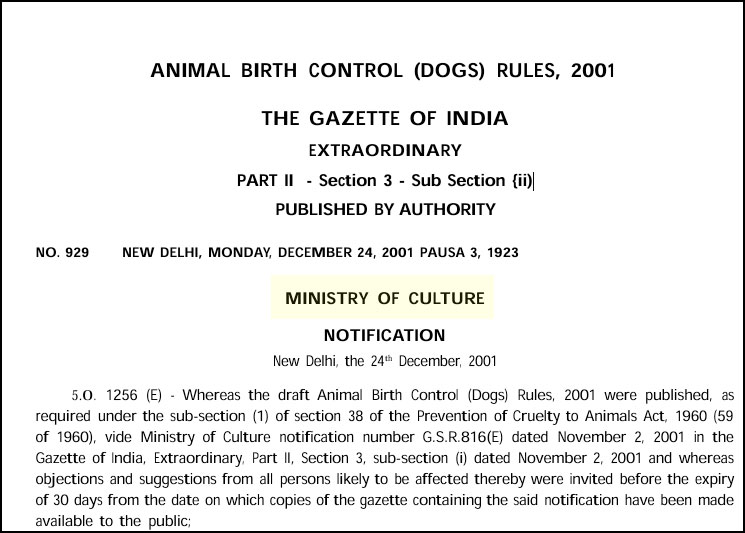
The concept of controlling stray dogs through sterilisation gained official backing in 2001 when the Central Government, surprisingly via the Ministry of Culture, notified the Animal Birth Control (Dogs) Rules under the Prevention of Cruelty to Animals Act, 1960. This bureaucratic parentage was unusual. Matters of animal control and public health typically fall under the ministries of health or urban development.
Source: Government of India
However, the ABC (Dogs) Rules, 2001, emerged from a cultural and animal welfare mandate, heavily influenced by animal-rights advocacy at that time. The 2001 Rules directed municipal authorities to stop the old practice of indiscriminate culling of strays and to implement a capture-sterilise-release programme across India. Notably, they were enabled by Section 38 of the PCA Act, which allowed the central government to make rules. However, these rules did not originate in public health law. In effect, an animal welfare framework became the governing law for what is also a public sanitation and safety issue.
The origin under the Ministry of Culture signalled the primacy of animal welfare over public health in the ABC approach. Indeed, the rules came at the behest of influential animal activists in government, and they tasked Animal Welfare Organisations (AWOs) and municipalities with the duty to sterilise and immunise stray dogs on the streets. According to the gazette notification dated 24th December 2001, when the Rules came to power, objections were called from the public and were apparantly incorporated in the Rules. However, if we look at the Rules, they were pro-animal welfare while keeping human welfare on the back seat.
This questionable genesis would later feed into legal challenges. In a way, the central government, for some reason, overstepped its limit by effectively dictating municipal stray dog policy through rules framed for “prevention of cruelty” rather than for disease control or public safety.
ABC Rules 2023 – A flawed revision
After years of patchy implementation of the 2001 Rules, which only fuelled an uncontrolled rise in the dog population on the streets across the country, the Central Government introduced a revised set of rules in 2023. The ABC Rules, 2023, notified by the Ministry of Fisheries, Animal Husbandry & Dairying, were seemingly aimed at strengthening the ABC programme and addressing directives of the Supreme Court. In practice, however, the ABC 2023 Rules have been widely criticised as a flawed revision that doubles down on the old approach and grants extensive power to the Animal Welfare Board and organisations with insufficient accountability.
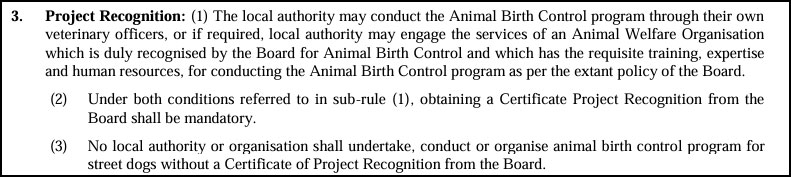
One significant change in 2023 was procedural centralisation. According to the new rules, any entity conducting dog sterilisation must be recognised by the Animal Welfare Board of India (AWBI). This means local authorities can no longer simply hire private veterinarians or use in-house staff for mass sterilisation drives unless they get approval for all the “projects” from the AWBI.
Source: Government of India
In short, the ABC Rules 2023 have made it impossible for the local authorities to run sterilisation drives without the approval of the AWBI. The bureaucratic pace of approvals in the country is known to everyone. Interestingly, if a local body wants to run different projects in different regions, it has to take approval from the AWBI for every such project, making it difficult to control the population of stray dogs in time.
Furthermore, there are so many rules to follow to run a sterilisation programme including putting up banners ahead of the sterilisation drive, telling locals of the community about ABC programme and what not. All these rules only make it difficult for local authorities to run sterilisation drives effectively.
Furthermore, the 2023 Rules reinforce that no healthy stray dog can be relocated or removed from its home territory. It does not matter if that dog is aggressive and poses a threat to the public. It does not matter if there are public complaints about the dogs in the area. Even the Supreme Court has ruled against relocation, making it impossible for people to live peacefully without fear of tens of hundreds of street dogs roaming literally everywhere.
Another change in the 2023 Rules is that the government introduced the term “community animals” in place of “stray dogs”, signalling that stray dogs are to be seen as legitimate members of the community, giving them the right to live in public spaces.
Source: Government of India
The Rules also require Resident Welfare Associations (RWAs) and local bodies to designate feeding spots for these “community dogs” and even facilitate feeding by volunteers.
Source: Government of India
Though Rule 20 of the 2023 Rules mandates that feeding be done in specific areas away from children’s play zones, and that any dispute be decided by a committee involving a veterinarian, municipal and police representatives, and animal welfare groups, it has come to light that so-called animal lovers who pose as dog feeders completely disregard the notion of designated places to feed dogs. They openly challenge, fight with residents, and cause nuisance when stopped from feeding dogs at places frequented by children and the elderly. In essence, the selective use of the 2023 Rules by the animal lovers and dog feeders has added to the problems faced by the general public because of the presence of stray dogs.
One of the most disturbing aspects of the 2023 Rules is that they provide no effective mechanism to permanently remove or segregate dogs that are aggressive. At best, an aggressive or “ferocious” dog may be temporarily captured for sterilisation or observation and kept in a shelter until it is deemed fit for release in the same locality. That means an aggressive and potentially deadly dog will return to the place where it had bitten children and chased the elderly. There is no accountability for incidents of dog bites caused by such dogs. It is like capturing a murderer, keeping him in jail for a few days, and then releasing him into the community without ensuring he would not kill anyone again.
The ABC framework thus continues to prioritise the dog’s presumed territorial rights over the community’s sense of security. This flawed approach of the 2023 revision, expanding bureaucratic requirements (project recognition, monitoring committees, feeding mandates) without correcting the fundamental imbalance, has drawn widespread criticism from civic bodies and public interest groups. Far from fixing the problems of 2001, the ABC 2023 Rules have entrenched them, empowering AWOs in theory but leaving them and local authorities with no clear responsibility for results.
Legal overreach of the ABC regime
A central contention about the ABC Rules is that they amount to legal overreach, potentially clashing with both the parent Act (PCA, 1960) and various state laws. The Prevention of Cruelty to Animals Act, 1960 was enacted to prevent infliction of unnecessary pain and suffering on animals. It was never designed as a public health or municipal animal control law.
However, the ABC Rules, which are subordinate legislation under the PCA Act, have been used to effectively override provisions in state municipal laws relating to stray dogs. The result? A flurry of judicial challenges and contradictory judgments across High Courts.
According to the Constitution of India, public health and safety are matters of States’ jurisdiction. Article 246(3), read with the State List, assigns to states the preservation of livestock and control of animal diseases, and Article 243W (Twelfth Schedule) entrusts urban local bodies with responsibilities like animal control and public sanitation. However, via the ABC Rules, the central government has ventured into this state domain without clear legislative sanction.
In 2008, the Bombay High Court explicitly held that the ABC Rules do not override state municipal laws and upheld the municipality’s discretionary power to remove or even destroy stray dogs causing danger or nuisance under the Mumbai Municipal Corporation Act. In other words, a High Court recognised that local commissioners retain authority (under older laws) to act against dangerous strays despite the central ABC Rules. The judgment was challenged by AWBI in the Supreme Court of India.
The court said, “We clarify that all issues raised… are kept open to be adjudicated in an appropriate proceedings, before the appropriate forum, in accordance with law. Whether be it may the mechanism in terms of the new Rules deficient/insufficient or repugnant to the Constitution or the parent statute(s); in our considered view, which can be best considered by the Constitutional Courts or other Forums accounting for all factors and circumstances, local in nature, being germane for adjudication for them and to decide it independently.”
The Kerala High Court, however, in 2015, took a pro-ABC stance, directing that municipal actions must conform to the ABC Rules and that there cannot be “unbridled” power to kill stray dogs. This conflict reached the Supreme Court in a batch of cases, including AWBI vs. People for Elimination of Stray Troubles. On the contrary, the High Courts of Bombay, Karnataka, and Himachal Pradesh took a different stance and ruled that local authorities possess discretionary powers to handle the issue of stray dogs and not bound by the ABC Rules.
No blanket primacy to ABC Rules, says Supreme Court
After years of interim orders and debates, the Supreme Court in May 2024 declined to give the ABC Rules blanket primacy. In disposing of AWBI’s special leave petition, the Court refused to elevate the ABC Rules above state laws, instead holding that all issues, including whether the new 2023 Rules are ultra vires (beyond the authority of) the Constitution or parent statutes, should be adjudicated by appropriate forums in context.
The Court effectively sent the matter back to States and High Courts to decide, acknowledging that local factors matter in such decisions. This was a significant development as it signalled judicial recognition that the ABC Rules may be deficient or in conflict with higher laws, and it lifted the cloud of supremacy that animal welfare rules had cast over municipal powers.
In fact, a range of laws buttress the primacy of public safety over the ABC regime. Article 21 of the Constitution guarantees citizens the fundamental right to life and personal liberty, which the state has a duty to protect. Where an uncontrolled stray dog threat endangers life, the state’s inaction can be seen as a violation of Article 21. The PCA Act itself, far from mandating perpetual care of strays on streets, contains provisions against abandoning animals to suffer and implicitly permits humane euthanasia of incurably ill or mortally dangerous animals. Moreover, state municipal Acts and Police Acts uniformly obligate local authorities to keep public spaces safe and disease-free for citizens. For example, many municipal laws empower officials to seize or dispose of strays if they become a public hazard, powers that were never formally repealed but have been dormant due to the perceived dominance of the ABC Rules.
On paper, the ABC Rules are subordinate legislation. They should not be able to contravene the PCA Act or extinguish state laws as per the legal procedures. There is nothing in the PCA Act that explicitly authorises rules that forbid removal of all stray dogs or mandate their feeding in public spaces.
However, these facets are available in the ABC Rules, unnecessarily stretching the PCA Act’s purpose into an unrelated domain, which is actively managing and maintaining the street dog population. It makes the rules vulnerable to being struck down as exceeding the Act’s authority. There is no provision in the law, centre or state, that mandates citizens to feed or tolerate stray dogs in their locality. The notion that dogs have inviolable “territories” in public areas is completely absent from any Act passed by the legislature. It is a creation of the ABC guidelines.
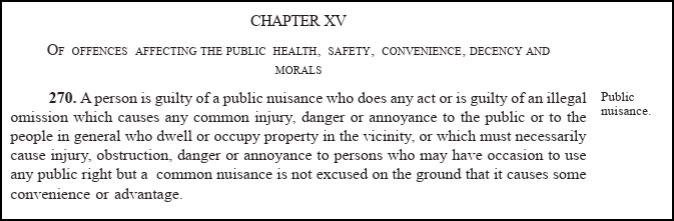
Consequently, multiple layers of law refute the idea that the ABC Rules are the last word. The Prevention of Infectious Diseases in Animals Act, 2009 mandates that animals with certain diseases, including rabies, must be euthanised and not left on the streets. Furthermore, the new Bharatiya Nyaya Sanhita, 2023 (Section 270) penalises any action causing common danger or nuisance to the public. In theory, Section 270 of BNS should apply to rogue dog feeders who refuse to stop feeding dogs in areas where it causes danger, nuisance, or annoyance to the public, including near someone’s home. However, nothing like this have ever been heard of. Why? Because ABC Rules provide protection to the dog feeders as well, again overpowering laws enacted for public safety.
Source: Government of India
There is an established legal framework that empowers authorities to prioritise human safety. The ABC Rules, by purporting to prohibit or limit those actions, sit on shaky legal ground. Still, the authorities fail to act against the ABC Rules, thanks to the unprecedented pressure of “animal lovers” with a strong lobby inside the Parliament.
Human rights versus animal rights
Then comes the question, to what extent do animal rights trump human rights, especially in the context of street dogs? Dog lovers often cite the Supreme Court’s landmark observations that animals too have a right to life under Article 21.
In the 2014 A Nagaraja case (relating to Jallikattu bulls), the Supreme Court indeed expanded Article 21’s scope, holding that every species has an inherent right to live a life with dignity. However, that judgment was overturned by the Supreme Court itself while allowing Jallikattu.
Additionally, Article 51A(g) of the Constitution imposes a fundamental duty on every citizen to show compassion to living creatures. These principles have been used to argue that stray dogs have a right not to be killed or displaced, and that caring citizens have a right (even a duty) to feed and look after them. Such arguments underpin the ABC Rules and were recognised in court rulings like one by the Bombay High Court in 2023, which affirmed that housing societies cannot ban residents from feeding community dogs and that the ABC Rules “have the force of law”.
However, framing the issue purely as animal rights can overshadow the equally (if not more) pressing human rights concerns. The right to life and personal security of humans is a fundamental right enforceable against the state. This encompasses the right to a safe environment and protection from known dangers. When attacks by stray dogs threaten life and restrict freedom of movement, for example, children unable to walk to school safely, or the elderly prisoners in their homes due to fear, it engages the core of Article 21 for people. Courts and authorities are increasingly acknowledging this reality. The Allahabad High Court, while hearing a case of a person feeding dogs in a colony, pointedly noted that protecting street dogs under ABC Rules does not mean the “concern of the common man” can be ignored, and that authorities must ensure people can move on the streets without fear of dog attacks.
In July 2025, during a Supreme Court hearing on stray dogs, Justice Vikram Nath remarked that those who wish to feed strays “should do so in their own homes” rather than public spaces, emphasising that there is “all space for these animals, no space for humans” if feeders turn common areas into feeding grounds. Such blunt comments from the Bench underscore the judiciary’s struggle to balance compassion with public order.
In practice, the current ABC framework elevates animal rights over human rights. In doing so, it violates the Constitution’s guarantee of human life with dignity. Article 21 is a shield for citizens first and foremost, not dogs roaming and killing children on the streets. The National Human Rights Commission (NHRC) recently took cognisance of the stray dog menace from a human rights perspective, after a complaint highlighted that the failure to control strays is causing distress and deaths, amounting to a breach of citizens’ rights.
There is also the Rights of Persons with Disabilities Act, 2016, which mandates the removal of environmental barriers that impede the mobility and safety of disabled persons. Aggressive stray dogs are a literal barrier. Blind or visually impaired persons, for instance, are at severe risk as they cannot see approaching dogs and may inadvertently provoke them with canes. For such citizens, the state’s duty of care (under Article 21 and the Disabilities Act) is fundamentally incompatible with a policy that allows potentially dangerous dogs to roam free in public spaces. In short, animal rights are not absolute. Even the Article 21 right to life, as extended to animals, is subject to “law and procedure”. The PCA Act itself provides procedure for euthanising suffering animals, and other laws provide procedure for removing threats. The paramountcy of human life in a conflict situation was eloquently summed up by the Kerala High Court that said, “when there is a conflict between the right to life of a human and the right to life of a dog, the former has to prevail.”
The curious case of contradictory clauses on euthanasia in ABC Rules 2023
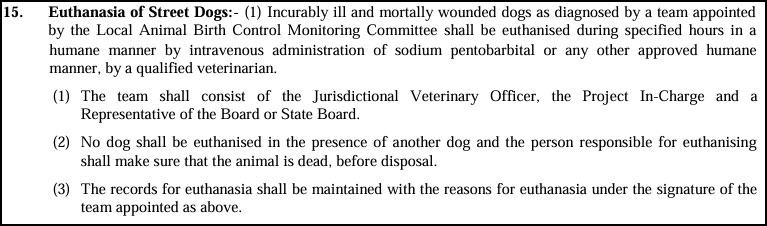
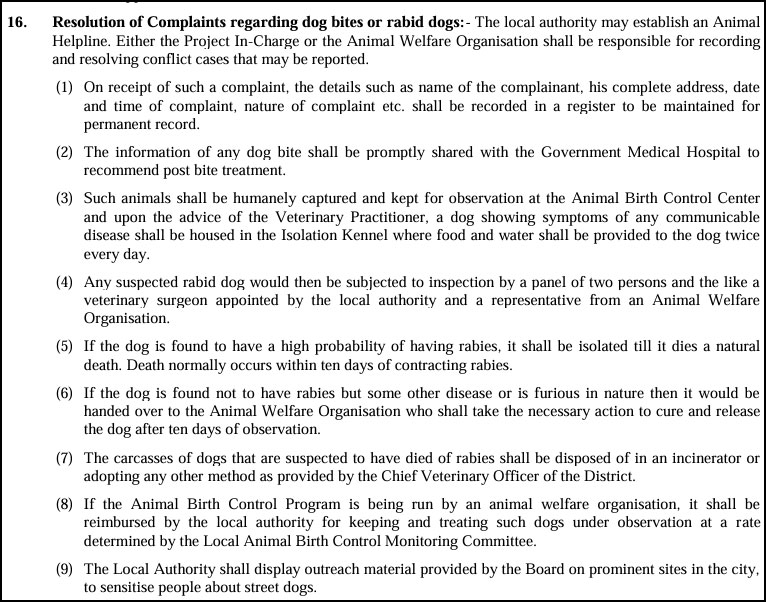
There is a glaring contradiction buried within the ABC Rules 2023 themselves, particularly in how they treat euthanasia in the case of rabid or aggressive stray dogs. While Rule 15 allows euthanasia for “incurably ill and mortally wounded” dogs upon certification by a designated team, Rule 16 creates an administrative and ethical deadlock when it comes to dogs suspected of rabies or those involved in bite incidents.
Source: Government of India
Under Rule 16(5), a stray dog found to have a “high probability of having rabies” is not to be euthanised immediately. Instead, the animal is to be “isolated till it dies a natural death”. In simple words, ABC Rules, that are supposed to be promoting humane handling of stray dogs is pushing for dogs to suffer slow and painful death due to rabies virus.
This clause makes no exception for public health concerns, trauma to bite victims, or the risk posed to shelter workers and the surrounding community. The rule mandates passive observation until the disease takes its fatal course, an approach that contradicts humane euthanasia principles.
Source: Government of India
To make matters worse, Rule 15’s conditions for euthanasia do not explicitly include zoonotic threats like rabies or behavioural aggression. The text restricts euthanasia to cases of mortal physical injury, leaving no room for preventive public health intervention. Even Clause 16(6), which addresses aggressive or “furious” dogs, mandates their release after attempted treatment rather than any meaningful containment or disposal.
The end result is a dangerous paradox. A rabid dog, while being a confirmed fatal threat to human life, cannot be euthanised unless it also happens to be physically mortally wounded, a technicality that flies in the face of both logic and medical science.
This contradiction undermines the very notion of effective rabies control, traps local authorities in bureaucratic indecision, and empowers vested activist interests over hard public health realities. When legal clauses protect even a terminally diseased animal over the safety of children and citizens, it is not compassion, it is policy failure.
The economics of failure
The ABC programme has proven inefficient and riddled with mismanagement. Despite spending crores over two decades on sterilisation and vaccination, India’s stray dog population remains over 2 crore as per 2019 census which, according to some estimates, exceeds 7 crores and according to a report, 12 crores. The cases of dog bites have risen exponentially as well. Over 37 lakh dog bite cases in 2024 alone reflect the ongoing health burden.
Deep-rooted corruption is also a reason for the inability of local authorities to reduce the dog population. In Pimpri-Chinchwad, ₹73 lakh was paid during the COVID-19 pandemic for the sterilisations of 7,500 dogs. However, RTI replies exposed ghost operations. Similar allegations have surfaced in multiple locations in Mumbai and other cities.
The decentralised nature of the programme, lack of infrastructure, and poor monitoring compound the failure. Few cities reach the 70% sterilisation threshold needed to stabilise populations.
Meanwhile, the cost of anti-rabies treatments and the human toll mixed with missed school, lost wages, mental distress, and lifetime trauma continues to rise. The ABC programme has offered poor returns and remains an underfunded mandate plagued with inefficiency and corruption. It has failed to deliver on public health goals which no government agency is ready to accept.
Public nuisance and social trauma
The stray dog crisis imposes immense social costs. It is often overlooked in legal and policy debates. Aggressive packs of dogs chasing vehicles, attacking pedestrians, howling at night, and defecating in public spaces create fear and conflict, especially among children, the elderly, and disabled persons.
By legal definition, this qualifies as public nuisance. Feeding and sheltering strays in residential areas without community consent only worsens the threat, and the Bharatiya Nyaya Sanhita, 2023, criminalises actions endangering public safety.
The trauma is not limited to bite victims. Children are kept indoors, elders abandon walks, and people live in anxiety in areas where dog bite incidents happen frequently. Ironically, even sticks and canes for protection provoke aggression and create a cruel bind for the visually impaired. The National Commission for Protection of Child Rights has flagged stray dog attacks as a serious threat to child safety.
Court rulings increasingly recognise citizens’ rights. The Supreme Court recently questioned why feeders do not house strays themselves. High Courts have ordered dog removals from campuses, stressing human safety. Resident Welfare Associations face frequent clashes with dog feeders, sometimes leading to FIRs and court cases.
Noise pollution, litter, and faeces further degrade urban life. It is time public safety, hygiene, and dignity are prioritised over unchecked stray dog presence in shared human spaces.
The case for repeal and a new framework
The Animal Birth Control Rules, 2023 (and their 2001 predecessor) have failed to control the stray dog population and have created a legal environment that undermines public safety. It is time these Rules are repealed and replaced with a pragmatic, public-health-centric law.
Repealing the ABC Rules would free local authorities from legal hurdles, allowing them to act under state laws without fear of violating central rules. The Supreme Court in 2024 indicated that if ABC Rules conflict with state laws or the Constitution, constitutional courts must resolve the matter. Repeal would clear the way for a new start.
A revised framework must prioritise public health and safety while ensuring humane treatment of animals. Municipal bodies and panchayats should be empowered to remove aggressive strays, supported by district shelters and state oversight to prevent misuse. Humane euthanasia must be permitted for incurably ill or dangerous dogs, under veterinary panel supervision, with due process.
ABC should continue but under the Health Ministry, with sterilisation tied to public health goals, not vague welfare metrics. Independent audits, mandatory reporting of dog bites, and a centralised dashboard for both rabies and dog bite cases are essential for accountability.
Implementing agencies must face penalties for embezzlement, shoddy surgeries, or negligence. Municipal officials ignoring attacks should also be held accountable. This will reduce the current impunity plaguing ABC execution.
Feeding must be regulated. Feeding should be allowed only in designated areas under local authority supervision. Volunteers should register, assist in sterilisation, and share responsibility for dogs they feed. Feeding near schools, markets, or apartments must attract penalties to ensure safety. In case residents of the community are not in favour of creating feeding zones and want to get rid of stray dogs, Rules or laws must not come in the way.
Adoption and relocation must be encouraged. NGOs and shelters can remove docile strays for adoption or placement in rural sanctuaries. This removes them from urban areas while ensuring welfare. Incentives can support Indian dog adoption and reduce street populations gradually. Furthermore, in many developed countries, if a dog is not adopted within a specific period, it is euthanised. There should be a similar provision to reduce the burden on shelters.
Public education is vital. Campaigns on rabies, dog behaviour, and responsible ownership should be prioritised. Pet abandonment and lack of sterilisation fuel the crisis. Strict pet licensing, anti-abandonment enforcement, and school-level awareness on avoiding dog bites will help. Citizen groups should be involved in reporting problem dogs and supporting vaccination drives. Local authorities must be empowered with regulations allowing them to remove aggressive dogs and put them in shelters for life. There should be no aggressive dog(s) on the streets putting human lives in danger.
Repeal does not mean inhumane culling. OpIndia is against mass culling of dogs or any species per se. The goal is a balanced, evidence-based law grounded in reality. India cannot afford another decade of legal paralysis as dog bites and deaths, especially of children, continue unchecked. Human lives matter. Citizens have the right to safe streets. The state must act to remove threats.
A new law must recognise this and empower authorities with firm but humane tools to control stray dog populations. The ABC Rules have been built on misplaced idealism. These Rules must give way to a law that protects both people and animals, enabling safe coexistence through enforceable public health principles.
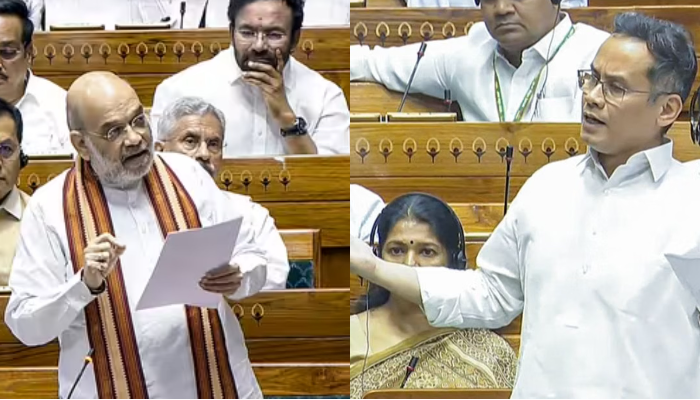
The discussion on “Operation Sindoor”, launched by India against Pakistan, which started in the wake of the Pahalgam terror attack, is the hot topic during the current session of the Parliament. Amidst the discussion, on 29th July, Union Home Minister Amit Shah blasted Congress MP and party’s deputy leader in Lok Sabha, Gaurav Gogoi, for his previous trips to Pakistan and asked as to whether he had ever visited the India-Pakistan border.
“You have been to Pakistan many times but have you ever gone via the border Gogoi, do you understand the conditions our soldiers face,” he slammed the opposition leader mere hours after the former comments invited the ire of Assam Chief Minister Himanta Biswa Sarma.
Home Minister Amit Shah in Lok Sabha: You have gone to Pakistan several times but have you ever gone via the border Gogoi (Congress leader), do you understand the conditions our soldiers face pic.twitter.com/LHrV3EDrx7
Sarma referred to Gogoi’s remarks as “disgrace” to the state and charged that he was “acting on behalf of Pakistan.” Additionally, he reaffirmed his allegation that the Congress leader has ties to Islamabad and might leave India “anytime” because his wife is a foreign national.
speech delivered by our MP from Jorhat in Parliament yesterday proved beyond doubt that he acts on behalf of Pakistan. His secret trip and close ties with the Pakistani establishment speak volumes. With his wife and both the kids holding foreign citizenship, he can leave India…
“The entire country and the Opposition were supporting Prime Minister Narendra Modi. Suddenly, on 10th May, we got to know that there had been a ceasefire. Why? We wanted to know from PM Modi that if Pakistan was ready to kneel, then why did you stop, and to whom did you surrender? The United States President Donald Trump has said this 26 times that he forced India and Pakistan to announce a ceasefire,” Gogoi claimed on 28th July in the Parliament.
The reason behind Amit Shah’s stinging words
Amit Shah’s remarks could catch many off guard yet there are significant reasons and the Congressman’s dubious past that support the allegations brought forth by the Bharatiya Janata Party leaders.
Elizabeth Coulburn, Gogoi’s British wife, is a project manager at Delhi’s Climate and Development Knowledge Network (CDKN). Surprisingly, Ali Tauqeer Sheikh, a Pakistani native, serves as the Regional Director of CDKN for Asia. He has a history of spreading misinformation against India, especially via his X account. He even posted in support of Gogoi for raising Delhi riots in the Parliament.
Sarma has repeatedly made grave allegations against him. “Serious questions need to be answered regarding allegations of ISI links, leading young individuals to the Pakistan Embassy for brainwashing and radicalization. and the refusal to take Indian citizenship for the past 12 years. Additionally, participation in a conversion cartel and receiving funds from external sources, including George Soros, to destabilize national security are grave concerns that cannot be ignored,” CM Sarma asserted in February of this year.
Moreover, Gogoi has also been charged with destroying the Opposition Unity Forum, which was headed by former president Bhupen Bora, by accepting cash in return for a ticket in the Behali elections. The party’s disgraceful defeat in the panchayat elections in his Lok Sabha constituency was probably a result of these controversies. Furthermore, he reportedly accepted gold ornaments from Rakesh Paul, a key figure in the APSC scandal.
Gogoi’s connection to Pakistan
Interestingly, a particular social media trend called “Congratulations Gaurav” surfaced when he was elected President of the Assam Pradesh Congress Committee. The Congress IT Cell might have started these posts but many people joined on their own initiative. Suspicious accounts flooded his feed with congratulations who appeared to be optimistic that he would cease Sarma’s actions against these extremist organisations and revitalize the Congress party, which is currently decimated.
The Sarma administration has been acting strongly against this illegal , tearing down several madrasas after learning about radical religious training being carried out in the name of religious education. It was discovered that many madrasa administrators had ties to terrorist organisations in Pakistan and Bangladesh.
Radical religious leaders who sought to stir up social turmoil fiercely protested these demolitions. Maulana Ahmed Sayeed Govindpuri was among them and Gogoi had a prearranged schedule in the Barak Valley to meet him and visit other madrasas after he was elected president.
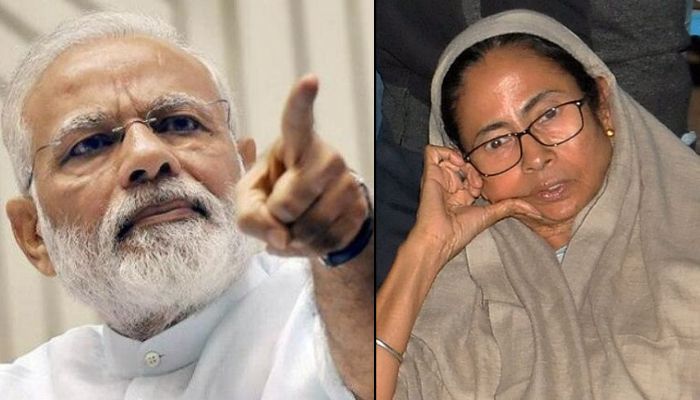
A political storm is gathering over West Bengal, one that could shape the state’s future in the run-up to the 2026 Assembly elections. The spark this time is the Trinamool Congress’s renewed push to stoke “Bengali pride” amidst allegations of harassment of Bengali-speaking workers in BJP-ruled states.
West Bengal Chief Minister Mamata Banerjee, sensing a potent emotive chord, has urged her party cadres to turn this into a movement. But can this regionalist narrative survive the BJP’s aggressive pitch of national unity and security?
West Bengal has always been an anomaly on India’s political map, often compared to the stubborn Gaulish village in Rene Goscinny’s Asterix series. Since 1977, the state has largely been ruled by parties at odds with the Centre. From the CPI(M)’s 34-year rule to Mamata’s decade-long dominance, Kolkata’s corridors of power have rarely looked to Delhi with warmth. The occasional camaraderie with the Union government has been fleeting at best. But this equation is poised for a dramatic shift as the BJP, which already made significant inroads during the 2019 Lok Sabha elections, eyes 2026 as the year to break TMC’s stranglehold.
TMC’s “Bengali Pride” gambit
Mamata’s strategy is clear: Frame the upcoming battle as one between Bengali identity and “outsider” forces. Her protests over the detention of Bengali-speaking migrants in Assam and other BJP-ruled states are part of this narrative. By projecting herself as the custodian of Bengali pride, she hopes to consolidate the bhadralok middle class and rural electorate alike.
However, the BJP is not biting the bait. Suvendu Adhikari, Mamata’s one-time confidant turned archrival, has hit back hard. His statements that the TMC is using the issue to deflect from rampant corruption, law-and-order breakdowns, and the administration’s failures has struck a chord. He has further said that the TMC is deliberately harboring “Bengali-speaking Rohingya” to build a communal vote bank, framing the debate not as one of cultural pride but of national security and demographic change.
Assam, immigration, and a shared fault line
The controversy intersects sharply with the situation in neighboring Assam. Mamata has pointed to the Assam government’s notices to residents of Cooch Behar, portraying it as an attack on Bengalis. Assam CM Himanta Biswa Sarma’s counter, however, reframes the debate: It is not about Bengalis but about the alarming demographic shift caused by decades of unchecked illegal immigration. His statement that “Assamese Hindus are becoming a hopeless minority in their land” underlines the BJP’s broader narrative that this is not about language but the survival of indigenous folks and Hindu identity of the state.
Assam’s history makes this a potent issue. The anti-immigrant movement of 1979-1985, culminating in the Assam Accord, was not just a political agitation but a cultural uprising. The National Register of Citizens (NRC) process, born out of this movement, has always been contentious. The TMC’s opposition to the NRC branding it as anti-Bengali is consistent with Mamata’s present stance. But the BJP is turning this argument on its head, pointing out that the real victims of illegal immigration are indigenous Hindus and Assamese culture, not Bengalis per se.
Demographics and the silent shift
Census numbers add fuel to the fire. Between 2001 and 2011, Assamese speakers grew by 16%, yet their share in Assam’s population fell. Bengali speakers, in contrast, expanded nearly 23%, gaining a larger share. In West Bengal, the situation is even more complex. Border districts like Malda, Murshidabad, and North 24 Parganas have seen rapid demographic changes. The BJP has repeatedly accused the TMC of appeasing minorities, nearly 40% of the state’s electorate, by some estimates, at the cost of national interest.
The problem is not merely electoral but civilizational. Partition and the 1971 Bangladesh Liberation War created a legitimate influx of Hindu refugees. But decades of porous borders and political complicity have also enabled large-scale illegal immigration. Identifying infiltrators is complicated by shared language and culture, but for the BJP, the issue is not linguistic; it is about protecting the nation’s security and cultural balance.
Language as identity and as a political tool
The TMC’s play on language is calculated. Bengali, as both a cultural and linguistic identity, evokes strong emotions. But even language has its nuances. Linguists like Suniti Kumar Chatterji have shown the stark differences between Indian and Bangladeshi Bengali in vocabulary, pronunciation, and cultural references. To the trained ear, the diction of a first-generation immigrant stands out. But such fine distinctions are of little interest to political expediency. Mamata’s campaign seeks to blur these lines, presenting any action against suspected infiltrators as an attack on Bengali identity itself.
The BJP, meanwhile, is framing the issue differently, that true Bengali pride lies in protecting the culture from demographic invasion, not in sheltering illegal immigrants. This positions the party as both nationalist and protector of indigenous identity, turning Mamata’s emotional card against her.
2026: A clash of civilizations?
As West Bengal heads into 2026, the battle lines are drawn around more than just votes. This is shaping up to be a clash between two visions of identity. The TMC is betting on sub-nationalism, a Bengali exceptionalism that has historically resisted Delhi’s influence. The BJP is countering with an all-encompassing nationalism that seeks to integrate Bengal into the larger Hindutva narrative while addressing real demographic anxieties.
For the bhadralok, traditionally skeptical of the BJP, this creates a moral dilemma. Can cultural pride be separated from national interest? Can Bengali identity thrive if the state’s borders are porous and demographic realities change irreversibly? These are not abstract questions anymore; they are lived realities in border villages, in the shifting linguistic maps, and in the uneasy coexistence of communities.
The road ahead
Mamata’s strategy may rally her base, but it risks alienating a growing section of voters who see through the politics of appeasement. Suvendu Adhikari and the BJP are poised to capitalize on these fault lines, especially in northern and border districts. The simultaneous elections in Assam only amplify the issue, ensuring that illegal immigration and national security dominate the discourse.
In the end, the 2026 West Bengal elections may well be a referendum on the very idea of identity. Will it be defined narrowly by language and sub-national pride or broadly by civilizational and national consciousness? The answer will not just decide the fate of Mamata Banerjee or the BJP in Bengal; it will speak to the larger story of India’s unity and diversity in the face of complex demographic and cultural challenges.
One thing is certain, the tiny “Gaulish village” of India’s political map is heading for its most consequential battle yet, and the outcome will echo far beyond the borders of Bengal.
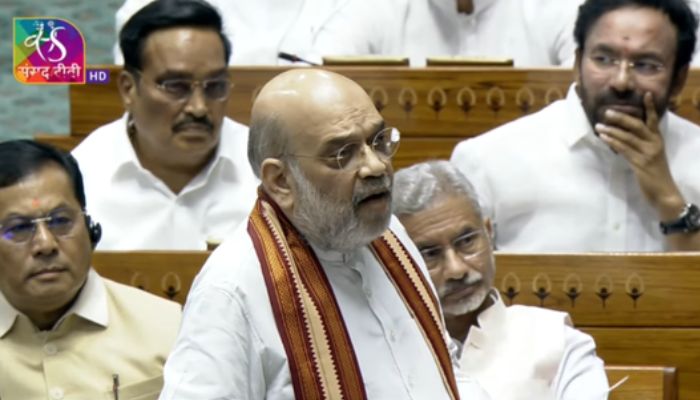
On 29th July 2025, Union Home Minister Amit Shah addressed the Lok Sabha as discussions on Operation Sindoor continue in the lower house of the Parliament. Amit Shah said that three terrorists who were involved in the Pahalgam attacks were killed by the Indian armed forces as part of Operation Mahadev.
Before sharing details of the Operation Mahadev and Operation Sindoor, HM Shah expressed condolences for the victims of the Pakistan-sponsored Islamic terror attack in Pahalgam.
“In a joint Operation Mahadev, the Indian Army, CRPF and J&K Police have neutralised three terrorists who were involved in the Pahalgam terror attack. Suleman, Afghan and Jibran were killed in yesterday’s operation and the people who used to supply food to them were detained earlier. “Once the bodies of these terrorists were brought to Srinagar, they were identified by those who were kept detained by our agencies,” he said.
Speaking in the Lok Sabha during Special Discussion on India’s strong, successful and decisive ‘Operation Sindoor’. https://t.co/uMPdAYiwU6
The security forces in Jammu and Kashmir avenged the Pahalgam attack today after hunting down the mastermind, Suleiman Shah, alias Hashim Musa, in an encounter in Srinagar.
He added that three terrorists were killed in an encounter that was planned meticulously for several days before execution. The minister informed the House slain Jihadi terrorist Suleman was an A-category commander of the Pakistani Islamic terror group Lashkar-e-Taiba, he was involved in the Pahalgam terror attack and the Gagangeer attack, adding that numerous evidence confirming his role in these attacks is with the Indian intelligence agencies.
In Lok Sabha, Union Home Minister Amit Shah says, " All three terrorists – Suleman, Afghan and Jibran were killed in yesterday's operation. The people who used to supply food to them were detained earlier. Once the bodies of these terrorists were brought to Srinagar, they were… https://t.co/jBP4SmmbUJpic.twitter.com/pK48Lp7MIP
Meanwhile, Afghan, the other terrorist killed by the Indian forces during Operation Mahadev, was also an A category terrorists belonging to LeT, and that Jibran was a A grade terrorists.
“I want to tell the House and the nation that these three terrorists had killed our innocent people in Baisaran Valley. These three were terrorists and all of them have been killed,” Minister Shah said and also expressed gratitude towards the CRPF, Jammu and Kashmir Police and the Indian Army Jawans for eliminating the Jihadis.
Recalling his meeting with the widow of one of the victims of the Pahalgam attack in April this year, Amit Shah said: “Soon after Pahalgam attack, I had met the affected families. I saw standing before me a woman who had been widowed just 6 days after her wedding- I can never forget that scene. I want to tell all families today that Modi ji neutralised those who sent the terrorists, and today our security forces killed those who committed the killings.”
Further detailing on how the authorities confirmed that the slain terrorists were indeed the perpetrators of Pahalgam, Minister Shah said, “… NIA had already arrested those who gave them shelter. Those who fed them were detained. When the terrorists’ dead bodies reached Srinagar, they were identified as the three people who carried out the terror attack in Pahalgam… Once the bodies of these terrorists were brought to Srinagar, they were identified by those who were kept detained by our agencies. The FSL report of the cartridges from the terror attack was already ready… Yesterday, the rifles of the three terrorists were seized and matched with the FSL reports… Further tests were carried out in Chandigarh yesterday, after that it was confirmed that these three were those who carried out the terror attack…”
Calling out the opposition’s unhappiness over the killing over the Pakistan-backed terrorists who killed innocent civilians in Pahalgam, Shah said, “Operation Sindoor killed those who sent the terrorists and Operation Mahadev killed those who carried out the attack… I thought that after hearing this news, there would be a wave of happiness in the ruling and the Opposition parties, ‘Magar Syaahi padd gayi inke chehre pe’ (Their faces are smeared with ink)… What kind of politics is this?…”
#WATCH | Delhi | Union Home Minister Amit Shah says, "…Operation Sindoor killed those who sent the terrorists and Operation Mahadev killed those who carried out the attack… I thought that after hearing this news, there would be a wave of happiness in the ruling and the… pic.twitter.com/86q4X8l1zK
Slamming Congress leader P Chidambaram for his recent remarks questioning what is the proof that the perpetrators of Pahalgam came from Pakistan, Shah said, “On Congress leader P Chidambaram’s statement, Union Home Minister Amit Shah says, “Yesterday they (Congress) were asking us where the terrorists came from and who was responsible for it. Of course, it is our responsibility as we are in power. Yesterday, former Home Minister Chidambaram ji raised the question -what is the proof that the terrorists came from Pakistan? I want to ask him what he will get by saving Pakistan. When he says this, it means they are giving a clean chit to Pakistan…”
Union Home Minister informed the House that the intelligence have confirmed information that the terrorists involved in the Pahalgam attack were Pakistani nationals. He said that the agencies have found the Pakistani voter ID numbers of the slain terrorists, adding that from rifles to chocolates seized from the terrorists are from Pakistan.
“Chidambaran, a former Indian Home Minister is giving clean-chit to Pakistan. He is raising question over why India attack Pakistan,” Shah said.
Detailing the events that preceeded Operation Sindoor, Minister Shah said, “On 23rd and 30th April, Modiji held meetings with CCS. Firstly, we undid the Congress party’s blunder Indus Waters Treaty and put it in abeyance. We closed the Attari border, and suspended the SAARC visas of Pakistani nationals here and sent them back. We declared key Pakistani diplomats in India persona non-grata, reduced their number from 55 to 30. The CCS vowed that the terrorists who killed innocent civlians in Pahalgam and their trainers and training camps, will be given befitting response by CRPF and BSF.
During the subsequent CCS meeting, Prime Minister Narendra Modi granted complete operational freedom to the Indian Armed Forces. “Operation Sindoor was launched on 7th May and carried out between 1:04 am and 1:24 am. In this operation, nine terror sites in Pakistan were destroyed. No Pakistani civilians were killed in this attack,” the minister said.
“Not a single civilian killed during Operation Sindoor, only terrorists and terror bases,” said Union Home Minister Amit Shah in Parliament.
“Following Operation Sindoor, our DGMO informed the Pak DGMO that India has attacked terror infrastructure on their land as per our right of self-defence. It cannot be like how it happened during Manmohan Singh’s government, that terrorists come and kill us and we sit quietly…We killed terrorists who bled India under the Congress govt…” he said, adding that more than 100 Pakistani terrorists were killed during Operation Sindoor.
He said that unlike Manmohan Singh-led government, the Modi government does not send dossiers to Pakistan, “we carry out surgical strikes, airstrikes and Operation Sindoor”.
Home Minister also Amit Shah called out former Indian Prime Minister Jawaharlal Nehru for the historic blunder of ceasefire that resulted in the existence of the Pakistan occupied Kashmir (PoK).
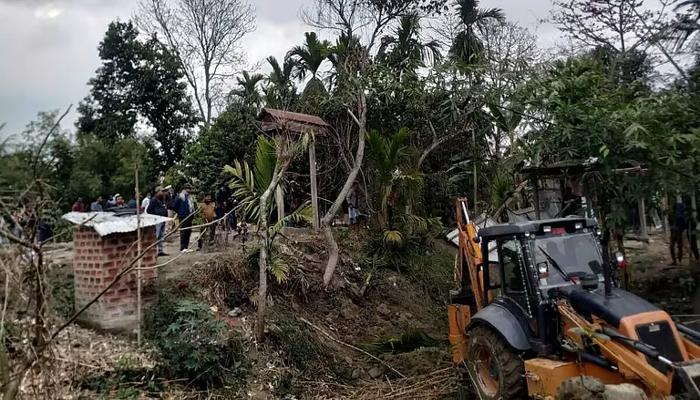
A massive eviction drive is being carried out by the Assam government against illegal infiltration. A part of it involves clearing 11,000 bighas (approximately 3,600 acres) of land in the Rengma Reserve forest at Uriamghat, bordering Nagaland.
The Himanta Biswa Sarma government has undertook a massive crackdown against land encroachment by illegal migrants. The first phase of this process, beginning on Tuesday July 29, will be the latest one in a series of evictions.
Around 2,000 families, accused of illegally occupying forest land and turning it into betel nut plantations tied to the betel mafia, are the target of the ongoing eviction drive. Many people illegally occupying the area have fled, and are seeking refuge elsewhere in Assam.
In Uriamghat, I personally reviewed the extent of encroachment of forest land and how the forest has been destroyed and converted into commercial plantations.
Approximately 700–800 police officers, along with Forest Department teams and CRPF personnel, have been deployed in and around the Rengma Forest Reserve. Bulldozers and excavators have also been brought in for the operation.
These evictions follow detailed land surveys across 30 villages in the Sarupathar sub-division. The Assam government says most encroachers come from Muslim-majority districts like Nagaon, Morigaon, Sonitpur, Cachar, Dhubri, Barpeta, and Hojai.
“The forest department has divided the area into nine blocks and the residents have been given notices to vacate the area in seven days. In preparation for the eviction, more than 1,500 forces including police, commandos and forest protection personnel have been deployed there,” a district official was quoted as saying.
Chief Minister Himanta Biswa Sarma stated that 70% of the identified encroachers had already vacated voluntarily. He reaffirmed the government’s goal of reclaiming forest and public land. Last week, CM Sarma mentioned that over the past four years, 1.29 lakh bighas (roughly 42,500 acres) of land had been cleared, although nearly 29 lakh bighas (around 9.5 lakh acres) remain encroached.
In response, the Nagaland government has advised border districts to stay alert and stop these illegal encroachers from crossing into their territory.
While clarifying that the eviction is not a targeted action, BJP MLA Biswajit Phukan said, “More than 90 per cent of the people have already cleared their possessions and left.”
While sharing a video on X, CM Sarma said that the young generation is profoundly practicing the culture at Uriamghat which the encroachers wanted to destroy by altering the demography. He further urged that these people and their supporters should know that Assam is the land where culture blooms in every corner and resonates in every heart.
In Uriamghat, our young generation is proudly practicing our culture, which the encroachers wanted to destroy by altering the demography.
These people and their supporters should realise that Assam is the land where culture blooms in every corner and resonates in every heart. pic.twitter.com/iPAzA5sLMn
“In Uriamghat, our young generation is proudly practicing our culture, which the encroachers wanted to destroy by altering the demography. These people and their supporters should realise that Assam is the land where culture blooms in every corner and resonates in every heart”, CM Himanta Biswa Sarma said.