Peeved at being pulled up for not cutting their hair and maintaining discipline, two minors in a village in Haryana’s Hisar allegedly stabbed to death their school principal, police said on Thursday.
Hansi Superintendent of Police (SP) Amit Yashvardhan said that the accused took the drastic step as they were reportedly angry with the principal.
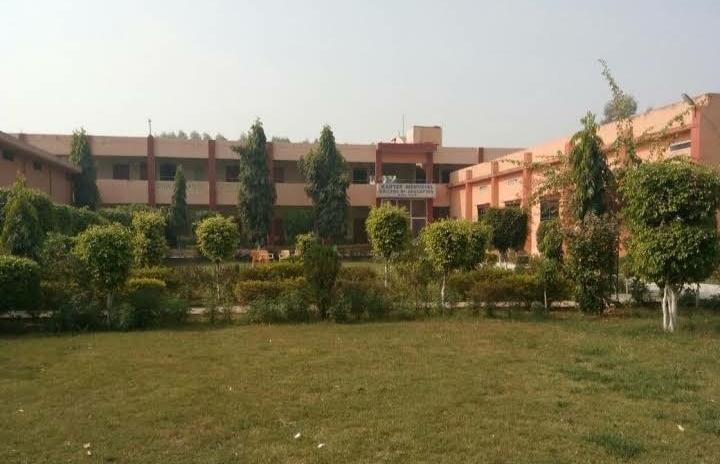
SP Yashvardhan told ANI, “Two minor students of Kartar Memorial School in Bas village of Narnaund town, stabbed their school Principal to death in anger, after the principal told the children to come to school with cut hair and maintain discipline.”
#WATCH | Hisar | Principal of Kartar Memorial Sr Sec. School, Bas was stabbed to death allegedly by two students
Hansi SP Amit Yashvardhan says, "The names of two students are coming to light. Our team is making an effort to catch them. A folding knife has been recovered from… https://t.co/4qeYVN5efBpic.twitter.com/FzFzdGlR7a
On October 22, 2025, Union Home and Cooperation Minister Amit Shah will turn 61. While this may be the retirement age in government jobs, in politics, a person often becomes even more active after this age. Prime Minister Narendra Modi, at 75, travels abroad, addresses rallies, participates in government and party meetings, and devises strategies. In such a scenario, if a leader talks about retirement, it is bound to surprise people.
However, when Amit Shah talks about retirement, it shouldn’t come as a shock. A master strategist who thinks far ahead and calculates every step, Amit Shah must have certainly decided under what circumstances and at what age he will retire. Technically, there is no such thing as retirement in politics, yet if Amit Shah dares to bring it up, it only shows why he is Amit Shah. Let’s understand the full story.
Amit Shah’s ‘Retirement Plan’
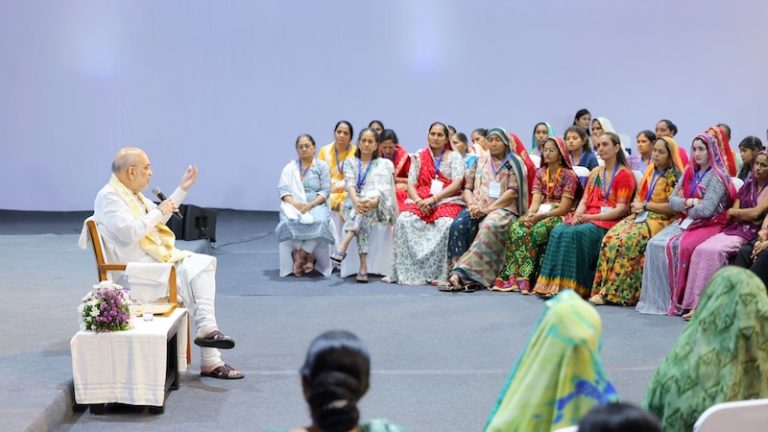
In fact, Amit Shah had organized a ‘Sahkar Samvad’ (Cooperation Dialogue) with women and cooperative workers from Gujarat, Madhya Pradesh, and Rajasthan. The new Ministry of Cooperation was formed in July 2021. Before this, the cooperative sector was often dominated by political families, which Amit Shah is now trying to reform through various measures. During this interaction, Amit Shah said that after retirement, he would study the Vedas and Upanishads and practice natural farming.
He said, “I have decided that whenever I retire, I will dedicate the rest of my life to the study of the Vedas, Upanishads, and natural farming. Natural farming is a scientific experiment with many benefits. Eating wheat grown with fertilizers leads to cancer, high blood pressure, diabetes, and thyroid issues. To stay healthy, one must eat food free of fertilizers — it eliminates the need for medicine. I tried natural farming on my own land, and the production increased by one and a half times.”
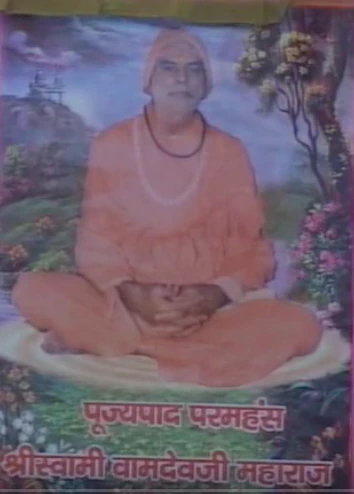
One of the persistent issues in our country has been that only those educated abroad are considered intellectuals. We’ve been made to feel inferior about India’s ancient scriptures. In such times, it’s noteworthy that Amit Shah speaks of the Vedas and Upanishads. Don’t take his words lightly. In the 1980s, Amit Shah used to massage the feet of Vedanta scholar Swami Vamdev and learned the intricacies of Indian philosophy from him. His service to a sage is the foundation of his success!
Behind the skilled politician and strategist lies a student of Vedanta
Until now, you’ve seen Amit Shah as a political strategist: winning elections, revoking Article 370, implementing CAA, tightening the organizational screws, holding meetings with everyone from grassroots workers to Chief Ministers, and roaring in rallies. But behind this master strategist lies a devoted student of Vedanta philosophy.
He served Swami Vamdev for many days. It was Swami Vamdev, a Brahmin scholar, who advised Amit Shah to attend the Kumbh Mela. Amit Shah did so. The sage’s intention was for Shah to interact with as many saints as possible and understand Indian philosophy deeply. And that’s exactly what happened, Amit Shah obeyed his guru and attended the Kumbh.
Now, here’s something interesting. Every morning, Swami Vamdev would give his disciple a handwritten note. Shah had to take that note to a different saint each day. The note would serve as an introduction or recommendation. In this way, Amit Shah spent time daily with new saints, ate at community feasts, and collected donations (dakshina) of a few rupees whatever he was offered. He would lobby, but not for any post or financial gain, rather, for knowledge, to understand Sanatan Dharma.
And what did he do with those donation coins? He saved them up and bought a bicycle. On that bicycle, he roamed around the Kumbh, observing the many expressions of Sanatan Dharma. In the 1986 Kumbh Mela in Haridwar, where about 200,000 pilgrims were present, there was also a 21-year-old youth who was destined to become a pivotal force in shaping India’s future. That 21-year-old boy, living in Swami Vamdev’s camp, was learning from saints and mahants.
You must have heard of Vijaya Raje Scindia, the Rajmata of Gwalior and grandmother of Jyotiraditya Scindia. One day, her camp gave Amit Shah 10 rupees in Dakshina. He bought a garland for Swami Vamdev, a gesture of a disciple’s loyalty and devotion to his guru. It is this dedication that has made him the second-most powerful leader in the country today.
The courage to take big decisions comes from Sanatan literature
Chanakya, Shankaracharya, and Savarkar, these three figures deeply influence Amit Shah’s ideology. This is the foundation of study that gives him the courage and strategy to take bold decisions. In 2014, he was a strategist. By 2019, he had become a PAN-India mass leader, ensuring BJP’s victory through 250 rallies. In the 2024 Lok Sabha elections as well, Amit Shah proved his mettle by conducting 188 rallies.
Amidst all this, don’t forget Swami Vamdev, the one whose mentorship transformed a young man into Amit Shah. Vamdev, who was actively involved in the Ram Mandir movement alongside Mahant Avaidyanath and Paramhans Ramchandra Das.
Swami Vamdev, whose guidance transformed the life of a young Amit Shah
In 1997, Swami Vamdev left his mortal body at the age of 75, but not before preparing his disciple to help build a new India. And here’s a remarkable coincidence: the same year Vamdev passed away, Amit Shah became an MLA for the first time. Perhaps it is the result of these experiences and deep study that today, Amit Shah executes bold decisions that were once considered unthinkable, and does so with full legal preparation and visible impact. Now, the turn is for the UCC (Uniform Civil Code).
Pakistan’s former minister Hina Rabbani Khar had an embarrassing encounter when her lies about Pakistan’s Army were exposed on live TV during an interview with Al Jazeera journalist Sreenivasan Jain broadcast on 8th July.
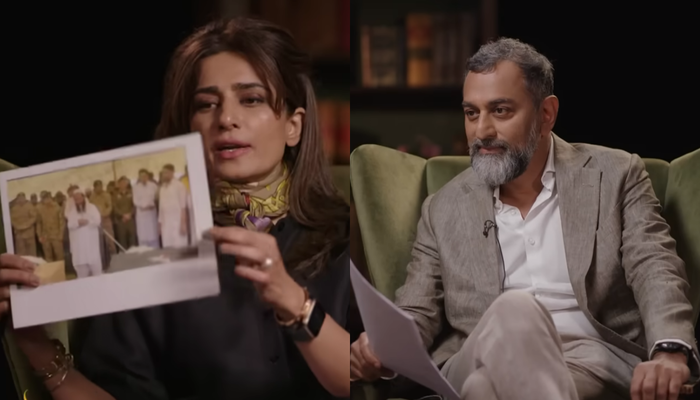
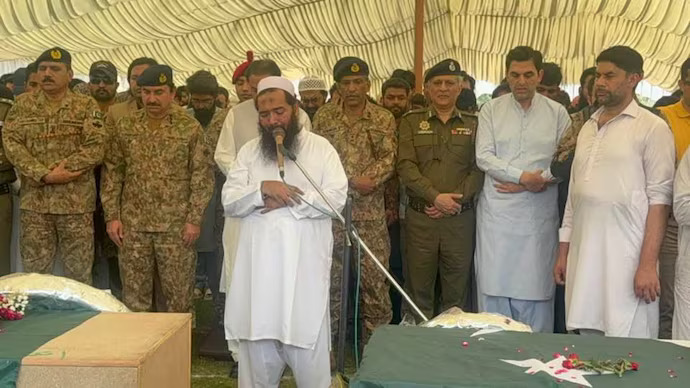
In the interview, Khar was seen desperately trying to whitewash Pakistan’s image of a terror-sponsoring nation by blatantly telling lies and denying facts. When the interviewer asked Khar about the viral photo of Pakistan’s Army personnel saying prayers alongside US-designated terrorist Hafiz Abdur Rauf, during the funeral of terrorists killed in India’s aristrikes on Muridke terror camp under Operation Sindoor, Khar flat out denied it, and claimed that it was a “common man” leading the prayers and not Hafiz Abdur Rauf (watch between 8:53 and 10:42 in the video).
The image referred to in the interview (via India Today)
“Essentially, this image, which you mentioned, is a big part of India’s global outreach because they say that this shows Abdur Rauf. He is a US-designated global terrorist. He (Abdur Rauf) is leading prayers for those killed in India’s airstrikes. In attendance are senior Pakistani police and military officials. That is a damning image,” Jain said to Khar referring to the image.
Responding to the question, Khar asserted, ” I am telling with authority, with evidence, which has been shared with the whole world, that this is not the man that you are claiming it to be. There are a million Abdur Raufs in Pakistan (not sure if she meant terrorists by “Abdur Raufs”).
Hina Rabbani Khar be like: Itnay saaray Terrorists hain mulk main, kitnay yaad rakhay. pic.twitter.com/oL84TiQslQ
Seeing that Khar was lying through her teeth in claiming that the man in the image was not terrorist Abdur Rauf, the journalist confronted her with facts. “Let me respond to this. So the Pakistani Army held a press conference. They did not say this image is fake. They said Rauf is not a terrorist. They said that he is a member of a political party, and they released his national ID number. That ID number is the same one as on the US-sanctioned list. So, according to the US-sanctioned terrorist list, this man is a terrorist. The Pakistani Army is defending him,” the journalist elaborated, trying to point out the contradiction in Khar’s statements.
However, entirely overlooking the facts presented by Jain, Khar kept repeating her lies and claimed that the man in the image is not the same as the terrorist. “The Pakistani Army is defending this man (in the image). The Pakistani Army is not defending the person who is proscribed by the US,” the former minister said without realising the irony in her remarks.
The journalist reiterated the fact that the national ID number of the person in the image matched that of the US-designated terrorist Hafiz Abdur Rauf, but Khar kept ignoring the facts and stuck to her lies. “The ISPR (Director General of Inter-Services Public Relations) categorically said that this is not the same person,” she added.
Notably, following India’s retaliatory strikes on terror establishments in Pakistan and the PoJK, Pakistan’s Director General ISPR Ahmed Sharif Chaudhry confirmed in a press conference in May (2025) that the man seen leading prayers in the funeral video is named Hafiz Abdur Rauf, but he was an ordinary Pakistani man. Chaudhry presented his ID number and personal details to prove his point. However, the ID number and the personal details matched with the details of terrorist Hafiz Abdur Rauf listed in the US Treasury Department’s Office of Foreign Assets Control (OFAC) sanctions database. India used this information to prove nexus between Pakistani Army and terrorists.
Sensing the futility of expecting a truthful answer from Khar, the interviewer moved on to his further questions. However, throughout the conversation, Khar kept trying to defend Pakistan’s indefensible image. Khar’s response to all the questions not only qualified as white lies but also appeared simply stupid in the light of the facts presented by Jain. Later on, during the interview, Khar pointed out that Pakistan was elected to the Presidency at the UN Security Council (UNSC) to claim that Pakistan enjoyed global support. However, Jain immediately countered her and said that while it was true that Pakistan did get the UNSC Presidency but it was equally true that the country has the highest number of US-designated terrorists.
Apparently, facts hardly mattered to Khar as she kept harping about how Pakistan was being ‘transparent’ during the entire period of military conflict with India. However, Khar’s evasive attitude to the questions and her repetetive emphasis on Pakistan’s “transparency” can be understood. When your Army personnel openly attend and say prayers in the funerals of terrorists, perhaps being ‘transparent’ seems to be the only face-saving option available.
Pakistan’s political establishment’s complicity in whitewashing terrorism
Hina Rabbani Khar’s desperate attempt on Al Jazeera to deny the presence of US-designated terrorist Hafiz Abdur Rauf leading funeral prayers, attended by Pakistani Army officials, reveals a deeper malaise in Pakistan’s political class: a chronic, institutionalised pattern of terror denial and complicity.
This isn’t a one-off embarrassment. It echoes Pakistan’s long history of shielding terrorists, most notably during the 26/11 Mumbai attacks, where despite overwhelming evidence, including captured terrorist Ajmal Kasab’s testimony and video proof, the Pakistani establishment summarily denied the attackers’ origins and training in Pakistani terror camps.
Just as then, when Pakistan insisted Kasab was not Pakistani until undeniable proof emerged, Khar today peddles blatant falsehoods in defence of a man whose identity and terror links are internationally established. These repeated denials, whether of hosting UN-sanctioned terrorists or facilitating jihadist infrastructure, highlight how Pakistan’s so-called civilian leaders function more as apologists for the Army’s terror enterprise than as statesmen of a responsible democracy.
A shocking incident has come to light from a state board school in Thane, Maharashtra, where around 10 girls were allegedly stripped by the staff to check if they were menstruating. This shocking act took place after school staff found blood stains in the toilet on Tuesday, 8th July.
According to the police, the incident involved girls studying in Classes 5 to 10. The students were gathered in the convention hall and shown photos of the blood stains using a projector. They were then asked whether they were on their periods. The girls who said yes were made to give their names and thumb impressions.
But the matter didn’t stop there. The girls who didn’t raise their hands were taken to the washrooms, where they were reportedly stripped and checked by the female attendants. One minor girl, who was using a sanitary pad even though she wasn’t menstruating, was scolded by the principal and accused of lying. The principal allegedly forced her to give her thumb impression as well.
After returning home, many girls shared the traumatic experience with their parents and broke down in tears. On Wednesday, 9th July, several parents gathered outside the school to protest and demanded strict action against the staff involved. One of the parents filed a police complaint.
Following the protest and complaint, police took action. The female principal and a female attendant were arrested on Wednesday, 9th July. According to personnel of Thane Rural police, action was taken against the school management and administration after parents staged a protest. All the accused have been booked under sections 74 (assault or use of criminal force to a woman with intent to outrage her modesty), 76 (assault or use of criminal force to a woman with intent to disrobe) and also under the Protection of Children from Sexual Offences (POCSO) Act.
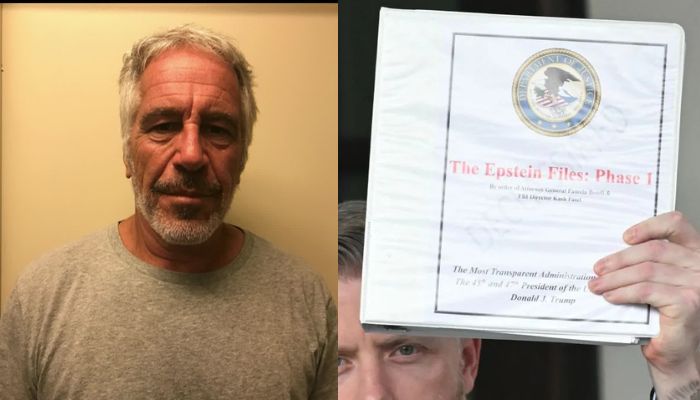
In a seismic reversal that has rattled Washington and ignited fury among former allies, the Trump Justice Department has declared that Jeffrey Epstein maintained no “client list” of powerful associates and trafficked children without leaving evidence of who received them—a conclusion that mocks years of conspiracy theories and political promises while leaving victims’ justice unresolved.
The stunning about-face, delivered in a terse two-page DOJ-FBI memo on 7th July, Monday, represents the collapse of a central pledge of Donald Trump’s 2024 campaign: to “lift the veil” on Epstein’s network and expose the wealthy predators who exploited children alongside the financier. Instead, Attorney General Pam Bondi—who once claimed the client list was “sitting on my desk right now”—now asserts no such record ever existed.
The broken promise
The reversal unfolded with bureaucratic finality on 7th July, Monday, when the Justice Department released a two-page memo concluding its “exhaustive review” of Epstein evidence. Investigators found “no evidence” Epstein maintained a list implicating powerful associates in criminal activity. The review uncovered “no credible evidence” that Epstein blackmailed prominent figures. The memo reaffirmed Epstein died by suicide in 2019, dismissing murder conspiracy theories.
This directly contradicted Bondi’s February 2025 Fox News appearance where she declared: “It’s sitting on my desk right now to review,” referring to Epstein’s client list. She later claimed the FBI provided a “truckload” of withheld evidence for release.
Breaking news ? Fox:'' The DOJ may be releasing the list of Jeffrey Epstein's clients. Will that really happen?'' Pam Bondi; '' It's sitting on my desk right now to review. That's been a directive by President Trump ''??? pic.twitter.com/8jCVbeRfTr
The timing raised immediate questions. Just one month earlier, Elon Musk detonated a political bombshell on X “Time to deop the really big bomb: @realDonaldTrump is in the Epstein files. That is the real reason they have not been made public. Have a nice day, DJT!”.
The accusation offered without evidence emerged during a bitter feud over debt ceiling legislation. Though Musk later deleted the posts and said he “went too far,” the damage was done . When pressed by reporters, Trump dismissed Musk as having “lost his mind”.
The unresolved paradox: Trafficking without clients?
The DOJ’s findings create a haunting disconnect. Epstein was convicted of trafficking minors, operated a “pyramid scheme of abuse” (as one prosecutor termed it), and victimized over 1,000 children according to the FBI. Yet the department now insists there exists no credible evidence revealing who received these children or whether blackmail occurred—effectively portraying Epstein as a lone operator who trafficked minors to phantoms.
Legal experts find this implausible. “Epstein’s operation required enablers, clients, and silence-buyers,” says former federal prosecutor Miriam Aroni Krinsky. “The idea that no evidence points up the chain defies the nature of trafficking networks.” The DOJ memo vaguely attributes the lack of evidence to sealed court protections for victims and the fact Epstein died before trial, limiting public disclosure. But it offers no theory of how the abuse functioned economically or socially without patrons.
Bondi’s Retreat: Facing reporters, Bondi reframed her “client list” remark as referring only to general case files. She also dismissed the infamous “missing minute” in Epstein’s prison video as a routine technical glitch.
Legal Reality vs. Political Theater
The DOJ’s reversal exposes a stark disconnect between political rhetoric and prosecutable evidence:
Why Epstein was imprisoned? Epstein faced federal sex trafficking charges for operating a trafficking network – not for maintaining a client list. Prosecutors alleged he exploited dozens of minors between 2002-2005 through a sophisticated scheme: • Victims as young as 14 recruited from troubled backgrounds • Paid to recruit other minors creating a “pyramid scheme” of abuse • Sexual exploitation at his Manhattan mansion and Palm Beach estate
Why Ghislaine Maxwell remains imprisoned? Maxwell’s 20-year sentence stems from concrete crimes: • Grooming Minors: Personally “testing” victims’ massages to desensitize them • Recruitment: Luring vulnerable girls with promises of modeling careers • Trafficking Coordination: Scheduling “appointments” for Epstein and others
Notably, neither was charged with possessing child sexual abuse material – though the DOJ now claims over 10,000 such images/videos exist in evidence.
Global Dynamics: Power, secrecy and conspiracy
The administration’s shifting stance on Epstein-related disclosures has amplified global scrutiny, though critical distinctions remain. Flight manifests for Epstein’s private jet—dubbed the “Lolita Express“—confirm associations with powerful figures like Bill Clinton (26+ flights), Prince Andrew, and Donald Trump, but these logs alone prove travel, not criminal activity. Speculation about deeper intelligence ties persists, with commentators like Tucker Carlson suggesting U.S. and Israeli agencies may be “at the very centre of this story,” though no evidence substantiates this claim .
Key figures illustrate the case’s complexity: • Prince Andrew settled Virginia Giuffre’s sexual assault lawsuit in 2022 without admitting liability, though he “regrets his association” with Epstein. • Bill Clinton, despite flight records and Epstein’s alleged remark that he “likes them young,” faces no allegations of illegality and denies wrongdoing . • Donald Trump, hosted Epstein at Mar-a-Lago, where Giuffre worked before being recruited; he faces unrelated classified documents charges but no Epstein-linked claims. • Ghislaine Maxwell, Epstein’s chief recruiter, is serving a 20-year sentence for trafficking minors.
The recent document releases, while revealing names, emphasize context: inclusion does not imply guilt, and many entries reflect legal proceedings or tangential connections.
The Viewpoint: Transparency or exploitation?
The administration finds itself under fire from multiple angles regarding the Epstein case fallout. Far-right voices, like influencer Jack Posobiec who denounced a “shameful coverup,” and Representative Anna Paulina Luna (R-FL) demanding full transparency, accuse the government of betrayal. Meanwhile, victim advocates express relief over certain decisions; attorney Lisa Bloom, representing several accusers, argues that releasing abuse tapes would “re-traumatize victims,” framing the issue not as concealment but as preventing “digital rape scenes from going viral”.
Adding a prosecutorial perspective, former SDNY attorney Renato Mariotti offers a reality check, pointing out that Ghislaine Maxwell’s conviction relied on “witness testimony and financial records – not a client ledger,” dismissing the infamous ‘list’ as “always a mythical distraction.” This view aligns with a recent DOJ memo from 7th July, which cautioned that “perpetuating unfounded theories about Epstein serves neither justice nor victims.
Unanswered questions
Why did Bondi reference “tens of thousands of videos of Epstein with children” if prosecutors never cited them?
What explains the disconnect between the DOJ’s “no blackmail evidence” conclusion and widespread speculation about Epstein’s intelligence ties?
Will the administration release unredacted documentation of its evidence review to restore credibility?
As Trump dismisses reporters’ questions – “Are you still talking about Jeffrey Epstein? … That is unbelievable” – the ghosts of this case continue to haunt a presidency that promised to exorcise them. The Epstein saga endures as a Rorschach test of power, secrecy, and who ultimately gets shielded from justice.
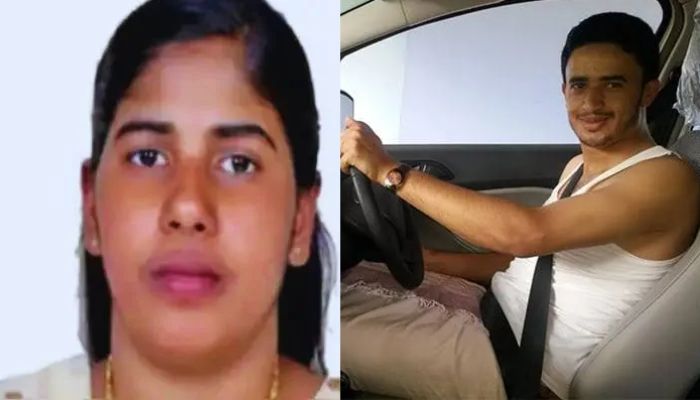
Nimisha Priya, an Indian-Malayali nurse convicted in a 2017 murder case, is set to be executed on 16th July 2025. Nimisha Priya is currently lodged in the Central Jail in the Yemeni national capital, Sanaa, for murdering a Yemeni citizen, Talal Abdo Mahdi. In a last-ditch effort to stop Nimisha’s execution, the Save Nimisha Priya International Council has moved the Supreme Court of India.
Represented by Advocate Ragenth Basant, the petitioner sought the apex court’s direction to the Central government to obtain a stay on Nimisha Priya’s execution and secure her release from Yemen via diplomatic channels.
The matter was brought before a partial working days bench of Justice Sudhanshu Dhulia and Justice Joymalya Bagchi. The petitioners mentioned that as per Sharia law, a person if the relatives of the victims agree to accept “blood money” or “Diyya”, adding that negotiations can be held to explore that option.
On being questioned by Justice Dhulia about the reason behind the Yemeni national’s killing, advocate Basant said, “I am an Indian citizen from Kerala. Went there for employment as a nurse. A local person started torturing me…and he was killed.”
The bench initially listed the matter for 14th July, however, the petitioner’s counsel said that since the execution is to take place on 16th July, two days would be insufficient for the government to take forward diplomatic negotiations.
Consequently, the court agreed to list the matter for 11th July 2025.
Meanwhile, reports say that the Central government is closely monitoring the case, and is in touch with the Yemeni authorities as well as Nimisha’s family. Sources at the Ministry of External Affairs say that MEA has provided all possible assistance so far.
This comes amid reports of a 37-year-old Indian nurse from Kerala scheduled to be executed on 16th July. The trial court convicted her of killing the Yemeni national, a decision that was upheld by the country’s Supreme Judicial Council in November 2023.
Previously, MEA confirmed its awareness of the death sentence handed to Nimisha Priya and assured that the government is providing all possible assistance.
Earlier in response to media queries regarding the case of Nimisha Priya, MEA official spokesperson Randhir Jaiswal said, “We are aware of the sentencing of Ms. Nimisha Priya in Yemen. We understand that the family of Ms. Priya is exploring relevant options. The government is extending all possible help in the matter.”
In January this year, the Indian government reaffirmed its commitment to assisting Nimisha Priya, a Kerala nurse who has been sentenced to death in Yemen. “We are closely following the developments”, said Ministry of External Affairs spokesperson, Randhir Jaiswal. Nimisha Priya, who is sentenced to death in Yemen, is a trained nurse and has worked in private hospitals in Yemen for a few years.
Nimisha Priya’s time in Yemen, dispute over the clinic and subsequent harassment by the Yemeni national
Nimisha Priya, who is sentenced to death in Yemen, is a trained nurse and has worked in private hospitals in Yemen for a few years. Her husband and minor daughter returned to India in 2014 because of financial reasons, and in that same year, Yemen was gripped by civil war, and they could not go back as the country stopped issuing new visas.
Later in 2015, Nimisha joined hands with a Yemeni citizen, Talal Abdo Mahdi, to set up her clinic in Sana. She sought Mahdi’s support because, under Yemen’s law, only nationals are allowed to set up clinics and business firms. In 2015, Mahdi accompanied Nimisha Priya to Kerala when she came for a month-long holiday. During the visit, he stole a wedding photograph of Nimisha, which he later manipulated to claim that he was married to her.
A plea moved by the mother of Nimisha Priya had stated, “After a while, Nimisha’s clinic began, and Mahdi manipulated the ownership documents of the clinic. He also began to take money out of her monthly earnings after telling everyone that Nimisha was his wife. Nimisha had alleged that Mahdi had been harassing her and her family for years. Mahdi also seized her passport. This was done to ensure that she would not leave Yemen. He tortured her under the influence of drugs. He threatened her at gunpoint several times. He took all the money from the clinic and her ornaments.”
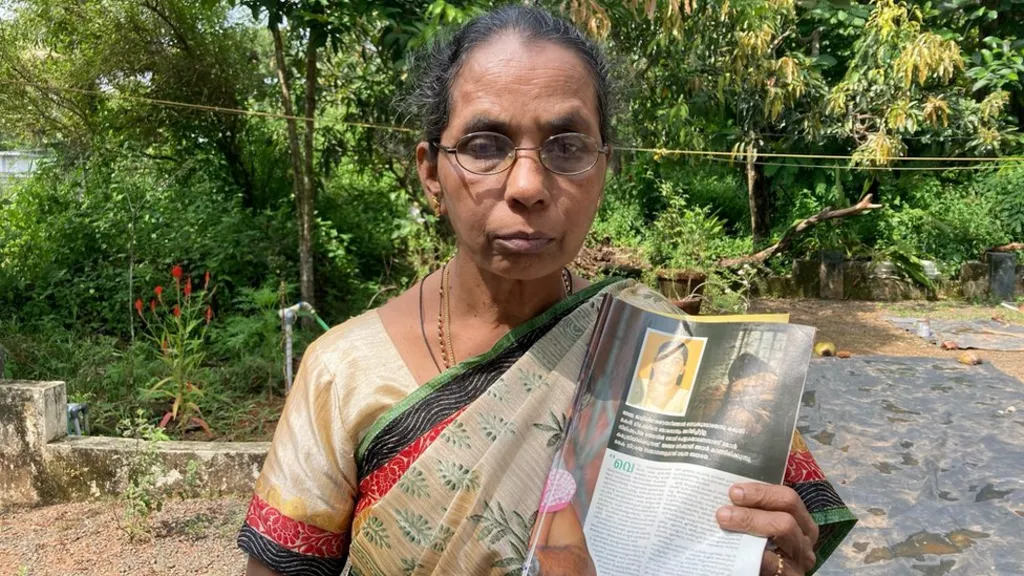
Nimisha Priya’s mother Prema (Source: BBC)
The plea further alleged that, unable to cope with the torture, Nimisha complained to the police in Sanaa, but instead of taking action against Mahdi, the police arrested her and put her in jail for six days. It was further alleged that on her return from jail, the severity of the torture increased manifold.
In July 2017, Priya allegedly approached the warden of a jail near her clinic, who advised her to drug Mahdi and then obtain her passport. However, Mahdi was a substance abuser; therefore, the dose did not work for him as desired. Subsequently, Nimisha Priya allegedly attempted to sedate Mahdi again, this time with the help of her fellow nurse Hannan; however, Mahdi died from an overdose. The two panicked and chopped Mahdi’s body before putting it in a water tank.
The accused duo were soon arrested, and in 2018, Priya was convicted of murder. A trial court in Sanaa sentenced her to death in 2020, and Yemen’s Supreme Judicial Council rejected her appeal in November 2023. Meanwhile, Hannan received a life sentence.
Nimisha Priya’s arrest and dispute over payment of pre-negotiation fees
Nimisha Priya, a native of Kerala’s Palakkad district, was arrested in July 2017 for allegedly murdering Yemeni national Talal Abdo Mahdi. Three years later, a trial court in Sana’a sentenced her to death in 2020, and her appeal was rejected by Yemen’s Supreme Judicial Council in November 2023. In December 2024, Rashad al-Alimi, the President of Yemen, had authorised the death sentence of the Indian nurse.
However, the possibility of paying blood money to the deceased person’s family remained open. Her freedom was dependent on convincing the victim’s family, and their tribe leader to forgive her. Her death sentence could have been overturned if the victim’s family had forgiven her and taken the blood money instead.
Nimisha Priya’s family has been making efforts to pursuade the deceased victim’s family regarding blood money. In April 2024, the convict’s mother Prema Kumari went to Yemen to get her daughter out of prison. This was the first time she met Nimisha in 11 years.
The negotiation bid was stalled due to a delay in the payment to Abdullah Ameer, the lawyer appointed on behalf of Nimisha Priya. The lawyer had demanded USD 40,000 in two instalments as pre-negotiation fees and stated that the legal proceeding would not move further until the entire amount is paid.
Initially, Ameer demanded $20,000 (Rs 16 lakh approximately) of which $19, 871 was already paid to Ameer in July by the Indian External Affairs Ministry.
The Save Nimisha Priya International Action Council initially crowdfunded money for the lawyer’s fees; however, they later struggled with ensuring transparency to the donors regarding the usage of the raised funds.
While Priya was awarded the death sentence, she had the option to give blood money to Mahdi’s family since her death sentence could only be waived if the deceased victim’s family pardoned her. Notably, as per Sharia law, blood money or Diyya is accepted by the victim’s family from the murderer in case the death was unintentional or accidental or if the deceased victim’s family decides to forgive the murderer and not seek retribution or Qiyas.
The Indian government has been making diplomatic efforts to explore all possibilities of saving Nimisha Priya; however, accepting the blood money or not remains a decision only the victim’s family can make. Thus, approaching the Supreme Court to seek an order for the Central government to anyhow secure stay Nimisha’s execution and her release, although desperate, is a slightly absurd move.
It remains to be seen if somehow the Supreme Court directs the Central government to put pressure on Yemen government to force blood money route and if there is a twist of fate awaiting Nimisha Priya or whether she will be executed.
The Election Commission of India is preparing to conduct state assembly elections in Bihar, set to be held later this year. Ahead of the elections, the ECI is undertaking a Special Intensive Revision (SIR) of the electoral roll in the state. Documents are being sought from all the voters so that their names can be included in the voter list again. As soon as the SIR process started, the number of applications for residence certificate in Kishanganj, a Muslim-dominated district of Bihar, increased 5-6 times. This increase in Kishanganj has again raised the questions of infiltration and demographic change in the district.
Applications for residence certificates increased 5 times in Kishanganj: Deputy CM Samrat Chaudhary
Bihar Deputy Chief Minister Samrat Chaudhary has said that on average, 26 thousand to 28 thousand applications were coming to Kishanganj for a residence certificate every month from January to May in 2025. He said that as soon as the process of the Election Commission started, this number increased rapidly.
Chaudhary said that in just 6 days of July, more than 1.28 lakh applications for a residence certificate were received in Kishanganj. He said that this shows that infiltrators are present in large numbers in Kishanganj.
The deputy CM added that documents like PAN card, Aadhar card, and passport take time and proof, while a residence certificate is easily made. Chaudhary has linked this matter to national security. The minister’s remarks have sparked a debate over this issue.
Their concerns are justified because Kishanganj is the only district in Bihar where the Muslim population is more than 60% and the demographic change here has been rapid. Infiltration has also taken place on a large scale in Kishanganj.
Why are Bihar Deputy CM Samrat Chaudhary’s concerns justified?
Samrat Choudhary is not talking about the sudden increase in infiltrators and applications without any reason. Kishanganj has a history behind this. Kishanganj is the only district in Bihar where about 70% of the population is Muslim. This is recorded on paper.
At the time of independence, Kishanganj was a Hindu majority area. But in the last few decades, the demography here has changed very rapidly. Now, the Hindus here are not even one-third. Hindus have become a minority here in the last few decades. The biggest reason for this change is considered to be the illegal influx of Bangladeshi and Rohingya infiltrators.
This district is situated on the border of West Bengal. Bangladeshi infiltrators and Rohingyas have been arrested continuously from here. Last month only, 9 Bangladeshis were arrested here. These infiltrators have been caught here on different occasions. The border of Kishanganj is adjacent to Nepal.
In Kishanganj itself, people forging fake documents like Aadhaar and PAN have been caught. This essentially means that people helping Bangladeshis and Rohingyas are also present here. Besides, there are a large number of Bengali speakers here, which allows these infiltrators to mix with the native population.
The population growth rate of this district has been the fastest in the country. The population of this district has increased at a rate of 3% between 2001 and 2011, which is much higher than the national average. Not only this, but children are also being born in Kishanganj at a faster rate than the national average.
The TFR in Kishanganj is 2.5 times the national average. According to a Reuters report, Kishanganj’s TFR is around 4.9 while the national average is 2.0. The number of children a woman aged 15-49 gives birth to during these years is called her TFR.
If the average TFR of a country is 2.1, then the population remains the same, whereas if it is less than this, then the population decreases. The population is now decreasing in the whole country, whereas in Kishanganj it is increasing twice as fast.
Muslim population increased by 16% in Seemanchal
Kishanganj is a part of the Seemanchal region of Bihar. A report by Dainik Jagran shows that between 1951 and 2011, the share of the Muslim population in the country’s total population increased by 4%, but in these Seemanchal districts, this share has increased by 16% and which is the average of all districts. Not only Kishanganj, but the Muslim population has increased abnormally in adjoining districts like Purnia, Khagaria, Araria and Katihar. Its effect is also visible on the social structure.
Widespread opposition to CAA-NRC in Muslim-dominated Kishanganj
Unsurprisingly, the Muslim-dominated Kishanganj saw vehement opposition to the Citizenship Amendment Act and National Register of Citizens in 2019-2020. Not to forget, the Islamo-leftist cabal ran a ‘Kaagaz nahi dikhayenge’ campaign during anti-CAA-NRC protests. It is worth noting that the Election Commission is also asking for some documents for verification. Opposition parties like the RJD and Congress are again engaged in instigating Muslims in this matter. The Election Commission’s process is called CAA-NRC. On 9th July 2025, Bihar Bandh was even organised in this matter.
A deeply disturbing case has emerged from Sonbhadra district in Uttar Pradesh. A 15-year-old Hindu Dalit girl was allegedly lured by a Muslim man on the false promise of marriage, brutally raped, and then held captive in his home for days.
According to Chopan police station, the incident took place on 16th March, 2025. The accused, identified as Shahzad, reportedly called the minor girl to his residence in their village. There, he allegedly raped her while deceitfully assuring her of marriage.
The horror didn’t end with the assault. The girl was forcibly confined within Ansari’s house, effectively held hostage and prevented from leaving or contacting her family. Desperate to see their daughter, when her traumatized parents arrived, Ansari cruelly barred them from meeting her.
Adding layers of brutality to the crime, Ansari allegedly hurled vicious casteist slurs at the girl’s parents and issued death threats against them. Faced with this ordeal, the victim’s mother demonstrated immense courage. She approached the Chopan police station and filed a detailed written complaint, detailing the rape, unlawful confinement, caste-based abuse, and threats.
According to information received in media reports, the police have registered a case against the accused Shahzad under sections 65(1), 127(2), 352, 351(3) of the IPC, section 3/4 of the POCSO Act and sections 3(2)(v), 3(1)(d), 3(1)(DH) of the SC/ST Act. The police have detained the accused and conducted intensive questioning, legal proceedings are going on.
Another incident that shatters the myth of ‘Jai Bhim Jai Meem’
This horrifying incident yet again shatters the carefully constructed narrative of ‘Jai Bhim, Jai Meem’, a slogan that attempts to portray a political alliance or social solidarity between Dalits and Muslims. While this rhetoric is peddled by certain political and ideological groups to forge vote-bank coalitions, the ground reality often tells a starkly different story. Here, a vulnerable Dalit minor girl was not only raped and imprisoned by a Muslim man but her family was also subjected to casteist slurs and violent intimidation.
Far from any shared struggle or mutual respect, the incident exposes deep-seated communal and casteist prejudices, reminding us that social justice cannot be reduced to hollow slogans or opportunistic alliances. Justice for Dalits must not be hijacked by identity politics that conveniently overlook such heinous crimes.
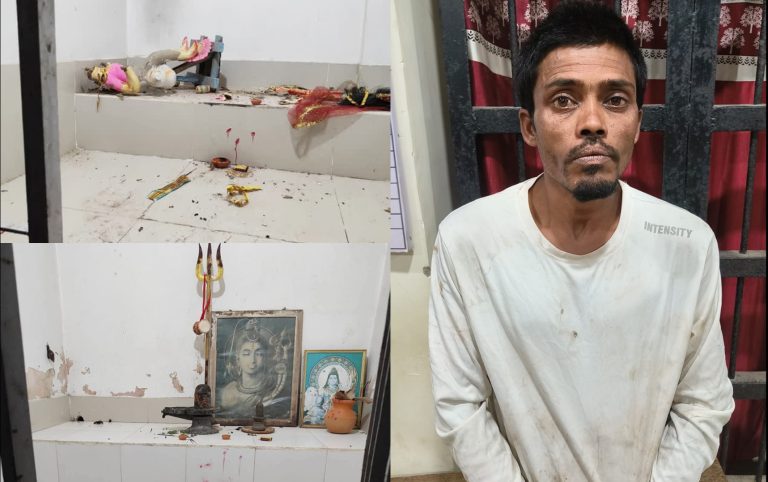
In Assam’s Goalpara, a Muslim youth named Shahabuddin Ali smashed multiple idols at a Durga Temple complex. The accused Muslim man vandalised a total of five idols in the Shiva Temple, Maa Manasa Temple, and Durga Temple inside the temple complex. While Ali has been arrested, it is suspected that there were more people involved in the crime.
The incident unfolded at around 9:30 PM on 9th July 2025, when unidentified persons entered the Hindu temple and started breaking the idols. Temple secretary Banmali Das rushed inside the temple premises after hearing noises of idols breaking, but one of the accused persons bit him on the hand and fled the spot.
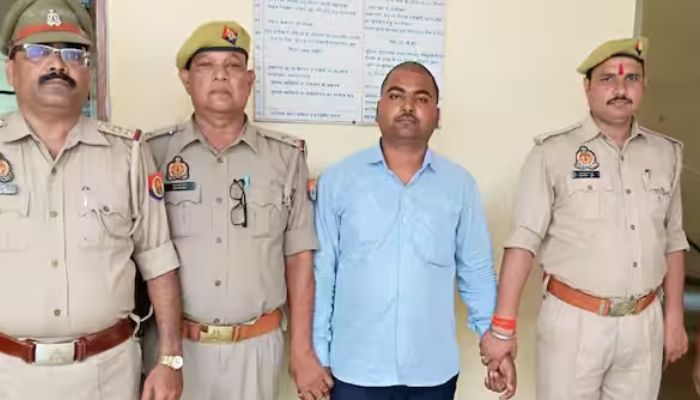
During investigation, the police recovered a mobile phone and clothes belonging to the Muslim culprits. Following these leads, the police began searching for the accused. Based on the probe, police identified 31-year-old Shahabuddin Ali, and arrested him. Search is on to identify and arrest others.
Reports say that along with vandalising the idols of Hindu deities installed inside the temple, the Muslim culprits also damaged the temple’s donation box.
The incident sparked significant outrage among the local Hindus and members of the Akhil Bharatiya Vidyarthi Parishad, the Bengali Federation, and local Hindus staged a protest and raised slogans against the anti-Hindu elements. A Hindu leader said, “This Durga temple is a historical temple. We Hindu organizations will never accept anyone who wants to do politics about this temple. There is a big conspiracy hidden here. This is conspiracy to create a conflict between Hindus and Muslims or destroy our brotherhood.”
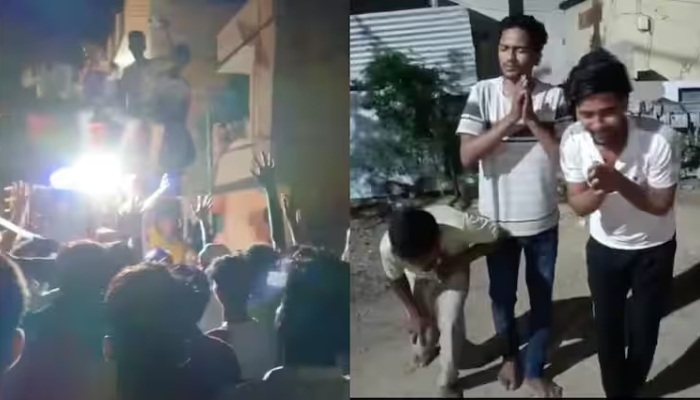
A case of inciting speech has surfaced during the Muharram procession in Uttar Pradesh’s Gorakhpur. On 7th July, a young man was captured on a vehicle reiterating the decade-old, communal “15 minutes” speech of All India Majlis-e-Ittehadul Muslimeen (AIMIM) leader Akbaruddin Owaisi. The Muslim youth threatened that Owaisi wanted 15 minutes (to massacre Hindus) but they require only 5 minutes, resulting in a furious reaction from the majority community, social outfits and Hindu organisations. They demanded strict action from the administration.
The matter pertained to Piprauli town of Gorakhpur district. The video also went viral on social media after which locals took to the streets in protest on 8th July. The members of the Hindu community also shut down the market and encircled the police station as well as submitted an application of complaint. Afterward, the authorities filed a case under serious charges against Jamil Ahmed, Sahil Ahmed, and Mujibul Islam, also known as Sheru, along with hundred unidentified individuals.
As the situation intensified, the police arrested the three accused on 9th July, who were later seen apologising and begging with their folded hands. Superintendent of Police (SP) North Jitendra Kumar Srivastava stated that the Gida police have presented them in court after which they were remanded to jail. Three police teams have been established to identify the remaining offenders. They will conduct an investigation and apprehend them based on the evidence available. Police teams have been carrying out raids to locate other fugitives who are evading capture.
“We only need 5 minutes, not 15 minutes. We will tell what we can do. We will repeat this even in Gujarat,” a “mourner” threatened aggressively from the top of a vehicle with a microphone in hand. He then inquired of the crowd, “Shout loudly how much did I say? Not 15, just 5 minutes.” His extremist audience cheered in agreement with the provocative remark. However, the threat unsettled many residents, as they feared that an unpleasant incident could take place.
During an event in 2012, Owaisi had warned that India’s 25 crore Muslims would teach a lesson to 100 crore Hinuds if the police were removed from the country for 15 minutes. Furthermore, he made multiple insulting comments about Hinduism, Hindu deities and the entire community.
He has also referred to his speech, subtly threatening Hindus on multiple occasions. Moreover, Islamists have been utilizing his statement to intimidate the community ever since.