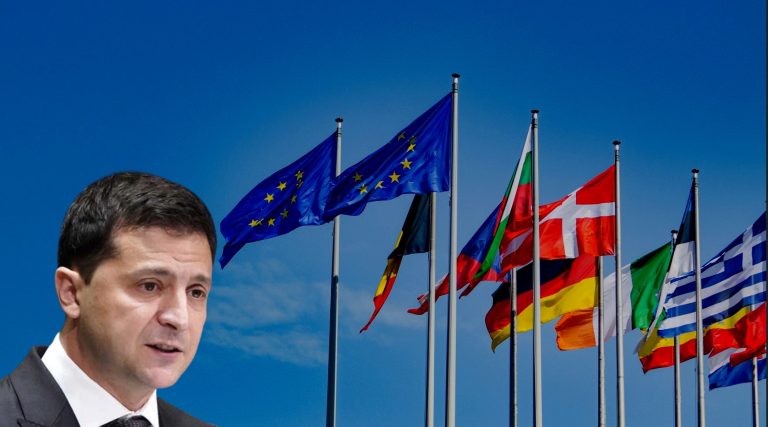
In a major setback to the aim of Ukraine to join the European Union, the 27-member EU has rejected the country’s President’s request for quick membership. This follows after the president formally requested that Ukraine join the EU by signing a membership application on Monday.
European Union rejects Ukraine’s plea for ‘immediate membership’. @SaroyaHem brings you this report#RussiaUkraineWar
On Monday, Zelenskyy requested a special procedure, claiming that it would assist other European states to stand together and offer Kyiv a stronger footing in dealing with the ongoing confrontation between Russia and Ukraine.
⚡️Zelensky asks the EU for membership.
“We ask the European Union for Ukraine’s immediate accession under a new special procedure,” said Zelensky in video address.
Between the existing members of the European Union, there was a clear division over the admission of Ukraine in the bloc. While more than six nations have expressed support for Ukraine’s membership, Germany and France have stated that it will not be possible to do so soon. The officials in the bloc have cited lengthy procedures behind the rejection of this request.
On February 28, Zelenskiy, the President of Ukraine requested to the EU “for the immediate accession of Ukraine via a new special procedure.”
“Our objective is to be among all Europeans and, above all, to be on an equal footing. That seems reasonable to me. I am confident that we are deserving of it,” in a video speech that was posted on social media, he remarked.
President Volodymyr Zelensky of Ukraine urged the EU to grant his country immediate membership of the bloc.
These developments come as the Russia-Ukraine crisis shows no signs of abating. On February 24, 2022, Russian President Vladimir Putin launched an invasion of Ukraine. Russian President Vladimir Putin announced the special operation to be launched in East Ukraine in a televised address.
Amidst the ongoing conflict in Ukraine, an Indian national was killed in shelling in Kharkiv. The development was confirmed by the Ministry of External Affairs (MEA) spokesperson Arindam Bagchi.
In a tweet, the MEA spokesperson informed, “With profound sorrow, we confirm that an Indian student lost his life in shelling in Kharkiv this morning. The Ministry is in touch with his family. We convey our deepest condolences to the family.”
Foreign Secretary is calling in Ambassadors of Russia and Ukraine to reiterate our demand for urgent safe passage for Indian nationals who are still in Kharkiv and cities in other conflict zones.
Similar action is also being undertaken by our Ambassadors in Russia and Ukraine.
He further added, “Foreign Secretary is calling in Ambassadors of Russia and Ukraine to reiterate our demand for urgent safe passage for Indian nationals who are still in Kharkiv and cities in other conflict zones. Similar action is also being undertaken by our Ambassadors in Russia and Ukraine.”
Times Now journalist Komal Gautham informed that the deceased has been identified as one Naveen from Karnataka. His friends said they had left for the train station to leave for Lviv to reach the western border,” she tweeted. His parents have now reached out to the Russian embassy in Chennai.
Parents in CHennai seek Russian embassy help to get students out of Kharkhiv as they state, Russia is just 30km from Kharkhiv border.
Nearly 20,000 Indian students, most studying medicine, have been stuck in Ukraine. The Indian government has started an evacuation operation named ‘Operation Ganga’ for the stranded Indian students. Several special flights have been running from Poland, Romania, and Hungary to bring the students home.
Kharkiv is a big Ukrainian city in the Eastern region where intense fighting has been going on between Russian and Ukrainian forces.
Earlier on Thursday (February 24), Russian President Vladimir Putin announced limited “military operations” against Ukraine. In a televised address, Russian President Vladimir Putin had declared for the special operation to be conducted in East Ukraine.
Putin had added explicitly that Moscow does not plan to occupy Ukraine. He said the military action he announced would seek to “demilitarise” and “denazify” Ukraine and came in response to threats from Ukraine.
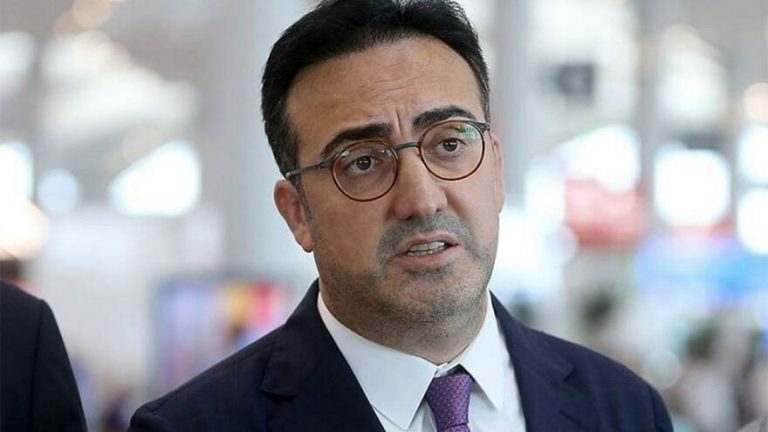
Former Turkish Airlines chairman Ilker Ayci has declined Tata Sons’ offer to be the new chief executive officer of Air India, days after his Air India, days after he was accused of having links with terror outfit Al Qaeda following his appointment to lead the debt-laden airlines bought out by the Tatas.
“I have come to the conclusion that it would not be a feasible or an honourable decision to accept the position in the shadow of such a narrative,” said Ayci in a statement cited by Bloomberg, adding that his appointment to the position was ‘coloured’ by the Indian media.
Ayci was appointed to preside over Air India by Tata Sons on February 14, and he was expected to join the airline on or before April 1, according to a press release.
However, soon after the announcement of Ayci’s appointment as the head of Tata’s recently acquired Air India, allegations of his connections to the terrorist organization Al-Qaeda came to the fore. In the light of serious allegations levelled against him, the Ministry of Home Affairs was to carry out a thorough background check of Ilker Ayci.
Ilker Ayci’s links to Turkey and Al-Qaeda
Ayci has been a close aide of Turkish President Recep Tayyip Erdogan. Notably, the Turkish President is a close supporter of Pakistan and often stands against India on the International platform. Turkey is currently in the Grey List of Financial Action Task Force (FATF), just like Pakistan, over the allegations of terror funding.
Ayci has been connected to Erdogan since 94 when he became Mayor of Istanbul. At that time, Ayci was appointed his advisor. Ayci was later appointed as the chairman of Turkish Airlines and had resigned from the post in January 2022.
Apart from his association with Erdogan, according to a report in Atalayar in 2020, Ayci, who was the former chairman of the Turkish Investment Support and Promotion Agency (ISPAT), had promoted private investments and ventures by Yasin al-Qadi, the former alleged Al-Qaeda financier. As per the report, Ayci had met al-Qadi in Cengiz Aktürk’s personal office. Aktürk was also a suspect and trusted member of al-Qadi.
Al-Qadi, an Egypt-born Saudi national, was singled out by the United States Department of Treasury and the United Nations Al-Qaeda Sanctions Committee for alleged links to financing terrorist groups. Sanctions were applied against him, and his assets were frozen by several investigating agencies. However, his name was later removed from the blacklist after several courts had cleared his name.
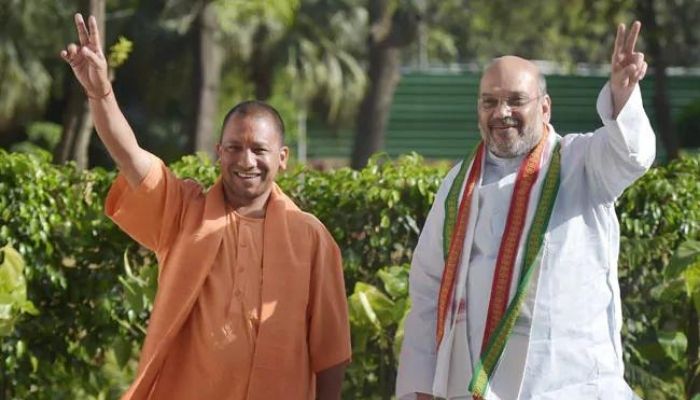
In a recent interview with the Indian Express, Home Minister Amit Shah has heaped praises on Uttar Pradesh CM Yogi Adityanath as the Assembly Elections 2022 are in progress. While praising Adityanath for his commendable leadership to the state, he highlighted that good governance, development and the democratic credentials of the party will increase its winnability in the assembly elections in Uttar Pradesh.
Amit Shah did not mince any words while counting the achievements of the Yogi government. “UP got 30 medical colleges…we will see to it that every district has one. The state has two AIIMS while a research centre for Japanese encephalitis has also been constructed. The BJP government has built 10 new universities, opened 77 new colleges. Our government has also reconstructed and redeveloped 1.40 lakh colleges across Uttar Pradesh.” he added
In 2017, when BJP set out to contest the assembly elections without a CM face, it was riding big on the Modi wave against the incumbent administration led by Akhilesh Yadav. Five years later, Yogi Adityanath has emerged as a name synonymous with the brand of Uttar Pradesh.
Talking about the merits of the double-engine ki sarkar (driven by Modi and Yogi), Shah added, “This time, our strength has improved. Modiji is still there. Along with him, we have what the Yogi government has done for Uttar Pradesh in the last five years. There are many more advantages to the BJP. So, I consider ourselves stronger.”
The BJP’s master strategy to bring caste consensus under the umbrella of Hindutva has been talked about much during the election season. While the BJP chants “Jaati dharm se uth kar badaya hai Samman, sabse Pehle Garib Kalyan” in its election rallies, it also faces cracks within its consolidated OBC vote. Talking about this the HM added, “No caste group has drifted away from us. Some leaders have walked away. In Uttar Pradesh, no one can claim ownership of votes of any particular community. Every voter decides individually.”
On the contested issue of the job sector, Amit Shah added, “Do not look at the job sector like Communists, who consider only government jobs as employment. This is not correct. There is a difference between jobs and employment. We have improved the employment situation. It’s natural that people talk about jobs. But you have to understand the difference – there are so many startups, we have improved the e-marketing opportunities,”
Amit Shah has also underlined that no major loss has been faced by the BJP with the exit of some senior leaders in UP. He added that the candidates have been changed but the strategy hasn’t while calling the drifting away of leaders a ‘normal’ exercise in electoral democracy.
When asked about the Samajwadi Party’s symbol (cycle) being linked with terrorism in a rally by PM Modi, he refuted, “How can you deny the fact that he (the Akhilesh government) released those who were charged under anti-terrorism laws, and that the Allahabad High Court intervened?”
He stated categorically that the BJP doesn’t call any party anti-national. “But if any party indulges in supporting anti-nationals, we will expose them. It’s our responsibility. If any government withdraws cases against terrorists, we will call it anti-national,” he specified.
While concluding, he heaped praise on the Yogi-led government stating that his party is confident of a victory in UP. “Yogi Adityanath has led an exemplary life and he has done great work on law and order. It has improved so well in Uttar Pradesh and it has become an election issue.” From Governance to infrastructure to welfare, he committed to having fulfilled 92 per cent of the promises made in the 2017 manifesto.
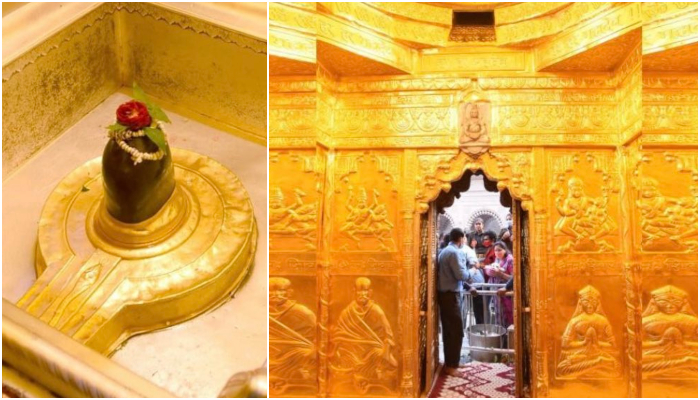
On the occasion of Mahashivratri, one of the most important Hindu festivals in India, the Kashi Vishwanath Temple in the state of Uttar Pradesh has been decorated with 37 kgs of gold. The gold has been used to decorate the inner walls of the sanctum of the temple.
According to the reports, an anonymous donor had donated 60 kgs of gold to Kashi Vishwanath Temple out of which 37 kgs of gold have been utilized for the purpose. A special team from Gujarat and Delhi was called for glittering the inner portion of the temple ahead of the Mahashivratri festival. Reportedly, the balance of 23 kgs of gold will be used for covering the lower portion of the inner dome.
Kashi Vishwanath gets a Golden Makeover
Ahead of Maha Shivratri tomorrow, Garbh Grih in Kashi Vishwanath Temple has been decorated with 60 kg gold donated by an anonymous Bhakt from South India
Before this, Maharaja Ranjeet Singh had donated gold for temple’s Shikhar in 1853 pic.twitter.com/I9gK4EUSId
An anonymous donor had donated 60 kgs of gold to the Kashi Vishwanath temple months before the inauguration of the Kashi Vishwanath Corridor in December 2021. The temple authorities had then decided to finalise the plan of gold plating the inner walls of the sanctum sanctorum and the lower portion of the main temple.
The project of gold plating the temple had been set in motion in three phases. The walls were first covered with a coated plastic layer, then with the copper sheets and finally with the gold sheets. According to reports, temple authorities had planned to undertake the project 6 years ago. An estimate of Rs 42 crores was also approved for the purpose. But the plan was put on hold since the IIT (BHU) at Varanasi had said in its report that the age-old temple was not capable of bearing the load.
However, this is the second time major work being done to gold plate a part of Kashi Vishwanath Temple. Earlier in the 18th century, Maharaja Ranjeet Singh of Punjab had donated one ton of gold for specifically covering two of the temple domes.
It is pertinent to note that Prime Minister Narendra Modi last year expanded the Kashi Vishwanath Temple area 2,700 sq ft to 5 lakh sq ft under Kashi Vishwanath Dham Corridor project worth Rs 900 crores. The BJP led government established direct connectivity between the Kashi Vishwanath Temple and River Ganga through Jalasen, Manikarnika and Lalita ghats.
The process of covering the temple with the precious metal had started long back and is still underway. A committee of 10 people is working in two shifts to execute the project which is in the last phase of completion.
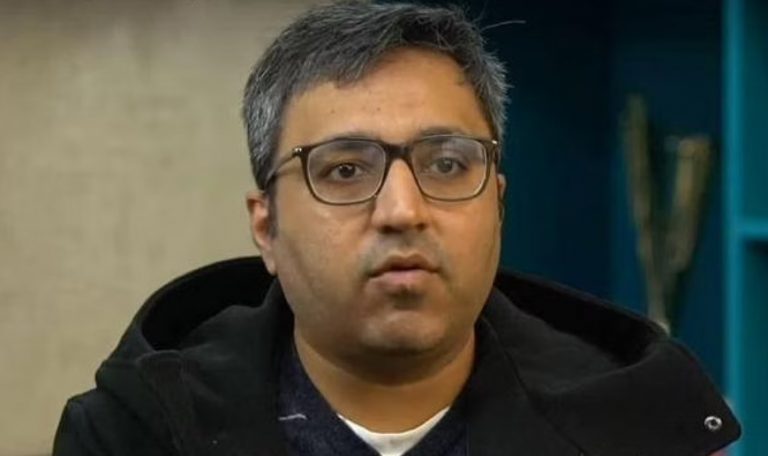
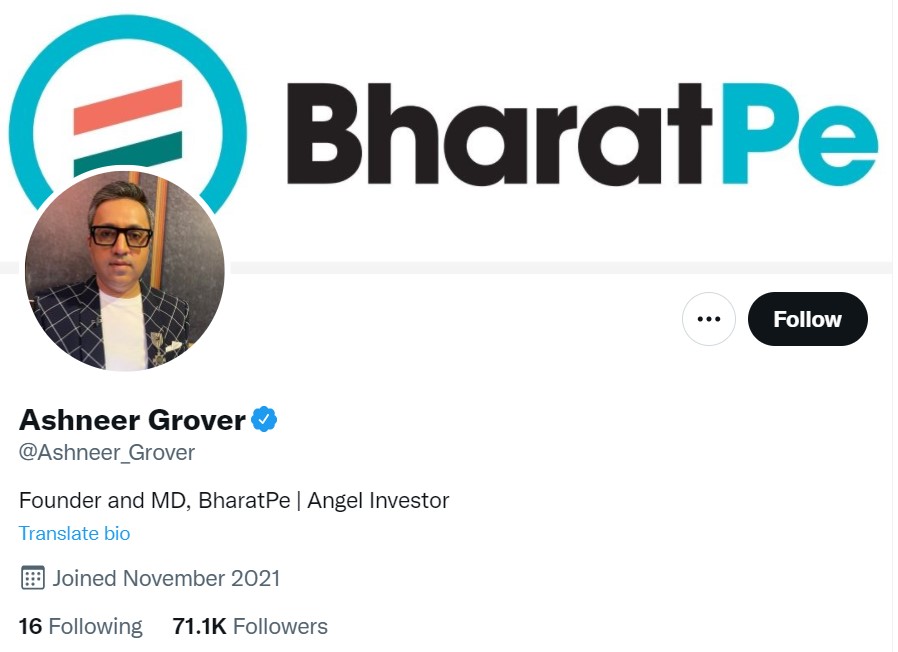
Ashneer Grover, the co-founder of BharatPe, who was also one of the investors on TV program Shark Tank, has reportedly put down his papers amid a probe that is currently ongoing to investigate financial fraud at the company. In an e-mail sent to the company board late on February 28, Monday night, Ashneer Grover said he’s resigning from the fintech firm. Ashneer’s resignation comes almost a week after the firm sacked his wife, Madhuri Jain, who was the company’s head of controls, for alleged financial irregularities including creating bogus invoices and billing the company for personal beauty treatments and vacations overseas.
Notably, Ashneer Grover had not updated his Twitter bio with the same information, until this report was published. His Twitter profile showed him as the Founder and MD of BharatPe.
Screenshot of Ashneer Grover’s Twitter profile
Ashneer Grover loses arbitration he filed in Singapore
The resignation comes a day after Ashneer Grover lost the arbitration in Singapore he filed against the fintech platform for launching a probe against him.
Grover had petitioned the Singapore International Arbitration Centre for arbitration (SIAC). Grover said in his appeal that the probe was unconstitutional since it went against the shareholder agreement and articles of organisation.
He had asked investors for Rs 4,000 crore in exchange for selling his 8.5 per cent ownership and leaving the company, but major investors in the fintech platform, according to news agency IANS, are refusing to negotiate. His stake would be worth about Rs 1,824 crore at a $2.85 billion valuation and the current dollar-rupee exchange rate.
Ashneer Grover’s resignation letter to the Board
In the letter to the Board, he claimed that he is being compelled to leave a company of which “I am a founder”.
“I write this with a heavy heart as today I am being forced to bid adieu to a company of which I am a founder. I say with my head held high that today this company stands as a leader in the fintech world,” Grover wrote in his resignation letter.
He alleged that he was being targeted by a few individuals, and was “vilified and treated in the most disgraceful manner.”
“Since the beginning of 2022, unfortunately, I’ve been embroiled in baseless and targeted attacks on me and my family by a few individuals who are ready not only to harm me and my reputation but also harm the reputation of the company, which ostensibly they are trying to protect,” he added.
“From being celebrated as the face of Indian entrepreneurship and an inspiration to the Indian youth to build their own businesses, I am now wasting myself fighting a long, lonely battle against my own investors and management. Unfortunately, in this battle, the management has lost sight of what is actually at stake BharatPe,” Grover wrote.
Grover claimed that BharatPe’s investors were seeing him as a liability. “Let’s invoke the SHA. Let’s put him on leave under the pretext of a governance review. Let’s terminate his wife’s employment. Let’s vilify his whole clan. We as investors are on top of the food chain – let’s cut him down to size and make an example of him.”
“So when do we end this? We end this now. While I maintain that you will not find a single act of impropriety against me, I will not be participating in your charade…. I hereby resign as the Managing Director of BharatPe, effective immediately. I also resign as a Director of the Board. I will continue as the single largest individual shareholder of the company. I have founded and built BharatPe into what it is today, and this identity, none of you can take away from me.,” Grover exclaimed.
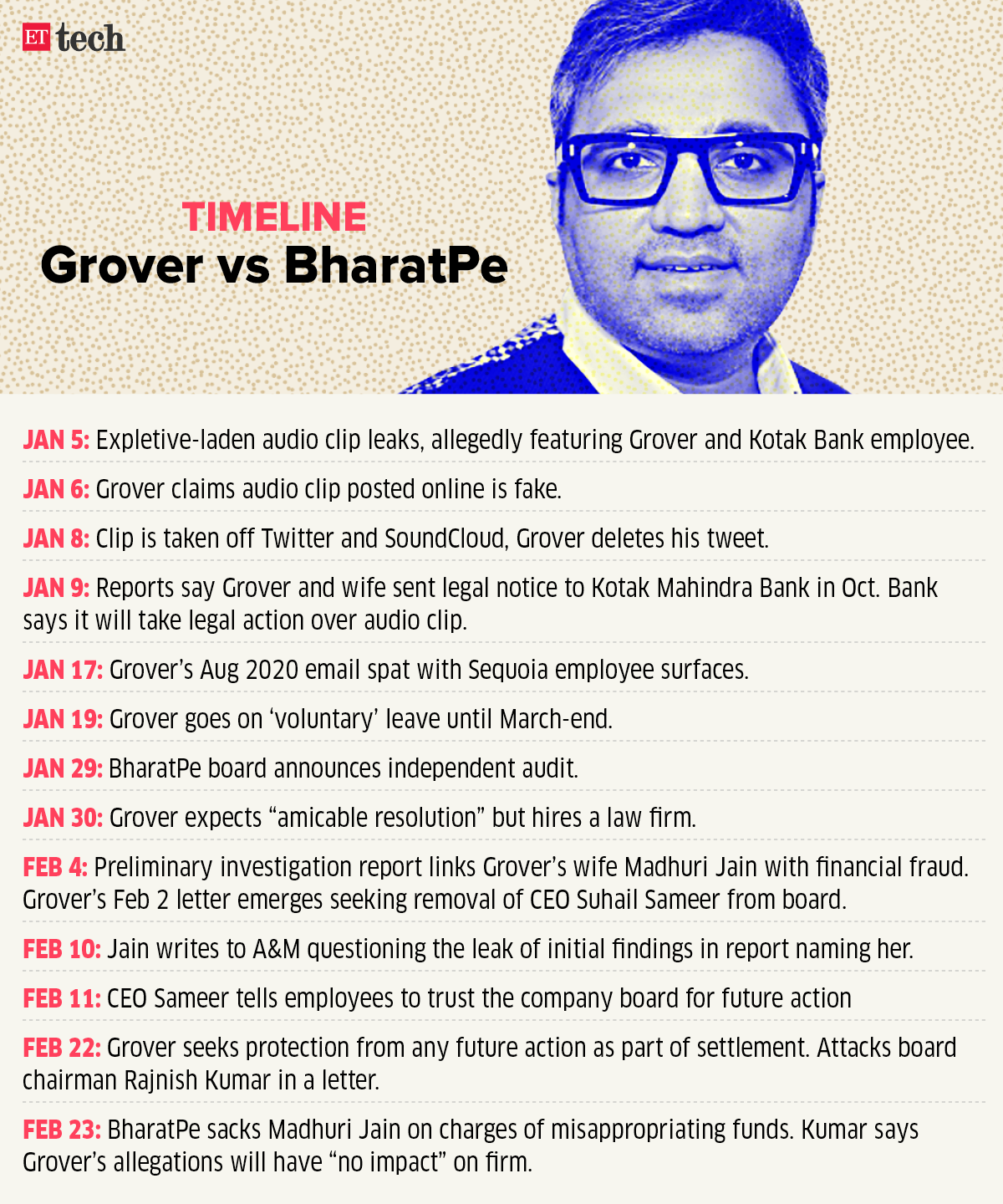
Image source: Economic Times
BharatPe sacks Madhuri Jain, wife of Ashneer Grover over financial irregularities
On February 22, BharatPe terminated Madhuri Jain Grover, wife of Ashneer Grover, from her post of the controller over allegations of ‘misappropriation of funds’. As per a report, she had been named in the initial investigation by Alvarez & Marsal (A&M) investigation over financial irregularities in BharatPe. Madhuri Jain had been financial in charge of the company since October 2018.
Ashneer Grover goes on a leave
Earlier on January 19, Grover posted a letter on his verified Twitter handle with the caption “On leave. Back on 1st April.”
“I’ve been relentlessly at work building up BharatPe for almost 4 years. After much deliberation and introspection, I plan to take temporary leave of absence from BharatPe till March end. I will return on or before 1st April, 2022,” Ashneer Grover had written.
In the last two months, two different sets of allegations have been laid down against Ashneer Grover and his wife, Madhuri Jain Grover. In January this year, it was reported that the couple had misbehaved with a Kotak Mahindra Bank employee over a phone call last year. The Bank had allegedly failed to finance their application and buy shares of FSN E-commerce Ventures that runs cosmetics platform Nykaa.
Later in February, the independent investigation agency A&M found that there were irregularities in the company’s books. The first allegation was linked to anomalies in recruitment, while the second concerns paying non-existent vendors. Madhuri Grover, Ashneer Grover’s wife and her brother, Shwetank Jain, are reportedly linked to both the financial wrongdoings. The second allegation was linked to dealings with non-existing vendors and payments of penalties to avoid show-cause notices.
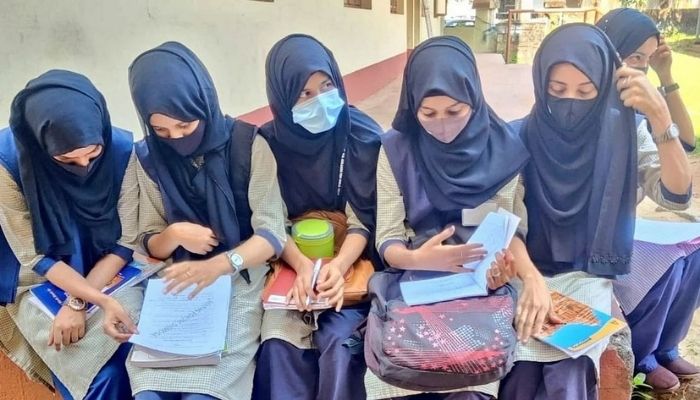
The Udupi Pre-university College (PUC) in Karnataka, where the Hijab row began, has now barred 3 Muslim girls from attending their practical examinations that commenced on Monday (February 28). The development took place after they demanded permission to write exams in their hijab in complete violation of the interim order of the Karnataka High Court.
As per reports, the three students had also asked the PUC principal Rudre Gowda to postpone the exams. They alleged that Gowda had threatened them with a police complaint. One of the students and a petitioner in the hijab case, Almas AH, said, “We requested the principal today (February 28) once again to allow us to write the exam.”
She further claimed, “For two months we did not have classes but we watched YouTube videos and prepared for the exam and we thought we would get to write the exams. The principal didn’t allow it and said that if we stay there for five more minutes, he will file a police complaint.”.
Right now we should have been in our labs attending the practicals not compelled to leave.
The hopes I had from college and my dreams are getting shattered due to the hatred sowed against hijab.
“Right now we should have been in our labs attending the practicals not compelled to leave. The hopes I had from college and my dreams are getting shattered due to the hatred sowed against hijab,” she claimed in a tweet on February 28.
It must be mentioned that Almas AH and 2 other female Muslim students wanted to appear for their practical examinations in a hijab but the college administration refused to entertain their demands. While speaking to The Telegraph India, principal Rudre Gowda clarified that the students refused to listen to him when he asked them to comply with the court’s order.
“I spoke to them for several minutes trying to convince them to appear for the exams by removing their hijab. I asked them to comply with the conditions and give their exam even after 9.30am. But they just refused to listen to me,” he informed.
‘Hijabi’ students across Karnataka flout HC order
Earlier on February 24, the 6 girls behind the ‘Hijab row’ had written to the PUC board, seeking a postponement in their practical exams. Inspired by Almas AH to prioritise ‘Hijab’ over ‘kitaab‘, female Muslim students in other colleges in the State also insisted to write their exams in hijabs.
The colleges include Government Pre-University College and Bhandarkar’s College of Arts and Sciences in Kundapura and Dr G Shankar Government Women’s First Grade College in Udupi. But, they were too barred from writing exams in line with the interim order of the Karnataka High Court.
“When we came to the college gates to request access to the library or to request permission to write the exam, we have been sent back from the gates itself by police personnel,” the News Minutequoted a ‘hijabi’ Muslim girl as saying.
Karnataka HC affirms hijab ban in colleges that have prescribed uniform
Earlier last week, the chief justice of the Karnataka High Court, Rituraj Awasthi, reiterated the interim order passed by the court on 10th February 2022, that prohibited students from wearing religious dresses in the classrooms, stating that it will apply to both degree colleges as well as pre-university colleges where a uniform code is prescribed. The court further clarified that the order is applied only to the students and does not apply to the teachers.
The order came weeks after the Karnataka High Court passed an interim order, banning any kind of religious attires in educational institutes. The order, which was passed by Karnataka HC on February 10, asked students to refrain from wearing anything religious in nature till the disposal of the case.
Karnataka hijab controversy
Last month, some Muslim students from the PU College in Karnataka filed a petition in the High Court to allow them to attend classes wearing Hijab. They were denied entry into classes because the college management stated that the hijab is not part of the uniform and it cannot be allowed in classes. Since then, the ‘students’ have been protesting while wearing burqas.
The Muslim students had started wearing hijab and burqa to their school, college in defiance of the uniform rules since December 2021 after coming in touch with the Campus Front of India (CFI), the student wing of the Islamist outfit Popular Front of India (PFI) in October 2021. The students had admitted being in consultation with the CFI.
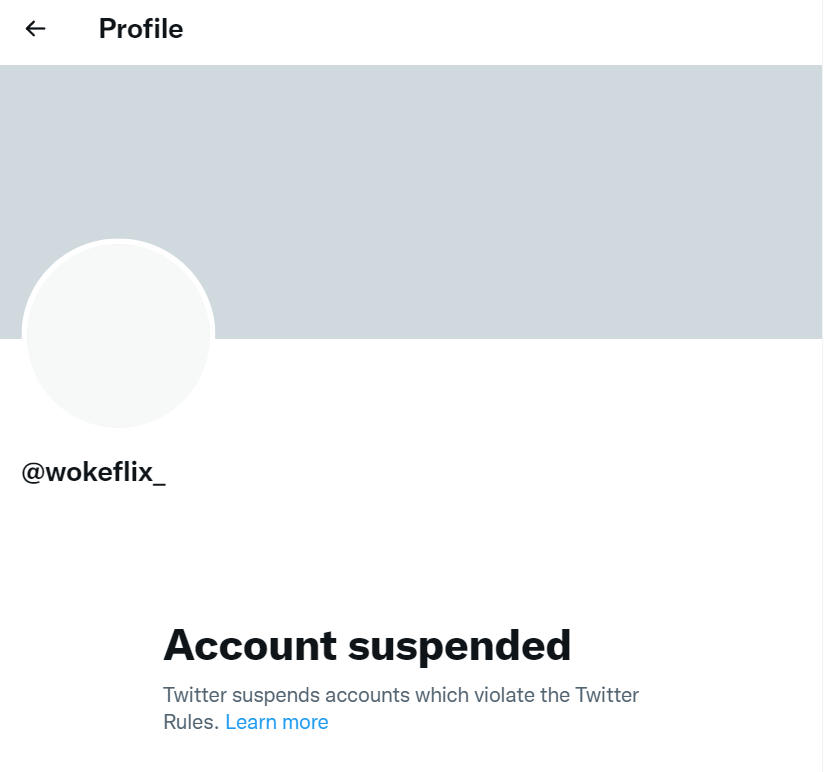
Twitter has suspended an account that was actively exposing the anti-Hindu remarks made by teachers in Vision IAS coaching institute. The account of Wokeflix (@Wokeflix_) has been found suspended by Twitter.
Account of Wokeflix suspended.
The account was proactively exposing famous coaching institute Vision IAS’s anti-Hindu discourse by sharing many recordings of its educators openly ridiculing the Hindu religion. There were several videos of classroom lectures uploaded and made into a thread where educators were openly making comments that were anti-Hindu and offensive in nature. All of the videos contained overt Islamic indoctrination and ideological manipulation.
Several people have stood up and raised questions on the suspension of the account. People were curious after the suspension and contemplated if the account was suspended because it was exposing blatant left-liberal and Islamic propaganda spread by premier coaching institutes.
Vivek Ranjan Agnihotri, a prominent filmmaker and author took to Twitter and wrote, “Absolutely unacceptable behaviour by Twitter. @Wokeflix_ is punished because he exposed ‘brainwashing institute called @vision_ias’. Do you know it’s happening to all our warriors – because they are more united and determined to silence us. This is time to fight for your rights.”
Absolutely unacceptable behaviour by Twitter. @Wokeflix_ is punished because he exposed ‘brainwashing institute called @vision_ias’.
Do you know it’s happening to all our warriors – because they are more united and determined to silence us. This is time to fight for your rights. pic.twitter.com/0eU9xfgJHQ
— Vivek Ranjan Agnihotri (@vivekagnihotri) March 1, 2022
BJP leader Kapil Mishra wrote “Very clearly a targeted campaign is going on Suspended @wokeflix_ now for showing truth and facts”
Very clearly a targeted campaign is going on
Suspended @wokeflix_ now for showing truth and facts
AltNews co-founder and Islamists celebrate suspension of Twitter account of Wokeflix
Mohammed Zubair, the co-founder of AltNews celebrated the suspension of the Twitter account of Wokeflix. He tweeted a post with screenshots and wrote, “Suspended. For now. ??”
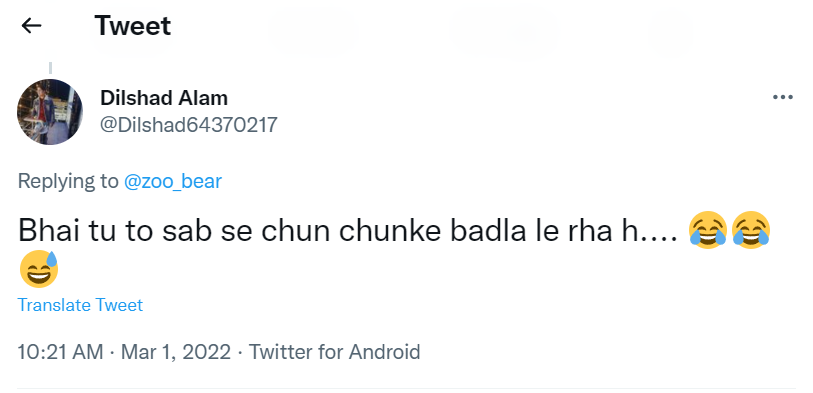
Several other Islamists also celebrate the suspension of Wokeflix’s Twitter account. A Twitter user Dilshad Alam while replying to Zubair wrote, “Bhai tu to sab se chun chunke badla le rha h…. ???”
The reply.
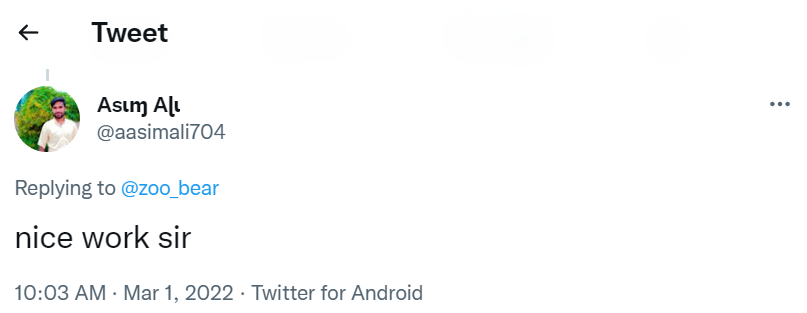
Another user Asim Ali replied to the tweet of Zubair writing, “nice work sir”
The reply.
Exposing the intolerance of Mohammed Zubair, a Twitter user named Mihir Jha (@MihirkJha) wrote, “Zubair Miyan Celebrating suspension of @wokeflix_ account – Account which was just sharing some videos of people abusing Hinduism.”
Zubair Miyan Celebrating suspension of @wokeflix_ account – Account which was just sharing some videos of people abusing Hinduism. https://t.co/0rhy6rr4LP
Wokeflix suspects that his account was targeted by a lobby aggrieved by him exposing Vision IAS
OpIndia reached out to the individual running the account ‘Wokeflix’. Wokeflix said that he has been diligently exposing the lobby that is brainwashing students and aspiring IAS officers. When he started exposing Vision IAS, he had a sense of the powerful lobby he was exposing.
He said that he had earlier quote tweeted a post that cartoonised those convicted in the Ahmedabad Bast case. It was that tweet which was chosen to target his account, he suspects, by the lobby of IAS officers and Islamists.
The cartoon that Wokeflix had quote tweeted
The suspension message wokeflix got
Given how AltNews’ Zubair was celebrating the suspension of Wokeflix’s account, it is suspected that those who were aggrieved by Wokeflix exposing the IAS lobby coupled with Islamists who were disgruntled about the anti-Hindu rhetoric in IAS coaching being brought to the fore, decided to choose this tweet to target the account and get it suspended.
AltNews is an Islamic propaganda website under guise of fact-checker
The whole Left syndicate has mostly pushed the propaganda website AltNews as an actual source of fact-checking. Their pieces are openly spread by any anti-government, anti-Hindu fanatics. While carefully promoting Islamic propaganda, AltNews maintains a facade of fact-checking to make their presentation more appealing to their already loyal audience.
AltNews frequently promotes fake news, obfuscates the facts, invents details to protect Islamists, and even manufactures fake news to fact-check it thereafter.
On February 28, Monday, the Gujarat State Waqf Tribunal urged the Bar Council Gujarat (BCG) to take legal action against four lawyers for their alleged ‘inappropriate’ behaviour during a hearing. The Tribunal was miffed because the lawyers accused two of the tribunal members of recusing themselves from the case as they belonged to the Sunni sect.
According to a Times of India report, the tribunal was considering a dispute over the Hazrat Maulana Mehboob Dargah, Masjid, and Kabrastan Trust in Anavada village, Patan district in North Gujarat.
Sunni sect members claimed that the trust’s management was made up of Shia sect members. They claimed that members of the Dawoodi Bohra community had acquired control of the trust and that the management should be given over to Sunnis.
On January 18, lawyers for the respondents, who represented the Bohras and their religious head, got into a heated debate with the tribunal members during an online session.
Manish Shah, one of the lawyers, argued that the Waqf Board hears the case better than the tribunal. This did not sit well with the panel, which noted that the lawyer claimed that the tribunal did not hear the case in a legal manner.
Three additional lawyers, VR Agrawal, Rajesh Modi, and Kaiser Merchant, were also allegedly found to have acted improperly during the hearing by the Waqf Tribunal, stated the TOI report.
The Waqf Tribunal maintained that lawyers VR Agrawal and Rajesh Modi had claimed that the members of the tribunal – chairman Al-Shaikh and one of the two members, Rizwan Qadri – are Sunni and were therefore in a rush to hear the case. They argued that because the issue included a dispute between Sunni and Shia sects, the matter should not be heard by these members.
The panel also noted that the other senior lawyers maintained decorum and insisted that similar arguments be avoided by lawyers.
As regards the dispute over the trust, the tribunal overturned the Waqf Board’s decision to allow the names of members of the Dawoodi Bohra community to be entered into the trust. The Waqf Act prohibits the conversion of a Sunni trust to a Shia trust and vice versa, according to the tribunal. The tribunal was likewise dissatisfied with the board official’s excess of his mandate and recommended action against him too.
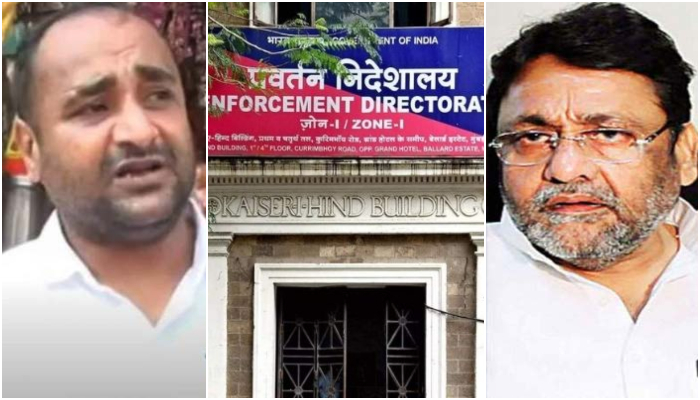
The Enforcement Directorate (ED) on Tuesday summoned Faraz Malik, son of NCP leader and Maharashtra minister Nawab Malik in connection with the Dawood Ibrahim money laundering case. The ED is interrogating Faraz regarding the Kurla’s Goawala Compound property deal involving late Haseena Parkar, sister of underworld don Dawood Ibrahim.
According to reports, the ED while probing into the land transaction between Nawab Malik and Hassena Parker, found that Faraz Malik had paid the required cash amount to satisfy the deal. The ED had asked him to present documents from the year 2005 and summoned him for not cooperating.
Dawood Ibrahim money laundering case | Enforcement Directorate summons Faraz Malik, son of NCP leader and Maharashtra minister Nawab Malik
Nawab Malik had bought land at Kurla in Mumbai back in 2005 from Hassena Parker for Rs 85 lakhs but the sale agreement was deliberately fabricated to show the cost of land as Rs 30 lakhs. The balance amount of Rs 55 lakhs was delivered to Parker by Faraz Malik in cash. It is pertinent to note that the market value of the land today is Rs 300 crores. Faraz has been asked to reveal the property documents from the year 2005 and present all the relevant details pertaining to the deal.
The summons to Faraz Malik comes after the ED arrested Nawab Malik in the money laundering case. Reports mention that Nawab Malik has not cooperated with the ED officials in the entire process of investigation. He was even admitted to the JJ Hospital after he complained of discomfort during his questioning. However, he has been brought back to custody after getting discharged. According to the agency, he has been remanded to custody till March 3.
The agency has also revealed that the property worth Rs 300 crores today was grabbed at just Rs 85 lakhs by Malik through a company owned by one of his relatives. While the ED is yet tracing the other person involved, it has affirmed that Faraz Malik is one of the two-person who delivered Rs 55 lakhs in cash and Rs 5 lakh in a cheque to Parkar in 2005-06 for the Kurla land.
Earlier on February 15, the ED had conducted multiple raids in South Mumbai in connection with a money laundering case against Dawood Ibrahim and his aides. Close to 9 places in Mumbai and 1 in Thane had been raided including the residences of Dawood Ibrahim’s late sister Haseena Parkar and brother Iqbal Kaskar.
The agency later took into custody Iqbal Kaskar on February 19 and presented him before the special Prevention of Money Laundering Act (PMLA) court. Also, the National Investigation Agency had said that Dawood Ibrahim was planning to launch terror attacks in India and that he was transferring funds through Hawala channels to provide financial help to all those involved in a planned attack.
Nawab Malik’s name appeared in the process of investigation after the intelligence inputs directed the agency to look into the Hawala transaction while probing a money laundering case against Ibrahim, Iqbal Mirchi, Chhota Shakeel, Parkar and Javed Chikna.
The agency is tracing several Hawala transactions linked to money illegally obtained through extortion, drug trafficking, sale of real estate in Nagpada and Bhendi Bazaar area of Mumbai, and other unlawful activities.