Home Blog Page 358

While India was fighting with Pakistan, several ‘Indians’ were openly cheering for the enemy: The ‘0.5 front’ Gen Bipin Rawat had warned about

As India continues to mourn the victims of the Pahalgam terror attack on 22nd April which took the lives 26 Hindu tourists and wounded multiple others, the country has implemented several stringent measures including the suspension of the Indus Water Treaty and the revocation of visas to citizens of Pakistan to penalize the hostile neighbour. Furthermore, on 7th May, India initiated “Operation Sindoor” aimed at dismantling the terrorist infrastructure in the Islamic Republic and PoK (Pakistan-occupied Kashmir).

India also destroyed Pakistan’s military installations in response to its attempts to assault civilian regions along the border, particularly in Jammu and Kashmir, but their sinister agenda was defeated by the Indian defence forces. While India confronted its longstanding foe, another front was opened by malicious elements within the country seeking to destabilize it.

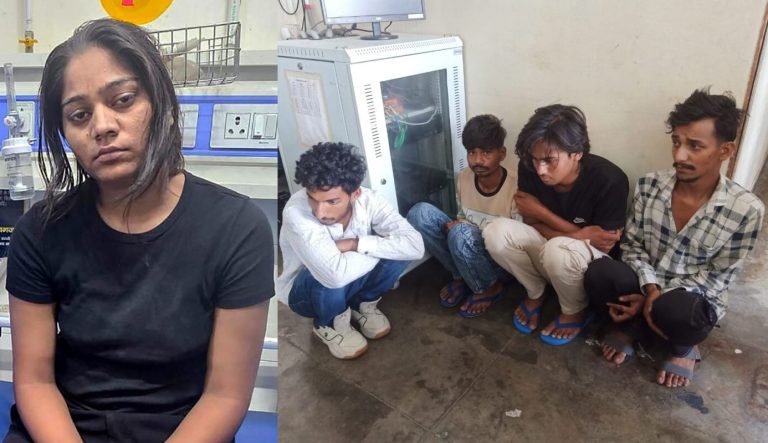
On 11th May, authorities apprehended a minor from Pundag in Ranchi for reportedly posting pro-terrorism content on social media. He admitted to posting objectionable content during questioning. An FIR (First Information Report) has been filed against him at the Pundag police station. Bharatiya Janata Party (BJP) leader and Ranchi MLA CP Singh had alerted the Ranchi police regarding the posts and called for action against the accused.

He stated, “The photographs disseminated by the minor on social media are provocative and have implications for national security. Additionally, they insult the Indian Army. He displayed the flag associated with multiple terrorist groups including Al-Qaeda, Taliban and Islamic State of Iraq and Syria (ISIS). The perpetrator promoted Pakistan’s propaganda of Ghazwa-e-Hind. This act is not merely an act of treason, but also reflects a distinct terrorist mindset.” He highlighted that displaying such flags and posts on social media indicates a troubling mentality.

The lawmaker emphasized that the issue extends beyond a singly young man and underscored the detrimental ideology being propagated among the youth by particular maulanas (clerics) and madrasas. He added that the police should promptly apprehend him and conduct a thorough investigation to determine if he has ties to any major terrorist organization.

“If we do not confront this type of thinking, these intentions and individuals today, they might provoke a serious incident in the future. To ensure the safety of our nation, we must take firm actions immediately,” he declared. The police acted swiftly after the lawmaker’s post became viral. Afterward, a probe was initiated and the perpetrator was arrested.

Living in India but heart beats for Pakistan

Notably, similar occurrences have transpired recently, resulting in the arrest of offenders involved in anti-India activities. Rozan Ali was assaulted after he chanted “Pakistan Zindabad” and even shared AI (artificial intelligence)-generated WhatsApp stories featuring Bollywood actors holding the Pakistani flag. The instance happened in Vidhiyani, located in the Sant Kabeer Nagar district of Uttar Pradesh.

He wore a T-shirt emblazoned with “Pakistan” and wielded a sword, in one WhatsApp status. He shared these stories shortly after “Operation Sindoor” commenced. He was requested to delete the contentious stories, but he declined which further incited public outrage.

Three Muslim youngsters were captured by police in Meerut, Uttar Pradesh for their support of Pakistan following “Operation Sindoor.” Dilshad had set his profile image to a photograph of a girl waving a Pakistani flag. A complaint was filed against him and he was taken into custody. The slogan “Pakistan Zindabad” was written by Zaid, who works at a salon in Meerut on a Pakistani Instagram post. He defended Pakistan when India attacked terrorist organizations located within the country.

People alerted the police after seeing his Instagram comment and he was caught. Zeeshan, the salon’s owner was also arrested. According to the police, a case was filed at the Civil Lines police station and action had been taken in the matter. Police have recognized ten such social media accounts in Meerut. Authorities stated that they would either take action against all of these accounts or have them deactivated.

20-year-old Zeeshan Qureshi of Sachendi town from Kanpur shared a video on Instagram mocking Prime Minister Narendra Modi and the Indian flag while endorsing Pakistan. He reposted the Pakistani video on Instagram which showcased the country’s flag along with guns. His father, Guddu, owns a butcher store and he works as a barber. He was arrested and and an investigation was initiated by the police. They also began to investigate other individuals who had been in contact with the accused who was under interrogation.

Moeed Khan became furious when a 12-year-old boy named Surjeet was discussing “Operation Sindoor” in Shahjahanpur of Uttar Pradesh and stabbed him, gravely injuring the minor. He also shouted “Pakistan Zindabad” slogans. The event took place in Shahjahanpur’s Powayan neighborhood. He visited the vegetable market and began conversing about the operation with some individuals which provoked the offender who then resorted to verbal abuse.

He then cut the boy’s hand with a knife who was afterward taken to the local hospital for treatment. Another person named Vakil was also reportedly involved in the attack. Moeed Khan also shouted slogans in support of Pakistan after the assault. Subsequently, those present at the scene thrashed Moeed Khan while the other suspect fled the area. Members of Hindu organizations who arrived at the site began a protest in response to the incident. The police apprehended Moeed Khan and began an inquiry.

2 arrested for leaking sensitive to Pakistan

Meanwhile, on 11th May Punjab Police announced that it had captured two individuals, including a woman for engaging in espionage activities connected to a Pakistani diplomat stationed in the Delhi High Commission. Director General of Police Gaurav Yadav stated that a suspect was detained on the basis of reliable intelligence after disclosing crucial information about Indian Army movements to a handler headquartered in Pakistan.

The pair has been recognized as 31-year-old Guzala and Yameen Mohamad, from Malerkotla. The authorities have also recovered two mobile phones from them. According to the police, the accused have been identified and is named in the official complaint. The recent development transpired a few days after the Amritsar Rural Police arrested Falaksher Masih and Suraj Masih for leaking sensitive information and photographs concerning army cantonment sites and air bases to the intelligence agency of Pakistan.

The top cop stated that they had been obtaining payments via online transactions in return for giving confidential information. They maintained regular communication with the handler and participated in directing funds to other local operatives according to his directives.

The two and a half front war

“Chinese continued military, economic and diplomatic support poses the threat of coordinated action along the northern and western fronts, which we have to consider in our defence planning. India is ready for a “two-and-a-half front war,” late Chief of Defence Staff (CDS) General Bipin Rawat expressed in September 2020 in relation to Pakistan, China and the people who present internal threats to the nation. He repeatedly addressed the 2.5 front war, underscoring the serious dangers that certain elements within India pose, alongside those from Pakistan and China.

“Indian Army is fully ready for a two and a half front war,” he declared earlier in 2017. He asserted that although prepared for a multi-front conflict, there exist effective strategies to mitigate a detrimental situation. “Pakistan is spreading disinformation among the youth of Kashmir with doctored videos and messages. This is further supported by some of the people in the valley who spread it and glamorise the young boys who have joined terrorist organisations,” he voiced and added that “several times during army operations we have to deal with the public face to face and many times women are right there in front of us.”

“We are raising our modernisation issues with the Government of India. The discussions are going well,” he further mentioned. “This is a proxy war and proxy war is a dirty war. It is played in a dirty way. The rules of engagement are there when the adversary comes face-to-face and fights with you. It is a dirty war. That is where innovation comes in. You fight a dirty war with innovations,” he outlined. He explicitly pointed out that certain individuals in India (Jammu and Kashmir) are behaving as puppets of the jihadi state, glorifying terrorism to incite unrest.

Notably, the same sentiment was shared by General MM Naravane who succeeded him as the CDS. He emphasized that the concept of a “two and a half front war” has now become a reality during his annual press conference on 12th January 2022. The two fronts refer to China and Pakistan, while the half front pertains to counter-insurgency efforts.

Whether it involves efforts to incite insurgency within the nation or providing support to Pakistan while residing in India, the army has recognized that the struggle is not solely against external adversaries but also against domestic enemies. This awareness while positive, also underscores the gravity of the situation.

Conclusion

The uncomfortable reality is that there has always been a faction within India that aims to harm it from within. This can be seen through acts of insurgency or declarations that favor hostile nations, driven by religious, ideological, or monetary motivations which consistently challenge India’s stability. As the saying goes, recognizing an open enemy is not difficult, they confront us head-on, making their intentions known and allowing us to prepare for defense.

Conversely, the gravest threat often stems from those who inhabit the country while working against its interests. Recognizing such individuals who feign to be a part of the nation while compromising its interests from within is a complex task. The recent anti-India elements that surfaced after “Operation Sindoor” exemplify this situation.

Their loyalty is rooted in their religious convictions rather than their national identity, which causes them to overlook ethical considerations and even support terrorism under the guise of ideological similarity. They have periodically expressed their malicious loyalties to undermine the nation’s morale, particularly during crucial moments when India requires the steadfast support of its citizens.

General Rawat might no longer be with us, yet his words continue to resonate with the equal intensity of truth and caution. These serve as a preliminary warning for the entire country. The 0.5 war undoubtedly poses a significant challenge for India, akin to those faced with Pakistan and China, if not more severe, and it is expected to escalate in the forthcoming days. Therefore, it is imperative that not only the Indian Army and authorities but the entire nation is prepared to address it effectively.

Silent but supreme: How INS Vikrant caged Pakistani Jets during Operation Sindoor and reaffirmed Indian Navy’s dominance in Arabian Sea

In a striking display of maritime dominance, the Indian Navy’s INS Vikrant has reportedly played a crucial role in deterring Pakistani aerial ambitions during the recent escalation. According to NDTV journalist and defence analyst Shiv Aroor, the INS Vikrant-led carrier battle group operated freely and without challenge in the north Arabian Sea.

Its overwhelming presence effectively put Pakistan’s fighter fleet to the Makran coast in Balochistan, preventing any meaningful aerial manoeuvres. This operational superiority showcases the strategic edge India’s indigenous aircraft carrier brings to the region, reinforcing deterrence and asserting control over critical sea lanes. Indian Navy’s presence close to Pakistan’s coast is part of ongoing Operation Sindoor, a military operation against terrrorists, their launchpads, training centres and handlers operating from Pakistan.

How the Indian naval strength surpasses Pakistan’s

The Indian maritime strength far exceeds that of Pakistan, as it is equipped with more advanced technology and formidable weaponry, which includes aircraft carriers, nuclear submarines and a range of surface combatants. The Indian Navy has 298 vessels, including 2 aircraft carriers, 18 submarines, 13 destroyers, and 14 frigates, while the Pakistani Navy operates with 121 vessels, which is less than half the number of the Indian Navy vessels.

The Pakistan Navy has 8 submarines and 9 frigates, but no aircraft carriers or destroyers. Besides, India has a greater number of patrol vessels and corvettes, which provide it with more maritime deployment options. Besides, India maintains a merchant fleet of 1,859 ships against a fleet Pakistan’s fleet of merely 60 merchant ships. The number of ports in India is 56, while Pakistan has only 3 major ports.

India rejects US mediation claims as ceasefire holds after Pakistan comes begging, says High Commissioner to Singapore, Shilpak Ambule

On 12th May, India’s High Commissioner to Singapore, Shilpak Ambule, dismissed any notion of third-party mediation over the recent India-Pakistan conflict. In an interview with Bloomberg Television discussing Operation Sindoor, Ambule spoke on the developments and asserted that Pakistan initiated the escalation and was ultimately forced to seek a ceasefire after India launched devastating strikes on 11 Pakistan Air Force bases.

Pakistan forced to negotiate ceasefire after Indian strikes

Ambule emphasised that India did not want to escalate the situation. However, India had no choice after Pakistan began targeting Indian civilian and military infrastructure, including hospitals and religious sites. He said, “The ball is in Pakistan’s court. We responded only to eliminate terrorist infrastructure across the border. Pakistan kept raising the scale by attacking civilian targets, so we had to counterattack.”

He revealed that the ceasefire was announced after days of cross-border hostilities only after the Pakistan Director General of Military Operations (DGMO) reached out to the Indian side. He confirmed, “The ceasefire happened because the Pakistan DGMO came begging to our DGMO after we bombed 11 of their PAF bases. Only then did they agree.”

India rejects US claims of brokering talks

Commenting on US President Trump’s and Secretary of State Marco Rubio’s claims of playing a role in the ceasefire, he firmly rejected the suggestions. He stated, “For us, Kashmir is a bilateral issue. Diplomacy happens, yes, but only to explain our position, not for mediation. There is no scope for the word ‘mediation’ when it comes to Kashmir,” he stated while bluntly saying that it is not an international issue.

He clarified that India has consistently provided evidence of Pakistan-based terrorist groups, including The Resistance Front (TRF), to the United Nations Security Council sanctions committee. He added that India had a single target that is action against the terrorists of the 22nd April terror attack in Kashmir, which killed 26 innocent civilians and targeted tourists to derail normalisation efforts.

India holds firm on Indus Water Treaty and negotiations

On the issue of the Indus Water Treaty, Ambule stated that India had put the treaty in abeyance in response to Pakistan’s continued sponsorship of cross-border terrorism. He said, “The Indus Water Treaty was heavily tilted in Pakistan’s favour when signed. As long as cross-border terrorism exists, it remains suspended.”

When asked about possible talks with Pakistan, he reiterated India’s long-standing position, “Terror and talks don’t go together. The only outstanding issue for negotiation is the illegal occupation of Pakistan-occupied Kashmir.”

The road ahead

Ambule maintained that India would continue to pressure Pakistan to end cross-border terrorism before any meaningful dialogue could occur. Talks between the two sides’ military officials, particularly the DGMOs, are expected to continue. “We are prepared for talks if Pakistan stops its terror export. The focus must remain on Pakistan-occupied Kashmir and justice for the 22nd April victims,” Ambule concluded.

Modi drops bombs, UPA dropped the ball: How India targeted terror infrastructure in Pakistan and established a new deterrence through ‘Operation Sindoor’

It was a very pleasant evening on April 22nd at the Baisaran valley of Pahalgham, which hides itself right under the snow-capped peaks of the mighty Himalayas. Being known as Indian Switzerland, it attracts an equal number of tourists and nature lovers from across the world. However, things turned horrific when men with skull caps and long beards with machine guns appeared, shouting ‘Allah o Akbar’ and terrifying tourists, asking them about their religion.

Hindus and Muslims were separated. Hindu men were shot down while women and children were left behind – they were left alive because they wanted witnesses to their barbarism. They were asked to “go tell Modi”. The terrorists asked the Hindu victims to recite the Kalma, and some were asked to strip to confirm their religious identity. When they failed to recite the Islamic prayer, they were massacred.

The massacre of Hindus in Pahalgam reminds one of the holocaust that Kashmir had witnessed in 1990. Pakistan-based Islamic terrorist organisation The Resistant Front, which is an offshoot of the Lashkar-e-Taiba, owned up to the assault.

It is an open account that all Islamic terrorist organisations or independent terrorists that operate from Pakistan or the Pakistani Occupied Kashmir are non-state actors, supported by the Pakistani administration. They are fed and bred by none other than the chiefs of the Pakistan Army themselves. This has been a disciplined practice, irrespective of whoever becomes the Army Chief, ever since the inception of Pakistan. Likewise, the intelligence arm of the Army, ISI, plays the role of facilitator. Every major terrorist attack that has occurred in India over time has an established link to either of the Pakistan-based Islamist terror organisations such as Al-Qaeda, Lashkar-e-Taiba, Hizbul Mujahideen, Jaish-e-Mohammed, Indian Mujahideen, to name a few.

However, it has been a very different scenario ever since the Modi-led NDA assumed power. The Indian forces started to respond with action. The first attack took place on September 18, 2016, when terrorists linked to the JeM attacked the Indian Army base at Uri, killing 19 of our soldiers and injuring 30 others. India vowed to avenge and, within 10 days, on September 28, carried out a surgical strike, devastating terrorist camps and launchpads.

The second attack took place on February 14, 2019. A suicide bomber, again linked to JeM, attacked a convoy of CRPF personnel at Pulwama, killing 40 of them. India pledged to avenge and, on February 26, launched ‘Operation Bundar.’ Twelve fighter jets of the Indian Air Force streaked 20 km past the LOC, demolishing JeM training camps and killing an undisclosed number of terrorists.

The third Islamist attack happened on April 22 at Pahalgam. This time, it wasn’t on the forces but on Indian civilians. It was the first time under the Modi regime that civilians were attacked, making it certain that the response would be unlike ever before. Modi, speaking at a public meeting, confirmed the same. Accordingly, India acted.

The very next day, the Modi government’s first brave step was suspending the Indus Water Treaty of 1960 and closing the Integrated Check Post at Attari. Following this, at 1 AM on May 7, 2025, ‘Operation Sindoor’ was initiated to target terrorist infrastructure in Pakistan and POJK from where attacks were being directed. Nine crucial sites were chosen and demolished, carefully selected to dismantle Islamist terrorist networks. These included groups like LeT, JeM, and Hizbul Mujahideen.

One site at Markaz Subhanallah, Bahawalpur, was closely linked to past attacks, including the 2019 Pulwama bombing, and housed JeM chief Masood Azhar. Another, Markaz Taiba in Muridke, was LeT’s largest training centre, enrolling around 1,000 individuals annually for arms training, religious indoctrination, and radicalisation. Osama bin Laden had also contributed to it. It trained perpetrators of the 26/11 attacks, including Ajmal Kasab and David Headley. All seven other sites had similar terror significance.

The military’s action was focused, measured, and non-escalatory – similar, but ten times more impactful than the Balakot strikes – killing over 100 terrorists. This marked the ceasefire point from India’s side. The operation was completed at 1:44 AM on May 7, and there was no plan for escalation. But Pakistan demanded more.

India’s efficient action had not only hurt the inefficient Pakistani Army but also their terrorist masters. To prove otherwise to their citizens and satisfy their egos, they launched coordinated missile and drone attacks on Indian military bases and civilian areas, causing casualties and damaging Gurdwaras, temples, and other institutions. They also threatened nuclear retaliation and misled the world with blatant lies.

What do you expect the world’s largest democracy to do? Sit and watch the fallacy like the UPA governments did earlier? 

The new India’s military had no choice but to retaliate, and the brave Indian government gave them full power to protect the nation’s sovereignty and integrity.

Indian forces then did what they were meant for. In ninety minutes on May 10, at least 11 Pakistani airbases were turned to dust. Lahore, Rawalpindi, Karachi – none were out of reach. Missiles like BrahMos were launched, made-in-India drones flew far and hit targets, and Rafales and fighter jets, meant for more than airshows, came out to show their fierceness. The swift Indian retaliation crippled Pakistan’s Air Force, even damaging its nuclear facilities. The INS sailed like a sea monster across the ocean. Pakistan realised that if India wasn’t stopped, Islamabad would fall. They knelt before INDIA.

Lacking the courage to speak to India directly, they cried before the world. They approached several nations to speak on their behalf. Most declined. But the USA, driven by its instinct to be the ‘Big Daddy’ of the world, agreed to try. When the US contacted India, it was clearly told: ‘India has not been involved in any act of war but has only responded to Pakistani Army aggression.’ They were also told that ‘Operation Sindoor’ ended the moment its mission concluded on May 7, but Pakistan escalated matters afterwards. India was forced to act. The US was politely advised to let Pakistan reach out directly to India.

Obliged to India’s position, the US asked the Pakistani Ambassador to instruct his DGMO to contact the Indian DGMO to seek an understanding on ‘Operation Sindoor’ – a pause in aggression until a resolution. The call was made, and words were exchanged officially.

Meanwhile, US President Donald Trump tried to gain brownie points. He jumped the gun, claiming he was responsible for conflict resolution and that both India and Pakistan had agreed to a ceasefire. He also claimed he would mediate in Kashmir in the future. But Pakistan, like a dog with a crooked tail, obeyed for just 100 minutes before violating the so-called ‘ceasefire,’ which was never official. However, India, as per its original plan, paused its action and appealed to Pakistan to refrain from aggression.

Late that night, Pakistan’s Prime Minister held a presser, thanking everybody in the world for saving them from being buried. But India’s position remained the same as declared on May 7 and reaffirmed in every press conference since.

On May 11, in a meeting with defence heads, Indian forces were given full authority again. Modi reportedly said, ‘Udar se goli ayega to idar gola jayega,’ making it clear that India wouldn’t tolerate Pakistan’s misadventures. A joint press conference followed, where it was conveyed: ‘There is no ceasefire or agreement between India and Pakistan – only an understanding that both sides would refrain from aggression.’

However, it was strongly stated that ‘India would continue its aggression, in a more blatant way, if Pakistan breaches what they have themselves spoken.’

Now, why is the Congress blabbering? The party that failed to avenge over 25 attacks with more than a thousand lives lost in just ten years – do they have the morality to speak now? The party appealing for a special parliamentary session should first explain why no such session was held during similar terror crises while they were in power. The best favour Congress can do at this juncture is to just shut up.

Indian military showcases success of Operation Sindoor, warns Pakistan against further provocation

On Monday, 12th May, senior officers from the Indian Army, Navy, and Air Force conducted a press briefing on Operation Sindoor. They presented a comprehensive overview of the ongoing operation against terrorists in Pakistan and their handlers. The operation has dealt significant damage to the terror infrastructure in Pakistan-occupied Jammu and Kashmir and Pakistan itself.

Addressing a press briefing, Lieutenant General Rajiv Ghai hailed the unique mixture of Counter-Unmanned Aerial System, Air Defence Weapons and mediums of electronic warfare in India’s inventory to stop the Pakistan attacks.

“In our inventory, we have a unique mixture of Counter-Unmanned Aerial System, Air Defence Weapons and mediums of electronic warfare, and that is why you saw when Pakistan air force attacked our airfield and logistic installation on May 9 and 10, they failed to breach this strong air defence grid.” Lt. Gen Ghai said.

“You can see how many layers, counters, unmanned aerial systems, behind that shoulder-fired weapons and our vintage air defence weapons and in the last our modern air defence weapons system. There was no chance that Pakistan could’ve broken our multi-layered defence system and target our airfield and logistic installation,” he added.

Pakistan dragged its military into terror conflict

Director General Air Operations Air Marshal AK Bharti clarified that India is fighting the terrorists and their support network. “The fight is not against the Pakistan military. However, it is a pity that they chose to intervene, forcing us to respond,” he added.

He warned Pakistan about any future misadventures while quoting Ramcharitmanas, “Binay na maanat jaladhi jad, gaye teen din beet; Bole Ram sakop tab, bhay bin hoy na preet”, emphasising that India’s patience had limits.

Indian air defence system proves its might

The officials explained how India’s layered air defence systems successfully neutralised numerous waves of Pakistani drones and unmanned combat aerial vehicles. Older systems, including Pechora, HOSA-AK, and LLAD guns, along with modern platforms like Akash missiles, performed flawlessly against the enemy.

He stated, “Our battle-proven systems stood the test of time and took them on head on. The Akash system was a particular highlight. This has only been possible because of sustained budgetary and policy support from the Government of India over the past decade.”

The officials also displayed the debris of Pakistani missiles and Turkish-origin YIHA and Songar drones that were shot down by Indian forces. A Chinese-origin PL-15 air-to-air missile, used by Pakistan, was also shown as evidence.

Pakistan attempts information warfare

Responding to Pakistani propaganda about Jaish-e-Mohammed and Lashkar-e-Taiba operatives, Bharti said, “Our targets were terrorists, not Pakistan’s military or civilians. We will not be dragged into their confusion tactics.”

When asked about Kirana Hills, he added, “Thank you for telling us that Kirana Hills houses some nuclear installation; we did not know about it. We have not hit Kirana Hills, whatever is there.”

Ground and maritime defence equally strong

DGMO Lieutenant General Rajiv Ghai explained how multi-layered defences prevented Pakistani Air Force attempts to strike Indian airfields and logistics hubs. Quoting cricket folklore, Ghai said, “Ashes to ashes, dust to dust, if Thommo don’t get ya, Lillee must. Our grid works the same; even if some layers are breached, one will get the intruder.”

He also pointed out how recent terrorist attacks on civilians in Pahalgam had filled the “pot of sin”, forcing a military response.

Vice Admiral AN Pramod highlighted the Indian Navy’s dominance: “Our carrier battle group created an uncontested maritime bubble. Pakistani air assets were compelled to stay close to the Makran coast.”

All systems ready for any future threat

Concluding the briefing, the officials assured, “All our military bases and systems remain fully operational and ready to undertake any future missions should the need arise.”

With inputs from ANI

Pakistan’s DG ISPR, who happens to be the son of a UN designated terrorist, says Jihad is our army’s motto: Read how hate for Kafirs runs deep in the family

Pakistan is left embarrassed at the global stage after India conducted precision strikes first on Islamic terror camps in the first phase of Operation Sindoor and then military establishments deep inside the country. While Pakistani Armed Forces suffered heavy losses and a clear defeat at the hands of the Indian Forces, their DG ISPR, Ahmed Sharif Chaudhary, is having a hard time making the brainwashed Pakistani public believe that somehow Pakistan has secured a ‘victory’ against India by begging for a ceasefire.

Pakistan Army named its counter against India’s Operation Sindoor as Operation Bunyan-un-Marsoos, meaning an impenetrable wall, after a Quranic verse. During a press conference cum propaganda-recycling event on 11th May, a Pakistani journalist asked DG ISPR about whose idea was it to name Pakistan Army counter operation after a Quranic term.

In response to this, Ahmed Sharif said that Iman, Taqwa, Jihad fi-Sabilillah is the motto of the Pakistan Army. Notably, Iman means faith, Taqwa means fear of Allah, and Jihad fi-Sabilillah means fighting in the path of Allah.

“Islam is not only a part of our personal beliefs but also a part of our training, faith. Iman, Taqwa, Jihad fi-Sabilillah, that’s what drives us, that’s what is our motto. We have an army chief of staff (Asim Munir) who has a strong belief…This motto tells that Momins (believers/Muslims) who fight in the war of Allah…they are like that steel wall….we acted as a steel wall…”

Chaudhary said even though India effectively penetrated the so-called Bunyan-un-Marsoos and inflicted maximum damage by destroying 11 Pakistani air bases.

The Jihadi rhetoric unleashed by Pakistan’s DG ISPR makes one wonder if there is any difference in the ideology of the Jihadist terrorist organisations Jaish-e-Mohammad, Lashkar-e-Taiba, and its offshoot The Resistance Front. These terror outfits are also driven by the fuel of committing Jihad against Kafirs, especially Hindus and India.

Lieutenant General Ahmed Sharif Chaudhary invoking Jihad is only a reiteration of what India has already been telling the world—Pakistani Army and ISI funds, fosters and shields Islamic terror groups on its soil. It also works in collusion with these jihadist outfits to carry out terrorist attacks against India.

Pakistan Army is uniformed bunch of Jihadis while Pakistani terrorists are Jihadi sans uniform. Interestingly, Pakistan’s DG ISPR invoking Jihad and talking like a spokesperson of Lashkar-e-Taiba instead of a professional army is not surprising. In fact, Ahmed Sharif Chaudhary himself is the son of a globally recognised Islamic terrorist.

Chaudhary is the son of a declared terrorist, Sultan Bashiruddin Mahmood. It must be noted that Mahmood was an aide of Osama Bin Laden, the mastermind of the 9/11 attack in the US. Just as Pakistan continues to do, it had denied the presence of Laden on Pakistani soil until US forces hunted him down in Abbottabad.

Unsurprisingly, Pakistan’s DG ISPR draws motivation from the ideology of Islamic Jihad since his father, who featured on the list of the UN Security Council’s al-Qaida Sanctions Committee also devoted his life carrying out Jihadi attacks against Kafirs.

How ironic it is that Ahmed Sharif Chaudhary persistently tries to paint Pakistan’s image as that of ‘victim’ of terrorism while his own father was a nuclear scientist turned full-fledged Jihadi terrorist. Mahmood had played a key role in developing Pakistan’s nuclear bombs.

The US found out that Mahmood had exposed his jihadist mindset after he co-founded Ummah Tameer e-Nau (UTN) and met Al-Qaida chief Osama Bin Laden to provide the latter with information about chemical, biological and nuclear weapons. After the 9/11 attacks, Ahmed Sharif Chaudhary’s father was registered officially as a terrorist by the UN committee in December 2001. 

As per the UNSC’s sanctions committee, Mahmood was proscribed as a terrorist for “participating in the financing, planning, facilitating, preparing or perpetrating of acts or activities by, in conjunction with, under the name of, on behalf of, or in support of”, “supplying, selling or transferring arms and related materiel to” or “otherwise supporting acts or activities of” Usama [Osama] bin Laden, Al-Qaida and the Taliban.

The Pakistani DG ISPR’s father colluded with various Islamic terror outfits including Al-Qaida and Taliban and wanted to provide the latter with nuclear bombs to destroy the kafirs. Now his son, committed to the same Jihadist cause, although he dons a uniform and has an annoying accent.

No wonder, Ahmed Sharif Chaudhary shamelessly passes off Hafiz Abdur Rauf, a Lashkar-e-Taiba terrorist, as a preacher and innocent family man. A Specially Designated Global Terrorist by the US Treasury Department is just a preacher and an innocent man for Chaudhary, apparently, for him, even his UN-designated terrorist father must also be an innocent family man who is friends with another innocent ‘engineer’ Osama Bin Laden.

While no matter how strong a PR campaign Pakistan Army and government run to claim that Operation Bunyan-un-Marsoos was a success, it is but a failed counteroffensive by Pakistani forces which involved targeting Gurudwaras, Hindu temples and the Golden Temple Amritsar and attacking innocent civilians while failing to cause any damage to Indian military establishments. However, the way Pakistani forces responded to India Operation Sindoor, which specifically targeted terror camps, with attacks on Indian civilians, it is clear that although destructible, Pakistani Armed Forces have no qualms in being a Bunyan-un-Marsoos for Jihadi terrorists since Jihad is an inextricable element of their own existence.

In Pictures: How India destroyed Pakistani military bases, radar sites and more during ‘Operation Sindoor’

On 11th May, the Director General of Military Operations (DGMO) revealed that the Indian armed forces carried out precision strikes on multiple military installations deep inside Pakistan.

The DGMO and armed forces chiefs confirmed that technical installations, command and control centres, radar sites, and weapon-storage areas were targeted across multiple strategic locations.

The strikes have been described as a calibrated response to continued cross-border provocations. These strikes were carried out as part of the ongoing Operation Sindoor.

Indian forces target major Pakistan Air Force bases and installations

According to the list provided by India’s military officials, the strikes hit some of the most critical air and defence infrastructure in Pakistan.

PAF Nur Khan, Rawalpindi, Punjab

PAF Nur Khan is the headquarters of Pakistan’s Air Mobility Command. It houses the PAF College and is integrated with Benazir Bhutto International Airport. It hosts five squadrons of transport and reconnaissance aircraft, including American C-130s and Russian IL-78s.

Source: DGMO

PAF Rahimyar Khan, Punjab

A PAF forward operational base under Pakistan’s Central Air Command. Strategically located overlooking Rajasthan, it operates in conjunction with Sheikh Zayed International Airport.

Source: DGMO

Pasrur, Sialkot district, Punjab

It is an active radar site at Pasrur. It was specifically targeted to cripple Pakistan’s early warning capabilities.

Source: DGMO

Sukkur, Sindh

While specific details remain classified, the authorities confirmed that a PAF base integrated with Begum Nusrat Bhutto International Airport, known to host American F-16 fighter jets, was hit.

Source: DGMO

Sukkur Radar Site was also destroyed.

Source: DGMO

Chunian, Punjab

Chunian Air Defence Radar site was destroyed.

Source: DGMO

Arifwala, Punjab

Arifwala air defence radar was destroyed.

Source: DGMO

PAF Mushaf, Sargodha, Punjab

The Central Air Command hub and Combat Commanders’ School, along with the PAF Airpower Centre of Excellence, were targeted. The base hosts around seven squadrons, including American F-16s, Chinese J-7 and JF-17s, French Mirages, Falcon transport aircraft, and Alouette helicopters.

Source: DGMO

PAF Shahbaz, Jacobabad, Sindh

A key forward operational base hosting American F-16s, Chinese JF-17s, and Italian AW139 helicopters. It shares facilities with a civil airport.

PAF Bholari, Sindh

Site of a joint air exercise with the Chinese Air Force in 2020, PAF Bholari is known to house three squadrons of F-16s, JF-17s, and Swedish Saab transport aircraft.

Source: DGMO

Indian army sent a strong message

By hitting these targets, India sent a strong message to Pakistan over its continued support for cross-border terrorism and ceasefire violations. The operation is believed to have severely degraded Pakistan’s air defence network and command structure. The Indian military maintained that utmost care was taken to avoid civilian casualties during the operations.

Rajasthan: Amid India-Pakistan tensions, huge cache of explosive material found in abandoned truck, police seizes 2075 kg of ammonium nitrate

Amid India-Pakistan tensions, a shocking news came to light late at night on 10th May in the jurisdiction of the Bassi police station in Jaipur rural, Rajasthan. A substantial amount of explosive material was recovered from an abandoned pickup truck on Agra Road near the Mohanpura culvert. Authorities have confiscated 2075 kg of ammonium nitrate and opti star explosive from the vehicle which led to considerable panic in the vicinity.

The four-wheeler was standing on the roadside on Jaipur-Bharatpur National Highway in Rajasthan. Police have seized the vehicle and notified the Petroleum and Explosives Security Organization. Law enforcement was alerted to a white pickup truck that was left unattended in front of a tea stall close to the Mohanpura bridge. The vehicle’s steering was locked and several cartons were visible inside.

Subsequently, cops rushed to the location and conducted a search during which they discovered 63 cartons, each weighing 25 kilogram. There were 12 bundles in each carton and a total of 756 bundles were recovered. The cartons were labeled as Opti Star Explosive Classic 2-Cat ZZ AV. Furthermore, 10 plastic bags were found each weighing 50 kilogram. All items were marked as ammonium nitrate. The probe verified that every item contained explosive materials.

The police, upon checking the registration number of the pickup, identified it as registered to Ishwar Singh son of Arjun Sigh Rawat, who resides in Shivpur Nareli of Bhilwara. The police tried to get in touch with both the owner and the driver but failed. As a result, the vehicle was seized and taken to the Bassi police station with the assistance of a crane.

The authorities have also taken sample from the vehicles. Officer Jaswant Singh from the Bassi police station reported that while on patrol, at approximately 2:30 am on 10th May, a vehicle was found parked on the road leading from Dausa to Jaipur. The investigating officer, Sub-Inspector Surendra Singh, stated that the discovery of such a significant amount of explosive material is a grave issue. The Petroleum and Explosives Safety Organization (PESO) has been alerted regarding this matter.

According to other reports, Assistant Sub-Inspector (ASI) Jaswant Singh stated that Head Constable Shyamlal notified the police about a suspicious vehicle, leading to the arrival of the police team at the scene. During the investigation, containers and bags containing a white granular substance were retrieved from within the vehicle.

The police have filed a case and initiated an investigation. Efforts are underway to determine the origin of the explosives and their intended use. Authorities are also observing other potentially suspicious actions. The inquiry will determine if this explosive was involved in a larger criminal conspiracy.

Significantly, this development has occurred during heightened tensions between India and Pakistan. The diplomatic relations between the two nations reached a historic low following the attack by Pakistan-sponsored terrorists that resulted in the deaths of 26 Hindu tourists in Baisaran Valley of Pahalgam, on 22nd April. Subsequently, India suspended the Indus Water Treaty, and implemented substantial actions to penalize Pakistan before initiating “Operation Sindoor” to destroy Pakistan’s terrorist infrastructure.

The Islamic Republic, in response, engaged in attacks against civilians in Jammu and Kashmir, as well as other border regions in India, but their malicious efforts were successfully foiled. India also dismantled their primary military bases, after which Pakistan initiated a Director General of Military Operations (DGMO) call to request a ceasefire.

Kolkata: Cab driver Muhammad Irfan threatens Hindu girl with death for playing Hanuman Chalisa on phone; arrested

In a deeply disturbing case of religious intolerance, a Hindu girl from Kolkata faced a harrowing ordeal on May 9, 2025, when she was allegedly threatened with murder by a Muslim cab driver—simply for listening to the Hanuman Chalisa on her phone.

The incident occurred during a routine cab ride booked via the ‘Indrive’ app. What started as an ordinary commute home quickly spiraled into a nightmare. According to the victim, she was casually scrolling through social media when a reel featuring the Hanuman Chalisa began playing. The cab driver, identified as Muhammad Irfan, allegedly reacted with sudden fury, demanding that she stop the audio immediately.

Complaint filed by victim

When the girl refused, things escalated dangerously. Irfan reportedly threatened to kill her and, in a chilling turn, attempted to divert the car to an unknown location—allegedly his own neighborhood. The girl claims she was told she wouldn’t leave alive if she didn’t comply. Sensing grave danger, she somehow managed to escape and rushed to file a written complaint at the Shakespeare Sarani Police Station.

Kolkata Police responded swiftly, arresting the accused Muhammad Irfan and launching an investigation. The prompt action has been appreciated, but the incident has sparked outrage online, raising serious questions about passenger safety, religious intolerance, and the silence of app-based cab companies.

Notably, Indrive has yet to issue any statement regarding the incident—an omission that hasn’t gone unnoticed by netizens, many of whom are now calling for stricter vetting procedures for drivers. Others are urging female passengers to exercise caution when using ride-hailing apps, especially at night.

As the investigation unfolds, the broader implications of this shocking incident cannot be ignored. In a country that prides itself on diversity, is it now a crime to listen to devotional music in public? Or worse—does it make one a target?

Operation Sindoor: Pakistani Army attempts to pass off LeT terrorist as ‘preacher’, cites National ID as ‘evidence’ that matches US list of designated global terrorist

On 10th May, Pakistan’s Director General of Inter-Services Public Relations (DG ISPR), Lt Gen Ahmed Sharif Chaudhry, addressed the controversy over a viral image showing a man, later confirmed as Hafiz Abdur Rauf, leading funeral prayers alongside uniformed Pakistan army personnel.

During a press briefing, DG ISPR claimed that Hafiz, who has been named as a Lashkar-e-Taiba terrorist by Indian officials and media, is just a preacher and innocent family man. To support his claim, DG ISPR showed his ID and ran a video statement by Hafiz himself during the press meet.

Notably, Hafiz Abdur Rauf is internationally designated as a Specially Designated Global Terrorist by the US Treasury Department. He was placed on the list for his key role in LeT’s operations and fundraising activities. Despite this, DG ISPR claimed he is an innocent man.

Why the clarification was issued

The statement from DG ISPR came in response to a question asked by Express News journalist Khalid Mahmood, who mentioned that Indian officials and media houses showed a picture of Pakistani military officials offering prayers during a funeral. At the said funeral, Hafiz was seen leading the prayers.

On 8th May, India’s Foreign Secretary Vikram Misri accused Pakistan of publicly honouring terrorists. He stated that Pakistan continues to maintain links with leaders of The Resistance Front (TRF), Lashkar-e-Taiba (LeT), and Jaish-e-Mohammed (JeM), and offers them state honour. He referred to the viral image of Hafiz leading the funeral prayers as a key example, where military officials were seen standing behind in full uniform. Notably, India released list of op Lashkar and Jaish terrorists killed in the strike. In a releated report, OpIndia had mentioned that the funeral prayers were led by Hafiz.

India’s High Commissioner to the United Kingdom, Vikram Doraiswami, also referred to the same image during an interview. He highlighted that Hafiz, a designated terrorist, was leading funeral prayers while uniformed military officials stood behind, participating in the prayers. He asserted that it was proof of Pakistan’s continued sponsorship of terrorist activities.

National ID revealed matches OFAC designation of terrorist Hafiz Abdur Rauf

Interestingly, DG ISPR publicly displayed Hafiz Abdur Rauf’s national ID card as proof of his innocence. The details, however, including date of birth and national identification number, matched the information listed in the documents from the US Treasury Department and the OFAC Sanctions List.

Source: SS from video by DRM News of Pakistan’s DG ISPR Press Conference

According to the US Treasury Department, Hafiz has been a member of LeT’s senior leadership since at least 1999. He served as the chief of Falah-i-Insaniat Foundation (FIF), a LeT-linked organisation that carries out relief activities and raises funds. LeT has been using the name FIF since 2009 to evade international pressure, as the terrorist outfit was behind the deadly 26/11 Mumbai terror attack.

Furthermore, Hafiz also served as LeT’s Director of Humanitarian Relief in 2008 and Director of Public Services in 2003 under LeT terrorist Hafiz Muhammad Saeed. In August 2008, Hafiz led an LeT/Jamaat-ud-Dawa (JUD) delegation to assess relief and fundraising activities in Bajaur, Pakistan.

He has also served as a spokesperson for LeT, where he addressed the media and published on LeT’s website. He has created media programmes through FIF to generate support for the terror outfit. In December 2008, he was seen giving an interview on the LeT website, where he detailed welfare activities done to whitewash the crimes of LeT.

Earlier, in August 2003, he told a Pakistani newsweekly that LeT was openly fundraising and conducting relief work despite being officially banned by the Pakistan government.

In mid-2007, he travelled to Peshawar to supervise LeT’s other charitable wing, Idara Khidmat-e-Khalq (IKK), where LeT provided support for victims of floods. In 2004, he presented the annual report of a medical organisation as chief of JUD’s welfare wing.

Notably, these terrorist organisations are often seen conducting welfare activities not only to whitewash their crimes but also to gather public sympathy.

Pakistan’s statement contradicts international designation

Pakistan’s description of Hafiz Abdur Rauf as a civilian preacher directly contradicts his designation by the US government as a senior leader of a banned terrorist outfit. Pakistan tried to discredit Indian allegations; however, it inadvertently confirmed its association with a globally sanctioned terrorist, validating the accusations laid down by Indian officials.