Home Blog Page 4417

What would Dr. Ambedkar say about Hindu and Muslim societies today?

In 1980, the government of Indira Gandhi decided to bestow the Bharat Ratna on Mother Teresa for her contributions to India. About ten years after that, when the Congress lost power briefly, the Janata Dal government decided to recognize a certain social reformer from Maharashtra who had been dead for 34 years. His name was Dr. Bhimrao Ramji Ambedkar. You may have heard of him.

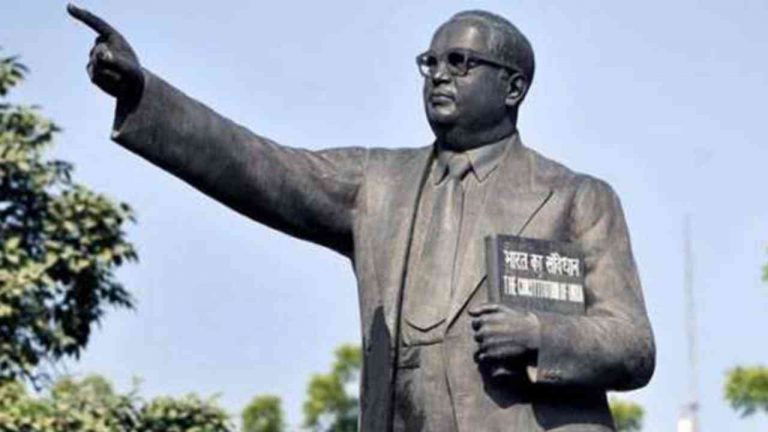
In modern India, his likeness is everywhere. Blue coat, round-frame glasses, with one hand raised in the air, while holding the constitution with the other. But, let us dig deeper. Here is how he saw himself in relation to Hinduism.

“Though, I was born a Hindu, I solemnly assure you that I will not die as a Hindu”

Wow, that’s harsh. And here he is, comparing Hinduism to the ideals of the enlightenment as captured in the slogan of the French Revolution.

“Hinduism is a menace to liberty, equality and fraternity.“

Again, ouch. But, you don’t think that someone of Dr. Ambedkar’s caliber would limit his musings only to Hinduism, would you? So let us find out what he had to say about the concept of brotherhood in Islam.

“The brotherhood of Islam is not the universal brotherhood of man. It is brotherhood of Muslims for Muslims only. There is a fraternity, but its benefit is confined to those within that corporation.“

And here he is, speaking on how a might Muslim might see his place in India.

“the allegiance of a Muslim does not rest on his domicile in the country which is his but on the faith to which he belongs. ….   In other words, Islam can never allow a true Muslim to adopt India as his motherland and regard a Hindu as his kith and kin.”

We have already learned something important about Dr. Ambedkar. He did not believe in appeasing anyone. Even more than that, he did not sugarcoat his words.

Now, the first set of his quotes, on Hinduism, are what you would find in any discourse on social “science” in India. These would be required reading before class, the topic of discussion during the lecture and also the subject of the homework assignment. However, the second set of his quotes, on Islam, are not so easily available. You can only find them in dark corners of the internet, banished from textbooks, classroom discussions, acknowledged only in embarrassed whispers. These quotes had all but vanished from academic discourse before the “internet Hindus” brought them back to life. Sometimes, a bit of Whatsapp education can really unravel stuff they don’t teach you in regular classes.

In fact, there is a particularly craven piece of writing by Anand Teltumbde in Scroll where he argues that Ambedkar considered Islam as the religion of choice for Dalits before he decided against it. The following extract from his article is both sad and funny.

“he appeared to be extolling Islam and thereby gave an impression that Islam might be his choice for conversion, he ended his speech with the famous exhortation of the Buddha in the Mahaparinibbana Sutta – “Appo deepo bhava” (Be your own light). It was not surprising that he ultimately chose Buddhism, ignoring his own rationale that the religious conversion of Dalits should serve their need of existential utility.”

I can understand the author’s bitter disappointment here, as well as his emotional outburst. But don’t you think it is a bit much to accuse Dr. Ambedkar of “ignoring his own rationale”? In fact, Ambedkar explained his reasons for choosing Buddhism over any other religion, in these words:

“I will choose only the least harmful way for the country. And that is the greatest benefit I am conferring on the country by embracing Buddhism; for Buddhism is a part and parcel of Bharatiya culture. I have taken care that my conversion will not harm the tradition of the culture and history of this land.”

Sharp and clear. Dear Anand Teltumbde, you may now cry a river.

Anyway, that was just an example of how modern liberal intellectuals force themselves to think. Let us address the bigger question. What would Dr. Ambedkar say about Hindu society and about Muslim society today?

Dr. Ambedkar spoke of the annihilation of caste. He wrote a book about it. Have we, in modern India, managed to annihilate caste? No, we have not. Have we Hindus managed to mitigate some of the worst atrocities of the caste system and taken several steps towards a more just society? Undoubtedly, yes. The system of caste based reservation in government jobs, college admissions and in elections in India is the most comprehensive social justice program implemented anywhere in the world. And the real churning in Hindu society is much bigger than what has been enforced by law.

There is no better way to see this evolution than in the politics. Few people today would realize that the “Pandit” in “Pandit Nehru” had nothing to do with a perception of him being a learned individual. Rather, it was a caste honorific commonly applied to Brahmins at the time. Those days are clearly behind us. Even though the Congress party has stressed Rahul Gandhi’s “janeudhari” status, I think any attempt to label him as “Pandit Rahul Gandhi” would be universally mocked.

Put your finger on 1947 and trace the political history of India since then. The political emancipation of Dalits does not begin until the late 1980s. Until then, we have an India consolidated under the hereditary Brahmin leadership of the Congress. This leadership is modern in speech and feudal in spirit, passing seamlessly from father to daughter to son. Then, the fabric begins to tear and two distinct strands emerge. One is Mandal, which treats social justice issue as the main issue of identity. The other is Hindutva, the so called ‘Kamandal,’ whose priorities lie with building a united Hindu voting bloc.

In the stale air of social science classrooms, these two forces are still at war today. Outside, the war has ended long ago. India now has an OBC Prime Minister, who happens to represent in particular the ancient city of Varanasi. Across India, caste based parties are either losing relevance or reinventing themselves around other issues. The downfall of the BSP is the biggest example of this phenomenon. The Mandal parties, instead of opposing the Mandir, have all made peace with it. They know which way people are going. Even the cheerleaders of the RJD in recent Bihar elections noted the absence of caste in the election. Tejashwi Yadav did not even mention it himself. When caste stops being an issue in Bihar, what is left?

Indeed, the BJP, once labeled an upper caste party, now challenges Indian liberalism in the latter’s fortress of Bengal. The mainstay of the BJP is not the upper caste vote, but Dalits and tribals across the state. The politics reflects the change in fundamentals of Hindu society. Do you think Dr. Ambedkar would not have noticed this if he were around today?

Of course, it is not just Hindu society that can evolve. The Muslim society can evolve as well. But, has it?

At the time when the Hindu code bill was introduced, it faced opposition from conservative elements. But the fact is that the bill did pass and was implemented. Over the years, Hindu personal law has been modernized further and further. With possible exception of some obscure provisions, we have now achieved a law that treats everyone equally. This would not have been possible without change in Hindu society itself.

Did Muslim personal law keep up? Not at all. Even today, a Muslim woman’s inheritance is only half that of a man. Muslim women have virtually no rights on divorce. Their minimum age for marriage is still not fixed by law and Muslim girls as young as 13 or 14 can be legally married. In fact, until the anti-Triple Talaq Bill was passed in 2019, I wonder if there is a single example of Muslim personal law being modernized since 1947. And when the first reform was passed in 2019, it was done by the BJP, which gets a very tiny fraction of Muslim votes. So, where is the impetus within Muslim society for progressive change?

Indeed, Dr. Ambedkar recognized this distinction himself when he wrote thus:

“The existence of these evils among the Muslims is distressing enough. But far more distressing is the fact that there is no organized movement of social reform among the Musalmans of India on a scale sufficient to bring about their eradication. The Hindus have their social evils. But there is this relieving feature about them—namely, that some of them are conscious of their existence and a few of them are actively agitating for their removal. The Muslims, on the other hand, do not realize that they are evils and consequently do not agitate for their removal. Indeed, they oppose any change in their existing practices.”

When Dr. Ambedkar wrote these lines, a “few” Hindus were agitating for social reform. They faced opposition, but ultimately people listened to their ideas. The values of the few became those of the many and ultimately, universal values. Even relatively innocuous cultural practices such as sindoor or kanyadaan are now being seriously challenged in contemporary society, on grounds that they may be based in regressive thought. Is there a similar challenge to the idea behind the burqa? Instead, we have utter surrender, where the allegedly enlightened are trying to claim the burqa as the epitome of feminism.

And what about the prejudices prevalent in Muslim society against non-Muslims, especially those who worship idols? Dr. Ambedkar had also referred to this, remember?

“The realist must take note of the fact that the Musalmans look upon the Hindus as Kaffirs, who deserves more to be exterminated than protected. The realist must take note of the fact that while the Musalman accepts the European as his superior, he looks upon the Hindu as his inferior.”

How far have we come in getting rid of this prejudice? Well, last time I checked, Indian liberals were using destruction of idols as a metaphor for fighting evil and singing “Bas naam rahega … ka.” Suffice to say, therefore, that we have not come very far.

What do you think Dr. Ambedkar would say today about the relative performance of Hindu and Muslim society in the years since 1947? Can you be as frank and clear in stating your thoughts as he was? Close your eyes, picture yourself putting your hand on the Constitution and then speak. No vague justifications. No excuses. Tell me the truth.
Indonesia: Man almost marries the wrong woman after Google Maps guides him to the wrong location

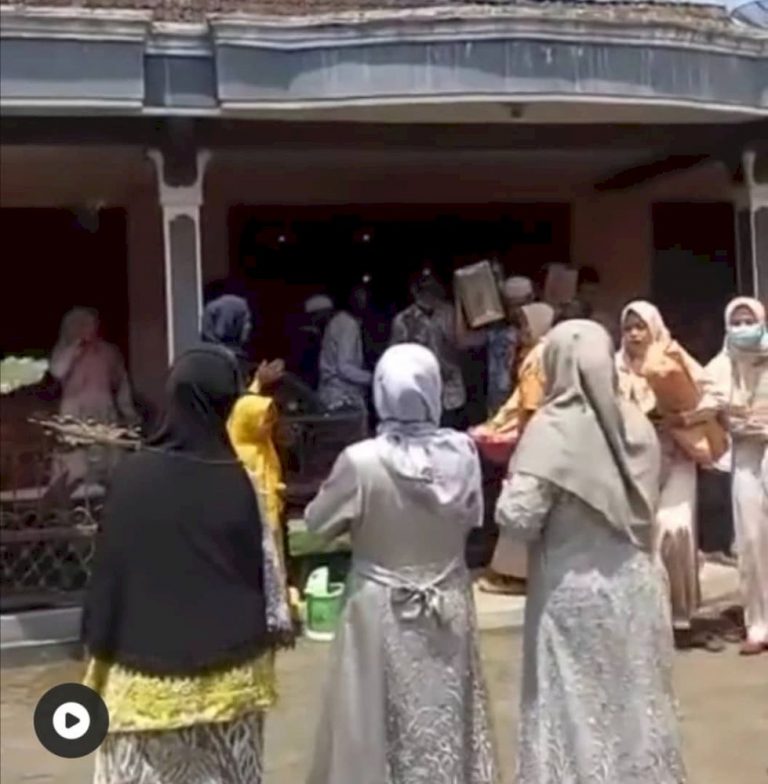
In an extremely bizarre situation, an Indonesian man almost married the wrong woman after being led to the wrong location by the navigational app Google Maps.

According to a local Indonesian news portal, two ceremonies were to be organized in the same village on the same day, a wedding and an engagement, which was the root cause of this unique mix-up.

According to the 27-year old bride Ulfa, at first, she was unaware the man and his entourage had entered the wrong house, as she was occupied with a make-up artist. This led to the unsuspecting family of the bride exchanging wedding gifts with the man and his entourage.

A video of the even has gone viral on social media, where the groom’s side can be returning from the wrong bride Ulfa’s house in a very awkward position, with the gifts and other items they had carried for the ceremony.

Luckily, one member of the group from the groom’s side realized that they had entered the wrong house.

“They said they were led to the house by Google Maps,” said Ulfa, adding that before leaving, the man and his entourage sincerely apologized for the confusion.

Coincidentally, Ulfa’s actual fiancé and his entourage were late to the ceremony as they had to stop and look for a toilet.

“I was shocked when I saw the man’s group as I did not know any of them,” Ulfa said, clarifying that her fiance was from the Kendal Regency in Central Java while the man was from Pemalang.

In a show of kindness, Ulfa’s family later led the lost man and his entourage to the right house.

Covid panic: Govt cancels Class 10 Board exams, students to be given marks as per Board criteria

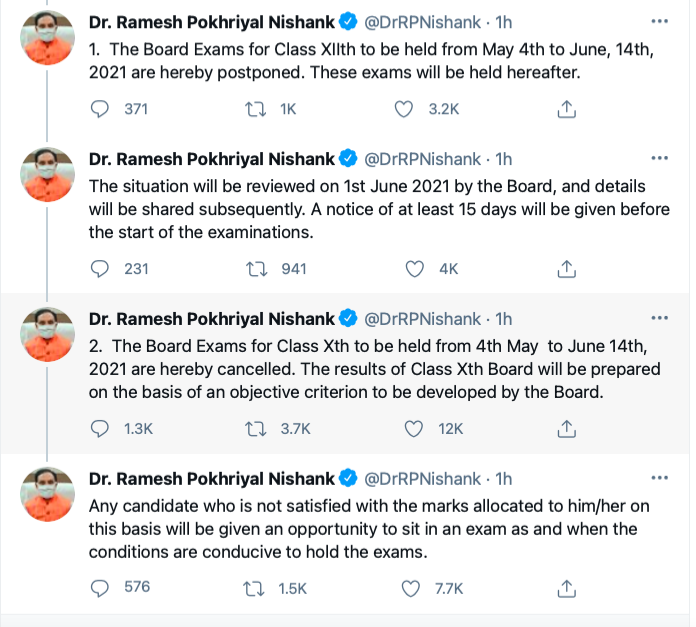
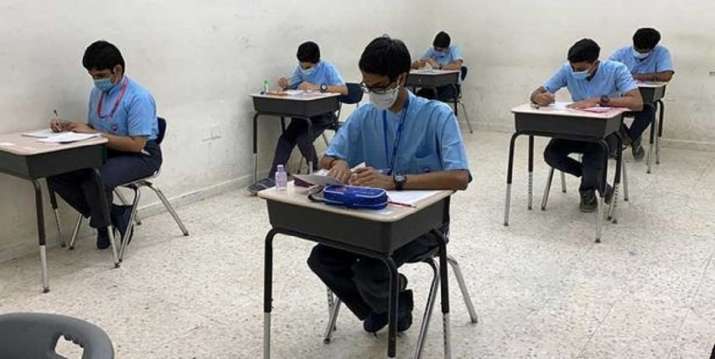
Education Minister Ramesh Pokhriyal Nishank has just announced the cancellation of CBSE Class 10 board exams this year and the postponement of Class 12 exams till May 30. As per reports, Class 10 students will be promoted on the basis of an internal assessment. Nishank also informed that the board will issue a revised schedule for Class 12th board exams on June 1, 2021.

The decision was taken in a high-level meeting chaired by Prime Minister Narendra Modi today in the presence of Education Minister Ramesh Pokhriyal, Education Secretary, and other government officials.

Class 10 students to be awarded marks as per criteria decided by the Board: Education Minister

In a series of tweets, Education Minister Nishank informed that the results of Class Xth Board will be prepared on the basis of an objective criterion to be developed by the Board. Any candidate who is not satisfied with the marks allocated to him/her on this basis will be given an opportunity to sit in an exam as and when the conditions are conducive to hold the exams.

Tweet by Nishank

The Education Minister informed that for the class 12th Board exams, the government will review the situation on June 1 and details will be shared accordingly. He added that students will be notified at least 15 days ahead of the exam dates.

China plans to build a super dam on the Brahmaputra river, rises security and environmental concerns in Tibet and India

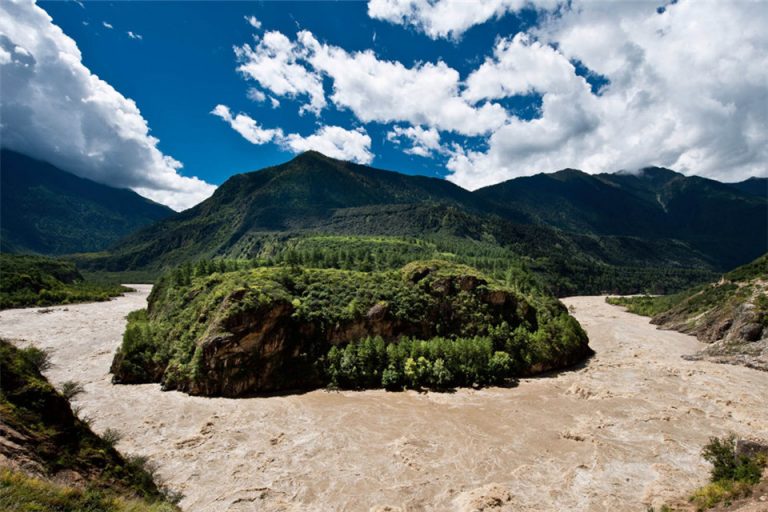
China is planning to build a super dam on the Brahmaputra River in Tibet which will dwarf the Three Gorges Dam, the largest hydroelectric power project in the world. The dam is expected to produce triple the amount of electricity that the Three Gorges Dam produces at 300 billion kilowatts. This potential project has raised serious political concerns for India, on top of the grave environmental concerns.

The proposed structure will be laid over the Brahmaputra River, just before the river leaves the Himalayas and enters India, at a height of 4900 feet, across the world’s deepest and longest canyon. It is located close to the Indo-Tibet border at Arunachal Pradesh.

The proposed project is mentioned in China’s 14th Five-Year Plan, which was released in March at an annual congress of China’s top leaders and lawmakers. However, the plan does not have any details attached to it yet, including timeframe or budget.

The Brahmaputra River is known as the Yarlung Tsangpo in Tibet. The river already has two other projects built on it, with six more either in the planning stages or under construction. However, the super dam, which would be the largest hydroelectric power plant in the world when constructed, would be a much more massive project in scale.

The Project’s history

In October 2020, the local Tibetan government under China signed a “strategic cooperation agreement” with PowerChina, a specialized construction company with regard to hydroelectric projects.

After a month, the head of PowerChina, Yan Zhiyong, partially revealed the project ‘Medog Dam’ to the youth wing of China’s ruling party, the Communist Youth League.

Sharing his enthusiasm about “the world’s richest region in terms of hydroelectric resources”, Yan Zhiyong explained that the super dam would draw its electric power from the huge drop of the river at this particular section.

Serious concerns raised regarding the project

The proposed project has raised some serious political concerns for India, with analysts noting that the Chinese Communist Party is in a prime position to control the water supply of much of the Indian subcontinent.

Brahma Chellaney, an acknowledged geo-strategist writes, “Water wars are a key component of such warfare because they allow China to leverage its upstream Tibet-centred power over the most essential natural resource.”

The Brahmaputra mega-dam, which is to be built in a seismically active area vulnerable to earthquakes, will be a “ticking water bomb” for communities residing downstream, warns Chellaney.

“The expanding water war is clearly part of China’s integrated, multidimensional strategy against India, which seeks to employ all available means short of open war. Its unconventional war is profoundly impacting every core Indian interest,” Mr. Chellaney wrote.

There are also grave environmental concerns associated with this project, partly because of the legacy of the Three Gorges Dam which displaced 1.4 million inhabitants upstream.

“Building a dam the size of the super-dam is likely a really bad idea for many reasons,” said Brian Eyler, a program director at the Stimson Center, a U.S. think tank.

In addition to being known for its seismic activity, the area also contains unique biodiversity which would be severely threatened by the project. The dam would block the migration of fish and sediment flow which makes the soil fertile during seasonal floods downstream, Eyler said.

Tempa Gyaltsen Zamlha, an environmental policy expert at the Tibet Policy Institute, noted, “We have a very rich Tibetan cultural heritage in those areas, and any dam construction would cause ecological destruction, submergence of parts of that region.”

“Many local residents would be forced to leave their ancestral homes,” he said, adding that the project will encourage migration of Han Chinese workers that “gradually becomes a permanent settlement”, further eroding the historic and ethnic demography of Tibet.

In reaction to this super dam idea, India has floated the prospect of building another dam downstream on the Brahmaputra River in order tp shore up its own water reserves.

COVID-19 outbreak: Maharashtra to get 100 MT oxygen from Ambani owned Reliance’s Jamnagar plant

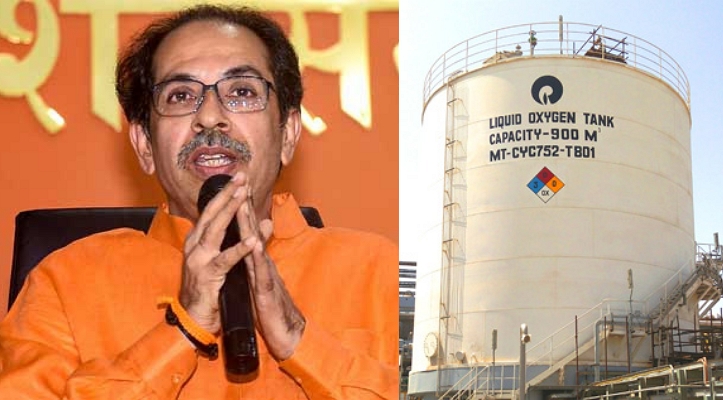
Amidst rampaging coronavirus outbreak in Maharashtra and worsening shortages of hospital beds and medical supplies including oxygen, the state is all set to receive 100 metric tonnes of oxygen from the Reliance Industries’ Jamnagar plant in Gujarat, urban development minister Eknath Shinde said on Tuesday.

The announcement was made by Shinde following a review meeting at the Linde plant in Taloja in Navi Mumbai over the growing demand of oxygen in the metropolitan region and neighbouring Pune.

The Mukesh Ambani controlled Jamnagar refinery in Gujarat has large air separation units for the production of gaseous oxygen. The plant requires massive streams of oxygen for its petroleum coke and coal gasification facilities.

Maharashtra is facing an acute shortage of oxygen because of the rising number of COVID-19 cases. Many people who are severely affected by the coronavirus have dangerously low levels of oxygen and are required to administer with supplemental oxygen.

“The rate of oxygen consumption in the state is increasing as mentioned by chief minister Uddhav Thackeray. We have now made some temporary arrangements wherein we will get 100 MT of oxygen from the Reliance plant in Gujarat,” said Shinde.

Parallelly, a network of nitrogen supplying tankers is used to pick up the slack to ensure there is no logistical issue. All the tankers will be granted sufficient police protection and provided with priority on the roads, Shinde said.

The urban development minister also said that all district collectors have been asked to analyse demand and ensure adequate supply of oxygen based on their requirements.

Besides, instructions are also issued to the administration to make sure that private establishments that supply oxygen to hospitals are asked to augment their capacities in the coming days. In addition, all tankers used to plying nitrogen will be used to transport oxygen from the plants to the hospitals.

Uddhav Thackeray requests PM Modi to provide Air Force assistance to airlift oxygen from neighbouring states

Shinde’s comment came on the day when Maharashtra chief minister Uddhav Thackeray appealed to Prime Minister Modi to help the state in tackling the growing coronavirus crisis that has overwhelmed the state’s healthcare system and depleted its oxygen reserves for the treatment of people acutely afflicted with COVID-19.

In his press conference on Tuesday, Thackeray declared the imposition of stricter COVID rules to contain the spread of the virus. He also requested the Centre to provide Air Force assistance for the supply of oxygen. During the address, he said, I will speak to the Prime Minister to request him to provide us IAF assistance in the supply of oxygen for medical use from nearby states.

Bangladesh: Hindu homes and temple attacked in Satkhira district over harassment of minor girl

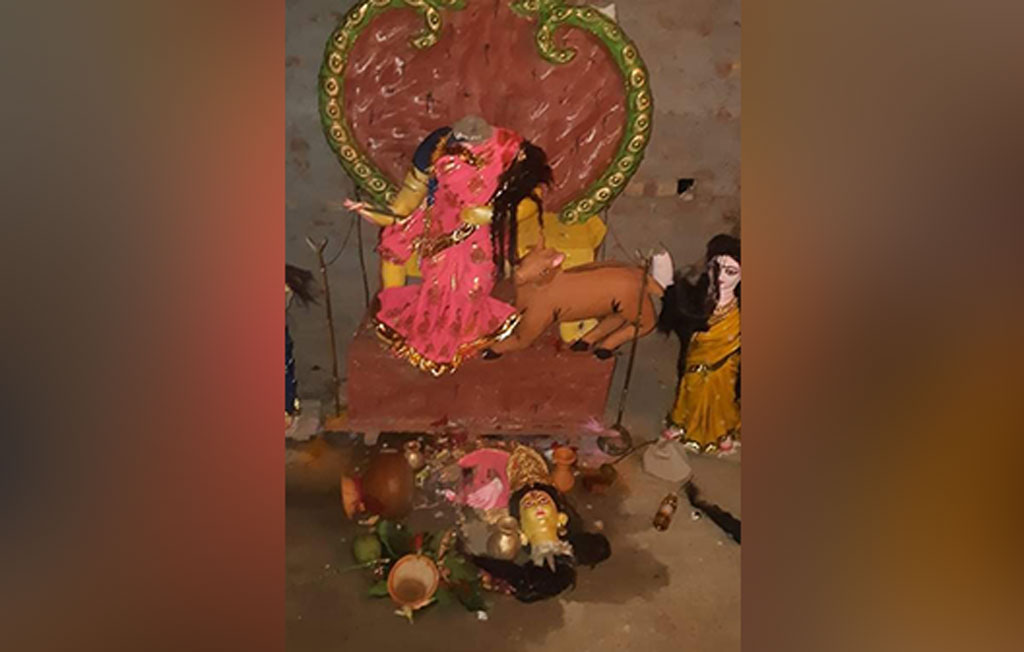
Multiple Hindu homes and a temple were attacked by assailants on Tuesday night in Fultala village of Satkhria district in Bangladesh. Several Hindu homes were looted and three idols of a local village temple were desecrated.

Pintu Baulia, one of the victims, said that assailants ambushed their village at around 8 pm on Tuesday and ransacked the entire village. “They vandalized idols at the local temple, looted our homes and injured at least 10 members of my community,” he added.

Desecrated idols at a local temple in Fultala village. Image Source: Dhaka Tribune

The attack was a result of a dispute between Pallab Mandal, son of Shripad Mandal of Uttar Kadamtala village who occasionally harassed the daughter of Jatin Baulia, an eighth-grade schoolgirl at a local School. This issue resulted in a dispute between the two parties, leading to the attack on Tuesday night.

Govinda Baulia, the brother of the victim’s father said the assailants broke into his home and even tried to abduct his niece. “Eight to ten members of my family, including my brother Jatin Baulia, were injured in the attack,” he informed.

Photographs posted by Dhaka Tribune showed that the idol at the local temple in the Fultala village was beheaded during the attack.

Police officials from Shyamnagar police station visited the spot following the incident.

Officer-in-Charge (OC) Nazmul Huda of Shyamnagar police station informed, “The situation is under control. The assistant superintendent of police (Kaliganj circle) has visited the spot. We are making all necessary arrangements to bring those involved in the attack under the law as soon as possible.”

Hindu village attacked over a Facebook post

Earlier, over 80 houses of Hindus in the village of Sunamganj, Bangladesh were attacked and vandalized by the supporters of Islamist group Hefazat-e-Islam in March over an alleged Facebook video.

A young Hindu man from Noagaon, Shalla Upazila was enraged by the Joint-Secretary General of Islamist group Hefazat-e-Islam Mamunul Haque’s speech and made a Facebook post criticizing it.

Upon discovering the post, Hefazat leaders staged a protest and vandalized over 80 houses of the village. Some villagers had to the flee their homes fearing for life.

The Hindu boy was instead taken into custody by the police for ‘insulting’ Mawlana Mamunul Haque on Facebook.

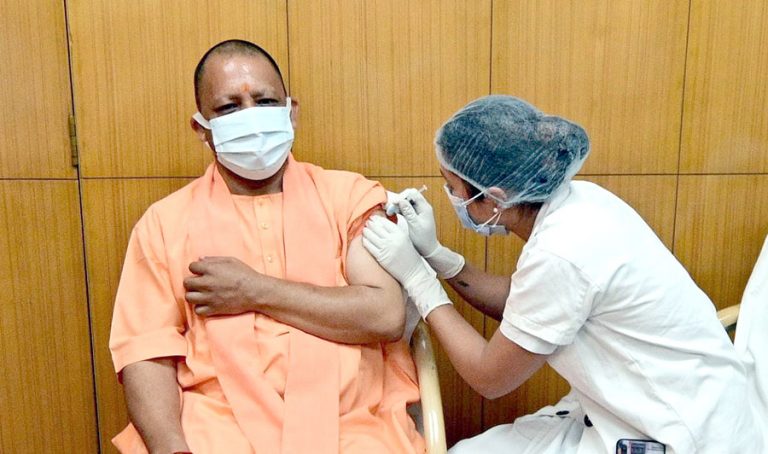
Uttar Pradesh: Chief Minister Yogi Adityanath tests positive for coronavirus

Uttar Pradesh Chief Minister Yogi Adityanath tests positive for Chinese coronavirus.

Taking to Twitter, he informed that after noticing initial symptoms, he got himself tested and the tests came back positive. He is currently in self-isolation and undergoing treatment. “State administration work is going on as usual. I urge everyone who came in contact with me to get tested,” he said.

He had earlier isolated himself after coming in contact with Covid-19 positive officers with the CMO. Recently, he had taken first dose of coronavirus vaccine.

NDTV journalist claims a Dalit man was made to lick his saliva for refusing to campaign in panchayat elections, Bihar police deny

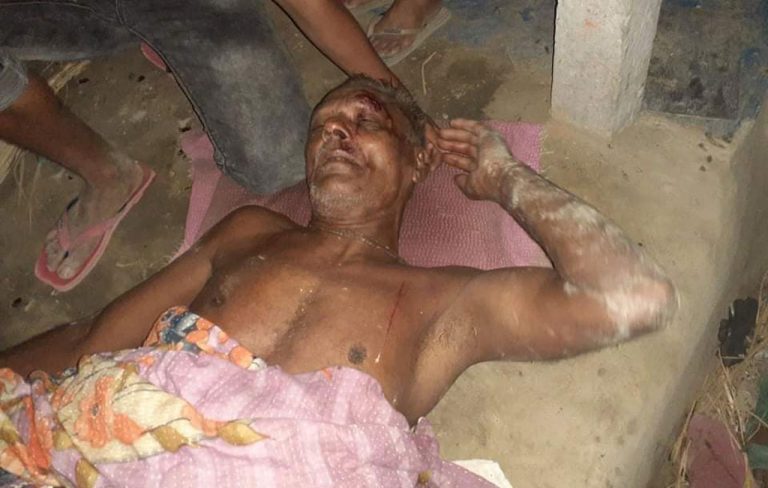
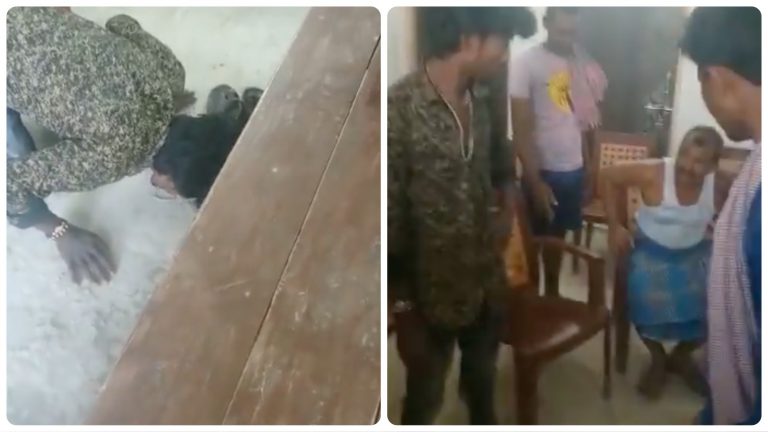
A video of a man being forced to suffer indignities and made to lick his saliva by a group of men surrounding him is going viral on the internet. In the video, the men surrounding the victim also force him to lick their saliva. The victim is then made to hold his ears and do sit-ups and asked to apologise that he would not commit such mistakes again.

The video was shared by an NDTV journalist who alleged that a Dalit man was meted out this treatment by some members of the Saamanti Community for wanting to contest the village Panchayat elections in Gaya.

He was confronted by family of a woman he had eloped with: Bihar police

The Bihar Police took cognisance of the video and arrested the culprits responsible for the incident. However, the police claimed that the man was not made to lick his saliva for panchayat elections and denied the caste angle, as alleged by the NDTV journalist.

“The man had eloped with a woman of his community. After his return, he was taken to panchayat where the incident happened. Six people have been arrested,” SSP Aditya Kumar said.

Those arrested include the father and the brother of the woman. A case has been registered under relevant sections of the SC/ST act and raids are being conducted to arrest the remaining accused, Kumar said.

Man says he was beaten, made to drink urine and lick saliva because he refused to work for the upcoming elections

However, the NDTV journalist shared another video of the victim in which he claimed that he was forced to lick his saliva because he had refused the village head’s demand of campaigning for the upcoming elections.

“The head of the village asked to me visit his home. When I went there, he asked me to campaign for the upcoming elections. I turned down his request citing my job as a daily wage labourer. But he could not take no for an answer and had me thrashed there. Then, he made me drink urine. I complied out of fear of another onslaught by his men. Later, he asked me to spit and lick, and I did that as well,” the man said.

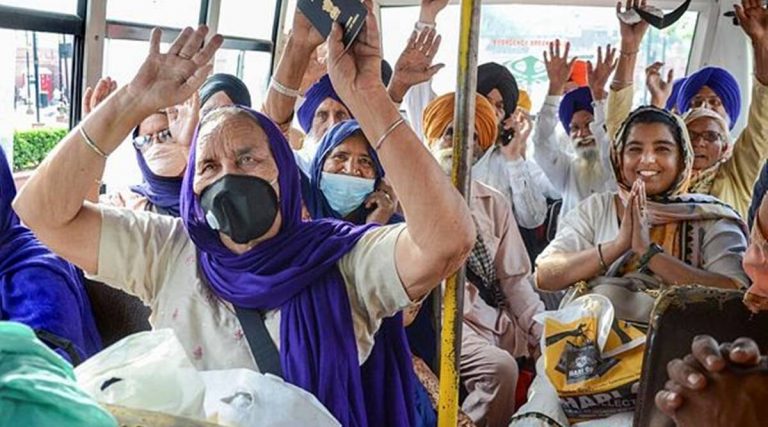
Over 800 Sikh pilgrims from India stranded in Lahore for a day amid violent protests in Pakistan over the arrest of TLP leader

A Sikh Jatha of 818 pilgrims was briefly stranded in Lahore on Monday when their visit to Gurdwara Panja Sahib on the occasion of Baisakhi coincided with intense violence in Pakistan. With violent protests in several cities, including Lahore, Islamabad and Karachi, by Tehreek-i-Labbaik Pakistan (TLP) against the arrest of the group’s chief Allama Saad Hussain Rizvi, the group had to halt in Lahore till the situation was brought under control.

Gurdev Singh, a pilgrim, informed, “We spent the whole day in buses, though arrangements for food and water were made for us. After Pakistan’s police and security forces got the roads cleared, we were taken to Gurdwara Dehra Sahib in Lahore at 11.30 pm on Monday.”

According to the original plan, the Sikh pilgrims were to reach Gurdwara Panja Sahib at Hasan Abdal on Monday directly to celebrate Baisakhi. However they were forced to stay in Lahore on Monday as the roads were closed. The local administration arranged their accommodation and food in Lahore.

The group then proceeded for the city of Hasan Abdal on Tuesday, where they were to join the celebrations at the Gurdwara Panja Sahib. The jatha is scheduled to visit gurdwaras at several locations, including Gurdwara Janamsthan at Nankana Sahib, after celebrating Baisakhi at Hasan Abdal.

“There are concerns that the Indian pilgrims could be stranded in Hasan Abdal if the protests become more violent. The protests have already disrupted the movement of vehicles between cities such as Lahore, Islamabad and Rawalpindi,” informed a person familiar with developments on the condition of anonymity.

Gurdwara Panja Sahib at Hasan Abdal, is about 350 km from Lahore where the festival of Baisakhi will be celebrated today. Hasan Abdal is of religious importance to the Sikhs as it is believed to have the handprint of Guru Nanak, the founder of Sikhism.

SGPC cries foul

The Shiromani Gurdwara Parbandhak Committee (SGPC) had cried foul on being denied permission by the Union government to a special group to visit Pakistan on the occasion of 100th anniversary of Nankana Sahib massacre in February this year. Akal Takht Jathedar Giani Harpreet Singh had alleged that the pilgrims were denied permission due to the SGPC’s active support to ongoing farmers’ protests over farm laws.

No Sikh jatha could visit Pakistan on the occasion of Baisakhi last year due to the outbreak of coronavirus pandemic. The jatha however, received permission from the Union government this year for visiting the 16th Century gurdwara in Punjab province.

Violence in Pakistan

Violent protests broke out in several cities of Pakistan after security forces arrested Tehreek-i-Labbaik Pakistan (TLP) leader Saad Hussain Rizvi. TLP is a radical Islamist party that was founded in 2015 to prevent any changes to the existing blasphemy law in the country. 

As per reports, the arrest of Saad Hussain came at the backdrop of the party’s ultimatum to the Imran Khan government to fulfil its four demands before the deadline of April 20. The demands were originally made in November last year, following the beheading of 46-year-old Samuel Paty by a teenage Jihadi terrorist in France and the subsequent criticism of Islamists by French President Emmanuel Macron. TLP also took offence to the display of caricatures of Prophet Muhammad in public in one city in France.

A TLP spokesperson, Tayyab Rizvi, vowed, “They (Protests) will continue till the French ambassador is deported.”

Rajasthan: Coronavirus vaccines stolen from Jaipur hospital

In what comes as a shocking development, as many as 320 doses of Chinese coronavirus vaccines have been stolen from a hospital in Jaipur, Rajasthan.

As per a report by News18India, a case has been registered against unknown persons and the vaccine theft will be investigated. Whether the vaccines were stolen to be sold in the black market will also be probed. All vaccine shots taken are through registered centres and need to be recorded. Hence, even if one uses the vaccine jabs, how will they get the data, it cannot be known.

Two days back, it was reported that Jaipur was allegedly facing shortage of vaccines.