Home Blog Page 4519

China claims to have achieved goal of ‘zero poverty’ but the truth is a lot more complicated

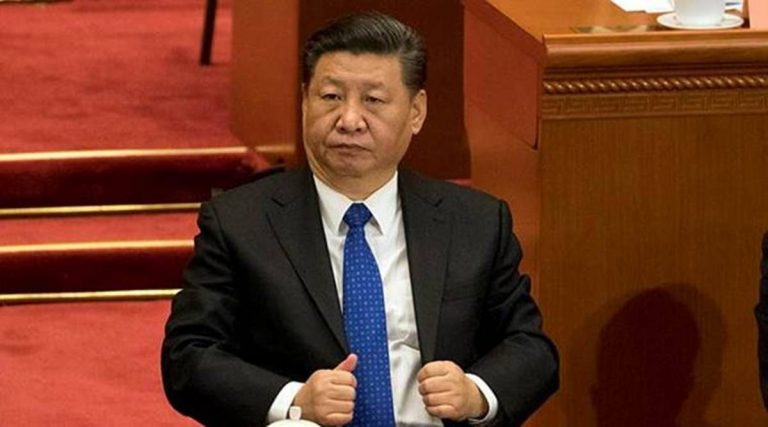
China recently declared that the National Poverty Alleviation Summary and Commendation Conference has been a success. According to China, it has successfully lifted 98.99 million people living in poverty in the country and achieve the goal of “zero poverty”.

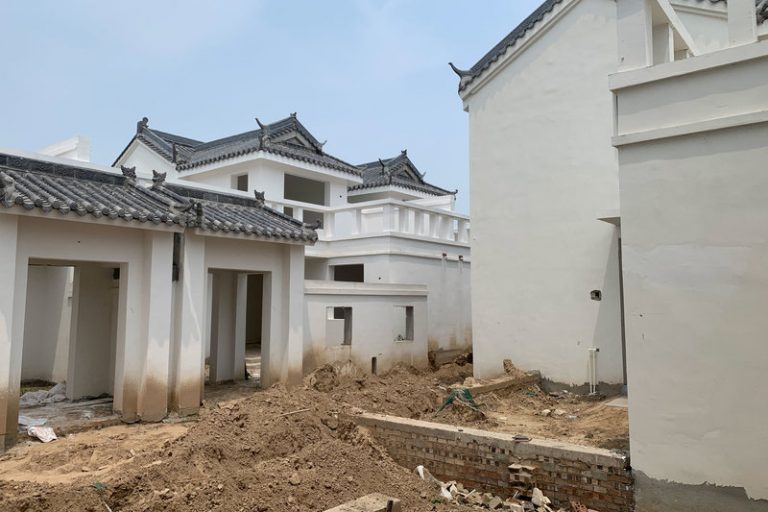
The announcement was accompanied by a media blitzkrieg and much fanfare. However, the truth is a little more complicated than it seems. The major focus of the government project was relocating millions from villages into cities by 2020.

However, the well-established cities were already overburdened and therefore, the population was relocated into newly constructed government housing. The government’s actions were driven by the belief that urban life is accompanied by higher standards of living and drives domestic consumption.

As it so happens, the relocation was not always voluntary and often, coerced. NPR reported in 2020 that villagers have alleged that they were coerced into signing away their farm homes without adequate compensation. To make matters worse, the high-rise apartments they are being relocated to “are either too far from their fields, too expensive or ill-suited for their needs as farmers.”

“Our leaders have been distanced from us regular people at the bottom. They do not know our basic needs. They are completely cut off from us,” one such villager was quoted as saying. Many had been forced to live in government-provided shacks while waiting for new houses to be built.

“The government does not care whether you live or die. They only care about whether you sign an agreement to let them demolish your home,” said another villager. Even after being relocated to apartments with much better amenities, the people had difficulty finding work and struggled to afford the rising costs. “Of course, the house is good. But if we can’t find work, it’ll be difficult here,” a villager said.

Nevertheless, Communist Party officials are proud of their work. “We plucked out the people’s roots of poverty all at once,” secretary Cai Hongmin said. Cai insisted that Lianghekou’s villagers, who had been relocated a short distance away, had leased their land to a hotel developer who would share the dividends with them.

“We are fulfilling many dreams,” Cai said. “The China dream, the poverty alleviation dream, the dream of happiness for hotel guests, the villagers’ dream of multichannel incomes.” Party officials claimed that the villagers were happy because they had turned from “from farmers to shareholders.”

The Chinese government spent significant funds towards poverty alleviation. Between 2016-2020, the party spent $700 billion and that does not include the large donations by government institutions. However, experts worry that the model is unsustainable in the long run.

The lack of jobs in the new settlements continue to remain a matter of concern for the inhabitants. “Life here is much better than my hometown, but now I need money to pay for my food,” one of them told NPR. “Before, we just ate what we grew.”

Such concerns can often lead to social unrest, as they have in the past. Villagers often display little interest in moving to newer facilities of their own volition, leading to the use of force on certain occasions. Such incidents sometimes tend to flare up, as it did in Wukan.

There are other structural concerns with the project as well. The New York Times reported, “While the poverty alleviation program has helped millions of poor people, critics point to the campaign’s rigid definitions. The program assists people classified as extremely poor at some point from 2014 to 2016, without adding others who may have fallen on hard times since then. It also does very little to help poor people in big cities where wages are higher but workers must pay far more for food and rent.”

Furthermore, Foreign Policy reported in 2018, “In August 2017, the International Monetary Fund warned that China’s aggressive debt-driven growth strategy was putting the country on a “dangerous trajectory.” From 2000 to 2014, Chinese debt soared from $2.1 trillion to $28.2 trillion, and it is projected to rise to nearly 300 percent of GDP by 2022.”

“The fate of China’s war on poverty rests on shaky ground. Moving 70 million people out of poverty will require a complete overhaul of its entire social welfare system as well as trillions in new debt. This is a rocky path, even if the government avoids plunging off the cliff into economic crisis. But however the cost is managed, China’s farmers will have to suffer the consequences of the government’s plans, as they always have,” the report added.

Thus, while China claims to have eradicated poverty, the reality is that millions have been forced to relocate to places where they have little job security and struggling to meet the costs of the higher living standards. In addition, they have very little of a safety net to fall back to with their land signed away.
Raped for 16 months, coerced to kill her son, looted Rs 45 lakhs: Read how ‘Roshan’ baba alias Sajid Siddiqui exploited a lady in Rajasthan

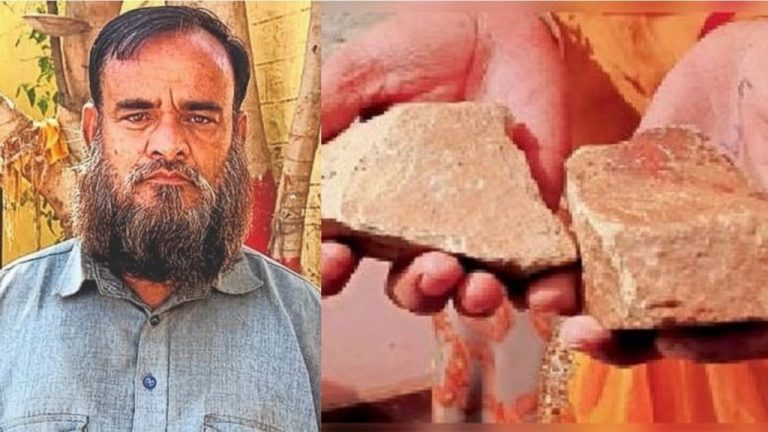
Rajasthan police have arrested one Maulvi ‘Roshan’ baba alias Sajid Siddiqui, his disciples Arif and Raju and one Wasil Qadri for allegedly exploiting a woman in Auwa village in the Marwar Junction tehsil of Pali district in Rajasthan. The main accused Sajid Siddiqui, along with his accomplice allegedly raped the woman for over 16 months. Siddiqui has also been accused of plundering Rs 45 lakhs for the woman and provoking her of killing her 10-year-old son.

It is pertinent to note here that there are contradicting reports regarding the amount of money looted by the accused. While some media reports said that the looted amount was Rs 45 lakhs, some mention that the the accused fleeced the victim out of Rs 35 lakhs.

Rajasthan’s Siriyari police lodged an FIR against the four accused based on the complaint filed by the lady’s husband. While Siddiqui and his accomplice Wasil Qadri have been taken into remand following court orders, Siddiqui’s disciples Arif and Raju have been sent to jail.

According to reports, ‘Roshan’ baba alias Sajid Siddiqui tricked the woman into believing that if she sacrificed her 10-year-old son, not only all the stone lying in her house would convert into gold but her son would also come back to her eventually. He had convinced her that by following his instructions she could acquire money to a tune of Rs 3 crores 20 lakhs.

The woman confessed that Sajid Siddiqui and his accomplice regularly visited her house in Auwa village, where she lived alone with her son as her husband worked elsewhere in South India. She said that she would fall unconscious after Siddiqui and his accomplice cast a spell on her. After which, they use to strip her naked and take turns to rape her.

The woman furthered that when she protested after regaining consciousness, Sajid threatened to kill her with his pistol. The imposter had also introduced one of his associates as a crime inspector to the victim and told the latter that his inspector friend would arrest her if she reported the matter to anyone.

Recently, when the victim’s husband returned to his home in Rajasthan for a few days, she broke down and narrated her horrifying ordeal to him, after which the latter lodged a complaint against ‘Roshan’ baba and his associates at the Siriyari police station. Deputy Superintendent of Police, Sojat, Dr Hemant Jakhar, has been handed over the investigation into the case.

This is how ‘Roshan’ baba alias Sajid Siddiqui exploited a woman in Rajasthan

In what transpired, Sajid Siddiqui initially trapped the victim by luring her with promises to make money for her easily and quickly. He convinced her that he would help her procure the underground hidden treasure from her house which would make her rich overnight. To deceive the victim, first Sajid aka Roshan Baba along with his accomplice dug the victim’s room without her knowledge. They then placed a sack full of stones there.

To fool the woman, the accused chemically treated the stones with some solution, which gave the stones a faint gold-like colour, so whenever she opened the sack, she would be convinced that the stones are gradually turning into gold.

Initially, the victim was so confused, that she went with the flow, but when the accused asked her to sacrifice her son, she put her foot down. Sajid tirelessly kept trying to convince her that if she follows his advice then the stones would eventually convert into gold, selling which could easily get her at least a sum of Rs 3 crore 20 lakhs.

When still the victim was not convinced enough, ‘Roshan’ baba started video calling her up from a dark, eerie room, which he had set up in his associated Wasil Qadri’s house, to perform his black magic. The dark and dingy room, which he called Jannat Mahal, gave out extremely spooky vibes. It had light effects to accentuate the eerie atmosphere of the room. The accused called up the victim from this room at night and tried to convince her by saying: “I reached Jannat and then I came back. Your son will also die and return.”

According to reports, Sajid Siddiqui aka ‘Roshan’ Baba was a resident of Salkhuan in Saharsa district before coming to Auwa. He came to Auwa in 2010 and for the next four years, he worked as a cleric in a mosque in Siriyari, but due to his ill deeds, he was ostracised from the mosque. After this Sajid came in contact with Wasil Qadri and started living with him in his house.

Owner of the explosive-laden car found outside Antilia was in touch with Mumbai Police officer Sachin Vaze: Claims Devendra Fadnavis

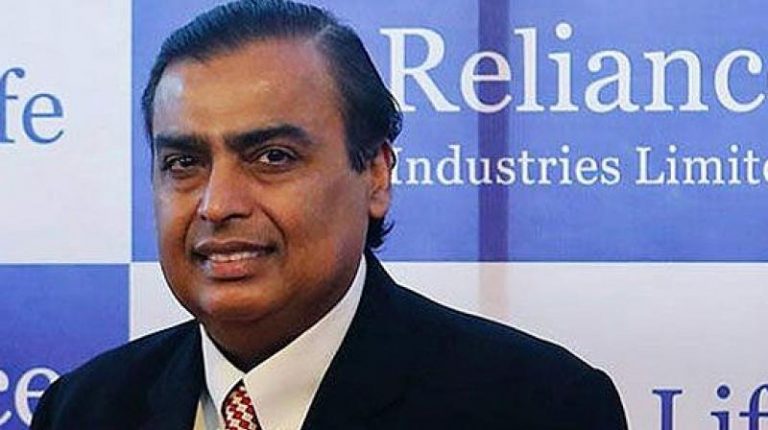
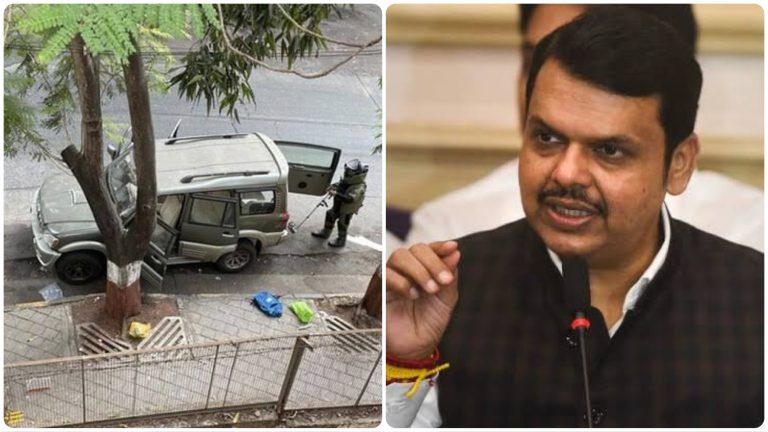
The leader of the opposition in Maharashtra, Devendra Fadnavis, today made a series of sensational claims related to the Antilia bomb scare while speaking in the Maharashtra Vidhan Sabha. Speaking in the assembly, Fadnavis alleged that the owner of the Scorpio car, which was used to plant gelatin sticks and a threat letter outside Mukesh Ambani’s residence in Mumbai, was in touch with a mobile phone number that is registered in the name of Mumbai Police officer and ‘encounter specialist’ Sachin Vaze.

The car was owned by Mansukh Hiren, who had alleged that his car was stolen from Mulund-Airoli link road. Hiren had also filed a police complaint about the missing car. Hiren was found dead in a creek in Mumbai today.

“The person who had lodged a missing complaint of the car that was found outside Ambani’s house had made some calls to a number and had received phone calls from that number. When investigated, the number was found to be registered to Mumbai Police officer Sachin Vaze. The first conversation between the two took place on June 8. The records show another call was made on July 24. Similarly, many such calls have taken place between the two over the last several months,” Fadnavis said.

Before this, Fadnavis also claimed that there were not one but two cars—one Scorpio and one Innova and claimed that both cars came from Thane and had followed the same route and reached the location. He said that while the Scorpio with the explosives was parked near the residence of Mukesh Ambani, the Innova had moved away. Fadnavis has alleged conspiracy behind the attack against Mukesh Ambani, alleging that it could not be a coincidence that the car was stolen from Thane, the route they followed was also from Thane and the IO investigating the case also lived in Thane.

Fuelling the mystery, Fadnavis further added, “Sachin Vaze was the first police officer to reach the spot and then he was appointed as the Investigation Officer (IO). Three days ago, he was removed as the IO and I fail to understand why he was removed.” Fadnavis asked how Vaze reached the spot before the local police.

The car in question was registered to Mansukh Hiren, who had alleged that his car was stolen after it broke down on the Mulund-Airoli link road on February 16. Hiren had said that when his car broke down, he had decided to park the car on the road-side and take a cab to reach his destination. He told the police that when he returned to fetch the car the next day, it was not there. A police complaint of a missing car was filed by him later.

Speaking about the February 16 incident, Fadnavis said, “The owner of the Scorpio which was found outside Ambani’s house had taken an OLA cab to reach Crawford Market in South Mumbai where he met a person. The identity of the person is crucial to solving this case. Since he took an OLA, it could be retrieved who his driver was and he can be questioned if he has seen the person whom Hiren met.”

Citing a series of coincidences in the case, Fadnavis has demanded an NIA inquiry into the matter.

Sachin Vaze denies the claims

Reacting to the claims made by the BJP leader, the police officer denied that he was in touch with Mansukh Hiren. However, he agreed that he knew Hiren, as he is from Thane. “I know Mansukh Hiren as he is also from Thane. I did not meet him recently,” Vaze told India Today. He also claimed that Mansukh Hiren was being harassed. “Mansukh Hiren had actually complained that there are some police officials and reporters who were harassing him. The cops and reporters kept on harassing him. I don’t know anything more,” Sachin Vaze said in an interview with India Today.

He also denied the claim that he was first to reach the spot, saying that several other police officials had reached the spot where the SUV was parked before him.

Accused of custodial death, Sachin Vaze was reinstated by Maha Vikas Aghadi government to probe TRP case against Republic TV

It is pertinent to note that Vaze is the same police officer who was reinstated by the Maha Vikas Aghadi government last year and was entrusted with the responsibility of leading the investigation into the TRP manipulation case against the Republic TV.

Vaze was embroiled in the custodial death case of a 27-year-old software engineer named Khwaja Yunus, who was arrested by the Mumbai Crime Branch-CID on December 25, 2002, under the now-repealed Prevention of Terrorism Act (POTA). Yunus was arrested along with three others in connection with a bomb blast that took place in Mumbai’s Ghatkopar on January 7, 2003. Yunus was seen alive last on January 6, when reportedly he was stripped and assaulted by the police, according to the other accused in the case. The police, in its defence, claimed that Yunus had escaped from a police jeep near Lonavala while being taken to Aurangabad for investigation.

Mansukh Hiren, owner of the car with bombs outside Antilia, found dead

Minutes after Fadnavis made shocking revelations in the Maharashtra Vidhan Sabha assembly, reports of Mansukh Hiren’s death surfaced in the media. Mansukh Hiren allegedly committed suicide by jumping into Kalwa Creek.

Mumbai Police had said earlier that the car was stolen. According to the police, the act was committed by seasoned criminals and was well planned. The police had said, “The suspect who parked the car near Mukesh Ambani’s house was seen in CCTV footage but has not been identified as he was wearing a face mask and his head was covered by a hoodie.”

“The car was stolen from Mumbai’s Vikhroli area sometime back, its chassis number was damaged a bit but police managed to identify its real owner,” they added.

All you need to know about Elon Musk’s Starlink, which has begun pre-booking in India

In a major development, Elon Musk’s ambitious high-speed internet program ‘Starlink’ has begun taking pre-orders in India. The futuristic satellite internet service is expected to launch in the country by 2022.

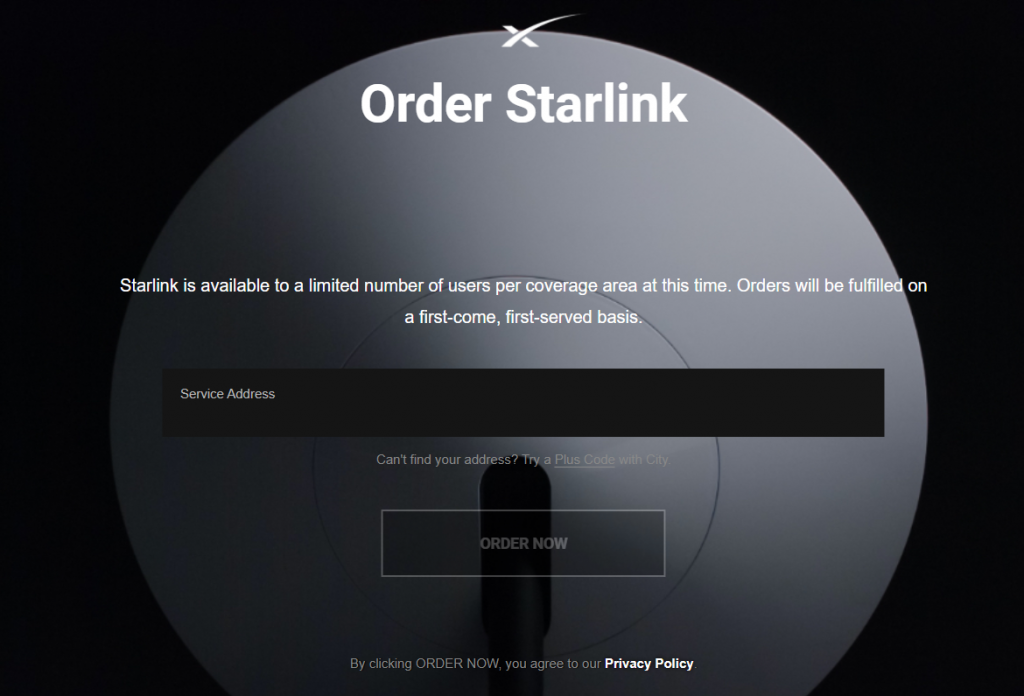
According to the official website of Starlink, the pre-booking service is available to Indian users at a refundable fee of $99 (₹7,265). “Starlink is available to a limited number of users per coverage area at this time. Orders will be fulfilled on a first-come, first-served basis,” reads the homepage of the website.

An interested user can find their address from a drop-down menu or type in a Google Plus Code, along with the name of the city. A typical Starlink Kit consists of a Wifi-router, power supply, cables, mouting tripod and of course Starlink. The company has urged users to download its app in order to determine the best location for instalment.

Screengrab of the homepage of Starlink

Starlink informed that their service is still in its beta stage but the company will be delivering high-speed, low-latency internet services both domestically in the United States and internationally. It informed that they will continue to expand the programme. “During beta, users can expect to see data speeds vary from 50Mb/s to 150Mb/s and latency from 20ms to 40ms in most locations over the next several months as we enhance the Starlink system. There will also be brief periods of no connectivity at all,” Starlink reiterated.

How does Starlink work?

Although satellite internet is still in its nascent stage, Starlink makes use of satellites that are positioned in the Earth’s orbit. Currently, Elon Musk’s SpaceX, of which Starlink is a venture, has already sent 1000 such satellites to the Earth’s orbit. In the future, the company plans to expand the number to a network of 12,000 satellites. Unlike traditional satellites, Starlink’s satellites are 60 times closer to the Earth, thereby facilitating the high-speed internet.

While traditional internet use optic fibre cables, satellite internet makes use of geostationary satellites for providing internet to users. Optic fibre cables use a transmitter and receiver to boost the signal. While the two devices cannot be too far from each other and the fibre cables are vulnerable to damage, satellite internet is not susceptible to any such issues. The internet is beamed down the antenna of each user, thereby facilitating a faster and better connection.

The service provides for low latency, the time taken for data to reach from one point to another. During testing, the internet speed for Starlink was found to be between 50Mbps and 150 Mbps. In 2021, the speed will be doubled to 300 Mbps. The company plans of increasing the speed to even up to 1 Gbps. “As we launch more satellites, install more ground stations and improve our networking software, data speed, latency and uptime will improve dramatically,” read Starlink’s website.

How Starlink can revolutionise the internet?

Starlink has the potential to revolutionise the internet, not just in terms of its high speed, but also reach areas with challenging connectivity issues. The company said, “Starlink is ideally suited for areas of the globe where connectivity has typically been a challenge. Unbounded by traditional ground infrastructure, Starlink can deliver high-speed broadband internet to locations where access has been unreliable or completely unavailable.” Rural areas have more open spaces and fewer tall buildings, making them suitable for satellite internet connectivity.

The team is now working with astronomers to understand engineering changes that can be made to reduce ‘satellite brightness’. “SpaceX is leveraging its experience in building rockets and spacecraft to deploy the world’s most advanced broadband internet system. As the world’s leading provider of launch services – and the only provider with an orbital class reusable rocket – SpaceX has deep experience with both spacecraft and on-orbit operations, the company said.”

Challenges with Satellite internet connectivity

“Starlink requires a clear view of the sky to connect,” the company emphasised. As such, heavy rains, high-speed wind can affect and even disrupt the connection. In areas experiencing snowfall, accumulating snow can even lead to an outage and slow internet. This explains why the company recommends installing Starlink in locations with no snow buildup.

Since the Starlink satellite dish directly connects to the satellite via a ‘single beam’, the movement of the satellite can interfere with the beam. As such, the company has suggested to set it up at the highest possible elevation. It is also recommended that people in urban areas, with poles, trees and tall buildings must not opt for the satellite internet service in its early stage. This limitation can be solved with the launch of more satellites in Earth’s orbit.

Starlink’s connectivity challenges also extend to the movement of the satellite dish from a designated ground area (also called cell) to another place. Since no other satellite will be scheduled to provide the single beam, the user will experience an internet outage. As such, users must furnish their accurate address and check the limitations prior to booking the service.

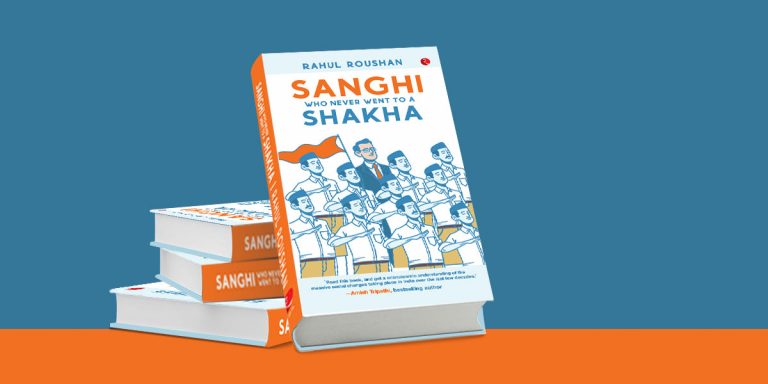
Rahul Roushan’s book ‘Sanghi Who Never Went To A Shakha’ goes out of stock on Amazon

0

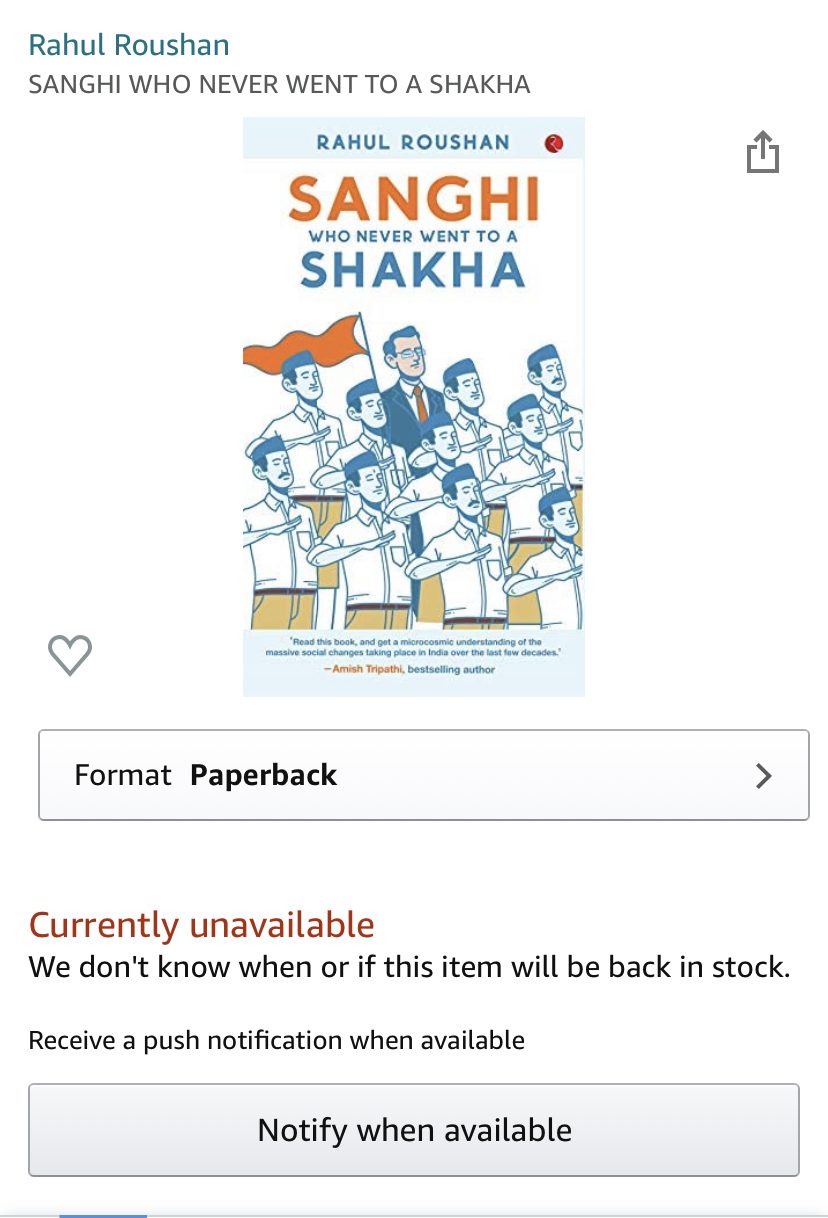
The founder of ‘The Faking News’, a satirical news website, and the CEO of OpIndia, Rahul Roushan’s debut book—’Sanghi Who Never Went To A Shakha’—which encapsulates his journey as a person who hated the word ‘Sanghi’ but ended up proudly wearing it on his sleeve, is already out of stock on Amazon.

Source: Amazon

Though the paperback version of the book is currently unavailable on Amazon, one can still pre-order the Kindle version of the book which is expected to drop in on March 10. Besides, the paperback variant of the book is still available on Garuda Books.

The book is published by Rupa Publications, a publication house based out of New Delhi. Earlier today, Rupa Publications, took to Twitter to share about the launch of the book.

“@rahulroushan, aka the ‘Pagal Patrakar’ of the Faking News fame, shares his intriguing journey of becoming a ‘Sanghi’ while analyzing why Hindutva as an ideology is no longer anathema and what brought about this change in his book ‘Sanghi Who Never Went To A Shakha’,” Rupa Publications tweeted.

A few hours ago, author Rahul Roushan also took to Twitter to inform his followers that the book is already out and many have already received their copies as the sellers have been delivering it earlier than the launch date. The official launch date of the book is March 10.

Sanghi Who Never Went To A Shakha—About the book

The book Sanghi Who Never Went To A Shakha is a story of a person who was born in a ‘Congressi Hindu’ family but became a Modi supporting ‘Sanghi’ – without attending a single shakha (regular gatherings) of the RSS (Rashtriya Swayamsevak Sangh) volunteers or without even being a fan of Narendra Modi from his earlier years.

It is not just a story of an individual, but it is the story of a generation that made that leap of faith. The story is not just about the author’s transition from being a ‘liberal’ to a ‘Sanghi’ without ever having visited a Shakha, it captures events that played pivotal role in shaping and effecting this transition.

The book is a re-telling of the contemporary political history of India with the help of the personal life journey of Rahul Roushan, who has worked as a journalist, has been an entrepreneur, and is a popular sociopolitical commentator.

Mansukh Hiren, whose explosive laden car was parked near Mukesh Ambani’s residence, found dead: Details

Mansukh Hiren, whose car laden with explosives was found near the residence of Mukesh Ambani and family, has been found dead. His explosives-laden car was found near Antilla in the last week of February.

Mansukh Hiren allegedly committed suicide by jumping into Kalwa Creek. Mumbai Police had said earlier that the car was stolen. According to the police, the act was committed by seasoned criminals and was well planned.

The police had said, “The suspect who parked the car near Mukesh Ambani’s house was seen in CCTV footage but has not been identified as he was wearing a face mask and his head was covered by a hoodie.”

“The car was stolen from Mumbai’s Vikhroli area sometime back, its chassis number was damaged a bit but police managed to identify its real owner,” they added.

A case was registered under relevant sections of the IPC and Explosive Substances Act. The investigation into the matter is still underway.

How Freedom House duped millions of Indians into signing up for an anti-India agenda

Let us think about this. Why do you suppose Khalistanis are taking so much interest in the debate over farm laws in Punjab? Whether the laws stay or go, how does it help their cause of breaking up India? So why would Khalistanis like Jagmeet Singh or Mo Dhaliwal living in faraway Canada be so worked up over the fate of agricultural mandis in India?

The answer is simple. Because they understand the importance of proximity. The Khalistanis are hoping to make friends among people in Punjab who have negative sentiments about these farm laws. They hope that eventually, they will be able to mutate these friendships into support for their real cause.

You must have seen the headlines yesterday. India has been ‘downgraded.’ By whom? Some apparently international organization called Freedom House. They have downgraded our status from ‘free country’ to ‘partly free.’ In other words, more bad press for Modi on the international circuit. An adrenaline rush for those who used to be in power but no longer are.

All the reactions were on expected lines. Those who support PM Modi expressed their usual irritation over being unfairly targeted by global media, their high handed tone and eagerness to intervene in our domestic affairs. Those who are against the PM were utterly grateful for yet another foreign NGO telling us how to run our country. In other words, everyone held on firmly to their political beliefs. Not even one vote moved from one side to the other. So, why worry about this?

Because we need to read the fine print of what really happened yesterday.

You have probably already noticed at least one thing shocking about this graphic. Jammu gone, Kashmir gone, Ladakh gone! They didn’t even take a middle path and include those parts which are still actively administered by India. They didn’t just snatch the occupied parts, they cut it all off.

Millions of Indians are currently circulating this graphic with a great sense of joy and vindication. They think they are striking a note of dissent against Modi. In reality, they are cheering a graphic that shows a future India minus Jammu, Kashmir and Ladakh. Imagine how pleased Pakistan and China must be.

But that’s not all. Look more closely and you will see that it says: “Over the last 15 years, India experienced a precipitous score decline…

Hold on! Fifteen years? That works out to roughly six years of Narendra Modi and nine years of Dr. Manmohan Singh. But the headlines were just about the snub to Modi, remember?

Freedom House knew exactly what they were doing. It is not enough for them if you hate Modi. They need you to hate both Congress and BJP. They need you to accept that the Indian state is hopelessly fascist no matter who runs it. Because they want to recruit you to break India.

Now you see what really happened. Perhaps you dislike Modi very much. Perhaps you really believe he is a fascist. But by cheering this graphic, they made you sign up with the assertion that not just Modi but Dr. Singh was a fascist too! In other words, the entire Indian polity is fascist. India as a whole is fascist.

Let’s see. In the 2019 general elections, the NDA polled around 45% of the total votes. These are Modi’s supporters. The remaining people would have a whole spectrum of opinions about him. Some would like him but not a whole lot. Some would dislike him but not that much. But because of the very nature of democracy, you can be certain that there would be a hardcore segment, say 25% of the population who dislike him intensely.

This 25% was the real target of Freedom House. They wanted to use the anti-Modi convictions of this 25% and convert it into an anti-India faction.

Ordinarily, this 25% would not support cutting off Jammu, Kashmir or Ladakh from India. Beyond a few thousand hardcore traitors or even less, no Indian would support this. But yesterday, Freedom House was able to build a bridge. They were able to reach out to maybe a quarter of the population.

How many of these 25% would cheer the Indian Army withdrawing from Ladakh? How many of them would enjoy seeing Jammu and Srinagar handed over to Pakistan? Very few. How many of these 25% would say that India is inherently evil, with both Congress and BJP being fascist parties? Again, hardly any.

But you cannot deny that yesterday Freedom House has opened a channel of communication with this segment of population. Which would work out to crores of people. Whether we like it or not, Freedom House has snagged a tiny place in their heart. Till yesterday, the influence of Freedom House was limited to a few thousand hardcore traitors. Today their sphere of influence has grown to several crores.

They will now work on this bridge. They will make it stronger. Tomorrow, another international NGO will come with another report and another map, perhaps this time with Arunachal cut off as well. The media headlines will scream about how Modi made India worse. In the fine print, you will find that not just Modi and Dr. Singh, but also Vajpayee was fascist. Those who hate Modi will still forward it joyfully, thinking it’s all just “dissent.”

You can dislike Modi all you want. You have a right to do that. But, watch out because there are well-funded folks looking to use your anger to turn you against India itself. So do yourself and all of us a favor by always reading the fine print!

Muslims have much more share in welfare schemes of state government than their population in the state: UP CM Yogi Adityanath

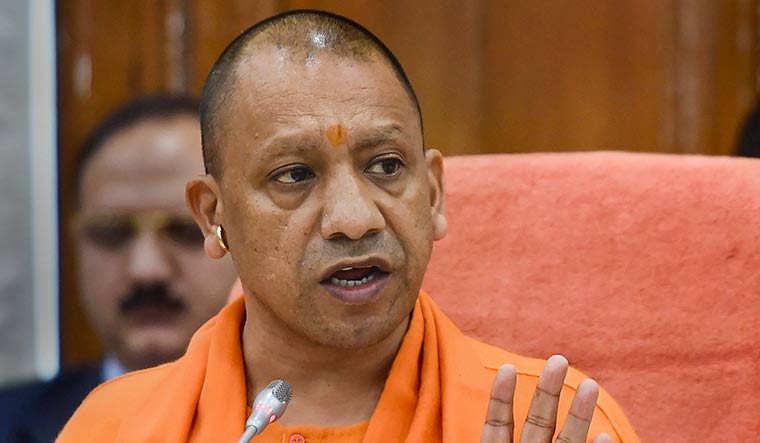
Uttar Pradesh Chief Minister Yogi Adityanath on Wednesday said in the state assembly that Muslims in Uttar Pradesh had more share in the welfare schemes provided by the state government than their total population in the state. CM Yogi said that Muslims’s share in state government welfare schemes was many times more than their population. “The Muslim population in UP is 17-19 per cent, but their share in the benefits of welfare schemes is 30-35 per cent”, the CM said in the state assembly drawing the attention of Samajwadi Party leader and Leader of Opposition (LoP) Ahmad Hassan.

CM Yogi Adityanath cited schemes such as the central housing scheme, free power connections, free cooking gas connections under Ujjwala schemes and Ayushman Bharat healthcare schemes to support his claims.

Previous governments used to pick and choose in identifying beneficiaries of government schemes: CM Yogi

The Chief Minister said that the state government was providing welfare schemes to all people in the state without discriminating against anyone and without indulging in appeasment. He alleged, making an intervention during the debate on the state budget, that the previous governments in the state implemented schemes selectively. He said that the previous governments used to pick and choose policy to identify beneficiaries of welfare schemes. CM Yogi said that the BJP government in Uttar Pradesh was committed to the Prime Minister Narendra Modi’s vision of ‘Sabka Sath, Sabka Vikas’.

Uttar Pradesh’s economy kept declining under the previous governments: CM Yogi

CM said that at the time of independence, the economy of Uttar Pradesh was among the top states in the country. However, there has been a continuous gradual decline in the state’s economy during the different previous governments, be it Samajwadi Party government, Bahujan Samaj Party government or Congress government. “By 2016, it went down to the fifth and sixth spot. But in the recent rankings, UP has emerged as the country’s second biggest economy”, the CM said.

CM Yogi said that the state government did not discriminate on the basis of caste, creed, religion, region and language while implementing government schemes. “This is what we call Modi model”, he said. Slamming the Samajwadi Party, CM Yogi said that the kind of socialism that was practised by leaders like Acharya Narendra Dev, Jai Prakash Narayan and Ram Manohar Lohiya is no longer practised by the Samajwadi leaders today. “Today’s socialism has become a multiform brand-socialism of caste, socialism of family and by the time socialism comes to Shivpal Yadav, it becomes ‘pragatisheel’, said the CM.

NCB files charge sheet in Bollywood-drug nexus case triggered by the death of Sushant Singh Rajput, Rhea Chakraborty and her brother named

The Narcotics Control Bureau (NCB) has filed a charge sheet today in the drugs case related to late actor Sushant Singh Rajput’s death. NCB chief Sameer Wankhede reportedly filed the charge sheet himself before a special NDPS (Narcotic Drugs and Psychotropic Substances Act) court. The charge sheet is reported to have around 12,000 pages in hardcopy format and includes the names of a total of 33 people and the statements of around 200 witnesses.

Out of those named in the charge sheet, 25 have been granted bail by courts, while the rest 8 are still in custody.

Rhea Chakraborty and Showik Chakraborty named in the charge sheet

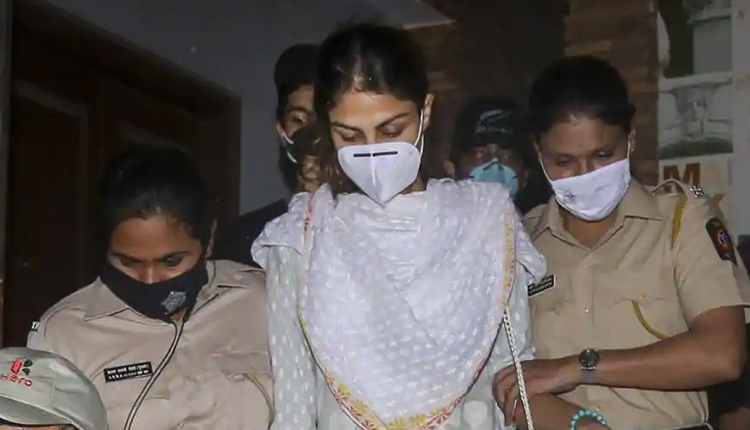
Actress Rhea Chakraborty, former girlfriend of Rajput, and her brother Showik Chakraborty have also been named as accused in the charge sheet. The NCB had reportedly registered a case against Rhea Chakraborty in August last year under various provisions of the Narcotic Drugs and Psychotropic Substances Act (NDPS).

According to the sources in the NCB, the charge sheet details how various drugs including synthetic narcotic substances were being procured at the highest level and then distributed across Mumbai through various hands. “From drugs being manufactured to the the supply chain and ultimately its consumption, the trail has been mentioned,” a source from the NCB said. The evidence used by the agency in the case includes details of WhatsApp messages among the accused, and the seizures made during raids.

During the raids, NCB has seized various narcotic drugs like Charas, Ganja, LSD, Ecstasy, and psychotropic substances like Alprazolam and Clonazepam. Apart from that, they had also recovered Indian and foreign currencies, electronic gadgets and mobile phones etc. The analysis of mobile phones had revealed incriminating evidences relating to sale, purchase, procurement, consumption, possession of narcotic drugs.

The anti-drug agency entered the investigation after the Enforcement Directorate (ED) wrote a letter to it after some drug-related WhatsApp chats between Rhea Chakraborty, Showik Chakrabory, Samuel Miranda, Jaya Saha and Gaurav Arya were extracted during the investigation into Rajput’s death. Following several rounds of interrogation, the NCB had finally arrested Rhea Chakraborty and her brother Showik Chakraborty in September last year. The NCB reportedly said that the actress was an active member of a drug syndicate. She was released on bail in October by the Bombay High Court on a personal bond of Rs 1 lakh. Other accused in the case including Samuel Miranda and Dipesh Sawant were also granted bail by the High Court.

Sushant Singh Rajput was found dead at his house under mysterious circumstances

Actor Sushant Singh Rajput was found dead under mysterious circumstances at Bandra situated flat in Mumbai in June last year. Mumbai police had initially declared the reason of his death as suicide. However, following the dissatisfaction among people regarding the investigation of his death by Mumbai police and several social media campaigns, CBI was roped in for the investigation of his death.

Several top celebrities including Deepika Padukone, Shraddha Kapoor, Sara Ali Khan and Rakul Preet Singh were interrogated during the investigation into the drug syndicate in the film industry.

Scientists point out flaws in WHO investigation into Coronavirus origins, demand unrestricted and independent probe: Details

Days after a joint team of the World Health Organisation (WHO) and Chinese expert mission claimed that Coronavirus did not exist in China’s Wuhan province before December 2019, a group of scientists have written an open letter[pdf] on Thursday (March 4) to the UN body for ‘compromising the scientific validity of the investigation.’

As per the letter, a total of 26 signatories had demanded a ‘full and unrestricted probe’ into the origins of the Wuhan Coronavirus. The scientists lamented that the virus’s origin remains unknown even after a year of the outbreak of the pandemic. “We believe it essential that all hypotheses about the origins of the pandemic are thoroughly examined and full access to all necessary resources be provided without regard to political or other sensitivities,” they opined.

“Based on our analysis, and as confirmed by the global study convened by the World Health Organization (WHO) and Chinese authorities, there is as yet no evidence demonstrating a fully natural origin of this virus”, the scientists added. Further pointing out the problems, the letter said that they want to raise public awareness about the fact that half of the team comprised of Chinese citizens whose scientific independence might be limited in nature.

Key flaws with the joint WHO-Chinese report on Coronavirus origins

The scientists argued that the international WHO team primarily relied on the information passed on by Chinese authorities and that the joint report required the approval of both teams. The letter emphasised that the joint team lacked the required access, mandate and independence to come to a definitive conclusion about the origins of the Coronavirus. Although the report was prepared by the joint team, several media houses presented it as an independent probe by ‘WHO itself’.

The scientists noted that the terms of reference that determined the objectives, responsibilities and duties of the join team were marred with ‘considerable delay’ and lack of transparency. They pointed out that the actual ‘field work’ was done by the Chinese side while the results were only communicated to the WHO team for review and discussion. “…Reports resulting from this process will ultimately represent a necessary compromise based partly on political and other limitations,” they said.

Furthermore, they said that the selection criteria for the WHO team focussed primarily on zoonosis and public health instead of those with forensic skills required for investigation. Moreover, the letter said that ‘conflict of interest’ between the team members was not accounted for during the selection. “The team did not have the mandate or access to granular lab records, data, and personnel to an extent that would allow them to confidently evaluate the various hypotheses,” it added.

Pointing out the lack of ‘scientific objectivity’, the scientists reiterated, “The international members of the joint team, by their own admission, have often relied on verbal assurances given to them by their Chinese counterparts rather than independent investigation, particularly regarding the possibility of a lab or research-related accident.”

Demand for a comprehensive independent probe into Coronavirus origins

The letter signed by the group of scientists has demanded a ‘full and unrestricted investigation’ by a ‘truly independent team’ with no conflicts of interests. They said that the investigating team must include professionals from various disciplines including wildlife experts, public health specialists, forensic investigators, biosafety, epidemiologists, virologists, and biosecurity experts. The letter added that the team members must have an understanding of Chinese culture and language to interpret behaviours.

The scientists laid down key underlying principles for conducting the study, by taking various possible scenarios into consideration. They emphasised the need for a common forensic investigation approach, which is based on ‘on-ground investigation’, ‘desk-based analyst work’, ‘open-source intelligence’, and a review of previous zoonosis events and lab accidents. They pointed out that the WHO team must have unrestricted access to key Wuhan markets, Chinese labs, hospital records from 2019, pathogen sampling sites, lab employees.

The letter also added that the international team members must have access to relevant records including environmental reports, inspection reports, maintenance logs, lab experiment logs, raw sequence reads, animal breeding records and so on. “Deploy a secure reporting channel for people to confidentially contribute information, wherever they are based, without fear of punishment or retribution,” it said.

“As strong supporters of the WHO and its mission, we believe it must be made clear that any findings of the joint committee, while potentially useful to a limited extent, represent neither the official position of the WHO nor the result of an unrestricted, independent investigation. For this reason, we believe it is essential that the contours of a full and unrestricted investigation be outlined to set a standard against which current and future efforts can be evaluated,” the letter concluded.

WHO-Chinese team claim Coronavirus did not originate in China

In a press briefing last month, Liang Wannian, head of the Chinese expert mission, claimed that there was “not enough evidence” to determine if the virus had spread in the city prior to December 2019. “There is no indication of the transmission of the Sars-Cov-2 in the population of the period before Dec 2019,” Wannian said.

Ben Embarek of the WHO team that collaborated with the Chinese expert mission said that the focus of the study was to determine if coronavirus had ‘previous history’ and was in circulation before December 2019.In an attempt to deflect the blame of endowing the world with a deadly contagion, the Chinese expert even suggested that the coronavirus might have originated outside China.

The Chinese Health Commission expert also contended that the coronavirus which causes COVID-19 could have been circulating in other regions before it was detected in the central Chinese city of Wuhan at the end of 2019. The WHO scientists also asserted that the global health body’s mission to China to probe the origins of the coronavirus has failed to detect the animal source. However, ever since the pandemic swept the globe, scores of scientists and epidemiologists have consistently claimed that the coronavirus might have originated in bats and could have jumped to humans via another mammal.

Wannian said the transmission from animals was the likely route of the emergence of the infection but so far “the reservoir hosts remain to be identified”. He also added that the studies have demonstrated that the virus could be carried long-distance on cold chain products, alluding to the possible importation of the virus—a hypothesis vigorously peddled by China after it was blamed for the lack of transparency and its shoddy handling of the initial outbreak.