Home Blog Page 220

Tesla makes entry into Indian market with first showroom in BKC, Mumbai: Read how Elon Musk’s EV giant tried for years to sell in India

Tesla is all set to make its debut in the Indian market by launching its first electric vehicle on Tuesday, July 15. The unveiling will take place at Mumbai’s Maker Maxity Mall, located in the Bandra Kurla Complex.

According to a report by Reuters, the EV giant has also revealed the pricing for its cars. The much-anticipated Model Y is listed at an on-road price of ₹61 lakh. The rear-wheel drive variant is priced slightly lower, at ₹59.89 lakh.

Tesla’s pricing list highlights that the base version of the Model Y, the rear-wheel drive, will cost ₹60 lakh for a full cash purchase. The long-range all-wheel drive variant comes at a higher price of ₹68 lakh. These prices apply to completely built units (CBUs) that will be imported into India.

Tesla’s third attempt at entering India

Tesla has had its sights set on the Indian EV market for a long time. This marks Elon Musk’s third attempt to establish the brand in the country. Earlier efforts failed to gain traction due to regulatory and logistical challenges. However, after Musk met with Prime Minister Narendra Modi, the company began recruiting for new roles in India, signaling a renewed commitment.

Tesla’s previous attempts to enter the Indian market also fell short. The company formally decided to launch retail operations in April this year. While the move was welcomed by both the Indian government and consumers, it failed to enthusiasm from certain market incumbents and even drew criticism from US President Donald Trump. He called the move “unfair,” citing tariff imbalances between India and the U.S., and remarked that it was “practically impossible to sell a car in India.”

The key obstacles Tesla previously faced included steep import duties, up to 110%, and the Indian government’s insistence on domestic manufacturing. Tesla had requested tax reductions to facilitate vehicle imports before committing to set up a production facility, but talks with the government failed to reach a consensus.

Further, instead of depending on imports, the government wanted Tesla to establish a production facility. It was also true that the company was hesitant to make a crucial upfront investment in a developing market. India still trails behind major markets in terms of EV demand, which has just lately begun to increase.

Despite these hurdles, Tesla brings several competitive advantages to the Indian market. The company enjoys global brand recognition and a strong reputation as a tech-forward automaker. Its innovations in battery efficiency, autonomous driving, and clean energy make it especially appealing to India’s growing base of tech-savvy consumers.

Tesla’s image as a premium electric vehicle manufacturer could help it carve out a niche consumer base before local competitors catch up. Once the company successfully localizes production, its vehicles could become more competitively priced, potentially making them accessible to a much broader audience in the long run.

Balasore, Odisha: FM College student, who set herself on fire following inaction on sexual harassment complaint, dies in AIIMS

A 20-year-old college student, who set herself ablaze on Saturday (12th July), following the inaction of FM College authorities on her sexual harassment complaint, succumbed to her burn injuries on Monday (14th July) night. The victim, named Soumyashree Bisi, suffered over 90% burns and was getting medical care at AIIMS, Bhubaneswar.

A statement issued by the Department of Burn Centre, AIIMS, Bhubaneswar, on 14th July, said that the victim was admitted on 12th July after being referred from the Balasore District Headquarters Hospital. The hospital said that she received all possible intensive care, including IV support, antibiotics, mechanical ventilation, and renal therapy, but succumbed to her injuries on the night of 14th July. “She was declared clinically dead at 11:46 PM on July 14,” the hospital confirmed.

Somyashree Bisi, who was pursuing B.Ed. at Fakir Mohan Autonomous College in Balasore, had accused a Head of Department (HoD), Samir Kumar Sahu, of sexual harassment on 1st July. On Saturday, she had a meeting with the college principal, Dilip Kumar Ghosh, shortly after which she set herself on fire. Somyashree Bisi, who was reportedly associated with the ABVP, had submitted formal complaints to the college principal and the police against Sahu. She was disappointed as no substantial action was taken on her complaints.

An internal committee was formed to inquire into her allegations. In a letter submitted to the committee, she had provided details of the abuse and threats by the HoD, which reportedly went on for months. She was promised action within seven days, but nothing happened. The victim was upset with the sheer inaction by authorities amid threats and harassment by the HoD. The victim’s father blamed the college principal, Ghosh, for the death of his daughter. Her mother has demanded capital punishment for the culprits.

As per reports, batchmates of the victim revealed that she was mentally distressed for weeks because of continuous harassment by Sahu. They alleged that Sahu repeatedly made inappropriate demands and threatened her with academic consequences if she did not comply. On 12th July, the victim and some other students sat on a protest outside the college gate. Fellow students reportedly said that, on the day of the incident, Somyashree Bisi suddenly got up and ran to an area close to the principal’s office and set herself on fire. She was rushed to the Balasore District Headquarters Hospital with severe burns, from where she was referred to AIIMS, Bhubaneswar.

CM Manjhi assured strict action against culprits

Odisha Chief Minister Mohan Charan Majhi expressed his grief over the incident and assured the victim’s family that the strictest punishment will be given to the culprits.

“I am deeply saddened to hear the news of the demise of the female student from Fakir Mohan Autonomous College. Despite the government’s fulfillment of all responsibilities and the tireless efforts of the expert medical team, the victim’s life could not be saved. I pray for the eternal peace of her departed soul and beseech Lord Jagannath to grant strength to her family to bear this irreparable loss. I assure the family of the deceased student that all those guilty in this case will face the strictest punishment as per the law. For this, I have personally issued instructions to the authorities. The government stands firmly with the family, ” the CM wrote on X.

Governor Hari Babu Kambhampati directs authotrities to ensure student safety

Following the tragic incident, Odisha Governor Hari Babu Kambhampati spoke to the State Education Minister Suryabanshi Suraj regarding the incident. He directed the authorities to ensure the safety of the students.

“The safety, mental well-being, and dignity of students must be protected at all times. I have urged the authorities to act with urgency, empathy, and responsibility to prevent such incidents in the future, ” the governor wrote on X on Monday.

The accused HoD was arrested by the police, and a case was filed against him under the relevant provisions of the BNS. Principal Ghosh, who was earlier suspended, was also arrested on Monday and was sent to judicial custody.

BBC admits their Gaza documentary was propaganda, Hamas leader’s son was used as narrator

On 14th July (local time), the BBC admitted that its documentary titled “Gaza: How to Survive a Warzone” was a propaganda. The broadcast claimed that it breached editorial guidelines as it failed to disclose a critical conflict of interest. The child who narrated the documentary was the son of an official linked to Palestinian terrorist outfit Hamas, the review has found. BBC director general Tim Davie commissioned a damning review in which the corporation found that the programme should never have been approved for broadcast in the first place.

The documentary was produced by an independent company named Hoyo Films. It was removed from iPlayer in February this year after concerns emerged about the boy’s background. The review has now confirmed that at least three members of the production company were aware of the fact that the boy’s father is serving as deputy minister of agriculture in the Hamas-run Gaza government. Notably, not a single person within the BBC was made aware of this fact before the documentary went live.

The review has strongly criticised the BBC for failing to conduct basic editorial checks. It highlighted a “lack of critical oversight” on key questions during the programme’s production and approval stages. Though the review has concluded that there was no evidence of direct editorial interference by the narrator’s family, it has been stated that using the child under these circumstances was “not appropriate”.

Source: SS from now removed documentary by BBC

CEO of BBC News, Deborah Turness, said in a statement that the broadcaster has “owned” its mistakes and confirmed a series of corrective measures including new oversight rules, tighter narrator vetting, and an internal compliance “first gate” before any high-risk documentary is released.

Notably, the Campaign Against Antisemitism has labelled the documentary a blatant misuse of public money and accused the BBC of attempting to whitewash the issue. Following the statement, a formal investigation has been launched by the regulator Ofcom to investigate if the BBC misled viewers in breach of broadcasting rules.

Former regulator questions what BBC was told

While the BBC has admitted it failed to put facts in place before releasing the documentary, former CEO of ITN and ex-content regulator at Ofcom, Stewart Purvis, has raised serious concerns about the production company’s transparency.

Speaking to BBC Radio 4’s World at One, he pointed out that there have been at least two instances where the BBC asked direct questions that should have prompted Hoyo Films to disclose the boy’s Hamas-linked parentage. Furthermore, he noted that while the BBC enquired about any “paper trail” on Hamas connections, it was reassured that social media checks came out “clean”.

Purvis further added that the broadcaster failed to follow through when answers remained vague, leading to this editorial lapse.

What the documentary showed and what it hid

The documentary “Gaza: How to Survive a Warzone” was directed by Jamie Roberts and Yousef Hammash. It followed the lives of four young people living amid the ongoing Israel-Hamas war in Gaza. The film was produced by Hoyo Films and commissioned by the BBC. It relied on remote direction from London as Israel has imposed restrictions on international media access to Gaza.

Source: SS from now removed documentary by BBC

The film was narrated by a 13-year-old boy, who was later found to be the son of a Hamas official. It presented a child’s-eye view of life under siege. The documentary’s credibility crumbled when the identity of the boy was revealed. As the fact of his parentage was not disclosed, it was in breach of the BBC’s editorial guidelines. The film was pulled down in February this year.

Second Gaza documentary pulled over impartiality concerns

Following the mess surrounding the said documentary, Deborah Turness also addressed a separate controversy involving a documentary titled “Gaza: Doctors Under Attack”. It had also been withdrawn before broadcast due to impartiality concerns. It faced internal red flags after a journalist involved displayed problematic social media activity. The film was later aired by Channel 4.

In a statement, Turness explained that the lead journalist, Ramita Navai, used language on BBC Radio 4’s Today programme that was “incompatible” with the BBC’s impartiality standards. She said, “It made it impossible for us to continue with the project.” She further added that no BBC journalist could have said what she said on air.

Notably, on 4th July, Ramita had said on BBC Radio 4’s Today programme that Israel is “a rogue state that’s committing war crimes and ethnic cleansing, and mass-murdering Palestinians”.

Turness admits BBC failed to pursue key questions

Turness has emphasised accountability while speaking to BBC Radio 4. She admitted that the broadcaster failed to “run those questions to ground”. She added that the BBC took the matter seriously and conducted a full investigation. She claimed that no one at the BBC knew about the narrator’s Hamas-linked father and conceded they should have known. She said, “The questions were asked but not answered.”

Hoyo Films apologises, promises to improve editorial process

Hoyo Films, the production company behind the documentary, has issued a statement accepting the findings of the BBC’s internal review. It has apologised for the breach of editorial guidelines and said it has taken the report “extremely seriously”. The company has, however, denied any intent to mislead the BBC and pledged to improve internal processes. The company added that it is working with the BBC to potentially release a revised version of the documentary for iPlayer.

BBC director general promises action to restore trust

The BBC director general, while acknowledging the failure, called it a “significant failing in relation to accuracy”. He apologised for the lapse and said the BBC would act on two fronts, holding those responsible to account and implementing immediate steps to prevent similar breaches. The BBC Board has claimed in a statement that “nothing is more important than trust and transparency in our journalism”.

Loss of trust led BBC to pull Gaza documentary

Not to forget, in March this year, Davie told the Culture, Media and Sport Select Committee that he made the “very difficult decision” to pull the documentary from iPlayer after losing trust in the film. He said repeated questions about the boy’s family went unanswered by the production company. Although the film drew around 500 complaints of anti-Israel bias and 1,800 over its removal, Davie stressed editorial accountability was of utmost importance in such sensitive productions.

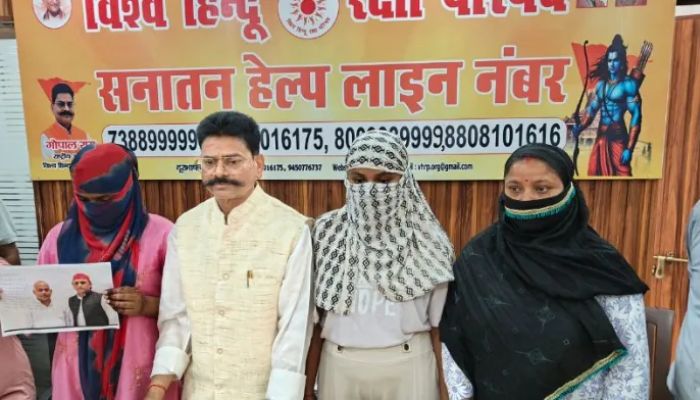
‘It’s a righteous deed to trap Hindu girls’: Naveed poses as Shiv Verma to trap, rape, and forcibly convert 18 Hindu girls in Shahjahanpur, arrested

On Saturday, 12th July, Uttar Pradesh‘s Shahjahanpur police arrested a man, Naveed alias Kasib Pathan, on charges of raping a Hindu girl and attacking several others in a shocking criminal plan. The arrest followed when a young woman from Shahjahanpur approached the Chauk Kotwali police station and complained against Naveed’s nefarious activities.

Naveed befriended her on social media two years ago, pretending to be a Hindu named “Shiv Verma,” as per the victim. He gained her trust by wearing a tilak on his forehead and a Hindu sacred thread (kalava) on his wrist, and even taking an oath on Hindu deities to appear sincere. 

He vowed to marry her, but attacked her instead. The victim saw the accused’s phone on Friday, 11th July, and came to know his true identity and found horror-filled pictures and videos on his phone, including those with other girls. When the victim confronted him about it, Naveed said, “Having relations with Hindu girls is a righteous deed for us.” He also brutally beat her and started forcing her to convert to Islam.

Police found out that Naveed and his brother Kaif operated a racket against Hindu girls. They used deceitful Hindu names on social media to trap young women, keep them in a relationship, and then physically assault them. The brothers allegedly recorded all these activities to blackmail their victims into changing religion. Naveed admitted to having targeted at least 18 Hindu girls to date.

The complaint of the victim also included Naveed’s brother Kaif, who also raped the victim, their parents Abba Alam and Uzma, and sister Saman for their complicity. The parents of the accused reportedly forced the victim to abort her pregnancy, and when she did not comply, Naveed purportedly kicked her in the abdomen, resulting in a miscarriage.

Police discovered four Instagram profiles belonging to Naveed under alternate identities, out of which he had posted about 1,900 pictures, many in the company of different girls. Authorities suspect that Naveed and Kaif might be part of a bigger conversion racket, with possible connections to a similar gang found in Balrampur.

The case has caused outrage in Shahjahanpur, with the locals calling for severe action. Naveed is in jail, and the police are probing deeper to find out the scope of the racket and the other victims.

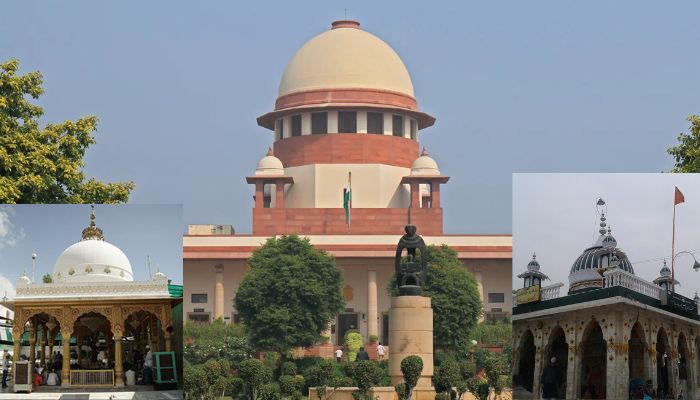
J&K CM Omar Abdullah clashes with police to read fatiha at graves of ’13th July martyrs’: Read how they were rioters not martyrs, the truth which has been systemically covered by ‘historians’

Chief Minister of the Union Territory of Jammu and Kashmir, Omar Abdullah, on Monday (July 14, 2025) visited a mazaar in Srinagar and offered flowers there. He also read the fatiha here. To reach there, Abdullah had an altercation with the police, jumped over a wall, and created a lot of ruckus.

Omar Abdullah also complained about the incident on X (earlier Twitter) after visiting this mazaar called ‘Naqshabad Sahib’ and paying tribute to these alleged martyrs and claimed that he has been put under house arrest. Many other people involved in his government also made the same claims.

Abdullah and his party workers wanted to pay tribute at this alleged ‘martyrs’ mazaar. Earlier they had sought permission from the district administration for this, which was denied. The mazaar where Omar Abdullah has offered these flowers, he calls them ‘martyrs of 13 July’ whereas in reality they were Islamic rioters.

Why was there violence in Srinagar on July 13, 1931

The root of this entire uproar is linked to a date 9 decades ago, July 13, 1931. On that day, Maharaja Hari Singh’s army shot 21 Islamic rioters inside Srinagar’s Central Jail. These Islamic rioters had come to attack the jail and wanted to overthrow Maharaja Hari Singh.

In 1948, when Jammu and Kashmir merged with India and the National Conference came to power in the state, these rioters were given the status of martyrs. A holiday was also declared in the state on this day. They were described as revolutionaries who agitated for ‘democracy’. A memorial was also built for them near the tomb of a Sufi saint.

Now Omar Abdullah wanted to pay tribute at this memorial for rioters, which led to an uproar when he was not given permission to honour these rioters.

What is the truth about the ‘martyrs’ of July 13

The extremists in Kashmir keep calling the incident of 13th July a revolution and mass movement against Maharaja Hari Singh. They call it ‘Kashmir Martyr’s Day’. It is said that it was a rebellion against the alleged cruel rule of the Maharaja. Whereas in reality, it was a fight against a ‘kafir’ Hindu ruler.

Kashmiri Pandit activist Sushil Pandit explained it very well in an article wherein he mentions that the first massacre of modern Kashmir happened then, and that too with a meticulously hatched conspiracy. Hundreds of people were murdered, burnt alive, maimed, and thrown into the river, women were raped, and many houses were looted, and many were forced to convert to Islam.

When the police took action against the rioters, some of them died, after which they were declared ‘martyrs’ by their gang and the new government of Jammu and Kashmir in independent India started remembering them on 13th July, honouring them like heroes to ‘sanctify’ the acts of those terrorists.

Let us now remember what actually happened on that day in 1931. At that time, Hari Singh was the autonomous king of Jammu and Kashmir.

Along with Jammu and Kashmir, Ladakh, Gilgit-Baltistan, Muzaffarabad-Mirpur, Aksai Chin, and the areas of Shaksgam Valley were also part of his territory. However, the British wanted to snatch the areas from him. Maharaja Hari Singh was one of those rare Hindu kings who ruled in a Muslim-dominated area. That is why, as a part of a conspiracy, the British installed an Ahmadi, Abdul Qadir from Peshawar, in Srinagar in the guise of a cook.

After this, Sheikh Mohammad Abdullah of Aligarh Muslim University (AMU) was also brought into the state. He was a person with political ambitions, whose ancestors still considered Jammu and Kashmir as their ancestral property. A public meeting was held at Shah-e-Hamdan in Khanqah Mohalla, where Abdul Qadir gave an inflammatory speech.

The Quran was cited for the war against the Maharaja. Abdullah incited the crowd by saying that how can a ‘kafir’ rule over Muslims, this is strictly forbidden in Islam. The extremists in Kashmir keep calling the incident of 13th July a revolution and mass movement against Maharaja Hari Singh. They call it ‘Kashmir Martyrs’ Day’. They claim that it was a rebellion against the alleged cruel rule of the Maharaja, whereas in reality it was a fight against a ‘kafir’ Hindu ruler.

He openly incited Muslims for cow slaughter, which was banned according to the law. When he was arrested on charges of treason, riots broke out. Attempts were made to obstruct the legal process. Hearings were held in the jail premises out of compulsion. There was a similar hearing on July 13. However, the mob attacked the premises and tried to enter the judge’s chamber. The mob also attacked the police and started arson.

As it happens even today, the Muslim mob started pelting stones. The prisoners in the jail also started trying to escape from there amidst the chaos. The police force tried all the tricks, but the Muslim mob did not disperse. After this, the local DM ordered the Police to open fire. Meanwhile, the mob also started moving towards Hari Parvat fort. The lathi charge from the Police was not having any effect. Maharajganj used to be a hub of traders then, where there was a lot of looting.

Sushil Pandit writes that after this, shops of Hindus were destroyed and looted from Bhori Kadal to Aikadal. There was a lot of looting in areas like Safakadal, Ganji, Khud and Nawakadal. Account books were burnt in the market and there was a stampede among the Hindu shopkeepers. Goods worth lakhs were looted, or destroyed, or thrown on the roads. However, there was no news of any Muslim breaking into a shop and looting it.

A separate Muslim mob had gathered in Vicharnag in Srinagar. There, rich Hindus were tortured and their women were sexually exploited. By the time the army arrived, the Muslim mob had caused great damage to the Hindus. After this, the ‘intellectual’ gang got to work and named it ‘democratic revolt against feudal power’. Remember, the large-scale massacre carried out by Moplah Muslims in Kerala was also called ‘peasant revolt against landlords’.

While, in reality, whatever happened in Kashmir on July 13, 1931, was an Islamic war against a Hindu king. Sheikh Mohammad Abdullah also had a big hand in instigating these riots. He was arrested and sent to jail. However, the Maharaja pardoned him the very next year and Abdullah started instigating people by forming the ‘All Jammu and Kashmir Muslim Conference’. Hindus in Mirpur tried to save their lives by fleeing. Later hundreds of them had to live as refugees.

Hindu villages were burnt, and temples destroyed

The elders who witnessed this incident at that time mentioned how many were brutally killed and many were forced to convert to Islam. Many incidents of attack on temples and gurudwaras also came to light. Many holy Sanatani books, including Guru Granth Sahib, were burnt and idols of gods and goddesses were broken. This is called the ‘massacre of 88’ as according to Vikram Samvat, the year was 1988 then.

After that incident, hundreds of families and their future generations struggled for rehabilitation for decades. If we go by the English records themselves, 31 temples and Gurudwaras were completely destroyed. Around 600 cases of forced conversion to Islam came to light. Hindus of Sukhchainpur and Sanwal (Mirpur) suffered the most. The English write that wherever the rioters reached, the local Muslim population supported them.

Some Hindu villages were completely deserted while Islamists caused loot and destruction there. After this, on January 18, 1932, 50 Hindu villages were attacked and 300 houses were looted. Out of these, 40 were set on fire. Not only this, 40 Hindus were forcibly converted to Islam at that time. In Thanna village, 36 houses were looted again on January 20, 1932, and 8 were burnt. In Sohana village, 84 houses were looted and another village was looted on January 28.

The Kashmir, which was freed from the clutches of Afghans by Maharaja Ranjit Singh, and where the Dogra kings established Hindu rule, and the non-Muslims got relief from centuries of oppression, saw the massacre of Pandits again. The Constitution of India could not be implemented there even after independence and Abdullah-Mufti families together continued to run the Islamic rule here.

Honouring traitors stopped during Modi rule

In July 2020, for the first time, no tribute was paid to the rioters in Kashmir. This was possible because of the Modi government. The organised expulsion of Hindus from modern Kashmir had started decades back. The conspiracy of the British and the violence of the Islamic mob massacred Hindus to overthrow a Hindu regime, and later the ‘intellectuals’ gave it a different colour. Maharaja Hari Singh had even formed a committee headed by the Chief Justice of the High Court Barjor Dalal to investigate these incidents.

Maharaja Hari Singh had talked about Indian unity at the Round Table Conference in London. Interestingly, after that, the British army officer Major Boat brought and settled a Pathan named Abdul Qadeer in Kashmir. All this was part of a conspiracy. After taking control of power, the British released Abdul Qadeer in 1.5 years, even though he was jailed for 5 years. The Ahmadiyya community of Qadian town helped the British a lot in this entire conspiracy. This report revealed that British officer Wakefield deliberately did not go to the jail to control the situation that day, even though he was in-charge of the security.

On July 4, 1931, news of desecration of the Quran came to light, even though nothing like this had happened. However, Wakefield, after investigation, propagated the matter of desecration of the Quran, and instigated the Muslims. Inflammatory material was sent to Srinagar against Maharaja Hari Singh. Hari Krishna Kaul, who was made the Prime Minister in place of Wakefield, got the state to compromise with the Muslim rioters, but the riots did not stop. This has been the pattern of Islamic riots in many parts of the country, and it is the same even today.

From sympathy for Kasab to blaming society: DU ‘professor’ Apoorvanand’s meltdown over Ujjwal Nikam’s RS nomination exposes the Left’s moral decay

A day after facing severe backlash for his astonishing attempt to undermine the elevation of veteran public prosecutor Ujjwal Nikam to the upper house by accusing him of “creating animosity” against Pakistani terrorist Ajmal Kasab with his ‘biryani’ remark, DU professor Apoorvanand brazened out his terror apologia, shifting blame from himself to society, and ultimately, to the Congress party’s critics.

In a follow-up tweet on July 14, Apoorvanand wrote:

“That you peddle lies against a killer says something about the society we are, which approves it. But was it a lie only against him? It was actually to create hatred against Congress party. Part of a more sinister language game that gave meaning to this lie. RS seat explains it.”

This is not only a deperate attempt at face-saving, but it also offers a profound glimpse into the festering intellectual rot that pervades sections of India’s academic Left, a worldview so consumed by its echo chamber that even the cold-blooded massacre of 166 innocent civilians by Kasab and 9 other Pakistani terrorists is weaponised into a tirade against political opponents.

From Kasab to Congress: The unholy leap

What started as a dubious moral lecture on “creating animosity” against a Pakistani terrorist who unapologetically opened fire at innocents, has now metamorphosed into a bizarre conspiracy theory: that the biryani remark wasn’t about Kasab at all, but a covert attack on the Congress party. 

Earlier yesterday, Apoorvanand, who also contributes to far-left propaganda portal The Wire, took to X to claim: “A man,a lawyer,boasted that he had lied about biriyani being served to Ajmal Kasab to create animosity against him. He is a Rajya Sabha MP now.Nominated by the President.Lies are the building blocks of the Hindu Rashtra in making.”

In Apoorvanand’s alternative reality, a statement by public prosecutor Ujjwal Nikam, meant to cut short attempts to indulge Kasab, is now proof of some sinister campaign to discredit the Congress. The mental gymnastics involved here would be laughable if they weren’t so serious.

Because what Apoorvanand is doing is classic deflection straight out of the left’s playbook: faced with justified outrage for implicitly humanising a terrorist, he now blames the “society” for allowing a ‘lie’ to inflame rage towards the terrorists—as if his act of killing innocent people wasn’t enough. He then seamlessly pivots to indicting the political right for creating it.

In his imagined universe, the real villain is not the terrorist with an AK-47, but the prosecutor who ensured he met justice, and by extension, the government that honours that prosecutor with a Rajya Sabha nomination.

A classic leftist trickery: Blame the society of complicity when propaganda dressed up as ‘intellectualism’ is called out

This is a textbook example of the Left’s rhetorical trap: elevate the criminal, vilify the system, and when questioned, accuse the public of complicity. Apoorvanand’s tweet reeks of this intellectual pretentiousness: self-righteous, evasive, and obsessed with abstract “language games” rather than real victims and real justice.

Instead of acknowledging the monstrosity of Kasab’s actions or the bravery of Indian security forces, Apoorvanand directs his ire toward those who remember the crimes too clearly for his comfort. In doing so, he confirms what has been long suspected: that certain sections of the Left aren’t merely misguided, they’re morally bankrupt.

Their loyalty lies not with the nation, but with the narrative.

The real sinister game: Trivializing terror

In trying to recast a tactical prosecutorial remark into a Right-wing propaganda tool, Apoorvanand reveals more about his own political paranoia than about any actual conspiracy. His disdain isn’t really about the “lie”, it’s about the justice that followed it.

Kasab wasn’t lynched in the street. He was given a fair trial. He was defended by a government-appointed lawyer. He was prosecuted by Ujjwal Nikam under India’s legal system, convicted by evidence, and sentenced to death after all appeals were exhausted.

But that doesn’t sit well with those echo chamber warriors who are constantly seeking to portray India as a fascist Hindu Rashtra in the making. So they hunt for distractions, a bowl of biryani, a turn of phrase, a Rajya Sabha seat, anything to shift the focus away from the blood-soaked truth of Islamist terror.

Biryani can’t whitewash Kasab’s crimes

Apoorvanand’s attempt to turn a terrorist into a victim, and a prosecutor into a propagandist, is not just academically dishonest—it’s morally grotesque. His follow-up tweet blaming “society” and accusing the Right of playing language games is nothing more than intellectual cowardice dressed up as critique.

This is not just about Ujjwal Nikam or Ajmal Kasab anymore. It’s about what kind of nation we want to be. A nation that stands with its victims, honors its heroes, and defends its right to justice? Or a nation that cowers behind false equivalences and moral relativism spouted by those who have never stood in the line of fire?

In the end, Apoorvanand’s tears, first for Kasab, and now for political narrative, say less about justice and more about the ideological corruption that masquerades as conscience in India’s elite institutions.

Let it be said clearly: it wasn’t biryani that created hatred for Kasab. It was bullets, bombs, and the blood of 166 innocents.

And no amount of academic spin can ever erase that.

Meghalaya HC allows ‘symbolic pilgrimage’ to Mawjymbuin Cave but restricts Hindu rituals: Read about how Hindus are being stopped from doing Puja at the naturally formed Shivling

On Friday (11th July), the Meghalaya High Court allowed Hindu devotees to undertake a ‘symbolic pilgrimage’, devoid of any rituals, to the Mawjymbuin Cave in Mawsynram in the East Khasi Hills district of Meghalaya.

The Yatra would begin from Mahadev Khola Dham in Shillong to the Mawjymbuin Cave, which houses a naturally formed Shivling. It would be supervised by district authorities.

The court imposed several conditions on the pilgrimage. This ranges from restrictions on the performance of puja or articles for performance of rituals such as flowers and incense sticks.

At the same time, Hindu devotees have been restricted from pouring water on the naturally formed Shivling. Only a ‘symbolic sprinkling’ of water will be allowed during the pilgrimage.

“This court also emphasises the need to maintain order and solemnity and to avoid any littering, or to cause any disruption of traffic movement,” the order read.

Objections against pouring of water on the Shivling have been raised by Dorbar Shnong of Mawsynram (the traditional village council responsible for governance in Mawsynram).

Dorbar Shnong vows to prevent puja at Mawjymbuin Cave

Dorbar Shnong claims to be the ‘owner‘ of the Mawjymbuin Cave and had previously campaigned against worshipping at the Shivling.

In January this year, the spokesperson of Dorbar Shnong claimed, “Since the beginning and till date, we don’t allow any group to come and perform religious rituals inside the cave.”

“However, any individual or group of people can visit the cave but they should respect the rules of the dorbar shnong, which we strongly prohibited worshipping inside the cave and to make the cave as a mandir or a temple as the cave is a tourist spot,” he warned.

The spokesperson mocked Hindu sentiments by claiming, “In the past, they have come and pour milk and burn essence and flowers, which has led to the dirtying of the cave and its surroundings.”

What happened in the past

With active support from churches and ministers in the Meghalaya government, Dorbar Shnong first banned Hindu worship at Mawjymbuin Cave in August 2024.

Dorbar Shnong’s executive committee announced that no group would be allowed to develop a place of worship at the cave. The decision came after the Hindu Yatra Pilgrimage group announced their plan to use the site for worship on 10th August and 11th August 2024.

The group had initially requested permission from the East Khasi Hills Deputy Commissioner, RM Kurbah, which was refused. Then, they approached the Dorbar Shnong for permission. Dorbar Shnong expressed surprise at the fact that they were being bypassed initially by going directly to the DC.

At that time, it had triggered protests by Hindu groups not only in Meghalaya but also in Assam. The Kutumba Surakshya Parishad (KSP), a Hindu organisation from Assam, threatened to block roads leading to Meghalaya from Assam if the ban was not lifted. 

KSP President Sanjay Ranjan Borah had accused social organisations and Christian missionaries in Meghalaya of hatching a conspiracy to defame and destroy the Hindu faith and culture.

On the contrary, local student groups Khasi Students’ Union (KSU) South West Khasi Hills District and KSU Lawbah Border Area Circle have supported the decision to ban Hindu prayers at the site.

Student union leaders even issued a joint statement “We will not accept any attempt to use force to establish the place of worship despite opposition from the Mawsynram Dorbar Shnong.” They emphasised the “need to preserve the natural form” of the cave.

The ruling National People’s Party also endorsed a ban on Hindu Puja at the sacred cave. Tourism minister Paul Lyngdoh had claimed, “The decision is logical and reasonable as the cave is a major tourist attraction. Allowing a particular religion to set up a place of worship can harm tourism in the area.”

“People from across the globe visit Mawjymbuin. A secular country like India cannot promote a place of worship in any tourist destination,” he brazened out.

Significance of Mawjymbuin Cave

Mawjymbuin Cave is a spiritual site, which is revered in Hinduism for its naturally formed Shivling. It is 209 m high and is made up of calcareous sandstones.

The Shivling is formed due to weathering, calcium carbonate deposition and dripping of mineral-enriched liquid. It is constantly bathed in water from a stalactite, which is shaped like a cow’s udder.

It is believed to have been in existence for thousands of years. In Hinduism, the Shivling is a manifestation of Lord Shiva in a formless, eternal cosmic energy.

During the month of Shravan, hordes of Hindu pilgrims across the country visit the cave as part of the Kanwar Yatra.

Lakhs of devotees clad in saffron attire walk barefoot to reach the cave and pay obeisance to the Shivalinga during the yatra. The cave is also visited by Hindu devotees during Mahashivratri.

But Hindus are now being denied their right to worship at the Mawjymbuin Cave in Mawsynram.

Jane Street Capital deposits 4,843 Crore in escrow account to comply with SEBI regulations, read all about the scandal involving the American trading firm

In a significant move to comply with Indian market regulator SEBI’s directives, American proprietary trading firm Jane Street has approached the Securities and Exchange Board of India (SEBI) with a request to lift trading restrictions placed on it. This comes after the firm deposited ₹4,843.58 crore in an escrow account, as directed by SEBI following serious allegations of market manipulation.

According to a reports, SEBI has confirmed that the specified amount has been credited to the account with a lien in the regulator’s favour. Jane Street has now formally appealed to SEBI to relax certain conditions laid out in the interim order, stating that it has fulfilled the financial compliance required under the directive. The appeal is currently under review, with SEBI assuring that the matter is being handled in line with due process while maintaining the integrity of the Indian securities market.

Why has SEBI banned Jane Street

This entire controversy erupted after SEBI launched a detailed investigation into the trading behaviour of Jane Street Group in India. The regulator concluded that the firm was not just making high profits, but was actively manipulating the market to its advantage.

According to SEBI’s 105-page interim order, Jane Street had raked in massive profits of ₹43,289 crore through index options trading while intentionally booking losses of around ₹7,208 crore in cash equities and futures trading. The motive? To influence market prices in a way that benefited their positions in the derivatives market.

The key strategy used by Jane Street was called “Intra-Day Index Manipulation”. This tactic involved aggressively buying Nifty Bank stocks and futures in the morning sessions to drive up the index. Later in the day, they would aggressively sell off these same positions to bring the index down, at times close to market closing. This deliberate movement created price fluctuations that favoured their massive options positions, especially near expiry dates.

This kind of trading pattern is known as “marking the close”, a manipulative practice where traders push prices up or down near the end of a trading session to benefit their derivative holdings. SEBI said Jane Street took this to an extreme scale, making it “prima facie manipulative” given the volume and timing of their trades.

How the matter came out

SEBI’s investigation showed that Jane Street operated across different segments, including cash equities, stock futures, index futures, and index options. The company would accept losses in stocks and futures to ensure gains in options.

The manipulation mainly happened on days when index options were about to expire. On these days, Jane Street would build large risk positions and manipulate the underlying index to move in a direction favourable to their options trades.

The firm’s Indian arm, JSI Investments Private Ltd, played a crucial role in this. It was involved in heavy trading of index constituent stocks, with no clear financial rationale except to move the market in Jane Street’s favour. These trades allowed them to mislead other investors, who reacted to the artificial price movements, unaware of the manipulation behind the scenes.

The impact of this strategy was significant. While other traders made decisions based on what they believed were real market movements, Jane Street was quietly pulling the strings to profit from the chaos it created.

How much profit did Jane Street make through this scandal

The SEBI probe revealed that Jane Street made total profits of ₹36,502 crore through this manipulation. Of this, around ₹32,681 crore came through foreign portfolio investors (FPIs) linked to the Jane Street group. The regulator also noted that the profits were “significantly higher than the average quantum of assets held by these FPIs in India,” raising red flags about the size and intent of the trades.

Jane Street’s Indian unit, JSI Investments, appeared to have no purpose other than to facilitate these trades. SEBI observed that their daily trading activities lacked legitimate economic reasoning and seemed purely focused on influencing the Nifty Bank index.

A landmark case in Indian markets

This case is being seen as one of the most significant regulatory actions taken by SEBI against a foreign trading entity, as the Indian retail investors saw substantial losses of Rs 1.05 lakh crore in derivatives trading in FY25, according to recent SEBI data. It now sends a strong message to overseas trading companies looking to manipulate markets in India.

The result of this case may have far-reaching effects on the way SEBI treats foreign portfolio investors, particularly those with high-frequency and large-scale algorithmic trading strategies. As of now, all eyes are on SEBI’s final decision and whether Jane Street will be allowed to resume its trading activities in India.

Chhattisgarh, Telangana, Odisha: Dozens of Naxals surrender to save their lives as govt’s action continues, India well on path to be ‘Naxal-Mukt’ by March 31, 2026

A paradigm shift is taking place in the Naxal-infested Dandakaranya region as once powerful Maoist terrorists are now either getting eliminated by security forces or are surrendering. The Indian government is steadily moving towards achieving its objective of making India a left-wing terrorism free India by 31st March 2026.

On one hand, the security forces are eliminating Naxalite leaders, on the other, the government is ensuring proper rehabilitation and mainstreaming of the surrendered Naxals.

In Telangana, 64 Naxalites surrendered before the police in March this year in the Bhadradri Kothagudem district. The surrendered CPI (Maoist) members included cadres from various ranks, including an Area Committee Member (ACM) from Chhattisgarh and members from bordering villages of Telangana. In the initial months of 2025, 122 Maoist party members were reported to have surrendered before the Bhadradri Kothagudem district police.

Similarly, in May, 8 naxalites surrendered in the Mulugu district of Telangana. In another incident, 7 cadres of CPI (Maoist) party surrendered to the district police and CRPF officials. As per the Telangana Police, 355 Maoists have surrendered before the Telangana police including 68 before Mulugu District Police since January, 2025

In June, security forces eliminated three Naxalites in an encounter along the border of Chhattisgarh and Andhra Pradesh. 2 AK-47 rifles and other material have been recovered from the Naxalites. Gajarla Ravi alias Udal, secretary of Andhra-Odisha Border Special Zonal Committee (AOBSZC), is also among those neutralised. He was assigned this post four years ago.

Security forces saw a group of 16 Naxalites in the Maredumilli forest of East Godavari district. The Naxalites started firing at the security forces when cornered. There was an encounter between the security forces and the Naxalites for about 25 minutes. After the encounter, three bodies were recovered from the site.

According to the information, among those killed, Gajrala had a reward of 40 lakhs, and there was a reward of 50 lakhs on Aruna, wife of Maoist Central Committee leader Chalapathi. Chalapathi himself was killed in an encounter recently. Another female Naxalite, Anju, was also killed in the encounter.

Meanwhile, on 1st July, the Chhattisgarh government and central government intensified the campaign to eradicate Naxalism. Under this, a target has been set to eradicate Naxalism by March 2026. Narayanpur Collector Pratishtha Mamgai said that a survey was conducted for housing for all Naxal victims and surrendered Naxalites, and all eligible beneficiaries have been approved for PM housing.

In Chhattisgarh’s new Naxal rehabilitation policy, arrangements are being made to secure the future of surrendered Naxalites. Under this initiative, dedicated Naxalites are being trained according to their proficiency in the Livelihood College, focusing on skill development and upgradation at the district level. After completing this training, they will also receive a monthly allowance of ten thousand rupees for a period of three years to support their employment or self-employment.

Former Naxalites are being given skill development training in special training camps run by the government through the Livelihood College at Narayanpur district headquarters. Surrendered Naxalites are moving on the path of becoming self-reliant and are raising their families. The surrendered Naxalites taking training in these camps seem satisfied with the present while expressing regret over their past. At Narayanpur’s Livelihood College, surrendered Naxalites receive technical education in sewing, embroidery, masonry, plumbing, driving, and computer skills.

Meanwhile, in Sukma district of Chhattisgarh, 23 Naxalites carrying a cumulative bounty of Rs 1.18 crore surrendered. The group comprised 14 men and nine women, all identified as hardcore Naxalites.

In June this year, 16 naxals with a cumulative bounty of Rs 25 lakh surrendered in Sukma’s Kerlapenda village panchayat under Chintalanar police station precinct.

In the Narayanpur district of Chhattisgarh, three Naxalites, including women carrying a collective cash reward of Rs 19 lakh, surrendered before security forces in June 2025.

All the surrendered Naxalites were provided Rs 50,000 each, and the authorities are rehabilitating them as per the government’s policy. In Narayanpur alone, 104 Naxalites have quit left-wing terrorism.

In a major success in ending the Naxal menace, two Naxalites, a husband and wife identified as Jeevan Tulavi and Agasha, working in the ideological and propaganda machinery of the banned Communist Party of India (Maoist), surrendered before security forces in June 2025. The duo were active Naxalites for nearly two decades and held major roles in the Maad division of the outlawed CPI (Maoist).

Similarly, in April this year, 33 Maoists/Naxalites surrendered in the Sukma district. These Naxalites carried a collective reward of Rs 49 lakh. 11 of these were active in Sukma’s Badesetti. After their surrender, Badesetti was officially declared the first Naxal-free gram panchayat of the Bastar division.

On July 5, Chhattisgarh Chief Minister Vishnu Deo Sai emphasised that the state will soon be free from Naxal violence, and the affected areas will have all the necessary facilities, including roads and electricity.

“Our state is rich in every sense. About 44 per cent of the land is forested. The soil is fertile, and our farmers are hardworking. Naxalism was a major obstacle to our progress, but we are overcoming it. For those Naxals who have surrendered, we have designed an excellent rehabilitation policy. Soon, Chhattisgarh will be free from Naxal violence, and regions like Bastar will have roads, electricity, drinking water, and all basic amenities,” CM Sai said.

As per an official statement from the government of India, in 2024 alone, 290 Naxals were neutralised, 1,090 arrested, and 881 surrendered. Major recent operations in March 2025 saw 50 Naxals surrender in Bijapur, 16 neutralised in Sukma, and 22 others neutralised in Kanker and Bijapur. With continued support through Special Central Assistance and targeted development, the government is on track to eliminate Naxalism by March 31, 2026.

In Maharashtra’s Gadhchiroli, 12 hardcore Naxalites carrying a cumulative reward of Rs 1 crore laid down their arms and surrendered before the security forces in the presence of Maharashtra Chief Minister Devendra Fadnavis in June this year.

The Maharashtra CM highlighted that in the past 18 months, 28 Maoists had been killed, 31 arrested, and 44 surrendered in the state.

In Gadhchiroli, a region once under heavy dominance of the violent Naxalites, the local police have set up 71 libraries across the district under the ‘One Village, One Library’ initiative, aimed at countering Naxal influence by providing youth with education and employment opportunities.

The initiative, launched on January 18, 2023, began in Kotgul, a remote village near the Chhattisgarh border. It aims to establish one library in each village under the jurisdiction of a police station or outpost. The authorities aim to counter the Naxalite efforts to lure youngsters into Maoist terrorism.

On 10th July 2025, the Maharashtra government introduced a law Maharashtra Public Security Bill 2024 to check the spread of Maoist ideology in the state.

The Bill was presented in the Assembly after being reviewed by a 25-member Joint Committee headed by Revenue Minister Chandrashekhar Bawankule and included several senior leaders. CM Fadnavis said that the Bill has been finalised after considering the suggestions from the public.

Left-wing nearing its eradication

The menace of Naxalism is nearing its end in the country after the consistent efforts of the government and the security forces. The Maoist cadres are staring at an inevitable end with dwindling numbers of foot soldiers and depleting leadership as a result of collaborative efforts of the central forces and the state police.

The Indian government has resolved to uproot Naxalism from the country by March 2026. To achieve this end, the government has adopted an aggressive military approach to counter Naxal terrorism, which entered its last phase under Operation Kagar, which was launched by the government in January 2024.

Under the operation, around 1 lakh para-military troops, including the Central Reserve Police Force (CRPF), its elite CoBRA units, District Reserve Guards DRG), and state police, equipped with modern technology, have been deployed in the left-wing terrorism affected areas to uproot the naxal terrorism from its last remaining strongholds completely. Since the inception of the operation, the security forces have eliminated over 400 Naxal terrorists so far, while more than 800 Maoists have surrendered.

From 2019 to 2025, the central forces, in collaboration with state police, have established a total of 320 camps in Naxal-affected states, including 68 night-landing helipads. The number of fortified police stations, which was 66 in 2014, has now increased to 555.

In May 2025, the security forces registered a massive win in their fight against left-wing terrorism, as they eliminated top Maoist terrorist Nambala Keshav Rao, also known as Basavaraju. The Maoist leader was killed in an encounter in the Abujhmadh forests of Chhattisgarh’s Narayanpur district.

Basavaraju was among the 26 Naxal terrorists killed by the security forces on the 21st of May 2025. Basavaraju, the general secretary of the banned outfit Communist Party of India-Maoist (CPI-Maoist). The 70-year-old Maoist leader was among India’s most wanted Maoist leaders and had a bounty of Rs 1.5 crore on his head. He was behind the 2010 Chintalnar massacre of 76 CRPF jawans and the 2013 attack in Jhiram Ghati, wherein several Congress leaders were killed.

With Basavaraju’s killing, Abujhmadh, the last fortress of Naxalites, also fell after 40 years. Unsurprisingly, Basavaraju’s killing caused a severe meltdown among the left liberal ecosystem.

Earlier, security forces conducted ‘Operation Black Forest’ to break the backbone of Naxals near Karreguttalu Hill (KGH) at the Chhattisgarh-Telangana border. The 21-day-long operation carried out by the joint forces of the Central Reserve Police Force (CRPF) and state police between April 21 and May 11 neutralised 31 Naxals carrying a bounty of Rs 1.72 crore. A total of 214 Naxal hideouts and bunkers were destroyed in the operation, and a total of 450 IEDs, 818 BGL shells, 899 bundles of Codex, detonators and a huge amount of explosive material have been recovered during the searches.

The Modi government’s four-pronged approach of targeting and neutralising Naxal leaders, disrupting their funding, promoting development in LWE-affected areas, and encouraging surrenders. The effective implementation of this multi-faceted strategy has yielded positive results for the country, bringing India closer to the absolute end of the menace of Naxal/Maoist/Left-wing terrorism by 31st March 2026.

Hindu traditions under attack in Kerala? Schools booked for Guru Purnima celebrations, Education Minister orders probe: Know what happened

On 10th July some private schools participated in a series of “Pada Pooja” (foot-worship) ceremonies as part of the Guru Purnima celebrations which triggered political controversy in Kerala. Students kneeled, washed the feet of teachers including retired staff and offered flowers as a symbolic act of respect during the Vyasa Jayanti festivities. The event was observed in institutions affiliated with the Bharatiya Vidya Niketan.

Governor Rajendra Vishwanath Arlekar vigorously defended the practice as an aspect of Indian culture, while the Director of Public Instruction (DPI) was instructed by General Education Minister V Sivankutty to demand clarification from the schools.

He claimed that the Rashtriya Swayamsevak Sangh (RSS) is using the governor as leverage to advance its backward policies, which are intended to instill a slave mindset among the pupils. The development turned into yet another confrontation between the Raj Bhavan and the Left government.

The minister expressed that even if the government’s authority to take action against unassisted school administration was limited, they depend on a government No Objection Certificate (NOC) to run. The DPI’s report, which is anticipated in a week, is going to be used by the government to determine the course of action.

Attacks on RSS, Governor

V Sivankutty termed the rituals as anti-democratic and incompatible with contemporary educational ideals. He threatened to take severe measures against institutions that disregard educational standards and instructed the Director of General Education to produce a report.

 “It is unfortunate that someone holding the position of governor would make such statements. I would like to know which particular text related to Indian culture celebrates the practice of students washing the feet of their teachers. We are issuing directions to all the school authorities that no student studying in any school in Kerala should be made to wash the feet of teachers or anyone else,” he stated during a program on 13th July. He added that the state’s culture is not accustomed to the kinds of practices being promoted by the RSS.

According to MV Govindan, state secretary of the Communist Party of India (Marxist), the RSS is trying to resurrect a feudal-era custom which was abandoned centuries ago, to further its goal of enforcing the Chaturvarnya (caste system).

He declared, “We are not against respecting teachers, but that should not be an excuse to revive such feudalistic practices. Students were even made to wash the feet of RSS leaders. It is part of an RSS agenda to erode Kerala’s secular and democratic fabric. The secular society of Kerala has to unitedly oppose this.”

KC Venugopal, general secretary of the All India Congress Committee claimed that by supporting such activities, the governor is trying to drag Kerala society back to the prehistoric era. He remarked, “Such a Governor is a shame for progressive Kerala.”

Leftist organisations outrage

The ceremony took place in Kasaragod, Kannur and Alappuzha as well as Vivekananda Vidya Peedom in Mavelikara reported a similar incident, in which students conducted the ceremony for Anoop, the district secretary of the Bharatiya Janata Party (BJP).

Videos of the rituals swiftly went viral, prompting angry reaction from leftist outfits including the Democratic Youth Federation of India (DYFI), Balasangham, and the Student Federation of India (SFI), who called the practice “degrading” and “regressive.” They alleged that the organisers were trying to introduce Sangh Parivar ideology into educational settings.

According to the DYFI, pupils at the Cheemeni school washed the feet of hundreds of teachers and declared, “Though these brahmanical rituals were conducted in RSS-backed schools, it is a matter of shame for our state.” Furthermore, on 14th July, the DYFI planned a statewide demonstration against these activities in educational establishments.

SFI state president M Sivaprasad contended, “The incident demands strong condemnation and legal action as it reflects an attempt to impose the RSS-backed Chaturvarnya system in Kerala.” SFI state committee submitted a formal complaint to V Sivankutty. The same was forwarded to the Kerala State Commission for Protection of Child Rights (KSCPCR) by the group after which a case was lauched.

“We noticed similar practices taking place in other institutions after receiving the initial complaint about Saraswathy Vidyalaya, Bandadka. The commission has asked the state police to submit a report,” informed Mohanakumar B who spoke to The News Minute. He is the member in charge of Kasaragod district. The body also requested thorough reports from Badudka and Bekal police officials.

Governor, school adminsitration defends the practice

During an event held in Balaramapuram by the Hindu organisation Balagokulam, the governor stated, “Guru puja is part of our culture, where we offer flowers at the feet of our gurus. But some people have objected to it. I don’t understand which culture these people come from.”

He also pointed out the value of “honouring teachers” and underlined that gurus are “great souls” who “deserve respect” and added, “If we forget our culture, we forget ourselves, we’ll be nowhere in this world.”

The headmistress of the Bandadka school, PT Uma, argued that the rite was a part of the traditional “Vyasa Jayanthi” occasion. She voiced, “The feet of the honourable invitees were washed by teachers themselves. Students only offered flowers at their feet. Our children received blessings from the guests through these acts.”

She mentioned that students are urged to touch their feet of their parents every morning and holds the view that the lack of such practices in their lives could contribute to drug use and unethical behavior.

Moreover, Rajeevan, a representative of the Vidyalaya Samithi, a group of parents and teachers of Vivekananda School in Cheemeni, also defended the same and emphasised that it was an element of the ancient and sacred Sanatana Dharma. Any opposition to the same will be “unitedly resisted,” he highlighted.

BVN was founded in Kerala with the goal of advancing Vidya Bharati’s (Vidya Bharati Akhil Bharatiya Shiksha Sansthan) educational vision. It is part of the Rashtriya Swayamsevak Sangh’s (RSS) educational branch. Notably, the event was defined as a traditional Indian custom of honouring teachers on Vyasa Jayanti in a promotional social media post on 9th July.