The National Democratic Alliance (NDA) Parliamentary Party has passed a strong resolution in response to the 22nd April Pahalgam terrorist attack, in which 26 Hindus were brutally killed by The Resistance Front (TRF), a Lashkar-e-Taiba proxy operating from Pakistan. The resolution hailed the bravery of the armed forces and the leadership of Prime Minister Narendra Modi, under whom Operation Sindoor was launched on the night of 6th and 7th May. The operation involved precise, non-escalatory strikes on terror camps in Pakistan and Pakistan-occupied Jammu and Kashmir (PoJK).
The NDA Parliamentary Party salutes the unmatched valour of our forces, the iron-willed leadership of PM Modi, and India’s unwavering resolve against terror.
The NDA said that the operation was a direct fulfilment of PM Modi’s vow, made during a speech in Bihar, to hunt down every terrorist and their backers. The resolution marked a doctrinal shift in India’s counter-terror approach. In the resolution, the NDA outlined three key principles.
First, every terror attack will be met with a fitting response, which will be carried out on India’s terms, targeting the origin of the threat.
Second, India is not going to be deterred by nuclear blackmail. Strikes will take place, if needed, under the shadow of nuclear threats.
Third, no distinction will be made between terror groups and the governments backing them.
The operation’s name, “Sindoor”, carried symbolic significance. The resolution stated that the terrorists attempted to erase the dignity of Indian women by their heinous acts. The armed forces restored it through decisive justice. India’s Nari Shakti was noted to have stood firmly behind the operation.
The NDA also highlighted how the Modi government’s defence reforms, including drone advancement, jointness, and indigenisation, played a crucial role in the success of the operation.
After the operation, 59 Indian MPs visited 32 countries to explain India’s position. The United States designated TRF as a Foreign Terrorist Organisation and Specially Designated Global Terrorist Group, while the BRICS Joint Declaration condemned the Pahalgam attack.
The resolution concluded that the days of passive silence are over. Under Prime Minister Modi, India will strike back, not just to defend itself but to assert its place as a nation that neither forgets nor forgives terrorism.
On 4th August, the Ministry of External Affairs (MEA) issued a strong statement in reply to the targeted attack on India by the President of the United States and the European Union for importing oil from Russia. The MEA pointed out that India started importing oil from Russia because traditional supplies were diverted to Europe after the outbreak of the conflict between Russia and Ukraine. At that time, the United States actively encouraged such imports by India for strengthening the stability of global energy markets, the MEA added.
The MEA clearly said that, like any major economy, India will take all necessary measures to safeguard its national interests and economic security, and called the attack on India unjustified and unreasonable.
The MEA emphasised that India’s imports are meant to ensure predictable and affordable energy costs to the Indian consumer. “They are a necessity compelled by the global market situation,” the MEA added. The ministry further pointed out that the nations criticising India are themselves indulging in trade with Russia, which is not even a vital national compulsion for them.
Not to forget, in May 2024, US Ambassador Garcetti, on India buying Russian oil, said that India bought Russian oil because the US wanted somebody to buy it. He added that there was no Price Cap violation and the US did not want oil prices to go up.
"India brought Russian Oil, because we wanted somebody to buy Russian oil…", says US ambassador Garcetti on India buying Russian oil ; Adds,'no Price Cap violation, we did not want oil prices to go up..' pic.twitter.com/it3zku9Hbs
The ministry noted that in 2024 alone, the European Union had bilateral trade of Euro 67.5 billion in goods with Russia. Furthermore, trade in services between the EU and Russia in 2023 stood at around Euro 17.2 billion. “This is significantly more than India’s total trade with Russia that year or subsequently,” the ministry added. Furthermore, in 2024, EU imports of LNG reached a record 16.5 million tonnes, up from 15.21 million tonnes in 2022 when the conflict started. Europe and Russia not only trade in energy but also in fertilisers, mining products, chemicals, iron and steel, and machinery and transport equipment.
Speaking about the United States, the ministry pointed out that even the US has continued imports from Russia, which include uranium hexafluoride for its nuclear industry, palladium for its EV industry, fertilisers and chemicals.
EU sanctions on Indian refinery
In July this year, the EU imposed its 18th round of sanctions on Russia, and India’s Vadinar oil refinery in Gujarat, owned by Nayara Energy, was one of the companies that faced sanctions. Notably, 49% of the stake in Nayara Energy is owned by Russia’s Rosneft. Following the sanctions, Microsoft abruptly suspended services to Nayara Energy and the company had to approach the Delhi High Court to get them restored. Despite the fact that Microsoft is a US-based company and was not obliged to follow the sanctions imposed by the EU, the services were suspended. Microsoft restored the services ahead of the hearing at the Delhi High Court, but only after keeping Nayara Energy away from accessing its own proprietary data and services for over a week.
Refined ‘Russian oil’ sold by India in open market is not ‘Russian’ anymore
In a recent Truth Social post, US President Donald Trump accused India of selling refined Russian oil in the open market to make profits and threatened to impose higher tariffs on Indian products.
Source: Truth Social
Trump said, “India is not only buying massive amounts of Russian Oil, they are then, for much of the Oil purchased, selling it on the Open Market for big profits. They don’t care how many people in Ukraine are being killed by the Russian War Machine. Because of this, I will be substantially raising the Tariff paid by India to the USA. Thank you for your attention to this matter!!!”
However, Trump failed to accept the fact that once refined by Indian refineries, Russian oil is no longer “Russian” as per EU Council regulations. The fact had already been stated by MEA Dr S Jaishankar in 2023, citing European Union Council Regulation 833/2014 while replying to a media query about the remark made by Foreign Policy Chief Josep Borrell, who wanted the EU to act against India for selling refined “Russian oil”.
From time to time, Dr S. Jaishankar has reiterated that the Government of India will act according to the energy needs of the country. The people of India deserve to get affordable fuel, and India will do everything to ensure affordability.
The Eastern Command of the Indian Army has shared an old newspaper clip from 1971 that discusses how the US has been arming Pakistan for decades in the buildup for the 1971 war.
An old newspaper clip dated August 5, 1971 was shared by the Eastern Command, showing how US government has been supplying arms to Pakistan for decades.
Post by Indian Army’s Eastern Command
The clip mentions the then Defence Production Minister VC Shukla’s response in the Rajya Sabha that all NATO powers and Soviet Union have been contacted regarding to arms supply to Pakistan because Pakistan had by then started its armed aggression in Bangladesh against freedom fighters.
Shukla’s reply mentioned that the Soviet Union denied supplying arms to Pakistan and the French government even stated that they won’t even make deliveries against old orders by Pakistan. However, the US government had continued its supply of arms to Pakistan.
Shukla had even mentioned that the USA and China have both been selling arms to Pakistan at throwaway prices, indicating that the Bangladesh genocide by Pakistani army and the war against India was fought by Pakistan with weapons that the USA and China gave them cheap.
The post by the Eastern Command comes in the wake of the US blaming India for buying Russian oil and ‘funding the war against Ukraine’, while the US and EU themselves continue their trades with Russia.
Pakistan’s Operation Searchlight, the violent crackdown and brutalities against Bangladeshi freedom fighters, was already underway for months in August 1971. The Bangladesh Liberation War, involving Pakistan and the people of East Pakistan (now Bangladesh), began onMarch 25 that year. India had to finally join in, extending support to the Mukti Bahini and to put a halt into the brutalities on its neighbourhood. India officially joined in on December 3 that year, launching a full scale war against Pakistan and defeated Pakistan in 13 days.
The war ended with a humiliating defeat for Pakistan and the surrender of over 93,000 Pakistani troops on 16th December. The independent nation of Bangladesh was born soon after.
The post comes on August 5, 2025, one year after the fall of the Sheikh Hasina government in Bangladesh. In a way, the post is also a time capsule, showing how Bangladesh was born, then eventually saw a violent uprising against the elected government triggered by Islamist forces and foreign interference. The seeds of Bangladesh’s present chaos were sown decades ago when US shipped arms worth billions of dollars to Pakistan.
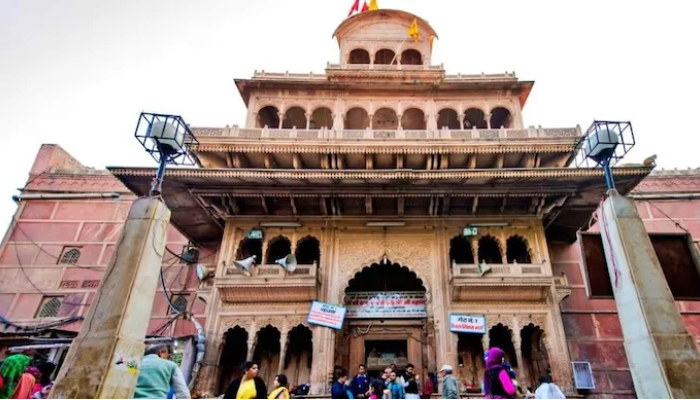
On 4th August, the Supreme Court envoked the spirit of Lord Krishna and referred to him as the “first mediator” during the hearing of the dispute concerning Vrindavan’s iconic Shri Banke Bihari Temple and the Uttar Pradesh government. The state government had issued an ordinance about the projected redevelopment of the temple’s corridor using Rs 500 crore from the latter’s finances.
The top court when requesting mediation between the temple trust and the state government about the corridor’s construction stated, “Lord Krishna was the first mediator, please try to mediate the matter.” The case was being heard by the bench of Justices Joymalya Bagchi and Surya Kant.
They recommended to maintain a portion of the 15th May Supreme Court judgement that had permitted the state to spend temple funds in abeyance and proposed to choose a retired high court or district judge as the temple’s managing trustee. Meanwhile, the Allahabad High Court will review the ordinance’s constitutionality.
According to the court’s proposal, the temple will be run by a committee until the decision is made but the family that was assigned the responsibility shall continue to perform the rites as they did earlier. “The daily rituals of the temple would be continued by the ‘goswamis’ as before,” it pronounced.
The court added that the ASI can be linked to the committee for a comprehensive development of the area and the Collector and other authorities will also be included. The Uttar Pradesh government has been ordered to reply to the court’s suggestions by 10:30 am of 5th August.
According to the 2025 UP Ordinance, a statutory trust will be granted to the temple management. It declared that the “Shri Banke Bihari Ji Mandir Nyas” will be in charge of the temple’s administration and the facilities for the worshippers. It further conveyed that a maximum of seven members will serve ex-officio and eleven trustees will be nominated. The ordinance emphasised that the members of the government and non-government organisations must be followers Sanatan Dharma.
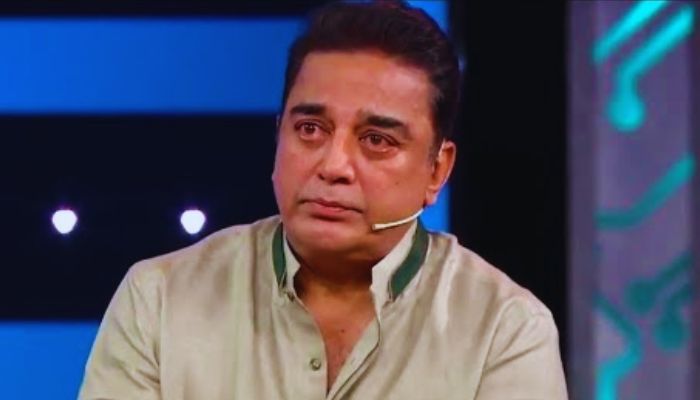
Kamal Haasan, Tamil actor, a full-time Hinduphobe, and an atheist who once admitted to spreading the word of Christ has expressed his desire to ‘’break the chains’ of Sanatan Dharma.
Addressing a gathering at the Agaram Foundation event in Chennai on 3rd August 2025, Haasan said, “Education is the only weapon that can break the chains of dictatorship and Sanatan.”
The founder of Makkal Needhi Maiyam (MNM) added, “Don’t take anything else in your hands, only education. We cannot win without it, because the majority can make you lose. Majority Fools (Moodargal) will make u lose; knowledge alone will seem defeated. That’s why we must hold on to it Education firmly.”
"Education is the only weapon that can cut off chains of dictatorship and Sanatan." – KAMAL HAASAN pic.twitter.com/vGOf3WRXzM
Haasan’s remarks have triggered outrage among Hindus and received backlash from political opponents as well.
Reacting to the Hinduphobic remarks by Kamal Haasan slandering Sanatan Dharma some sort of oppressive religion, Tamil Nadu BJP leader Tamilisai Soundararajan said, “Kamal Haasan is more thankful to DMK than its own cadres. First, he raised the language issue, dividing people of different states. Now, he is raising the religious issue to create division based on religious sentiments. I am asking why you are talking about Sanatan. If he speaks about Sanatan, Udhayanidhi and Stalin will be happy. However, Tamil Nadu people will be unhappy, and not only Tamil Nadu, the sentiments of all Indians who follow that ideology will be hurt… I strongly condemn this…”
#WATCH | Chennai, Tamil Nadu: On MNM chief & Rajya Sabha MP Kamal Haasan's statement, BJP leader Tamilisai Soundararajan says, "…Kamal Haasan is more thankful to DMK than its own cadres. First, he raised the language issue, dividing people of different states. Now, he is… pic.twitter.com/3QuN9yMGtH
Before Rajya Sabha MP Kamal Haasan, Tamil Nadu minister and DMK leader Udhayanidhi Stalin had in 2023 sparked outrage by giving open calls for ‘eradication’ of Sanatan Dharma.
“Mosquitoes, dengue, flu, malaria, corona – we should not oppose these things. They’ve to be eradicated completely. The same is the case with Santanam (Hinduism). Our first work should be to abolish/eradicate Sanatanam instead of opposing it. So, my appreciation to you all for giving an apt title to the meeting,” Stalin said back then.
Despite the outrage and blatant disrespect to Hindu religion in a Hindu-majority country, Udhayanidhi Stalin, who claims to be a Christian, not only doubled down but was also joined by other DMK leaders in making anti-Sanatan remarks.
Unsurprisingly, Kamal Haasan had back then supported Udhayanidhi Stalin. Haasan said that Udhayanidhi Stalin is a young child being targeted over this issue. However, a 45-year-old (at that time) Udhayanidhi was as much a young child as a 55-year-old Rahul Gandhi is decribed as a youth leader by Congress IT cell.
“Today, a young child is being targeted because he has spoken about Sanatan Dharma. Several leaders of the Dravidian movement like Udhayanidhi’s grandfather and late DMK leader M Karunanidhi have also spoken about it in the past. The extent of reformist leader Periyar E.V. Ramaswamy’s resentment towards social evils can be understood from his life,” Haasan said at a public event.
Notably, in Tamil Nadu, ‘Sanatan’ is also often associated with ‘Brahminism’, which again, is wrongly used synonymously for casteism. Thus, Kamal Haasan is vilifying Sanatan, which the Dravidians associate with Brahminism, and they consider ‘Brahminism’ as the root of all ‘evils’. It all boils down to the very core of Hinduism.
Kamal Haasan has a penchant for making anti-Hindu remarks
Incidentally, this is not the first time that Kamal Haasan has made anti-Hindu remarks, in fact, he has been doing so for years now. Back in 2019, the MNM leader had said that independent India’s first extremist was a ‘Hindu’.
“I am not saying this because this is Muslim-dominated area, but I am saying this before a statue of Gandhi. Free India’s first extremist was a Hindu, his name is Nathuram Godse. There it (extremism, apparently) starts,” he said during a poll rally in Aravakurichi.
In 2017, Kamal Haasan labelled Hindus as ‘extremists’ and Hindu groups as ‘violent’ and said, “Hindus cannot challenge others to show extremists among them since extremism has spread to that extent even among the Hindus. Hindus are losing faith in the principle of satyameva jayate and instead, they were subscribing to ‘might is right’. In the past, Hindu right-wing groups would not indulge in violence. They would hold a dialogue with opponents. But now they resort to violence.”
In October 2022, amidst row over Tamil movie director Vetrimaaran’s claim that Chola king Raja Raja Chola I was not a Hindu, Kamal Haasan claimed that here was no Hindu religion during the time of the Chola king.
“There was no name called ‘Hindu religion’ during Raja Raja Cholan’s period. At that time there were Vaishnavas and Shaivites. It was the British who coined the term ‘Hindu’ because they did not know how to express it collectively. It’s just like they turned Thoothukudi into Tuticorin,” Haasan said even as in reality, Vaishnavs and Shaivs have always been integral sects within Sanatan Dharma.
In May 2023, Kamal Haasan labelled the film The Kerala Story, which was inspired from real events involving proselytization and brainwashing of Hindu and non-Christian, their conversion to Islam and subsequent manipulation into joining Islamic terror outfits like ISIS, as a ‘propaganda’ film. Haasan, however, never labelled his own films as piece of propaganda despite their themes being deeply anti-Hindu and outrageous in all respects.
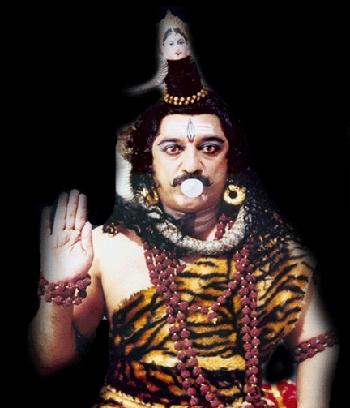
In fact, Kamal Haasan’s filmography shows that the veteran actor has been using movies to push anti-Hindu agenda for long. From mocking Lord Murugan in the film ‘Kaadhala Kaadhala‘ (1998), portraying Lord Shiv as a comic character blowing bubbles with his bubblegum in Pammal K. Sambandam‘ (2002), to vilifying Shaivites, Kamal Haasan’s movies often feature anti-Hindu themes.
Apparently, Kamal Haasan wants students to ‘eradicate’ Sanatan through education while he makes his bid in this direction through his movies.
Desperate for political clout or perhaps driven by deep-seated disdain for Hinduism, Kamal Haasan has wrongly reduced Sanatan, which implies the eternal principles and timelessness of Hindu Dharma, to some sort of oppressive force that needs to be broken free from.
While the actor-politician equated Sanatan to dictatorship, Sanatan, rooted in the eternal principles of Dharma (righteousness), Karma (duty) and moksha (salvation) is itself a profound liberator, unshackling people from material bondage and evils of all sorts.
Haasan, who enjoys a vast fan base among Sanatan-believing Hindus, is perhaps deliberately disparaging Sanatan Dharma since he knows he can get political gains due to it. He can expect praise from anti-Hindu Dravidian intellectual circles, can come across as a ‘progressive’ leader’ and get away with it without any serious consequences. Had Kamal Haasan called education an effective weapon against Islamic terrorism, he would have started getting ‘Sar tan se juda‘ threats by now.
Earlier, Islamo-leftists and liberals claimed to fight against ‘Hindutva’ and now they want to break shackles of ‘Sanatan’, it is but an allusion for Hinduism. The strategy may have changed, however, the target remain Hindus and Hinduism.
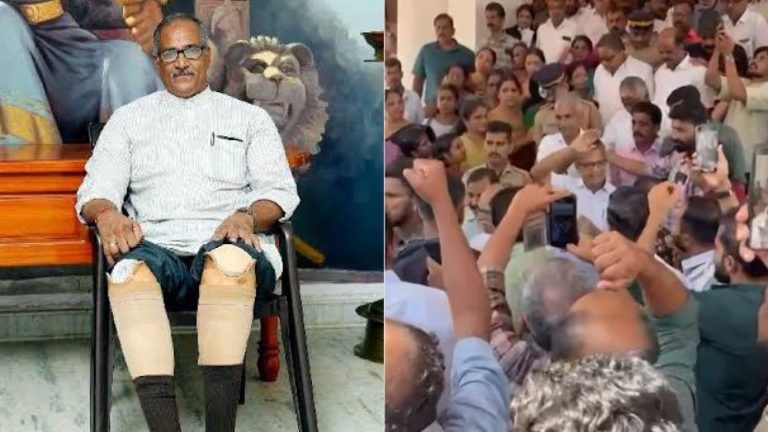
A political firestorm has erupted in Kerala after the Communist Party of India (Marxist) organised a celebratory farewell for eight party workers convicted in a brutal 1994 attack that left current BJP Rajya Sabha MP and state vice-president Sadanandan Master permanently disabled.
The send-off, held outside the Thalassery sessions court and later in Mattannur, Kannur, the very town where the attack took place three decades agowas marked by party slogans, cheering cadres, and garlands. Among those present was Mattanur MLA and former Health Minister KK Shailaja, whose public appearance at the event has triggered sharp backlash from across the political spectrum.
Videos from the farewell, now viral on social media, show CPI(M) workers treating the convicted men not as criminals, but as heroes returning from battle. The spectacle comes after the Supreme Court dismissed their final appeal, upholding the Kerala High Court’s verdict that refused any leniency, calling the 1994 assault “premeditated” and “deeply condemnable.”
“This is unfortunate and sends a dangerous message to society,” said Sadanandan Master, the victim of the attack, who lost both his legs in the ambush. “These men were not acquitted. Every court, from the trial court to the Supreme Court, upheld their conviction. And yet, the CPI(M) decided to celebrate them, and worse, an elected MLA like KK Shailaja chose to lead it.
From brutality to bail to celebration
On January 25, 1994, Sadanandan, then a 30-year-old school teacher and the saha karyavah of the RSS in Kannur, was returning home after visiting relatives ahead of his sister’s wedding. What awaited him was a brutal, targeted assault by CPI(M) workers, a planned act of political vengeance that left him wheelchair-bound for life.
The case saw 12 accused, but only eight were convicted in 1997 after a trial in the Kannur court. The other four were acquitted of conspiracy charges. Though initially charged under the stringent TADA (Terrorists and Disruptive Activities Prevention Act), those provisions were later dropped.
The eight convicts were sentenced to seven years in prison but spent most of the past 30 years out on bail as their appeals progressed. In January this year, the Kerala High Court upheld their convictions, observing:
“The incident did not happen in a fit of rage or on sudden provocation… the attack appears to have been premeditated. The accused do not deserve any sort of leniency.”
The court also enhanced the compensation, directing each of the convicts to pay ₹50,000 to the victim. After the Supreme Court refused to entertain their final plea, the High Court cancelled their bail and ordered them to surrender by August 4.
Political message or moral bankruptcy?
Instead of a quiet, lawful surrender, the CPI(M) orchestrated a spectacle. The farewell looked more like a rally than a moment of accountability and critics say it reveals a disturbing culture of glorifying political violence.
While CPI(M) leaders tried to frame it as a show of solidarity with party comrades, the visuals, garlands, raised fists, and party slogans, told a different story.
“As a public representative, KK Shailaja should have known better,” Sadanandan Master remarked. “When leaders glorify convicts, they send the wrong message to the youth, that violence in the name of ideology is honourable.”
With the convicts now lodged in Kannur Central Prison, the episode has sparked a wider debate in Kerala: Is political allegiance enough to wash away the stain of violence or is the CPI(M) rewriting justice with party slogans?
How Sadanandan Master was attacked by CPIM goons?
On the night of 25th January, 1994, at the age of 30, Sadanandan was ambushed by CPI(M) goons near his home village of Perinchery. In a shocking act of political violence, they chopped off both his legs and left him bleeding on the roadside as a warning to those switching political sides.
Recalling that night, he once shared how no one dared to help him because of fear. It was only when the police arrived on the scene, maybe fifteen minutes later, that I was whisked off to the hospital. By then, I had lost consciousness.
But that terrible night didn’t stop him from moving forward. He returned to teaching in 1999 and still works as a social science teacher at Sree Durga Vilasam Higher Secondary School in Peramangalam.
Over time, he also became an active part of the BJP and contested elections from the Koothuparambu constituency in 2016 and 2021.
In his youth, Sadanandan leaned towards communist ideas, just like many young people in Kerala. But things changed for him when he started reading more about the RSS and its views on cultural nationalism.
He was especially moved by poet Akkitham’s article ‘Bharata Darshanangal’ and joined the RSS in 1984, even though his family had strong Left roots. His father was a retired teacher and a CPI(M) supporter, and his brother was also an active party worker at the time.
Today, apart from teaching, Sadanandan is the state vice-president of the National Teachers Union in Kerala. He also edits its magazine Deshiya Adhyapaka Vartha and is part of the Bharatiya Vichara Kendram, an RSS-affiliated intellectual group.
He is married to his college love, Vanitha Rani, who is also a teacher, and their daughter Yamuna Bharati is studying BTech and is active in the ABVP student organisation.
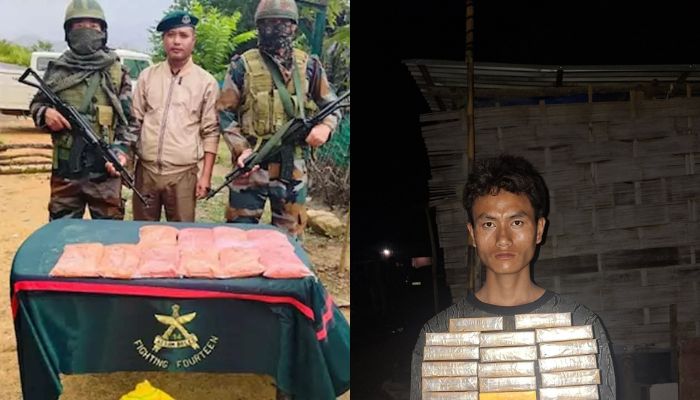
In one of the biggest drug hauls in the Indian state of Mizoram, police have seized crystal methamphetamine and heroin worth around Rs 350 crore and arrested one person, a senior officer said on Sunday, 1st August.
Acting on a tip-off, a team comprising personnel of the Criminal Investigation Department (Special Branch) and the Special Narcotic police station in Aizawl conducted an operation near the state capital.
After a thorough search, officials recovered 20.304 kg of crystal meth, valued at approximately Rs 300 crore, and 1.652 kg of heroin in 128 soap cases, valued at approximately Rs 49.56 lakh. These drugs were concealed in a hidden compartment within a car. The driver, 45-year-old B Lalthazuala of Republic Mual Veng, Aizawl, was arrested and charged under several sections of the Narcotic Drugs and Psychotropic Substances (NDPS) Act, 1985. Investigations are in progress.
This is not the first incident. Within a few weeks, another such big drug haul was seized in Zokhawthar village on 10th July, 2025. The local police had carried out a foot march in the region on the basis of a reliable tip and seized an abandoned green nylon bag near Kudamsen Kai. A 20-year-old Myanmar man, Lalnuntluanga, who now lives in Zokhawthar, was arrested near the location. He admitted to having smuggled the consignment from Khawmawi, Myanmar.
HUGE SEIZURE OF HIGH QUALITY HEROIN Based on an input received from a reliable source, Zokhawthar Police Station team conducted foot patrolling within Zokhawthar village on the night of July 10, 2025. At around 8:00 PM, a green nylon sack, suspected to contain contraband, was pic.twitter.com/zTJoS08ILF
Within the sack, police seized 20 bricks of heroin, each carefully wrapped in clear polythene and sealed with yellow sticky tape, brown paper, and aluminium foil. Each of the bricks had the stamp of “DOUBLE UOGLOBE BRAND,” which historically represents ultra-pure (99.9%) heroin in the Asia-Pacific market. The aggregate weight of the recovered heroin was 7.422 kilograms, valued at over Rs 2.22 crore in the streets.
After his confession, four individuals were arrested, namely three Zokhawthar residents and one from Aizawl. The operation was the biggest-ever heroin seizure by Mizoram Police in terms of purity and amount. A case has been registered formally under the NDPS Act as well as the Foreigners Act.
Meth tablets worth over 9 crores seized by DRI
Adding to this increasing alarm, the Directorate of Revenue Intelligence (DRI) confiscated 9.72 kg of methamphetamine tablets from a Mahindra XUV500 on 30th May, 2025. The seizure was made near Seling on the Aizawl-Champhai road (NH-6). The drug was concealed in an ingenious cavity at the back of the rear seat of the vehicle.
The tablets are valued at Rs 9.72 crore in the global market. One individual was apprehended on the spot. During investigations, it was found that the consignment was smuggled into Mizoram from Myanmar through the Zokhawthar border. Since January 2025, DRI has seized more than Rs 72 crore worth of meth and heroin from Mizoram and made seven arrests about these seizures.
Myanmar: The primary portal to India’s drug trafficking route
These instances highlight a more expansive, more concerning trend. Myanmar has turned into a leading gateway for drug smuggling into northeast India. Mizoram, which also shares an open 500 km-long border with Myanmar, is now a key path for smuggling yaba tablets (methamphetamine), heroin, and other synthetic drugs.
According to a report by The Economic Times, some NGOs in Mizoram have expressed alarm at the increasing control of drug syndicates that move drugs through the Myanmar border.
Drugs recovered in two months of 2020 were worth more than USD 136,000. Security experts noted that the Shan state in Myanmar, part of the notorious Golden Triangle (where the borders of Myanmar, Laos, and Thailand converge), contains so-called makeshift labs churning out billions of meth tablets every year.
India has also seen a remarkable spike in amphetamine-type stimulant (ATS) seizures, 431 kg in 2018 to more than 2.2 tons in 2019, as per a report by the United Nations Office on Drugs and Crime (UNODC).
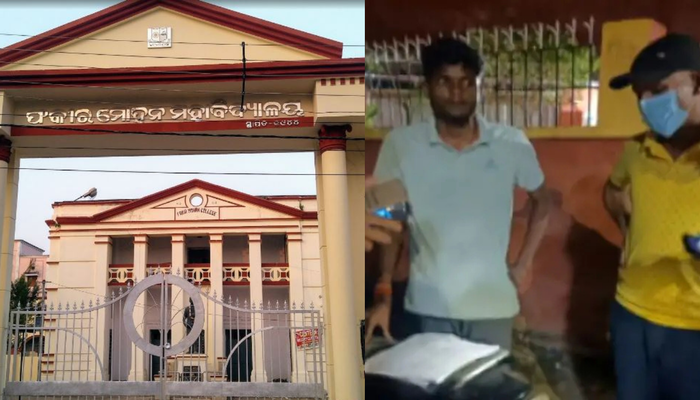
In the ongoing investigation into the Balasore student self-immolation case, the Odisha Crime Branch has arrested two male students late on Sunday (3rd August) on suspicion of instigating the victim to commit suicide. The arrestees, identified as Subhra Sambit Nayak and Jyoti Prakash Biswal, were produced before the Sub-Divisional Judicial Magistrate (SDJM) Court in Balasore, where they were denied bail.
Consequently, the two accused were remanded to 15-day judicial custody. The students have been arrested on charges relating to criminal conspiracy and abetment for suicide.
As per reports, the Crime Branch has concrete evidence linking the students to the circumstances leading up to the girl’s death. The evidence include digital evidence and eyewitness accounts combined with forensic analysis.
Notably, one of the students, Jyoti Prakash, sustained injuries while attempting to save the girl after she set herself on fire. He was admitted to SCB Medical College, Cuttack, for treatment and was later discharged. However, the investigators were suspicious of his role and believed that his attempt to rescue the girl might have been a cover to avoid suspicion. The other guy is Subhra Sambit Nayak. The number of arrests in the case has now reached four.
The victim set herself on fire due to inaction on her sexual harassment complaint
In an unfortunate incident, the 20-year-old victim, who was a student of B.Ed. at the Fakir Mohan (Autonomous) College, Balasore, set herself on fire on 12th July due to inaction on her sexual harassment complaint against her Head of Department (HoD), Sameer Sahoo. Before setting herself on fire, she had a meeting with the college principal, Dilip Kumar Ghosh, in his office.
The victim, named Soumyashri Bisi, suffered over 90% burns and was getting medical care at AIIMS, Bhubaneswar. She succumbed to her burn injuries two days later. The victim had submitted a complaint of sexual harassment against Sahoo to the college principal and the police. She was disappointed over no significant action being taken against Sahoo. The college principal and the HoD were arrested by the police after the incident, and an investigation was launched.
The incident attracted widespread outrage and condemnation. Allegations of systemic harassment, administrative apathy and unsafe college environment emerged. A day after the victim filed a complaint of sexual harassment against the HoD, the majority of students from her class did not believe her and signed a letter in support of the HoD. Out of the total 100 students in her class, 71 supported Sahoo and called her complaint false.
In the two-page letter, the students praised Sahoo as a “great teacher who is known for his amiable ways.” They cast suspicion on the victim by stating in the letter that she levelled the allegations after she was debarred from the exam due to poor attendance. As per the FIR lodged by the victim’s cousin, the college forced her to withdraw her complaint and apologise to Samir Sahoo, just minutes before the incident.
A unit of the Crime Against Women (CAW) of the Odisha CID is investigating the HoD’s history of misconduct, the role of the college principal, and the reasons behind the smear campaign run against the victim through the letter.
Administrative inaction, combined with apathy and distrust shown by her peers, caused immense mental trauma to the victim, which seems to have pushed her to take the extreme step.
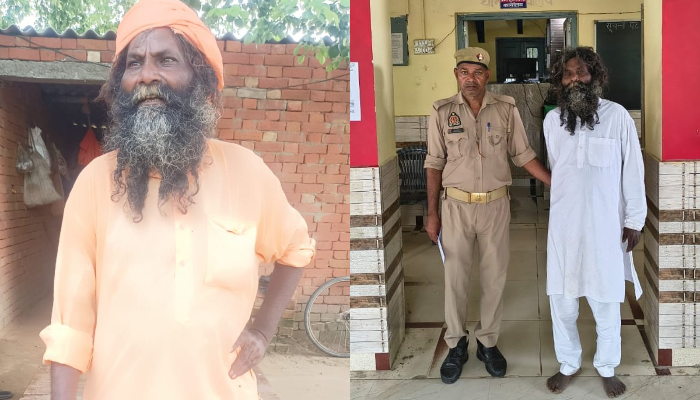
A disturbing case has emerged from the Shani temple situated in the village of Manti Hasanpur within the Thana Bhawan region of Shamli district in Uttar Pradesh. The authorities have apprehended a man known as Baba Bengali also referred to as Balaknath after his identity was revealed to be 55-year-old Imamuddin Ansari, resident of Kalchini in the Alipurduar district of West Bengal.
He had been serving as a priest at the temple and falsely portraying himself as a Hindu sadhu for at least two years. The authorities initiated legal proceedings against him and presented him before the court where he was remanded to judicial custody for 14 days.
On 2nd August, the Thana Bhawan police received intelligence indicating that the accused is a Muslim and has been living in the temple with a fraudulent identity. They responded promptly and conducted a nighttime raid on the temple and apprehended him. Three Aadhar cards and a PAN card were found in his possession.
One of the Aadhaar cards bore the name “Bengali Nath Care of Kamalnath” with the address listed as Shakambhari Road Water Tank, Laxmi Narayan Mandir in Saharanpur. The other documents exposed Ansari’s true name and actual address. He also obtained land from the village head Rameshwar, under the pretense of constructing a temple. He even took donations from locals to fund its construction and subsequently started to stay inside the temple.
What do the authorities say
Superintendent of Police Ramsevak Gautam stated that charges have been filed against the perpetrator under various sections related to the creation of forged documents, fraud and the violation of religious sentiments. Additionally, the intelligence department is also involved in the inquiry to determine if this incident is part of a larger and orchestrated conspiracy or network.
Currently, Ansari is undergoing questioning and the validity of his documents is also under scrutiny. The police disclosed that Ansari migrated to North India from West Bengal approximately 15 years ago in pursuit of employment. Initially, he resided in Saharanpur and its surrounding districts where he encountered a Baba Kamalnath.
The former was reportedly brought to Manti Hasanpur by an individual from Saharanpur. The villagers believed that the offender was a Hindu saint and permitted him to reside in the Shani temple. He worshipped at the temple and diligently followed Hindu customs. Hence, no suspicion was raised against him.
Once the entire matter was unveiled, the authorities have become more alert and every detail is being monitored closely. The police have stated that further action will be on the basis of the inquiry’s outcomes.
According to media reports, a police team has been dispatched to West Bengal to confirm the address listed on Ansari’s Aadhaar card and collect more information regarding him. They will conduct a thorough inquiry to uncover the truth about him and also look into whether there are any criminal cases filed against him in that region.
Furthermore, the team will examine the circumstances surrounding the alteration of the name on the Aadhaar card including the people who were involved in this. They cops have not obtained any information in relation to him having a bank account. The police discovered that the culprit has not undergone any conversion.
Anger among local Hindu community
The development has sparked anger among the local community who demanded strict action. The police have urged the public to maintain peace and have guaranteed that the probe will be conducted in a transparent and unbiased manner. District Math Mandir Pramukh Bharat Bhushan remarked that this incident was shocking.
The Hindu outfits plan to initiate an investigative campaign throughout the district and monitor such elements closely to prevent similar occurrences in the future. They urged the police administration to treat this issue with the seriousness it deserves and implement strict actions.
Vishva Hindu Parishad’s District Service Pramukh Vinni Rana stated that the organization is fully equipped to deal with such issues and will enforce strict action against Ansari. Workers are being mobilized at the rural level to facilitate it.
VHP’s District Mahamantri Shalu Rana expressed that the organization will dedicate all its resources to ensure strict action is taken against the accused as any conspiracy against Sanatan Dharma will not be allowed to prevail. Additionally, its members and local villagers will also look into those who request for alms while posing as sadhus in rural areas.
Notably, a similar incident transpired at a Shiv temple in Dadri village of Meerut’s Daurala where an alleged Hindu priest was exposed to be Qasim from Bihar, last month.
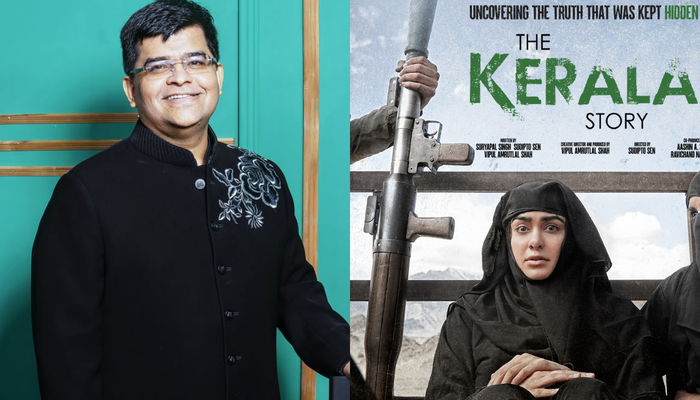
At the 71st National Film Awards, the movie The Kerala Story received the award for Best Cinematography and its director was conferred the Best Director award. The development has annoyed the usual suspects, who hate the fact that the movie portrays reality more than the movie itself.
The editor of the Filmfare magazine, Jitesh Pillai, took to Instagram to express his disappointment over the movie receiving the honour at the 71st National Awards. Calling The Kerala Story a “dangerously divisive film”, Pillai claimed that the National Awards jury has sent “seriously wrong signals” by giving the awards to the movie.
He claimed that the movie was not just a “vicious propaganda” but also portrays an “insidiously fake narrative”. “It has to be one of the worst movies ever made- it’s shoddily scripted, very poorly acted, horribly photographed and amateurishly directed,” Pillai said in his lengthy tirade.
He did not stop at spewing venom against the movie and went on to slam Ashutosh Gowariker, who is the chairman of the National Awards jury, for allowing the film to receive the award. “Is this the film chairman of the jury, Ashutosh Gowariker, with his claims of being an aesthete with a great understanding of cinema of sense and sensibility, has awarded it for best cinematography?” Pillai fumed. “P.S. Had to add RD Burman’s Sholay background score to take off the bitter taste of a shit show, ” he added.
Talks of “cinematic excellence” are a bit rich coming from the editor of the Filmfare magazine, as the credibility of Filmfare Awards has been questioned by several film actors, directors and celebrities over the years. Legendary actor Late Rishi Kapoor admitted in 2017 that he bought a film award for his movie ‘Bobby’ in 1974 for ₹30,000. He did not name the award, but it was quite obvious that he was referring to the Filmfare Awards, as he got the Filmfare Award for Best Actor for Bobby that year.
National Award-winning actress and BJP MP Kangana Ranaut has been quite vocal about the fakeness of film awards, including the Filmfare Awards, which she has been boycotting since 2014. In 2022, the Filmfare Awards withdrew her nomination after she said that she was offered an award by Filmfare for her movie Thalaivi in exchange for a performance at the award ceremony. She accused the Filmfare of being involved in corrupt practices.
Besides, film stars like Ajay Devgn, Akshay Kumar and Amir Khan are known for not attending and accepting these film awards due to the zero credibility of these awards.
The Kerala Story is based on the true story of a Hindu girl
The Kerala Story, released in 2023, sheds light on subjects like forced/lured religious conversions, ISIS brides, and love jihad. The movie was banned in West Bengal, and movie makers had to approach the High Court to get the movie released. Despite several attempts to ban the movie, it gained popularity. Starring actress Adah Sharma in the lead role, the movie portrays the reality of love jihad. It is based on the true story of a Hindu girl, Nimisha, who was brainwashed into marrying a Muslim and converting to Islam. She was taken to Syria to join ISIS.