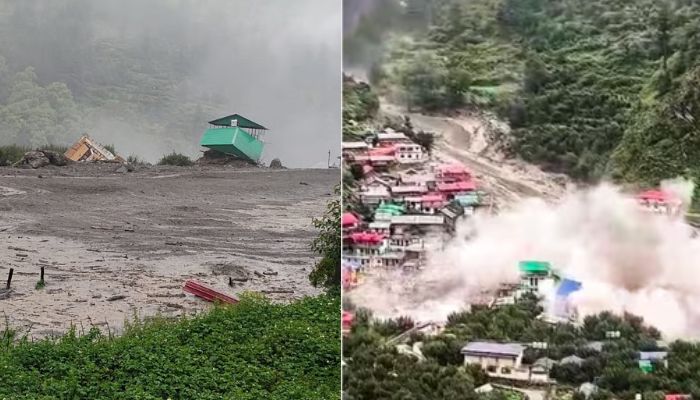
In the Uttarkashi district of Uttarakhand, a massive cloudburst triggered a landslide on 5th August. The cloudburst occurred in the catchment area of the Kheer Ganga river, resulting in flood which swept the Dharali village.
Reports say that around 20-25 hotels and homestays may have been washed away in the devastating floods. In the cloudburst incident, at least four people are reported dead.
— Radharamn Das राधारमण दास (@RadharamnDas) August 5, 2025
Meanwhile, the NDRF, SDRF and the Indian Army personnel have been deployed for rescue operation.
The Indian Army’s Central Command stated that Troops of the Ibex Brigade were immediately mobilised and have reached the affected site to assess the situation and undertake rescue operations.
“Extent of damage is being ascertained and updates will follow as relief operations unfold”, the Army’s Central Command said in a statement.
Taking stock of the situation, Chief Minister Pushkar Singh Dhami expressed deep sadness over the damage that was the result of the cloudburst CM Dhami further informed that the administration, including SDRF and NDRF, are engaged in the rescue operation, and the situation is being closely monitored.
In a post on X, CM Dhami said, “The news of heavy damage caused by a cloudburst in the Dharali (Uttarkashi) region is extremely sad and distressing. SDRF, NDRF, district administration, and other related teams are engaged in relief and rescue operations on a war footing. In this regard, I am in constant contact with senior officials, and the situation is being closely monitored. I pray to God for everyone’s safety.”
धराली (उत्तरकाशी) के प्रभावित क्षेत्रों में जिला प्रशासन, भारतीय सेना, NDRF एवं SDRF की टीमें राहत और बचाव कार्यों में जुटी हुई हैं। प्राथमिकता के आधार पर लोगों को सुरक्षित स्थानों पर पहुंचाया जा रहा है और स्थिति पर लगातार निगरानी रखी जा रही है। प्रशासन पूरी तरह सतर्क है और… pic.twitter.com/EV2ykxQ0bA
The cloudburst has led to flash floods in the high-altitude villages of Dharali. Several houses were reported to have been swept away.
Additionally, Uttarkashi Police said, “In Uttarkashi, due to the rising water level of Kheer Gadh in the Harsil area, reports of damage in Dharali have prompted police, State Disaster Response Force (SDRF), army, and other disaster response teams to engage in relief and rescue operations at the site.”
Responding to the incident, SDRF IG informed that battalions with specialised equipment have been dispatched to the spot and are on rescue operation is being done in a coordinated manner.
While speaking to ANI, SDRF IG, Arun Mohan Joshi said, “As soon as we got the information, our nearest SDRF team has reached the spot. Two other units are about to reach. Rescue work is being done in a coordinated manner. The nearby NDRF, Army teams are also reaching the spot. Specialised equipment in our SDRF battalion headquarters, which can be used in this disaster, is also being sent… Whether it is the Army, ITBP, or NDRF, all the teams are reaching the spot, and rescue is being done in a coordinated manner.”
Meanwhile, Uttarakhand’s Sukhi Top area has also experienced a cloudburst, hours after the Dharali area experienced huge losses due to a previous cloudburst. Taking to X, Union Home Minister Amit Shah said:”Spoke with the Chief Minister of Uttarakhand regarding the flash flood incident in Dharali (Uttarkashi) Uttarakhand, and took stock of the situation. Three nearby teams of the ITBP have been sent to the location, and four teams of the NDRF have also been dispatched to the site. They will reach soon and begin the rescue operations.”
उत्तराखंड के धराली (उत्तरकाशी) में फ्लैश फ्लड की घटना को लेकर उत्तराखंड के मुख्यमंत्री से बात कर घटना की जानकारी ली। ITBP की निकटतम 3 टीमों को वहाँ भेज दिया गया है, साथ ही NDRF की 4 टीमें भी घटनास्थल के लिए रवाना कर दी गई हैं, जो शीघ्र पहुँच कर बचाव कार्य में लगेंगी।
The Home Ministry is closely monitoring the developments, and efforts are underway to ensure timely rescue and relief for those affected by the natural calamity.
Meanwhile, the roads in Gasku, Malghat area on the Dharchula- Gunji route have been closed, with NDRF successfully transporting travellers stranded due to falling rocks. Police officials have urged people not to travel on the route till it is cleared.
The Chamoli police have also informed that the JyotirmathMalari motor road has been washed out near Saldhar. “Travellers and local residents are requested to avoid unnecessary travel and follow the guidelines and information issued by the Chamoli Police,” the police said in a post on X.
Earlier today, Prime Minister Narendra Modi also expressed condolences to the affected people in Dharali.
उत्तरकाशी के धराली में हुई इस त्रासदी से प्रभावित लोगों के प्रति मैं अपनी संवेदना व्यक्त करता हूं। इसके साथ ही सभी पीड़ितों की कुशलता की कामना करता हूं। मुख्यमंत्री पुष्कर धामी जी से बात कर मैंने हालात की जानकारी ली है। राज्य सरकार की निगरानी में राहत और बचाव की टीमें हरसंभव…
“I express my condolences to the people affected by this tragedy in Dharali, Uttarkashi. Along with this, I pray for the well-being of all the victims. I have spoken to Chief Minister Pushkar Dhami ji and obtained information about the situation. Under the supervision of the state government, relief and rescue teams are engaged in every possible effort. No stone is being left unturned in providing assistance to the people,” PM Modi posted.
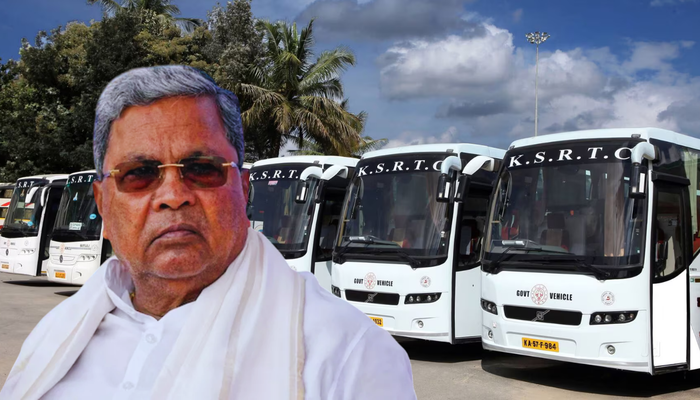
Employees of the Karnataka State Road Transport Corporation (KSRTC) and the Bengaluru Metropolitan Transport Corporation (BMTC) began their indefinite strike on Tuesday (5th August) over the unfulfilled demands of salary revision and arrears. The strike, announced by the Joint Action Committee of Transport Employees of Karnataka, was launched in defiance of the Karnataka High Court’s interim order postponing the strike for a day.
A division bench of Justices K. S. Mudagal and Justice M. G. S. Kamal passed the stay order on Monday (4th August). When the stay order was passed by the High Court, Chief Minister Siddaramaiah was in a meeting with the advocates representing the transport corporations and the leaders of transport employees. Therefore, the High Court ordered the postponement of the strike for a day. However, the Court expressed concern over delayed wages and questioned the state over the handling of the issue. As no agreement could be reached between the state government and the transport employees in the meeting, the employees launched the strike.
The public suffers as transport employees demand their rights
The strike left thousands of commuters stranded across the state. With the commuters looking for an alternative, the Namma Metro in Bengaluru experienced a heavy rush of passengers. Several parts of the states, including Hubballi, Davanagere, Hoskote, Bagalkote, Belagavi, Tumakuru, Mysuru, Mandya and Ramanagara saw the impact of the halt of the public transport services. There was a complete halt of bus services in some areas, while other areas witnessed a partial halt.
Taking precautionary measures in anticipation of the strike, the Principal Secretary of the Transport Department wrote to the Department of Information Technology on 2nd August, requesting it to direct all private IT companies in the state to allow employees to work from home during the strike period.
What the transport employees are demanding
The meeting between CM Siddaramaiah and the transport unions reached a deadlock as the unions demanded a 25% salary hike over the current base pay of ₹1,124 and pending arrears of 38 months, amounting to ₹1,800 crore. The Chief Minister said that the government could only clear the arrears of 14 months, which the unions did not accept. The unions said that the transport employees had worked for all 38 months; therefore, the demand was fair. However, CM Siddaramaiah termed their demand as excessive.
The Congress government in Karnataka has been facing criticism for introducing freebie schemes like the Shakti, which allowed free bus travel to all women in all state-owned buses, while the four state transport corporations have been facing a severe financial crunch. Karnataka State Road Transport Corporation (KSRTC), Bengaluru Metropolitan Transport Corporation (BMTC), North Western Karnataka Road Transport Corporation (NWKRTC), and Kalyana Karnataka Road Transport Corporation (KKRTC) have consolidated liabilities worth Rs 6,330.25 crore.
The Shakti scheme was implemented by all four SRTCs. Despite the humungous financial burden on the SRTCs, the state government has continued with the freebie scheme. The state government reportedly owed Rs 1,600 crore to SRTCs for the implementation of the Shakti scheme for the fiscal year 2023-24 and 2024-25 (till October) – with Rs 6,83.21 crore to KSRTC, Rs 280.82 crore to BMTC, Rs 394.7 crore to NWKRTC and Rs 335.67 crore to KKRTC.
The Pune Municipal Corporation (PMC) recently claimed that there has been a significant drop in rabies cases among stray dogs in the city. PMC claimed that the drop in rabies cases is due to improved vaccination and sterilisation efforts.
However, in July this year, while replying to a Right to Information application submitted by activist Vihar Durve, PMC revealed that there has been a sharp rise in dog bite incidents across the city, telling a different story about the effectiveness of the Animal Birth Control (ABC) Rules 2023. The rise in dog bite cases raises serious concerns about public safety and the limits of a rabies-only approach to the stray dog crisis.
PMC’s health department data show that suspected rabies cases among stray dogs have dropped from 373 in 2018 to just 19 so far in 2025. The number of confirmed cases of rabies has fallen from 220 to just 3 during the same period. Chief Veterinary Officer Dr Sarika Funde-Bhosale attributed the drop in numbers to mass vaccination, awareness drives, and better coordination in executing the ABC programme. Since 2021, PMC has administered 1.91 lakh vaccinations and the rabies positivity rate has declined to 15% in 2025.
Nearly 1 lakh dog bite cases since 2022
Though the number of rabies cases among dogs has declined sharply, that does not mean stray dogs do not cause harm to humans in other ways. The RTI reply has revealed that the broader threat from stray dogs remains unresolved. Over 1 lakh dog bite cases have been treated within PMC limits in government hospitals since 2022. In 2022, there were 21,000 dog bite cases. In 2024, the number went up to 37,000, and in 2025, there were 16,000 cases reported in the first five months.
PMC claimed that increased awareness and the reporting of minor scratches have inflated the figures. However, it has to be noted that even a minor scratch or a lick by a rabies-infected dog is deadly. Taking the matter leniently or saying minor cases inflated the numbers should not be the approach PMC adopts.
Speaking to Times of India, Durve questioned the explanation, pointing to a contradiction. He said, “If the stray dog population has indeed dropped from 3.15 lakh in 2018 to 1.79 lakh in 2023, why are dog bite cases steadily rising? Either the sterilisation is ineffective, or the population claims are flawed.”
Focus must go beyond rabies
The focus of PMC should not be limited to rabies, as it masks the wider failure of the ABC programme, which is, in fact, supposed to control the dog population. If there is an increase in the number of dog bites, it is safe to assume that the dog population has significantly increased in the city. The civic body has claimed that they have doubled the sterilisation surgeries in five years, from 11,000 in 2018–19 to 27,000 in 2022–23. However, the threat to citizens, especially children and the elderly, continues unabated.
Durve added, “In case of pet dog attacks, owners are held responsible. Why should the PMC not be held liable for stray dog attacks? Compensation should not be goodwill, but a matter of accountability.”
Interestingly, a 2023 report claimed that the number of dogs in Pune decreased by 42%, but the number of dog bite cases saw hardly any change, raising questions about the dog census conducted by the local authorities. Here, it is essential to point out that the Government of India has clearly stated that the livestock census at the central level, which includes the census of stray dogs, is done only once every five years. However, local authorities can conduct the census periodically on their own.
It is time authorities start to look at the broader implications of stray dogs instead of just concentrating on the number of rabies cases in dogs or humans.
OpIndia is doing a series on Stray Dog Menace in India that can be checked here.
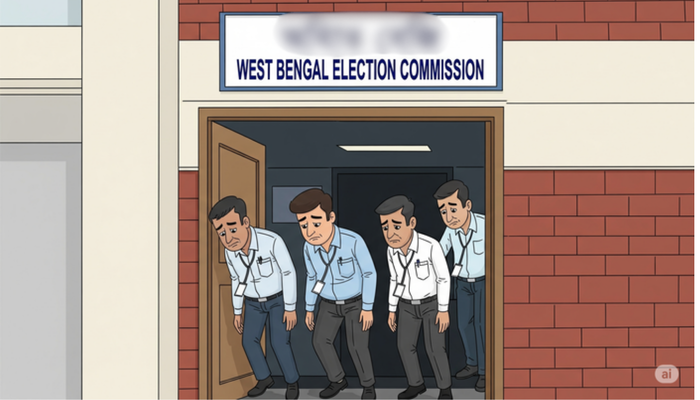
In a strong move, the Election Commission of India (ECI) on Tuesday (5th August) suspended four election officials in West Bengal, who reportedly allowed fake voter applications to be registered by misusing their authority. Their actions were exposed during a sample checking of voter application forms (Form 6) for routine updates to the electoral roll by the West Bengal Election Commission.
Two Electoral Registration Offices (EROs), namely Debottam Dutta Choudhary and Biplab Sarkar and two Assistant Electoral Registration Officers (AEROs), namely Tathagata Mondal and Sudipta Das, have been suspended by the ECI with immediate effect ECI has also ordered disciplinary proceedings against the officers without delay.
The Commission said that the actions of the officers amount to criminal misconduct and, therefore, also ordered the filing of FIRs against all four officials. Besides, the ECI also directed an FIR to be lodged against the casual Data Entry Operator, Surojit Haldar.
Election Commission has suspended 2 ERO (Electoral Registration Office) and 2 AERO (Assistant Electoral Registration Officers) for committing grave lapses and failing to perform their duties, violating the policy of data security while sharing their login credentials of the ER… pic.twitter.com/gjD1lCrQrw
“The Commission has taken sserious naote of the grave lapses committed by the officers,” the ECI said in a letter addressed to the Chief Secretary, West Bengal. “…FIRs be lodged against the above mentioned erring EROs and AEROs for their action, which potentially amount to criminal misconduct. Furthermore, FIR shall also be lodged against the Data Entry Operator Surojit Haldar,” the ECI said. The ECI said that the conduct of the four election officers invites a penalty under Section 32(1) of the Representation of People Act, 1950.
EROs admitted to sharing login credentials before the CEO of West Bengal
The names of the four officers came up during an inspection of voter application data in West Bengal. The Chief Election Officer (CEO) of West Bengal found that several fake voter names were added to the voter list. Consequently, the officers were summoned by the commission. During questioning, they admitted that they shared their login credentials to the ERO.net portal with unauthorised persons.
The officials did not follow proper procedure for the registration of voter application forms by dispensing with the requirement of BLOs’ verification of the forms. As a result, the CEO of West Bengal ordered an urgent investigation into the matter and directed the District Election Officer (DEO) to form a team of senior officials and conduct a sample check of all the voter application forms disposed of during the last year, and submit a report by August 14, 2025.
Mamata Banerjee opposed electoral revision in her state
There are reports of the Election Commission conducting a Special Intensive Revision (SIR) exercise in West Bengal ahead of the assembly elections next year. However, West Bengal Chief Minister Mamata Banerjee has clearly stated that she would not allow an electoral revision, which is a routine exercise to update the voter list, in her state. One might wonder what could be the rationale behind a Chief Minister stopping the updation of the electoral roll in her state, which the Election Commission is mandated to do by law.
Concerns regarding fake voters being added to the electoral roll in West Bengal have been consistently raised by the BJP. Last year in February, a 6-member delegation of the BJP led by Suvendu Adhikari submitted a memorandum to the CEO of West Bengal alleging that there were 16 lakh fake or duplicate votes in the state.
In 2022, a video of TMC leader and Bardhaman Dakshin MLA Khokan Das had gone viral, in which he was seen urging his party workers to make sure that Bangladeshi immigrants who support the ruling TMC in West Bengal would be placed on the voters’ list. There have been suspicions of voter count increasing sharply in some Muslim-dominated areas in the state.
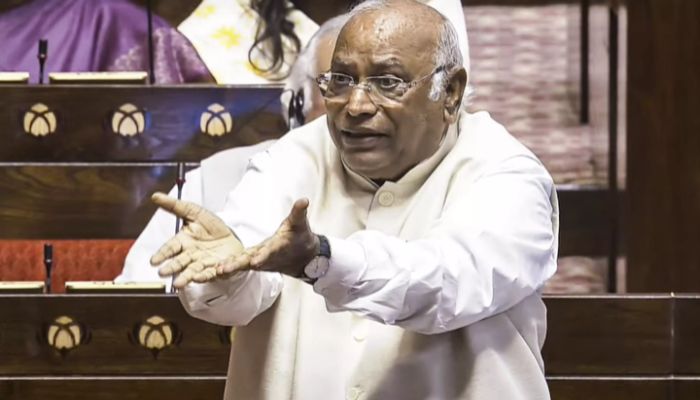
Union Minister Kiren Rijiju on Monday, 5th August, fact checked Congress president and Leader of the Opposition in Rajya Sabha, Mallikarjun Kharge, saying he was “misleading” the House by claiming that CISF personnel had entered the Well of the House. Rijiju said only Marshals were allowed inside, and only Marshals were in the House that day. He asked Kharge to clarify the claims he made both in his letter to the Chair and in the media.
Responding to the allegations, Rajya Sabha Deputy Chairman Harivansh refuted Kharge’s claims, stating that the personnel deployed were not from the CISF but from the Parliament Security Service (PSS).
When Kharge tried to insist again that CISF was deployed inside the House, members from the government side, along with the Chair, interrupted him, saying that only Marshals were present.
Huge Ruckus in Rajya Sabha
Kharge asks, 'Why do we bring CISF?'
Union Minister Rijiju responded by saying, 'It is clearly on record that only marshals are allowed in the House, and even on that day, it was the marshals who were present. Therefore, the Leader of the Opposition… pic.twitter.com/mcWgTGpX2u
Following this, Kharge asked whether the Chairman or Union Home Minister Amit Shah is running the House. “Even our previous leaders have maintained that disruptions are also a part of democracy. But I ask you today (Chair), who is running this House? You, or Union Home Minister Amit Shah?” Kharge said. after which loud protests erupted from the Opposition benches.
This heated exchange comes after Kharge’s letter to Deputy Chairman Harivansh, sent on Friday, 1st August. In the letter, Kharge expressed shock over alleged CISF deployment during an Opposition protest. “We are astonished and shocked at how CISF personnel are made to run into the Well of the House when the Members are exercising their democratic right of protest”, he wrote.
Congress MP Pramod Tiwari also slammed the government, saying that male security personnel stopped women MPs. “This is a dark day for democracy,” he told reporters.
“Protestors take over the streets of Dhaka”. “Violent mob barges into Sheikh Hasina’s residence”. “Sheikh Hasina resigns”. “Prime Minister Sheikh Hasina forced to flee Bangladesh”. Such headlines dominated news on 5th August 2024, when ‘student’ protestors and Islamists from the Jamaat-e-Islami wreaked havoc in Bangladesh, unceremoniously ousting their elected Prime Minister Sheikh Hasina.
With Sheikh Hasina, political sanity and whatever little religious tolerance there was in Bangladesh also left, as minorities, especially Hindus, were looted, raped, killed, and their temples were destroyed with impunity. As the violent regime change in Bangladesh marks one year, here’s a timeline of what preceded the ouster of Sheikh Hasina and Bangladesh’s descent into chaos, rise of Islamism, and the persecution of Hindus.
Student protests or a regime change playbook successfully executed?
In early July 2024, protests erupted in Dhaka, led by the Students Against Discrimination movement. The sequence of events and Sheikh Hasina’s statements regarding attempts being made to destabilise Bangladesh and oust her from power illegally, fuel the speculation that the Awami League leader’s forced resignation and escape from her homeland was not simply a consequence of student protests but that of a US-orchestrated regime change operation.
The turmoil in Bangladesh started in early 2024 and centred on a contentious quota system for government posts. The Court’s decision to keep a sizable proportion of jobs for specific groups, notably descendants of freedom fighters and women, prompted great outrage among university students. It all started over the decision of the High Court to reinstate the 30% reservation in government jobs to the descendants of the freedom fighters of the 1971 Liberation War. What started as peaceful protests soon took a violent turn.
In the first phase of the protests, it was reported that over 32 people died while nearly 1000 were injured as the country was grappling with high inflation, dwindling foreign reserves, and rising unemployment. On the 18th of July 2024, the anti-quota protesters set fire to the headquarters of the state broadcaster Bangladesh Television (BTV) in Dhaka. The police had to fire rubber bullets and use other non-lethal weapons to quell the protests by the students, causing more deaths and injuries.
Notably, until 2018, 56% of government posts in Bangladesh were reserved for certain groups. These groups included people with disabilities (1%), indigenous communities (5%), women (10%), people from underdeveloped districts (10%), and families of freedom fighters from the 1971 Bangladesh Liberation War (30%).
With this arrangement in force, there were only 44% of seats open to merit-based selection. In 2018, student groups staged large-scale protests, forcing the Sheikh Hasina-led government to scrap the entire quota system.
In June 2024, the High Court of Bangladesh overruled the government’s decision, which triggered further demonstrations by student groups.
The Supreme Court’s Appellate Division upheld the High Court’s decision on the 4th of July triggering widespread protests. After Sheikh Hasina’s appeal, the Bangladeshi apex court directed all petitioners to maintain the status quo till the 7th of August 2024.
During the second phase of the nationwide protests, it was reported that over 150 people were injured, and two people had died. This came just two weeks after the country’s Supreme Court reduced the percentage of reserved government jobs from 56% to 7%. Initially, the anti-quota protestors sought revocation of reservation for families of freedom fighters. However, they then renewed their demands and sought “justice” for the 200 odd-people who were killed during the initial phase of violent protests and immediate release of detained protestors.
In Dhaka, Khulna, Sylhet, Narsingdi, Chattogram and Noakhali, after Jumma Namaz, numerous incidents of violence were reported. The protestors set a police box on fire at the Wasa intersection in Chattogram after Jumma Namaz. The protestors resorted to pelting stones and hurling brickbats. The law enforcement authorities responded with lathi-charge, rubber bullets, firearms, stun grenades and teargas. Several protestors who sustained rubber bullet injuries were admitted to hospitals.
On 18th July 2024, PM Hasina called in the army to manage the escalating protests and violence.
In an attempt to quell the protest, the authorities suspended all internet services, including broadband, banned all Meta platforms, including Facebook, WhatsApp, Messenger, and Instagram, and announced a three-day vacation.
Amidst the violence and anarchy, the protestors demanded the resignation of Prime Minister Sheikh Hasina. By 4th August, over 100 people had died in the clashes between the Awami League supporters and the protestors. The deceased included 14 police personnel. In the wake of the violence in Bangladesh, the Interior Ministry declared a nationwide curfew to try and control the law and order. The government also declared a holiday between 5th and 7th August to pacify the situation.
As Asif Mahmud, heading the ‘Student Movements Against Discrimination’, appealed to protestors to march in Dhaka on the 5th of August, a massive number of people arrived in Dhaka. The protesters started their “Long March to Dhaka” with one sole aim: to oust Sheikh Hasina from power.
Jamat-e-Islami, BNP and the escalation of violent protests
While protests turned violent as conflicts between protestors and police became frequent, the violence worsened when the Jamaat-e-Islami (JeI) and the Bangladesh Nationalist Party (BNP) started to magnify the mayhem, using it to undermine the ruling Awami League government. The inclusion of these opposition parties intensified the severity of the protests, as their supporters joined the fray.
The impact of JeI and BNP on the uprising is not hidden. Both parties saw the protests as an unmissable strategic opportunity to undermine Hasina’s government. They allegedly offered logistical support and mobilised their bases, resulting in larger and more organised protests. Their involvement transformed a student-led demonstration into a larger anti-government campaign. Notably, the BNP has been at the forefront of a vicious anti-India “India Out” campaign calling for the boycott of Indian goods. As PM, Sheikh Hasina had strongly opposed the BNP’s anti-India propaganda.
In an attempt to placate the fury, Bangladesh’s Supreme Court delivered a crucial decision, annulling the quota ruling. However, the judicial intervention proved insufficient to solve this issue. The protestors, now supported by the JeI and BNP, continued their rallies, seeking larger reforms and accusing the Hasina government of corruption and ‘dictatorship’.
Sheikh Hasina’s unceremonious and illegal ouster marked the end of an era
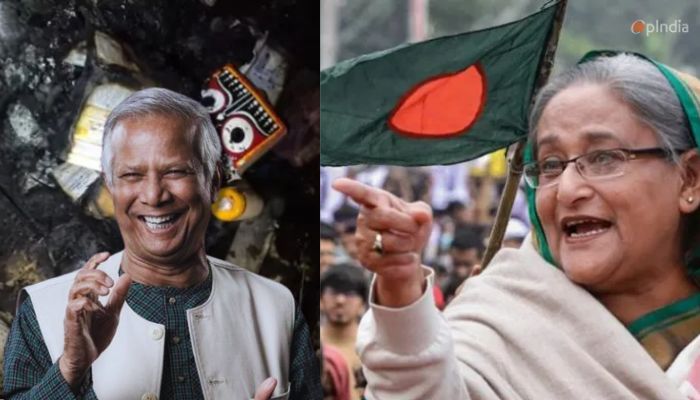
Finally, on the 5th of August 2024, Sheikh Hasina resigned from the post of Prime Minister, ending her 15 years in power. She left for New Delhi in a military chopper after resigning. Ironically, Sheikh Hasina, who once saved Bangladesh from military rule, was compelled to resign after the country’s army gave her just 45 minutes to resign and leave.
Soon after, countless violent protesters, carrying flags and celebrating in jubilation, with some even dancing atop tanks, breached the gates of Hasina’s official residence after she fled the country amid ongoing protests. In what emerged as the most disgraceful image of the anti-Hasina protests was of Islamist mobs ransacking Hasina’s residence and flashing her undergarments on 5th August 2024.
Months before her resignation, Sheikh Hasina had alleged that the United States is attempting regime change in Bangladesh via the opposing BNP and Jamat-e-Islami. Last year, the US also extended support to the Islamist Bangladesh Nationalist Party (BNP) and its ally Jamaat-e-Islami during its protests against the PM Hasina-led government. In September 2024, Sheikh Hasina accused the United States of orchestrating her removal from the post of PM because she refused to hand over Saint Martin Island to the US, which would have enabled the western superpower to have “sway over the Bay of Bengal”.
In her statement, she said, “I resigned so that I did not have to see the procession of dead bodies. They wanted to come to power over the dead bodies of students, but I did not allow it; I resigned from the premiership. I could have remained in power if I had surrendered the sovereignty of Saint Martin Island and allowed America to hold sway over the Bay of Bengal. I beseech the people of my land, ‘Please do not be manipulated by radicals.”
Following Hasina’s ouster, violent Jamaatis and other Islamists attacked Awami League leaders, government officials they accused of being pro-Hasina and singled out Hindu officials for their religious identity and assaulted, humiliated and forced them to resign. On 5th August alone, over 119 people, including 25 police officials, were killed by the violent mobs.
While Sheikh Hasina took refuge in India, Bangladesh fell into the hands of Islamists and violent Jihadis, and then began the persecution of Hindus and other religious minorities in the country, which continues till now.
On one hand, Islamists were looting Hindu houses, raping Hindu women, killing Hindu men, and desecrating Hindu temples; on the other, they were wiping out the legacy of “Bangabandhu” Sheikh Mujibur Rahman, pissing on his statue and the sacrifices of the Bengali freedom fighters. This wiping out of Bangladesh’s founding father’s legacy and persecution of Hindus made the country’s pivot towards full-fledged Islamisation evident and inevitable.
In Meherpur, an ISKCON temple was vandalised by jihadist mobs and idols were smashed on 5th August 2024. Meherpur ISKCON Temple’s spokesperson, Sumohan Mukunda Das, had back then said that the current situation for Bangladeshi Hindus is akin to how it was in the 1970s. He said that Hindu politicians, traders and Mandirs were being targeted by the Islamist mobs. On just 5th August, more than 54 attacks on Hindu temples, houses and establishments were carried out by Islamist mobs.
Hindu temples were targeted in Natore, Dhamrai in Dhaka, Kalapara in Patuakhali, Shariatpur, and Faridpur, as well as houses in Jessore, Noakhali, Meherpur, Chandpur, and Khulna. Dinajpur saw the vandalisation of 40 Hindu shops. In addition, one Ahmadiyya mosque in Taraganj, Rangpur, was attacked and vandalised. OpIndia reported how Muslim mobs looted Hindu houses, stole cattle and jewellery, demanded money, read Jizya, to spare their lives.
Such attacks were unleashed on Hindu houses and shops in Sultannagar, Monirampur and Khatuadanga market, Dhalgram Union, Bagharpara Upazila and other areas. In Noakhali’s Hatiya, three houses and four shops of the Hindus were attacked, vandalised and plundered. In Dhaka’s Dhamrai, a mob comprising 100 to 150 people marched and attacked the house of local Meena Rani Das in the Barbaria area of Gangutia Union. In Lalpur in Natore, around six houses, including the house of the Puja Udyapan Parishad president and a temple, were vandalised and plundered. n Dinajpur, at least 40 Hindu-owned shops were vandalised and robbed in the Chowrangi market of the Isania Union of Bochaganj Upazila.
In Chandpur, the Muslim mob attacked the house of Puranbazar Degree College Principal Ratan Kumar Majumdar in the city’s Adalt Para, and the house of Gallak Adarsh Degree College Principal Haripad Das in Faridganj was attacked, vandalised, looted and set ablaze. In Shariatpur, a temple in Dhanuka Mansa house was attacked. The Muslim mob broke the idol of Lord Krishna and fled the spot. Similarly, in Khulna, 11 Hindu houses were attacked in different unions of Dakop Upazila
While numerous temples of Maa Durga, Maa Kali and other Hindu deities were destroyed across Bangladesh while Indian Islamo-leftist media spun the ‘Muslims forming human chain to save Hindu temples’ narrative.
These are just a few reported incidents during the initial phase of the jihadist onslaught against Hindus in post-Hasina Bangladesh. Hindus sought help from the police and army; however, their wails and cries for help fell on deaf ears, and their persecution continued unchecked.
OpIndia reported numerous verified incidents of target attacks by Muslim mobs on Hindu temples and Hindu houses. While there have been incidents wherein the mob targeted Hindu leaders of the Awami League, the attacks are not confined to political rivalries or revenge. While attacks on Hindu temples themselves make it evident since temples don’t have any political affiliation but are simply the abode of Hindu deities, Hindus, regardless of their political leanings, were singled out and attacked.
The Bangladesh Hindu Buddhist Christian Unity Council reported 205 incidents across 52 districts by August 15, including 190 cases of looting, 32 homes set on fire, 16 temples desecrated, and two rape cases.
Speaking to OpIndia, several Bangladeshi Hindus said that Jamaat-e-Islami members had prepared a list of Hindu businesses and Hindu houses since the fall of Sheikh Hasina. In one of the most horrifying incidents, Islamists encircled a dead victim lying on the ground while several men were gathered around the deceased. With the aid of a stick, one of the Islamists strips the deceased person naked and checks the victim’s private part for circumcision. The happiness of the Islamist had no bounds, and he started shouting ‘Hindu, Hindu’ over the corpse. The crowd hovering over the dead body laughed, realising that the man was a Hindu because he was not circumcised.
Foreign media tries to whitewash the Islamist violence and persecution of minority Hindus
It must be recalled how the foreign media, especially Qatar state-owned Al Jazeera, New York Times, BBC, DW, CNN as well as Indian lslamo-leftist propaganda outlets like TheWire, Scroll, among others, contextualised Islamist violence in Bangladesh and also tried to whitewash their crimes. In their reportage of the anti-Hindu onslaught, these propaganda outlets attempted to downplay the Islamic jihadist nature of the attack against Hindus for their religious identity and pass it off as mere political retribution for supporting Sheikh Hasina’s party, Awami League. OpIndia, however, countered the falsehoods peddled by these outlets on multiple occasions and questioned how destruction of Hindu temples can be called ‘political revenge’, not Islamic jihadist hatred for Hindus on display.
After President Muhammad Shahabuddin dissolved parliament on 6th August and paved the way for an interim government, Nobel laureate Muhammad Yunus, whom Sheikh Hasina once called a “blood sucker”, was picked as Chief Advisor. While initially, Yunus emphasised preserving human rights and not targeting minorities, he too changed tunes and began downplaying anti-Hindu violence and blamed India and Indian media for exaggerating minority persecution in Bangladesh, in addition, projecting the government as Islamist radicals. This came after India raised concern over blatant violations of human rights and targeted attacks on Hindu and other religious minorities.
By September-October 2024, over 2000 attacks on Hindus across 45 districts in Bangladesh were documented by several minority rights groups in the country. The religious persecution of minorities by the Muslim majority sparked global outrage and protests in many countries.
In addition to mob violence, rape, loot, arson, and temple vandalism, Islamists in Bangladesh also harassed Hindu intellectuals and professionals and forced them to resign from their jobs. Some are also being pressured to leave Bangladesh solely because of their religious identity. In August 2024, it was reported that as many as 60 teachers/professors/govt officials, who are Hindus, were forced to resign. In many cases, these Hindu officials were surrounded by mobs, slapped, forced to wear garlands of shoes, and black ink rubbed on their faces.
Hindu teachers and government officials forced to resign
In November 2024, ISKCON monk Chinmoy Krishna Prabhu, aka Chinmoy Krishna Das Brahmachari, who was also the spokesman of BSSJJ, was arrested by the Bangladesh Government in November on charges of sedition since he was leading the protests demanding security and protection of Hindu minorities in Bangladesh. His arrest sparked outrage among Bangladeshi Hindus, who took to the streets to demand his release. Meanwhile, India also registered a strong protest over the Hindu monk’s arrest on bogus charges. Despite his illness, Das was allegedly mistreated in prison. Months later, Das was granted bail by a high court; however, the Islamist regime continues to hound him with several other cases, since Das has been a fierce voice of Hindus.
Under Yunus’s watch, the banned anti-India and Islamist outfit Jamaat-e-Islami was unbanned, Islamist leaders were released from jail, while the crackdown on Awami League leaders intensified. The Yunus-led Islamist interim government targeted intellectuals who raised concerns over the persecution of Hindus. In the same vein, on 9th July 2025, Abul Barkat, a renowned Bangladeshi economist, was arrested from his residence in Dhammondi area. He was implicated by the authorities in an alleged corruption case. In November 2016, Abul Barkat wrote a book titled ‘Political economy of reforming agriculture-land-water bodies in Bangladesh.’ He warned that if the rate of exodus of the minority Hindu community continued, then there would not be any Hindus left after 30 years, i.e. 2046.
Rape, killing and human rights violations have become a new normal in Bangladesh
Under Yunus’s rule, 2.81 lakh rape complaints were made in less than a year. It was reported that there has been a significant rise in cases of sexual violence in madrassas by Islamic clerics.
The recent brutal rape of a Hindu woman in Muradnagar in Cumilla by BNP leader Fazor Ali and subsequent attempts to character assassinate the victim left the minority Hindu community of Bangladesh in a state of shock and trauma.
In March 2025, the Human Rights Support Society (HRSS) published its report exposing the deteriorating law and order situation in Bangladesh. The report revealed the grim human rights situation in Bangladesh. Human rights violations highlighted by HRSS include mob lynching, extrajudicial killings, political violence, child abuse, harassment of women and journalists and attempts to suppress freedom of speech. It also highlighted an atmosphere of anxiety and fear among the common people due to an increase in crimes such as murders, rapes, extortion, theft, snatching, and robbery.
The human rights body reported that at least 9 people were killed and 755 others were injured in political violence in February. A total of 104 incidents were found by HRSS for the same period. HRSS also reported 10 deaths and 13 injuries in 17 different incidents of mob violence. It also pointed out that at least 107 children and women were tortured. 53 (comprising 38 children) of them were subjected to brutal rape.
On 12th February 2025, the Office of the United Nations High Commissioner for Human Rights (OHCHR) published a 104-page report detailing atrocities committed against vulnerable Hindu minorities in Bangladesh. The report titled ‘Human Rights Violations and Abuses related to the Protests of July and August 2024 in Bangladesh.’ Its publication becomes crucial since the interim government in Bangladesh, led by Muhammad Yunus, is pandering to Islamists.
The findings of the OHCHR expose the grim reality that Muhammad Yunus tried to brush under the carpet. He has largely remained a ‘mute spectator’ to targeted attacks aimed at erasing the history of the Awami League in the context of Bangladesh’s independence and politics.
Bangladesh is witnessing a drastic rise in vigilante Muslim mobs, unleashing violence under the pretext of protecting the tenets of Islam. These mobs are largely unorganised but they call themselves ‘Tawhidi Janata (meaning Revolutionary People).’
From LGBTQ patron to appeaser of Islamic extremists: Muhammad Yunus became the supporter and enabler of Islamism in Bangladesh
Bangladesh witnessed a drastic rise in Islamism and anti-India sentiment after Yunus came to power. He first revoked the ban on the radical Islamist outfit ‘Jamaat-e-Islami.’
Thereafter, he released the leader of the radical outfit ‘Ansarullah Bangla Team (ABT)’, Muhammad Jasimuddin Rahmani.
At the same time, Muhammad Yunus downplayed the targeted attacks on the Hindu community by violent Muslim mobs. He has gone on record, from lamenting about attacks on Hindus to saying that the claims of atrocities are ‘exaggerated‘.
In that way, the controversial US asset was able to placate Islamic extremists. Given that the Awami League was against Islamism, the interim government first banned its student wing, ‘Chhatra League,’ and then the parent party.
Under the watch of Muhammad Yunus, Bangladesh saw a drastic rise in vigilante Muslim mobs, which unleashed violence under the pretext of protecting the tenets of Islam.
These mobs were largely unorganised and called themselves ‘Tawhidi Janata (meaning Revolutionary People).’ They came under the spotlight over acts of vandalism and harassment of people.
The Yunus regime introduced new textbooks for primary and secondary students, which falsely claimed that the first declaration of independence of Bangladesh was made by Ziaur Rehman (a favourite icon of Muslim hardliners in Bangladesh).
The interim government also appointed a Hizb ut-Tahrir terrorist named Mohammad Azaz as the administrator for the Dhaka North City Corporation (DNCC).
The situation had become so grim that Bangladeshi ambassador to Morocco Mohammad Harun Al Rashid was forced to slam the Muhammad Yunus-led interim government in a scathing Facebook post in March this year.
Islamist leaders and ex-army officials like Fazlur Rahman publicly made anti-India remarks, with some even daydreaming about capturing India’s northeast states. Similarly, an ‘adviser’ to the Muhammad Yunus-led interim government of Bangladesh named Mahfuz Alam had threatened to capture India on the occasion of Vijay Diwas on 16th December 2024.
In June this year, Muhammad Yunus made an audacious attempt to shift blame onto New Delhi for strained Indo-Bangladesh relations. Speaking at the Chatham House in London, Yunus also dared to villainise Prime Minister Narendra Modi for not heeding his request to stop Sheikh Hasina from making online speeches and comments, as she resides in India.
When asked about Bangladesh’s appeals to India to extradite Sheikh Hasina to face the court, Yunus said that these efforts will continue. He added that Bangladesh wants the best relations with India; however, it is the Indian media backed by the Modi government that runs fake news about Bangladesh, which makes matters worse. Yunus and others in power in Bangladesh have also been discrediting India’s role in the 1971 Liberation War that led to the creation of Bangladesh, even as, without the intervention of the Indian Armed Forces, the break-up of East Pakistan from West would never have been possible for the Bengali freedom fighters.
Recently, Muhammad Yunus was upset with OpIndia for not downplaying and whitewashing Islamist violence against Hindus by coming up with ‘Muslim human-chain protecting Hindu temples’ sort of falsehoods, and instead reporting facts. On 22nd May, another violent act was perpetrated against the marginalised community when a Muslim crowd executed arson attacks on Hindu residences in Dahar Mashihati village, located in the Abhaynagar upazila of Jessore district in Bangladesh.
Predictably, the regime of Muhammad Yunus published a long post on X to downplay the communal nature of the crime. However, having realised that his post aimed at negating the OpIndia report exposed his own Islamist nature, the ‘chief advisor’ to the interim government of Bangladesh deleted his controversial tweet.
In May 2025, Through one of his stooges, Mahmudur Rahman Manna (Nagorik Oikya party President), Yunus sent out a message that Bangladesh was faced with a ‘major crisis due to Indian hegemony’.
In April this year, Yunus claimed that Bangladesh is the guardian of ocean access for India’s Northeast states, and these states, landlocked and with limited connectivity, should be used as an extension of China’s economy. Following the undemocratic ouster of Sheikh Hasina, he made similar controversial claims about India’s seven sisters (Tripura, Assam, Arunachal Pradesh, Mizoram, Manipur, Nagaland and Meghalaya). “If you destabilise Bangladesh, it will spill over all around Bangladesh, including Myanmar and the seven sisters in West Bengal everywhere,” he claimed in August 2024.
The saga of the persecution of Bangladeshi Hindus, which began on 5th August 202,4 continues unabated even after a year
Anti-Hindu violence, anti-India rhetoric and Islamist hegemony have become an opprobrious reality of Bangladesh sans Sheikh Hasina. It’s been a year since the Awami League leader was forced to flee her homeland, and the country is yet to return to normalcy. Hindus are still being attacked, looted, raped and lynched, for simply being Hindus by Islamists, while their enablers in power show more dexterity in silencing those who report these incidents than acting against the Jihadi perpetrators.
On 28th July 2025, a Muslim mob comprising 400-500 Islamists attacked over 15 Hindu homes and carried out looting and vandalism under the pretext of ‘blasphemy’ in the Betgari Union in Gangachara upazila in Rangpur district of Bangladesh. Unsurprisingly, none of the Islamist perpetrators were arrested by the police. OpIndia had previously highlighted 13 cases where Hindus were attacked, tortured and persecuted by Muslim mobs under the pretext of ‘blasphemy.’
One year after Sheikh Hasina’s ouster, Bangladesh remains mired in instability, with the Yunus-led government failing to address persistent issues. The country, which was doing reasonably well under PM Hasina, now has its economy in shambles. The persecution of Hindus, with documented attacks on houses, temples, and businesses, continues at the hands of Islamists who enjoy the unannounced support of the Islamist regime. While elections are to be held in Bangladesh next year, there is not much hope for Hindus and minorities since Islamist forces are dominating the socio-political discourse in the country and muzzling the voice of minorities.
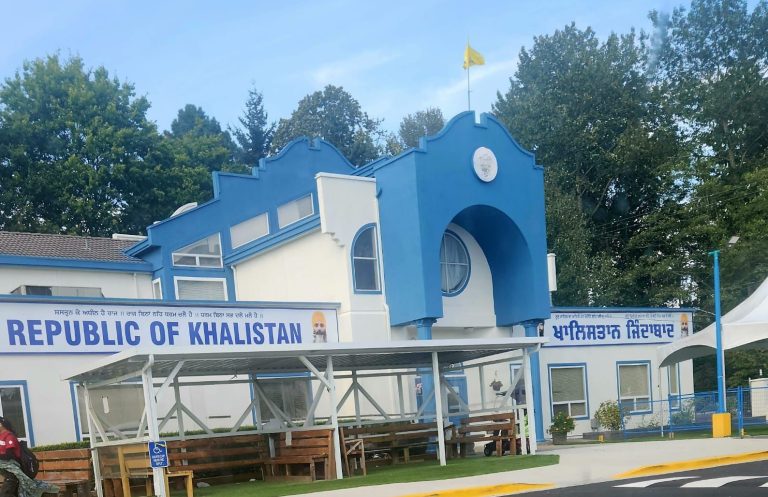
In a provocative move, the banned Khalistani outfit Sikhs for Justice (SFJ), in collaboration with the Guru Nanak Sikh Gurdwara in Surrey, Canada, has opened a so-called “Embassy of Khalistan.” The makeshift diplomatic post, bearing signage of the fictional “Republic of Khalistan,” has been set up within a building on the gurdwara premises—raising fresh concerns over Canada’s handling of anti-India extremism.
What’s even more alarming is that the building housing the so-called embassy was reportedly funded with taxpayer money. Locals told CNN-News18 that the British Columbia government had recently allocated $150,000 for installing an elevator in the same structure.
This development comes just weeks after Canada’s intelligence agency, CSIS (Canadian Security Intelligence Service), publicly acknowledged that Khalistani extremists continue to use Canadian soil as a base for promoting, fundraising, and planning violence—primarily targeting India. It marked the first time CSIS explicitly named Khalistani elements in its annual report as a politically motivated violent extremism (PMVE) threat.
The report confirmed India’s long-standing concerns, noting that since the 1980s, Canada-based Khalistani extremists have attempted to leverage violent means to push their separatist agenda, seeking an independent Khalistan in Indian Punjab. PMVE, as defined by CSIS, involves efforts to reshape political systems through violent or coercive means.
India has repeatedly raised objections to Ottawa’s laxity in curbing such groups, accusing it of allowing terrorism to flourish under the guise of free expression. The creation of a fake “embassy” on Canadian soil, aided by public funds, is now likely to escalate diplomatic tensions even further.
With the CSIS report and the public unveiling of this so-called embassy, the spotlight is once again on Canada’s controversial tolerance of separatist extremism.
The religious conversion racket of Balrampur, Uttar Pradesh, involving Jalaluddin alias Chhangur Baba, may involve far more influential actors than previously believed. In an exclusive report in Amar Ujala, it has been revealed that investigating agencies suggest Jalaluddin, Neetu alias Nasreen, and Naveen, who dominated the headlines as the main accused, are merely pawns in a larger, well-coordinated operation with its nerve centre in Sadullanagar and international links stretching from Dubai to Pakistan.
Conversion activities backed by foreign networks
According to unnamed sources cited by Amar Ujala, the key conspirator behind the conversion racket is neither Jalaluddin nor his two associates. The main architect is allegedly operating from outside the country and the racket’s roots spread across Gulf nations including Qatar, Saudi Arabia, and Pakistan. Reportedly, the same individual is believed to have been involved in religious conversion drives in Nepal as well, which highlights the cross-border scale of the operation.
The revelation has brought the entire Balrampur district under scrutiny. Authorities have acknowledged the sensitivity of the region. Over the past decade, Sadullanagar has consistently figured in intelligence reports as a hub of conversion activities. According to the report, a confidential document sent to the Uttar Pradesh government has recently termed the situation in Sadullanagar as “deeply concerning”.
District official who raised alarm transferred
The report further pointed out that the officials who had raised alarms were either transferred or sidelined. For instance, former Balrampur District Magistrate Arvind Singh had flagged the nexus between police personnel and those engaged in conversion. He had served in the post from 12th June 2023 to 28th June 2024. Singh recommended strong action and exposed how local law enforcement had turned a blind eye.
However, he was suddenly transferred, and his investigation report was shelved. Amidst the chaos, the then Superintendent of Police was also removed. He was briefly sidelined, only to return later to a sensitive posting in Ayodhya division.
Former SP allegedly shielded gangster-politician, no action taken against SHO
In a disturbing development from 2024, serious allegations were levelled against the then Station House Officer (SHO) of Sadullanagar. A formal complaint was submitted to the Additional Chief Secretary, Home Department, and the Additional Chief Secretary to the Chief Minister on 18th June 2024, in which the SHO was accused of colluding with senior officers to protect former SP MLA and listed gangster Arif Anwar Hashmi.
Despite a magisterial probe confirming the SHO’s misconduct, no disciplinary action was taken. Instead, he was merely shifted to another police station, where he continues to enjoy political and administrative patronage.
Magisterial inquiry reveals shocking details
Furthermore, the report revealed that when police raided Hashmi’s residence to arrest him and his brother Maroof Anwar Hashmi, he was present at home. However, he was not taken into custody. The SHO later filed a misleading report, claiming Arif was not present during the raid.
Grabbing police land and constructing a mazar
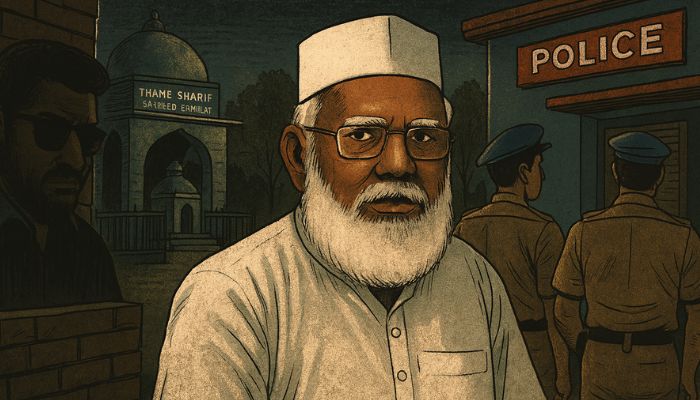
One of the most startling revelations made in the report was that Hashmi allegedly encroached upon police land at Sadullanagar police station. He constructed a mazar on police station land under the banner of a trust named “Thane Sharif Shaheed-e-Millat Abdul Quddus Shah Rahmatullah Alaih”, where his brother Maroof was a trustee.
The committee even managed to get the land officially registered in its name, replacing the ownership of the police from the records. No action was taken by the police authorities. However, when DM Singh came to know about the matter, he intervened and the investigation exposed the land grab.
As this nexus of conversion rackets, criminal protection, and alleged police complicity comes to light, questions are now being raised about why earlier reports were ignored, and why no concrete action has been taken so far against the more powerful players. The revelations from Amar Ujala have only scratched the surface of what appears to be a well-funded and politically shielded operation spanning multiple states and countries.
Balrampur Islamic conversion racket
The Balrampur Islamic conversion racket was spearheaded by Jalaluddin alias Chhangur Baba. It has emerged as one of the most sinister and organised operations in recent times. Jalaluddin was arrested on 5th July 2025. He led a nationwide conversion network targeting Hindu girls and vulnerable Hindu men using love, force, blackmail and monetary inducements.
Investigating agencies have confirmed foreign funding of over Rs 200 crore and suspect an additional Rs 300 crore routed via Nepal. Jalaluddin’s empire was fuelled by illegal wealth, criminal intimidation and ideological jihad. His associates used Hindu names, posed as nationalists, and even printed Prime Minister Narendra Modi’s photo on fake letterheads to gain trust.
He operated 100 bank accounts across Indo-Nepal districts and maintained links with Christian missionaries, the ISI, and Gulf-based Islamic groups. ATS and ED investigations have uncovered madarsas, bogus trusts, illegal properties, and a caste-based price chart for Hindu girls’ conversions. It was not just a regular crime but a well-planned attempt to change India’s demography.
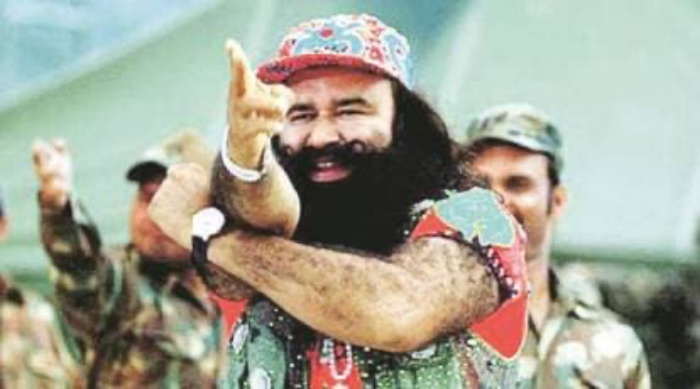
Merely 3 months after he got a 21-day parole, Dera Sacha Sauda chief Gurmeet Ram Rahim Singh is once again out on a 40-day parole. The self-styled godman is serving a 20-year sentence in the Sunaria jail in Rohtak, Haryana, for the rape of his two disciples and the murder of a journalist. He was released from prison on Tuesday morning (5th August) and left for the Dera Ashram in Sirsa, Punjab. He will return to jail on 14th September. This is his third parole this year.
Rahim has been granted temporary release a total of 14 times since his conviction in 2017, including paroles granted to him between 2020-22 (several times totalling 83 days), in January 2023 (40 days), July 2023 (40 days), November 2023 (21 days), January 2024 (50 days), October 2024 (20 days), January 2025 (30 days) and April 2025 (21 days).
Since his conviction in 2017, he has spent 366 days on parole in total, more than a year.
BREAKING ⚠️
40 more days of parole for rape-murder convict Dera chief Gurmeet Singh, 3 months after his last parole.
That’s 91 days out of jail just this year so far. That’s 366 days out of jail total.
Rahim got paroles for various reasons, including birthday celebrations
He has been obtaining these temporary releases for a variety of reasons, including family visits, religious activities, farming and even birthday celebrations. In January 2023, he was granted parole after he mentioned in his application that he wanted to attend an event marking the birth anniversary of former Dera chief Shah Satnam Singh on January 25. Notably, this time he has been granted parole before his own birthday, which falls on 15th August. His parole condition requires him to stay in the Sirsa Ashram.
Ram Rahim’s parole trigger questions of political support
Many times, the timing of his parole coincided with assembly elections in different states. In 2022, Ram Rahim got out on parole three times. In February 2022, he was out for 21 days during the Punjab Assembly elections. Subsequently, his parole period in June 2022 overlapped with civic body polls in Haryana. And finally, that year in October, he got a temporary release of 40 days during the Haryana by-elections. Similarly, in October 2020, his parole coincided with the Haryana assembly elections. However, during his temporary release around election time, his parole conditions included barring him from participating in election-related activities, making speeches, and staying in the state during the election period.
Criminal cases against Ram Rahim
Gurmeet Ram Rahim’s tenure as the Dera chief has been marred by controversies. Rahim, who has a huge following, leads a pompous lifestyle not expected of spiritual leaders. He was convicted by a special CBI court in Panchkula in August 2017 for raping two women followers. CBI had registered the case on the orders passed by the High Court of Punjab and Haryana in 2003 and taken over the investigation of the case, earlier registered at Police Station Sadar in Kurukshetra.
In 2019, he was convicted of the murder of journalist Ram Chander Chhatrapati. Subsequently, in 2021, Rahim, along with four others, was convicted in connection with the murder of Dera manager Ranjit Singh, a resident of village Khanpur Kolian, Kurukshetra. Singh was murdered on July 10, 2002, when he was working in his fields at village Khanpur Kolian of District Kurukshetra in Haryana.
Pertinently, the Haryana Good Conduct Prisoners (Temporary Release) Act, 2022, allows parole to convicted prisoners. However, prisoners convicted of multiple murders or under the provisions of the Unlawful Activities Prevention Act are not eligible for parole under the Act.
Dera Chief’s parole mocks Indian judiciary
The Dera Chief has made a mockery of the Indian judicial system by securing such frequent paroles in just 8 years of his 20-year imprisonment. The fact that he is able to come out of prison for such trivial reasons, despite being convicted of serious offences, raises questions on the judiciary, and the entire system.
In a major breakthrough, police in West Bengal’s Barrackpore Commissionerate uncovered a huge stockpile of illegal weapons and bullets from a residential flat in Khardaha’s Regent Park area on early Monday, 4th August. The raid was carried out by the Detective Department after they received specific intelligence.
The flat belonged to 66-year-old Madhusudan Mukherjee, son of Bhim Mukherjee. He was arrested on the spot. Police also picked up another man named Liton for questioning. Both are being interrogated to find out more about the case.
During the search, police found a shocking amount of arms, 15 guns in total. These included a pump-action gun, a bolt-action rifle, two double-barrel rifles (DBBL), one single-barrel rifle (SBBL), a 9mm pistol, two 7mm pistols, three revolvers, and three single-shot guns. Apart from the firearms, police recovered seven empty magazines for 7mm pistols and nine for 9mm pistols. They also seized 1,000 rounds of ammunition.
But there’s more. ₹1.48 lakh in cash, 248 grams of gold, 30 grams of silver, and about 10.7 kilograms of old antique coins were seized by the police. The presence of such valuable items has raised suspicions of smuggling or black-market activity. Police are now checking if there’s a financial or criminal network linked to the arms.
Guns made in Purulia and brought from Bihar
Initial investigation suggests that many of the weapons were made in Purulia district of West Bengal and brought in through an arms dealer from Munger in Bihar. It was during the questioning of this arms supplier that police got a lead on Madhusudan’s flat, leading to Monday’s successful raid.
A formal case has been registered at Rahara Police Station (Case No. 219/25) under the Arms Act. Police will soon present Madhusudan in court and ask for his custody so they can continue questioning him.