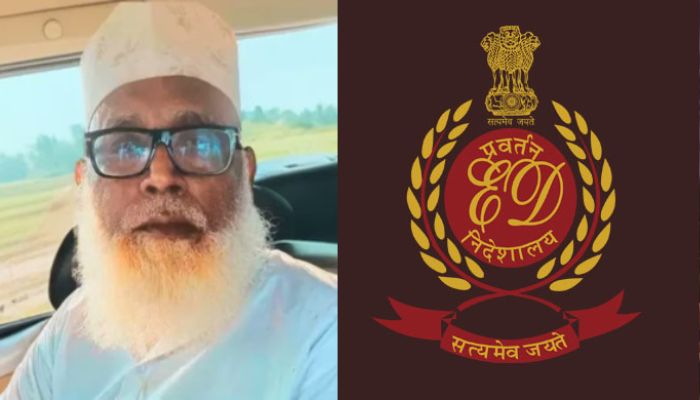
Jalaluddin alias Chhangur, who once claimed to be a spiritual guide, is now under the scanner of the Enforcement Directorate (ED) for his role in a massive illegal religious conversion racket. During custodial interrogation, Jalaluddin made shocking revelations about the foreign funding his organisations received, some of it even coming from countries like Pakistan.
ED grills Jalaluddin on foreign funding trail
According to media reports, the ED questioned Jalaluddin for hours on Thursday, 31st July, focusing on his financial dealings and assets in India and abroad. When asked directly about foreign donations, he admitted that several of his institutions received money from outside India, including from Pakistan. Trying to defend himself, Jalaluddin reportedly told officials that the funds were meant for spreading his religion. “What’s wrong with promoting one’s religion?” he asked during the questioning, according to ED sources.
Links with Dubai-based associates exposed
Jalaluddin also revealed details about his frequent travels to Dubai. He confessed to having connections with several individuals in the emirate and said that his followers sponsored his trips. He claimed the purpose of his visits was purely religious and aimed at helping the poor.
Admits to receiving crores in funding
When probed about why he often took a woman named Nasreen along on foreign trips and why several properties were bought in her name, Jalaluddin said that she was trained in conversion activities and was carrying forward his mission. He denied forcing anyone to convert to Islam but admitted that his network had received crores of rupees in funding, which he claimed was used for welfare purposes.
₹106 crore under the lens
The ED has now intensified its investigation into Jalaluddin’s international funding and property connections. Officials say they have already collected details about his properties in Dubai, most of which were earlier flagged by the Uttar Pradesh ATS. Records show that more than ₹106 crore came into over 40 bank accounts linked to Jalaluddin from countries in the Middle East and elsewhere. A part of this money is suspected to have been used for illegal religious conversions and property purchases. The case has raised serious questions about the misuse of foreign donations and the organised networks operating under the guise of religious work.
The winners of the 71st National Film Awards were announced on Friday evening, celebrating the best of Indian cinema in various categories for the year 2023. From Bollywood stars, including Shah Rukh Khan, Rani Mukerji, and director Sudipto Sen, to powerful regional films such as ‘Parking’ and ‘HanuMan,’ the winners represent a wide spectrum of talent across languages and genres.
The jury, led by filmmaker Ashutosh Gowariker (Feature Film), P. Sheshadri (Non-Feature Film), and other distinguished members, unveiled the list of awardees in the presence of Dr. Ajay Nagabhushan MN, Joint Secretary (Films), and Mattu J P Singh, Director General, PIB. The awards were announced at a press conference held at the National Media Centre in New Delhi.
12th Fail has been honoured with the Best Feature Film award at the 71st National Film Awards. Flowering Man won the Best Non-Feature Film award, while God Vulture and Human was recognised as the Best Documentary.
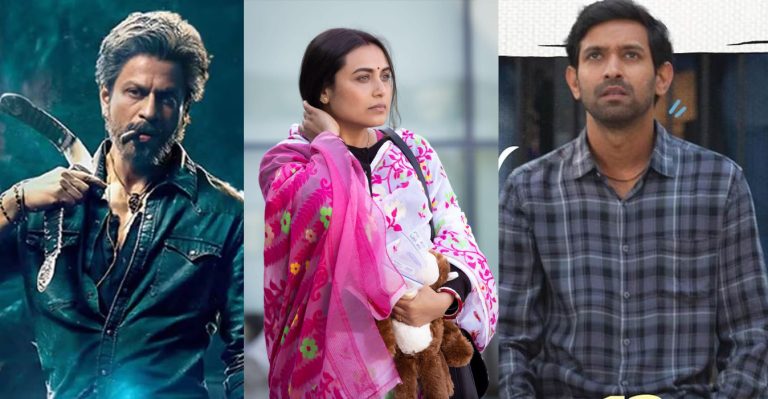
This year, one of the biggest highlights was Shah Rukh Khan winning his first-ever National Award. The actor bagged the Best Actor award for his role in the blockbuster film ‘Jawan.’ Known for his long and successful career, this win is seen as a special moment for the superstar.
Khan shares the Best Actor award with Vikrant Massey, who was honoured for his performance in Vidhu Vinod Chopra’s ’12th Fail.’ The film, which tells an inspiring story of determination, was widely praised by both audiences and critics. Meanwhile, Rani Mukerji won the Best Actress award for her emotional role in ‘Mrs. Chatterjee vs Norway.’ Sudipto Sen, on the other hand, won Best Director for ‘The Kerala Story.’
Best Actor in Supporting Role: Urvashi (Ullozhukku), Janki Bodiwala (Vash), Vijayaraghavan (Pookalam), Muthupettai Somu Bhaskar (Parking)
Best Actor in Leading Role: Rani Mukerji (Mrs Chatterjee vs Norway), Shah Rukh Khan (Jawan), Vikrant Massey (12th Fail)
Best Direction: Sudipto Sen (The Kerala Story)
Best Film in AVGC: HanuMan
Best Children’s Film: Naal 2
Best Film Promoting National, Social Values: Sam Bahadur
Sam Bahadur bagged the National Award for Best Film Promoting National and Social Values. Meghna Gulzar, in a statement, expressed her “immense pride” for the film winning the honour.
Best Popular Film Providing Wholesome Entertainment: Rocky Aur Rani Kii Prem Kahaani
Best Debut Film: Aatmapamphlet
Best Film: 12th Fail
Non-feature films:
Special mentions: Nekal – Chronicle of the Paddy Man, The Sea and the Seven Villages
Best Script: Sunflowers Were The First Ones To Know
Best Voiceover: Hari Krishnan S (The Sacred Jack – Exploring The Tree of Wishes)
Best Music Direction: Pranil Desai (The First Film)
Best Editing: Niladri Roy (Moving Focus)
Best Sound Design: Shubarun Sengupta (Dhundhgiri Ke Phool)
Best Cinematography: Meenakshi Soman, Saravanamaruthu (Little Wings)
Best Direction: Piyush Thakur (The First Film)
Best Short Film: Giddh The Scavenger
Best Non-Feature Film Promoting Social and Environmental Values: The Silent Epidemic
Best Documentary Film: God Vulture and Human
Best Art/Culture Film: Timeless Tamil Nadu
Best Biographical/Historical Reconstruction Film: Mo Bou Mo Gaan, Lentina Ao
Best Debut Film: The Spirit Dreams of Cheraw
Best Non-Fiction Film: Flowering Man
(This news report is published from a syndicated feed. Except for the headline, the content has not been written or edited by OpIndia staff)
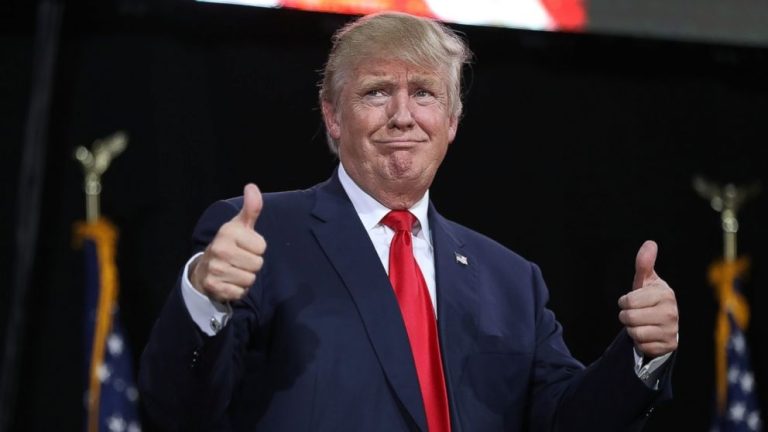
The Cambodian government will nominate US president Donald Trump for the Nobel Peace Prize, the country’s Deputy Prime Minister Sun Chanthol said on Friday. He said that his country is nominating Trump for his direct intervention in halting Cambodia’s recent border conflict with Thailand.
Talking to reporters in capital Phnom Penh, Chanthol thanked Trump for bringing peace and said he deserved to be nominated for the prize. When asked whether Cambodia was planning to nominate Trump for the prize, Chanthol responded saying “yes.”
This comes after White House Press Secretary Karoline Leavitt demanded the Nobel Prize for Trump claiming that he has ended six conflicts, including those between Israel and Iran and India and Pakistan.
She said, “The President has now ended conflicts between Thailand and Cambodia, Israel and Iran, Rwanda and the Democratic Republic of the Congo, India and Pakistan, Serbia and Kosovo, and Egypt and Ethiopia. This means President Trump has brokered, on average, about one peace deal or ceasefire per month during his six months in office. It is well past time that President Trump was awarded the Nobel Peace Prize.”
Last week after Thailand and Cambodia agreed to halt the war, Karoline Leavitt posted on X saying “President Trump made this happen. Give him the Nobel Peace Prize!”
Cambodia becomes the second country to endorse Trump for the award he is yearning for, as last month Pakistan said they will nominate Trump for Nobel Peace Prize for his “decisive diplomatic intervention” in halting the military conflict with India.
On their X account (which is withheld in India), the Pakistan government posted, “Government of Pakistan Recommends President Donald J. Trump for 2026 Nobel Peace Prize. The Government of Pakistan has decided to formally recommend President Donald J. Trump for the 2026 Nobel Peace Prize, in recognition of his decisive diplomatic intervention and pivotal leadership during the recent India-Pakistan crisis.”
Violence erupted in the Yavat region of Daund tehsil in Maharashtra’s Pune on 1st August. The unrest was triggered by the dissemination of an objectionable message on a WhatsApp group. This issue began on the 25th July when an individual identified as Syed posted an objectionable message in a WhatsApp group.
#WATCH | Maharashtra: Pune tension | Visuals of the aftermath of vandalism at a structure, which locals identify as a mosque, in Yavat village at Daund Taluka of Pune District.
Tense situation in Yavat village following an alleged objectionable social media post posted by a… pic.twitter.com/KGcrKJU6q1
Afterward, the statue of Chhatrapati Shivaji Maharaj was defaced the next day which heightened tensions in the locality, leading to the arrest of the accused who is from the Sahakar Nagar neighbourhood of Yavat. A bandh was then declared in Daund and Yavat while many Bharatiya Janata Party leaders visited the area. However, now another insulting Facebook post has provoked further turmoil.
Syed is charged with uploading this offensive content as well. He had been taken into custody, however, the situation remained volatile. The members of Hindu community took to the streets in protest, expressing their anger. Markets were shut down, vehicles were damaged, peoperties were vandalised and reports of stone pelting by some young miscreants also surfaced. Enraged mob also threw stones at the perpetrator’s residence. However, no injuries were reported.
Pune Rural SP Sandeep Singh Gill stated that tear gas shells were deployed to restore order. He arrived at the scene and urged the public to maintain peace. Police also did lathicharge to disperse the crowd. Authorities also enforced prohibitory orders (Section 144).
#WATCH | Maharashtra: Tense situation in Yavat village at Daund Taluka of Pune District following an alleged objectionable social media post posted by a youth here. Police say that an incident had occurred in the village a week ago, so the situation was already tense here.… pic.twitter.com/ha0SZHMMKq
“Here in Yavat village, around 12-12.30 pm, police received information that a young boy posted an objectionable status on his WhatsApp/Facebook. Following the complaint, the boy was brought to the police station. Action was initiated. A few villages also reached there. Our police team started a meeting with the representatives of the village to maintain peace in the village. But by then, the message on social media had become viral,” Gill conveyed.
“Police administration responded here and patrolled the village. The situation is peaceful right now,” he further noted. Additionally, the official also issued warnings to those responsible for spreading rumors. “We are closely monitoring the situation. I appeal to everyone to refrain from spreading rumours,” he added.
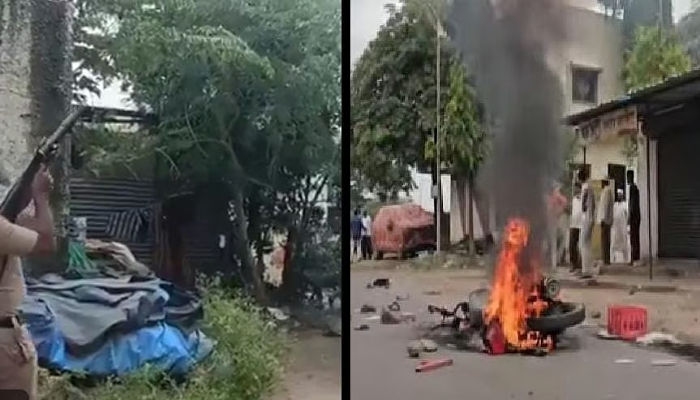
“An irate mob vandalised structures and properties belonging to the other community, pelted stones and also set a motorcycle ablaze. We had to lob teargas shells to disperse the mob and restore law and order. A sizable number of police personnel have been deployed at the site. The youth who uploaded the post has been detained,” an official informed.
Chief Minister Devendra Fadnavis also reacted on the development and remarked, “Based on the information we have gathered, this issue arose from an objectionable post made by an outsider. Certain individuals intentionally share such posts to incite tension within society. We will take stringent action against them. No one has the right to make comments regarding any religion. It is entirely incorrect to claim that the chaos was caused by any gathering or event.”
He mentioned, “The area is currently peaceful and both communities are having a dialogue. We urge the public to uphold peace and refrain from taking the law into their own hands.”
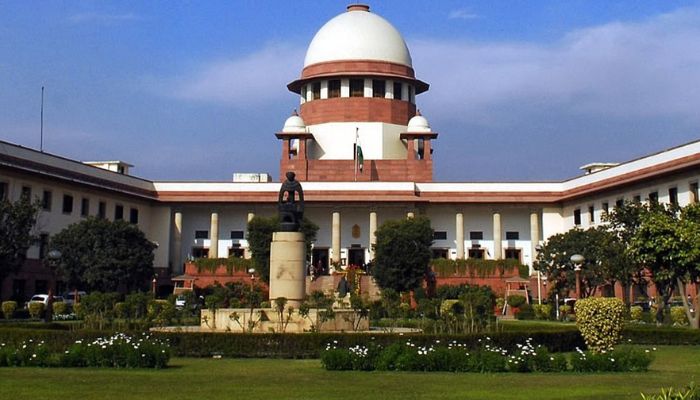
The Supreme Court, on Thursday (31st July), said that it would decide the question of whether the illegal Rohingyas living in the country are ‘refugees’ or ‘illegal immigrants’. While hearing a slew of petitions concerning Rohingyas, a three-judge bench of Justices Surya Kant, Dipankar Datta, and N Kotiswar Singh said that the court would extensively hear the case for three days.
The court listed several issues to be dealt with during the hearing of the case, which included-
1) Whether Rohingyas are entitled to be declared as refugees; if so, what protection emanates from the right they are entitled to?
2) If Rohingyas are illegal entrants, are the Government of India and the states obligated to deport them in accordance with the law?
3) Even if Rohingyas have been held to be illegal entrants, can they be detained indefinitely, or are they entitled to be released on bail subject to conditions?
4) Whether Rohingyas who are not detained but living in refugee camps have been provided basic amenities like sanitation, drinking water, education, etc. (in conformity with Article 21)?
Indian government has been deporting illegal Rohingyas
The Indian government has been identifying and deporting Rohingyas, who entered the country illegally. Considering the threat these illegal Rohingyas pose to law and order, national security and demography, the Union government has been making efforts to identify and deport them. However, the government’s action had triggered several foreign-funded human rights organisations and NGOs, which have approached the apex court seeking rights for them, at par with those available to Indian citizens, and to prevent the Indian government from deporting them.
Notably, in May 2025, during the hearing of the petitions against the deportation of illegal Rohingyas by the Indian government, the Supreme Court displayed remarkable judicial clarity by refusing to pander to the petitioners who wanted the court to address the matter with great urgency.
NGOs want to protect the illegal Rohingyas who pose threat to national security
The petitioners want the Indian government to adopt a ‘humanitarian’ approach towards the illegal Rohingyas, many of whom are found engaged in serious criminal activities like human trafficking. These illegal immigrants lay claim to the resources of a country which already has a vast population to cater to.
However, with the so-called human rights activists and advocates voicing their concerns nationally and internationally, these illegal immigrants have gradually spread their roots across the country. Many of them have obtained fake Aadhaar Cards and other local ID cards by taking advantage of appeasement politics.
As per the UNHCR data as of 31st December 2024, over 95,000 Rohingya Muslims are staying in India, including 22,500 refugees and asylum seekers considered stateless by the United Nations High Commissioner for Refugees.
India not legally bound to keep the illegal Rohingyas
The 1951 Refugee Convention, an international treaty which defines who refugees are and lays down obligations of its signatories regarding the refugees/asylum seekers, including not to return the refugees/asylum seekers to the country where they are persecuted. India is not a signatory to the 1951 convention, therefore, it is not bound by the provisions of the convention, which means that India is not bound to keep the illegal Rohingyas and can deport them.
Constitution empowers Parliament to decide on citizenship
Even though the Supreme Court has stepped in to decide on the question of the legal status of the illegal Rohingyas, it is the legislature which is primarily empowered to decide the issues relating to their legal status and citizenship. Article 11 of the Constitution empowers the Parliament to regulate citizenship by framing laws relating to the acquisition and termination, and all other matters relating to citizenship.
The Union Ministry of Home Affairs is primarily responsible for implementing the laws relating to citizenship and dealing with matters relating to citizenship. The Parliament has enacted the Indian Citizenship Act, 1955, which lays down the framework for the acquisition, renunciation and deprivation of Indian citizenship. Rohingyas, being illegal immigrants, are not governed by the Citizenship Act. The constitutional mandate of the Supreme Court is to interpret the law enacted by the legislature and to ensure that the law is applied fairly.
The Indian government has maintained that the Rohingyas are illegal immigrants with no right to enter or stay in the country and, therefore, the government is deporting them. Considering the fact that letting certain elements permanently reside in the country can have serious implications for the law and order as well as the people of the country, it makes sense that the decision is left with an institution like the Parliament, which has direct public accountability.
Now that the Supreme Court has taken upon itself to decide the matter relating to the status of illegal Rohingyas, it is expected that it is not only guided by dry logic and bare legal provisions, but also by the interests of the nation and its people.
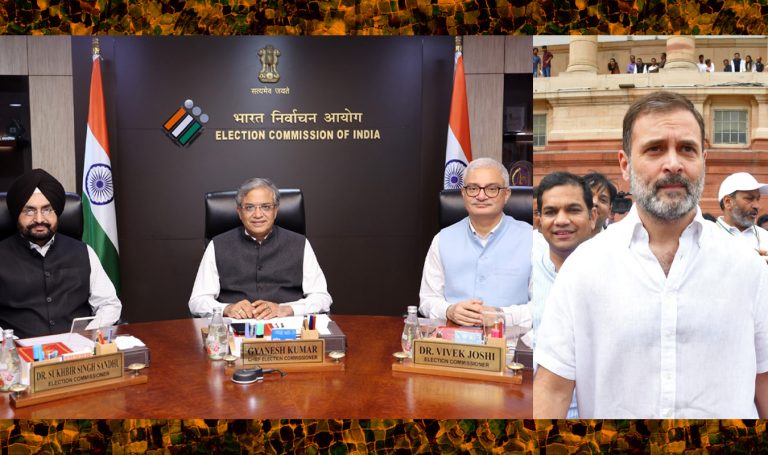
The Election Commission on Friday used very strong words to refute Rahul Gandhi’s allegations of large-scale voter fraud. The ECI said that the Congress leader’s claims are baseless and irresponsible, adding that the poll body ignores such baseless allegations being made on a daily basis.
In a statement, the ECI said, “The Election Commission ignores such baseless allegations being made every day and, despite the threats being given every day, it asks all election officials who are working in a fair and transparent manner to not pay heed to such irresponsible statements.”
The poll panel also added that while Rahul Gandhi is making comments against the ECI and the election process in the media, he has not responded to the ECI’s commutations regarding his allegations. Despite his constant allegations, he has not filed any formal complaint with the poll body.
Election Commission of India’s further response to Lok Sabha LoP Rahul Gandhi –
"1. ECI sends a mail to him on 12 June 2025. He does not come. 2. ECI sends him a letter on 12 June 2025, he does not respond. 3. He has never sent any letter to ECI on any issue, whatsoever. 4.… pic.twitter.com/8JRTica7Qk
The Election Commission said that they had sent a mail to him on 12th June asking him to visit with his complaints, but he didn’t come. He was also sent a letter on the same date, but he has not responded to the same yet.
The ECI made it clear that Rahul Gandhi has not sent any letter to the commission on any issue. The Chief Election Commissioner said that it is very strange that he is making wild allegations and has now even started threatening EC and its staff, calling it deplorable.
“ECI ignores all such irresponsible statements and asks all its staff to continue working impartially and transparently,” the ECI said.
The strong reaction from the ECI came after Rahul Gandhi on Friday accused the poll body of direct involvement in vote theft. He also issued threats to ECI officers, saying that he will come after them even after their retirement.
“We have open and shut proof that the Election Commission is involved in vote theft. Most importantly, whoever in the Elections Commission is involved in this exercise, right from top to bottom, we will not spare you,” Rahul Gandhi said while talking to the media outside the parliament.
VIDEO | Parliament Monsoon Session: Congress MP and LoP Lok Sabha Rahul Gandhi (@RahulGandhi) says, "We have said that there is a theft of votes happening and now we have open and shut proof that the Election Commission is involved in theft of votes. I am not saying it lightly, I… pic.twitter.com/4NhzijjrTp
He said, “After the results of the Madhya Pradesh and Lok Sabha elections, we had our suspicions. Those only deepened after the Maharashtra Assembly polls — especially when we saw that 1 crore new voters had suddenly been added to the final voter list. That’s when we realised the Election Commission wouldn’t act. So, we launched our own six-month investigation. And what we uncovered is nothing short of an atom bomb. Once it explodes, the Election Commission will have no place to hide,”
Issuing a direct threat to ECI officials, he said, “Most importantly, whoever in the Elections Commission is involved in this exercise, right from top to bottom, we will not spare you. You are working against India, and this is no less than treason. Wherever you are, even if you are retired, we will find you.”
Rahul Gandhi has been attacking ECI for years after his party lost in several state elections. He has been particularly vocal against the SIR exercise conducted in Bihar.
Responding a video of his comment posted by the Congress party on X, Election Commission said that not a single Congress candidate who lost the elections mentions by Rahul Gandhi has filed any complaint regarding the results. It said that while 10 petitions were filed after the results, none of them from Congress candidates.
❌ दिये गये बयान भ्रामक, तथ्यहीन और धमकाने वाले हैं।#ECIFactCheck
— Election Commission of India (@ECISVEEP) August 1, 2025
ECI said that levelling baseless allegations against lakhs of election officials one year after the elections, repeatedly issuing threats and using words like “vote theft” is completely irresponsible behaviour.
This is not the first time ECI is fact-checking Rahul Gandhi’s wild allegations. The poll body is regularly responding to his statements, clarifying that there is no fraud in the election process as alleged by him.
The Mamata Banerjee-led Trinamool Congress (TMC) government has not yet cleared the pending Dearness Allowance (DA) of nearly 10 lakh State employees in complete violation of the order of the Supreme Court of India.
For the unversed, DA is paid to employees and pensioners (often called Dearness Relief or DR) alike to help them deal with inflation and rising cost of living.
While the Central government pays 55% DA to its employees, the West Bengal government gives a paltry 18%.
A meager 4 per cent increase in Dearness Allowance (DA) for WB Government Employees, starting from April 1, 2025. This would bring the total DA to 18 per cent. However, even after this announcement, WB State Government Employees are far behind from the Central Government… pic.twitter.com/oMYCrtJ4Zn
In February this year, the Mamata govt announced a 4% increase in DA, which was to become effective from 1st April 2025.
This would have essentially taken the total DA from 14% to 18%, which is 37% less than what is being paid by the Modi government at the Centre. The Mamata government has not disbursed the pending DA to the employees and pensioners.
The prolonged and deliberate delay on the part of the State, despite a Supreme Court order, forced government employees to hold a protest march on Monday (28th July) to the State Secretariat (Nabanna).
To muzzle the demonstrations, the Mamata government ensured a heavy deployment of police, Rapid Action Force (RAF) personnel, water cannons, and double-layer barricades.
A govt employee stated, “There are more police here than protestors, they are scared of us. They have stolen our jobs, have not paid our dues.”
This development comes amid the cancellation of 25,753 jobs of individuals who were appointed by the West Bengal School Service Commission (WBSSC) for the positions of Assistant Teachers and non-teaching staff.
It becomes politically significant as well when analysed in the context of the 2026 Vidhan Sabha elections.
The verdict by the Supreme Court in May 2025
On 16th May this year, a 2-Judge Division Bench of Justices Sanjay Karol and Sandeep Mehta directed the West Bengal government to release 25% of the DA arrears accumulated between 2009 and 2019.
The total outstanding DA to be disbursed to employees stands at ₹41,871 crores. The apex court ordered that 25% of the amount i.e. ₹10,468.
“We find the Tribunal and the High Court to have adjudicated the right of the employees to receive Dearness Allowance pursuant to the 5th Pay Commission. The paucity of funds is a ground which stands negated both by the Tribunal and the High Court,” the Division Bench ruled.
“We are of the considered view that the employees need not be kept waiting endlessly to receive the money in question. Needless to add, disbursal of such an amount shall be without prejudice to the respective rights and contentions of the parties and subject to the outcome of the instant petition,” it added.
The matter was adjourned and listed for 4th August 2025. The order of the Supreme Court came in response to a May 2022 verdict by the Calcutta High Court in the case – The State of West Bengal & Ors. Vs Confederation of State Government Employees, West Bengal & Ors.
The Calcutta High Court had directed the TMC government to release the DA and Arrear DA to employees as per the West Bengal Services (Revision of Pay and Allowances) Rules of 2009 within 3 months.
It upheld a previous order of the State Administrative Tribunal (SAT). The Calcutta High Court also pointed out that Dearness Allowance is a legally enforceable right of employees.
“Such right of the employees to sustain their livelihood with dignity has been fructified or elevated as a fundamental right as enshrined in Article 21 of the Constitution,” it stated.
At that time, TMC had attempted to blame the Centre, claiming that the financial crisis in West Bengal was due to an alleged non-clearance of ₹92,000 crore by the Modi government.
Interestingly, the case was filed by petitioners Malay Mukhopadhyay and Shyamal Kumar Mitra, who are associated with the Indian National Trade Union Congress (INTUC).
Mukherjee toldThe Indian Express, “We realised then that the government is not in the mood to pay our outstanding DA, and the courts are the only way to get it. So, we went to the SAT, which gave an order against us. We challenged the order and went to the Calcutta High Court. After that, our journey began, and the West Bengal government has lost every case against us.”
Mamata govt seeks extension of 6 months
On 27th June this year, the Mamata government pleaded with the Supreme Court to extend the deadline to clear 25% of the outstanding DA from 6 weeks to an additional 6 months.
The development followed the expiry of the term set by the apex court on 16th May. The Trinamool Congress government alleged a ‘severe financial crisis’ to justify its failure to adhere to the stipulated time set by the Supreme Court.
Additionally, it filed a petition to review the verdict given by the Division Bench of the Supreme Court.
The General Secretary of the Confederation of State Government Employees, Malay Mukherjee, pointed out that he had anticipated the move by the TMC govt and hence sent a notice to the Chief Secretary in advance.
“The state government has been informed that we will file a contempt of court case against the state government in the Supreme Court in the coming days,” he added.
No funds for DA but monthly doles to Imams and Muezzins
In August 2023, the Mamata Banerjee-led West Bengal government increased the monthly honorarium of Islamic clerics (Imams) by ₹500.
As such, the effective monthly increase of allowance to Imams have increased to ₹3000 (up from ₹2500) since then. Muslims who give Islamic call to prayer (Azaan), popularly called muezzins, are also paid an honorarium of ₹1500 per month.
OpIndia had recently reported how a Bangladeshi national named Mohammed Salim Ansari was also a beneficiary of the ‘Imam Bhata’ scheme.
It must be mentioned that the West Bengal government under Mamata Banerjee introduced the scheme of honorarium for 55,000 Islamic clerics and muezzins within just a year of coming to power.
In a notification released on 19th April 2012, by the Department of Minority Affairs and Madrasah Education, the govt announced, “The District Magistrate will also requisition funds for a period of 2(TWO) months, initially, on the basis of the number of imams of the District @ Rs. 2500/- per IMAM per month.”
The Mamata government appears flush with funds when it comes to appeasing the Muslim community and strengthening her vote bank. She is now faced with increasing demands to raise ‘Imam Bhata’ to ₹20000 per month.
Clearing the pending DA of government employees and pensioners is certainly not the priority of her government.
On 31st July 2025, a stone pelting incident has been reported in Bihar’s Muzaffarpur district, during Mahaviri flag procession. The incident unfolded as a Muslim mob pelted stones from stockpiles on rooftops when the Hindu procession was passing from the area.
The incident took place in Meenapur village of Rajpur under the Sahebganj police station area. A Muslim mob is reported to have pelted stones from the roofs of houses near Meenapur Mosque. In this incident, many policemen including Rajepur station in-charge Radheshyam and devotees participating in the procession have suffered serious injuries. A hut was also set ablaze during the clashes.
After the incident, SSP Sushil Kumar himself, Rural SP Rajesh Singh Prabhakar, SDM Western Shreya Shri and many administrative officers reached the spot.
Informing about the matter, Muzaffarpur SSP Sushil Kumar said, “During the Mahaviri flag procession in the Meenapur village under the Rajepur Police Station area, some anti-social elements pelted stones at the procession from the roof. Many people have been injured in this incident and have been admitted to the hospital…We are identifying the anti-social elements and they will be arrested soon…Videography has also been done using drones. After identification, a named FIR will be registered. The situation is now under control…”
#WATCH | Muzaffarpur, UP | Muzaffarpur SSP Sushil Kumar says, "During the Mahaviri flag procession in the Meenapur village under the Rajepur Police Station area, some anti-social elements pelted stones at the procession from the roof. Many people have been injured in this… pic.twitter.com/wooBXsGBAv
Notably, the Mahaviri Jhanda Yatra is an annual tradition and it passes through Meenapur village and reaches Lakhnasen Akhara where it is immersed. During this time, people from many villages including Sheetal Semra join the procession with Mahaveeri flag. Mahaveeri fair is held on a large scale in Lakhnasen.
On Thursday, the procession was being taken out with the local administration’s permission and as per the pre-decided route. However, as the Hindu procession reached near the Meenapur mosque, Muslims started pelting stones from their rooftops. Reports say that a similar incident had taken place in this area over the Mahaviri flag procession in three years ago.
In a significant step towards enhancing its operational mobility and supporting the ‘Aatmnirbhar Bharat’ initiative, the Indian Army on Friday (1st August) signed a contract worth Rs 223.95 Crores with Axiscades Aerospace and Technologies Private Limited for the procurement of 212 state-of-the-art 50-ton Tank Transporter Trailers. The contract was signed under the Buy (Indian-IDDM) category, reinforcing the commitment to boost indigenisation in defence manufacturing.
These next-generation Tank Transporter Trailers come equipped with hydraulic/pneumatic loading ramps and steerable and liftable axles, enabling swift and efficient transportation of tanks and other armoured vehicles across diverse and challenging terrain. These capabilities will enable the swift and efficient transport of tanks and other armoured vehicles over challenging terrain, enhancing the operational mobility of the Indian Army.
This procurement is expected to significantly improve the logistical and operational efficiency for the field units of the army. This indigenous procurement not only marks a boost to the Indian defence manufacturing ecosystem but also promises sustained employment generation.
‘Great jeans’ or ‘great genes’? The new American Eagle advertisement featuring Sydney Sweeney donning blue denim jeans has taken the internet by storm. While many hailed the ad campaign as a breath of fresh air and a pivot towards non-woke ad themes, the woke-liberal section is outraged and alleged that the campaign promotes ‘eugenic thinking’.
The woke liberals also claim that somehow, an ad campaign featuring a popular white actor-model with blonde hair and blue eyes reflects an ‘unbridled shift towards whiteness’.
‘Nazi propaganda, an example of white supremacy’: How a harmless pun triggered woke-liberal meltdown
The claims of US fashion retailer American Eagle promoting white racial and genetic supremacy emerged due to the “genes” pun used in the ad campaign titled: “Sydney Sweeney has great jeans”. The limited edition “Sydney Jean” denim collection features a butterfly motif for domestic violence awareness.
The American Eagle ad simply plays on the homophone “jeans/genes” with videos showing Sydney Sweeney saying things like, “Genes are passed down from parents to offspring, often determining traits like hair colour, personality, and even eye colour. My jeans are blue.”
In another video, Sweeney crosses out “genes” on a billboard and replaces it with “jeans”. American Eagle’s stock has skyrocketed since the campaign was launched on 23rd July, and so has the frustration of the woke-liberal-leftist sections in America.
American Eagle’s harmless wordplay has stoked a debate about racial biases, western standards or ideals of beauty. The woke cabal is calling the American Eagle ad a deliberate or inadvertent nod to eugenics, who believe humanity could be ‘improved’ through selective breeding for certain traits. The leftists suggest that either American Eagle should not have used the “genes” pun or should have shown models of various races other than just white Sydney Sweeney. Some went as far as to label the campaign ‘Nazi propaganda’ and an example of ‘white supremacy’.
One of the prominent voices to criticise, or rather mock, Sydney Sweeney and the American Eagle ad campaign is Doja Cat. In a TikTok video, Doja Cat mocked the viral gene puns. The controversial rapper and singer made a TikTok video mocking Sweeney’s dialogue, twisting the final word into ‘blee’.
Doja Cat Mocks Sydney Sweeney American Eagle Jeans Ad with 'Hillbilly' Accent pic.twitter.com/WN0W0ISqt1
An Indian-American girl made a video criticising the American Eagle advertisement and said, “It is so difficult to grow up as a person of colour, specifically a woman, and view yourself as beautiful in any sense of the word.”
NEW: Woman says the American Eagle Sydney Sweeney ad brought back her childhood trauma as a "brown girl."
"It is so difficult to grow up as a person of color, specifically a woman, and view yourself as beautiful in any sense of the word."
Another American woman called the “genes” pun a “dog whistle”, saying that the ad came at a time when ‘fascism’ is rising in America, adding that the ad suggests that “white thin, traditionally feminine bodies are not just aspirational but symbols of morality, traditional purity.”
Somehow, she connected Sweeney’s “blue jeans” with her blue eyes, and argued that it echoed “white purity politics and the purity of blonde hair, blue eyes.” She claims that the American Eagle ad campaign positions white skinned, blue-eyed, blonde-haired and thin body of Sydney Sweeney as a lineage of genes as “worthy of reproduction”.
she explained the problem with the sydney sweeney ad so well like it's not that hard to understand? pic.twitter.com/aibzrhlI5H
She, however, did not explain if it is acceptable when black or brown, obese, black-eyed, weirdly dressed woke models are presented as ideal or aspirational.
Another TikToker slammed the ad and said, “If you haven’t seen or comprehended how bad it is, I need you to open your f–king eyeballs and listen. This is Nazi s–t. Pure Nazi s–t.”
Mega-viral TikTok videos with millions of views are, in near-unison, accusing American Eagle and Sydney Sweeney of "Nazi shit," "fascist propaganda," and "literal Eugenics."
… over a jeans commercial that made a pun about "genes" and "jeans."
Meanwhile, the supporters of the campaign featuring Sydney Sweeney hailed the advertisement as a clap back at the woke culture.
Donald Trump’s White House Chief of Staff, Steven Cheung, also joined the debate and called the outrage against the Sydney Sweeney headlined ad campaign “just another example of cancel culture.” Cheung further asserted that it was due to the frustration over this cancel culture that Donald Trump won the US presidential election last year.
“Cancel culture run amok. This warped, moronic, and dense liberal thinking is a big reason why Americans voted the way they did in 2024. They’re tired of this bullshit,” Cheung posted on X on 30th July 2025.
Cancel culture run amok. This warped, moronic, and dense liberal thinking is a big reason why Americans voted the way they did in 2024. They're tired of this bullshit. pic.twitter.com/He7Ji6O3VF
Meanwhile, Elon Musk-owned Tesla also added a fun element to the otherwise charged debate by posting a video of a robot sitting on car seats. The post read, “Our seats robot also has great jeans.”
Besides TikTokers and Woke commentators, the liberal media outlets have also jumped on the bandwagon to bemoan the American Eagle fall season ad campaign featuring the ‘Euphoria’ actor Sydney Sweeney.
Not just people, even the Leftist mainstream media is ‘offended’ over a harmless ad
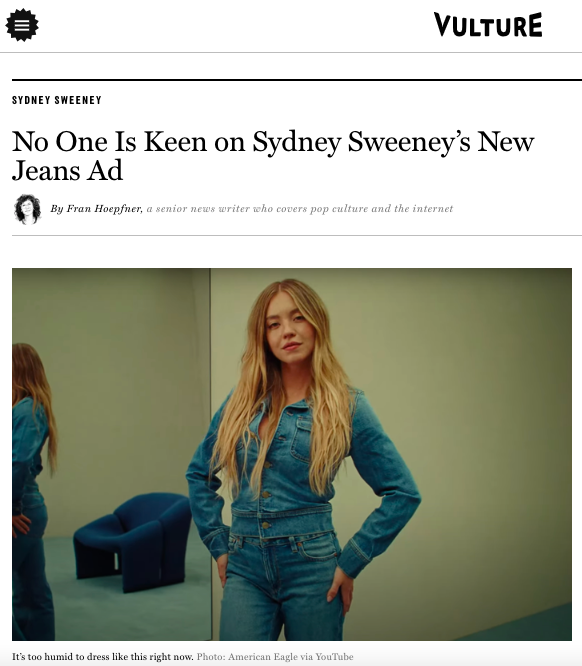
In this vein, Vulture, a New York-based entertainment magazine, published an article headlined: “No One Is Keen on Sydney Sweeney’s New Jeans Ad”. The article draws equivalence between the Brooke Shields Calvin Klein campaign from the 1980s, wherein Shields said, “Genes are fundamental in determining the characteristics of an individual.”
“During a time when DEI is under attack and there are mass deportations occurring daily, an ad campaign centered on how awesome it is to be white and blonde-haired and blue-eyed reads as rather tone-deaf,” the Vulture article reads.
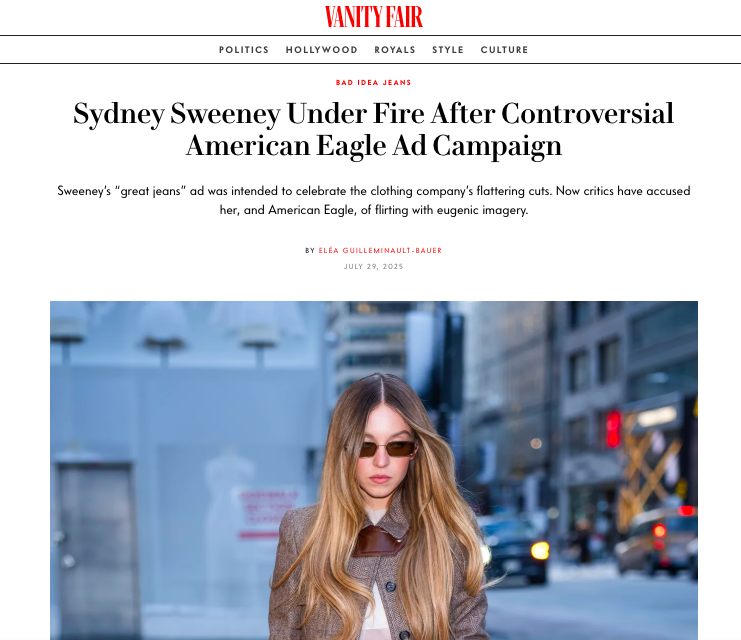
Meanwhile, Vanity Fair also published a piece recently, and called the “jeans/genes” pun in the American Eagle ad ‘a sinister message’.
“Does Sydney Sweeney have ‘great jeans,’ or has the American Eagle brand simply had a very, very bad idea?” while noting that the campaign is “based around a play on words that may seem harmless − but has been criticized by onlookers who see a sinister message lurking beneath the pun,” the article reads.
MSNBC also criticised the said ad and argued that “the choice of Sweeney as the sole face in it and the internet’s reaction reflect an unbridled cultural shift toward whiteness, conservatism and capitalist exploitation.”
It further targets Sweeney, arguing that “Sweeney has been transparent that her goal as a public figure is to make as much money as possible,” as if making money as-much-as-possible is a crime. Maybe, MSNBC’s Hannah Holland saw a capitalist element in this aspiration too.
While the backlash over the Sydney Sweeney-American Eagle ad has yet to subside, Dunkin Donuts, an American food franchise, has also rolled out an ad for its summer Refresher drinks featuring “The Summer I Turned Pretty” star Gavin Casalegno. In a 35-second video, Casalegno, often called the “King of Summer” in pop culture, is seen crediting his summer tan to his “genetics”.
“Look, I didn’t ask to be the king of summer. It just kind of happened,” he said. “This tan? Genetics. I just got my colour analysis back. Guess what? Golden Summer. Literally,” Casalegno says.
Much like the American Eagle ad, this one has also been labelled as “racially tone-deaf”. Casalegno’s support for Israel, which is at war with the Palestinian Islamic terror group Hamas, has further fuelled the outrage. Many are trying to trace a ‘pattern’ as Dunkin Donuts put out an ad with ‘genetics’ used in it.
Sydney Sweeney indeed checks all the boxes of conventional Western beauty standards; however, blaming her for pulling off the campaign’s aesthetics gracefully, presenting the ‘genes’ pun in a playful manner, and trolling her for the same is like blaming sunset for being too pretty. It requires a different level of mental gymnastics to interpret a surface-level pun, as some sort of treatise on selective breeding or a nod to eugenics. Is the charity cause, the American Eagle campaign, contributing exclusively to whites?
As per American Eagle, the butterfly motif on the back pocket of the jeans in the limited “The Sydney Jean” collection represents domestic violence awareness. In support of the cause, 100% of the purchase price from ‘The Sydney Jean” will be donated to Crisis Text Line, a nonprofit offering free, 24/7, confidential mental health support to those in need.
The accusations of racism, and promotion of white supremacy, Nazi propaganda and whatnot, come across as an overzealous interpretation. Countering the woke outrage, the American right wing has praised the ad as a rejection of woke advertising, which has become increasingly mainstream in the last few years.
The very people outraged over the American Eagle and Dunkin Donuts advertisements and slandering Sweeney and Casalegno never allege promotion of racial superiority or dominance when non-white celebrities headline ad campaigns of big brands. These big brands take into account the marketability and popularity of those they want to be the face of their campaign, not necessarily as avatars of any racial ideology.
However, it seems like the anguish of the victory of the conservatives has inflicted a trauma so deep on woke liberals that even harmless puns and advertisements featuring white actors come across as far-right, white supremacist conspiracy to them.