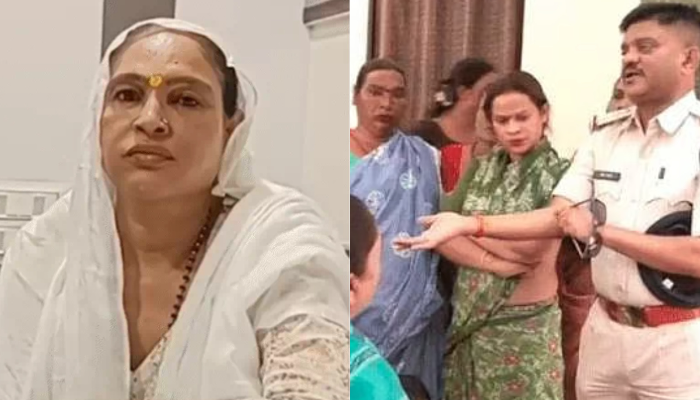
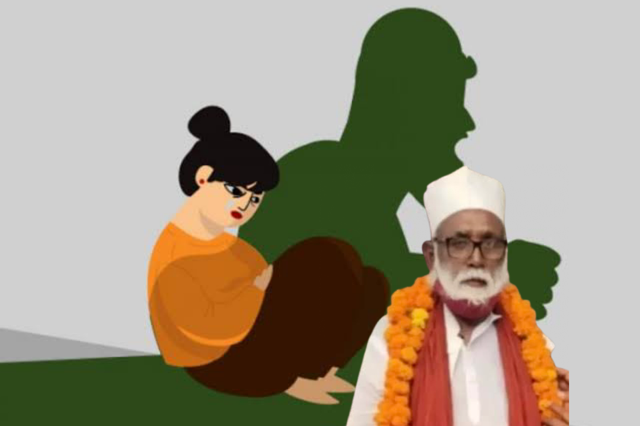
Members of Hindu transgender community have charged some Muslim transgenders with forcing them to embrace Islam in the Nandlalpura neighbourhood of Indore. They further accused the latter of purposefully infecting them via HIV contaminated syringes.
Sakina Guru, a transgender Hindu leader stated that Seema Haji, also known as Farzana and Payal alias Naeem Ansari, from Malegaon spearheaded the aggressive conversion campaign against them.
Indore Police has formed a Special Investigation Team (SIT) in response to the allegations. According to Sakina, those who refused received injections from syringes infested with HIV which caused around 60 people to become sick. Twelve of them have been admitted to the ART Centre at MY Hospital. She added that several members of the community have either absconded or joined the perpetrators out of fear.
She mentioned that Payal left his wife and kids behind when he departed Malegaon to Indore in 2000 and started pressuring transsexual people to become Muslims after arrival. Sakina disclosed that she was also coerced into performing the Hajj by Seema who then attempted to convert her. Afterward, she created her own organisation after realising their intentions. However, Seema began to pressure the Hindu members and summoned more Muslim transgenders from Maharashtra.
Sakina’s attorney informed that legal complaints had been submitted to the Police Commissioner, the PMO, the CMO, the CJI and other high-ranking officials. Additionally, he shared videos to support his claims, asserting that approximately 100 sick people, victims of a “Kinnar Jihad,” live in Indore without access to medical supervision.
The conflict has resulted in recurrent altercations between the two parties and police stations in Chandan Nagar and Vijay Nagar have received formal complaints. Last month, a similar unrest at the Pandrinath police station even resulted in the station-in-charge being transferred.
Sakina complained to Collector Ashish Singh following a demonstration at the Pandrinath station. The case was turned over to SDM Nidhi Verma. Police Commissioner Santosh Kumar Singh formed a Special Investigation Team headed by DCP Rishikesh Meena and other top officials in response to protests and a suicide threat from Sakina’s group against police inaction. Officials have classified the inquiry as extremely sensitive because of the ramifications for public health and society.
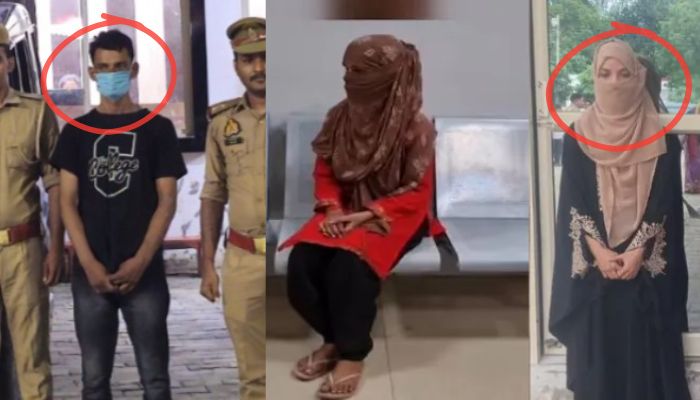
In Uttar Pradesh’s Hardoi district, a 24-year-old Hindu woman was allegedly raped by a man named Intekhab Haider with the help of her own Muslim friend, Reena Bano. On 15th July 2025, the police arrested main accused Haider, a resident of Karaeli police station area in Prayagraj.
The other accused Reena Bano was already arrested earlier and have been remanded to judicial custody.
As reported earlier, the victim said that she was raped, blackmailed and was being pressured to convert to Islam. The nightmare for the victim started in December 2024 and continued for months, leaving her scared and helpless.
The Hindu victim and her ‘friend’ Reena Bano both attend the ITI college of Hardoi, and the girl met Reena at college. They soon became friends and began to hang out with each other like good friends do. But things went dark when Reena asked her to visit her home in the Lohani near the Pihani police station. Upon arrival, Reena led her to a room where Haider, Reena’s relative from Prayagraj, was already inside.
As soon as she entered, Reena slipped out and closed the door. Haider also had a gun, and he said that if she uttered a word, he would kill her, and then he raped her. He also recorded the entire incident on his phone. The girl cried out for help, but nobody came. When Reena returned, Reena and Haider started blackmailing her and warned that they would show the video to her family and put it on the internet if she did not obey them. This blackmail went on for seven months.
Finally, after seven months, on 11th July, 2025, she visited Shahabad police station and complained, revealing everything regarding the rape, blackmail, and coercion to convert.
Based on the victim’s complaint, the accused were booked by Shahabad Police under sections 127 (2) (wrongful confinement), 64(1) (rape), 61(2) (a) (criminal conspiracy), 351(3) (criminal intimidation) of BNS and section 3/5 (3) of Uttar Pradesh Prohibition of Unlawful Conversion of Religion Act.
In a press release detailing the matter, Hardoi Police said, “On 11.07.2025, the victim gave a complaint at Police Station Shahabad that the she was taken to her house by her friend Reena Bano daughter of Hafizullah resident of Mohammad Lohani Police Station Shahabad District Hardoi where a young man named Haider (who is a resident of Allahabad and had come to his in-laws’ house in Mohalla Lohani Police Station Pihani) present at their house, did wrong to the plaintiff and the above accused Haider and Reena Bano pressured the plaintiff to convert her religion. In this regard, on the basis of the complaint of the plaintiff, FIR No. 478/25 under Section 127 (2) / 64 (1) / 61 (2) (a) / 351 (3) BNS and 3/5 (3) Uttar Pradesh Prohibition of Unlawful Conversion of Religion Act vs. Haider and Reena Bano above has been registered at Police Station Shahabad.”
#HardoiPolice थाना शाहाबाद पुलिस द्वारा मु0अ0सं0 478/25 धारा 127(2) /64(1)/61(2)(a)/351(3) बीएनएस व 3/5(3) उत्तर प्रदेश विधि विरुद्ध धर्म संपरिवर्तन प्रतिषेध अधिनियम से संबंधित अभियुक्त को गिरफ्तार करने के संबंध में-#UPPolicepic.twitter.com/Ajh8czwHSb
Informing about the accused perpetrator’s arrest, Hardoi Police said, “The named accused Intekhab Haider alias Haider son of Babar, resident of Gangajal Sultanpur Bhava Police Station Karaili District Prayagraj, has been arrested as per rules by Police Station Shahabad. Necessary legal action is underway.”
Notably, co-accused Reena Bano has already been arrested and sent to judicial custody.
In a 15th July judgment by the King’s Bench Division of the High Court of Britain, it has been revealed that the UK government has been quietly relocating thousands of Afghans following a serious data breach that happened in 2022. The list of media houses seeking removal of the injunction order included Global Media and Entertainment Limited, Independent Digital News and Media Limited, Times Media Limited, Associated Newspapers Limited, Telegraph Media Group, The Financial Times Limited, the Press Association Limited Company and others. OpIndia accessed a copy of the recent judgment.
The recent revelation has triggered widespread concern over the sheer scale of immigration quietly facilitated by the UK government. While the covert operation may have been driven by humanitarian urgency, it has also raised serious questions about transparency, national security, and the lack of public or parliamentary scrutiny in relocating thousands under the radar.
Reportedly, more than 4,500 Afghans, including hundreds of former military personnel, have been relocated to the United Kingdom under a covert government scheme. The information on the relocation was previously hidden from public knowledge under a super-injunction. Notably, the process of relocation was started following a catastrophic data leak that took place in February 2022.
According to media reports, the relocation process was initiated by the UK government in April 2024. Reportedly, a Ministry of Defence (MoD) official disclosed a spreadsheet without any authorisation in February 2022, which exposed names and personal contact details of around 19,000 Afghans who had applied for asylum in the UK following the Taliban’s seizure of power. The leak remained hidden for over a year and was discovered in August 2023 when details of Afghans made their way to Facebook, putting thousands of asylum seekers at risk of Taliban retribution.
According to the MoD, 600 former Afghan soldiers and around 1,800 of their dependants are still in Afghanistan, waiting for evacuation under what is now known as the Afghan Relocation Route. The UK government has already spent taxpayers’ money amounting to 400 million pounds on the relocation process, and around 450 million pounds might be spent on the scheme in the future.
Cover-up and delayed disclosures
For around two years, the breach and subsequent relocation efforts were kept secret from the public as the Conservative government had obtained a super-injunction in 2023. The order barred any reporting on the leak. Interestingly, the order also barred any reporting on the existence of the injunction itself. The order was recently lifted by Justice Chamberlain, who said that the injunction had “completely shut down the ordinary mechanisms of accountability which operate in a democracy”.
Notably, this was the fourth judgment passed by Justice Chamberlain in the matter. The previous three judgments, which were handed over in private, have also been published.
He noted that it gave rise to a “scrutiny vacuum” and raised “serious free speech concerns”. According to media reports, the court documents pointed out that then-Defence Secretary Ben Wallace personally applied for the gag order, allowing the government to mitigate the risks. The MoD later claimed that the Taliban were likely already aware of the dataset, and publication would not significantly increase threats.
Government apologises, but questions linger
Speaking in the House of Commons, Defence Secretary John Healey issued a “sincere apology” to those affected. He acknowledged that the breach was a “serious departmental error”, which was caused by a spreadsheet being emailed outside authorised government systems. Interestingly, no criminal investigation was pursued in the matter by the Metropolitan Police.
While apologising on the matter, Conservative leader Kemi Badenoch said, “Somebody made a terrible mistake… and we are sorry for that.” However, the government has not disclosed whether any disciplinary action was taken against the official responsible for the leak.
Reportedly, those who were impacted have been informed about the leak, advising them to exercise caution online and avoid responding to unknown contacts. The MoD has refused to confirm if any individuals were harmed as a result of the breach.
Moral obligations and future trust at stake
During the 20-year deployment in Afghanistan alongside the US and NATO forces, the UK forces relied heavily on Afghan allies. The leak has not only endangered lives but also raised serious doubts about Britain’s ability to protect its partners and uphold the promises it made.
The excavation at Keeladi, located in Tamil Nadu, unveiled proof of an early urbanized society in South India, which captivated the interest of the whole nation. The first stages of the initiative, started in 2014, were headed by archaeologist K Amarnath Ramakrishna.
However, a significant political dispute between the Tamil Nadu government and the centre has unfolded by his repeated transfers and the Archaeological Survey of India’s (ASI) reservations about his excavation report.
K Amarnath is now appointed as the Director of the National Mission on Monuments and Antiquity (NMMA) in Greater Noida. He was employed as the Director of the National Mission on Monuments and Antiquity in New Delhi prior to the transfer, which occurred six months after his last assignment. He had previously spent three months in the position of Director for Excavation and Exploration.
K Amarnath was ordered to modify his report by the Archaeological Survey of India (ASI), however, he denied to comply, leading to a fierce war of words between the central and state governments.
How it all began: The Keeladi findings and its significance
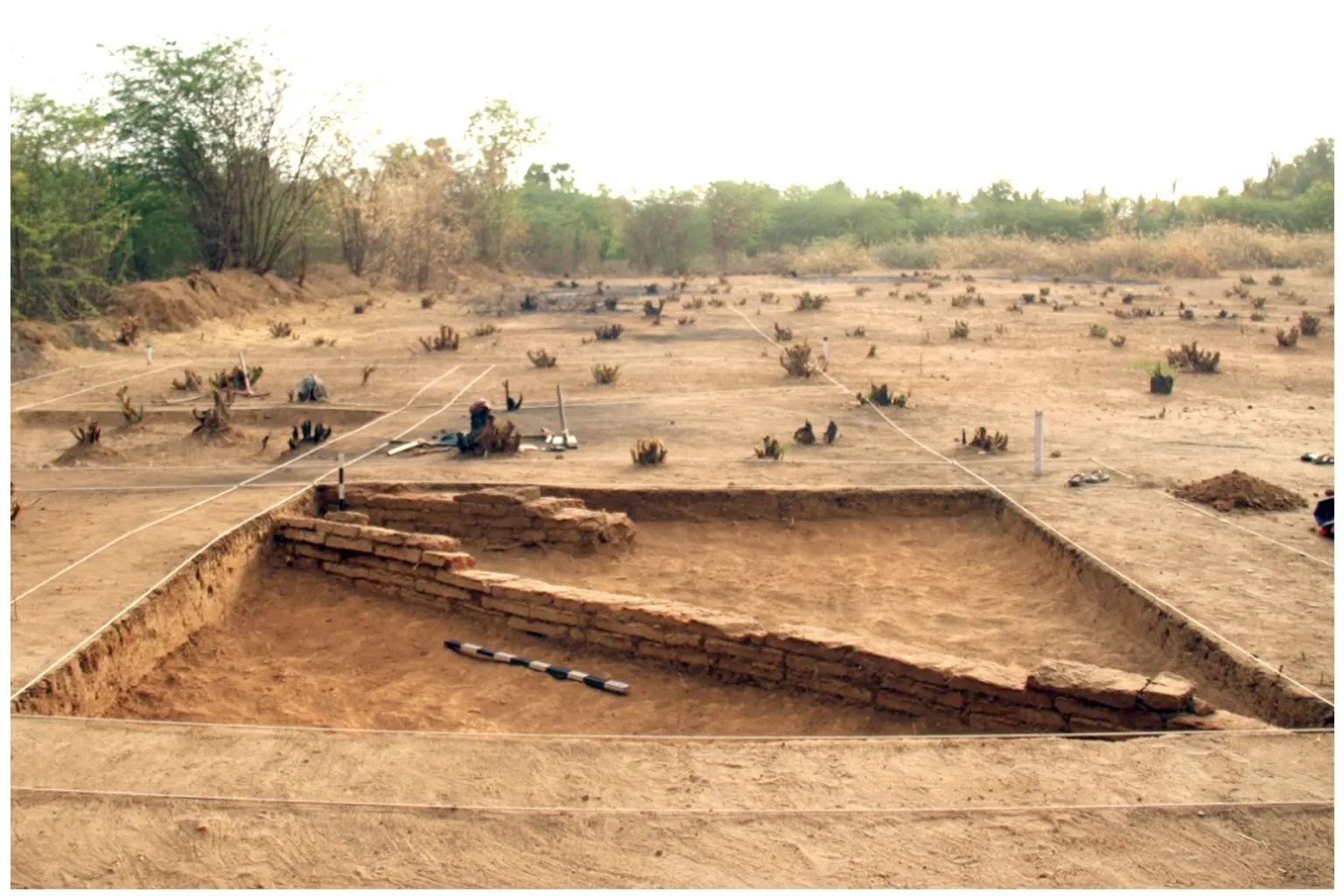
Keeladi also known as Keezhadi is on the Vaigai river basin, situated in the Sivaganga district, approximately 12 kilometers southeast of Madurai. Excavations were started more than ten years ago at the Pallichanthai Tidal in Keeladi which was once a 100-acre coconut grove by Amarnath Ramakrishna, the ASI’s superintending archaeologist at the time. Keeladi stood out among the over 100 locations he had selected for excavation along the Vaigai River.
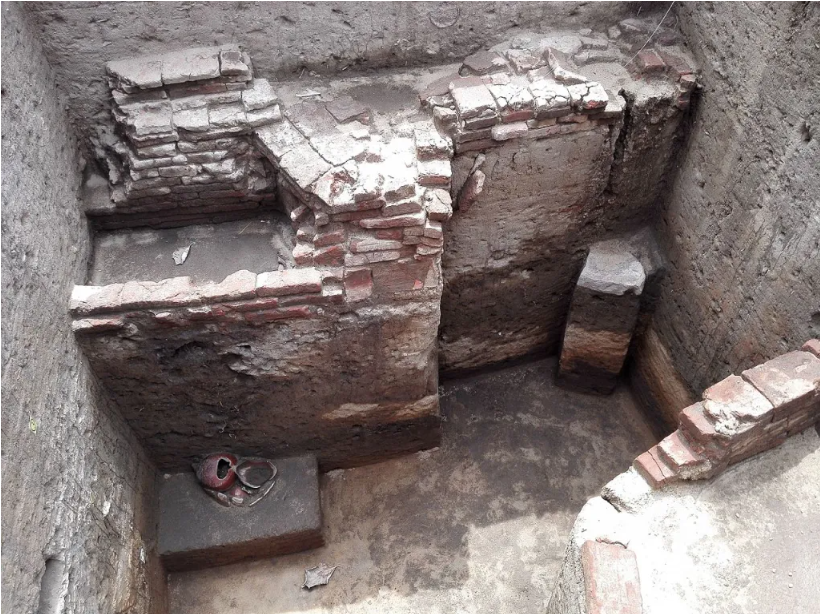
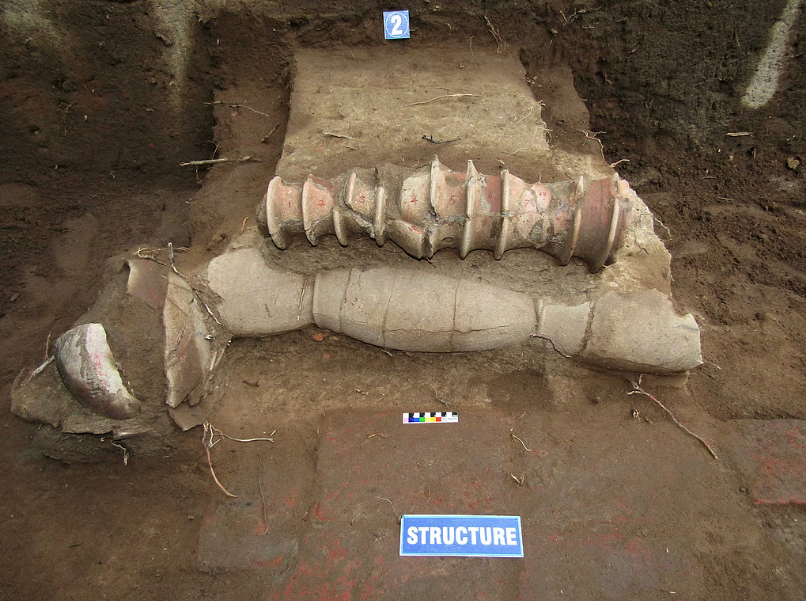
Over 7,500 ancient artefacts, such as wells, drainage systems and wall structures were discovered there, pointing to a thriving and advanced urban society. These materials were disclosed to be more than 2,160 years old, dating to the second century BCE (Before Common Era) which coincides with Tamil history’s Sangam period, according to carbon dating.
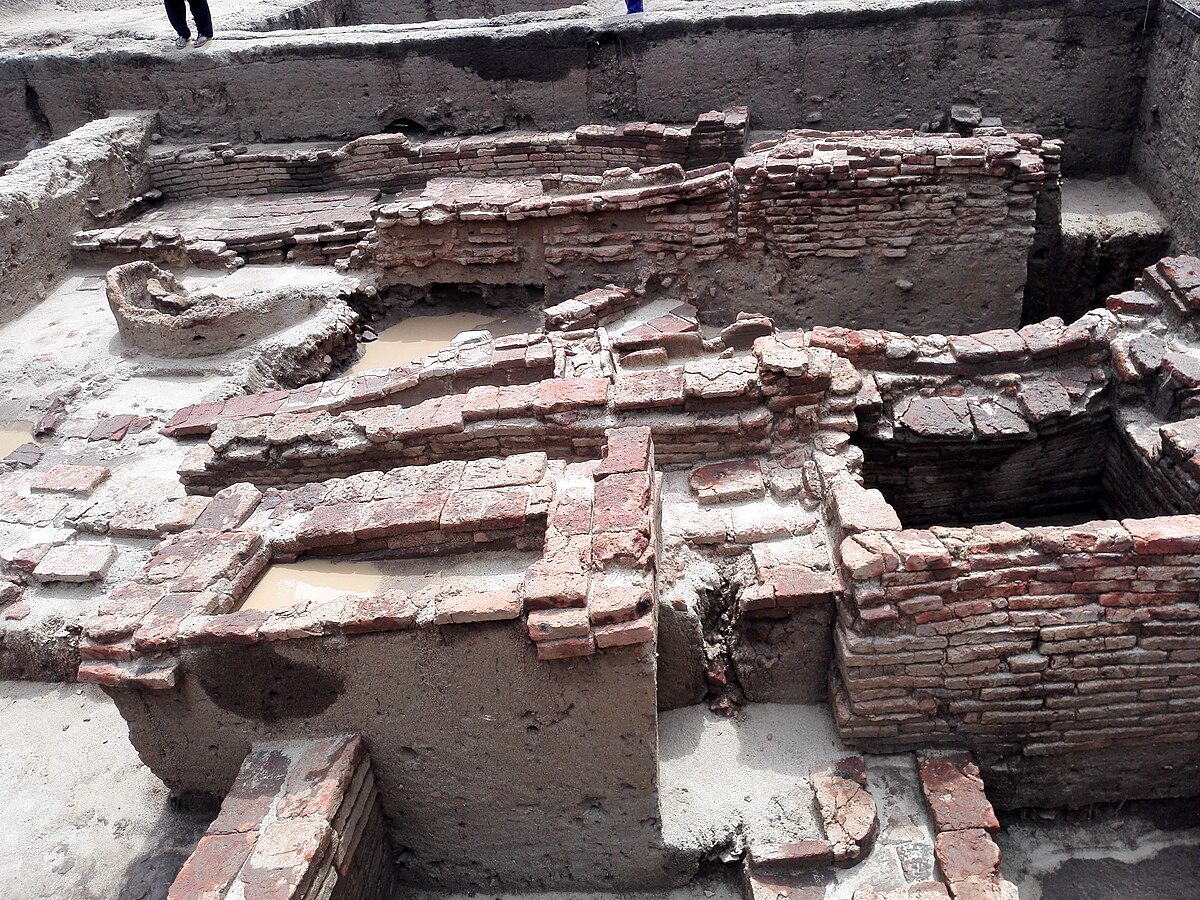
Keeladi excavation site (Source: Purushu Arie)
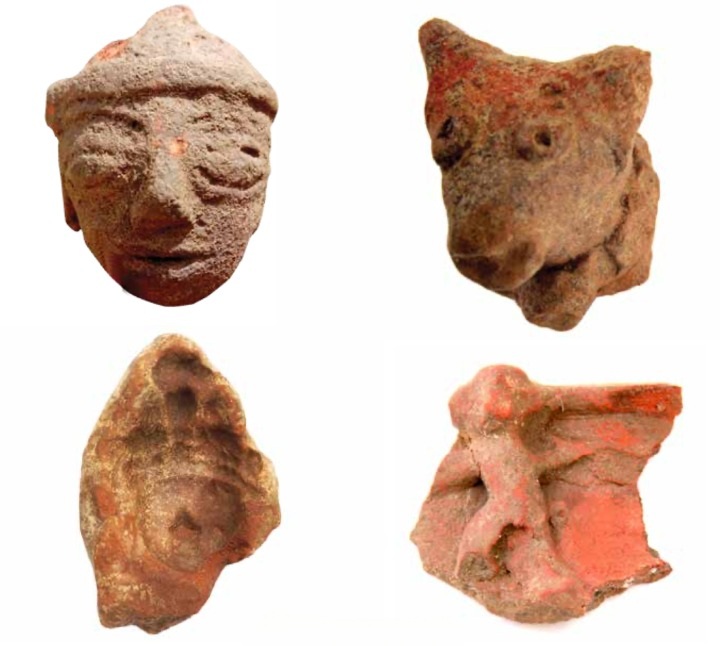
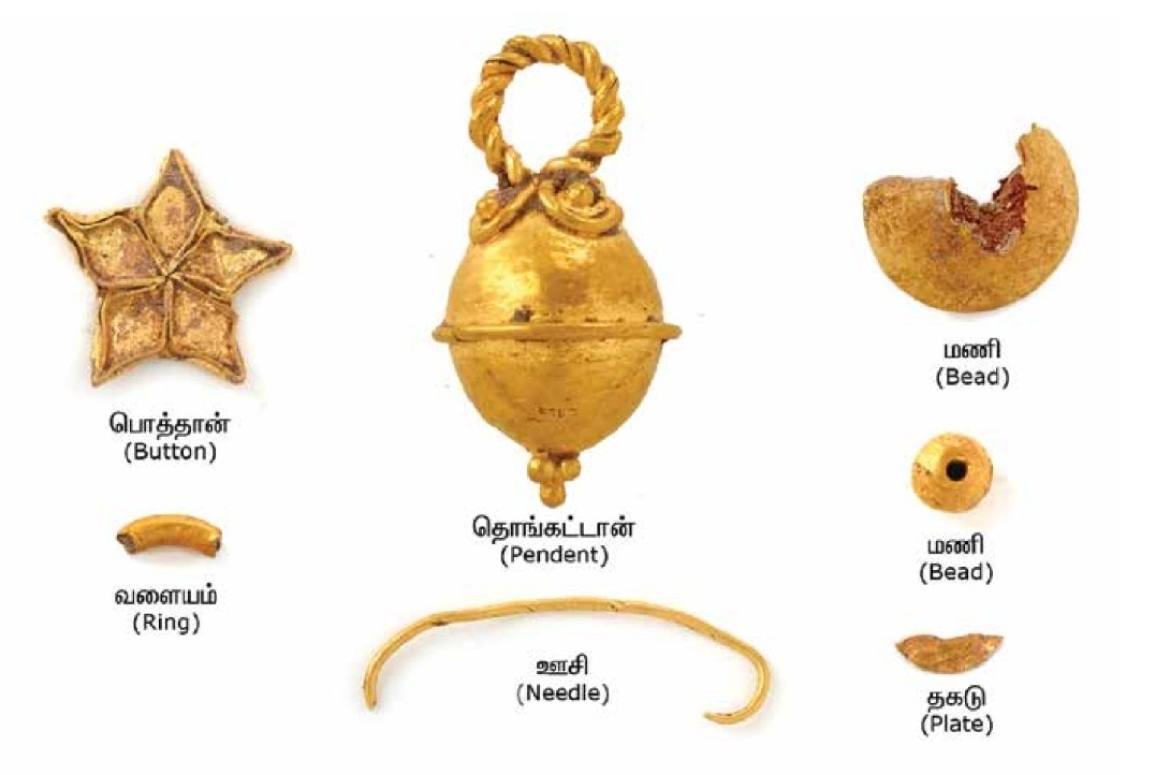
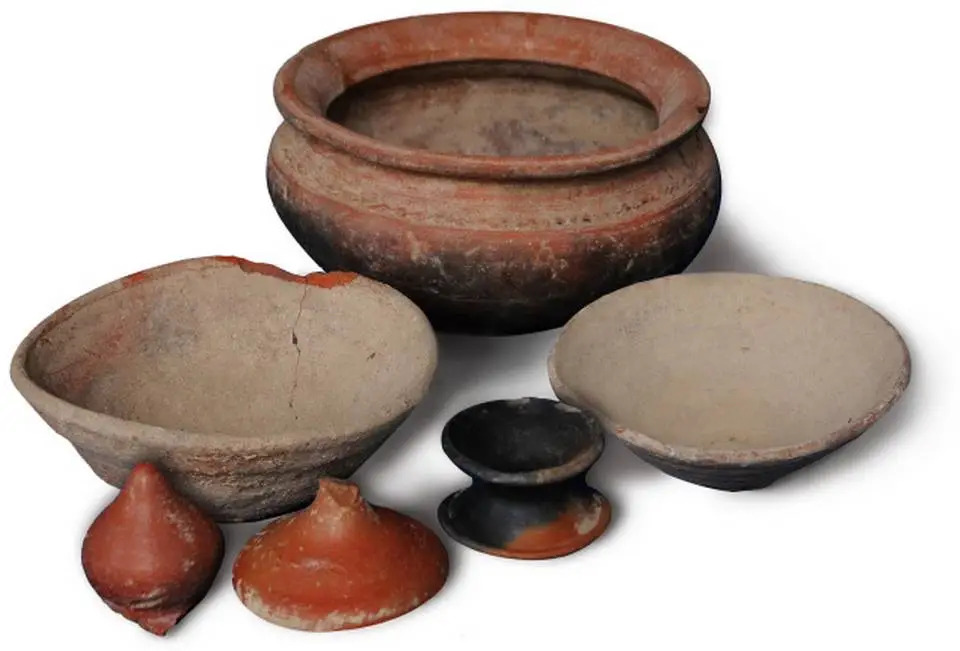
The ASI conducted the first three of the eight rounds of excavations. After the Tamil Nadu State Department of Archaeology (TNSDA) assumed responsibility for the project, the artefacts accumulated to over 18,000, which included pottery, inscribed potsherds, gold ornaments, copper articles, semi-precious stones, shell and ivory bangles, glass beads, spindle whorls, terracotta seals, and weaving tools.
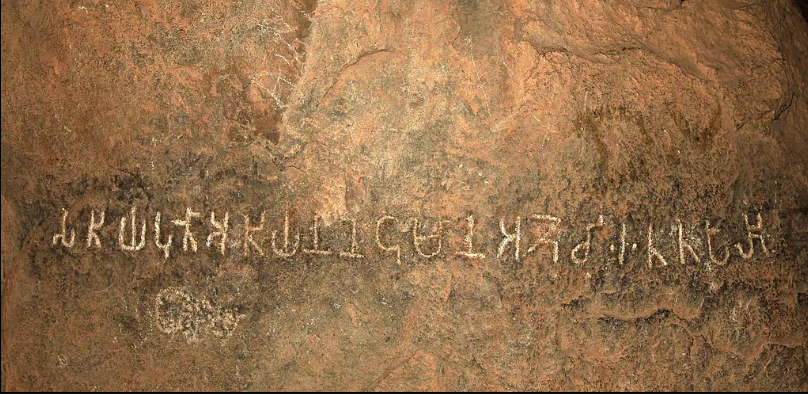
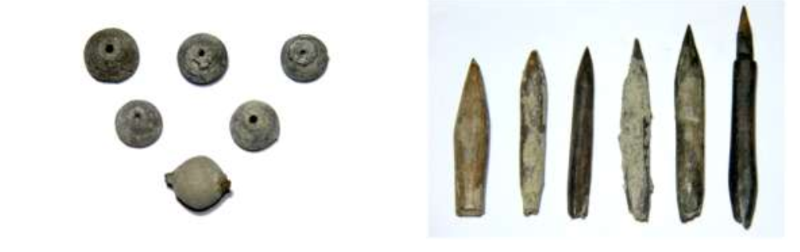
The location produced more than 120 potsherds with Tamil Brahmi inscriptions. The discovery alongside thousand inscribed potsherds from other areas demonstrated the script’s continued existence in the region. Copper needles, clay seals, spinning whorls, yarn hanging stones, terracotta spheres, and earthen containers for liquids alluded to different stages of the weaving industry.
They also indicated that Keeladi was a strong, well-planned and sophisticated urban community with traces of businesses like beadmaking, dyeing and pottery. The artistic, culturally diverse and affluent lifestyle of the Keeladi people is reflected in gold decorations, copper objects, semi-precious stones, shell bangles, ivory bangles and ivory combs.
Beads made of carnelian and agate reflected importation through business networks. Furthermore, their recreational interests had been disclosed through the uncovering of terracotta and ivory dice, gamesmen and signs of hopscotch which also revealed the presence of an elite society. It was also unearthed that the area’s fertility and cow husbandry were key factors in its development, opening the door for the locals to engage in sea trading and produce an abundance of rice.
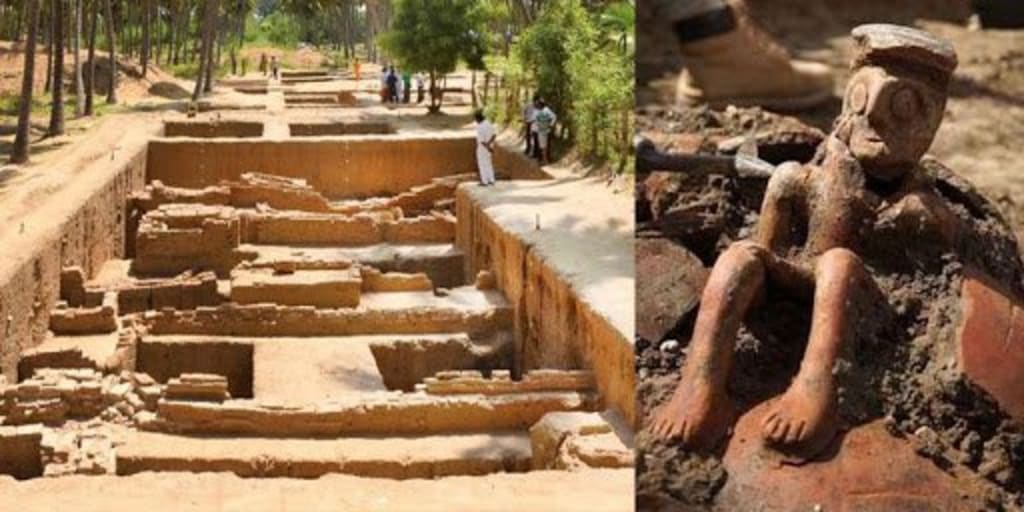
Terracotta Figurines (Source: Purushu Arie)
The results showcased a far older and more developed civilisation than previously believed, pushing the Sangam Age in Tamil Nadu back to about 800 BCE, as per reports. The Sangam Age, also known as the Tamil Sangam period, is a significant period in the history of South India. It was named for the Sangam, an assembly of Tamil poets and academics, saw a flourishing of literature and culture in southern India. It was generally accepted to have occurred between approximately 300 BCE and 300 CE (Common Era).
The Keeladi objects displayed certain symbols that were similar to those of the Indus Valley Civilization. However, there is cultural separation of roughly 1,000 years and scholars anticipated that more research would shed light on this relationship.
Tamil Nadu State Department of Archaeology asserted that Keeladi possessed all the hallmarks of an urban civilisation, including brick buildings, upscale goods and evidence of both domestic and international trade. It presented itself as a highly developed and hard-working civilisation and provided proof of Tamil Nadu’s urban life and settlements throughout the Early Historic Period. Additionally, Keeladi only strengthened Sangam Literature’s legitimacy.
Image via Purushu Arie
Strong structures orientated in cardinal directions unveiled systematic urban planning and pot fragments with Tamil Brahmi inscriptions confirmed a literate culture. The sun and moon graffiti revealed the people’s astronomical awareness.
Keeladi was an urban town from the Sangam era and the cultural deposits discovered during the fourth phase of excavations could be easily dated to a time between the sixth and first centuries BCE, according to a 2019 report from the Tamil Nadu State Department of Archaeology. One of the six samples sent to the United States for carbon testing was dated 580 BCE. It was taken at a depth of 353 centimetres.
Tamil Brahmi inscription etched on a rock. (Source: Outlook Traveller)
Notably, according to the findings presented in the report, the Keeladi artefacts date back approximately 300 years earlier than the previously believed 3rd century BCE.
Ramakrishna’s discovery and subsequent transfer
Keeladi was found by Amarnath Ramakrishna, who supervised the first two seasons of excavations from 2014 to 2016 and handed over a 982-page report to ASI Director General V. Vidyavathi. The report’s twelve chapters provided an explanation of the excavation’s goals and historical context.
The 23 samples that were dated using Accelerator Mass Spectrometry (AMS) at the Beta Analytical Lab in Florida of the United States were covered in a different chapter. It also incorporated research on floral and faunal remains from the site to arrive at the period, as well as discoveries from other universities, as per reports.
Spindle whorls and bone points (Source: Purushu Arie)
The first two phases of excavation at Keeladi yielded about 5,800 artefacts after which Ramakrishna was transferred to Assam. The action was reportedly viewed as a setback to the effort. The centre was accused by critics of purposefully sabotaging the excavations because it had committed to release funds and support for additional digging, but postponed both.
Meanwhile, the excavations had already progressed into their third phase under archaeologist PS Sriraman. Interestingly, Sriraman announced that there was no continuity in the brick constructions that had been found earlier, after 400 square meters of excavation. As a result, claims emerged from Tamil Nadu that the centre was actively ‘downplaying’ Keeladi’s prominence, aided by the usual political narratives of anti-North India sentiments that is seen in Tamil political discourse.
Excavation blocks (Source: Wikipedia)
TN Govt took up excavation project after ASI stopped, found 13,000 more items
The ASI halted excavations at the site, arguing that the third phase produced no significant outcomes. However, the work was taken over by the Tamil Nadu State Department of Archaeology in 2017 and thousands of artefacts have since been unearthed. The ninth phase of the excavations was launched by Chief Minister MK Stalin in April 2023 and ended in September of the same year.
The Tamil Nadu State Department of Archaeology has been able to uncover more than 13,000 items and acquire radiocarbon dates from 580 BCE to 200 CE. The excavations, entered their tenth phase by 2024-2025 and already produced hundreds of antiques.
Furthermore, a 30-foot-long new structure has recently been found at the third trench of the Keeladi excavation after ASI ruled out the possibility of any noteworthy discovery at the site. The bricks used in this new structure are identical in design and make to those used in other parts.
“The bricks used in this new structure are identical in design and make to those used in other parts of Keeladi, strengthening the authenticity of the findings. Earlier studies by Amarnath Ramakrishna’s team had already suggested the area might have housed industrial zones,” V Marappan, Professor of History at Presidency College, outlined while talking to The Federal.
He added, “These new findings raise questions about whether other sections of the site remain unexcavated underground.” The new structure, east-west orientated was discovered 90 centimetres below the surface on the western side. Its length is estimated to be approximately 10 meters. According to archaeologists, it might have been an industrial building or a workshop.
Madras High Court intervenes
The matter made its way to the judiciary in the interim. Judges from the Madras High Court intervened and travelled to the excavation site. They asked the ASI to carry on with the excavations and permit the involvement of the Tamil Nadu Department of Archaeology. The archaeology department of the state followed the instruction.
It had been working on it since the third phase of excavation, giving a more dramatic turn to the events. The court’s Madurai bench in 2019 pronounced that the excavations should not stop since significant advancements in Tamil civilisation had been uncovered while considering a number of petitions that sought an order to the state and the centre to preserve the archaeological sites in Tamil Nadu.
The public would learn more about Tamil civilisation through the archaeological excavations, thus Division Bench consisting of Justices D. Krishnakumar and R. Vijayakumar advised the relevant authorities to ensure that they were carried out without any obstacles.
The court even ordered the centre to send back Amarnath Ramakrishna to Tamil Nadu within 15 days to continue the excavations. Amarnath Ramakrishna, who had been moved back to the state, put forth his report on the first two stages of excavation in January 2023.
Last year, the High Court even sent a notice to the centre demanding the ASI to release the report that was provided following the first two stages of the excavations. The centre received notice regarding the petition filed by Madurai resident P. Prabhakar Pandian from the bench.
The state and the centre were also instructed to submit more counter-affidavits to several public interest litigation petitions concerning the excavations, in the same year. It ordered the authorities to present the rebuttal affidavits to the 2016 and 2017 petitions which had asked the relevant authorities for guidance on how to proceed with the excavations at Keeladi rather than shutting down the site.
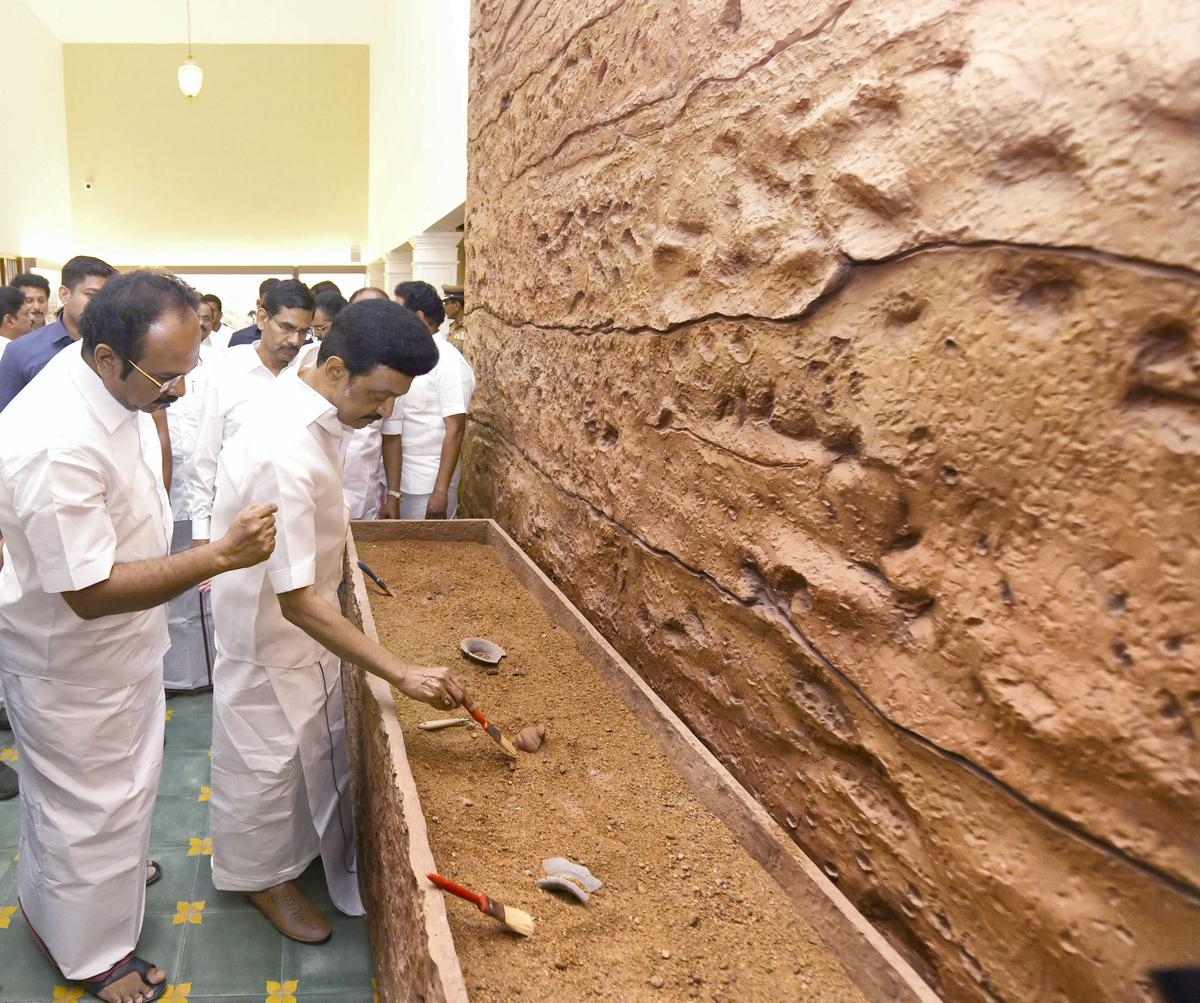
One of the petitions asked the government to establish a “site museum” at Keeladi. Stalin opened a Rs 18.43 crore Keeladi museum in March 2023 on two acres.
MK Stalin at the inauguration of the Museum of Archaeological Artifacts found at Keezadi excavation. (Source: The Hindu)
The Madurai bench even granted the Archaeological Survey India’s request to relocate the artefacts from the excavation to its Dehradun lab for further scientific analysis, in 2016. It was instructed to notify the state’s archaeology commissioner prior to the move. The commissioner was told to record videos and take pictures of the items. The ASI was given directions to return the objects to Tamil Nadu and provide a report to the court.
Controversy erupts between the Centre, Tamil Nadu govt
The 982-page final report was given by Ramakrishna in January 2023, following preliminary and interim submissions in 2016 and 2017, respectively. It had been with the ASI for almost two and a half years and it wrote to Ramakrishna in May seeking a revision.
The Archaeological Survey of India raised concerns regarding the dating and profoundity of specific outcomes. It underscored that the evidence for the earliest period seemed to be quite early and stated that it needed further examination.
According to the letter, “the three periods require proper nomenclatures or re-orientation.” It remarked that the “8th century BCE to 5th century BCE for Period I requires concrete justification.” It also noted that “just mentioning depth for the available scientific dates is not enough but the layer number should also be marked for comparative consistency analysis.” The ASI also demanded that the manner in which dates were presented should also be amended.
However, Amarnath Ramakrishna refused to modify his results, maintaining that his research was sound from a scientific standpoint and supported by strict archaeological standards. He maintained that material culture, stratigraphic sequences and even Accelerator Mass Spectrometry (AMS) corroborated the report’s chronology.
A number of Tamil Nadu political groups, including the ruling-Dravida Munnetra Kazhagam (DMK), the Viduthalai Chiruthaigal Katchi and historian R. Balakrishnan, denounced the ASI’s move as an attempt to stifle Tamil culture. They accused that the failure to recognise Keeladi’s importance was motivated by politics.
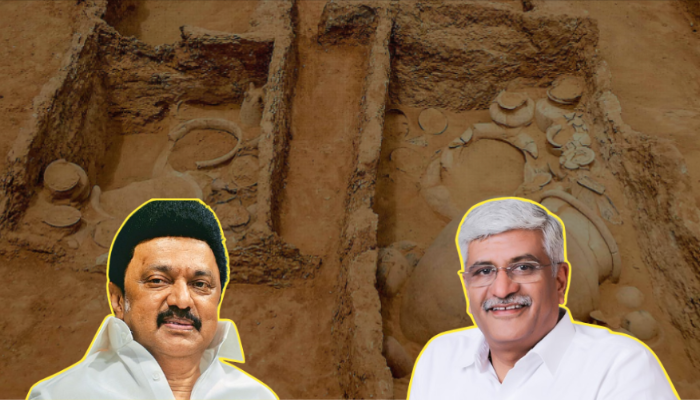
On the other hand, Gajendra Singh Shekhawat, the Union Minister for Culture, stated that additional scientific research was necessary to validate Ramakrishnan’s conclusions because they lacked technical support. He asserted that a single finding could not alter the entire discourse and therefore, more data, outcomes and proofs were needed to be collected.
Shekhawat stated that Tamil Nadu is a vital part of India and that its history should be honoured using knowledge based on science rather than polarising opinions. He informed Stalin that the union government would not hesitate to publish any reports and would be delighted to support the state if the research was validated by science.
The union minister declared that more convincing evidence is required for the report to be accepted by the scientific community. He even questioned was the Tamil Nadu government had been reluctant to work with the centre on this matter due to which the conflict has persisted.
“People holding such positions are trying to use that to grow regional sentiments. That is not fair. We have to be very cautious. Let archaeologists, historians, and technical experts discuss this, instead of politicians,” he mentioned.
However, Thangam Thennarasu, Tamil Nadu’s Archaeology Minister, charged that the union government treats Tamils as second-class citizens. He complained, “They also refused to allocate funds for the excavations and allowed the report to gather dust for two years. Now they say there is no adequate evidence. Every time they reject Tamil history, only the method of rejection changes.”
Marumalarchi Dravida Munnetra Kazhagam’s (MDMK) Vaiko also claimed that the centre was attempting to promote “a non-existent Sanskrit civilisation” while repressing Tamil civilisation.
“How many obstacles do Tamils face? We have been fighting against all of them for thousands of years, and with the help of science, we have been establishing the antiquity of our race. Yet some minds refuse to accept it. It’s not the statements that need to be corrected, it’s some minds,” MK Stalin recently shared on social media last month while reacting on Ramakrishna’s recent transfer.
Communist Party of India (Marxist) MP from Madurai S Venkatesan expressed, “Transferring an official is not in itself a major issue, it is part of administrative procedures. But Amarnath Ramakrishna worked on the Keeladi excavation for eight years, without compromising on the truth. He was removed, reassigned and denied the opportunity to publish his findings. Only after court intervention was he allowed to write the report.”
He conveyed that the ASI had promised the court and Parliament that the report would be released in 11 months, but that deadline had not been fulfilled while the centre now wants more scientific proof at the final stage. “The message is clear: If you do not align with our views, this is what will be done to you. This is not just about an individual, it’s a discriminatory act against Tamil Nadu and against South Indian history itself,” he alleged.
The AIADMK (All India Anna Dravida Munnetra Kazhagam) which was in power when the Keeladi report was issued, did not comment on the dispute for a long time. On 18th June, however, its senior leader and former minister RB Udhayakumar stated that the union government had requested further data in order to provide “additional corroboration.” He added that his party would be the first one to voice its disapproval if the Keeladi report was rejected.
Stalin accused the party of remaining silent while the centre minimised the importance of the location to which Udhayakumar retorted that his party’s government had approved Rs 55 lakh for the 2018 excavations. Mafoi Pandiarajan, a senior AIADMK leader who helmed archaeology under Edappadi Palaniswamy, praised him as “Keeladi Nayakar” (hero of Keeladi) and gave him credit for proving Tamil antiquity. A veteran DMK leader retaliated, “Their belated pride in Keeladi rings hollow when they put alliance politics above Tamil identity.”
Central government demands excavation report
The Archaeological Survey of India (ASI) has asked retired superintending archaeologist PS Sriraman to present the official excavation report for the third phase of the Keeladi excavations. He handled the short-lived third phase in 2017 after Ramakrishna’s abrupt transfer and reported that no major discoveries were made.
He retired in 2019 and has been given permission by the agency to write reports on the excavations he supervised in Keeladi, where he headed the third phase of excavations. He was also involved in the work for one season at Kodumanal which is situated on the northern banks of the Noyyal River in the Erode district, between 2017-2018.
According to archaeologists, Kodumanal could be split into two cultural periods: the Megalithic era and the Prehistoric era. During these times, the locals built durable structures, were skilled craftspeople and engaged in trade with several nations.
Sriraman would be writing the report from the ASI office in Chennai. He talked to The Hindu and revealed, “As I had retired, both reports were pending. I sought the approval of the ASI to access the material and prepare the reports. Since all the related materials are in Chennai, I will begin preparing the reports soon.”
He reiterated, “I have sought permission to complete the report since I am retired now. A formal communication from the ASI is expected soon,” while speaking with Deccan Herald. “The ASI instructed me to complete as quickly as possible. I am concentrating more on Kodumanal because it is an individual work – my work while the third phase in Keezhadi is for a shorter period and it was a continuation of work done earlier,” he asserted in conversation with The New Indian Express.
This comes more than a month after Ramakrishna was asked by the ASI to “resubmit” his report following the necessary changes recommended by two experts who reviewed it.
New dawn in India’s history: Traces of parallel civilization
The Keeladi site has unveiled a pivotal chapter in the history of Tamil Nadu. The indication that an artifact belonged to the 6th century BCE by the US laboratory Beta Analytics holds a major significance. They used the method of radiocarbon dating and suggested that it was contemporary with the urbanisation of the Gangetic plains.
The oldest of the 29 radiocarbon samples dated by the Tamil Nadu State Department of Archaeology since the 2017-18 excavation season was 580 BCE and the most recent was 200 CE. The results indicated that between the sixth century BCE and the second century CE, there was a vibrant urban and industrial civilisation that lasted for 800 years.
Image via theekkathir.in
Large brick buildings from the Sangam Age had been discovered and provided proof of the development discussed in Sangam literature. Archaeologist K Rajan who is advisor to Tamil Nadu’s archaeology department voiced, “Most samples above the brick structures date to after the 3rd century BCE, while those below go as far back as the 6th century BCE,” reported The Times of India.
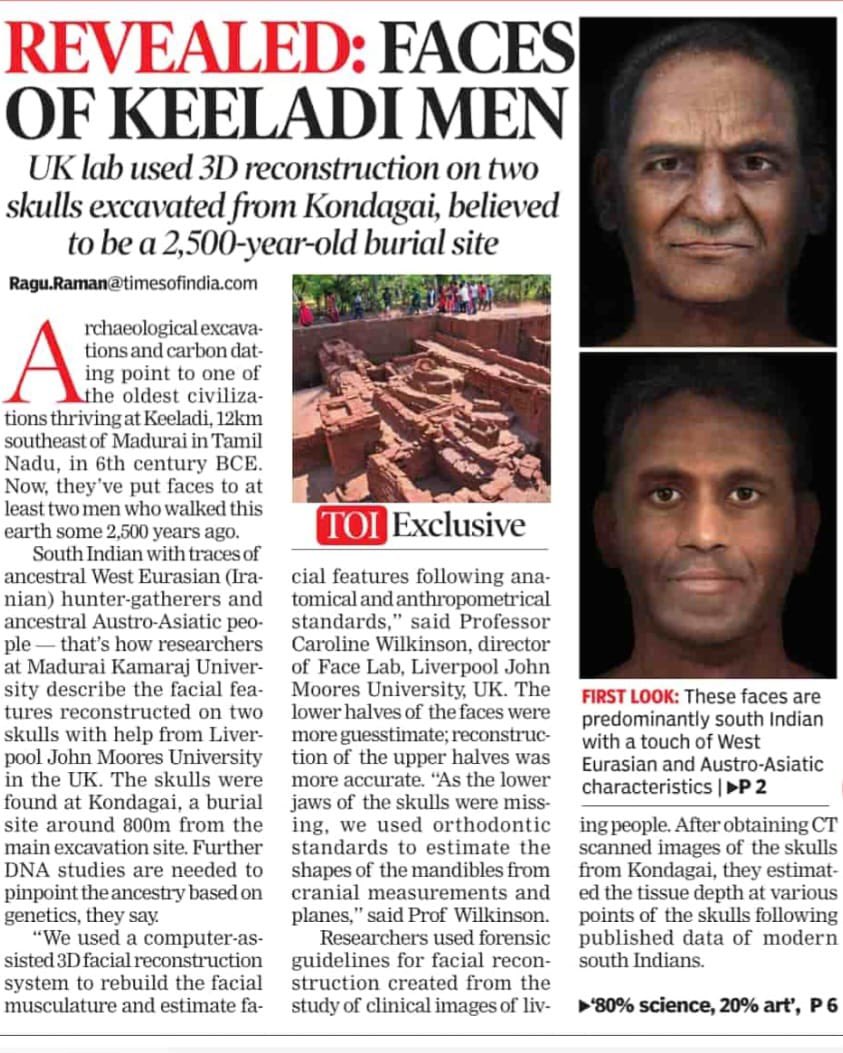
With the use of 3D technology and anthropometric measurements from a skull discovered at the Kondagai burial site, archaeologists are one step closer to unveiling the face of the ancient Tamil people who inhabited the Keeladi settlement thousands of years ago. Rajan stated, “Based on the skull, we will reconstruct the age, dietary pattern, determine the gender, and actual face of the person.”
He added, “This places Keeladi alongside the urbanisation of the Gangetic plains, India’s second urbanisation. Of the 29 radiocarbon dates, 12 fall in the pre-Ashokan era, before the 3rd century BCE.”
TOI article on UK lab’s 3D models of skulls excavated from Kondagai
Over 20 research institutions from India and abroad are working with the state archaeology department to recreate life in Keeladi in 580 BCE. These involve Liverpool University in the United Kingdom, the University of Pisa in Italy, the Field Museum in Chicago, the French Institute of Pondicherry, IIT Gandhinagar and Deccan College.
Animal bones discovered in Keeladi are under examination at the Deccan College. The bones of bulls, buffaloes, goats, cows, sheep, dogs, pigs, antelope and spotted deer were located during excavations. Researchers at Madurai Kamaraj University are looking into ancient animal and human DNA in order to gain further insight into the mixing and human migration of the ancient residents of Keeladi and Kondagai, a Keeladi cluster hamlet.
A single site has produced 29 dates applying this scientific method. “It shows Keeladi was an urban settlement with a literate society and a community of artisans. It was an industrial hub along an ancient trade route linking the east coast port of Alagankulam to Muziris on the west coast via Madurai,” mentioned R Sivanandam, joint director of state archaeology department.
Pottery (Source: Purushu Arie)
However, the settlement’s original name is still unknown. Towns, streets, palace structures, decorations, gemstones and international trade are part of Sangam literature. “Keeladi has proved that Sangam literature was a lived experience of ancient Tamils and not imaginative stories,” conveyed indologist R Balakrishnan.
At the site, archaeologists uncovered rectangular and cubic pieces of clay and ivory dice that, according to Balakrishnan, are referenced in “Kalithogai” the sixth of the eight anthologies of Sangam literature.
Rajan emphasised, “Keeladi isn’t the only site with roots in the 6th century BCE. Kodumanal, Porunthal, Sivagalai, Adichanallur and Korkai have also yielded dates from that period. Korkai has produced a date as early as 785 BCE, suggesting Sangam-age urbanisation was widespread.”
Artifacts and archaeological remains (Source: Purushu Arie)
Only 4% of the 110 acres of cultural deposit at Keeladi have been unearthed by researchers in ten seasons of excavation. The state government intends to execute further excavations and has established a museum to display the discoveries. There are also plans for an on-site museum which will be the first of its sort in the country.
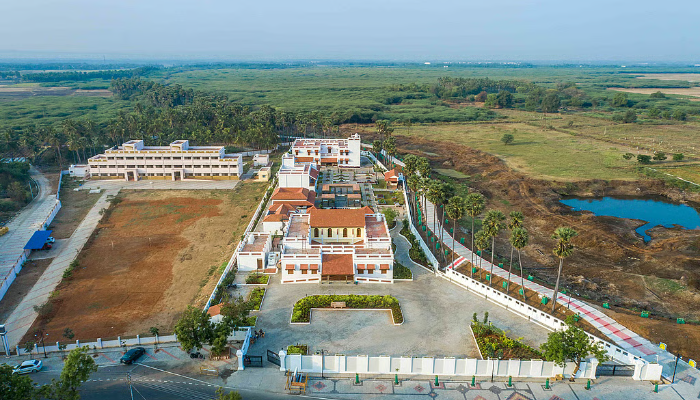
An aerial view of the Keeladi Museum. (Source: Outlook Traveller)
“Tamil Nadu has endured archaeological apathy for far too long until Keeladi sparked a wave of interest among Tamils,” complained Balakrishnan. Rajan expressed, “Keeladi is the first site that transformed the understanding of archaeology in Tamil Nadu.”
Faces from Keeladi
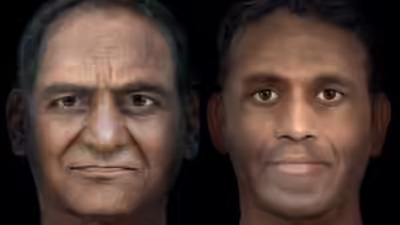
Meanwhile, a first-of-its-kind forensic facial reconstruction project coordinated by experts from Madurai Kamaraj University and Liverpool John Moores University restored the faces of two individuals who lived in the Keeladi region more than 2,500 years ago. Researchers described the facial features as South Indian with signs of ancient Austro-Asiatic people and West Eurasian (Iranian) hunter-gatherers.
The skulls were discovered around 800 meters from the main excavation site at Kondagai, a burial site. They added that more DNA research is required to identify the genetic ancestry.
Professor Caroline Wilkinson, director of Face Lab at Liverpool John Moores University informed, “We used a computer-assisted 3D facial reconstruction system to rebuild the facial musculature and estimate facial features following anatomical and anthropometrical standards. . As the lower jaws of the skulls were missing, we used orthodontic standards to estimate the shapes of the mandibles from cranial measurements and planes,” according to a report in The Times of India.
Image via The Times of India
According to professor G Kumaresan of Madurai Kamaraj University’s genetics department which scanned and sent pictures of the skulls to Liverpool, “It is 80% science and 20% art.” He outlined that the DNA information and the recreated faces could be useful in determining the lineage of Tamils who lived during the Sangam era.
Critical moment in India’s civilisational journey
The 90-by-60-meter excavated area contains artefacts like as dice, unidentified copper coins, glass, shell, ivory, pearl, and terracotta beads, seals and gold decorations. More importantly, it is one of the few locations in Tamil Nadu, along with Arikamedu, Kaveripattinam and Korkai, to produce a broad range of structures, including intricate brick constructions, tank-like drainage systems, double-walled furnaces and terracotta ring wells.
A partially reconstructed terracotta pipeline. (Source: Outlook Traveller)
All of this not only indicates a vibrant, literate and successful urbanized community but also emphasizes the advanced nature of Indian civilization. Its origins trace back to the timeline of the Gangetic plains which also illuminate how India has been home to not just one but multiple prime civilizations and flourishing communities residing in both the northern and southern regions of this vast country for many centuries. Furthermore, the discoveries indicated that they were also linked to the external world.
Such developments not only reinforce the deep civilizational roots of this ancient country but also aid in comprehending the elements of our age-old society. The myths surrounding foreigners who landed in the country and established their communities are also debunked by these revelations, which confirm that the nation has been the cradle of multiple ancient advanced settlements displaying city planning, trade, leisure and all indications of a vibrant cultural society.
These discoveries are therefore not merely a matter of pride but are crucial in preserving our civilizational foundations, comprehending and sustaining a continuous connection with our past, as well as understanding our background. Certainly, the sophisticated perspective of our forebears and the societies they formed and preserved over centuries is truly a subject of admiration.
Intellectuals, historians, epigraphists, geologists and archaeology aficionados have all been drawn to Keeladi to analyse the historical relevance it provides to society and it has even prompted several research investigations. The region is now inching closer as a significant archaeological site on the global map.
The Uttar Pradesh Anti-Terrorist Squad (ATS) recently exposed a Rs 100 crore Islamic conversion racket run by Jalaluddin alias Chhangur Baba in Balrampur. This jihadist racket luring non-Muslims, especially Hindu girls, into conversion through romantic relationships, force or allurement, however, is not the first such case; rather, it is yet another player executing a sinister playbook of love trap, sexual coercion, blackmail, and foreign funding targeting and converting Hindus to Islam.
Even as the Islamo-leftist ecosystem is hell bent on establishing the narrative that Love Jihad is a BJP-orchestrated conspiracy theory, hoax and yet another form of ‘Islamophobia’, a systematic operation of targeting Hindu women for conversion through the ensnarement of love, manipulation, coercion, and financial incentives is being carried out by various Islamist organisations.
While a Muslim youth getting slapped inside a Hindu temple for harassing young girls makes headlines in big Indian and foreign newspapers, the cases of grooming Jihad and Islamic conversion rackets targeting Hindu minor girls do not even qualify as newsworthy. However, it is pertinent to delve into the murky waters of this jihadist anti-Hindu conspiracy to unravel the recurring pattern and the Islamist ploy of bringing demographic change besides asserting Islamic dominance.
The Jalaluddin-run Islamic conversion racket
On the 5th of July 2025, the Uttar Pradesh ATS arrested Jalaluddin alias ‘Chhangur Baba’ along with his wife, on Saturday (5th July) from Gomti Nagar. Jalaluddin ran an Islamic conversion racket spread across the country. This racket run by Jalaluddin involved foreign funding worth hundreds of crores. It has been reported that Jalaluddin received foreign funding of approximately Rs 500 crores, with Rs 200 crores confirmed and the remaining Rs 300 crores allegedly sent through Nepal.
More than 100 bank accounts were opened in the border districts of Nepal, including Kathmandu, Nawalparasi, Rupandehi, and Banki, receiving money from Islamic countries.
His entire family was involved in the racket. Jalaluddin’s son, Mehboob and a close aide were arrested by the ATS in April this year. Subsequently, following an investigation, the ATS registered a case against 10 people including Jalaluddin, who had a reward of Rs 50,000 on him.
Jalaluddin used to provide money to Muslim men for luring Hindu women and converting them to Islam. The Muslim men used to fake their identities and take Hindu names to target Hindu women. Jalaluddin used to perform Muslim marriages (Nikaah) of these Muslim men with Hindu women whom they lured or forced to convert. He and several members of his gang reportedly travelled to Islamic countries around 40 times.
Chhangur Baba had a fixed incentive structure for conversions. Rs 15-16 lakh was fixed for conversions of Brahmin, Sikh or Kshatriya women, Rs 10-12 lakhs for OBCs and Rs 8-10 lakhs for other castes. The accused Chhangur Baba had also published a book, ‘Shijra-e-Tayyaba’, meaning ‘To propagate Islam’.
Not only Hindu girls, but Hindu men have also been on the radar of Jalaluddin’s gang. A Hindu man named Sanchit, who used to work as a sweeper at Chhangur Baba’s residence, revealed that Jalaluddin tormented him and his family for refusing to convert to Islam. Besides threats and torture, Jamaluddin also offered financial inducements to his targets for conversion to Islam.
The Hindu victim told the media that Jalaluddin aka Chhangur Baba tried to lure him to convert to Islam by offering him Rs 5 lakh, and even promised to build his house and gift him a bike. When Sanchit rejected the offer and refused to convert to Islam, Chhangur Baba threatened to kill him.
In another case linked to Chhangur Baba, a 15-year-old Hindu girl was lured, trapped, and sexually exploited by her Muslim neighbours Aamir Hussain and his sister Neha Khan and subsequently by others under the control of Chhangur Peer’s gang in Haryana’s Faridabad. Her Hindu identity was systematically erased, she was forced to offer Namaz, eat meat, wear Burqa, and her abuse was filmed to be used as blackmail by her captors.
In Lucknow, a Hindu woman named Manvi Sharma was lured by a Muslim man, Meraj Ansari, who posed as ‘Rudra Sharma’ to trap her. She was taken to Kanpur, forcibly converted to Islam, and married off under the supervision of Jamaluddin alias Chhangur Peer. Later, she was tortured and blackmailed with obscene videos.
In Balrampur, a Hindu man, Harjeet, was harassed, blackmailed, and ultimately forced to convert to Islam by Chhangur Peer and his aide Abdul Mabdud. Lured with job promises, then threatened with false cases, he later returned to Hinduism.
UP ATS busted an Islamic conversion racket which targeted differently-abled children and village girls
Back in 2021, the Uttar Pradesh Anti-Terrorist Squad (ATS) unearthed a mass conversion racket and arrested Maulana Mohammed Umar Gautam and his accomplice Mufti Qazi Jehangir from Delhi for allegedly forcing over 1,000 people to adopt Islam. The duo, who ran an organisation named Islamic Dawah Centre (IDC), along with their other associates, were charged for mass conversion of people into Islam through inducements such as marriage, job and money and mental pressure.
The perpetrators brainwashed the differently-abled children into hating non-Muslims, accepting Islam and were planning to use them as suicide bombers, as the scope of retaliation from such children is limited.
The ATS recovered a list with the names of 31 non-Muslim girls who fell into their conversion trap, and most of these girls belonged to rural areas. On questioning, the accused reportedly told the ATS officials that it was easier to brainwash girls living in villages into embracing Islam. They are mostly uneducated and belong to lesser privileged families. So it becomes easier to lure them with jobs and financial aid, which is exactly what Umar Gautam did to lure his target into embracing Islam.
It was reported that the conversion racket run by Mufti Qazi Jahangir Qasmi and Mohammad Umar Gautam had funding from India’s most wanted terrorist and Jamaat-ud-Dawah chief Hafiz Saeed. This conversion racket was being operated as a ‘motivation camp’. Moreover, Islamic Dawah Centre- Umar Gautam’s organisation’s links with the infamous Islamist preacher Zakir Naik’s aide were also unearthed. It also emerged that Pakistan’s ISI was also funding this conversion racket.
The ATS launched a manhunt to trace students of the Noida Deaf Society (NDS) who were coerced to convert to Islam in the past few years.
Dalit girl abducted from Prayagraj, taken to Kerala for forced conversion and prepped for Jihad
In June 2025, an underage girl from Uttar Pradesh’s Prayagraj was trapped and brought from her village to Kerala, where she was forced to embrace Islam and recruited for terrorist operations. A 15-year-old Dalit girl was lured from her village in the Phulpur area of Prayagraj and was then transported to Kerala by 19-year-old Kahkasha Bano and 25-year-old Mohammad Kaif, where she was forced to convert to Islam and coerced into preparing for jihad. The shocking matter came to light on 28th June after Guddi Devi reported that a local woman named Kahkashan alias Darkasha Bano took her daughter in the name of better opportunities and money. The Hindu Dalit girl was also molested by Mohammad Kaif.
The police suspected that an inter-state jihadi nexus has been operating to lure Hindu girls to Islam and train them for Jihadist activities.
According to DCP Gunawat, the girl was exposed to dubious people who initially enticed her with money, then persuaded her to change her religion and later pressured her to participate in extremist activities. He mentioned that Bano seemed to be associated with a Kerala-based organisation that uses compulsion and seduction to convert young females before preparing them for jihad.
The police said that Bano is a part of an organised gang also involved in terrorist and anti-national activities by luring poor and Dalit girls, brainwashing them and forcing them to convert their religion.
Two Hindu sisters brainwashed, recruited into an Islamic conversion network linked to J&K and ISIS fronts
In June 2025, two Hindu sisters from Uttar Pradesh’s Agra district were brainwashed and converted to Islam. The elder sister was the first to fall victim to the vicious trap of religious grooming and conversion by her own friend named Saima, who was from Udhampur, J&K. Later on, she groomed her younger sister. Both sisters were missing for several months.
The elder daughter used to study at Dayalbagh Educational Institute in Agra. There she came in contact with Saima, who was a Muslim. The family of the victims told police that their elder daughter was so brainwashed by Saima that she disappeared in 2021. She returned after some time, but she was not the same person anymore. The family said that after coming back, she began brainwashing her younger sister. Subsequently, both sisters disappeared from their home on March 25, 2025.
After a case was registered, the police launched an investigation and found that the case followed the pattern of religious conversion of vulnerable Hindu girls, similar to what was shown in the movie ‘The Kerala Story’. The Hindu sisters transitioned from being a victim of an Islamic conversion racket to an active part of the same jihadist gang.
UP: Religious conversion racket operated by Hina busted in Moradabad, husband Mustafa used to pressurise Hindu women to convert
In September 2024, the Uttar Pradesh police exposed an Islamic conversion racket in the Moradabad district. This racket was run by a married Muslim couple, Mustafa and Hina. They operated a conversion racket in the guise of their sewing and embroidery centre. Mustafa was also accused of sexually abusing a Hindu girl and recording it. He had also threatened the victim that he would leak her obscene video. The Police arrested the accused duo after a Hindu girl lodged a complaint.
Mustafa also used to pressure the Hindu girls and women who came to the centre to eat with him. Whenever the Hindu girls and women refused to comply, he would keep on insisting and harassing them.
The Kerala Story: Lived reality of Hindu victims dismissed by Islamo-leftists as ‘propaganda’
While Islamists and their left liberal cheerleaders often deny the prevalence of love jihad, outrightly dismissing the lived reality of the Hindu victims as ‘hoax’ and ‘conspiracy theory’, organised efforts by Islamists to humiliate, subjugate and convert non-Muslims to Islam have been ongoing at a large scale across the country, especially in Kerala.
Muslim youth in the state often entice Hindu and even Christian females at the urging of their religious leaders. These girls are married and converted to Islam before they are shipped to Middle Eastern nations like Syria and Iraq, where they are either utilised as sex slaves or as terrorists.
Kerala has been recognised as a significant centre for ISIS (Islamic State of Iraq and the Levant), with its origins traced back to 2013 in the state. It established a foothold there, creating modules that encourage religious conversions in early 2014. The prohibited terrorist group, Popular Front of India (PFI), is primarily responsible for turning Kerala into a hotspot for ISIS recruitment.
Kerala has seen a large number of conversions, particularly between 2008 and 2009. The females were transferred to ISIS along with their Muslim husbands. The horrifying tales finally gained attention in 2016 after they were first detained and then investigated in Afghanistan. The instance of the four girls who joined ISIS in 2016 with their spouses was one of the most infamous cases.
They were identified as Merrin Jacob Pallath alias Mariyam, Nimisha alias Fathima Isa, Raffaela and Sonia Sebastian alias Ayisha. Nimisha was Hindu, while the other three were Christians. Nimisha wed an MBA graduate from Palakkad named Bexin Vincent. They took the names Fathima and Isa after their conversion.
Merrin Jacob was married to Bestin Vincent, also known as Yahiya, Bexin’s brother. The National Investigation Agency (NIA) identified the architect behind this entire plan as Abdul Rashid Abdulla, a resident of Kasargod, whom Sonia Sebastian married in 2011. Raffaela was married to a doctor from Kasargod named Ijas Kallukettiya Purayil. Kerala has a hotbed of radical Muslims working for ISIS in war-torn countries.
In 2016, cases of systematic love jihad were reported in the media. In July 2016, Mini Vijayan, a military official, alleged that her daughter Aparna had been forcefully converted to Islam. Aparna was traced to Sathyasarani, or the Markazul Hidaya Educational and Charitable Trust in Malappuram. Aparna later appeared before the court and claimed to have converted to Islam and that she did not wish to go back to her mother. It turned out that Aparna had married an auto-driver named Aashiq from Malappuram. Investigations revealed that the literature from fugitive Islamic hate preacher Zakir Naik’s Islamic Research Foundation was widely used to brainwash and radicalise Hindu girls.
In another case involving a Hindu girl named Nimisha, in 2011, Kerala police arrested two persons named Sheena Farzana and Naser, two alleged ‘handlers’ who were recruiting young girls in Kerala to go and ‘work’ for ISIS in Yemen. They were both from Sathyasarani, an organisation run by the now-outlawed Islamist jihadist outfit PFI. Investigations led to the discovery of several other targeted conversions. Nimisha, alongside 21 other Hindu girls, converted to Islam and married Muslim men who were recruited by the Islamic terrorist group ISIS.
In 2017, when NIA started probing the ISIS link and Love Jihad cases, they found that two Hindu girls, Athira and Akhila (who later became Hadiya) were lured by the same woman, a PFI worker named Sainaba. All these cases had links with the Sathyasarani Trust or the Markazul Hidaya in Malappuram. Documents were found during a raid indicating that around 60 to 70 Hindu and Christian girls were at the Markazul Hidaya for ‘religious studies’ (conversion studies). Many such organisations are operating in Kerala, backed with heavy funding. The vote bank politics and the fear of offending the perennially offended, coupled with other factors, have caused sluggish probes in these cases.
Another such case was reported by a Christian mother from Kerala named Cynthia, who said that her daughter Tabitha, who was studying in a Gulf nation, had suddenly left after declaring that she wanted to embrace Islam. She eventually established a Bahrain-based Islamic organisation called Discover Islam Society. During a meeting with her mother, a Hijab-clad Tabitha told her mother that she could not live with people who are not Muslims.
Back in 2016, it was reported that between 2011 and 2015, 5,975 people in the state had converted to Islam, of these 1410 converted in 2015 alone.
The Islamo-leftist ecosystem and the so-called ‘secular’ political parties have long been trivialising the menace of love jihad/rape jihad/grooming jihad as a ‘hoax’, ‘fiction’, and ‘BJP-RSS conspiracy theory’ despite there being ample evidence and thousands of cases across the country. Back in 2023, a major controversy erupted when the film The Kerala Story showed how Hindu girls are targeted, brainwashed, sexually abused, threatened and coerced into conversion to Islam and subsequently forced into terror and other illegal activities. Predictably, the same Islamo-leftist ecosystem was outraged and labelled the film as a product of ‘Hindutva’ conspiracy theory.
Muslim grooming gang in Beawar trapped, threatened, raped, blackmailed and pushed Hindu girls to convert to Islam
The term “Grooming gangs” evokes chilling parallels across many countries, most notably the infamous rape jihad cases in the United Kingdom wherein, for nearly four decades, gangs predominantly comprising Pakistani Muslim men systematically groomed, blackmailed, raped and tortured White Christian and other non-Muslim girls. In India, the disturbing cases of sexual exploitation of minor Hindu girls by a Muslim grooming gang have been uncovered in several districts. The Beawar case inevitably recalls the 1992 Ajmer sex scandal, one of India’s most infamous grooming gang cases.
In Rajasthan’s Beawar, the local police busted a gang of illiterate Muslim youths Rehan Mohammad (20), Sohail Mansuri (19), Lukman (20), Arman Pathan (19), Sahil Qureshi (19), and two minors, who were trapping Hindu girls, raping them, and forcing them to convert to Islam. These rape jihadis were teaching Hindu girls about namaz, roza, and reciting the Kalma (Islamic declaration of faith). Furthermore, they were pressuring the girls to wear burqas, perform namaz, observe Roza (fast) and brainwash them for conversion to Islam.
As per a victim’s testimony, these rape jihadis used to follow Hindu girls studying in class 10th at a school in Beawar’s Bijainagar. After coming in contact with the girls over mobile phone, they would sexually assault the girls, take explicit pictures and videos of the crime and then use them to further abuse them. The accused would give small mobile phones to the victims.
The victims said that the men would come in new vehicles, including Bullet motorcycles and other cars, to take them away.
In a striking similarity with the Chhangur Baba conversion racket’s modus operandi, one of the victims in the Beawar grooming jihad case said, “They once told me that a Brahmin girl would fetch ₹20 lakh if sold, and you (a Dalit) would get ₹10 lakh.” The girls said in their statements that they were continuously blackmailed with obscene photos and videos and forced to bring in other girls. One of the victims from Beawar disclosed that the ‘Muslim gang’ used to pressurise her to go to the local maulvis and mosques. In Rajasthan’s Bhilwara, the police busted a similar grooming jihad racket earlier this year.
MP: Congress councillor Anwar Qadri gave lakhs to Muslim men to trap Hindu girls
In July 2025, Anwar Qadri, Congress councillor from Indore of Madhya Pradesh, were charged under the National Security Act (NSA) for orchestrating “love jihad” and using financial inducement to trap Hindu women. The action took place after Muslim men identified him as the person who paid them to target Hindu women and convert them.
Qadri was named in financing “Love Jihad” operations and was involved in multiple criminal activities. Notably, Anwar Qadri had given lakhs of rupees to his two henchmen, Sahil Sheikh and Altaf Khan, to trap Hindu girls, and then later convert them to Islam after marrying them. Sahil admitted that he was given Rs 2 lakh to marry a Hindu girl. At the same time, Altaf also admitted that he too had received Rs 1 lakh. The councillor had promised to give the remaining amount after ‘the work’ was completed. A video of the statements of both is also going viral.
In 2023, a similar Islamic conversion ring was busted involving one Illyas Qureshi. The matter came to light after the case of an 8-year-old Jain boy’s forced circumcision sparked outrage. After circumcising the boy, they created fake documents with a Muslim name and showing Qureshi as his real father.
Back then, the police had said that a whole racket of religious conversion was collaborating with Ilyas Qureshi.
Rape, threats, forced conversions to Islam and perpetual abuse by rape jihadis in Uttar Pradesh: Locations change, modus remains the same
Western Uttar Pradesh has been a hotbed of grooming jihad and other Islamist crimes. In 2020, the Kanpur Police formed a Special Investigation Team after several cases of forced conversions of Hindu women to Islam on the pretext of marriage were reported from the city, especially from Kanpur’s Juhi Colony.
In November 2020, the SIT submitted its report to the Kanpur range inspector general, after probing 14 cases lodged in the police stations across the Kanpur district over the last year. Out of 14 cases, the SIT probed 11 criminal cases. In one case, one Fateh Khan pretended to be Aryan Mehrotra to trap a 14-year-old Hindu girl in Kanpur’s Gopal Nagar. The Muslim perpetrator befriended the minor Hindu girl, raped and assaulted her and threatened to harm her parents. The SIT report also revealed that Fateh Khan pressured the victim to convert to Islam and got her Aadhar card made in the name of Mariyam Fatima. The rape jihadi was booked under the POCSO Act alongside other relevant provisions.
In another case, a Muslim man named Mohammed Ubais, aka Babu, posed as a Hindu to entrap a 16-year-old minor Hindu girl. Ubais, with the help of his sister, Mahi Hayat Khan. The accused, along with his sister, tried to brainwash and pressure the minor victim to adopt Islam. The girl was rescued by her mother, and the accused was sent to jail.
Similar cases involving Muslim perpetrators targeting Hindu girls from Naubasta, Govindnagar, Babu Purwa, Chakeri, and Juhi Colony were detailed in the SIT report. In most of these cases, a common modus operandi was found. The Muslim perpetrators would make contact with gullible Hindu girls, befriend them, ensnare them into their love trap, sexually exploit them, record obscene videos and take pictures, threaten and blackmail them, and force them into converting to Islam.
In all 11 cases the SIT probed, they found certain transgressions based on which the accused were arrested and sent to jail. Pertinently, in 7 of these 11 cases, the victims were minors.
Back in 2020, it was reported that a Hindu girl named Shalini Yadav, who went missing, was found after two months; however, she had converted to Islam and became Fiza Fatima. Shalini Yadav (Fiza Fatima) uploaded a video on Facebook, eloping from her house and telling the story of converting to Islam and getting married to Mohammad Faisal. Shalini’s brother, however, called this a case of love jihad and alleged that a grooming gang was active in the Juhi Colony.
In 2020, it was reported that in just two months, 5 girls ran away from their homes in the Kanpur area with Muslim men. Other than Shalini Yadav, two sisters, residents of Awas Vikas, Kalyanpur, fled with the accused Shahrukh and another Muslim youth, both residents of Juhi Colony. Similarly, a girl and her younger sister, both residents of Panki Ratanpur Colony, accused Mohammad Mohsin. The case came to light when the younger sister understood the game plan of the Muslim perpetrators.
Beyond individual cases of love jihad, organised Islamic conversion rackets pose an unavoidable threat to India’s demography and Hinduism
While this discussion so far must have been alarming, however, we have not even included individual cases of love jihad, which are rampant across the country. Individual cases of Muslim men targeting Hindu and other non-Muslim women for sexual abuse and forced conversion further worsen the situation.
These individual cases also involve similar modus operandi: befriend, lure into love trap by either posing as a Hindu man or a pretending to a ‘secular-progressive’ Muslim, establish sexual relations by promising marriage, record obscene visuals and use the same to blackmail the Hindu victims, force feed them beef, coerce them into converting to Islam and marrying the Muslim perpetrator. A refusal to comply would either result in the victim’s murder or loss of reputation in society.
The cases discussed above point to a consistent toolkit of sexual harassment, blackmail, forced conversions, and the use of foreign funding by organised Islamist networks to execute this toolkit. Exploiting vulnerabilities of their Hindu targets, Muslim grooming gangs and conversion rackets are operating across the country, ruining the lives of Hindu and other non-Muslim women and men, taking steps towards modifying the demography of India.
While the Christian missionaries and Pentecostal pastors harvest souls for Christianity by offering financial inducements, giving food grains, and promising to ‘miraculously’ heal diseases, Islamic rape jihadis and conversion rings rely on feigning love, sexual exploitation, coercion and brainwashing to convert their Hindu targets to Islam. It is no hyperbole that the Hindus and their religious-cultural identity are facing a two-front war.
Ironically, while Islamic conversion rackets, from Jamaluddin alias Chhangur Baba to ISIS-linked Kerala cases, are specifically targeting the Hindus and destabilising the Hindu-majority India’s social fabric, anyone criticising them is labelled Islamophobic.
In fact, such cases are downplayed by the Islamo-leftist cabal as either exceptions or responded with a deliberate silence by the ‘secular’ politicians and their supportive ecosystem.
While astonishing, these cases involving organised Islamic conversion rackets backed by structured incentives, foreign funding, Hindu-hating jihadist motivations and a whitewashing propaganda machinery at its disposal, have been rampant in the country for many years. These are not mere crimes but an orchestrated threat to India’s demography, religious harmony and national security.
India owes its secular character to the Hindu majority, with the Hindus under threat, India’s soul is under threat. There are many Islamist ‘Chhangur Babas’ lurking around in the country. Thus, this insidious Islamist anti-Hindu toolkit needs to be dismantled through not only busting conversion rackets, punishing the Jihadist perpetrators, bulldozing their properties, spreading awareness against love jihad and conversion tactics, but also destroying the funding sources and through policy interventions.
A major scholarship scam worth over ₹57 lakh has emerged in Bhopal, Madhya Pradesh, where more than 40 educational institutions (23 private schools and 17 madrasas) allegedly siphoned off government funds using fake or ineligible students. The scam exploited a Central Government scholarship scheme (Pre/Post-Matric Minority Scholarship Scheme) for minority students with ₹5,700 annual grants.
On 17th June, 2025, the scam came to light when the Backwards Classes and Minority Welfare Board filed a formal complaint with the Bhopal Police. The complaint was submitted in coordination with the Union Ministry of Minority Affairs, alleging misuse of the scholarship scheme.
Anatomy of a scam
According to the investigation done by NDTV, there are multiple ghost institutions that only run on paper, with fabricated student records. One school in the Jahangirabad locality claimed ₹1.65 lakh for 29 non-existent students. According to the locals, “That board of “City Montessori School” has been up for two years, but no school ever opened”. Similar scenes unfolded at Amberly House School, now replaced by clinics and shops. At MJ Convent, investigators found posters for Class 10 toppers but none for senior grades and the staff of St. D’Souza Convent fled when asked about missing Class 11–12 students.
Schools that are approved only for classes 1-8 or 10 also fraudulently apply for scholarships for Classes 11–12. The money was transferred using shell accounts. Funds were routed to bank accounts of operators’ relatives or contacts, not students. The money was withdrawn immediately after disbursal. Applications bypassed scrutiny through MP Online’s scholarship portal by uploading fake documents with manipulated data. The nodal officers’ rubber stamp was also used without verification.
Systemic collusion
According to the FIR, 972 fake students across 40 institutions in Bhopal point to institutionalised corruption. They shared fake addresses with multiple schools running from a single building.
The government officials showed pure negligence as Nodal officers forwarded applications without physical checks. The fraud was exposed after the Union Ministry of Minority Affairs flagged discrepancies in student records. The fraud is not limited to Bhopal. 104 institutions across Madhya Pradesh are now under scrutiny for similar violations.
Political fallout
Minister of State for Backward Classes and Minority Welfare Krishna Gaur distanced herself from the time frame of this case and said, “This scam is from before my tenure. However, we have started a departmental inquiry, and I will personally ensure that strict action is taken against the culprits. No one has the right to usurp the scholarship amount of the students. The government is committed to the welfare of the minority and backward classes.
Legal action
Crime Branch officials have begun questioning school operators and directors of the involved institutions. They are also collecting documentation from education authorities at the district and state levels. The FIR has been registered under the sections of cheating, forgery, criminal breach of trust, and misappropriation of public funds.
In Jabalpur, Madhya Pradesh, on Saturday, 12th July, the Jabalpur collector posted on his official Facebook account declaring that an investigation had found “no illegal construction” at the Madhai Masjid which has long been a point of dispute.
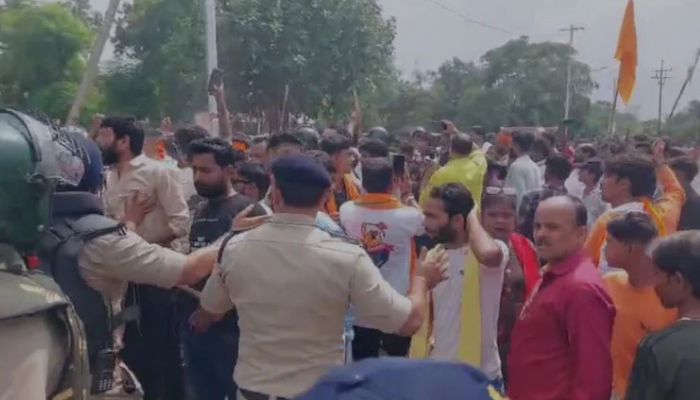
In response, Vishwa Hindu Parishad (VHP) and Bajrang Dal led a protest and symbolic funeral procession of the collector, and called for a city-wide bandh on 16th July. They demanded action against the illegal mosque encroaching on temple land, while the administration struggles to maintain order.
The heart of the dispute: Illegal encroachment by the mosque
The Madhai mosque is standing on the land of the Bal Gayatri Mandir illegally at Khasra number 169. At the same time, the land of the Waqf Board is registered in Khasra number 165, which is about 40 meters away from the mosque. The mosque complex, including shops and a madrasa, sprawls over approximately 3,000 square feet around the disputed plot.
Local authorities acknowledge that confusion is caused by errors in land records. Importantly, they confirm that the matter is currently sub judice, pending a decision in the Collector’s Court where arguments from both sides are being heard. A 2021 report from the Naib Tehsildar reportedly states that the land beneath the mosque was not registered in the name of the Waqf Board or the mosque.
The spark: Collector’s “clean chit” inflames passions
On Saturday, 12th July, the dispute exploded, when the Jabalpur collector posted on his official Facebook account declaring that an investigation had found “no illegal construction” at the Madai Masjid.
VHP and Bajrang Dal say that in this post, an attempt has been made to deny the existence of Bal Gayatri Mandir. Along with this, they have said that this step of the collector has given the message that the administration has already taken a decision. In such a situation, the court process and the sentiments of the public have no importance.
जबलपुर के मड़ई में मस्जिद निर्माण पर विवाद, मंदिर की जमीन का आरोप
◆ प्रशासन की क्लीनचिट के खिलाफ विहिप ने निकाला कलेक्टर का अर्थी जुलूस
◆ इलाके में तनाव, सुरक्षा बढ़ी, दोबारा जांच की मांग
Protests escalate: Funeral processions and bandh call
After this, on Monday, 14th July, Vishwa Hindu Parishad and Bajrang Dal took out a funeral procession (“arthi juloos”) of the collector in Madhai as a protest. This procession was taken out from Saraswati School to the bus stand, in which a large number of local people, women activists and youth participated. The protesters accused the administration of insulting Hindu sentiments and protecting encroachment on temple land. During this, slogans of “Collector Bhagao, Mabalpur Bachao” (Remove Collector, Save Mabalpur)’ were raised. In view of the seriousness of the matter, the police force had to be deployed in the area.
The backlash against the Collector’s statement was swift and dramatic. The groups issued a 24-hour ultimatum to the state government demanding the Collector’s removal. They declared that failure to meet this demand would result in a Jabalpur bandh on 16th July.
Legal limbo and mounting tensions
The current incident has a long history. Hindu groups submitted memoranda to the administration as far back as June 2021. Organised demonstrations leading to a temporary stay on construction in July 2021, and staged further protests in March 2023. They share that the construction on the illegal structure continued despite the stay.
The mosque committee had filed a petition WP/21354/2024 in the High Court to prove its legitimacy, but due to not being able to submit the necessary documents, they had to withdraw the petition, which has also raised questions on their claim.
Officials consistently stress the dispute is under judicial consideration and urge all parties to await the court’s verdict. They emphasise the need to maintain law and order while the legal process runs its course.
The Press Information Bureau has debunked recent viral claims that the Japanese bullet train will not operate between Ahmedabad and Mumbai has been proven false. Several media outlets had reported that the Vande Bharat train would replace the proposed Japanese bullet train. However, the Press Information Bureau (PIB) fact-checked the claims, calling them ‘misleading’.
कुछ आर्टिकल्स और सोशल मीडिया पोस्ट्स में दावा किया जा रहा है कि रेल मंत्रालय ने बुलेट ट्रेन को लेकर बड़ा फैसला लिया है – अब मुंबई से अहमदाबाद के बीच जापानी बुलेट ट्रेन नहीं चलेगी#PIBFactCheck
In its fact-check, PIB clarified that the Ministry of Railways has not made any such decision. On the contrary, the bullet train project between Mumbai and Ahmedabad is actively progressing. The PIB also highlighted the ongoing strategic partnership between India and Japan.
What did the media claim?
A report by Hindustan News suggested that the Japanese bullet train project was being dropped due to cost issues. The report claimed that Japan had tripled the originally agreed price, prompting the Indian government to withdraw. It stated that the initial quote was ₹16 crore per train, but this later rose to ₹50 crore at the time of supply.
However, PIB’s recent press release provided comprehensive details about the Ahmedabad-Mumbai High-Speed Rail Corridor. It not only shared updates on the pace of construction but also reaffirmed Japan’s commitment to supply the bullet trains, countering the cost-related claims.
What is the Ahmedabad-Mumbai high-speed corridor?
The Ahmedabad-Mumbai High-Speed Corridor spans 508 km and is being developed using Japan’s Shinkansen (bullet train) technology. As part of a bilateral agreement, the Japanese government has committed to providing next-generation E10 Shinkansen trains for the project. So far, 310 km of construction along the corridor has been completed. Additionally, a 21 km tunnel section between BKC (Bandra-Kurla Complex) and Thane in Maharashtra—part of the first phase—has been successfully opened.
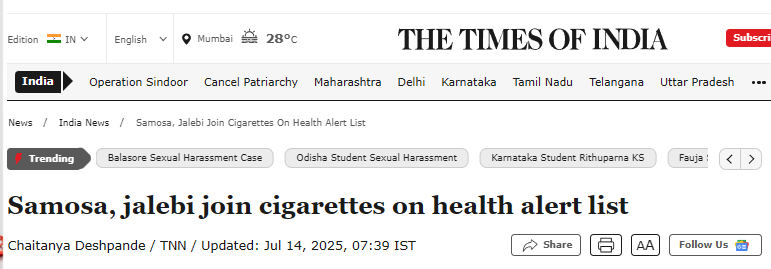
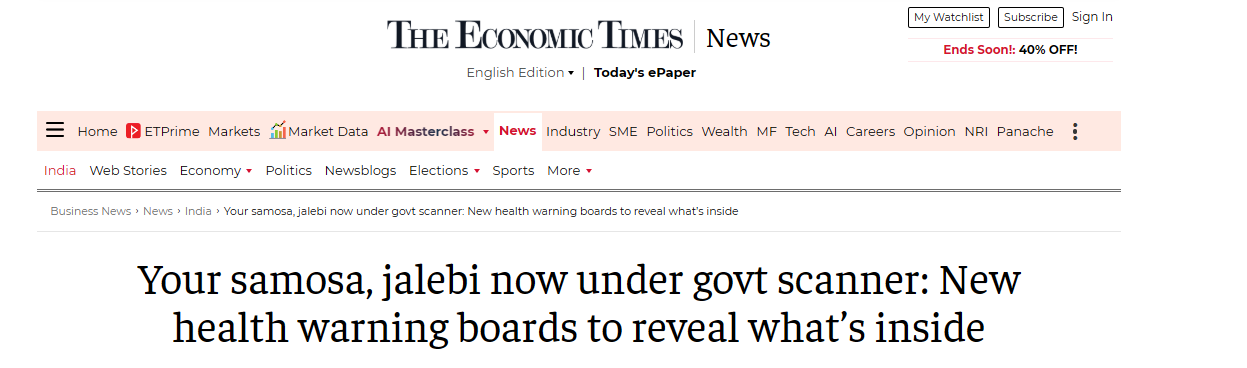
Many Indian media outlets, including Times of India and NDTV, recently published a news story alleging that popular Indian snacks and sweets such as samosa, jalebi and laddoo will be served alongside a health warning akin to those on cigarette packets. Furthermore, the new development was attributed to the Union Ministry of Health that it has been done in order to tackle health issues.
On 15th July, PIB fact-check, however, refuted the claims as false. It emphasized that the ministry’s advisory does not include any warning labels on food items sold by vendors and “has not been selective towards Indian snacks.”
Additionally, it clarified that the general recommendation is not unique to any one food product but rather serves as a “behavioural nudge” to alert consumers to “hidden fats and excess sugar in all food products.”
✅The general advisory is a behavioural nudge to make people aware of hidden fats and excess sugar in all food products, and not specifically to any particular food product.
The advisory is for healthier options and initiatives at workplaces and urges people to make healthier… pic.twitter.com/gD3f2XOeTF
The agency added that the suggestion encourages “people to make healthier” decisions to reduce unnecessary sugar and oil in favour of a healthy diet and way of life as well as supports healthier workplace options and activities. “It does not target India’s rich street food culture,” it further pointed out.
What is in the letter
The ministry’s official letter identified “sharp rise in obesity in both children and adults” as a significant concern. It informed, “As per NFHS-5 (2019-21), over one in five adults in urban areas are overweight or obese. Prevalence of childhood obesity is impacted by poor dietary habits and reduced physical activity.”
It added, “As per The Lancet GBD 2021 obesity forecasting study, published in 2025, the number of overweight and obese adults in India is projected to rise from 18 crores in 2021 to 44.9 crores by 2050, making it the country with the second-highest global burden.” It stated that obesity dramatically increases the risk of non-communicable diseases like diabetes, high blood pressure, heart disease and several types of cancer.
The ministry pointed out, “It also affects mental health, mobility, and quality of life, and imposes a heavy economic burden through increased healthcare costs and productivity losses. Early prevention and health promotion are critical to reversing these trends.”
The letter outlined that Prime Minister Narendra Modi has made a strong case for changing people’s lifestyles in order to fight obesity. “At the Opening Ceremony of the 38th National Games in Dehradun on 28th January 2025, Hon’ble Prime Minister invoked the Fit India Campaign and urged citizens to adopt active, healthy lifestyles as part of the broader vision of a Swasth Bharat. In his Mann Ki Baat, he called for a 10% reduction in oil consumption,” the official communiqué read.
It then conveyed, “In response to this national appeal, and as part of the ministry’s flagship initiatives under the National Programme for Prevention and Control of Non-Communicable Diseases (NP-NCD), it is imperative to promote sustainable behavioural changes in our workplaces. These include reducing excessive consumption of oil and sugar, both of which are key contributors to rising rates of obesity, diabetes, hypertension, and other lifestyle-related disorders.”
According to the letter, it is advocating that Sugar and Oil Boards be displayed as an effort to encourage better eating practices in multiple settings. They will function as visual behavioural cues in public spaces like offices and schools, revealing important details including hidden sugars and fats in common food items.
Hence, a direction to all “departments/offices/autonomous bodies and other public institutions/organizations” under the ministry was sought. The following recommendations were proposed:
Install Oil and Sugar Board displays (Digital/ Static posters etc) in common areas (cafeterias, lobbies, meeting rooms and other public spaces) to raise awareness on harmful consumption.
Print health messages on all official stationery (letterheads, envelopes, notepads, folders, etc.) and publications to reinforce daily reminders on fighting obesity.
Promote healthy meals and physical activity in offices through nutritious, healthier food options (more fruits, vegetables, and low-fat options, and by limiting availability of sugary drinks and high-fat snacks) and active workplace initiatives (such as encouraging use of stairs, organizing short exercise breaks, and facilitating walking routes).
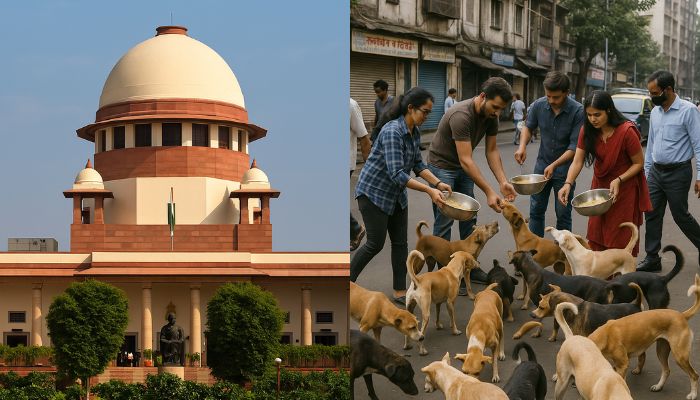
On 15th July, the Supreme Court of India took a sharp stand against a petitioner, Reema Shah, who claimed harassment for feeding stray dogs in Noida. The apex court suggested that such acts should be carried out at home rather than in public spaces. The court questioned the petitioner, “Why don’t you feed them in your own house?” The two-judge bench, comprising Justice Vikram Nath and Justice Sandeep Mehta, was hearing a plea challenging the March 2025 order of the Allahabad High Court.
Justice Vikram Nath bluntly asked the petitioner to feed the dogs at home rather than on the streets. The bench expressed concerns about safety and public inconvenience caused by uncontrolled street dog feeding.
Bench highlights safety risks and lack of public space
The petitioner argued that she was only following Rule 20 of the Animal Birth Control (ABC) Rules, 2023, which places responsibility for feeding community animals on local bodies, RWAs, or apartment owners’ associations, through designated points.
However, the apex court was not convinced. The court said, “We should leave every lane, every road open for these large-hearted people? There is all space for these animals, no space for humans.” The bench pointed out the impracticality of allowing public spaces to be taken over by dog feeders. The bench went on to suggest a solution with a dose of sarcasm, “Open a shelter in your own house. Feed every dog in the community in your own house.”
‘Try cycling in the morning’ – practical risks flagged
The arguments soon turned to the dangers faced by morning walkers, bicycle riders and two-wheeler riders due to the presence of free-roaming dogs. One of the judges asked the petitioner, “You go on cycling in the morning?” and suggested, “Try doing it and see what happens.” The petitioner’s counsel replied that she took regular morning walks and encountered dogs often. The court responded, “Morning walkers are also at risk. Cycle riders and two-wheelers are at greater risk.”
Given the overlap in concerns, the court tagged the plea with a similar ongoing matter for a consolidated hearing. The court was focused on the broader implications for public safety than on procedural compliances when the petitioner said designated feeding spots were created in Greater Noida but not in Noida.
Allahabad High Court ordered balance in rights of animals and public safety
The matter in the Supreme Court stemmed from a March 2025 order of the Allahabad High Court, where the bench had tried to balance the rights of animals with public safety. The High Court had urged authorities to act with “due sensitivity” towards both humans and animals, while ensuring strict implementation of the ABC Rules and the Prevention of Cruelty to Animals Act, 1960. OpIndia accessed the judgment passed by Allahabad High Court in March this year.
Notably, the state authorities’ counsel informed the High Court that meetings had already been held and steps were being taken in accordance with the ABC Rules, 2023. The state urged the court to address the petitioner’s concerns accordingly. However, the court pointed out that the issue concerned the common man as well.
The court had said in the judgment, “While protection of street dogs would be warranted in accordance with the provisions of the applicable statute, at the same time, the authorities will have to bear in mind the concern of common man, such that their movement on streets are not hampered by attacks by these street dogs. A balance approach would be needed such that not only the concern of prevention of animal cruelty is addressed, but at the same time, the interest of common man is also protected.”
The court further stated, “We expect the authorities of the State to show due sensitivity to the concerns raised in the writ petition and to ensure that necessary steps are taken in public interest to protect the cause raised in the present petition and also the concern of common man in moving on the streets. This observation is necessary because there are many instances of attacks by the street dogs on the common man of late, which has resulted in loss of lives & grave inconvenience to the pedestrians.”
It was evident that the High Court sought to strike a balance between the rights of feeders and stray dogs, and those of the common man, who is increasingly facing the menace of stray dogs.
The stray dog menace in India has reached an epidemic level. In 2024, there were 37 lakh cases of dog bite reported across the country. Some states like Andhra Pradesh, Punjab and Kerala have seen a spike in dog bite cases over the years. While animal lovers claim saving stray dogs is a community’s responsibility, with an estimated population of around 7 crores, stray dogs have made it impossible for children, the elderly, pedestrians, disabled and other vulnerable people to fearlessly walk on the streets.