Home Blog Page 3178

Domestic wheat prices fall up to 8 per cent after India imposes export ban: Details

Following the restrictions imposed by the Government of India on wheat export, the price of wheat is coming down for the consumers. As per reports, the wheat price has declined up to 8% to Rs 2,125 per quintal from the previous price which was Rs 2,325 per quintal. The price drop was seen in response to the Government order imposing restrictions on wheat export owing to multiple reasons, including hoarding of Indian wheat by China and lesser production of wheat compared to previous years.

In Punjab and Haryana, the procurement is almost complete. A few farmers reportedly sold their produce at Rs 2,020 per quintal, which was a little above the MSP. Anjani Agarwal, president of Roller and Flour Millers Federation of India, said in a statement that the timely ban on wheat export would increase domestic availability. He said, “The decision to ban wheat export was timely, and it would increase domestic availability of grain and prices would soften.”

The global wheat market is struggling to meet the demand amid Russia’s ongoing military action against Ukraine. Notably, the government has not put any restrictions on shipments where the export of wheat was committed by the Indian government under a bilateral understanding with neighbour countries and vulnerable nations to meet their food security needs. Also, the shipments under transitional arrangements where the letters of credit have been issued before the ban would be allowed.

Earlier, the Flour millers’ association RFMFI welcomed the decision of the government to ban wheat export. Notably, Aggarwal had said that RFMFI had written to the government to regulate export. He said, “It is a very good decision by the Government at this stage, as this will prevent unnecessary panic in the country about wheat supply and prices.”

He added that the price of wheat and wheat flour would get stable after the ban. It was expected to sharply rise due to less production. He said, “Atta (loose) prices are ruling at Rs 26-28 per kg, while packaged Atta prices stood at Rs 28-30 per kg. The prices of atta could have risen to Rs 40 per kg or even more. Prices will stabilise now.”

Govt announced relaxation

On May 17, the Government of India announced relaxation in its order restricting wheat exports. The government decided to allow the export of the consignments that have been handed over to Customs for examination and registered into their systems on or prior to May 13, as per the news agency ANI.

The China factor

The government sources speaking to OpIndia also confirmed that there is also a China factor behind the sudden decision to ban the export of wheat.

The senior officials in the Ministry of Commerce and Industry said that there is a sudden shortage of wheat worldwide, and China is using this opportunity to hoard wheat. They added that China is importing wheat on a large scale to store it to disrupt the global market soon.

With India continuing to flood international markets with wheat, it will lead to higher purchases by the Chinese, especially the Indian wheat. This will only aggravate the problem as China will dictate the supply of wheat at a time when there is a glut in the supply. It is notable that India is the second-largest producer of wheat, while China tops the chart.

Considering the strategic objectives, the Government of India has taken preventive steps to stop China from hoarding Indian stock and has decided to ban wheat exports. The prudent step by the Modi government is being hailed as pro-poor as this will only benefit the poor and ensure affordable prices of wheat in the domestic market.

‘Dont waste court’s time’: Delhi HC imposes Rs 10,000 fine on ex-CBI chief M Nageswara Rao, had filed petition over Twitter ‘bluetick’

On May 17, Tuesday, the Delhi High Court imposed a fine of Rs 10,000 on ex-CBI director M Nageswara Rao for re-filing a petition seeking restoration of the blue tick verification for his Twitter account. The court, last month, had dismissed his similar plea against Twitter for unverifying his account on the microblogging website.

The single-judge bench of Justice Yashwant Varma reprimanded the ex-CBI director for wasting the court’s time. Varma was of the view that a similar plea with identical prayers was disposed of by the Court vide order dated April 7, 2022, by giving liberty to Rao to re-apply for verification.

“We passed an order on 7 April. What has constrained you to approach the court immediately? Your client seems to have a lot of free time. Do you want a return gift from us,” the bench remarked.

Advocate Raghav Awasthi, who represented Rao, argued that even after reapplying for the tag last month, Twitter has not reinstated his client’s ‘blue tick’ verification.

The court, however, said that there is no justification for filing the writ petition despite its earlier disposal. “The petition is thus dismissed with Rs 10,000 cost,” the bench stated.

Rao has petitioned the High Court, claiming that his Twitter account did have a blue tick, but that it was removed in March 2022. The dismissed petition also requested that the Centre designate or earmark one or more Compliance and Grievance officers within the Ministry solely to handle grievances or complaints from users of social media platforms such as Twitter, Facebook, and Instagram relating to compliance with the law and rules, including user identity verification, so that the general public is not subjected to unnecessary harassment.

While the case was filed through Advocate Mukesh Sharma, the petitioner was represented by Advocate Raghav Awasthi.

It may be noted that last year, Twitter arbitrarily removed ‘blue-tick’ verification from Vice President of India M Venkaiah Naidu’s personal Twitter handle. The micro-blogging site had not provided any explanation so far as they acted against the Vice President of India. However, after massive backlash, Twitter restored the verification badge on the Twitter profile of the Vice President of India.

Ghazwa-e-Hind: The Islamic prophecy that explains why the likes of Owaisi feel proud of Mughal tyrant Aurangzeb and his anti-Hindu deeds

Aurangzeb, the tyrannical Mughal ruler who slaughtered innumerable Hindus and non-Muslims, ordered the demolition of temples, including the hallowed Kashi Vishwanath temple and commissioned the construction of a mosque over it, is regarded as a respectable figure among Islamist circles. Despite savagery inflicted by him on fellow Indians, Aurangzeb remains a hero to a legion of radical Muslims who hail him as a loyal Islamic warrior who was dutifully committed to fulfilling the Islamic prophecy of Ghazwa-e-Hind, a fantasy that refers to the complete conquest of India by invading Islamic forces.

How Aurangzeb and other Islamic invaders of the medieval era continue to inspire contemporary Islamists

Earlier yesterday, AIMIM chief Asaduddin Owaisi responded to former Maharashtra CM Devendra Fadnavis’ remarks over his younger brother Akbaruddin Owaisi’s visit to Aurangzeb’s tomb. Speaking to news agency ANI, Owaisi responded to Fadnavis’ attacks against Akbaruddin Owaisi, stating, “I don’t respond to such Tom, Dick and Harry…Aurangzeb grave is a protected monument and It’s the PM’s responsibility to protect it.”

Owaisi was also visibly miffed with the Varanasi court order that sealed the Gyanvapi structure after a Shivling was found from the mosque’s Wuzukhana, where Muslims wash their hands and feet, gargle and clean themselves before offering namaz. Dismissing that it was a Shivling, Owaisi said the structure was a fountain and dog-whistled Muslims to not lose the disputed structure.

“When I was 19-21, the Babri Masjid was snatched away from me. But we will never lose a Masjid again in front of the 19-20-year-olds. Do you take an oath that we will not lose any more mosques?” he asked a frenzied crowd.

Amidst chants of ‘Naara-e-Takbeer’ and ‘Allahu Akbar’, his supporters vowed to protect the disputed structure of the Gyanvapi mosque. “They must know that we will not lose any more of our mosques. We know all your tactics,” Owaisi remarked.

Later on Aaj Tak, the AIMIM chief leaned on the Places of Worship Act, 1991, to defend his stance and rail against the court order, stating that the place could not be sealed as per the aforementioned Act. Moreover, he asserted that Muslims should be allowed to continue offering their prayers in the mosque despite reports suggesting that a Shivling was found in its wuzukhana. Defending the Gyanvapi mosque, where a Hindu temple was reportedly destroyed and converted into a mosque by Mughal tyrant Aurangzeb, Owaisi said the Places of Worship Act, 1991, provided security to monuments and religious places that existed at the time of India’s independence.

However, he conveniently missed out on listing down the exemptions stated in the Act. The law exempts any place of worship, which is an ancient and historical monument or an archaeological site covered by the Ancient Monuments and Archaeological Sites and Remains Act, 1958. When asked as he seems to be a conscientious upholder of the law, will he accept the Ram Temple at the Ayodhya after the Supreme Court verdict? Owaisi said he will continue to treat the site as Babri Masjid even though the apex court had ordered the site to be handed over to Hindus for building a Ram Temple.

Owaisi is not an outlier in his veneration of Mughal tyrants and in his defence of Islamic marauders and plunderers who destroyed Hindu temples and structures and built mosques over them to humiliate the indigenous natives. There are several others, including eminent individuals, who share a similar enthusiasm for defending and exalting Mughal ruler Aurangzeb.

In response to Fadnavis’ critical remarks against Owaisi’s visit to Aurangzeb’s tomb, Srinagar Mayor Junaid Mattoo posted a eulogising tweet to Aurangzeb, who had been infamous for committing unspeakable atrocities on the Hindu community. “May Allah (SWT)’s mercy and blessings be upon Hafiz-e-Quran, Shahenshah Hazrat Muhi-ud-Din Muhammad Aurangzeb (R.A.) and his grave,” Mattoo tweeted.

Besides Mattoo and Asaduddin Owaisi, there are several other Muslim clerics who have made no bones about their respect and admiration for Mughal ruler Aurangzeb. For Islamists, Aurangzeb and other Islamic rulers, who killed Hindus, destroyed idols, and constructed mosques atop the ruins of Hindu temples, remain a source of undying inspiration and “heroes” who expanded the frontiers of the Islamic empire.

Amidst the survey of the contested Gyanvapi structure, an Islamist discussing in favour of the mosque hailed Aurangzeb and described him as his ancestor.

Three years back, Maulana Ansar Raza of Gareeb Nawaz Foundation, one of the influential voices among the Muslim cleric community, hailed Mughal ruler Aurangzeb on live television. In a news debate hosted by late Rohit Sardana, Raza said he is proud of being a follower of Aurangzeb and that the Mughal emperor should be praised instead of being denigrated as a plunderer and traitor.

A few years back, Maulana Ansar Raza had refused to denounce Mohammed Ibn Qasim, a Muslim ruler responsible for carrying out large-scale slaughter of Hindus. In a debate with Tarek Fatah on Zee News, Raza not only refused to decry Ibn Qasim, but he even hailed Mahmood Ghaznavi as his hero. Ghaznavi or Mahmud of Ghazni is infamous for raiding the Somnath temple 17 times and destroying its revered idol into four pieces, an affront meant to show Hindus their place and establish the might of Islam.

The reason why none of them feels a modicum of guilt or remorse over the atrocities committed by Aurangzeb or for that matter anyone from Muhammad Bin Qasim to Tipu Sultan is that these despots are seen as faithful servants fulfilling the prophecy of Ghazwa-e-Hind—an Islamic supremacist fantasy of turning India into a Muslim caliphate.

Ghazwa-e-Hind: An Islamist doctrine forecasting the dominance of Islam over India

The term Ghazwa-e-Hind or a holy raid of India has been used by the Pakistani terrorists and Islamic zealots against India for decades. The concept of Ghazwa-e-hind roots in several works of Islamic literature named Hadiths. The doctrine predicts an onslaught upon citizens of India by Islamist forces and its take over by them. The doctrine prophesizes a pitched battle between Hindus and Muslims before (qayamat), resulting in a decisive victory of Muslims over Hindu India.

As per the prediction, the battle to the end will start in modern-day Syria, with forces marching toward India. Islamic armies carrying black flags will supposedly come from Khorasan and conquer India to turn it into an Islamic state.

Thus, for the likes of Owaisi, Mattoo and scores of Muslim fundamentalists, Aurangzeb, Bin Qasim, Ghazni and other Muslim rulers were not plunderers and pillagers who wreaked havoc on the lives of non-Muslims, particularly Hindus, but they were steadfast devotees of Prophet Muhammad who took upon themselves the “noble task” of spreading Islam and bringing the land of “kaafirs” under Islamic rule.

However, ironically and unfortunately, sympathisers of the Islamists dismiss the prophecy as a contrived paranoia concocted with the aim to stoke fears against Muslims. Many others downplay the supremacist fantasy as a relic of the past. An article published in leftist rag ThePrint argued that fears surrounding the clarion call of Ghazwa-e-Hind, which is popular among Islamists, are unfounded as it has already happened, during the medieval times when a large part of India was ruled by successive Muslim rulers.

However, this is a grossly mistaken assumption because the prophecy talks about India being conquered in its entirety and subsumed in the global Islamic caliphate, with the overwhelming population of the country being turned into adherents of Islam. Apparently, this prophecy has gained currency among a large section of Pakistanis, including cricketer Shoaib Akhtar, and Pak-based terror organisations, the Pakistan Army, who regard it as their religious duty to wage an armed ‘jihad’ against India to fulfil the prophecy stated in their Hadiths.

Whether it is the indoctrinated Pakistanis or rabid Islamists in India, they consider Ghazwa-e-Hind an unfinished project, an incomplete crusade led by characters like Aurangzeb, the Mahmud of Ghazni, Qutub-ud-din Aibak and others for its completion. It is this conviction that Muslim invaders of India were on a religious duty to fulfil the Islamic prophecy of Ghazwa-e-Hind that fuels the contemporary veneration for the Muslim tyrants and engenders a poignant longing for the medieval times among the present-day Islamists.

Hindu petitioners say a door to Shivling inside the disputed Gyanvapi structure has been blocked by debris, ask court to grant access

On May 17, Tuesday, Hindus petitioners urged the Varanasi court to grant them access to an eastern door that leads to the Shivling found inside the disputed Gyanvapi structure during a videography survey on May 16. These are the petitioners, based on whose plea the Varanasi court had ordered a videography survey of the disputed Gyanvapi Mosque structure. It was on the third day of this survey when a Shivling was discovered inside the Wuzukhana in the disputed Gyanvapi structure.

After the discovery, the Hindu side’s lawyers argued before the court that there is a door from the east that leads to the Shivling just below the Wazukhana, but it is blocked by debris. The lawyers contended that the court must allow them entry to the room that provides access to the Shivling.

Vishnu Jain, one of the lawyers representing the Hindu petitioners, said, “we haven’t been able to reach the room as the passage has been filled with debris. Hence, we are also demanding that the wall in front of the Nandi idol facing the Shivling be removed.”

On May 16, speaking to the media, Sohan Lal Arya, petitioner in the Gyanvapi mosque case, who accompanied the Court commission on mosque survey in Varanasi, said, “Shivling….for which the Nandi was waiting… The moment things became clear the chants of ‘Har Har Mahavdev’ resonated in mosque premises.”

After petitioner Sohan Lal Arya informed that a Shivling was found inside the complex of the disputed Gyanvapi structure, a Varanasi court Monday issued an order that directed authorities to immediately seal the area where the Shivling was found. In its order, the court stated that the Shivling discovery is substantial evidence and asked the CRPF commandant to secure the premises and prevent Muslims from entering the place where Shivling was found.

It stated that, at a time, only 20 Muslims should be allowed to enter the premises to offer Namaz. It also asked authorities to make sure that the Muslims are barred from performing Wuzu (washing up) in the Gyanvapi premise’s pond, the place from where the Shivling has been discovered.

FIR filed against comedian Bharti Singh for hurting sentiments of Sikh community with her joke about beards

An FIR has been lodged against comedian and reality-show host Bharti Singh for hurting the sentiments of the Sikh community. The FIR followed a viral video in which the famous comedian can be heard talking about the benefits of having a beard in a funny way. The Sikh community took offense to the video saying she is mocking the appearance of a Sikh with her joke on beards, resulting in the FIR.

In the video, Bharti can be heard talking about the benefits of having a beard and a mustache. She said that if you have a beard, you can dip the hair in the milk while drinking and taste sewaiyaan (a sweet dish). Following this, several people got offended saying she is making fun of the Sikh community with her jokes.

Even Shiromani Gurdwara Prabandhak Committee (SGPC) took note of her joke and demanded strict action against her through their Amritsar handle.

Following the outrage, an FIR was lodged against Bharti Singh on May 16, under Section 144 (2) of the Indian Penal Code (IPC) for hurting the religious sentiments of a community.

Following the outrage, Bharti Singh took to her Instagram account to say that she didn’t mean to offend anyone with her joke. She also clarified that her joke wasn’t targeted at any particular community.

Incidentally, Bharti Singh also hails from Amritsar, Punjab, and lived there for most of her life before making a move to Mumbai to pursue her comedy career.

Gyanvapi exclusive: The layout of the old Vishveshwar temple and what British historians have said about the disputed structure

The omnipresence of Vishveshwar at Gyanvapi is a record the Hindus have kept in their civilizational memory. But while the demand for reconciliation is underway, the battle for control over the sacred sites is being fought with the grammar of justice. While the iconic Shivlinga has risen above the smog of denial after centuries, so have some documents which validate the existence of the erstwhile temple in the same place.

One wonders to have got hands over the original plan of the Kashi Vishweshwar Temple that existed before its destruction by Aurangazeb in 1669. Attached below is the blueprint of the Vishveshwar temple upon which the ‘Gyanvapi Mosque’ is built today. When British architect, planner and cartographer James Princep surveyed the city of Kashi extensively, with an idea to restore the ‘Gyanwapi Mosque’ built by Aurangazeb, he started off by documenting the structures in the precinct.

Princep found that the masjid that stood in the complex was originally built on the temple of Vishveshwar that existed before its destruction after the orders of Mughal tyrant Aurangazeb in 1669. His architectural documentation led him to draft a plan of the disputed structure, which he interestingly titled, “Plan of the Ancient Temple of Vishveshvur”. Princep’s Plan of the temple is from the year 1834 when he surveys Kashi and its Ghats extensively as a fellow of the Royal Society.

James Princep’s plan of the temple of Vishveshwar, 1834. Source: British Library

In the plan, it could be seen that the Garbhagriha or the sanctum sanctorum is placed in the centre where the Shivlinga (Mahadeo) could have been placed. In perpendicular axes, the temple had an entry from all the four sides from the centre. The north-south linear axis contained two small porches (Shiv Mandap) for the visitors. The longitudinal east-west axis had entrance mandaps flanked by ‘Dwarpals’ in the centre. At the corners, four smaller shines for the deities Tarkeshwar, Mankeshwar, Bhyro (Bhairo) – forms of Shiva and Ganesh – his son were placed. The plan was thus based on a 3×3 grid with the principal deity in the centre.

With the placement of the Shivlinga in the centre, the plan seems to be a one-of-a-kind arrangement for a Hindu temple. While the conventional design demands a linear progression of activities planned, starting from the Mandapa to the Antarala and the sanctum sanctorum or Garbhagriha at the end. The interesting segway to be noted is the dotted line in the plan, that demarcates the present-day occupation of the temple by the Masjid. If one has to see the present-day Mosque which was built after razing a part of the temple, in relation to this plan, it could be observed that the three domes are built over the two Shiva Mandaps and the central Mahadeo Shrine which existed in the center before.

Remnants of the backside wall, with projections of the Hindu temple clearly visible. The three domes were built upon the Shiva Mandaps on the side and over the Shivlinga Sanctorum in the centre.

The projections on the backside of the Masjid wall are clearly visible today, and they are a marker that the original temple wall was retained as it is. The eastern wall so retained tells us that some part of the temple was adapted to be reused for the newly constructed masjid on the same temple plinth.

James Princep further documented the present-day Kashi Vishwanath Mandir, which was built by Maratha Queen of Malwa – Ahilyabai Holkar in 1776. He produced the elevation of the temple, which is the main shrine of Kashi Vishwanath today. Local history has it, that one day Shiva appeared in the dream of pious Ahilyabai and asked her to resurrect him at Kashi, who was lying in the ancient Gyanwapi Well. It was this incident which inspired Ahilyabai to construct a separate shrine for Vishvanath in the vicinity of the erstwhile structure. This folklore also validates the historicity of the original Shivlinga being kept hidden in the well, to save it from the attacks of the invaders.

The recent development after the survey of the disputed Gyanwapi structure has thrown light on a Shivlinga being found in the Wuzukhana pond at the Present-day masjid. However, it should be noted that the Wuzukhana section, where the Shivlinga is allegedly found is different from the Gyanwapi well. The ancient well is now part of the Kashi Vishwanath corridor complex, inside the new temple precinct.

The Gyanwapi well

In his book, “Kashi, the city Illustrious,” 20th-century missionary Edwin Greaves illustrates the sight of the ancient Gyanwapi Koop or the ‘Knowledge of Wealth’. He writes, “To the east of the mosque is situated a plain but well-built colonnade, covering Gyán Bápi, the Well of Knowledge. This well is surrounded by a stone screen, at which sits a Brahman. The worshippers come to the well, make their offering of flowers, and receive from the hand of the Brahman, a small spoonful of water from the well.”

It is to be noted that the collonade covering the Gyanvapi well was built by Maratha Queen Baizabai Scindia of Gwalior during her stay in the city in the 1830s. Many photographs of the Gyanwapi well, to which the present-day mosque owes its name have been clicked by British surveyors with much awe. An ornate parapet well carved in stone could be seen covering the well in the picture below.

Photograph of the Gyanwapi well covered by the colonnade structure built by Maharani Baizabai Scindia of Gwalior. Source: Colombia University

In the pictures below, a part of the mosque and its minarets can be seen in the backdrop. It is said that Baizabai built a supporting structure over the well to protect it from further attacks and threats from the Muslim residents who continued to participate in riots with the local Hindus. Many of the skirmishes as historians have pointed out, sparked over the disputed origins of the ‘Gyanwapi mosque’ while Hindus continued to make repeated demands for their rightful ownership of the site.

The Nandi who waited

One of the conclusive shreds of evidence, which justify the existence of Shivlinga was the direction in which the Nandi from the original temple is facing. While in a Shiva temple the Nandi always faces the Shivlinga, the Mughal tyrants in the 17th century did not, or could not destroy the Nandi idol while it kept waiting for Vishveshwara to arise. The Nandi idol which is now part of the present-day Kashi Vishwanath Temple complex faces not towards the deity in the present-day temple but towards the disputed Gyanwapi structure.

Left: Watercolour by William Simpson from 1864. Right: The Nandi and Gyanwapi colonnade before the beautification of the temple precinct

The Nandi sits next beside the Gyanwapi well, while it is evident that both the entities were part of the erstwhile Vishveshwar temple complex, built by Todarmal. While the temple was desecrated and converted into a mosque, the idol of the Nandi and the Gyanwapi well remained unchallenged from the destruction by Aurangzeb. The Nandi, The Gyanwapi well and the Gauri Shankar temple stand as proof today suggesting the existence of a larger temple precinct before the destruction in 1669.

The newly constructed Kashi Vishwanath corridor, with integrated Nandi image and the ancient Gyanwapi inside the temple complex. Images: Twitter

In the newly conceived Kashi Vishwanath corridor, the Nandi and the Gyanwapi well have been integrated into the new temple complex, whereas the disputed Gyanwapi site remains sealed until the Varanasi district court issues a new order.

In a recent development, a Shivling was discovered within the disputed Gyanvapi edifice, from the Gyanvapi premise’s Wuzukhana. Reports claim that the Shivling was discovered after the water inside a pond like well, which is used as Wuzukhana by Muslims, was pumped out of it. Directed by the Varanasi Civil Court, the survey of the disputed structure was finished on Monday after three days of work.

Nandi at Gyanvapi: the silent observer, the watchful protector of his master’s shrine

As the Gyanvapi survey reveals a Shivling in the water pond inside the disputed structure where the Muslims used to wash their hands and feet before offering Namaz, the 353-year-long wait of the Nandi statue facing the spot where this Shivling appeared was over. It, therefore, becomes important to know who was Nandi, what is his story, and what a Nandi statue in a Shiv temple represents.

Nandi statue at Mahanandishwara temple Image Source: walkthroughindia.com

According to the Shivmahapurana, Nandi, often seen as a sitting bull facing the Shivling in a Shiv temple, is the most loved and the most blessed devotee of Mahadev. He is supposed to be so close to the deity that people are often seen whispering their wishes into his ears before asking anything to the deity inside the sanctum of the temple complex. According to popular belief, Nandi is the one to whom the deity always listens. So who was Nandi and how did he attain this stature of being so close to Shiv?

Nandi statue at Gangaikonda Cholapuram Image source : walkthroughindia.com

Nandishwar is the narrator of the Shatarudrasanhita (stories of hundred incarnations of Shiva) in the Shivmahapurana. In the sixth chapter of the Shatarudrasanhita, Nandishwar himself tells the story behind his birth. According to this, a sage named Maharshi Shilada was asked by his forefathers living in a heavenly abode to have a child. Maharshi Shilada underwent years of Tapa to get a boon from Shiv that Maharshi Shilada will have a self-manifested, immortal son who will be known for observing the best of the practices a devotee ever can and that he will be called Nandishwar or simply Nandi which literally means happiness manifested.

Shiv blessed Maharshi Shilada that “Nandi will be happy come what may and I will always be happy with him and he will always accompany me because this self-manifested son you are being blessed with is my integral part.” (Reference: Shivmahapuran Ank of Kalyan by Gitapress Gorakhpur January 2018 issue page number 72 to 74). This is why a Nandi statue in a bull form, the bull being the mount of Mahadev Shiv, is established in a Shiv temple right in front of the sanctum facing the Shivling.

Nandi statue at Dhyanalinga temple in Coimbatore Image Source: walkthroughindia.com

In many temples, Nandi is seen in a sitting posture. In a few temples, standing Nandis are also seen, but it is a rare occurrence. Nandi was appointed as the chief guardian of Mount Kailash, the abode of Bhagwan Shiv. This is why he is also considered the guardian of any Shiv temple. Shiv himself had granted him the leadership of all the eight Ganeshwaras that are his commanders. Nandi achieved this place in the court of Bhagwan Shiv by continuously worshipping the deity.

Lepakshi temple Nandi statue image source: walkthroughindia.com

Symbolically, the Nandi statue, the sitting bull in front of the sanctum, in a Shiv temple signifies Jeeva who is looking continuously to his supreme Lord, Paramatma, that is Shiv. In Sanatana tradition, Jeeva and Paramatma, meaning the devotee and the deity, are incomplete without each other. Nandi gives us a message that one should always be focused on his deity. From the Yogic perspective, Nandi signifies a mind dedicated to Adiyogi Shiv.

India has a series of large monolithic Nandi statues in various Shiv temples spread across the country. Mahanandishwar Swamy temple, Lepakshi temple in Andhra Pradesh, Chamundi hills in Karnataka, Brihadishwara temple in Tamilnadu, Bhanjanagar temple in Odisha, Gangaikuda Cholapuram temple in Tamilnadu, Hoysaleshwara temple in Halebidu, Virupaksha temple in Karnataka and the Dhyanalinga Nandi statue in Coimbatore – the list goes on. However, the most discussed Nandi statue today is that of the Kashi Vishwanath Temple. Ever since Aurangzeb destroyed the temple, and left the mount of the deity intact for reasons unknown, the eyes of the Nandi waiting for his master had become a thorn in the eyes of the devotees who visited Kashi and bowed to Mahadev Shiv in the temple built by Rajmata Ahilyabai Holkar. She could not completely reclaim the original site but managed to establish a Shivling near the ancient holy premises.

According to Babasaheb Purandare’s book ‘Raja Shiva Chhatrapati’, the reason why Chhatrapati Shivaji Maharaj conducted various raids including that of Basnur and Goa in the Tal Konkan region was that he envisioned heavy missions in the northern part of India to free holy rivers and temples from the clutches of the Muslim rule. (Raja Shiva Chhatrapati, Volume Number 2, page number 57)

Even before passing away, his words according to the same book are quoted as “I am going. My time is over. Don’t miss anything.” (Raja Shiva Chhatrapati, Volume Number 2, page number 450) Seemingly, Marathas took it as the last order of the Hindu King and fought back with valour and courage against the Mughals. This is why we see that major efforts to take back the Kashi Vishwanath temple in medieval times come from the eighteenth century.

Even after getting enough evidence in the survey and videography including Baba Vishwanath himself, Hindus may have to go through a long judicial process before getting legal possession of the holy site. However, the patient and focused Nandi, the silent observer, the watchful protector of his master’s shrine will keep them inspired.

Central govt relaxes export ban order on wheat: Registered consignments up to May 13 can be shipped, Egypt to get 61,500 MT Indian wheat

On May 17, Tuesday, the central government announced relaxations to its previous order restricting wheat exports. According to the news agency ANI, the order read, “It’s been decided that wherever wheat consignments have been handed over to Customs for examination and registered into their systems on or prior to 13th May, such consignments would be allowed for export.”

According to reports, a wheat consignment bound for Egypt that was already being loaded at the Kandla port was also allowed to proceed. The decision was taken after the Egyptian government had requested that the wheat cargo be loaded at the Kandla port.

“M/s Mera International India Pvt. Ltd., the company engaged for export of the wheat to Egypt, had also given a representation for completion of loading of 61,500 MT of wheat of which 44,340 MT of wheat had already been loaded and only 17,160 MT was left to be loaded,” the relaxation order said.

“The government decided to permit the full consignment of 61,500 MT and allowed it to sail from Kandla to Egypt,” it read.

On Tuesday, the Directorate General of Foreign Trade (DGFT), an arm of the commerce ministry that deals with export and import matters, requested that wheat exporters with irrevocable letters of credit be issued registration of contracts (RCs) (LoC). The government has allowed wheat shipments with valid irrevocable LoC.

Media spreads canards over central government’s decision to restrict wheat exports

It may be recalled that on Thursday, there were media reports that the Indian government has temporarily banned wheat exports with immediate effect. The media reports insinuated that the Modi government’s decision is anti-farmer as it has denied the farmers the opportunity to sell their produce at much higher global rates.

The global agriculture market has been volatile ever since Russia launched special military operations in Ukraine, a major wheat-producing nation and a significant supplier to the European market. As a result, wheat prices have increased due to short supply and increased demand in the global markets.

The sudden spike in the prices has affected smaller and poor countries, which are not only finding it tough to procure wheat from global suppliers but are also hampered by high import bills. Anticipating the instability and price fluctuations in the global agricultural market, the Indian government has taken a prudent step to enforce export control orders on wheat.

However, the media has been spinning the decision to portray that the Indian government is denying Indian farmers an opportunity to sell their produce at higher prices in the global markets. Besides that, the media has been claiming that the government is banning export for the reasons of “food security”, alluding that the Modi government may not have sufficient buffer stocks of wheat to cover up the additional requirement of grains in future in case prices of grain continue to soar up in coming months.

OpIndia had reported on how the decision to impose a ban on wheat exports by the Modi government was not hasty as being portrayed by a section of the media but rather based on multiple factors. The government sources speaking to OpIndia also confirmed that there is also a China factor behind the sudden decision to ban the export of wheat.

Meanwhile, India had also issued a press statement on Saturday, explaining that the move to limit wheat exports will help to regulate food costs and promote food security in India and other deficit nations and that India is a reliable supplier who honours all commitments.

On Sunday it said it would keep a window open to export wheat to food-deficit countries at the government level despite the restrictions. Commerce Secretary B.V.R. Subrahmanyam told reporters the government will also allow private companies to meet previous commitments to export nearly 4.3 million tons of wheat until July.

As Shivling is found at Wuzukhana in the disputed Gyanvapi structure, read the entire history of the controversy around the Kashi Vishwanath Mandir

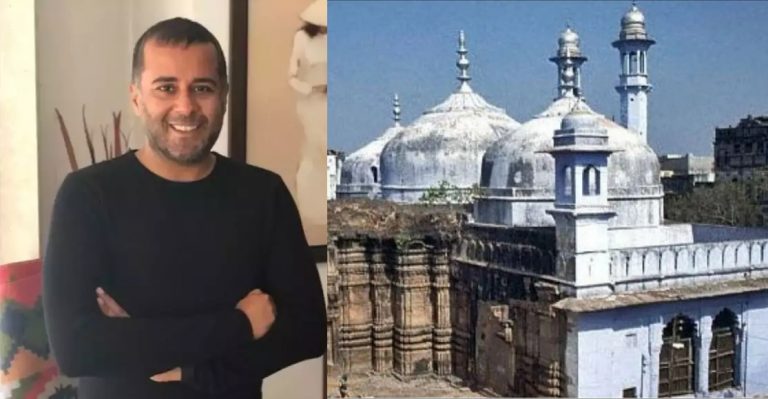
The controversial Gyanvapi structure, located next to the Kashi Vishwanath Temple, is once again the eye of the storm as the legal dispute around it reaches the Supreme Court. Five woman petitioners are at the center of the case involving the disputed Gyanvapi complex in the holy Hindu city of Kashi.

Several cases have been filed at the Supreme Court, Allahabad High Court, and local Varanasi Court over the mosque erected in the 17th century by Mughal emperor Aurangzeb after demolishing the holy Kashi Vishwanath Temple. Here is a timeline of the entire conflict over the disputed Gyanvapi structure.

The civil suit in 1936 by Deen Mohammad

In 1936, one Deen Mohammad filed a complaint (Civil Suit No. 62) before a Varanasi Court seeking a determination that the land around the disputed Gyanvapi structure belonged to Waqf. He had asked for a ruling that he and other Muslims had the right to worship, including Alvida prayers, and to exercise other religious and legal rights on the land under dispute.

However, while denying the appeal based on the evidence, the Varanasi court noted that the mosque was built on the site of a Hindu temple that was demolished by Mughal Emperor Aurangzeb in the seventeenth century. Following the dismissal, Deen Mohammad approached the Allahabad High Court in 1937.

The appeal in Allahabad HC by Deen Mohammad in 1937

In the First Appeal No. 466 of 1937 of the Allahabad HC, Deen Mohammad claimed relief on the grounds that:

(a) It may be declared that the land bearing No. 9130, situate at mauza Shahar Ehas, pargana Dehat Amanat, zila Benares, measuring 1 bijjha, 9 biswas, 6 dhurs, together with the enclosure all round and the platforms and trees and the pucca well, the graveyard, the steps, etc., described in para 2 of the plaint is waqf in the possession of the plaintiffs and other Musalmans and the plaintiffs have a right to say their prayers, especially the Alvida prayers and to exercise their religious and legal rights as the need and occasion arise:

(b) If in the opinion of the Court the plaintiffs are not held to be entitled to the whole or any part of the relief (a), then it may be declared that the plaintiffs are entitled to exercise the said rights by way of custom.

The High Court, again, while dismissing the plea, observed that “The learned Civil Judge has gone into the history of this mosque and has come to the conclusion that it was built on the site of a Hindu temple which was demolished by Emperor Aurangzeb in the seventeenth century. I do not think that it is necessary to go into the question of the origin of the mosque.”

The court further observed that “The learned Judge has found on the historic evidence which was produced before him that the wall with the enclosure originally appertained to a temple and the outer wall was not erected at the time when the mosque was built. It is unnecessary to go into the question of whether the finding is right or wrong.”

The court, while delivering the order, stated that “The evidence does not seem to me to establish in any way that this enclosure is waqf property. The mere fact that a certain number of people overflowed on to the public land on certain occasions when they found it convenient so to do would not prove that land belonged to those people.” The appeal by Deen Mohammad was dismissed with costs.

Petition by temple priest in 1991

In 1991, a flood of applications came to the District Court in Varanasi, as local priests sought permission to pray on the Gyanvapi premises. The petitioners claimed that the Gyanvapi Masjid was erected in the 17th century on the orders of Mughal tyrant Aurangzeb by destroying a part of the Kashi Vishwanath Mandir.

Vijay Shankar Rastogi, a lawyer from Varanasi who appeared before the lower court as the “next friend” of the Kashi Vishwanath Mandir’s presiding deity, was one of these petitioners. Rastogi filed the lawsuit in 1991, alleging that Maharaja Vikramaditya built the temple on the site of the present mosque roughly 2,050 years ago.

He demanded that the Gyanvapi mosque be razed and that Hindus be given ownership of the entire piece of land, as well as the right to worship within the building. Furthermore, he contended that because the Gyanvapi mosque was built on a partially destroyed temple, the Places of Worship (Special Provisions) Act, 1991 won’t apply in the case.

Following the proceedings in 1997, a Varanasi trial court found that the petitioners’ remedy was limited under the Places of Worship (Special Provisions) Act, 1991. Subsequently, revision petitions were filed, merged, and examined in the trial court of Varanasi.

In 1998, the Anjuman Intejamia Masajid (AIM) Committee which oversees Gyanvapi petitioned the Allahabad High Court, saying that the dispute could not be settled in civil court citing Section 4 of the Places of Worship (Special Provisions) Act, 1991. The civil court’s proceedings were subsequently placed on hold by the Allahabad High Court.

Revival of the case in 2019

In December 2019, a month after the Supreme Court’s verdict on the Babri Masjid-Ram Janmabhoomi issue, Advocate Rastogi filed a fresh plea on behalf of the Swayambhu Jyotirlinga Bhagwan Vishweshwar demanding an archaeological study of the Gyanvapi structure. In 1998, the Allahabad High Court had ordered that evidence be collected from the whole Gyanvapi complex in order to assess the site’s religious nature, but the lower court’s ruling was postponed.

In April 2021, the Varanasi court ordered the ASI to conduct the survey and submit its findings. The Uttar Pradesh Sunni Central Waqf Board and the Anjuman Intezamia Masjid Committee opposed Rastogi’s plea and the Varanasi court’s decision for a survey of the mosque.

The case was subsequently heard by the Allahabad High Court, which granted an interim stay on the instruction to the ASI to perform the survey after hearing all parties concerned. According to the high court’s order, the Places of Worship Act, 1991, bans any alteration in the religious character of a place of worship from what it was on August 15, 1947.

The current case of Shringar Gauri Mandir

On April 18, 2021, Rakhi Singh, Laxmi Devi, Sita Sahu, Manju Vyas, and Rekha Pathak filed a lawsuit demanding the right to worship and perform rituals at Shringar Gauri, Lord Ganesh, Lord Hanuman, and Nandi on a regular basis, as well as barring opponents from harming the statues inside the disputed Gyanvapi structure.

It is in this case that the court of Civil Judge (Senior Division) of Varanasi, Ravi Kumar Diwakar, had on April 26, 2022, ordered videography of the Shringar Gauri temple in the Kashi Vishwanath-Gyanvapi complex and adjoining places.

While Laxmi Devi, Sita Sahu, Manju Vyas, and Rekha Pathak reside in Varanasi and have attended every session since the lawsuit began in August 2021, Rakhi Singh, the fifth and principal petitioner, is located in Delhi and has not been in court. All five women met at a Satsang and agreed to file a case about the issue.

Rakhi Singh (35) is the main petitioner and a founding member of the Vishwa Vedic Sanathan Sangh. Sita Sahu (40) owns a modest general store from her home in Varanasi’s Chetganj area, roughly 2 kilometres from the complex. Manju Vyas (49) owns a beauty parlour 1.5 kilometres from the Gyanvapi complex. Rekha Pathak, a housewife, lives in the Hanuman Phatak area, which is close to the Kashi Vishwanath temple complex. Laxmi Devi (65) is the wife of VHP leader Sohan Lal Arya.

The survey is now complete, and the committee will present its report to the court on May 17. Furthermore, the Muslim side had petitioned the Supreme Court to stop the survey. While the petitioners requested an immediate halt to the proceedings, the court refused to do so without first hearing the matter properly. The case is set to be heard by the Supreme Court on Tuesday.

Mumbai: Adani Electricity slams NDTV for misleading report on Siddharth Colony blackout saga, says residents not paying dues for 16 years

On Tuesday, May 16, Adani Electricity Mumbai Board gave a befitting reply to the NDTV journalist who reported that the Board had sent electricity bills amounting to lakhs to the residents of Siddharth Colony area in Mumbai’s Chembur. NDTV Journalist Sohit Mishra in his report stated that 3200 families living in the slums of Chembur were slapped with electricity bills amounting to lakhs.

“How much electricity bill do you pay? 5000? 10,000? The Bill of one family in Chembur is 35 lakhs!! Due to non-payment of bills, they are forced to live without electricity throughout the day. Administration, developer and electricity department have duped them”, he tweeted.

Following the fraudulent report, the Adani Electricity Board on May 16 issued a statement and slammed the NDTV journalist for misleading the viewers. “The video is highly misleading and presents a distorted view of the Truth. The fact is that these bills are of 16 years of arrears. Siddharth Colony residents stopped paying their bills on the pretext that the developers had promised to pay for their electricity”, the statement read.

The journalist however, in the series of tweets kept on arguing that the Adani Group who acquired the Mumbai electricity distribution business from Reliance Energy in 2017 had duped the consumers by issuing hefty electricity bills. He defended his video report and said that nobody from the Adani group was ready to speak on camera. “No one from your team was ready to speak on camera, have mentioned everything you said. Please see”, he addressed the Board.

In response, the Board said that it had issued a statement only after watching the entire video report. “Our written statement addresses every point it raises and we are happy to connect with you offline as well to satisfy any pending clarity. We’d be happy to reach out and relay the facts”, the Board tweeted.

Meanwhile, the Board in its statement revealed that the residents had not paid the electricity bills for past 16 years. “After taking over from the Reliance Energy, Adani Electricity in good faith had requested the residents to first start paying their electricity bills. However, the residents continued to default on payment and also hindered our operations”, it added.

It also slammed the residents for believing that they could consume electricity for free at the cost of others. “As previously stated, Siddharth Colony residents have been advised to clear their dues immediately to avail further services”, the statement reiterated.

It is important to note that the electricity board in Maharashtra has policy to cut the electricity supply of the residence whose owner/tenant keeps the arrears of the electricity bill for 3 months or more. The board seeks payment of the bill before the deadline or switches off the power supply in interest of the regular bill-paying customers.

Earlier, Opindia had reported that the Siddharth Colony in Mumbai’s Chembur had plunged into darkness due to non-payment of electricity bills worth Rs 99 crore. The residents of the colony had staged protests as the Adani Electricity Board had disconnected its power supply for nine hours daily during the day.

Also, in 2018 the then electricity supplier Reliance energy faced a similar hurdle to recover the power dues from the residents of Siddharth Colony. It was reported that the housing society which houses more than 20,000 residents had faced power cut for 3 days. The dues had then mounted to Rs 63 crores.

Siddharth Colony is often denoted as a slum of lower-middle-class dwellers in Mumbai’s neighborhood of Chembur.  Despite repeated actions and warnings, the residents of Siddharth Colony are adamant about not clearing previous dues despite the fact that electricity was consumed by them. Also, the residents have made repeated assurances of unhindered payment of current electricity bills but have failed to do so as well.