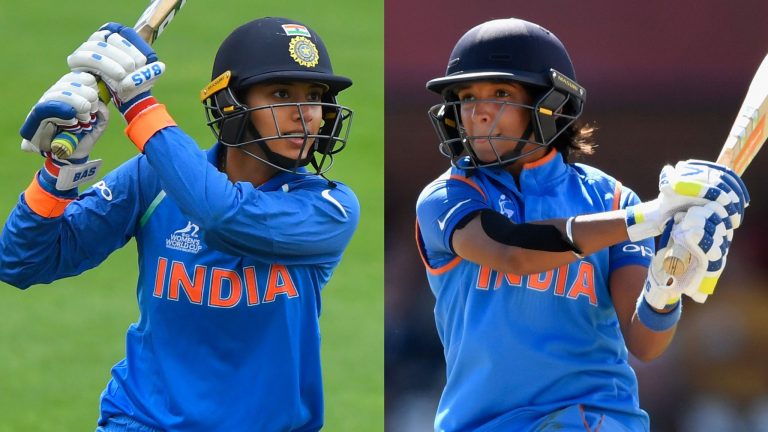
Smriti Mandhana and Harmanpreet Kaur put together a rollicking 184 runs stand for the fourth wicket to get India’s World Cup campaign back on track. Coming together at a slightly precarious score of 78/3, the pair started cautiously before opening up and driving India to a huge score of 317/8 in the end. In reply, West Indies could only manage 162 as they collapsed from 100/0 to 162 all out.
India started their World Cup in emphatic fashion by defeating arch-rivals Pakistan by 107 runs. However, that was followed by a 62 runs defeat against strong contenders New Zealand. West Indies, having beaten New Zealand and England in their first two matches, arrived for this contest full of confidence, but met their match in Smriti Mandhana and Harmanpreet Kaur.
This was the 5th century for Smriti in ODIs, while it was the 4th ton for Harmanpreet Kaur, and her first since her legendary knock of 171 in 2017 World Cup against Australia. The veteran’s return to form during this World Cup is a very welcome sign for India as they prepare for tougher battles ahead in the competition.
India started very positively as Yastika Bhatia, opening in place of Shafali Verma gave the team a great start as India raced on to 49 in the 7th over. However, her wicket slowed things down as West Indies clawed their way back with the wickets of Deepti Sharma and Indian captain Mithali Raj. That is when Smriti Mandhana and Harmanpreet came together to change the course of the match.
Facing a huge target of 318, West Indies started like a house on fire with danger woman Deandra Dottin and Hayley Matthews reaching 100 in the 13th over. However, once the star of the first match Sneh Rana dismissed the two openers, there was little resistance from the rest of the Windies squad as they collapsed to 162 in the end.
The win catapults India to 3rd in the table. With the round robin format of the tournament, the top 4 are going to go into the semifinals to be held at the end of this month with the final scheduled for 3rd of April.
Wars are not just fought on the battlegrounds alone, especially in our times. In a technologically advanced world, psychological warfare through the means of injecting carefully crafted narratives and interplaying of the myths to create urban legends gives a massive advantage at times of war.
The same efforts are once again evident in the ongoing Russia-Ukraine war. At first, the myth of “Ghost o Kyiv” – a mysterious MiG-29 fighter pilot who appeared as an enigma over Kyiv to defend Ukrainian skies from Russian aerial attacks, was sold across the world. As it failed to gain any traction, the west-backed Ukraine supporters have come up with another new urban legend story.
This time the hero of their chronicle is not a fighter pilot but an elite Canadian sniper, nicknamed “Wali”.
The latest rumours are that “Wali” has arrived in Ukraine to fight the Russians as a volunteer fighter.
Who is this Wali?
As per the latest rumours, Wali is one of the world’s best snipers. A veteran of the Royal Canadian 22nd Regiment, Wali has arrived in war-torn Ukraine earlier this week to fight the Russian forces.
After arriving in Ukraine, Wali has expressed his eagerness to participate in the war. Apparently, Wali revealed that he felt “like a firefighter who hears the alarm ringing” when Ukrainian President Zelenskyy called on foreigners to join the country’s fight against Russia.
One of the world’s best snipers has arrived in Ukraine.
The French-Canadian “Wali” from the Royal Canadian 22e Régiment made his reputation during tours in Afghanistan, Syria and Iraq
He fought in the same Canadian unit as the sniper with the world’s longest kill (3.5 km)
Within two days of his arrival in the war-torn country, Wali has killed six Russian soldiers.
In a recent interview, the famous sniper said, “I want to help them. It’s as simple as that. I have to help because there are people here being bombarded just because they want to be European and not Russian.”
Wali can eliminate 40 people a day
Wali’s story is nothing short of a fairy tale. He is considered one of the best snipers in the world because he can provide 40 kills on a productive day. For a sniper to be regarded as good, on average, one needs 5-6 kills per day, and a great one manages to get 7-10.
A 40-year-old French-Canadian computer scientist, Wali has reportedly served twice in the Afghanistan war between 2009 and 2011. The unnamed Canadian soldier was given the name ‘Wali’, which means protector in Arabic, during his stint in Afghanistan.
⚡️The most famous sniper “Wali” has arrived in #Ukraine to fight against occupiers
The average productivity of sniper is 7 men a day. On the front type like Ukrainian, productivity can reach up to 10. “Vali” can provide up to 40 deaths per day. pic.twitter.com/XDOibKxiQq
He also has a record for the world’s longest confirmed kill, of 3.5 km. In 2015, he had travelled to Iraq on his own to fight against ISIS.
Back in Canada, Wali has a baby son with his wife. Reportedly, the baby will turn one next week at a time as his ‘hero’ father fights the war in Ukraine.
“They were so happy to have us,” Wali said, adding, “It’s like we were friends right away. A week ago, I was still programming stuff. Now I’m grabbing anti-tank missiles in a warehouse to kill real people. … That’s my reality right now”.
Speaking to CBC, Wali said that three other former Canadian soldiers have also travelled with him to Ukraine. He reached Ukraine from Poland after meeting hundreds of thousands of Ukrainian refugees crossing the opposite way.
Meanwhile, Wali and other veterans have taken shelter in an abandoned home, ahead of linking up with Ukrainian authorities.
Interestingly, nobody has seen this purported sniper soldier yet. Netizens speculated that the ‘Wali’ story could be another propaganda being peddled by the west-backed Ukraine government to show that they are still winning the war against the Russians.
So far, there is no evidence to prove the existence of the “Wali”, just as the “Ghost of Kyiv”.
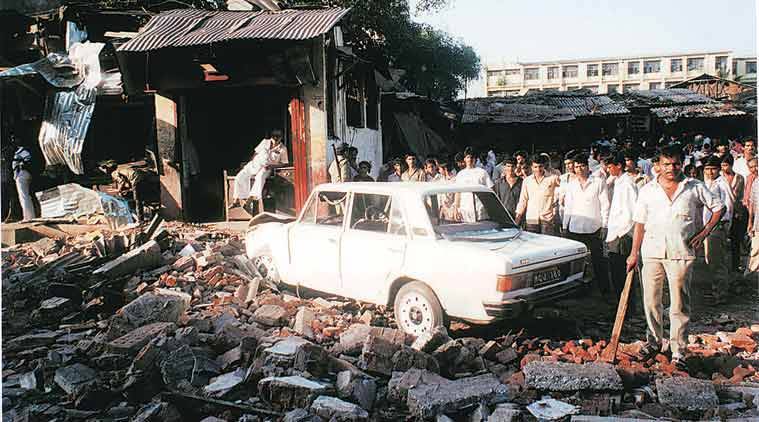
Today marks the 29th anniversary of the devastating 1993 Mumbai bombings. A series of 12 bombs exploded in the afternoon on 12 March 1993 killing more than 300 people and affecting the lives of thousands.
The explosions were carried out at the behest of Dawood Ibrahim, the head of the underworld D-Company, in response to the demolition of the controversial Babri structure in Ayodhya in December 1992.
Dawood Ibrahim, together with his top associates Tiger Memon, Mohammed Dossa, and Mustafa Dossa, had planned the atrocious Mumbai attacks. Mustafa, Tiger, and Chhota Shakeel organized training camps in Pakistan and India where they trained themselves and other attackers about firearms and weaponry as well as explosives. Before carrying out the explosions, the conspirators met 15 times.
The blasts were funded by expatriate Indian criminals operating in the Gulf. According to Indian officials, the Pakistani intelligence service, Inter-Services Intelligence (ISI), was also actively engaged in the attacks.
However, the catastrophic bomb blasts could have been averted had the police paid heed to the confession of one Gul Mohammad.
Attacks planned to coincide with Shivaji Jayanti preponed after Mumbai Police arrested Gul Mohammad
Gul Noor Mohammad Sheikh, better known as Gullu, was one of the 19 people chosen by Tiger Memon and sent to Pakistan through Dubai on February 19, 1993, for weapon and bomb-making training. The initial plan was to strike Mumbai during the Shivaji Jayanti festivities in April, but that was preponed when Gullu was apprehended on March 9, 1993, at the Nav Pada police station. The arrest of Gul Mohammed prompted Tiger Memon to pull the timing of the bombings forward.
On December 6, Mumbai was immersed in violence following the levelling of the disputed Babri structure in Ayodhya. Rabble rousers around the country used the incident to stoke resentment among Muslims and enlist them for their nefarious designs. Thousands of brainwashed Muslims were recruited who would then travel to Pakistan for training before returning to India to carry out the bombings.
Gullu, who had participated in the rioting, was arrested by police and revealed that bomb blasts were being planned at different parts in the city. Gullu also confessed to receiving training in Pakistan and admitted to plotting the destruction of important city icons such as the Bombay Stock Exchange and the Shiv Sena Bhavan. However, the police disregarded his claims, presumably taking them to be outlandish.
Gul Mohammad lived in Behrampada, a slum near Bandra. He had a history of minor crimes and thievery. The majority of those who collaborated with Tiger on the attacks shared a similar background.
The initial trial began in April 1995. The prosecution called about 600 witnesses, and the testimonies of all of them were concluded in 2000. The court gave its ruling in September 2006. Gul Mohammad was awarded a six-year sentence because he went to Pakistan and was involved in the conspiracy. On June 16, 2017, a special TADA court convicted Mustafa Dossa, mafioso Abu Salem, and four others.
While Yakub Memon was hanged in 2015 for being the key conspirator in the Mumbai bombings, others such as Tiger Memon, Dawood Ibrahim, Anees Ibrahim, Chhota Shakeel, and others are still on the run and continue to evade Indian authorities.
The 1993 bomb bombings touched every level of society, from Bollywood actor Sanjay Dutt to the mafia to senior leaders. Even the then-chief minister, NCP supremo Sharad Pawar, openly lied and ‘invented‘ the 13th bomb to create a false equivalence between the sufferings of Muslims and Hindus. Pawar apparently conjured up a blast to balance out the victimization because all 12 of the actual bombs took place in Hindu-majority communities.
The whole nexus between Bollywood, Underworld, and Politics was explicitly highlighted in the NN Vohra Committee report in 1993.
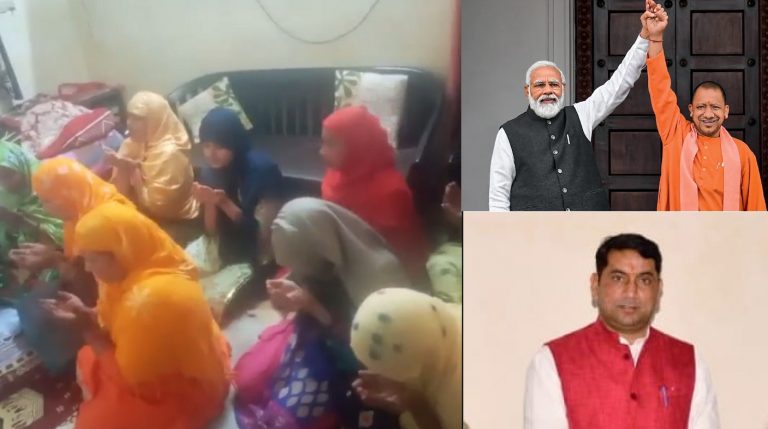
Muslim women in Meerut have prayed for Prime Minister Narendra Modi and Chief Minister Yogi Adityanath’s long lives. Women have prayed for the Prime Minister, Chief Minister Yogi Adityanath, and their local MLA Dr. Somendra Tomar to have long lives and to be free of fear.
A video has come up in which it can be seen that these Muslim Women from Meerut while performing Namaz were praying for the wellness of their local MLA and Yogi Adityanath. This comes after Bharatiya Janata Party MLA Somendra Tomar won the election from the Meerut South seat for the second time in a row.
The Muslim ladies prayed “O Allah, the MLA of our region who has returned to power for the second time should work for all Muslim sisters and for the welfare of our family’s children and men, Amen. O Allah, may every development effort be done in peace and with advancement in mind. O Allah, grant us strength so that we can all grow in the society.”
“We are Indian citizens. All of us are Muslim sisters. Prime Minister Narendra Modi, Chief Minister Yogi Adityanath Yogi Ji, and our MLA Somendra Tomar have battled for our rights; instil bravery in them so that they are not frightened of anyone,” they added.
Dr. Somendra Tomar has won the Meerut South seat for the second time. Tomar trounced Samajwadi Party candidate Mohd Adil in Meerut South. Tomar received 43.46 percent of the votes and won the election, whereas Adil received just 40.79 percent of the vote.
Dr. Somendra Tomar with UP CM Yogi Adityanath. (File photo)
With a two-thirds majority in the recently concluded Uttar Pradesh assembly elections, the BJP has returned to power in India’s most populous state. The BJP won 255 of the 370 seats it contested, for a 69 percent success rate.
Uttar Pradesh has a Muslim population of about 20%. Despite the fact that BJP governments provide the greatest welfare funds to Muslim populations, the party has been labeled as anti-Muslim. Nonetheless, the BJP has won two of the top 10 Muslim majority seats. The BJP has won Dhaulana and Saharanpur, while the Samajwadi Party has won the remaining eight such seats as anticipated.
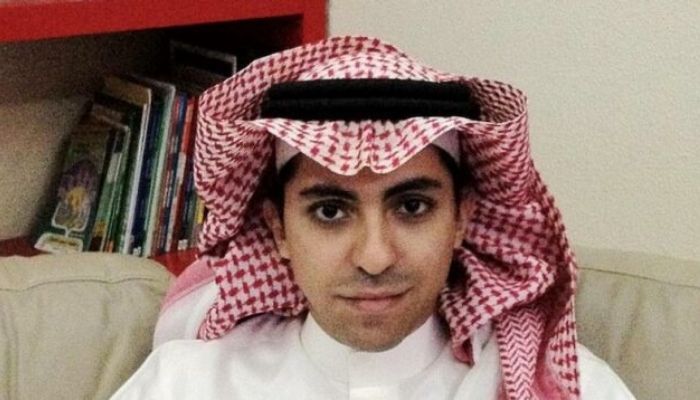
Saudi blogger Raif Badawi, who had spent a decade behind bars for his alleged anti-Islamic views, has finally been freed. The development was confirmed by Badawi’s wife Ensaf Haider and son Terad.
In a tweet on Friday (March 11), Badawi’s son had shared a childhood picture of his father and two sisters. He wrote, “After 10 years my father is free!”
Ensaf Haidar, who had campaigned for the release of her jailed husband from Canada, tweeted, “Raif is free after 10 years in prison.” The Saudi officials did not comment on the development.
BBCreported that the Saudi blogger’s prison sentence ended on March 1. As of now, it remains unclear as to why Saudi authorities released the secular blogger.
Although Badawi has been handed a 10-year travel ban, Reporters Without Borders has vowed to help the Saudi blogger to reunite with his wife and children in Quebec in Canada.
“Saudi Arabia has barred other high-profile former prisoners from leaving the kingdom, presumably to avoid the bad press they might generate by speaking publicly about their experiences,” reported The New York Times.
Even while serving his prison sentence, Badawi was felicitated with Britain’s PEN Pinter Prize and European Union’s Sakharov Prize for Freedom of Thought.
The Timeline of the blogger’s case
Raif Badawi founded a website by the name of ‘Free Saudi Liberals’ in 2008 wherein the blogger propagated his secular beliefs, criticised the harsh laws of the Kingdom of Saud and the imposition of Islam in day-to-day activities. He was charged for insulting the Muslim faith in 2008 but was released after interrogation.
In 2009, the Saudi government froze its assets and imposed a travel ban. He was again arrested in June 2012 for allegedly ‘insulting Islam through electronic media’ and ‘going beyond the realm of obedience’.
In December, the Saudi courts tried to charge him with ‘apostasy’ (renunciation of Islam) for reportedly like a Facebook page of a Saudi Christian and claiming that ‘Muslims, Jews, Christians and atheists are all equal.’ It must be mentioned that the punishment for apostasy in Islam is death.
As such, Badawi had to read the ‘Kalma’ (Islamic declaration of Faith) and testify that he was born a Muslim. It was only then that the charges against ‘apostasy’ were dropped by the court. A year later in July 2013, the Saudi blogger was sentenced to 7 years in prison and 600 lashes for committing ‘blasphemy’ and founding a ‘liberal website.’
On filing an appeal against the harsh verdict, the Saudi court increased his sentence in May 2014 to 1000 lashes, 10 years in prison, a 10-year travel ban after release and a fine of 1 million Saudi riyals (USD $266,558).
A video of the Saudi blogger receiving the first set of 50 lashes went viral on social media. The onlookers were heard yelling ‘Allahu Akbar’ as Raif Badawi was tortured at the behest of the Saudi court.
This led to an international outcry and global condemnation from human rights activists. Due to Raif Badawi’s deteriorating health, the scheduled 950 lashes that were meant to be carried out over 20 weeks was discontinued.
The Crime of Raif Badawi
Raif Badawi had dared to establish ‘Free Saudi Liberals Forum’ and speak his mind, despite being aware of the harsh consequences under the totalitarian regime of the Saudi monarch. After being incarcerated and publicly flogged, the blogger’s writings have been translated from Arabic to English.
Although his website was shut down by the Saudi authorities in 2012, they are still available on the internet. In an article, The Guardian has reproduced some of his writings, which clearly reflect his desire for a non-dogmatic and free-spirited Saudi Arabia.In August 2010, Raif Badawi had complained about the stifling of speech in the Kingdom.
He wrote, “As soon as a thinker starts to reveal his ideas, you will find hundreds of fatwas that accused him of being an infidel just because he had the courage to discuss some sacred topics. I’m really worried that Arab thinkers will migrate in search of fresh air and to escape the sword of the religious authorities.”
Screengrab of the news report by The Guardian
A month later, the Saudi blogger was seen highlighting the importance of secularism and tolerance. “Secularism respects everyone and does not offend anyone … Secularism … is the practical solution to lift countries (including ours) out of the third world and into the first world,” he had emphasised.
Badawi added, “Look at what had happened after the European peoples succeeded in removing the clergy from public life and restricting them to their churches. They built up human beings and (promoted) enlightenment, creativity and rebellion. States which are based on religion confine their people in the circle of faith and fear.”
In his writings, the Saudi blogger had condemned the growing Islamism in the Arab nation and pointed out how the Kingdom’s policy of harbouring fundamentalists. He had slammed the demand of Muslim groups to build a Masjid and a community centre for Muslims at the site of the Twin Towers, which were destroyed by Islamists belonging to Al-Qaeda.
In September 2011, he had called out a Muslim TV preacher in Saudi Arabia for claiming that astronomers ought to be punishment for encouraging scepticism about Islamic Sharia law. “I advise NASA to abandon its telescopes and, instead, turn to our Sharia astronomers, whose keen vision and insight surpass the agency’s obsolete telescopes,” Badawi had mocked.
In his last post, prior to his arrest in 2012, the Saudi blogger quoted Albert Camus and wrote, “The only way to deal with an unfree world is to become so absolutely free that your very existence is an act of rebellion.”
Raif Badawi was thus incarcerated, tortured and flogged for 10 years for speaking his mind and questioning the Islamic dogmatism, existing in the country.
Russia’s Foreign Ministry has confirmed the facts revealed during the military operation proving that Ukraine is destroying evidence of military biological programmes. Foreign Ministry spokesperson of Russia, Maria Zakharova stated that the ministry confirms the “facts” revealed during the “special” military operation in Ukraine announced by Kremlin leader Vladimir Putin on February 24.
In a press conference, the Russian diplomat stated, “Carrying out attacks against their own nuclear facilities is already becoming a hallmark of the Ukrainian leadership. Kyiv, as well as the American masters of Vladimir Zelenskyy and the US vassals in NATO, are the ones to blame for this. Without such support, these provocations would be pointless.”
? #Zakharova: We confirm facts revealed during the special military operation in Ukraine, which prove that the Kiev regime has been destroying the evidence of military biological programmes Kiev was implementing. They were funded by @DeptofDefense
The spokesperson also stated that Western countries are endangering the citizens of Russia, Ukraine, and entire Europe by supporting Ukraine’s nuclear facilities.“The Western political adventurers, who encourage Zelenskyy’s actions, endanger the lives of not only the citizens of Ukraine and Russia but of all of Europe,” she added.
The Russian Foreign Ministry spokesperson made the remarks after Moscow claimed at the United Nations Security Council (UNSC) that it had documents proving the existence of a “network of biological weapons” in Ukraine. In a statement to the UN Security Council on Friday, Russia stated that its forces had discovered credible evidence that ongoing projects to manufacture biological weapons in Ukraine were being funded by the US.
Ukraine conducting emergency cleanup operation: Russia claims at UNSC
Russia had said it discovered “some truly shocking facts” about the Kyiv regime’s emergency clean-up of traces of a military biological programme carried out with US assistance.
Russian delegate at UNSC said, We call upon you to think about a very real biological danger for people in European countries, which can result from an uncontrolled spread of bio-agents from Ukraine. If there’s such a scenario then all of Europe will be covered by it.”
#Nebenzia: The activity of biolabs in #Ukraine that we track back to 2014, and #US-implemented program of so-called reform of ?? healthcare system triggered uncontrolled growing incidence of dangerous and economically relevant #infections in Ukraine. pic.twitter.com/WoAxsKQT5l
Citing Deputy Secretary of State Victoria Nuland’s testimony in which she confirmed the existence of dangerous studies being conducted in Ukrainian laboratories, Russia’s Permanent Representative to the UN added that the US representatives provide ambiguous information on military biological activities in Ukraine.
Ukraine calls bioweapons accusations a result of the President of Russia and his henchmen’s “insane delirium.”
In response to these accusations, Ukraine stated that the aggressor state has once again shot itself in the foot by convening this meeting. “Ukraine has a health system that complies fully with its international obligations”, said Sergiy Kyslytsya, the Ukrainian Ambassador to UN, dismissing the allegations which he maintained was the result of Russian President Vladimir Putin and his henchmen’s “insane delirium.”
India emphasises on biological weapons convention at UNSC, says should be fully implemented in “letter and spirit.”
During a briefing to the United Nations Security Council, India emphasised the importance of the Biological and Toxin Weapons Convention (BTWC), which came into force in 1975, as a key global and non-discriminatory disarmament treaty that prohibits an entire category of weapons of mass destruction. India urged that the BTWC be fully implemented in “letter and spirit.”
Watch: At UNSC meet on Ukraine over Russian claims of US bioweapons in war torn country, @IndiaUNNewYork@ambtstirumurti emphasizes on Biological Weapons Convention calling for its full & effective implementation. Convention, that outlaws bioweapons, came into force in 1975. pic.twitter.com/cGWLhIf93E
“We also believe that any matters relating to obligations under the BTWC should be addressed as per the provision of the Convention and through consultation and cooperation between the parties concerned,” the country said. The UNSC meeting was convened amid Russia claiming that the United States was funding biological weapons labs in Ukraine.
Notably, in the midst of Ukraine-Russia tensions, US-funded biological weapons laboratories in Ukraine have received a lot of attention. Both Russia now China have accused the US military of operating “dangerous” Biolabs in Ukraine.
US admits there are Biolabs in Ukraine
Interestingly, on Tuesday, March 8, the US State Department official Victoria Nuland in a way had admitted that US-funded Biolabs are working on developing bioweapons on Ukrainian soil. Nuland testified before a Senate Foreign Relation Committee hearing on Ukraine in Washington, DC, and said that the United States was working with Ukraine to prevent invading Russian forces from seizing biological research material. The State Department also stated that it was concerned that Russian forces are trying to gain control of biological research facilities within Ukraine.
By stating that Russia will be held responsible for any ‘biological or chemical weapon attack,’ Nuland had effectively admitted what the Russian government has been saying all along: that US-funded Biolabs are developing bioweapons on Ukrainian soil.
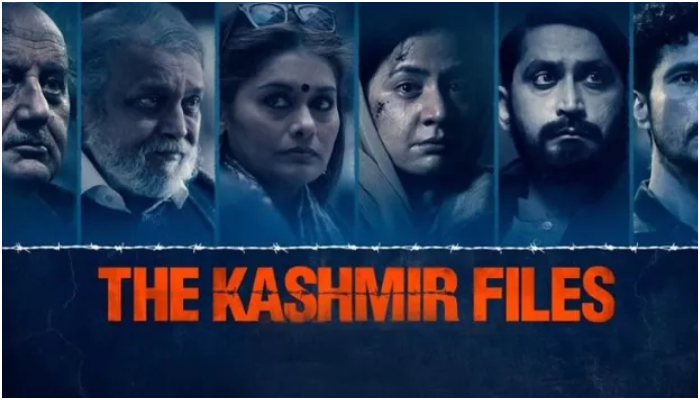
The Kashmir Files, a film based on the lives of Kashmiri Pandits, has impressed the box office by making the business of around Rs 4.25 crores on the very first day of its public screening. The film that was released on March 11 is currently being played on more than 1000 screens speculating massive rush on the weekend by March 13.
Director Vivek Ranjan Agnihotri shared the success on Twitter saying that the movie had made Rs 4.25 crores worldwide on the very first day of its release. “A new beginning. A new revolution. Started with a very small film with the biggest tragedy of the oldest civilization. Gratitude to every Indian”, he tweeted.
— Vivek Ranjan Agnihotri (@vivekagnihotri) March 12, 2022
According to the reports, the film was released initially on 700 screens but the rising occupancy and the terrific response of the audiences to the trailer, to know the heart-wrenching story of the Kashmiri Pandits has got theatres to play the film on 1000 plus screens at present. The number can rise through the weekend.
The film is running close to 55-60% prime properties and is expected to pocket Rs 14 to 15 cr net by the weekend. It is important to note that the film is open only to its theatrical release all over India and will not be released on the OTT platforms. This is after one of the leading OTT platforms asked director Vivek Ranjan Agnihotri to not use the term ‘Islamic Terrorism’ in the dialogues.
In a detailed interview with OpIndia CEO Rahul Raushan, The Kashmir Files director Vivek Agnihotri talked in length about the process of making the film, the challenges his team faced and how he made sure that the film gets a theatrical release. He said that OTT platforms work inside a restricted framework of certain ideologies.
Further, the ideological isolation of the film was not only restricted to limiting its promotion but has also resulted in film critics like Anupama Chopra seemingly sabotaging the film, NDTV tweaking the SEO settings by calling it a ‘propaganda film’ and television talk shows refusing to promote the film. The film had also landed into legal troubles with certain people wanting to stall its release.
On the contrary, as the film was released on March 11, the netizens were seen encouraging the audiences to watch the film with a ‘Must Watch’ tag. One of the users said that the movie was not just a movie but an emotion. “Request everyone to please watch this movie to know the guy-wrenching truth of genocide of Kashmiri Hindus”, the tweet read.
‘The Kashmir Files’ is not just a movie but an emotion for us. Movie is in theatres now, request everyone to please watch this movie to know the guy-wrenching truth of genocide of Kashmiri Hindus ? #TheKashmirFilespic.twitter.com/yUbwEFaWQR
Meanwhile another user stated that the Kashmir Files is the story of a Hindu genocide that was hidden from the world, of losing everything overnight, of seeing those you love massacred in front of your eyes. “It is a story every Hindu must watch and one we must never allow to repeat again”, she added in the tweet.
#TheKashmirFiles released today. The story of a Hindu genocide that was hidden from the world, of losing everything overnight, of seeing those you love massacred in front of your eyes. It is a story every Hindu must watch, & one we must never allow to repeat again.
Several videos have also appeared on social media where people can be seen crying, chanting ‘Vande Mataram’ and explicitly urging people to go and watch the release. Some have even called the making of the film ‘historic’ and have saluted director Vivek Ranjan Agnihotri for showing the truth of Kashmir to the entire world.
The film is inspired from the true stories of Kashmiri Pandits and stars senior actors like Anupam Kher, Mithun Chakraborty and Pallavi Joshi. The other acclaimed names like Darshan Kumar, Bhasha Sumbali, Chinmay Mandlekar, Puneet Issar, Mrinal Kulkarni, Atul Srivastava, and Prithviraj Sarnaik have also played important roles in the movie.
The film takes viewers back to 1989, when due to rising Islamic Jihad, conflict erupted in Kashmir, forcing the great majority of Hindus to flee the valley. According to estimates, roughly 100,000 of the valley’s total 140,000 Kashmiri Pandit inhabitants migrated between February and March 1990. More of them fled in the years that followed until just about 3,000 families remained in the valley by 2011. The movie based on video interviews with first-generation Kashmiri Pandit victims of the Kashmir Genocide was originally slated to be released in theatres on January 26, 2022, but was postponed because of the increasing number of COVID-19 instances. It has now been released and is open to watch in theatres.
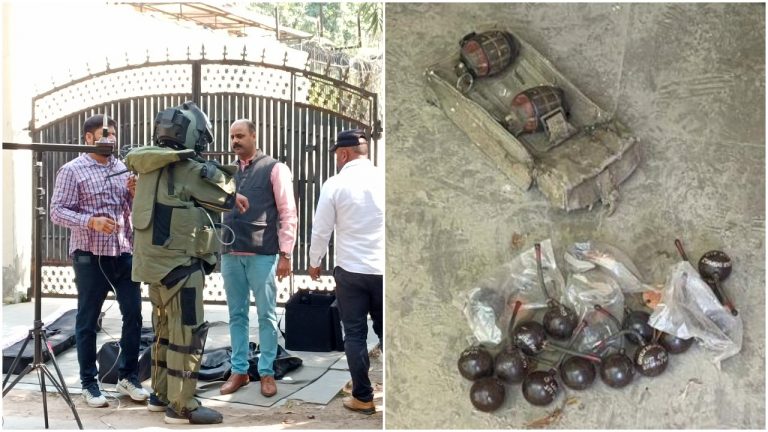
On March 1, the security forces had recovered a massive cache of illegal arms and ammunition, including grenades, from an abandoned building near a CNG petrol pump in Gurugram Sector 31.
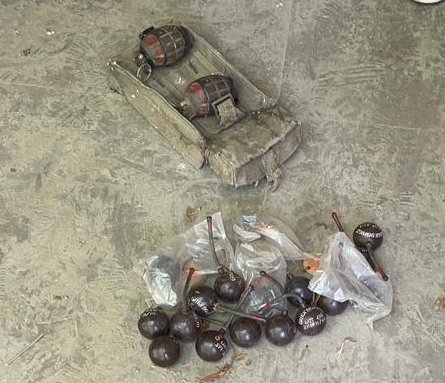
The top police officers and armed personnel had carried out a search operation after receiving intelligence that a huge cache of illegal arms and ammunition were stashed in a toilet of the building. The team had recovered two hand grenades, 17 training bombs and around 22 to 25 used cartridges were reportedly recovered from the abandoned house in Sector-31 of Gurugram.
According to a report by the Hindustan Times, the presence of hand grenades were first found by a couple of thieves who had broken into the house to steal valuables.
The police said the thieves entered the house on the previous midnight robbed some household stuff. Before fleeing the home, one of the thieves went to use the toilet and found the ammunition in the commode.
“One of them rushed out and asked his aide to flee the spot. They were scared and not aware that the ammunition would blast or something serious was being planned in the house,” said a police officer.
Grenades recovered from an abandoned house/ Image Source: Sudarshan
As per the police, the burglars were scared after finding out the grenades and were reluctant to inform the police, thinking they might frame them for keeping the ammunition in the house. However, after contemplating for a few hours, they finally informed the police.
The police said the thieves did not take any valuable goods from the house and instead left a cloth, which they had brought with them to carry the items stolen from the house. A senior officer said that even thieves are deployed as sources sometimes, and they have passed information to police regarding an accident, murder, snatching or other criminal activities several times in the past.
The police had recovered two grenades, two polythene bags – one of which was filled with 15 MK 90 practice grenades used by recruits of the Army, and the second containing one bicat strip, and 43 empty cartridges of a long-range automatic weapon from the toilet.
Upon the investigation, the police found that some of the ammunition recovered was manufactured in an ordnance factory of Khamaria in Jabalpur, Madhya Pradesh. They have sought information from ordnance factories in Uttar Pradesh and Tamil Nadu, specialising in manufacturing the ammunition found in the Gurugram house.
However, the identity of the house owner or the occupants are yet to be known.
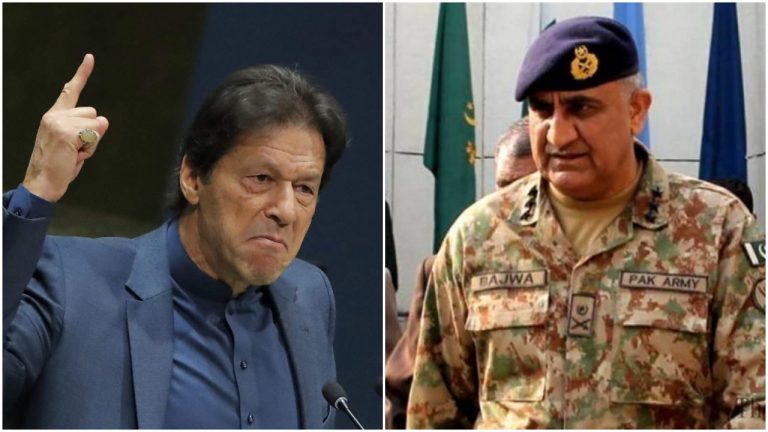
As he faces a no-confidence vote, Pakistan Prime Minister Imran Khan has launched a stinging rebuke at the Pakistan Army’s upper echelons for remaining neutral. Addressing a public gathering at the Dir Scouts ground in the Balambat area of Lower Dir district on Friday, March 10, Imran Khan said that “Allah did not allow us to be neutral as ‘only animals are neutral’.”
The PM said that animals do not know the difference between good and evil. “Humans act in accordance with their consciences. Only animals remain agnostic,” he stated.
Ironically, when the no-confidence motion was passed against Imran Khan a few days ago, the PM expressed extreme confidence in the Army, claiming that the Pakistani Army is on his side and that his government will not fall. But now, Imran Khan is slamming the same Army for taking a neutral stance on the no-confidence motion passed against Imran Khan by 86 lawmakers in Pakistan, including members of the Pakistan Muslim League-Nawaz (PML-N), Pakistan People’s Party (PPP), and others.
Imran Khan, in his public address, also went on to slam the three party leaders, Pakistan Muslim League-Nawaz President Nawaz Sharif, Pakistan Peoples Party co-chair Zardari, and Jamiat Ulema-i-Islam Fazl (JUI-F) chief Rehman, who have joined forces to file a no-trust motion against him, citing the government’s inability to control inflation, which has harmed ordinary people.
He declared that he would bowl an inswing yorker against Opposition leaders Shehbaz Sharif, Asif Ali Zardari, and Maulana Fazlur Rehman and “take all three wickets” after the trio joined forces to file a no-confidence motion against him.
Imran referred to the opposition leaders as “three stooges,” recalling instances in the past when these leaders, according to him, had gone against Pakistan’s national interests.
“I am competing against these three dacoits and … I will take all three wickets with one inswing yorker,” the 69-year-old prime minister was quoted as saying by the Dawn newspaper.
“They tell me that they will topple my government if I don’t close corruption cases against them. But I tell them that I will not close the cases even if I have to give my life for it. I am not doing politics against you but fighting a jihad,” Khan said.
Opposition parties in Pakistan move a no-confidence motion against PM Imran Khan
Notably, on March 8, a no-confidence motion was passed against Imran Khan amidst skyrocketing inflation and deteriorating economic conditions in the country. Prominent lawmakers including JUI-F’s Shahida Akhtar Ali, PML-N’s Khawaja Saad Rafique, Marriyum Aurangzeb, Ayaz Sadiq, Rana Sanaullah, Khawaja Saad Rafique and PPP’s Naveed Qamar and Shazia Marri submitted the no-trust motion against the Prime Minister. The leaders called out for a session for the same in the National Assembly Secretariat.
To pass a no-confidence motion against the Prime Minister it is required to have signatures of at least 20% of the leaders in the National assembly. While 86 lawmakers have already signed the document, the speaker is bound to call a session regarding the motion in which voting via open ballot will take place. With the Opposition claiming the support of 202 lawmakers, clouds have gathered over the fate of Imran Khan as a Prime Minister.
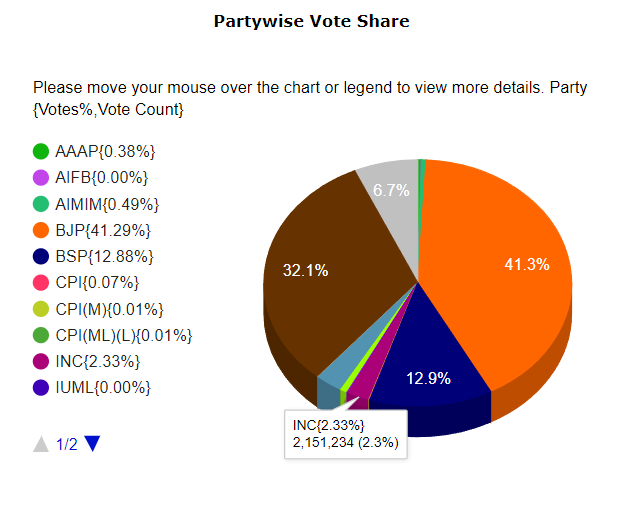
In the Assembly elections of Uttar Pradesh, the Congress party has won only two seats and has got a vote share of only 2.3%. Congress has even lost deposits on 97% of the seats it contested in Uttar Pradesh.
Party wise vote share as on ECI website.
Congress contested 399 seats and won only two, losing deposits on every seat it has lost. The two seats that congress won are Pharenda and Rampur Khas.
According to the Election Commission’s regulations, a candidate who does not get at least one-sixth of the total votes cast forfeits the security deposits. 3,522 (almost 80%) of the 4,442 candidates in UP did not receive their security deposits returned.
It’s worth noting that Congress has failed terribly in each of the five states in which it contested. Priyanka Wadra’s “Ladki Hun Lad Sakti Hun” campaign flopped badly.
Targeting the Congress, the Trinamool Congress (TMC) recently declared that their nationwide campaign against the Bharatiya Janata Party (BJP) had failed terribly (BJP). TMC leaders went on to advise that the Congress join the TMC and that its leaders unite under Mamata Banerjee’s leadership since she is the only one capable of opposing the BJP.
Mayawati’s Bahujan Samaj Party (BSP) lost the deposit in 290 of the 403 seats it fought for. Surprisingly, the Apna Dal (Sonelal) and Nishad Party, the BJP’s coalition partners, did not lose any of their deposits in any of the 27 seats they fought.
The BJP won the assembly elections in Uttar Pradesh for the second time in a row, with 41.3 percent of the vote, followed by the Samajwadi Party with 32 percent. The BJP won four states in the 2022 Assembly elections, with the AAP winning Punjab. The BJP won in four states: Uttarakhand, Goa, Manipur, and Uttar Pradesh. They won 20 seats in Goa, 32 in Manipur, 47 in Uttarakhand, and 255 in Uttar Pradesh. Also, the BJP boosted its vote share dramatically in four of these five states including Uttar Pradesh.