Home Blog Page 3506

Kejriwal bats for a law against forced religious conversions, says conversions through influence, money or threat is wrong

In a surprising turn of events, now Arvind Kejriwal has batted for an anti-forced-conversion law. On Saturday, Delhi Chief Minister and Aam Aadmi Party (AAP) Arvind Kejriwal expressed his wish for a law to be made against forceful religious conversions. Kejriwal, while talking in a press conference in Punjab’s Jalandhar, said that he is against forceful conversions and that religion is a matter of personal faith.  

While talking in the state of Punjab which is about to go for polls on February 20th, AAP leader Arvind Kejriwal took a stand against religious conversions happening forcefully. Kejriwal was asked about his view on coercion of the poor into converting to a new religion through money and influence. Upon this, Kejriwal added, “I am of an opinion that religion is a private matter. Everyone has a right to pray to whichever God, believe in whatever religious text he/she wishes. If conversions are happening through influence, money or threat then it is outright wrong.”

When asked about whether a law should be made to stop such conversions in the country, he said, “Yes, such a law should definitely come into force. But the law should not be used to harass anybody.”

While religious conversions of Hindus are rampant today, many BJP ruled states have enacted a law to curb forceful religious conversions pertaining to contextual realities. In 2020, the Yogi Adityanath led BJP Govt in Uttar Pradesh had passed ‘The Uttar Pradesh Prohibition of Unlawful Conversion of Religion Ordinance, 2020’ which attracts a jail term for up to 10 years to offenders found guilty in mass conversion practices. Considering the menace of grooming Jihad in the state, the Madhya Pradesh Government had enacted a law aimed at preventing religious conversion using fraudulent means.

In December 2021, The Karnataka state assembly passed ‘The Karnataka Right to Freedom of Religion Bill, 2021’ to keep a check upon the rampant fraudulent conversions through missionary activities ravaging the state. The BJP ruled states of Haryana and Assam are already considering such laws in the respective states. With the advocacy of Arvind Kejriwal for the issue, all eyes will be on him whether he plans to enact such a law in AAP governed Delhi or promises to propose such act in states where his party goes for polls this year.

NTPC Ltd requests Railways to change the name of its NTPC exam and avoid the confusion amid controversy

NTPC Ltd, the largest state-owned power generation company in the country has requested Indian Railways in a letter dated 28th January 2022 that railways should change the name of its NTPC exam which has caused great confusion among the aspiring candidates so far.

The NTPC in the name of the power generation company stands for National Thermal Power Corporation while that in the name of the NTPC exam of railways stands for Non-Technical Popular Categories. NTPC Ltd has said that it has created a wrong impression about the company. Railways examinations are in the middle of controversies owing to the aspiring students’ violent outrage at Gaya in the last week.

NTPC Ltd writes to the Railways

Pointing specifically to the similarity in names of the exam and the company, the power generation giant in its letter has said “This is with reference to the recent protest in some parts of the country with respect to Railway Recruitment Board Non-Technical Popular Categories (NTPC RRB) exam of Indian Railways.”

Expressing concern over the way this issue is being reported with the abbreviated names of the exams, NTPC Ltd has further said “While we are confident that the Railways is taking all necessary steps to address the situation, we just wish to bring to your notice that the NTPC Ltd has inadvertently been caught in the crossfire. The media has been using the abbreviated form NTPC, which gives the impression that the exams are linked to India’s largest power producer.”

NTPC Ltd has written a letter to the ministry of railways.

MSD Bhattamishra is the Executive Director (HR) of NTPC Ltd and he has written the letter on the company’s behalf. The letter further says “This, you would agree, is also hurting our reputation. You are requested to clarify and use the full form of the Railways Recruitment Scheme in your press releases or statements so that this misconception is not carried on creating the wrong impression amongst the users of social media and also the public at large. We would therefore urge you to kindly rename these exams so that no confusion is created in the future.”

Shiv Sena goes further ‘secular’, makes a U-turn on Nathuram Godse

Shiv Sena has changed its stance diametrically on the issue of Nathuram Godse. On January 30, Shiv Sena Rajya Sabha MP Sanjay Raut said that If there was a real ‘Hindutvawadi’, then he would’ve shot Jinnah, instead of Gandhi.

On Sunday, the Shiv Sena leader was talking to the media about Nathuram Godse on MK Gandhi’s death anniversary. Sanjay Raut was asked to comment on Rahul Gandhi’s claim that a ‘Hindutvavadi’ (Godse) had killed Mahatma Gandhi. He replied, “Had anyone been a real Hindutvavadi, he/she would have shot Jinnah, why would one shoot Gandhi?”

He added, “The demand for a (separate) Pakistan, was a call given by Jinnah. If you were a real man and had guts, then you would have killed the man who spread violence through the partition. Such an act would’ve been an act of patriotism.” Talking about Gandhi he added, “To kill Gandhi, who was a saint was not right, according to me. The world even today mourns Gandhi Ji’s death”

Shiv Sena hailing Nathuram Godse as a patriot, as reported by DNA in November 2019

A controversy had erupted in 2010, when the souvenir of the 84th Marathi Sahitya Sammelan had a mention of Nathuram Godse, the man who assassinated MK Gandhi on January 30, 1948. NCP leader Jitendra Awhad had demanded the photo of Ishrat Jahan, a terrorist killed by police in an encounter in Ahmedabad in 2004, to be mentioned in the souvenir instead. 

The Shiv Sena mouthpiece ‘Saamana’ said, “Those who hate Nathuram are in love with Ishrat. Do they want Ishrat’s photo to be published in the souvenir instead of that of Nathuram?”. Contrary to the recent statements, the party held Godse as a leader who took pride in ‘Swadesh and Hindutva’. The editorial in Saamna further said, “He (Nathuram) always stood for united India. Is it anti-national to harbour such feelings? He was a real patriot.”

Shiv Sena had hailed Nathuram Godse as a patriot who was angered by partition and the subsequent killings of Hindus. In an interesting jibe at Sonia Gandhi, the article had claimed that ‘Pandit’ Nathuram Godse ‘had not come from Italy’ and instead was a staunch patriot.

It was only in August last year, that Sanjay Raut had taken a so-called moderate stance on Nathuram Godse questioning his act holding Gandhi responsible for partition and killing him instead of Jinnah. On Sunday, Raut seems to have reiterated this stance owing to Shiv Sena’s alliance with Congress and the NCP in Maharashtra.

Gujarat ATS detains Maulana Qamar Gani Usmani in Kishan Bharwad murder case, had incited prime accused to kill Kishan for ‘blashphemy’

0

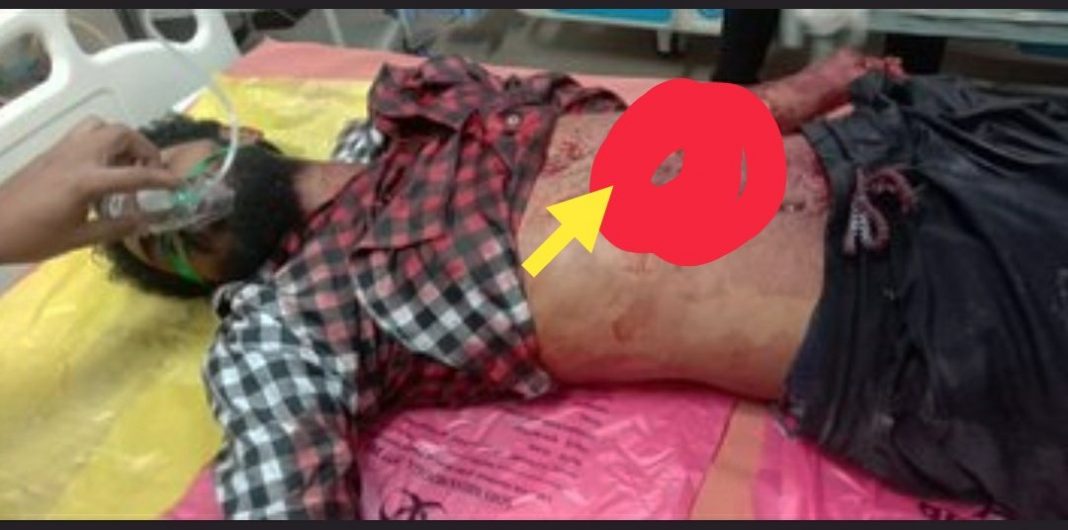
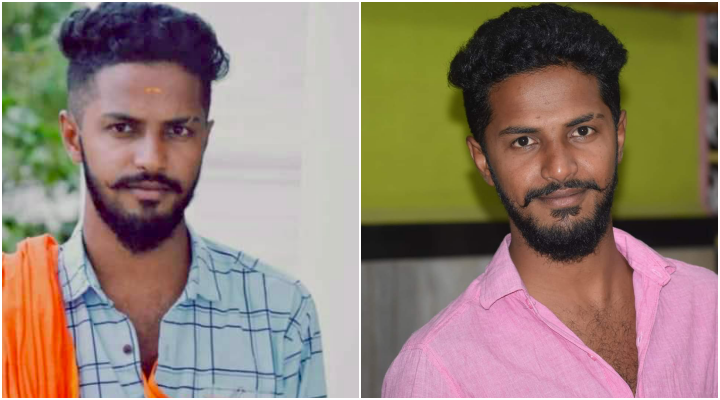
Gujarat ATS has detained Maulana Qamar Gani Usmani from Delhi in connection to the murder case of Kishan Bharwad. Usmani is accused of abetting Kishan’s murderer Shabbir. Gujarat Police, on the other hand, have recovered the weapon used in the murder.

As per reports, Usmani had given an inflammatory speech and incited Shabbir to kill Kishan. Usmani is associated with Tahreek Farogh-e-Islami or TFI. Last year, he was arrested in the Tripura riots case as well. According to a report by News Nation, Shabbir has told Police that Usmani had told him that if he found anything blasphemous, it was his right to pick up weapons and take action. News Nation further added that Gujarat Police has claimed Usmani’s organisation has links to Pakistani terrorist organisation Tehreek-e-Labbaik.

Earlier, the pistol and bike used in Kishan’s murder were recovered in the area near Sir Mubarak Bukhari Dada dargah in Dhandhuka by Gujarat Police. Two suspects, Shabbir and Imtiyaz, helped the police in recovering the weapon and bike. As per reports, both of them used the bike as a mode of transport to kill Kishan. Shabbir fired the shot while Imtiyaz drove the bike. The weapon and ammunition were reportedly given by Maulvi Ayyub of Ahmedabad’s Jamalpur region. He was also arrested by the police.

Gujarat Police has also apprehended Wasim Sama and Zubair, the brothers of another accused Azim from Morbi, for interrogation. Maulvi, who resided in Ahmedabad, had got a pistol from Azim. However, as per local media reports, by the time police reached Thoral to arrest Azim, he had escaped. Two of his brothers, who police believe are also radicalised, are taken into custody and are being investigated.

Kishan, who was shot dead in Dhandhuka while riding his two-wheeler, had allegedly published a post on social media where he had added a picture of Prophet Muhammad. Kishan was killed as retaliation to this alleged blasphemous post on social media, for which he had later apologised on camera. Reportedly, Kishan had shared a video on social media which had an image of Prophet Muhammad. Sharing such an image is considered blasphemy and usually beheading, killing of people who share such an image is considered as justified punishment by Islamists. Therefore, even after Kishan had apologised, it was not deemed enough, and he was killed for the ‘blasphemy’.

Who is Maulana Qamar Gani Usmani?

Maulana Qamar Gani Usmani is the chief cleric of Tahreek-e-Farogh Islami or TFI. He was arrested in connection to the Tripura riots along with three associates in November 2021. He was booked under relevant sections of IPC and UAPA. He had spent 21 days in jail before getting bail in the case. After getting bail, Usmani said in a speech he never asked Allah to free him from jail. He said, “It was Allah’s grace that I got bail in 19 days even though people do not get bail even after six months if they are booked under UAPA.”

In February 2021, Usmani had justified the murder of Kamlesh Tiwari. He had said, “There is a conspiracy to ruin the lives of Muslims. There is an attempt to make India just like Spain. To achieve it, they are testing how much Muslims in India love their Prophet. This is why Kamlesh Tiwari was asked to do blasphemy. If you remember, that time people had come to roads to protest. There was fear someone would kill Tiwari, so he was sent to prison.”

He added it was not a punishment but an attempt to save Kamlesh Tiwari from getting killed. Tiwari was killed in cold blood in Lucknow on October 18, 2019.

Canadian PM Justin Trudeau goes into hiding as farmers join truckers in protest against vaccine mandate

On Saturday (January 29). Canadian Prime Minister Justin Trudeau and his family have moved to a secret ‘undisclosed’ location in Ottawa, citing security concerns, after thousands of truckers carried out protests in the city over vaccine mandates of the Canadian government. The protests by truckers received a boost after farmers also joined them with their tractors, worsening the situation for the PM.

As per reports, Trudeau and his family had to vacate the Rideau Cottage in the New Edinburgh neighbourhood of Ottawa due to its close proximity to the protest site. The Office of the Prime Minister refused to comment on the development, highlighting security reasons. Accordingly, the Canadian Prime Minister’s travel itinerary has been tweaked to replace the ‘city name’ with ‘national capital region.’ It must be mentioned that Trudeau has been in isolation for being in contact with his Coronavirus infected child.

CBS reported that the decision to move the Prime Minister was taken in the backdrop of the Rideau Hall gate crashing attack of 2020 during which a Canadian armed forces member named Corey Hurren (46) crashed his car into the gates of Trudeau’s residence. Fortunately, the Canadian Prime Minister was not home at the time of the incident. Hurren was armed with several weapons including a rifle.

The Trucker Freedom convoy in Ottawa

Reportedly, a convoy of 2700 trucks had entered Ottawa on Saturday to protest against the ‘undemocratic’ Covid-19 policies of Justin Trudeau including mandatory vaccination for truckers entering Canada through the US-Canada border. Dubbed the ‘Freedom convoy’, it has amassed support from all sections of the public including prominent people like Donald Trump Jr, Joe Rohan and comedian Russel Brand.

The truckers entered the Canadian capital city from all sides and blocked a main street near the Canadian Parliament. The protests initially began in the Western part of the country after the government directed mandatory 14-day home quarantine for unvaccinated truckers, who have crossed the US-Canada border. They have received support from conservative groups, opponents of Trudeau and the protests quickly gained momentum in other parts of Canada as well.

As per reports, the truckers have been camping near Parliament Hill and demanding reversal of all vaccine mandates in the country. A truck driver Harold Jonker told BBC, “We want to be free, we want to have our choice again, and we want hope – and the government has taken that away.”

He further added, “The intent is actually to stay until all these mandates are dropped. Some people can stay one day, some people can stay five days but all the truck drivers are used to camping in their trucks all week long. We are staying here until we can go back to work.”

While speaking about the matter, Ottawa police chief Peter Sloly informed, “The demonstrations this weekend will be unique – fluid, risky and significant. They are national in scope, they’re massive in scale.” He had hinted at the possibility of ‘lone wolf attacks’ amidst the protests.

The Canadian government ended the truckers’ exemption to the vaccine mandate, meaning Canadian truck drivers need to be fully vaccinated if they want to avoid a two-week quarantine and pre-arrival molecular test for COVID-19 before crossing into Canada.

Farmers join truckers

In the meanwhile, now farmers in Canada also have joined the truckers in the protest against the mandate. Videos shared on social media show farmers in their tractors marching onwards Ottawa to join the blockades and protests.

According to updates by Twitter users, hundreds of farmers have already arrived in Ottawa in their tractors.

Justin Trudeau and impact of vaccine mandates

Earlier on Friday (January 28), Justin Trudeau refused to relent to the demands of ‘fringe groups’ and dismissed the concerns of truckers as ‘unacceptable views.’ He remarked, “What we are hearing from some people associated with this convoy is completely unacceptable. We know the way through this pandemic is to get everyone vaccinated. The overwhelming majority, close to 90 percent of Canadians, have done exactly that.”

His stringent vaccine policy comes at a time when Canada is grappling with rising inflation and supply chain issues, caused due to Coronavirus pandemic, bad weather and labour shortage. It must be mentioned that Canada’s economy is heavily dependent on truckers who transport food and grains from across the border. According to the Canadian Trucking Alliance, the new vaccine mandate can remove about 16000 drivers from the roads.

‘Insinuation about India’s UN vote is utter rubbish’, India’s ex-envoy to UN slams NYT over Pegasus report, says he was not approached for comments

Syed Akbaruddin, former Permanent Representative of India to the United Nations, has said that a New York Times Report connecting India’s vote in UN on Israel with the purported purchase of the Pegasus software from Israeli company NSO is utter rubbish. “The insinuation about India’s UN vote is utter rubbish…”, he tweeted reacting to a tweet posting the NYT article.

In the report on how Israel was using the Pegasus software for diplomatic leverage, NYT had insinuated that India’s pro-Israel vote in the UN was linked to the purchase of the software. However, Syed Akbaruddin, who was the Permanent Representative of India to the United Nations during that period, has completely denied the allegation.

The former diplomate reiterated it today, saying that the insinuations about India’s UN vote are erroneous. During an interview with NDTV, Akbaruddin said NYT never approached him about India’s vote favouring Israel in the UN in 2019. In its report, New York Times had said, “In June 2019, India voted in support of Israel at the UN’s Economic and Social Council to deny observer status to a Palestinian human rights organisation, a first for the nation.” NYT has speculated here that India voted in favour of Israel in exchange for alleged access to Pegasus spyware.

‘I am amused’ said Akbaruddin

Akbaruddin, who had served as Permanent Representative to the UN in New York between January 2016 to April 2020, said he was amused when he learned about the speculations NYT had made about India’s vote against an NGO at the UN. He said, “It was a mundane case of a Palestinian NGO that came in the NGO committee, which is a tiny committee of the UN ECOSOC (Economic and Social Council).” He added that initially, no country had a problem with the NGO, so it was pushed for approval to ECOSOC.

However, later, several countries came up with evidence of the NGO’s alleged connection with terrorist organisations that were not revealed in the initial submission. He said, “We ourselves have many concerns about NGOs being infiltrated by terrorists. Therefore when this case came up, and my colleague who handles this committee came to me and asked ‘ambassador, what do we do?’ and without blinking an eye, I said, ‘well, if there is a terrorist concern and all they are asking is to delay this to the next meeting so why should we have a problem at all.’ I never consulted anybody. I never asked anybody. I gave the direction because it was in consonance with our policy, and we voted on the right side of the history there.”

He further added no one from Delhi ever contacted him on the matter. It was about an NGO and not about Palestine itself. He said, “I am little surprised that New York Times picked up a disparate vote on a small NGO and linked it to a bigger story.”

‘Nobody from NYT approached me’

When he was asked if he knows NYT ever approached anyone from the Indian mission to get information about the vote, Akbaruddin said, “Both Mike and I have moved on, and NYT certainly did not contact me.”

NDTV reporter questioned if the vote was against India’s stand on two-nation theory in the case of Israel and Palestine, to which Akbaruddin said, “First of all, this was not about the two-nation theory. It was about an NGO. If we looked at it as an issue of NGO that perhaps had terrorist links and a year before we had abstained on the similar thing.” He further added India was working on a framework under which we said every NGO should be vetted for the UN-designated list.

He said, “If NYT was serious, they certainly would have contacted me. I would have said the same thing I am telling you, and the matter would have ended there. Nobody came to me. If this was such a sensitive issue, then somebody would have sensitised me. Or, later on, would have said you have done the right thing. Nobody questioned me over this, and the matter ended there. I am surprised New York Times has done shoddy work on this.”

Rahul Gandhi used the NYT Pegasus story to target the Modi government

NYT published a report on January 28 regarding their year-long investigation into the controversial Israeli spyware Pegasus. The New York Times article mentions how various countries had purchased the software from its maker NSO, which included India. The report says that Pegasus was part of the $2 billion defence deal India had signed with Israel in 2017 during PM Modi’s Israel visit. Unlike the previous allegations regarding the software, the New York Times article does not make any allegations about its misuse.

After the NYT article came up, the Congress party has started attacking to govt over the issue, led by Rahul Gandhi. The former Congress president has alleged that the Modi govt has used the software to spy on primary democratic organisations, political leaders and members of the public. He alleged that the govt had targeted everyone, including govt functionaries, opposition leaders, armed forces and judiciary, by tapping their phones.

However, unlike what Rahul Gandhi and his party are alleging, the New York Times article does not mention anything about how the Indian govt used the software. It just said that along with dozens of other countries, including the USA, India also had acquired the Pegasus software in 2017.

The Supreme Court has already formed a committee to investigate the allegations regarding the use of Pegasus. The court has also asked the people who had alleged that their phones were hacked by the govt using the tool to submit their phones to the committee for forensic analysis of the devices. Several people have submitted their phones accordingly, and their phones were returned after making a copy of the same for analysis. However, it is not known whether Rahul Gandhi has submitted his phone or not.

Despite being a land-rich board, Rajasthan Waqf turns to the state government for paying salaries of employees

The Rajasthan Board of Muslim Waqf has been requesting financial assistance from the Rajasthan government in order to pay its workers’ salaries. This is in strange contrast to the fact that Waqf Board has more than 18000 properties listed across Rajasthan and it generates income from more than 7000 properties.

According to a report in Times of India, the Rajasthan Board of Muslim Waqf (RBMW) has listed approximately 18,000 properties in the state, making it the state’s most land-rich body/board. There are 2,500 buildings in Jaipur alone, including 400 stores. And, despite being the wealthiest organization, it lacks the funds to pay the wages of its 50 employees.

An official in the Board reportedly said “The rental income is generated from over 7,000 properties, 95% of it goes into the hands of the local committees, legal cases and other developmental works leaving the Waqf board with no corpus fund.”

Rafeek Khan, a member of the RBMW and an MLA from Adarsh Nagar, told TOI that he has identified over 100 properties that might produce Rs 1 crore in annual rent. “Over 100 crores could be earned by just 100 properties in the state. The excess sum can be used for development projects like hostels, commercial properties, and community halls,” said Rafeek Khan.

Officials from the Board claim that low property rent is the cause of poor income and that the majority of the funds are allocated locally before reaching the Board. They claimed that RBMW was dependent on state government help and donations to pay the wages of its 50 workers due to its failure to implement a new rent policy, unregulated encroachments, and the transfer of its assets from the revenue board.

The Rajasthan government had decided on January 18 that it will invest Rs 5 crore in the construction of boundary walls of waqf property or graveyards, madrasas, and schools belonging to the minority population. This comes after CM Ashok Gehlot approved a Rs 98.55 crore package on Monday, specifically for the development of the state’s minority community.

‘Will promise in manifesto that sugarcane farmers will be paid with interest if payments delayed’: Amit Shah in Saharanpur

Union Home Minister Amit Shah said on Saturday 29th January 2022 in Saharanpur that if BJP is elected back to power in Uttar Pradesh, the sugarcane farmers will get paid with interest if their payments are delayed. He added that this assurance will be added to the manifesto of the party. Amit Shah was addressing the voters of Saharanpur in a program. He said that he is informed by a few farmers that sugarcane payments are getting delayed. He said, “We have decided that in the manifesto of the BJP, we are going to announce that in case of delay in clearance of payments, the interest for the delay will be recovered from the sugar factory and the payment of sugarcane along with interest will be paid to the farmers.”

Targeting the former governments of SP and BSP, Amit Shah said “There were 42 sugar mills in the state. 21 of them were closed by the SP and BSP. Also, there was no continuous power supply before BJP came to power in 2017. Our government has worked to provide uninterrupted power supply in the cities and a daily 22-hours power supply in the rural areas.”

Akhilesh Yadav had earlier doubted the made-in-India COVID-19 vaccines and later he took the same vaccines. Criticizing this, Amit Shah said “The maximum number of vaccinations took place in Uttar Pradesh. You misguided people about the vaccines that you took later. We are working to provide food to the people. What did you do except send the food grains directly to Nepal via Gorakhpur?”

As the campaign fever is on the rise in western Uttar Pradesh which will undergo the elections in the first phase on 10th February, Amit Shah recalled the riots which were a part of the routine life in western Uttar Pradesh under the SP regime. He said, “Those who were involved in the rights were made victims and the victims were made accused and put behind the bars, just for the sake of appeasement.”

Underlining the differences between the styles of governance of the SP government and that of the BJP government, Amit Shah said “The SP government gave a mini chief minister, a strongman (bahubali), a scam and a riot to each district during its rule. On the contrary, our government gave a product, an industry, and a medical college to each district.”

Kishan Bharwad murder: Pistol, bike recovered near dargah, ATS to conduct probe

The pistol and bike that were used to kill Kishan Bharwad were found in the area near Sir Mubarak Bukhari Dada dargah in Dhandhuka by Gujarat Police. Shabbir and Imtiyaz, the suspects, helped the police reach the location behind the Dargah. Both were riding a motorbike on January 25 with the purpose to kill Kishan Bharwad. Shabbir fired shots at Kishan while Imtiyaz was riding the bike. The weapon and ammunition were reportedly given by Maulvi Ayyub of Ahmedabad’s Jamalpur region. He was also nabbed by the police.

On Thursday, Ahmedabad Police detained two people and found connections between two Maulvis in the January 25 murder of 27-year-old Kishan Bharwad. The murder was carried out under the direction of two Maulvis, one from Ahmedabad and the other from Mumbai.

These men plotted and carried out a plot in retaliation to Kishan’s social media remark, for which he had later apologized on camera. Gujarat Police has also apprehended Wasim Sama and Zubair, the brothers of another accused Azim from Morbi, for interrogation. Maulvi, who resided in Ahmedabad, had got a pistol from Azim. However, as per local media reports, by the time police reached Thoral to arrest Azim, he had escaped. Two of his brothers, who police believes are are also radicalised, are taken into custody and are being investigated.

Kishan was shot dead in Dhandhuka while riding his two-wheeler with his cousin through the Modhwada area. According to reports, Kishan allegedly published a post on a social networking platform that Muslims deem insulting. According to sources, Kishan’s social media video included a picture of Prophet Muhammad. Beheading or killing individuals who post such a picture is usually deemed blasphemy, and Islamists justify killing those who share such an image.

The crime was brought to light after the victim’s cousin, Bhaumik, filed a police report, claiming that the murder was linked to Bharwad’s social media post from 15 days prior.

The Gujarat Anti-terrorism squad will now be taking over the investigation. The ATS will also investigate Pakistan connection in the murder of Bharwad. As per local media reports, two suspicious masjids were also searched by the ATS. The report also suggests that Bharwad’s murder was likely not done on just the maulvi’s instructions, but it could be part of larger conspiracy where sleeper cells of such radicalised group may have played a major role.

It is about time we talk about the 1948 genocide of Maharashtrian Brahmins that followed M K Gandhi’s assassination

The aftermath of violence that spread after Mohandas Gandhi’s assassination is finally making gradual waves to the mainstream national discourse. However, the flames haven’t been distinguished and the pains have been preserved. The silencing of voices that followed one of the first large-scale massacre in Independent India accounts for one of the biggest coverups in modern history. It is need of the hour, that we talk about the crimes against Brahmins of Maharashtra that erupted after MK Gandhi’s assassination in 1948.

1948 Brahmin massacre in Maharashtra

M K Gandhi was assassinated by Nathuram Vinayak Godse on January 30, 1948 in Delhi. The news sent shock waves across the country. Nathuram Godse belonged to an orthodox Chittapavan Brahmin family living in Pune.

Resentment against the Brahmins had already been cultivated by this time, as a response to their hegemonical hundred-year-old rule under the Peshwa family. As soon as the family and caste details of Godse were made public, violence abruptly outpoured in major cities of Maharashtra. Starting with Pune, the wildfire spread across Brahmin localities in Pune with as many as 50 Brahmins identified and killed on 30th January 1948 itself.

The New York times had already reported the news of ‘fifteen persons killed with more than fifty injured’ in communal riots that ‘swept’ the city of Bombay on the next day. The spurge of violence reached quickly to other cities in southern and western Maharashtra, while Nagpur in Vidarbha emerged as a hotbed of violence too.

Persecution of Brahmins after M K Gandhi’s assassination

Advocate P.L.Inamdar as quoted in Vikram Sampath’s Savarkar Vol. II had noted the primary reason behind persecution of Brahmins; which being Nathuram Godse, who killed Gandhi belonged to the Chittapavan Brahmin community in Maharashtra. Writing about the ‘manhunt’ that followed the assassination, Inamdar said, “Some of my close relatives living in southern districts of Maharashtra were being made victims of this manhunt only because they were Maharashtrian Brahmins. They escaped being lynched only by the sheer chance of not being found in their houses at the time of the raids.”

Talking about the violence that erupted in Nagpur, which was part of the Central Provinces then, Dwarka Prasad Mishra, a senior Congress leader himself, wrote unapologetically in his memoirs about the mayhem that followed. He wrote, “Those who indulged in unlawful activities also included a large number of Congressmen belonging to non-brahmin communities. In fact, in Nagpur and Berar the troublemakers were mostly Congressmen, some being even office bearers of various Congress Committees.”

While the media of the time had turned a blind eye to the events that were unfolding, state pressure to disencourage any recording of the events also accounted for the dearth of resources available today. It was only after British Journalist Maureen Patterson who was researching on the aftermath of Gandhi’s death in India, wrote decisively about the violence against Brahmins of Maharashtra in 1948 that people started talking about it.

Patterson has recorded several instances of targeting, riots and disturbances which directed to the cleansing of Brahmins from Maharashtra’s rural interiors. She recorded that magnified violence that also spread in the Deccan cities like Satara, Kolhapur and Belgaum. A conservative estimate of total damage around Rs. 6 to 10 crores by the violent activities was calculated by the scholar based on unofficial numbers and anecdotal publications.

While the violence started with targeting of people surnamed ‘Godse’, the casteist ire quickly spread categorically across all subcastes beyond the Chittapavans (Konkanasthas) to Deshastha and Karhade Brahmin communities in Maharashtra as well. As reported, veteran journalist Gajanan Tryambak Madkholkar lost his home and premises of his newspaper publishing house in Nagpur to the violence. In Kolhapur, renowned film maker of the times, Bhalji Pendharkar – a Karhade Brahmin suffered a huge loss with damage to his studio. Property damages, burning of homes, mills, factories owned by brahmins was rampant in Kolhapur, Sangli and other districts.

Anti-Brahmin resentment in Maharashtra

While analysing aftermath of MK Gandhi’s murder, there appears to be a combination of multiple narratives under play which culminated into the anti-Brahmin violence. At the outset, it was the Gandhian Ahimsa-vaadis themselves who retorted to mass violence as a tool to avenge his murder. As mentioned earlier, Dwarka Prasad Mishra had confessed as a member of Congress himself, about the role of ‘Congressmen’ in leading the violence against the Brahmin community. They were later joined by leaders from the non-Brahmin communities who had a personal axe to grind against the ‘influential’ Brahmins who made their fortunes in the 18th and the 19th centuries.

A community which has historically consolidated not more than 4-5% of Maharashtra’s population, rose to considerable influence and power when the Shrivardhankar Bhat family ruled the Maratha Empire as Peshwas or Prime Ministers. With the rise of the Peshwas, Brahmin community weilded a hegemonical control over many walks of life as mercenaries, money lenders, businessmen and over other service related activities related to the intellect.

Over the time, this outpoured into a resentment against the community which was also fueled by the staunch discriminatory practices against the lower-castes upheld during the times. So much so, when an undecisive battle at Bheema-Koregoan was led by the Mahar battalion in the English army against the Maratha Empire, it was touted as the victory of ‘lower castes’ over the ‘Brahmin’ Peshwas. The archaic resentment against the Brahmins joined by violence perpetrated by the angry Congress led to the apocalyptic mayhem after January 30, 1948.

The modern state of Maharashtra continues to disengage with the stories of pilage of Marathi Brahmins that took place during the reigns of the Bombay state presidency. The Congress leaders which took part in the genocidal violence continue to keep their strongholds in parts of the newly formed state, with their heirs holding ministerial ranks in the state cabinet. The local politics thence continued to propel the narrative of a ‘progressive Maharashtra’ lead by the ideals of ‘Shahu-Phule-Ambedkar’ while suitably leaving no space for leaders from the Brahmin community. The aftermath of the violence also explains the plight of the Brahmins from the villages and their rapid migration into the cities, as many families succumbed to threats during the 1960s. Even today, the Maharashtrian Brahmins as a minority community do not hold much say in the politics of the state dominated by the Marathas and the Kunbis.

The unheard voices which suffered the violence have chosen to stay silent and move on. It all started from a group of Hindu-nationalist men from the Brahmin community, killing Gandhi over his policies regarding the partition. Neither Godse’s ideology nor his caste identity had anything to do with his justification of the murder. Yet, the consequences of this mindless act were suffered by Hindu nationalists and the Brahmins unsparingly.

Moreover, it was ironical that the upholders of the ‘absolute non-violence’ ideology – followers of Gandhi himself, presided over one of the first hate crimes that happened in Independent India. The episode of violence against Brahmins in Maharashtra was the first blot on the legacy of Mohandas Gandhi as an upholder of peace and non-violence. The state headed by the Congress party, is equally complicit in erasing the traces of truth from the mainstream. History, however has a window of opportunity to heal the silenced wounds. Sheer acknowledgment of the brutal violence, lead by hate against the Maharashtrian Brahmins as a genocide would go a long way.