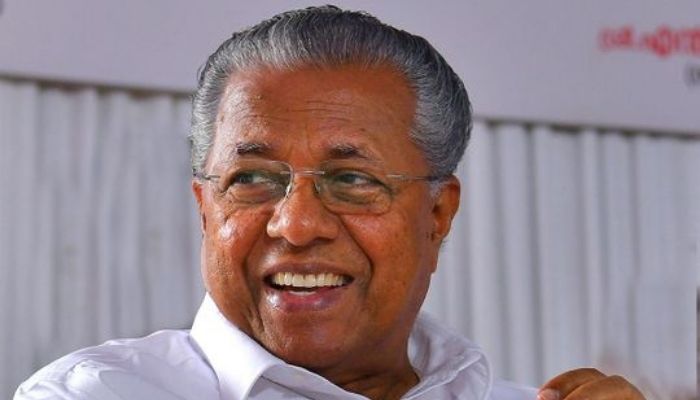
The Kerala government has introduced a draft bill that will enable the State police to snoop on anyone without prior approval from competent authorities, reported The Hindu.
In a bid to ‘curb organised crimes’, the Pinarayi Vijayan government has prepared the draft legislation of Kerala Control of Organised Crimes Act. The bill empowers police officers, equal or above the rank of Additional Director General of Police (ADGP) to direct snooping of any communication (wire, oral or electronic) after receiving an application from an investigating officer. Such an application must be submitted within 48 hours of interception of ‘organised crime’ and contain names of the investigating/supervising officers, the identity of the suspects, nature and location where the ‘snooping’ has to be carried out.
One of the criteria to permit such snooping is that the police official (ADGP or above its rank) must ‘reasonably determine’ its need in the face of an emergency situation, threatening the security of the State. However, the interception process will cease immediately if the order for the same is not approved or the application gets rejected. In such a case, the collected information should be destroyed and the interception process would be discontinued.
Final draft bill to be reviewed by panel led by Kerala Chief Secretary
Such an order by the ‘competent authority’ if approved will be reviewed by a panel led by the State Chief Secretary within a period of 10 days. Moreover, the draft bill made it clear that the ‘collected evidence’ would be admissible against the suspect in the particular case of organised crime. “The contents of the intercepted communication shall be, if possible, recorded on tape or wire or other comparable devices. The recording shall be protected from editing or other alterations,” The Hindu quoted the draft legislation. The final draft bill will be reviewed by a panel led by the Kerala Chief Secretary on Friday (September 10).
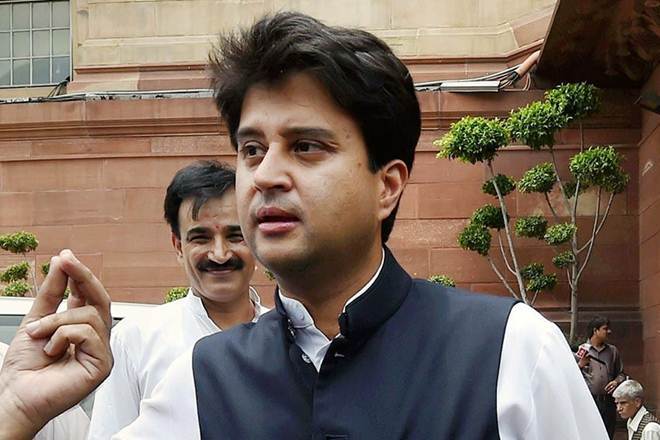
Union Minister for Civil Aviation Jyotiraditya Scindia on Thursday announced a 100-day reform plan for Indian aviation. Scindia announced that 5 new airports are to be operationalised, along with 50 new routes under the UDAN scheme.
Six new heliports are a part of the reform plan too. New terminals with increased passenger handling capacities were announced for Agartala and Dehradun airports.
Speaking at a press conference by the Ministry of Civil Aviation, Scindia announced that the first airport under the 100-day plan will come up at Uttar Pradesh’s Kushinagar, as a major boost to the Buddhist circuit.
The airport at Kushinagar is to have the facilities for the successful landing of Airbus 321 and Boeing 737 flights.
Of the 50 new routes announced under the UDAN scheme, 30 are to be made operational by October itself, as per the ministry.
“A second airport terminal will be set up at Dehradun airport. Rs 457 crore are being invested in the construction of it. The new terminal building will be able to handle 1,800 passengers compared to 250 passengers currently,” Scindia stated.
A new terminal is to come up at Agartala, Tripura. The new terminal, with estimated costs of Rs 490 crores, is to take up the passenger handling capacity from 1200 per hour, compared to current capacity of 500/hour.
“A major airport will be constructed up at Jewar in Greater Noida, Uttar Pradesh. This is an ambitious project not only for Uttar Pradesh but entire India. The airport at Jewar will be a Rs 30,000 crore worth project”, announced the Civil Aviation Minister.
Apart from Kushinagar, the other new airports are to come up at Keshod (Gujarat), Gondia (Maharashtra), Sindhudurg (Maharashtra), and Deoghar (Jharkhand), as per reports.
Apart from the airports, 6 Heliports are to be developed in Uttarakhand and Himachal Pradesh under UDAN. A new policy on maintenance, repair and overhaul activities has also been announced. The heliports are planned at Sanjoli, Sase, Baddi, and Mandi in Himachal Pradesh and Haldwani and Almora in Uttarakhand, the MoCA announced.
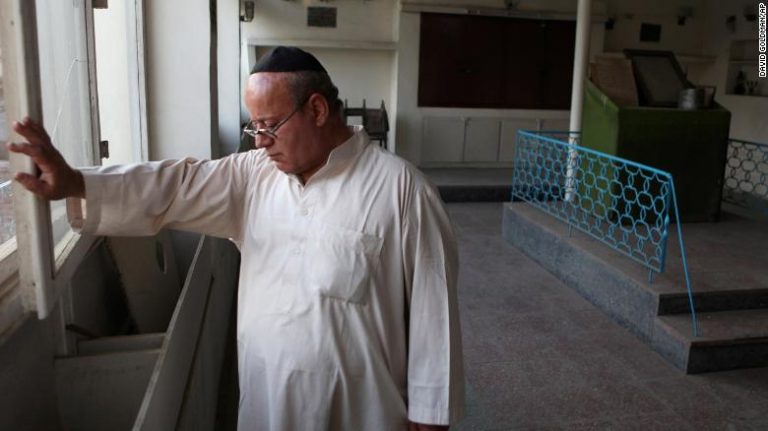
After the Taliban took over, Afghanistan saw a mass exodus of minorities communities like Hindus and Sikhs. Now, according to a report, the last Jew of Afghanistan has also left fearing violence by the Islamic regime of the Taliban, which is imposing strict Shariah in the country. Reportedly, his evacuation was organised by an Israeli American man.
Zebulon Simentov, the last man from the Jewish community in Afghanistan, was evacuated by Moti Kahana, who runs a US-based private security firm. 10 days before his departure, the security firm had approached him and asked him to leave Afghanistan fearing violence not only by the Taliban but also by ISIS-K. Simentov had refused to leave at that time, just as he had refused to leave for decades, even during the previous Taliban regime.
According to reports, he is not living in a ‘neighbouring country’ and eventually, wants to go join his family in New York. While leaving Afghanistan, he had asked the security agency if his friends can also accompany him in fleeing the Taliban regime, and thus, he began his journey joined by 22 others.
Over the years, according to the report, all of his relatives left Afghanistan, including his wife and two children, leaving him behind. He had, all these years, kept the legacy of the Jewish community alive. He used to mark the Jewish new year by praying in the last synagogue in Kabul.
“I have resisted. I have made the religion of Moses proud here,” he told AFP during an interview earlier this year.
Hindus and Sikhs fled the Taliban regime in Afghanistan
On August 15, 2021, the Taliban terrorists walked into Kabul, facing no resistance from the Afghan armed forces and declaring themselves as Afghanistan’s rulers. Panic and fear had swept across the country after the fall of Kabul, following which a multitude of city residents flocked to the airport, in a desperate attempt to fly out of the country.
With India anticipating a humanitarian crisis emerging in Afghanistan, it had already laid the groundwork for initiating a swift evacuation campaign. Indians were dogged by primarily two concerns. Firstly, it didn’t share a contiguous border with Afghanistan, which meant that the evacuation had to be carried out at a broader level with an all-embracing approach. Secondly, India had no security footprint in Afghanistan.
“Our overriding concern was the security of our officials on the ground. So we prioritised it in our plan to exfiltrate them from Afghanistan should the Taliban gets hold of the country,” TOI quoted a senior official as saying, who wished to remain anonymous because of being unauthorised to speak on the issue.
During a press briefing on the 27th of August, the Indian government informed that so far, they have evacuated 550 people from Afghanistan in 6 flights. Out of the 550 people, 260 were Indians.
“We have evacuated over 550 people in 6 separate flights, either from Kabul or Dushanbe. Of these, over 260 were Indians. GoI also facilitated evacuation of Indian nationals through other agencies. We were in touch with various countries, like [the] US, Tajikistan,” said Arindam Bagchi, spokesperson for the ministry of external affairs (MEA), news agency ANI reported.
Further, the ministry said that the “vast majority” of Indians who wanted to return from Afghanistan have been evacuated out of the country. However, Bagchi said that he did not have the exact count of people who wanted to remain in the country. “Our overall assessment is that the vast majority of Indians who wish to return have been evacuated. Some more are likely to be in Afghanistan. I do not have the exact number for that,” he said.
Even before PM Modi scripted history in the 2019 general elections, the Congress party and its friendly had pulled out every trick in the book to besmirch the central government. From the Award Wapsi saga to the farce of rising intolerance to the outrageous allegations of corruption, the Congress ecosystem employed elaborate measures to dissuade people away from the Modi government.
However, as the results of the 2019 General Elections indicated, far from discouraging people from voting against the PM Modi-led NDA alliance, the spurious campaign led by the Congress party and its ecosystem of left-liberal intelligentsia proved to be devastatingly counterproductive. Not only did PM Modi stormed back to power, but he did so in an emphatic manner.
For the first time in over three decades, a political party won more than 300 seats on its own. Naturally, such a humiliating defeat for a second time in a row would have sparked introspection, but for its bunch of loyal supporters, Congress is beyond reproach and criticising them is sacrilegious. Therefore, they instead turned their ire against the Modi government and doubled down on their efforts to run them down.
Besides blatantly fear-mongering, peddling lies, disinformation, and hurling unsubstantiated allegations, a key part of their campaign against the Centre entailed denigrating the independent media houses and journalists who refused to toe their line as ‘Godi Media’, a pejorative reference to media channels that insufferable left-leaning “intellectuals” accuse of being prejudiced in favour of the Modi government.
Congress ecosystem launch a concerted campaign to undermine nonconformist media organisations
Congress functionaries, their ground supporters, luminaries of the left ecosystem, and their online supporters worked in tandem to vilify the non-pliant journalists and defame the media organisations and accuse of them working in cahoots with the Modi government.
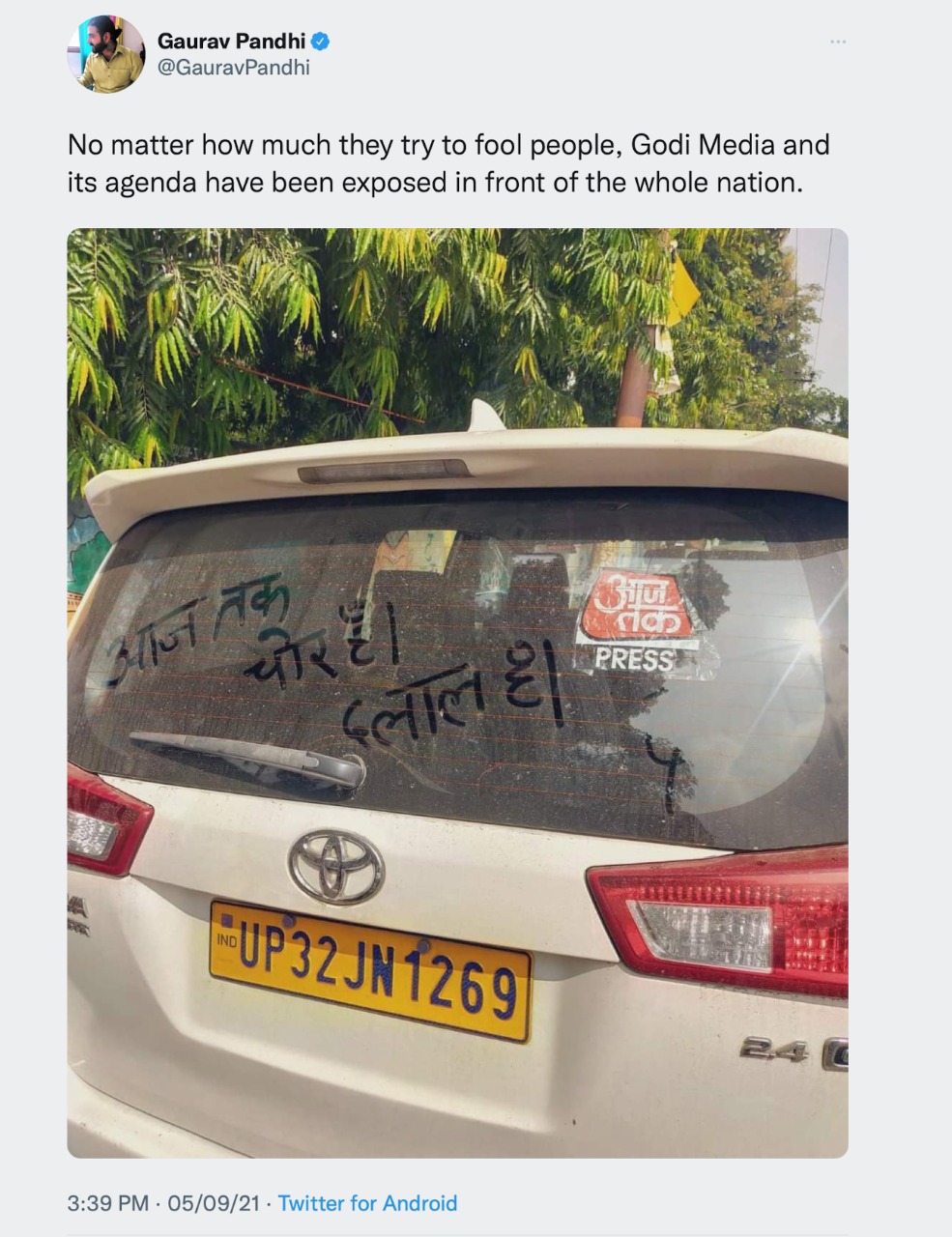
Congress leader Gaurav Pandhi, a habitual fake news peddler, continuously uploads tweets that are critical of journalists who report positive stories about the work done by the central government. In his efforts to tarnish the reputation of such media houses, Pandhi recently shared an image insinuating that Aaj Tak is a thief and an agent.
Source: Twitter
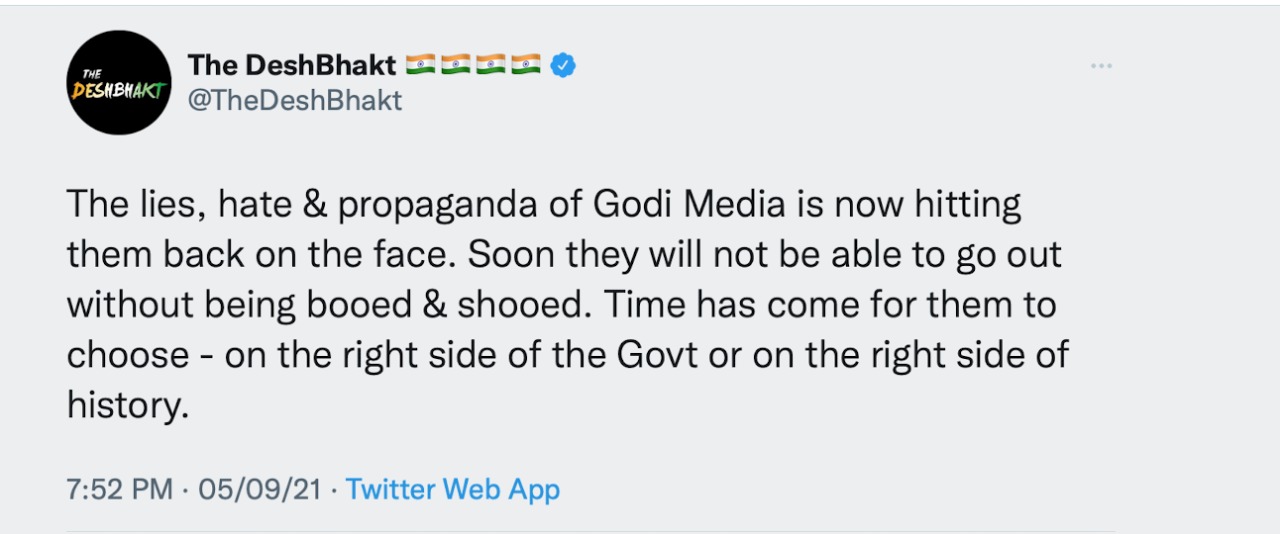
Similarly, Akash Banerjee, a quintessential left-leaning propagandist, also weighed in to criticise media organisations critical of the Congress party and sermonised them to mend their ways or risk being on the wrong side of history.
Source: Twitter
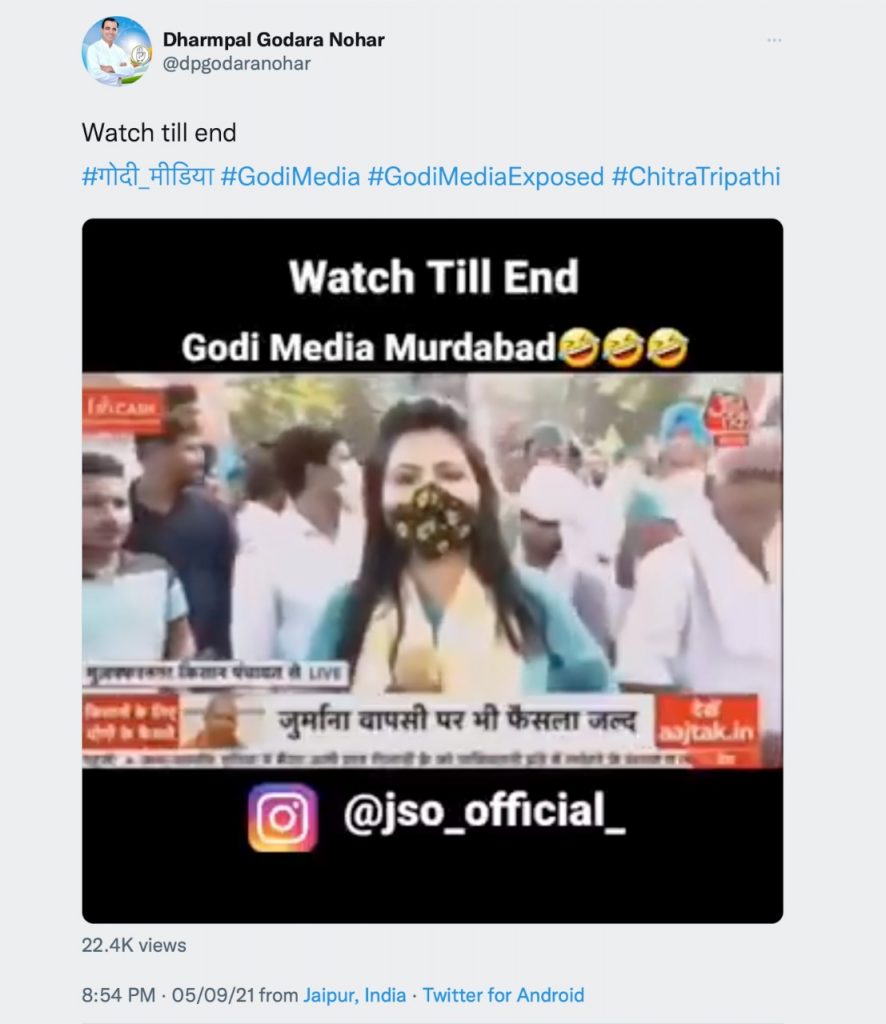
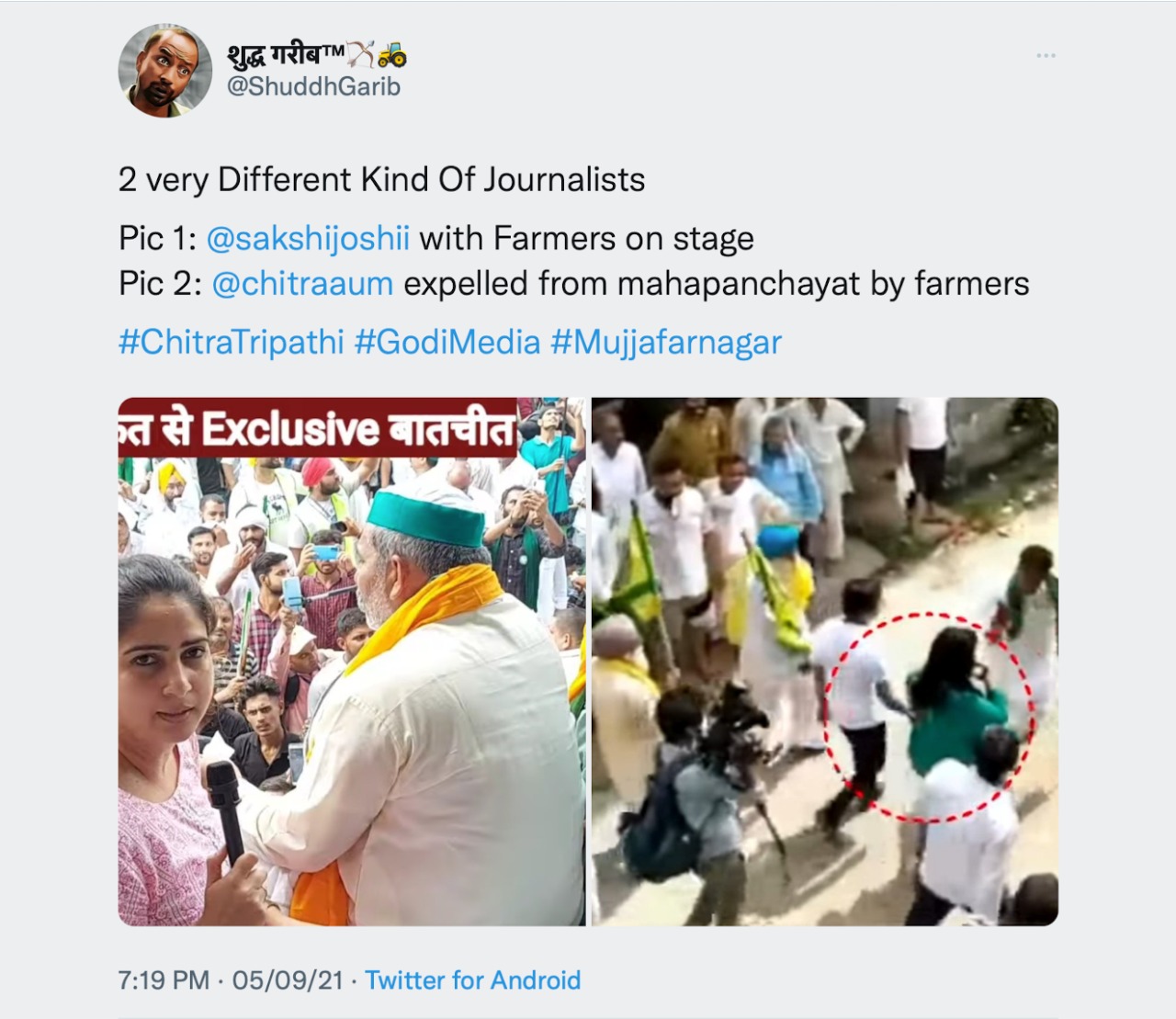
Congress functionaries also contributed to the party’s cause of deflecting criticism by blaming the media as a sellout. Dharmpal Godara Nohar, a Congress leader, recently gloated over the unbecoming treatment meted out to Aaj Tak journalist Chitra Tripathi at the farmers’ protests where she was heckled and harassed. It is worth noting that Tripathi later even tried to exonerate the hoodlums by normalising the heckling and harassment she faced. But for the Congress party, she was a part of their imaginary construct ‘Godi Media’.
Source: Twitter
Then, there were social media anonymous handles associated with the Congress party, who scramble to divert genuine criticism of their the party and their supreme leader Rahul Gandhi by accusing the critics, either a journalist or a news channel, as biased and a mouthpiece of the BJP. For these deluded folks, who view everyone with the binary prism, those who try to oppose their party narrative, even with solid facts and information, are a fair-game that deserve to be name-called, rubbished and mocked.
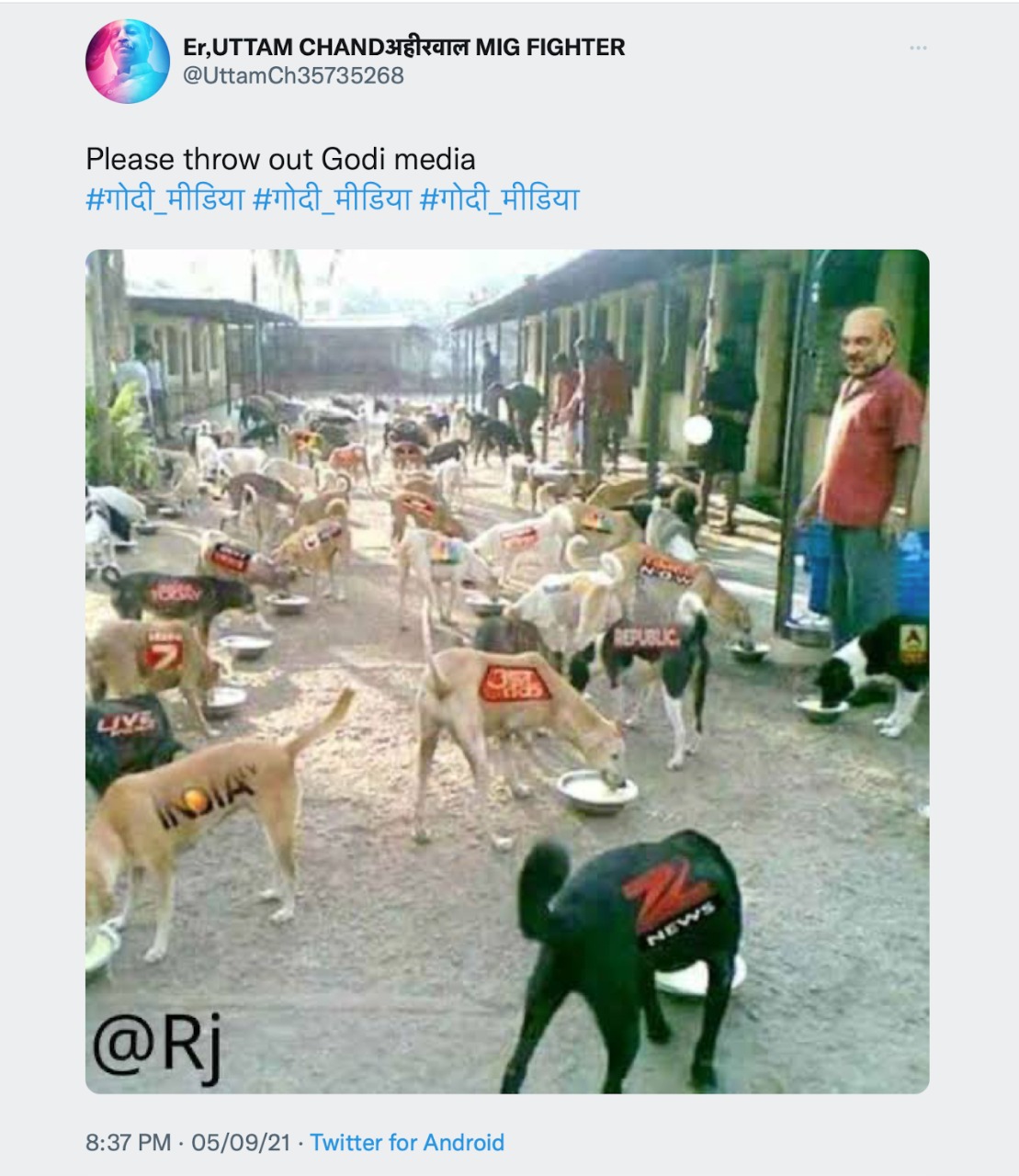
One of the social media users, who seemed to align with the Congress ideology, shared a picture likening dogs with media channels for not hating on the Modi government.
Source: Twitter
Thus, not being a Modi hater has become the latest touchstone to attract the tag of ‘Godi Media’. Any such channel that emphasises reporting events based on facts or is not “sufficiently” critical of the Modi government is summarily branded as ‘Godi Media’ by the members of the Congress ecosystem. Moreover, when such news organisations broadcast or publish any report that shows the Congress party and their leaders in a bad light, Congress leaders and sympathisers fall over themselves to vigorously defend their party and accuse the media channels or publication houses as paid agents of the BJP.
Congress’ trick of deflecting criticism by calling into question integrity of dissenting voices
This is one of the nefarious stratagems that the footsoldiers of the Congress ecosystem have deployed of late—to deflect criticism directed at the party as motivated by political prejudice—and discredit the media organisations and journalists by accusing them of being paid stooges of the government.
By casting aspersions on the credibility of the news organisations and journalists, the left ecosystem effectively tries to push its agenda that dissenting media organisations are all compromised and therefore, they cannot be trusted for providing an impartial and unbiased view of the events. Instead, the ecosystem goes into overdrive sharing spurious and misleading articles published in portals such as NDTV, Alt News, National Herald etc., which are veritably sympathetic to the Congress party and often act as the party’s mouthpiece, dishing out clean chits on flimsy evidence and unabashedly promoting its propaganda.
With almost halfway through PM Modi’s second tenure, the Congress party and its friendly ecosystem have stepped up its campaign against independent media outlets that defied their mandates and refused to act like their marionettes. Ahead of all-important assembly elections in 2022, which would inevitably set the tone for 2024 general elections, the attack on nonconformist media and journalists by the Congress ecosystem has only increased and has got shriller.
Those media outlets who refuse to give in to their bullying are subjected to assault and abuse, with Congress leaders and “intellectuals” indirectly and sometimes directly justifying the harassment and vilification of such entities and individuals. The political discourse is vitiated to such an extent that abuse, assault and name-calling of media houses have become par for course.
In their desperation to topple the Modi government, the Congress ecosystem has now relinquished their last vestiges of human decency. Attacks against opposition leaders, dissenting journalists and non-pliant media houses are rationalised. In fact, there is a staggering normalisation of an abusive culture where naysayers are abused and maligned, just because they refuse to share their irrational antagonism towards PM Modi.
For years now, Congress had relied on its ecosystem and its network of grassroots workers to promote a narrative that favoured the party and establish its electoral supremacy. But that hegemony has not only been challenged but utterly destroyed by the BJP after PM Modi came to power in 2014. However, Congress still haplessly tried to employ its earlier strategy of beguiling people with its propaganda. But they did not yield the desired results as the new age of social media had equipped people with greater agency to counter propaganda and outright lies.
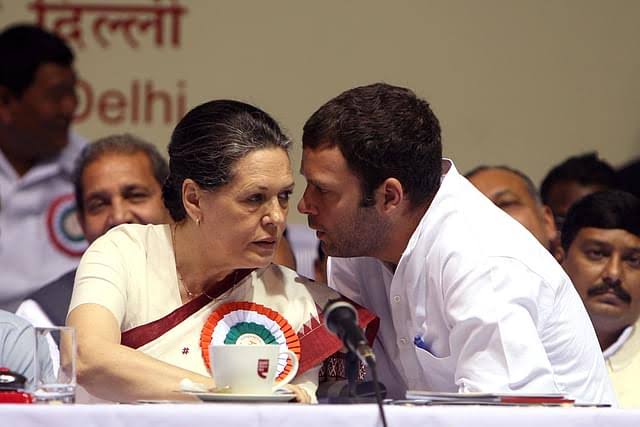
The lack of credible leadership has also added to the miseries of the Congress party. Rahul Gandhi is regarded as one of the most senior leaders of the party, but there is a faction within the Congress party that wants to extricate the organisation from the clutches of the Gandhis. This fratricidal quagmire is largely responsible for the party’s rudderless approach in the months since the 2019 General elections.
Nevertheless, for the anti-Modi lobby, Rahul Gandhi continues to be the most consequential politician, even though his actions have betrayed that he is yet to “come of age” to be granted serious political consideration. But this fact hasn’t stopped the slavish Congress leaders and their lickspittles from deluding themselves into believing that their supreme leader is destined to be the country’s next prime minister.
With numerous defeats in their kitty, some of them being profoundly discouraging and dispiriting, the ecosystem and its adherents seemed to have resigned to the fact that there isn’t an honourable way to mount a campaign against PM Modi. Weighed down by these realisations, the Congress ecosystem has no scruples about resorting to unscrupulous measures in their attempt to turn their delusion into reality. Their ultimate goal is to install Congress back to power. If that entails dehumanising ‘Godi Media’ and egg on assault, abuse against them, so be it.
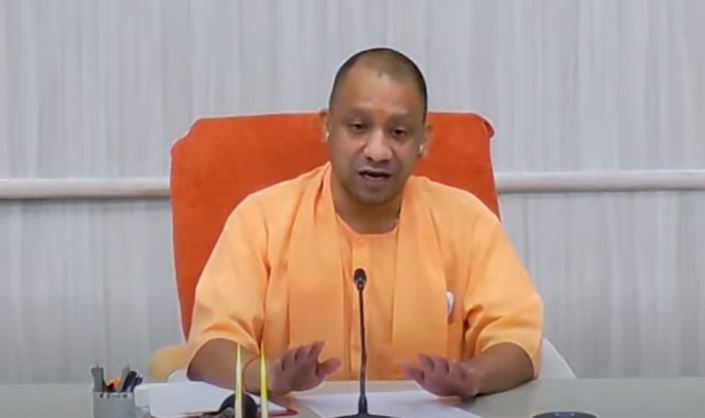
Uttar Pradesh Chief Minister Yogi Adityanath on Thursday, September 9, interacted with several social media influencers. In the virtual meet, the Uttar Pradesh CM took various questions ranging from industrialisation and development in the state in the last four and a half years of being at the helm of affairs, to the law and order, to women empowerment, to the construction of Ram Mandir in Ayodhya and the reclamation of the Shri Krishna Janmabhoomi in Mathura.
Yogi Adityanath opened his speech by praising his social media supporters for frequently debunking leftist lies that sought to delegitimize the BJP government both at the state as well as the centre. Yogi slammed the “Lutyen zone media,” saying he has never been affected by their lies and propaganda since they have no loyalties towards the country.
Law and order in Uttar Pradesh
Yogi Adityanath stated that his government has had a “zero tolerance” policy towards crime and criminals since the day he was entrusted with the state’s responsibilities. According to the state’s chief minister, earlier, between 2012 and 2017, the state witnessed riots every 3 to 4 days on average, followed by month-long curfews and unrest. This had a significant impact on the state’s economic stability. However, since the BJP came to power in Uttar Pradesh four and a half years ago, there has not been a single riot in the state.
Here, Yogi Adityanath remembered how a day before the Supreme Court’s decision on the Ayodhya dispute was announced on November 9, 2019, he told state officials that, regardless of the SC’s decision, there would be full peace in the state. And, as expected, no crime or disruption was reported in the state on that day, according to Yogi.
The Chief Minister of Uttar Pradesh explained how, every person of Uttar Pradesh, regardless of caste or religion, feels protected now. Criminals, on the other hand, are fearful that they will not be spared.
He explained how his government’s stringent law and order measures, as well as the practice of acting ahead of time to prevent crime and criminals, had aided in maintaining a peaceful and disciplined environment in the state. In this context, Yogi mentioned how his government was uncompromising towards the leader who had hailed the Taliban takeover of Afghanistan and had likened their offensive with India’s freedom struggle.
It may be recollected how the Yogi Adityanath government in Uttar Pradesh has on August 18, booked Samajwadi Party MP Shafiqur Rehman Burq on charges of sedition, promoting enmity and hurting religious sentiments for his open support to the Taliban.
The government’s prompt and stern action against the SP leader had not only prompted him to take back his statement and also put such anarchists on the backfoot and the government on the frontfoot, said Yogi.
Yogi Govt prioritising development work in the state
Yogi Adityanath then went on to speak about how his government has prioritised development work in the state in his tenure. He proudly asserted that his government’s efforts made the Prayagraj Kumbh Mela, a celebration of an ancient Hindu tradition, not only a unique event but it also made it to the UNESCO’s Representative List of Intangible Cultural Heritage of Humanity. It hosted 24 crore devotees but nothing untoward happened during the entire event.
The pilgrims and tourists who came to Uttar Pradesh for the Kumbh Mela visited other parts of the state as well. This aided in influencing people’s perceptions of the government. The development was noted by visitors, who were intrigued. This, in turn, aided the state’s development and recognition both domestically and globally, according to Yogi.
The CM added how over the years, Uttar Pradesh has become an export hub due to the ‘One District One Product’ Scheme, which has helped the state’s export level to grow by 32 per cent. The ODOP scheme was launched by the Uttar Pradesh government three years back with an aim to revive the local arts and artisans who were facing an existential crisis.
He also mentioned that an investment of Rs 7,000 crore came in Uttar Pradesh when the whole world was plagued by the Covid-19 pandemic.
UP govt working on intrastate connectivity and infrastructure
The inter-state connectivity has been improved in the state today and all this has been done to improve the infrastructure. This has also increased investment prospects. In 2018, we implemented the innovative ODOP scheme in the state. Today, it has become a popular scheme across the country, said Yogi Adityanath.
“We are laying a network of expressways, national highways. Bad roads connecting state and country borders are being worked on a war footing. Employment opportunities will increase further as the infrastructure has become better”, he added.
Several schemes have been implemented. Efforts are being undertaken to improve industrialization, from supplying tools to giving simple loans. For nearly 2 crore migrant labourers, enough job possibilities have been provided. As a result, all migrant labourers have gladly returned to Uttar Pradesh as soon as the Covid-19 induced lockdown opened.
Understanding the state’s historical and traditional relevance, the BJP government in Uttar Pradesh has prioritised the renovation of several culturally significant properties. This has also significantly helped promote the tourism sector in the state.
Historic sites such as Ayodhya, Kashi, Mathura, Brindavan, Barsana, Gokul, and Chitrakoot are undergoing development and restoration.
Ek Bharat Shrestha Bharat
Yogi Adityanath said that his government has been promoting PM Modi’s ‘Ek Bharat Shrestha Bharat’ initiative that aims to enhance interaction and promote mutual understanding between people of different states/UTs through the concept of state/UT pairing. The states carry out activities to promote a sustained and structured cultural connection in the areas of language learning, culture, traditions & music, tourism and cuisine, sports and sharing of best practices, etc.
He claimed that this was the only way to dispel the myth of communism, an ideology that aims at dividing India. Yogi said that people in West Bengal, Tripura have shunned communism. People in Kerala will also gradually understand the perils of communism.
Govt follows uniform policy of development: Yogi Adityanath
Yogi Adityanath said, that in Uttar Pradesh, his government has followed a uniform policy of development. His government has made sure that not one, but all 75 districts in the state receive 24 hour supply of electricity. Likewise, the BJP state government has ensured that every village in the state receives 18 to 20 hours of electricity.
Similarly, understanding the importance of connecting every Zila or district to a four-lane highway, the state government has made sure that the work for the same is being carried out in a steadfast manner, said Yogi Adityanath.
His government has also identified all the financially backward areas in the state in the last four and a half years and efforts are being made to bring about major infrastructural development in these areas so that they very soon are at par with any other developed area or district in Uttar Pradesh.
Giving an example of Bundelkhand, the CM said that he is extremely happy to share that the development work of the Purvanchal expressway is almost completed and would be ready by next month.
Likewise, the development of the Bundelkhand expressway has also reached its last leg and would be operational by the end of November, informed Yogi Adityanath.
These expressways would prove to become the backbone of these financially less progressive regions, asserted the CM.
Yogi Adityanath added that when his government realised the need to connect East to the West, it started the construction of the Ganga Expressway, which would, once operational, connect Meerut to Prayagraj, giving a big boost to industrialisation, thereby giving a new height to the economy of the state.
The CM went on to say that, because transportation is such a vital part of infrastructure development, Metro service has been launched in four of the state’s largest cities. According to Yogi, the government wants to start Metro service in two more big cities, Kanpur and Agra, by November this year.
Further speaking about the RRTS corridor that is being developed from Delhi to Meerut, Yogi Adityanath assured that development work is being carried out uniformly in the entire state under his guidance.
Women Empowerment a key agenda for Yogi Adityanath govt
After apprising about industrial and infrastructural development in the state, Yogi Adityanath spoke about Mission Shakti- an initiative was launched by the Uttar Pradesh government in October last year with an emphasis on safety, dignity and empowerment of women and girls. It also focuses on the rights of children, sexual crime against women and girls and adoption of orphaned girls.
The CM said that his government has introduced many initiatives dedicated to the security, dignity and empowerment of women and children in the state. He spoke about the formation of anti-Romeo squads “to protect the honour of women”. Though initially, the usual anti-BJP elements tried to malign the initiative, Yogi said that the anti-Romeo squads were steadfast in protecting the women of the state.
Despite the typical gang of detractors who tried to spread rumours and malign the UP govt’s initiative, Yogi stated that the Mission Shakti project is currently in its third stage. He explained how the state government of Uttar Pradesh has established women’s help desks at 1537 police stations across the state. At these help desks, a female police officer is on duty at all times to deal with the complaints of the distressed women who come to them for assistance.
Alongside, as many as 350 Tehsils have the same arrangement. This facility, Yogi claimed has been extended to all gram panchayats also.
Here, Yogi Adityanath said that earlier, the state has very few female police personnel. In his four and a half years of tanure, this number has gone up drastically. Yogi informed that his government has mandated that at least 20 per cent of the police recruits should be female officers. As a result, today the total strength of female police personnel in the state stands to almost 30,000, said the CM.
Yogi added that though these females were deployed, there was a lot of discrimination they had been facing. They were not considered competent enough and as a result, they were not being allowed to work in the field. To overcome this notion, the women police personnel were given posting as ‘beat police officers’ just like their male counterparts by CM Yogi Adityanath.
Yogi Adityanath added how his government adopted strict laws to penalise the practise of female foeticide. He added that though the initiative was a success and it drastically brought down the crime in the state, his government wanted to do something that would ensure that every girl child is respected and treated at power with a boy child.
So his government introduced the ‘Kanya Sumangala Yojana’, added Yogi Adityanath. A sum of Rs 15,000 is deposited at the time of the birth of a girl child under this programme. This will ensure that every family that has a girl child, considers her to be the ‘Ghar ki Lakshmi,’ Yogi said, adding that his government also gives financial assistance to underprivileged girls for marriage ranging from Rs 35,000 to Rs 50,000 under the community marriage scheme.
Yogi Adityanath went on to speak about various other such schemes like the Vridha Pension Yojana, which has benefited as many 29 lakh females and the UP Banking Correspondent Sakhi Yojana 2021, under which door to door banking facilities are provided to women in gram panchayats.
Yogi, speaking about women’s empowerment in the state, said that, despite a 30% quota set for women in the recently ended Panchayat elections, women represent 56% of elected block presidents. Furthermore, women comprise 54% of elected Zila Panchayat heads. This in and of itself demonstrates how women in Uttar Pradesh are gaining support.
Wil happen at the appropriate time: Yogi Adityanath on the reclamation of Kashi Vishwanath Temple
Finally, the Uttar Pradesh Chief Minister addressed the much-anticipated Kashi Vishwanath Temple-Gyanvapi Mosque Dispute. He assured that just as the Ayodhya issue was settled, this one will also be resolved in the due course of time. “Initially many questioned the Ram Mandir Nirman. The way that happened, this too will be done at the right time”, said Yogi Adityanath.
Before ending the interaction, Yogi Adityanath thanked the social media influencers whom he called his ‘Adrishya Suraksha Kawack’. He claimed that they have always aided the government by debunking false and destructive misinformation and narratives spread by the leftist media and government critics in order to demonise it.
The Khilafat movement or the Caliphate movement was of the Indian Muslims against the British colonial rule in India. The movement started by Indian Muslim leaders also sought to restore the caliph of the Ottoman Caliphate in Turkey. In a highly contentious decision, Mahatma Gandhi had announced his support for the Khilafat movement, who himself was leading the non-cooperation at that time. Gandhi had dreamt of achieving Indian independence through ‘Hindu-Muslim unity’, and this had resulted in the Congress party joining hands with the Muslim League against British India. However, the Khilafat movement had died by 1922 due to a change of policy in Turkey.
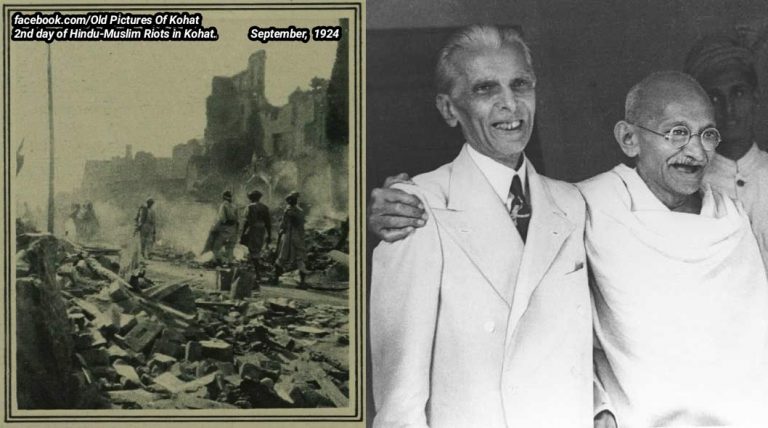
After the Khilafat movement began to fade, communal tension brewing underneath the facade of ‘Hindu-Muslim unity’ surfaced. On the fateful days of September 9th and 10th of 1924, radical Islamist mobs unleashed mayhem in Hindu mohallas (neighbourhood) in Kohat town of North-West Frontier Province (now known as Khyber Pakhtunkhwa) in present-day Pakistan. The carnage was pre-meditated and resulted in the exodus of the entire Hindu population from the area. Since the British depended on the majority Muslim community to maintain their stronghold in the area, it implied that the government of the day turned a blind eye to the treatment meted out to the Hindus.
Kohat had a Muslim population of 12000 while the number of Hindus and Sikhs stood at a mere 5000 (Census 1921). The Hindus were prosperous even though they were outnumbered. The Hindu community lived in urban areas and controlled large businesses. Despite this, a large number of Hindus were being converted to Islam (about 150 conversions each year between 1919 and 1924). The Hindus had the support of the Arya Samaj and the Sanatan Dharma Sabha. Though both the organisations differed in their ideology and outlook, they came together to promote a sense of religious identity among the dwindling Hindu population.
There was widespread resentment amongst the Muslims for the minority Hindus and the Kohat riots were a manifestation of long-standing friction. A fertile ground, conducive to riots, was being created by giving a communal twist to each incident. When the son of one Sardar Makan Singh eloped with a Muslim girl, it motivated the Islamic clerics to give inflammatory speeches and provoke the community. Another dispute over a bathing tank was alleviated as a ‘Hindu-Muslim’ issue.
Press, blasphemy and the foundation of the massacre
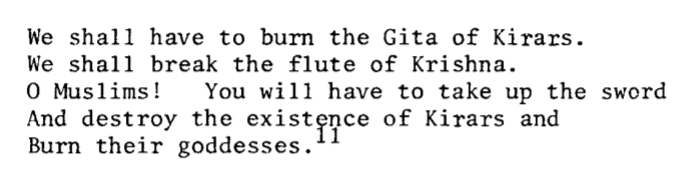
One of the key factors that added fuel to the fire of communalism was the publication of a highly objectionable and ‘blasphemous’ poem in May 1924 by a notorious Muslim-centric newspaper named Lahaul. It read, “We shall have to burn the Gita of Kirars. We shall break the flute of Krishna. O Muslims! You will have to take up the sword and destroy the existence of Kirars and burn their goddesses.“
Screengrab of the contentious poem published in Lahaul
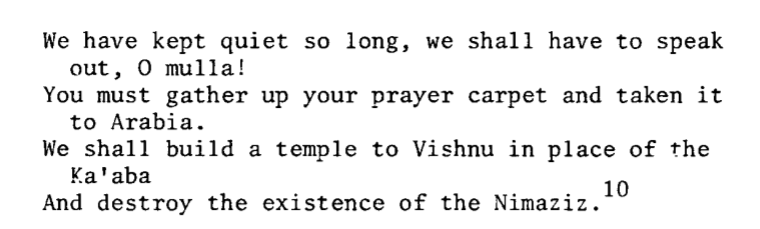
The genocidal poem by a Muslim newspaper hurt the sentiments of the Hindu community and especially the Sanatan Dharma Sabha. The local secretary of the organisation, Jiwan Das, then published a pamphlet by the name of ‘Krishan Sandesh’. The pamphlet contained poems meant to reinstate the religious identity among the Hindus. Miffed by the anti-Hindu poem published in Lahaul, Das printed a poem by one author from Jammu wherein he mocked the followers of Allah. It read, “We have kept quiet so long, we shall have to speak out, O mulla! You must gather up your prayer carpet and taken it to Arabia. We shall build a temple to Vishnu in place of the Ka’ba, And destroy the existence of the Nimaziz.“
Screengrab of the poem in Krishan Sandesh
Das printed 1000 copies of the contentious poem in retaliation to the Lahaul poem and distributed the pamphlets at the Janam Ashtami festival. This infuriated the Muslim community while their press and ulemas added fuel to the fire. Inflammatory speeches were made by Muslim leaders in mosques in Kohat. On September 3, 1924, Maulvi Ahmed Gul and Qazi Miraj Din led a Muslim crowd to the Assistant Commissioner of Police, S. Ahmad Khan, and demanded action against Jiwan Das. Khan assured them that Jiwan Das would be prosecuted under IPC 505, 153A. He had also directed the burning of pamphlets.
The Hindu community had meanwhile ‘conceded’ that the pamphlets were offensive and passed on the blame to Sanatan Dharma Sabha. They had asked for a pardon but opposed the burning of pamphlets since they contained the portrait of Lord Krishna on the covers. On September 8, Jiwan Das was released on bail and asked to leave the district until the conclusion of the trial. The Ulemas held large meetings, convinced the Muslims of Kohwat that Das had been ‘let off’ even though Das was not acquitted and only out on bail.
Ulemas used mosques for provocation, Islamists took ‘oath of talaq’
“Alas! Oh impotent Mussulmans! You have spoiled your cause by accepting bribes from the Hindus. You should die! You should have some sense of shame,” the extremist preachings began at the mosque. Maulvi Ahmed Gul then set the stage for the impending riots. He warned the police to take action against Das or that the community would take action as per Shariat. He gave an ultimatum until 8 am on September 9. He received support from other clerics such as Shahin Shah and Mian Fazul Shah.
In one such meeting at Haji Bahadur mosque, fanatic Muslims took the ‘oath of talaq’ i.e. they will divorce their wives if they fail to defend their religion. By night, Muslims were seen parading with arms. On September 9, 1924, a crowd of 1000-1500 Muslims first went to meet Deputy Commissioner Reilly, forcing him to give in to their demands. At around mid-day, half of the mob disappeared and surfaced outside the Hindu mohalla. The Hindus were anticipating trouble after learning about the ‘oath of talaq’, and hate speeches delivered at mosques. They sent telegrams to the Deputy Commissioner, SP but in vain.
Kohat riots: Remembering the carnage of September 9-10
Muslim mobs, particularly young boys, stormed into Hindu colonies and began wielding sticks and pelting stones. As per Mahatma Gandhi, the house of one Sardar Makan Singh was burnt and his garden was destroyed. Fearing an impending pogrom, the Hindus fired shots at them. Amidst the chaos, one of the stone pelters died while several others were injured. This gave the fanatic Muslim mob a free pass to kill the Hindus. Shops, temples and houses were set on fire and destroyed. Properties belonging to the Hindus were vandalised and looted.
The riots continued until 7 pm in the night when the law enforcement authorities dispersed the frenzied mob and brought the situation under control. However, the police did not prepare for another round of violence and killings that was to occur the following day. At about 11 am on September 10, 4000 Muslims from Kohat and nearby tribal areas gathered outside the Hindu mohalla and resumed one of the deadliest episodes of violence in pre-Independent India. The large-scale arson forced about 3000 Hindus to flee the Kohat town and take shelter in a nearby temple. It was at this point that the Muslims began torching Hindu homes after looting them and slaughtering those who chose to stay behind.
Reportedly, the fire took over a week to extinguish and almost the entire Hindu mohalla was burnt to ashes. The Hindus of Kohat sought refuge in Rawalpindi in Punjab. It was estimated that the casualties on the Hindu side were 3 times more than that of Muslims, some of whom were killed in self-defence. Official statistics state that 12 Hindus were killed, 13 went missing (presumably killed), and 86 were wounded. The total casualties stood at 155. The entire Hindu population of Kohat was wiped out, forcing a further demographic change in favour of the Muslims.
The fear and panic created by the riots prevented the return of Hindus, who were forced to leave their homes. The return of the exiled Hindus began from January 1925 onwards after NWFP Chief Commissioner H.N. Bolton facilitated a settlement between Hindu and Muslim leaders. As per the settlement which yet again favoured the Muslims, all civil/criminal cases pertaining to the riots were dropped except for the charges of blasphemy against Jiwan Das. The Hindu victims of the riots did not get any compensation but were offered loans of 5 lakh rupees for damages.
The Faith of the British Raj on ‘Muslims’
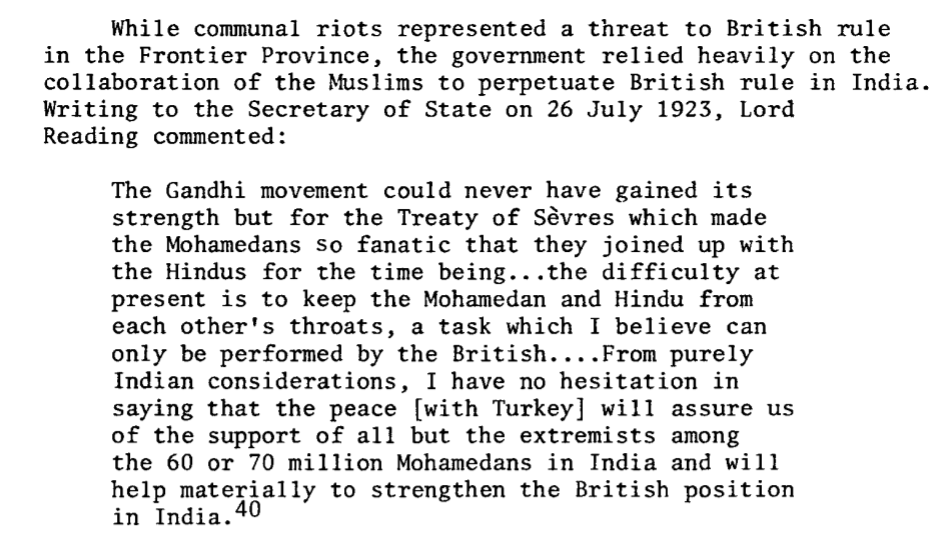
Prior to the Kohat riots of 1924, Lord Reading wrote to the British Secretary of State on July 23 stating, “The Gandhi movement could never have gained its strength but for the Treaty of Sevres which made the Mohamedans so fanatic that they joined up with the Hindus for the time being…the difficulty at present is to keep the Mohamedan and Hindu from each other’s throats, a task which I believe can only be performed by the British….From purely Indian considerations, I have no hesitation in saying that the peace [with Turkey] will assure us of the support of all but the extremists among the 60 or 70 million Mohamedans in India and will help materially to strengthen the British position in India.”
The influence of Ulemas, Khilafat movement and its aftermath
Patrick McGinn wrote, “The heightened sense of religious identity which existed among the Muslim community was accentuated during the Khilafat movement. The orthodox ulama had been brought into political activity on a large scale. They had been a valuable asset in the Non-co-operation and Khilafat movements in gaining support among the masses. With the decline of these movements the ulama were no longer needed as politicians turned away from mass politics. As a result, their influence disappeared temporarily.”
He added, “The activities of the ulama in the years following Khilafat can be seen as an effort to perpetuate power and influence within the Muslim community. Communal issues became more important at the local level. Those Muslim leaders who had been heavily involved in the Khilafat movement became the defenders of the faith in subsequent years.” While Gandhiji piggybacked on the Khilafat movement to artificially forge a ‘Hindu Muslim unity’, the underlying religious antagonism did not remain concealed for long. To correct the discourse he fasted for 21 days to restore communal harmony.
A closer analysis of the Khilafat movement tells us that the seeds of prominent historical events such as the partition of India on religious grounds, the creation of Pakistan, and the genesis of Hindutva were either sowed or germinated in this movement. Be it the genocide of 10000 Hindus during the Moplah Massacre of 1921 or the exodus of the entire Hindu population in Kohat town of northwest Frontier Provinces in 1924, the true face of ‘Islamic fundamentalism’ was exposed. Even post-partition, the seeds of Islamic supremacy and fanaticism culminated in the exodus of Kashmiri Pandits from the Muslim-dominated Kashmir valley. The plight of Hindus has remained unchanged since then and they have paid the price with their lives each time.
Reference: McGinn, P. (1986) ‘Communalism and the North-West Frontier Province: the Kohat Riots, 9-10 September 1924’, South Asia Research, 6(2), pp. 139–158. doi: 10.1177/026272808600600204.
Ford India, the Indian arm of American auto major, today announced that it is ending the manufacturing of vehicles in the country. The company has decided to shut down its car assembly plants in Sanand in Gujarat and Chennai in Tamil Nadu, after suffering continuous losses for several years. The company will however keep the engine plant in Sanand running and will continue to service its products in India.
The Ford Business Centre and the product development centre that caters to the global operation will continue to operate. Apart from this, the company will sell its iconic cars like Ford Mustang and Ford Endeavour in India through the import route. These cars will be imported completely knocked down or completely built cars.
Ford India follows its American counterpart General Motors, which had left in India in 2017. Ford India has been struggling with its Indian business for last several years, which were reflected in its financial status. The company has around $2 billion (Rs 14,802 crore) in accumulated losses in the last 10 years, and a $0.8 billion (Rs 5,921 crore) non-operating write-down of assets in 2019, while its revenue continues to decline and losses mount.
“Despite (our) efforts, we have not been able to find a sustainable path forward to long-term profitability,” Ford India head Anurag Mehrotra said in the statement announcing the decision to shut down its Indian car manufacturing operations. “The decision was reinforced by years of accumulated losses, persistent industry overcapacity and lack of expected growth in India’s car market,” he added. Around 4,000 employees are expected to be affected by this decision.
This decision comes after failed bid to launch a joint venture with Mahindra and Mahindra. The two companies had initiated discussions over setting up such a joint venture to manufacture Ford cars at a lower cost in 2019. Mahindra was to hold 51% in the JV, with Ford retaining 49%, and Ford was to transfer its India operations to the JV. But by the end of 2020, this venture was called off.
Ford India has been struggling in the Indian auto market dominated by Indian and Korean companies. Although it was among the first foreign companies to enter India after economic liberalisations, and despite having an impressive product portfolio, it was outpaced by other players in the market.
The company had originally entered India in 1926, but had closed down its operations in 1953 after the Indian govt implemented import restrictions. The company re-entered in India in 1995, and formed a joint venture with Mahindra and Mahindra. However, the JV had ended in 1998 when Ford had increased its stack in the company.
Ford India had virtually created the budget SUV segment in India with its EcoSport. Taking the benefit of the new tax law which prescribed a lower excise duty for cars below 4 meters in length, the company had launched the SUV at a much lower price compared to existing bigger cars in the segment. However, with time, it has been taken over by others like Maruti Suzuki, Tata Motors and Hyundai. Similarly, it had launched the sedan Aspire in sub-4 meter category, but could never put a dent on to competitors like Honda Amaze and Suzuki Swift Dzire.
Ford made some great cars in India and the Sanand plant was one of the best this side of the planet. But they only have themselves to blame for failing in India. Kia India, selling cars for just two years has outsold them by a hefty margin for its nature existence.
Following the announcement by Ford India, the anti-Modi brigade has already started its familiar blame game, blaming Modi for the exit of the company dotted by a large number of other companies, both domestic and MNC. For example, AAP supporter and former banker Krishan Partap Singh declared that the company took the decision to take a hit of $2 billion in losses because it sees no future in the Indian economy.
Ford giving up on all manufacturing in India means they see no visibility of the economy improving even in the medium to long-term. Spin it all you want, but there is no avoiding that this is a major step backward in the India growth story since 1991.
Several social media users tried to blame the policies of the Modi govt on the failure of Ford India. But the fact is, the company has facing losses for several years. For example, as of March 2014, before Narendra Modi become the prime minister, the accumulated losses of the company were already Rs 1,764 crore. The accumulated losses of General Motors was also Rs 2,740 crore as of March 2014. Ford had made some profits in 2018-19, but that was minuscule compared to the size of the accumulated loss.
This means, the woes of the two American auto majors didn’t start after the Modi govt came to power, they were already in bad shape.
And due to the cutthroat competition in the Indian market, the companies could not survive. Several foreign automakers have entered India in the last several years, including Kia, MG Motors, Nissan owned Datsun etc, and are doing reasonably well. In fact, Kia India, which entered the country in 2017, has already captured a major market share and has emerged as the fourth largest car manufacturer by volume sales. Therefore it is incorrect to say that automobile companies do not see a future in the Indian market.
Ford India has less than 2% share in the Indian car market, which is dominated by Maruti Suzuki (48%), Hyundai (17%) and Tata Motors (8%).
Therefore, the failure of Ford in India can’t be linked to any govt policy, as such policies would have almost similar effects on other companies. But in India, the automobile sector has several companies with various levels of performance, which are the result of their products and their marketing strategies. The govt is encouraging local manufacturing with high import duties, which is a boon for companies having manufacturing plants in India.
It is notable that Ford India is the third American auto major to quit India in recent years. Earlier, auto major General Motors and iconic two-wheeler maker Harley Davidson had ended their Indian operations.
The state of Karnataka has attracted Foreign Direct Investments (FDIs) worth Rs 62,085 crore in the first quarter of FY 2022 which is 48% of the total such investments India received during this period.
When India was battling to control the second wave of Covid 19, Karnataka has managed to attract huge foreign investments, hinting at the state’s potential for future growth.
Large and Medium Industries Minister Murugesh Nirani on Wednesday informed about the FDI received, adding that among the Indian states; Karnataka has topped in FDI inflows in India during this period. The minister also praised the role of Karnataka Udyoga Mitra (single-window agency for investment) for making outstanding efforts to attract investments.
The minister also shared this news on his Twitter handle stating “I’m glad that Karnataka stands No. 1 in attracting FDIs in April-June fiscal and remains a preferred destination for global investors. Our state offers excellent opportunities in various sectors and provides world-class facilities to investors.
I’m glad that Karnataka stands No. 1 in attracting FDIs in April-June fiscal and remains a preferred destination for global investors. Our state offers excellent opportunities in various sectors and provides world class facilities to investors. pic.twitter.com/eg2knILqIZ
Over the years Karnataka has become ‘investors’ heaven’ due to several policy reforms’ like the ease of doing business, single window system, the introduction of affidavit-based clearance, central inspection system, and land and labour law reforms among many others.
For instance, in April the Karnataka government took a policy decision to repeal redundant laws and decriminalise many to encourage ease of doing business. The government has identified laws that required simplification or a complete abolition.
The steady rise of Karnataka on the FDI index is worth mentioning. As the minister informed, Karnataka had attracted Rs 30,746 crore FDI in FY 2019-20 and ranked third. In the next FY 2020-21 the rank remained the same but the flow of FDI had increased to Rs 56,884 crores.
Karnataka Udyog Mitra (KUM) ranked top among all investment promotion agencies
Minister informed that ‘The National Investment Promotion and Facilitation Agency, under the ‘Invest India’ program, has patted Udyoga Mitra for taking proactive steps to create an investor-friendly milieu in Karnataka. It has rated Karnataka Udyoga Mitra as India’s top Investment Promotion Agency while considering the performance of 20 other states.
The Minister stated that the Karnataka government is committed to more reforms to help industrialists. Nirani said that the government has been aiming to score 100 points on all parameters in the coming days. Minister informed that Karnataka Udyoga Mitra scored centum in four out of eight categories namely investment projects, facilitation, aftercare and managing the website.
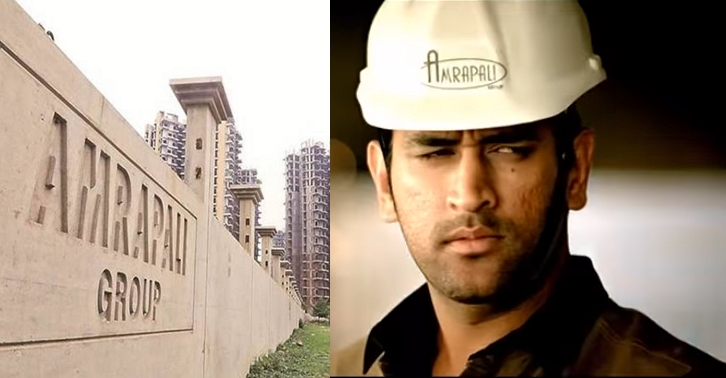
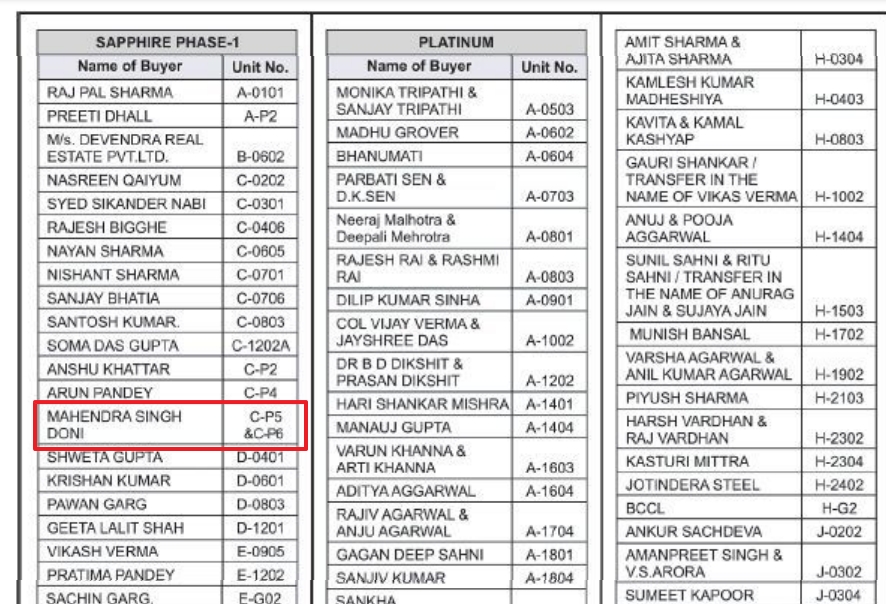
Former Cricket India captain Mahendra Singh Dhoni appears in a list of buyers who have not claimed their flats in the beleaguered housing projects by the Amrapali Group in Noida and Greater Noida. The name of Dhoni appears in the list of 1800 ‘benami’ flat owners in the projects in Noida, who have not claimed their properties yet. In total, there are 9538 flats in the Amrapali projects that have not been claimed by their owners.
Dhoni’s name appears at number 14 in the list for the project named Saphire Phase 1, and there are two penthouses (C-P5 and P6) at the Amrapali project located at Noida sector 45. However, the name has been spelt as Mahendra Singh Doni in the list published by the Supreme Court in newspapers.
Screengrab of a part of the list published on Times of India
The list was published on pages 8 and 9 of the Times of India today, and Dhoni’s name (apparently misspelt as Doni), appeared on the second page of the list. It asks those who have been named in the list to update their information on the Office of Receiver’s website and make any pending payments if they are willing to take possession of the flats after their completion.
The authorities are releasing the name of all the flat owners who have not claimed the flats yet, and they have been given 15 days to claim their flats. Those who fail to do so, their allotments will be cancelled and their flats will be resold in the market by the Court receiver. The rest of the list will be published next week. Last month, the receiver had submitted a list of 9538 flats in the projects of the Amrapali Group not claimed by their buyers yet. Although these people had paid the flat booking amount, they have not made any subsequent payment and didn’t appear for verification for registration of the flats in their names.
Such buyers will have to claim their flats by making the outstanding payments after their names are published in the lists. If they fail to do so within 15 days, their flats will be re-sold, and the money collected through such sale will be used to complete the stalled projects. the construction will be carried by the state-run National Buildings Construction Corporation (NBCC) under the monitoring of a court-appointed committee.
Name of Mahendra Singh Dhoni, who has been named as the mentor of the Indian team for T20 world cup, has been associated with the controversial housing project for several years. He had endorsed the projects developed by the Amrapali Group as a brand ambassador, but later the real estate developer failed to complete its projects. The company was accused of committing fraud by taking money paid by tens of thousands of home buyers and of cheating by not completing housing projects for which the company had accepted payments. The Supreme Court had termed it as a “first degree crime”.
Buyers of the project had accused Dhoni of misleading them by endorsing the company for six years. He and his wife were accused of conspiring with the Amrapali Group and duping them of crores of rupees.
An Audit report submitted at the Supreme Court had even alleged that companies linked to the cricketer and his wife Sakshi Dhoni were among those used by the Amrapali Group to illegally divert the funds collected from buyers. However, Dhoni had denied these allegations.
After endorsing the company for 6 years in advertisements, Dhoni had resigned as the brand ambassador of the company in 2019, after homebuyers in the project started to slam him on social media for his association with the company. Soon after that, he had moved the Supreme Court against the company to get his unpaid dues amounting to Rs 40 crore towards the endorsement deal.
In 2016, the Amrapali Group had announced that they were gifting each member of the Indian Cricket Team with an exquisitely designed independent villa at its Amrapali Dream Valley Project at Noida Extension worth Rs 9 crore after India’s victory in the World Cup in 2011. While Dhoni was reportedly presented with a grand villa covering 2,900 sq ft worth Rs 1 crore, the other team members were gifted villas worth Rs 55 lakh each covering an area of 1690 sq ft.
At present, it is not known whether the properties listed against Dhoni are the same ones ‘gifted’ by the company after the 2016 World Cup win, or whether they were purchased by the cricketer or given to him as part of the endorsement deal.
Amrapali Group had started around 40 housing development projects between 2010 and 2016 in the Delhi NCR region, and had sold around 45000 flats in those projects.
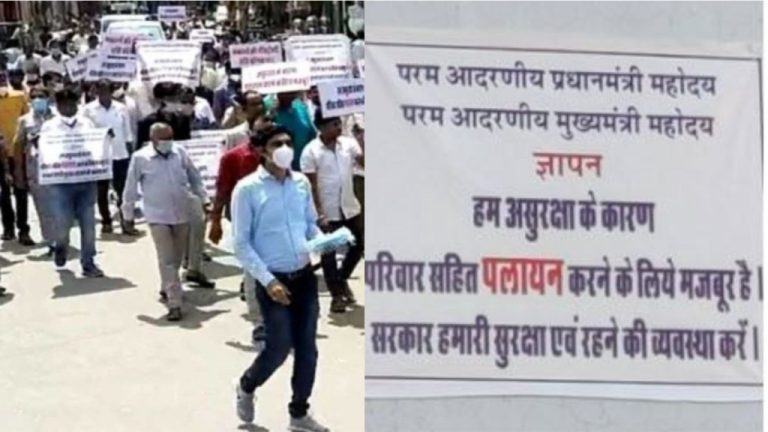
Hundreds of Hindus in Tonk, Rajasthan district’s Malpura town have claimed that they are being forced to abandon their homes and shops, citing threats from the minority communities in the area. On Monday, September 6, many such families, which, due to economic constraints were forced to live in houses in the minority-dominated areas in Tonk town’s wards 12 and 21 placed posters outside their respective homes which read that they are threatened by the Muslim community.
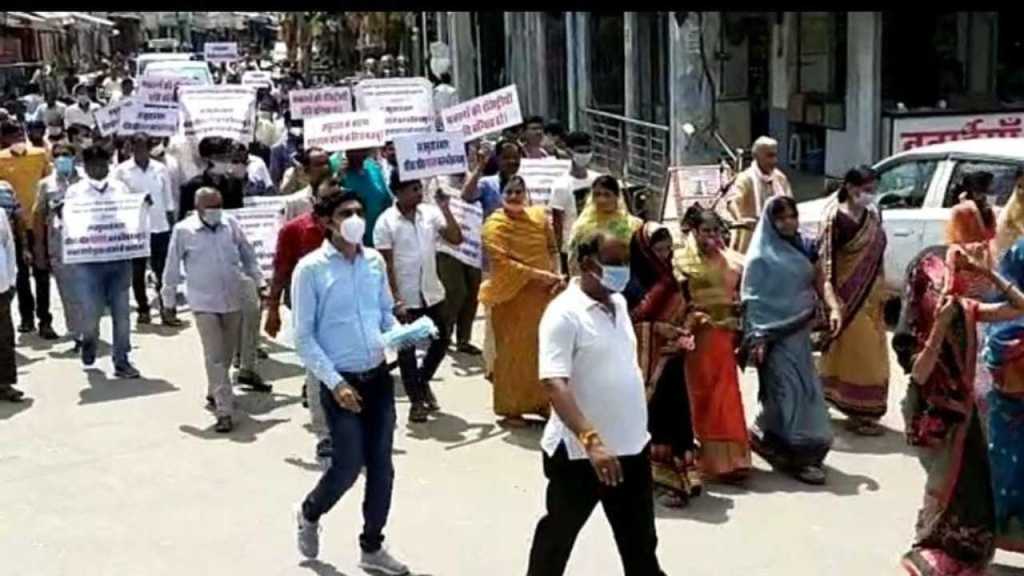
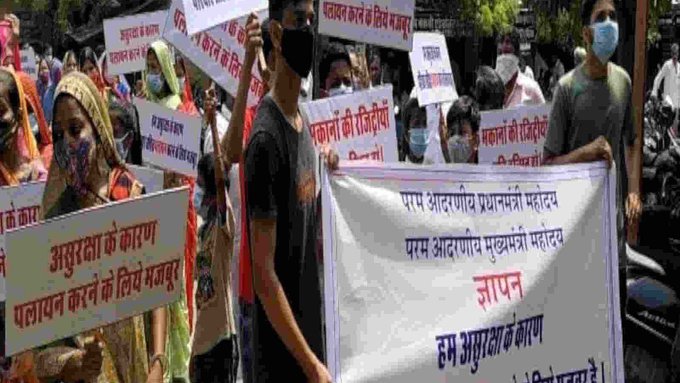
On Tuesday, September 7, almost 100 people belonging to these same terrorized Hindu families took out a poster march and submitted a memorandum to the Malpura SDM office, demanding justice. They then submitted a memorandum to Prime Minister Narendra Modi and Rajasthan Chief Minister Ashok Gehlot, requesting protection.
Protest March taken out by the Hindus in Tonk, Rajasthan
The memorandum alleges assault on Hindus and indecent treatment of women in minority-dominated areas.
These Hindus, who handed over the memorandum to Malpura SDM Rakesh Kumar Meena, claimed that communal tensions have existed in Malpura since 1952. They reported that approximately 600 to 800 households had sold their homes and moved out of the region. For the past two days, these families have been pleading with administrative and police personnel for protection.
Protest march in Tonk, Rajasthan
About 200 families have been requesting protection from the administration for a long time, according to local resident Radhakishan.
On Monday, September 6, another memorandum was presented, in which the Hindus in the neighbourhood claimed that the number of Muslims in the area had been steadily increasing, making it impossible for Hindus to live there peacefully. It further read that there are Jains and Gujjar temples in the neighbourhood, but security concerns due to the expanding Muslim population have forced them to close. Meat markets are operating illegally near temples, causing the temple’s idols to be sent elsewhere, read the Memorandum.
Meanwhile, the Rajasthan police, have in the last two days, attempted multiple times to remove posters from outside Hindu homes but were forced to return in vain due to public outcry. Calling the act of hanging posters outside the houses an “act to disturb the communal harmony of the city”, the Malpura administration warned the Hindus to remove such posters from their homes.
Malpura town in Tonk district has seen many communal clashes since independence and many people have lost their lives. It is noteworthy that the first communal dispute took place in Malpura town in 1952. Including the 1952 incident, eight times communal tension has arisen in Malpura. The town was recently subjected to a curfew in 2019, after some miscreants threw stones during a Dussehra procession, causing communal unrest.