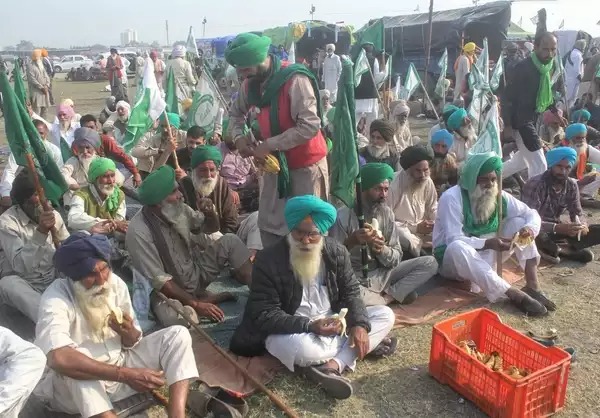
The farmer protest against three farm laws enacted by the central government last year has continued for over 100 days. Spearheaded by Khalistanis, so-called farmers who have been participating in the protests have been occupying public places and have been staying in tents and other temporary accommodations. However, while the protesting farmers have been staying in tents, two self-proclaimed farmer leaders have been found staying in a three-star hotel in Kundli.
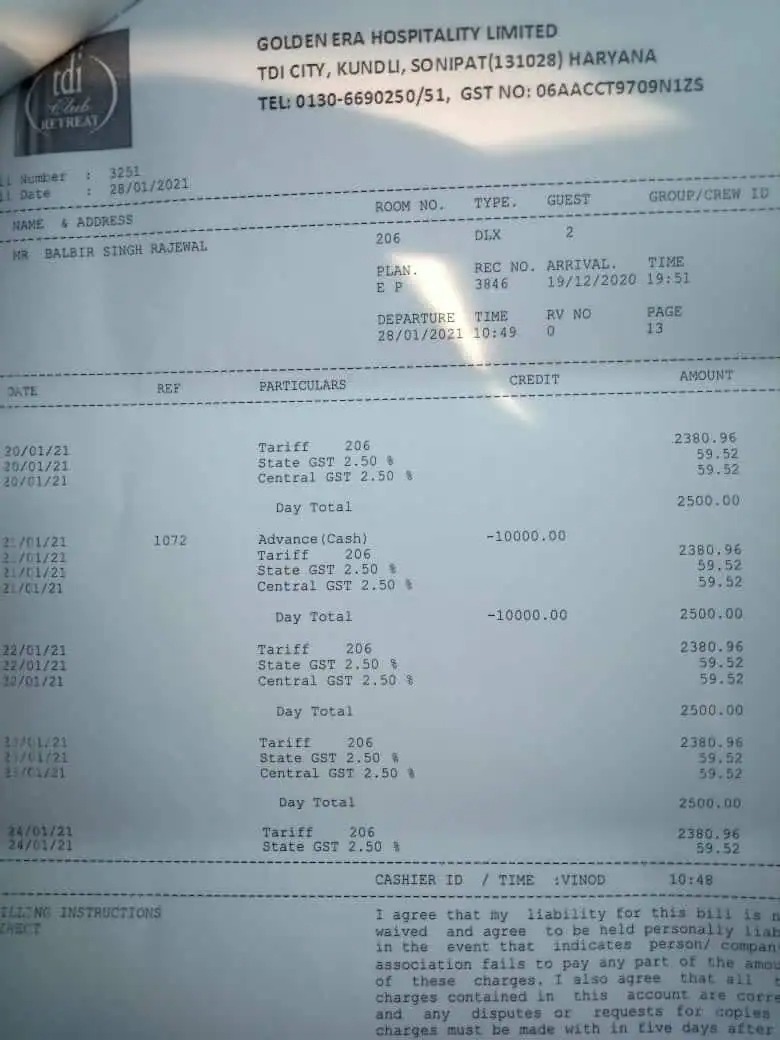
As per a Zee report, two farmer leaders Balbir Singh Rajewal and Kulwant Singh Sandh have been staying at the TDI Clube Retreat in Kundli. Zee News accessed the hotel bills of the two farmer leaders revealing the expenses of their stay in the hotel. As per the hotel bill, Balbir Singh Rajewal, President of Bharatiya Kisan Union-Rajewal, stayed in room number 206 of TDI Club Retreat between December 12, 2020, and March 3, 2021. At present, he is reportedly staying in another room in the same hotel.
Balbir Singh Rajewal’a hotel expenses reach over Rs 2 lakh
The two leaders, Balbir Singh Rajewal and Kulwant Singh Sandh, are two amongst 40 farmer leaders who have been spearheading this movement that has led to public inconvenience and an incident of massive violence on the 26th of January, that left over 400 police personnel injured. Interestingly, as it turns out, while they have “led” others to block roads, sleep in tents and commit violence against a law that will benefit farmers, they have themselves been staying in hotels and taking up a bill of lacs.
Hotel Bill accessed by Zee News
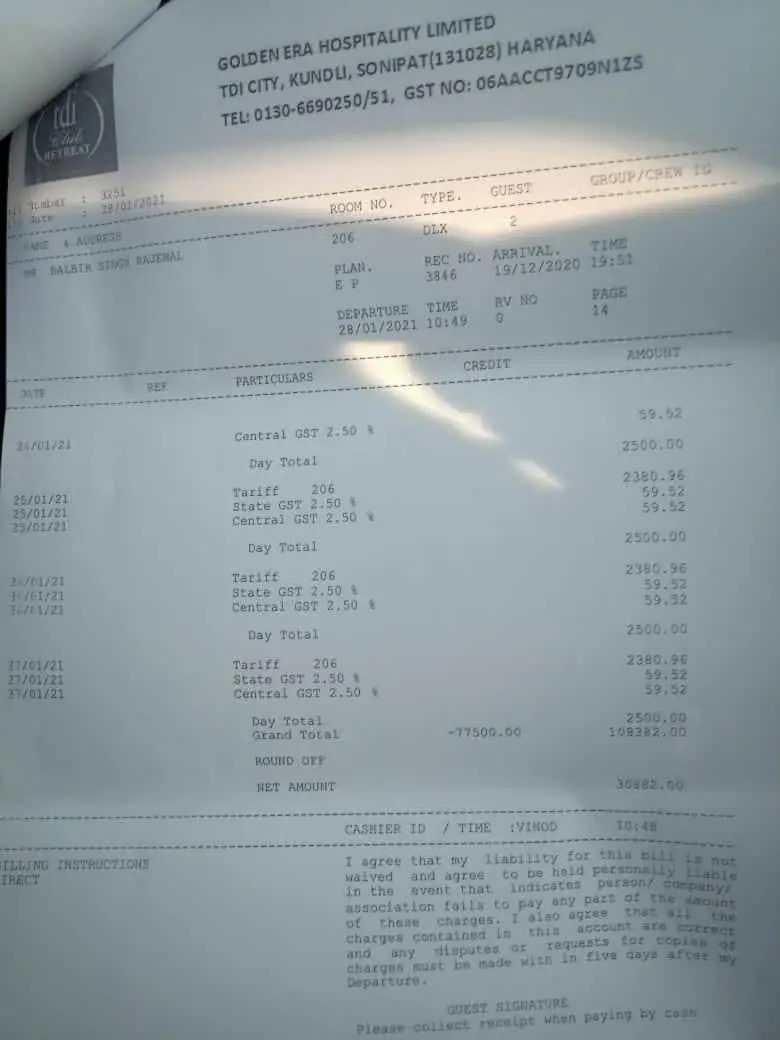
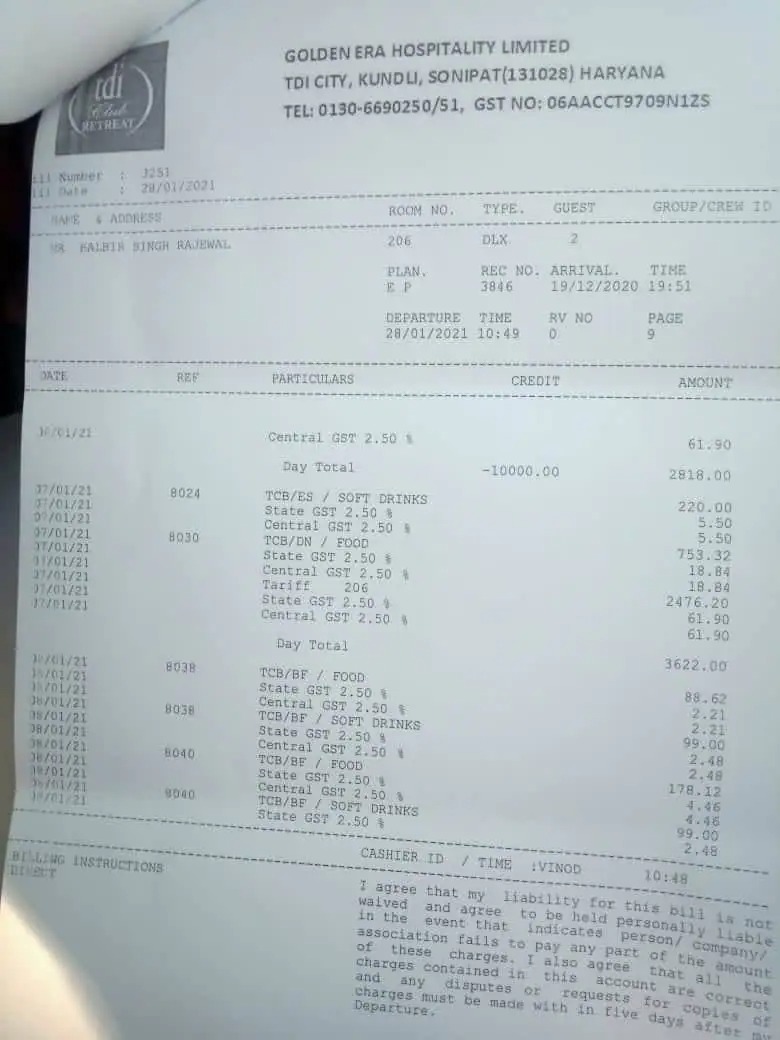
The bills reveal that Balbir Singh Rajewal spent more than 1 lakh 30 thousand during his stay in the hotel between December 12, 2020, and January 28, 2021. The bill included breakfast and laundry expenses. The per-day cost of the room he was staying in, as mentioned in the bill, was Rs 2,500 excluding breakfast and laundry.
Hotel Bill accessed by Zee News
The Zee News report claims that the costs of Rajewal’s stay in the hotel so far have reached up to Rs 2 lakh 40 thousand approximately. The other farmer leader, Kulwant Singh Sandhu, has also reportedly been staying in the same hotel since December last year. Kulwant Singh Sandhu is the general secretary of Jamuhari Kisan Sabha, Punjab. Sandhu has been staying in TDI Club Retreat along with his son Dosanjh since December 27th, 2020.
Kulwant Singh Sandhu’s stay in the hotel has been made free by scam accused co-owner of the hotel
While both the ‘farmer leaders’ have raked up a bill of lacs during their stay, according to the report, Sandhu is not being charged for his stay at the hotel. His stay in the hotel inclusive of food and drink has been made free by Ravindra Taneja who is one of the owners of the hotel.
Hotel Bill accessed by Zee News
Ravindra Taneja is reportedly accused in the Manesar land scam in the Gurugram district of Haryana. A charge sheet filed by the Enforcement Directorate (ED) before the Panchkula Special Court last year alleged that 13 builders including Ravindra Taneja had embezzled Rs 1500 crore.
The farmer protests that were claimed to be an apolitical agitation against farm laws by ‘farmer representatives have recently urged the voters in the poll-bound state of West Bengal to defeat the BJP.
On 26th January 2021, the protesting ‘farmers’ at Delhi border broke barricades and ran riots in the national capital under the guise of ‘tractor rally’ to protest against the farm laws. The ‘farmers’ deliberately tried to run over Delhi Police personnel and also assaulted them with swords and other weapons. Eventually the ‘farmers’ took over the Red Fort and hoisted multiple flags with the holy Sikh symbol.
Delhi Police has made multiple arrests in the case till now.
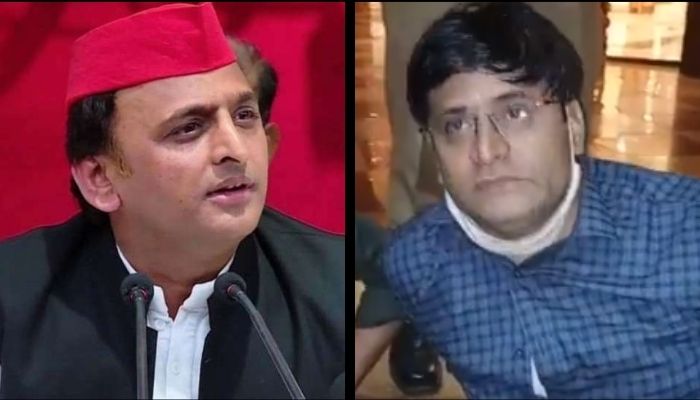
On Thursday, a ruckus broke out between a group of journalists and the supporters of Samajwadi Party leader Akhilesh Yadav at a hotel in Moradabad in Uttar Pradesh. The former Chief Minister was in the city to attend the wedding of an MLA and had conducted a press conference at the said hotel on Thursday evening.
In a set of two videos shared by journalist Piyush Rai, Yadav can be heard telling journalists to ‘get lost’, following the press conference. In an aggressive tone, he also told them to not work for the BJP. He said, “BJP ke liye kaam mat karo (Don’t work for the BJP)”. When the media persons sought answers from the Samajwadi Party chief, his supporters and security personnel assaulted, pushed and shoved the reporters.
“Video of the ugly scenes that unfolded following a press meet by Samajwadi party chief Akhilesh Yadav at hotel in Moradabad district. Several journalists were pushed, heckled and assaulted allegedly by security personnel at the spot,” Rai wrote.
Video of the ugly scenes that unfolded following a press meet by Samajwadi party chief Akhilesh Yadav at hotel in Moradabad district. Several journalists were pushed, heckled and assaulted allegedly by security personnel at the spot. pic.twitter.com/0B9szcsjxs
Injured journalist Fareed Shamsi narrates his ordeal
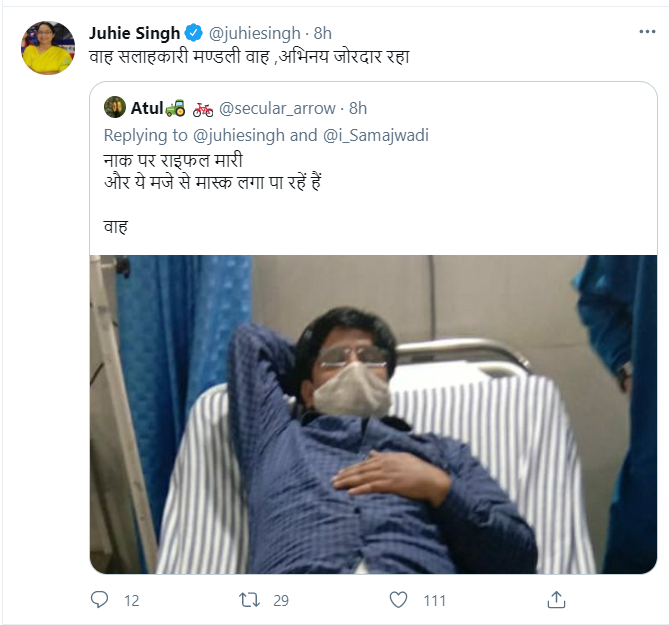
During the ruckus, a reporter named Fareed Shamsi (identified as the one with a dark blue shirt) took a severe blow to his nose from Yadav’s security guard’s rifle. He was also pushed aside by a Samajwadi party supporter, who stood adjacent to him. In a video, Shamsi recounted how Akhilesh Yadav blamed him after he was assaulted. “The NSG people beat us up. They pushed, and then hit me with a rifle. I was asking questions, and then Akhilesh Yadav blamed me for doing this intentionally. I said I am asking questions, which is my job,” he said.
Fareed Shamsi, a Moradabad based journalist narrating his ordeal after he was injured following assault allegedly by security personnel of former CM Akhilesh Yadav at a press meet pic.twitter.com/FXEfvz6LlR
The reporter further added, “They beat up all media persons. There were journalists from other channels too. Some had ended up with their mobiles smashed, while some cameras were broken too. I have sprained my leg, and am going to the doctor.” Interestingly, the incident unfolded before Akhilesh Yadav, who was not seen making any efforts to stop his supporters and security personnel from assaulting the journalists.
No complaint registered so far, says police
While speaking about the ruckus, ASP (Moradabad) Amit Kumar Anand said, “When the former CM was leaving after the press conference, some journalists came too close to the security cover leading to the chaos. The incident happened at a hotel under the Pakwarha police station…If we get a complaint, we will see what has to be done. Till now, we have not received any complaint.” He added that the cops are analysing the CCTV footage to ascertain the chain of events leading to the scuffle.
Samajwadi Party leaders engage in victim-blaming, justify the assault on journalists
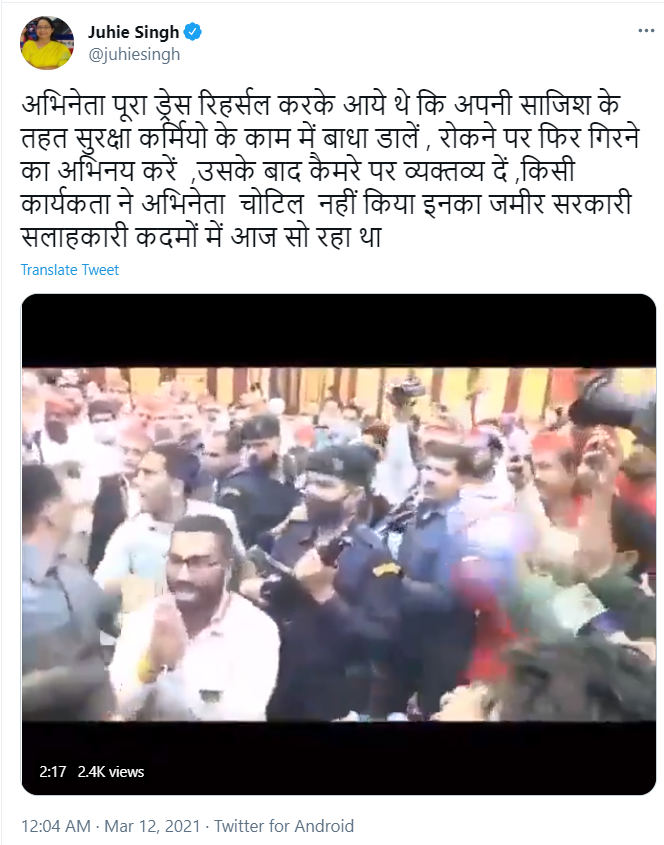
In a contentious tweet, Samajwadi Party spokesperson Juhie Singh labelled the journalists as ‘rehearsed actors’. “The actors had come prepared to stop the security personnel from doing their duty. After being stopped, they enacted falling and even gave statements. None of our party workers has injured any of the actors. Their conscience in lying in the feet of government’s advisors.”
Screengrab of the tweet
She had also shared a photo of the injured journalist Fareed Shamsi and wrote, “Wow.. the group of CM’s advisors.. Acting was great.”
Screengrab of the video
In defence of his party, Moradabad MP Syed Tufail Hasan claimed, “Some electronic media persons broke the security cordon and fell amid jostling after being stopped by guards. One journalist suffered injuries in the leg and has been sent to the hospital.” He also claimed that Akhilesh Yadav was willing to talk to the media.
BJP slams Akhilesh Yadav for misbehaving with journalists
While slamming the Samajwadi party supremo, Media Advisor to Yogi Adityanath wrote, “First, you invite journalists to your press conference and then assault them. Later, when they file complaint, then, claim that they are agents of the BJP. How did you become so heartless?”
एक तो पत्रकारों को अपनी सभा में बुलाकर पिटवाते हो और फिर उनके शिकायत करने पर उन्हें भाजपा का एजेंट बताते हो!
BJP spokesperson (UP) and Advisor to CM Yogi Adityanath Shalabh Mani Tripathi, also hit out at the Samajwadi Party, after journalists were targeted during the press conference in Moradabad.
एक बार फिर देखिए लाल टोपी वाले गुंडों की गुंडई,संभल में सवाल पूछने पर सपाई गुंडों ने पत्रकारों को बुरी तरह पीटा,धमकाया,अपमानित कर भगाया,कई घायल
गेस्ट हाऊस कांड के बाद यूपी के इतिहास का सबसे कलंकित दिन
— Shalabh Mani Tripathi (Office) (@Shalabhoffice) March 11, 2021
“Once again, re-watch the hooliganism of the hooligans. SP goons brutally thrashed journalists. They also threatened, humiliated and chased the journalists away. This is the second shameful event after the infamous guest house scandal. They are acting like goons when they are not in power. Imagine what they would do if they come to power,” he said.
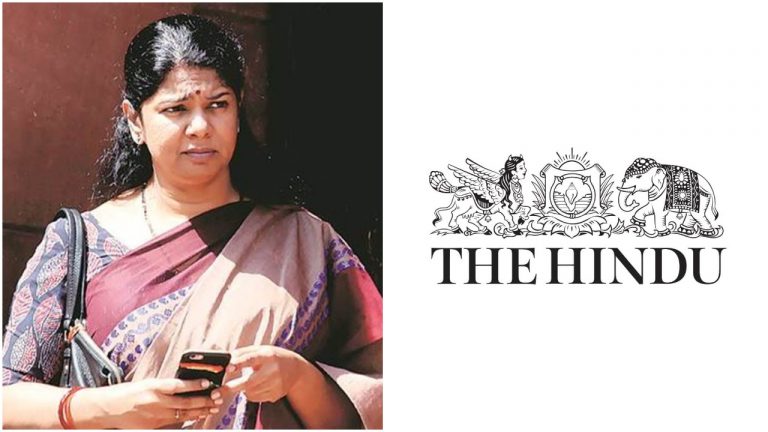
Dravida Munnetra Kazhagam leader and Lok Sabha MP Kanimozhi Karunanidhi has been ‘elected’ as the President of Office and National Press Employees’ Union of left-wing media outlet ‘The Hindu’.
DMK leader Kanimozhi, who was once jailed in the multi-crore 2G scam and later got acquitted by the court, has been elected president of the ‘neutral’ media group The Hindu’s employee union for the second time. Kanimozhi was first elected to the post in 2017.
Malini Parthasarathy, the Chairperson of The Hindu Publishing Group (THGPPL), took to Twitter to say that she was delighted to announce that the controversial DMK leader has been re-elected President of The Hindu Office and National Press Employees Union.
Unsurprisingly, Malini Parthasarathy expressed her glee over the re-election of Kanimozhi to the union and showered praise on her. Hailing the DMK leader, Parthasarathy said that Kanimozhi was a highly accessible and modest person, who has won many hearts in the organisation. She said the media group was looking forward to working with her in taking their group to greater heights.
Delighted that @KanimozhiDMK has been re-elected President of The Hindu Office &National Press Employees Union. A highly accessible & modest person, she’s won many hearts in our organisation & we look forward to working with her in taking our group to greater heights. pic.twitter.com/GEUn7oVmdx
It is interesting to note here that The Hindu claims to be a politically neutral news organisation. More importantly, the ‘election’ of the DMK leader Kanimozhi comes just at a time when Tamil Nadu, where the media outlet is centred, is soon going for assembly elections.
Netizens react to the appointment, asks whether ‘The Hindu’ is ‘Godi media’
As the news of Kanimozhi being elected as the President of The Hindu’s National Press Employees’ Union broke, netizens were quick to put out their views on the recent development and asked whether ‘The Hindu’ qualifies to be called as a ‘Godi media’ after they appointed an incumbent influential politician to head their employee’s union.
The term ‘Godi Media’ is widely used by opposition parties, left-wing media persons and trolls against journalists and media houses who do not toe the opposition line, it is a term that roughly means media that is sitting on the lap (of some politicians).
Social media users questioned the publishing group saying how could they call themselves independent media with the appointment of Kanimozhi to head their employee’s union.
How will then this News paper will be independent group
Another social media users asked how the paper will justify that the ‘election’ of Kanimozhi is not a conflict of interest as far as impartial reporting goes. The user also pointed out that the positive bias favouring DMK by the left-wing media outlet is already clearly seen in news analysis and reporting.
How will the paper justify that this is not conflict of interest as far as impartial reporting goes? Not for nothing we call @the_hindu the English Murasoli. The positive bias in favour of DMK is clearly to be seen in news analysis and reporting.
Similarly, another user confronted ‘The Hindu’, asking how a person from a political party could be part of any office-bearer position within a journalistic organization. Questioning the publication regarding the ‘moral propriety’, the user said that it was appalling to see Kanimozhi heading their employee’s union.
He also pointed out that it was sad to see how Malini Parthasarathy flaunted the ‘election’ and said that no tough questions about journalistic ethics would be asked to them.
How can a Person from a Political Party be part of any office bearer position within a journalistic organization. @the_hindu. Moral Propriety ?? It’s appalling. The sad part is Malini is flaunting it and no tough questions about journalistic ethics will be asked to them.
The controversial ‘election’ of Kanimozhi to the Hindu’s employee union has triggered several questions against the organisation’s ethics and integrity.
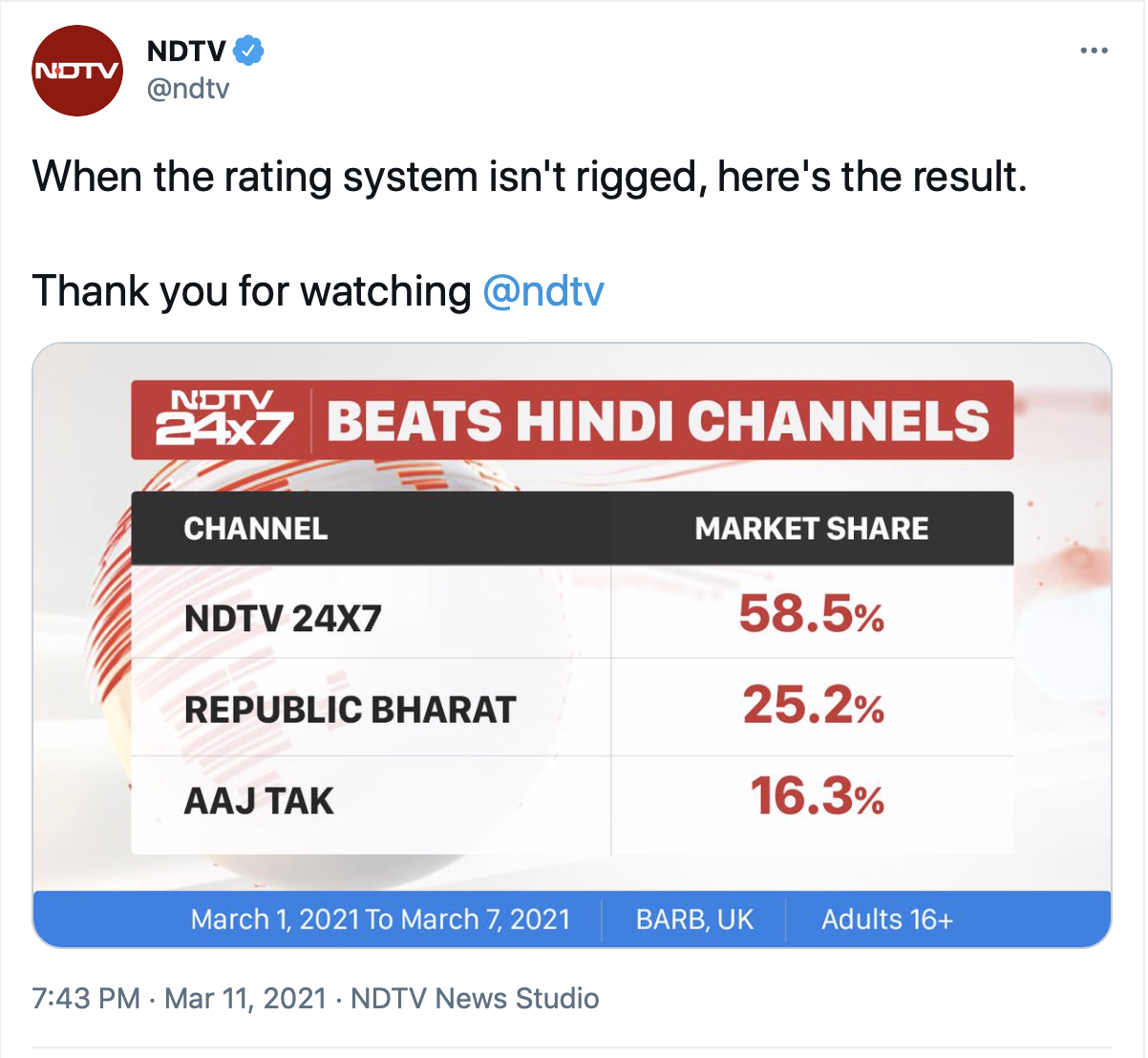
NDTV, which has been often been caught peddling fake news, on the 11th of March took to Twitter to pat itself on the back for doing a remarkable job in terms of TRP – in the UK. NDTV took to Twitter to proclaim that “When the rating system isn’t rigged, here’s the result” essentially saying that when rating systems are not rigged, NDTV ends up doing far better than Republic TV.
Tweet by NDTV while they attempted to pat themselves on the back, in a bid to outsmart Republic TV run by Arnab Goswami
The only problem with NDTV lauding itself for leaving Republic TV behind? The details tweeted by NDTV were from the UK and not India.
If one looks at the graphic shared by NDTV closely, one realises that the data that NDTV is sharing is not from India, but is an indication of readership in the UK. The infographic clearly states that the data has been taken from BARC, UK, for the week March 1st to March 7th.
BARB, the UK is essentially like BARC, India. It is an organisation that collects viewership data across 28 million TV and broadband-only households in the UK. According to their website, they answer the following three questions through their research:
Who is watching?
What are they watching?
When are they watching?
Which screen are they watching on?
How did the content get to the screen?
It is based on this data that NDTV took to Twitter to pat itself in the back. But that was not all.
Turns out, not only is NDTV lauding itself based on UK data, it is also trying to compare itself to Republic Bharat – the Hindi channel of the Republic network brand, headed by journalist Arnab Goswami.
One might as what the problem with that might be?
Simple put – NDTV is trying to tell people that when the data is not rigged or skewed in the favour of one channel (they mean Republic) then NDTV as a news channel would do much better than Republic. To prove this point, what NDTV does is take data from the UK instead of India and compare itself to a Hindi channel in the UK – which consists of a largely English speaking audience. In fact, NDTV even added that they are ahead of channel AajTak, which is again a Hindi channel.
It stands to reason that in a country where an overwhelming majority of the people speak only in English and do not understand Hindi, any English news channel would do far better than a Hindi channel, even if that channel belongs to Arnab Goswami. However, for NDTV to use that data to tout itself as a channel that outranks Republic TV, based on illogical data, only proves the desperation to downplay the achievements of Arnab Goswami and his network.
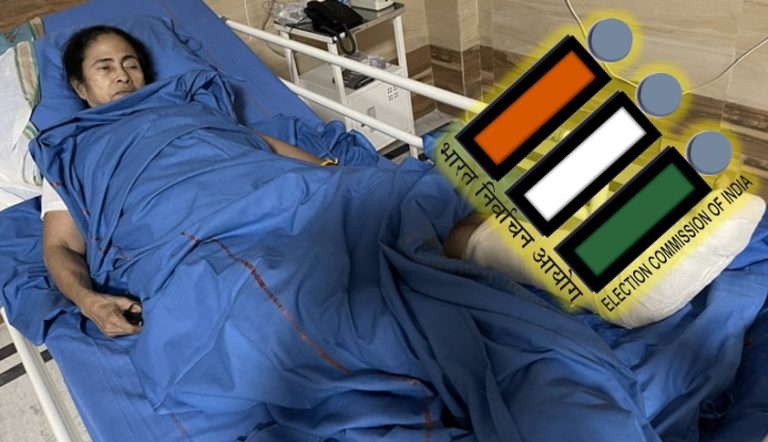
The Election Commission has issued a stern response to a letter sent to it by Trinamool Congress over the injury that Mamata Banerjee suffered yesterday. The poll panel strongly objected to the attempt of the ruling party in West Bengal to blame it for the alleged attack on the Chief Minister.
After Mamata Banerjee had suffered an injury on her leg in Nandigram yesterday, the TMC had sent a letter to the ECI, saying that there is a deep-rooted political conspiracy behind the incident. The party had alleged that there was no police protection around the CM when the incident happened, and added that police was now in ECI’s control as the election process has started. The party had also claimed that Mamata Banerjee is under threat due to ‘abrupt’ removal of the state DGP by the Election Commission.
The ECI has taken a strong objection to the allegations made by the TMC, and has denied their claims. The state issued by the ECI says that the incident involving Mamata Banerjee was indeed an unfortunate incident and it deserves to be inquired into with promptitude and dispatch. However, the memorandum submitted to it by TMC leaders is full of insinuations and averments, which in fact questions the very basis of creation and functioning of the Election Commission.
The ECI has said that it is completely incorrect to state that it has taken over law and order machinery in the name of conducting elections and appropriated the whole governance structure. “This virtually tantamounts to undermine the very foundation and fabric of the Constitution of India”, the statement said. ECI added that it does not appropriate day to day governance of any state during the elections, and they keep functioning as per extant rules of business and distribution of work approved by CM, which also applies to West Bengal.
Election Commission of India @ECISVEEP replied back to the letter sent by TMC claiming that Commission does not take over the day to day governance of any state pic.twitter.com/T1toN6Whc1
The poll panel added that it looks undignified to even respond to allegations of all this being done at the behest of a particular party. The ECI also responded to the allegations over the removal of the DGP. They said that it was not an abrupt decision, and it was done on the recommendations of the Special Observers Ajay Nayak and Vivek Dube. They also added that after the incident in Nandigram, the commission has sought a report on the same from the observers within 48 hours.
ECI said that not just the DGP, even the ADG (Law and Order) was also replaced after considered application of mind by the Special Observers. They added that after elections are announced, it is not legally necessary or mandatory to consult the state government in such matters as these are temporary measures.
The poll panel concludes by saying that it will wait for the report on the incident and share the same with all stakeholders. They added that the life of the West Bengal chief minister needs to be duly protected by all tasked with the maintenance of law and order machinery in the state. While Mamata Banerjee and TMC had alleged conspiracy behind the ‘attack’ yesterday, today they have changed the tone, especially the CM. In a video message from Hospital today, Mamata Banerjee said that she was crushed by her car when she was on the bonnet of it, and didn’t mention anything about being pushed by miscreants. Yesterday she had claimed that she was pushed by 4-5 people.
In the meanwhile, locals Nandigram who witnesses the incident have said that she was injured in an accident, not an attack. They told media that when Mamata Banerjee’s convoy was moving on the road, she was waiving towards the crowd by keeping the car door open and keeping her legs out. The open car door had hit a short iron pillar on the roadside which was not visible to the driver due to the crowd. This has resulted in the door to close forcefully, hitting the CM and injuring her legs. The preliminary investigation report by the police confirmed this eyewitness account.
The ministry of home affairs has said that Congress supporter and so-called RTI activist Saket Gokhale misquoted replies to his RTI queries with an ulterior motive and malicious intent. The ministry said that Gokhale uses reply to a different RTI query to claim that the ministry has no information on bomb factories in West Bengal. MHA issued the statement after several media houses published reports based on Gokhale’s claims.
Gokhale had filed an RTI query to find whether the claims made by Home Minister Amit Shah was true or not. In a TV interview in October 2020, Amit Shah had said that there re “bomb-making factories in every district” in West Bengal. Gokhale had filed a RTI query in October 2020 seeking details of these illegal bomb-making factories from the home ministry. He furnished four questions in the query, where he wanted a district wise list of the factories, whether official briefing on such factories were given to the union home ministry, whether the home minister’s statement was based on official inputs, and whether a list of such bomb making factories has been shared with the West Bengal government.
Breaking:
In Oct, Home Minister @AmitShah gave an interview to CNN News18 where he claimed "there are bomb-making factories in every district of West Bengal".
So, I filed a 4-point RTI seeking the source of Home Minister's comments.
On 9th March, Saket Gokhale tweeted that he has received the reply for his RTI application, and claimed that the MHA has said that they don’t have the information he had sought. He also posted a screenshot of the reply, which said that the ministry does have the information on the point numbers 1 to 3 in the RTI query. The MHA reply also states that ‘police’ and ‘police order’ are state subjects, and the state police is the first responder in any criminal/terrorist activity. Therefore, the ministry had written that Gokhale can seek the information from states/union territories.
I'd asked for
(1) a list of the bomb making factories in Bengal referred to by Amit Shah
(2) Whether MHA had briefed Shah about this
(3) Whether Shah's remarks were based on official records
The Home Ministry's answer is NO. They claim they don't have any such info.
Saket Gokhale also claimed that while he had asked four questions, MHA referred to only three. Therefore, he concluded that no bomb factories exist in West Bengal as he had asked whether MHA had shared the list of factories with the WB government. He called the union home minister a liar, claiming that there are no bomb factories in West Bengal and Amit Shah was giving false information.
However, now the Home Ministry has said that it is Saket Gokhale who is lying, as he is using the MHA response to a different RTI query to paint the home minister as liar. They have said that Saket Gokhale had filed an RTI application in January, which had three questions seeking details of involvement of Khalistani organizations in farmer’s protest. The MHA reply that Gokhale posted on 9th March was for this RTI query, and not for the West Bengal bomb factories.
There have been some reports in the media quoting tweets of Shri Saket Gokhale about an RTI reply by MHA. Shri Gokhale has misrepresented the facts while tweeting with a malicious intention. pic.twitter.com/KfTAWNxLdD
— Spokesperson, Ministry of Home Affairs (@PIBHomeAffairs) March 11, 2021
Home ministry said that they had received two online RTI applications from Gokhale on the Khalistani issue, one directly and the other through Department of legal affairs, and they had replied to this query on 3rd March. The home ministry also said that Saket Gokhale deliberately masked the reference numbers of his queries, so that he can link the query to his West Bengal question.
MHA says that its reply clearly states the reference numbers of the RTI applications, MHOME/R/T/21/00110 and MHOME/R/E/21/00149 and their date 12 January 2021, making it clear that they were replying to the query seeking details of Khalistanis involved in farmer protests. However, Gokhale masked the reference number from the RTI reply when he posted the same on Twitter.
The minister further informed that they have not received the query dated 18th October, 2020 regarding the bomb factories, and has not replied to the same.
The Home Ministry has said that Gokhale did this with an ulterior motive and malicious intent. They said that he linked the reply to a different query with malicious intent of misleading public and spreading lies and canard on social media platform.
Even though Saket Gokhale redacted the reference number in the RTI reply, it still shows that MHA had received the RTI query on 17th February. Therefore, is safe to assume that they were responding to a query filed recently. Moreover, the reply cited three queries, whereas Saket’s application on bomb factories had four questions. MHA clarification states that his query on Khalistanis had three specific questions, and thus the reply mentions 3 questions.
Gokhale’s claim that MHA didn’t reply the fourth question because there are no bomb factories in West Bengal does not make sense at all. Because his other questions also refer to bomb factories only.
The full statement issued by the home ministry is given below:
There have been some reports in the media quoting tweets of Shri Saket Gokhale about an RTI reply by MHA. Shri Gokhale has misrepresented the facts while tweeting with a malicious intention. The fact of the matter is that CPIO CTCR Division, MHA received two online RTI applications from Shri Gokhale; vide HOME/R/T/21/00110 and HOME/R/E/21/00149 dated 12th Jan 2021, one in MHA and other one from Department of Legal affairs respectively. Shri Gokhale, vide both the above mentioned applications had asked for information on three specific points related inter-alia to the involvement of Khalistani organizations in farmer’s protest. The CPIO, MHA, replied to him on 3rd March 2021, vide letter no 17011/01/2020/CT-1. Shri Gokhale through his tweets, dated 9th March 2021, misquoted the reply of the CPIO. To buttress his claim, Shri Gokhale linked the copy of reply of CPIO with a different application, purportedly made on 18th October 2020 on another subject altogether which was neither received by this particular CPIO, MHA nor replied by him. In the reply CPIO MHA, had clearly mentioned the reference numbers MHOME/R/T/21/00110 &MHOME/R/E/21/00149 and date of RTI application (12th Jan 2021), so that there remained no doubt and ambiguity regarding the RTI application being replied. With an ulterior motive & malicious intent Sh Gokhale in his tweets, deliberately obliterated reference no. of RTI reply, while linking this reply with his earlier application dt. 18/10/20 with malicious intent of misleading public & spread lies & canard on social media platform
While the Congress supporter is working hard to somehow prove that there in bomb factories in West Bengal ruled by TMC, a party his Congress is contesting in the assembly elections, no RTI question is needed to see what is open in the air. Devastating explosions have taken places in several illegal bomb factories in West Bengal. Crude bombs are recovered from various persons and party workers, and even from political party offices very regularly. Crude bombs have also been used in political violence in the state. Therefore, what Amit Shah said was true, there are bomb factories in West Bengal.
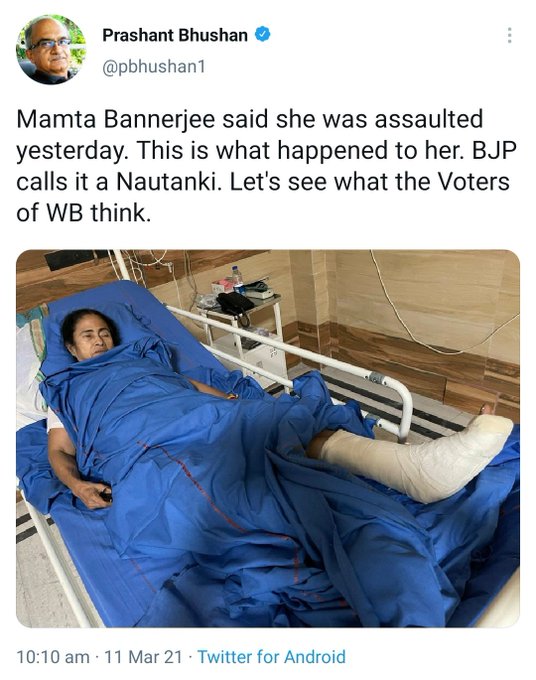
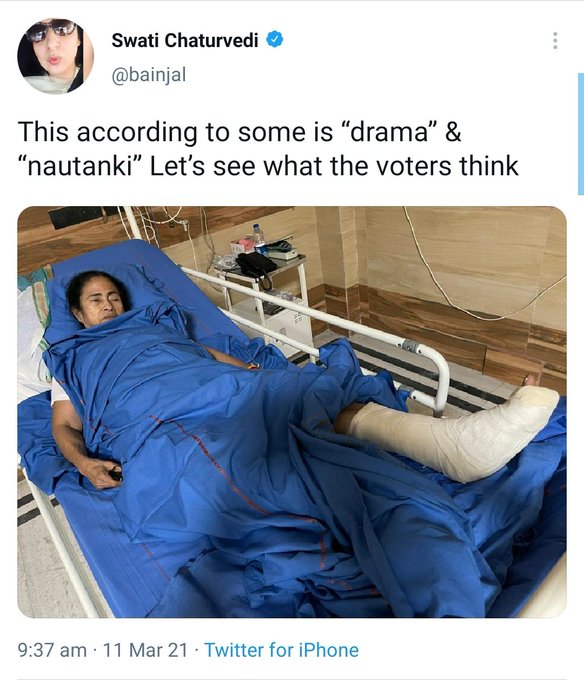
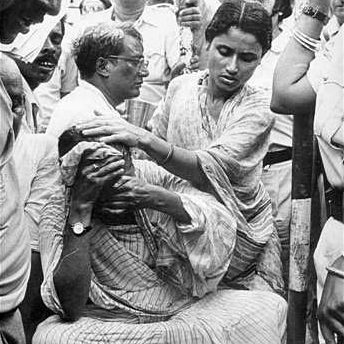
On the 10th of March, Mamata Banerjee alleged that she had been attacked. The CM alleged four-five people deliberately pushed her, after which she fell down and suffered an injury on her leg. She said that it was done as part of a conspiracy. Banerjee said that she was in deep pain due to the injury, and also had a fever. After she got injured, Mamata Banerjee, allegedly writhing in pain, travelled almost 300 km to get admitted to the SSKM hospital.
Both the CM and her party workers alleged that it was a conspiracy to keep her out of election campaigns. Although they didn’t name anyone, they tried to blame the BJP for the incident.
Eyewitnesses, however, completely trashed Mamata’s claims of being ‘pushed’ by some people. They claimed that the entire account given by Mamata Banerjee was false and that it was an accident. They also said that she was surrounded by police protection at that moment, denying the claim by the CM that there was no police protection around her at the time of the incident.
Describing how the CM suffered an injury, the eyewitnesses said that Mamata Banerjee was greeting the crowd with folded hands from her car. The car was moving, and she had kept the door of the car open to greet the people waiting by the roadside. At Birulia Bazar in Nandigram, the open door of the moving car hit a pillar, causing the door to shut forcefully. The door hit the leg of Mamata Banerjee, causing the injury, said the locals who claimed to have witnessed the entire incident. They said the allegation that 4-5 people pushed the CM is completely false.
The eyewitness statements and the obvious discrepancy in Mamata Banerjee’s version of events did not deter the usual suspects from wondering ‘what would the voters think about this’, since it was unfathomable to them that BJP would not believe the events as claimed by Mamata Banerjee.
They called such assertions by BJP downright heartless and cruel, saying, that it would be interesting how voters would now react to it.
Tweet by Prashant Bhushan
Tweet by Swati Chaturvedi
One has to admit – the picture of a woman leader, lying in bed with that expression on her face and a bandaged leg is extremely powerful. India, as a country, loves the triumphant story of a distressed woman beating the odds in a man’s world and rising, much like a phoenix, to fight for the downtrodden. It makes for a perfect movie.
As we also know, elections are often won on sentiments. We might deny it because we want to think of ourselves as logical individuals who like to weigh the track record of every leader and then make an informed decision – but it is not true. People vote based on which leader can tug on their heartstrings. Politics is not an easy job, one might argue. You need to really figure out what people want. What they REALLY want. And then, promise to give it to them. Not just promise, in fact, but appear to be convincing, motivated and most of all – empathetic. The mark of a really good politician is to ensure that the people themselves begin to believe that you, and only you, are the answer to all their woes. You, and you alone, will fight for them.
The mark of a good leader is, of course, to actually be sincere, promise what you can deliver and once the people believe you and vote for you, deliver on those promises.
That is, however, not really TMC’s style.
In 2011 when Mamata Banerjee came to power, she came to power on the plank of Maa, Maati, Maanush. She said that she was a daughter of the soil and that she would toil till her last breath for the interest of those who belong to this soil.
Mamata made the arduous journey from that statement to keeping quiet while Bengali Hindus burnt in riots, protesting against NRC, a proposal to send Bangladeshis back and then, proclaiming that all Bangladeshis in Bengal were citizens.
Essentially, TMC has always played on the people’s sentiments to either come to power or retain power. But when the country elected PM Modi, it got over the emotional blackmailing of the Congress and learnt to look beyond the rhetoric. Why does TMC then think that this rhetoric will work in Bengal in 2021? Why does it believe that if an accident is called an orchestrated attack on Maatir Maye (Daughter of the soil), it will still resonate with the people?
For starters, it is good politics. Don’t believe me? Here is what Prashant Kishore said in one of his interviews about the Bengal elections.
Prashant Kishore in overconfidence shared his special strategy of winning election even before using it for own party in current election. pic.twitter.com/adR6COoOTq
Kishor was asked categorically about what could change his estimate that BJP won’t win more than 100 seats in Bengal in 2021. His answer? If there is an attack on Paramilitary Forces, then BJP could win more seats.
The underlying sentiment in this segment and this response by Prashant Kishor is rather simple – In Bengal, emotions run high and for the elections to sway massively, an emotional trigger is needed.
Could the Nandigram fiasco of Mamata Banerjee be one of those orchestrated fiascos? We can’t say. Let’s not forget that today, almost 24 hours after Mamata Banerjee and TMC claimed that this was an organised attack by the BJP, the police report has categorically stated that it was an accident.
So why do emotions work in West Bengal?
One has to recall how The Left Front ruled the state for seven consecutive terms 1977–2011, five with Jyoti Basu as Chief Minister and two under Buddhadev Bhattacharya. Under Jyoti Basu, the state saw multiple massacres of Hindus, including the Marichjhapi massacre. Under Buddhadev Bhattacharya too, political violence was almost at its zenith.
Bengalis, though, gave the Left more than 35 years to do something substantial for the state. Why? Because the Communists spoke about doing something.. something for the downtrodden. Something for those who were left behind by the industrialisation in the rest of the country. Something that they sought. Just.. something.
When they realised that even after 35 years, the Communists had not done much, they would have still voted for the Communists had Mamata Banerjee not promised to do something for the downtrodden. Something for those who were left behind by the Industrialisation in the rest of the country. Something that they sought. Just.. something.
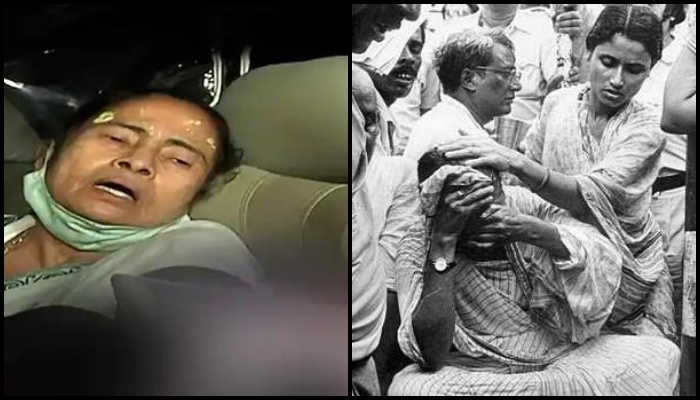
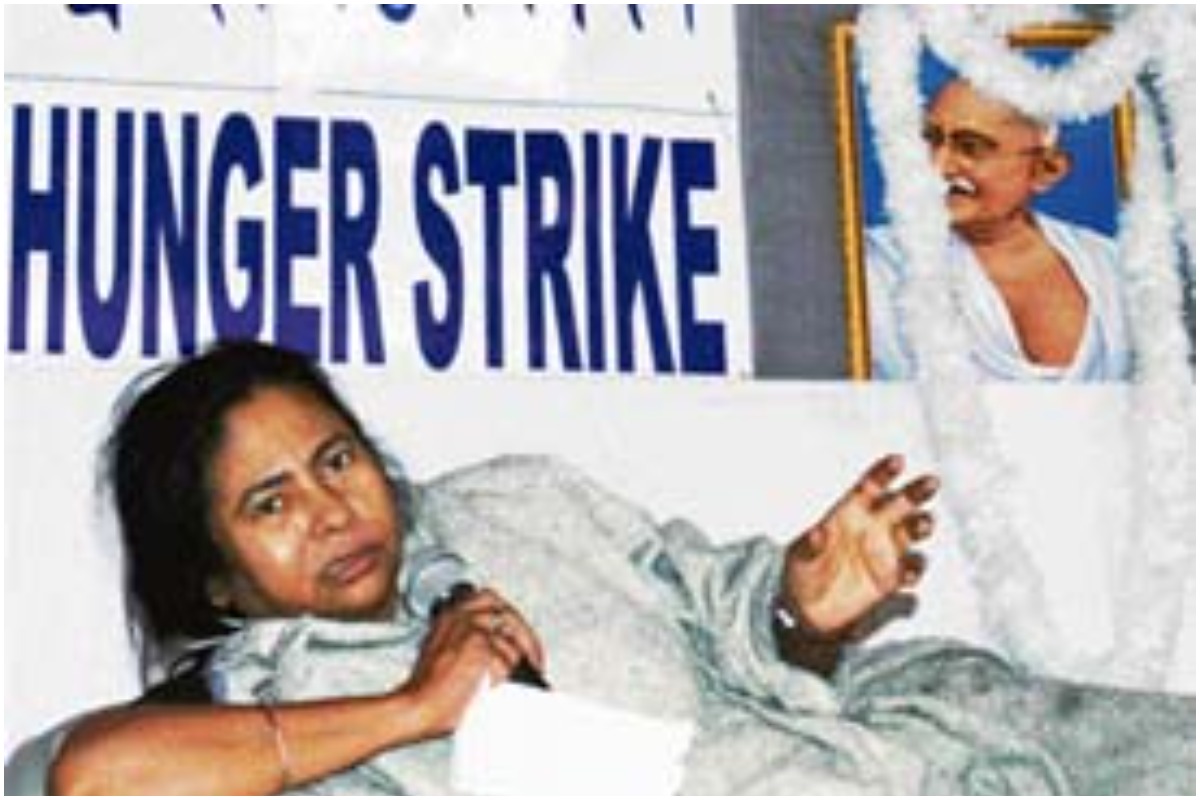
Bengal trusted Mamata because they saw how she sat hungry for them.
Hunger strike by Mamata
Bengal trusted her because they saw how the Communists beat her up because she was fighting for them.
An attempt to murder Mamata Banerjee when she was a Youth Congress leader
And they knew, that it was a fight between Mamata, who wanted to better their lives, and the Communists, who wanted to retain power.
You see, Bengal and its inhabitants are mesmerised by their illustrious past. The dreams of revolution against the British, the fight against the tyrants, and intellectuals who fought against all odds are central to being a Bengali. Politics, as such, is not just dinner table conversation, it is a conversation held with strangers – at bus stations, at cigarette shops, at paan shops, in the bus, in the trams – just about everywhere. And while talking about politics, one often hears tales of how, armed with passion, their ancestors fought the British. How today as people throng to have breakfast at Flury’s, their family fought the British when Indians were not allowed. How when they were in college, they used to partake in unions to ensure that labourers got their rights.. so on and so forth.
That element of ‘revolution’, a sentiment that spurned the freedom struggle and something as vicious as the Naxalbari movement, is engrained in Bengal and in the blood and hearts of Bengalis.
Mamata, with her latest drama, which for the rest of the world is but a meme to laugh at, is trying to recapture the very sentiment that brought her to power.
A daughter of the soil fighting the tyrants to come back to power so she can fight for the people. It is the perfect plan. Prashant Kishor said it because he has studied Bengal and Mamata replicated it because she has lived through it.
Only this time, it is entirely possible that Mamata is not viewed as the revolutionary being silence, but someone who is perceived to be tyrant silencing the revolutionaries.
As the chants of Jai Shree Ram grow louder, one thinks that perhaps this time, her shenanigans won’t work. What Mamata should also remember is that Bengal, while patient with tyrants, refuses to look back once they vote them out of power. They gave the Communists 35 long years and when they finally got fed up, they voted TMC to power and never looked back. This time, Bengal’s sentiments may just lie with those who are being murdered, hanged from trees, beaten up by a party that seems to be losing grip on power and much to her chagrin, swollen ankles may not help to bring back her lost glory.
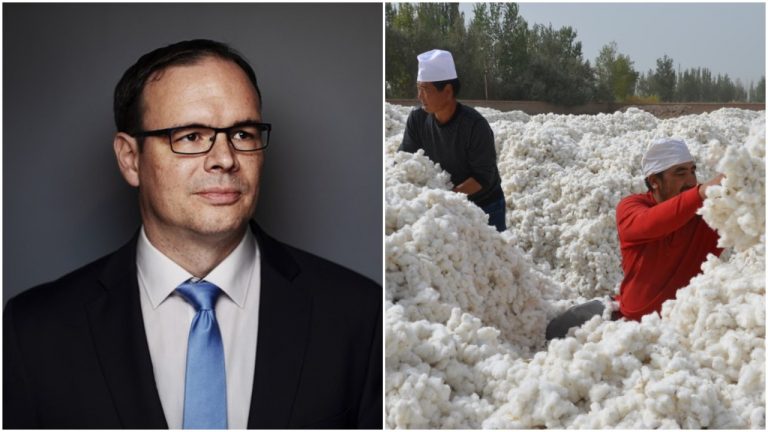
Dr Adrian Zenz, one of the world’s leading scholars on China, has been become the latest target of the People’s Republic of China (PRC). Zenz, who is instrumental in exposing China’s human rights violations against minorities in Tibet and Xinjiang, is now facing legal suits from Chinese companies.
According to the reports, several enterprises and individuals in Northwest China’s Xinjiang Uyghur Autonomous Region have decided to sue German anthropologist Adrian Zenz for his role in bringing to light the Chinese government’s campaign of repression and persecution directed against ethnic Uyghur Muslims in Xinjiang. The state-backed companies and individuals in Xinjiang have labelled Zenz a ‘rumourmonger’.
The Chinese government mouthpiece Global Times reported that the local people said that Zenz spread “forced labour” and other rumours related to Xinjiang, which damaged their reputation and caused them to suffer economic losses. They have filed a civil lawsuit with a local court in Xinjiang, demanding that Zenz apologize, restore their reputation and compensate them for their losses.
Who is Adrian Zenz?
Adrian Zenz, a German researcher and an expert on China, has done extensive research on the human rights violation carried out by the Communist Party of China on its minorities in several provinces. He has studied the plight of the Uighur Muslims and other ethnic minorities living in China.
In 2017-2018, Dr Zenz’s analysis played a significant role in exposing the Chinese government’s repression and mass internment campaign against ethnic Uyghur persons in Xinjiang. In 2019, Dr Zenz had also testified before the US Congress about state exploitation of the incarcerated Uyghur persons.
Zenz had carried out a detailed investigation for years to reveal the ugly truth about how the Chinese government treats the Uighurs residing in occupied East Turkistan.
A few months ago, he had released a report titled “Coercive Labour in Xinjiang: Labour Transfer and Mobilization of Ethnic Minorities to Pick Cotton”, which showed how China had forced more than half a million Uighur and other ethnic minority labourers from Xinjiang to pick cotton by hand.
According to Zenz, the Chinese Communist Party, under the excuse of ‘poverty alleviation’, has carried out coercive state-mandated labour transfer programs that forced Uyghurs to pick cotton by hand, despite cotton-picking being mechanised in other parts of China. The report also showed that in 2018, three regions in Xinjiang alone provided 570,000 Uighur and ethnic minority labourers.
In March 2021, Adrian Zenz released another report, titled “Coercive Labour and Forced Displacement in Xinjiang’s Cross-Regional Labor Transfer Program”, that provides new evidence of Chinese human rights violations. The report alleged that the CPC was carrying out forced labour transfers not just for economic purposes, but it was trying to force the Uyghurs and other ethnic labourers to move away from their homeland and traditional occupation. The Chinese government wanted to reduce the population density of Uighurs in Xinjiang, the research paper said.
China carried out crimes against Humanity, says research by Dr Zenz
As per international criminal law experts, the Chinese government’s labour transfer scheme meets the criteria for ‘Crimes Against Humanity of Forcible Transfer and Persecution’ as defined under the Rome Statute of the International Criminal Court.
The reports published by Dr Zenz has been instrumental in exposing China’s Human rights violation against its own population. The United States, Canada and the Netherlands have taken a strong note of these new studies and classified the CCP’s actions in Xinjiang as genocide against the Uyghur people and other ethnic minorities.
Perhaps, the severe backlash has unnerved the CCP that has in response chosen to act against Dr Zenz and many other such scholars and institutions that are trying to expose the truth.
We had earlier reported in detail regarding how China has been exploiting Uyghur slave labour to supply cotton to the Western markets.
Ever since China forcibly took hold of Tibet in the early 1950s, it has strived hard to culturally assimilate the region into the Mainland. As a part of this campaign, it has come down hard against Buddhist monks, suppressed dissenting voices and expression of religious beliefs that it regards as incongruous to the idea of China.
It was this campaign of repression against the fellow Tibetans that forced their spiritual leader Dalai Lama to flee China in 1959 and seek asylum in India. Since then, the clampdown in Tibet has only increased.
Repression in Tibet an outcome of CCP’s efforts to “Sinicise” religions and exact loyalty
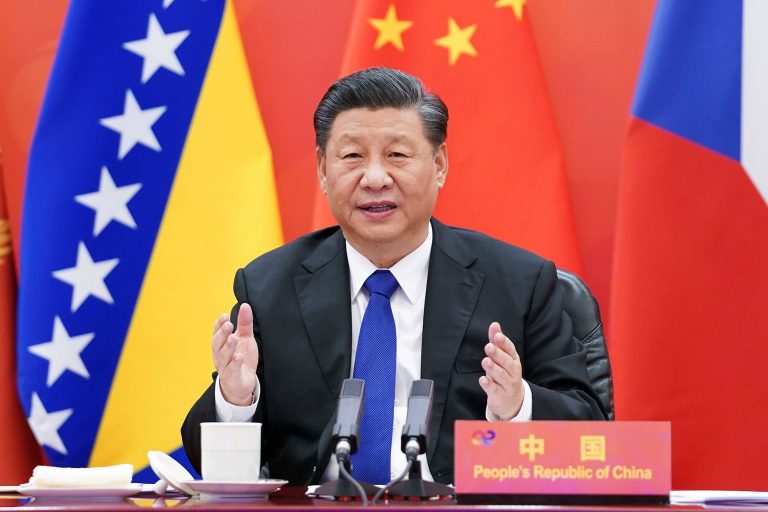
Though the Communist regime in China has a long history of curtailing religious freedom, especially in the restive province of Tibet, with the authoritarian leader Xi Jinping at the helm of affairs, its efforts have become increasingly hostile towards religion and initiated campaigns to “Sinicise” them.
The Chinese Communist Party has exhibited eager alacrity in ‘Sincising’ all religions, in an attempt to tighten its grip over civil society. Just as it deployed sophisticated surveillance system to keep a tab on Uyghur Muslim minorities in Xinjiang, China is using new tools of surveillance to control the Tibetan Buddhist monks and turn them into a tool of CCP, a new report titled “Party Above Buddhism: China’s Surveillance and Control of Tibetan Monasteries and Nunneries” has revealed.
China’s pervasively intrusive surveillance of Buddhist monks and monasteries
The report that was released on 10 March 2021 documents measures and policies undertaken that force Buddhist monks and nuns to serve the interests of the Communist Party. The changes affected by the new policies empower CCP with direct supervision of Buddhist monasteries and nunneries. Party cadres and police have been placed inside religious institutions, in a bid to pressurize the monks. They are also forced to denounce Dalai Lama for the sake of China’s unity, the report says.
According to the report, the current budget of the United Front Work Department, the agency that now has direct oversight of all religions in Tibet, has risen three times what it used to be in 2016. In a matter of 4 years, the budget shot up from 23.9 million yuans in 2016 to 62 million in 2020 underscores China’s commitment to strengthening the control of the Tibetan region.
Similar to that in Xinjiang, China also runs detention centres in Tibet that are euphemistically called “reeducation” camps by the communist leaders. In these reeducation camps, monks and nuns are hustled into extending their loyalty to the CCP, often at the expense of their religious beliefs. China has also enforced a “Four Standards” policy that basically requires monks and nuns to serve as propagandists for the government.
The report outlines how the Sinicisation of Tibetan monasteries requires Tibetan monks, nuns to shun their moral visions and conform to the CCP’s ideology. As a part of “policing monasteries”, police officers are deployed in Tibetan monasteries to keep an eye on their activities.
Besides the obvious purpose of surveillance, the decision to have police officers inside the monasteries in Tibet was taken with the aim of stopping incidents of self immolation. Monks, in an attempt to awaken the public conscience over the atrocities committed by the Communist authorities set themselves on fire. The morbid incidents garnered global attention, giving voice to the oppression underway in Tibet.
In addition to this, local government authorities and Communist Party officials also interfere in the working of the monasteries through the way of “management committees” the report highlights. The communist cadres have a direct role in the management of monasteries through “management committees”. Monasteries are also mandated to fly Chinese flags and have portraits of the CCP leaders in their precincts.
When unrest flares up in the Tibetan region, the spotlight inevitably falls on religious institutions for being responsible for stoking the disruption. Buddhist monks and nuns are made scapegoats by the local authorities hard-pressed by the senior leaders to identify the cause of the upheaval and bring to “justice” those responsible for it. During the political upheaval in 2013-2014, monks and nuns were arrested for participating in a peaceful protest and for supposedly planning future protests.
Buddhist monks and nuns subjected to indoctrination
Not only are monks and nuns are subjected to extensive surveillance, but they are also heavily indoctrinated to generate loyalty and obedience. A report published in 2018 chronicled how the monks in Tibet were subjected to political indoctrination. Tibetan religious leaders were asked to take mandatory “training” that aims to reduce the influence of the exiled Tibetan spiritual leader Dalai Lama while at the same time attempts to build loyalty to the communist party.
Though the Chinese constitution grants religious freedom to its citizens, it is a fact that the Chinese Communist Party has placed many constraints on it, especially in Xinjiang and Tibet. Repressive measures are used to discourage people from manifesting their religious inclinations, and dissent against restrictions on religious activities is treated as an insult to the CCP, often resulting in arbitrary imprisonment at “reeducation” camps.
Devotion to exiled Dalai Lama is one of the core tenets of Tibetan Buddhism and China is determined to end this religious observance. Intrusive official presence in monasteries, widespread surveillance, regular reeducation campaigns, curbs on travel and communications, discouraging religiosity are some of the tools used by China to bring an end to this devotion to Dalai Lama and align the residents to the CCP ideology.
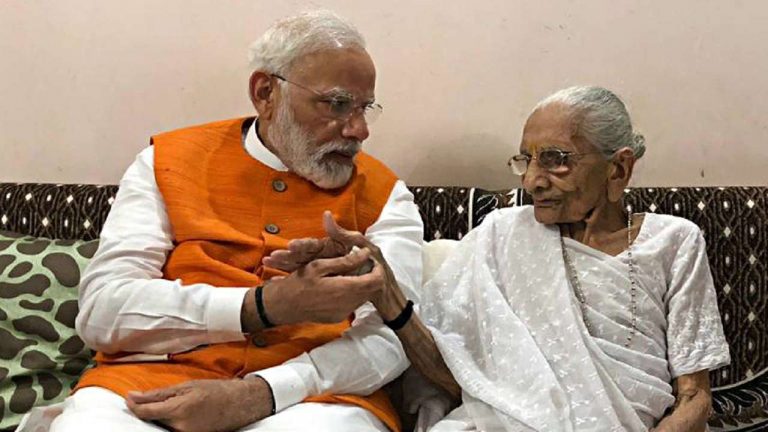
Prime Minister Narendra Modi on Thursday announced that his mother Heeraben has received the first dose of the Covid-19 vaccine in Gandhinagar, Gujarat.
Taking to Twitter, PM Modi said that he was happy to share that his mother has taken the first dose of the coronavirus vaccine on Thursday. The Prime Minister also urged people to help and motivate eligible people to take the vaccine.
Happy to share that my mother has taken the first dose of the COVID-19 vaccine today. I urge everyone to help and motivate people around you who are eligible to take the vaccine.
PM Modi’s mother, who is 90-year-old, is eligible for vaccination under the ongoing Phase 2 of the nationwide Covid-19 vaccination drive, which intends to immunise all people above the age of 60 and people above the age of 45 with co-morbidities.
Earlier this month, PM Modi had kickstarted the next phase of the Covid-19 vaccination drive in the country by taking the first dose of indigenously-developed Covaxin vaccine, developed by Hyderabad-based firm Bharat Biotech. The second phase of vaccination started on March 1.
The countrywide vaccination drive was launched on January 16, with healthcare workers receiving the vaccination. On February 2, the immunisation of frontline workers was also started.
As per the latest figures, until Thursday, nearly 2.52 crore jabs have been inoculated in the country. Out of the 2,52,89,693 vaccine doses administered, 71,70,519 healthcare and 70,31,147 frontline workers were given the first dose, while 39,77,407 healthcare and 5,82,118 frontline workers have been given the second dose.
In addition to that, 9,29,359 people aged 45 years and above with comorbidities and 55,99,143 senior citizens have also been inoculated with the first dose of vaccine.