Home Blog Page 4515

40 year old Mohammed Intezar trying to marry minor Hindu girl, insist Hindu orgs, Delhi Police denies: Details

Social media websites are awash with a viral video about a row at a wedding in Ward No.41 of Aman Vihar, Delhi. The Hindu activists have alleged that a minor Hindu girl was converted and being married off to a 40-year-old Mohammed Intezar Hussain. They have also accused Delhi Police of not cooperating in halting the criminal act. On the other hand, Delhi Police has rubbished the allegations, stating that both the marrying individuals are adults and have the agency to decide whom to marry.

The incident took place on Friday, 5 March 2021. The row erupted after Hindu organisations reached the spot and opposed the Nikah ceremony that was underway. Tensions between the two communities in the region flared up, after which a contingent of the police force was deployed to avert any untoward incident. Additionally, Section 144 was imposed in the region.

Following the incident, OpIndia got in touch with the sparring parties to know more about the incident. While Mohammed Intezar’s family refused to talk to the media about the case, Bajrang Dal activist Vishal Singh Chandel shared his side of the story about the acrimonious quarrel between the two communities. Chandel said he received a tip-off that a 17-year-old girl studying in 7th standard was being married off to a middle-aged man.

The issue would have gone unnoticed, save for the dissonance between the age of the girl and the standard in which she was studying. Speaking about the discrepancy, Chandel said a fake Aadhar card was prepared to show the girl as an adult. He also added that based on this fake Aadhaar card, the Delhi Police declared the girl an adult.

Chandel also stated that he bears no grudge against the Muslims or is not prejudiced against them. Characterising the case as ‘Love Jihad’, he said the nikah ceremony was carried out in a Hindu dominated area amidst the din of DJs and music. He also alleged that the girl was converted to Islam, calling it an affront to the Hindu society.

“The Hindu family of the girl has been taken somewhere else by the police administration so that we, Hindu workers, cannot meet them. The top police officers called us and we had a meeting with them. They have assured that the authenticity of the Aadhaar Card will be checked, along with the girl’s school ID. However, the Delhi Police have not initiated any investigation into the matter and instead have imposed Section 144 in the area,” a visibly disgruntled Chandel said.

While talking to Sudarshan News, he said, “Why has the police converted the place into a camp?” Are Hindus terrorists? Do members of the Hindu community indulge in stone-pelting? We are a civilized society, we do not fight with anyone.”

At the same time, another VHP worker said, “I spoke to the father’s girl and assured him that if he is under duress or being pressurised, our organisation will help him financially and get his daughter married to a Hindu boy.”

The said VHP functionary further declared that they are ready to hand over a plot worth Rs 15 lakh to the girl. He said Mohammed Intezar could not even afford a good pair of slippers, how he would take care of the girl. He also said Intezar’s family could not even provide a square meal to the girl.

A local person in the area echoed similar sentiments, stating that the concerned Muslim family is poor and their financial condition is weak. He conjectured that the girl was brainwashed into marrying the middle-aged Muslim man. Quoting the girl’s aunt, the person said that even relatives staunchly opposed the marriage. Neighbours believe that there is something fishy behind the entire matter. Locals have reiterated the Hindu organisations’ assertion that the girl is a minor. Members of the Bajrang Dal in the area claimed the family members were unhappy with the marriage.

Bajrang Dal convenor Satish Gupta said the whereabouts of the girl’s family should be made public. Though the DCP had assured a legal inquiry into the matter, Gupta said he would raise the matter on a bigger platform. The video of the entire case has already gone viral on social media, in which relatives are seen talking about ‘Love Jihad in a Hindu Area’.

The Bajrang Dal activists have accused the police of trying to sweep the case under the rug. They have released a video on social media, stating that the entire area has been converted into a cantonment by the police. Chandel says this is the first time when he has witnessed a case of ‘Love Jihad’ in a predominantly Hindu-majority region.

This area comes under the Kiradi assembly constituency. Opindia spoke to former MLA and BJP leader Anil Jha here. He said the marriage will not be allowed since it was carried out under ‘Love Jihad’. He said he has recently reached Delhi and is keeping a close eye on the matter. He said, “It appears that the family members of the girl were paid money for the marriage. This is unacceptable. We will not allow this marriage to happen this way.”

We also contacted Rituraj Jha, the current MLA and AAP leader of Kiradi. But he refused to talk about it. He said he does not give statements on phone and would speak about the matter if he is asked about it in his office. DCP Pramod Kumar Mishra, while denying the allegations against the police, said both the girl and the boy are adults and rumours going around in the case are baseless.
India should increase cooperation with Armenia in response to Turkey’s dalliance with Pakistan, experts argue

One of the most significant geopolitical events of 2020, if not the most important, was the Nagorno-Karabakh War between Azerbaijan and Armenia where the former secured strategic victories over the latter. During the conflict, Azerbaijan received support from Turkey and Pakistani fighters reached the region as well in order to aid Azerbaijan’s war efforts.

One of the direct impacts of the war was that the Armenian National Committee of America (ANCA), the largest Armenian American political organization, urged the United States to demand the blacklisting of Pakistan by the FATF for funding “Jihadist Mercenaries” against Armenia.

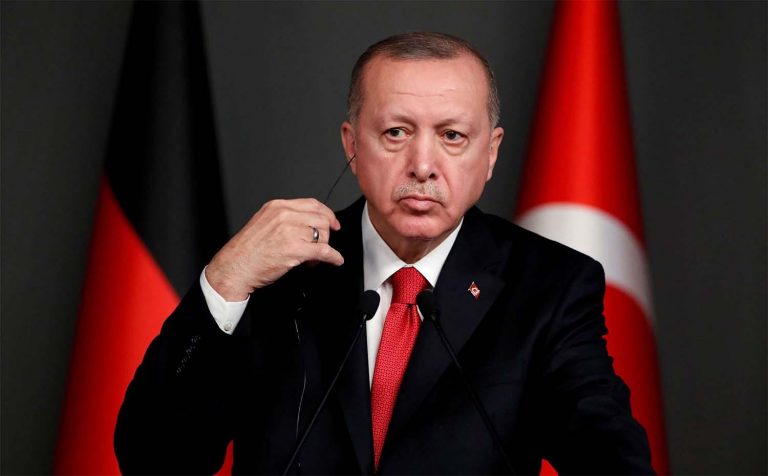
Now, regional analysts believe India and Armenia should enhance cooperation between themselves in order to counter the Pakistan-Turkey nexus. In recent times, Turkey has backed Pakistan over key matters such as Kashmir. Reports have also surfaced which link radical Islamist organisations like PFI coordinating with Erdogan backed Turkish NGOs.

Yeghia Tashjian, regional analyst and researcher, at a webinar organised by New Delhi based international observer group Red Lantern Analytica (RLA) on the 5th of March, said that Turkey is attempting to establish an alliance with countries such as Pakistan in order to counter the influence of India and Russia.

The subject of the webinar was “Deciphering Hatred: Armenian genocide by Turkey & Hindu and Sikh Genocide by Pakistan”.

Tashijan is of the opinion that India, Iran and Armenia should increase cooperation between themselves to curtail Turkish expansionism under Erdogan. To further his point, he said that there is a legitimate threat that Turkey might send its mercenaries to Kashmir.

Anush Ghavalyan, an analyst from Artsakh (Nagorno-Karabakh), said that Artsakh had received a great deal of support from Indians on social media and hoped that India will continue its support for the region.

During the conflict, India had announced that it India “followed with great concern the escalation of hostilities in Nagorno-Karabakh with considerable ingress of Armenian forces into Azerbaijan” and had called for “respecting each other’s’ territorial integrity and inviolability of existing borders”.

Turkey was responsible for the infamous Armenian genocide, when a million ethnic Armenians were targeted through systematic ethnic cleansing by the Ottoman Empire during World War 1.

Thus far, India has maintained strategic neutrality regarding the matter. However, given Turkey’s recent inclinations, experts argue that India should respond by increasing its cooperation with Armenia at an international level.

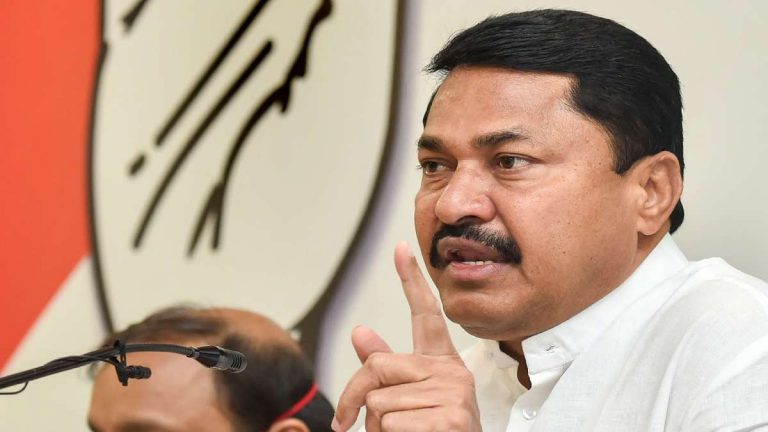
“Has Ram given contract to collect toll in his name?” Maharashtra Congress Chief Nana Patole questions the Ram Mandir donation drive

While the entire country has united to contribute towards the construction of the Bhavya Ram Mandir in Ayodhya, a dream which is coming true almost after 500 years, the Congress party is busy playing politics over the same. Taking a dig at the Ram Mandir donation drive, Maharashtra Congress chief Nana Patole alleged that he was threatened by some people for not contributing to the construction of the temple, reports Times Now.

“I asked one of them that 30 years ago you had taken the money to build the temple, where is that money. So he replied that if you did not give the money, then you will be thrown out of religion,” Patole said.

Maharashtra Congress chief equate the donation drive to toll collection

Falling to a new low, the Maharashtra Congress chief went on to equate the donation drive to toll collection, insinuating that BJP has been siphoning the huge sum being collected from common citizens in the name of Lord Ram.

“A person named Manohar Kulkarni came to me today and sought donations for the Ram temple. He threatened me, as I did not donate. So, I want to ask the government under which charity law can such donations be collected. Or has Lord Ram given them (BJP) a contract to collect toll? Who are they to collect donations using the name of Lord Ram?”, Patole asked in the Legislative Assembly on March 4 (Thursday).

Leader of Opposition Devendra Fadnavis said that it was improper to raise the issue in the Assembly, as the discussion was not about Ram mandir. “Those who are known to extort money can’t understand the dedication. If you have guts, let’s have a discussion on the Ram temple,” he said.

This heated exchange of words compelled the Deputy Speaker of the Assembly Narhari Zirwal to adjourn the House for 10 minutes amid sloganeering by ruling and Opposition members.

Congress party’s stand regarding Ram Mandir has not been very clear. On one side, the party leaders like Digvijaya Singh and Raghunathan Pillai (Kerala Congress) made donations for the construction of Ram Mandir and inaugurated the fund collection drive respectively. The Rajasthan wing of the National Students Union of India (NSUI), the student wing of Congress, launched a campaign named ‘Rs 1 Ram k Nam’ in Rajasthan on Tuesday to collect donations from students for the construction of the Ram Mandir. On the other side, Congress has always tried distance itself from the Ram Mandir issue to maintain its claim of being a secular party.

Over 10 crore people donated over Rs 2500 crore in 45 days in the world’s biggest crowdfunding campaign for Ram Mandir: VHP

The Central Vice President of Vishva Hindu Parishad and General Secretary of Shri Ram Janmbhoomi Teerth Kshetra (Trust) Champat Rai addressed a press conference on Saturday (March 6), to give a briefing on the now-concluded Ram Mandir construction donation drive, which was a part of the 45-day crowdfunding campaign launched by the Vishwa Hindu Parishad (VHP).

Speaking about the “Shri Ram Mandir Nidhi Samarpan” drive, VP Champat Rai said that the world’s biggest campaign for the construction of the Bhavya Ram Mandir at Ayodhya, which began on January 14 and ended on February 27, 2021, unified Bharatvarsh from east to west and north to south.

The Vice President of the Hindu organisation informed that they had accomplished the target of Samarpan in 400,000 villages. “Although the statistics of the families contacted are yet to come, it is estimated that we have liaised with about 100 million families and Samarpan (contributions) have been received from every quarter and walk of life of society”, said Champat Rai, furthering that “even if the final figures are yet to come, it can be said, based on the banks’ receipts till February 4, that the Samarpan amount would cross Rs 25,000 million. He also informed that more than 10 crore families across India made contributions towards the construction of Ram Mandir.

“Ram devotees in every nook and corner of the country have made their contributions. From the North-Eastern region of Bharat, the people of Arunachal Pradesh have contributed Rs 45 million, Manipur Rs 20 million, Mizoram Rs 2.1 million, Nagaland Rs 2.8 million, Meghalaya Rs 8.5 million, and from Southern states, the people of Tamil Nadu contributed Rs 850 million, and Kerala Rs 130 million.”

The VHP Central Vice President informed that to fulfil this mammoth task, almost 900,000 Karyakartas divided themselves in 175,000 teams and went door-to-door to speak to people and collect donations that would be utilised in the construction of the Ram Mandir in Ayodhya.

Overwhelmed by seeing the volunteer’s devotion, Rai stated that the fund-raising campaign has ended with generous contributions from crosssections of people, including residents of far-flung villages of India, blurring religious barriers. He said he was touched to learn that in many places even beggars, daily wagers and small farmers made their prayerful offerings for the humble cause.

Giving an insight into how the entire team worked in unison to achieve the goals, Rai said that the donation amount was deposited in bank accounts through 38,125 Karyakartas. To maintain transparency of the entire campaign, while 49 control rooms were working across the country, 23 qualified Karyakartas led by two chartered accountants at the main centre in Delhi, were constantly in touch with the entire network to monitor the accounts.

Lauding Hyderabad’s Dhanusha Infotech Company for creating a flawless app which acted as a digital bridge among the Karyakartas, banks and the trust, Rai opined: “The app, created by Dhanusha Infotech Company of Hyderabad, did a commendable job as a meticulously-built digital network to act as a digital bridge among the Karyakartas, banks and the trust.

Updating about the work in progress at the Janmbhoomi site, Champat Rai said that the foundation digging and earth removal works are almost 60% completed and it is expected that the foundation filling work will get started in the first week of April-2021.

Though the donation drive is over, Champat Rai said that those who missed this Samarpan (contribution) drive, and want to make their contributions, can do it by sending their contribution directly to the account of Shri Ram Janmbhoomi Teerth Kshetra, details of which are provided here.

Ram Mandir donation drive

The Shri Ram Janmbhoomi Teertha Kshetra trust which is overseeing the construction of the Ram Mandir in Uttar Pradesh’s Ayodhya had launched a mass contact and contribution campaign, the ‘Shri Ram Mandir Nidhi Samarpan’ on January 15.

Nearly 1.50 lakh VHP activists have been collecting funds under the ‘Shri Ram Mandir Nidhi Samarpan’ drive. Thirty-seven activists have been deputed to deposit the donations in the three nationalised bank accounts of the trust.

The Ram temple trust has opened accounts in the State Bank of India, Punjab National Bank and the Bank of Baroda. From remote villages, the Hindu organisation activists are bringing funds and depositing them in the bank accounts. The find collection drive concluded on February 27. While the fund collection drive has seen massive participation from Hindus, many VHP and Bajrang Dal activists are being brutally attacked, assaulted and even killed for being a part of this campaign.

‘No one can stop cow slaughter in West Bengal,’ claims Mamata’s Minister Siddiqullah, says Yogi fueling ‘Hindu mentality’

On Saturday, Trinamool Congress MLA Siddiqullah Chowdhury sparked a new controversy by mocking Hindu sentiments and giving veiled threats over the issue of cow-slaughter in West Bengal, reported TV9 Bhartvarsh. He said that no one can stop cow slaughter in West Bengal.

Ahead of the upcoming State Legislative elections, he said, “Uttar Pradesh CM Yogi Adityanath had come here and said that if BJP comes to power, then it will end cow slaughter in the State.” He alleged, “Cow slaughter is happening in Bengal for the past 1000-1200 years. Everyone eats beef, including Muslims and others. What has beef got do with vote? The attempt is to further the Hindu mentality.”

On being asked whether he supported cow slaughter, Chowdhury claimed that eating beef was common at 5-star restaurants and amongst foreign tourists to India. He said, “Bengalis will be 100% angry if beef is banned. If we don’t eat it, where would we keep it? We will then have to force-feed.” He alleged that most beef exporters in West Bengal were Hindu Marwaris and not Muslims.

Siddiqullah Chowdhury claims PM Modi’s hand in Ram Mandir verdict

Furthermore, he claimed that the image of Prime Minister Narendra Modi has been tarnished after the Ram Mandir verdict. On being informed by the Tv9 Bharatvarsh reporter that the judgment was given by the Supreme Court, he cast aspersions on the integrity of the Judiciary.

Siddiqullah Chowdhury remarked, “Power of PM’s post is bigger than that of the Supreme Court. PM Modi is involved in the formation of the collegium, the appointment of judges and their transfer…”Muslims will not vote for Modi. The issue of Babri Masjid and the building of Ram Mandir at the site will make Muslims think 10 times before voting for Modi. The Supreme Court verdict has hurt the sentiments of the Muslim community. We are not afraid to speak the truth. Babri is certainly an issue here.”

Quran would prevail over Constitution, said Siddiqullah Chowdhury

Siddiqullah is the same person who had stated in September 2018 that the Quran will prevail over the Constitution. He is also the President of the Jamiat Ulema-e-Hind (West Bengal).

Expressing his displeasure towards the ordinance banning instant Triple Talaq, he had said, “For us, our holy scripture, the Quran Sharif, is supreme and if any constitutional provision or any law contradicts the Quran, then our scripture will prevail and not the law or Constitution. BJP is playing the religion card and is playing with the Constitution. The ordinance will have no effect on Muslims. No one will adhere to it, but will follow the religion and the holy book.”

13-year-old Ludhiana girl abducted by one Babar with the help of his mother rescued from Surat, was subjected to sexual exploitation

A case of abduction and sexual exploitation of a 13-year-old minor girl has come to the fore in Ludhiana, Punjab. The accused, identified as Babar, with the help of his mother, kidnapped the minor girl and took her away to Surat. It is being reported that the girl was repeatedly subjected to sexual exploitation by Babar while he held her captive.

The suffering endured by the girl came to an end after Punjab and Haryana High Court ordered the state police to conduct a raid and get the victim back. The order was issued after the victim’s mother moved court pleading for justice.

On January 30, the family of the kidnapped girl, who hailed from the Kanganwal area, filed a complaint of a missing girl with the police. 4 days later, on February 3, an FIR was registered which said that the 13-year-old girl was kidnapped by a boy named Babar, who had taken her along with him to Surat. The complaint also mentioned that Babar’s mother had abetted the kidnapping of the minor girl.

After the police were unsuccessful in their endeavour to find the girl, the family of the victim informed Ashwani, the chief service officer of Sanatan Dharma Raksha Manch and with his help, approached the Punjab and Haryana High Court and pleaded with them for intervention. The High Court directed the police to initiate action against the culprit, following which the police went to Surat and rescued the girl.

The girl was brought back to Ludhiana on February 27. Babar, accused of abducting the minor girl from Ludhiana and spiriting her away to Surat, was also arrested and brought to Ludhiana. After recording her statement, the minor girl was sent for medical examination. The police say further action will be initiated against the accused after the medical report is out.

‘Biggest crime is I am Muslim’: TMC MLA breaks down into tears after being denied ticket, calls party the ‘B Team’ of BJP

Sitting Trinamool Congress MLA from Nalhati, Moinuddin Shams, has announced that he has quit the party after he was denied a ticket for the 2021 West Bengal Assembly Elections. In a hysterical video on Facebook, the TMC MLA railed against the party for not awarding him a ticket.

Struggling to fight back his tears, Shams alleged that his only fault was that he worked among the people for their development and did not collaborate with Sand Mafia and Stone Mafia. He went on to add that his biggest mistake was that he was a skull-cap wearing Muslim.

Moiunuddin Shams claimed that he was told to not wear his skull cap but he refused to do so. He says that he was not nominated from Nalhati constituency because “how could a Muslim be an MLA from Nalhati?” He went on to say that he will definitely contest the coming elections and called the TMC a ‘B-team’ of the BJP.

“I will not leave Nalhati. I will not leave Nalhati’s mothers, I will not leave Nalhati’s brothers,” said Moinuddin Shams. He says that he will soon file his nominations from the constituency and will announce the party he will contest from within the next couple of days.

The Trinamool Congress has nominated Rajendra Prasad Singh from the constituency. Shams has vowed that he will contest the elections against Trinamool Congress and ensure that the party is defeated in West Bengal.

However, his claim that Mamata Banerjee is anti-Muslim does not appear to hold any water as the rampant minority appeasement under the current ruling dispensation in West Bengal is well documented. Even though Shams was not nominated, 42 candidates from the party were from the Muslim community.

This time it’s personal: Suvendu Adhikari vs Mamata Banerjee in Nandigram is officially on, the most high profile contest this election season

The BJP has announced that Suvendu Adhikari will be the party candidate versus Chief Minister Mamata Banerjee from Nandigram in West Bengal, setting up the most high profile contest among the states that go to elections this election season.

BJP’s IT Cell head Amit Malviya said, “Mamata Banerjee will soon join the inglorious list of incumbent Chief Ministers to lose their own elections. Let the drums roll…” It was expected that Suvendu Adhikari will contest from Nandigram after Mamata Banerjee announced her candidature from the constituency.

The BJP has formally made the announcement, setting up the most anticipated fight of the election season. Nandigram is Adhikari’s home turf and simultaneously, holds special significance for Mamata Banerjee.

Nandigram is the epicenter of the political storm that propelled Mamata Banerjee to the Chief Minister’s office, helping her oust the Left from the corridors of power. During those days, Suvendu Adhikari was the architect of the Trinamool wave and Mamata’s right hand man.

Since then, a lot of bad blood has developed between the two which culminated with Adhikari’s resignation from the party. Adhikari subsequently joined the BJP. When Mamata Banerjee first announced her decision to contest the elections from the constituency, Adhikari had declared that he will quit politics if he does not defeat her by a margin of at least 50,000 votes.

After a decade, Nandigram again has the opportunity to herald the advent of a new era in Bengal politics. And this time, the battle for Nandigram is not just political, it is personal.

Islamists in Pakistan try to lynch a man alleging blasphemy, man says he had only questioned maulana for not solving problem after taking money

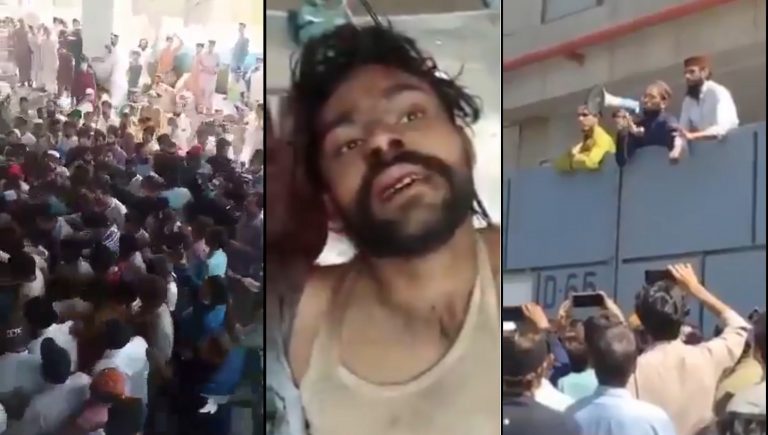
In a shocking incident, an Islamist mob in Pakistan’s Karachi tried to lynch a man to death after he had allegedly desecrated a copy of the Quran. The angry mob attacked the man on the charges of blasphemy despite the presence of police officials.

According to the South Asia Media Research Institute (SAMRI), the Islamist mob thronged near a garments factory in Karachi and dragged a man to lynch him for allegedly desecrating the copy of the Quran. However, the man has denied the charges, and said that he had questioned maulanas for taking money promising to solve problems, but not doing anything after that.

A video of the incident at JB Garments has gone viral on the internet, in which one can see how a violent mob stormed the gates of the factory to carry out an attack. Amidst the chants of “Naara-e-Takbeer”, the Islamist mob attacked the man. However. the man survived the attack, although he was critically injured.

Shockingly, the entire incident occurred in the presence of Police officers and Rangers, who were heavily outnumbered against the unruly mob. The police force failed to protect the victim.

Several other videos of the incident also have appeared on social media.

Man denies the allegations

After the attack, the victim narrated the entire incident, and denied disrespecting the Quran. He said that he was going through some family problems, and had approached a maulana to solve it. The maulana had taken money from it but did not do anything to solve his problem. One day he met a friend, who asked about the status of his issue with his wife. The man said that despite paying the maulana, the problem remains and his wife has not called him for seven months. Hearing this, his friend said that he knows a different maulana who can help him. Then the man told him all maulanas take the money and say after a few weeks that forget the girl. So I will pay him even twice the amount, but only after the work is done, he told his friend. His these comments made the mob try to lynch him, he said, and denied making derogatory comments about the Quran.

Any critical reference to Prophet Muhammad or Islamic symbols is considered ‘Blasphemy’ or against Islam’s principles, which has become a rallying cry for the Islamists around the world to unleash their primaeval instinct of indulging in brute violence and communal riots against the ‘non-believers’.

Be it the brazen shooting of the Charlie Hebdo cartoonists or the brutal beheading of Former Hindu Mahasabha leader and the founder of Hindu Samaj Party Kamlesh Tiwari or the Bengaluru riots, ‘blasphemy’ is often used as an excuse by these rabid Islamists to release their harboured pent-up hatred and intolerance against those who dare to speak up uncomfortable facts.

Almost 100% of China’s public spaces under watch: Here is how China turned neighbours into agents of the Chinese Communist Party

It is a fact that the Chinese Communist Party (CCP) ruling over China is carrying out extensive surveillance of its people. The country has already deployed sophisticated new technology to aid its various surveillance programs. It is racing rapidly towards becoming the first country in the world to implement a pervasive system of algorithmic and technology-aided supervision to keep a vigil on its entire population, especially in public spaces. A report published on Onezero now states that China is on the brink of achieving 100 per cent surveillance of its public spaces with the help of the ‘Sharp Eyes’ surveillance program.

The program got its start in 2013 from a backwater region of Pingyi County, seven hours north of Shanghai, where the local government began installing thousands of security cameras across rural and urban areas. By 2016, a total of 28,500 cameras were installed. Even the smallest of the villages had at least 6 cameras installed, a state media report said.

However, an intriguing facet of this unique surveillance program was that it turned neighbours into agents of the Chinese Communist Party, helping them in their snooping activities. The footage from the CCTV camera was not only monitored by the law enforcement officials and automated facial recognition algorithms, but they were also fed to the residents themselves with the help of special TV boxes installed in their homes. The residence could watch live security footage coming from the CCTV cameras and summon the police in case they found anything suspicious.

Two years later, in 2015, the Chinese government announced that it is going to extrapolate the program to the rest of the country. The program was dubbed as “Xueliang Project”, or Sharp Eyes, in reference to a quote made by former Chinese ruler Mao Zedong who once wrote that “the people have sharp eyes” when looking out for neighbours that do not uphold communist ideals.

‘Sharp Eyes’ is among a string of projects built by the Chinese government to strengthen its surveillance program. As China’s economy rose, the Chinese Communist Party commissioned projects to carry out an intrusive vigilance of its people. The surveillance programmes were developed to detect defiance and disobedience among the people, and therefore to thwart a potential uprising.

While many other projects are focused on urban and densely populated areas, Sharp Eyes focuses on rural areas, and is meant to offload work of the police that is chronically understaffed in distant and remote places. In Pingyi County, for instance, the total population is 1 million but there are only 300 police officers to enforce law and order.

What gets reported through Sharp Eyes is not just criminal activities taking place in the neighbourhood but administrative oversight in the form of existing potholes on the road, collapsed manhole covers, and similar other instances are also reported over Sharp Eyes. According to a resident, even dubious Multi Level Marketing scheme happening in a nearby building was reported.

Experts believe Sharp Eyes is a surveillance programme that provides an array of services that could be used differently depending on each town or city’s needs, but the underlying premise is the same: A city is divided into grids and each square of the grid acts as its own administrative unit. Cameras are installed in each grid which then gets fed to local authorities and the residents of the grid. Municipal data then can be aggregated based on reports from each square on the grid.

China’s surveillance programmes dates back to early 2000s

Sharp Eyes is one of the recent additions in the long list of surveillance projects commissioned by China in the last two decades. In the last 20 years or so, projects like the Golden Shield Project, Safe Cities, SkyNet, and Smart Cities were executed by the authoritarian rule of the CCP. Similarly, ‘Sharp Eyes’ is another project in the list that adds teeth to the Communist regime’s surveillance capabilities. The implementation of the above projects, including Sharp Eyes means that more than 200 million public and private cameras installed in public spaces to eyeball people across the wide expanse of China.

Back in 2016, China had set a five-year plan for Sharp Eyes to achieve 100 per cent coverage of China’s public spaces. Though the publicly available reports do not expressly indicate that China has hit that goal, but by all accounts, the country is very close to achieving its target.

China’s surveillance program started in earnest in the early 2000s. As Internet was expanding its footprint globally, China launched the Golden Shield Project, run by the Ministry of Public Security(MPS), with a view to have a strict internet censorship. The project was quite successful in China’s aim of regulating the supply of information to its people. While the project aimed at censoring internet, it also included physical surveillance. The MPS created a databases that included information about 96 per cent of China’s citizens. The nature of information included household information, travel history, criminal background and other such details.

A paper published in the American Journal of Political Science said these databases were used by the Chinese police machinery to identity the delinquents and mark them under the ‘blacklist’ category. They were barred from using public transportation and police would be dispatched if someone who had been blacklisted tried to book a bus, train or airline ticket.

On the heels of the Golden Shield Project, which was fairly successful and provided Chinese authorities with great control over its people, two other surveillance projects were launched. In 2003 itself, Safe Cities was launched which focused on disaster warnings, traffic management, and public security. The other one was SkyNet, which dealt with installing cameras connected to facial recognition algorithms.

With the experience of over 16 years in Artificial Intelligence, SkyNet powers commercial security infrastructure in China. It is used at swanky building apartments that use facial recognition to open security gates. However, the photos from the building complexes are then shared with local police to build a database of the local population.

Leaked Chinese police data reveals the extent of China’s invasive surveillance of its people

A report published by The Intercept last month revealed the depth and extent of how the Chinese state keeps a tab on its Muslim minority population in the restive province of Xinjiang. The Intercept accessed the leaked Chinese Police data which threw light on the lengths China had gone in not only keeping a tab on the minority Uyghur Muslims in Xinjiang but also their relatives and friends, along with those who are living abroad.

Artificial Intelligence, sophisticated surveillance systems, new-age technology and human intelligence are all employed by the Chinese Communist Party to track and monitor the Uyghur Muslims and those associated with them. For instance, the police automation system in Urumqi, the largest city in Xinjiang province, issued an “intelligence information judgment” to flag a female relative of a purported extremist who had been offered free travel to Yunnan, a province to the south.

Certain socio-cultural practices have been deemed as against the Chinese culture and could invite punitive action from the police. Practising Islam is considered a red flag. While China claims that the policing in Xinjiang is to curb the menace of extremism and terrorism, it is just a cover for carrying out invasive surveillance of the Muslim minority residents. Mosques have cameras inside and people are monitored for the way they pray. Showing curiosity about Islam, growing a beard, carrying a prayer rug, Uyghur Books, quitting drinking or smoking, is a potential sign of religious extremism and can trigger police action against the adherents.

China has race-detection technology deployed across the country

Besides, it is also being reported that China has deployed race-detection technology across the country to segregate Han Chinese from others. IPVM, a video surveillance research group published a report that said China has deployed AI software across police security camera networks that is capable of detecting the race of the person based on facial markers. The technology detects if someone’s face looks Uyghur, Han (Ethnic Majority of China) or ‘other’.

China’s security camera manufacturers, including the three largest ones Hikvision, Dahua and Uniview, offer ‘Uyghurs analytics’ in their systems. These analytics are also included in the official facial recognition guidelines issued by the PRC government.