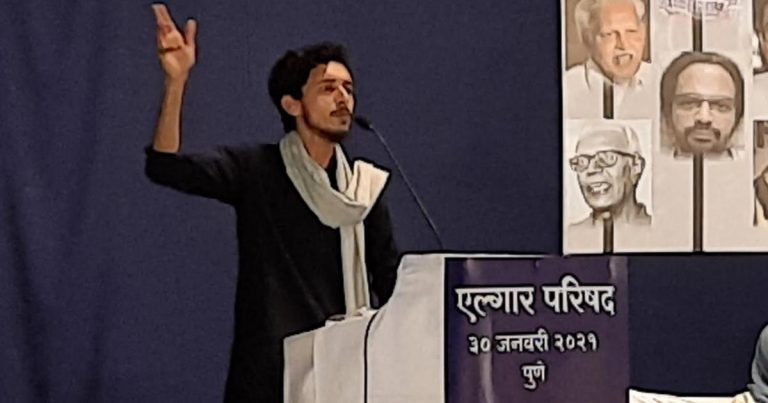
The Uttar Pradesh police on Wednesday booked Newslaundry columnist and former Aligarh Muslim University (AMU) student leader Sharjeel Usmani over hate speech targeting Hindus at the recently Elgar Parishad conclave at Pune on 30th January 2021.
The FIR has been registered in Lucknow under IPC sections 124 A (sedition), 153 A (promoting enmity between different groups), 295 A (deliberate and malicious acts intended to outrage religious feelings), 298 (uttering words with deliberate intent to wound the religious feelings) along with various sections of the IT Act. Contrary to the previous FIR filed against the radical Islamist in Pune, UP police have also evoked charges of sedition.
BJP leader asks Yogi Govt to take action against Sharjeel Usmani
The FIR came soon after State President of Maharashtra BJP, Chandrakant Patil’s letter to Uttar Pradesh Chief Minister Yogi Adityanath seeking action against Usmani. In the letter dated February 3, Patil accused Maharashtra CM Uddhav Thackeray of not taking any action against Usmani despite the lapse of five days since the incident. Patil said that Usmani’s speech has hurt the sentiments of the Hindu community across the country. He wrote that spreading hatred against PM Modi and the Constitution of India was no less than sedition.
The Maharashtra BJP state head had demanded the strictest against Usmani and said that he should be made an example of to discourage people from making hateful comments and insulting the Hindu community.
The FIR was filed based on complaint by Lucknow-resident Anurag Singh’s complaint.
Another FIR filed against Usmani in Pune, Sedition charges not evoked
On Tuesday, an FIR had been filed against Usmani in Pune, after opposition BJP in Maharashtra had accused him of hurting religious sentiments and a BJP member, Pradip Gavade, filed a police complaint. Sedition charges were not a part of this FIR.
He is currently out on bail after he was arrested for his alleged role in the anti-CAA protests that broke out at Aligarh Muslim University (AMU) campus on 15th December 2019
The global civil society and deep state assets have unleashed a relentless campaign against India by supporting the violent riots that broke out following the protest by so-called farmers and Khalistanis in Delhi. Recently, we saw singers like Rihanna and child protestor Greta Thunberg tweet in favour of the protests. It was then revealed that the tweets were not organic, but the part of a global plan to tarnish India when Greta accidentally tweeted a ‘toolkit’ that contained a meticulous plan for the campaign. One of the handles that participated in the campaign against India was one ‘@TheTweetofGod’ handle.
Right after tweets by Rihanna, Greta Thunberg and porn star Mia Khalifa, ‘Tweet of God’ took to Twitter to share the same article by CNN and and claimed that India was a ‘soon-to-be-former democracy’.
After Indians countered the tweet by the handle, ‘TheTweetOfGod’ took things further and claimed that Prime Minister Modi and ‘God’ were very similar, since, without their ‘Bhakts’, neither of them would have power. It is pertinent to note that ‘Bhakts’ is generally used a pejorative by Leftists and Congress to refer to those who support the Prime Minister and refuse to toe the line of the Left establishment.
Modi and I are actually quite similar.
Without our legions of millions of deluded bhakts, neither of us would have any power.#FarmersProtest
Then, after several celebrities including actors, and even Sachin Tendulkar came out in support of the Indian government on farm laws and tweeted with the hashtag #IndiaAgainstPropaganda, the handle tweeted that the hashtag was actually about Indians indulging in propaganda.
As it turns out, that the handle that fancies himself as ‘God’ as is spreading propaganda against India now, is actually someone who had been accused of indulging in predatory behaviour in 2020.
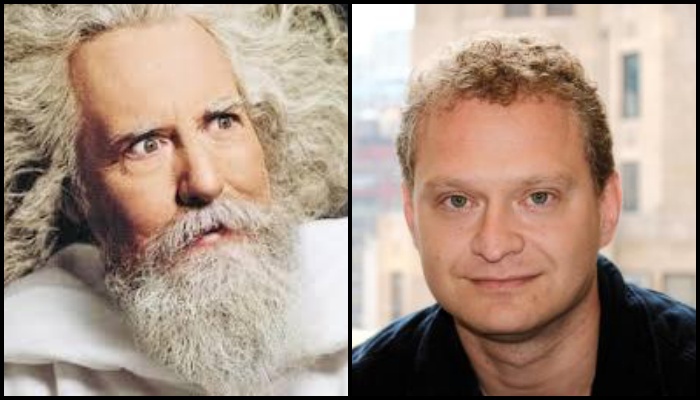
The handle @TheTweetOfGod is an alter ego of writer-producer David Javerbaum. David Adam Javerbaum is an American comedy writer and lyricist. Javerbaum has won 13 Emmy Awards in his career.
Pertinently, in 2019, Javerbaum had said he was ‘desperate’ to get into the ‘Indian market’. In a profile of his done by The Hindu, the author says:
“Javerbaum lets us in on the secret that through this Twitter account, God is desperate to get into the Indian market — “the 33 crore gods are calling to him.” What explains this knowledge of our politics, personalities and celebrities? “It’s the largest market other than China. But China has no Twitter, and even God doesn’t understand Chinese,” says Javerbaum, who is yet to visit the subcontinent”.
This ‘anti-establishment’ comedian, who is now trying to indulge in propaganda against India, perhaps to capture the ‘Indian market’ he was so desperate for in 2019, was also accused of predatory and creepy behaviour in 2020.
Comedian Nicole Arbour had in 2020 tweeted about Javerbaum messaging her over 55 times like a ‘creepy stalker’ if she does not respond to him instantly.
It’s 4:12pm and @davidjaverbaum has sent me over 55 DMs today getting angry when I don’t respond instantly like a crazy stalker. This is who runs @TheTweetOfGod and this is getting really creepy. pic.twitter.com/jksKwL1dWR
On the same day, Nicole had revealed the reason for Javerbaum turning into a creepy stalker. He had accused her of being a racist, apparently without reason, and when Nicole had countered him, he had turned into a deranged stalker.
Nicole had posted a long message explaining that she had tweeted about ‘Putting God back in schools’ and an offended Javerbaum had first mocked her for it and then called her a racist over and over again for her religious beliefs.
Publicly, TheTweetOfGod had evidently refused to apologise, but privately, he had offered a solution to Nicole saying that he could block her, giving her the opportunity to redeem herself by claiming that he got scared of her.
Much later, she had also said that she was going to file for a restraining order against Javerbaum.
Thanks for the concern last night everyone. I would never joke about being in trouble or afraid. Restraining order being filed. The volume of messages @davidjaverbaum has sent me through @TheTweetOfGod confirmed patterns of harassment and stalking. We got him.
All the tweets by TheTweetOfGod against Nicole Arbour have now been deleted, however, Nicole’s tweet accusing him of stalking her remain along with several screenshots of him sending her private messages over and over again.
Child-activist Greta Thunberg, after inadvertently spilling the beans on the global conspiracy to defame India, played victim on social media by crying ‘abuse’.
I still #StandWithFarmers and support their peaceful protest. No amount of hate, threats or violations of human rights will ever change that. #FarmersProtest
Taking to Twitter, Thunberg claimed that despite all the ‘hate, threats and violations of human rights’, she will not stop her support to farmers.
Earlier today, Delhi Police filed an FIR against her for creating enmity between groups and instigating acts that are prejudicial to maintaining harmony.
On Wednesday, Thunberg, while extending her support to the protesting farmers, mainly from Punjab, had shared a ‘tool kit’ which exposed a detailed strategy for holding protests across the world over the farm laws passed by the Indian government. The leaked document, which is now deleted, revealed how the tweets of international celebrities like Rihanna and others were not spontaneous. These were planned by anti-India propagandists well in advance.
Further, Greta Thunberg and the associations she is associated, which supported the farmers’ agitation with have quite a violent antecedents. It is pertinent to note that the tractor rally organised by the protesting group on Republic Day when there was an official Republic Day parade happening just few kms away, turned violent and ended with the rioting mob taking siege of the Red Fort and unfurling various flags, including a yellow rectangle flag and a saffron triangular flag with the holy Sikh symbol next to the tricolour.
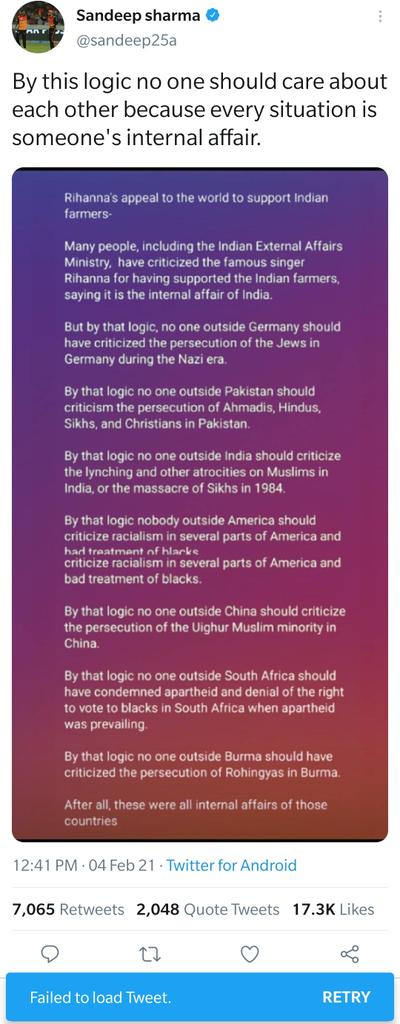
Just a day after the details of a coordinated global effort to put the Indian Government under pressure was leaked, cricketer Sandeep Sharma tweeted out an image containing a message in support of the Farmer Protests. The message, which has now since been deleted, seemingly criticized Indian citizens who are concerned about the foreign influence in the farmer protests. The message appears to be a response to the criticism levelled at the international pop star Rihanna for tweeting out against the Indian government, which we now know was the part of a coordinated strategy to put the central government under pressure.
On February 2nd 2021, Rihanna had tweeted a link to a CNN article about the farmer protests in India with the caption, ‘why aren’t we talking about this? #FarmersProtest’. It has now been revealed that this tweet was a part of clear and coordinated global effort to put pressure on the Indian Government to roll back laws which have already passed in the democratically-elected Parliament of India.
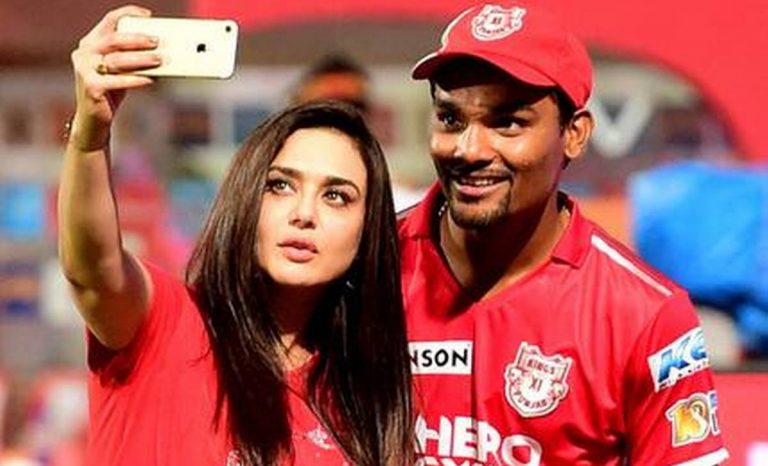
On February 4th 2021, Sandeep Sharma, who plays in the Indian Premier League for Kings IX Punjab, posted a tweet, criticising the supposed ‘hypocrisy’ of people commenting on the plight and persecution of Hindus in Pakistan, who do not agree with the coordinated global effort to demonize and put pressure on the Indian Government. The screenshot of Sandeep Sharma’s tweet and the message has been reproduced below for the sake of convenience.
However, the message Sharma posted was highly problematic, as he sought to equate the events like Holocaust, Slavery, Apartheid, persecution of minorities in Pakistan and China etc with the farm laws, which have been enacted for the benefit of farmers. While the worst events in human history mentioned by the cricketer caused the death of millions, the three farm laws merely bring much-needed reforms to the farm sector in India, which were being demanded by the farmers themselves for years. Several social media users pointed out this to the cricketer that the farm laws and the protests against them can’t be compared with the events mentioned by him. Sandeep Sharma later went on to delete his tweet after facing a backlash on social media.
Sandeep Sharma was not the only cricketer with thoughts to share regarding the farmer’s protest. Many other cricketers, much more renowned than Sandeep Sharma, took to Twitter to share their thoughts on the ongoing protests. Sachin Tendulkar, widely considered to be the best cricketer India has produced, took to Twitter to strongly denounce and condemn the coordinated effort to threaten and compromise India’s sovereignty. Current Indian skipper Virat Kohli also tweeted and called for unity and peace as the way forward to resolve differences. Indian vice-captain Ajinkya Rahane also tweeted in support for unity as the way to resolve the issues with Farmers going forward.
The call for unity and to amicably resolve the difference between the Farmers and the Government was echoed by many other cricketers, former or current. Indian Head Coach Ravi Shastri, Former Test Skipper Anil Kumble, Former Indian Batsman Suresh Raina, Former Indian Spinner Pragyan Ojha, all took to Twitter to share a message of unity and conciliation on Twitter. Sandeep Sharma however, chose to chide the critics of the coordinated global effort through his message, instead of a call for unity, or respecting India’s sovereignty like his other Cricketing collogues chose to do. Sandeep Sharma later ended up deleting his tweet message because of the severe backlash he faced online.
“The BJP campaigners seized on this, and for the final three days of the campaign, Modi asked for a 100 per cent turnout to defeat the “dadagiri of the fatwababas”.“
That is a line from a December 2002 issue of India Today magazine. I will explain the context.
Gujarat has been where India stands today. On Feb 27, 2002, Gujarat had witnessed a horrific crime unfold in S-6 compartment of Sabarmati Express near Godhra railway station. The real story of that carnage was buried under a mountain of media lies and international propaganda. In the months that followed, the state of Gujarat and its people were vilified like no other.
Narendra Modi, then the Chief Minister of Gujarat, made himself the face of popular pushback against media propaganda. As the elections approached, he went on a Gaurav Yatra that appealed to people to restore the asmita (self-respect, or pride) of the state. In the last few days before the election, a fatwa appeared in local newspapers asking one community to vote en bloc for the Congress.
Who did these fatwa wala babas think they were? Where did they get their supposed authority from? From the constitution of India or from outside it? The BJP went into overdrive, asking the people to give a befitting reply to the fatwa babas.
The people responded. They restored their asmita.
Now in 2021, it may be useful to remember this story. Now it is not just Gujarat behind Narendra Modi, it is the whole of India with Narendra Modi. And that includes, by the way, every citizen who did not vote for the BJP. All of us agree to accept the democratic mandate of the people of India. We swear to uphold the sovereignty of the nation, the supremacy of our Parliament and the sanctity of our democratic process.
But there are forces inside and outside India who refuse to respect this consensus. They have taken it upon themselves to run this country outside of our Parliament, our government and our judiciary. And they are trying to create a critical mass of global public opinion that the Indian state is not legitimate.
They rarely reveal their faces, their methods are shady. Their funding is unknown but they do indeed have a lot of it. They are able to pay top global influencers to turn world opinion against us. They say that India’s internal agricultural matters should be decided in foreign capitals.
Once in a while, they reveal their hand. Like when they send out a mob on the streets on Republic Day to storm our Red Fort and put up some other kind of flag.
By mistake, some of their internal documents spilled out in public yesterday. There we see, in writing, the plot to defame India. They plan to surround our embassies and attack interests of big Indian businesses. There is even a mention of attacking “yoga and chai.” Is there anyone who honestly believes yoga or chai could be a partisan matter in India?
Make no mistake. This is a plot to make India an object of global hatred. The Nazis made the Jewish population wear yellow stars. They are doing the same to us. They are telling us Indians that we have been marked for destruction. Either we surrender our elected government and agree to accept a puppet regime. Or they will destroy us.
They play this game smoothly on all sides. If we don’t respond, they raise their anti-India pitch. If we do respond, they make fun of us for being “rattled.”
Why wouldn’t we be “rattled”? On Jan 6, some guy wearing horns on his head broke into the US Capitol building in Washington DC. The US government has thousands of nuclear warheads, but they still took it very seriously. Why shouldn’t they be? Every republic is paranoid against threats of insurrection.
Every enemy of India speaks of flying their flag on the Red Fort one day. It is the most common metaphor used to describe conquest of India. So when you put boots on the ground to storm the Red Fort, of course we will be paranoid. When we discover an entire global PR campaign to pitch for regime change in India, of course we will be “rattled.” Better to be “rattled” than become an unsuspecting victim as the mob gathers around my house.
The global PR campaign is an international fatwa against Modi. Then, as now, the challenge is not to any one person or elected leader. The challenge is to an entire people. Our asmita is in danger. Our sovereignty has been challenged.
They could not win the election. So they want to humiliate the Indian voter. They want to tell the world that we are an evil nation that cannot be trusted to govern itself.
We will stand up for our asmita. We are a great nation. And we are a nation with big hearts, making vaccines for the whole world. We want everyone to live in health, peace and prosperity. We shall not be defamed thus.
The Delhi Police have registered a First Information Report (FIR) filed against people who shared the ‘toolkit’ which exposed the global designs to destabilise India behind the veil of farmer protests. It is pertinent to note that it was child protestor Greta Thunberg who had shared the ‘toolkit’ and it was reported earlier that an FIR has been filed against her. However, the Delhi police have now clarified that she has not been named in the FIR and a complaint has been filed for for promoting enmity between various groups and instigating acts that are prejudicial to maintaining harmony.
Sections in FIR are 124 A IPC-spreading disaffection against Govt of India, it's regarding sedition, 153 A-promoting hatred amongst various communities on social/cultural/religious grounds, same is 153 & 120 B for criminal conspiracy to give shape to such a plan: Praveer Ranjan pic.twitter.com/TiD7mfoYrI
The Delhi Police have registered a complaint under IPC Section 153A (promoting enmity between different groups on grounds of religion, race), Section 120B (criminal conspiracy) and section 124A IPC. Delhi Police has said that the complaint is against the creators of toolkit which is a matter of investigation and Delhi Police will be investigating that case.
The FIR has been filed for creating disharmony and against the larger conspiracy. The agenda was exposed after Greta Thunberg had shared a propaganda tool kit that included a campaign strategy for holding protests across the world over the farm laws passed by the Indian government.
The action by the Delhi Police comes a day after the Ministry of External Affairs (MEA) had asked these foreign individuals and entities to ascertain facts and undertake a proper understanding of the farmers’ protest before rushing to comment on it.
OpIndia had also reported how, per the documents leaked by Greta Thunberg, the tweets by Rihanna and Greta were in no way spontaneous and had been planned by anti-India propagandists well in advance. We had also reported the violent antecedents of Greta Thunberg and the organisations she is associated with, that lent support to the violent protests in India.
Greta Thunberg shares ‘toolkit’, reveals global campaign to stir unrest in India
Earlier on Wednesday, Greta Thunberg has inadvertently revealed the insidious nature of the global campaign against India. After music sensation, Rihanna and adult movie actress Mia Khalifa jumped in to amplify the targeted campaign against the Indian government, the school drop out activist also registered her contribution in the matter.
However, she appears to have given the game away when she shared a document that detailed the manner in which people all over the world could contribute to undermining laws passed by the democratically elected Parliament of India.
Deleted tweet by Greta Thunberg
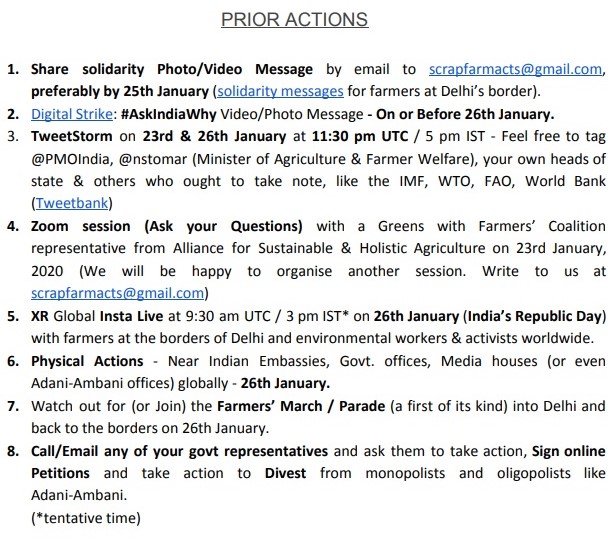
The document, titled, ‘Global Farmer Strike First Wave’, implores individuals across the world to be a part of the ‘largest protest’ in human history. The objective is, apparently, to protest against the ‘unregulated corporatisation’ of the farming sector.
The document registers actions people can take to undermine the democratic will of the Indian population. The proposed measures include, “Call/Email any of your govt representatives and ask them to take action, Sign online Petitions and take action to Divest from monopolists and oligopolists like Adani-Ambani” and “Organise an on-ground action near the closest Indian Embassy, Media House or your local Govt. office on 13th February 2020.”
The document also lists a series of ‘prior actions’ that were undertaken. These include, “Physical Actions – Near Indian Embassies, Govt. offices, Media houses (or even Adani-Ambani offices) globally – 26th January” and “Watch out for (or Join) the Farmers’ March / Parade (a first of its kind) into Delhi and back to the borders on 26th January.”
Excerpt from documents shared by Greta Thunberg
About the protests on Republic Day, the document, which was clearly prepared before the 26th of January, states, “On 26th January, a major day of globally coordinated actions, Show your support at local physical locations, wherever you are. Either find protests happening in your city/state/country and participate in large (or small) numbers or organize one.”
“In addition to the options below, you are encouraged to organise solidarity protests either at/near Indian Embassies, near your local Govt. offices or offices of various multinational Adani and Ambani companies. While we are focusing on the 26th, you are encouraged to continue organising gatherings as and when possible – for this is not going to end anytime soon,” it adds.
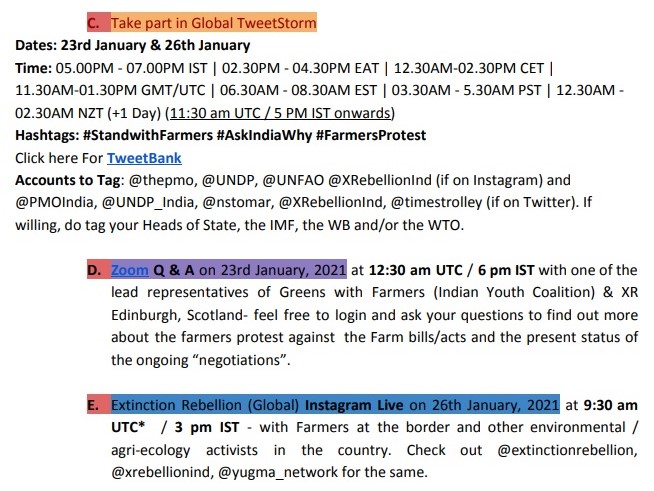
The document also urges individuals to participate in a ‘Global TweetStorm’ on the 23rd and 26th of January. It is pertinent to mention that the 23rd of January marks the birth anniversary of legendary Indian freedom fighter Netaji Subhash Chandra Bose.
The Biden administration’s support for the farm laws comes just a day after foreign vested interests attempted to peddle false propaganda against India by expressing their solidarity with a bunch of protestors, who have been accused of unleashing riots on the streets of Delhi.
Singer-actress Rihanna, along with former porn-star Mia Khalifa and child protestors such as Greta Thunberg on Tuesday interfered in country’s internal affair by endorsing violence in the name of supporting ‘farmer’ protests, causing a massive backlash against these so-called international celebrities. The statements of these celebrities were used by various political heads like pro-Khalistan Canadian MP Jagmeet Singh.
However, the Indian government issued a stern warning to these foreigners and asked these individuals and entities with no locus-standi in India’s internal matters, to ascertain facts and undertake a proper understanding of the farmers’ protest before rushing to comment on it.
Interestingly, hours after Rihanna stormed a massive political controversy, certain reports highlighted the reason behind Rihanna’s intervention to support Khalistani protestors disguised as ‘farmers’ in India. It is being suspected that Canadian top politician Jagmeet Singh, who is notoriously known for supporting Khalistan separatism, could be behind Rihanna’s anti-Indian propaganda.
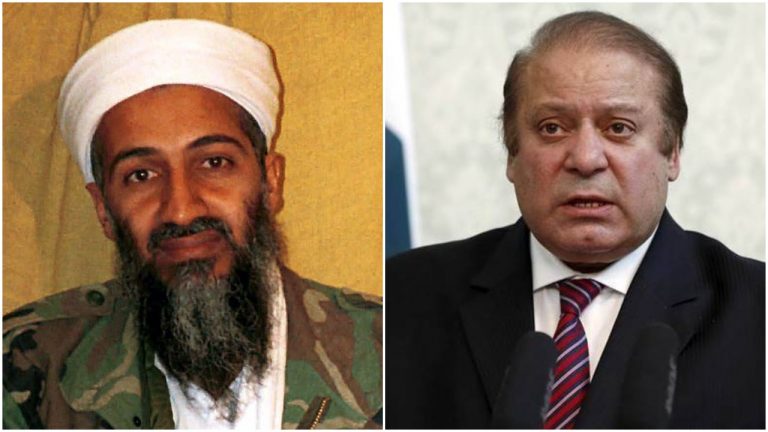
In a sensational disclosure that nails Pakistan’s involvement in sponsoring Islamic terror organisations, Pakistan Muslim League-Nawaz (PML-N) had conceded before the Pakistan Election Commission’s scrutiny committee that it had received funds from Al-Qaeda terrorist Osama bin Laden.
According to the reports, Parliamentary Secretary for Railways Farrukh Habib said that former Prime Minister Nawaz Sharif had laid the foundation for foreign interference in Pakistan’s election process by receiving funds from Osama bin Laden to topple former Prime Minister Benazir Bhutto’s government.
Speaking to the reporters after hearings of foreign funding cases against the PML-N and Pakistan Peoples Party (PPP) on Wednesday, the PTI leader Farrukh Habib claimed that PML-N and the Pakistan Peoples Party had failed to provide the details of their donors.
Habib also criticised the Islamic organisation such as Jamiat Ulema-i-Islam-Fazl and said its chief Maulana Fazlur Rehman received funds from Libya and Iraq.
Former Envoy had revealed that Osama funded Nawaz Sharif
The latest disclosure comes just weeks after Pakistan’s former envoy to the US, Abida Hussain had revealed how Al-Qaeda chief Osama bin Laden had supported and extended financial assistance to former Pakistan Prime Minister Nawaz Sharif.
“Yes, he (Osama bin Laden) supported Mian Nawaz Sharif at one time. However, that is a complicated story. He (Osama) used to extend financial assistance [to Nawaz Sharif],” the former envoy had said.
Abida, who was also a former minister in Nawaz Sharif’s government, said that Osama was very popular and liked by everyone including the Americans but at a later stage, he was treated as a ‘stranger’. Osama was killed in a midnight raid by the US Navy SEALs in Pakistan’s garrison town of Abbottabad in 2011.
Pakistan, which had initially rejected allegations of giving safe haven for the Al-Qaeda terror chief, had to face massive embarrassment after he was killed by the US forces in Abbottabad, inside Pakistan.
Nawaz Sharif, who was the Prime Minister of Pakistan for three non-consecutive terms, has been accused of receiving money from terror group such as Osama bin Laden in order to promote jihad in Kashmir and fund terror against India. He served as prime minister from 1990-93, 1997-98, and 2013-17.
The 70-year-old Nawaz is currently residing in London undergoing treatment. He was ousted from power in 2017 by the Supreme Court on corruption charges.
In the previous article after discussing What is a Hindu temple, the symbolisms and Vastu Shashtra, this article takes a look at the Vastu Shashtra as a directional science and the various gods associated with it and discusses the foundation rites and rituals followed while constructing a temple.
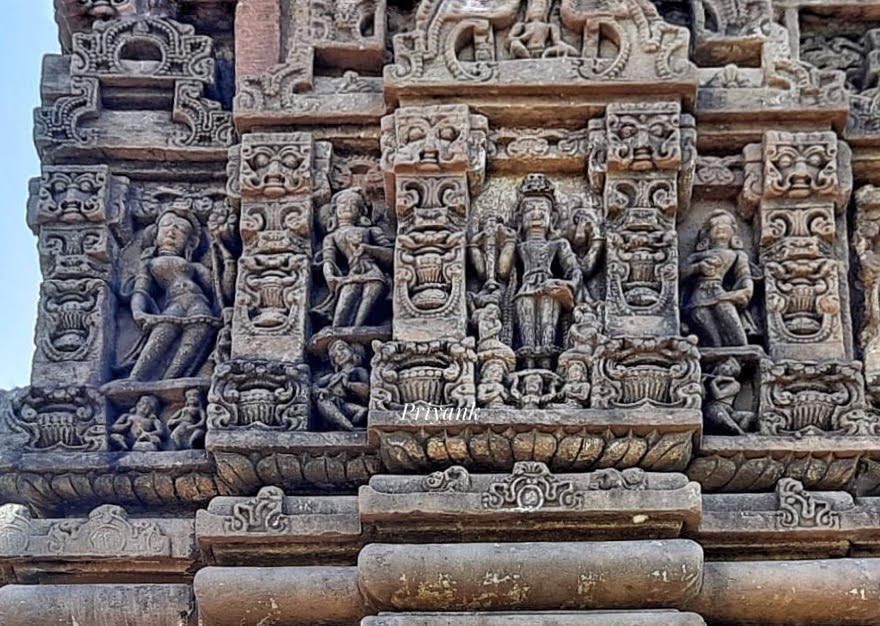
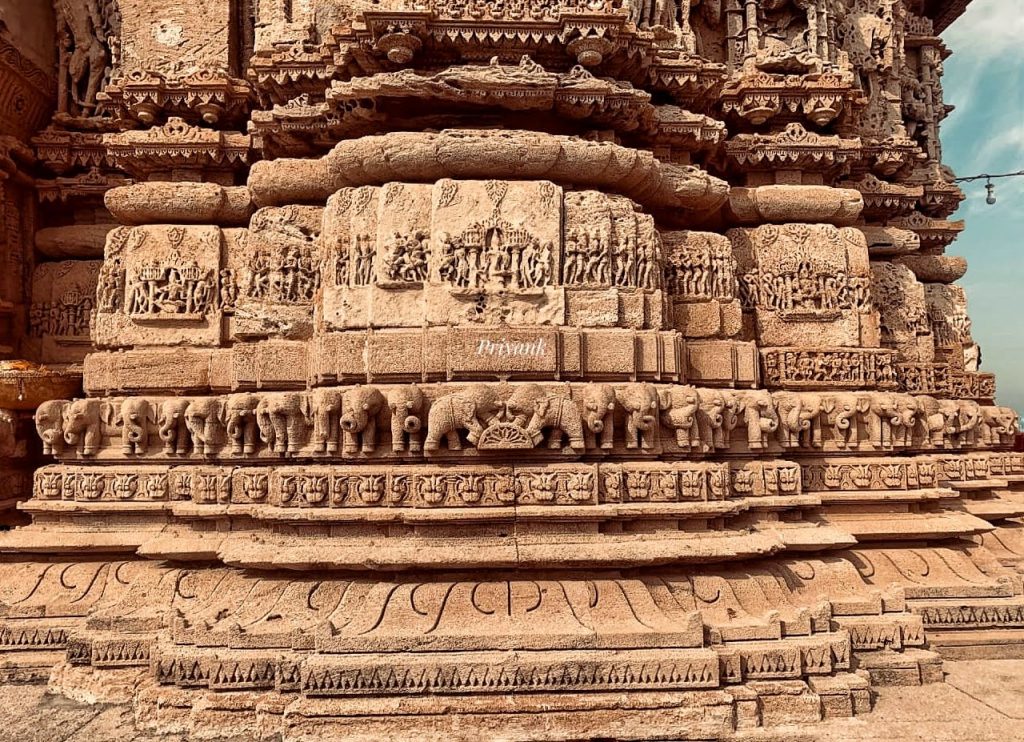
Wall of a Hindu temple with its various gods (photo by Priyank Gupta)
Vastu or Vaastushastra, the architectural science developed and complied in ancient India, is a part of Vedas, which were composed by various yogis who underwent penance and meditation to seek answers to their various philosophical questions. Hence the various scientific discourses within the Vedas are found coupled with their acquired divine knowledge. The science of Vastu is first seen in the Sthapatya Veda, a part of the Atharva Veda. It is a purely technical subject, and the knowledge remained confined to the ancient architects (Sthapatis), which was handed over to their heirs following oral traditions. The various principles of construction, architecture, sculpture, etc. on temple architecture, as seen in the two Epics and various other treatises (such as Matsya Purana, Skanda Purana, Agni Purana, Garuda Purana, and Vishnu Purana), have been incorporated and compiled together within the science of Vastu.
Other ancient shastras that have helped in compiling and subsequent passing of the knowledge of Vastushastra to the next generation, are texts like Vishvakarma Prakash, SamaranganSutradhar, Kashyap Shilpshastra, BrihadSamhita, and Praman Manjaree. The Mahabharata talks in great details of the houses built for the kings who were invited to Indraprastha for the Rajasuya Yagna of King Yuddhistira. Sage Vyasa says that these houses were as high as the peaks of Mt. Kailasa, an allegorical reference to show that the mansions stood tall and majestic. The houses were made as such that they were free from obstructions, had high walled compounds, and their doors were of uniform height that was inlaid with many metal ornaments. It is said that the site plan of Ayodhya was similar to the plan found in the great architectural text Manasara. Buddhist literature also has innumerable writings on building constructions based on Vastu.
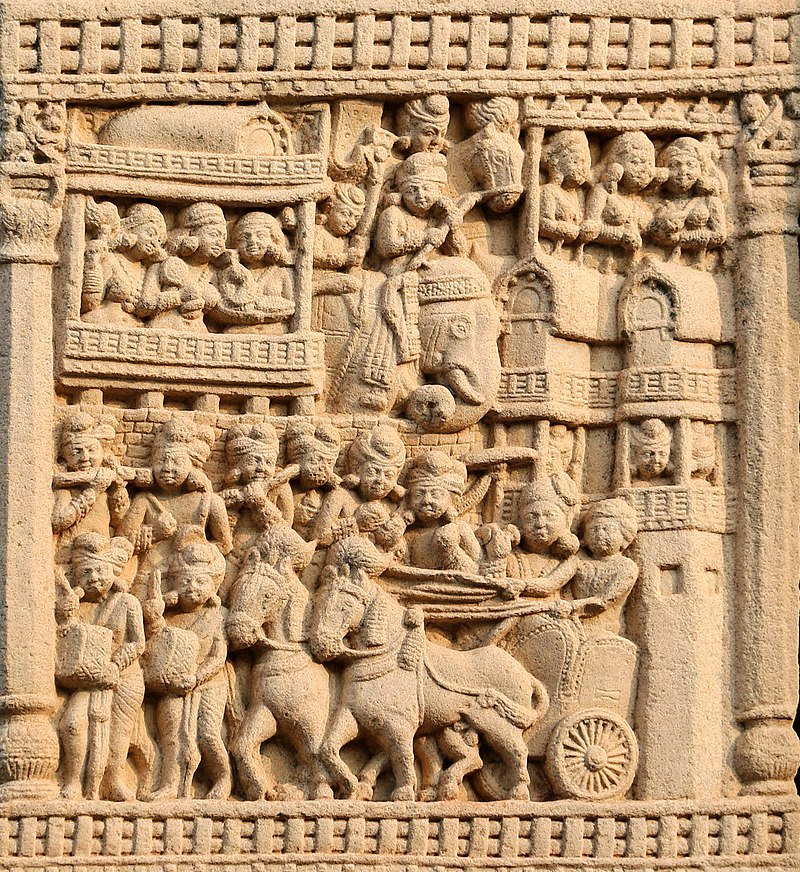
Ancient city of Rajagriha. (photo from Wikipedia)
Vastu Shastra is a science of directions
The Vastu, which when translated means ‘dwelling’, and refers to the residing place for gods and man from Samathe study of vastu is based on the five natural elements or the Panchabhutas: Vayu (air), Agni (fire), Jal (water), Bhumi (earth) and Vyom/Aakash (space). Elements of Vastu Shastra is in totality a science of directions that combine the five elements of nature and cosmos, bringing a balance between man and the material and helping him to achieve prosperity, good health, and success.
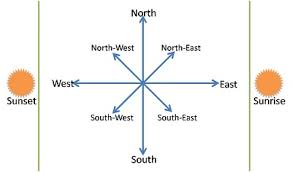
Without knowing the correct directions it is not possible to find out the doshas in any building (as per Vastu). In older times, Sun movement was considered as the most important factor in Vastusashtra, as directions were understood by observing the shadows cast by the Sun.
The cardinal and sub cardinal / sub directions which are the most important aspects of Vastu. (Image from google for representational purposes only)
As per the Vastu sashtra (Atharva Veda), the five elements as associated with the four sub-directions and the center (brahmasthana) are:
1. North-East (Ishaan) – Water 2. South-East (Agneya) – Fire 3. South-West (Nirrti) – Earth 4. North-West (Vayaya) – Air 5. Centre – Space/ Vyom/Akash
Earth, which is also the third planet from the Sun, is the first and foremost element of nature that exerts energy, bringing in balance, and providing stability and patience. Water, another of the 5 natural elements, is present in the form of rain, lakes, rivers, seas, and oceans, and is the very essence of life, representing its flow and movements. It is associated with healing, clear vision, clarity of thoughts, and new ideas in a person’s life. For deriving maximum benefits, water sources in any building should be kept in the North-East direction of that particular structure.
Fire, which is an energy-giving source like the Sun, represents zeal, passion, and strength. All fire sources, like kitchen fire, should be placed in the South-East direction for beneficial effects; and while constructing any building it is essential to provide for a proper entry of sunlight, as it is the only natural source of light energy. Air is vital for human survival and is associated with a movement that brings in happiness. Vyom or Space pertains to the limitless and infinite, combining all-natural forces of heat, light, gravity, magnetic field, and electromagnetic waves. It is associated with the central region or the brahmasthana of a building and provides shelter to the other four natural elements.
Among all the buildings used by men, a temple especially needs careful consideration of the Vastu factors while it is being built. In that context, some of the important directional factors to be kept in mind while building a temple are (refer: Samaranganasutradhara, BrhatSamhita):
The ideal location/site for the building of a temple. This is the most important part in temple construction, and a careful inspection of the plot, soil type, and land size and shape must be done before starting the construction, as the ground or Prithvi/Earth is an important element in Vastu and tends to have an impact on human lives associated with the temple. In fact our scriptures give in detail not only the correct directions for temples, but also the right locations (as for example, whether a temple should be located in the centre of the town, or just outside the town limits, or in a forested area, etc.) that are specific for each deity and their various aspects.
The direction and placement of the main entry point to the temple, which is generally east facing.
The direction and placement of the main deity, which is extremely important.
The direction and placement of temple walls, pillars, doors, and windows (gavakshas/vatayanas).
The direction and placement of the puja mandapa, and where other religious activities will take place.
A Temple in Telangana showing a vatayana or a window for entry of light and air (photo by author)
Sacred architecture of temples
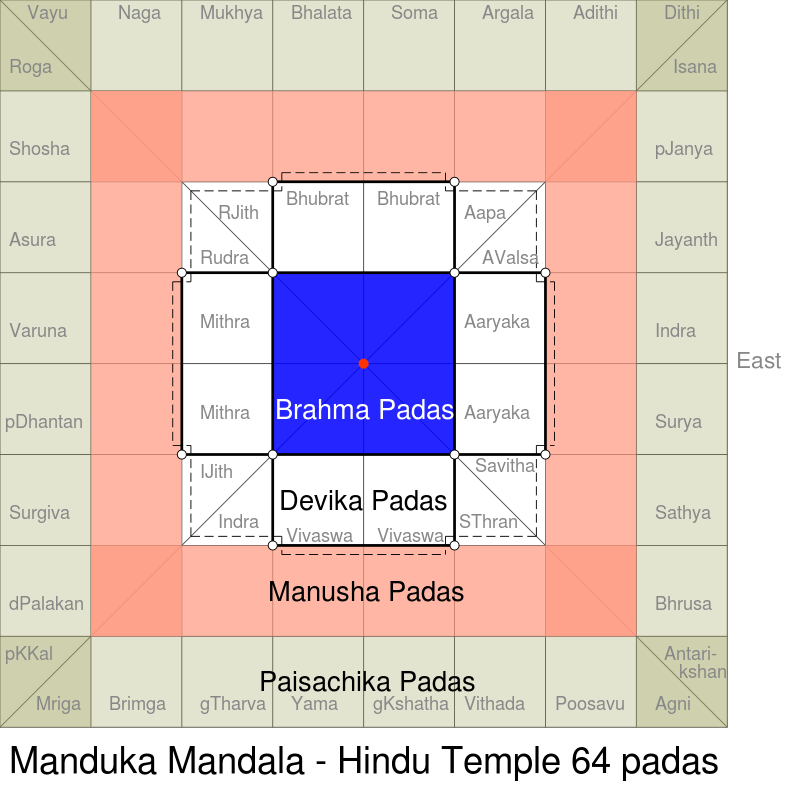
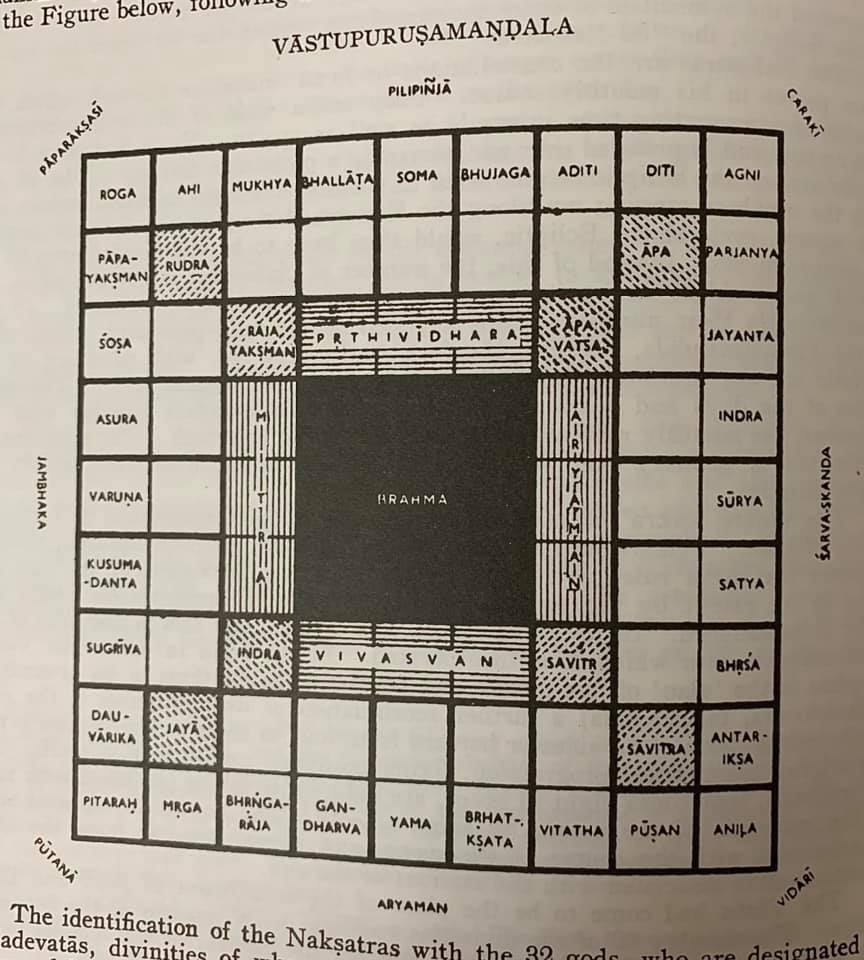
The Vastupurushamandala, which represents the cosmos, and is based on a square symbolising the four cardinal directions of the earth, stands for the ordered world, knowledge, and human mind; unlike the circle which stands for eternity and divinity. The main square of a Vastupurushamandala is subdivided into multiple squares totalling 64 or 81.
The BrhatSamhita tells us of two types of diagrams, one with 64 squares (pada) and another with 81 squares; and it is generally believed that a Vastupurushamandala with 64 squares is used for temple constructions while a diagram of 81 squares is used for house construction. Some texts do however make space for a diagram with 81 squares to be used for temple constructions but only by the Kshtriyas. The central four (9, in case 81 squares are used) of the grid is Brahmapura or Brahmasthana, the place for the Brahman. It is here on the Brahmasthana that the garbagriha is placed.
Surrounding the Brahmasthana are arranged the 12 Adityas or the sun gods one for each month of the year, and arranged around the Adityas are the 32 celestial luminaries or pada devtas (also refer: Vishnudharmottora).
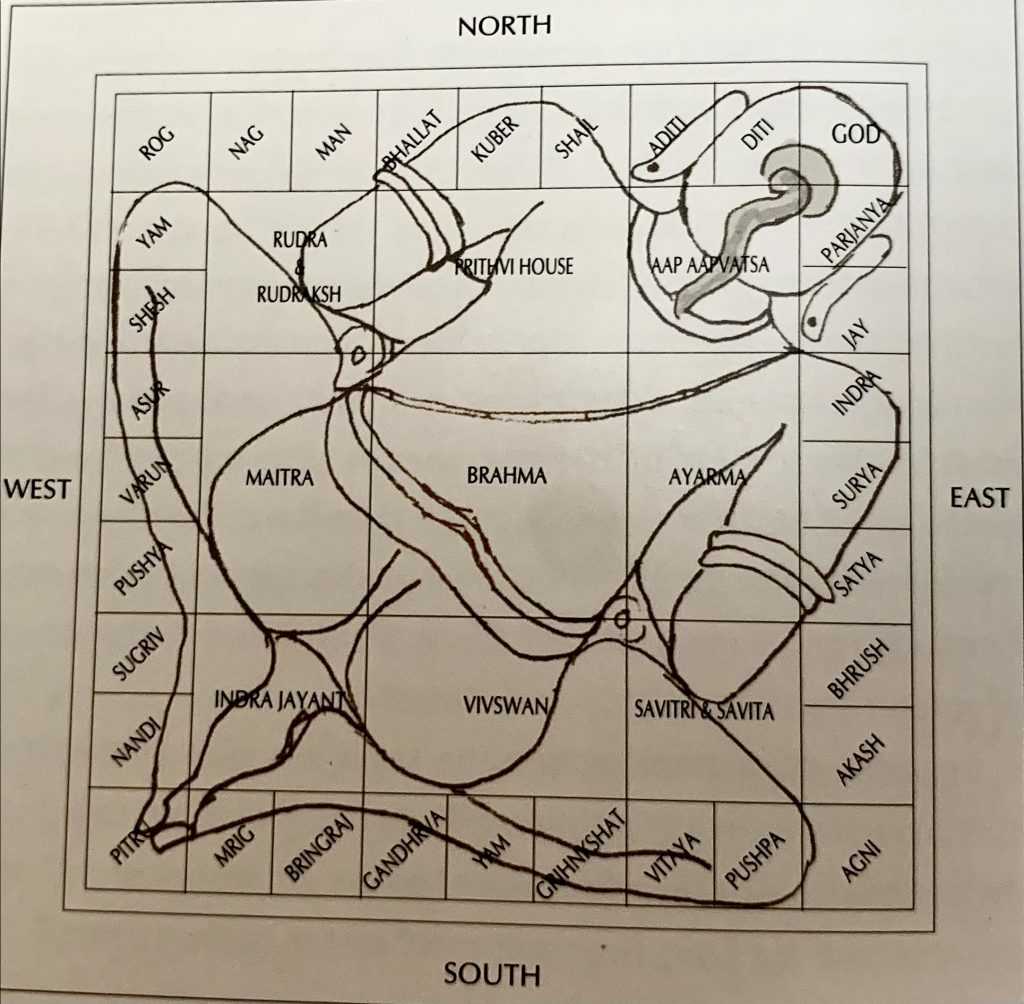
The plan of 64 squares is known as Manduka or Bhekapada or Ajira. Manduka means a frog referring to the motionless posture as in Manduka Yoga. Also one must remember the primeval frog, Maha Manduka, which is the Great energy that supports Sesha, the serpent on whom the world rests. The plan of 81 squares is known as Paramasayika. (image from Wikipedia for representational purposes only). Here the NE corner is shown as Agni instead of Ishana- an aspect of Shiva. Please note: Ishana is one of Agni’s nine forms; Vahni or Agni is Hara or Shiva (refer: Samaranganasutradhara). Image from Kramrisch, vol I.
A Vastupurushamandala has eight directions each with their own specific gods governing that particular direction. There are in total eight directions: North, South, East, and West which are the cardinal directions; and the ordinal or intercardinal points (where any of the two directions meet) are NE, SE, SW, NW. These ordinal directions have great significances in Vastu Shastra as they provide the total benefits of two directions.
As per the sashtras, the worship of these eight directional gods brings forth divine blessings in the form of success, health, and prosperity. The gods of the directions are as follows (as explained in the BrhatSamhita, and also in the Vishnudharmottora, Pt. II. ch. XXXIX. 18-30):
East: This direction is governed by Indra, the king of gods. He bestows wealth and pleasures of life to his worshippers.
South East: This direction is governed by Agni, who blesses his worshippers with good health and prosperity.
South: This presiding deity of this direction is Yama, the god of death. He is representative of Dharma or righteousness, the remover of all evil, and bestows his worshippers with wealth, plenty of crops, and general happiness.
South West: This direction is governed by Pitru/Nirrti or ancestors, depicting the exit from life. It protects us from our enemies and bestows devotees with strength of character and longevity.
West: This direction is governed by Varuna, the god of the waters. He blesses his devotees in the form of rains, and gives them wealth and prosperity.
North West: This direction is ruled by Vayu, the god of winds. He brings in good health and long life.
North: This direction is governed by Kuber/Soma, the god of wealth.
North East: This place is a supervised by Ishana- an aspect of Shiva, and is a source of wealth, health, and success. He bestows wisdom, knowledge and removes all miseries and mishaps.
The eight directional gods each have an assigned planet and are also assigned to the leading star of the mansion of the moon, which are called the nakshastras. The nakshastras or constellations (lunar mansions), are a part of the course which the moon follows in its monthly rotation. It is from all these that the universe came into existence, ordered in extent and constant in its order, which is reflected in the fixed number of squares. In the centre is the dark source of all light, the super-luminous darkness, the central point that is beyond all darkness, and its radiance proceed outwards in the vastupurushmandala through all the regents of the sun, planets, and stars placed around the central Brahmasthana.
Thus from the centre, which is beyond all time, what we find displayed is cyclical time in its sections, in units of days, months, and years; and in these cycles, the different courses of the sun and moon are adjusted (refer: Samaranganasutradhara).
Thus, the Vastupurushmandala is a representation of the recurring cycles of time in the ordered world.
Vastupurushamandala(image from google for representational purposes only)
The rites and rituals followed in building a temple
As discussed in the previous article, the best place to construct a temple would be at a sacred spot or teerth, located beside a water body, such as a river, lake, seaside, or mountain top. In his Brhatsamhita, Varahamihira describes the various processes necessary to analyse a site before selecting it for temple construction.
Examining the smell, taste, sound, fertility, colour, and consistency of the site soil is important, and in this context, Varahamihira lists a series of tests for finding out the quality of the soil of the land selected. Once the land passes all these tests and is deemed good for temple construction, ground purification process starts at a chosen auspicious timing.
After the purification is complete, the land must be perfectly levelled to enable the drawing of the Vastupurusuhamandala. With the placing of this metaphysical diagram, the site is now ready for temple construction, and the foundation rites and rituals.
Matsyapurana, which describes the possible forms of Hindu temple, tells us that they can be built of wood, or baked brick or stone. (Image by Priyank Gupta)
The first foundation rite or istaka nayasa (laying of the first brick) of a temple is conducted as such:
“In extent the foundation pit is coterminous with the boundaries of the Prasada; in-depth it is equal to the height of man standing with raised arms, or it is dug to the rock-bottom or until gravel is reached or the water level according to the geographical conditions of the site. After the pit is dug, it should be filled with pure earth, eight finger widths (angula) high; on this layer another one is placed, one cubit in height and composed of layers of strong stones each embedded in wet earth and separated one from the other by sand and earth; when the foundation has been laid so far, it is moistened with water, trodden by elephants, and levelled with heavy wooden stampers. On top of this, it is firmly packed and when one fourth of the pit remains the first bricks are laid (the first brick laid is called Asadha, the invincible, referring to Earth), below the place where the right door jamb of the main entrance to the temple will be positioned (Tantrasamuccaya. I. ch. I. 89).
These bricks are laid evenly, and on one level, into the pit and the pit should be filled up. Then the rite of Garbhadhana is to be performed and the vessel which holds the Seed and the Germ of the temple is to be deposited on the ground on the lowermost moulding (upana) or the topmost moulding (prati) of the base, as per the varna status of the sacrificer /donor. Once the varna distinction is made in the base (for the purpose of a record of the seed deposited for the temple), the ascent is one and same for all”
(Refer: BrhatSamhita; Kramrisch 1946i:105-106).
The second foundation rite: silyanasa, the rite of Adharasila, the stone support
Once the bricks are laid as per the rituals, the next rites start with bhumi pujan where Bhu devi or Earth is offered prayers, asking for her blessings to make the site auspicious for temple construction. Simultaneously the instruments to be used for the construction are also worshipped. After this, a pit is dug at the spot where the sanctum will later stand (the squares that represent naval part of the vastupurusha). Then the pit is filled up to three-fourths of its height by alternate layers of soil and pebbles. Once it reaches this stage, a copper jar (Nidhikalasha) or sometimes a casket with compartments (known as Garbhapatra and made of copper, silver or gold) filled with nine precious stones, metal pieces, herbs, roots, earth, and grains are placed.
On the jar or the casket (representing Bhuvanesi or Sakti, who forms the seat of the foundation of the temple), a stone lotus is placed over which is placed a stone tortoise (representing Vishnu- the stability of the world), followed by a silver lotus and on it a silver tortoise, over which a gold lotus and then a gold tortoise are placed in series: thus, making Sakti and Vishnu a part of temple support. From there a funnel-shaped tube known as the Yoganala leads up to the plinth of the temple. This entire rite is known as Garbhadhana (ref: Rig Veda. X. 184. I), which is completed with the placing of a square stone slab/silyanasa (Adharashila) at the centre of the 64 squares (over the jar or casket); finally over the Adharashila, which forms the nabhi of the temple, the concrete temple structure will be built next (ref: Vishnudharmattora (Pt II. ch. XXIX. 78).
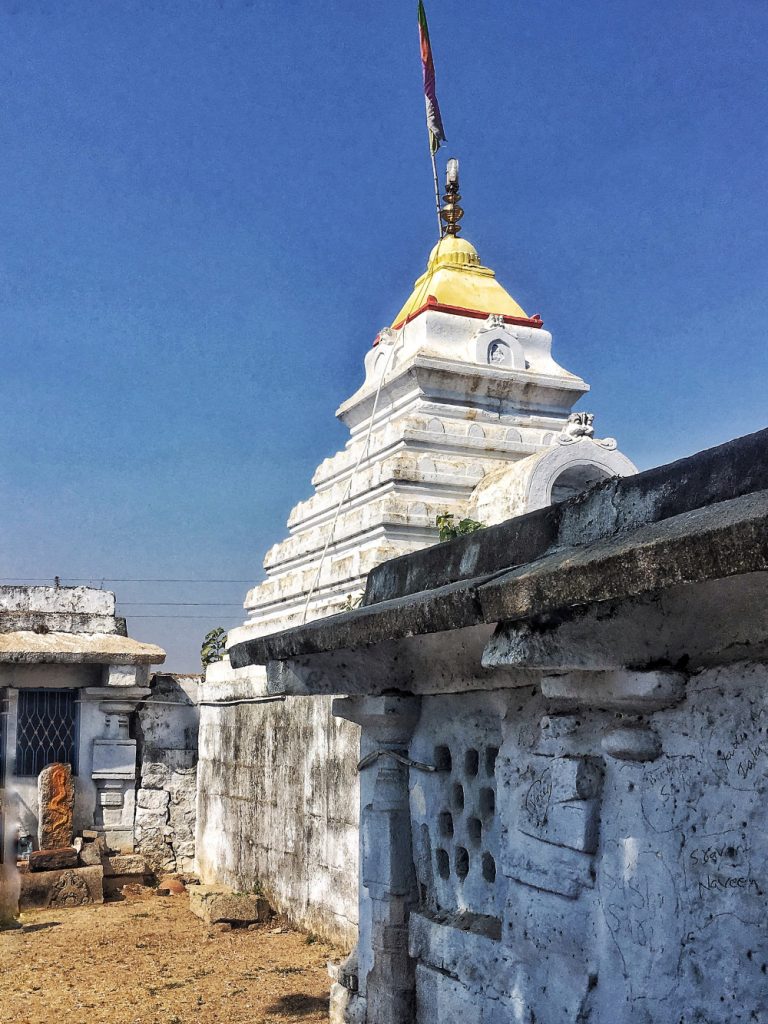
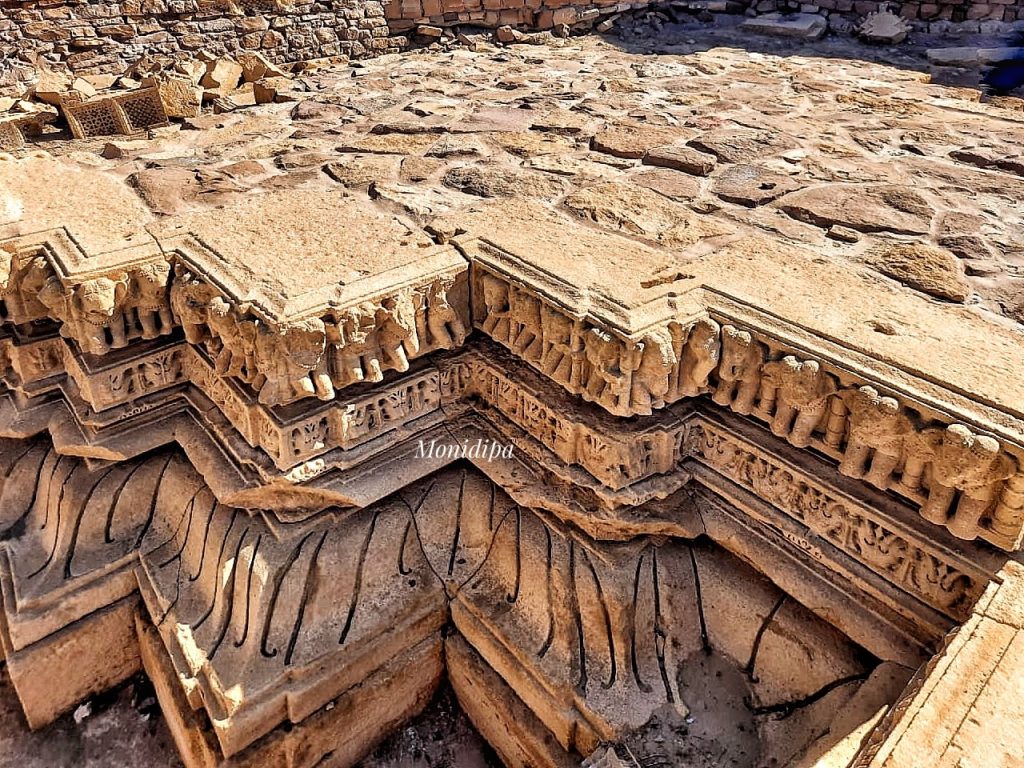
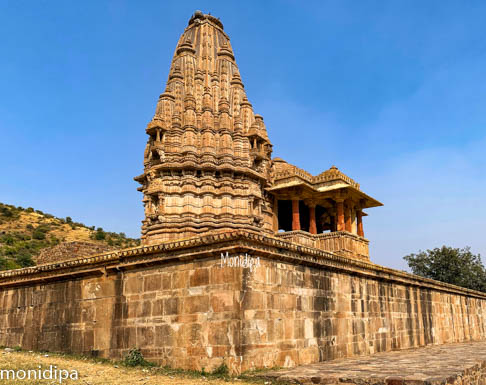
Seen here is the base of the temple that rises above the adharasila . Remaining base part of a completely destroyed temple during Islamic invasions, Lodruwa Patan near Jaisalmer. ASI monumnet (Image by Priyank Gupta)Gopinath temple, Bhangarh fort. Photo by the author
(The next in this series (part III) will discuss the main architectural features of a Hindu temple).
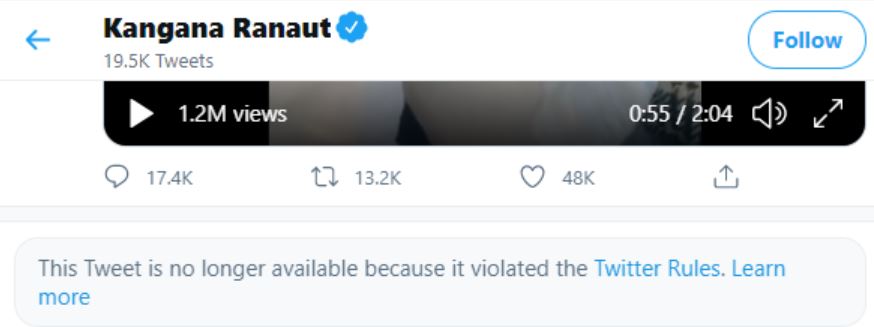
Hours after Jack Dorsey, the CEO of the micro-blogging site was caught validating tweets which hailed Hollywood singer-actress Rihanna for endorsing violence in the name of supporting ‘farmer’ protests, the micro-blogging site removed tweet by actor Kangana Ranaut where she spoke against the farmers’ protest which has laid siege to Delhi for over 71 days.
Kangana Ranaut’s tweet removed by Twitter
While removing the tweet, the microblogging site, which has never quite hidden its leftist bias, said that her tweet was violating the company’s rules. “We have taken action on Tweets that were in violation of the Twitter Rules in line with our range of enforcement options,” the microblogging website said in a statement.
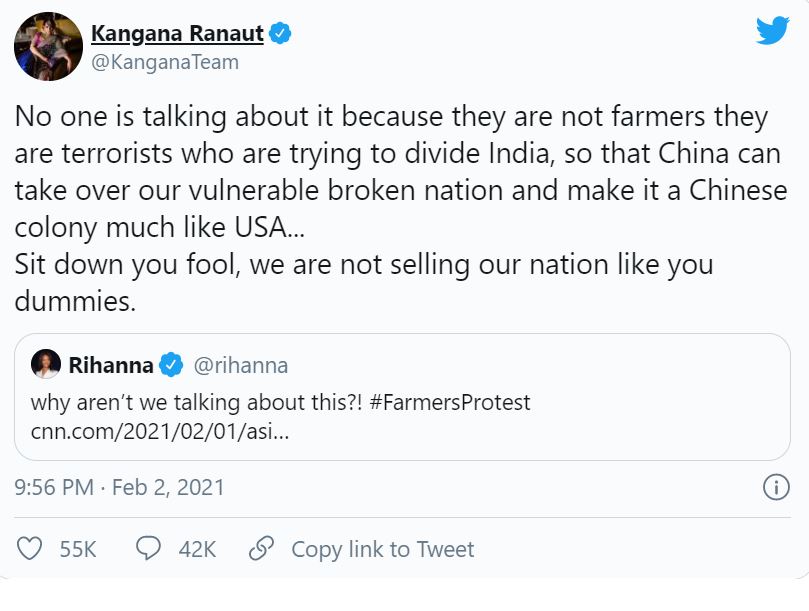
The action comes two days after Kangana Ranaut had expressed her vexation over Rihanna’s Tweet, which was a clear intervention into India’s domestic politics.
Kangana’s now-removed Tweet in response to Rihanna’s Tweet
On February 2, singer-actress Rihanna, along with former porn-star Mia Khalifa and child protestors such as Greta Thunberg, interfered in the country’s internal affair by endorsing violence in the name of supporting ‘farmer’ protests. The statements of these celebrities were used by various political heads like pro-Khalistan Canadian MP Jagmeet Singh.
After, Rihanna posted her Tweet, regular detractors jumped at the opportunity to hail the actor-singer’s intervention in support of the protestors in India, who have now been accused of unleashing massive violence on the streets of the national capital.
Karen Attiah, who is the Global Opinions editor for controversial left-wing news publication ‘The Washington Post’, also took to Twitter to shower heaps of praises at Rihanna in a series of Tweets. Interestingly, Jack, the CEO of Twitter, promptly responded to Karen Attiah’s fascination for Rihanna and her attempts to meddle in another country’s affair by ‘liking’ all her posts.
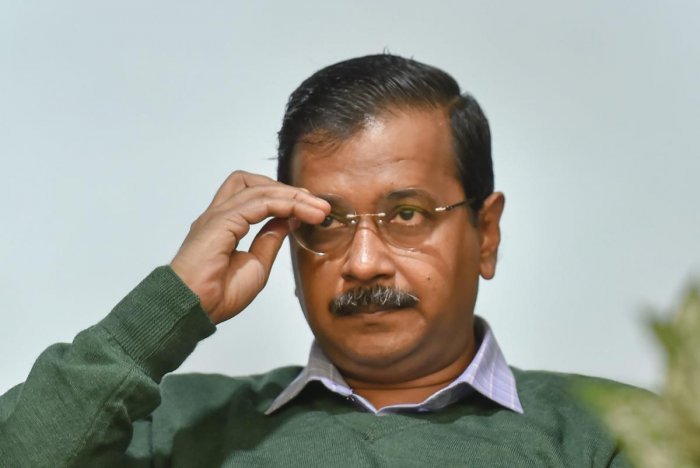
Arvind Kejriwal-led Aam Aadmi Party (AAP) government in Delhi has ordered state-run Delhi Transport Corporation (DTC) to immediately withdraw buses that it had provided on ‘Special Hire’ to the Delhi Police and paramilitary forces deployed at the Singhu, Tikri, Ghazipur border areas. The protestors, mainly from Punjab, have blocked roads to Delhi since past more than 70 days causing massive inconvenience to the public.
.#Delhi government has decided to recall all buses it has provided on Special Hire, with immediate effect, to the #DelhiPolice & paramilitary forces deployed at #FarmerProtests sites; email with directions sent to all DTC Depots: DTC Karamchari Ekta Union pic.twitter.com/fRLn9CrPyf
Following the orders from the AAP govt, DTC has asked the concerned departments to relieve the buses that were currently being used by them. Almost 550 DTC buses were being used for the movement of police and paramilitary personnel for deployment in various parts of the city.
The email issued from the Department to DTC stated: “It has been decided by the Competent Authority to withdraw all buses deployed on Special Hire with immediate effect. It is therefore requested to relieve buses immediately and any further requisition of buses shall be considered after the approval of the Competent Authority.”
The DTC authorities maintained that the approval of the Delhi government was a must for the requisition of buses under special hire.
Reportedly, Delhi’s Transport Minister Kailash Gahlot had asked DTC to submit a report on its working. He had opined that so many buses were not required to be given to the Delhi police. Following the report submitted by DTC, Gehlot had ordered the withdrawal of buses on Delhi police’s duty with immediate effect.
Arvind Kejriwal Government’s prejudice against Delhi police
For the uninitiated, Delhi Police comes under the jurisdiction of the Union Home Ministry. Kejriwal government has earlier too, shown least respect towards the Delhi police. Earlier during the beginning of agitation, AAP leader Saurabh Bharadwaj had claimed that after Delhi Chief Minister returned from meeting the farmers at Singhu border, Delhi Police put up barricades around his house creating a ‘house arrest’ like situation. This claim was later debunked by Delhi police.
Meanwhile, BJP leader Kapil Mishra slammed Delhi CM Arvind Kejriwal for issuing such an unfair direction and demanded to know why he was committing such a crime. The BJP leader noted that injustice was done to the personnel of the Delhi Police and CRPF who protected the national capital.
Kejriwal deploys his ministers ‘to provide facilities’ to ‘farmers’
While Arvind Kejriwal Govt acts against Delhi police, it has anxiously supported by sponsoring the protestors who have laid siege to Delhi over last 70 days. From providing free WiFi (which he had promised Delhi residents but never fulfilled) to potable water to toilets, the AAP government has done everything to ensure that the ‘farmers’ comfortably continue to cause more inconvenience to the public od Delhi.