Home Blog Page 4616

In first budget during Coronavirus pandemic, Sitharaman announces massive outlay for health and well-being with an increase of 137%

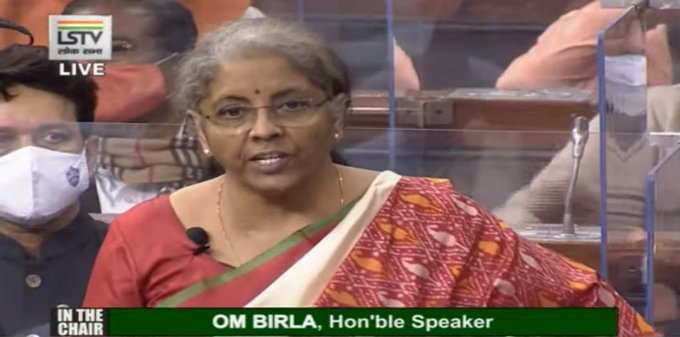
Finance Minister Nirmala Sitharaman presented the Union Budget 2021-22 on Monday. The budget comes at a time when the country is battling the coronavirus pandemic and the economy is still only recovering from the effects of the lockdown.

This was Finance Minister Sitharaman’s third budget under the National Democratic Alliance (NDA) government led by Prime Minister Narendra Modi. In a significant departure from the tradition, this year’s Budget is unique as it was presented paperless.

The proposals for the FY22 Budget rests on 6 pillars, said Finance Minister Nirmala Sitharaman listing the following as main pillars of Budget 2021 – health and wellbeing, physical and financial capital and infrastructure, inclusive growth, human capital, research & development and lastly minimum government and maximum governance.

In her budget proposal, FM Nirmala Sitharaman announced PM Aatmanirbhar Swasth Bharat Yojana with the allocation of Rs 64,180 crore over 6 years to develop health capacity.

Nirmala Sitharaman announced the PM Atmabirbhar Swasth Bharat Yojana will strengthen the primary, secondary and tertiary healthcare over a period of six years. The scheme will be in addition to the National Health Mission, she said.

Under the scheme, more 17,000 rural and 11,000 urban health and wellness centres to be set up. Integrated public health labs to set up in 11 states.

FM Sitharaman announced that Rs 35,000 crore were allocated for the COVID vaccines which were rolled out earlier this year. She said that more funds will be provided if needed.

The Finance Minister also announced the launch of Urban Swachh Bharat 2.0 Mission with an outlay of Rs 1.41 lakh crore over 5 years. The Jal Jeevan Mission Urban to be launched at an outlay of Rs 2.87 lakh crore. The government to launch Mission Poshan 2.0, said Finance Minister to strengthen the nutritional content, delivery, outreach and outcome.

Israeli embassy attack: Threatening letter to ambassador warns of revenge for Iranian leaders killed in US drone strike. Details

0

A letter addressed by a terrorist attacker to the Israel Ambassador to India has brought to fore an Iranian link to Friday’s low-intensity blast outside New Delhi’s Israeli embassy, as per a report in the Hindustan Times. In the wake of the terror attack, the investigators recovered a letter addressed to Israeli Ambassador to India, Ron Malka, that termed the blast a ‘trailer’ and promised retribution for the deaths of two Iranians in a drone attack by the United States in 2020.

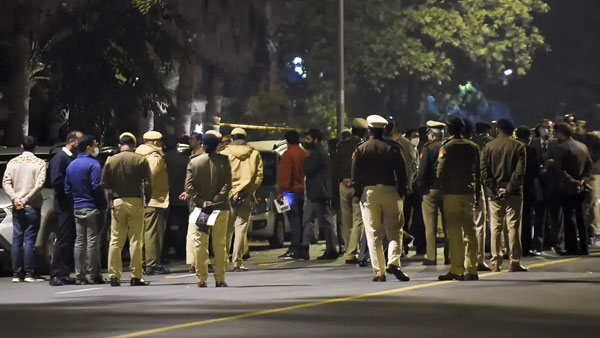
On Friday, an IED Blast was reported outside Jindal House near the Israel Embassy in Delhi. According to the forensic teams, three cars were damaged, and black powder was used to carry out attacks on the Israel Embassy.

“This is just a trailer presented to you, that we can observe you, from eating to …..Mind it, all the participants and partners of Israeli terrorist ideology will be no more in existence. Now get ready for big and better revenge of our heroes (Soleimani, Muhandis and Fakhrizadeh),” the letter read.

The letter warned the Israeli Ambassador that it has the capability of ending their lives anytime, and that Israeli terror shelters would be destroyed. “All you have to do is count your days,” the letter concluded.

The letter was addressed to “The Terrorist, Devil of Terrorist Nation Dr Ron Malka” and was written by someone who identified himself as Sarallah India Hezbollah. It is pertinent to note that Hezbollah is the Shia Islamist political party in Lebanon with a sword arm — a sworn enemy of Israel. The letter promises revenge for the killing of Iran Quds Commander Qassem Soleimani, and Abu Mehdhi Al Muhandis, who were killed in a US drone attack in January 2020, and Iranian nuclear physicist Dr. Mohsen Fakhrizadeh, who died in a car bomb attack in Iran in November 2020.

After the Iranian link was established in the recent attack, external affairs minister S Jaishankar and National Security Advisor Ajit Doval talked to their Israeli counterparts. Doval also made a phone call and briefed the Israelis about the ongoing investigation despite being abroad on a visit.

Iranian connection in a similar terror attack in 2012

The terror blast brings under the spotlight the terror attack in 2012 when an Israeli embassy vehicle was targeted in New Delhi and the investigation pointed towards the involvement of Iranian agencies. A similar letter promising to avenge the ‘martyrdom’ of some Iranians were recovered from the spot.

On February 13, 2012, a sticky bomb was placed on the car of an Israeli diplomat’s wife, due to which she had received injuries. Incidentally, the Quds Force, also known as Iranian Revolutionary Guard Corps (IRGC), was then accused of carrying out attacks on the Israeli Embassy in New Delhi. Four people had suffered injuries after a bomb explosion on an Israeli diplomatic car in New Delhi.

Pakistan to get 17 million doses of AstraZeneca’s India-made Covishield under UN’s vaccination alliance Covax

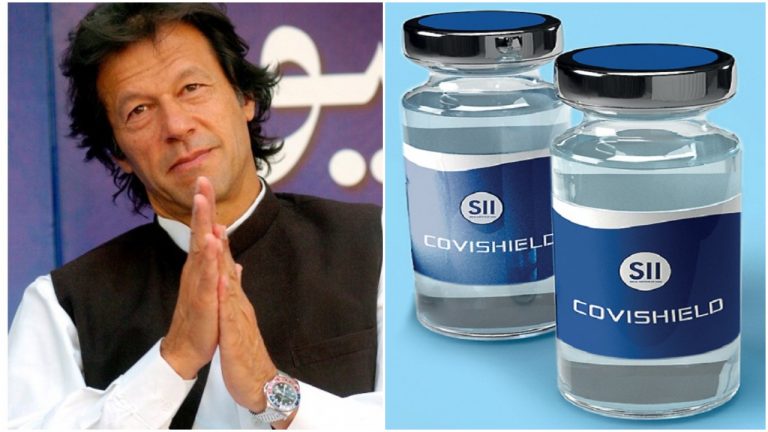
Despite whining, ranting, and spewing venom against India constantly at every possible international stage, Pakistan will now have to depend on the India-made Covishield vaccine, as it will be a beneficiary of the Covax initiative, an international alliance constructed to avail low-cost vaccines to poorer nations.

According to the reports, around seven million made-in-India doses of AstraZeneca’s Covishield vaccine will be sent to Pakistan’s free Covid-19 vaccination drive scheduled to start next week. However, the vaccines will be covered under the global Covax alliance and not under PM Modi’s vaccine diplomacy.

A special Pakistani plane had earlier departed for China to fetch the first batch of Sinopharm’s Covid-19 vaccine, PM Imran Khan’s special assistant on health Dr Faisal Sultan had said on Sunday. However, apprehensions have been raised against the efficacy of the Chinese vaccine, and many countries have now backtracked on their decision to conduct trials of Chinese vaccines.

In addition to the Chinese vaccines, around seven million out of the 17 million doses of Indian-made Covishield will reach in the country by March, Dr Sultan added.

“Though AstraZeneca is being prepared in India, it will come through Covax, an international alliance which has announced free vaccines for 20% of Pakistan’s population. DRAP (Drug Regulatory Authority of Pakistan) has already registered both Sinopharm and AstraZeneca,” Dr Sultan said.

Earlier in January, it was reported that Pune-based Serum Institute of India, the world’s largest vaccine manufacturing company, would be supplying over 200 million doses of Covishield and Novavax to the GAVI-Covax alliance by the UN at the price of 3 US dollars per dose.

India’s vaccine diplomacy

India, the world’s largest vaccine manufacturer, has again come to the world’s aid by successfully supplying vaccines to its neighbouring and other developing countries at an extremely affordable cost. India has airlifted more than 6 million COVID-19 doses to nine countries in Phase-I under its initiative termed “Vaccine Maitri”.

The Modi government’s vaccine diplomacy has taken wings and has delivered vaccines to most of its neighbours. Under the initiative, India sent a gift of two million doses of Covishield vaccine to Dhaka on January 21 and facilitated a commercial contract of 30 million doses with vaccine manufacturer SII. Nepal, Bhutan, Sri Lanka and the Maldives have received India’s COVID-19 vaccines under grant assistance in tune with country’s “Neighbourhood First” policy.

Addition to that, India will send 1 lakh anti-Covid shots to Oman, a close partner in the Gulf. Later this week, India is scheduled to deliver over 5 lakh doses to Afghanistan and send 2 lakh doses to Nicaragua, 1 lakh to Barbados, 70,000 to Dominica and 1.5 lakh to Mongolia.

Under commercial deals, Egypt, Algeria, UAE, and Kuwait have all purchased vaccines directly from the SII. The purchases are made commercially but need export clearance from the Indian government.

Meanwhile, India has begun the world’s largest coronavirus vaccination drive under which two vaccines, Covishield and Covaxin, are being inoculated to frontline health workers across the country. The country plans to vaccinate about 300 million citizens in the first six months.

From briefcase to bahikhata to iPad: Budget 2021 goes digital

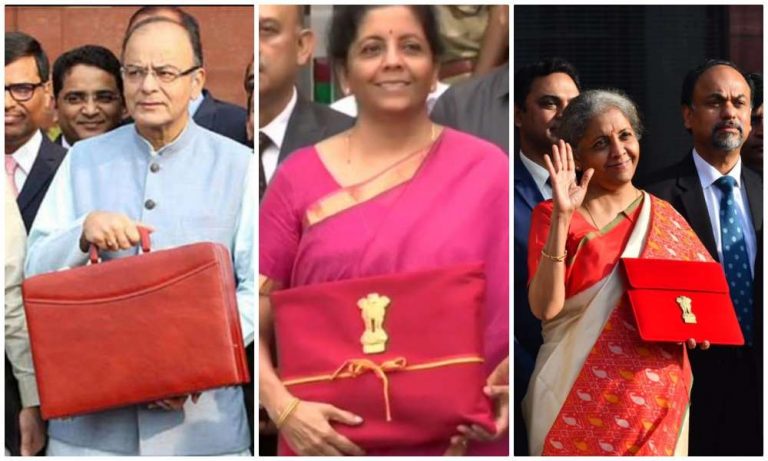
For decades we saw the Finance Minister arrive at the Parliament with a leather briefcase which contained where the rupee will come from and where it will go. This British legacy was broken in 2019, after India’s first full-time female Finance Minister Nirmala Sitharaman arrived with a ‘bahikhata’ wrapped in red cloth tied with a gold string. The Indian national emblem shone brightly on it.

The word Budget has been derived from the French term bougette which means a briefcase. The British tradition of ‘opening the budget’ and presenting the financial plans of the government had originated in the 1860s. Eventually, it trickled over to post-colonial India.

This time, however, the budget has gone digital.

While leaving from Ministry of Finance this morning, Finance Minister Nirmala Sitharaman posed with a tablet, perhaps an iPad, wrapped in a red cover with the Emblem shining brightly on it.

Because of Chinese coronavirus, the contagious flu which spreads quickly with virus staying on surface for long time, the budget this year will be available in digital copies. The soft copies will be published online for all to read.

BJP demands action against Sharjeel Usmani for Hinduphobic speech at Elgar Parishad

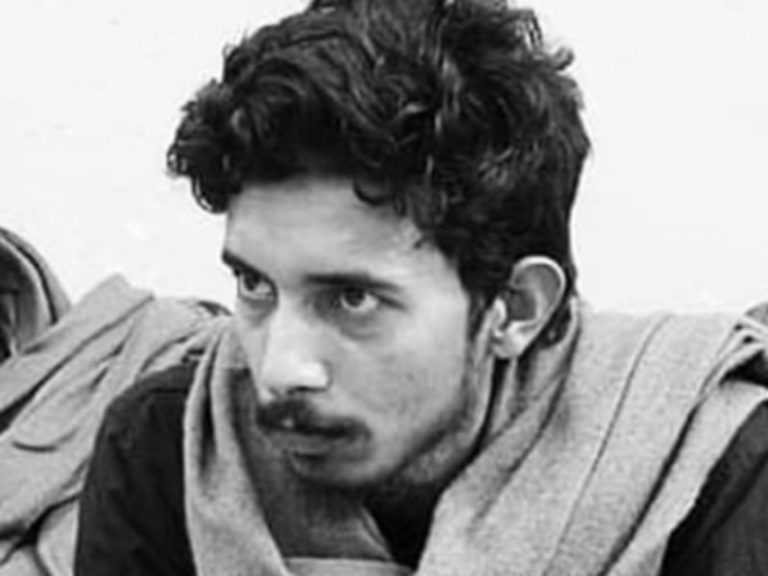
On January 31, Keshav Upadhye, Maharashtra state unit spokesperson of the Bharatiya Janata Party (BJP), urged Uddhav Thackeray-led Maharashtra government to take action against Sharjeel Usmani for alleged Hinduphobic speech at Elgar Parishad in Pune on Saturday.

As per the reports, Usmani, former student leader and columnist for Newslaundy, addressed a gathering of around 500 people in the second edition of Elgar Parishad at Ganesh Kala Krida Manch, where he used defamatory language against the Hindu community.

Upadhye urged CM Thackeray to take action against Usmani. He said, “Will the CM take action against him or continue with his rhetoric that they have not left Hindutva. State home minister Anil Deshmukh should take action against him.”

Elgar Parishad: More than two hours of incendiary speeches

On Saturday, Elgar Parishad was organized by Bhima Koregaon Shaurya Din Prerna Abhiyan, an umbrella organization of 250 Dalit organizations. It was first held in 2018 to commemorate the 200th anniversary of the Battle of Bhima-Koregaon of 1818. The conclave resulted in violent clashes at Bhima-Koregaon village.

During the second edition of the Elgar Parishad, several speakers, including Sharjeel Usmani, Arundhati Roy and Prashant Kanojia, used the stage to spread Hinduphobia. While Usmani called the Hindu community rotten, Arundhati Roy happily threw Gaurmutra jibes to mock Hindus.

Kanojia said the movements would continue until their ‘Kashmiri brothers’ receive justice, Akhlaq and Pehlu Khan receive justice, and the farm laws are not repealed. He said that the movement would continue until the RSS is uprooted from this world. Furthermore, in a particularly incendiary bit, he told Dalits that it is better to ‘die fighting in the streets’ than live as ‘oppressed.’

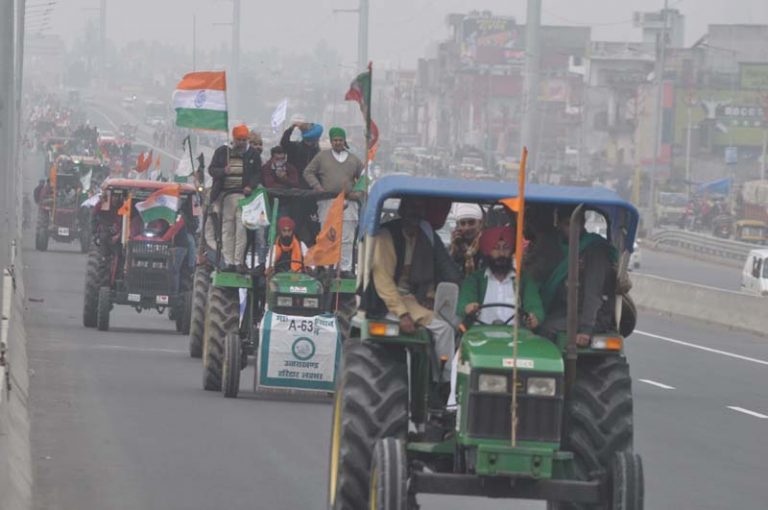
UP Police sends notice to 220 tractor owners, opposition cries foul

Uttar Pradesh Police has issued notices to 220 tractor owners in Sikandarpur police station area. As per Sikandarpur Police Station SHO Bal Mukund Mishra, the notices have been sent for using the tractors on public roads for commercial work and allowing the minors to drive them. Because of this, there were road accidents. These tractors were also used in illegal mining, the SHO said.

Ram Govind Chaudhary, Leader of Opposition in UP legislative assembly has accused the police of ‘trying to threaten the farmers’. He alleged that the police is trying to hinder the ‘farmer movement’ by issuing these notices since these farmers are going to Delhi border on these tractors to participate in the protests, which had recently turned violent.

The Uttar Pradesh Police, however, have denied any such allegations.

Meanwhile, the Delhi Police, too, has issued fresh notices to over 50 people including farmer leaders. Earlier, Delhi Police had issued 44 notices. Delhi Police, too has identified some owners of the tractors used during the violence and is in process of sending notices to them.

As of now 84 people have been arrested in the Republic Day riots which left at least 300 cops injured, some severely. Delhi Police has also registered 38 cases.

Myanmar: Military takes control after a coup, Aung San Suu Kyi, other leaders detained

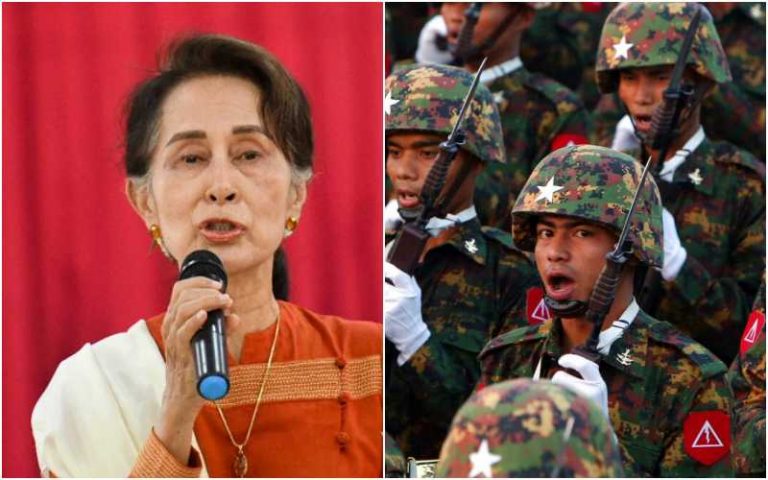
On the early hours of Monday, the Myanmar Army staged a coup and declared it had taken control of the country for one year under a state of emergency.

According to the reports, the Myanmar military’s intervention came after weeks of continued friction between the country’s military, which ruled the country for over five decades, and the civilian government over allegations of irregularities in November’s elections.

The Myanmar military has now detained the country’s top political leaders, including Aung San Suu Kyi and other senior members of Myanmar’s ruling party amidst rising tensions over a recent election. Aung San Suu Kyi, Myanmar’s 75-year-old state counselor, President Win Myint, and other members of the National League of Democracy were arrested at their residences in the capital Naypyidaw early on Monday.

Following their arrests, the military then declared a one-year state of emergency. The troops seized the city hall in Yangon, the former capital that is Myanmar’s commercial hub.

Army takes control amidst rising tensions over alleged election irregularities

Earlier this week, the Myanmar Army had suggested they were ready to take control of the country after pointing out the alleged election fraud in the November 8 election. In the elections, the incumbent NLD had won the election by a landslide, ensuring Aung San Suu Kyi a second five-year term in office.

The military-backed Union Solidarity and Development Party had suffered a massive defeat at the pro-democratic party’s hands. Incidentally, the country’s new parliament was set to hold its first session on Monday.

For nearly five decades, from 1962 to 2011, Myanmar was ruled by the military. Post-2010, democracy started returning slowly in Myanmar under a constitution that had to reserve three important ministries and 25% of seats in the parliament for army appointees.

The November polls were only the second democratic elections the country had seen since it emerged from the 49-year military rule grip in 2011. The NLD took power in 2016 in a civilian government headed by Aung San Suu Kyi.

US, Australia express concerns

The coup by the Myanmar Army has triggered a quick response from the United States and Australia, who demanded the immediate release of detained NLD leaders and the restoration of democracy.

“The United States opposes any attempt to alter the outcome of recent elections or impede Myanmar’s democratic transition and will take action against those responsible if these steps are not reversed,” White House spokeswoman Jen Psaki said in a statement.

Similarly, Australia also expressed its concern saying that the military was “once again seeking to seize control” of the country and asked them to respect the rule of law.

‘I need a partner for sexual relations’: Ahmedabad-based NGO chief Hassan Johar booked for sexual harassment

Ahmedabad based NGO chief Hassan Johar, has been reportedly booked on charges of sexual harassment. As reported by DeshGujarat, the complainant is a 33-year old Gandhinagar resident who moved here from Bihar. In her complaint, she alleged that she had applied for the job at Johar’s NGO and her interview was conducted on 10th October 2020. Johar runs an NGO called SPART (Society for Promoting Rationality) in Ahmedabad.

The victim alleged that she joined SPART on 13th October 2020 and was asked to pay Rs 43,000 as deposit for HR policy. Since she was unable to pay the amount, she deposited her original documents. The woman alleged that Johar had asked her to additionally work in HR department too which she denied. She would have frequent verbal spats with him for the same, she said.

She further alleged that Johar would indulge in indecent behaviour and would say that he needed a partner for sex. Upon finding opportunities, Johar would hug her and hold her hands. Adding that he would indulge in indecent talks with her, she said that he told her that he would masturbate when he gets bored. She alleged that he would ask if she has a boyfriend and has sex.

Tired of the harassment, she resigned on 12th December and demanded the original documents are returned to her. However, he has not returned the documents.

The woman has named five witnesses including a woman in her complaint.

Hassan Johar’s past complaints

Earlier in March 2019, a 44 year old man had filed a police complaint alleging that Johar cheated him and breached his trust by demanding Rs 50,000 to return the original documents he submitted while taking up a job. Nilabh Mishra, a native of Bihar and living in Ahmedabad, had alleged that he had submitted his original documents like Aadhaar, passport and driving licence while taking up a job in April 2017. However, he quit within a week as he fell unwell. When Mishra demanded the documents, Johar allegedly demanded money.

Hassan Johar ex-husband of ‘activist’ Zakia Soman

Hassan Johar is ex-husband of Zakia Soman, founding member of Bharatiya Muslim Mahila Andolan, a ‘human rights movement’.

He has been booked under section 354A(i) of the Indian Penal Code pertaining to physical contact and advances involving unwelcome and explicit sexual overtures.

How incendiary Punjabi songs are fueling dangerous narratives surrounding the ‘farmers protests’, fuel division between Punjab and rest of India

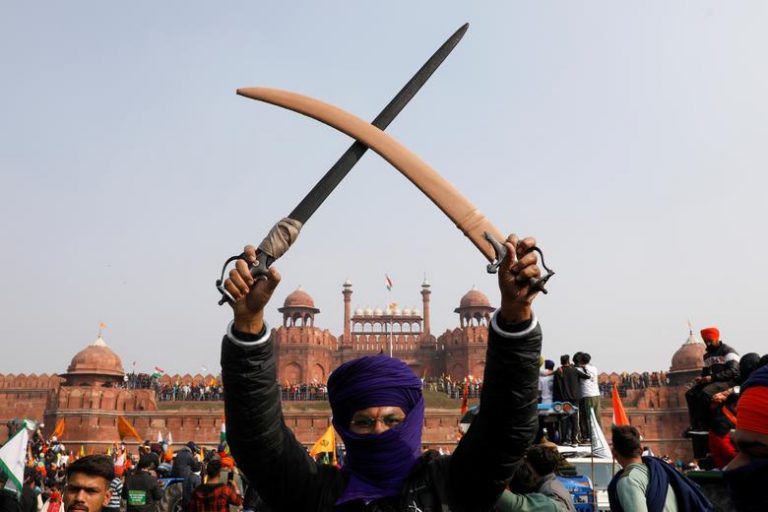
The Khalistani face of the ‘farmer protests’ was out in the open on Republic Day when a Khalistani mob hoisted the Sikh flag at the Red Fort. While some have claimed that it is only the Sikh flag and not the Khalistan flag, it is pertinent to mention that the flag was allegedly hoisted by Deep Sidhu and his band of followers. Deep Sidhu is a known Khalistani.

During the entire protests, entertainers have played a critical role in promoting the Khalistani narrative. In this article, we look at some of the incendiary songs that are being manufactured by entertainers with dubious ideological inclinations.

“Waaris Nalwe De” really manhandling lion or running into rat traps?

Babbu Maan, a hugely popular Punjabi singer recently released a 24-minute song “Waaris Nalwe Da”, latest in the sheep-herd series of the farmers’ agitation-centred Punjabi songs. Till now over 75 such songs have been produced.

Of these, a large contribution is made from mainstream popular artists like Babbu Maan, Jas Bajwa, Kanwar Grewal, Ranjit Bawa, Sidhu Moosewala, Karan Aujla, Shree Brar and also international artists Bohemia, J Hind, The Game, etc. Though, all these and other artists are world renowned for their songs instigating violence, narcotics and sexism.

This is acting as another catalyst in provoking the youth in the current so-called farmers’ agitation on Delhi’s borders. Here, we discuss the narratives and agendas being set up by these Punjabi songs.

Raging war between Punjab and Delhi

The word “Dilliye” is used commonly in 99% of the songs. Many may argue that the term refers merely the seat of the Indian government, hence the government itself. But the songs say something else.

Kanwar Grewal says, “Bas 4-5 Ghanteya Di Waat Delhi-e Tenu Yaad Karva Deyange Aukaat Diliye, Teri Hikk Utte Chadd Ke Jaikaare Launge” in song Ailaan. Anyone who understand basic Punjabi can notice how Kanwar threatens “Delhi” to make it realise its ‘Aukaat’ by seizing on its borders. Who is affected by seizing Delhi’s borders? The seat of power or the citizens, majority of whom are non-Sikhs?

In another song, Punjab Bolda, Ranjit Bawa argues, “Rabb na kari je gora pher aa gaya, le leyo azaadi ohdoyoga karke”. Which roughly translates to, “Yoga won’t help if the British enslaves India again”. The same song also mocks Ayurvedic medicines and other constituents of Bharat’s cultural ecosystem. For merely attacking the central government? However, the above-mentioned songs merely give two instances out of a large chain of such songs and narratives. The term is being used in wide context to create divide between Punjab and the rest of Indian union.

Rejuvenation of Khalistan movement

Amid a lot of ruckus over the involvement of Khalistan movement in the farmers’ agitation, these songs force us to again peek into the agitation carefully. On the one hand, the above mentioned “Dilliye” narrative also leads to a bigger separatist picture.

On the other hand, pro-Khalistan artists Jazzy B, Sophia Jamil, Sidhu Moosewala and Pakistani artist AB Chatha vehemently showcased secessionist and the self-determination propaganda through their songs Bagawatan, Khalistan the Solution, Panjab and Baghi Punjab, respectively.

Two lines from Shree Brar-produced very popular so-called “Kisaan Anthem” also instigate secessionism for which he was even detained by Punjab Police. The song lyrics says, “Jinna nu tu attwadi kehndi Dilliye, Je attwadi hoge tetho sambhe ni jaane”. This threatens “Delhi” that those who are alleged of being terrorists may really become terrorists.

Another line says “Babe Nanak ne saanu si kisani bakshi Baajan wale ne kalma te khande Delhi ae”. Clearly promotes the Sikh self-determination propaganda by threatening that Guru Gobind Singh has bestowed dagger upon Sikhs.

Agra Fort vis-a-vis Raisina Hills

No, we won’t discuss the regimes of the Mughal empire and the current Indian government. But somehow the artists of these songs find interest in and are even obsessed with doing so.

The Kisaan agitation songs are constantly trying to invoke the 1984 Operation Bluestar and anti-Sikh riots, 1947’s partition, etc. The more concerning part is that the artists are repeatedly comparing these issues with the tyrannical and barbarous Mughal and other foreign atrocities in the medieval era. Repeatedly flaunting victory over Abdali and Alexander, and further misusing names of Sikh heroes to threaten others. Also claiming that Punjab has some previous uncleared accounts with “Delhi”.

For instance, the Kisaan Anthem says, “Khoon khaulda niyana ki siyana Dilliye, Hissab tere naal sadda ae purana Dilliye”. Which roughly translates to “the previous uncleared accounts provoke us”. Mentionable is that, this particular propaganda is more relevantly exhibited through visuals in these songs. So, the argument is that not only the lyrics are dangerous, but the visuals in the song videos are also vicious and under great suspicion.

“Kitte Modhe Te Bandook Na Aa Je”

Constant threats of grabbing arms if not convinced, and still calling the so-called farmers’ agitation peaceful. This single line basically defines the Punjabi songs centred around farmers’ protest.

Repeated threats of reviving insurgency in Punjab not only provokes the Punjabi youth but also challenges India’s integrity. Koroala Maan’s Weapon Shoulder, Anmol Gagan Maan’s Kisaan v/s Rajneeti, Kanwar Grewal’s Jawani Zindabad & Pecha, and many other extremist songs openly calls the youth to get armed. Might be a crucial logistic in the peaceful protest as per the artists.

But lest we forget, that the protest is also supported by gangster-turned-activists like Lakha Sidhana and Navdeep Guggu.

The article is not calling the administration to take stand against such songs, since an army of “human rights” advocates is standing just outside the court premises to defend the accused. But the brutal history of Punjabi music industry’s violent, alcoholic and sexist nature fairly narrates the vulnerability of Punjabi youth to such extremist songs. If the 80s-90s insurgency is revived in Punjab, the aftermath stands unimaginable.

The article is written by Devanshu Mittal, Student, Kurukshetra University.

JNU-like scenes at Delhi Police headquarters as ‘journalists’ raise slogans against Mandeep Punia’s detention, say he lived and ate with protesters

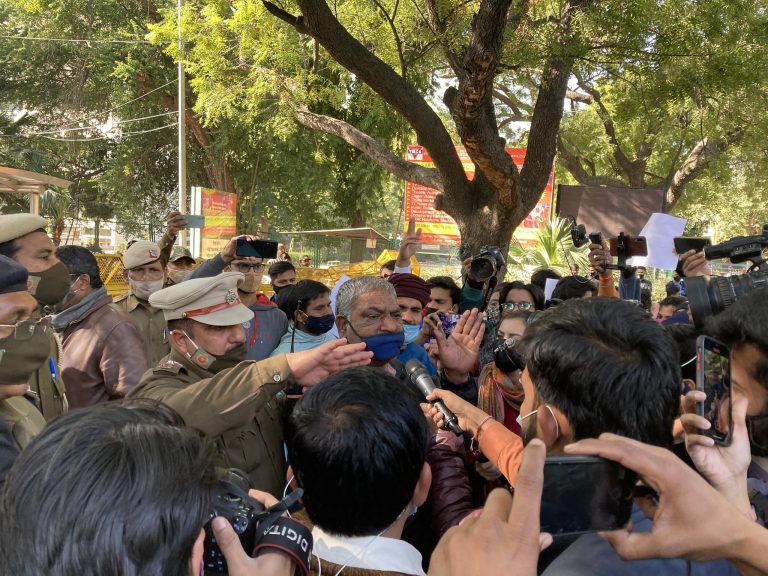
‘Journalists’ protested at the Delhi Police headquarters on Sunday demanding the release of Mandeep Punia, detained after he misbehaved with a station house officer (SHO) at the Singhu Border on Saturday night. He was reportedly attempting to removed barricades and misbehaved with police due to which he was detained.

Speaking about the arrest, a senior police officer said Punia was standing with the protesters and he did not have a press ID card. He was trying to move through the barricades which were kept to segregate and secure the area. An altercation broke out between police personnel and him.

The police said that Caravan ‘journalist’ misbehaved with the police and was soon detained. ‘Journalists’ could be spotted on Sunday sloganeering at the Delhi Police headquarters. Slogans of ‘Tanashahi nahi chalegi’ could be heard.

In a video that was shared by Scroll’s Vijayta Lalwani, one of the protesters could be spotted ranting about ‘BJP goondas’ and describing how Mandeep Punia used to live with the anti-farm law protesters and dine with them.

The ‘journalists’ could be seen sloganeering in a fashion that reminds one of scenes that are usually observed at JNU protests organized by far-left protesters.

The Caravan, the media portal Mandeep Punia is reportedly associated with, is under the dock as well as its journalists have been booked for sedition for trying to incite violence by sharing misinformation in connection with the death of a protester during the Republic Day violence.

Now, it appears that for certain ‘journalists’, misbehaving with the Police falls under the purview of ‘press freedom’ as well.