Home Blog Page 518

Gujarat: Two Muslim groups Al Addis and Shias clash near mosque in Ahmedabad over calling for Azan first in the month of Ramzan

Ever since the month of Ramzan began this year, several videos of different castes of Muslims clashing with each other have surfaced on social media. For the last two days, a video of two factions of Muslims clashing near a mosque in Gujarat’s Ahmedabad has gone viral on social media. In the video, the two sides were also seen pelting stones at each other.

When OpIndia received this video, we tried to trace its source and ascertain its authenticity and timing. We also contacted Ahmedabad Police to obtain information about the video and if any action has been taken in the matter.

The police said that the video is from 2nd March 2025 and was recorded when two caste groups of the Muslim community, Al Addis and Shia resorted to violence after a dispute arose over performing Azan first in the Ahmadi and Bismillah mosques.

“On the evening of 02/03/2025 at 6:30 PM, a clash occurred in the Shahpur Police Station area between the Al Adis and Shia communities over the issue of performing the Azan first, between the Ahmadi and Bismillah Mosques. Later, both groups internally resolved the matter,” Ahmedabad Police told OpIndia.

The police further said that later a settlement was reached between the two. According to the information provided by the Ahmedabad police, the authenticity of this video and its being from Ahmedabad was proven to be correct. It was also revealed that it was from the month of Ramzan.

Tension grips Delhi’s Brahmpuri over mosque expansion near Shiv Temple, Hindu families put up ‘house for sale’ posters: All you need to know

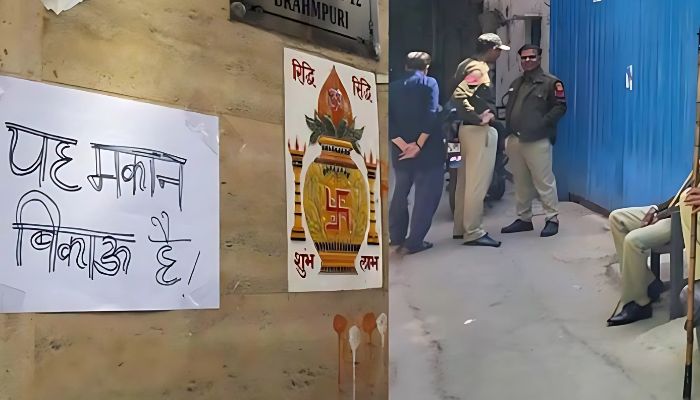
On 3rd March, tension gripped northeast Delhi’s Seelampur area after a dispute over the expansion of a mosque in lane number 12 of Brahmpuri. Reportedly, the residents of the area complained with the police, stating that there was an incident of stone pelting on the intervening night of 2nd and 3rd March. Fearing communal clashes, over a dozen Hindu families have put up “house for sale” posters, particularly around the nearby Shiv Mandir, which stands only 10 steps away from the mosque.

Fear grips Hindu residents

Speaking to the media, 60-year-old Radha Verma, a resident of the area, said, “I remember when riots broke out here. My daughter-in-law was pregnant, and we lived in fear. No one should have to live like this. The mosque expansion may seem like a minor issue, but in an area where tensions escalate quickly, we feel the safest option is to sell our house and leave as soon as possible.”

Another resident, Pandit Shankar, echoed similar sentiments. He said, “We have lived here for years, but we do not want to take any risks.”

Residents like 40-year-old Sushila expressed worries about the impact of the mosque expansion on the already congested lanes. She said, “These lanes are already very narrow, and the mosque expansion will only add to the dispute.”

However, Muslims in the lane have defended the expansion. They claimed that the Muslim residents had pooled funds to buy the adjacent land as the mosque was too small for them. “Many people are forced to pray on the streets,” they claimed.

Locals told Jagran that two 75-square-yard plots in lane number 12 were merged to expand the mosque in lane number 13. Locals have argued that during festivals, crowds will gather, which will create problems for the residents of both communities. They further alleged that the expansion of the mosque is being deliberately carried out to pressure members of the Hindu community to leave the area. They also accused young Muslim men of hurling abuses, creating disturbances at night, and pelting stones at the homes of Hindu families.

Police on high alert, construction halted

The construction work initially began in November 2023. However, following complaints from residents, the construction was halted. Then, in November 2024, local Muslims obtained permission from the MCD for the expansion, after which construction work restarted in February 2025. On 13th February, residents of the area lodged a complaint alleging illegal construction. The police stated that the mosque committee had obtained the required permissions. However, the residents opposed the construction of the new entry gate.

On 18th February, the MCD issued a notice and halted the construction once again. According to a Jagran report, the show-cause notice issued by the MCD clearly states that the map was approved by concealing facts. It further stated that the map was approved under the residential category.

Furthermore, revenue records show that six donors from the Muslim community donated the land for the mosque to the Al Matin Welfare Society in April 2024. The president of this society is Abdul Matin, who resides in Nizamuddin West.

When the police received a complaint of stone pelting, an investigation was launched. The police stated that they did not find any evidence of stone pelting in the available CCTV footage. The Assistant Commissioner of Police (ACP) and the Station House Officer (SHO) visited the area to speak to residents. No formal complaint has been filed as of now.

Authorities are closely monitoring the situation. On 4th March, the police barricaded the area between 10 AM and 3 PM and temporarily restricted access to the lane. Once the situation came under control, the barricades were removed.

All-party meeting led by Stalin rejects delimitation, demands status quo for 3 decades, says delimitation, if necessary, be based on 1971 census

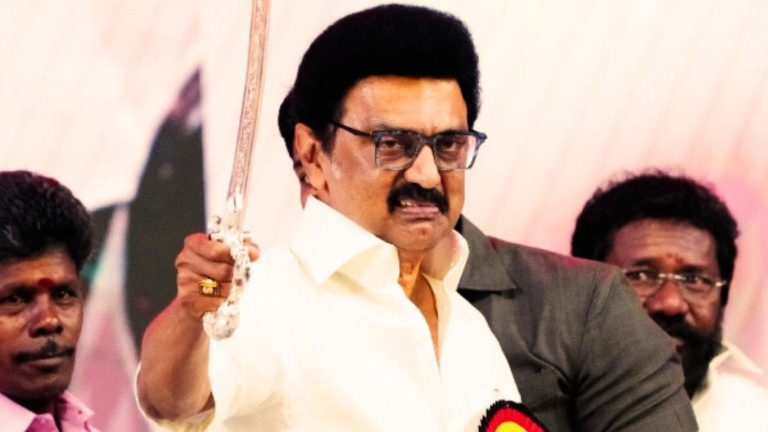
Tamil Nadu Chief Minister headed an all-party meeting in Chennai on Wednesday (5th March) to discuss issues like ‘Hindi imposition’ and ‘delimitation’. The meeting unanimously rejected the delimitation of Parliamentary constituencies expected to take place in 2026. A resolution passed in the meeting denouncing the delimitation said that it would threaten the federal structure of the country.

Among others, the meeting was attended by Dravida Munnetra Kazhagam (DMK), All India Dravida Munnetra Kazhagam (AIDMK), Congress, Viduthalai Chiruthaigal Katchi, Tamilaga Vetri Kazhgam and the Communist parties. BJP, Naam Tamilar Katchi and Tamil Mahila Congress boycotted the meeting. The parties in the meeting said that delimitation would result in reduced representation of Tamil Nadu and other southern states as the states have controlled their population through family planning measures. They said that the southern states should not be penalised for successfully controlling their population. “It is entirely unjustifiable to reduce Parliamentary representation of Tamil Nadu and other south Indian states solely because they have proactively implemented population control measures in the national interest,” the resolution read.

Addressing the meeting, Stalin said that the status quo should continue for a minimum of three decades. He said that Tamil Nadu has 39 representatives in the Parliament and still the central government does not consider them. He added that if delimitation is implemented the seats of Tamil Nadu in the Parliament will reduce. “A delimitation exercise will only make matters worse,” he said. Stalin said that delimitation if implemented, should be based on the 1971 census. Two days ago, the Tamil Nadu Chief Minister urged Tamil people to have children immediately, so that they can counter the impact of the population-based delimitation exercise next year.

Opposing the delimitation, actor and the Makkal Nidhi Maiam party chief Kamal Hassan said that the delimitation exercise was not required as the country has progressed even with the existing number of MPs. He added that if the central government wants to increase representation, it should increase seats in state assemblies.

Stalin alleges Hindi Imposition

Referring to the Sengol that was installed by the central government in the Parliament to honour the Tamil culture, Stalin accused the central government of indulging in symbolism and not taking concrete measures for the Tamil language. Stalin called Sanskrit a dead language and asked the central government to allot more funds to Tamil language rather than Hindi or Sanskrit.”Rather than installing Sengol in Parliament, uninstall Hindi from Union government offices in Tamil Nadu. Instead of hollow praise, make Tamil an official language on par with Hindi and allot more funds for Tamil than a dead language like Sanskrit,” Stalin wrote on X.

Meanwhile, the Tamil Nadu BJP has started a door-to-door signature campaign in favour of the three-language formula under the National Education Policy (NEP).

The DMK has maintained its stand of rejecting Hindi as a medium of instruction in schools under the NEP and adhering to its two-language policy which includes Tamil and English. The party often refers to the anti-Hindi agitations of 1965 which were spearheaded by the Dravidian movement to resist the imposition of Hindi in the state.

Union Cabinet approves Kedarnath ropeway project, travel time to be reduced from 8-9 hours to 36 minutes

The Union Cabinet, chaired by Prime Minister Narendra Modi, on Wednesday approved the Kedarnath ropeway project. The ropeway, with a total length of 12.9 kilometres, will come up with a monetary outlay of about Rs 4,081 crore.

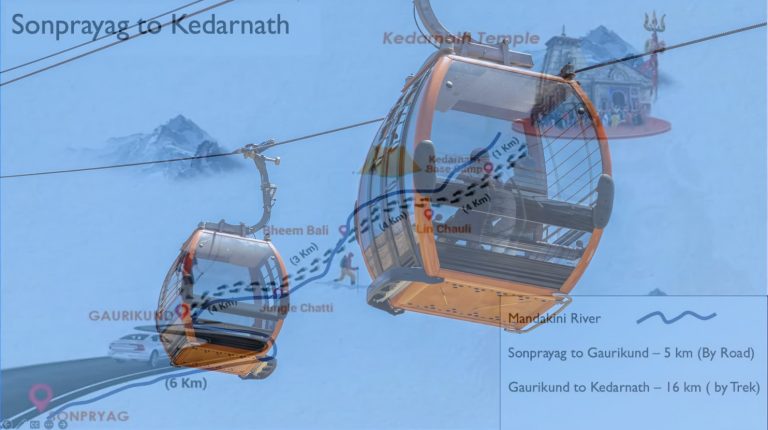
The ropeway project will be from Sonprayag to Kedarnath.

The project will be developed on Design, Build, Finance, Operate and Transfer (DBFOT) mode at a total capital cost of Rs 4,081.28 crore.

The ropeway is planned to be developed in public-private partnership and will be based on the most advanced Tri-cable Detachable Gondola (3S) technology with a design capacity of 1,800 passengers per hour per direction (PPHPD) carrying 18,000 passengers per day.

The ropeway project will be a boon to the pilgrims visiting Kedarnath as it would provide an environment-friendly, comfortable and fast connectivity and reduce travel time in one direction from about 8 to 9 hours to about 36 minutes.

The ropeway project will also generate substantial employment opportunities during construction and operations as well as in allied tourism industries like hospitality, travel, foods & beverages (F&B) and tourism throughout the year.

The development of ropeway project is a significant step towards fostering balanced socio-economic development, enhancing last – mile connectivity in hilly regions and fostering rapid economic growth.

The journey to the Kedarnath temple is a challenging 16-km uphill trek from Gaurikund and is currently covered on foot or by ponies, palanquins and helicopter.

The proposed ropeway is planned to provide convenience to pilgrims visiting the temple and ensure all-weather connectivity between Sonprayag and Kedarnath.

Kedarnath is one of the 12 sacred Jyotirlingas situated at an elevation of 3,583 m (11968 ft) in the Rudraprayag district of the State of Uttarakhand. The temple is open for pilgrims for about 6 to 7 months in a year from Akshaya Tritiya (April-May) to Diwali (October-November) and is visited by about 20 lakh pilgrims annually during the season.


(This news report is published from a syndicated feed. Except for the headline, the content has not been written or edited by OpIndia staff)

Bengaluru restaurant forced to remove Odia language signage despite prominent Kannada board: How politics over ‘Kannada pride’ is fuelling hooliganism and hatred

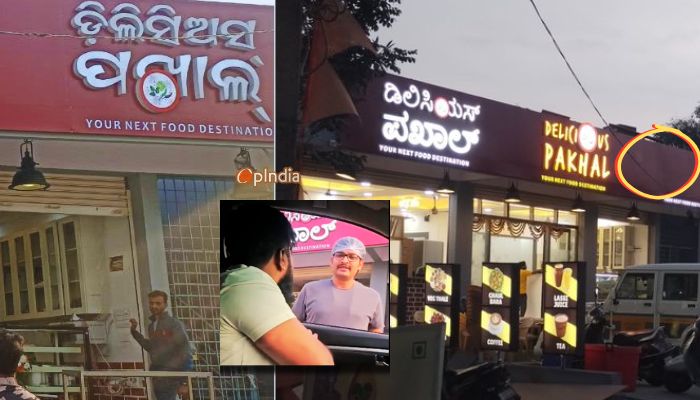
The rising menace of linguistic and regional chauvinism in Karnataka, especially in Bengaluru, has reached a point of absurdity that defies reason and decency. Days after a Bengaluru Police official allegedly disconnected the call by a Spanish man stuck in a burglary situation at his home, over not speaking Kannada, the self-proclaimed ‘language warriors’ recently threatened a restaurateur to remove the signboard of his Odia restaurant “Delicious Pakhal” near Bileshivale village in Bengaluru. This came despite the fact that the Odia restaurant already has a prominently displayed Kannada signboard.

In the viral video, a Kannada language goon arrived in a car and started questioning a staff member from of the Odia restaurant in Kannada over why they had put up nameboards in Odia language.

To this, the restaurant staffer, though seemingly taken aback, humbly responded, “This eatery follows Odisha style(food). The board is for Odia people, as 90% of the food served here caters to them. That’s why we have put up the nameplate.” It is notable here that the staffer was responding to the language chauvinist in Kannada, not in Odia or English or Hindi.

Despite this, the man issues a warning to the Odia restaurant owner asking him to remove the Odia language board and that he would come back in a week to check. The Kannada language goon asserted that in Karnataka, the Kannada language and Kannada people should get first priority.

“In Karnataka, our first priority should be Kannada people. Have you seen other states allowing boards in our language? That language is not allowed here. Remove it. I will come back in a week,” he told the restaurant owner in an authoritative tone.

The Odia restaurant’s owner had respected the local rules and displayed the restaurant’s name in the Kannada language prominently alongside a signboard in Odia, however, that was not enough for the self-appointed protector of the Kannada language. He targeted the Odia script, a clear nod to the owner’s heritage and clientele as if the mere presence of a nameboard in Odia language would threaten the existence of the Kannada language’s identity. This is not Kannada pride but intimidation and hooliganism dressed up as a principle.

The incident has sparked outrage among not only Odia people but from people across the country including many Kannadigas. Taking to social media, several people questioned who gave the Kannadiga man seen in the video the authority to decide language priorities for others. Many also raised concerns over how such linguistic chauvinism and hooliganism are tarnishing the image of Bengaluru and Karnataka.

“As a proud Kannadiga, I just want to ask—who gave him the authority to decide which language is needed or not?” a Kannada-speaking social media user said.

Another one said, “Hooligans are spoiling Karnataka’s image. Police and Govt have become mute spectators.”

“This is ridiculous. They come in some car, dictate terms? Not government… So gundas. The requirement is Kannada has to be there, which is first on the board. If they put an Odisja board for those who come here from Odisha but don’t know Hindi or Kannada, what’s the issue??” another X user wrote.

One X user wrote, “The restaurant has a Kannada signboard, and the chef speaks Kannada with all humility. The Odia signboard is just for marketing because they serve Odia cuisine. Still, why the issue? This kind of rowdy behaviour needs to stop.”

Restaurant removes Odia signboard

As expected, the Odia restaurant was forced to remove the name board in the Odia language and now only the Kannada and English name boards of the restaurant are displayed. The Odia restaurateur had to capitulate to Kannada chauvinism. Despite already having placed signboards in Kannada and English, the Odia restaurant was coerced into erasing a piece of its identity because somehow the language goons masquerading as ‘activists’ could not stomach coexistence.

This, however, is not a victory of Kannada pride rather it is an opprobrious display of intolerance winning out over reason demonstrating that respecting someone else’s language without disregarding their own language is not enough when language fanatics call the shots. This is yet another blow to the cosmopolitan spirit of Bengaluru, which is, unfortunately, becoming narrower and meaner due to the growing hooliganism of language goons emboldened by spineless politics and the inaction of authorities.

This linguistic fanaticism is being fuelled by politics. The language row in Karnataka has been simmering for years, with signboard disputes, hooliganism over Hindi signages in the Bengaluru metro in 2017 even though it was perfectly legal to use Hindi signages alongside Kannada and English, and private businesses caught in the crossfire. The fringe groups like Karnataka Rakshana Vedike and political parties like Congress have seized on ‘Kannada pride’ theatrics as a cheap vote-grabbing gimmick, magnifying it into a divisive us-versus-them narrative. This “us versus them” narrative based on language is also being widely pushed by the DMK government in Tamil Nadu under the pretext of opposing ‘Hindi imposition’.

The Congress government’s own mandate 60:40 Kannada-English (or any other language) set a tone, but when its enforcement was left to street-level goons, the prevalence of threats, anarchy and even violence came across as unsurprising. In 2023, shops were vandalised, and English and Hindi signboards were damaged by those brandishing the red-yellow Kannada flag, for supposedly not prioritising Kannada enough. Even compliance does not shield one from harassment as seen in the case of the Odia restaurant in Bengaluru forced to remove the Odia signboard. It has become a spiral of escalation wherein legitimate cultural and linguistic advocacy has been hijacked by goondaism.

Back in December 2023, the pro-Kannada groups held demonstrations at the famous Chikpet market in Bengaluru, heckling and targeting Marwari shop owners because their establishments carried signage with English in bold letters and Kannada in small font. Following this, the Bruhat Bengaluru Mahanagara Palike (BBMP) issued a directive mandating that business establishments must use 60% Kannada on their signboards while giving them a deadline of 15 days, failing which their license would be cancelled.

Just months prior to this, Karnataka Chief Minister and Congress stalwart Siddaramaiah had ‘warned’ that everyone residing in the state must learn the Kannada language, claiming that everyone living in Karnataka is a “Kannadiga”.

In May 2023, just before the state assembly elections, Congress and other opposition leaders spread mass hysteria that ‘outside’ companies (non-Karnataka-based) will trample the local businesses, which could lead to ‘cultural, political, lingual, and economic subjugation’. OpIndia earlier reported how Congress used the Amul-Nandini controversy to whip up regionalism and linguistic chauvinism by framing non-Kanadigas as outsiders, potential usurpers and cultural imperialists.

Not to forget, Congress leader Siddaramaiah had even appealed to the Kannadigas to boycott the Amul brand as it was not “based in the state.” The Congress party did not even spare labels on FMCG products, particularly Dahi/curd. In July 2024, the Congress government attempted to pander to the ‘Kannadiga first’ enthusiasts and proposed 100% reservation for Kannadigas in Category C and D jobs in all private industries in the state only to backtrack after outrage. Even recently, Karnataka Congress MLA Ravikumar Gowda Ganiga has stated that actress Rashmika Mandanna has disregarded Kannada and maybe she should be ‘taught a lesson’. 

The political support by parties like Congress that thrive on appeasement politics and populist policies has intensified polarising sentiments and emboldened the so-called defenders of Kannada pride. In September 2024, a Bengaluru auto driver named Muthuraj who was arrested on the evening of 5th September for abusing and slapping a woman passenger for making him wait and then cancel the ride due to a change in plans was seen gaining sympathy from a section of people. Unsurprisingly, the language chauvinist auto driver received immense support and appreciation from fellow linguistic fanatics who somehow have no problem with Urdu but only with Hindi, English, Odia and other languages.

Taking pride in one’s language is not wrong, and people coming to a state or country learning the language of the land is a good gesture, however, imposing one’s language on another, forcing businesses not to put up signboards in their native languages alongside state language is not only unjustified and illegal but also counterproductive. Bengaluru once a beacon of cosmopolitanism, thrives because of its diversity not in spite of it. Harassing an Odia restaurateur or anyone else over a multilingual signboard does not protect Kannada or elevate Kannada pride, rather, it circulates a negative, hostile image of the city.

The Odias living in Bengaluru earn their livelihoods in Karnataka, pay taxes there, send their children to schools where the Kannada language is taught and contribute to Karnataka’s economy to the best of their abilities. Such open hostility, despite the adherence to local rules, portrays nothing but hate.

For genuine promotion of Kannada, funding Kannada medium schools, celebrating Kannada literature, culture, and even incentivising learning would be more effective and positive ways than this strong-arm tactics that only breeds resentment and widens the linguistic and cultural divides. While political parties may thrive on backing such division and hooliganism, in the end, it is the common people, both Kannadiga and non-Kannadigas who pay the price. This disgraceful power play masquerading as linguistic chauvinism needs to stop.

Biju Patnaik birth anniversary: Read why Odisha’s former CM was awarded Indonesia’s highest honour, ‘Bhoomi Putra’, and their honorary citizenship

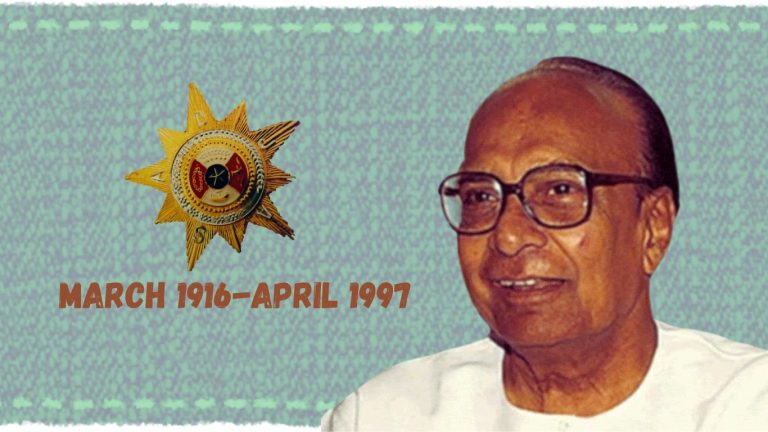
Two times Odisha Chief Minister, aviator, entrepreneur and freedom fighter Bijayanda Patnaik was born on this day (5th March) in 1916. On his birth anniversary, Prime Minister Modi recalled his contribution towards the development of Odisha and his commitment to democratic ideals which is evident from the fact that he was among the leaders who opposed the Emergency and was jailed for it.

Patnaik’s early life and education

Biju Patnaik was born into a well-off family in Cuttack, Odisha. His father Laxminarayan Patnaik was the Dewan of a Zamindari Estate in Orissa province. Despite working in the colonial administration, Laxminarayan Patnaik was deeply involved in the freedom struggle which was inherited by Biju Patnaik. Biju Patnaik went to Ravenshaw College in Odisha but dropped out to pursue his interest in aviation. He trained as a pilot at the Aeronautic Training Institute of India and Delhi Flying Club and initially flew with private airlines. However, at the beginning of WWII, he joined the Royal Indian Air Force in 1936 and went on to become the head of the Air Transport Command.

An obituary published in the Independent on May 1, 1997, described how Patnaik rescued several British families in Rangoon WWII. “As an officer in the Royal Indian Air Force in the early 1940s, Patnaik flew innumerable sorties to rescue British families fleeing the Japanese advance on Rangoon, the capital of Burma. He also dropped arms and supplies to Chinese troops fighting the Japanese and later to the Soviet army struggling against Hitler’s onslaught near Stalingrad. Two years ago, on the 50th anniversary of the end of the war, Patnaik was honoured by the Russians for his help,” the obituary stated.

A Royal Airline pilot and a freedom fighter

Biju Patnaik was deeply inspired by Mahatma Gandhi and his passive resistance to British rule. Even though he was part of the Royal Indian Air Force, he supported the freedom struggle. He used to ferry freedom fighters to secret meetings. He sheltered prominent leaders like Jaya Prakash Narayan, Ram Manohar Lohiya and Aruna Asaf Ali. While rescuing British families from Yangon, he used to drop leaflets supporting Subhash Chandra Bose’s Indian National Army. He was arrested and jailed on January 13, 1943, after the British found out about his activities. On being released, he joined a private airline Indian National Airways, set up by industrialist Raymond Eustace Grant Govan. He continued to be involved in the freedom struggle while working in the airline. An Intelligence Bureau note dated 29 September 1945 stated that Biju Patnaik ‘misused’ his position as a pilot to fly Ram Manohar Lohiya, who was underground at that time, from Delhi to Kolkata.

‘Bhoomi Putra’ Biju Patnaik and his daring rescue operation

After Japan officially surrendered during WWII, it withdrew its forces from the countries it had occupied in Southeast Asia including Indonesia. On August 17, 1945, Indonesia declared independence and elected Sukarno as President and Sutan Sjahrir as Prime Minister. However, the Dutch who had colonised Indonesia before WWII, did not accept Indonesia’s independence and started a military aggression which was temporarily resisted by the British armies. But soon the British armies withdrew and offered to mediate which was rejected by the Dutch and military hostilities followed.

At that time Indian Prime Minister Jawaharlal Nehru directed Biju Patnaik to fly to Java and rescue the Indonesian Vice President and the Prime Minister. Patnaik flew in a Dakota aircraft and rescued Indonesian Vice President Mohammad Hatta and Prime Minister Sutan Sjahrir on July 21, 1947. The Dutch threatened to shoot down his aircraft but Patnaik replied that if his aircraft was shot down, no Dutch aircraft would be able to fly across Indian skies. The iconic Dakota aircraft is now installed at the Biju Patnaik International Airport in Bhubaneswar in memory of Patnaik. In 1947, he established the Kalinga Airlines and bought a fleet of Dakotas. Kalinga Airlines was merged with Indian Airlines in 1953.

After his daring act of rescuing the Indonesian leaders, Biju Patnaik became an icon in Indonesia and a dear friend to President Sukarno. The Indonesian government offered him a piece of forest land and a palatial building as a token of gratitude which he politely declined. To honour Patnaik’s unwavering courage in the face of danger, the Indonesian government conferred on him the country’s highest award ‘Bhoomi Putra’ (Bintang Jasa Utama) and honorary citizenship in 1995 during the celebration of Indonesia’s 50th Independence Day. The award is rarely conferred on a foreigner. Patnaik’s friendship with President Sukarno was so deep that Patnaik even named his daughter Megawati Sukarnoputri who became the country’s first and the only female President to date.

Biju Patnaik remained active in national politics and served as the Chief Minister of Odisha twice-initially during 1961-63 and later during 1990-95.

‘Send him to UP, we will treat him’: Yogi Adityanath on Abu Azmi over comments praising Aurangzeb, the SP MLA suspended from Maharashtra assembly

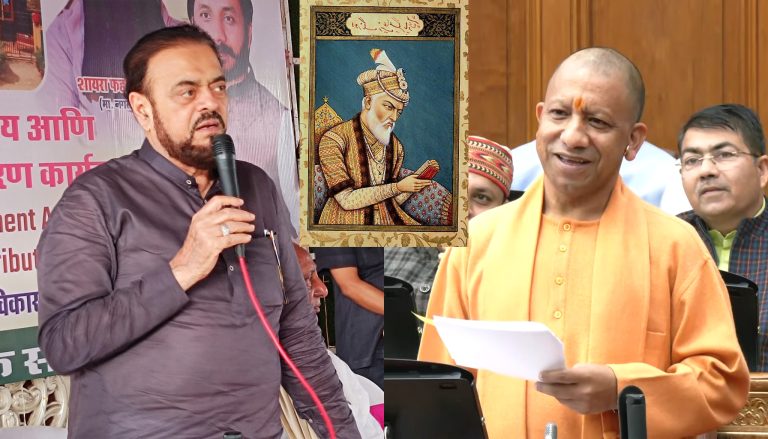
Uttar Pradesh chief minister Yogi Adityanath came down heavily on Maharashtra MLA and Samajwadi Party (SP) leader Abu Azmi for praising Mughal tyrant Aurangzeb. The BJP leader asked SP to remove him from the party and send him to UP, saying ‘we will treat him’. Yogi made the comments in his speech in the assembly on Wednesday.

The CM said that the Samajwadi Party is considering Aurangzeb as an ideal. He said that even Aurangzeb’s father Shah Jahan had criticised him in him autobiography. ‘He imprisoned his father in Agra fort, harassed him for every drop of water, and if these people take pride on him, they should at least read the biography of Shah Jahan,’ the CM said.

He added that those who behave like Aurangzeb are proud of Aurangzeb, saying the Samajwadi Party must answer if such a person is their ideal. “The Samajwadi Party must answer for this. Does the party consider a ruthless, fanatical, and cruel ruler—who came to oppress India and attack its faith—as its ideal?” he said.

Yogi Adityanath told the SP leaders in the house, “Expel that ‘kambakht’ from the party and send him to Uttar Pradesh once, we will treat him ourselves.” He further asked, “Should he have the right to live in India? Why is the Samajwadi Party not expelling Abu Azmi?”

Abu Azmi was suspended from the Maharashtra Assembly on Wednesday over his controversial remark on Mughal tyrant Aurangzeb. He has been suspended till the end of Maharashtra’s ongoing budget session.

In an interview last week, Azmi had claimed that India flourished under Aurangzeb’s reign. He said Aurangzeb should not be viewed simply as a cruel ruler, but rather as a great administrator who also built temples. He had claimed said that during Aurangzeb’s reign, India’s border reached Afghanistan and Burma. Abu Azmi had said, “Aurangzeb got several temples built. In Varanasi, he saved a Hindu girl child from a priest who had an evil eye on her. He had the priest trampled by elephants.”

Azmi further said that he does not believe that the battle between Chhatrapati Sambhaji Maharaj and Aurangzeb was not about religion, saying that it was a political battle.

Maharashtra Samajwadi Party chief has apologised for his remark, but also justified the statement saying Azmi only said what the historians and the writers have already said. FIRs have been registered against Azmi for hurting religious sentiments and defamation under the BNS.

Fraudsters who ran a ₹3,558 crore ‘cloud space’ scam arrested: How the ED and UP government busted the data centre scam

A couple has been arrested for multi-level marketing fraud. Sukhvinder Singh Kharour, the CEO (chief executive officer) of the Vuenow Group and his wife Dimple Kharour have been apprehended by the ED (Enforcement Directorate) on charges of defrauding people by selling them “cloud particles (servers)” and then leasing them back to the investors with the promise of generating monthly rental income. ₹3,558 crores were raised through the ‘scheme’.

A special PMLA (Prevention of Money Laundering Act) court in Jalandhar has remanded them to custody. Dimple has been placed on five days of remand while Sukhvinder has been sent for ten days. The pair was arrested on 28th February at Delhi’s IGI (Indira Gandhi International) Airport as they tried to abscond. The authorities detained them by an active Look Out Circular (LoC) and then put them under arrest after acting on particular intelligence. Sukhvinder is the mastermind behind the scheme.

They went underground after lookout notices were issued against them. According to sources, the couple was eventually located in Nepal and compelled to return to India, where they were eventually caught. Last month, the ED confiscated at least 26 luxury vehicles valued at ₹80 crore that belonged to the accused. On 6th February a total of ₹178.12 crore in additional assets in Punjab were also attached by the agency and searches were carried out at locations tied to Vuenow Marketing Services Ltd and its associates on 26th November, 17th January and 24th February.

“The ED investigation revealed that Zebyte Infotech Private Limited (ZIPL) and Zebyte Rental Planet Private Limited, affiliates of Vuenow Group, were rotating the money of new investors to the old ones in the guise of sub-lease rent of cloud particles. As such, no rental income was generated from any clients who purported to have taken cloud particles on rent,” an official revealed. Arif Nisar, another important perpetrator was captured on 24th February during the investigation of Delhi property. “Arif Nisar, who holds 75% shareholding in ZIPL, is a mentor and founder of VMSL group and a close associate of Sukhvinder Singh Kharour,” an official informed.

A multifaceted plan to defraud crores

The culprits signed a Memorandum of Understanding (MOU) with the Uttar Pradesh government on 20th November 2022 to establish 750 edge data centres in all the districts of the state, in the presence of the then Chief Secretary Durga Shankar Mishra. On 24th November 2024, the ED submitted a report on this case at the Sector-58 police station. The Chief Secretary had declared that the state would construct the largest network of such data centres in the world.

The creation of these data centres was to facilitate the groundwork for the future implementation of 5G networks, blockchain technology, artificial intelligence and big data analytics. Vuenow Marketing Services Ltd was located in Sector-62 on the eighth story of ITham Tower. After a company investigation, a report was filed on the matter. Vuenow, Zebyte Infotech Private Limited, Zebyte Rental Planet Private Limited and other promoters of the firm were also named in this case.

A data centre construction project was initiated by the corporation, per the officials involved in the issue. Moreover, 750 data centres meant an investment to the tune of ₹13500 crore. The probe was initiated by ED in October of last year while the case was launched in November. According to the inquiry, Vuenow made over ₹533 crores between 2016 and 2023. Two company-related accounts containing ₹2,236 crores were also discovered by the agency. The money was taken from different people by selling them cloud particles. One cloud particle was priced at almost ₹41,000.

The company had a capacity of only 2,701 terabytes (TB) or cloud particles (servers). However, the two details that the investigating team obtained showed that over 1 lakh 29 thousand particles were sold in one place and 5 lakh 42 thousand particles were sold based on bank details. The company was then believed to be using a sale and lease back approach, and customers were being tricked under the guise of investment. This involved the transfer of funds from the original company to other businesses. All the facts were looked into after the deception came to light.

Sukhwinder deceived investors by using a fictitious sale and lease-back scheme based on the memorandum of understanding that was signed with the state government. He promised to lease out the data centre’s storage capacity in parts. He received investments totalling thousands of crores of rupees as a result. Nevertheless, the man sent the amount overseas instead of making any investment. He stole money from people under the pretext of cloud particle technology. Moreover, the status of the company was also exaggerated in papers.

Now, the government has instituted a zero-tolerance policy to avoid any mistakes. There are instructions from the highest level to examine the history of the companies that have signed investment agreements at the “Global Investor Summit.” Instructions have also been issued to cancel the MoUs if anything is found suspicious in the probe.

Money siphoned through shell entities

“The cloud sale and lease back model was found non-existent to cheat the investors. The proceeds of crime of ₹3,558 crore (ascertained so far) generated out of criminal activities were diverted by VMSL (Vuenow Marketing Services Ltd) and group companies in giving commission to channel partners, purchase of various luxurious vehicles, gold and diamonds, routing of hundreds of crores through shell entities and further investment in properties,” the agency informed.

“The underlying business of cloud particles, based on the sale-and-lease-back model (SLB model) was found substantively non-existent and grossly overstated to cheat the investors. The Proceeds of Crime (POC) amounting to ₹3,558 crore generated out of criminal activities were utilised for other than business purposes,” it further disclosed.

Several shell corporations were established to redirect the staggering loot. A large amount of money was deposited into Dimple’s bank accounts and her-controlled production firms including Avni IT Infra Ventures Ltd, Kharour Films LLP and Fruitchaat Entertainment Pvt. ED explained that VMSL’s cloud particle business, which was utilized to attract investors had nothing to do with these businesses.

The ED was searching for the powerful couple who had escaped arrest in Punjab for a long time despite multiple allegations of fraud and cheating. A First Information Report filed at Gautam Budh Nagar (Noida) in Uttar Pradesh served as the foundation for the investigation into the money laundering aspect of the crime.

With the assistance of the Uttar Pradesh Police, the central agency issued a lookout notice and subsequently filed a FIR (First Information Report) in Noida. Officials worked with foreign law enforcement to track down the offenders in Nepal before they were deported to India. “Sukhvinder, CEO and founder of Vuenow Group is the mastermind of the fraud who in connivance with his close aides orchestrated the cloud particle scam,” ED highlighted. The accused are now under interrogation.

How UP business summit is maligned after arrest of the fraud

Although there is no denying that the massive fraud was the result of significant negligence on the part of Uttar Pradesh government officials, it would be unfair to portray all MOUs as scams because they are a significant source of investment that supports the progress of the state. Likewise, it would be equally wrong to project such business conferences, intended to generate revenue, as otherwise.

However, the other side spotted an excellent opportunity to criticize the government and portray Uttar Pradesh’s global business summits as venues for such instances because the occurrence took place in a state that was ruled by the Bharatiya Janata Party (BJP) and specifically under Chief Minister Yogi Adityanath. Piyush Rai wrote, “This is the reality of multi-million dollar MoUs signed at gala events in global investment summits.” Rai left to mention, nonetheless, that the government’s prompt action also brought the fraud to light and the accused have already been arrested.

Tarun Gautuam, another BJP detractor, gleefully attacked the Yogi administration, referring to them as clowns who fell for Sukhvinder Kharour’s scam and lost crores of rupees.

A netizen repeated Piyush Rai’s statement, casting aspersions on the business summits organised by the Uttar Pradesh government.

The fact that the government’s efforts exposed the scam and media outlets have been regularly reporting on the issue was conveniently overlooked by another individual who complained about the absence of a CAG (Comptroller and Auditor General of India) report and media coverage regarding the matter.

A user mocked Uttar Pradesh as “the next model state” for the fraud.

Notably, the Yogi government signed MoUs for investment purposes worth Rs 33.50 lakh crore during the three-day conference in 2023. “At the summit 19,058 Memorandum of Understanding were signed and implementation of 14,000 is under way. Of the Rs 10 lakh crore worth of proposals on which work is on, projects worth Rs 2.6 lakh crore have already started commercial production,” UP Industrial Development, Export Promotion, NRI, Investment Promotion Minister Nand Gopal Gupta Nandi unveiled during January 2025.

Urvasi Infratech (Rs 3,400 crore), AB Mauri (Rs 1,677 crore), J K Cement (Rs 1,200 crore), Wonder Cement (Rs 834 crore), Berger Paints (Rs 800 crore), and Moon Beverages (Rs 756 crore) are a few of the large enterprises that have commenced commercial operations.

According to him, the Uttar Pradesh Defence Industrial Corridor (UPDIC) is intended to boost the aerospace industry and India’s defence capabilities. It has drawn investment bids totalling Rs 28,175.58 crore as of this January. Additionally, the state is developing a strategy to increase defence industry investment. He pointed out, “Uttar Pradesh has become the third-largest economy in India, contributing over 8 per cent to the nation’s GDP. Uttar Pradesh’s economy is growing at 11 per cent annually, among the highest in the country.”

The developments unequivocally demonstrate how important these conferences and the MOUs they deliver are to the advancement of any state. The usual suspects, however, don’t allow facts to impede their narrative. The Vuenow Group scam is undoubtedly the responsibility of the Uttar Pradesh government, but their immediate action cannot be ignored either and more importantly, the matter cannot be escalated to damage a significant source of investment merely for the sake of petty politics.


US House Committee report says Chinese govt gives subsidies and grants for production and export of Fentanyl precursors, calls for urgent action

0

A recent inquiry by the House Select Committee focused on the Strategic Competition between the United States and the Chinese Communist Party has brought to light troubling information regarding the CCP’s role in exacerbating the fentanyl epidemic in the United States.

The report indicates that nearly all illicit fentanyl precursors are produced by Chinese companies, which are then trafficked internationally, especially to Mexican cartels responsible for the manufacturing and distribution of fentanyl within the US.

According to the findings, the Chinese government provides subsidies for the production and export of fentanyl precursors through tax incentives, even though these substances are prohibited under both US and Chinese law.

Some of these businesses have also received financial grants and recognition from the Chinese government, supporting their involvement in the global fentanyl market. The investigation further revealed that state-owned companies, including a government-operated prison, possess ownership interests in firms involved in drug trafficking.

The report additionally accused Chinese officials of intentionally hindering US law enforcement initiatives. In several instances, Chinese authorities purportedly informed fentanyl manufacturers about American investigations, enabling them to escape prosecution.

Moreover, while China is aggressive in prosecuting domestic drug trafficking, it is said to overlook companies that are exporting illegal drugs to other countries.

In addition to the devastating impact on American lives, where fentanyl has become the leading cause of death for those aged 18-45, the report implies that the crisis serves as both a strategic and economic advantage for the CCP. It increases the wealth of Chinese criminal organizations and fits into broader geopolitical strategies aimed at undermining the US.

The Select Committee has urged for immediate measures, including the formation of a Joint Task Force to combat illicit fentanyl activities, enhanced sanctions, and more rigorous trade enforcement protocols. Despite recent diplomatic discussions, the report stresses the necessity for more robust, coordinated efforts to tackle what has evolved into one of the most lethal drug crises in US history.


(This news report is published from a syndicated feed. Except for the headline, the content has not been written or edited by OpIndia staff)

US announces reciprocal tariffs against India, China to be effective from April 2

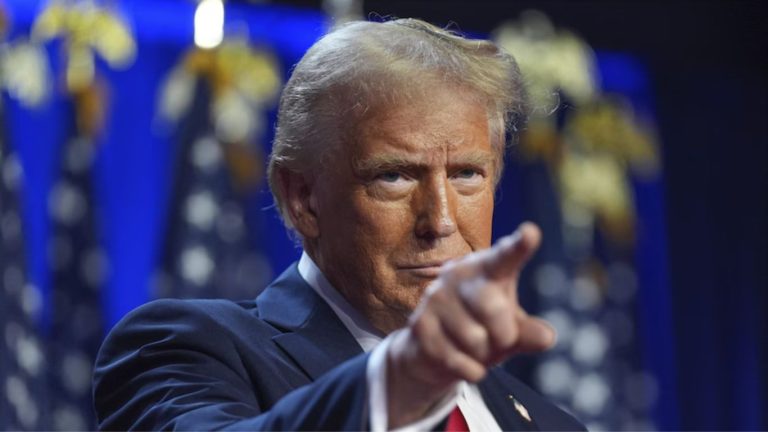
After announcing hiked tariffs for Canada, China, and Mexico at the beginning of the month, the US has now announced fresh tariffs for India and China, effective on 2nd April. In his speech during the joint session of Congress on 4th March, US President Trump confirmed that reciprocal tariffs will take effect from next month.

Trump accuses other countries of unfair taxes on US products

Justifying reciprocal tariffs, the US President said that other countries have been unfairly taxing the US and therefore now it is the turn of the US to tax them. “Other countries have used tariffs against us for decades and now it is our turn to start using them against those other countries. On average, the European Union, China, Brazil, India…and countless other nations charge us tremendously higher tariffs than we charge them,” said Trump.

Trump accused India of imposing unfair tariffs on the US automobile by over 100%. “It is very unfair. India charges us auto tariffs higher than 100%,” he said. He added that China imposes tariffs on US products twice the US tariffs on Chinese products. He expressed disappointment over South Korea imposing tariffs on US products four times higher despite receiving military aid from the US.

“China’s average tariff on our products is twice what we charge them. And South Korea’s average tariff is four times higher. Think of that. Four times higher! And we give so much help militarily and in so many other ways to South Korea but that’s what happens. This is happening by friend and foe. The system is not fair to the US, it never was. And so, on April 2nd… I wanted to make it April 1st but I didn’t want to be accused of April Fool’s Day…This one day cost us a lot of money. So we’re going to do it on April…I am a very superstitious person…April 2nd. Reciprocal tariffs kick in and whatever they tariff us, other countries, we will tariff them. That’s very simple, no back and forth,” Trump said.

Counter-tariffs by Canada, China and Mexico

On 1st February, the President of the United States, Donald Trump, imposed new tariffs on imports from Canada, Mexico, and China. He cited national security concerns stemming from illegal immigration and drug trafficking, particularly fentanyl, as the reason. The executive order signed by President Trump in this regard enforced a 25% tariff on imports from Canada and Mexico, while Chinese goods will face a 10% tariff. Canadian energy imports, including oil, natural gas, and electricity, will be subjected to a 10% tariff.

Following the confrmation by the United States about imposing tariffs on exports from Canada, China and Mexico, the three countries also announced retaliatory measures against the US. US President Trump’s decision to impose reciprocal tariffs on countries has attracted widespread criticism along with concerns about inflation and rising trade tensions globally.

Canada plans to impose levies on US imports worth $155 billion over 21 days. In the first stage, American goods worth $20.6 billion will be taxed. China has also countered the US tariffs by announcing a 10-15 per cent hike in import taxes on a range of US goods including agricultural and food products to come into effect on 10th March. Mexican President Claudia Sheinbaum Pardo said that the country is prepared for all possibilities if the US tariffs take effect.

Trump’s policy of imposing reciprocal tariffs on other countries has attracted widespread criticism. Experts around the world have expressed concerns that Trump’s policy might start a global trade war with the consumer suffering ultimately. Billionaire investor Warren Buffet has described Trump’s tariffs as ‘an act of war’.