Home Blog Page 70

Vice President issues postage stamp for Perumbidugu Mutharaiyar II, the forgotten Tamil king Suvaran Maran who never lost a battle

On 14th December, Vice President of India, CP Radhakrishnan, released a postage stamp in the name of Perumbidugu Mutharaiyar II. Following the news, curiosity arose among people about who Perumbidugu Mutharaiyar II actually was as many have not heard of him before.

History is not only what we are taught, but also that which the politics of time and power quietly pushed to the margins. In fact, considering the kind of historical understanding imparted in schools and universities after Independence, it is not wrong for such questions to arise. In North India, one rarely ever gets to read or hear about Perumbidugu Mutharaiyar.

Unfortunately, even in the southern parts of India, where he ruled, detailed information about him is not available in curricula. This historical narrative has often remained limited to a few select dynasties and ideologies, in which the memories of many self-respecting rulers of South India were blurred.

In November 2025, at an event organised on Perumbidugu Mutharaiyar II, a minister of the DMK government in Tamil Nadu had appealed to the central government to issue a postage stamp in his name. Within exactly one month of that appeal, the central government released a postage stamp in the name of Perumbidugu Mutharaiyar II.

Who was Perumbidugu Mutharaiyar II, the warrior king

In the name of Emperor Perumbidugu Mutharaiyar II, ‘Perumbidugu’ is his title and ‘Mutharaiyar’ is the name of his lineage. His actual name was Suvaran Maran. Suvaran Maran was born in the seventh century, and it is believed that between the seventh and eighth centuries CE, he ruled over the present-day regions of Thanjavur, Tiruchirappalli and Pudukkottai in Tamil Nadu. Inscriptions found in temples built and protected by him glorify him as a king who fought 12 wars in his lifetime and never faced defeat.

Generally, an average student of history reads about the Chola Empire or the Pandya Empire, but comparatively little or almost nothing is taught about the Mutharaiyar dynasty. Whereas, according to scholarly historians, the valour of Suvaran Maran was in no way inferior to that of the Cholas or the Pandyas.

The inscriptions engraved on the four pillars of the Meenakshi Sundareswarar Temple located in Sendalai village of Thanjavur district provide information about him and about his Mutharaiyar lineage. All these inscriptions feature extremely beautiful and well organised writing in ancient Tamil script. These inscriptions describe the genealogy, character and Meikirthi, that is, the eulogistic praise, of Suvaran Maran alias Perumbidugu Mutharaiyan.

‘Meikirthi’ refers to those titles and names that were bestowed upon a king on the basis of his nature, bravery, courage and martial prowess. Several titles were conferred upon him in the inscriptions. Some of the prominent ones are:

Shri Tamaralayan: meaning that peace itself resided within him.

Shri Abhimanadeeran: meaning that he was an enemy of arrogant kings.

Shri Kalvar Kalavan: meaning that he destroyed thieves.

Shri Sathuru Kesari: meaning that he was like a lion to his enemies.

Suvaran Maran held many such titles.

A court of scholars, faiths and enduring legacy

In ancient historical sources, Suvaran Maran is mentioned as a ruler who was also known by the title Shatrubhayankara.

This title does not merely indicate his military strength, but also points towards the political and intellectual environment that he developed during his reign. The court of Suvaran Maran is considered to have been a centre of dialogue among scholars and ideologies.

Inscriptions state that Perumbidugu Mutharaiyar fought wars at twelve places: Kodumbalur, Manalur, Thingalur, Kanthalur, Azhunthiyur, Karai, Marangur, Pugazhi, Annalavayil, Sempon Maari, Venkodal and Kannanur. Many of these places are still known by their old names today.

Available historical evidence clearly shows that Suvaran Maran was a patron of the Shaiva tradition and provided protection to Shaiva scholars. However, his intellectual openness was not limited to a single sect. His court maintained a tradition of dialogue and scholarly debate among different religious and philosophical traditions.

In the research paper ‘Ancient Dravidian Jain Heritage’ by historian D G Mahajan, published in the Proceedings of the Indian History Congress, Volume 19, 1956, it is mentioned that Jain Acharya Vimalchandra engaged in scriptural debates with Shaiva scholars in his court. Jain Acharya Vimalchandra had visited the court of Shatrubhayankara.

According to Mahajan, Acharya Vimalchandra belonged to the Jain tradition of Shravanabelagola, in the then Mysore State, and he engaged in ideological debates with Shaiva and other scholars in the court of Suvaran Maran.

This episode shows that the rule of Suvaran Maran was not confined merely to political dominance but was also an important centre of religious coexistence and intellectual discourse.

The inscriptions also reveal that poets such as Acharya Pachilavel Namban, Acharya Aniruddha, Kottatru Ilam Perumanar and Kuvvan Kanjan adorned his court. All four poets sang of his bravery and valour, which is engraved on the four pillars of the Meenakshi Sundareswarar Temple.

There is also an inscription in the Vaikuntha Perumal Temple at Kanchipuram which mentions that a Mutharaiyar king was formally welcomed during the coronation of Nandivarman II. It is believed that this ruler was Perumbidugu Mutharaiyar II himself. Dennis Hudson’s book Body of God: An Emperor’s Palace for Krishna in Eighth Century Kanchipuram also provides a detailed account of him.

The inscriptions of the Meenakshi Sundareswarar Temple also describe in detail the wars fought by him. One inscription states that his flag was the ‘vel’, that is, a spear, and that after the battle he fought at Azhunthiyur, the land there turned red with blood. It is even said that Suvaran Maran had elephants plough that blood-soaked land.

At the administrative level as well, Suvaran Maran oversaw the construction of reservoirs, canals and bridges in many regions of Tamil Nadu. Since in that era the only source of water for irrigation was rainfall, this effort by Suvaran Maran reflects his foresight.

Many such interesting details about Suvaran Maran and the Mutharaiyar dynasty are scattered across different sources. Now that the central government has issued a postage stamp in his name, it can be hoped that Suvaran Maran will also be included in curricula and children will be informed about him, so that future generations may develop self-awareness.

They should realise that the history of India is not limited to just a few famous names, but includes countless figures like Suvaran Maran, whose memory needs to be revived as a demand of the times.

Uttar Pradesh: Pastor offered money, free education for children and medical facilities to Hindus for converting to Christianity in Mirzapur; 5 arrested – Exclusive FIR details

0

On 14th December, Mirzapur Police arrested five people, including a pastor, for coercing Hindus to convert to Christianity. The arrests were made following a police raid at a church in Kharhara village under Kotwali Dehat police station limits, based on the complaint of a local farmer, Anand Dubey. In his complaint, Dubey said he was lured and coerced into converting to Christianity with promises of money, education, and medical benefits. OpIndia accessed the FIR registered in the case.

What the FIR says

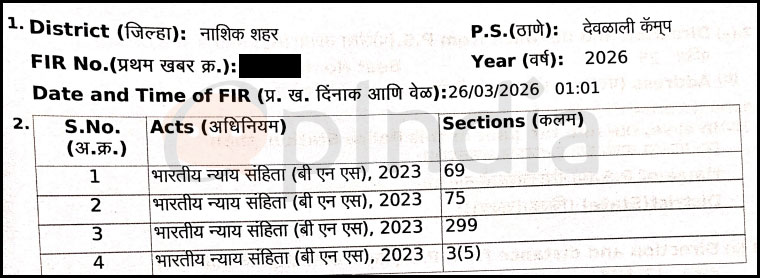
The FIR has been registered on the complaint of Anand Dubey, a local farmer, under Sections 3 and 5(1) of the Uttar Pradesh Prohibition of Unlawful Conversion of Religion Act, 2021. In his complaint, Dubey said that pastor Bholanath Patel, a resident of Tilwa village under the Revati Pur police station area in Ghazipur district, visited his house about a week ago. During the visit, Patel offered financial benefits, free education for children, and medical facilities if Dubey and his family converted to Christianity.

Source: UP Police

On 14th December, Dubey was called to the church located in Kharhara village. When he reached the premises around 12:45 pm, he found several Hindu villagers already seated inside. He stated that there were around 35-40 villagers present and most of them were from economically weaker backgrounds.

Apart from Bholanath Patel, his wife Maya Patel, Krishna Kant Tiwari, Angnu Prasad, Nisha Devi, Sushila Devi, Heera Vati Devi, Renu, Lakshmi, Sadhana and several other women were urging the Hindus present at the church to convert to Christianity.

Source: UP Police

They promised money, healthcare, and assistance in children’s education and marriages in exchange for conversion. Pastor Patel told those present that they would be taken into the “shelter of Lord Jesus”, their suffering would end, and those refusing to convert would face misfortune.

Dubey further added that the accused poured holy water on him and told him that he was no longer Anand Dubey but “Joseph Anand”. When attempts were made to take him for a “holy dip” ritual to complete the conversion, he managed to escape and informed the police.

Police action and other details

Following the complaint, the police registered an FIR and swung into action. The church was raided at night, and five accused were arrested on the spot. Eleven people have been named in the case.

In a statement, Kotwali Dehat Station House Officer Amit Mishra said that intelligence inputs indicated preparations for large scale religious conversions at the church on 25th December. Based on the complaint, the police conducted the raid and detained the suspects involved. Further investigation in the matter is underway.

Allegations of long running conversion network at Kharhara church

The allegations against the Kharhara village church are not recent. Local residents said that religious conversions have been taking place at the church since late 2023. Several villagers are said to have converted during this period, with many reportedly changing their names from Hindu names to Christian ones. Although the church appears old from the outside, villagers say it is well furnished inside and regularly draws people from nearby villages such as Kurkuthiya, Barhauli, Ledhu and Jasohar Pahadi.

Residents said that individuals facing illness or financial distress are specifically targeted. According to villagers, the conversion network exploits desperation by offering prayers alongside assurances of money, treatment and support, gradually pressuring people into conversion.

Villager recalls inducement, name change and coercion

Speaking to OpIndia Hindi on condition of anonymity, a villager said his daughter in law required surgery costing around Rs 50,000. He claimed that the pastor assured him that Jesus would heal her if the family attended prayers. During the visit, holy water was sprinkled, their names were changed, and money was handed over.

The villager said that although financial help was initially given, the family later realised they had been deceived. He further claimed they were warned against reverting, as photographs and videos taken during the conversion were used to pressure them.

Pastor Bholanath Patel ran the conversion network

Villagers said that the entire conversion operation in the area was coordinated by pastor Bholanath Patel. Originally from Tilwa village under Revati Pur police station in Ghazipur district, Patel had earlier lived in Lucknow, where he worked as a teacher at a school named St Jesus School.

During police questioning, Patel reportedly narrated his own conversion story, claiming he had suffered from a severe kidney ailment in 2008 and recovered after attending Christian prayer meetings. He told police that he decided to dedicate his life to spreading Christianity thereafter.

Patel was subsequently sent to Kharhara church by a missionary office in Lucknow, where he began living with his wife Maya Patel. Villagers that Patel targeted men for conversion, while his wife focused on approaching women.

Social isolation claims and regret

Several villagers who converted earlier now claim to be facing social ostracism. One individual, who requested anonymity, said that while the initial phase brought money and employment assistance, he later felt stripped of his identity. He said villagers began taunting him, leaving him isolated within the community.

While Patel reportedly told police that no one was forced and that people approached voluntarily, villagers insist inducements played a decisive role.

Fifteen conversion cases reported in Mirzapur since 2023

Over the past two years, missionary activity in Mirzapur has reportedly triggered repeated police action. Since 2023, at least 15 cases related to illegal religious conversion have been registered in the district.

Of these, 11 cases involved young women being lured away, converted, and married, while four cases were linked to larger organised conversion networks. Police records show arrests in multiple police station areas including Vindhyachal, Ahraura and Lalganj, with a recurring pattern of inducements such as money, jobs and education.

PM Modi starts 3-nation tour to Jordan, Oman and Ethiopia: Read how India’s relations with these nations underscore business, credibility and co-operation

On December 15, 2025, Prime Minister Narendra Modi embarked on a four-day, three-nation tour to Jordan (Dec.15-16), Ethiopia (Dec.16-17), and Oman (Dec.17-18). His itinerary is carefully planned to connect the institutional core of Africa with the stability belt of West Asia.

Deepening commerce, securing energy corridors, expanding development partnerships, and engaging the diaspora are all familiar concepts on one level. The true strategic significance, however, is found in the subtle layering, India’s capacity to (a) forge cooperative relationships across political divides in a volatile region, (b) establish a “Global South” narrative in the capital of the African Union, and (c) convert long-standing Gulf partnerships into the next wave of trade, defence sustainment, and green energy agreements.

Jordan: A gateway state, and a diplomacy multiplier

When Modi arrives in Amman on December 15, he will meet with the Indian community and have one on one and delegation-level discussions with King Abdullah II. The following day, he will accompany the King to an India-Jordan business event. A trip to Petra with the Crown Prince (weather allowing) is a noteworthy symbolic and strategic contribution. This cultural diplomacy gesture also supports the story of ancient India-Levant trade connections while maintaining a non-confrontational and civilizational public messaging.

The underappreciated economic narrative is that Jordan is a high-utility trading partner rather than a “headline” one. The MEA briefing highlights bilateral trade of about USD 2.8 billion, Jordan’s position as a major supplier of fertilizers (phosphates and potash), and the flagship Jordan India Fertilizer Company (JIFCO) joint venture (IFFCO-JPMC) with an investment of USD 860 million exactly the kind of supply-security relationship that is more important during periods of calm than during global commodity spikes. Indian clothing enterprises in Jordan’s designated industrial zones are also quietly significant because they provide a workable foundation for jobs and manufacturing connected to India without the politics that frequently accompany large scale initiatives.

Connectivity is a second subtle but significant advancement. Jordan is facilitating travel with e-visa moves and visa on arrival/tourist facilitation. Royal Jordanian has started direct flights between Amman and Mumbai and plans to expand to New Delhi. These actions may seem “routine,” but they are important in diplomacy because they transform goodwill into repeated people to people movement, such as business, tourism, and student exchange, without the need for a big strategic declaration.

The MEA briefing specifically mentions cooperation, including India’s involvement in initiatives like the Aqaba Process, and highlights the King’s outreach to India following the April 2025 Pahalgam terror attack. Jordan’s value in terms of security is that it is a pragmatic regional actor with established counter terror engagement. This is significant because Jordan has the potential to act as a quiet amplifier for India’s counterterrorism messaging in regional and international platforms, particularly those where India frequently encounters narrative conflict.

Geographically, Jordan is situated near the region’s fault-line issues Israel-Palestine, Syria spillovers, and wider West Asian security but it is also a potential land-bridge node in the idea of the India Middle East Europe Economic Corridor (IMEC), which is commonly described as connecting India to Europe via the Gulf and continuing through Jordan in the northern segment. India benefits from maintaining corridor logic by consistent bilateral interaction with corridor-relevant governments, particularly those that can communicate with various sides without being perceived as maximalist, even when a regional crisis disrupts IMEC’s pace.

Ethiopia: Africa’s diplomatic capital, reform momentum, and India’s Global South credibility

Prime Minister Abiy Ahmed invited Modi to make a state visit to Ethiopia from Jordan on December 16-17. According to the MEA, this is the first time an Indian prime minister will visit Ethiopia since 2011. Bilateral discussions, engagement with the Indian community, and a particularly high-profile event, an address to a joint session of Ethiopia’s Parliament, are all part of the itinerary.

Ethiopia is important strategically due to its institutional centrality as well as its geographic location. The African Union’s headquarters are in Addis Ababa, and India’s own perspective is to view Africa as a co-architect of global governance rather than a recipient region, particularly after the African Union joined the G20 permanently in 2023. India’s assertion that its ‘Voice of Global South’ stance is supported by elite political attention rather than merely conference rhetoric is strengthened by a PM-level visit to the AU’s capital. 

The MEA briefing specifically states that Ethiopia has started extensive economic reforms, including opening important sectors like banking and capital markets, and India is seeking to match development cooperation and economic engagement with Ethiopia’s priorities. This is an underappreciated aspect of Ethiopia. Practically speaking, that can result in Indian involvement in mining, infrastructure, IT, manufacturing, and agriculture, all of which the MEA states are anticipated to be discussed. Instead of attempting to outspend competitors in cheque diplomacy, Indian businesses may compete on capacity building + technology + affordability at this kind of entry point.

The basics of investing and trading are also subtly significant. The MEA briefing lists more than 175 Indian businesses operating in Ethiopia. It also mentions that India buys pulses and beans, with bilateral commerce of about USD 550 million, while medicines account for nearly 40% of India’s exports to Ethiopia in their reported snapshot. These specifics are important because they demonstrate a relationship that is already driven by the ‘real economy’ of health supply chains, food security, and business ties at the SME level, exactly the kind of ballast that endures political cycles.

India can also achieve long-term success in the areas of energy and climate cooperation. The International Solar Alliance’s involvement in Ethiopia, including the creation of a Solar Technology Application Resource Center (STARC) at Addis Ababa University and other solar initiatives, is highlighted in the MEA briefing. India’s “technology + training + institution-building” model may be more appealing than headline-grabbing mega-projects with high conditionalities in the present global climate finance context, where many developing governments desire clean energy growth without debt traps.

Last but not least, Ethiopia’s geopolitical layer has expanded since it became a full member of BRICS on January 1, 2024, putting it inside a significant Global South coordinating framework that also includes India as a founding member. While this does not automatically result in alignment, it does give India more opportunities to pursue convergences on development finance, payment architecture discussions, and governance reform. This is especially true if India is careful to frame the relationship as a partnership rather than bloc politics. 

Oman: The steady hand gulf partner, trade architecture and a defence sustainment subplot

At Sultan Haitham bin Tarik’s invitation, the last leg of PM Modi’s current tour will take place in Oman on December 17-18. The MEA emphasises that this is Modi’s second visit since February 2018 and coincides with the 70th anniversary of diplomatic ties. A thorough review with the Sultan, meetings with business executives, and a speech to the Indian community are all part of the Oman visit. Several documents are reportedly nearing completion.

The trade agreement track is the most significant, underrated development. India expresses hope regarding the India-Oman Comprehensive Economic Partnership Agreement (CEPA) in the MEA’s special briefing, stating that teams are working toward early finalisation and that signing it would significantly deepen economic ties. The arrangement had advanced through late-stage procedures, according to Indian media sources before the visit, and the visit’s timing and cabinet deliberation were anticipated. If CEPA passes, it would be more than just tariff schedules; it would secure a stable framework for services, investment confidence, and supply-chain planning in a politically moderate and commercially integrated Gulf state.

Oman’s maritime location and defence access constitute its second quiet strategic value. In order to aid Indian navy ships expand operations (including anti-piracy) and fortify the strategic alliance, a 2018 annexure to the India-Oman Memorandum of Understanding on military cooperation relating to Duqm was declared in Parliament. This is significant because Duqm provides operational flexibility and logistical depth in the western Indian Ocean by being situated outside the Strait of Hormuz choke-point on the Arabian Sea side.

Aircraft sustainment is a third underrated strand that is extremely technical yet strategically significant. In response to inquiries, the MEA briefing stated that Oman’s air force has retired its Jaguar aircraft and is prepared to transfer replacement parts, with deliveries anticipated in the next few days. This is not ‘headline diplomacy,’ but it does directly help fleet maintenance and readiness, an illustration of how India’s Gulf ties are becoming more and more hard-power logistical without being perceived as overt militarisation. 

Energy continues to be the obvious pillar; the MEA briefing highlights ongoing hydrocarbon cooperation and the fact that India imports LNG, petroleum products, and crude oil from Oman while also exploring green energy and energy security options. The subtlety here is that, like many Gulf economies, Oman is managing the shift from hydrocarbons to green fuels and growth driven by logistics. India gains by being positioned as a long-term supplier of current energy and a long-term partner for the transition of the future.

Lastly, the size of Oman’s diaspora provides a political buffer: according to the MEA briefing, there are more than 675,000 Indians living in Oman, acting as a ‘living bridge.’ India’s ability to keep the debate mature, skills, legal safeguards, and predictability often keeps workforce issues from escalating into diplomatic annoyances in a region where labour-market policies can generate uncertainty.

The bigger geopolitical significance: why this tour matters beyond the three capitals

When combined, Jordan, Ethiopia, and Oman form a skillfully woven arc that spans two regions where India’s interests coincide: Africa’s ascent in global markets and governance, and West Asia’s stability and energy pathways. Instead of rejecting options, the visit enhances India’s ‘multi-alignment’ narrative by creating a variety of workable options, such as diverse platforms for development funding and reform agendas, diverse logistic hubs for marine security, and diverse partners for trade and fertilizers. 

In terms of connectivity, the visit supports India’s corridor logic at a time when international trade channels are disrupted and politicized. The idea behind IMEC, which connects India to Europe via the Gulf and beyond and is sometimes portrayed as going through Jordan, demonstrates India’s efforts to develop reliable alternatives that supplement rather than replace conventional marine routes. Stable leader level diplomacy maintains the option’s credibility and keeps India in the room as the initiative picks up steam, even in situations when regional instability hinders execution. 

Ethiopia is the focal point of Global South politics. India can show that its focus on the Global South is not sporadic by having a PM visit Addis Ababa, addressing the Parliament, and participate in debates about investments and reforms. Ethiopia’s membership in BRICS gives India’s involvement a multilateral ‘echo,’ allowing for collaboration on development priorities even in the face of competition between Western and Chinese strategies. 

Jordan and Oman have significance when it comes to regional security and counterterrorism messaging because they are functional nations that communicate with a variety of audiences rather than ideological megaphones. The references in the MEA briefing, Jordan’s counterterrorism collaboration and Oman’s defence cooperation and maritime security, indicate that India is putting stability, operational cooperation, and trustworthy alliances ahead of rhetorical point-scoring. Additionally, by promoting de-escalation and stability, this stance aids India in maintaining its delicate balance in West Asia strategic connections with Israel and close ties with Arab partners.

Conclusion

The path taken between Jordan, Ethiopia, and Oman is ultimately best understood as “quiet statecraft” with tangible benefits. Bolstering vital supply chains like fertilisers and bolstering counterterrorism coordination with a steady regional pivot (Jordan), strengthening India’s Global South credibility in the capital of the African Union while aligning with a reforming economy (Ethiopia), and transforming a long-standing Gulf partnership into next-generation outcomes trade architecture, maritime access, energy security, and defence sustainment (Oman). When taken as a whole, the tour portrays an India that is building coalitions, corridors, and capabilities rather than chasing headlines, reducing the risk of trade routes, expanding strategic options in West Asia and the western Indian Ocean, and maintaining the credibility of India’s development-first diplomacy in a world of sharper blocs and precarious supply lines.

Bondi Beach Hanukkah terror attack: Sajid Akram and Naveed Akram named as terrorists behind antisemitic massacre; ISIS links emerged – What we know so far

0

On 14th December, Pakistani origin Naveed Akram and his father Sajid Akram opened fire at a Jewish Hanukkah celebration at Bondi Beach in Sydney, Australia. This was one of the deadliest terrorist attacks Australia has witnessed in decades. The antisemitic terror attack left 15 innocent people dead, including a 10 year old girl, and injured dozens more. Australian authorities have formally declared the massacre a terrorist incident. The Prime Minister of Australia, Anthony Albanese, has described it as “evil antisemitism and terrorism on our shores”.

The incident took place during a public Hanukkah event organised by Chabad of Bondi. Around 1,000 people were present at the time of the attack. Many of them were families and children. Bondi Beach, one of Australia’s most iconic public spaces, was turned into a killing ground in a matter of minutes.

How the terror attack unfolded at Bondi Beach

The attack took place at around 6:47 pm local time. New South Wales Police received emergency calls reporting multiple gunshots near Archer Park, which is adjacent to Bondi Beach. The area was crowded due to the Hanukkah event titled “Chanuka by the Sea 2025”.

Within minutes, police issued public alerts urging people to take shelter and stay away from the beach. Videos of the incident showing hundreds of people screaming and fleeing across the beach and nearby streets went viral on social media.

Later, videos verified by multiple media outlets showed the terrorists firing from a small pedestrian bridge connecting the Campbell Parade car park to the beachfront. The elevated position gave them a clear line of sight over the gathered crowd.

In one widely circulated video, a bystander was seen confronting one of the terrorists, tackling him and momentarily disarming him. The terrorist retreated towards the bridge, where the second terrorist continued firing.

As soon as police arrived at the scene, they engaged the terrorists. Sajid was shot dead by police at the scene. On the other hand, Naveed sustained critical injuries and was taken into custody. He has been hospitalised under police guard.

Notably, Sajid Akram was a licensed firearms holder with a Category AB firearms licence. He legally owned six firearms, all of which police believe were used during the Bondi Beach terror attack. Four long arms, including a rifle and shotgun, were seized at the scene. Additional weapons were recovered from raids at properties linked to Sajid in Campsie and Bonnyrigg.

Civilian who ran towards gunfire and saved lives

The bystander who tackled one of the terrorists has been identified as Ahmed al Ahmed, who runs a fruit shop. He was shot during the confrontation and suffered bullet wounds to his arm and hand. New South Wales Premier Chris Minns praised his actions and called him a “genuine hero”. He stated that Ahmed’s heroic action saved many lives.

Death toll, injured victims, and children among casualties

According to the New South Wales Police, 15 people were killed in the terrorist attack. The victims ranged in age from 10 to 87 years old. Among the dead was a 10 year old girl, whose death sparked intense public outrage in the country.

At least 42 people were hospitalised with injuries. Several of them are critical. Four children were transferred to Sydney Children’s Hospital. Authorities have not clarified whether the deceased child was among those transferred earlier.

Two police officers were also shot while responding to the attack and were initially reported to be in serious to near critical condition.

Terrorist links, IS flags, and prior intelligence scrutiny

Investigators recovered improvised explosive devices and two Islamic State flags from a car linked to the terrorists. One flag was reportedly displayed on the vehicle’s bonnet. Prime Minister Anthony Albanese confirmed that Naveed Akram had been examined by ASIO in 2019 due to his associations with individuals linked to extremist networks. He was investigated for six months and assessed at the time as not posing an imminent threat.

According to media reports, Naveed had connections to a Sydney based Islamic State cell and was allegedly associated with Isaak El Matari, an IS operative jailed in 2019 for plotting an attack in Australia.

Naveed Akram’s background and radical trajectory

Former colleagues of Naveed told Australian media that he had worked as a bricklayer across multiple Sydney sites. He was known as a quiet but odd individual. He was described as hardworking but socially isolated. Notably, they said Naveed had an interest in hunting and firearms.

A former co worker stated that Naveed often spoke about shooting rabbits and game in rural New South Wales. Although authorities have not confirmed that Naveed held a firearms licence himself, reports suggest he had access to weapons through his father.

International condemnation and diplomatic responses

The terror attack prompted swift condemnation from global leaders. Israeli President Isaac Herzog described it as a cruel antisemitic attack on Jews.

while Israeli Prime Minister Benjamin Netanyahu accused Western governments of allowing antisemitism to fester through political silence.

In a post on X, Prime Minister Narendra Modi said, “Strongly condemn the ghastly terrorist attack carried out today at Bondi Beach, Australia, targeting people celebrating the first day of the Jewish festival of Hanukkah. On behalf of the people of India, I extend my sincere condolences to the families who lost their loved ones. We stand in solidarity with the people of Australia in this hour of grief. India has zero tolerance towards terrorism and supports the fight against all forms and manifestations of terrorism.”

France’s foreign minister confirmed the death of French citizen Dan Elkayam and expressed solidarity with Australia’s Jewish community. King Charles, Australia’s head of state, said he was appalled and saddened by the antisemitic terrorist violence.

Political fallout and calls for tougher laws

Prime Minister Albanese stated that the Australian government was prepared to deploy all available resources to combat antisemitism and terrorism. He also indicated openness to tightening gun laws if investigations reveal systemic weaknesses.

Home Affairs Minister Tony Burke confirmed that Naveed Akram was Australian born, while his father had entered Australia on a student visa in 1998, later transitioning to a partner visa and resident return visas. These disclosures have fuelled political debate over long term monitoring, radicalisation, and security vetting.

Opposition leaders have demanded parliamentary briefings on intelligence lapses, firearms licensing processes, and counter extremism frameworks, warning that the Bondi attack must not be treated as an isolated failure.

What comes next

The area has been cordoned off as police continue forensic sweeps and further investigations into the incident. Authorities are examining intelligence failures, firearms licensing processes, and whether information held by federal agencies was adequately shared with state police.

New South Wales Premier Chris Minns has signalled likely changes to gun laws, while federal authorities have vowed to deploy all available resources to combat antisemitism.

Minns acknowledged that it was too early to determine whether intelligence held by federal agencies should have been shared more extensively with state police. However, the scale and ideological nature of the attack have renewed debate over how threat assessments are conducted, closed, and revisited over time.

Dynamic young leader with organisational and administrative experience: All you need to know about BJP’s new working president Nitin Nabin

Nitin Nabin, a minister in the Bihar government, was appointed as the National Working President of the Bharatiya Janata Party (BJP) on December 14, 2025, marking a significant organisational shift within the party. At 45 years old, he is among the youngest leaders to hold such a high national position in the BJP.

PM Modi congratulated Nabin Nitin on the appointment, saying that he has distinguished himself as a hardworking Karyakarta. The PM said, “He is a young and industrious leader with rich organisational experience and has an impressive record as MLA as well as Minister in Bihar for multiple terms. He has diligently worked to fulfil people’s aspirations. He is known for his humble nature and grounded style of working. I am confident that his energy and dedication will strengthen our Party in the times to come.”

Known for his polite demeanour and organisational skills, Nabin has risen through the ranks from grassroots youth leadership to reach this position. He has worked extensively in the organisation in his political career.

Born on May 23, 1980, in Patna, Bihar, Nitin Nabin hails from a political family, as his father was veteran BJP leader Nabin Kishore Prasad Sinha, who was an MLA from Patna West. Nitin’s mother was Meera Sinha. He is married to Dr. Deepmala Shrivastava, a manager at State Bank of India.

Nitin inherited his politician legacy from his father, and was involved with Bharatiya Janata Yuva Morcha (BJYM) from his young age. He had served as National General Secretary and Bihar State President of BJYM.

In 2006, a byelection for Patna West Assembly constituency was held after the death of sitting MLA Navin Kishore Prasad Sinha, Nitin Nabin’s father. BJP fielded Nitin as the party candidate, and he won the polls comfortably. His father represented Patna West for four terms, winning all the elections in 1995, 2000 and two elections in 2005.

In the 2008 delamination, Patna West constituency was abolished, and after that Nirin Nabin started representing Bankipur Assembly constituency. He has been representing this constituency since its creation, winning the elections in 2010, 2015, 2020 and 2025.

He has been part of the Bihar government since 2021. He served as Minister of Road Construction from February 2021 to August 2022. He was against given the portfolio in February 2025. He also served as Minister of Urban Development & Housing and Minister of Law & Justice from March 2024 to February 2025.

In the newly formed Nitish Kumar government last month, he was made the minister of Road Construction, Urban Development & Housing.

On organisational front, Nitin Nabin was made election in-charge for Lok Sabha and Assembly elections in Sikkim in 2019. He was also appointed as the party in-charge for Sikkim in the same year.

In January 2021, he was appointed co-incharge for the BJP’s Chhattisgarh unit, where he played a key role in the party’s 2023 assembly victory, securing 54 out of 90 seats. He was given the full charge of the state in 2024.

His appointment as National Working President underscores his experience in governance, party organization, and alliance management, positioning him to handle day-to-day national operations alongside BJP President JP Nadda.

He has been part of several important organisational activities, including the National Unity Yatra in 2011. Nitin Nabin also took part in tribute march for 1962 martyrs from Guwahati to Tawang.

Nabin is recognized for his focus on development, including expanding Bihar’s road networks to combat monsoon disruptions, urban connectivity projects, and housing schemes.

He has championed social welfare, such as increased pensions for journalists, incentives for ASHA and Mamta workers, free medical camps, scholarships, vocational training, sports facilities, sanitation drives including toilet construction, and women’s self-help groups.

With the appointment of Nitin Nabin as working president, the BJP has continued the tradition of pulling out surprises while announcing appointments to key positions. The party also managed to keep the decision secret before the official announcement, as always.

Bahraich violence: Shot at close range, body riddled with 40 wounds, toes burnt; court awards death penalty in Ram Gopal Mishra murder case – Read what the judgment says

0

On 11th December, the Bahraich Court awarded the death sentence to one and life imprisonment to ten others in the brutal murder case of Ram Gopal Mishra. The incident, which took place on 13th October 2024 during the Durga idol immersion procession, had shaken the nation. The judgment was pronounced by First Additional District and Sessions Judge Pawan Kumar Sharma. In the judgment, the court not merely recorded the guilt or innocence of the accused but reconstructed, step by step, how a religious procession was attacked and turned into a scene of extreme brutality, terror, and prolonged breakdown of law and order across the district. OpIndia accessed judgment in the case.

As there were videos of Ram Gopal Mishra tearing down a green flag from a rooptop, Islamists had justified the murder. However, the court also made it clear that even if, for the sake of argument, it was assumed that Ram Gopal had removed or interfered with a religious flag installed at Abdul Hamid’s house, such an act could never confer any right upon the accused to unleash brutal and barbaric violence. The judgment underlined that the licensed firearm issued to Abdul Hamid was meant strictly for self-defence, and its use by his son constituted a clear violation of law. The court observed that the legal system provides remedies for any such grievance, and no individual or group is entitled to take the law into their own hands by resorting to lynching or murderous retaliation.

Source: Bahraich District Court

Ram Gopal Mishra had gone to Maharajganj market in the evening to watch the Durga idol immersion procession. He was accompanied by his brother Harimilan Mishra and other relatives and villagers. The procession consisted of multiple village idols mounted on tractors and vehicles and proceeded through the market area in the usual course.

As the procession reached in front of the house of Abdul Hamid in Maharajganj, objections were raised regarding the songs that were being played on the DJ accompanying the procession. The court also recorded that a Ganesh Chaturthi immersion procession had earlier been stopped at the same location. However, that incident did not turn violent, as the procession was allowed to move ahead after locals intervened. According to witnesses’ testimonies, demands were made to stop the music. When Hindus refused to stop the DJ, the wire of the DJ was pulled, which triggered an immediate confrontation.

Source: Bahraich District Court

The court recorded that the confrontation soon turned into chaos. Stones, bricks, and bottles were thrown at the procession from the rooftop. Panic spread through the procession as people rushed to safety. As fear gripped the area, shopkeepers quickly shut down their shops.

Amidst the disorder, Ram Gopal Mishra was forcibly caught and dragged inside Abdul Hamid’s house. According to the court documents, multiple eyewitnesses stated that the door was shut after he was pulled inside. Moments later, gunshots were heard from within the house. Several rounds were fired in quick succession, as per the witnesses. The court noted that there was no dispute that the firing took place from inside the premises and that Ram Gopal Mishra was shot at close range.

When Ram Gopal Mishra was eventually pulled out by his relatives, he was in a grievously injured condition. Notably, when Rajan and Kishan were trying to pull Ram Gopal out of Abdul Hamid’s house, two rounds were fired upon them as well. He was rushed to the district hospital at Bahraich. However, he succumbed to his injuries. The incident triggered widespread panic in the area. The court observed that the Maharajganj market descended into complete disorder. People fled the area. Homes and shops were shut. The atmosphere was described by witnesses as one of terror and fear.

The FIR in the case

The FIR in the matter was registered on the complaint of Harimilan Mishra, brother of Ram Gopal Mishra. He approached the police and lodged an official complaint detailing how his brother was dragged into Abdul Hamid’s house and shot dead. In his complaint, he named Hamid, his sons, and others as the assailants. He also mentioned that there were some persons present at the scene who were unknown to him.

Source: Bahraich District Court

During the trial, the defence repeatedly attempted to raise doubts over the timing of the FIR and claimed that it was “anti-timed”, calling it fabricated. However, the court rejected the argument, noting that Harimilan Mishra first took his injured brother to the hospital, which was a natural and expected response in such circumstances.

The court further took note of the fact that the incident had plunged the district into chaos. Internet services across Bahraich were suspended for several days. Additional police forces, including RAF and PAC, were deployed from outside the district. In such a situation, a delay in the formal registration of the FIR was not only plausible but inevitable.

The court also noted that the core allegations against the accused remained consistent throughout the investigation and trial. The defence failed to show any material contradiction or manipulation arising out of the alleged delay.

Who was Ram Gopal Mishra and why his death mattered to the court

While the judgment is primarily based on the facts of the case, it did not treat Ram Gopal Mishra as a mere statistic. During the sentencing phase, the court stated that Ram Gopal had been married only a few months prior to the incident. His sudden and violent death did not merely extinguish one life but shattered an entire family, leaving his young wife’s future irreversibly altered.

The court noted that Ram Gopal was unarmed and helpless when he was dragged inside the house. Whatever may have transpired outside during the chaos of the procession, the court emphasised that once he was inside the premises, the act of firing multiple rounds at close range crossed every conceivable boundary of proportionality, restraint, or lawful conduct.

Early defence narrative and references to videos

During the course of arguments, the defence tried to introduce an alternative narrative. They referred to videos purportedly showing Ram Gopal Mishra climbing onto a rooftop or tearing a flag during the chaos. These references were placed before the court as part of an attempt to suggest provocation or a different sequence of events.

However, the court was careful in its treatment of these claims. While the court noted that such arguments were raised, it stated that even if such acts were assumed for the sake of argument, they could not, in law or in reason, justify what followed. The court did not accept any narrative that sought to dilute responsibility for dragging Ram Gopal Mishra inside a house and subjecting him to repeated gunfire and extreme violence. The emphasis remained on the manner of killing and the level of brutality involved.

Eyewitness accounts, what the court accepted, and how the medical evidence exposed the brutality

During the trial, the prosecution examined a large number of witnesses to establish not only the identity of the assailants but also the manner in which Ram Gopal was killed. Substantial space in the judgment was devoted to analysing the testimonies of those eyewitnesses who were present during the Durga idol immersion procession and saw the violence unfolding on the day of the incident.

Harimilan, in his sworn testimony, informed the court that he, Ram Gopal , along with other relatives including Rajan and Kishan, went to Maharajganj market to watch the idol immersion. He categorically stated that Abdul Hamid, his sons Sarfaraz alias Rinku and Fahim, and others were present in front of their house when the procession reached there. He described how Ram Gopal was forcibly dragged inside the house.

He stated that once his brother was dragged inside, the door was shut, and he heard multiple rounds of gunfire from within. Due to the sudden firing and the panic created, he and others were unable to immediately intervene.

Rajan Mishra, Ram Gopal’s cousin, corroborated Harimilan Mishra’s testimony. He, along with others, later took Ram Gopal to the district hospital, where he was declared dead.

Abhishek Mishra, another eyewitness in the case, further strengthened the prosecution case. He told the court that he witnessed Ram Gopal being dragged from the procession and that multiple accused were involved in pulling him inside the house. He further stated that when Ram Gopal was brought out, he had visible gunshot injuries on the upper body and head.

Shashibhushan Awasthi, another eyewitness in the case, told the court how objections were raised and the DJ wire was pulled, leading to the confrontation. He also told the court about the terror that spread in the market. Importantly, he testified that the violence did not stop at firing alone and that the manner in which Ram Gopal Mishra was attacked indicated extreme cruelty.

Source: Bahraich District Court

The defence argued that all eyewitnesses were interested or partisan witnesses because they belonged to the same village or were related to the deceased. Relying on settled legal principles, the court held that relationship by itself does not render a witness unreliable. The court observed that in incidents occurring during public processions, it is natural that those present and affected would be relatives or acquaintances. What mattered was whether their testimonies were consistent, credible, and corroborated by independent evidence.

Post-mortem report – a body riddled with bullets

Perhaps the most damning part of the judgment was the medical evidence. The post-mortem report revealed a level of violence that the court repeatedly described as brutal, cruel, and shocking to the conscience.

According to the post-mortem findings, Ram Gopal’s body bore forty firearm entry wounds. These were not confined to one area but spread across vital parts of the body. The chest, neck, face, and upper limbs showed multiple entry wounds along with two exit wounds. The margins of the wounds showed blackening, which indicated that the shots were fired from close range. The court specifically noted that close-range firing eliminated any possibility of accidental or stray bullets.

Source: Bahraich District Court

The medical examination further revealed deep burn injuries on both toes. The court noted that the toes were burned to such an extent that the nails had come out. A lacerated wound was present above the eyebrow, caused by a blunt object. Internally, both lungs were found punctured, and the pleural cavities contained approximately 2.5 litres of blood and clots. The heart contained clotted blood. Death was caused by shock and haemorrhage resulting from the gunshot injuries. The court observed that the medical evidence completely demolished the defence narrative that Ram Gopal may have been shot once or accidentally during the chaos. The sheer number of entry wounds, the presence of close-range firing indicators, and the additional injuries established that the attack was deliberate, sustained, and intended to ensure death.

Defence arguments versus medical reality

One of the key defence arguments was that the post-mortem did not conclusively show injuries caused by a sword or sharp-edged weapon. The court, while dealing with this argument, said that the absence of certain types of injuries did not weaken the prosecution case, particularly when the cause of death was clearly related to the injuries caused by the firearm. The court further observed that even if some injuries were caused by blunt objects or burning, the overwhelming evidence of multiple gunshot wounds was sufficient to establish murder beyond reasonable doubt.

The court also addressed the defence claims that Ram Gopal had climbed onto a rooftop or interfered with a flag, leading to firing by an unknown person. The court stated that such arguments were speculative and unsupported by credible evidence. More importantly, the court held that even assuming chaos or provocation during the procession, nothing could explain or justify firing multiple rounds at close range at an unarmed individual.

Police investigation, encounter, recovery of murder weapon, and how the court reached the death penalty conclusion

Following the murder of Ram Gopal Mishra, the police swung into action immediately. The incident had not only triggered a criminal investigation but also a district-wide law and order emergency. Internet services were suspended, additional forces were called, and the district remained on edge for several days. Against this backdrop, the police launched an intensive search for the accused named in the FIR.

During the investigation, police teams received specific intelligence inputs indicating that some of the accused were attempting to flee towards the Nepal border. The police acted on the information, and multiple teams were formed, including the local police and SOG units, to nab the accused. On 17th October 2024, officers reached the area near an ice cream factory and an adjoining resting place. Four accused, including Abdul Hamid and his sons Sarfaraz, Fahim, and Talib, were apprehended.

During the interrogation, the accused told the police about the weapon used in the murder, which was a licensed 12-bore SBBL gun belonging to Abdul Hamid. It was hidden near a canal bridge. Based on the information, a recovery operation was planned.

When police took Sarfaraz and Talib to recover the weapon, they attempted to escape. They pushed police personnel, broke free, and fired upon the police team using the hidden firearm. The police retaliated in self-defence, and they sustained bullet injuries to their legs. From the location, the police recovered the gun, a fired cartridge stuck in the barrel, and a live cartridge.

The court noted that the forensic science laboratory later confirmed that the bullets recovered from the body of Ram Gopal Mishra had been fired from the same weapon. According to the judgment, this recovery directly connected the accused to the murder and eliminated any lingering doubt regarding the source of the gunfire.

Court’s assessment of unlawful assembly and common object

In the judgment, the court analysed whether the accused acted as part of an unlawful assembly and whether the murder was committed in furtherance of a common object. The court noted that objections to the procession, pulling the DJ wire, stone pelting, dragging Ram Gopal inside the house, firing multiple rounds, and subsequent attempts to flee together formed a continuous chain of events.

The court rejected the defence argument that the incident was a spontaneous outburst or an isolated act by one individual. It held that the evidence showed coordinated conduct and participation by several accused, even though the precise role of each differed.

Sentencing hearing and the question of ‘rarest of rare’

While sentencing the accused, the court held that the manner of killing demonstrated a “cold-blooded” intent to ensure death. The repeated firing at vital organs, the additional acts of cruelty, and the context in which the murder was committed led the court to conclude that Sarfaraz’s role crossed the threshold into the “rarest of rare” category and awarded him the death penalty.

While discussing the principles governing punishment, the court also referred to classical jurisprudential thought on the role of punishment in maintaining social order. The court cited Manusmriti to underline the idea that punishment is central to the preservation of justice and societal balance.

The court quoted the verse, “दण्ड शास्ति प्रजाः सर्वा दण्ड एवाभिरक्षति। दण्ड सुप्तेषु जागर्ति, दण्ड धर्म विदुर्वधा॥”, which means “Punishment governs all creatures; Punishment alone protects them; Punishment lies awake while all are asleep; the wise regard Punishment as Law itself”.

Source: Bahraich District Court

The court, citing the verse, observed that punishment disciplines society, protects the innocent, and acts as a deterrent even when people are inclined to transgress the law. The court noted that the concept of punishment, as articulated in Manusmriti, treats punishment not as vengeance but as an essential instrument of governance to prevent chaos, lawlessness, and moral collapse. In the context of the Bahraich violence, the court held that failure to impose proportionate punishment for such a brutal crime would undermine public faith in the justice system and embolden further acts of violence.

Death penalty, life sentences, and final directions

Accordingly, the court awarded the death penalty to Sarfaraz for the offence of murder, subject to confirmation by the Allahabad High Court. Abdul Hamid and several other accused were sentenced to life imprisonment along with additional terms of rigorous imprisonment and fines under various provisions of the Bharatiya Nyaya Sanhita and the Arms Act. Some accused were acquitted after the court found that the evidence against them did not meet the standard of proof beyond reasonable doubt.

The court directed that all sentences would run concurrently and issued orders for the preparation of warrants. In the case of the death sentence, the court ordered that the record be referred to the High Court for confirmation, as mandated by law.

Who got what sentence – death penalty, life terms, and rigorous imprisonment

Sarfaraz, along with the death penalty, was also awarded a total of eight years of rigorous imprisonment with a Rs 1,30,000 fine. Abdul Hamid was sentenced to life imprisonment with a Rs 1,81,000 fine. Life imprisonment was also awarded to Talib, Fahim, Saif Ali, Javed Khan, Mohammad Jishan, Shoaib Khan, Nankau, and Maruf Ali, with a fine of Rs 1,50,000. The court held that although their individual roles varied, their participation in the unlawful assembly that culminated in the murder stood proved beyond reasonable doubt.

Khursheed, Shakeel Ahmed, and Mohammad Afzal were acquitted, as the prosecution could not establish their role in the crime beyond reasonable doubt. The convicted individuals will remain in judicial custody under the applicable provisions until the Allahabad High Court confirms or commutes the sentence.

The judgment in Ram Gopal Mishra’s murder case serves as a stark reminder that provocation, even if claimed to be religious in nature, can never give anyone the right to take an extreme step such as murder. In its final conclusion, the court made it clear that even if Ram Gopal Mishra had removed or touched a religious flag, as alleged by the defence, such an act could never be treated as provocation for killing. The judgment stressed that the law provides clear legal remedies for any such act, not a licence for violent retaliation. By misusing a licensed firearm meant solely for self-defence, the accused crossed every legal boundary, turning a minor dispute into a brutal and unlawful killing.

Meet R Sreelekha, Kerala’s first female IPS officer, who is likely to be BJP’s mayor in Thiruvananthapuram

The Bharatiya Janata Party (BJP) has scripted a historic political victory in the state of Kerala by capturing power at the Thiruvananthapuram Corporation after 45 long years of uninterrupted rule by the CPI(M)-led Left in the state capital’s civic body. This victory is a major turn in the political history of the state’s capital, which was always regarded as a Left stronghold.

Adding to the significance of the moment, Kerala’s first woman Indian Police Service (IPS) officer, R Sreelekha, emerged as one of the most prominent faces of the BJP’s breakthrough. The retired Director General of Police (DGP) won the Sasthamangalam division by a massive margin, making her victory one of the standout results of the election.

Her victory has also caused a buzz in political quarters about the possibility of the BJP nominating her as their candidate for the mayor’s position. If that is the case, Sreelekha would be the first mayor for the BJP in Thiruvananthapuram.

When questioned about the possibility, Sreelekha replied that it is entirely in the hands of the party leadership. “I have come to know that no candidate has ever secured such a huge lead in the Sasthamangalam ward. I thank the people for their clear verdict,” she told reporters after the results.

She also said that despite facing strong criticism from both the Left Democratic Front (LDF) and the Congress during the campaign, voters stood firmly by her. “There was constant criticism against me beyond expected limits. I am happy that the people of my ward rejected all of it and supported me,” she said.

Who is R Sreelekha?

Born and brought up in Thiruvananthapuram, R Sreelekha has had a long and varied career in public service. Before joining the police, she worked as a lecturer at Shree Vidyadhiraja College. She later joined the Reserve Bank of India as a Grade B officer in Mumbai.

At just 26 years of age, she cleared the civil services examination and became Kerala’s first woman IPS officer in January 1987, breaking a major barrier in a profession dominated by men at the time.

During the next 33 years, Sreelekha held various significant posts both in the state as well as in the national setup. She was the District Superintendent of Police in Alappuzha, Pathanamthitta, and Thrissur districts of Kerala. She then held the post of Superintendent of Police and Deputy Inspector General with the Central Bureau of Investigation (CBI).

Her career involved overseeing various major departments such as the Crime Branch, Vigilance, Armed Police, Fire & Rescue Services, Motor Vehicles Department, and the Prison Department. In 2017, she was given the promotion to Director General of Police. She became the first woman officer to achieve the highest position in the police department in the state of Kerala.

During her tenure with the CBI, she gained a reputation as “Raid Sreelekha” for her no-nonsense approach to combating corruption and for her fearlessness in conducting investigations.

She retired from service in December 2020 after over three decades of serving in the police force.

Sreelekha’s contribution beyond policing

Sreelekha is also known for introducing several reforms during her service. As Transport Commissioner, she pushed for e-governance initiatives and played a key role in improving road safety in Kerala. She led Asia’s first Road Safety Hackathon with support from the World Bank.

She was instrumental in launching ‘THUNA’, a digital platform aimed at improving communication between the police and the public. She also started HATS, a counselling centre designed to help police personnel dealing with stress and mental health issues.

Her work earned her several awards, including the President’s Police Medals for Meritorious and Distinguished Service, the Indian Overseas Award for Public Service, and the Kerala government’s Meritorious Service Award.

In 2015, she was selected for the prestigious Chevening Fellowship by the UK government and received training at institutions such as King’s College London, London Business School and Scotland Yard.

Apart from her administrative career, Sreelekha is also a writer. She has authored nine books, including novels and works focused on women’s legal awareness. She regularly writes columns for Malayalam magazines. Her latest novel, Balipatham, published by Mathrubhumi Books in 2024, retells the legend of King Mahabali.

She holds a degree in English Literature and an MBA in Human Resource Management, giving her a blend of academic, administrative and literary experience.

Entry into politics and election outcome

After her retirement, Sreelekha remained in the limelight, sometimes creating controversy with her opinions. She was noticed for expressing that actor Dileep was unfairly dragged into the 2017 sexual assault incident of another actress. Recently, she questioned the delay in registering a sexual harassment charge against Congress leader Rahul Mamkootathil, who is an expelled member of Congress.

She formally became a member of the BJP in October 2024, citing that she was inspired by Prime Minister Narendra Modi. Sreelekha had maintained that she never favoured any political side as a police officer.

In the civic polls, the BJP became the single largest party in a 101-member Thiruvananthapuram Corporation by winning 50 seats in the wards. CPI(M)-led LDF managed to get 29 seats, while Congress-led United Democratic Front (UDF) gained 19 seats. Two seats were taken by independent candidates. 

Although the BJP came one seat short of a majority, it is a defining moment in the political history of the state capital. As the party is basking in the ascendancy it never thought possible, the spotlight is now on whether R Sreelekha gets to head the Corporation, heralding a new era in the political landscape of Kerala.

Arunachal Tragedy: Death of 21 workers in truck accident came to light 2 days later when lone survivor reached a BRO camp, contractor Sirajul Ahmed arrested

0

In a tragic incident, a vehicle carrying 22 labourers plunged into a deep gorge on the Hayuliang-Chaglagam road in Anjaw district in Arunachal Pradesh on 8th December. However, the incident came to light two days later, on Wednesday (10th December), after the lone injured survivor managed to reach a GREF (General Reserve Engineer Force) Camp of BRO (Border Roads Organisation). He informed the personnel there about the accident, in which 21 labourers are feared dead.

The bodies of 7 labourers have so far been recovered in the rescue operation that began on 11th December. Efforts are going on to pull out the rest of the mortal remains from the deep gorge in the remote location.

In the meantime, contractor Sirajul Ahmed has been arrested by the Arunachal Police and is being questioned.

Authorities came to know about the accident only after the lone survivor informed them

According to Anjaw superintendent of police (SP) Anurag Dwivedi, the vehicle carrying a group of 22 labourers left Tinsukia district in Assam on Sunday (7th December) for Chaglagam in Arunachal Pradesh, near the India-China border, where they were engaged for construction work. When the labourers did not arrive at the construction site by 10th December, their associates raised an alarm at the Hayuliang police station. Subsequently, Hayuliang police mobilised local sources to locate the missing labourers. As the Hayuliang police were searching for the missing labourers, they found out about the lone survivor, Buddheswar Deep, who was receiving first aid at the BRO camp.

After surviving the accident, injured Buddheswar Deep managed to climb around 300 meters from the gorge, and then walked for 2 days through treacherous and forested terrain to reach the Chipra GREF camp on Wednesday night. Personnel at the camp were shocked to learn about the incident that took place at Laliang village between Hayuliang and Chaglagam in Anjaw district, which borders both Myanmar and China. By the next morning, the district administration and the BRO began a search-and-rescue operation.

Deep informed the authorities about the exact site of the accident. The survivor was later moved to Assam Medical College and Hospital (AMCH) in Dibrugarh for treatment. Talking about the incident, he said, “There were 22 people in the blue truck…. I fell asleep while listening to songs on my mobile phone. Don’t know how I fell, how I got up and where my mobile phone is. I walked (to the camp). It was very difficult.”

He said that another worker was alive in the truck, but he could not do anything as he himself was badly injured, and the terrain is very difficult.

Multiple Army teams, assisted by medical units, GREF personnel, NDRF teams, local police and the civil administration, are engaged in the operation to bring up the bodies. Around 100 personnel have been deployed in the operation. An NDRF (National Disaster Response Force) team of 30 personnel reached Hayuliang from Dibrugarh on Thursday evening.

The teams descended the nearly 200-metre-deep gorge using belay ropes and located the mangled vehicle after around 4 hours of effort. They have identified 19 bodies so far, out of which 7 have been brought up, one by one. Some bodies remained untraced. The recovered bodies have been shifted to the District Hospital in Hayuliang for post-mortem and further formalities.

Giving updates on the rescue operation, the District Disaster Management Officer (DDMO) for Anjaw, Nang Chingni Choupoo, said that the rescue team is making all possible efforts to retrieve the dead bodies. “Today (Saturday, 13th December) is the third day of the rescue operation, and the joint rescue team has started the operation and is trying everything possible to retrieve the bodies. On Friday, the search operation at the site was suspended after the recovery of six bodies due to darkness, with the NDRF team returning to its night halt location at Metengliang.” Choupoo said the body of the seventh worker was recovered on Saturday,” Choupoo said. “They (the bodies) were handed over to the civil police in the presence of district authorities and representatives from Tinsukia district administration,” she added.

The rescue operation is facing difficulties due to rough terrain

The DDMO said that the rescue team has been facing difficulties in the rescue operation due to the rough terrain of the area. 19 victims have so far been identified by the authorities, and 18 bodies have been spotted. The victims who have been indentified are- Gudheswor Deep (23), Rahul Kumar (25), Somir Deep (22), Arjun Kumar (28), Pankaj Manki (20), Ajay Manki (30), Abjay Kumar (26), Abhoy Dhuria (24), Rohit Manki (20), Dhirendra Kumar (22), Ador Tanti (24), Dhiren Chariya (28), Rojoin Nag (21), Deep Gogala (28), Ramselok Buna (26), Samaron Nag (26), Binay Kumar (26), Karan Kumar (26) and Junash Munda (20). 18 out of the 22 labourers hailed from the Gilapukhuri Tea Estate in Assam’s Tinsukia district. The Sub-Contractor of the Zilla Parishad Member (ZPM), Chaglagam, is being questioned to verify the details of labourers engaged in the construction project.

The Indian Army, along with the teams of the National Disaster Relief Management (NDRF), the State Disaster Relief Management (SDRF), the General Reserve Engineer Force (GREF), and local police, has been conducting the rescue operation. Speaking about the accident, Defence PRO Lt Col Mahendra Rawat said that the accident site, which lies about 12 km short of Chaglagam, is a remote area with an extremely rugged terrain. This is the reason that local agencies did not come to know about the accident until the survivor approached them on Wednesday.

The next day, the Army’s Spear Corps mobilised multiple rescue columns, medical teams, GREF personnel, local police, NDRF teams and the Hayuliang additional deputy commissioner. However, it was only after four hours of search involving rope descent that rescuers spotted the wreckage around 200 metres below the road, hidden by dense forest cover.

Contractor arrested

The police have launched an investigation to find the cause of the accident. As part of the probe, Arunachal Pradesh Police on Thursday arrested Sijajul Ahmed, the contractor who had brought the workers from Assam to Arunachal to work at a construction project. Ahmed was handed over to Assam Police and shifted to Tinsukia in Assam on Friday.

Ahmed is accused of negligence in transporting the workers to such a hostile terrain. Police will also check whether the truck was fit to run on the steep moutain road.

State and centre announce financial aid for the families of the deceased

Arunachal Pradesh Chief Minister Pema Khandu expressed sorrow over the loss of lives in the accident. “Deeply saddened by the tragic vehicle accident in Anjaw. My heartfelt condolences to the bereaved families, and prayers for the speedy recovery of those injured. In this difficult moment, I extend my sincere gratitude to the Indian Army, BRO, the NDRF, and the local administration for their swift response, rescue operations, and tireless efforts in such challenging terrain,” CM Khandu wrote on X, 12th December.

Assam Chief Minister Himanta Biswa Sarma expressed grief and condolences on the tragic incident. He said that the governments of Assam and Arunachal Pradesh are working closely on the rescue activities. He announced an ex gratia amount of ₹5 lakh each for the families of the deceased.

“Nothing can fill the void created by the loss of a loved one, but to provide support so that the family can tide over the initial crisis, we are extending a token of assistance of ₹5 lakh each. Our Govt stands with the families in this moment of grief,” Sarma wrote on X on Friday (12th December).

Prime Minister Modi offered condolences on the unfortunate event and announced financial aid for the families of the victims.

“Distressed by the loss of lives due to a mishap in the Anjaw district of Arunachal Pradesh. My thoughts are with those who have lost their loved ones. I pray for the speedy recovery of those injured. An ex gratia of Rs. 2 lakh from PMNRF would be given to the next of kin of each deceased. The injured would be given Rs. 50,000,” the PMO announced on Thursday/
From Messi chaos in Kolkata to Bengaluru stampede: How Opposition-run states keep proving they consistently fail at the most basic functions of governance

0

What was billed as a dream-come-true moment for football fans in Kolkata spiralled into disorder, vandalism, and police lathi-charge within minutes. Lionel Messi’s brief appearance at the Vivekananda Yuba Bharati Krirangan, better known as Salt Lake Stadium, did not merely disappoint thousands of fans. It exposed, yet again, a chronic and dangerous truth about opposition-ruled states: they repeatedly fail the most basic test of governance, maintaining law and order during predictable mass events.

The chaos in Kolkata is not an isolated embarrassment. It echoes, disturbingly, the tragic stampede in Bengaluru earlier this year, during Royal Challengers Bengaluru’s IPL victory celebrations, where at least 11 people lost their lives. One incident ended in vandalism and humiliation; the other ended in death. The underlying cause in both cases, however, is the same administrative collapse under opposition governments.

Kolkata: A global embarrassment

Messi arrived at Salt Lake Stadium alongside Inter Miami teammates Rodrigo de Paul and Luis Suárez, triggering scenes of unrestrained frenzy that any competent administration should have anticipated. The Argentine icon entered the stadium during the second half of the Mohun Bagan vs Diamond Harbour match. The moment his Audi rolled onto the turf, anyone with access to the field surged towards the vehicle.

Police personnel, cameramen, pitch invaders, organisers, ministers, and VVIPs converged simultaneously. Instead of enforcement, what echoed through the stadium were desperate pleas from organisers: “Please give him space, please vacate the field.” That line alone captured the failure; the State had surrendered control of its own venue.

Messi, dressed in black and tightly ringed by security, struggled to move as the crowd swelled by the minute. Despite spending over 15 minutes on the ground, organisers failed to clear even a basic viewing corridor. Thousands of ticket-holders, many of whom paid up to Rs 10,000, could barely spot him. At 5’7”, Messi was hardly visible even from the press box, while photographers were left guessing where exactly the GOAT was amid the human crush.
The chaos was compounded by the presence of ministers and VVIPs swarming the footballer, including event organiser Satadru Dutta and West Bengal sports minister Aroop Biswas. What should have been a fan-centric moment was converted into a political spectacle, further fuelling public anger.
Chants of “Messi, Messi” soon gave way to loud boos. Within minutes, frustration spilt into vandalism. Plastic bottles and debris were hurled. The stadium property was damaged. The law-and-order situation deteriorated so rapidly that police were forced to resort to a lathi-charge to disperse the crowd.

Just 22 minutes after entering the stadium, Messi was escorted back to his car. As he departed, fans shouted “We want Messi,” many leaving without ever laying eyes on the football legend they had paid dearly to see.

Chief Minister Mamata Banerjee later issued an apology on X and announced an enquiry committee headed by a retired judge, a familiar opposition reflex: post-facto remorse instead of preventive governance.

Bengaluru: The same failure, with fatal consequences

If Kolkata was a warning, Bengaluru, earlier this year, was the tragedy that had already unfolded.

During RCB’s first-ever IPL title celebrations after 18 years, a massive crowd gathered outside the M. Chinnaswamy Stadium. The event was entirely foreseeable. The scale of public enthusiasm was obvious well in advance. Yet, the Congress-led Karnataka government failed to prepare.

The result was a deadly stampede that killed at least 11 people and injured dozens more. Eyewitness accounts and viral videos revealed bottlenecked entry points, uncontrolled crowd surges, poor barricading, and an underprepared police and emergency response system. Fans were packed shoulder to shoulder with no clearly demarcated entry or exit routes, a fundamental violation of crowd-management protocols.

This was not an act of fate. It was a man-made disaster.

The failure stands in sharp contrast to how Mumbai handled Team India’s T20 World Cup victory parade last year. Under the NDA-led Maharashtra government, an open-bus procession along Marine Drive drew an even larger crowd, stretching from Nariman Point to Chowpatty. Yet, through meticulous planning, layered security, and firm policing, not a single major incident occurred.

In Bengaluru, no open-bus parade was even attempted. And yet, even a stadium-centric celebration turned fatal.

Governance without authority

Taken together, the Kolkata chaos and the Bengaluru tragedy earlier this year reveal a consistent pattern. Opposition governments prioritise optics over order, symbolism over systems, and appeasement over enforcement.

They politicise the police. They hesitate to impose discipline. They fear being seen as “strict.” And when disorder inevitably follows, they retreat into apologies, compensation announcements, and enquiry committees.

Law and order is not optional governance. It is the foundation of the state’s legitimacy.

Messi being whisked away unseen amid a lathi-charge in Kolkata and fans being trampled to death in Bengaluru earlier this year are not unfortunate coincidences. They are symptoms of a deeper governance failure.

India does not need more post-event apologies. It needs governments that prevent chaos before it erupts.

And time and again, opposition-ruled states have shown that when it comes to maintaining law and order, the most basic function of governance, they are simply not fit for the job.

Exclusive: Brother of Ram Gopal Mishra, murdered by Muslim mob during Bahraich riots, speaks to OpIndia, thanks Yogi govt for ensuring justice

A court in the Bahraich district of Uttar Pradesh has delivered its verdict in the October 2024 communal violence case, handing out strict punishment to those found guilty. The court awarded the death penalty to the main accused, Sarfaraz alias Rinku, while nine others were sentenced to life imprisonment for their role in the riots and the murder of Ram Gopal Mishra.

The verdict was pronounced on Thursday, 11th December 2025, nearly 14 months after the incident, which had shaken the region during Durga Puja celebrations.

“Justice was possible only because of this government,” says the victim’s brother

Reacting to the court’s decision, Harimilan Mishra, brother of the deceased Ram Gopal Mishra, expressed satisfaction with the verdict and openly thanked the Yogi Adityanath-led BJP government for ensuring justice.

Speaking to OpIndia, Harimilan said the punishment was possible only because of the strong legal push by the present government. He claimed that under a Samajwadi Party government, the outcome would have been very different.

“If there were no Yogi government, this punishment would not have been possible. If it were an SP government, we Hindus would have been the ones sent to jail,” he said, speaking in Awadhi (उन्होंने अवधी में बोलते हुए कहा, “योगी सरकार न होत भाजपा कै, तो इहो सजा कहाँ होई पावत। सपा के सरकार होत तो उल्टा हमहै सब बंद होए जात।”).

He added that instead of justice, the victims would have faced harassment and legal action if a different political dispensation were in power.

Brutality of the crime still haunts the family

Harimilan Mishra also spoke about the brutal condition in which his brother’s body was found. He recalled that even after the post-mortem, blood was still oozing from Ram Gopal’s toes. His nails had been ripped out, pointing to extreme torture.

He said these details were not just personal memories but were also clearly mentioned in the charge sheet and the court’s judgment, underlining the seriousness of the crime.

Convictions and acquittals

The court held 10 people guilty in the case. Apart from Sarfaraz alias Rinku, who was awarded the death penalty for murdering Ram Gopal Mishra, nine others received life imprisonment.

Those sentenced to life include Abdul Hamid (Sarfaraz’s father), his brothers Fahim and Talib alias Sablu, along with Saif, Javed, Zeeshan, Nankau, Shoaib, and Maruf.

However, the court acquitted three accused, Khursheed, Shakeel, and Afzal, citing a lack of sufficient evidence. Harimilan Mishra expressed concern over their acquittal, saying it could create problems in the future and questioning how they were let off.

What happened on 13th October, 2024

The violence broke out on 13th October, 2024, in Rehua Mansoor village of Bahraich during Durga Puja idol immersion. According to the case details, a dispute started after some local Muslims objected to songs being played during the procession.

The argument quickly escalated into large-scale violence. Stones were pelted at Hindu devotees, leaving several people injured. Idols being taken for immersion were also damaged during the attack. In retaliation, there was vandalism of nearby houses and shops.

Murder of Ram Gopal Mishra

During the chaos, Ram Gopal Mishra was accused by the mob of climbing onto a roof and removing a green flag. Following this, Sarfaraz alias Rinku shot him dead.

The killing became the most serious outcome of the riots and led to widespread outrage.

Following the incident, police registered 13 FIRs, 11 at Hardi police station and two at Ramgaon police station. After the investigation, 13 people were named as accused.

Initially, five accused were booked under the National Security Act (NSA), including Sarfaraz, Abdul Hamid, Talib alias Sablu, Shakeel alias Bablu, and Khursheed. Later, the NSA was also imposed on the remaining accused.

The court’s verdict has now brought legal closure to one of the most sensitive communal violence cases in recent years in Uttar Pradesh, even as the acquittal of three accused continues to raise questions for the victim’s family.