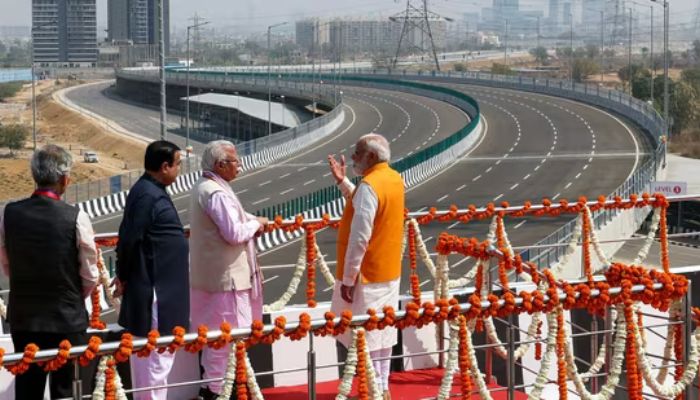
Reaching Delhi’s Indira Gandhi International (IGI) Airport from Noida will soon be a lot faster and smoother. Prime Minister Narendra Modi will inaugurate two big road projects on Sunday, the Urban Extension Road-II (UER-II) and the Delhi section of the Dwarka Expressway.
With these additional stretches becoming operational, Noida-IGI Airport travel duration will come down to a mere 20 minutes. The projects will also help reduce traffic on inner roads, easing pressure on National Highway-48, National Highway-44, Ring Roads, and the Barapullah elevated corridor.
What is UER-II
The Urban Extension Road-II (UER-II) is a 75.71 km long road facility, constructed in five segments at a cost of more than ₹6,400 crore. 54.21 kms of it lies in Delhi and 21.50 kms in Haryana. Once completed, it will link Mahipalpur, close to IGI Airport, with Alipur in North Delhi, further connecting it to National Highway-44.
This means that Gurugram, south Delhi, and west Delhi residents will no longer have to deal with the endless traffic jam on the Ring Road and Dhaula Kuan. They will have faster access to NH-44, Chandigarh, Punjab, and Jammu & Kashmir.
Dwarka expressway to have a tunnel to IGI Airport
PM Modi will inaugurate four of the five packages of UER-II, along with phases three and four of the Dwarka Expressway around 12.30 pm on Sunday, as reported by ANI. The ceremony will take place in Rohini, and the Prime Minister is expected to inspect both projects. The 10.1 km stretch also has a 5.1 km tunnel that directly links the road to IGI Airport. The tunnel will ease and speed up travel to Gurugram significantly.
PM Modi to inaugurate two major National Highway projects worth ₹11,000 crore in Delhi on Sunday.
Earlier in March 2024, the Prime Minister had also dedicated the Haryana part of the Dwarka Expressway (29 km stretch from Mahipalpur to Kherki Daula on NH-48) to the citizens of India. With the Delhi section now open, the expressway is almost ready to become operational.
Plans for future expansion
The connectivity does not end here. The government also intends to connect UER-II to the proposed Delhi-Dehradun Expressway, which will begin just near Akshardham temple. This will allow traffic from Haryana and Rajasthan to reach Dehradun without entering the city.
Yet another 65 km long highway has been sanctioned between Tronica City and the upcoming FNG Expressway. This highway will link five large expressways of the NCR, Delhi-Dehradun, Delhi-Meerut, Noida-Greater Noida, DND-Faridabad, and Yamuna Expressway.
What makes UER-II special is that it has also contributed to cleaner surroundings. About 10 lakh metric tons of inert material recovered from Delhi’s old landfill sites through biomining was used in its construction.
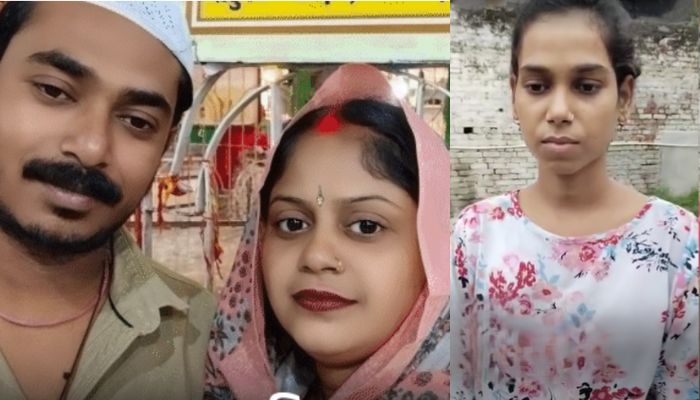
A 21-year-old woman from Prayagraj district of Uttar Pradesh, Ritika Kushwaha, has complained against her older brother of forcing her to convert her religion to Islam after being influenced by a Muslim woman living with them. According to Ritika, her younger sister Radhika was unable to bear the pressure and harassment and passed away last year.
According to media reports, on 29th July, Ritika fled from her house and went straight to senior police officials seeking protection. She was accompanied by her elder sister, Kanchan, who had come from Jaipur. The sisters claimed that their brother Rahul Kushwaha’s behaviour and the atmosphere at home completely changed after he brought a woman named Rubia into the family home.
Family turmoil after father’s death
The Kushwaha family lives in Rajapur Uchwaghadi locality under Cantt police station in Prayagraj. Ritika is now the youngest of five siblings. Their father, Ramesh Kushwaha, died due to illness, after which their mother also suffered from mental health issues. Responsibility of the household fell on the eldest brother, Rahul.
However, in May 2023, Rahul brought home Rubia, the wife of his jailed friend Ejaz. Since then, according to Ritika, the entire household changed.
“My brother now wears a cap, offers namaz, and goes to dargahs. He forces us to follow the same. My younger sister Radhika opposed it, but he took her to maulvis, calling her ill. After one year of harassment, she died on 29th May, 2024,” Ritika told police officials.
Allegations of harassment
Ritika claims that after Radhika’s death, she too was pressured by Rahul and Rubia to perform Islamic rituals. She says maulvis frequently visit their home, and she is forced to sit with them, take tabeez, and accept their blessings.
“When I resist, my brother and Rubia beat me up. They are determined to convert me. But I’m a Hindu, I don’t want to become Muslim,” Ritika said.
Her elder sister Kanchan also backed her claims, saying their brother has become violent and abusive. “He has made our mother’s condition worse, and he uses force against us if we don’t listen to him. He is no longer the brother we knew,” Kanchan said.
Criminal history of Rahul Kushwaha
Police records verify that Rahul Kushwaha is a criminal. In 2021, Rahul was arrested in a bomb case in the Daraganj area and remained incarcerated for more than a year. Rahul was released on bail with the assistance of Ejaz, a resident who was also behind bars then.
According to Kanchan, Rahul felt indebted to Ejaz and began supporting his family. When Ejaz could not come out of jail, his wife, Rubia, entered Rahul’s life. Since then, she has been living with him at the Kushwaha family house, behaving like his partner.
Rubia allegedly follows Hindu traditions in her appearance to avoid suspicion, while persuading Rahul to adopt Islamic practices. Neighbours say the family home now looks more like a dargah than a residence.
Rising tensions within the family
The forced changes inside the house led to serious clashes within the family. Ritika’s brother Rajat, upset with Rahul’s treatment of his sisters, once fired a shot at Rahul with a locally-made gun about six months ago. Rajat was arrested and is currently in jail.
Another brother, Kunal, also revealed that Rahul had earlier tried to force him into conversion and even took him to a dargah. Kunal left the house and lived in Delhi for a year, but returned when his sister Radhika died.
Now, according to Kunal, Rahul is determined to send Ritika away to a maulvi in Kolkata after forcing her conversion. “He beats the entire family and even keeps a pistol in the house. He moves around with a group of goons, and the local police don’t act against him,” Kunal alleged.
Neighbours confirm his criminal image
When residents were asked about Rahul, most avoided speaking on record but admitted that he is known as a criminal-minded person. They said the old mother still lives in the house, and the sisters had recently run away due to harassment.
One neighbour said, “It is a family matter, but everyone here knows Rahul’s reputation. His mother and sisters are suffering.”
Police response
Cantt Police Inspector confirmed to the media that Rahul Kushwaha is indeed a history-sheeter with multiple cases registered against him, including theft, bombing, robbery, and under the Gangster Act.
“On 29th July, his sister submitted a complaint alleging harassment and indecency. Preliminary investigation found substance in her claims, and efforts are underway to arrest him,” the officer said.
DCP (City) Abhishek Bharti also stated, “A young woman approached us with a petition regarding harassment by her brother. We sought a detailed report from the local police. Strong legal action will be taken against the accused soon.”
For Ritika, who says her younger sister lost her life due to the same pressure, the demand is simple: protection and justice. “Please save me. Don’t let what happened to my younger sister happen to me,” she pleaded before the police.
The Delhi Police Special Cell’s Intelligence Fusion and Strategic Operations (IFSO) Unit has exposed and dismantled a major cybercrime syndicate that had been bleeding State Bank of India (SBI) credit card holders across the country. The elaborate fraud, which relied on insider collusion, psychological trickery, and rapid laundering through cash and cryptocurrency, was cracked after a six-month operation.
A nationwide credit card fraud uncovered
The syndicate, operating largely out of Delhi’s Kakrola and Uttam Nagar areas, specialised in targeting SBI credit card customers. Police said the gang impersonated SBI customer care executives, tricking card holders into revealing sensitive authentication data such as One-Time Passwords (OTPs) and Card Verification Values (CVVs). This information was immediately used to purchase electronic gift cards online.
Investigators discovered that the call centre in Kakrola, Dwarka, was not an isolated scam hub but part of a highly organised network. A total of 18 individuals were eventually arrested, including the masterminds, coordinators, call centre insiders, data brokers, and cash handlers.
Insider leaks fuelled the operation
According to the police, confidential customer data had been leaking from authorised Card Protection Plan (CPP) call centres. These insiders provided personally identifiable information (PII) such as names, registered numbers, and partial card details, particularly of customers already enrolled in CPP services.
Using this information, the fraudsters called victims pretending to be from SBI, often under the pretext of renewing or verifying their CPP benefits. To gain trust, they coined deceptive phrases like “One Time Permission” and “Customer Value Verification Code,” nudging unsuspecting customers into sharing OTPs and CVVs.
Real-time looting and laundering
Once details were obtained, the fraudsters acted instantly. Gift cards bought with stolen credentials were funnelled to travel agents and middlemen. These intermediaries provided either cash or cryptocurrency, mainly USDT (Tether), making the stolen funds vanish almost without trace.
The gang ran the scam continuously, careful not to target Delhi-based customers, thus avoiding immediate detection. Victims were spread across multiple states, with total financial losses estimated at around Rs 2.6 crore.
Full chain of crime mapped
Delhi Police said the syndicate functioned as a complete criminal ecosystem. Operational members executed phishing calls and targeted victims. Finance handlers managed the laundering channels through crypto and bulk gift card reselling. During raids, officers recovered 52 SIM cards and bank details of multiple customers.
The painstaking investigation has, according to police officials, successfully dismantled an entire ecosystem of cybercrime rather than just its frontline callers, a rare example of a crackdown on both the executioners and the hidden enablers of such fraud.
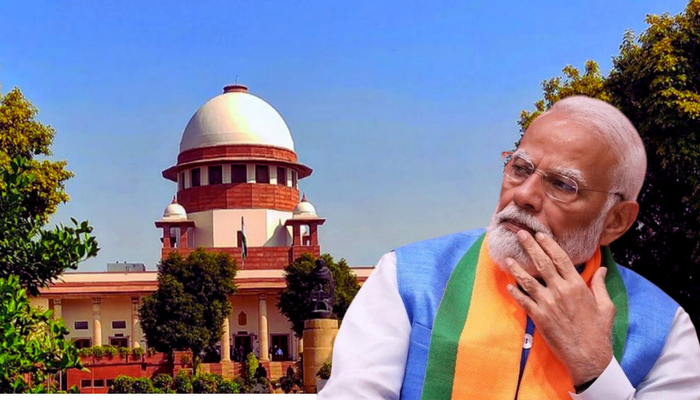
The Union government recently cautioned the Supreme Court that a “constitutional chaos” could result if one organ of the state encroached upon the constitutional powers of another organ. The centre’s remarks were reportedly made in a detailed written submission filed in the presidential reference relating to the Supreme Court verdict that set deadlines on the exercise of constitutional powers of the President and the Governor. A constitution bench of the Supreme Court, led by Chief Justice of India, BR Gavai, had asked the Union and the State governments in July this year to file their written submissions in the presidential reference by 12th August.
Referring to the top court’s verdict that reignited the debate around judicial overreach, the Solicitor General said that the existence of some limited problems in the implementation of the assent process cannot justify the reduction of the higher office of the Governor to a subordinate one. Mehta contended that the offices of the Governor and President are “politically complete” and represent “higher ideals of democratic governance”. He added that any alleged lapses in the assent process should be remedied through political and constitutional mechanisms and not through “unwarranted judicial interventions”.
“When the Constitution seeks to impose time limits for taking certain decisions, it specifically mentions such time limits. Where it has consciously kept the exercise of powers flexible, it does not impose any fixed time limit. To judicially read in such a limitation would be to amend the Constitution,” Mehta said.
Explaining the ambit of Articles 200 and 201, which relate to the power of the President and the Governor to grant assent to bills, the Solicitor General pointed out that the Articles contain four different verbs, viz., ‘assent’, ‘withhold’, ‘reserve’ and ‘return’. He said all four verbs carry different meanings and discretionary scope.
Mehta added that the provisions were carefully crafted by the constitution framers to meet the unforeseen exigencies. He cautioned against setting rigid timelines concerning the provisions, saying that it would render “the intention of the framers nugatory” and would hinder the ability of these constitutional offices to ensure constitutional compliance and protect the democratic principles and the national interest.
Actions of President, Governor under the Constitution immune from court proceedings: Centre
He said that the actions of the President and the Governor fall within the category of proceedings that cannot be called into question in a court of law. “The assent of the governor or the president is integrally connected with the legislative process of a state legislature and attracts the constitutional bars on judicial inquiry under Articles 122 and 212,” Mehta submitted. The Solicitor General pointed out that the President and the Governor enjoy constitutional immunity under Article 361 from court proceedings for acts done in the exercise of their official duties.
Speaking about the Supreme Court’s vast powers under Article 142, Mehta said the court cannot use these powers to amend the Constitution. “Even under its extraordinary powers vested in Article 142, the Supreme Court cannot amend the Constitution or defeat the intent of the Constitution makers, provided there are no such procedural mandates in the constitutional text,” he asserted.
He further added that the provision cannot be used to override constitutional provisions or reallocate powers vested in other organs of the state. “The very width of the power brings with it a high threshold of duty to not exercise the same in such a manner that amends the text of the Constitution itself and fundamental constitutional and legal principles,” Mehta stated.
Background of the case
In May this year, President Droupadi Murmu referred a list of 14 questions to the Apex Court seeking its opinion on them. The questions related to the modifications prescribed by the Supreme Court to Articles 200 and 201, which relate to the powers of the President and the Governor to grant or withhold assent to bills in a verdict passed in The State of Tamil Nadu v The Governor of Tamil Nadu and Anr, in April this year.
The present judgment arose out of a long-standing tussle between the Tamil Nadu government and the Governor, wherein the latter had reserved 10 Bills passed by the state legislature for the assent of the President. A division bench of the Supreme Court, comprising Justices B Pardiwala and R Mahadevan, examined the concerned provisions and prescribed some time limits to be followed by the President and the Governor in exercise of their powers under Articles 200 and 201. The bench prescribed a three-month deadline for the President and one month for Governors to decide on the bills passed by the legislature.
After receiving the Presidential reference, a bench comprising CJI Gavai and justices Surya Kant, Vikram Nath, PS Narasimha and Atul S Chandurkar prepared a nine-day schedule starting from August 19 to decide the 14 constitutional questions referred by the President under Article 143. A Constitutional bench will be hearing the case.
The Communist Party of India (Marxist) has yet again exhibited its glaring hypocrisy when it comes to the subject of religion. The ruling party in the State of Kerala has made it crystal clear that it treats adherents of Hinduism and practitioners of Islam distinctly.
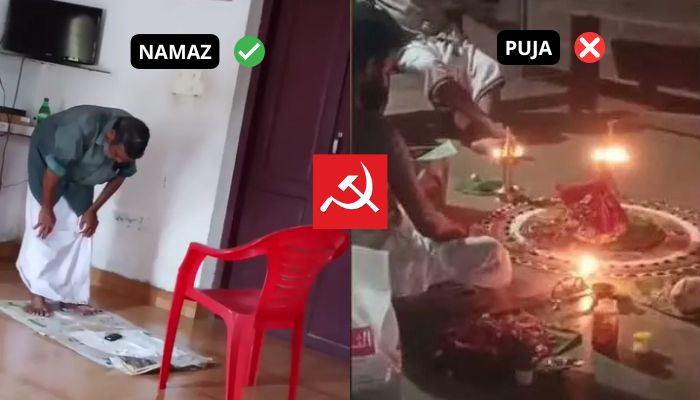
Recently, a video was shared on social media by CPIM member Bineesh Kodiyeri, who happens to the the son of ex-Home Minister of Kerala Kodiyeri Balakrishnan. In the video, a man wearing a skull cap could be seen offering Namaz inside the premises of the CPIM party office.
According to X (formerly Twitter) user Anand, the man is a hawker from Kollam who sells bedsheets for a living. The Muslim man had sought space from the local CPIM workers to offer Namaz as it was raining outside. The party instantly complied with his request and allowed him to pray inside the office.
Here’s the translation of his post:
“Words have no place in front of this sight that binds hearts.
When a man, drenched in rain, asks for a place to pray, holding fast to his faith, a political party office prepares it for him, creating circumstances conducive to that man’s… pic.twitter.com/2pkZBgtxsK
CPIM leader Bineesh Kodiyeri stated in his social media post –
“When a man, drenched in rain, asks for a place to pray, holding fast to his faith, a political party office prepares it for him, creating circumstances conducive to that man’s faith. This is the CPI(M), an organization that protects the faith and goodness of people. This love and brotherhood are the biggest strength of our state.”
The party described the decision to allow a Muslim man to offer Namaz inside its office as an act of ‘love and brotherhood.’ Coinidentally, such a harmonious outlook, tolerance and accommodating attitude are often missing when it comes to Hindus.
CPIM stops Ganapati homam
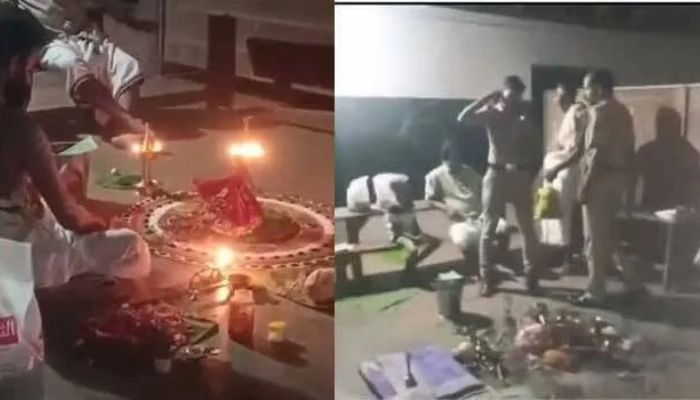
In February 2024, the Communist Party of India (Marxist) objected to the Ganapati homam, which was performed inside the premises of the Nedumannur LP School in the Kozhikode district of Kerala.
The CPIM goons learnt about the Puja from the locals and brought it to a halt. They also attacked the organisers who conducted the rituals.
Later, the police were called in and they arrested the organisers. The CPIM goons then carried out a protest march to the Nedumannur LP School.
Ganapati homam stopped by CPIM goons, oganisers arrested by police
This was despite the fact that the Puja was conducted with the prior permission of the school authorities. As per convention, Puja is conducted on the occasion of Mahanavami each year.
But since the event was cancelled, the school organised a Ganapati homam. But this did not stop intolerant CPIM from stopping Hindus from exercising their right to religion.
CPIM reprimands party leader for praying at temple
In September 2017, the Communist Party of India (Marxist) reprimanded its Minister, Kadakampally Surendran, for visiting the ancient Sree Guruvayur temple in Thrissur and offering pushpanjali on the behest of his family members.
He was draped in a mundu and melmundu, and was seen wearing chandanakuri in pictures that went viral on social media. Surendran’s children were dressed as Lord Krishna. At that time, he was serving as Kerala Devaswom Minister.
The party’s internal committee declared that the conduct of the CPIM leader was ‘not in accordance with’ the principles of the party. An inquiry report was also submitted based solely on the temple visit of Kadakampally Surendran.
The CPIM committee declared that offering prayers at the Sree Guruvayur temple was against the principles of CPIM. It directed Kadakampally Surendran to follow the footsteps of other party leaders.
CPIM leader under scrutiny for meeting astrologer
In August this year, CPIM state secretary M V Govindan came under scrutiny for visiting a Hindu astrologer named Mahava Poduval. He faced the ire of the party for discussing ‘astrology’.
The astrologer had to issue a clarification that the CPIM leader came to meet his family and have tea. “He did not discuss anything about astrology during the visit,” Mahava Poduval clarified.
He further added, “Don’t mix the personal relationship with astrology…It is unbearable for me if anyone says that Govindan master checked his astrology.”
Poduval pointed out that he has a personal connection with CPIM leader and Kerala CM Pinarayi Vijayan.
Objection to everything ‘Hindu’
In July 2022, the Communist Party of India (Marxist) objected to the conduct of Puja during the unveiling of the National emblem.
The party has also been instrumental in dislodging the world’s only Hindu monarchy in Nepal.
Anti-Hindu propaganda on CPIM
In February 2025, OpIndia reported how the CPIM resorted to anti-Hindu propaganda in its 64-page draft political resolution.
On Page 18 of the political draft resolution of the CPIM, the party went on a hysterical rant against the rise of Hindu forces in the erstwhile ‘Hindu rastra’ of Nepal.
As part of its nefarious anti-Hindu agenda, CPIM claimed, “The pro-monarchy forces are trying to utilise the popular discontent to once again gain acceptance among the people and emerge as an alternative political force. Pro-Hindutva, RSS elements are actively supporting these forces and are campaigning against the newly adopted secular constitution and the communist parties.“
The Communist party further labelled the inauguration of the Ram Mandir in Ayodhya as an ‘aggressive continuation of Hindutva drive.’
It also tried to negate demands for the restoration of Hindu religious sites, which are subdued by disputed structures built by Islamic tyrants. (Page 22 of the draft resolution).
“The inauguration of the Ram temple at Ayodhya in January 2024 became a State-sponsored event, with the Prime Minister himself conducting the religious rituals. The next step has been to target the Gyanvapi mosque in Varanasi and the Eidgah in Mathura to establish legal disputes on these two sites by claiming that there were Hindu temples existing there. This was the original VHP slogan that the three sites in Ayodhya, Kashi and Mathura should be handed over to Hindus to build temples,” the CPIM made its anti-Hindu mindset crystal clear. (Page 32 of the draft resolution).
The Communist Party also resorted to reinforcing the idea of Muslim street veto, which makes roads and areas inaccessible to the rest of the population and Hindus in particular. It sought to blame the Hindu community to take puja processiosn through ‘minority areas’ and causing provocations.
“Taking out religious processions during festivals like Ram Navami, Hanuman Jayanti and Ganesh Puja, entering minority areas and causing provocations leading to clashes, have become a regular feature…In all these incidents, it is the members of the minority community who face police repression,” it claimed. (Page 32 of the draft resolution)
CPIM also objected to the enactment of legislations such as those against grooming jihad, which protect Hindu women from being lured by Muslim men into conversions under the pretext of marriages. (Page 33 of the draft resolution). It also objected to the crackdown on predatory religious conversions of Adivasis by evangelist groups.
CPIM further revealed its anti-Hindu antecedents when it claimed, “The new Parliament building was inaugurated by the Prime Minister with Hindu religious rituals and a ‘Sengol’ placed behind the Speaker’s Chair.” (Page 34 of the draft resolution)
The Communist party continued to mock Hindu sentiments and tried to pass off our ithihasa as ‘mythology’. It also objected to the presentation of Hindus in a positive light on TV, media etc.
On Page 41 of the draft resolution, it claimed, “The RSS has increased its hold on cultural and research institutions by infiltrating them with its elements. They seek to rewrite Indian history from a communal standpoint, and to project mythology as real history.”
“The Hindutva communal agenda cannot succeed until it becomes part of the ‘common sense’ of the people at large. For this, propagation via popular culture is crucial. Thus their unrelenting efforts to infiltrate and control the film industry, television channels and OTT platforms, popular music, and even, of late, high art,” CPIM made their anti-Hindu agenda clear. (Page 42 of the draft resolution).
On Page 45, CPIM tried to pit ‘Sanatan Dharma’ against ‘Manuvad’, although its party leaders had supported calls for the eradication of both.
The party also vowed to mobilise forces to counter Hindutva.
The Communist Party put out ‘token condemnation’ of radical Islamic outfits like Jamaat-e-Islami and SDPI but was quick to suggest that their radicalisation was somehow due to rise of Hindutva.
“Muslim fundamentalist and extremist organisations like the Jamaat-e-Islami and the SDPI (political wing of the Popular Front of India) are working to expand their influence among the Muslim masses. They seek to utilise the alienation and fears among the minority community, who are subject to constant attacks by the Hindutva forces...Though minority communalism cannot be equated with the Hindutva communal forces who are in power, it must be understood that extremist minority activities only strengthen the forces of majority communalism,” CPIM claimed (Page 54 of the draft resolution).
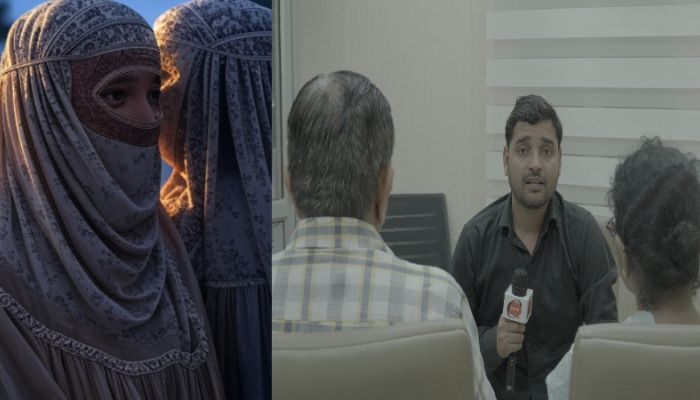
Agra Police recently exposed what they say is the country’s biggest religious conversion racket under Operation Asmita. Police, along with the bust, also rescued two sisters who had gone missing and were eventually traced to Kolkata’s Muslim-dominated neighborhood. The girls have since been reunited with their parents, who emotionally described the ordeal their family had to go through and the influence that led the daughters astray.
Police authorities stated the girls who were rescued are being counseled on a regular basis while investigations continue. The case served to emphasise how young vulnerable women can be manipulated through religious indoctrination and targeted by organized groups.
The mother of the two sisters shared with OpIndia that their ordeal began on 24th March, when both daughters suddenly left home without telling anyone. They carried some clothes, cash, and personal belongings with them.
“That day, we had gone to attend a satsang. They weren’t upset with us or angry, but their minds had already been poisoned. Islam had influenced them badly,” the mother said.
She admitted that the family never wanted their daughters to be exposed to Islamic influence but were powerless once they fell under it. “We didn’t like Islam and we did not want our girls to come under its impact. But it happened. The Agra Police have done a very brave job by bringing our daughters back safely,” she said.
The father also thanked them, appreciating the efforts of Agra Police Commissioner Deepak Kumar and Uttar Pradesh Chief Minister Yogi Adityanath.
How the influence began
The parents told OpIndia that their elder daughter, a PhD aspirant preparing for her NET exams at a coaching centre, came into contact with a muslim girl from Kashmir named Saima. Saima allegedly targeted her by criticising Hindu traditions and gradually influencing her mindset.
“One day, Saima even came home with my daughter. That was the start of it,” the mother recalled.
Saima convinced both the sisters to accompany her from Agra on 26th February, 2021. The younger daughter was just 14 years old at that time. They first went to Jammu, where Saima kept them at her married sister’s home. The next morning, after breakfast, they planned to travel nearly 170 km to Kashmir.
A landslide on the highway halted their journey. The police detained them even before they could travel to Kashmir, and the sisters were rescued.
Parents regret not acting earlier
The father admitted they had underestimated Saima’s intentions and now regret not taking legal action earlier.
“Even when my daughter asked her to let her speak to me, Saima refused. She even destroyed the SIM card to cut off contact. Still, we didn’t file a case against her. That was our mistake. If we had acted then, maybe this wouldn’t have happened again,” he said.
Changed behaviour at home
After being brought back from Jammu and Kashmir, the sisters initially showed clear signs of being influenced. According to their mother, they began praising Islam openly and insisted on reading namaz and observing roza during Ramadan.
“This went on for 8–10 days. We strongly opposed it, and eventually they stopped and behaved normally again,” she said. But the incident had already left a mark. The parents grew stricter and stopped the sisters from leaving home freely, something that apparently troubled Saima.
Even now, the parents believe their daughters are still under the influence of Islamic thought. “They say things like, ‘You people worship idols, but Islam believes in only one God.’ Earlier they would listen to us, but now they argue and get angry. We are very worried about their future,” the mother said.
Despite her fear, she added with hope: “I pray every day that somehow our daughters return to Sanatan Dharma.”
Operation Asmita and the wider racket
Agra police has rescued the two sisters became one of the key breakthroughs that helped them bust the larger conversion racket. Under Operation Asmita, police rescued seven girls in total and arrested 14 accused individuals, who have been sent to jail.
Officials say this racket is the biggest of its kind uncovered so far, but warn that it may not be the only one. Many such groups, they believe, remain active in different parts of the country, working to lure girls away from their families and targeting the Hindu girls. The problem is bigger than one gang.
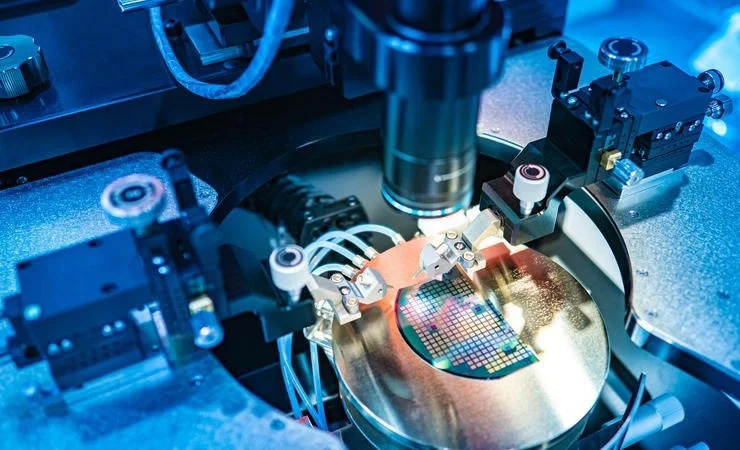
While India is yet to make significant headway in setting up advanced semiconductor fabs, its broader chip-making ambitions are beginning to take shape with a sharp strategic focus on mature-node manufacturing. Targeting the 28nm-65nm range, India aims to cater to the growing demand in sectors such as automotive, telecom, and industrial electronics.
In a detailed analysis, Bastion Research observed that, unlike the global race for cutting-edge nodes, India is positioning itself to fill a critical gap in the global supply chain by producing essential, widely used chips.
“Though today there is not much to share as far as India’s progress in establishing semicinductor fab is concerned, one thing is clear, India’s semiconductor ambitions are taking shape with a strategic focus on mature-node manufacturing, a smart move considering the vast demand for 28nm-65nm chips in sectors like automotive, telecom, industrial electronics, etc. While global giants dominate the cutting-edge node space, India is wisely positioning itself to manufacture mature nodes and filling a big gap,” the report added.
The observation points out that India’s semiconductor ambition today is quite similar to where Taiwan and South Korea were in the 1970s-1990s. The observation highlights that India’s role in system integration within the semiconductor value chain is rapidly evolving, positioning the country at the forefront of global capabilities.
With a deep pool of talent and a robust ecosystem, India excels in integrating semiconductor components into high-tech systems for sectors like automotive electronics, telecommunications, consumer devices, and medical technologies.
India is already delivering world-class, high-quality integration services. What sets India apart is its ability to match global standards, both in capability and talent, and its swift progression towards scaling these operations to meet the growing demand for advanced semiconductor-based solutions, the report added.
The observation highlighted that India is well poised to capture a larger share of the global market, as the China +1 strategy has become a powerful global trend, which is pushing companies to diversify their supply chains and look for alternatives to China.
“China +1 strategy has become a powerful global trend, pushing companies to diversify their supply chains and look for alternatives to China. This has fueled India’s growth in system integration, as the country is increasingly seen as a reliable and cost-effective partner in the global supply chain,” the analysis stated.
In 2021, the Indian government launched the Semicon India Programme (also referred to as Indian Semiconductor Mission (ISM) 1.0) with Rs 76,000 Crore in incentives to attract global manufacturers, build fabs, packaging units (OSAT & ATMP, discussed later in detail), and a local supply chain to reduce reliance on imports. The initial focus is on mature-node fabs (28nm to 65nm), not bleeding-edge nodes like 5nm or 3nm, which are dominated by TSMC and Samsung.
Earlier this month, the Centre cleared four new semiconductor manufacturing projects with a total investment of Rs 4,600 crore under the India Semiconductor Mission (ISM). These semiconductor units will be set up in Odisha, Andhra Pradesh, and Punjab.
The approvals take the total India Semiconductor Mission (ISM) portfolio to 10 projects across six states with cumulative investments of Rs 1.6 lakh crore.
Addressing the nation from the ramparts of the Red Fort on Independence Day, Prime Minister Narendra Modi announced that made-in-India semiconductor chips will be available in the market by the end of this year, marking a major milestone in India’s technological journey.
India has already approved the construction of six semiconductor plants.
In May, the Union Cabinet approved India’s sixth semiconductor manufacturing unit in Jewar in western Uttar Pradesh. It will be established near Jewar Airport through a joint venture between the HCL Group and Taiwanese electronics giant Foxconn.
Among the five semiconductor plants, four are in Gujarat: Tata Electronics-PSMC Semiconductor fab, CG Power-Renesas-Stars Microelectronics ATMP unit, Micron Technology’s ATMP unit, and Kaynes Semicon ATMP unit, while the Tata Semiconductor Assembly and Test (TSAT) Unit is in Assam.
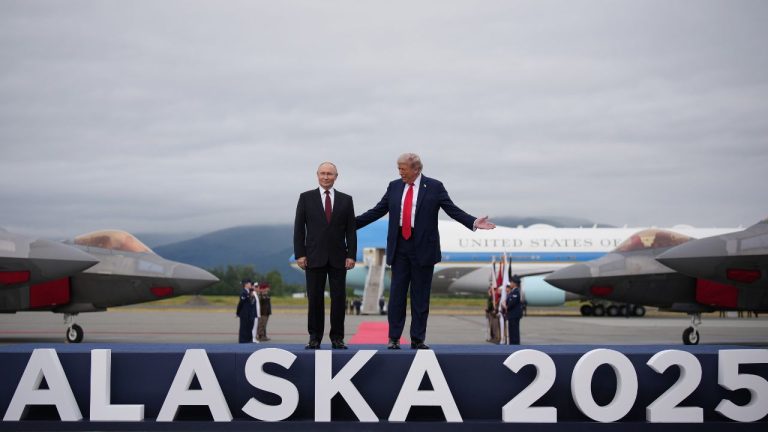
The much-anticipated summit between Russian President Vladimir Putin and US President Donald Trump, which finally took place in Alaska on Friday (August 15th), ended with no agreement on the Russia-Ukraine war. The unusual warmth displayed by the two historical rivals during the meeting stood in contrast with the coldness of Trump’s threats of imposing sanctions on Russia if it did not agree to a ceasefire with Ukraine. Given Trump’s signature aggressive tone towards Russia, the hearty welcome accorded by him to Putin took the world by surprise.
Ever since coming to power the second time, Trump has been emphasising ending the Russia-Ukraine war. One of his first promises after assuming office was to end the Russia-Ukraine war within 24 hours. Recently, ahead of his meeting with Putin, Trump warned that he would impose sanctions on Russia if it did not put an end to its ongoing conflict with Ukraine before Friday. While he did not specify the measures he would take against Russia, he earlier threatened Russia’s trading partners, including India and China, with secondary tariffs.
This came after the White House had already imposed 25% punitive tariffs on India for buying Russian oil. Although the Russia-Ukraine war has not ended even after six months of Trump’s assuming office, the already meek possibilities of a US-brokered ceasefire between Russia and Ukraine definitely seem to have come to an end after the meeting.
Trump describes the meeting as “extremely successful”
Subsequent to the meeting that went on for over 2 hours at Joint Base Elmendorf-Richardson in Anchorage, the two leaders made a joint appearance before the media for what was supposed to be a press conference. However, none of them took questions from the media.
Addressing the media after the meeting, Trump, who often talks in superlatives, described the meeting as “extremely productive” despite the lack of any eagerly-awaited announcements on the Russia-Ukraine war. “We had an extremely productive meeting, and many points were agreed to; there are just a very few that are left. We didn’t get there, but we have a very good chance of getting there,” said the US President, noticeably lacking his aggressive tenor post the meeting.
Putin also made a general statement about the conflict and at the same time warned Ukraine and European nations to “not create any obstacles” and not “make attempts to disrupt this emerging progress through provocation or behind-the-scenes intrigues.”We hope that the understanding we have reached will… pave the way for peace in Ukraine,” said Putin.
Ukraine was absent from the meeting that was supposed to put an end to the Russia-Ukraine conflict
Interestingly, while the Russia-US summit was supposed to yield a peace agreement between Russia and Ukraine, the latter was not included in the meeting despite being a direct party to the conflict. One wonders how a peace ‘agreement’ could have been reached between the parties when one of the parties was not even present for such an agreement.
The concern was raised by the Ukrainian President Volodymyr Zelensky, ahead of the US-Russia meeting, who said that the leaders of all three countries, Ukraine, Russia and the US, needed to sit across the table to reach a peace deal.
Russia must end the war that it itself started and has been dragging out for years. The killings must stop. A meeting of leaders is needed – at the very least, Ukraine, America, and the Russian side – and it is precisely in such a format that effective decisions are possible.…
— Volodymyr Zelenskyy / Володимир Зеленський (@ZelenskyyUa) August 15, 2025
“Russia must end the war that it itself started and has been dragging out for years. The killings must stop. A meeting of leaders is needed – at the very least, Ukraine, America, and the Russian side – and it is precisely in such a format that effective decisions are possible. Security guarantees are needed. Lasting peace is needed. Everyone knows the key objectives. I want to thank everyone who is helping to achieve real results,” Zelensky said.
Trump, who is claiming the Nobel Peace Prize for purportedly brokering peace between several countries across the world, was hoping to add another feather to his hat by brokering a ceasefire between Russia and Ukraine. However, after the meeting failed to bear any fruit, Trump shifted the entire onus of making peace with Russia to Ukraine.
Rating his meeting with Putin “10/10”, Trump said that now it was Ukraine’s responsibility to end the Russia-Ukraine conflict. “Now it’s really up to President Zelensky to get it done. And I would also say the European nations, they have to get involved a little bit, but it’s up to President Zelensky,” Trump said as quoted by Fox News after the summit.
Regardlesss of the fact that the meeting did not result in a breakthrough on the Russia-Ukraine war, it might bring some temporary relief for India. After the meeting, Trump said that he will not be thinking about imposing secondary tariffs on countries buying Russian oil, which include India, “right now” but will think about it in “two or three weeks”. “Now, I may have to think about it in two weeks or three weeks or something, but we don’t have to think about that right now. I think, you know, the meeting went very well,” Trump said.
A shocking case of Love jihad has emerged from the Banjara Hills region of Hyderabad where a man, Fahad, who hails from Pakistan, lured a Hindu woman, Kirti, and married her. According to the police, Fahad kept his Pakistani origins a secret and even produced forged papers to obtain employment in Hyderabad.
Back in 2016, Fahad forced Kirti to convert her religion to Islam and gave her new name “Doha Fatima” before marrying her. Fahad was employed at Sipal, a firm based in Hi-Tech City, Hyderabad.
The duo shared a home for some years, but everything changed when Kirti discovered that Fahad had entrapped another woman in his office in the same manner. Betrayed, Kirti gathered strength and went to the police. Fahad was arrested soon afterwards. The police have initiated an investigation regarding the allegations of forced conversion and marrying women by deceit.
Background of Fahad
Fahad, as per police, arrived in India in 1998 with his mother following his father’s death. His father was from Pakistan. His mother was from Hyderabad. Fahad obtained Indian citizenship later in 2018. Questions have still been raised regarding the identity documents he used prior to this, particularly during the time when he married in 2016. Authorities are now verifying if he abused Aadhaar, PAN, and voter ID, and if other women could have been approached.
Even after going through such emotional trauma, Kirti was brave enough to approach the authorities so that no one else has to go through the same ordeal. Strict action against such people has been promised by the police. The case has yet again opened up issues of fake marriages as well as deceptive practices in the city.
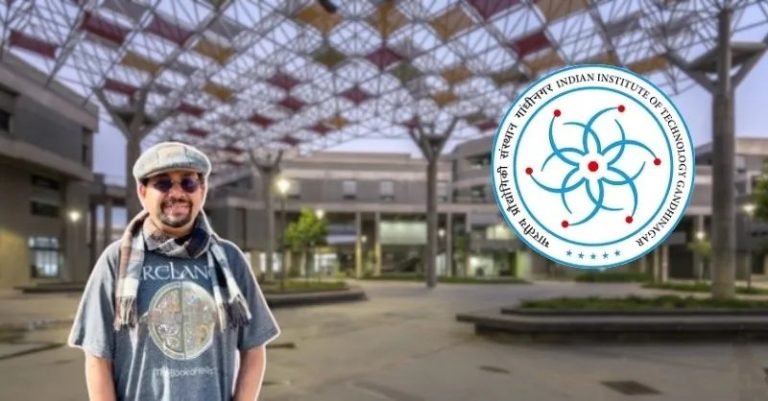
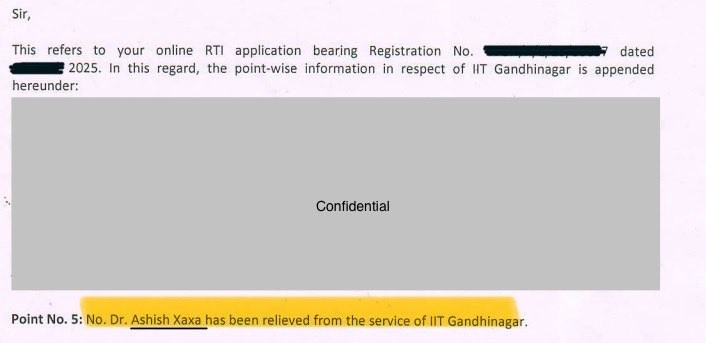
Indian Institute of Technology Gandhinagar, which has been in the news for controversies related to its professors , has dismissed one of the professors Ashish Xaxa. This information has been given by the institute itself through an RTI reply.
Earlier, an RTI was filed asking the IIT about Dr. Ashish Xaxa, in response to which IIT Gandhinagar said that he has been relieved of service.
It is worth mentioning that OpIndia had shed light on the activities of Dr. Ashish Xaxa through a report in May 2025. He has been very active on social media and had made several controversial posts which raised questions about the conduct of IIT professors. After that, he deactivated the account. However, the account was reactivated later.
On social media, he is always seen reposting posts of Congress leaders like Rahul Gandhi, Priyanka Gandhi etc. Pro-Palestine posts were also posted from his handle. He also keeps reposting posts of people like Mohammad Zubair and Dhruv Rathi.
In one post, he tried to instigate the people of India by saying that people need to take to the streets to reclaim democracy.
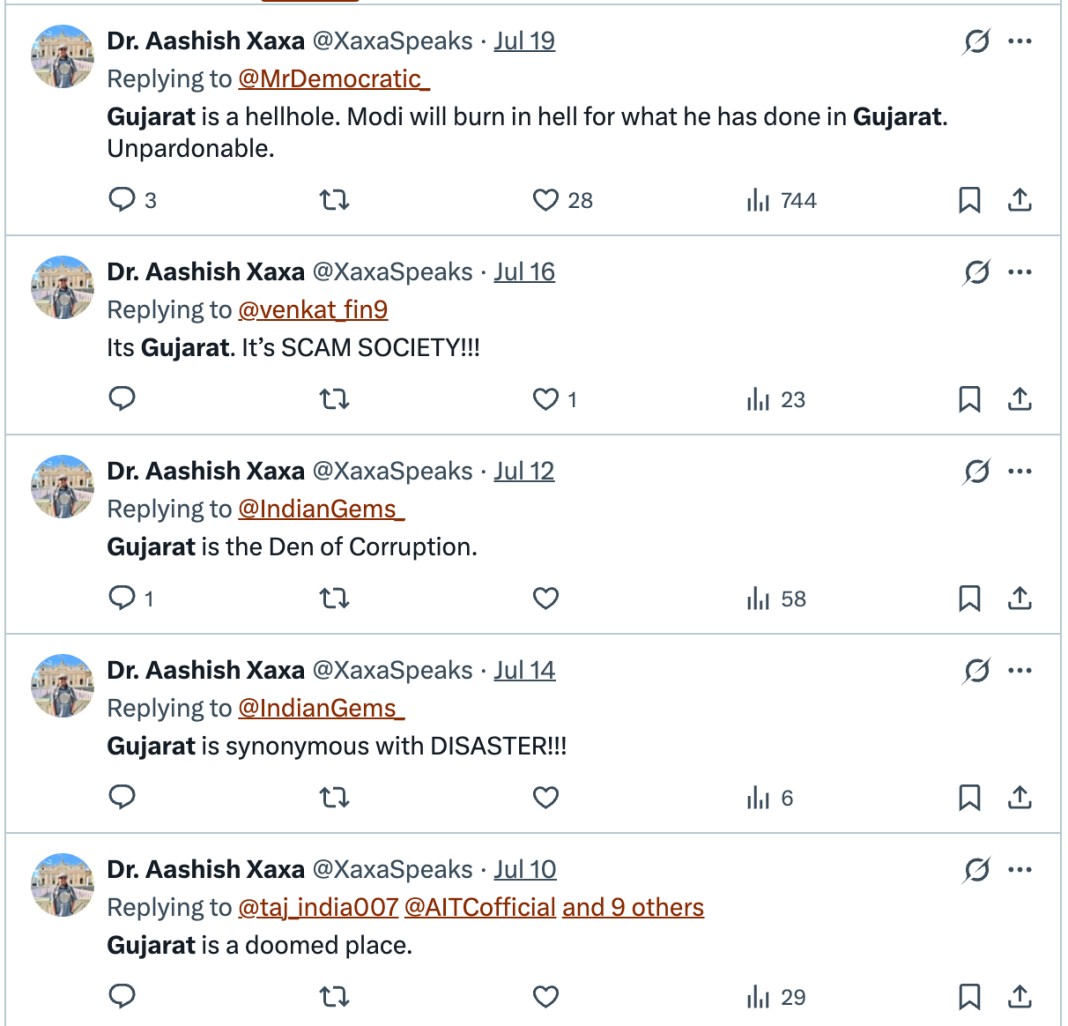
This professor has a special hatred for Gujarat. Recently, he had made some posts in which he had abused the state and its people. At one point, he had called Gujarat a ‘hellhole’ and at another, he had said that Gujarat is a ‘scam society’. At one point, he had said that Gujarat is a mine of corruption. In one post, he had also commented that ‘Gujarat is synonymous with disaster’.
Ashish Xaxa even reposted a post, in which two publications were posted – Colonizing Kashmir and Colonizing Palestine – and urged people to read them. The ex-professor was clearly implying that India has ‘colonized’ Kashmir.
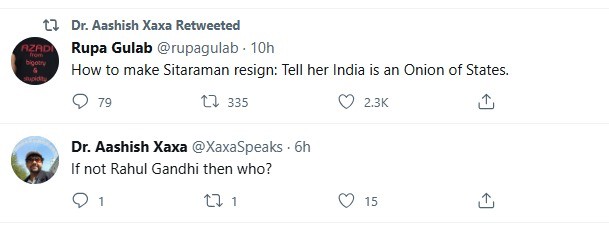
In another one of his X posts, he wrote, “If not Rahul Gandhi, then who else?”, looking at the Congress scion as India’s saviour.
In one post, a user mocked Finance Minister Nirmala Sitharaman and wrote – How can she be asked to resign? Tell her that India is an ‘Onion of States’. This post has also been reposted by the ex-professor.
An internet user also accused the professor of behaving in an inappropriate manner with him and then blocking him. This post has also gone viral.
So this person @XaxaSpeaks whom I have never known in real life nor interacted with online, comes to my account – abuses me and blocks me.
This guy works for @HSSiitgn as a professor in “indigenous and development studies”.
While trying to find out more about him, it was discovered that some of his papers have also been published in other countries. The latest publication is from the year 2025. The article titled ‘Covid-19 and the Indigenous Migrants Question in Urban India’ was published in ‘Governing the Crisis: Narratives of Covid-19 in India’ published from London.
In his article, Ashish Xaxa wrote about the problems faced by workers working in other states due to the sudden outbreak of the pandemic and the subsequent lockdown. Initially in the piece, the death rate was said to be high due to lack of adequate medical facilities, poverty and water problems and lack of enough doctors, but INDI coalition-ruled states like Jharkhand and Chhattisgarh were highly praised. Apart from this, INDI Alliance leaders like Hemant Soren and Bhupesh Baghel were also highly praised for their handling of Covid irresperctive of the situation in the state.
If we look at the facts, at that time all the states were making efforts and all of them had given up all other concerns and focused on the pandemic. But mentioning one or two states creates a narrative, which may not be noticeable at first glance. It has been written, quoting ‘sources’, that Soren personally paid attention to these matters! (So what did the rest of the Chief Ministers do?)