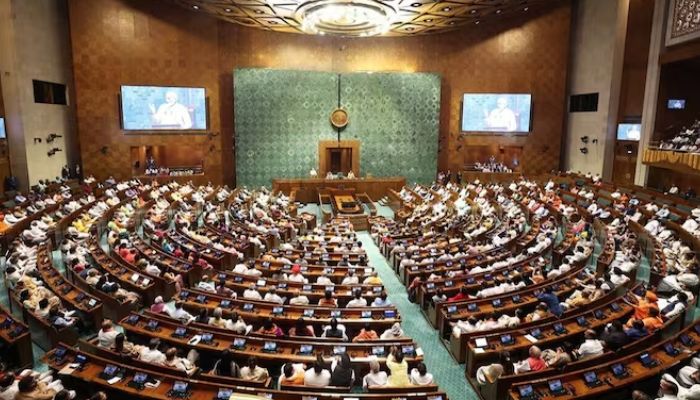
The 2025 Monsoon Session in Parliament will see key Bills across finance, mining, sports, education, new maritime laws, geo-heritage protection, and tribal representation. The Monsoon Session is scheduled from 21st July to 21st August 2025. There will be 21 sittings packed with legislative and financial business. Among the key highlights is the presentation of several new Bills, alongside pending ones that may be taken up for consideration and passing. Here is a look at what is on the agenda.
Financial and tax reform Bills dominate the docket
The Government of India is pushing for a complete overhaul of the Income-tax Act, 1961 through the Income-tax Bill, 2025. It aims to simplify the language and prune obsolete clauses without altering tax rates. The Taxation Laws (Amendment) Bill, 2025 and the Manipur Goods and Services Tax (Amendment) Bill, 2025 are also listed. The latter will replace an Ordinance issued earlier this year.
Furthermore, the Jan Vishwas (Amendment of Provisions) Bill, 2025 will attempt to bolster ease of doing business by reducing compliance burdens.
Maritime sector to see modernisation drive
There are several maritime reform Bills set to be tabled during the Monsoon Session, with multiple pieces of legislation pending final approval.
The Merchant Shipping Bill, 2024 is aimed at overhauling the old 1958 Act, improving regulation of maritime training, pollution control, and seafarer welfare.
The Indian Ports Bill, 2025 is set to replace the colonial-era Indian Ports Act, 1908, setting up a Maritime State Development Council and dispute resolution mechanisms.
The Bills of Lading Bill, 2024, the Carriage of Goods by Sea Bill, 2024, and the Coastal Shipping Bill, 2024 are aimed at updating India’s legal framework on cargo movement and coastal trade, replacing laws dating back to 1856 and 1925.
Other key Bills on the legislative table
The Geoheritage Sites and Geo-relics (Preservation and Maintenance) Bill, 2025 will allow for the preservation of nationally important geoheritage for education and tourism.
The Mines and Minerals (Development and Regulation) Amendment Bill, 2025 will make it easier access to critical minerals and deeper mining.
The National Sports Governance Bill, 2025 is a major move towards better oversight of sports federations, fair play, and grievance redressal.
The National Anti-Doping (Amendment) Bill, 2025 is in line with the Indian law with global anti-doping standards and reinforces the independence of the appeal mechanism.
The Indian Institutes of Management (Amendment) Bill, 2025 will add IIM Guwahati to the IIM Act, 2017.
The Readjustment of Representation of Scheduled Tribes in Assembly Constituencies of the State of Goa Bill, 2024 will add reserve seats for Scheduled Tribes in the Goa Legislative Assembly.
Manipur focus – President’s Rule and Budget
The Centre is also expected to move a resolution seeking the extension of President’s Rule in Manipur, which was imposed on 13th February 2025 under Article 356(1). The Demand for Grants for Manipur for 2025-26 will also be discussed, followed by the introduction and passage of the related Appropriation Bill.
While this session is expected to be action-packed, it remains to be seen whether the listed Bills will be able to sail through smoothly or face resistance from the opposition.
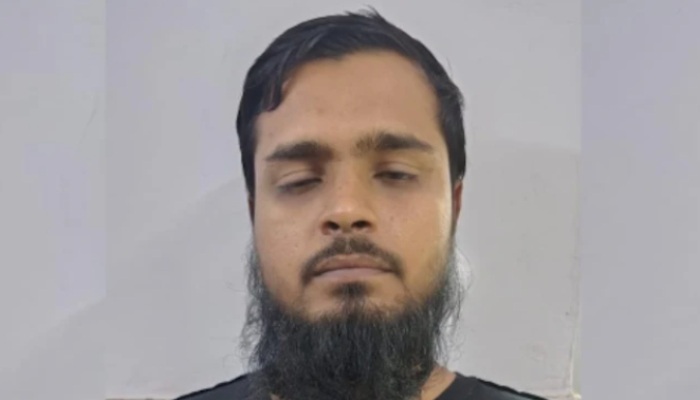
In a major breakthrough in the Agra religious conversion case, the Anti-Terrorism Squad (ATS) and the Intelligence Bureau (IB) have arrested mastermind Abdul Rehman from the Mustafabad area of Delhi. According to officials, Abdul Rehman is believed to be the main brains behind the widespread religious conversion racket that recently came to light in Agra. Abdul Rehman’s house was searched, and a large number of books meant for brainwashing people into conversion were recovered from there.
This is the 11th arrest so far in the case. Abdul Rehman, originally from Firozabad, was earlier a Hindu named Mahendra Pal. He had converted to Christianity first, and later converted to Islam. His involvement in the racket was reportedly inspired by jailed cleric Kaleem Siddiqui, who is currently serving a life sentence for running a similar conversion network.
Ties to foreign funding
Investigators say that Abdul Rehman’s nephew lives in London, and they suspect that he may have been helping with foreign funding for the conversion activities. Teams from the ATS and IB are now conducting raids again in Delhi and Kolkata based on fresh leads.
The agencies are also getting important information from the ten people already in custody, who are currently on a 10-day police remand. These individuals, many of whom were themselves converts from Hinduism to Islam, have revealed how they were brainwashed and later recruited into the racket. During questioning, they said they were taught that converting others was the only way to attain heaven, or “jannat,” and they began to actively target vulnerable people, calling it “adding new relations.”
A victim rescued from accused’s house
From Abdul Rehman’s residence, police also rescued a woman named Mamta from Haryana, who had been brought there for conversion. The authorities also recovered several books that promoted religious conversion, further strengthening the case against him.
The agencies believe that after Kaleem Siddiqui’s arrest and conviction by an NIA court, Abdul Rehman had taken over and continued running the network. He is suspected of being in regular contact with other key members of the racket, many of whom operated under fake identities.
Several members were Hindus before conversion
Police Commissioner Deepak Kumar shared the names and former identities of the accused, many of whom were once Hindus. Ayesha from Goa was earlier S.B. Krishna, Ali Hassan from Kolkata was once Shekhar Rai, Abu Rehman from Dehradun was previously Rupendra Baghel, Mohammad Ali from Jaipur was earlier Piyush Singh Panwar, and Mustafa from Delhi was formerly known as Manoj. Similarly, Mohammad Ibrahim from Kolkata used to be Reet Banik. Officials say these individuals were heavily brainwashed and then turned into recruiters to pull more people into the network, mostly through social media.
Missing sisters are now demanding release of accused
Two sisters had gone missing from Agra’s Sadar Bazar area. One of the sister’s photo with an AK-47 was shared on social media which prompted the investigation. During questioning, the girls told the police they were willing to return home, but only on the condition that the arrested accused be released. According to them, those arrested had done nothing wrong and were only “serving religion.” The sisters claimed that if the accused remained in jail, none of them would go to heaven.
The older sister, an MSc in Zoology and an MPhil graduate, had been preparing for the NET exam in Agra when she met a woman named Saima, also known as Khushboo, from Jammu and Kashmir. Attracted by her appearance and behaviour, she became close to her. Saima slowly introduced her to Islamic teachings and sent her videos promoting religious conversion. Soon, the older sister started wearing a burqa and offering namaz at home. Although her family brought her back from Kashmir during the COVID lockdown, she had already been mentally influenced and soon convinced her younger sister to follow the same path.
The younger sister admitted during questioning that she was already frustrated at home, her mother would often scold her, either for her studies or household chores. Seeing her elder sister’s new way of life, she believed it was better than what she had. She started following her, thinking it was a way to live more freely and meaningfully.
Social media used to target victims
Many of the accused were reportedly using Instagram and other platforms to find and communicate with potential converts. One such ID named “Connecting Revert” was being run by Reet Banik, alias Mohammad Ibrahim from Kolkata, who was in touch with the sisters. Police say social media played a major role in spreading this racket and attracting more people, especially the youth.
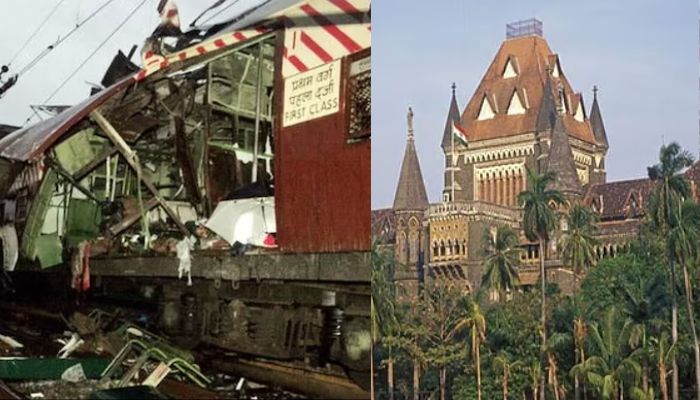
On 21st July, the Bombay High Court acquitted all 12 individuals who were earlier found guilty in the 2006 Mumbai train blasts case. In 2015, a special MCOCA Court had sentenced five of them to death and the remaining to life imprisonment.
A two-judge bench comprising Justice Anil Kilor and Justice Shyam Chandak gave the judgment. They observed that the majority of the evidence and statements of witnesses were not trustworthy.
OpIndia accessed both the MCOCA Court judgment from 2015 and the Bombay High Court judgment from 21st July 2025 to create a timeline of the events, trials, appeal in the High Court and finally the current judgment.
The evening that shook Mumbai
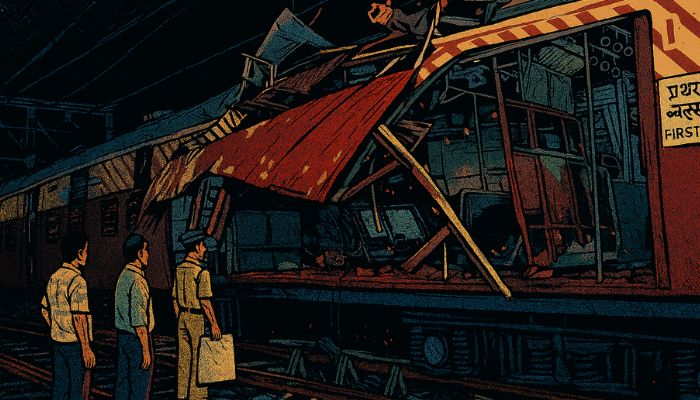
On 11th July 2006, the city of Mumbai was struck by a series of coordinated bomb blasts that targeted its life, the suburban railway network. Between 6:24 PM and 6:28 PM, seven powerful explosions occurred inside first-class compartments of local trains on the Western Railway line. The blasts took place at or near the stations of Matunga Road, Mahim, Bandra, Khar, Jogeshwari, Borivali, and Mira Road, affecting trains bound for both Churchgate and Virar. As the blasts took place at peak hours, there were thousands of commuters in the trains at the time of the incident.
According to the court documents, each bomb was placed inside a pressure cooker and hidden in black Rexine bags. The bags were reportedly kept in overhead luggage racks of the first-class compartments. The explosives were made of RDX and ammonium nitrate, combined with ball bearings to maximise the damage. Timer devices were reportedly used to synchronise the blasts.
Government records stated that 187 people lost their lives and 829 others sustained injuries of varying severity. The compartments were completely destroyed. Bodies were scattered across platforms and tracks. FIRs were registered at Railway Police Stations at Borivali, Bandra, Mahim, Khar, Matunga Road, and Jogeshwari based on the location of each incident.
As the scale and precision of the attacks was of massive scale, the authorities suspected a larger conspiracy. The Maharashtra Anti-Terrorism Squad (ATS) took over the investigation the next day. The manner in which the bombs were planted and the locations were selected suggested there was meticulous planning behind the attacks. In the detailed findings, the trial court later described the event as a deliberate attempt to cause mass casualties and terror, executed during peak hours when the trains were most crowded.
Cases filed across Mumbai, ATS takes over the probe
In the immediate aftermath of the serial bomb blasts on 11th July 2006, multiple FIRs were registered. Each of them was registered under Sections 302 (murder), 307 (attempt to murder), 326, 324, 120B (criminal conspiracy), and 427 of the Indian Penal Code, along with provisions under the Indian Railways Act, Explosives Substances Act, and Prevention of Damage to Public Property Act.
The ATS later clubbed the FIRs for investigation under a common conspiracy based on the interlinked nature and scale of the attacks. A consolidated case was registered by the ATS Kalachowki Unit, Mumbai, and the case was treated as a single, large conspiracy spanning multiple locations and involving organised crime syndicates.
The judgment recorded that during the investigation, the ATS invoked the Maharashtra Control of Organised Crime Act (MCOCA). On 30th September 2006, the competent authority sanctioned the application of MCOCA against all accused. Later, based on further sanction dated 11th January 2007, other specialised laws, including the Unlawful Activities (Prevention) Act (UAPA) and Prevention of Damage to Public Property Act, were applied.
Detailed technical analysis was carried out by the ATS, including forensic examination of blast sites, recovery of explosive materials, and post-blast residue analysis. Over time, the investigation led to the arrest of 13 individuals, most of them from Maharashtra and neighbouring states. Several others were reported absconding during the trial. Several accused were said to be members of the banned Students Islamic Movement of India (SIMI) and had purported links with Lashkar-e-Taiba operatives from Pakistan. According to the judgment, the prosecution’s case relied heavily on confessional statements recorded under MCOCA, forensic recovery, witness testimonies, and disclosures made during police custody. The ATS said that the conspiracy was planned across the border in Pakistan and executed with local logistical help.
The long trial and 2015 convictions
Formal trial proceedings began after the filing of the consolidated chargesheet in the ATS Kalachowki case in the Special MCOCA Court. Charges were framed against 13 accused under a wide range of laws, including the Indian Penal Code (IPC), the Maharashtra Control of Organised Crime Act (MCOCA), the Unlawful Activities (Prevention) Act (UAPA), the Explosives Act, the Railways Act, and the Passport Act.
The first chargesheet was filed on 30th November 2006 and the final verdict came almost a decade later on 11th September 2015. During this period, the court examined 192 prosecution witnesses, including eyewitnesses, medical officers, forensic experts, ATS officers, and panch witnesses. The evidence included site reports, medical post-mortem documentation, seizure panchanamas, forensic lab reports, and statements made under MCOCA provisions.
The prosecution’s case centred around a conspiracy hatched in Pakistan between the operatives of LeT and Indian members of SIMI. The court noted that the accused persons had reportedly undergone training in Pakistan-occupied Kashmir and later assisted in assembling bombs, conducting recces of train stations, and transporting the explosives. Pressure cookers filled with RDX and ammonium nitrate were allegedly prepared in a rented room in Govandi and then planted on seven different trains departing Churchgate that evening.
Confessional statements recorded under MCOCA were heavily relied upon. While many of these were later retracted, the trial court, after a detailed analysis, admitted them as valid under the special law. The court also admitted material evidence showing the procurement of pressure cookers, travel of accused to various training and execution locations, and circumstantial evidence that allegedly linked them to the blasts.
The court convicted 12 accused namely Kamruddin S Ansari, Ehtesham K Siddiqui, Faisal M Shaikh, Zeeshan M Siddiqui, Sohail S Shaikh, Asif A Khan, Mohammad Sajid Ansari, Majid S Shafi, Muzammil S Shaikh, Tanvir R Ansari, Navin A Khan, and Sharif A Khan. The only accused acquitted was Abdul Wahid Shaikh due to lack of admissible evidence. Five of them were handed death sentences and the remaining received life imprisonment.
The court observed that the blasts were not only a brutal act of terrorism but also an attack on the sovereignty of the nation. It accepted the prosecution’s case of a meticulously planned operation and concluded that the accused played direct and active roles in its execution.
Post-conviction – Appeals filed, legal battle and the acquittal
Following the judgment in 2015, multiple appeals were filed in the Bombay High Court. After another decade, on 21st July 2025, the Bombay High Court overturned the 2015 conviction of the 12 accused. The Division Bench acquitted all the accused and stated that the prosecution had failed to prove its case beyond reasonable doubt.
The High Court noted that the judgment was passed after re-examination of the trial court record, including witness testimonies, forensic reports, confessional statements, and procedural compliance. Notably, the prosecution’s case heavily relied on confessional statements recorded under Section 18 of the MCOCA. While such confessions are admissible under the special law, the High Court noted on several instances in the judgment that confessions alone were not sufficient. The court reiterated that confessions, especially those made in police custody, cannot form the sole basis of conviction unless supported by independent and credible evidence. According to the High Court judgment, that evidentiary support was missing in this case.
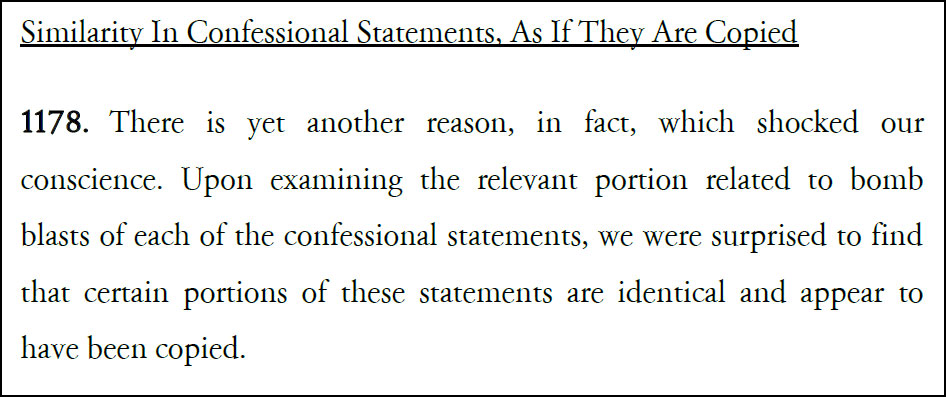
Notably, the court raised serious doubts about the authenticity and voluntariness of these confessions by highlighting an unusual pattern. Several confessions shared identical content, including the sequence of names and descriptions of events. The Bench noted it was “shocked” by the extent of similarity and even suggested that portions appeared to have been “copied”. The court observed that it was “beyond the realm of reasonable imagination” that such identical narration would occur naturally.
Source: Bombay High Court
The prosecution also cited recoveries of pressure cookers, ammonium nitrate, timers, SIM cards, and other materials, allegedly made at the instance of the accused. However, the court observed that these items were not conclusively linked to the devices used in the blasts. In some instances, materials were recovered from easily accessible or common spaces, further reducing their evidentiary weight. Forensic reports too did not bridge the gap between the recoveries and the materials used in the actual explosions.
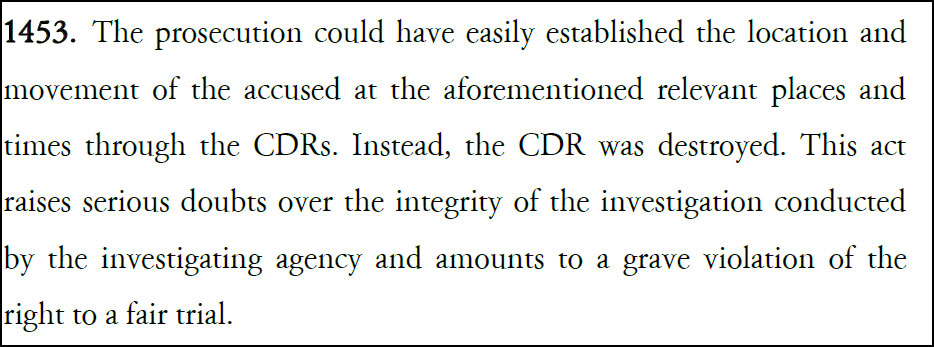
In the judgment, the court stated that the prosecution had failed to bring a single piece of evidence on record to directly connect the accused to the crime. The observation was made in the context of the prosecution’s inability to produce or preserve Call Data Records (CDRs) that could have established the movement and presence of the accused around the time of the blasts. The court called it a “grave violation of the right to a fair trial” and invoked adverse inference under Section 114(g) of the Indian Evidence Act.
Source: Bombay High Court
The investigating agencies told the court that as the mobile phones were not in the names of the accused, CDRs were not relied upon. The defence sought access to CDRs, but it was denied. By the time it was allowed, the period for preserving the CDRs had lapsed.
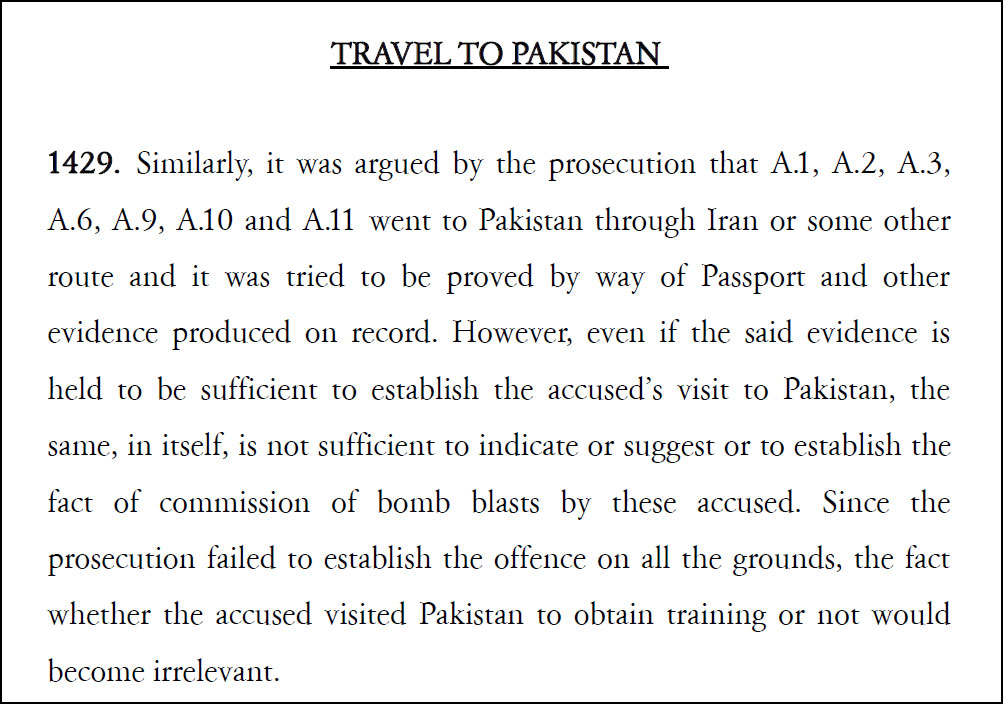
The court further pointed out that the assertions of international linkage required a far more rigorous evidentiary foundation, especially in cases involving terrorism and national security. The court noted that even if visits to Pakistan were assumed to have occurred, there was no evidence to connect that alleged training to the actual commission of the 7/11 bomb blasts. The court held that the mere fact of travel or training abroad could not establish guilt unless supported by material proof linking those actions directly to the blasts. As the prosecution failed to prove the offence on other grounds as well, the court concluded that the question of whether the accused visited Pakistan became irrelevant in the absence of such corroborative evidence.
Source: Bombay High Court
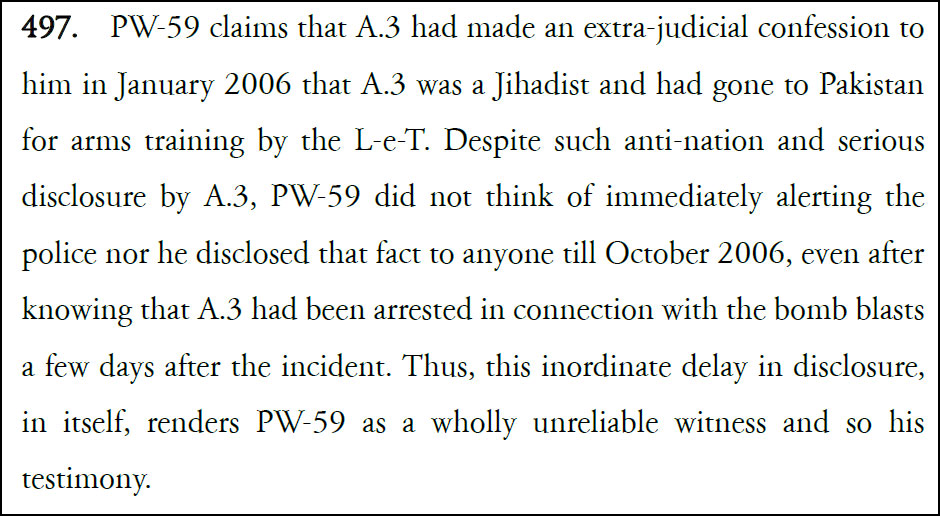
Several of the prosecution witnesses were declared hostile. Some witness testimonies, while recorded, lacked corroboration or legal weight, and did not ultimately strengthen the prosecution’s case. The court also deemed several testimonies unreliable. For instance, in case of witness number PW-59, Alam Gulam Qureshi, said in his testimony that accused no 3, Mohammed Faisal Shaikh, told him that he was a Jihadist and had gone to Pakistan for arms training by the LeT. Despite the seriousness of the disclosure, the witness did not “think of immediately alerting the police not he disclosed that fact to anyone till October 2006.” The witness was aware that the accused was arrested in connection with the bomb blasts. The court said, “Thus, this inordinate delay in disclosure, in itself, renders PW-59 as a wholly unreliable witness and so his testimony.”
Source: Bombay High Court
While Indian courts are well within their rights to convict based purely on circumstantial evidence if the chain of events is strong, consistent, and points unmistakably to guilt, in this case, the High Court chose not to rely on that route. Despite multiple pieces of circumstantial evidence that the prosecution believed formed a clear pattern and the trial court relied on, the High Court remained unconvinced that that evidence legally connected.
Without dismissing the seriousness of the offence or denying that a conspiracy did occur, the judges ruled that the burden of proof was not met as per the standards of criminal law. As a result, all 12 men, once convicted for one of the deadliest terror attacks in Mumbai’s history, now walk free.
While the prosecution laid out a detailed case, the High Court found that it failed to satisfy legal thresholds of admissibility and proof. The accused were not acquitted because the crime did not happen, but because the prosecution could not connect them to it with the rigour the law demands.
The Uttar Pradesh police has nabbed 10 individuals under “Mission Asmita” in a conversion racket case from six different states. The racket was based out of Agra in Uttar Pradesh. One of the accused arrested in the case is Mohammad Ali, who was arrested from Rajasthan.
Mohammad Ali, arrested in the pan-India religious conversion racket case has now declared his intention to do “ghar wapsi” and return to the fold of Hinduism, reported NDTV. The accused even claimed to be himself a victim as well.
According to sources, Mohammad Ali broke down during the interrogation in Agra jail and requested that he wants to go back home. Furthermore, he highlighted his intention to return to being a Hindu. Ali even expressed his wish to apologise to his parents, who severed their relationship with him following his conversion to Islam.
Piyush Panwar becomes Mohammad Ali for a girl
Piyush Panwar’s drastic journey to becoming Mohammad Ali began in 2021 when he met a young woman named Shana from Tonk, Rajasthan. They decided to marry after falling in love. However, the girl asserted that he must embrace Islam to which he consented and changed his name to Mohammad Ali. However, she rejected him after that. Following which, Mohammad Ali (earlier known as Piyush Panwar) married a Muslim girl from Uttar Pradesh’s Bareilly.
Ali met Mohammad Gaus, a member of the banned terror group PFI on his way to become a Muslim. The latter introduced him to Kalim Siddiqui, a Delhi cleric who was found guilty in a different conversion case last year.
Mohammad Ali then travelled to West Bengal to receive religious education. He spent three months at the madarsas in Asansol, Bardhaman and Katwapara. He then connected with Ayesha, a Goan woman, who has also been arrested in the conversion case, on Instagram approximately a year ago. Her name was SB Krishna before she converted to Islam. She used to keep track of the names of the girls who had converted to Islam. He even unveiled that their network is affiliated with Popular Front of India (PFI) and Social Democratic Party of India (SDPI).
The shocking findings
Hasan Ali and Osama from Kolkata, Rahman Qureshi from Agra, Abu Talib from Muzaffarnagar (Uttar Pradesh), Abdur Rehman from Dehradun (Uttarakhand), Mohammad Ali and Junaid Qureshi from Rajasthan and Mustafa from Delhi have been arrested by the cops in the case.
Notably, Shekhar Roy alias Hasan Ali, Hrithik Banik also known as Mohammad Ibrahim, Rupendra Singh identified as Abdur Rehman and Manoj referred to as Mustafa also converted from Hinduism to Islam.
The police disclosed that they were systematically pushing the impoverished, marginalized and socially disadvantaged Hindus to convert. The lured the unsuspecting people under the guise of performing miracles, providing cures and offering deliverance from malevolent spirits.
Authorities informed that would meet people under bogus names and trick them in the name of “service work” while concealing their religious identities. Some accused even had ties to religious organizations and were exploiting the same for conversion purposes.
Investigative agencies are currently examining whether the perpetrators received financial support from any international networks as preliminary evidence revealed dubious bank transactions and details of foreign calls.
The inquiry disclosed that the accused managed to find their tragets through madrasas and fake NGOs. These organizations were functioning under the pretense of providing social services. According to police reports, most of the individuals chosen for conversion were from Dalit backgrounds, unemployed or disabled.
The were attracted using enticing offers and monetary aids. The victims were promised assistance with food, healthcare and money for the education of their children. Furthermore, the offenders even shared videos and delivered speeches that propagated conversion. WhatsApp groups were also created. PAN cards and Aadhaar cards were issued based on the new names to evade government scrutiny.
Some of the culprits have previously been booked for their communal actions in the past. The gang referred to itself as “revert” (term used by Muslim converts). They first published an advertisement in the newspaper about those who converted and then prepared required documents through courts. Afterward, the trapped girls are married, making it difficult for them to escape from there and return home.
The information was disclosed by the accused during their questioning by officials from the Anti-Terrorism Squad (ATS) and Intelligence Bureau (IB). They would often present themselves as reverts on social media after conversion.
It also came to light that the gang seduced those who turned 18 to facilitate their conversion without complications. They were able to present themselves as adults in court. Additionally, they had the legal liberty to convert to a different religion. They could even motivate other people in their circle to follow suit. Hence, several such young men and women were targeted for the purpose of conversion.
The Uttar Pradesh ATS suspects that the link of this gang might also reach Bihar, Bengal, Maharashtra and Kerala. The police have filed a case against all the accused under strict legal provisions. Additionally, an investigation into the groups they were associated with has commenced. According to officials, it could be a small part of a large network that operates across India.
ISIS-style working
The authorities stated, “Police arrested 10 members of an organized gang involved in religious conversion from 6 different states across the country. 11 teams were sent to various states for the same. Two young women who earlier went missing from Agra were being enticed by this group for religious conversion. They were rescued in time by the Agra Police and handed over to their families.”
.@dgpup श्री राजीव कृष्ण महोदय एवं ADG कानून-व्यवस्था उ0प्र0 श्री अमिताभ यश महोदय के निर्देशन में पुलिस आयुक्त, आगरा @DeepakKumarIPS2 के नेतृत्व में आगरा पुलिस द्वारा देश के अलग-अलग 6 राज्यों से धर्मान्तरण कराने वाले संगठित गरोह के 10 अभियुक्तों को गिरफ्तार किया गया है। इसके लिए… pic.twitter.com/HXNcr4qy2Y
— POLICE COMMISSIONERATE AGRA (@agrapolice) July 19, 2025
“These individuals are engaged in similar activities in different states. They target young girls through inducements, love jihad and other methods. This modus operandi of the radicalisation and conversions is a signature style of ISIS (Islmaic State of Iraq and Syria). Initial investigations have indicated that this group has connections with PFI, its political wing SDPI and terrorist organizations in Pakistan. Their illegal operations have been funded from Canada and the United States,” the police outlined.
The Indian Army is preparing for a major shift in its functioning. By 2026–27, it intends to introduce Artificial Intelligence (AI), Machine Learning (ML), and Big Data Analytics in most segments of its operations. From drone operations and battlefield surveillance to combat training and intelligence gathering, the Army is making a systematic plan to utilise these cutting-edge technologies in a more intelligent and organised manner.
According to a report in The Indian Express, the Indian Army seeks to enhance its “battlefield awareness” with the help of AI capabilities that can process enormous volumes of information in a matter of milliseconds. These gadgets comprise AI-driven text summarizers to scan lengthy reports through Large Language Models (LLMs) and provide a summary, AI-driven chatbots able to respond to queries in real time, and voice-to-text to translate voice commands into typed instructions.
The Army will also utilise facial recognition technologies and systems that are able to detect unusual patterns, which might be indicative of a threat. Above that, it is set to collect and examine data streaming in from drones, satellites, aircraft, and sensors on the ground simultaneously. By assembling all this data in real time, commanders will be able to make more timely and precise decisions while out on a mission.
Lessons of Operation Sindoor
The push for this tech transition grew stronger following Operation Sindoor, a cross-border attack conducted in May. The operation to attack terror camps in Pakistan and Pakistan-occupied Kashmir (PoK) saw a lot of drone attacks from both sides. It gave the message that the future of warfare lies in how well you can employ technology, not necessarily weapons, to move quickly and cleverly when things are dangerous.
Task force to lead AI integration
To ensure smooth sailing, the Army is creating a special task force (STF) comprising AI experts to be operated under the Directorate General of Information Systems (DGIS). The team will comprise officers from various branches of the Army and will be tasked with implementing these technologies across the board. Their tasks will include training Army personnel, enhancing technical capabilities, facilitating data sharing and integration, and assisting in the routine maintenance of AI systems.
This task force will also assist the Army in employing AI for combat training simulations, supply chain management, intelligence surveillance, and even monitoring open-source content such as social media or news sites. Operations planning, threat detection, mapping enemy weaknesses, and assisting targeting functions will all be performed using AI tools. In areas where GPS is jammed or inoperable, AI systems will assist navigation. Predictive maintenance equipment will also be brought in to ensure Army gear operates without unexpected failures.
To ensure that AI will be a part of the Army’s normal work, there will be new additions to the General Staff Qualitative Requirements (GSQRs). These are the standards adopted when purchasing any new hardware. From now on, these standards will have AI capabilities as an added element. The Army is also scheduled to install AI capabilities on some of its older hardware and systems wherever it is feasible.
Building for the future
An AI laboratory is also being established at the DGIS, in which new AI models will be created and tested. These will not only be utilised by the Army but will also be integrated with comparable AI tools being developed by the Navy and Air Force, so that all three branches can function in coordination.
To put it simply, the Indian Army’s AI initiative is no longer a concept. It’s becoming a reality with well-defined objectives, definite timelines, and a serious intent to leverage technology for more intelligent and quicker military actions.
The Election Commission of India’s (ECI) Special Intensive Revision (SIR) initiative in Bihar has uncovered a startling finding. 11,000 voters are found to be entirely “not traceable” in this drive aimed at cleaning the voter list. There were no residences at their provided addresses and neighbors had no information regarding their existence.
As per The Times of India, an ECI official pointed out that these 11,000 individuals might be Bangladeshi and Rohingya infiltrators who have successfully obtained bogus voter cards in Bihar while staying in nearby states. This sensational discovery could potentially create ripples in the state’s politics as these persons are reportedly conspiring to disrupt the electoral process through fraudulent voting.
According to the Election Commission of India (ECI), these irregularities arose from negligence or corruption during the previous review, which allowed unauthorized individuals to be included in the voter list. In some cases, there was no house at the given address and even neighbors were unaware of these people.
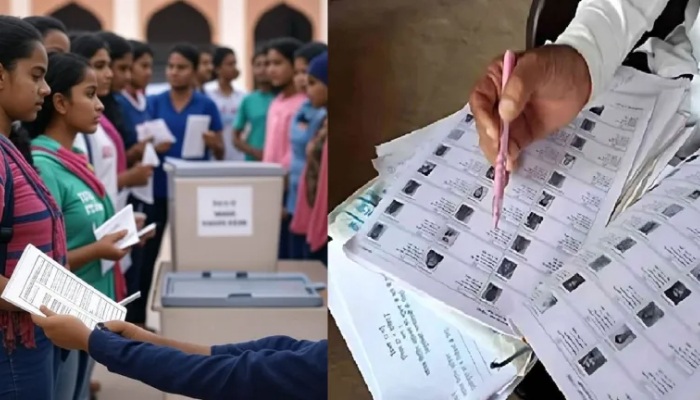
The goal of the initiative is to thoroughly cleanse the voter list of Bihar and ensure that only eligible Indian citizens can participate in elections. Booth Level Officers (BLOs) have conducted door-to-door verification on three occasions to facilitate the same. Verification has been completed for 95.92% of the 7.90 crore voters, however, 41.64 lakh voters could not be located at their addresses.
Among these, 14.29 lakh were found to possibly be deceased, 19.74 lakh had permanently relocated and 7.50 lakh individuals were registered at multiple locations. Notably, 11,000 voters were classified as “non-traceable.” On the other hand, 7.15 crore forms have been submitted owing to the campaign to date, out of which 6.96 crore have been digitized.
The deadline for form submission is set for 25th July and the draft voter list is scheduled for release on 1st August. Afterward, claims and objections will be accepted from 1st to 30th August with the final list to be published on 30th September. The ECI has clarified that any names that are mistakenly included or omitted can be amended by 30th August.
1 lakh BLOs, 4 lakh volunteers, and 1.5 lakh booth level agents are tirelessly working to carry out the process. The ECI asserted that every possible measure is being taken to ensure that no eligible voter is overlooked. However, the campaign has also ignited a political uproar.
The opposition I.N.D.I. Alliance has labeled it a “vote ban” and a ploy to favor the National Democratic Alliance. However, the Supreme Court is currently reviewing the case and has instructed the ECI to perform a comprehensive examination of documents including Aadhaar cards, ration cards and voter IDs.
Meanwhile, another startling disclosure emerged from the SIR drive. BLOs apprehended foreign nationals from Nepal, Bangladesh and Myanmar possessing Indian documents such as Aadhaar, ration cards and domicile certificates. The revelation has prompted inquiries concerning how they obtained the documents.
The Election Commission of India announced that a profound investigation will take place from 1st to 30th August and any individuals identified as illegals will be excluded from the final voter list. Its significance has increased in light of the upcoming assembly elections in Bihar scheduled for October-November, particularly as the issue of fake voting has now been exposed.
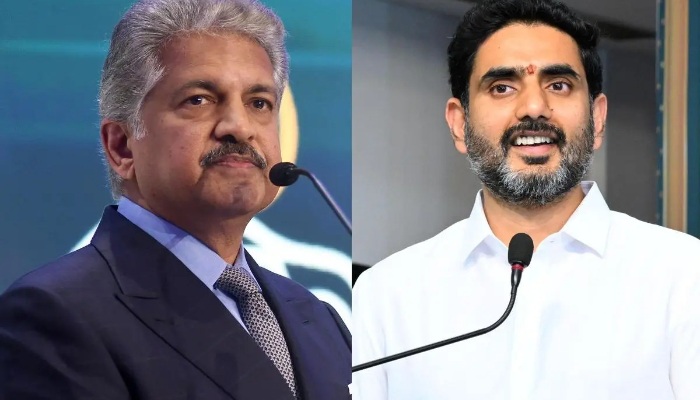
On Saturday, 19th July, Andhra Pradesh IT and Industries Minister Nara Lokesh extended an invitation to the Mahindra Group to establish a manufacturing facility in the state, emphasising industry-specific regulations and a friendly business climate.
He encouraged Anand Mahindra, the chairman of Mahindra Group, to consider Andhra Pradesh for manufacturing, promising to impress him with the state’s “speed and approach.” He even added, “Your workforce will feel most welcome and speak whichever language they wish to.”
The minister mentioned that the state appreciates the company’s continued investments and stressed, “I look forward to deepening it further. I have been reading about your group’s expansion plans in EVs, defence and aerospace manufacturing. Andhra Pradesh has tailor-made policies for each sub-sector that can deliver maximum incentives.”
ధన్యవాదాలు ఆనంద్ మహీంద్ర గారు! మనం కలిసి పనిచేద్దాం. We greatly value your ongoing investments in AP, sir. I look forward to deepening it further. I have been reading about your group’s expansion plans in EVs, defence and aerospace manufacturing. Andhra Pradesh has tailor-made… https://t.co/blCLMzUNtg
“Why not consider a Mahindra manufacturing facility in the sunrise state Andhra Pradesh to take advantage of our advanced automotive ecosystem and large market. Would love to host your team and showcase the abundant opportunities available here,” Nara Lokesh said.
The latter responded that they are already in talks with the governement about a variety of sectors, including micro-irrigation, solar energy and tourism. “We would be proud to be a partner in Andhra Pradesh’s journey,” he stated.
ధన్యవాదాలు! ఆంధ్రప్రదేశ్లో అనేక అవకాశాలు ఉన్నాయి. We would be proud to be a partner in Andhra Pradesh's journey. Our teams are already in discussions across multiple sectors, from solar energy to micro-irrigation and of course, tourism. మన ప్రయాణం ఇప్పుడే ప్రారంభమైంది…ముందు… https://t.co/jdRiAr8o7w
The minister has been consistently making pitches to the group and other industrialists, presenting Andhra Pradesh as an optimal choice for establishing industries. Lokesh has highlighted that the state is free from the language politics and violence perpetrated by language activists, in contrast to other southern states and even Maharashtra.
The recent exchange took place after he made a similar appeal, as the Karnataka government decided to retract its proposal to take over agricultural land in Devanahalli for a proposed aerospace park close to the Bengaluru airport, following more than three years of continuous farmer protests.
“Dear Aerospace industry, sorry to hear about this. I have a better idea for you. Why don’t you look at Andhra Pradesh instead? We have an attractive aerospace policy for you, with best-in-class incentives and over 8000 acres of ready-to-use land (just outside Bengaluru)! Hope to see you soon to talk across the table,” he wrote on social media.
The Bombay High Court on Monday (21st July) acquitted all 12 individuals who were earlier found guilty in the 2006 Mumbai train blasts case. Almost a decade ago, a special court had sentenced five of them to death and the remaining to life imprisonment. But now, the High Court has held that the prosecution was unable to establish its case beyond a reasonable doubt.
The judgment was given by a special bench of Judges Anil Kilor and Shyam Chandak. They observed that the majority of the evidence and statements of witnesses were not trustworthy. For instance, the Court stated it was difficult to accept that taxi drivers or individuals who were travelling by train would be able to remember the faces of the accused so accurately, even after 100 days since the incident happened.
Discussing the circumstantial evidence, such as bombs, guns and maps, the Court stated that it made no difference in the case since the police hadn’t even been able to ascertain the kind of bomb used during the explosions.
One of the twelve accused persons, Kamal Ansari, had passed away in 2021 because of COVID-19 while he was under detention in Nagpur jail. The remaining 11, who have spent 19 years behind bars, are now set to walk free.
This case is about the horrifying serial blasts that happened on Mumbai’s local trains on 11th July, 2006. Seven bombs went off in different compartments of Western Railway trains during the evening rush hour. Around 189 people were killed and more than 800 were injured.
After a long trial under the Maharashtra Control of Organised Crime Act (MCOCA), a special court had, in 2015, convicted five of the accused to death and seven others to imprisonment for life. The five sentenced to death were Kamal Ansari, Mohammad Faisal Shaikh, Ehtesham Siddiqui, Naveed Khan and Asif Khan.
The seven accused sentenced to life imprisonment by the trial court were Tanveer Ahmed Ansari, Mohammed Majid Shafi, Shaikh Mohammed Ali Alam, Mohammed Sajid Margub Ansari, Muzzammil Ataur Rahman Shaikh, Suhail Mehmood Shaikh and Zameer Ahmed Latifur Rehman Shaikh. All were held guilty of planting the bombs.
Just In: Bombay High Court has quashed and set aside the judgment of a special MCOCA court, which handed over the death sentence to 5 and life term to 6 accused booked for conspiring and executing the bombs in Mumbai's Western Railway local line.
The State government had approached the High Court to affirm the death penalty. The accused had also appealed against their conviction in the meantime. The case had been pending in the High Court for years. Only in July 2024 did the High Court constitute a special bench to hear it daily.
Senior lawyers such as S. Muralidhar, Yug Mohit Chaudhry, Nitya Ramakrishnan and S. Nagamuthu appeared on behalf of the accused and pleaded that the trial court had seriously erred. However, the lawyer from the State, Raja Thakare, pleaded that the punishment was warranted since the case was one of the “rarest of rare” sort.
In a major development on Sunday (20th July), the police arrested Udit Pradhan, the President of the Odisha unit of the National Students’ Union of India (NSUI), in connection with a rape case.
For the unversed, NSUI is the student wing of the Indian National Congress (INC) party. According to reports, the accused raped a 19-year-old engineering student inside a hotel room in Bhubaneswar.
Udit Pradhan invited the victim for dinner and then spiked her drink. After the girl lost consciousness, the student leader of the Congress party reportedly raped the victim.
? BREAKING:@nsui Odisha Chief Udit Pradhan ARRESTED for allegedly drugging & raping a 19-year-old student in Bhubaneswar.
? Incident: March 18, 2025 ? Arrest: July 21, 2025 ⚖️ Victim alleges she was served a spiked drink & sexually assaulted in a hotel room.#UditPradhanpic.twitter.com/japzzH3gjR
The incident occurred on 18th March this year. The victim filed a complaint with the Mancheswar Police on Sunday (20th July), leading to the prompt arrest of the politically influential Udit Pradhan.
It has now come to light that the accused threatened the 19-year-old with dire consequences if she dared to file a complaint with the police.
The development comes days after a 2nd-year student named Soumyashree set herself on fire over the college’s inaction against sexual and mental harassment by an Assistant Professor named Samira Kumar Sahoo.
Udit Pradhan wanted to ‘save Constitution’
The rape accused had uploaded several posters on social media, vowing to ‘protect the Indian Constitution’ from the BJP government in Odisha and at the Centre.
Ironically, the rape accused was primarily seen demonstrating for the protection of women in Odisha and participated in protests demanding their safety and security.
He had also posted in support of Soumyashree, who took her own life over inaction against sexual and mental harassment. On Sunday (20th July), Udit Pradhan was arrested for raping 19-year-old student.
Active member of Congress
In his capacity as NSUI President of Odisha, Udit Pradhan was actively involved in the political activities of the student wing of the Congress party.
Following Agra and Balrampur, a major illegal conversion racket has now been busted in Aligarhdistrict of Uttar Pradesh. The gang is reportedly suspected of luring as many as 97 women, who are now missing, according to intelligence sources and police.
With the case being very sensitive in nature, several intelligence and special police teams have already been sent to probe the issue in great depth.
The case took a serious turn after Umar Gautam was arrested in Agra. Gautam, while being interrogated, revealed information about the Islamic conversion network as his ‘list’ of women had names from Aligarh as well. There are as many as 97 cases of missing women registered in the district and now Police is investigating each case with a new angle to find out if they have been converted.
In March 2025, two sisters (33 and 18 years old) had gone missing from Aligarh’s Sadar police station. The police sprung into action when one of the sisters’ photographs appeared on social media where she was holding an AK-47 rifle. This revelation led to connection with a well-entrenched illegal conversion network. The sources add that the sisters were forcibly converted and were then kept in a Muslim-dominated area of Kolkata.
How the gang operated
Police investigations show that the gang used social networks, dark websites, and dating applications to lure Hindu women. The members would initially befriend the women, trap them in love, and then brainwash them into converting. The police operation was so secret that even various police teams that were investigating it weren’t aware of each other’s actions. The group is suspected to have connections with banned terror groups such as PFI, SIMI, and Lashkar-e-Taiba. Foreign funding from nations such as Canada, the US, the UK, and Dubai is also reported.
Uttar Pradesh DGP Rajeev Krishna explained that the gang was able to convert hundreds of Hindu women in different states. The arrested individuals in the Agra conversion case are Ayesha (actual name S.B. Krishna from Odisha), Ali Hasan alias Shekhar Rai from Kolkata, and Mohammad Ali from Jaipur. Ayesha reportedly operated the foreign funding and finances of the group, whereas Hasan looked after making influential contacts.
97 women missing in Aligarh
The most startling revelation was that at least 97 women from Aligarh and other surrounding areas have gone missing, most of whom are believed to be victims of this racket of conversion. In a few cases, the women were either misled or forced to convert, and a few of them were even coerced into marriages.
“Mission Asmita” by UP govt
In response, the Yogi Adityanath administration has initiated a special drive named “Mission Asmita” against forced conversions. As part of this, seven special teams of Agra police conducted raids in Kolkata, Jammu & Kashmir, Goa, Rajasthan, Delhi, and Uttarakhand, arresting 10 accused, including a woman. The case has been registered under several sections of the Bharatiya Nyay Sanhita and the Uttar Pradesh Prohibition of Unlawful Religious Conversion Act, 2021.
DGP Rajeev Krishna compared the gang’s operation model to that of ISIS, saying they used hawala, the dark web, and radical networks to promote religious extremism and demographic change. The investigation in the case is ongoing.