Home Blog Page 352

Pakistan starts rebuilding terror camps destroyed by Indian airstrikes during Operation Sindoor: Report

The Islamic state of Pakistan has started reviving the terror infrastructure and training camps which were destroyed by India in Operation Sindoor in May this year. As per an NDTV report, the terror infrastructure is being rebuilt with the support of the Pakistani military, ISI and the Pakistani government.

The report says that Pakistan is setting up small, high-tech terror facilities in forest areas located along the Line of Control (LoC) in PoK. The forest areas are selected to avoid Indian surveillance and the possibility future attacks. Technologies designed to mask thermal, radar, and satellite signatures have been used in these terror establishments.

The reconstruction is reportedly taking place at several locations targeted in Indian airstrikes, including Luni, Putwal, Tipu Post, Jamil Post, Umranwali, Chaprar Forward, Chhota Chak, and Janglora. Some new terror camps have also come up in areas having challenging terrain and thick forest cover like Kel, Sardi, Dudhnial, Athmuqam, Jura, Lipa, Pachiban, Kahuta, Kotli, Khuiratta, Mandhar, Nikail, Chamankot, and Jankote.

ISI setting up smaller camps to reduce vulnerability

This time, the ISI is reportedly setting up smaller units of terror camps, with each camp accommodating around 200 terrorists, to reduce vulnerability. For enhanced protection, these smaller terror camps will be guarded by specially trained units of Pakistani Army and will be equipped with advanced surveillance tools, including thermal sensors and anti-drone systems.

Citing intelligence sources, the NDTV report further said that Indian agencies intercepted communications which indicated that a recent high-level meeting in Bahawalpur, the Jaish-e-Mohammed (JeM) headquarters destroyed by Indian airstrikes in Operation Sindoor. The meeting was attended by senior commanders of JeM, Lashkar-e-Taiba, Hizbul Mujahideen, and The Resistance Front, along with ISI officials.

The meeting reportedly centred around reviving terror infrastructure, reassigning leadership roles, and intensifying recruitment efforts in Pakistan and Kashmir. A video footage showing condolence events for terrorists neutralised in Operation Sindoor guarded by masked armed men.

Pakistan misusing international financial aid

Citing sources, the report said that these terror camps are being reconstructed by diverting the financial aid provided to Pakistan by the International Monetary Fund (IMF) and the Asian Development Bank (ADB). Notably, in May this year, the IMF had approved the grant of $1 billion to the country under its Extended Fund Facility at a time when India was attacking terror launchpads in Pakistan and PoK after the Pahalgam terror attack.

Subsequently, in June, the ADB approved a significant financial package for Pakistan, comprising a USD 300 million policy-based loan (PBL) and a USD 500 million program-based guarantee (PBG) despite India raising concerns.  Apart from that, a $7 billion loan was approved by the IMF for Pakistan last year in September.

Operation Sindoor

India launched Operation Sindoor on May 7, 2025 in retaliation to the ghastly terror attack in Pahalgam, J&K in which 26 Hindu tourists were killed by Pakistan-backed terrorists after verifying their religion. Under Operation Sindoor, that lasted 4 days, India launched precision strikes on terror launchpads located inside Pakistan and PoK, inflicting a major blow on Pakistan’s proxy war capabilities. Nine locations were targeted by India in airstrikes resulting in the destruction of the bases of terrorist groups including Lashkar-e-Taiba (LeT) and Jaish-e-Mohammed (JeM).
Rajdeep Sardesai peddles TMC propaganda on Rath Yatra, The Indian Express claims ‘competition’ between Puri Jagannath Dham and new temple constructed by Mamata govt

Controversial ‘journalist’ Rajdeep Sardesai has stirred the hornet’s nest by comparing the Jagannath Dham in Puri town of Odisha to the newly inaugurated Jagannath temple in West Bengal’s Digha.

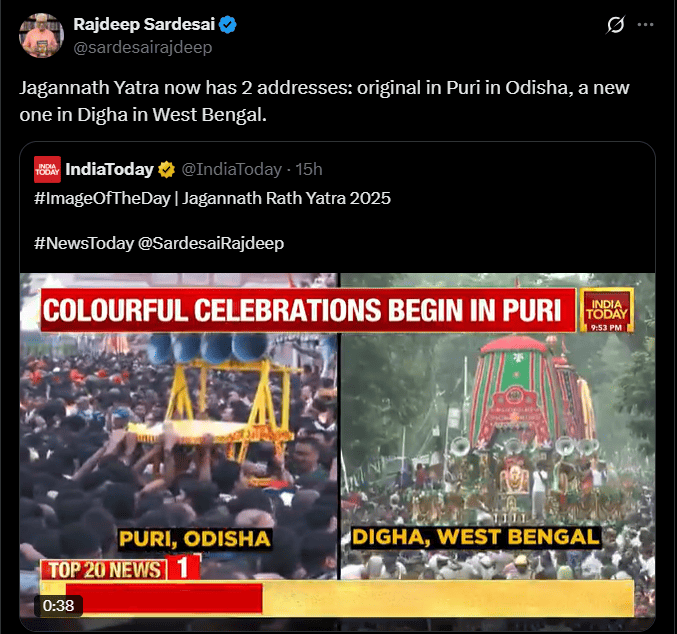
In a tweet on Friday (27th June), Sardesai brazened out, “Jagannath Yatra now has 2 addresses: original in Puri in Odisha, a new one in Digha in West Bengal.”

It was part of a well-thought-out plan to draw ‘false equivalence’ between the 900-year-old Jagannath temple in Odisha to a temple, built by the ruling TMC government in West Bengal, which was inaugurated on 30th April this year.

Screengrab of the tweet by Rajdeep Sardesai

For the unversed, Rajdeep Sardesai is the husband of former ‘journalist’ and current TMC Rajya Sabha MP, Sagarika Ghose.

On the auspicious occasion of Rath Yatra, the ‘journalist’ turned propagandist wanted to give the impression that the TMC government has created a ‘new destination’ for Lord Jagannath in West Bengal.

This cheap attempt at ‘agenda setting’ and ‘narrative building’ in favour of the Mamata Banerjee-led TMC government comes ahead of the upcoming West Bengal Vidhan Sabha election.

The ruling party is desperately trying to woo the Hindus before the crucial State polls after having antagonised them for all these years.

TMC have realised that ‘Muslim appeasement’ alone and ‘Bengali Vs outsider’ narrative will not alone sail the boat for the party.

Rajdeep Sardesai thus exploited ‘Rath Yatra’ festival to remind Hindus in West Bengal of the Digha Jagannath temple, built by the Mamata government.

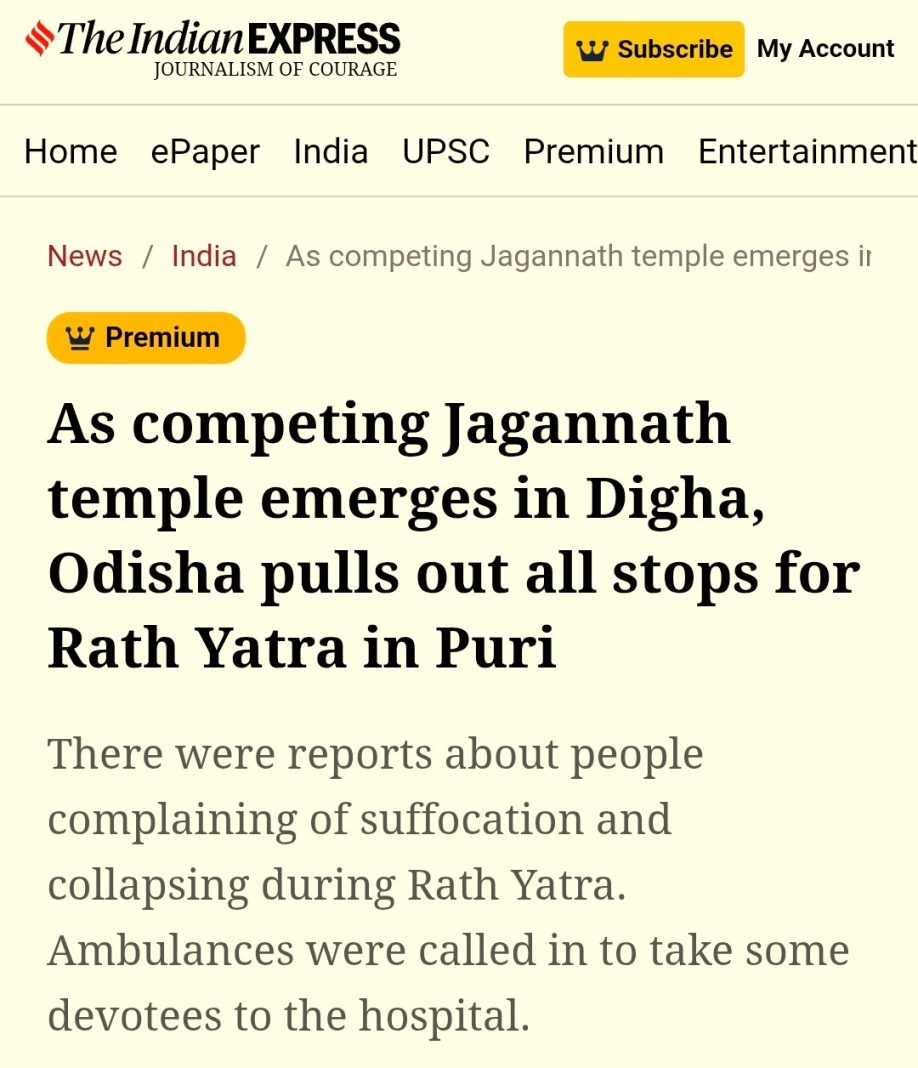
Screengrab of the news report by The Indian Express

National daily ‘The Indian Express’ peddled a similar rhetoric in an article published on Saturday (28th March). The piece was titled, ‘As competing Jagannath temple emerges in Digha, Odisha pulls out all stops for Rath Yatra in Puri.’

No real comparison or competition between Puri Jagannath Dham and temple constructed in Digha

There is no ‘comparison’ or ‘competition’ between the Jagannath Dham in Odisha with the newly inaugurated temple in West Bengal.

The Puri Jagannath Temple was built by King Anantavarman Chodaganga Deva in the 12th century. It is also one of the oldest Hindu temples, which is still in use by devotees.

It is known for Kalinga Style architecture and is managed by a committee, chaired by the Gajapati Maharaja. The Puri Jagannath Temple embodies the culture and tradition of 900 years, ensuring the continuity of Hindu civilisation and beliefs.

The Digha Jagannath Temple is a replica of the Puri Jagannath Temple, which is built and and managed by the Government of West Bengal.

It was inaugurated less than 2 months ago and has already courted controversies for serving ‘Halal prasad’ and using the temple festivities for Muslim appeasement.

Mamata govt is already turning it into a religiously motivated, political issue by deliberately calling the newly inaugurated temple at Digha as ‘Jagannath Dham’ and undermining the 900 year old temple in the neighbouring State.

Conclusion

The West Bengal government has openly flouted scriptural injunctions and long-established traditions in its brazen appropriation of the Puri Jagannath Dham.

The same TMC government has pulled the plug on a 629-year-old ‘Rath Mela’ in Muslim-dominated Malda district of West Bengal.

It comes as no surprise that Puri Shankaracharya Nischalananda Saraswati has clearly stated that the Digha temple “has nothing to with devotion to Lord Jagannath”.

The subsequent propaganda of charlatans in the media to draw false equivalences between Puri Jagannath Dham and the newly constructed temple in Digha is thus infuriating.

Three years on, justice eludes Kanhaiya Lal’s family as Udaipur murder case lingers in court: Killed by Islamists after Mohammed Zubair’s dog whistling

June 28 marked three years since the brutal killing of Kanhaiya Lal, a Hindu tailor from Udaipur, Rajasthan who was killed inside his shop in broad daylight. The murder was allegedly carried out by two Muslim men after Kanhaiya Lal reportedly expressed support for controversial remarks made by BJP spokesperson Nupur Sharma.

Despite the passage of time, the case remains pending in court, with no final verdict yet delivered. The delay in proceedings has caused growing frustration among the victim’s family, who continue to await justice. The case remains under the scrutiny of the National Investigation Agency (NIA), which has filed charge sheets against 11 accused in connection with the murder.

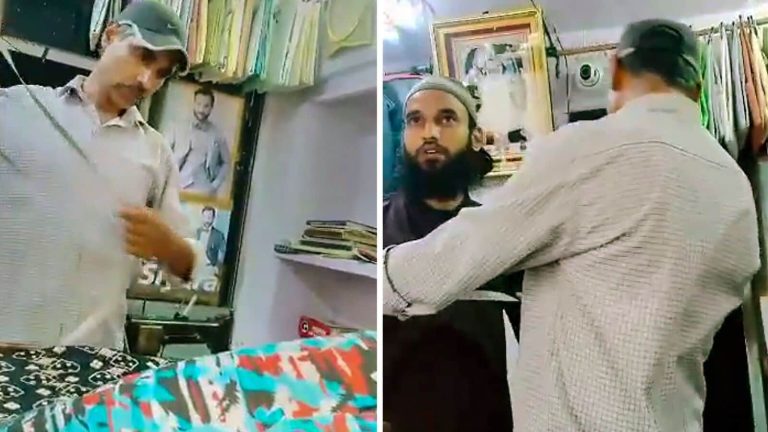
Kanhaiya Lal, a tailor by profession, was residing in Udaipur, Rajasthan, when he was stabbed to death on the afternoon of June 28, 2022. The prime accused, Mohammad Riaz Attari and Ghaus Mohammad, had entered his shop under the pretext of getting clothes stitched. It was then that they attacked him with a sharp knife and subsequently slit his throat. Following the incident, the accused recorded a video claiming responsibility for the murder and circulated it on social media.

“No fast-track action has been taken,” says Yash Teli

Yash Teli, the eldest son of Kanhaiya Lal, expressed his disappointment over the delay in court proceedings. He stated that despite three years having passed since the murder, the case has not been moved to a fast-track court. There has been no court appearance in the past six months, and the hearing dates continue to be scheduled at intervals of a month. Yash emphasized that such a sensitive case should be handled with urgency.

He further mentioned that two of the accused, Farhad and Javed, have already been granted bail. According to him, the judiciary must take strict and swift action to ensure that the accused are given capital punishment. “Many politicians had promised that justice would be delivered within six to seven months. However, it has now been three years, and nothing has changed. My father’s soul will not be at peace until all the accused are punished,” Yash said.

Court proceedings so far

Following the murder, nine key accused—Mohammad Ghaus, Riaz Attari, Farhad Sheikh, Asif, Mohsin, Wasim Ali, Mohammad Javed, Muslim Khan, and Mohammad Mohsin—were produced before the special court in Jaipur under tight security. Two other accused, Salman and Abu Ibrahim, were traced to Karachi, Pakistan, and are currently absconding. A police application was submitted to obtain photographs, CCTV footage, and pen drives from the accused.

A chargesheet was filed by the NIA on December 22, 2022, before the Jaipur court, naming nine accused, including the prime suspects Ghaus Mohammad and Mohammad Riaz Attari. The charges include murder under Section 302 (34) of the Indian Penal Code (IPC) and additional charges under Sections 452, 153, and 295 of the IPC. Provisions under Sections 16, 18, and 20 of the Unlawful Activities (Prevention) Act (UAPA) were also invoked for involvement in terrorist activities.

On February 9, 2023, charges were formally filed against the nine accused, as per the NIA report. Farhad was granted bail on September 1, 2023, as no weapons were found in his possession. Javed was released on September 5, 2024, due to lack of evidence linking him to the crime scene or to other accused individuals. Although Yash has filed a petition challenging Javed’s release, a formal notice is still pending. The NIA continues its investigation, but no punishment has been awarded to the main accused so far.

“Udaipur Files”: film based on Kanhaiya Lal murder case set to release

A film titled Udaipur Files, based on the murder of Kanhaiya Lal, is scheduled for release on July 11. According to Yash Teli, he is actively promoting the movie across various cities. Besides Jaipur, Jodhpur, and other parts of Rajasthan, promotional events are also being held in Noida, Delhi, and several locations across Uttar Pradesh.

Mohammed Zubair’s dog whistling led to Kanhaiya Lal’s murder

Mohammed Zubair played a central role in triggering the chain of events that ultimately led to the brutal killing of Kanhaiya Lal in Udaipur. By selectively amplifying Nupur Sharma’s remarks on a television debate and branding them as an attack on Prophet Muhammad, Zubair deliberately stoked religious tensions across the country. His so-called “fact-checking” was, in reality, a calculated act of provocation that painted a target on the backs of not only Nupur Sharma but also ordinary citizens like Kanhaiya Lal who expressed solidarity with her. Zubair’s actions ignited a frenzy among Islamist extremists, many of whom openly called for violence, including beheadings, under the slogan “Sar Tan Se Juda.”

It is no coincidence that Kanhaiya Lal became a marked man immediately after posting in support of Nupur Sharma, at a time when Zubair’s dog-whistling had unleashed widespread Islamist outrage. The tailor, despite receiving death threats, was left vulnerable by the authorities, and the radicalized elements emboldened by Zubair’s campaign acted on their threats. The murder was not an isolated incident; it was the inevitable consequence of the hysteria fueled by Zubair’s calculated amplification of religious sensitivities. His so-called journalism provided the spark that emboldened radical groups to carry out what they saw as religious retribution.

While the actual killers physically carried out the heinous act, the responsibility cannot stop at their doorstep alone. Mohammed Zubair’s reckless incitement and weaponization of selective outrage created the fertile ground for Islamist mobs to operate with impunity. His role fits the very definition of stochastic terrorism, using mass communication to demonize an individual or group, knowing full well that unhinged followers may act violently as a result. Kanhaiya Lal’s death is not just a case of extremist violence; it is a direct consequence of Zubair’s dangerous, irresponsible activism masquerading as journalism.

Window grills of the Ram Janmabhoomi Mandir in Ayodhya will be made of titanium, a first in the country, says construction committee chairman Nripendra Mishra

0

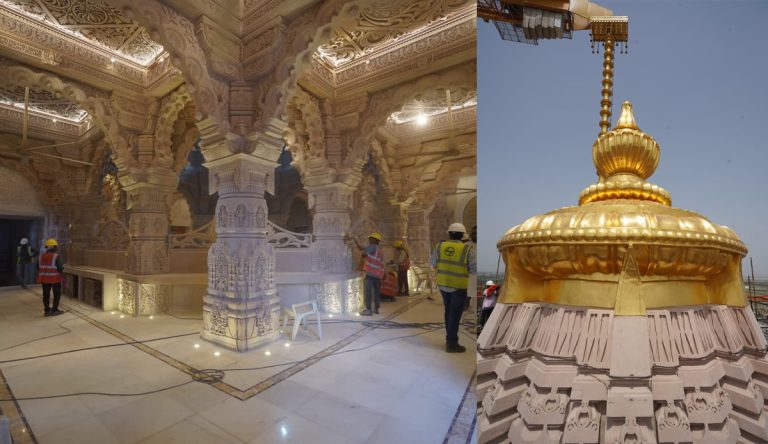
Shri Ram Janmabhoomi Teerth Kshetra construction committee chairman Nripendra Mishra on Saturday stated that the window grills of the Shri Ram Janmabhoomi temple will be made of “titanium,” marking a first in the country.

Mishra explained that titanium was chosen for its exceptional durability and lighter weight compared to other metals.

“For the first time in the country, the grills of windows of the temple will be made of titanium metal. This is unique because you know that titanium has a very long lifespan, exceeding a thousand years. And that metal is lighter than other metals”, Nripendra Mishra told reporters.

In addition, Mishra shared updates on the temple’s stone procurement, revealing that approximately 14 lakh cubic feet of stone from Bansi Paharpur was initially intended for use in the construction. However, only one hundred lakh cubic feet of the stone remains to be used.

“Today, we will see the entire construction work. Now, it is estimated that approximately 14 lakh cubic feet of stone from Bansi Paharpur was to be used in the temple and the rampart. Now only one hundred lakh cubic feet of stone is left to be used”, he added.

Earlier, on May 2, the Ram Janmabhoomi Temple Construction Committee conducted a three-day meeting in Ayodhya to review the progress of the temple construction. On the first day, committee president Nripendra Mishra provided major updates on the construction.

He stated that inspections were conducted at various locations within the temple, and that most of the construction (except for an auditorium and a wall) is expected to be completed by December 2025.

“Except for constructing a four-kilometre boundary wall and the auditorium, all other constructions will be completed by December 2025,” committee president Mishra remarked.

Most idols have already reached their respective temples. Only two idols- one for the Ram Darbar and another for the Shesha Avatar temple. The Ram Darbar idol will be placed in the sanctum sanctorum on May 23, whereas the other is to be installed before May 30.


(This news report is published from a syndicated feed. Except for the headline, the content has not been written or edited by OpIndia staff)

Denmark plans to introduce law to clamp down on Al-generated deepfakes by allowing citizens to copyright their features

As AI-generated deepfakes are posing an unprecedented challenge to right to privacy globally, Denmark is planning to curb this menace through legislative measures. The Nordic country is reportedly contemplating amending its copyright law to put a check on the creation and dissemination of AI-generated deepfakes online.

As per reports, the department of culture has secured a cross-party consensus regarding the proposed law, which will reportedly be the first law of its kind in Europe. The department is now planning to submit a proposal to amend the current Danish copyright law. A statement of the Danish government said that the law would strengthen the protection against digital imitations of identities of people by allowing them to have right over their body, facial features and voice.

“Since images and videos also quickly become embedded in people’s subconscious, digitally manipulated versions of an image or video can create fundamental doubts about – and perhaps even a completely wrong perception of – what are genuine depictions of reality,” said the statement published on Thursday (26th June). “The agreement is therefore intended to ensure the right to one’s own body and voice,” it added.

Danish Culture Minister Jakob Engel-Schmidt expressed hope that the proposed law would give “unequivocal message” that everyone has the right to their appearance and sound. “In the bill we agree and are sending an unequivocal message that everybody has the right to their own body, their own voice and their own facial features, which is apparently not how the current law is protecting people against generative AI,” Engel-Schmidt told the Guardian. “Human beings can be run through the digital copy machine and be misused for all sorts of purposes and I’m not willing to accept that,” he added.

Describing the move as “ground-breaking”, Engel-Schmidt said that “severe fines” could be imposed against platforms if they do not comply with the law. “That is why I believe the tech platforms will take this very seriously indeed,” he said. He expressed hope that once the law is passed, other countries will follow after Denmark. Engel-Schmidt informed that he would share Denmark’s plans with its European counterparts during Denmark’s forthcoming EU presidency.

If the amendments get through, it will confer a right on the Danish citizens to ask online platforms to take down any content related to them shared without their consent. However, the amended law would not affect parodies and satire, which would still be permitted. But it will cover “realistic, digitally generated imitations”, of the artist’s work without consent. An aggrieved person affected by the breach of the proposed law could also be entitled to compensation.

New Zealand MP raised deepfake issue by showing a nude image in Parliament

The development comes a month after New Zealand MP Laura McClure presented a manipulated nude image of herself in New Zealand’s Parliament to raise awareness about the misuses of deepfakes. While presenting the image, McClure pointed how easily this technology could be misused to abuse people. “Today in Parliament, I showed an AI-generated nude deepfake of myself to show how real – and easy – these are to create. The problem isn’t the tech itself, but how it’s being misused to abuse people. Our laws need to catch up,” McClure reportedly wrote on Instagram. She said that she wanted to make changes in the current legislation that prohibited sharing nude photos without consent to include deepfakes in it.

Other countries also addressed the problem of deepfakes

Other countries, including the US and South Korea, has also taken steps to deal with the problem of deepfakes. In May this year, US President Trump signed a bipartisan law making it illegal to knowingly publish or threaten to publish intimate images without a person’s consent, including deepfakes.

Last Year, South Korea, also introduced measures to put a check on deepfake porn by providing harsher punishments and stepping up regulations for social media platforms.

During the AI Summit in Paris, PM Modi highlighted the potential risk of Artificial Intelligence such as deepfakes and disinformation and urged world leaders to democratise the technology and re-skilling the people.

What are deepfakes

Deepfakes are digitally manipulated media, including photos, audios and videos, created using Artificial Intelligence (AI) and made to look real and authentic making them indistinguishable from original content. They are a potent tool which can be used for both positive and negative purposes. Deepfakes can be useful for entertainment, educational and creative purposes, but they can also be used to spread fake information, commit scams and personal harm.

Recently, the misuses of deepfakes came to light after some celebrities were targeted with manipulated images and videos. Last year, globally renowned artist, Taylor Swift, became a victim of deepfake images. Many explicit AI-generated deepfake images depicting the pop star engaged in various lewd scenarios were circulated on the internet. The explicit images, viewed over 27 million times and accumulating more than 260,000 likes within 19 hours.

In November last year, a manipulated video of Indian actor Rashmika Mandanna appeared online sparking discussions on digital safety. In the viral video, a woman resembling the actress Rashmika was entering a lift wearing a black swimsuit. The video quickly went viral and several social media users came forward to confirm that it was a deep fake. It was later identified that the video was of a British Actress Zara Patel. Several other famous persons like legendary cricketer Sachin Tendulkar, senior journalist Rajat Sharma, and Union Home Minister Amit Shah have been subjected to the misuse on deepfakes.

Delhi: Mohammed Amaan and his aides murder Yash, family says victim killed over his relationship with Muslim girl

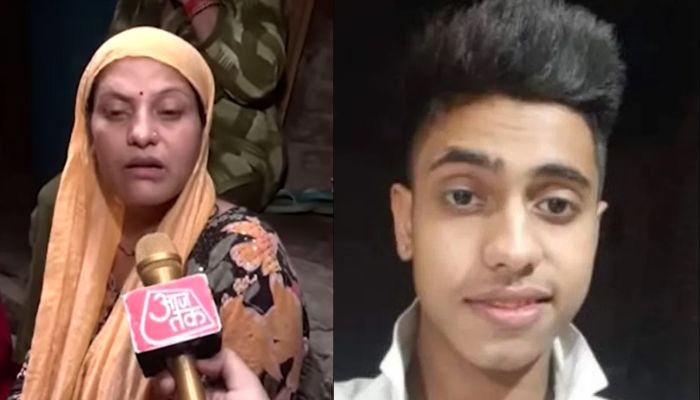
On Friday (27th June), a 19-year-old boy named Yash was stabbed to death by three people in the Geeta Colony area in Shahdara district of Delhi. The accused were identified as Mohammed Amaan, Lucky and a juvenile (name withheld).

According to reports, the crime unfolded after Yash’s scooter brushed past the accused juvenile. The victim was en route to his home at that time. Mohammed Amaan, Lucky, and the juvenile chased Yash towards the Geeta Colony Pusta flyover.

The victim was thereafter stabbed in the lower back by Amaan. He was rushed to the hospital, but Yash died on the way. While the police have claimed that it was a road rage incident, the victim’s family remarked that it was a pre-planned murder.

“He (Yash) has been killed as part of a conspiracy,” the victim’s mother told AajTak News. She said that Yash was in a relationship with a Muslim girl.

“Following that, the girl’s parents came to our factory and vowed to get my son killed. Today, the truth is in front of everyone. My son has been killed.”

On being asked whether they had filed a police complaint, the woman said that she did not believe that the accused would actually kill her son.

Mazagon Dock acquires Sri Lanka’s biggest shipbuilding facility Colombo Dockyard: Read how this move will help India check the growing influence of China in the Indian Ocean

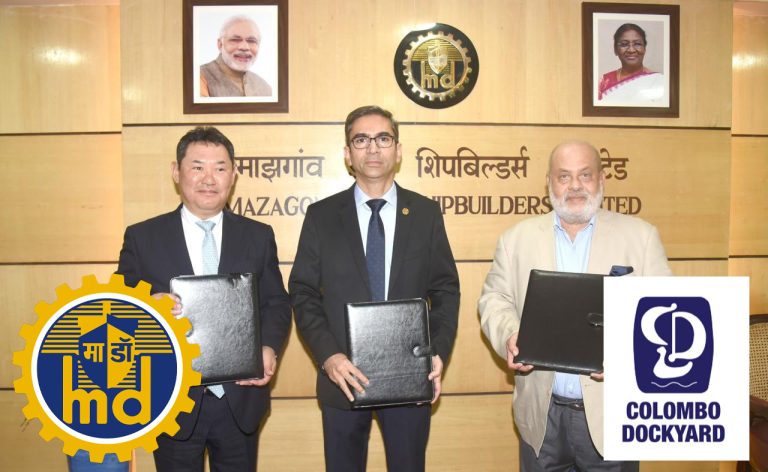
In a major move towards extending its maritime presence and influence, India’s state-run defence shipyard Mazagon Dock Shipbuilders Limited (MDL) has made a move to acquire a majority stake in Colombo Dockyard PLC (CDPLC), Sri Lanka’s largest and most strategically positioned shipbuilding and repairing complex. This is MDL’s first international acquisition and is being touted as a historic moment for India’s defence industry and foreign policy.

As per the official release, MDL board cleared the investment of as much as USD 52.96 million (around ₹452 crore), which will be made in a combination of primary subscription and secondary purchase of shares from present shareholders. The existing majority shareholder in CDPLC, Japan’s Onomichi Dockyard Co. Ltd., will be among the sellers. Upon completion of the deal, MDL will have at least 51% ownership in the Colombo-based shipyard, essentially making CDPLC a subsidiary.

The deal will close within six months, after which the Sri Lankan shipbuilder will become a part of Mazagon Dock Shipbuilders. In a social media post, Mazagon Dock said that “CDPLC gives MDL a strategic foothold in the Indian Ocean Region—a key maritime corridor. With this, MDL begins its transformation from a domestic shipbuilder to a regional maritime player with global ambitions.”

MDSL added, “Aligned with Maritime Amrit Kaal Vision 2047, this move strengthens India’s regional maritime influence and expands MDL’s global reach.”

This takeover is not merely a commercial choice—it is a carefully considered geopolitical step. Through majority acquisition of Colombo Dockyard, India earns strategic entry into one of the Indian Ocean Region’s most strategic locations, which is increasingly becoming a theatre of influence between regional players, especially India and China.

Strategic importance of Colombo Dockyard

This port is one of the South Asia’s busiest shipping ports, situated within the Port of Colombo. Colombo Dockyard is a critical maritime asset. The shipyard was founded in 1974 and has for many years been Sri Lanka’s premier facility for ship building, repair, and maintenance. It had a consolidated turnover of LKR 25,447 million (approximately ₹700 crore) in FY24 and boasts a robust infrastructure base. The shipyard is significant in facilitating both commercial and defense maritime activities.

India’s acquisition of control over this facility gives it the ability to increase its industrial and strategic reach outside its territorial boundaries. It also gives India logistical and operational presence in Sri Lanka, a nation that sits at a strategic midpoint in great east-west shipping lanes.

Countering China’s growing presence

India’s purchase is in the wake of rising alarm about China’s deepening presence in Sri Lanka’s maritime infrastructure. During the last decade, China has spent billions of dollars investing in Sri Lankan ports and infrastructure projects as part of its Belt and Road Initiative (BRI). The most visible example is the Hambantota Port, which was leased to China Merchants Port Holdings for 99 years after Sri Lanka defaulted on its loans.

In addition to Hambantota, China is also busy with the Colombo Port City project as well as other container terminals at Colombo Port. These initiatives have put New Delhi in alarm, which sees them as part of Beijing’s “String of Pearls” strategy—an effort to encircle India with a cluster of Chinese naval bases and trade ports.

Colombo Dockyard is located within the greater Port City of Colombo, one of the largest ports in the world, which has added new terminals in a mega expansion project. The first terminal was awarded to a consortium of China Merchants Holdings (International) and Aitken Spence.

Notably, the Colombo West International Container Terminal is operated by Adani Ports and Special Economic Zone Ltd along with two local partners, John Keells Holdings and Sri Lanka Port Authority. The Indian port giant signed a 35-year build-operate-transfer agreement in 2021, and the terminal started operations in April this year.

With the purchase of Colombo Dockyard, India is making a statement: it is prepared to invest strategically within the region to balance China’s footprint and restore its leadership in the IOR. The action also fits with India’s decades-old policy of being a “net security provider” in the Indian Ocean.

Enhancing India’s maritime capability

Mazagon Dock is India’s leading defense shipyard, famous for building frontline warships, destroyers, and submarines for the Indian Navy. With the addition of Colombo Dockyard to its stable, MDL not only increases its global presence but also gets an added operational benefit.

MDL said that the takeover would assist in unlocking operational synergies, boost its market outreach and augment its research and development capabilities. Colombo Dockyard has experience in dealing with foreign navies and private maritime customers, and its shipbuilding capabilities will most likely suit India’s defence export drive under the “Amrit Kaal Vision 2047”.

In addition, the purchase is well-timed, as India has been investing in augmenting its naval capability to protect its maritime interests in the Indo-Pacific. With tensions brewing in the region—ranging from South China Sea disputes to naval militarizations—it becomes essential for India to acquire bases and assets that facilitate rapid response and upkeep of maritime superiority.

A commercial but strategic deal

The deal, MDL says, will be finalized within four to six months and will be all-cash. Formal filings confirm that the deal is an arm’s length transaction, with none of MDL’s promoter group or their related parties having any pre-existing interest in CDPLC. The process awaits regulatory and statutory approvals, including from the Colombo Stock Exchange.

From a fiscal perspective, the purchase seems prudent. CDPLC, despite having had a revenue decline in FY24 from the prior year, is still a profitable and industrious asset. Its strategic position and current facilities will almost certainly make returns both in terms of revenue and geopolitical clout.

The takeover is also likely to increase cooperation between Sri Lanka and India. In spite of previous tensions, both countries have a strong cultural as well as historical relationship. Fostering economic and defence collaboration through such operations can promote goodwill and decrease the role of external players in the region.

Looking ahead: India’s regional maritime vision

The Colombo Dockyard purchase is part of a larger Indian maritime strategy to extend reach, secure sea lanes, and counter local threats. India is already busy constructing coastal radar chains in the Maldives, Seychelles, and Mauritius and is currently developing joint surveillance programs with nations such as Indonesia and Australia.

With this transaction, India makes a bold move out of its territorial waters, employing economic means to pursue its strategic ambition. It is a change from being a reactive player to being a proactive one in the Indian Ocean and establishes the tone for future overseas defence or infrastructure acquisition ventures.

As Manipur celebrates Kang festival, read all about the Meitei community’s own version of Jagannath Rath Yatra

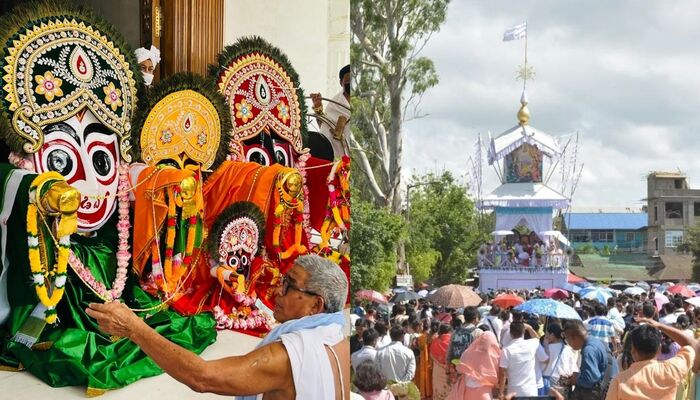
The famous Jagannath Rath Yatra that takes place annually in Puri Odisha, has a Manipuri version as well, called the Kang festival. Kang is of one of the major Hindu festivals celebrated by the Meitei community in Manipur. Kang Yatra is similar to the Jagannath Puri Rath Yatra and includes a procession of Lord Jagannath, Lord Balabhadra, and Goddess Subhadra seated on a chariot pulled by devotees.

During the Rath Yatra, the Hindu deities leave their abode and travel in the procession for around 10 days in Ashadh month of Hindu Calendar. The rituals performed before and after the Kang Yatra are similar to the Jagannatha Puri Rath Yatra. For example, before the beginning of the Kang Yatra, Lord Jagannath and his siblings are given a sacred bath on Snan Purnima, just like the Jagannath Puri Yatra.

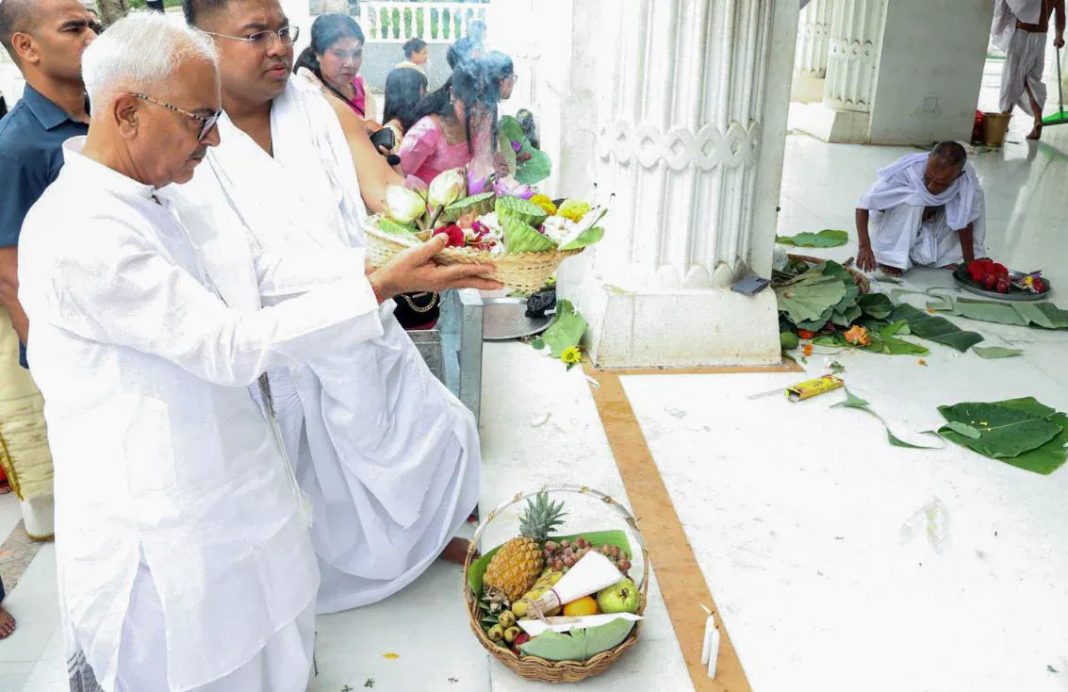
This year’s Kang Yatra also began with the Jagannath Puri Yatra, i.e. on 27th June. On the auspicious occasion, Governor of Manipur, Ajay Kumar Bhalla visited the Shree Shree Govindajee Temple in Imphal, a prominent Vaishnavite shrine located in the state capital.

Image via ANI

Current member of the former royal family of Manipur and BJP MP Sanajaoba Leishemba also offered prayers during the Kang festival at the Imphal Temple. Several other politicians also visited different temples on the occasion.

The name Kang Yatra comes from the word Kang which refers to the chariot of Lord Jagannath and his siblings. Offerings of flowers, fruits and barti (short cotton wrapped cotton balls soaked in ghee) are made to the deities. Devotees also perform a Kirtan called ‘Khubakisei’ and community feasts are organised at various locations.

The procession begins from the Shree Govindajee temple in Imphal, and after the Rath Yatra reaches Sanathong, the western entrance gate of Kangla Fort, it heads back to the temple.

Shree Govindajee temple is considered the centre of Vaishnavite culture in the region, while Sanathong in Meitei language means the ‘golden door’.

The festival is celebrated with great fervour as devotees sing and dance around the chariot during the procession. The yatra is accompanied with the music of bells, gongs, drums and conch. Local Meitei community is heavily involved during the entire celebration.

Apart from the chariot procession, every evening during the ten days of the festival, a unique form of devotional Sankirtana called Jayadev Chongba is preformed by devotees across different temples. In Jayadev Chongba, men and women form seperate circles and dance to the beats of ‘Pung’ a Manipuri musical instrumment. This is followed by devotional dances performed by women and yound girls dressed in traditional attire.

Apart from Shree Shree Govindajee Temple, the festival is also celebrated at other Vaishnavite centres like Shree Shree Bijoy Govinda Temple, ISKCON Imphal, and in various Leikais (localities) across the valley.

Kolkata rape case: Victim called TMC leader ‘Dada’ and even touched his feet to spare her but accused demanded her ‘loyalty’ towards him and TMC’s student wing

Two days after a student of the South Kolkata Law College was raped by a Trinamool Congress leader named Monojit Mishra, disturbing details of the heinous crime have now surfaced through the police complaint filed by the victim.

The victim, in her complaint, informed that she was asked to prove her ‘loyalty’ towards the prime accused, Monojit Mishra and TMCP (the student wing of the TMC).

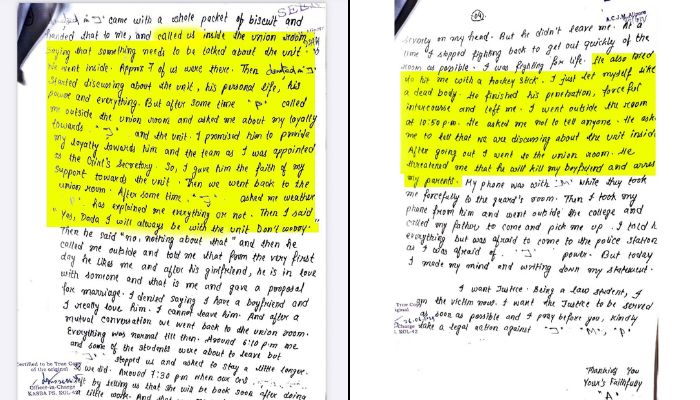
“I promised him to provide my loyalty towards him and the team as I was appointed as the girls’ secretary. So I gave him the faith of my support towards the unit,” she said. Although the victim took him as her ‘Dada (brother)’, the TMC leader proposed marriage to her.

Mishra claimed to be in love with the victim, besides his girlfriend. The victim turned down his sexual advances by reiterating that she has a boyfriend.

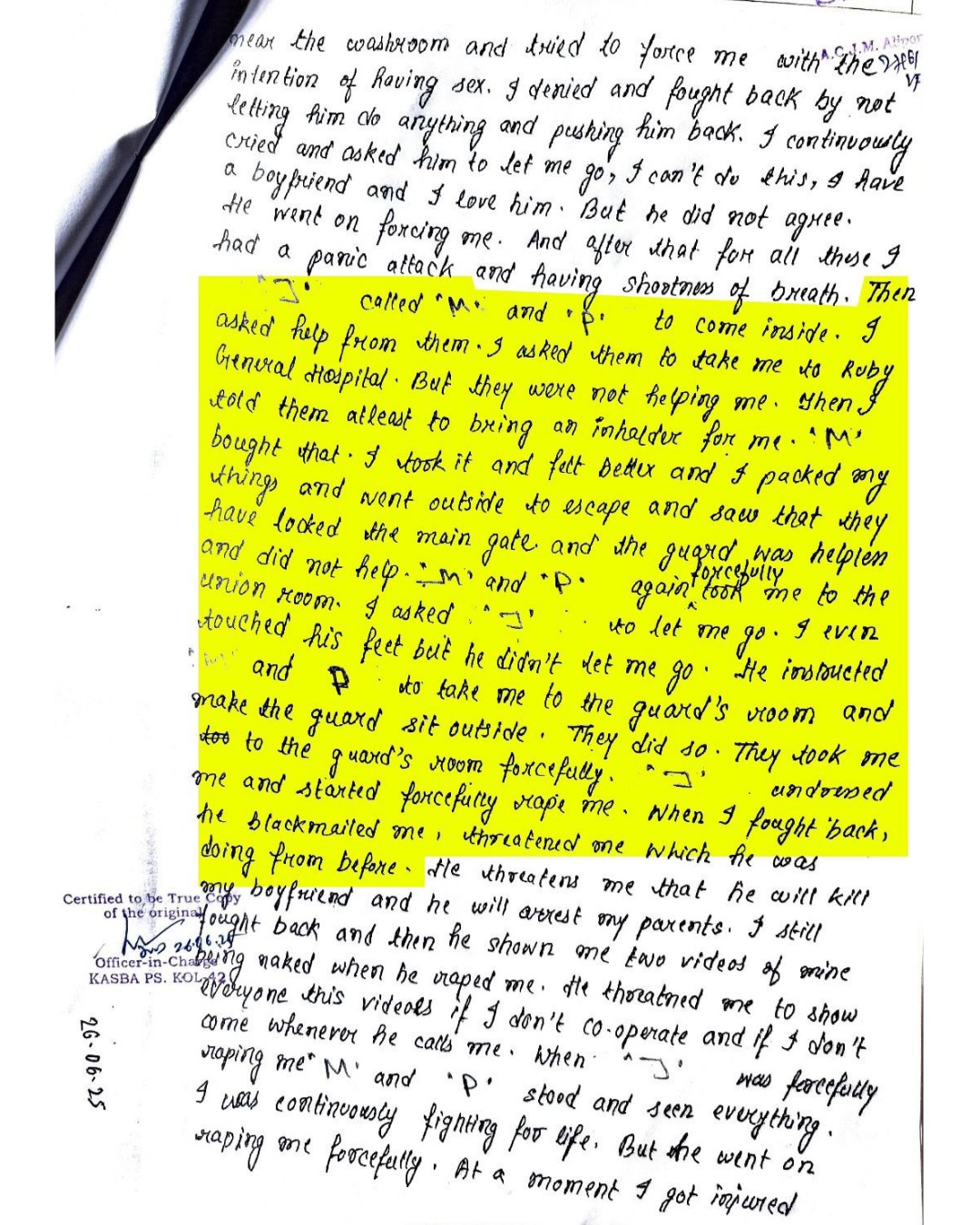
Screengrab of the police complaint

“He called me outside and told me that from the very first day, he likes me and after his girlfriend, he is in love with someone, and that is me and gave a proposal for marriage. I denied saying I have a boyfriend and I really love him. I cannot leave him,” the girl said in her police complaint.

She narrated how the door of the union room was first locked from inside by the accomplices of the TMC leader, who have now been identified as Zaib Ahmed and Pramit Mukhopadhyay, at his behest. Monojit Mishra took the victim near the washroom and tried forcing her to have sex.

“I denied and fought back by not letting him do anything and pushing him back. I continuously cried and asked him to let me go, I can’t do this, I have a boyfriend, and I love him. But he did not agree. He went on forcing me. And after that, for all these, I had a panic attack and had shortness of breath,” she narrated her ordeal.

The victim was taken against her will to the guard’s room. She even touched the feet of Monojit Mishra, hoping that he would spare her but it was in vain. She wrote in her police complaint that the video of the rape was shot and used to blackmail her.

Screengrab of the police complaint filed by the victim

“He undressed me and started forcefully rape me. When I fought back, he blackmailed me, and threatened me which he was doing from before. He threatens me that he will arrest my parents. I still fought back and he shown two videos of mine being naked when he raped me. He threatened me to show everyone these videos if I do not co-operate and if I don’t come whenever he calls me. When raping me” M’ and ‘P’ stood and seen everything. I was continuously fighting for life. But he went on raping me forcefully,” the victim continued.

Despite her being injured, Monojit Mishra went on to rape her. “At a time, I stopped fighting back to get out room as possible. I was fighting for life. He also tried to hit me with a hockey stick. I just let myself like a dead body. He finished his penetration, forced intercourse and left me,” the victim continued.

It was only at 10:50 pm that she could leave the guard room of the college, where the heinous crime was committed by the TMC leader. Monojit Mishra threatened to kill the victim’s boyfriend and get her parents arrested using his political influence in the ruling party.

She later called her father and asked him to pick her up from the college. The victim confided in him about what transpired at the college and a day later on Thursday (26th June), she filed the complaint with the police.

“I want justice. Being a law student, I am the victim now,” the victim said, adding that she is hoping for immediate legal action against the accused.

Who is Monojit Mishra

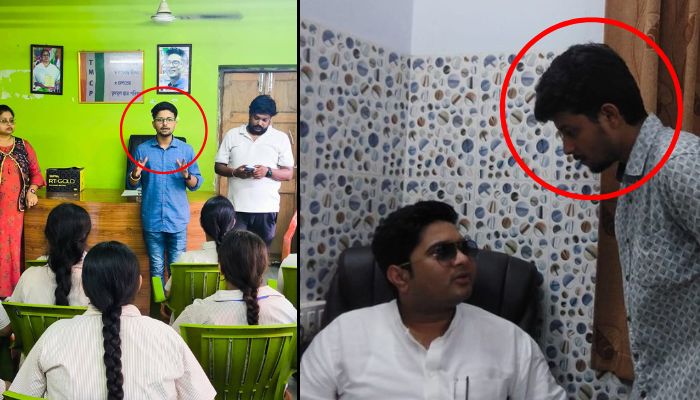
He is a former student of the South Kolkata Law College and has been the ex-President of the Trinamool Congress Chhatra Parishad (TMCP) at the institute. (as per his Facebook profile).

Monojit Mishra currently serves as the General Secretary of TMCP in the South Kolkata district. He is about 30 years old and has 6.2K followers. Monojit Mishra identifies himself as a ‘criminal lawyer’ who practices at the Alipore court.

As per the Facebook profile of the rape accused, he is about 30 years old and has 6.2K followers. Monojit Mishra identifies himself as a ‘criminal lawyer’ who practices at the Alipore court.

Screengrab of the Facebook Profile of Monojit Mishra

OpIndia has published a detailed report, highlighting his connections and meetings with influential TMC politicians like Abhishek Banerjee, Mamata Banerjee’s sister-in-law, Firhad Hakim and others.

Malaysia: 36 Bangladeshis arrested for promoting Islamic State terror group’s ideology in the country, had set up recruitment cell, raised funding for terrorist activities

On Friday, June 27, The Royal Malaysian Police announced the arrest of 36 Bangladeshi nationals for their involvement in a radical movement and bringing extremist beliefs based on the Islamic State (IS) ideology into the country.

Malaysia’s Home Minister Datuk Seri Saifuddin Nasution Ismail, making the announcement of the arrest of the Bangladeshis, stated that the police’s operation started on April 24 with three phases of arrests in Selangor and Johor.

The group of Bangladeshis had established recruitment cells within Malaysia as well to recruit more people to their ’cause’. They were particularly focusing on their own community for this purpose.

Out of the 36 arrested, five have been identified as being involved with the Penal Code’s Chapter VIA (which covers offences relating to terrorism), 15 have been issued orders for deportation, while 16 others are still under investigation over their role in promoting Islamic state ideology.

The Home Ministry statement read, “As a result of intelligence and coordinated action by the Special Branch Team, PDRM found that this group was bringing extremist beliefs based on the Islamic State (IS) ideology into the country They even established recruitment cells within their communities for the purpose of indoctrinating radical beliefs, collecting funds for terrorist activities, and toppling the legitimate government in their home country.”

Home Minister Saifuddin warned that any attempts to make Malaysia a base for militant operations or transit centre for extremism movements will be tackled with firm, quick and effective action.