Home Blog Page 4342

As the COVID-19 crisis engulfs India, China moves to strengthen its positions at friction points in Ladakh: Report

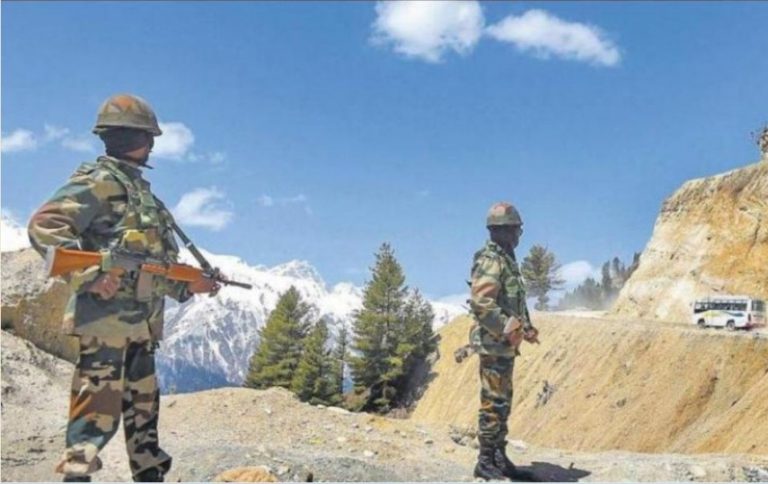
Amidst the worsening COVID-19 crisis in India, China is quietly hardening its stance in the depth areas of eastern Ladakh, India Today journalist Shiv Aroor reported.

According to the sources quoted by Aroor, far from reducing its presence in Ladakh as previously agreed, China has reinforced its positions with permanent accommodations and depots, a sign of hardening stance even as the talks between the two sides continue.

The images with the Indian military establishment and the ground intelligence have hinted that China is in no mood to vacate from its aggressive positions along the line of control in eastern Ladakh.

The grim details of China’s treachery were uncovered on a day when the Chinese Premier Xi Jinping expressed her commiserations to PM Modi over the ongoing COVID-19 outbreak in India.

“The Chinese side stands ready to strengthen cooperation with the Indian side in fighting the pandemic and provide support and help in this regard. I believe that under the leadership of the Indian Government, the Indian people will surely prevail over the pandemic,” Xi Jinping said.

However, if the evidence on the ground is to be believed, the Chinese Army has strengthened its positions to support the friction areas if necessary.

The imagery shows that China is vigorously building permanent structures, accommodations and military buildings in a long arc through the Aksai Chin bulge, including depth areas from the friction points of the India-China standoff.

The areas include Xaidulla in the southwestern part of Xinjiang Autonomous Region, a strengthened Chinese radar site at Piue which is just across from Ladakh’s Chip Chap valley, and the military outpost at Kyrmmgo Traggar across the LAC from Hot Springs and Gogra Post.

Earlier, 10,000 permanent Chinese PLA troops were stationed at Kangxiwar and Rudok. India Today cites an intelligence report to assert that the posts have been reinforced with 10,000 additional temporary troops.

Besides, the map of the spring 2021 reinforcement has also buttressed the view that China has no intention of tamping down its aggressive posture across from the Depsang and Daulat Beg Oldie areas of northern Ladakh.

Additionally, even in the depth areas of Spanggur Tso, the south of the Pangong lake, China has increased its presence and erected up permanent accommodations. This is close to where India had gained a tactical advantage in the Kailash Range last August, which forced China into a stalemate.

As a part of the February pullback, Indian forces had to abandon some of their positions. However, it is given to understand that Indian armed forces still hold advantageous positions in other sectors at this time.

The recent evidence once again highlights China’s inherently treacherous behaviour. Though the Chinese troops moved beyond Finger 8 in the north Pangong sector, a large section of the forces continue to remain stationed in the rear areas, with elements of the 4th, 6th and 11th Motorised Divisions still present in those areas.

The report also states that no reinforcement or strengthening of Chinese positions have been witnessed on the frontlines in any of the sectors, as that would be considered as immediately belligerent.

It is worth noting that China’s aggressive reinforcement along the border comes weeks after its stout refusal to discuss any pullback from the Gogra Post and Hot Springs friction points during the last rounds of talks that were held on April 9.
Covid facilities, food, donations: Temples rise up to help the nation again as second wave hits

As India struggles with the second wave of the coronavirus, several temples across the nation have come forward to offer aid and assistance to fight this battle.

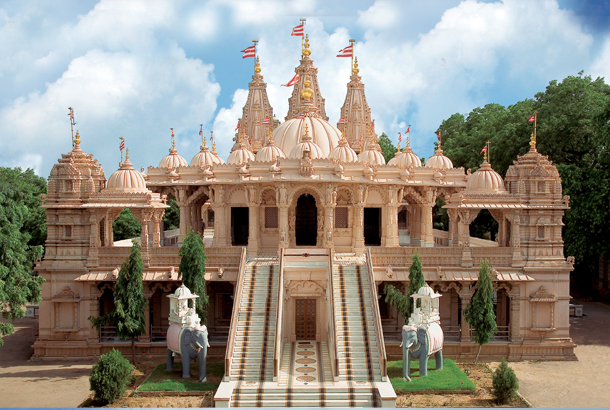
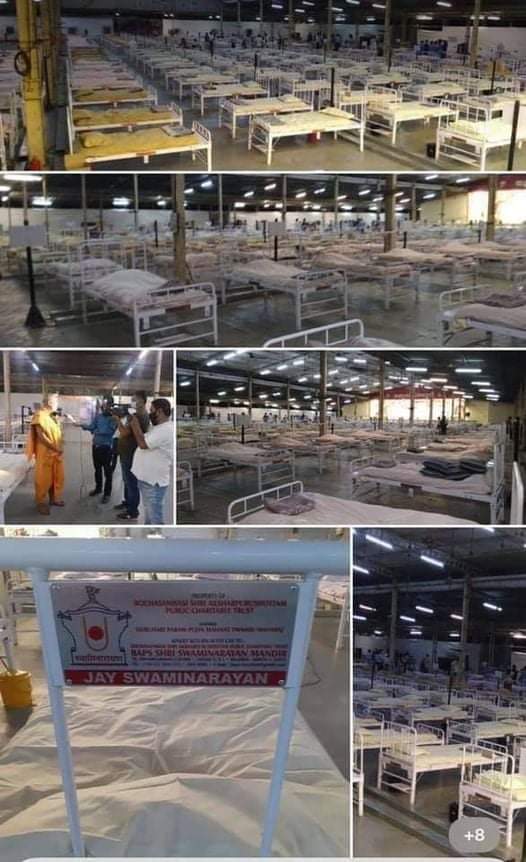
As new cases of Covid-19 surge in Gujarat, BAPS Swaminarayan Temple of Vadodara has converted its Yagnapurush Sabhagruh to a Covid-19 facility. The Covid-19 care centre is equipped with 500 beds, oxygen facilities like liquid oxygen tanks and piped oxygen lines, ICU beds and ventilators. 

The facility that has been operational since April 13 has so far admitted 45 Covid-19 patients from a nearby hospital for further treatment.

The Covid-19 facility at BAPS Vadodara. Image Source: Desh Gujarat on Twitter

Gyan Vatsal Swami of the Shri Swaminarayan Temple informed, “We are providing all the non-medical facilities for patients. We have arranged for oxygen and ventilators including the ICU rooms apart from fans and air-coolers. Currently, 300 beds are operational and 200 will be added soon.”

TV9 Gujarati’s coverage of the newly built Covid care facility

Puri Shri Jagannath Temple

Puri’s Shree Jagannath Temple Administration has decided to convert its Nilachal Bhakta Nivas into a Covid-19 Care Centre. This facility with 120 beds will also act as a dedicated centre for servitors and officials associated with the temple infected with the coronavirus.

Apart from this, the temple had pledged a donation of Rs 1.51 crore towards the Chief Minister Relief Fund to aid the government in this fight. A letter by the temple registration read, “As per the decision of the Managing Committee of Shree Jagannath Temple, Puri, an amount of Rs.1,51.00.000/- (One crore fifty-one lakh) is contributed towards Chief Minister’s Relief Fund for COVID-19 from Temple Administration.”

Along with Jagannath Puri, 62 other smaller temples in Orissa had donated to the CMRF.

Pawan Dham converts its 4-storey building

The Pawandham Temple in Mumbai’s Kandivali has once again converted its four-storey building into a Covid-19 quarantine centre equipped with 100 beds. Out of the 100, 50 beds are equipped with an oxygen concentrator unit, oximeters, pulse metre, portable BP apparatus, monitor machine among others. Additionally, more than 50 medical staff including 10 doctors are deployed in the facility.

Santosh Singh, a Managing Committee Member of the temple says, “We have so far got 50 beds ready, we have tied up with Apex Hospital for healthcare support like doctors, medical staff. All we are waiting for is the critical oxygen supply before that comes we can’t start. Assurance has been given by some suppliers but let’s see.”

India TV’s coverage of the Covid-19 facility built at Pawan Dham

The temple which was converted into a covid centre last year as well, had treated more than 2000 patients.

Mahavir Temple, Patna

The Mahavir Temple at Patna is providing free oxygen cylinders to the infected. It started its work of providing free oxygen on the 30th of April.

Jain Temple, Mumbai

A Jain Temple in Mumbai has been converted to a Covid care center. A 100-bed pathology lab was built here last year and 2000 patients were treated.

Sant Gajanan Temple, Maharashtra

Sant Gajanan Maharaj Temple, located in Shegaon of Buldhana district in the state, is one of the largest religious centers in the state. Here, separate isolation complexes of 500 beds have been built for Covid suspects and patients. It has a community kitchen that prepares food for 2,000 people. This food is given to everyone for free.

Shri Swami Narayan Temple, Mumbai

In view of the deteriorating Covid condition in Mumbai, the temple was converted into a Covid Hospital some time ago. The temple chief assured that the treatment of the patients here would be taken care of by the temple committee.

ISKCON Temple

Arrangement has been made by the ISKCON Temple for free food for the elderly, children, patients and pregnant women. A helpline number 9717544444 has been issued by ISKCON. A separate kitchen has been started by the Temple for the purpose.

Radhaswami Satsang Vyas, Indore

It has been made the second largest Covid care center in the country. It has been named “Maa Ahilya Kovid Care Center”. A maximum of 6000 beds can be arranged here.

Ram Mandir, Ayodhya

‘Sri Ram Janmabhoomi Teerth Kshetra’ announced the setting up of an oxygen plant in view of the Corona crisis . The trust will bear the expenses of Rs 55 lakhs. This oxygen plant will be set up at Dasharatha Medical College.

Tirupati Temple

The Tirupati Temple is often at the top of the list in terms of charity. Last year amidst the Corona crisis, migrant laborers were accommodated here.

Other temples

Kashi Vishwanath Temple which is one of the holiest shrines for Hindus had been feeding the patients suffering from Covid-19. 

The famous Sarangpur Hanuman Mandir In the Botad district of Gujarat, had converted its Dharamshala into a 100-bed hospital to tend to the coronavirus patients last year.

Last year too, when the pandemic’s first wave had hit the country, many Hindu temples had poured in crores of rupees in donations, had provided food and shelter for the needy and had stood up to support the nation through the crisis.

Maharashtra: Pregnant tigress with 4 unborn cubs killed by poachers in Yavatmal, death toll of tigers in this year reaches 17 in the state

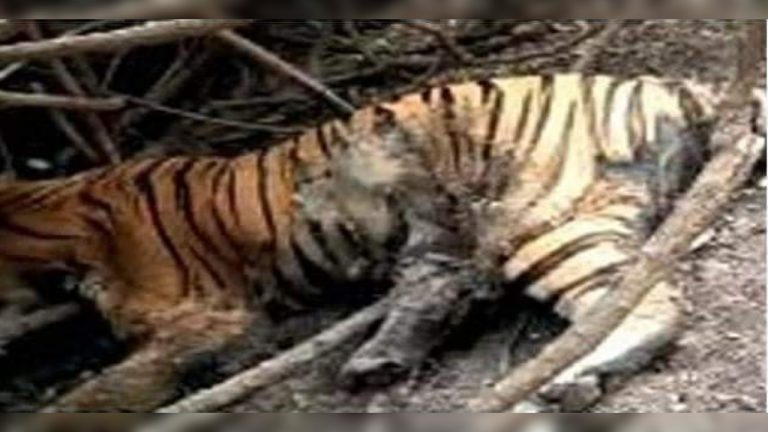
Another incident of the brutal killing of a tiger has come to the fore in the state of Maharashtra. The forest and police department of the Pandharkawada division on Sunday, i.e April 25, found a four-year-old pregnant tigress in the Mukutban forest region.

The matter was kept under wraps for an entire day after which the local agencies got wind of the incident and the news of the death of the tigress finally came out. According to the authorities, unidentified poachers killed the tigress, who was pregnant with four fetuses in her womb. Four days after the incident, the authorities are still clueless about the poachers responsible for the death of the tigress.

The autopsy report of the tigress revealed that the fetuses were 60 days old, and considering the 3-3.5 months pregnancy period of tigers, the tigress would have given birth to cubs in the next month. It was reported that the body of the tigress was found 3 to 4 days after her death. It bore seven injury marks and the poachers had chopped two front paws with an axe.

“It is highly likely that the death of the tigress is the handiwork of some locals engaged in bamboo mats. The tigress was choked to death first by the igniting fire as the pictures show burn bamboo pieces at the cave entrance. She must have tried to come out but the poachers may have blocked the entrances. Later, the poachers must have entered the cave and removed the paws with an axe. Injuries on her body reveal that she was attacked by sharp-edged weapons,” said Subhash Puranik, Pandharkawda DFO (wildlife).

The forest department said they have launched an investigation into the killing of the tigress but so far they have not stumbled upon any clue that could lead to the culprits. “As of now, there are no clues. On Wednesday, the superintendent of police Dilip Patil Bhujbal will himself visit the spot to know about the crime scene. We will soon zero in on the culprits,” said SV Ramarao, the Yavatmal chief conservator of forest (CCF).

This has been the 17th tiger death incident in Maharashtra in the first four months in the year. Out of these 17 deaths, 11 have been due to poaching or under mysterious circumstances not proved yet. The total number of tiger deaths in Maharashtra in this so far is more than the total number of deaths in the year 2020, which was 14.

In the Pandharkawda division itself, this is the third incident of poaching reported in a month. On March 23, another four-year-old tigress had been found ensnared in a wire trap at the Maregaon forest range.

However, the highest number of tiger fatalities have been reported from the Umred Karhandla Wildlife Sanctuary, where a tigress and her cubs were found dead after a suspected poisoning earlier this year.

The Vidarbha region of Maharashtra, which is home to a sizeable Tiger population, has a history of laying wire snares by locals. As per the statistics by the Wildlife Protection Society of India (WPSI), 7 tigers and 15 leopards have died due to wire snares in Maharashtra in the last decade.

Wildlife expert Kishor Rithe laments that despite a long history of laying wire snares to kill wild animals in the entire Pandharkawda division, no lessons have been learned by the government.

Wildlife photographer Sarosh Lodhi says that after so many tiger deaths in the state, no accountability has yet been fixed.

Issues and solutions for Veda Pathashalas: What ails our traditional education and how to solve it

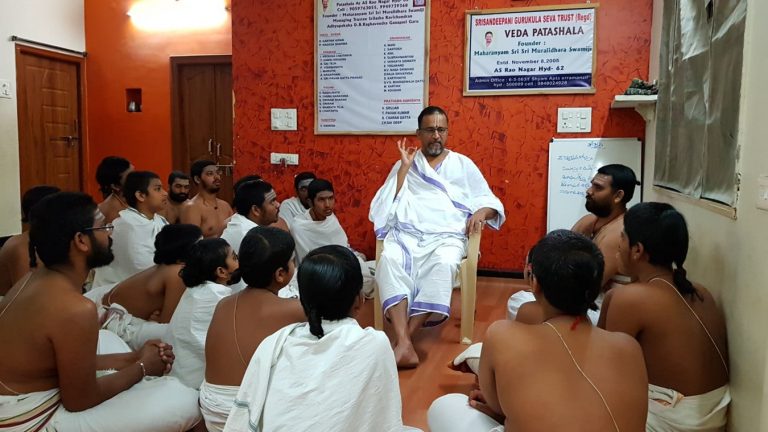
Indians across various walks of life bemoan the loss of traditional knowledge and skills – whether it is arts, crafts or the traditional professions. A big obstacle is the difficulty for younger children to be exposed to these traditional skills at an early age as part of their education itself. There are so many of these skills across India – patachitra, shilpa shastra, Kuchipudi, ghoomar – innumerable to be listed here, which are dying out simply because children are unable to learn these young.

An important constraint is that children have to learn these skills from practitioners, which takes time away from regular 5+3+2+2 education, thereby putting these students at a disadvantage in later life.

One stream of learning which has been continued unbroken through the 70 odd years of independent India is Vedic learning in pathashalas. Let us look at the experience of these pathashalas and possible suggestions to solve them.

Funding

Veda Pathashalas are integrated environments that include boarding, lodging, cooking arrangements, teachers and a goshala with cows to supply essential needs of a Vaidika lifestyle.

At present, the Maharishi Sandipani Rashtriya Ved Vidya Pratishthan, Ujjain, operating as an independent body under the Ministry of HRD, has a budget to pay stipends to teachers and students, conduct seminars and symposia and conduct examinations and give certificates of Veda Bhushan and Veda Vibhushan for students at 10th std & 12th std level.

However, donations to Veda Patasalas and Goshalas are not eligible for tax rebates under 80(G). Neither is any corporate donation to such institutions eligible to be characterized as Corporate Social Responsibility according to Schedule VII of the Companies Act, 2013.

Making these two sources of funding available, by simple clarifications in the form of GOs, will make it easier for Veda Pathashalas to raise funds without having to rely on public funding. Rs 18,000 crore + funds are available for CSR each year, on average. A small fraction – Rs 72 crores annually – is sufficient to put 12,000 students through a high quality residential education in a Veda Pathashala system.

Career Options

Currently, the MSRVVP provides a certificate of Veda Bhushan, equivalent to X Standard and Veda Vibhushan, equivalent to XII Standard, which can be used to obtain admission to college.

However, the only courses that are available relate either to Veda, Vedanga or Sanskrit studies. This restricts career options. Students who wish to opt for other careers have to additionally prepare for the NIOS secondary and senior secondary certificates on their own.

There is a proposal for a Bharatiya Shikshan Board, which has been in the works for several years now.

A solution would be to make two Boards available

  1. A Board functioning directly under Ministry of HRD, which will teach Maths, Science, Social Sciences, Languages primarily and allow students to choose Vedic Studies, Pauranika Studies, Yoga, Ayurveda, Music, Dance, Crafts and other traditional Indian knowledge studies as a curricular option. For example, a student can take Maths, Science, Social Science, English and Yoga instead of a second language. Another student would finish school with Maths, Science, Social Science, Telugu and Kuchipudi as subjects.
  2. A Board functioning under MSRVVP that would include Maths, Science and reduced course loads in English and Social Science. This will help students finishing Veda Bhushan and Veda Vibhushan have a wider choice of options when studying in college. Degrees and careers in Science, Economics, Commerce then become possible for these students.

Formal Board creation and offering Board affiliation for larger Veda Pathashalas would help in making the Veda Bhushan certificate as valid as a X Standard School Leaving Certificate. Without this validity for official purposes, it is difficult to have the Aadhar metrics updated at the 15th year of age for these students and they exist as persona non grata in our society.

Balancing Needs of a Modern Society against demands of Vedic Learning

In order to function in today’s world, all students need to know basic mathematics, science and social sciences. A Secondary School level proficiency is all that is required. So, it is essential that all students completing their studies from Veda Patahshalas are equipped with this level of proficiency.

However, the NIOS examinations are conducted as per expectations for students studying in a regular school for 10 years.

A full Vedic education for a student from the 7th year to the 18th year to train them as a Krishna Yajur Veda Ghanapathi involves at least 10 full years of preparation, with not more than 20 days of breaks per year. Each day of learning starts at 4:30 AM and goes on until 9 PM. Breaks are usually given only for basic ablutions, food and the three fold prayers or sandhyavandanam. Children do not have more than 1 hour of rest and recreation on an average day.

Examinations at each stage are conducted on the full corpus of the specific branch of Vedas that the student is specializing in, which the student is expected to have committed to memory in its entirety. Combining both systems without coordination places a load on students that many baulk at. It is due to this reason that many students of Veda Pathashalas completely avoid these subjects, setting them up for difficulties in navigating a life in modern society later in life.

If the responsibility of testing and certifying X Std level proficiency is given to MSVRRP, they might conduct examinations at a higher frequency and at an appropriate level. Also, giving these as an option will help traditional Patahshalas to get affiliated with regular schools and teachers to make the learning process smoother.

Even after all of these reforms, the learning load for a Vedic student will be higher than regular school-going children, but that can be one of the aspects that parents and students accept.

Administrative Ease

There is only one office for the MSRVVP in Ujjain. The sole website is in English and Hindi alone. Meetings of the Board are held in Ujjain or in Delhi.

We would suggest that branches for the MSRVVP be set up in cultural capitals across the country in Pune, Kanchipuram, Ayodhya and in Kolkata. This will help in creating regional databases of institutions, conduct operations in different Indian languages and be accessible to people in each region.

These reforms and suggestions have been made after deliberation by experts in Vedic education and parents of Veda Pathashala students.

These reforms, if applied to Veda Pathashalas, can be successfully replicated to many traditional subjects – Agama Schools, Shilpa, Natya, Sangita and traditional crafts.

Note: The above article was co-authored with Prof Venugopalan, Sanskrit Scholar, Vedic Pundit, Sri Chandrasekharendra Saraswathi Viswa Mahavidyalaya University (SCSVMV), Member, Projects Committee, Governing Council & General Body, Maharishi Sandipani Rashtriya Ved Vidya Pratishthan.

As Allahabad HC issues notice over Covid-19 deaths in UP panchayat polls, read how the same court had ordered the polls, dismissed PIL to postpone them

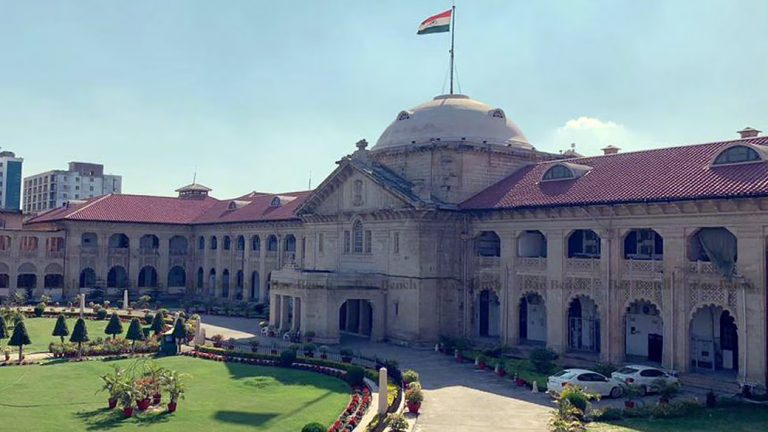
On 27th April, the Allahabad High Court issued to a notice to Uttar Pradesh State Election Commission over the reported Covid-19 related death of around 135 teachers engaged in the recently concluded panchayat elections in the state. A Division Bench comprising of Justices Siddhartha Varma and Ajit Kumar blamed the state poll panel for the deaths during the panchayat polls, saying that it didn’t do anything to protect the people engaged in election duty.

“It appears that neither the police nor, Election Commission did anything to save the people on election duty from getting infected by this deadly virus,” the bench noted, and issued a notice to the State Election Commission asking to explain as to why it failed in checking non-compliance of Covid guidelines during various phases of the panchayat elections. The court also asked the Commission to show cause why action should not be taken against it and its officials for such violations.

The bench alleged that the UP govt was involved in other activities including the Panchayat elections instead of combatting the pandemic. The order said, “it is now an open secret that government had gone complacent due to weakening of virus impact by the end of 2020 in the state and the government got more involved in other activities including Panchayat elections.”

The court was hearing a public interest litigation after news reports saying that large number of teachers, shiksha mitras and Investigators, who were posted for the election duties, died due to Covid-19. While the reports has said that 135 persons have died, later the Teachers’ union in the state claimed that 577 persons died from Covid-19 while on panchayat election duties.

While the court is blaming the state poll panel and the state government for the deaths, left-liberals and Islamists are demanding the resignation of chief minister Yogi Adityanath.

Even though the High Court said that UP govt was more interested in polls instead of Covid-19, the fact is that the state government didn’t even want to conduct the polls, and it was forced to do so only due to an order by the same Allahabad High Court.

Allahabad High Court had ordered to conclude the polls by 30 April

On 4th February, a division bench of justice Munishwar Nath Bhandari and justice Rohit Ranjan Agarwal of the Allahabad High Court had ordered that the panchayat elections should be concluded by 30 April.

The elections were to be held in December last year as the term of the previous gram panchayats and village panchayat heads had expired on 25th December, but it was postponed due to the Covid-19 situation. On February, the poll panel had proposed to conclude the polls by May, but hearing a petition by a former village pradhan in Hathras district in UP, the court had rejected that scheduled and passed an order to conclude the polls by April 30.

The court had said, “as per the mandate of the Constitution, the election of the Panchayat should have been held on or before January 13, 2021,” and had said that they cannot accept the schedule given by Election Commission to complete the polls by May 2021.

Accordingly, the UP State Election Commission had announced  a four-phase election for the panchayats in UP, which were scheduled on April 15, 19, 26 and 29, and the results are scheduled to be declared on 2nd May.

Allahabad High Court had dismissed a petition to postpone the panchayat polls

Not just the Allahabad High Court had ordered to complete the polls by April, it had also dismissed a petition seeking to postpone them when the Covid-19 cases had started to rise. On 7th April, a Division Bench comprising of Chief Justice Govind Mathur and Justice Saurabh Shyam Shamshery had refused to postpone the elections. Dismissing a petition, the bench had said that adequate health protocol for Covid-19 has been notified to be followed at the election booths, and therefore, there is no need to stall the electoral process. The petitioner had said that as there was a massive surge of Coronavirus cases in the state, it will lead to enormous injuries to the public, however, the court had refused the arguments.

A petition seeking an interim stay of the HC order was filed at the Supreme Court on 19th April, but the polls have already concluded before the matter was heard by the apex court on 30 April. The SC has issued to notice to the UP govt and the state election commission in this regard

It may be noted that UP had around 50,000 active cases on 7th April when the PIL was dismissed, up from around 5,000 on 7th February when the court had ordered the polls.

UP govt says it was forced by HC to conduct the polls

Following the criticisms of the state govt following the death of teachers during poll duties, the UP govt has also clarified that it was forced by the court to hold the elections. On 26th April, the UP govt said that it didn’t want to conduct the panchayat elections in the state in view of the coronavirus pandemic, but had to do so following the Allahabad high court’s order to conclude the polls by 30 April.

“The elections were due in December last year. The pandemic led to delay in reorganization and delimitation of panchayats. The writ petitions and subsequent decision of the high court compelled the state government to hold the election,” a state government spokesperson said.

The spokesperson said that the state government initiated the process of the election in compliance of the High Court order. The govt also said that the polls were conducted following all Covid-19 protocol issued by the election commission.

In hindsight, it can be said if the HC order to hold the polls by 30 April was not there and it was scheduled for May as proposed by the poll panel, the elections could have been postponed. India’s Covid-19 numbers were low in February when the HC had issued the order, but it started to rise from the end of March. Therefore, seeing the rise in Covid-19 numbers in many states including Uttar Pradesh, it would not have been difficult to reschedule the polls to a later date, but the poll panel was forced to hold the polls due to the High Court order.

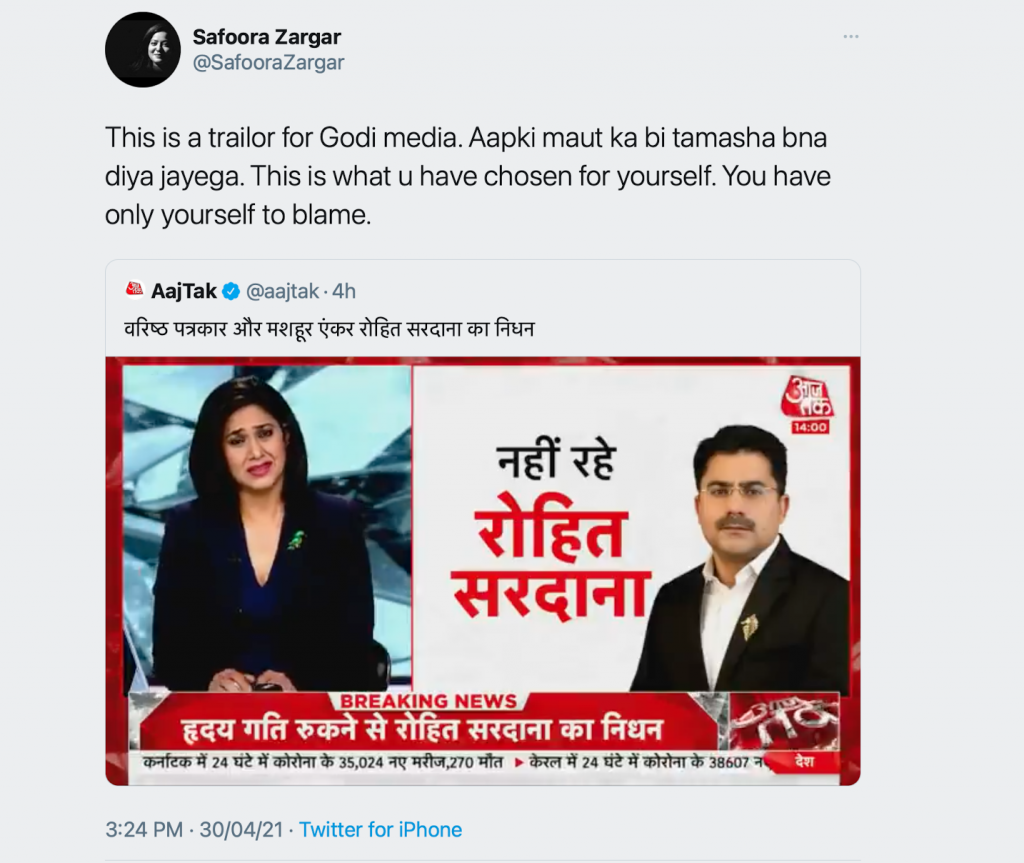
Safoora Zargar celebrates Aaj Tak anchor Rohit Sardana’s death, says ‘maut ka tamasha’ is trailer for ‘Godi Media’

0

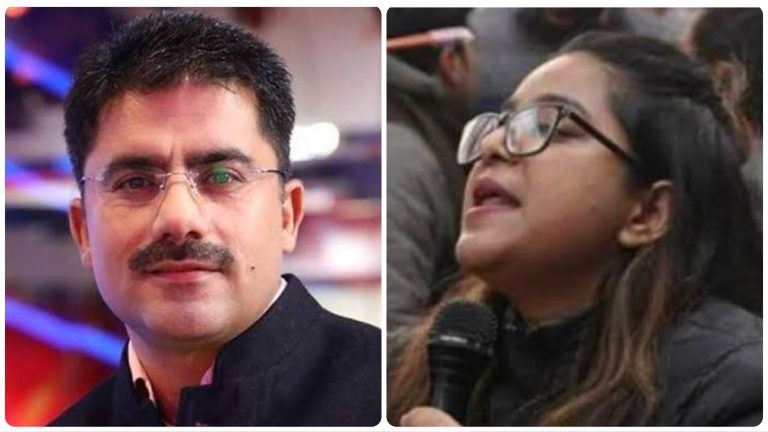
Popular Aaj Tak anchor Rohit Sardana passed away on Friday after suffering a heart attack. He was ailing from the coronavirus at the time of his death. His untimely death came as a major shock to the country, leaving politicians, journalists and eminent personalities from different spheres of life shocked and heartbroken.

However, for some depraved individuals, the sombre occasion of Rohit’s unfortunate death was a moment of joy and celebrations. Islamists, including Newslaundry journalist Sharjeel Usmani, The Print columnist Zainab Sikander, and many others started rejoicing his death and hurling the worst kind of abuses at him.

Safoora Zargar, one of the accused in the horrifying anti-Hindu riots that convulsed Delhi in February 2020, was also one of the Islamists who could not stop herself from hating on the Aaj Tak journalist. In fact, Zargar went to the extent of foreboding a similar fate to the journalists who did not subscribe to her hate-filled ideology.

“This is a trailor for Godi media. Aapki maut ka bi tamasha bna diya jayega. This is what u have chosen for yourself. You have only yourself to blame,” Zargar tweeted.

Safoora Zargar
Source: Twitter

Zargar also slammed ‘liberals’ whom she accused of aggressively downplaying the hate-mongering in their bid to take ‘moral high ground’.

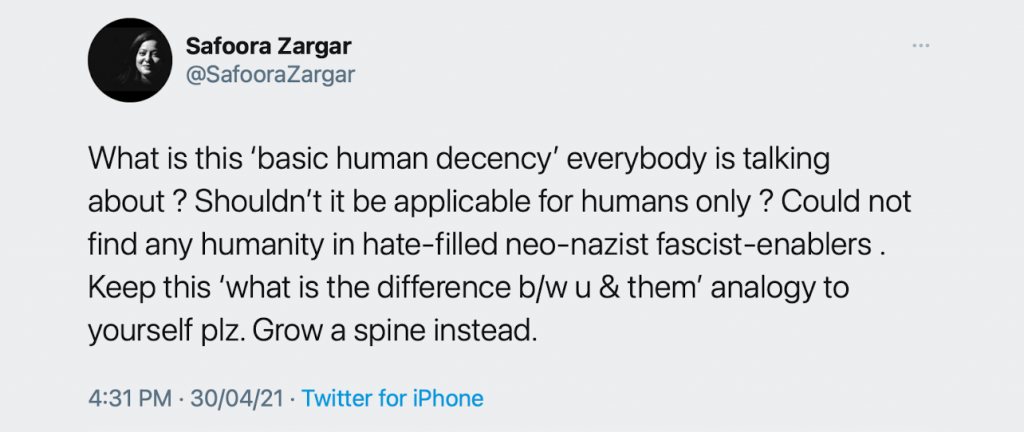
Zargar’s hateful rant did not end just there. When some Twitter users pointed out that her tweet on Rohit Sardana is disgraceful and against the tenets of ‘basic human decency’, she doubled down on her attack against the Aaj Tak journalist.

She argued that basic human decency applies only to humans, insinuating that Rohit Sardana was not a human being. She further reviled the departed news anchor, terming him a ‘neo-nazist fascist enablers’.

“What is this ‘basic human decency’ everybody is talking about ? Shouldn’t it be applicable for humans only ? Could not find any humanity in hate-filled neo-nazist fascist-enablers . Keep this ‘what is the difference b/w u & them’ analogy to yourself plz. Grow a spine instead,” she tweeted.

Safoora Zargar
Source: Twitter

Safoora Zargar was granted bail by Delhi High Court on ‘humanitarian grounds’

Incidentally, Safoora Zargar is out of jail after the Delhi High court granted her bail on ‘humanitarian grounds’. She had applied for bail to the Delhi High Court after a lower court refused to grant her bail.

“When you choose to play with embers, you cannot blame the wind to have carried the spark a bit too far and spread the fire,” the Delhi court had observed while dismissing the bail plea of Jamia coordination committee media coordinator Safoora Zargar.

Zargar was booked under the Unlawful Activities (Prevention) Act for her alleged role in the conspiracy that led to the Delhi Riots in February. The Delhi Police had claimed that she was part of the conspiracy to “destroy, destabilize and disintegrate the Government of India in order to compel to withdraw the Citizenship Amendment Act (CAA) and the alleged National Register of Citizens”.

It is pertinent to note here that Ms Zargar while leading an anti-CAA protest at Jafrabad Metro station on February 22, was well-aware and conscious of the fact that she was pregnant and on her path to motherhood. Yet, she persisted to be involved in the protests that was on the brink of turning violent. Her involvement in the violent protests betrays her apathy to her own pregnancy.

Yet, when all her avenues dried up, Safoora and the left ecosystem cunningly started focusing on her imminent motherhood and pregnancy as grounds for securing bail, instead of laying emphasis on her possible innocence.

Therefore, it doesn’t come as a surprise that Ms Zargar is now dissing Rohit Sardana and showing utter disregard for basic human decency after his death.

Ideally, Ms Zargar should have been the last one to rant against ‘basic human decency’, given that she has herself been one of its beneficiaries. However, as has been the case with almost all the left liberals, their hatred for people with opposing views makes them blind to their own hypocrisies.

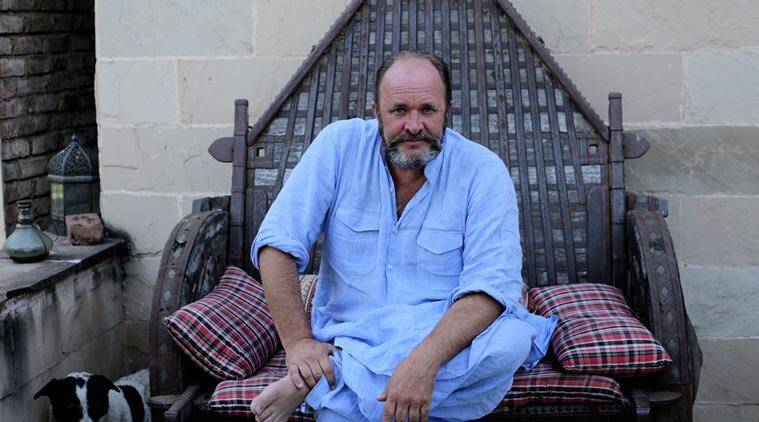
William Dalrymple: Hate and hubris of the perfumed elite, and the Robert Clive-esque sociopathic display of racism in the face of death

As COVID-19 rages on, the world, its media and assorted intellectual necrophiles have descended to feast upon the mortal remains of Indians. Despite the world suffering the pandemic, the white man’s complex has made the USA and its media salivate at the thought of the unwashed masses in India being cremated, but the hundreds. It does somehow make them feel better about themselves. William Dalrymple, one such perfumed elite who is apparently a ‘historian’, who has spent his life telling the unwashed masses of India what to think about themselves, how uncivilised they are and just what the truth about their own history is, fled the country and flaunted his opulent life, in the very face of those who he wanted to “civilise”.

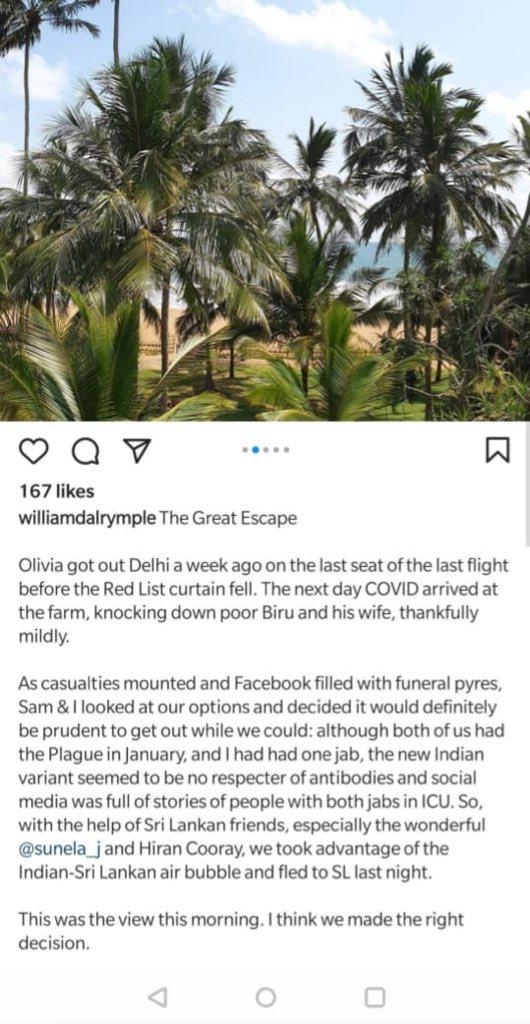
With his tail tucked between his legs, William Dalrymple fled to Sri Lanka and posted a picture from there, of tall coconut trees and the ocean in the distance, to tell the unwashed masses that while he enjoyed the smell of their death, he would rather do it from afar.

He called it ‘The Great Escape”. While I would not accord that level of intelligence to Willy, there is an interesting connotation to the usage of that phrase itself. As if, he was a prisoner of war escaping the great dungeons in which the Nazis threw him. As if India has been led to the path of death by the Nazi forces (Hindus, led by Modi, of course) and he, being a prisoner in an India he hardly recognises anymore (Yes, the damn Hindus asserting themselves), has managed to escape the living hell. Coincidentally, a plot depicted by the 1963 namesake movie.

After talking about escaping ‘Nazis’, Willy talks about how he “fled” to Sri Lanka. And at last, he tells the ‘unwashed masses’ that while they have been held captive by the democratically elected government of India, he has ‘fled’ to a far better place.

The very turn of mind to flee a country ravaged by disease and then dangle opulence in their face points towards a rather deranged disposition. But to do so after decades of teaching those very heathens how to live is a particularly Robert Clive-esque phenomenon.

William Dalrymple himself called Clive an ‘unstable sociopath’ and ‘violent, utterly ruthless and intermittently mentally unstable corporate predator.’

“He was mentally unwell. He twice tried to commit suicide in his youth. He was suffering from serious depression throughout his stint in India and even after his return, and he ended up cutting his own wrist. He was a very troubled man,” says William Dalrymple in a telephonic conversation with Indianexpress.com. “He was the kind of person one would never want to have dinner with. He was morose and hardly spoke. He was a depressive guy. None of his letters show any kind of interest in India” he adds.

He further told Indian Express, “But he (Clive) was both a sociopath and a racist. He was a sociopath in the sense that he was not good company. He was a racist in the sense that he regarded Indians and particularly Indian Muslims as racially inferior”.

Shekhar Bandhopadhyay says about Clive, who plundered India en masse, “In modern terms, the amount amassed was around £232 million, out of which £22 million was reserved for Clive. “Between 1757 and 1760, the Company received Rs 22.5 million from Mir Jafar, Clive himself got in 1759 a personal jagir worth £34,567”.

And after looting and plundering the people of India, he turned around and spit in their faces. In one of his letters, he called Indians “The Moors” who are “indolent, ignorant and cowardly beyond all conception”.

Friedrich Nietzsche once said that, “When you stare into the abyss the abyss stares back at you” and Dalrymple perhaps personifies that emotion.

While plundering India, monetarily and culturally, just like Clive, Dalrymple then turns around and tells the heathens that he is far better than then. After justifying the brutal cuff against Bharat by brutes like Aurangzeb, Dalrymple assumes that it is him who can tell us heathens what to feel about our own oppression, while looting our culture blind.

And one can’t really blame Willy. He is from the crop that has been hoping, not-so-secretly, that far more of us die just so they get to tell us that the “civilised world” is far better than us.

Ever since India managed to manage the first wave of the Coronavirus far more effectively than the rest of the world, the west has been pining for blood. They wondered, openly so, how more Indians did not die. They wondered why and how India had managed to not only handle the pandemic as effectively as it could, but also, help the rest of the world in the process. Under Vaccine Maitri, India sent 6.45 crore vaccine doses to 85 countries, earning unprecedented goodwill. That goodwill did come back to help India during this second wave, when the world pulled together to send supplies to India.

But while India was managing the pandemic and saving the world, one dose of vaccine at a time, the western media wondered how India was doing what it was doing. It is often said that the dead cannot fight for justice and therefore, it is the responsibility of the living to do so. But veiled behind the mask of justice being sought, a band of vultures used the dead to further their own agenda.

The British-American media company Getty Images now hosts multiple images depicting multiple Indian funeral pyres lit ablaze on their website. From here, any potential media group around the world can buy these images, in three different sizes, with the largest size priced at about Rs. 23,000. In fact, most of the large versions of the images are priced at Rs. 23,000.

We had recently reported how Reuters had posted 6 articles and 7 pictures of funeral pyres from India in a span of just 2 days, all, on their home page. Photographs of the most horrifying moments of people’s lives being minted for money.

It is quite evident that there are those who are watching the current tragedy unfold with a sadistic glee. The nature of their employment and the civility of public life is preventing some of them from expressing in accurate words the extent of their joy.

But the glee that they feel in their heart watching India suffering a crisis is so abundant that it seeps into their words and actions even when they are unconscious of it. William Dalrymple is only one such person. There are numerous others who are of a similar opinion. They may preach love all they want but their actions betray their vehement proclamations.

‘He was suffering from Modism’, ‘gaumutra drinking sanghi’: Minutes after Rohit Sardana’s death, Islamists vandalise his Wikipedia page

Rohit Sardana, popular news anchor at Aaj Tak, passed away earlier today. According to reports, he was infected with Covid-19 and suffered a cardiac arrest before the death.

While the tragic news brought condolences from most people on social media, some activists and social media users were celebrating the death, as Sardana was perceived to be from the right-wing by the left-liberals and Islamists. Several Islamists, including those with verified Twitter handles, were abusing the departed soul.

But such hatred for Rohit Sardana was not limited to social media, it was also seen on the Wikipedia page of the journalist. Sardana’s wiki page was updated at 7:10 AM today to reflect his death, and within minutes, Islamists had started to vandalise the page to abuse him.

Within just 35 minutes of the first edit after his death, someone added in the report, “He was also suffering from modism”, replacing the world Covid-19 with Modism. It was just the start of dozens of such edits, abusing the former journalist.

Edits were made in the Wikipedia page calling Sardana a ‘paltu patrakar’ and ‘chu*tiya’, saying that he had a bachelors degree in ‘dallagiri’ etc. People who made the edits without logging into the crowd-sourced encyclopaedia site added that he was a ‘chaddhi sanghi’, a ‘gaumutra drinking sannghi’, a ‘paid bhakt’ etc.

Some people were more blunt about their hatred for Rohit Sardana, who wrote that it was good that the person died, using abusive words for him.

Rohit Sardana’s short Wikipedia page was edited almost 500 times today, with the editors adding the terms ‘Dallal Journalist’, ‘Bootlicker of BJP’ etc.

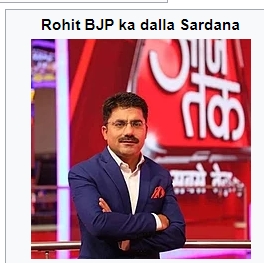
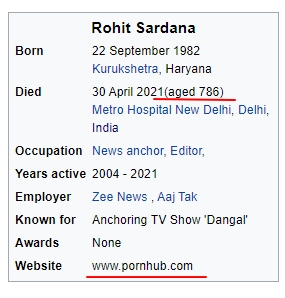
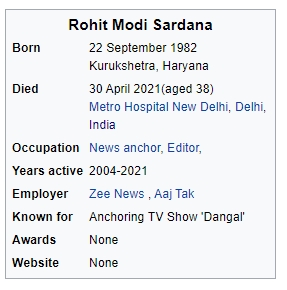
While most people edited the body of the article, some also edited the infobox in the page, adding words like ‘dalla’ and ‘BJP ka dalla’ to his name. In one edit, www.pornhub.com was inserted in the website field, and his age was written as 786.

However, not every vandalism was negative and abusive for Sardana. Reacting to the abuses, pro-Sardana editors also resorted to vandalising the page, by inserting praises for him while removing the edits.

He was described as ‘one of the greatest media news anchor personality’ by one editor, while another described him as ‘Nationalist Journalist and Muslims ka baap’. Some editors added that he was known for ‘deflating Muslim propaganda and for teaching Pseudo liberals strict lessons’.

Not all vandalism were negative or positive for Rohit Sardana. Some of the edits can be considered as vandalism because they added useless information that does not meet Wikipedia standard. In such edits, one person added ‘My uncle was his distant cousin’, while another added, ‘my cousin was nephew of his wife’.

Along with from such vandalism, the Wikipedia page also saw a large number of edits following the death of Rohit Sardana. Apart from updating the page with the information related to his death, there were several conflicting edits on the cause of the death. While some editors said he died of a Heart Attack while suffering from Covid-19, some others changed that to say that he died due to Covid-19. As a result, a tag saying the article is being heavily edited has been inserted on the page.

Adani Vidya Mandir school in Ahmedabad will be converted to COVID-19 care centre: Gautam Adani

0

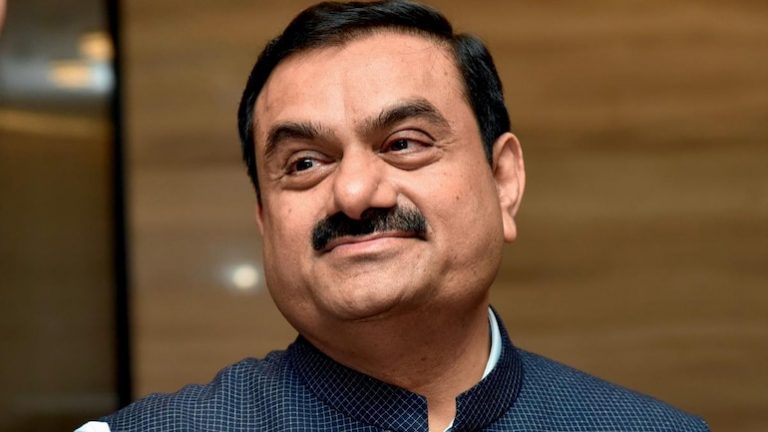
Adani Group Chairman Gautam Adani announced on April 30 that the Adani Foundation will convert the company’s Adani Vidya Mandir School in Ahmedabad to a COVID-19 Care Centre (CCC).

In a post on Twitter, Adani said, “Our Adani Vidya Mandir school in Ahmedabad will be converted by the @AdaniFoundation into a COVID Care Centre with oxygen support and other medical amenities. This will lighten the ever-increasing patient load on our hospitals. विद्यादान से जीवनदान(from giving education to giving life).”

The decision came in the midst of a rampaging coronavirus outbreak that is putting immense strain on the country’s healthcare infrastructure. Ahmedabad, the largest city of Gujarat, is also facing a raging COVID-19 outbreak as the number of daily new cases are steadily increasing.

As per an ANI report, the facility that will soon be converted to Covid Care Centre aims to reduce the load on the city’s government and private health infrastructure and take care of those isolated from their families. The facility would also play a pivotal role in slowing the spread of COVID-19.

“The government and healthcare institutions are pooling their resources to contain this fast-spreading pandemic. We must support them in every possible way we can,” said the Adani Foundation. It further added that they expect to harness the group’s execution experience in rapidly putting up the infrastructure at the Adani Vidya Mandir.

“We will convert our school’s halls of learning into halls of life – from vidya-daan to jeevan-daan,” the group said.

Adani Foundation will provide beds, nutritious food and medical care

Through this facility, the Foundation will provide patient beds, nutritious food and medical care. The transformation of the school into a health care facility will involve arranging accommodation, setting up resting units for both patients and medical personnel, and establishment of technical facilities to provide medical oxygen, medical supplies and monitoring systems. Besides, the centres will also institute the registration, reporting and security protocols required by the government, the city administration and state health authorities.

“The challenging task of creating a COVID centre in three to four days was taken up by the group during its conversation with Gujarat chief minister Vijay Rupani, who asked the group on how could it contribute to this unprecedented situation,” the Adani Foundation said.

“The government of Gujarat has been extremely proactive and helpful in this endeavour,” they added.

The Adani Group is already involved in helping the government in the COVID-19 crisis. It has put to use its global business relations and logistical prowess for sourcing and importing vital essentials like over 40 ISO cryogenic containers for oxygen supply, 20 oxygen plants each capable of supporting over 100 oxygen beds hospital, 120 oxygen concentrators and 5000 oxygen cylinders from Singapore, Saudi Arabia, Thailand and Dubai.

Furthermore, the group is also assisting the administration by providing oxygen refilling services on a continuous basis at many places. It has also been working with Noida Authority to set up a similar COVID Care Centre in Noida.

‘I don’t want to be another Ayesha’: Muslim woman, tortured for dowry, appeals to PM Modi, CM Yogi to save her from in-laws

A video has gone viral on the internet where a Muslim woman called Hina Khan is pleading with authorities to save her life alleging that she is being harassed due to dowry. She alleged that her in-laws are subjecting her to violence due to dowry.

Hina Khan says that she has approached the police over the matter but has not received any help. “I don’t want to die,” she says in the video. “I do not want to become another Ayesha,” she says. She is believed to be from Bulandshahr, Uttar Pradesh.

She also appealed to Uttar Pradesh Chief Minister Yogi Adityanath and Prime Minister Narendra Modi to help her in her time of distress. She says that she has been running from pillar to post for the past six months but has not received any help because she does not have the money to bribe the authorities.

Hina Khan also appealed to journalists to highlight her plight so that she receives justice. She says that her in-laws are threatening her life and says she will be killed.

The Ayesha referred to in her plea is Ayesha Khan from Gujarat who had committed suicide after being harassed by her husband and in-laws for dowry. Ayesha had recorded a video before jumping into the Sabarmati River.

The suicide video triggered a wave of sympathy for the victim following which the husband was arrested by the Police before receiving bail.