Home Blog Page 4421

World’s most dangerous ideology: Indian youth should recognize Communism for the evil it is

The other day, I heard that some 900 students at Ashoka University attended a lecture by Pratap Bhanu Mehta where they discussed Karl Marx and his book Das Kapital. What did they learn, exactly?

I do not know. I wasn’t there. But I know that all the lessons they need about Marx exist already in the world outside of the classroom. If they want to learn, they need to look outside, not inside. Yesterday, 22 jawans laid down their lives fighting Communism in Bijapur district in Chhattisgarh. Most of them would have been from families who would not be able to pay what it takes to attend a luxury university and listen to an intellectual discuss Marxism.

Why am I mixing up civil society issues with security issues? Because, in this case, the close relation between the two shapes public attitudes towards and hence the reaction from the state.

Now, if the past is anything to go by, this incident will be forgotten soon enough. We forgot Dantewada 2010 and the 76 CRPF jawans who died there. Every year, we manage to forget literally hundreds of Communist terror attacks. We already forgot the attack in Narayanpur in Chhattisgarh, in which five jawans were killed. And that was only last week. In fact, we have managed to all but forget that Communists have occupied large portions of Indian territory in the states of Jharkhand, Chhattisgarh and Odisha.

But why? We never give such leeway to Islamic terrorists or to Pakistan. We all remember the infamous terrorist attacks: Pulwama, Uri, Pathankot, Mumbai 26/11 and so many more. Every Indian is acutely aware of how Pakistan occupied Kashmir. If Pakistani troops violated the border tomorrow and tried to seize say the city of Jaisalmer, they would have hell to pay. For most of last year, Indians closely followed what happened between Finger 4 and Finger 8 of Pangong Tso in Ladakh, determined not to cede another inch of territory to the Chinese. But, consider this.

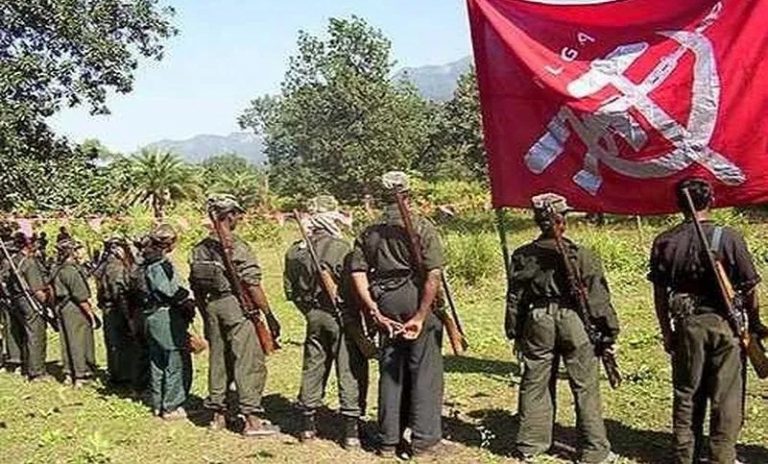
One of these is the flag of the Communist Party of China. The other is the flag of the banned CPI(Maoist). Can you tell which is which? And more importantly, does it matter? Why do we take one threat so seriously and all but ignore the other?

The Chinese Communist Party does not need the PLA to seize Indian territory. That would mean facing the entire might of the Indian Army, which would prove very risky and very costly. Instead, they can just change one color in their flag and go on rampage across India, grabbing territory and killing our civilians and jawans. We wouldn’t even notice, let alone resist.

Because our minds have been trained by the larger society to see the Communist cause as fundamentally just. And this hold is so strong that we don’t learn from history. We do not even learn from the clear and present danger in our daily lives. And we do not learn from weekly news stories detailing the atrocities committed by Communists.

We all know the facts about the history of Communism, or at least we should. The Communist empire of the Soviets starved millions of people to death, most of them deliberately. Many of the nationalities of Eastern Europe, such as Polish and Ukrainians, were tackled with straight up “death quotas,” with hundreds of thousands picked up from their homes and shot en masse. The Communists fought on the side of Hitler for the first two years of the Second World War, until the Nazis dumped them. The Communists starved some 30 million people to death in China. Who were Pol Pot, Fidel Castro and Kim Jong Il? All Communists. No other ideology in the world has such an impressive record of turning out dictators and mass murderers.

And yet, we are somehow conditioned to believe that there must be something good about the Communists. That your average Communist is some kind of lovable nerd with an odd sense of fashion, a soul for poetry and an eye for human suffering. You are thinking about the soft exterior shell of Communism. Dig deeper and you will discover that the final solution on offer is always a death camp.

In life, you learn nothing unless you ask the right questions. A number of Indians will rationalize the violence in Chhattisgarh and the value system of the Naxalites. You must have come across at least a couple of these people yourself. They see it as a struggle by tribal people to protect their land.

Really? First of all, do you know of any other group of people that is fighting against building of schools, hospitals, roads, railways and factories? Why would you assume that tribal communities think about life so differently? Is that not kind of insulting? Second, if the violence had nothing to do with Communism, why would Naxalites raise the Communist flag at all? Because you and I are outsiders, but Karl Marx is indigenous to the land?

Just like this bogey of tribal rights, the Communists have prepared a number of smokescreens to hide their real agenda. One of these is that you can never pin down who actually represents the Communists. They have set up dozens of closely related isms such as Marxism, Leninism, Maoism, Marxism-Leninism and the like. Each one differs from the other in unintelligible ways. The idea is that when you put the spotlight on the crimes of one, the other factions distance themselves quickly.

And yet, the Chinese Communist Party and all factions of the Communist Party in India (both legal and illegal) use nearly the same flag and have an identical set of heroes. For people who claim to be totally different, they spend an awful lot of time copying each other.

Do you know the other reason the Communists are divided into so many splinter groups? Because Communists are fundamentally intolerant. Any two people in an organization will always disagree on something or the other. But for Communists, every difference of opinion is worth killing over. You will see the same pattern with Islamic terrorists. Every jihadi faction is convinced that only they have the truth and all other factions are working for the devil.

These days, we talk a lot about dangers to our democracy. The good news is that we want to be vigilant. The bad news is that we are mostly ignoring Communism, which is the biggest danger of all. In many tribal regions such as Bastar, polling has to be completed by 3 pm so that the polling officers can leave before evening sets in. Voters in these areas are often too scared to get their fingers inked after voting. If the Communists see someone with ink on their finger, they might chop off the finger … or even the neck.

Is that a big enough danger to democracy for us to take notice? Or do we spend all our time discussing the plight of those who can make more money by resigning a job (in dramatic style) instead of doing that job? If you have failed to teach young minds about the danger of Communism, you should be fired anyway. You don’t get to resign and become a hero.

We need to stop making nonsensical excuses for Naxalism and go liberate our people living under Communist occupation in the hinterland.

Oh, and I am still not telling which flag belongs to the Communist Party of China and which one belongs to the CPI(Maoist). Mostly because it does not matter.
Sikh youths lured by Gurpatwant Singh Pannu’s promise of $2500 now languish in jail, families curse the SFJ leader: Know all about the case

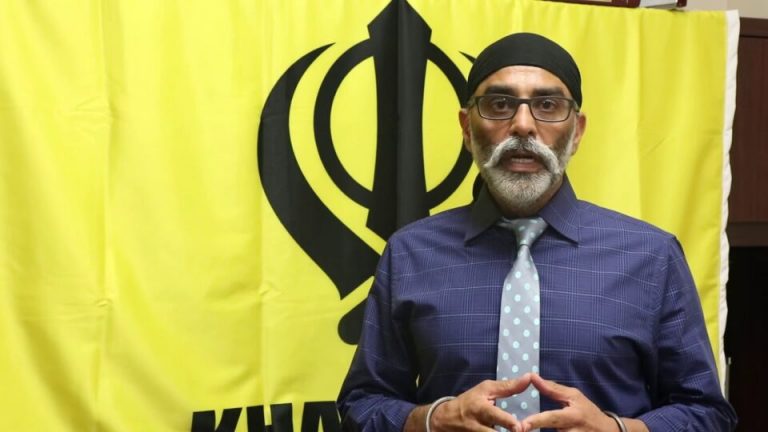
Three Sikh youths who planted flags of Khalistan at the administrative complex Moga district on the 14th of August, 2020 after Sikhs for Justice leader Gurpatwant Singh Pannu called for the same are now languishing in jail, Sukhi Chahal, Editor-in-Chief of The Khalsa Today said.

The families of the youth were cursing Gurpatwant Singh Pannu for leading the Sikh youth astray, Chahal revealed. He lured them with the promise of $2500 but did not pay any money after the deed was done.

Chahal said that criminals sitting abroad were ruining the lives of those in India by radicalising the Punjab youth. He said, “This case should leave no one in doubt that by falling prey to such lucrative misconceived offers, they are only putting themselves in the firing line. Stay away from anti-India forces is the lesson to learn.”

The Moga Police had registered a case under sections 124A (sedition) and 121 (waging war against the government) of the Indian Penal Code, and other sections of the Prevention of Insult to National Honours Act.

SSP Harmanbir Singh Gill had said that the youths had “probably fallen in the trap of banned outfit Sikhs for Justice (SFJ) head Gurpatwant Singh Pannu’s announcement”.

“The two youths reached the DC office complex terrace and hanged a ‘kesari’ (saffron) flag with Khanda (symbol of Sikh faith) printed on it. The flag also had ‘Khalistan’ written on it with paint. The flags with ‘Khanda’ are normally available in market. The banned Sikhs for Justice head Gurpatwant Singh Pannu has made several announcements offering $2,500 or $25,000 to those who would do this cowardly act.and it is most probably an act by those youths who wanted to make some easy money,” he said.

“As per the CCTV clips, they came around 8.15 am when sweepers had opened all rooms and offices for cleaning. They reached the terrace and raised this Khalistan flag and while returning, they took down the Indian national flag which was placed on the flag post. They first cut the string of the tricolour, brought it down and took it along with them. It was a cowardly and anti-national act,” the SSP added.

Gurpatwant Singh Pannuhad said in videos, promising $2500, “Haryana, which was one a part of Punjab, will be a part of Khalistan”.

Ludhiana MP Ravneet Singh Bittu, had commented, “The poison being spread by Pannu and Jathedar Sahib has shown its affect in Moga where two persons removed the tricolour.and hoisted the Khalistani flag above DC office. The law should arrest these anti-national elements and put a mark of ‘traitors’ on their forehead. Now it is time to clearly differentiate between those who love this country and those who want to destroy it.”

The Sikhs for Justice leader had also attempted to use the ‘farmer protests’ to radicalise the youths of Punjab. He had also incited Sikh soldiers in the Indian Army to “Leave Ladakh border and join Singhu border”. He had also urged West Bengal and Maharashtra Chief Ministers to declare independence from India earlier in the year.

Chhattisgarh: 22 jawans martyred in Naxal encounter, search operations underway to find the missing soldiers in Bijapur

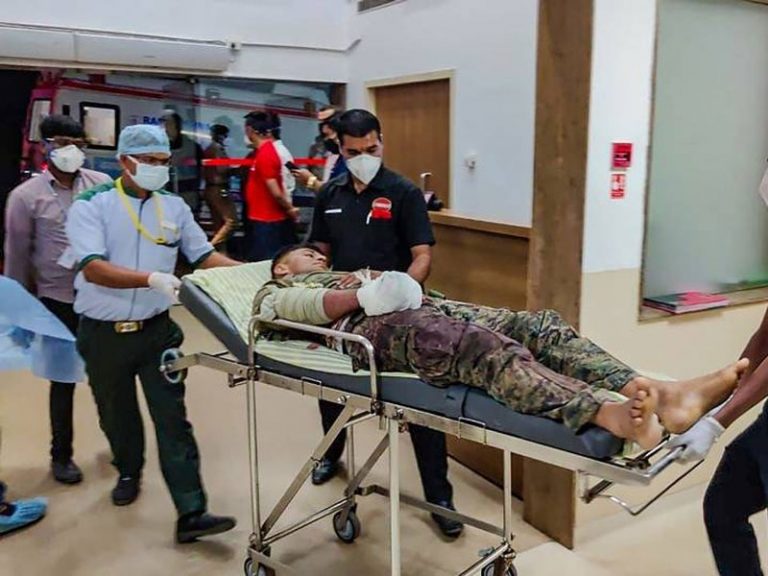
The death toll in the Bijapur Naxal encounter rose to 22 by today. Reports suggest that 21 security personnel are still missing. Large scale search operations are underway to rescue the missing personnel. The encounter broke out on April 3, in which several Jawans were injured. They were taken to the hospital for treatment. Yesterday, 5 bodies were recovered, while today 17 more bodies of security forces were recovered from the ambush site.

On Saturday, separate joint teams of security forces, with over 2,000 personnel, had launched a major operation against the Naxal terrorists from Bijapur and Sukma districts in the South Bastar forests, considered a Maoist stronghold. At around 12 noon, the Maoists trapped and ambushed one of the teams of the security forces. The ambush led to an encounter that lasted for three hours. At least two Maoist terrorists have been confirmed to be dead in the gunfight.

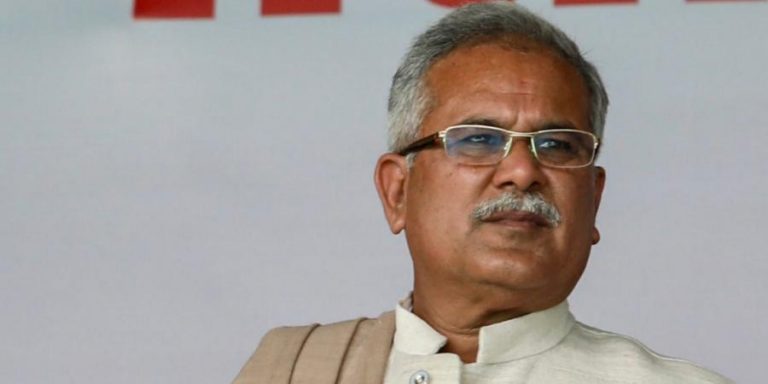
Union Home Minister Amit Shah spoke to Bhupesh Baghel, CM, Chhattisgarh, over the phone and discussed the incident in detail.

Baghel, while informing the home minister about the ground reality of the encounter, said, “The damage caused to the security forces in the encounter is very tragic. But the morale of the security forces is still strong, and only we will win this fight against Naxal violence.”

The Home Minister assured the CM to provide all necessary help and said the centre would work with the state to win the battle against the Maoists. He also informed the CM that instructions had been issued to the Director-General of CRPF to visit the incident’s site.

CM Baghel, in a statement to the media, said that the villagers had lost faith in the Maoists as they are continuously disrupting the development work in the area. He added that the villagers are now joining the mainstream of development. The improvement in health, education and other facilities in the Naxal-hit regions encourages people to alienate the Maoist ideology. As per CM Baghel, the Maoists are carrying out such attacks as a retaliation to the development work in the region.

Baghel kept on rallying in Assam hours after the attack

Even after several hours since the news of the attack on security personnel broke, Chhattisgarh CM Baghel decided to stay in Assam, campaigning for Congress for the ongoing Assembly elections. Baghel was criticised on social media for not cutting short his appearance in rallies in Assam.

Protesting farmer beaten to death by fellow protestor from his village at Tikri border, accused arrested

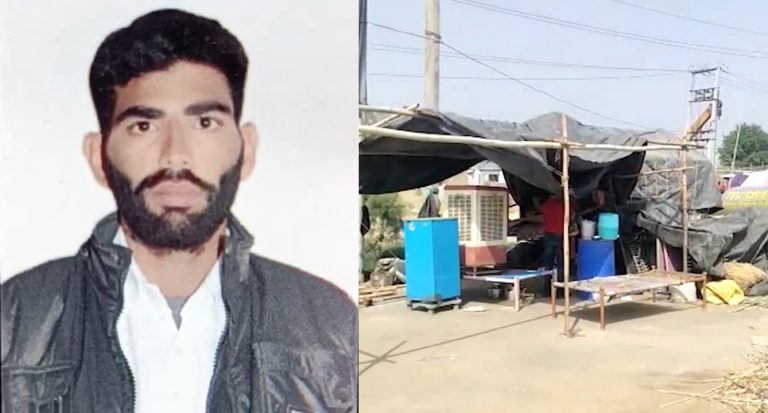
On Friday (April 2) night, a 26-year-old anti-farm law protestor was murdered by a fellow farmer protestor near Kasar village on the outskirts of Bahadurgarh at the Tikri border in Delhi.

As per reports, the victim has been identified as Gurpreet Singh. He was a resident of Barnala in the State of Punjab. The accused, Ranbir Singh alias Satta Singh, hails from the same village. Both of them had been camping at the Tikri border to protest against the farm laws enacted by the Modi government. On Friday, a fight ensued between the two over a monetary dispute in their tent.

An agitated Ranbir thrashed Gurpreet with a lathi and injured him badly. After committing the crime, he fled the scene. Gurpreet was rescued by other anti-farm law protestors, who then admitted the victim to the civil hospital in Bahadurgarh. He later succumbed to his injuries in the hospital. The police have registered a case against the absconding Ranbir Singh on the basis of a complaint by the victim’s uncle Nahar Singh.

While speaking about the matter, SHO (Bahadurgarh Sector 6) Jai Bhagwan informed, “They had an argument over money exchange and Ranbir beat up Gurpreet with a lathi. Other protesters camping at the site rushed to Gurpreet’s rescue and got him admitted to the civil hospital in Bahadurgarh, where he died.”

The accused Ranbir Singh has been booked under Indian Penal Code Section (IPC) 302 (murder). Although he was absconding after committing the crime, he was later arrested by the police. On Saturday he was remanded to judicial custody. “Since it was an identified accused. We rushed our police parties and arrested him. He has confessed to have murdered him,” Jhajjar SP Rajesh Duggal said.

Elderly farmer protestor found murdered at Tikri border a week ago

This is not the first time that such an incident has come to light. On March 25, a 60-year-old farmer named Hakam Singh was found dead with a slit throat. According to the police, Singh was murdered using a ‘sharp-edged weapon.’ His dead body was discovered by other anti-farm law protestors in a field behind the new bus stand at the Tikri border.

A member of Bhartiya Kisan Union (Sidhupur), he had been participating in the farmer protests but went home for about 1-1.5 months. After returning to the protest site on March 25 morning, his sister-in-law Karamjeet received information that his dead body has been found in the evening. The police had registered a case of murder against unidentified people under IPC Section 302 (murder).

While speaking about the matter, Inspector Vijay Singh (SHO City Bahadurgarh) informed, “The FIR has been registered just this (March 27) afternoon. The post-mortem is being completed today and the body handed over to the deceased’s family. We are yet to identify the accused, the matter is under investigation.”

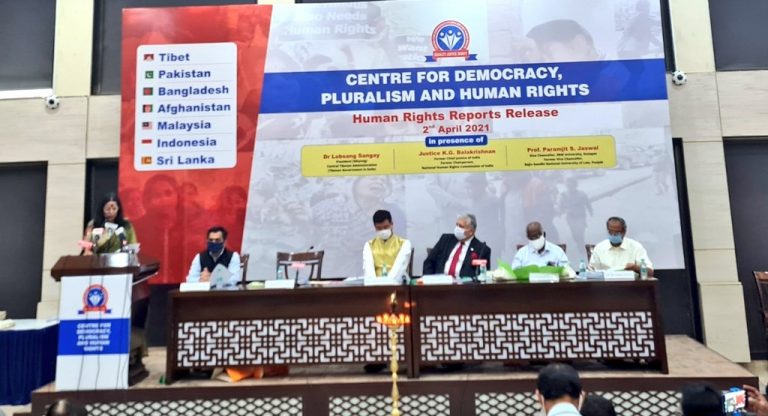
CDPHR releases human rights report of 7 neighbouring countries, raises concern over vanishing population of Hindus

Centre for Democracy, Pluralism and Human Rights (CDPHR), an organization that works towards advocating equality, justice and human rights, has released reports of India’s seven neighbouring countries, highlighting grave human rights violations against minorities, especially Hindus.

The reports released on Pakistan, Bangladesh, Afghanistan, Indonesia, Malaysia, Sri Lanka and Tibet have been prepared using previous years’ reports from international human rights bodies, human rights activists and NGOs, media reports, narrations of credible writers and interviews of the actual sufferers of the ordeal.

The reports, especially of Pakistan, Bangladesh and Afghanistan highlight the miserable condition of minorities like Hindus and Sikhs whose population has been dwindling consistently in these Islamic nations. Forced conversion, denial of basic rights, restricted freedom to practice religion and abductions and killings of minorities have plagued the neighbouring nations.

Pakistan:

While Pakistan’s Constitution provides equal rights to all citizens on paper, the reality is, religious minorities like Hindus, Christians, Sikhs, Buddhists, Ahmadis even Shias – are treated as non-citizens in the country. Religious tolerance in Pakistan has steadily declined. The data collected in the census of 1998 revealed that Hindus constitute just 1.6% and Christians 1.59% of the total population of Pakistan.

Minor girls from the minority communities are targeted by the Muslim-dominated population in a bid to convert the remaining population. According to Asian Human Rights Watch reports, each month there are at least 20-25 cases of kidnappings and forced conversion of Hindu girls in Sindh region of Pakistan. According to a report released by the Movement of Solidarity and Peace in Pakistan, up to 300 Hindu women are forced to convert and marry Muslim men every year in Pakistan.

Major form of violence perpetrated against religious minorities is in the form of physical attacks, killings of popular community leaders from the minority, destruction of cultural symbols and places of worship, honor killings, rapes and acid attacks.

Making use of blasphemy as a legal way to persecute minorities, mobs attack homes, businesses and religious places belonging to the Hindu and other minority communities. Highlighting the recent gross human right violation in Pakistan, the U.S. Commission on International Religious Freedom (USCIRF) had expressed concerns when Hindus and Christians were denied food amid coronavirus outbreak in Pakistan.

Bangaldesh:

A “secular” nation at the time of formation, Bangladesh, in just 4 years after gaining independence, removed the word secular from the constitution and included verses from the Quran, thereby, declaring it as an Islamic country. Violence against religious and ethnic minority women remains a popular tool by Islamists in Bangladesh to attack and dominate the minorities.

When the globe was reeling under the impact of the coronavirus pandemic, between January to August 2020, 889 cases of rapes and 191 cases of attempted rapes out of which 41 girls/women were murdered after rape and 13 committed suicide were reported.

The Hindu population in Bangladesh is soon depleting from 23% in 1951 to 9% in 2017. As per a study, at the present rate of persecution, there will be no Hindus in Bangladesh in the next 25 years.

Since the past seven decades, there has not been a single decade without large-scale violence against religious minorities, violation of their religious right to practice faith, abductions, rapes and killings of their girls, desecration of their religious places and symbols. Around 400-500 Hindus are forced to leave the country every day. According to a Minority Rights Report, 8.1 million Hindus are ‘missing’ as per the records between 1964 to 2001, which makes it 219,000 people annually.

An environment of animosity has been created to make the minorities feel like second-class citizens including calling Bengali Hindus ‘Malaun’, a slur that means accursed people. Moreover religious sanctions to kill kaffirs have led to increased violence against the minorities.

Afghanistan:

It is interesting to note that, our neighbor Afghanistan does not recognize or define the term ‘minority’ in its constitution, let alone making any special provisions for them. As per the July 2011 UNHCR report, around 50,000 Sikhs and Hindus lived in Afghanistan in 1990. However, persecution of Hindus and Sikhs has increased drastically in recent years, forcing most of them out of the country. As per a South Asia State of Minorities Report, 2018, their numbers have been reduced down to a mere 220 families.

Reports suggest an increase in restricted freedom to follow a religion, forced conversions, abductions and killings. The report also highlights the despicable act of snatching creamation grounds dedicated to the minorities.

The Taliban regime has released orders for the non-Muslims which forbids non-Muslims from building places of worship but allowed them to worship at existing holy sites; forbade non-Muslims from criticizing Muslims; ordered non-Muslims to identify their houses by placing a yellow cloth on their rooftops; forbade non-Muslims from living in the same residence as Muslims; and required that non-Muslim women wear a yellow dress with a special mark so that Muslims could keep distance from them. In addition to the daily economic and social discrimination, sometimes manifesting as physical and verbal abuse, freedom to practice their religion has also been curtailed. Kabul, once home to eight Sikh places of worship or gurdwaras, most stand destroyed at present. Hindu women were forced to wear burqas against their will.

To add to it, the Afghan government has not been submitting state reports concerning socio-economic and political rights of minorities, women and children to international human rights conventions and organizations.

Indonesia:

Rising radicalism in Indonesia has had repercussions on Hindus, Buddhists, Christians women and children. In the last two decades, the country has witnessed a strong influence of inter-religious conflicts. Large-scale conversions have been carried out by Islamic seminaries forcefully in the region of West Papua and other islands where there is a predominance of other non-Islamic adherents.

For the last decade, Indonesia has witnessed increasing supremacy of Islamic religious authorities, creating hurdles by making rules to prevent inter-religious marriages, and making them more pro-Islamic. There has been an attempt to re-Islamize the country and the fundamental rights of women have been crushed under Sharia law.

Indonesia has also rejected the seventy-five recommendations of the United Nations’ member countries recommendations to improve Indonesia’s human rights violations. They ranged from the draconian blasphemy law to death penalty, however, the Indonesian government’s shut the discussion by declaring the recommendations as “hard to accept” for the country.

Malaysia:

Malaysia recognizes Islam as the state religion, making it difficult for other religions to practice their faith freely. Over the past few decades, Malaysia has made a huge transition towards the Wahhabi philosophy. The Saudi Arabia funding to the Malaysian government, especially under the Najib Razak government, led the country towards a more hard-line stance on matters related to religion and social life.

Religious conversions have increased over the past few years making minorities a vulnerable group. In a strange law system, the Islamic Shariah law runs along parallel tracks with the civil court laws. This means that if a dispute arises between a Muslim and non-Muslim, the Shariah court can intervene and take the matter into its hands to safeguard a Muslim even if he/she has committed an offense against a Hindu or any other minority.

Tibet:

Since the communist government of China has occupied Tibet in 1951, it has adopted severe crackdown measures and flooded Chinese soldiers and paramilitary forces in the region. The atrocities committed against the local population is beyond belief.

Tibetans are being deprived of their rights to use their language in terms of teaching their children in their own language, forceful imposition of atheism, criminalizing peaceful assembly, association and protests, prolonged pre-trial detentions of Tibetan activists to extract forced confessions used to sentence them to harsh punishments, restrictions to practice their religion and a complete crackdown on journalistic freedom. There are just a few highlighted issues from the report indicating the grim condition of the local community.

Sri Lanka:

The Center for Democracy Pluralism and Human Rights report has also raised concerns over the status of human rights and religious minorities in Sri Lanka. Talking about the civil war, the report suggested that at least 100,000 people lost their lives and 20,000 Tamils ​​disappeared in the 26-year-long civil war.

Naxals kill CRPF soldiers, but Rahul Gandhi forgets to pull up Congress govt in Chhattisgarh for the left-wing terrorism

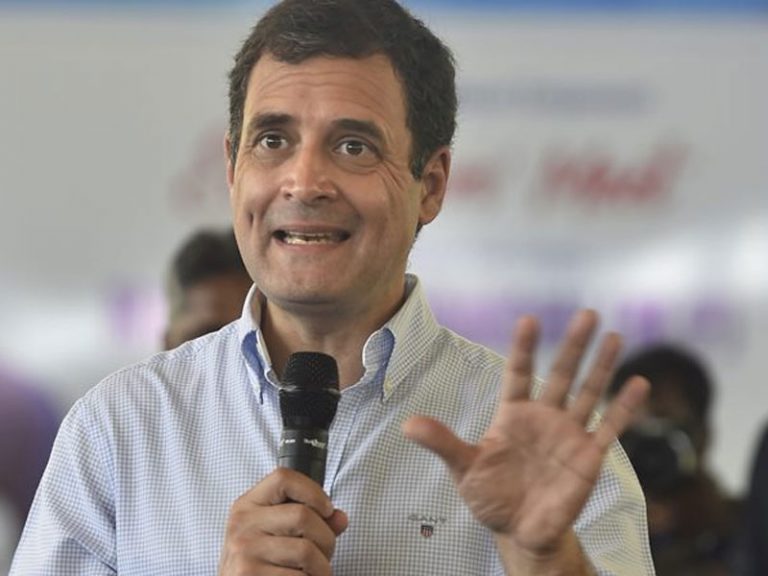
On April 4, Congress leader Rahul Gandhi posted a condolence message on Twitter over the Maoist attack on security forces in Chhattishgarh, in which he urged the state government to take action to locate and rescue the missing Jawans. He also appealed to the Chhattishgarh Government to ensure the best care for the injured. He said, “My condolences to the families of the martyrs who sacrificed their lives in combat in Chhattisgarh. Decisive action needs to be taken to locate & rescue the missing Jawans. I appeal to the State Govt to ensure best care for a speedy recovery of the injured.”

Gandhi forgot to mention Naxals or left-wing terrorism

While urging the Congress-led Chhattisgarh government to take swift action to rescue the missing Jawans and ensure arrangements for the speedy recovery of the injured, Gandhi completely forgot to mention the Naxals who were behind the attack. It is unclear if the Congress leader skipped mentioning left-wing terrorism intentionally or unintentionally. Notably, Congress is contesting West Bengal Assembly elections in alliance with left parties.

Rahul Gandhi also refrained from advising his party’s government in the state to take strong action to contain red-terror in the state.

The Naxal attack

On April 3, reportedly, many Naxals ambushed the CRPF party and killed at least 22 Jawans and injured several Jawans. Several of them were part of the CoBRA (Commando Battalions for Resolute Action) unit. The others were part of the Bastariya Battalion of the Central Reserve Police Force (CRPF) and the District Reserve Guard (DRG). In ongoing operations, around 15 Maoists have killed in the last two days.

Naxal activities in Chhattisgarh

Chhattisgarh has been a hotbed for Naxal activities for decades. The state was formed in November 2000. Since its formation, the Naxal-hit areas have been a significant concern for the administration. As per the government records, the most affected regions are Bastar, Bijajpur, Dantewada, Jashpur, Kanker, Korea (Baikunthpur), Narayanpur, Rajnandgaon, Sarguja, Dhamtari, Mahasamund, Gariyaband, Balod, Sukma, Kondagaon and Balrampur.

According to South Asia Terrorism Portal (SATP), there were at least 70 incidents of killing (28 civilians, 37 SF personnel, and 70 Maoists), resulting in 135 fatalities in violence linked to left-wing extremism in 2020. While in 2020 122 (30 civilians, 19 SF personnel and 73 Maoists) were killed in 72 incidents.

Rajdeep Sardesai receives multiple awards for ‘best journalism’ after he was kicked off air for sharing fake news

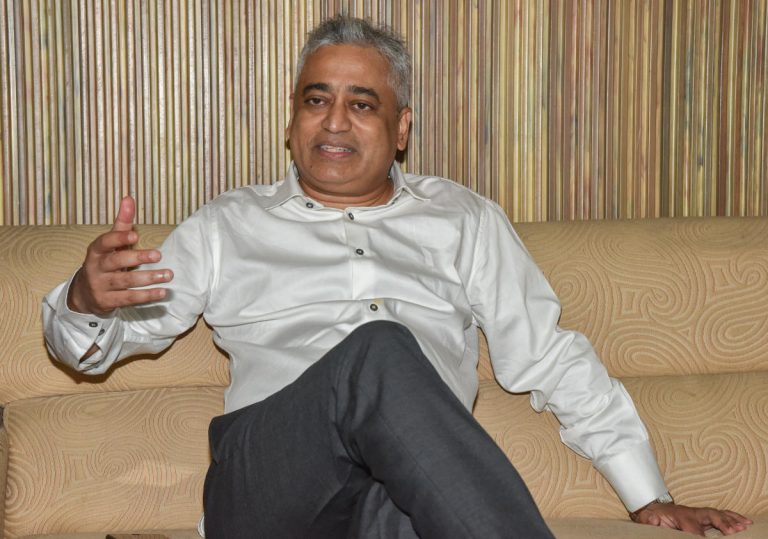
Propagandist-in-Chief Rajdeep Sardesai received multiple awards at the ENBA Awards on Saturday. He received awards in a variety of categories. Incidentally, the awards come only a few months after Rajdeep Sardesai was forced off air for peddling fake news during the Republic Day Riots.

Rajdeep Sardesai received awards for Best Anchor, Best News Coverage: National, Best Talk Show, Best News Coverage: International and Best Business Programme categories in English. Only in January, he was kicked off air for about a month for airing fake news about the death of a protester during the Republic Day riots.

While Navreet had died after the tractor he was driving to break police barricades turned turtle, Sardesai put up a tweet claiming that he was shot at by police. He even went on to make the claims live on air. He had said on air that he was shown the body of the farmer with bullet injury on the head. However, the video footage released by Delhi Police show that he died after his tractor turned turtle while he tried to break police barricades.

Rajdeep Sardesai had also suffered a lot of embarrassment recently when he had participated in the fake controversy over the portrait of Netaji Subhash Chandra Bose at the Rashtrapati Bhawan. After his prolonged absence, he was reinstated by India Today on the 23rd of February.

American people of colour group slams White liberal Audrey Truschke for defamatory allegations: Here is what Hindu American Foundation said

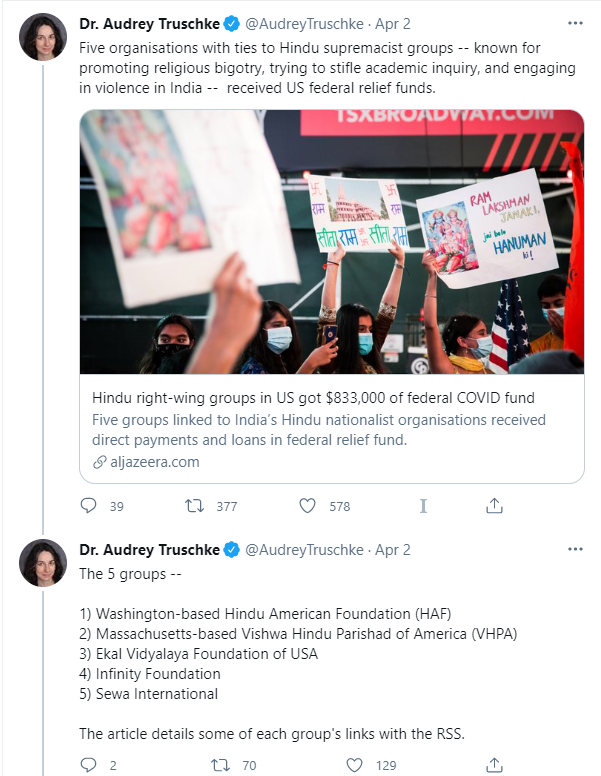
On Friday (April 2), controversial ‘historian’ Audrey Truschke shared an article published by Aljazeera, wherein it claimed that 5 organisations have received US federal relief funds to the tune of $833,000. The article alleged that the organisations have links to ‘Hindu supremacist groups’.

Citing the said article, Audrey Truschke alleged that the groups are known for engaging in violence, stifling academic inquiry and promoting religious bigotry. She listed the names of the 5 groups mentioned in the article and alleged that they are connected to the Rashtriya Swayamsevak Sangh (RSS).

One of the groups mentioned in the article was the Hindu American Foundation (HAF), which is based in Washington DC. As per Aljazeera, HAF received $378,064 in PPP loans and $10,000 in EIDLA from US federal relief funds. The other organisations included Vishwa Hindu Parishad of America (VHPA), Ekal Vidyalaya Foundation of USA, Infinity Foundation and Sewa International.

Screengrab of the tweet by Audrey Truschke

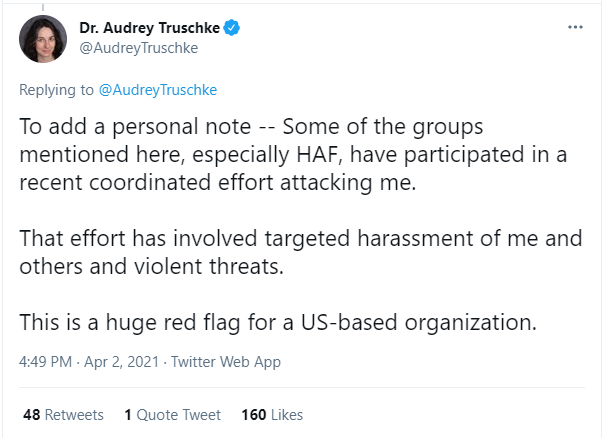
The controversial historian alleged that some of the organisations, especially HAF, had been involved in a coordinated attack against her. Audrey Truschke claimed, “To add a personal note- Some of the groups mentioned here, especially HAF, have participated in a recent coordinated effort attacking me. That effort has involved targeted harassment of me and others and violent threats. This is a huge red flag for a US-based organization”

Screengrab of the tweet by Audrey Truschke

HAF rubbishes claims of Audrey Truschke

On Sunday (April 4), Rajiv Pandit slammed the controversial historian for her defamatory and baseless allegations against the HAF. Pandit is a Dallas-based surgeon and a member of the Board of Directors of Hindu American Foundation.

In a tweet, he emphasised, “No, Audrey Truschke, as a board member of HAF, I can confirm that your name was never discussed as part of a coordinated attack, nor ever been brought up at the board level. Any such accusations are defamatory.”

While exposing her Hindu hatred and bigotry, Rajiv Pandit added, “It’s actually you who has been involved in targeted harassment. You, Audrey Truschke, have mocked Hindu texts, claimed Lord Rama was a misogynistic pig, that rape & “rape culture” were endemic to Hinduism, portrayed Hindus as bizarre “cow piss” drinkers, taught students that Hinduism is inherently oppressive, racist, and violent.”

The HAF member reiterated his support for the Hindu students of Rutgers University, where Truschke works as a Professor, for holding her accountable. “Such vitriolic anti-Hindu bigotry, which no religion should experience from a so-called academic, has consequences. You reap what you sow, and we’re proud of Rutgers University Hindu students who are holding you accountable for your blatant Hinduphobia,” Rajiv Pandit concluded.

Hindu students expose Audrey Truschke’s Hinduphobia , Rutgers hailed it as ‘academic freedom’

The controversy broke out after several Hindu students of Rutgers University had written a letter to the university in reaction to ‘historian’ Audrey Truschke’s attempts to sell Hinduphobic fiction in the name of ‘history. In its petition, the group of Hindu students studying at Rutgers-Newark pointed out that Audrey Truschke tried to trivialise and downplay the Hindu genocide committed by the Mughal tyrant Aurangzeb.

The students who initiated the petition were miffed with Truschke’s continuous vile and bigoted opinions against Hindus. In an open letter written to the university authorities, the students said that they are “aghast at the bigotry being peddled against Hindus via continued derision of our religion, our deities, and our sacred texts” in the university, which may be a potential threat to their security, as it may lead to “potential attacks, bullying, and backlash, either on campus or via social media, due to our faith”.

The petition specified how the atmosphere in the university is at odds with the Hindu student due to the hateful and vile anti-Hindu remarks made by professor Audrey Truschke on various occasions. However, Rutgers University, instead of addressing the concerns of Hindu students, had backed Audrey Truschke and whitewashed her vile and bigoted anti-Hindu remarks as ‘academic freedom’. Meanwhile, the faculty members of the university had also extended their support to her.

Temple cleaning drive: A nationwide initiative of Kapil Mishra’s Hindu Ecosystem

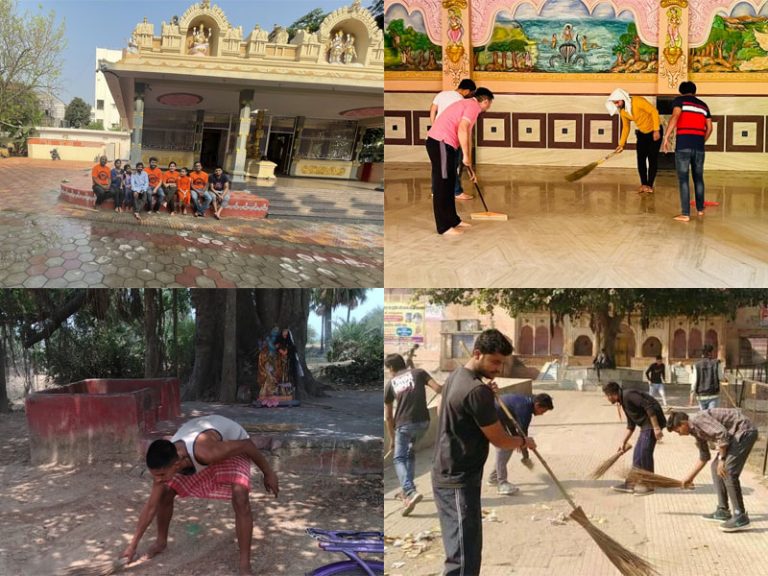
In November 2020, BJP leader Kapil Mishra formed Hindu Ecosystem, a volunteer-driven initiative to spread information from the Hindu’s perspective on social media platforms. The group has started its work on the ground level with an initiative to clean temples across the nation. On April 3, Kapil Mishra gave a call to Hindus worldwide to go to the nearest temple and provide service or “Seva” to clean the premises. Acting upon his call, volunteers confirmed that around 300 temples would be cleaned under the initiative.

In his video message, Mishra said, “The first ground action under ecosystem is Clean Temple Clean Nation under which members of Hindu Ecosystem will go to a nearby temple on the first Sunday of every month and provide service to clean it. It will be a mandatory ground action for every member of the Hindu Ecosystem to take part in the initiative.”

An overwhelming response

Mishra’s Hindu Ecosystem is widely active on a social media platform, and his call for ground action in temples worked perfectly. Since the morning of April 4, the hashtag #CleanTempleCleanIndia started to trend with videos and photographs of members of the Hindu Ecosystem cleaning local temples. Here are state-wise responses to the Clean Temple initiative.

West Bengal

Uttar Pradesh

Maharashtra

Gujarat

Karnataka

Telangana

Madhya Pradesh

Uttarakhand

Jharkhand

Bihar

New Delhi

Odisha

Jammu and Kashmir

Haryana

Mishra said that the members of Hindu Ecosystem will go to a temple every month and provide ‘seva’ in form of cleaning, maintenance or whatever services temple administration required.

Bhupesh Baghel busy campaigning in Assam while Chhattisgarh reels from death of Jawans in encounter with Naxals, netizens outrage

Chhattisgarh Chief Minister Bhupesh Baghel has continued to campaign in Assam for the Congress party well after a devastating loss of lives of Jawans during an encounter with Maoists in his own state.

Even hours after the attack, Bhupesh Baghel is yet to leave for Chhattisgarh. He said on Sunday morning that he had received a call from Home Minister Amit Shah and would reach his state only in the evening.

His unwillingness to return to Chhattisgarh immediately has attracted strong criticism from journalists and citizens on social media. Jitender Sharma said that so many security personnel had lost their lives in his state but Bhupesh Baghel was busy campaigning far away in Assam.

People also criticised ‘journalists’ who were busy lavishing praise on Bhupesh Baghel for campaigning in Assam.

The misguided priorities of the Chhattisgarh Chief Minister was also criticised.

The BJP criticised the Chhattisgarh CM as well. BJP MP from Mangaldoi, Dilip Saikia, said, “At a time when many security personnel have lost their lives, Chhattisgarh CM Bhupesh Baghel is busy in the poll campaign in Assam. He is camping here with government staff and misusing government machinery. Election Commission should investigate this matter.”

According to reports, at least 20 Jawans have lost their lives following the encounter at Bijapur district in Chhattisgarh.