Home Blog Page 4483

Handpulled rickshaws, old buildings and a city on the cusp of revolution: Held back by ‘Aantels’ who romanticise poverty, dream of ‘Shonar Bangla’ lives on

Kolkata is on the cusp of a revolution. The smell of it is in the air and regardless of the results of the assembly elections, the city is all set to change forever. Bengalis can feel it, even if they don’t necessarily live there. It is a moment of great significance for the entire community because at the end of the day, Kolkata is a city that holds special significance in the heart of every Bengali, whether they live there or not, whether they have even set their foot on the city or not.

The West Bengal Assembly Elections, in more ways than one, will play a pivotal role in the history of the Bengali Hindu community. With twisted demographic trends, persistent unemployment and enduring poverty, Bengal is at siege. And Kolkata, the heart of Vanga, has suffered the brunt of it. But that could change and Bengal could be set on the long road to prosperity by the results of this year’s election. However, there is the danger of regression as well.

Coffee House’r shei adda ta aaj aar nei?

There are certain imageries that have become symbolic of the change currently underway in Bengal. One of the most significant came on Monday when BJP supporters entered Coffee House and raised slogans after they were stopped from pasting posters inside.

Others may not be able to grasp the true import of the event but for Bengalis, it is pretty hard to miss. For decades, Coffee House has been Ground Zero for leftwing ideologues to engage in ‘intellectual’ masturbation. While it is iconic for the numerous occasions when Bengali stalwarts have graced it by their presence, it is renowned for the ‘addas’ as well that usually involve fantastical ideation.

The location of Coffee House is significant as well. College Street, dominated by universities and educational institutions, was in the thick of the turbulence during the Naxalbari movement. The memories of it are still kept alive in the nook and crevices of College Street.

There are plaques that can be found in honour of the ‘martyrs’ of the Naxalbari movement. Sometimes, even posters glorifying Charu Mazumder can be spotted, no doubt put up by some deluded morons studying in some university. But that has been the story of West Bengal and why the rise of BJP is so significant.

It might appear improbable in 2021 but it is true that once upon a time, the Left Front was essentially a front for Bengali Hindu politics. The refugees from Bangladesh organised themselves under the banner of Communist parties and established political parties towards that end. It is entirely a different matter that the brand of politics in and of itself appeared inimical to the interests of the community itself.

And after all these decades, the Bharatiya Janata Party has emerged as the front for Bengali Hindu politics in the state. While the party may itself beg to disagree and insist on its ‘secular’ credentials, which we have no reason to doubt, it is undeniable that its cadres and vote-base are primarily Bengali Hindus. Under the Left Front, the community had organised around abstract outlandish ideals but this time around, they have unified along communitarian lines.

But it is not just communitarian concerns that are the focus of the current elections, development and ‘Shonar Bangla’ are major talking points as well. The ‘Intellectuals’ of Kolkata have often been guilty of romanticising poverty and where the average Bengali sees misery, the dreary turmoil of lives beleaguered by poverty, the ‘Intellectuals’ feel a sense of romance surrounding the city. Bengalis have a specific name for such special nutcases, ‘Aantel’ we call them.

Romanticisation of Poverty by Kolkata ‘Aantels’

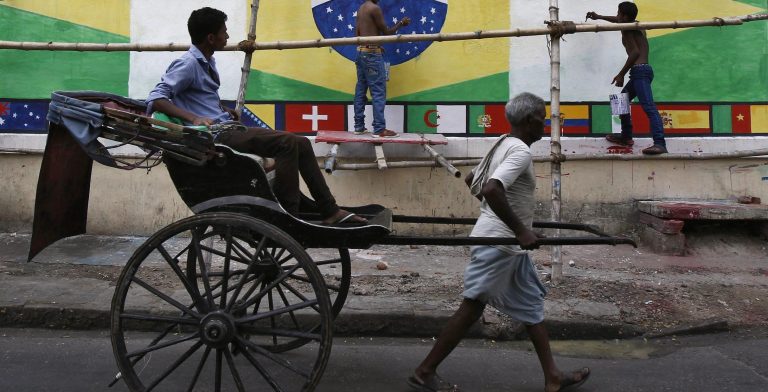
There have been much discussion on social media of late regarding the handpulled rickshaws that are unique to Kolkata. While most Indian cities have moved beyond such modes of transport, Kolkata has been hesitant or rather unwilling to abandon the vestiges of its past. While it is understandable that such visuals might spark innate disgust from people in other cities, Kolkata has far greater problems.

And truth be told, India is still a developing country and first world concerns do not suit the citizens of a country where even toilets were a dream for the overwhelming majority of its citizens until very recently and drinking water is a prized commodity that is yet to reach every household. There are extremely disturbing visuals of poverty that abound across the country, and even in Kolkata, a man making an honest living through handpulled rickshaws is not one of them.
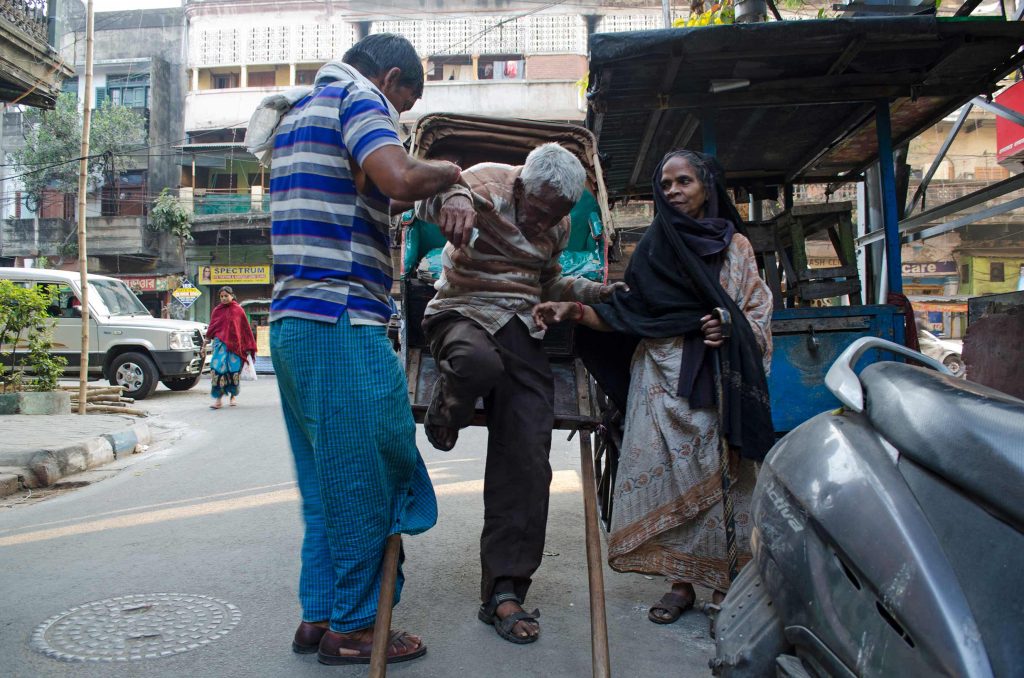
Handpulled rickshaws, Kolkata on the cusp of revolution
Imnage Credit: Soumya Shankar Ghosal/Sahapedia

Even so, the romanticisation of poverty is an extremely convenient ruse for incompetent politicians. They can augment their own stature among the populace by harking back to claims of preserving cultural hallmarks while the masses continue to labour in destitution. And given the pitifully little Bengali Hindus have had to celebrate over the course of the past century, even several centuries, it comes as a respite from harrowing reality.

However, what cannot be denied is that Kolkata has fallen off its perch. There was a time, not too long into the past, when Kolkata was at the forefront of the Great Indian Story. But now, after decades of poor governance by the Congress party, the Left Front and the Trinamool Congress in turn, Bengalis have finally decided that enough is enough.

The despicable cycle of poverty cannot be permitted to manifest itself for another generation because the people deserve better, Bengal deserves better. And thus we stand at the precipice of another revolution.

How ‘Aantels’ brought Bengal and Kolkata to the cusp of another revolution

In many ways, Bengal has been experiencing continuous revolution since the beginning of the past century. It began with the Partition of Bengal in 1905 and then continued into the independence era which culminated with the communal massacre in Kolkata and elsewhere.

The influx of Bengali Hindu refugees following the partition of the country heralded another phase of revolutionary zeal. The Naxal movement resulted in great bloodshed and it continued well after the Left Front came to power.

Mamata Banerjee burst it into the scene in 1990s and she brought with her the Trinamool revolution. The Nandigram movement in 2007 propelled Trinamool Congress to power in the next assembly elections and after a decade in power, Bengal is on the verge of a Saffron Reckoning.

There is good reason why Bengal is set for a revolution in 2021. A part of it, certainly, is because revolutions have been a part and parcel of Bengal’s political life for a century. Despite a hundred years of bloodshed and turmoil, the revolutionary zeal is yet to be satiated.

The blame for it, of course, lies with the ‘Aantels’ of Bengal who have preferred to build bridges in the firmament of their marvelous imagination rather than help improve the lives of the citizenry. Sloganeering and glorifying endless protests, escapism became the fodder for their existence.

While they quenched their thirst of idealism by crawling under the safety of their own ramblings, Bengal’s descent into decline was uninhibited and the aura of grandeur around Kolkata began to decay. Revolutions foment more revolution and the endless cycle of violence managed to convince the Aantels of Bengal that they were on to something great.

While they engaged in romanticisation of poverty in a bid to avoid coming to terms with their own failure, they failed to notice the fading support of the unwashed masses. And after years in power, they find themselves surrounded by a disillusioned citizenry gathering around the rallying cry of ‘Jai Shri Ram’.

Shonar Bangla or regionalist politics?

Kolkata has suffered unspeakable atrocities over the course of the past century. Its streets have been littered by corpses, women have been left bereft of their husbands, mothers have lost their sons, daughters have lost their fathers and Bengal has still not been able to shed the violence of its cursed past.

But there is a dream that every Bengali holds in his heart. Political violence that has become endemic to the state will cease, poverty that tarnishes the rustic beauty of the City of Joy will be a thing of the past, Kolkata will again become an intrinsic part of the Great Indian Growth Story and Bengal will rise again.

That is a sentiment that is overwhelmingly persistent among widespread sections of the Bengali Hindu community and it is this sentiment that the Bharatiya Janata Party has decided to capitalize on. The Trinamool Congress, on the other hand, has chosen to embrace the regionalism card, a plank that is unlikely to work because it is alien to Bengal’s DNA. Quite obviously, whoever is advising the Prime Minister appears to be far more in sync with the sentiments of Bengal than Prashant Kishore.

Nevertheless, the much awaited revolution could take two forms depending on the results of the elections. A BJP victory in May will usher in an era of Saffron Revolution in the state but should Mamata Banerjee succeed in retaining power, she will interpret it as an endorsement of her regionalist politics and double down on it moving forward. Thus, we could see the birth of truly regionalist politics in West Bengal.

‘Shonar Bangla’ or regionalist politics, the form the impending revolution will take will be clear only on the 2nd of May.

After targeting Tucker Carlson, US Dept of Defense mocked for old ‘beauty influencer’ ad discussing makeup under army regulations

Days after the US military launched a comprehensive propaganda campaign against Fox News host Tucker Carlson, netizens are now mocking the US Department of Defence for a 2019 advertisement featuring a beauty influencer.

About two years ago in May 2019, the US Department of Defence had shared the story of one Jackie Aina, who has served in the reserve force of the United States Army. The woman, who identified herself as a ‘beauty influencer’ and ‘diversity activist’ talked about how the army shaped her ‘makeup career’. The video began with Jackie Aina’s rap music before she took netizens by surprise with her experience doing makeup in the military.

“A lot of experiences that I have gone through in my time of service taught me a lot about leadership. I felt like I learnt how to (work) in a professional setting, command a group or teach a class and do it with confidence I definitely learnt a lot about challenging myself. I did not if I would fail or if I would succeed. At that time, it did not matter to me,” the influencer said.

She further added, “I made a video years ago about how to makeup with Army regulations. I wanted to show that people in the Army are like normal people. There are musicians, photographers and people from the industry that do makeup just like me but also put on a uniform and serve our country. That was a very cool, reletable way of showing that I am like a normal person. I do a unique job but I am a normal person.”

Netizens slam Department of Defence for promoting ‘wokeism’

The tweet by the Department of Defence promoting the idea of ‘makeup’ and ‘beautification’, contrary to military skills and competence, did not go down well with netizens. Against the backdrop of US President Joe Biden’s decision to bring about a change in ‘the culture and habits of the US military’, social media users were miffed at the infiltration of ‘woke culture’ within the military.

“This is embarrassing. Delete it,” wrote one user. “This is just f*cking embarrassing. Our enemies are watching,” another user pointed out.

Social media users also pointed out that the US Department of Defence is promoting wrong ideas about the US military, at a time of when the country faces the biggest threat from China. A user, Foxtrot Utah, tweeted, “China definitely gonna kick our a**.” Another Twitter user said, “The top Chinese military commander just said that war with the US is *INEVITABLE* and this is what you chose to focus on.”

Netizens also pointed out about the ‘unprofessional’ conduct of the ‘diversity activist’. “God have mercy on these lost souls and the poor tax payers of America,” wrote Ryan Michael.

Tucker Carlson, Joe Biden administration and the targeting by US military

The US Department of Defence faced the wrath of social media after it issued a stunning criticism of conservative host Tucker Carlson for questioning the identity politics of Joe Biden on March 10. The talk show host had argued that the objective of the Military is not social justice but to win wars. He criticised the decision of the Biden administration to promote ‘maternity flight suits’ at a press conference.

“So we’ve got new hairstyles and maternity flight suits… Pregnant women are going to going to fight our wars. It’s a mockery of the US military. While China’s military becomes more masculine … our military needs to become, as Joe Biden says, more feminine,” Carlson remarked. “I want to be very clear right up front, that the diversity of our military is one of our greatest strengths,” said Pentagon spokesperson John Kirby.

This is despite the fact that the US military has struggled to win any of its numerous wars in recent times. In a bizarre turn of events, the entire top brass of the military singled out the journalist for a targeted political propaganda campaign. It soon drew the ire of Conservative leaders and netizens alike who expressed concern over the politicised conduct of the military.

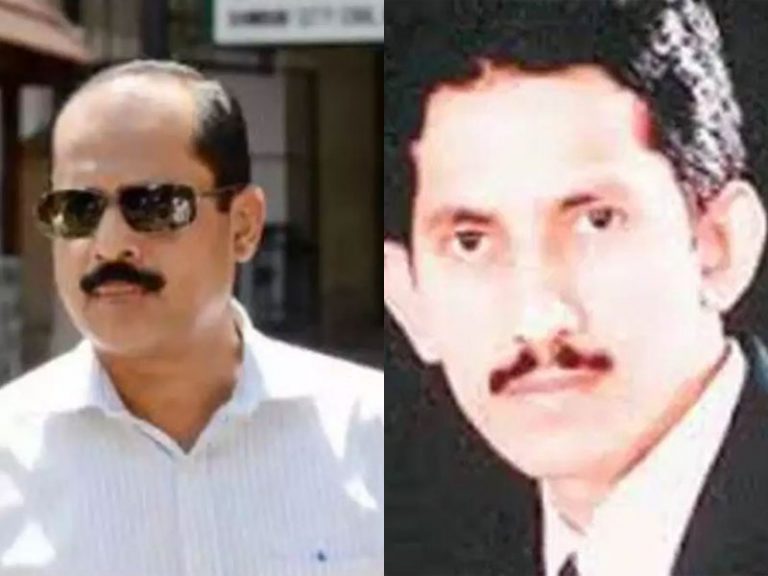
Khwaja Yunus death case: Sachin Vaze’s role and a case that lingers on since 2003

Sachin Vaze, the Mumbai Police officer who has been making headlines since he was reinstated in 2020 in Mumbai Police, has a ‘tainted’ record at service. Popular as an encounter specialist, Vaze’s name was involved in Khwaja Yunus death case, which was picked in connection to a 2002 bomb blast. It has been almost two decades since Yunus allegedly died in police custody, but Vaze’s role has remained untried in court.  

History of the case

On December 2, 2002, a bomb went off in a BEST bus parked outside Ghatkopar railway station. As it was a rush hour in the evening, there were many people at the station. The blast claimed the lives of two and injured 50 people.

Vaze was part of the Mumbai crime branch team that picked a few people on December 25. 27-year-old software engineer Khwaja Yunus was one of them. On January 7, 2003, police-reported that Yunus went missing from the custody. They claimed that he escaped with two other accused when they were being transferred to Aurangabad. It was alleged that the vehicle they were in met with an accident in Ahmednagar district that gave them a chance to escape. An FIR was registered in connection to the alleged escape at the Parner Police Station.

Yunus’ body was never recovered.

Yunus was beaten – alleged another accused Mateen

the special Prevention of Terrorism Act (POTA) court in Mumbai conducted an enquiry into the alleged accident. During the course of the enquiry, another accused in the case Mateen, revealed that he had heard Yunus being beaten. He further added that Yunus was vomiting in an adjacent cell after getting beaten up. He claimed that Yunus possibly died on January 6. CID took over the alleged custodial death case in May 2003.

An encounter specialist with Mumbai Police had said that Yunus had died due to third degree interrogation used by Vaze. He had said that, “Sachin punched Yunus in the stomach and poured a bucket of cold water on him. The fragile Yunus died on the spot.”

As there was no information about the case, Sayed Khwaja Ayub, Yunus’s father, moved to Bombay High Court and filed an appeal that the case should be handed over to the Central Bureau of Investigation. On February 25, 2004, CID finally announced that they had a breakthrough in the case and found some evidence. They arrested Vaze on March 3. Three more policemen were arrested later in March. All four of them were suspended, pending investigation.

In April 2004, the High Court asked CID to record a fresh statement of Mateen and treat it as the FIR in the alleged custodial death case of Yunus. The state appealed against the order in the Supreme Court but lost. A fresh FIR was registered in the Ghatkopar Police Station in September 2004 against Vaze. Three other police personnel, constables Rajendra Tiwari, Sunil Desai and driver Rajaram Nikam were also named for allegedly beating Yunus to death in custody. The probe was completed in October 2006, and a charge sheet was filed by CID against 14 policemen, including Vaze and other three suspended ones.

In the meantime, out of 19 people arrested in connection to the Ghatkopar blast, two, including Yunus, died, and nine were discharged. On June 11, 2005, the special POTA court acquitted the remaining eight accused.

In July 2007, the office of Director General of Police forwarded case papers to the state that accorded sanction to prosecute only four suspended police officers. On March 19, 2011, an additional sessions judge framed charges against Vaze and other three cops.

While the investigation was going on, Asiya Begum, mother of Yunus, filed a petition in the Bombay High Court and asked for compensation. She also sought sanction to prosecute seven more Police officers in addition to the four. In April 2012, the Bombay High Court ordered the state to pay Rs.20 Lakh to Yunus’ family as compensation. However, it rejected Begum’s plea to prosecute other police officers. Begum appealed against the decision in the Supreme Court, where the case is still pending.

The trial in Yunus’s death

In January 2018, the prosecution examined Dr Abdul Mateen, another accused in the blast case and first witness in Yunus’s death case. During his deposition, he named four more cops, Praful Bhosle, Hemant Desai, Rajaram Vhanmane and Ashok Khot, who allegedly assaulted Yunus. They were also named in the charge sheet filed by CID in 2006.

Based on his testimony, special public prosecutor Mirazkar moved an application to add the named of the four policemen to the list of accused. However, the state government claimed that the application was filed without taking instruction. Mirazkar was removed as the special public prosecutor. The state’s notification was challenged by Yunus’s mother in the High court.

Yunus’s mother continues to fight for justice

In June 2020, though Vaze had resigned from the force in 2007 and had joined the Shiv Sena, he and the three other police personnel were reinstated by order of the Maharashtra government citing lack of personnel during the pandemic.

In 2020, Asiya Begum filed a petition in the Bombay High Court challenging the reinstatement of Vaze. She claimed that chief secretary Amitabh Gupta and Mumbai police commissioner Param Bir Singh do not have the power to set aside 2004 suspension orders. She also stated that as the trial against the four suspended police officers was pending, a review committee cannot set aside the suspension orders. The state argued that the petitioner did not have a locus as reinstatement was an administrative decision.

A division bench of justices KK Tated and Riyaz Chagla last heard the petition on March 9, 2021. The next hearing is on March 31.

Yunus’ family reacts to Vaze’s arrest

After learning about the suspension of Sachin Vaze following the arrest by NIA on March 15, Hussain Sayed Khwaja Ayub Yunus, Khwaja Yunus’s brother, said that in the house of God, there might be delay injustice, but there is no place for injustice. He said that his reinstatement let the ball rolling for the current case to pile up against Vaze.

Yunus’s body was never recovered. His family is still fighting to get justice for his custodial death. Sachin Vaze’s role in Yunus’s alleged death in police custody stands untried in court.

Cross border cattle smuggling case: Brother of TMC leader Vinay Mishra arrested by Enforcement Directorate

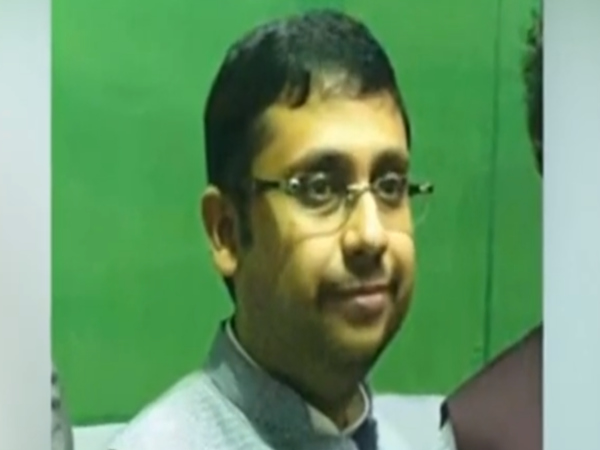
As reported by news agency ANI, Enforcement Directorate (ED) has arrested the brother of TMC leader Vinay Mishra in connection to the coal and cattle scam. The Central Bureau of Investigation (CBI) had issued an arrest warrant against the youth leader of TMC in the cattle smuggling case early this year. In spite of receiving four summons, Mishra failed to join the investigations.

Prior to this, CBI had carried out raids at multiple locations, including that of Mishra, who is believed to be a close aid of West Bengal Chief Minister, Mamta Banerjee’s nephew Abhishek Banerjee. As per reports, the TMC leader was the first politician who was linked to Enamul Haque, the kingpin of the cross-border cattle smuggling racket. The CBI officials have reasons to believe that Mishra was acting as Haque’s front man in the cattle smuggling racket.

An exclusive sting operation conducted by Republic Bangla, caught an alleged member of coal mafia confessing that after 2011 when government changed, the illegal coal operations also changed hands to another mafia. Since 2016 a totally different set of organised mafia has been operating. “This was the time when ‘Lala’ (Arup Majhi)  emerged as the king of coal. But Lala is not the only one, several big politicians are also involved in this. Those who we think are the members of the mafia are actually paid with just Rs. 700 for one ton of coal, but a pad of coal costs Rs 1.5 lakh. Politicians from both the ruling party and opposition are involved in this,” the sting revealed.

The report which was made public yesterday made some more shocking revelations related to the case. Vipul, an alleged middleman working for the TMC Youth Wing Leader Vinay Mishra, who is currently absconding was caught saying that he did not manage it alone, “Others are there. Bengal police sometimes create problems and file cases under sections 413,417,418 of the IPC, harass us but cannot do anything more,” he claimed.

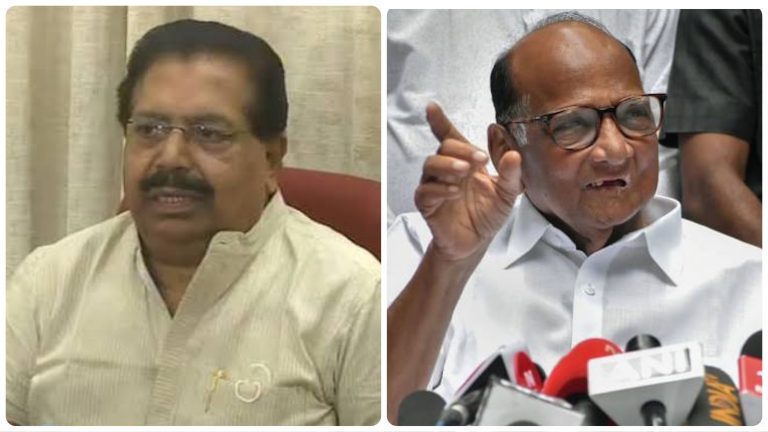
After quitting the Congress party, PC Chacko to join Sharad Pawar’s NCP

Days after resigning from the Congress party, veteran politician PC Chacko will be joining the Nationalist Congress Party(NCP) today. After being in Congress for decades, Chacko had tendered his resignation from the party following differences over seat allocation for the upcoming Kerala assembly polls.

“I’m meeting Sharad Pawar. Whatever crisis the party is facing, needs to be discussed. I’m also meeting Sitaram Yechury and Ghulam Nabi Azad to discuss the future course of action. I need to extend my support to the LDF (Left Democratic Front of Kerala). I’ll decide (on joining) after meeting Pawar sahab,” ANI quoted as Chacko saying.

Congress is facing its Waterloo: PC Chacko

Chacko said the Congress party is facing its Waterloo crisis, referring to the historic defeat of French emperor Napoleon Bonaparte that eventually led to his undoing in the early 19th century.

“The Congress is facing its Waterloo. I had already spoken to Rahul Gandhi and Sonia Gandhi. There is no dearth of discussion. I tried to make them understand that the situation was deteriorating,” Chacko said.

The former Congress leader exalted Sharad Pawar as a leader who could provide a credible alternative in the Opposition camp. With Chacko lavishing praises on the NCP chief, speculations are rife that his entry into the NCP is all too imminent.

He was also critical of the Congress party and faulted them for the erosion of democracy within the party. Putting paid to the rumours of his return to the Congress party, Chacko said he has “no plans” in Congress.

PC Chacko resigns from the Congress party over undemocratic selection of assembly poll candidates

The 74-year-old leader is a former Member of Parliament from the Kerala Thrissur constituency. He also presided over the Joint Parliamentary Committee on 2G Spectrum during the UPA government (2009-2014). Last week, Chacko had announced his decision to quit the Congress party over the alleged undemocratic way of selecting candidates for the forthcoming assembly polls in Kerala.

At the time of tendering his resignation, Chacko had come out all guns blazing against the Congress party, not even sparing the central leadership. The leader said that there was groupism within the party and the top leadership did little to iron out the differences. He accused the party high-command of courting both the factions.

He said, “Kerala is facing a crucial election. People want Congress to come back but there’s groupism practiced by top leaders of Congress. I’ve been arguing with high command that this should be ended. But the high command is also agreeing to the proposal given by both groups.”

Weaponization of Guilt: Why ‘Sorry Asif’ trended on social media and the hidden agenda of demonizing Hindu Temples

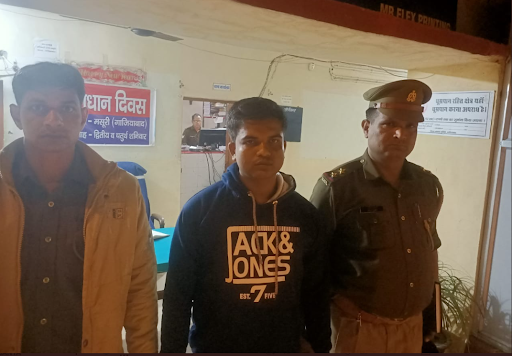
Social media has been abuzz recently after visuals of a young boy being beaten at a Temple in Uttar Pradesh’s Ghaziabad went viral on social media. The viral video suggested that he was beaten because he was a Muslim who had entered the Temple to drink water and before long, ‘Sorry Asif’ began to trend on social media.

It is not clear why people on social media would assume guilt for themselves despite having no association with the incident at all. It stands to reason that the only objective of such self flagellation is the weaponization of guilt. When one assumes guilt even when he is not to blame, then he suddenly feels empowered enough to mandate sweeping actions in order to compensate for it.

In the current instance, a minute fraction chose to assume guilt on behalf of the entire Hindu community and trended ‘Sorry Asif’ so that the guilt could then be projected to the entire Hindu community. Let us be clear, if there is any incident here which commands guilt to be felt, then it is the concern of only the parties involved.

There is no reason for the wider Hindu community to feel guilty about the Temple incident. What happened was a consequence of local factors that reached a climax with Asif ending up on the receiving end of some beating. And as more facts have emerged, it is uncertain to be precise whether blame should be accorded at all to the individual who decided to take action against Asif.

According to a local resident, it was a regular occurrence for Muslim youths to enter the Temple and harass Hindu women. The pandit said that there have been multiple incidents of theft and dacoity at the Temple and some of these youths have been known to desecrate the Shivling, urinating and spitting on it. The pandit mentioned that there have been at least 4 instances of dacoity at the Temple.

Such incidents explain the ‘No entry for Muslims’ board at the Temple gates, an issue that had been cited as incontrovertible evidence of bigotry on social media. But given the other side of the story, it appears to be a reasonable course of action. Muslims as such, under any circumstances, do not have the right to enter Hindu Temples just as Hindus do not have the right to enter Mosques.

Entrance into the religious institutions of a community is a privilege that the community is at complete liberty to decide who it awards it to. And yet, the ‘no entry’ board served as the cornerstone of the ‘Sorry Asif’ campaign.

And as it appears, Asif had no reason to enter the Temple in the first place. There were other avenues of drinking water right outside the Temple which could have been utilized if drinking water was the objective. It beggars all manner of reasoning as to why Asif would travel to the farther end of the Temple premises for water when drinking water was available right outside it.

Thus, two of the three cornerstones of the ‘Sorry Asif’ campaign falls flat. First, the ‘no entry’ board and then, the drinking water ruse. The third is the claim that even if all of this could be taken as fact, the boy should not have been beaten.

That point is, maybe, correct. But then, we live in India where state capacity has not reached the point where individuals can always rely on the police for security and protection. This is not a defense of the accused’s actions but reality as it currently stands.

Now, the interesting thing here is that the ‘Sorry Asif’ campaign had swept across social media even before any of this was known to the public. Logical reasoning mandates that one wait for all sides of the story to emerge before one rush in to assume guilt for oneself on behalf of the entire community. But that is not what happened.

Quite clearly, the objective was to ensure that such facts do not surface and even if they do, they are not given due importance because the propaganda blitzkrieg had already convinced the masses by then of the guilt of the Temple camp. It was designed to make the conviction of the Hindu a fait accompli.

It was preemptive action undertaken to ensure that the Hindu accused could not absolve themselves of the guilt accorded to them even if circumstances justified his actions later on. It was preemptive action to file the incident as just another evidence of the narrative that paints the Hindu community as oppressors and Muslims as oppressed.

The individuals primarily responsible for trending the hashtag make the agenda further self evident. Luminaries such as Swara Bhasker, Tejashwi Yadav and Dilip Mondal were at the forefront of it. When people, who invariably endorse precisely the political position that is inimical to Hindu interests every single time, suddenly wake up to assume the Hindu identity to push a certain narrative, the objective of the narrative becomes abundantly certain.

We have seen all of this before as well. During the Kathua rape case, a concerted attempt was launched to denigrate the Devisthan and the sentiments of the Hindu community associated with it. All of it is carefully designed to turn Hindu Temples into symbols of hate for their international audience.

It could be argued that they have already succeeded in turning one of the major temples of Hinduism into a symbol of hate. The Bhavya Ram Mandir in Ayodhya, the construction of which is currently underway, is targeted and insulted at almost every anti-India campaign that is organised abroad.

Now, the next objective is to extend the same courtesy to every Hindu Temple in existence. As is abundantly clear at this point, there is plenty of reason here for us to wait till investigation into the matter is completed. But those with a premeditated agenda cannot wait for evidence to emerge before devoting themselves to action because evidence has a way of spilling water over all their plans in the end.

Therefore, what better way to achieve the said objective than assuming the guilt onto themselves and thereby, the larger Hindu community, and trend ‘Sorry Asif’?

Maulana from viral video praising Mahmud Gaznavi’s attacks near Somnath Temple booked by Gujarat Police, issues apology

A day after the video of a Maulana hailing Mahmud of Ghaznavi for invading and destroying the Somnath Temple at the beach adjacent to the Hindu shrine went viral on social media, Gujarat police reportedly sprung into action. According to journalist Janak Dave, police have now identified the Muslim cleric and registered an FIR against him. Efforts are being made to apprehend the Maulana.

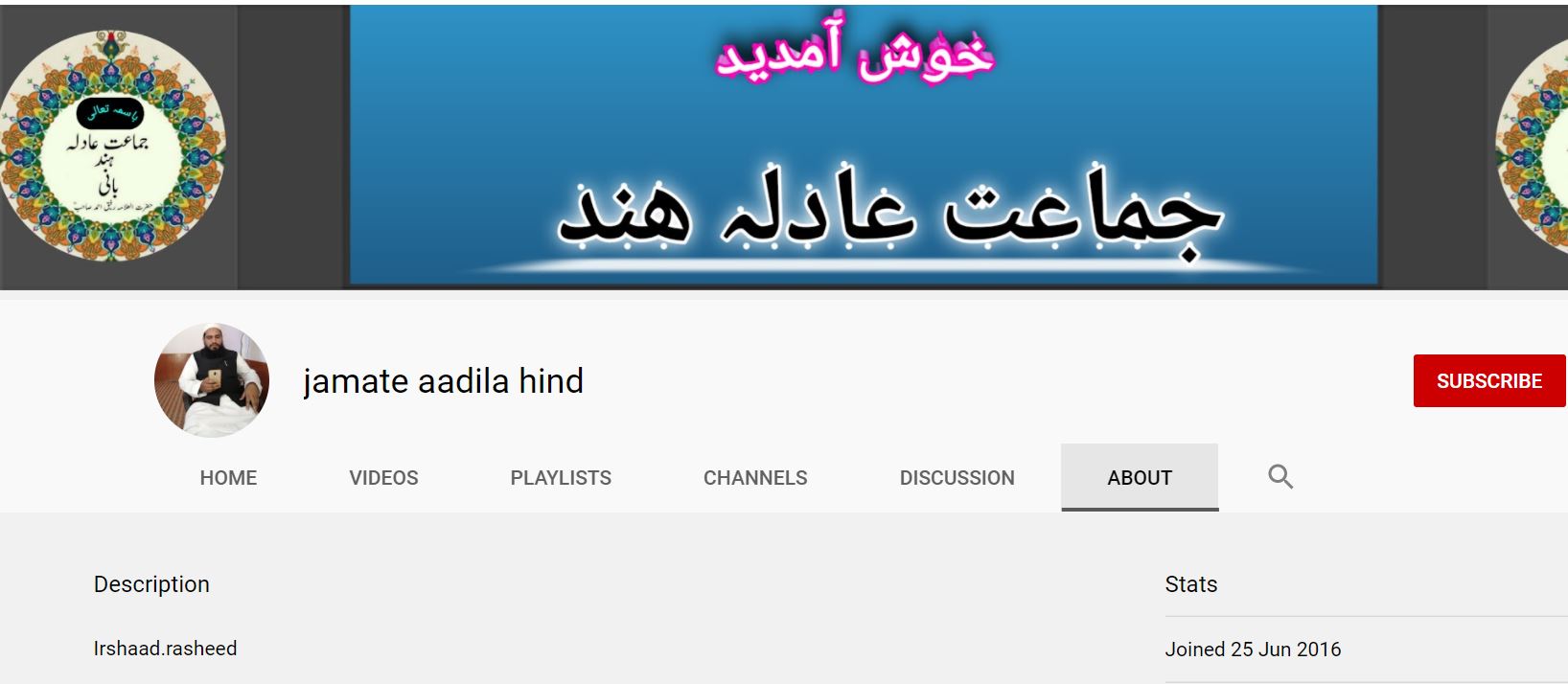
This Muslim man who has now been identified as one Irshaad Rasheed has been running an Islamic YouTube channel called ‘Jamate Aadila Hind’ since 2016. The radical Islamist has various times in the past used his platform to spew venom against Hindus and provoke communal disharmony.

Youtube page of Irshaad Rasheed, image via Janak Dave

Yesterday, in the viral video shot by the man himself, the Maulana was seen glorifying Mahmud of Ghaznavi, the infamous Islamist marauder, who attacked and plundered Somnath Temple repeatedly. In the video, the man hailed Islamist invaders, including Mahmud Ghaznavi, for attacking and looting the Temple. The man also urged fellow Muslims to read about their “glorious history” and make others read about it as well.

Towards the end of the video, the Muslim man shockingly admits that he has been to the Somnath Temple a short while ago and exhorts Muslims to not forget their “illustrious history”.

Yesterday, after the video of Irshaad Rasheed glorifying Mahmud of Ghaznwent viral, many social media users outraged and sought strict action against the radical Islamist.

Following the fury, Rasheed today uploaded a video message on his channel where he apologises for his video on Somnath Temple that went viral yesterday, enraging many social media users. Rasheed claims that he had recorded that video when he visited Somnath Temple on May 4, 2019. He says that his intention behind shooting the small video was only to praise the Hindu Temple. He accuses the media and a few social media users of distorting and misrepresenting his old video and statement to berate him.

Irshaad Rasheed’s video

“My intention was not to hurt the religious sentiments of Indians or my Gujrati brothers or insult the Hindu place of worship. Be it a temple, mosque or church, all our places of worship. I did not intend to insult the temple or hurt anyone’s sentiments”, said Irshad Rasheed in his video message.

Signs of nervousness? Mamata Banerjee claims BJP leaders are in Bengal to kill her, chants Durga Paath: Details of her meltdown

Mamata Banerjee has made a rather astonishing claim at a rally in Bankura ahead of the West Bengal Assembly Elections. She claimed that the BJP leadership was in the state and had booked hotels as part of a conspiracy to assassinate her.

The Chief Minister of Bengal failed to provide any evidence for her claim but emphasised that BJP leaders were in Bengal not to campaign for the assembly elections, which is obvious, but to destroy the Trinamool Congress and file cases against the party with help from the Election Commission of India.

Mamata Banerjee is not just targeting the BJP here but also maligning the reputation of the Election Commission, a neutral body in charge of conducting elections in the country. She also accused Home Minister Amit Shah of controlling the ECI and intervening in the daily affairs of it.

The Trinamool supremo also proceeded to chant the Durga Paath during the rally, much to the delight of her supporters. This was only a few days after she embarked on her now famous Chandi Paath episode.

The antics of Mamata Banerjee appears to suggest that she is extremely nervous about the prospects of her party in the assembly elections due to begin on the 27th of March in the state. The incumbent Chief Minister has decided to contest the elections from Nandigram where she will face Suvendu Adhikari, once her trusted aide but now in the BJP.

Nita Ambani to become a visiting faculty at the Banaras Hindu University: Reports

The chairperson and founder of the Reliance Foundation, Nita Ambani has been made a visiting professor in the Social Sciences faculty of the Banaras Hindu University (BHU).

Nita Ambani, who is also a working director of Reliance Industries, was sent a proposal by the Women Development Study Centre of the Faculty of Social Science, asking her to join as a visiting faculty for the prestigious university. In the proposal, the university had asked Nita Ambani to associate with it to improve the living standard of women from the Purvanchal area of Uttar Pradesh.

According to the reports, Nita has verbally accepted the proposal and the BHU authorities are eagerly awaiting a written acceptance letter from her to schedule lectures for the benefit of girl students in the department.

Talking about the recent development, a senior faculty member Professor Kaushal Kishore said that Nita Ambani would be the best person to teach girl students giver her vast and wide experiences in the fields of business as well as social activities.

“The appointment of Ms Ambani jibes perfectly with the new central government policy that aims to link studies with entrepreneurial skills,” Kishore said.

Nita Ambani, the wife of India’s richest person and business magnate Mukesh Ambani, has established Reliance Foundation in 2010 and is presiding over its chairpersonship since its inception. The Foundation is one of the largest non-profit making organisation in the country. Nita Ambani is also chairperson and founder of the Dhirubhai Ambani International School and a non-executive director of Reliance Industries.

Update: Reliance Group spokesperson has clarified that the reports claiming Nita Ambani joining BHU as visiting faculty are fake. You could read the article here.

Rape, torture and police apathy: Rajasthan’s Jhalawar rape case where over a dozen men raped a minor for eight days

The recent Rajasthan’s Jhalawar rape case has sent shivers down the spine of the nation. On 9th March it was reported that a 15-year-old girl from Suket town of Kota district in Rajasthan was abducted and brutally raped by over a dozen people for over eight days at separate places in Rajasthan’s Jhalawar district.

The victim told the police that she wasn’t kept confined in one place in Jhalawar but was moved from one house to another. She was repeatedly raped by different men through these eight days. She was drugged when she groaned in pain, beaten up and threatened with dire consequences whenever she tried putting up resistance. The girl, however, managed to escape and reach her home on March 5 (Friday), after which a complaint was filed and police began investigating the case.

20 people arrested so far in the Jhalawar rape case

According to the latest report by Hindi daily Dainik Bhaskar, the police registered a case under IPC Sections 363, 376(D) along with provisions of the Protection of Children from Sexual Offences (POCSO) Act and the SC/ST Act. 20 people, including four minors, have so far been arrested for their alleged involvement in the case.

The Jhalawar rape case

In what transpired, a woman being described as the victim’s acquaintance had allegedly lured her to travel to the adjoining district of Jhalawar on February 25 to get her a school bag as a gift. As Bulbul and Chothmal were familiar with the girl, she did not resist going to Jhalawar with them. But the woman, in turn, handed her over to 3-4 young men who confined her in different locations of Jhalawar where she was gangraped by strangers.

On March 5, Bulbul and Chothmal brought the minor victim back to her home in Suket where she narrated her ordeal to her mother following which the case was filed on March 6. The victim’s statements were recorded on March 9 (Tuesday) before the city magistrate.

The district police formed three teams under Paras Jain, the additional SP Kota Rural who is leading the investigations. Speaking to the media, the SP had said then that three of the accused, identified as Chothmal Mali (20), Pooja Jain alias Bulbul (around 19 to 20) and a minor boy were arrested late on Monday night itself from Suket and Ramganj Mandi areas of Kota district while three other accused identified as Arshad Ayub alias Chinta, Toshif alias Nana and Shahrukh, all residents of Jhalawar district, were arrested by a district special team (DST) from Jawar in Madhya Pradesh on Tuesday morning.

A Hindustan Times report quoted a police officer as saying that were trying to ascertain why the rape survivor’s family did not file a missing report after she did not return home on February 25 or if there was negligence at any level.

The victim and her family allege police apathy

However, a report by Dainik Bhaskar said that the victim, who was abducted on February 25, 2021, had approached the Rajasthan police on March 6 with a complaint against her abductors and rapists but she was not entertained. She said that she went to the police station with her widow mother to lodge a complaint against the accused, but the police refused to take down her complaint.

It also reported that after the girl had gone missing, the brother of the victim had also gone to the police station several times to lodge a missing complaint, but the police officials had driven him away. 

BJP leaders raise concerns on the deteriorating law and order condition in Rajasthan

Meanwhile, BJP leaders hit the streets in Kota to condemn the deteriorating law and order condition under the leadership of the Congress government in the state. The BJP leaders demonstrated for hours in front of Suket police station, demanding strict and prompt action in the case.