Home Blog Page 4777

Opposition politicise PM Modi’s Gurdwara visit, terms it appeasement politics by relating with ‘farmer’ protests

In an unprecedented visit, Prime Minister Narendra Modi visited Gurdwara Rakab Ganj Sahib in Delhi in an unscheduled visit on Sunday to pay his tributes to Sikh guru Guru Teg Bahadur to commemorate his supreme sacrifice.

Paying tributes to Guru Tegh Bahadur on his Shaheedi Diwas on Saturday, PM Modi bowed to the Guru Tegh Bahadur’s vision for a just and inclusive society and also added that his life epitomised courage and compassion. Guru Tegh Bahadur was the ninth of the ten Sikh Gurus of the Sikh religion. He was publicly beheaded by Mughal emperor Aurangzeb in Delhi for refusing to convert to Islam. 

Opposition party politicises PM Modi’s visit

However, the opposition parties seem to be upset after PM Modi surprised them by making an impromptu visit to the Gurdwara Rakab Ganj Sahib in Delhi. Attacking Prime Minister Modi over his visit to the Gurudwara, the opposition members attempted to co-relate his visit to the ongoing farmer protests against the three farm laws passed by the Modi government.

Priyanka Chaturvedi, Rajya Sabha MP from Shiv Sena, not only resorted to politicising the Prime Minister’s visit to the Gurudwara but also tried to give a communal spin to the ongoing political protests by a few ‘farmers’ along the Haryana-Delhi border.

Taking to Twitter, Priyanka Chaturvedi said that the protestors camping near the national capital have been named ‘terrorists, Khalistanis, leftists, anti-Indians, Chinese and Pakistani Agents’ by a few people and asked Prime Minister visited Gurudwara Rakabganj to appease all of the above.

As usual Priyanka Chaturvedi put out a tweet by making illogical remarks as she attempted to connect the ongoing protests from alleged a few farmers to the Gurudwara visit of PM Modi. Firstly, Priyanka Chaturvedi’s assertion is that the Prime Minister visit to Gurudwara was a political visit to appease the very own whom his supporters allegedly called anti-nationals. Second, Chaturvedi attempted to bring a religious angle to the protest by claiming that all the protestors camping at the protest site are ‘Sikhs’.

Priyanka Gandhi peddles half-truths, gives a communal spin to the alleged ‘farmer’ protests

It is important to note that only a section of farmers from Punjab is opposed to the farm bills. It is being estimated that not even 1 per cent of the total farmers in the country are part of these protests. When it comes to protestors, neither all of them are farmers nor they belong to the Sikh community. By communalising the protests, Shiv Sena MP is trying to play with the fire by causing a divide in the Hindu-Sikh unity.

In her tweet, Priyanka Chaturvedi also tries to ignore the political angle of the protests. The Shiv Sena MP also tries to mislead the public by depicting the protests as some sort of genuine farmer protests. The protests are also purely political in nature, which is being exposed day-after-day with Khalistani forces successfully hijacking these so-called farmer protests. We had reported how anti-Indian elements such pro-Khalistan outfits have hijacked the ‘farmer protests’ are using to further their secessionist agenda. Foreign-based Khalistanis and certain entertainers with a shady history have been extremely vocal over the course of these protests.

Earlier, we also saw how these protests took a dangerous turn after the alleged ‘farmers’ openly expressed their solidarity to left-wing terrorists and Urban Naxals in the name of protesting against the government.

Despite all the glaring evidence that these protests have nothing to do neither with the Sikh community nor farmers, the Shiv Sena MP peddles false propaganda only to play politics over PM Modi’s goodwill gesture to the Gurudwara.

‘We will sit for five years to support the farm laws if needed,’ video of farmer extending support to PM Modi goes viral

Amidst the ongoing protest by farmers from Punjab against the historic farm laws, farmers from other places have come out in support of Prime Minister Narendra Modi.

In a video of a TV channel talking to farmers in Noida in UP, a farmer stated, “The three bills passed by PM Modi are beneficial to farmers. We have got out tractors and trolleys.” On being informed that the anti-farm law protestors have been refusing to vacate the protest site for 2 years, he replied, “If necessary, then, we will sit for 5 years in support of PM Modi.” Another farmer said, “We are all in support (of farm laws). If Anti-CAA protestors are sitting on protest for 2 years, then, we are ready to sit for 5 years.”

“Did any government give ₹6000 cash benefit to farmers till date? Only this government is handing out annual cash benefits of ₹6000. Why did others not provide such benefits? Now when this government is paying us, the Congress and Aam Aadmi Party are creating hurdles. They must introspect as to why they did not do anything for farmers,” another farmer emphasised.

“We are getting ₹6000 per year. I am a 60-year-old farmer. Modi has given me ₹3,000 pension. How can you accuse him of wrongdoing? He is the best. And all the three farm laws will be helpful to us.” On being told that the protestors are here to overthrow the government, he reiterated, “The change of power is not going to happen.”

“How can Rahul Gandhi seize power? He is dreaming. He must think of chances after 2034… There is no hope left for the Congress,” another man said. “Rahul Gandhi and Kejriwal are just politicising things. They will not stay in power. PM Modi and Yogi Adityanath are here to stay and be elected. The newly enacted farm laws are in beneficial to farmers,” the farmer emphasised.

Farmers urge PM Modi to not roll back farm laws

Earlier, farmers from across the country have come forward to thank Prime Minister Narendra Modi and requested the Centre to not bow down to the demands of the protestors. These farmers from various states, including Punjab, have said that the new farm laws have been beneficial to them, and said that these should not be repealed as demanded by the farmers mostly from Punjab.

Kamal Patel, a farmer from Dewas district of Madhya Pradesh, narrated, “The newly introduced farm bills have proved beneficial to farmers. We are now getting a high price for our produce. Recently, an ITC hub was opened in the area. Farmers are getting ₹200-₹300 per quintal for their food produce. Farmers can now sell their crops at Mandi or even outside. We are now independent.”

Nikhil Pramanik, a farmer from West Bengal, stated, “The production in our area is high. However, we would not get a fair price for our produce. But with the new farm laws, we get 15% more on our crops. We now get direct cash and subsidised fertilisers… As a result, our production remains high and we are grateful to the government.”

New bacterial infection emerges in Kerala causing one death. Here is all you need to know about the Shigella bacteria

Even as the country is yet to recover from the Chinese pandemic coronavirus, a new bacterial infection has emerged in Kerala spreading fear across the state as the infection is believed to be contagious and could be fatal. The infection ‘Shigellosis’, caused by a bacteria – ‘Shigella’, has already claimed the life of 11-year-old youth in Kerala causing panic in the state.

Kerala, which has been one of the worst affected states from the COVID-19, is already struggling to recover from the pandemic even as a large number of fresh cases are being reported on a day-to-day basis. Amidst this, at least six cases of ‘Shigella’ infection and 20 other suspected cases, mostly among children, have been reported in Kerala’s Kozhikode district.

Reportedly, this is not the first time the infection has been reported in Kerala. In 2019, the infection was reported from Koyilandy. Nearly 40 children of the West Lower Primary School, Keezhppayyur, were hospitalised in 2019 after getting infected from the bacteria.

What is Shigellosis?

Shigellosis is a bacterial infection caused by a group of bacteria called Shigella. The ‘Shigella’ bacterium, which affects the digestive system, is spread through contaminated water and food or through contact with contaminated faeces. The bacteria release toxins that irritate the intestines. The primary symptom of shigellosis is diarrhoea.

The bacteria affects kids, infants more than older children and adults. Symptoms include diarrhoea, fever, stomach cramps and it can last for seven days. The bacteria spreads not only through surfaces through contact but also from eating food prepared by someone carrying the infection.

Is there a treatment for Shigellosis?

Unlike COVID-19, which is a viral infection, Shigellosis is a bacterial infection and can be treated. The treatment for Shigellosis usually includes injecting antibiotics to eliminate the bacteria from the digestive tract. The presence of the bacteria is generally confirmed through a stool test.

Additionally, this infection can be prevented initially by maintaining proper hygiene. There are also medications for the infection and hospitalisation is a rare occurrence if one is infected by the bacteria.

However, in case of extreme cases, hospitalisation is required. Sometimes, it is advised that combating dehydration is the main goal of treatment for most cases of shigellosis. Drinking plenty of fluids, especially electrolyte solutions, many of which can easily bought over the counter can be useful.

AAP seeks donations for 2022 UP polls based on COVID-19 lies. Here is how Kejriwal govt treated migrants from UP-Bihar amid pandemic

People on social media have claimed to receive emails from the Aam Aadmi Party (AAP) seeking donations as they prepare to launch their party in Uttar Pradesh ahead of the Assembly Elections in 2022. In the email that was sent, presumably to many, AAP lied about its Coronavirus testing record.

AAP claimed that the Delhi Government had conducted the highest number of total tests, which was claimed to be 88,000. Yesterday, CM Arvind Kejriwal had also made the same false claim. He had pegged the figure at 90,000. The truth of the matter is states like Uttar Pradesh and Bihar.

Uttar Pradesh, Bihar and Karnataka have been regularly conducting more than 100,000 Covid tests every day. However, that does not appear to stop the AAP from repeating it over and over again, even though it is clearly not true.

The party will also contest the Zila Parishad elections next year. It will certainly be interesting to observe whether the people of Uttar Pradesh forgive Arvind Kejriwal for the inhumane manner in which his government treated migrant workers from UP-Bihar during the pandemic.

During the initial days of the pandemic, when PM Modi had urged Indian to stay at home, Arvind Kejriwal-led Delhi government had spread lies and rumours which had impelled the mass exodus of lakhs of migrant labourers, in an attempt to return to their respective villages.

When most of the state governments had sealed their borders and banned commercial vehicles to ply, the AAP government had made false announcements in colonies, where migrants from UP and Bihar were staying in Delhi, informing them that Delhi government-run DTC buses will take them to the Anand Vihar bus terminal, from where they would be able to get the buses to take them further to UP and Bihar.

This had compelled lakhs of migrant labourers to take foot journeys to their homes after they did not buses waiting at the Anand Vihar bus terminal as told by the Delhi govt. Not merely that, authorities in Delhi disconnected the water and electricity connections of individuals, forcing them to head back to their villages from Delhi.

In June this year, when the entire country was fighting the scourge of the Chinese virus, Kejriwal had insensitively announced that the Delhi Government hospitals will only treat patients that are residents of Delhi. He had suggested that the outsiders could go to central govt hospitals for treatment. Thus, it will certainly be interesting to see whether the party’s sins against people of Uttar Pradesh are forgiven when it participates in the elections to come.

Reliance Industries to build world’s largest zoo in Jamnagar in Gujarat, layout approved by Central Zoo Authority

0

Reliance Industries is all set build world’s largest zoo in Jamnagar, Gujarat. The zoo will house close to 100 different species of animals, birds and reptiles from India and across the world.

According to the reports, the plan to build a zoo at Jamnagar is the pet project of Anant Ambani, RIL chairman Mukesh Ambani’s youngest son. The zoo will be built on about 280 acres of land close to Reliance Industries’ refinery project at Moti Khavdi near Jamnagar, the largest oil refining complex in the world.

Parimal Nathwani, who is the RIL director, said the zoo will be called ‘Greens Zoological, Rescue & Rehabilitation Kingdom’. He added that they have obtained all the required approvals from concerned central and state government authorities. The zoo is expected to be open for the public in the next two years. Earlier, the project faced delays due to Covid-19 pandemic.

The layout for the zoo has already been approved by the Central Zoo Authority, and the same has been made available at the authority’s website. “The Detailed Project Report (DPR) submitted along with the Master (Layout) Plan for the proposed establishment of the Greens Zoological Rescue and Rehabilitation Kingdom at Jamnagar, Gujarat by Reliance Industries Limited was approved by the 33rd Meeting of the Central Zoo Authority held on February 12, 2019,” the CZA website said.

The zoo will have sections like ‘Forest of India’, ‘Frog House’, ‘Insect Life’, ‘Dragon’s Land’, ‘Exotic Island’, ‘Wild Trail of Gujarat’ and ‘Aquatic Kingdom’ among others, as per the plan layout shared on the Central Zoo Authority’s website.

Zoo to house several species, frog house and aquatic kingdom to be built

The zoo will house various species, including barking deers, slender loris, sloth bears, fishing cats, komodo dragons, Indian wolves and Rosy pelicans. Crowned cranes, jaguars and African lions, besides 12 ostriches, 20 giraffes, 18 meerkats, 10 spectacled caiman, seven cheetahs, African elephants and nine Great Indian Bustards will also be the attractions of the zoo. The frog house will have about 200 amphibians while the aquatic kingdom will house around 350 fishes.

“We are aware of RIL’s interest and passion for wildlife and its conservation. While not fully aware of the project details, I’m sure it will set a good example for private participation in wildlife conservation,” said Soumitra Dasgupta, additional director-general of forests (wildlife), ministry of environment, forest and climate change.

Layout of the zoo

Dasgupta added that the concept of private zoos is not new in India and added that one of the country’s oldest zoos — The Zoological Garden, Kolkata — is a private one.

The conservation efforts by RIL is not a new initiative though. Reliance has also set up a rescue centre at Jamnagar where a few leopards were recently shifted from the wild by the state forest department.

“The centre is a CSR initiative meant to aid the forest department in sheltering big cats like leopards that have been injured or come into conflict with humans. It is separate from the zoo project and won’t open for the public,” said Nathwani. He added that the centre will provide state-of-the-art medical facilities for the resident animals.

BJP workers attacked with stones, bricks, petrol bombs in West Bengal after HM Amit Shah’s rally, six hospitalised

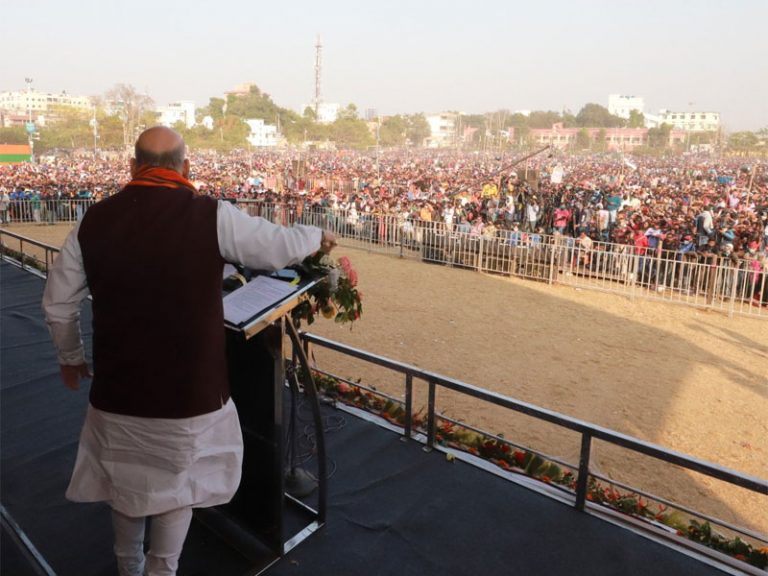
Bharatiya Janata Party’s workers were allegedly attacked by TMC goons after a massive rally of Union Home Minister Amit Shah in Midnapore. The workers were attacked in the Keshpur area while they were coming back from the rally. As per the reports, their cars were pelted with stones and bricks. Some workers have alleged that petrol bombs (Molotov cocktail) were also hurled on their vans while returning from the rally.

As per reports, as many as 15 BJP workers were injured while 6 had to be hospitalised. Cars were also badly damaged in the attack.

Amit Shah on increasing political attacks in WB

Earlier, Home Minister Shah, while talking about the political violence in West Bengal, said that the attacks on BJP are only making it stronger in the state.

He said, “More than 300 BJP workers have lost their lives in Bengal. Didi, do you think we will get scared of all this? The more TMC attack us, the more aggressively we will compete with you.”

Attack on JP Nadda’s convoy

On December 10, JP Nadda, National President BJP, was also attacked allegedly by TMC goons while he was going to Diamond Harbour. Eight leaders, including Kailash Vijayvargiya, Dilip Ghosh and Mukul Roy, were injured in the incident.

Republic TV quoted Gaurav Bhatia, BJP leader, reacting to the incident. He said that this incident showed how nervous TMC is after HM Shah’s rally in the state. He further added that the ruling party is aware that their days in the state are numbered. He said, “Bengal has become a symbol of anarchy and unconstitutionalism. There is no law and order in West Bengal. The way JP Nadda’s convoy was attacked shows the nervousness in the TMC, which knows that their days are numbered. Over 130 of our workers have been brutally murdered under mysterious circumstances without a fair investigation. This shows that all criminals today are being shielded by Mamata Banerjee government,” he said.

TMC leaders joino BJP

The attacks on BJP workers have happened hours after TMC and Congress leaders joined BJP. Sunil Mandal, Suvendu Adhikari, Banasri Maity, and Saikat Panja are some of the top leaders of TMC who left TMC and joined hands with BJP. During his address in the rally, HM Shah took a dig at Mamata Banerjee over the recent ‘exodus’ of top TMC leaders from the party. He said that the BJP would get more than 200 seats in the Assembly elections. “When results of Vidhan Sabha election will be declared, BJP will form the government with more than 200 seats”, he said.

PM Modi visits Gurdwara Rakab Ganj Sahib to pay tribute to Guru Tegh Bahadur where he was cremated after execution by Aurangzeb

On Sunday, Prime Minister Narendra Modi paid a surprise visit to Gurdwara Rakab Ganj Sahib to commemorate the supreme sacrifice of 9th Sikh Guru Tegh Bahadur.

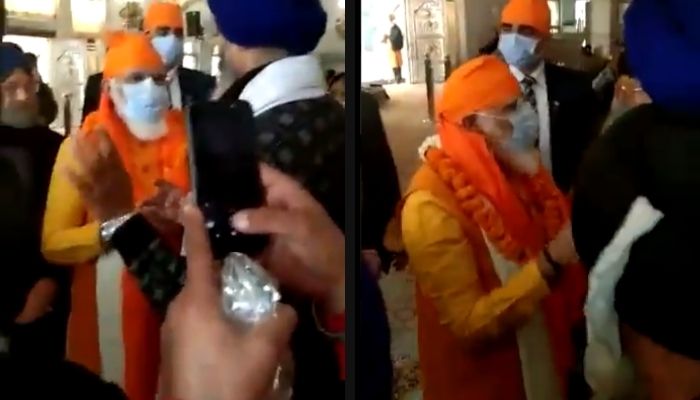
A video of PM Modi wherein he is seen interacting with people during his unscheduled visit to the Gurdwara has been shared widely on social media. As per reports, no barriers or restrictions were placed on worshippers during the Prime Minister’s visit.

PM Modi had shared pictures from his visit to Gurdwara Rakab Ganj Sahib on Sunday morning. “The Guru defended the Hindu religion and gave the message of universal communion,” he tweeted.

Yesterday, PM Modi had also tweeted on the occasion of Shaheedi Diwas, the day when Guru Tegh Bahadur was martyred. “Sri Guru Tegh Bahadur Ji’s life epitomised courage and compassion. On his Shaheedi Diwas, I bow to the great Sri Guru Tegh Bahadur Ji and recall his vision for a just and inclusive society,” he had tweeted.

After paying respects to Guru Tegh Bahadur, PM Modi also interacted with citizens present at the Gurudwara.

The supreme sacrifice Guru Tegh Bahadur

Guru Tegh Bahadur was the ninth of the ten Sikh Gurus of the Sikh religion. He not only prevented forceful religious conversion of Kashmiri Pandits to Islam but was also publicly beheaded by Mughal emperor Aurangzeb in Delhi for refusing to convert to Islam. He was condemned for ‘waging a war’ and was told only Islam could save him. When he refused, he was beheaded. In Delhi, Gurudwara Sis Ganj Sahib and Gurudwara Rakab Ganj Sahib mark the places of his execution and cremation of his mortal remains.

Uttar Pradesh: Sunni Waqf Board issues blueprint for new mosque coming up on land allotted after Ram Janmabhoomi verdict

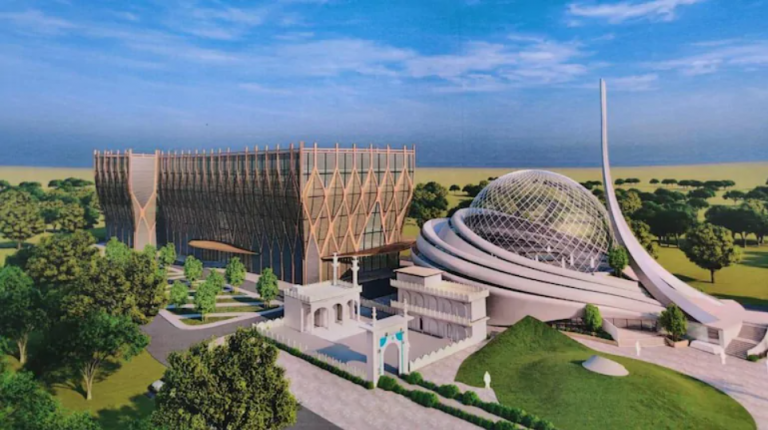
In a new development, the Indo-Islamic Cultural Foundation (IICF) Trust has released the architectural design of the mosque to be built next year at Ayodhya on 5-acre government land.

The trust was set up by the Sunni Waqf Board six months ago to undertake the construction of the mosque. During a presentation on Saturday in Dhannipur in Ayodhya by professor SM Akhtar from Lucknow, the trust informed that the new mosque would not be named after any ruler and that the name was yet to be decided.

IICF had shared computer-generated images of the ‘futuristic’ designs of the mosque, highlighting that the architecture would resemble other contemporary structures across the world. Besides, the mosque, the trust said that a trust office and publication house will also be built for publication and research on Indo-Islamic culture and literature.

IICF stated, “The design echoes modern architecture of mosques around the world. Professor Pushpesh Pant, consultant and curator for the archives and museum at the site, mentioned the need for a good museum to showcase the joint accomplishments and struggles of the Hindu and Muslim communities in India.” The trust stated that a hospital, with state-of-the-art facilities, will also be built that would take care of malnourished children and pregnant women.

Here are some more pictures of the newly proposed mosque.

Blueprint of the proposed mosque (Photo Credits: Times of India)

Earlier, the Indo-Islamic Cultural Foundation had informed that the foundation of the mosque on the 5-acre site would be laid on 26 January 2021.

Ram Janmabhoomi Case and the proposed mosque

The Supreme Court had on November 9 last year paved the way for the construction of a Ram Temple at the Ram Janmabhoomi site by awarding the title suit in the favour of Ramlalla Virajmaan. The Sunni Waqf Board has been laying claim to the site for decades, unwilling to let Hindus build a temple on a place where Lord Ram is believed to have been born. The court had also ordered the UP government to grant an alternate site of 5 acres to the Sunni Waqf Board to build a mosque.

After months of prolonged drama whether to accept or reject the Supreme Court’s offer of a 5-acre land to build a mosque at an alternative site, the Sunni Waqf Board had finally decided to accept the allotment of 5 acres of land suggested by the top court in the Ram Janmabhoomi and had also decided to build a Mosque on it. Earlier, the Board had shown reluctance in accepting the court offer after suggestions poured in from several quarters asking it to reject the offer made by the apex court.

Read how Congress’ over-reliance on Islamic parties such as IUML might be costing its electoral prospects in Kerala

Hagia Sophia, Istanbul’s iconic church that was recently converted into a mosque by Turkish government was one of the resonating issues in the recent local body polls in Kerala. The conversion of a church into a mosque in a far away land altered the political discourse in Kerala, an impact that was seen in the recent polls.

The 1,500-year-old Orthodox Christian cathedral, the largest Christian church of the eastern Roman Empire, was converted into a mosque by Turkey’s President Recep Tayyip Erdogan earlier this year. The erstwhile museum, a UNESCO World Heritage site, was made at the backdrop of a court order nullifying the earlier status of the cathedral as a ‘museum’.

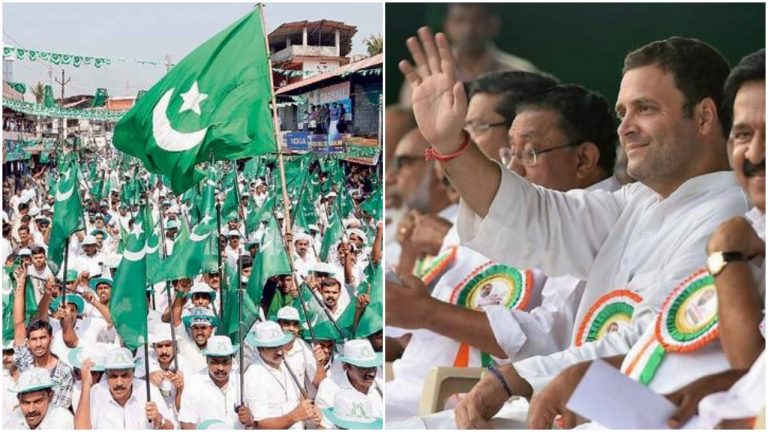
The occupation of a church by Islamists in Turkey found a massive resonance back home in Kerala, with Islamic organisations such as Indian Union Muslim League (IUML) had issued an open declaration of support to President Recep Tayyip Erdogan’s decision to convert the museum into a mosque.

Soon after the declaration, the IUML had praised Erdogan for his act. Panakkad Sayyid Sadiq Ali Shihab Thangal, the state committee member and Malappuram district president of IUML, in an article in the party’s mouthpiece Chandrika Daily, had welcomed Erdogan’s decision, stating that the freedom to practice Islam is restricted in many European countries, which went against Erdogan for his controversial move.

“Their school of secularism is hollow. They are the same people who converted around 350 mosques in Europe into Churches and Theaters,” he argued in his article. He said Erdogan’s government provides freedom of worshipping to all religions, and not only to Islam.

Meanwhile, CPI(M) was quick to respond to IUML’s support for the Turkish government. Kodiyeri Balakrishnan, its politburo member and then state secretary had questioned the Muslim League saying, how can they now oppose the BJP government’s move to construct a Ram temple where a mosque once stood if they support Erdogan for a similar kind of action. Ironically, CPI(M) had to target IUML the ally of Congress party in Kerala, for its departure from the party’s secular identity. 

“Jamaat-e-Islami is an organisation which supports the Turkey government. With the Muslim League leader hailing the conversion of Sophia Hagia into a mosque, the link between Muslim League and Jamaat-e-Islami has come to the fore. Congress has decided to ally with Welfare Party, the political wing of Jamaat-e-Islami and Social Democratic Party of India (SDPI), the political wing of Popular Front of India. What is the stand of Congress towards the Muslim League approach of acknowledging the act of Turkey ruler?” Kodiyeri had asked.

Interestingly, the open support to Turkey’s belligerent action by IUML had irked the Christians and other ‘secularists’ in the state. The Catholic Church, which had backed the Congress and UDF for long, had expressed its resentment over UDF’s stand on the Hagia Sophia issue.

Kerala Catholic Bishops Council, in a statement, said, “Before glorifying the encroachment of Hagia Sophia Church, Muslim League leader Sadiq Ali should have learned history. To justify Erdogan would be a liability of political Islamists in Kerala. That should not be at the cost of endangering the future of Indian secular democracy and peaceful co-existence of religions. There is danger in unilaterally interpreting history.”

Congress party’s affinity to Islamic parties helping Communists in Kerala

The increasing affinity of the Congress party towards radical Islam, backed by Muslim organisations’ firm control on the UDF, has now cost political support for them in Kerala. The left-coalition has now able to convince the voters in Kerala that the Congress and its allies have turned ‘communal’ by consenting to decisions taken by Islamic parties such as IUML and Jamaat-e-Islami.

Recently, after the local body elections in Kerala, Kerala Chief Minister Pinarayi Vijayan had seized the opportunity to target Congress and its allies over its ‘communalism’ in Kerala. The Kerala Chief Minister had made a serious accusation against the Congress party saying that the party had deputed all its decision making to Muslim League (IUML).

In a Facebook post, Vijayan had said the “deplorable state of affairs” of the Congress-led United Democratic Front (UDF) was due to the “shamelessness of the Congress” to do anything for a few votes. He added, “It is a strange experience in politics for one political party to dictate who should lead another party. Such extraordinary and anti-democratic things are happening in the UDF.”

“It seemed like the League would take over the leadership of the UDF after the results of the local body elections came out. Has the League become a centre for commenting on the internal affairs of the Congress and deciding who should lead the Congress?” Vijayan asked.

In the recently held polls, the CPM-led ruling Left Democratic Front (LDF) registered a significant victory against the Congress-led United Democratic Front in local body polls in the state that was held ahead of crucial Assembly polls scheduled next year. The Congress and its UDF allies, that had managed to pull off a victory in the 2019 elections in 15 seats, lost in a big way in Kerala vowing to their abject surrender for the communal politics in the state.

World Bank’s revised Ease of Doing Business report reaffirms India’s ranking: Read how usual suspects had attacked Modi govt anticipating downgrading of India

The World Bank recently came out with its ‘Ease of Doing Business’ report after suspending it in August 2020 due to what is referred to be several irregularities. In the reviewed Business Doing Report, the World Bank corrected two of its recent ease of doing business rankings, adjusting the scores for China and three other nations based on an internal audit.

In August 2020, the World Bank had announced that it would be suspending the publication of its Doing Business report following a number of irregularities regarding changes to data in previous reports.

“Many irregularities have been reported regarding changes to the data in the Doing Business 2018 and Doing Business 2020 reports, published in October 2017 and 2019. The changes in the data were inconsistent with the Doing Business methodology,” a statement released by the World Bank said.

In its reviewed report which was released on 16 December 2020, the Bank said that in the 2018 report released in October 2017, China should have been shown dropping seven notches to 85th rather than remaining 78th. Besides China, the ratings of the United Arab Emirates and Saudi Arabia were also downgraded, while Azerbaijan’s ranking saw an improvement.

India’s ranking, however, remained unaffected in the revised Ease of Doing Business report released by the World Bank.

Usual suspects raised aspersions on India’s ranking after World Bank paused its EODB 2021 report

However, soon after the World Bank had announced a temporary pause of its Doing Business report citing irregularities in data, many of the usual suspects in India had started alleging that the country’s ranking might take a beating after the World Bank’s declaration that it would review its data and come up with the new rankings. While some trashed the authenticity of the rankings to mount an attack on PM Modi, others resorted to insinuating that the Modi government had offered incorrect data to the World Bank that has resulted in an impressive improvement of India’s ranking on the Ease of Doing Business index.

Senior Congress leader Jairam Ramesh had rubbished the ratings stating that PM Modi needlessly blustered about the indices that were rife with irregularities in data and methodology. In a bid to attack the Modi government, Ramesh alleged that the Centre wasted its time and effort in chasing a bogus ranking.

Journalist Suhasini Haider had endorsed a report then which talked about how the Indian government had “lobbied, gamed changed priorities” to improve its ranking on the index from 2014 to 2018.

Another so-called intellectual Rupa Subramanya went so far to claim that the improvement of India’s ranking on the Ease of Doing Business indices did not match the ground reality.

Similarly, The Hindu journalist Mahesh Langa had also expressed his cynicism at the World Bank revising the rankings, wondering if it would affect India’s ranking which saw a substantial improvement in the last few years.

Puja Mehra, another The Hindu journalist, questioned what would happen to India’s rankings after the corrections are carried out by the World Bank.

The decision by World Bank to reassess the rankings of the nations provided an opportunity for many to raise aspersions on the authenticity of the data provided by the Indian government and allege that the Centre’s fixation with improving its stand on the Ease of Doing Business ranking might have prompted them to provide rigged data to the Bank. However, the unaffected ranking of India in the revised EODB rankings issued by the World Bank puts paid to the insinuations that the data provided by the Indian government was inflated or faulty.

It is pertinent to note that India has grown leaps and bounds in terms of its ranking on the Ease of Doing Business indices ever since PM Modi came to power in 2014. From languishing at 142 in 2014, India jumped 79 positions to 63 in the Ease of Doing Business rankings in 2020. India has recorded a continuous improvement in its ranking issued by the World Bank and well-poised on its ambitious goal of being among the top 50 economies on the ease of doing business ranking.